


BuildOut Ltd
Construction, refurbishment and fit-out: changing sites, subcontractors and overlapping activities illustrate topics such as contractor coordination, work at height and dust control.
Contractor safety example SHAREhubYour account

Harm and body explainersFind the models, health effects and related topic guidance by body area →
These three example businesses bring topics to life across the SHAREhub environment. Their worked examples connect hazards, control choices and evidence to the decisions people make in different workplaces.
Construction, refurbishment and fit-out: changing sites, subcontractors and overlapping activities illustrate topics such as contractor coordination, work at height and dust control.
Contractor safety example
Fuel storage, tanker deliveries and petrol stations illustrate how fire and explosion risks, hazardous substances, vehicle movements and maintenance interact.
Fuel storage example
Hotels, catering and leisure show how guest access, cleaning, kitchens, water systems and maintenance change everyday safety decisions.
Water hygiene exampleCompare the scenarios with your own work. They are learning examples, not real client case studies or ready-to-use safety instructions.
Type a topic to search. Results update as you type.
561 matching topics
Abrasion occurs when friction or scraping damages the surface of skin or equipment. At work, contact with rough materials, moving surfaces or repeated rubbing can cause skin injuries and wear through protective components. Control the contact at source and check the condition of the task, guarding and material before damage leads to injury or equipment failure.
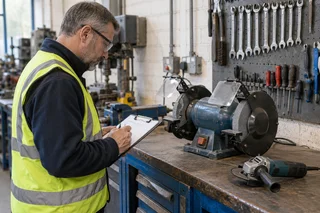
Abrasive wheels cut and grind by rapidly removing material. A damaged, mismatched or poorly mounted wheel can break or throw fragments, while cutting and grinding may generate dust, sparks, noise and vibration. Safe use depends on matching the wheel to the machine and material, effective guarding and source controls, and stopping when markings or conditions are uncertain.
Accident and incident investigation establishes what happened, how a hazard reached people, why controls failed and what must change. It begins with rescue and scene control, then uses evidence and worker accounts to choose and verify measures that prevent recurrence. Reporting duties differ between Great Britain and Northern Ireland, and a non-reportable near miss can still warrant a detailed investigation.
Approved Codes of Practice (ACOPs), Health and Safety Guidance (HSG) books and the Health and Safety Executive (HSE) information document series (INDG) serve different purposes in Great Britain (GB). Start with the applicable law and task, check the current publication and its status, then turn the relevant advice into controls. In Northern Ireland (NI), check the Health and Safety Executive for Northern Ireland (HSENI) approval lists and NI law before using a GB ACOP. HSGs and INDG leaflets are guidance, not a substitute for a risk assessment or safe work.
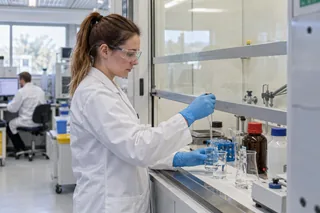
Acrylonitrile is a volatile, flammable chemical that can be absorbed by breathing vapour or through skin. If exposure or a release is suspected, stop work, raise the alarm, move clear without entering a contaminated area to rescue others, begin safe decontamination and obtain urgent medical help. Prevent exposure through closed systems and task-specific Control of Substances Hazardous to Health (COSHH) controls; use monitoring, skin-contact checks and competent review to verify them. Apply the correct Great Britain (GB) or Northern Ireland (NI) duties.

Active monitoring checks whether important health and safety controls work before harm occurs; reactive monitoring learns from incidents, near misses, ill health, defects and complaints. Choose checks around the real risk, stop or restrict unsafe work when a critical control fails, investigate high-potential events even without injury, and verify that corrective action reduces risk. Use the correct Great Britain (GB) or Northern Ireland (NI) reporting and management duties.
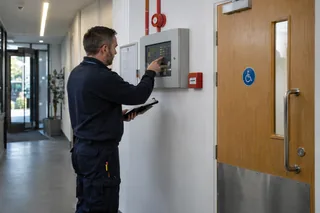
Active fire protection detects, warns, controls or suppresses fire using systems such as alarms, sprinklers, deluge, foam and firewater. Choose each system for a credible fire scenario, keep its supply and controls available, stop or restrict affected work when a critical barrier is impaired, and verify restoration before restart. General fire-safety and dangerous-substance duties differ across Great Britain and Northern Ireland.
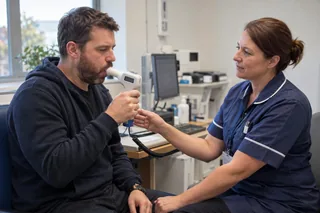
A harmful airborne release can injure the lungs. Leave the area, raise the alarm and prevent unsafe rescue. Suspected harmful inhalation needs urgent healthcare even if symptoms are mild or absent; call 999 for serious illness or an active dangerous release. Use the nation-specific urgent-care route below; clinicians decide observation and fitness for work.

Addiction or dependency may affect health and work, but a manager cannot diagnose it from behaviour. Offer private support and qualified help. If someone may not be fit for a safety-critical task, pause that task calmly, protect others and follow the policy. Clinical care and workplace fitness are separate decisions.
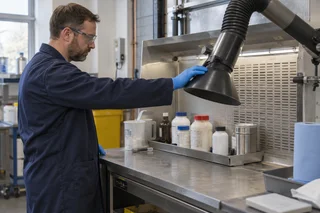
Air quality at work has three different routes: fresh air in occupied rooms, hazardous substances created by work, and outdoor pollution. Identify the source and people exposed, control emissions before relying on masks, and check that ventilation or extraction really works. A room CO2 reading or public air-quality index does not prove compliance with a workplace exposure limit. Stop and escalate a suspected dangerous atmosphere.
ALARP means reducing work risk as low as reasonably practicable. Identify who could be harmed and how, apply relevant legal requirements and established good practice, then consider further effective controls. A dutyholder may reject a further measure only with a defensible, risk-weighted reason; a risk-matrix colour or simple cost-benefit total is not proof. Stop affected work when a necessary control is missing, a serious hazard is unknown, or the decision has not been authorised.
Workplace exposure to methanol, ethylene glycol, acetone or methyl ethyl ketone needs a product-specific response. Stop a suspected exposure, keep others out of the affected area and get urgent medical advice: methanol and ethylene glycol can cause delayed serious injury. Call 999 for severe symptoms or a suspected harmful exposure requiring emergency help; do not make someone vomit or give food or drink. Prevent exposure through substitution, containment, ventilation, hygiene and verified task controls.
Alcohol can affect health, judgement and safe work, but an observed concern is not a diagnosis. If someone may be unfit for a safety-critical task, pause the task, protect people and arrange a private, factual conversation. Offer confidential support and NHS advice; use testing only where justified and governed. Severe suspected alcohol poisoning or withdrawal needs urgent medical help.
Hay fever is pollen allergy, not proof of a work-caused condition. Control task exposures and medicine-related drowsiness; seek prompt advice for new work-related wheeze. Suspected anaphylaxis: use an available prescribed adrenaline auto-injector promptly and call 999; do not wait for a plan.
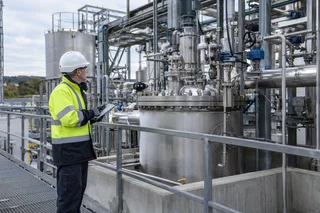
Ammonia gas, pressurised liquid and strong solutions can rapidly burn eyes, skin and airways. On a leak, warn others, withdraw by a safe route and leave isolation to designated responders using safe controls. For an eye splash, start clean-water irrigation immediately for at least 20 minutes while urgent medical help is arranged.
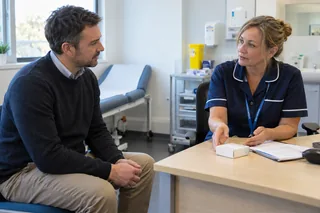
Anaphylaxis is a rapid, life-threatening allergic reaction. If you suspect it, use the person's available adrenaline auto-injector immediately, call 999 and say anaphylaxis; do not wait for a plan or first aider. Keep the person lying down, with a careful breathing or pregnancy adjustment, and use a second device after five minutes if symptoms have not improved.
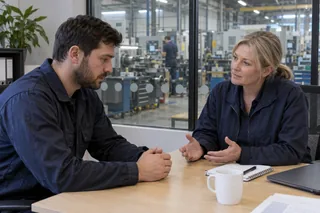
Anger is a normal feeling, but abuse, threats and violence are safety issues. If a conversation becomes unsafe, create distance, withdraw from the task, summon help and call 999 for immediate danger. For ordinary frustration, pause and address the cause; managers should reduce work pressures, respond fairly to complaints and offer support without excusing harmful behaviour.
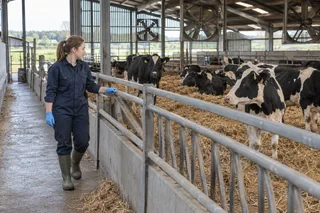
Anthrax is a very rare but serious infection linked mainly to infected animals, animal products or historically contaminated material. Stop disturbing a credible suspect source, keep people away, and obtain urgent medical and public-health advice for a possible exposure. Do not move or open a suspect animal carcass. Assess construction, animal-product and laboratory work by its actual task and location; treatment, testing and vaccination are specialist decisions.
Anxiety can be a normal response to uncertainty or a health problem that affects daily life. At work, prevent harmful demands and poor work design, make space for private support and agreed adjustments, and pause a safety-sensitive task if a person cannot perform it safely. Managers should not diagnose or prescribe treatment. Use urgent clinical help for crisis, and call 999 where someone is in immediate danger.
At work, the main arsenic concern is exposure to inorganic arsenic in dust, fume, solutions or contaminated residues. Breathing it in or swallowing contamination from hands can cause acute illness and long-term skin, nerve and cancer effects. Identify the actual compound and task, prevent release, enclose or extract at source, separate clean and dirty areas, and verify controls; after suspected poisoning or significant acute exposure, leave the area, prevent spread and obtain immediate medical assessment; call 999 for serious symptoms. Do not wait for symptoms or test results; use the applicable GB or Northern Ireland COSHH regime and do not treat the air limit as a safe target.
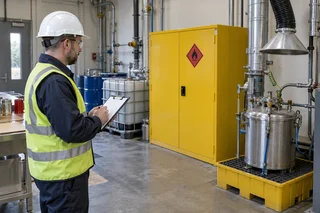
Secure external waste and flammable stocks, control ignition and keep escape routes clear. Apply the correct national fire law and DSEAR where dangerous substances are present. For fire, smoke or immediate danger, raise the alarm, evacuate and call 999.
Joint pain or arthritis can affect grip, movement, stamina and safe work. Reduce force, repetition and awkward postures through task design, equipment and recovery time; discuss individual barriers privately and review adjustments. Do not diagnose from symptoms or assume work caused a condition. Sudden severe swelling, a hot joint or illness needs prompt medical advice.
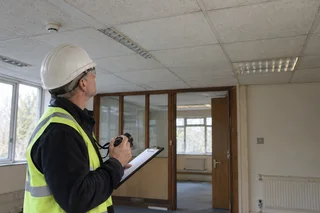
Asbestos may remain in pre-2000 buildings and plant. Before opening fabric, check task-matched asbestos information and avoid disturbance. Stop for unknown or damaged material; a competent person must decide the work category, controls and release. Inhaled fibres can cause serious disease decades later.
If work releases suspected asbestos dust or fibres, stop, leave the affected area, keep others out and report it. Do not sweep or use an ordinary vacuum. A competent asbestos adviser must assess the material, possible spread, exposure, clean-up and evidence needed before anyone resumes work or reoccupies the area.
Asbestosis is lung scarring linked to substantial asbestos exposure, often recognised decades later. Symptoms or an exposure history cannot diagnose it: tell a GP about symptoms and past work, and use urgent care for severe breathing or chest symptoms. At work, avoid disturbance, stop uncertain work and record suspected exposure.
Asbestos compliance is a live system: identify who controls maintenance, locate or presume asbestos, assess condition and disturbance risk, keep a usable register and plan, brief people before work, and review changes. Hold any intrusive job when the survey does not cover its exact work area and method; a competent employer must classify and control asbestos work.
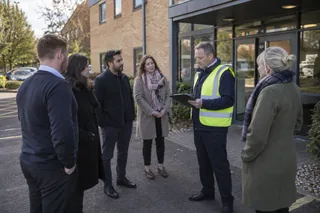
An assembly or muster point is a planned place of safety where evacuees report after following a safe route. Choose and test it against the actual emergency, occupancy and site layout; account for everyone, tell responders promptly about anyone unaccounted for, and move people if the point becomes unsafe. Never re-enter to search.
Assess the real task, not just the product: identify substances used or generated, who can be exposed and by which route, then prevent exposure or select reliable controls and verify they work. A safety data sheet is evidence, not the assessment. Use current EH40 limits for airborne exposure, distinguish exposure monitoring from health surveillance, and stop when the substance, task, control or emergency response is uncertain.
Keep process-plant mechanical containment and associated safety-critical safeguards fit for their required function throughout life. Work from the exact asset boundary, design basis, credible damage mechanisms and current evidence; separate statutory examination postponement from repair, WSE and maintenance decisions; stop when limits, barrier status, authority or evidence are uncertain.
Prevent explosive atmospheres where reasonably practicable, control every credible ignition source, and use equipment that is suitable for the classified area and actual conditions. Treat workplace duties and product-supply conformity as separate decisions, and stop when substance data, zoning, equipment identity, protection integrity or change evidence is uncertain.
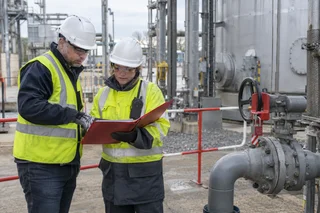
Identify the governing scheme before relying on the title. Confirm the jurisdiction, current written appointment, task-specific competence, scope, limits, interfaces and site conditions before an Authorised Person controls work. The title may be statutory in one exact context, contractual or sector-defined in another, and only a local authorisation elsewhere.
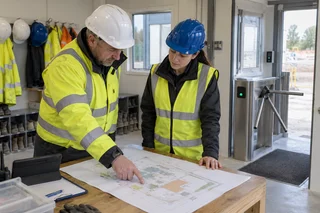
Awareness training helps people understand hazards, safe practices, site rules and equipment limits. Use knowledge, skills and behaviours (KSBs) to connect understanding with supervised practice and consistent safe decisions, then check the evidence needed for the actual task.
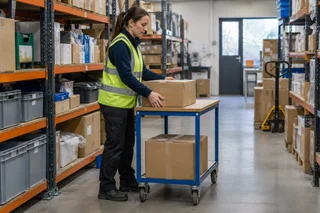
Back health and spinal wellbeing at work concern how physical and organisational demands affect comfort, movement and function. Heavy or repeated handling, awkward posture, whole-body vibration and limited recovery can contribute to pain or injury, although symptoms do not reveal a specific tissue cause. The key decision is to redesign the work and support the person while clinicians assess symptoms and urgent warning signs.
Batch reactor safety controls chemical reactions carried out in discrete charges or stages within a vessel. Charge order, material identity, cooling and agitation can change heat generation and pressure; loss of control may cause toxic release, fire, explosion or injury. A batch should proceed only within a validated reaction basis with functioning safeguards and authorised hold-point decisions.
Behavioural change in health and safety is the planned improvement of the conditions, decisions and habits that influence how work is actually done. It is not a substitute for eliminating hazards, engineering controls, competent supervision or good work design. Used well, it helps organisations understand why people take shortcuts, why procedures are ignored, how leaders shape norms, and what practical changes make safe work easier, clearer and more reliable.
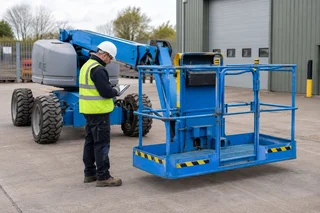
Belts and harnesses are personal fall protection equipment used for work restraint, work positioning, fall arrest, rope access and rescue. They are only effective when selected for the task, connected to a suitable anchor, used with compatible lanyards and connectors, inspected before use, formally examined at suitable intervals and supported by a rescue plan. In UK workplaces, they should normally sit behind safer options such as avoiding work at height, using platforms, guardrails, scaffolds or other collective protection.
Benzene poisoning means harmful effects from benzene exposure; exposure or a biomarker result alone does not establish a clinical diagnosis. Benzene can cause acute nervous-system effects after substantial exposure and, with repeated exposure, serious blood and bone-marrow disease including leukaemia. Workplaces handling fuel or benzene-containing streams must prevent or tightly control inhalation and skin exposure, investigate suspected releases and obtain qualified medical assessment when health effects are suspected.
Bereavement and grief support at work is the practical, compassionate and confidential support given when a worker is affected by death, serious loss or grief. Grief can affect sleep, concentration, memory, emotions, decision-making, stamina and relationships, and it does not follow a fixed timetable. A good workplace response balances humanity with structure: time off, contact preferences, workload review, phased return, safety-critical task assessment, signposting, privacy and regular review. Managers should avoid diagnosis, avoid assumptions and focus on what work can do to reduce pressure and help the person work safely.
Berylliosis, more formally known as chronic beryllium disease, is an occupational lung disease caused by an immune reaction after exposure to airborne beryllium dust, fume or mist. It is different from ordinary dust overload because a person can first become sensitised, then develop granulomatous lung inflammation that may reduce breathing capacity and progress over time. Higher-risk work includes machining, grinding, finishing, welding, recycling, ceramics, specialist electronics, aerospace components and maintenance involving beryllium-containing materials. Prevention depends on identifying beryllium, controlling airborne and skin contamination, monitoring exposure and using health surveillance where indicated.
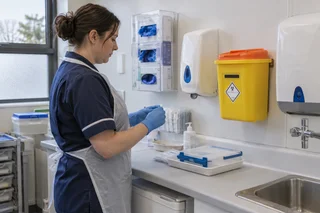
Biological agents and infection risk controls cover the workplace management of bacteria, viruses, fungi, parasites, blood-borne viruses, zoonoses and other infectious materials that can harm workers or others. The control task is to identify the source, route of exposure, susceptible people and chain of infection, then use proportionate measures such as containment, hygiene, ventilation, safe sharps systems, vaccination, waste controls, water-system management, health surveillance and outbreak response. UK employers normally manage occupational biological risks through COSHH, risk assessment, training, supervision and evidence that controls are working in real tasks.
Biological hazards are bacteria, viruses, fungi, parasites, human or animal materials, contaminated waste and other biological agents that can harm people at work. Good management starts with the source and route of exposure, then sets clear controls for hygiene, containment, sharps, waste, cleaning, ventilation, PPE, occupational health input, reporting and review.
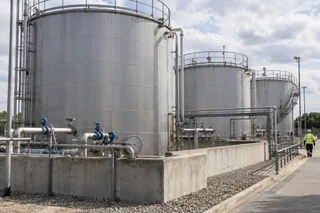
BLEVE hazards are major accident hazards created when a vessel containing a pressurised liquid, commonly a liquefied gas such as LPG, fails and the liquid rapidly flashes into expanding vapour. A BLEVE can produce blast, fragments, a large fireball, intense thermal radiation and rapid escalation to neighbouring vessels, so control depends on preventing loss of containment, preventing vessel heating, maintaining relief and cooling systems, designing layout for escalation, and using emergency plans that protect people before conditions become unrecoverable.
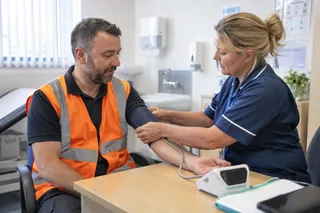
Blood pressure is the force of blood against artery walls, and hypertension means blood pressure that remains too high over time. High blood pressure often has no obvious symptoms, but it increases the risk of heart attack, stroke, kidney disease and other cardiovascular harm. In the workplace, the role of managers is not to diagnose or treat hypertension; it is to design healthier work, provide first-aid readiness, protect confidentiality, support appointments and recovery, consider reasonable adjustments, and manage safety-critical work fairly where symptoms, medication, fatigue or acute illness may affect safe performance.
Bowtie analysis is a visual risk assessment method that links a hazardous event to its causes, consequences and controls. In process safety, it is most valuable when it turns major accident scenarios into a live barrier management system: threats on the left, the top event in the centre, consequences on the right, preventive barriers before loss of control, mitigative barriers after loss of control, and clear ownership, degradation controls and assurance evidence for every barrier relied on.

Breast health awareness means knowing what is normal for your own breasts or chest, recognising changes that should be checked, understanding NHS screening routes where they apply, and reducing stigma around seeking medical advice. In the workplace, breast health awareness is not about managers diagnosing symptoms; it is about creating a respectful culture, supporting appointment time, protecting privacy, providing clear official signposting, making reasonable adjustments where health affects work, and planning return to work carefully after investigation, diagnosis or treatment.
Broken Windows Theory in health and safety is the idea that visible neglect, tolerated defects and inconsistent standards can quietly teach people that poor control is normal. Used well, it helps leaders spot weak signals such as damaged guards, poor housekeeping, overdue actions, unclear rules, ignored near misses and low-quality supervision before they become accepted ways of working. Used badly, it can become superficial rule-policing, so it must be balanced with human factors, worker involvement, fair culture, risk profiling and assurance of the hazards that could cause serious injury, ill health or major accidents.
Brucellosis is a rare but important occupational zoonotic infection caused by Brucella bacteria, usually linked to infected animals, reproductive tissues, blood, unpasteurised dairy products or infectious laboratory cultures. In UK workplaces it is most relevant to farming, veterinary work, abattoirs, animal research, laboratories, imported animals and animal-contact settings because exposure can occur through skin breaks, eyes, mouth, inhalation of aerosols or ingestion. Prevention depends on COSHH assessment, biosecurity, avoiding raw dairy exposure, safe handling of birth products and carcasses, containment of laboratory work, hygiene, suitable personal protective equipment, exposure reporting, worker information and prompt medical assessment where compatible symptoms follow relevant exposure.

Building safety is the planned control of fire, structural, occupational, environmental and operational risks across the whole life of a building: design, construction, refurbishment, occupation, maintenance and change. In the UK, it includes ordinary workplace and residential duties, but the detailed route differs by nation: England has the Building Safety Regulator and higher-risk building regime; Wales has its own building safety programme and higher-risk building guidance; Scotland has separate building standards and fire safety law; and Northern Ireland uses its own building regulations, technical booklets and fire safety framework. Good building safety is practical and evidence-led: dutyholders know who owns each risk, what the building is made from, how fire and structural risks are controlled, how residents and users are informed, how defects are fixed, and how competence, contractors, inspections and change are managed.
Bulk storage and tank farm safety is the process safety management of large hazardous inventories stored in fixed or transportable tanks, especially flammable liquids, fuels, solvents, chemicals and other dangerous substances. The topic covers tank design, layout, separation, overfill prevention, bunding, venting, floating roofs, transfer control, ignition control, inspection, maintenance, emergency response, environmental protection and escalation between tanks. In Great Britain, DSEAR and COMAH are central legal frameworks for many higher-hazard sites, while environmental permitting and oil storage routes differ between England, Wales and Scotland; Northern Ireland has its own HSENI/DAERA routes and parallel COMAH, DSEAR and oil storage regulations. A strong tank farm does not rely on one alarm, one operator or one inspection; it uses independent layers of protection, verified operating limits, competent people, maintained equipment, clear emergency decisions and evidence that safety-critical barriers are healthy today.
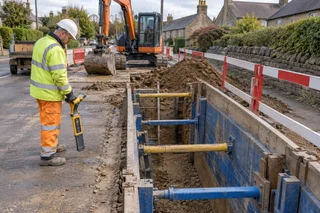
Buried services and utility strike prevention concern underground cables, pipes, ducts, mains, sewers and pipelines that can be damaged during excavation, drilling, piling, post-driving, trenching, demolition, remediation, landscaping or any work that penetrates the ground. A strike can cause fatal electric shock, arc-flash burns, gas explosion, fire, flooding, contamination, toxic release, loss of critical services, environmental damage and major disruption. Good buried-services management follows the HSE HSG47 logic: plan the work, locate and identify services, then excavate safely. It combines accurate information, competent surveying, CAT and Genny use, ground marking, trial holes, permits to dig, exclusion zones, safe plant selection, supervision, emergency arrangements and learning from every near miss or strike.
This page uses burnout as a workplace discussion term for sustained exhaustion, withdrawal or difficulties coping with work. These signs do not establish a clinical diagnosis or a classification; HSE guidance supports examining harmful work pressures, recognising changes in behaviour and providing appropriate support. A strong workplace response does not treat burnout as a personal weakness or solve it with resilience training alone; it examines work design, workload, control, support, role clarity, relationships, fairness, emotional demand, recovery time, change management, management behaviour and confidential individual support. Good practice is to prevent harmful work stressors first, support the person second, and use individual coping tools only as part of a wider system of risk assessment, consultation, adjustment, review and learning.
Bursitis is inflammation of a bursa, a small fluid-filled sac that cushions tissues around a joint and helps reduce friction between skin, tendons, muscles and bone. In workplace health, the classic example is prepatellar bursitis, often called housemaid's knee, where the bursa in front of the kneecap becomes swollen and painful after prolonged or repetitive kneeling, direct pressure, friction or trauma. Bursitis can affect other joints too, including the elbow, shoulder, hip and heel, but occupational controls are strongest where the exposure is clear: kneeling, pressure, awkward lower-level work, repeated contact stress, poor padding, hard surfaces and inadequate recovery. Good management means redesigning work to reduce pressure first, using knee protection and task rotation where needed, encouraging early reporting, protecting cuts from infection, and supporting workers through medical or occupational health advice when symptoms are severe, recurrent, infected or affecting safe work.
Byssinosis is a preventable occupational airway disease associated mainly with breathing cotton dust, and sometimes dust from flax or hemp, during textile processing. It is often called brown lung disease or Monday fever because early symptoms can be worse on the first shift back after a weekend or break, then ease as the working week continues. The important workplace lesson is that byssinosis is not simply an individual health problem; it is evidence that organic textile dust exposure, ventilation, cleaning, local exhaust ventilation, respiratory protective equipment and health surveillance need to be properly assessed, controlled and reviewed under COSHH.

Caffeine and energy drink use at work means consuming a stimulant through drinks, foods or supplements while work demands may also affect sleep and alertness. Caffeine can briefly reduce sleepiness but cannot repay lost sleep or establish fitness for driving, machinery or other safety-critical work. Excess or poorly measured intake can cause symptoms, while long shifts and missed breaks increase fatigue-related error, so employers should control the work pattern and workers should use labels and report concerns.
Cancer and work is the relationship between a person’s cancer or treatment and the tasks, hours, exposures and support in their job. Symptoms and treatment effects can alter stamina, concentration or infection risk, so safe duties and private adjustments must match current capacity. Employers also have a separate duty to prevent exposure to cancer-causing agents at work through effective source controls.
Cancer awareness at work helps people recognise changes that deserve medical advice, make an informed choice about screening and seek support without stigma. It cannot diagnose an individual or make a normal screening result a guarantee. Employers also need to prevent cancer-causing exposures from work, including dust, fumes, fibres and solar ultraviolet radiation, through effective controls rather than awareness messages alone.
Construction clients must identify the actual dutyholders before work is organised. Where a project involves, or is likely to involve, more than one contractor, the client must appoint a principal designer and principal contractor in writing as soon as practicable and before construction begins. Every project needs a construction phase plan; the size threshold for notifying the regulator is a separate decision. Use CDM 2015 in Great Britain and CDM (Northern Ireland) 2016 in Northern Ireland.
ME/CFS can cause post-exertional symptom worsening, unrefreshing sleep and cognitive difficulties, with capacity that fluctuates. A manager should ask about the work that is difficult, agree flexible duties and breaks within the person’s energy limits, and review without imposing fixed increases in activity. Diagnosis and treatment remain with qualified clinicians.
Dangerous substances can cause fire, explosion, harmful reactions or other physical harm; hazardous properties also include effects on health and the environment. Understand the exact material and task, control release and exposure, and stop when identity, compatibility or safeguards are uncertain. A release, incompatible mix or uncontrolled ignition can injure people immediately and may also contaminate surrounding land or water.
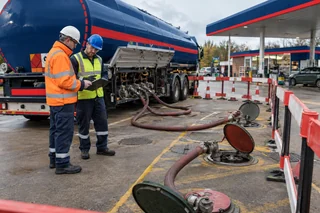
Dangerous substances can be released, react or ignite when storage, processing, loading or transport controls fail. Temperature, pressure, compatibility, inventory and transfer conditions determine whether a small deviation becomes a major accident. The receiving site and carrier must verify the same product and handover information before movement starts.
Decompression sickness occurs when dissolved inert gas forms bubbles as pressure falls after work under increased pressure. It can affect joints, nerves, breathing and other body systems after compressed-air construction or occupational diving. Controlled exposure and decompression, competent specialist supervision and an immediately usable medical response are essential because symptoms can be serious or delayed.

A workplace injury can lead to a civil claim for compensation as well as separate action under health and safety law. Liability, causation, loss and any defence depend on the facts and the law of the relevant UK jurisdiction. In England and Wales, the Social Action, Responsibility and Heroism Act 2015 asks a court to consider specified context; it does not excuse unsafe work or decide a claim automatically.
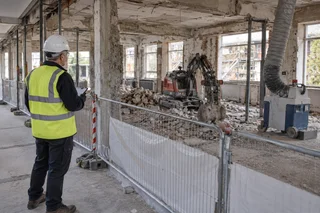
Demolition changes a structure’s load paths while workers, neighbours and the public may be close to falling material, unstable parts and hidden services. Safe work starts with competent surveys, a structure-specific method and sequence, controlled exclusion zones and hold points as the building changes. Asbestos and other health hazards must be assessed before disturbance, with GB or Northern Ireland construction duties applied to the site.
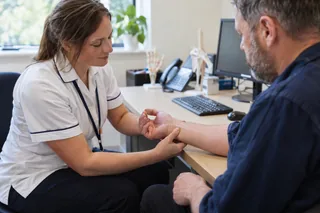
De Quervain's tenosynovitis is a painful condition affecting tendons on the thumb side of the wrist. This page helps workers and managers recognise a reason to seek advice and review tasks that aggravate symptoms. It cannot diagnose the cause of wrist pain or prescribe treatment.
Make important information reach the right people in a usable form, with evidence that it was understood and acted on.
Prepare people, resources and communication for credible emergencies, then use exercises and genuine response evidence to improve the arrangements.
Assess whether the management system delivers effective protection, then secure decisions, resources and follow-up for improvements.
Build checks that reveal whether important controls are working before somebody is harmed, and turn findings into accountable action.
Show how reporting, investigation and trend analysis lead to learning and verified corrective action, without inventing incidents or blaming people prematurely.
Show that you helped turn a policy into clear responsibilities, workable arrangements and an implementation programme, not simply a signed document.
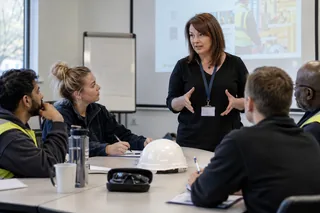
Show how you identified capability gaps, arranged appropriate learning and supervision, and checked whether people could perform safely afterwards.

Display Screen Equipment (DSE) is any work with screens such as desktop computers, laptops, tablets, smartphones and screen-based control or monitoring systems where regular use can affect comfort, musculoskeletal health, visual fatigue and mental workload. Great Britain and Northern Ireland have separate DSE regulations. Employers must identify DSE users, assess workstations, reduce risks, plan breaks or changes of activity, provide eye and eyesight tests on request, and give suitable information and training. A good DSE system is not just a self-assessment form; it is an ergonomic and work-design process that checks the chair, desk, screen, keyboard, mouse, software, lighting, space, home-working setup, user symptoms and whether actions are actually closed.
Domestic abuse and workplace support is about how an employer can recognise possible work impacts, provide safe and confidential routes for help, and control workplace risks without trying to investigate, diagnose or manage the abuse itself. Domestic abuse can include physical violence, coercive control, emotional abuse, sexual abuse, economic abuse, technological monitoring, threats, stalking, harassment and controlling behaviour by a partner, ex-partner or family member. The workplace can be a place of safety, a route to support, or a point of increased risk if work patterns, contact details, pay information, homeworking arrangements or site access are not handled carefully.
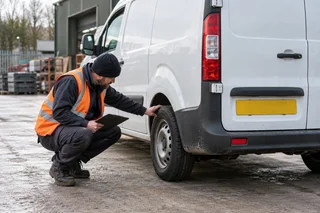
Driving at work is any work activity where a person drives or rides on the road as part of their job, including company vehicles, hire vehicles, vans, motorcycles, bicycles, goods vehicles and grey fleet vehicles owned by workers but used for business journeys. It is one of the most serious occupational risks because the road is a changing public environment where fatigue, distraction, time pressure, weather, vehicle condition, route choice and other road users can combine quickly into fatal or life-changing outcomes. A competent driving-at-work system manages three linked controls: safe journey, safe driver or rider, and safe vehicle, supported by policy, consultation, licence and insurance checks, fatigue management, vehicle inspection, maintenance, incident learning, telematics used fairly and leadership that allows workers to stop, delay or change a journey when risk becomes unacceptable.
Dropped objects are items that fall, are released, roll, topple, collapse, are ejected or are displaced so that they can strike people, damage plant, enter a process, fall into water or create a secondary emergency. They include tools, materials, fixings, scaffold fittings, grating panels, boards, stored stock, suspended loads, loose vehicle loads, overhead fixtures, debris and items released by weather, vibration, corrosion or poor maintenance. Good control prevents the object falling first, keeps people out of the fall zone second, and uses PPE only as residual protection; a hard hat is not a dropped-object control strategy.
Understand dropped-object energy, the limitations of consequence screening and the precautions needed before work starts. The independent SHARE calculator below estimates ideal free-fall energy and speed. It does not predict injury, classify a safe height or replace the official DROPS tool.
Drugs and alcohol at work should be managed as a fitness-for-work, health, wellbeing and safety-critical risk topic, not simply as a disciplinary issue. Alcohol, illegal drugs, misused medicines, solvents and some prescribed or over-the-counter medicines can impair judgement, reaction time, coordination, concentration, mood, sleep and risk perception; in safety-critical work this can lead to vehicle collisions, machinery incidents, falls from height, electrical errors, loss of containment, violence, public harm and serious injury. A strong UK workplace approach combines clear policy, worker consultation, support and self-referral routes, safety-critical role mapping, fair testing governance, confidential handling of worker health information, competent manager response and evidence-led review.
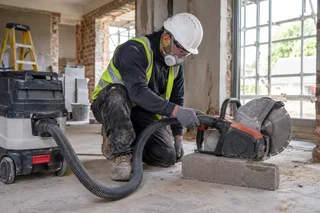
Dust at work is a major occupational health and safety hazard because fine particles can be inhaled deep into the lungs, irritate the eyes and skin, contaminate clothing and surfaces, poison the body, trigger asthma or allergic disease, cause incurable lung conditions and, for some materials, form explosive atmospheres. Dust risk is not controlled by whether the cloud looks dramatic; harmful respirable particles can be invisible, settle on ledges, escape poor extraction and expose workers during short tasks such as cutting, sanding, grinding, drilling, pouring powders, sweeping or emptying bags. A strong UK dust-control system identifies the material, particle size, task, exposure route and workers at risk, then applies COSHH and DSEAR controls such as elimination, wet methods, enclosure, local exhaust ventilation, on-tool extraction, housekeeping, RPE, exposure monitoring, health surveillance, maintenance and worker training.
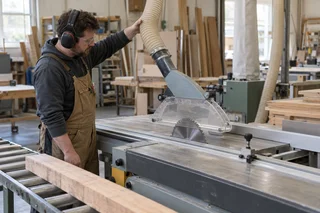
Dust explosion controls and housekeeping are the practical arrangements used to stop combustible dust from forming explosive clouds, accumulating as hazardous layers, finding ignition sources or escalating into secondary explosions. The subject sits under DSEAR and process safety because ordinary materials such as flour, grain, sugar, wood, coal, plastics, some chemicals and some metal powders can become dangerous substances when they are finely divided and dispersed in air. Good control is not only a cleaning rota; it combines dust containment, capture, ventilation, safe collection, suitable equipment design, ignition control, hot-work discipline, inspection, maintenance, management of change, emergency planning and evidence that the arrangements still work.
Dust explosion hazards arise when a combustible solid is reduced to fine particles, dispersed in air and ignited in conditions that allow flame to propagate. The hazard is often underestimated because the materials can be familiar, such as flour, grain, sugar, wood, coal, plastic powder or metal fines, yet the physics can create violent pressure rise, flash fire, equipment rupture and secondary explosions. A competent UK approach starts by identifying combustible dust properties, dust clouds, settled layers, ignition sources, confinement, process conditions and test data, then links those hazards to DSEAR assessment, process safety barriers, housekeeping, equipment design, emergency planning and evidence that controls remain effective.
A duty holder is a person, organisation or role that has legal responsibility for controlling health and safety risks created by work, premises, products, services or undertakings. In UK health and safety practice the term is broad: employers, employees, self-employed people, directors, landlords, contractors, designers, manufacturers, suppliers, clients, principal contractors and people in control of premises may all hold duties depending on what they control. The practical point is not simply naming a duty holder; it is proving that the right people understand their duties, have authority and resources, assess risks, consult workers, appoint competent support, control contractors, maintain premises and equipment, monitor performance and act when evidence shows controls are weak.
Duty of care is the responsibility to take reasonable steps to avoid foreseeable harm to people who may be affected by work, premises, services, products or decisions. In health and safety it has both statutory and civil-law meaning: organisations must comply with legal duties, but they must also manage risks in a way that a reasonable, competent duty holder could defend if someone is injured or made ill. A good duty-of-care system identifies who may be harmed, what harm is foreseeable, what controls are reasonably practicable, how people are informed and trained, how visitors and vulnerable people are protected, how records are kept, and how incidents, complaints and weak signals are used to improve.
Eating disorders are mental health conditions that affect eating and can seriously affect physical health at any body size. At work, unpredictable breaks, excessive demands and stigma may worsen distress or obstruct support, while faintness or impaired concentration can make a particular task unsafe. Employers should remove harmful work barriers, agree private support and seek clinical or emergency help when symptoms require it.
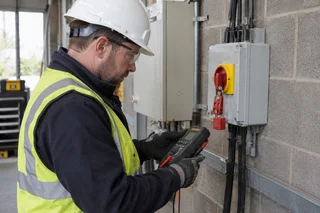
Electrical contractors install, test, maintain and alter systems that can expose workers and others to shock, burns, fire and unexpected energisation. The client and contractor must agree the task, electrical boundaries, competence, isolation, live-work decision and hand-back so that danger is controlled across the whole job. A minor office repair and work on industrial switchgear need different levels of planning, supervision and evidence.
Electrical safety depends on suitable design, protection, secure isolation and inspection that finds defects before people are exposed. A damaged conductor, failed protective device or unexpected supply can cause shock, arc injury or fire even where a test label is current. Work on or near electrical systems therefore needs competent planning, a dead-work preference and a verified hand-back.
Electrical hazards arise when energy can reach a person, ignite material or disable a system; risk depends on the exposure route and the conditions of work. Shock, arc burns, fire and secondary falls can follow damaged equipment, exposed conductors, poor isolation or a service strike. Identify the source and route first, then prevent contact or fault and verify that protection remains effective.
In process plants, an electrical fault or electrostatic discharge can ignite a flammable atmosphere, while loss of power can disable a safety barrier. The scenario begins with a release or hazardous atmosphere, an ignition source or impaired control, and people or plant exposed to escalation. Dangerous Substances and Explosive Atmospheres Regulations (DSEAR) assessment, suitable explosion-protected (Ex) equipment, isolation, inspection and barrier assurance must work together at the actual facility.
Electrical energy can injure people directly; static charge can also discharge into a flammable vapour or dust atmosphere. Transfer, filling, powders, plastics and insulating clothing can build charge even when equipment is otherwise electrically safe. Assess the actual substance and process, prevent a release, bond and earth suitable conductive parts, and verify those controls before transfer.
Electricity can kill or severely injure through shock, arcing, burns or fire, and construction work adds changing supplies, damaged tools and hidden services. Control starts before work: identify energy sources and exposed people, avoid live contact, choose suitable equipment, and secure isolation when work is needed. Check the controls at the workface and stop when the supply or service route is uncertain.
Electrical injury can follow body contact with current, an arc, an electrical fire or a secondary fall. A small visible burn does not tell the whole injury story, and a casualty still connected to electricity also endangers rescuers. Make the scene safe first, summon emergency help, use trained first aid, and keep the event under competent investigation before equipment returns to use.
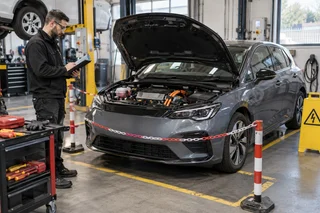
Electric vehicles use a rechargeable traction battery and electric motor for some or all propulsion; this workplace scope includes plug-in hybrids. High-voltage systems and charging equipment add stored electrical energy to normal driving, traffic and maintenance risks. Safe use depends on a designed charging installation, task-specific competence for repair and recovery, and stopping when damage, heat, vapour or the electrical state is uncertain.
Electromagnetic fields are present around ordinary electrical equipment, but stronger sources such as MRI magnets, induction heaters and transmitters need a task-specific assessment. The established workplace concerns are acute sensory or health effects and indirect effects such as implanted-device interference. Identify the source and people exposed, use manufacturer or sector information, control access where needed and seek competent assessment when exposure or a particular-risk worker is uncertain.
A major accident response plan must work for credible high-consequence releases, fires or explosions, not only a routine evacuation drill. The operator needs scenario-specific alarms, command, isolation, shelter or evacuation choices, resources and an external-agency interface. Exercise the difficult decisions and close failures before a real event; response is a mitigative barrier, not a substitute for preventing loss of containment.
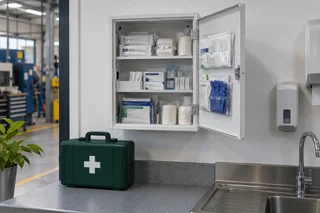
Emergency arrangements start with the events that could happen in the actual workplace and the people who may need help. A first-aid needs assessment then sets suitable people, equipment and coverage across shifts, absences, remote work and public-facing activity. Make emergency instructions simple, practise them, and check that help can be reached without delay.
An emergency response plan should tell people what to do for the incidents their workplace could face: raise the alarm, protect people, call help, isolate a hazard only when safe, and hand over to responders. Choose evacuation or shelter from the actual threat, include contractors and visitors, and test night-shift and changed-route conditions before relying on the plan.
A credible emergency drill tests decisions under changing conditions, not just assembly-point attendance. Set a scenario from the site’s major hazards; test who declares the incident, who commands, how responders stay safe, what information reaches emergency services and whether failed actions are corrected and retested.
An employee assistance programme (EAP) offers a confidential route to support or signposting, often including short counselling access. Explain its scope, access and privacy limits clearly. It can help an individual seek support, but the employer must still assess work-related stress, improve harmful work conditions and consider adjustments where required.
Endometriosis can cause fluctuating pelvic pain, heavy periods, fatigue and other symptoms that affect work differently for each person. A manager should respond to the worker’s functional needs, protect privacy, check safe work and welfare access, and review practical adjustments without trying to diagnose or requiring unnecessary disclosure. Clinical questions belong with the worker’s healthcare team.
A health and safety inspector may use advice, an improvement notice, a prohibition notice or prosecution according to the law and risk. In Great Britain and Northern Ireland, different statutes supply the powers. A dutyholder should make danger safe, preserve evidence, read the notice and its deadline, assign a competent owner, obtain legal advice on any appeal and verify the correction before restart.
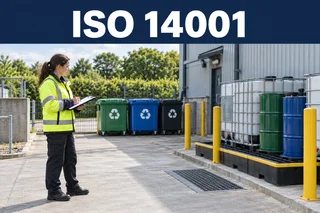
Manage environmental hazards by tracing a source, its pathway and the people or environment it could affect. Prevent release first; then contain, monitor and prepare for spill or permit failure. Because pollution and permitting rules differ across UK nations, check the site’s regulator and activity-specific authorisations before treating guidance as a legal duty.
Tennis elbow usually causes pain on the outside of the elbow; golfer’s elbow affects the inside. Repeated gripping, twisting, forceful tool use and limited recovery can contribute to upper-limb symptoms, but a manager cannot diagnose their cause from a job title. Review the actual task and symptoms early, reduce the loading and seek clinical or occupational-health advice when safe work or recovery is uncertain.
Occupational epidemiology compares patterns of exposure and ill health across groups to guide prevention. Incidence, prevalence and relative risk answer different questions; selection bias, confounding, latency and under-reporting can change the apparent pattern. Use population evidence alongside the site’s exposure and surveillance records, protect worker confidentiality and improve controls without claiming that one statistic diagnoses an individual.
Ergonomics fits tasks, equipment, information and environments to people; human factors also examines the organisation that shapes real work. Force, repetition, posture, workload, confusing controls and time pressure can contribute to ill health or error. Observe the task with workers, redesign the work before relying on reminders, and verify that changes still work under normal and abnormal conditions.
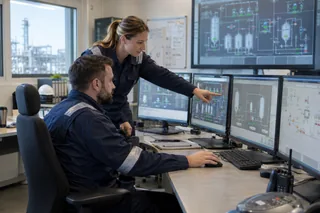
A process safety management system keeps major-accident hazards, safety-critical barriers and decision rights under control through the whole plant life. Start with credible release, fire, explosion and toxic scenarios; give each barrier a performance standard, owner and test; and make impairments, change, learning and restart decisions visible. COMAH duties depend on site nation, dangerous-substance inventory and tier.
After an incident, a safety professional should preserve accurate evidence, separate fact from opinion, disclose uncertainty and conflicts, protect personal information and treat witnesses and affected people fairly. The duty of a formally instructed expert to the court has a specific legal scope; ordinary advisers should not claim that status. Court procedure differs between England and Wales and Northern Ireland, so obtain legal advice on the applicable route.
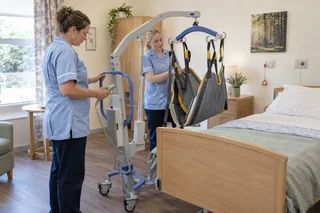
An evacuation chair can help a person descend stairs during an emergency when the building strategy, person, route and trained operators make that method suitable. It is one option alongside step-free escape, horizontal evacuation, protected lifts, refuges and assistance. A chair that cannot be safely used with the people and staffing present creates false assurance and may delay escape.
A fault tree works backward from an unwanted top event to combinations of causes; an event tree works forward from an initiating event through barrier success or failure to outcomes. Use both to test a credible major-accident scenario, but quantify only when failure data, dependencies and assumptions are defensible. Shared utilities, human actions and common-cause failure can make simple probability multiplication misleading.
Safe excavation starts before the first cut: the team must test whether digging or entry can be avoided, verify service and ground information, choose a supported method, and define who releases and stops the work. Missing service information, unassessed ground or a changed sequence is a hold point. The companion Excavations lesson covers checks at the open trench.
An open excavation can fail without warning when soil, water, support, edge loads or vibration change. Before entry and after each relevant change, a competent person must verify the actual support or site-specific batter, safe access, buried services, plant separation and rescue arrangements. A universal 45-degree slope is unsafe. The companion Excavation lesson covers the pre-dig release decision.
Explosive combustion occurs when a flammable gas, vapour, mist or combustible dust cloud meets an effective ignition source and flame propagation produces pressure. Confinement and congestion can intensify a vapour-cloud event; a primary dust event can disperse layers into a larger secondary explosion. Prevent release and dangerous atmospheres first, control ignition, then design credible relief, isolation, suppression and emergency measures for residual risk. Apply the right GB or NI dangerous-substance and local premises fire duties.
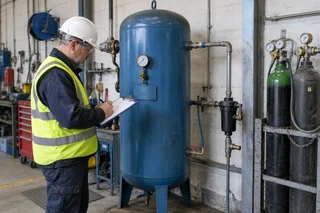
Explosion protection begins by preventing dangerous fuel-air mixtures and ignition. Relief directs pressure along a designed path, isolation limits propagation through connected plant, and suppression acts quickly to reduce pressure rise. Each option has a defined design basis, performance limits, inspection needs and failure modes; none makes an uncontrolled release acceptable. Apply the correct GB or NI DSEAR duties and specialist engineering review.
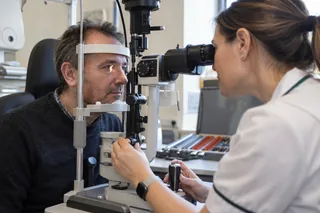
Eye health at work covers both preventable injury from splashes, particles and radiation and discomfort or visual difficulty during screen tasks. Remove or contain the hazard before selecting eye protection; assess display screen equipment, offer eligible users eye tests on request and provide special corrective appliances only when the test shows they are needed for screen work. Sudden loss of vision, a chemical splash or penetrating injury needs urgent clinical care.
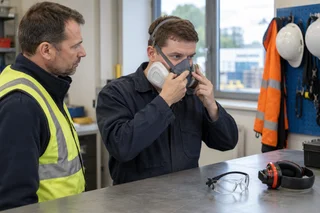
Face fit testing checks whether a specific tight-fitting respiratory protective equipment (RPE) facepiece seals adequately to an individual wearer. A pass is one part of protection: control exposure at source, select RPE for the hazard and task, issue the tested facepiece, check its seal every time and stop if the equipment, wearer or conditions change.

Fatigue can reduce mental or physical performance after sleep loss, prolonged effort, disrupted body clocks or insufficient recovery, while tiredness is the feeling of needing rest or sleep. Long hours, night shifts, heavy workload and missed breaks can make it harder to notice hazards, remember steps and react quickly. Where a task involves vehicles, machinery or critical decisions, stop unsafe work, arrange competent cover and plan safe travel; persistent unexplained symptoms need local health advice.
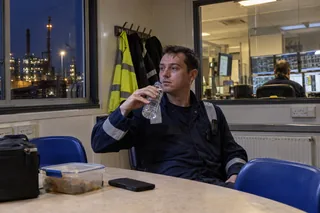
Fatigue management is the systematic control of work demands that can reduce alertness, memory and reaction time, especially long hours, night shifts, missed breaks and inadequate recovery. An effective system compares actual work with planned rosters, provides staffing and relief, and acts on reports before impaired performance meets a vehicle, machine or critical decision. Stop unsafe safety-critical duty or driving, arrange competent cover and safe travel, then use worker feedback and incident evidence to correct the work design.
Fertility health at work means controlling occupational exposures that may affect reproductive health while supporting people who need investigation or treatment. Relevant risk depends on the actual substance, process, route and work conditions; it can affect people of any sex. Managers should prevent exposure at source, protect private health information and make practical work adjustments without diagnosing infertility or assuming that work caused an individual outcome.
Fibromyalgia can involve widespread pain, fatigue, poor sleep and cognitive difficulty that fluctuate from day to day. Work becomes safer and more sustainable when physical demand, display screen work, shifts and high-consequence duties are assessed against functional ability and adjusted with the worker. A manager should not diagnose the condition or assume incapacity; they should provide a private support route, safe task controls and review when work or symptoms change.
Financial risk architecture maps direct and indirect, insured and uninsured consequences of health-and-safety failures to hazards, controls, owners and decisions. Loss can extend well beyond an invoice or claim, but uncertain estimates must be labelled honestly. Insurance and budgets do not remove prevention duties: cost information helps leaders choose and sustain safe controls, not approve unsafe work.

Financial wellbeing at work concerns the ways pay reliability, scheduling, expenses, insecurity and money pressure interact with health and safe work. Employers can prevent work-created stressors, correct pay problems, offer confidential support and adapt work when concentration or fatigue affects a high-consequence task. Managers should not diagnose debt, give unqualified financial advice or treat disclosure as proof that someone is unsafe.
Fire alarms should give prompt, intelligible warning to every person at risk, and firefighting equipment should support only a limited, trained first response where the assessment permits it. Design, testing, impairment controls, escape and staff action must work together in the actual premises. On fire or smoke, raise the alarm, evacuate under the local plan and call the emergency services; never delay escape to protect property.
Fire-and-gas systems are engineered recovery barriers, not substitutes for preventing leaks, ignition and dangerous inventory. For each credible scenario, show what the detector senses, what the operator must do, what automatic action occurs and whether the plant reaches a verified safe state. Treat alarm floods, bypasses, faults and uncertain shutdown response as live risk decisions; stop or restrict the operation when a credited barrier cannot be relied upon.
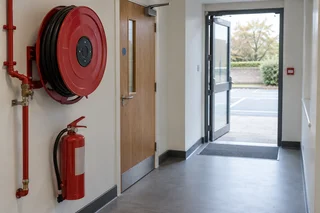
Fire classification helps identify what can burn and why a portable extinguisher may be unsafe, ineffective or beyond a person’s role. The risk assessment must consider the actual fuel, mixed hazards, people, escape and equipment limitations. Prevent ignition, raise the alarm and evacuate first; use portable firefighting only as a trained, very limited response when the local plan and a safe retreat allow it.
Fire detection and emergency communication must give the right people an understandable warning in time to act and escape. Assess the whole chain from discovery through system interfaces, accessible messages, staff response and assisted evacuation. A detector or normal panel cannot prove the chain works; an impaired warning route requires a current use decision, competent repair and verified hand-back.
A fire emergency plan must move people to safety, support emergency responders and define safe decisions during and after the incident. The same scenario may create smoke, contaminated firewater and lost services, but environmental containment and business recovery must not delay escape. Map people, substances, drains, critical dependencies and responsible roles; exercise the plan and require competent evidence before re-entry or restart.
Fire evacuation succeeds only when each person can receive the warning, understand it and reach a safe place using a route that works at the time. Plan assistance with the people affected, test alternate routes and staffing, and treat a refuge and roll call as parts of the process rather than proof of safety. Restrict use when warning, escape or helper cover fails, and control re-entry after the incident.
Choose a fire evacuation strategy from the real building design, occupants, fire scenario and staff capability. Simultaneous, phased and progressive-horizontal movement each depend on different protection and communication assumptions; stay-put is not a generic workplace default. Test the strategy when doors, alarms, lifts or helper cover fail, and restrict use until a material defect or change is competently resolved.
A small fire can make a route unsafe through smoke and heat long before flames reach it. Growth depends on fuel, oxygen, ventilation and enclosure; conduction, convection and radiation transfer heat, while openings and services can spread smoke. Prevent ignition, preserve barriers and warning, and withdraw on smoke. A changed door, duct or ceiling penetration needs a current risk decision and verified repair.
Fire prevention starts by finding fuel, ignition and oxygen or other oxidisers in the actual task. A fire can then spread through stored material, smoke routes and building openings, so prevention must work with warning, escape and compartmentation. Reduce fuel and ignition first, verify physical controls in the field, and stop work when a dangerous substance or protection failure is not understood.
Compartmentation protects escape by slowing fire, heat and smoke through a connected system of walls, floors, doors, glazing, dampers and sealed openings. Its performance depends on the complete assembly and the building fire strategy. Refurbishment, cables or a propped door can defeat it; map each credited barrier, control changes, assess defects promptly and verify the repair in the building before hand-back.
A fire risk assessment should identify how ignition, fuel and smoke could harm people, then test whether prevention, warning and escape work in the real premises. Its depth and the assessor’s capability must match the building, activities and occupants. In England and Wales the responsible person must record the full assessment and fire safety arrangements; Scotland and Northern Ireland have separate routes. Changed charging, occupancy or barriers require a new decision before work continues.
A fire risk assessment connects credible ignition and smoke paths to the people who could be harmed, then turns evidence into owned controls. Walk the premises at the conditions that matter, prefer removal, substitution and engineered protection before procedures or PPE, and keep required escape routes clear continuously. In England and Wales the full assessment and fire safety arrangements must be recorded; Scotland and Northern Ireland use separate legal routes. Reassess changed processes, occupants, barriers and failed controls before relying on the previous decision.
Fire safety at work means preventing ignition and growth, keeping smoke and heat away from people, warning everyone in time and enabling safe escape. The responsible person must assess the actual premises, activities and occupants, maintain the measures that assessment requires and plan for failure and change. A single extinguisher, alarm or template cannot prove a building or task safe; stop or restrict use when a critical barrier is unavailable and obtain competent fire-safety advice.
A fire risk assessment should connect credible ignition, fuel and smoke routes to prevention, warning, protected escape and emergency action that work in the actual premises. Each critical control needs an owner, a field check and a stop decision when impaired. England and Wales, Scotland and Northern Ireland have distinct premises duties; work-process fire risks also need their applicable route.
Fire safety law in England requires the Responsible Person to assess fire risks, protect people and keep precautions working. The Regulatory Reform (Fire Safety) Order 2005 is the main law for workplaces and many other premises. Every Responsible Person must record the full assessment and fire safety arrangements; additional rules apply to certain residential buildings.
Fire safety law in Northern Ireland requires employers and people with control of relevant premises to assess fire risks and put effective precautions in place. Part III of the Fire and Rescue Services (Northern Ireland) Order 2006 and the Fire Safety Regulations (Northern Ireland) 2010 are the main framework. Keep people safe through prevention, warning, escape, training and maintenance, with written records where required. Northern Ireland has its own housing and building rules.
Fire safety law in Scotland requires employers and people who control relevant premises to assess fire risks, take the necessary precautions and keep those precautions working. Part 3 of the Fire (Scotland) Act 2005 and the Fire Safety (Scotland) Regulations 2006 protect people, not just buildings. Responsibilities depend on employment, premises control and contractual obligations; an assessment only helps when its findings lead to action.
Fire safety law in Wales requires the Responsible Person to assess fire risks, protect people and maintain effective precautions. The Regulatory Reform (Fire Safety) Order 2005 governs workplaces and many other premises, with a duty to record the full assessment and fire safety arrangements. Welsh housing and building rules add separate requirements where they apply; England-only regulations must not be assumed to apply in Wales.
Fire safety duties follow who employs people and who controls the actual premises or activity; several parties may share a building. In England and Wales the Fire Safety Order requires a full recorded assessment, cooperation and suitable general fire precautions, while work-process risks may follow a separate HSE or local-authority route. Enforcement notices address duty breaches; prohibition notices address sufficiently serious risk from use. Scotland and Northern Ireland have different legal and enforcement routes, so identify the site before acting on a notice.
Fire safety training turns a site-specific fire plan into actions workers and wardens can perform. Induction, role rehearsal and drills must reflect the actual routes, people and shifts; wardens support evacuation within safe limits. A blocked exit or unreliable warning needs immediate restriction and correction. England and Wales, Scotland and Northern Ireland use separate fire-law routes.
Process-fire science follows a dangerous inventory through release, air mixing, ignition, fire or explosion, heat and smoke to people and adjacent plant. Solvent transfer and combustible-dust scenarios need different product data and engineered barriers, each with an owner, functional test and stop rule. GB DSEAR, qualifying COMAH and separate NI regimes sit alongside premises fire duties.
Fire crews need a clear approach, usable firefighting facilities and accurate building information when a fire occurs. Dutyholders should check these against the actual strategy, protect them during temporary work and stop changes that impair response. Premises duties and building-design guidance differ across England, Wales, Scotland and Northern Ireland.
First-aid provision must match workplace hazards, people, shifts and location. Assess trained cover and equipment for the actual site, prevent injuries through stronger upstream controls, and keep emergency response ready. Great Britain and Northern Ireland have separate first-aid and incident-reporting rules.
A fishbone diagram helps investigators organise possible causes, but only evidence can support a finding. Build a timeline, test hypotheses, select stronger controls and verify them in real work. Keep statutory reporting separate and use the correct Great Britain or Northern Ireland RIDDOR route.
Five Whys helps investigators test what allowed an incident or control failure, but a chain is not proof. Verify each answer, branch when causes interact, choose stronger controls and check them in real work. Keep statutory reporting separate and use the correct Great Britain or Northern Ireland route.
Fixed fire protection only works when the installed system, water or agent supply and interfaces match the credited fire scenario. Dutyholders need competent checks, prompt impairment restrictions and verified hand-back. Premises law differs across England and Wales, Scotland and Northern Ireland; GB and NI process and construction rules also differ.
Flammability limits describe potential to ignite under defined conditions, not an all-clear in the field. Assess credible vapour-cloud release, dispersion, ignition and explosion scenarios; verify barriers and detector response. Apply GB or NI DSEAR according to location.
Flammable and explosive materials need scenario-led prevention, ignition control, mitigation and emergency planning. Apply the correct GB DSEAR 2002 or NI DSEAR 2003 route, with COMAH only for qualifying establishments.
Flexible working can improve or harm wellbeing depending on workload, DSE, inclusion, privacy and support. GB and NI statutory request rules differ: GB has a day-one route and NI normally requires 26 weeks. Review work-design risks and adjustments separately from the request decision.
Fluorine gas, hydrogen fluoride or hydrofluoric acid and fluoride dusts create different acute and long-term risks. Identify the exact chemical and route, prevent exposure at source, and treat suspected HF skin or eye contact as an emergency even without pain. Apply GB COSHH 2002 or NI COSHH 2003 for the work location.
FMEA identifies failure modes, LOPA tests independent layers for a defined scenario, and SIL applies to a specific safety instrumented function. Competent teams must verify assumptions, common-cause risks, proof tests and stop decisions. Apply the relevant GB or NI major-hazard route rather than treating a study number or certificate as proof of safety.
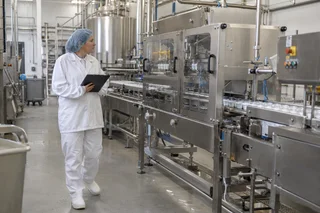
Food safety controls depend on the food, process, consumers and UK nation. Food businesses need proportionate HACCP-based procedures, hygiene, accurate allergen information and corrective action; a staff welfare kitchen is not automatically a catering business. Check distinct England, Wales, Scotland and Northern Ireland law and temperature guidance before setting a safe method.
A health and safety management system should match real hazards, people and change. Informal arrangements can work for simple low-risk tasks, while complex or high-consequence work needs more repeatable evidence. GB and NI both require written policy and recorded significant risk findings at five or more employees; ISO 45001 certification remains voluntary.
Formaldehyde exposure can cause acute irritation or injury, skin sensitisation and long-term cancer concern. Identify the actual task and route, substitute or enclose where feasible, verify extraction and apply GB or NI COSHH duties. Significant exposure or symptoms need prompt emergency and clinical action.
Construction management begins with project information, dutyholder appointments, design choices and a construction phase plan for every project. GB CDM 2015 and NI CDM 2016 are separate routes; multi-contractor work requires principal designer and principal contractor appointments, with controls verified on site.
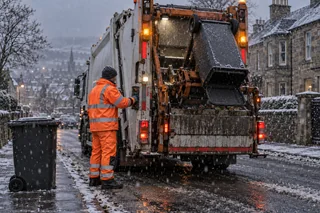
Frostbite is local freezing injury; hypothermia is dangerous whole-body cooling below 35°C. Plan cold work around wind, wetness, time, shelter, dry clothing and communication. Confusion or poor coordination can mean hypothermia: call 999 and use the emergency plan.
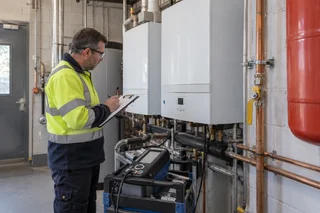
Gas safety at work controls leaks, fire, explosion and carbon monoxide from gas supplies, appliances, flues, cylinders and hot-work equipment. Poor containment or combustion can injure workers and others quickly, even when no gas smell is present. Safe use depends on the correct equipment, ventilation, competent work, maintained safeguards and prompt action when a fault or exposure is suspected.
The Globally Harmonised System (GHS) classifies chemical hazards and communicates them through labels and safety data sheets. Great Britain applies GB CLP to chemicals supplied to its market, while Northern Ireland applies EU CLP; workplace use still needs task-specific exposure and fire-risk assessment. Reading the whole label and SDS helps prevent burns, poisoning, asthma, fire and dangerous mixing.
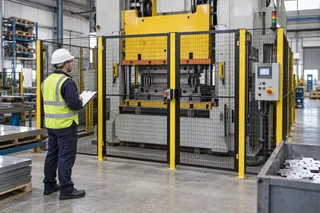
Machinery guards physically separate people from dangerous moving parts, while interlocks prevent or stop hazardous movement when access opens. They protect operators, cleaners and maintainers from entanglement, crushing, cutting and unexpected start during use and intervention. The safeguard must suit the machine and task, and maintenance needs assessed isolation even when a machine has stopped.
Gut health is a broad wellbeing term for digestive function, symptoms and the daily conditions that affect comfort; it is not a diagnosis. Work can make support harder through poor toilet or water access, missed breaks, shift patterns, stress or exposure, and those barriers may affect dignity and safe performance. Employers should fix the work conditions and handle individual needs privately, while qualified clinicians or occupational-health professionals assess symptoms, treatment and fitness for work.
Halogenated hydrocarbon diseases are illnesses linked to harmful exposure to particular halogenated solvents, especially chlorinated cleaning and degreasing agents. During cleaning or maintenance, vapour can be inhaled and liquid can contact or pass through skin, causing acute nervous-system effects, dermatitis and, for specific chemicals such as trichloroethylene, longer-term organ damage and cancer. The critical decisions are to identify the exact substance and lawful use, remove or contain the exposure source, and stop when controls fail.
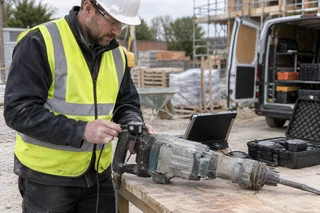
Hand-arm vibration syndrome (HAVS) is lasting injury to blood vessels, nerves and other hand-arm tissues after repeated vibration from hand-held tools, hand-guided machines or vibrating workpieces. Tingling, numbness, finger blanching and loss of grip can make ordinary tasks unsafe and may become permanent. The key workplace decision is to reduce vibration at source, combine every tool’s actual trigger time into the daily exposure assessment, and act early on symptoms.
Hand-held tools are manual, electric, pneumatic, hydraulic, cartridge, battery or fuel-powered tools held or guided by a worker during a task. They are ordinary enough to be underestimated, yet they can cause serious injury through cuts, punctures, amputation, eye injury, electric shock, burns, noise, vibration, dust, ejected fragments, fire, explosion, poor ergonomics and uncontrolled energy. Good management is practical: choose the right tool for the job and environment, keep it in safe condition, check it before use, train people properly, control attachments and consumables, maintain and store it well, and stop work when the tool, user, material or location is not suitable.
Hand hygiene and infection prevention are everyday controls that reduce the spread of infectious illness through hands, surfaces, respiratory droplets, contaminated food, blood and body fluids, animals, waste and shared workspaces. For most workplaces the essentials are simple: clean toilets and washing facilities, soap and drying, sensible cleaning, respiratory hygiene, staying away when infectious, good food hygiene, vaccination signposting where relevant, protection of vulnerable workers and a culture where people do not feel pressured to attend while unwell. Higher-risk work needs more formal COSHH biological-agent assessment and competent infection-control advice.
Hazard groups are categories used to organise workplace hazards with similar characteristics, sources of exposure or ways of causing harm. They help employers, managers, supervisors and workers identify what could cause injury or ill health and find relevant guidance for a risk assessment. SHAREhub uses ten hazard groups: physical, chemical, biological, ergonomic, electrical, mechanical, fire and explosion, psychological, construction and environmental hazards.
Biological hazards arise from exposure to microorganisms or biological material that can cause infection, allergy or other adverse health effects. Work involving people, animals, healthcare waste, sewage, contaminated water, food or laboratory materials may create exposure through inhalation, ingestion, damaged skin, splashes or sharps injuries. Examples include blood-borne viruses, legionella bacteria, contaminated waste and zoonotic infection. Assessment identifies the agent or material, how exposure occurs, susceptible people and the controls needed for the activity. Prevention may include avoiding contact, containment, source segregation, water-system management, hygiene and suitable protective equipment, supported by a prompt professional exposure-response route. The SHARE biological hazard group is a practical learning category; it must not be confused with the statutory classification of biological agents into Hazard Groups 1 to 4.
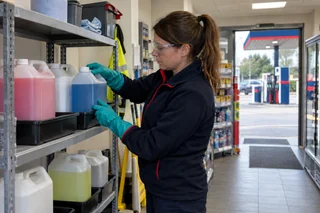
Chemical hazards arise when substances can harm health or create dangerous physical reactions during storage, use, manufacture, cleaning, maintenance or disposal. Dusts, fumes, vapours, gases, liquids and contaminated surfaces may cause harm through inhalation, skin or eye contact, swallowing or injection. Examples include construction silica dust, solvent vapour, cleaning chemicals, fuels and substances that can cause occupational asthma or dermatitis. Chemical risk assessment considers the actual task, substance properties, quantities, exposure routes, incompatible materials and affected people. Safety data sheets support that assessment but do not replace it. Controls should remove or substitute hazardous processes where practicable, then contain releases and verify ventilation or other engineering measures. COSHH health risks, DSEAR fire and explosion risks, and environmental releases may overlap and need coordinated management.
Construction hazards are the interacting risks created by building, civil engineering, refurbishment, demolition and maintenance projects. Examples include work at height, excavations, temporary works, mobile plant, falling objects, live services, asbestos, silica dust, noise, vibration and manual handling. Risks change as the design, work stage, workforce, weather and site layout change, and they may affect subcontractors, occupants, visitors and the public. This is an activity-based hazard group rather than a separate physical mechanism. Effective assessment starts with design and planning, coordinates the relevant CDM dutyholders and trades, and verifies safe access, sequencing, equipment, competence and welfare before work. Changes or failed critical controls require a clear stop and restart decision. SHARE uses the group to connect specialist hazards with practical project coordination and control ownership.
Electrical hazards arise from contact with electricity, electrical faults or the release of electrical energy during work on or near installations and equipment. Harm can include electric shock, burns, arc-related injury, fire and secondary injury from a fall or sudden movement. Risk occurs during normal use as well as installation, testing, cleaning, maintenance and fault finding, particularly where equipment is damaged or conditions are wet, temporary or confined. Assessment considers voltage, available energy, exposed conductors, supply arrangements, equipment suitability and other energy sources. Work should avoid exposure where possible and use competent planning, secure isolation, verification and suitable protection. Live work requires specific legal justification and safeguards; general guidance does not authorise it. SHARE links this group to electrical safety, isolation and maintenance topics for task-specific control decisions.
Environmental hazards are conditions in the surrounding environment that can make work, travel or emergency response unsafe. Heatwaves, cold, wind, rain, flooding, lightning, poor air quality and unstable ground may affect access, equipment stability, visibility, physical demand and the reliability of controls. Assessment considers the actual site, season, forecast, task and people exposed, including outdoor workers and those needing additional protection. Managers should avoid or reschedule unsafe work where possible, provide suitable shelter or engineering measures and define weather-related stop and restart criteria. Pollution risks, such as fuel spills, contaminated runoff and waste releases, are related but require their own environmental assessment and duties. SHARE uses this group to link worker exposure, changing site conditions and environmental protection without treating one checklist as sufficient for every location.
Ergonomic hazards arise when work demands, equipment or the working environment do not fit the people carrying out the task. Manual handling, repetitive movements, forceful exertion, sustained or awkward postures, poorly arranged workstations and inadequate recovery can contribute to musculoskeletal disorders and fatigue. Risk depends on the whole activity, including load characteristics, reach, pace, duration, space, handling aids and individual needs. An ergonomic assessment observes real work and involves workers in identifying difficult steps and testing improvements. The priority is to remove unnecessary handling, redesign the process or workstation and provide suitable equipment before relying on technique training alone. Office DSE, construction handling, warehouse picking and housekeeping need different practical arrangements. SHARE groups these related risks to support better work design, assessment and verification of controls.
Fire and explosion hazards arise when fuel and an oxidising source can meet an ignition source, or when a release, reaction or pressure event creates dangerous escalation. Flammable liquids and gases, combustible dust, hot work, electrical faults and accumulated fire loads can threaten workers, visitors and neighbouring premises. A fire may cause burns, smoke exposure and loss of escape routes; an explosion may also cause blast injury, flying debris and structural damage. Assessment considers inventory, release pathways, ignition, ventilation, confinement, occupancy and the effectiveness of preventive and emergency barriers. Priorities include removing unnecessary fuel, reducing quantities, containing releases, controlling ignition and protecting escape. Premises fire safety and process or DSEAR assessment have different legal routes, which must be coordinated. SHARE groups these mechanisms to support proportionate prevention and emergency planning.
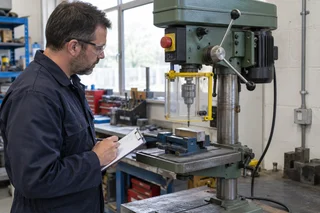
Mechanical hazards arise from moving machinery, tools, vehicles, loads or components and from the unexpected release of stored energy. People may be cut, crushed, trapped, entangled, struck by an ejected object or injured by unstable equipment. These risks occur during production and also during setting, cleaning, unjamming, maintenance, lifting and dismantling. Assessment identifies moving parts, access points, potential failure, energy sources and the people who could enter the danger zone. Safer design, suitable equipment, fixed or interlocked guarding, segregation and secure isolation take priority over warnings or protective clothing alone. Controls must remain effective when the machine changes mode or a task brings someone closer to the hazard. SHARE uses this group to connect machinery safety, work equipment, lifting, transport and maintenance control decisions.
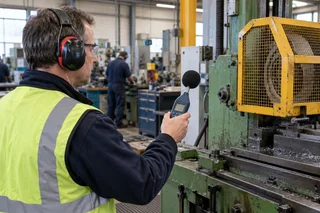
Physical hazards are workplace conditions or forms of energy that can injure people or damage their health. Examples include noise, hand-arm and whole-body vibration, heat and cold, poor lighting, radiation, pressure, slips and trips, falls from height, falling objects and work near water. Harm may follow a single event, such as a fall or impact, or repeated exposure, such as hearing damage from noise. A physical-hazard risk assessment identifies the source, route of exposure, people affected, duration and foreseeable failures. Employers should prevent the hazardous activity where practicable, reduce exposure at source, separate people from danger and verify the remaining controls. SHARE uses this practical hazard group to support task assessment; specialist topics and overlapping mechanical, electrical or ergonomic risks still require their own consideration.
Psychological hazards in this SHARE group refer to psychosocial risks arising from work design, working relationships and organisational conditions. Excessive or conflicting demands, limited control, inadequate support, bullying, violence, unclear roles and poorly managed change can contribute to work-related stress and mental ill health. Fatigue, lone working and exposure to distressing events may interact with these risks. Assessment examines how work is organised and experienced across roles and shifts, using worker consultation and proportionate organisational evidence. Employers should improve workload, staffing, role clarity, support and protection from aggression, then check whether those changes work in practice. Wellbeing activities and individual coping advice support, but do not replace, action on harmful working conditions. The group supports preventive management and appropriate support without diagnosing individuals or exposing confidential health information.
Hazard identification and risk assessment foundations are the building blocks of sensible health, safety and process safety decisions. Hazard identification asks what has the potential to cause harm; risk assessment asks who or what could be affected, how severe the harm could be, how likely it is, what controls already exist, what more is reasonably practicable and what evidence proves those controls work. In high-hazard work the same logic must also cover credible major accident scenarios, escalation routes, safeguards, barrier health, uncertainty and the limits of qualitative judgement.
Hazard identification techniques are the practical methods used to find what can harm people, assets, the environment or business continuity as part of risk assessment, design, change and continuing review. Good hazard identification does not rely on one checklist or one competent person's memory. It combines observation, task analysis, worker knowledge, incident data, maintenance records, design review, inspections, what-if thinking, failure tracing and specialist methods such as HAZOP where the work is complex or high hazard.
Hazardous substance monitoring and workplace exposure limits help employers check whether workers are being exposed to harmful airborne substances and whether COSHH controls are actually effective. A workplace exposure limit is not a target to work up to; it is a legal exposure benchmark for listed substances in EH40, averaged over a specified period. Good monitoring considers task, route, duration, frequency, control condition, worker behaviour, personal sampling, static sampling, biological monitoring where relevant, uncertainty, interpretation and action when results show exposure is too high or controls are unreliable.
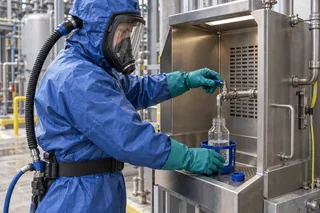
Hazardous substances harm the body through routes of exposure: inhalation into the lungs, skin and eye contact, absorption through the skin, ingestion, injection and sometimes transfer from contaminated surfaces. The health effect depends on the substance, physical form, dose, duration, frequency, target organ, individual susceptibility and whether the effect is acute, chronic, local or systemic. Good COSHH decisions start by understanding how the substance reaches the body, because the right controls for vapour inhalation are not the same as controls for skin absorption, dust ingestion or eye splash.
Hazardous substances can be supplied as products or created by work processes, and their form often determines how they expose people and what controls are needed. Dusts, fibres, fumes, gases, mists, vapours, liquids, pastes, powders and biological agents behave differently in the workplace. Their health effects can be acute or chronic, local or systemic, and may include toxicity, corrosion, irritation, sensitisation, cancer, reproductive harm, target-organ effects, aspiration hazard or infection. Good COSHH management starts by identifying the form, route of exposure, health effect and task conditions before choosing controls.
HAZID and what-if analysis are early, structured hazard identification methods used to find credible ways a process, plant, project or operation could lose control before detailed design or work proceeds. They help teams test hazardous inventory, stored energy, interfaces, abnormal conditions, assumptions and safeguards in plain operational language. A good HAZID does not simply create a list of hazards; it develops scenarios, challenges whether barriers are real, records uncertainty and creates actions that improve design, operating discipline, emergency planning and future detailed studies such as HAZOP, LOPA or quantitative risk assessment.
HAZOP studies are structured process hazard reviews that examine whether deviations from design intent could lead to loss of containment, fire, explosion, toxic release, environmental harm, equipment damage or operability failure. A good HAZOP uses defined nodes, guidewords, credible causes, consequences, safeguards, action quality, competent facilitation and disciplined close-out. The value is not the workshop itself; it is the quality of the challenge and whether findings are converted into safer design, operating limits, procedures, maintenance, alarms, trips, emergency controls and verified risk reduction.
Plan risk-based audits with competent, sufficiently independent people. Test criteria against representative evidence from work as done, act immediately on danger, and verify action effectiveness before closure. Audits do not replace inspections, monitoring, investigation or management review.
Health and safety auditing is a structured assurance activity that checks whether management arrangements are suitable, implemented, effective and improving. A good audit is more than an inspection and more than a document review. In practice, daily control checks, specialist oversight and an independent audit can ask different questions; each needs a clear owner, scope and route for findings. The value of auditing is judgement: knowing what to sample, how to interview, how to grade findings, how to identify system weaknesses and how to make sure actions reduce risk rather than simply close paperwork.
Health and safety culture is the shared pattern of values, decisions, habits and tolerated behaviours that shapes how people manage risk when real work meets pressure. This broad awareness page focuses on leadership, safety climate, indicators, worker voice, peer influence and sector examples. A positive culture is not created by slogans; it is built through trust, competence, consultation, clear standards, learning, fair accountability and controls that work in the conditions people actually face.
Health and safety culture and behavioural change builds on basic culture awareness by asking how safer behaviour is actually created, supported, measured and sustained. This deeper professional page focuses on behavioural programmes, just culture, trust, maturity, system causes and change design. Good behavioural change does not blame frontline workers or rely on posters; it examines job design, equipment, supervision, workload, leadership, peer norms, competence, fair accountability and whether management acts on weak signals.
A key performance indicator (KPI) is a selected measure that helps people judge whether important health and safety controls work and what decision to make next. A balanced set combines evidence of critical-control health, worker reports, investigations and actual harm; counts or percentages alone can hide failure. Define each measure, validate its data, set an owner and response threshold, and check whether action improved the work.
Health and safety leadership and influence is the way leaders shape risk control through priorities, resources, communication, trust, decision-making and what they tolerate under pressure. Strong leaders make safe work practical: they listen to workers, fund controls, challenge weak signals, support stop-work decisions, learn fairly from incidents and make sure health risks receive the same attention as acute injuries. Leadership is not just a senior title; supervisors, advisers, technical authorities and worker representatives all influence whether rules become real controls at the point of work.

Build a health and safety management system around what the business actually does. Review its activities, identify the risks and applicable legal duties, then develop practical systems of work with clear responsibilities, competent people and effective controls. Link the activity assessments, risk register and legal register to those arrangements. Use Plan, Do, Check, Act to implement them, check that they work and improve them as the business changes.
Health and safety performance monitoring, measuring, review and audit is how an organisation finds out whether risk controls are healthy before people are harmed and whether learning after events has changed the system. Good monitoring combines active checks, reactive learning, leading indicators, lagging indicators, inspections, sampling, tours, audits, action tracking and management review. The aim is not to collect numbers; it is to make better decisions about risk, resources and improvement.
A health and safety policy sets out how an employer will manage risk, who owns decisions and which practical arrangements make the commitment real. In both Great Britain and Northern Ireland, employers with five or more employees must record the policy in writing and communicate it. A useful policy connects leadership intent to risk assessment, consultation, competence, monitoring and review, and is tested against the work people do.
A health and safety policy explains an employer’s intent, named responsibilities and the arrangements that control real work. It must be written when there are five or more employees in Great Britain or Northern Ireland. Its value is tested at the workface: can people find, use and verify the arrangements?
UK health and safety law starts with the instrument that applies where the work takes place. Great Britain and Northern Ireland have separate general, management and reporting regulations; an Approved Code of Practice has a different legal status from ordinary regulator guidance. A legal register is useful when it turns the applicable duty into a named control, owner, check and response to failure.
Health surveillance is repeated, risk-specific checking for early signs of work-related ill health; biological monitoring measures chemical uptake and is not a diagnosis by itself. Employers need to control exposure first, choose a suitable scheme with competent advice, act on results and keep employer health records separate from confidential clinical medical records. Great Britain and Northern Ireland use separate COSHH instruments.
Workplace welfare provides suitable toilets, washing, drinking water, rest and related facilities, while the work environment needs safe air, temperature, light, space and movement. Great Britain and Northern Ireland have separate workplace regulations. An industrial bakery must also assess oven-area heat stress and act when cooling, ventilation or recovery arrangements fail.
Healthy ageing at work means designing jobs and support so people can work safely across working life. Age alone does not show ability or create a separate risk-assessment duty; ask about the actual task and barriers, then control physical demands and make individual adjustments when needed. Great Britain and Northern Ireland have different employment equality laws.
Healthy eating at work depends on access to drinking water, breaks and usable food facilities as well as individual choice. The NHS Eatwell Guide provides general dietary advice, while workplace welfare duties and shift design determine whether workers can use those choices. Night-shift arrangements should be inclusive and avoid treating an employee’s diet or health condition as a management score.
Hearing health at work combines prevention of noise-induced hearing loss and tinnitus with accessible communication for people with hearing difficulty. Assess personal daily or weekly and peak noise exposure, reduce noise at source, then use suitable protection and surveillance where the applicable GB or NI regulations require. A hearing test or ear defenders cannot make a noisy machine safe by itself.
Recognise a possible heart attack and call 999 promptly; no manager sign-off or diagnosis should delay help. If a person is unresponsive, call 999 and check breathing: absent or abnormal breathing, including gasping, calls for dispatcher-assisted CPR and AED help. With normal breathing, follow dispatcher first-aid/recovery-position advice and monitor. An AED is for suspected cardiac arrest, not for every person with chest pain. Workplace first-aid provision is assessed under different GB and NI regulations.
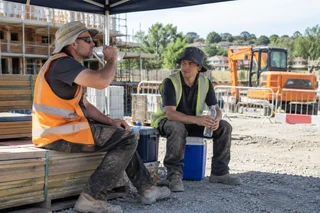
Heat, hydration and wellbeing starts with reducing heat exposure and work rate, then making clean water and cool recovery genuinely accessible. Hot work, humidity and protective clothing can overwhelm cooling even outside summer. If someone has confusion, seizure, collapse or other signs of heatstroke, call 999 and begin the NHS emergency cooling advice while help comes. This prevention page is distinct from the heatstroke and heat exhaustion response page.
Indoor workplaces in Great Britain and Northern Ireland must have a reasonable temperature under separate Workplace Regulations. The normal 16°C or 13°C for strenuous work figures are guidance, not a universal legal minimum; there is no fixed legal maximum. Assess air and radiant temperature, humidity, air movement, clothing and work rate, then control both discomfort and physiological heat or cold risk.
Heat exhaustion needs immediate stop, cooling, rest and monitoring. Heatstroke is a medical emergency: if someone is confused, has a seizure, collapses, loses consciousness or remains unwell after about 30 minutes of cooling, call 999 and keep cooling while help comes. Do not wait for a manager or rely on whether the person is sweating. Prevent heat illness by reducing heat and work rate, assessing PPE burden, and making water and cool recovery usable.
Heavy-metal risk depends on the particular metal or compound, its form, the task and exposure route. Identify and control dust, fume, vapour and contamination at source before relying on PPE. Lead has its own GB and NI regulations; other metals normally use the relevant COSHH route. Air, surface and biological monitoring answer different questions, and medical or health surveillance requires a competent, substance-specific decision.
n-Hexane is a flammable solvent that may be present in adhesives, cleaners and solvent blends. Repeated exposure can damage peripheral nerves; acute vapour exposure can also cause dizziness and drowsiness, while liquid aspiration is a separate serious hazard. Check the actual product and task, substitute where practicable, contain vapour, verify ventilation and use occupational health or medical advice for symptoms rather than diagnosing from an exposure story.
The hierarchy of controls chooses stronger measures before personal protection or reminders. The five-level sequence is elimination, substitution, engineering controls, administrative controls and PPE. ERICPD is a useful planning prompt—Eliminate, Reduce, Isolate, Control, PPE, Discipline—but its “Isolate” usually maps to engineering and “Discipline” sustains controls rather than becoming an extra protective layer. Test each proposed measure on the actual task and verify it still works.
High reliability organisations look for weak signals, understand work as done and keep critical barriers effective even when operations change. The five prompts on this page are a management checklist, not separate legal duties. At a tank terminal, leaders should test a high-level alarm, transfer stop and operator response together, listen to frontline concerns and close failures before the next transfer.
HIRA—hazard identification and risk assessment—connects a real task to a credible harm scenario, people affected, existing safeguards and a decision to improve control. A matrix can help compare priorities, but a low-frequency, high-consequence electrical or major-accident scenario still needs robust controls and competent judgement. Apply the legal instrument for the actual GB or NI site, involve people who do the work, and verify barriers before authorising the task.

Histoplasmosis is a fungal infection linked to breathing in Histoplasma spores where the fungus occurs. An ordinary UK droppings discovery does not identify Histoplasma; assess the actual biological and dust hazards. UK bird-dropping work still needs control for other biological hazards. For a worker with relevant endemic-area travel or a confirmed Histoplasma source, stop dusty disturbance, assess the real exposure, and arrange clinical advice for symptoms with the exposure history.
After a needlestick or blood splash, give immediate first aid and obtain urgent clinical assessment without waiting for a manager to decide whether HIV PEP is needed. NHS and Northern Ireland public-health guidance say PEP, if prescribed, must start within 72 hours of possible exposure; use sexual-health/GUM or emergency-department services immediately. Ordinary workplace contact does not spread HIV. Prevent sharps exposure, preserve confidentiality and use the correct GB or NI legal route.
Hormonal health support starts with the person’s work needs, not a diagnosis or an assumption about age or sex. Agree private, practical changes to temperature, breaks, toilets, uniform, shift pattern or workload where helpful and review them. GB and Northern Ireland have separate equality routes; March 2026 GOV.UK menopause-adjustment guidance applies to England, Scotland and Wales and is voluntary guidance, not a new NI duty.
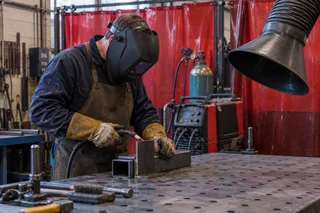
Before welding or grinding on process plant, ask whether hot work can be avoided. If it remains necessary, a competent issuer must verify positive isolation, cleaning, suitable gas testing, nearby drains and SIMOPS, an independent fire watch, stop conditions and formal handback at the actual site. A permit records and coordinates these controls; its colour or a single gas reading does not make the work safe.
Reduce respiratory infection spread through a workable stay-home route when unwell, fresh air, hand hygiene, cleaning and current vaccination signposting. England public-health advice is guidance, not a universal UK legal isolation rule. Employers should support a worker who cannot attend safely and protect people at higher risk without collecting unnecessary health details.
High cholesterol usually has no symptoms and is assessed through a blood test alongside wider cardiovascular risk. Employers can improve work design, emergency readiness and confidential access to support. Testing, interpretation and treatment belong with qualified healthcare professionals; managers should discuss only relevant work needs and adjustments.
When a workplace claim or legal letter arrives, record receipt, protect the person, preserve relevant evidence and notify the insurer or legal lead promptly. The pre-action process differs by claim type and country. Keep factual investigation and safety improvements moving while specialists manage disclosure, privilege and deadlines.
After a work-related death, protect people, notify the correct authorities, preserve evidence, support the family and workers, and keep the legal investigation separate from a candid safety-learning review. England/Wales, Northern Ireland and Scotland use different court processes.
Social-responsibility claims should be backed by safer work for employees, contractors and affected communities. Test environmental changes for new safety risks, assign board and supply-chain owners, and report evidence honestly rather than treating ESG language as a substitute for legal duties.
A safety message is effective only when the right people receive, understand and act on it. For high-risk work, identify the exact plant status, hazard, control, owner and stop trigger; use a two-way verbal and written handover with a receiving-person cross-check. Consultation also requires workers to influence decisions, not just receive an announcement.
Belonging is a practical feature of work: people can obtain support, raise concerns, understand their role and take part without exclusion. Manage harmful demands, weak support and unacceptable behaviour through the work system. Social events and individual resilience offers are supplementary, not replacements for risk control.
Chronic pain can affect work tasks and may be aggravated by poorly designed lifting, repetition, static posture or fatigue. Managers should listen without diagnosing, assess the work, reduce physical and organisational barriers, and review adjustments with the worker. Clinical assessment and treatment stay with healthcare professionals; GB and NI equality duties differ.
Start with each credible major-accident scenario and the human task that protects a barrier. Define a task performance standard, assess it in realistic normal and abnormal conditions, authorise the person only within demonstrated limits, and recheck after change, absence or failure. Training attendance alone is not competence.
Start with the real task and its failure consequences. Define the capability needed, give clear information and practice, observe performance, authorise only within limits and supervise according to risk. A certificate is one piece of evidence, not proof that a person can safely handle abnormal work.
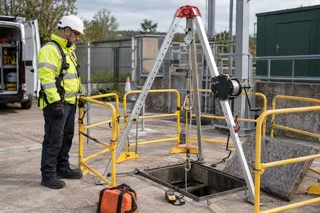
Avoid entry when the work can be done safely from outside. If entry is unavoidable, a competent assessment must define the exact space, isolation, atmosphere, safe system, supervision and rescue before anyone enters. A permit or gas reading alone cannot make an unsafe space safe.
Manage every potentially confined space as a decision system: identify the specified risk, avoid entry where reasonably practicable, verify the safe system and rescue when entry is necessary, and audit the actual controls across sites and contractors. A register or permit alone is not proof of safe entry.
Start with the design and sequence. Avoid height and deep excavation where reasonably practicable, engineer collective fall and collapse protection, and keep demolition stable at every stage. A method statement is useful only if a competent team can verify its assumptions and stop when conditions change.
Start contractor control before appointment: define the work and site hazards, select capability, agree a safe method, coordinate interfaces, check the live job and record safe hand-back.
Define the job and hazards before tender, select capability for the actual task, exchange site and contractor risks, coordinate interfaces, supervise the work and verify safe hand-back. Outsourcing does not remove the client or host’s own duties; a generic certificate or RAMS pack is not the control.
Retain host knowledge of major-accident hazards when specialist work is contracted out. Define the safety-critical scope, test capability, verify isolations and permits at the workface, and accept plant back only after safeguards are restored.
Prevent dangerous releases and atmospheres before relying on ignition control. Limit fuel and oxygen, contain and ventilate releases, exclude ignition sources, and verify consequence protection for credible fire or explosion scenarios.
Avoid hot work near dangerous substances if a cold method will do. If ignition cannot be avoided, isolate and clean the plant, test the atmosphere, control adjacent combustibles, issue a task-specific permit and keep the fire watch through hand-back.
Consultation gives workers timely information, a chance to influence a safety decision, and a response showing what changed. Use the correct representative route in Great Britain or Northern Ireland, include night shifts and contractors at relevant interfaces, and check whether the resulting control works.
Cardiovascular health concerns the heart and blood vessels. Blood pressure, cholesterol, diabetes, smoking and family history can affect risk, while work hours, stress and hazardous exposures may add strain. A workplace should recognise heart attack and stroke emergencies, control work factors it can change, and support individuals confidentially without turning a wellbeing check into a diagnosis.
Unpaid caring can affect sleep, attendance, concentration and safe work. Employers can respond with confidential conversations, predictable scheduling and proportionate workload controls. Statutory leave and flexible-working rights differ between Great Britain and Northern Ireland; check the work location before promising an entitlement.
HSE’s statistics release of 19 November 2026 covers health and safety in Great Britain. The worker fatality figure remains 126 for 2025/26 and is provisional. HSE also estimates 688,000 workers sustained a non-fatal injury and 1.8 million workers experienced work-related ill health in 2025/26. Northern Ireland reports separately.
People may delay, seek confirmation or use a familiar exit during fire. Plan for smoke-blocked routes and crowd movement by checking realistic capacity, alternative exits, clear messages and assisted escape, then test the strategy for the actual building and occupants. English residential evacuation-plan duties are limited to specified buildings and must not be mistaken for a universal workplace PEEP rule.
Human factors are the job, individual and organisational conditions that shape performance. After a wrong-valve opening, examine labels, workload, controls, isolation and supervision before treating “operator error” as the cause. Design out credible error paths, verify independent safeguards, and distinguish unintentional mistakes from routine, situational and exceptional rule deviations.
Human factors in process operations means designing safety-critical work so that people can detect, decide and act reliably during normal, abnormal and emergency conditions. A tank overfill scenario demands usable alarms, realistic control-room workload, clear field communication and independently verified trips; the operator is one part of the barrier system, not a substitute for failed engineering.
Human failure analysis distinguishes unintentional slips, lapses and mistakes from deliberate rule deviations, then examines the job, person and organisation around the event. For the conveyor isolation and jam-clearing example, make identification and physical safeguards robust before relying on memory or retraining. Human reliability estimates need task-specific assumptions and data; a number alone cannot prove a barrier will work.
Humidifier fever is a flu-like response reported after inhalation of contaminated aerosols from a water system; CDC describes fever, respiratory symptoms and fatigue arising within hours after contaminated humidification exposure; timing alone is not diagnostic. Stop the suspect aerosol source, protect others and arrange clinical assessment for affected workers. Breathlessness, chest pain or persistent fever needs urgent medical advice because Legionnaires disease and hypersensitivity pneumonitis require different evaluation.
Hybrid work can benefit wellbeing when the home and office arrangement supports safe screen work, manageable workload, connection and fair access. Assess both work settings, supply equipment indicated by the assessment, agree boundaries and review symptoms or isolation. Flexible-working rights differ between Great Britain and Northern Ireland.
Hydration at work depends on accessible drinking water, toilets, breaks and task design, especially in heat or restrictive PPE. Do not impose one fluid target on everyone or use urine colour as a diagnosis. A person with suspected heatstroke needs immediate cooling and emergency help; personal medical fluid restrictions need clinical advice.
Hypersensitivity pneumonitis, including farmer’s lung, is an immune-related lung disease associated with inhaled antigens such as mouldy stored-crop material. Stop dusty exposure, assess and control the source, and refer persistent or recurrent breathlessness for clinical assessment. Symptoms alone do not diagnose it; other respiratory hazards need their own assessment.
Demonstrate the whole risk-control cycle: investigate work, judge exposure, consult people, choose controls and verify implementation.
Ignition properties explain how solids, liquids, gases, vapours, mists and dusts can catch fire. Flash point, flammable limits, temperature, particle size and release conditions determine whether a routine task can create a fire or explosion hazard. A release can burn people, damage lungs through smoke or pressure effects and injure others beyond the immediate work area.
Construction safety culture shapes whether workers can report changing site risks and whether leaders act before controls fail. Risk assessment connects those signals to the actual task, phase, people and exposure route. Poor planning can leave falls, collapse, plant movement or dust exposure uncontrolled, so GB and Northern Ireland dutyholders must verify safeguards as work changes.
Improving health and safety culture is about changing the everyday decisions, conversations and behaviours that determine whether risks are controlled in practice. Its mechanism is visible when pressures, defects or bad news meet real work: leaders either resource the controls and listen to workers or allow risky shortcuts to become normal. Weak culture can leave hazards unreported and safeguards degraded until someone is injured or made ill.
Incident investigation reconstructs what happened, which controls failed and why the organisation allowed the failure to persist. Root cause analysis tests system and human-factor explanations against evidence rather than stopping at the last person’s action. Strong findings lead to owned controls, verified closure and learning across similar work, especially where a near miss reveals major-accident potential.
Incident recording captures what happened and who may still be at risk; investigation turns those facts into safer controls. Statutory reporting is a separate decision made by the responsible person using the rules for the event’s jurisdiction. Great Britain’s Reporting of Injuries, Diseases and Dangerous Occurrences Regulations (RIDDOR) 2013 and Northern Ireland’s RIDDOR 1997 differ, notably for worker incapacity, so a single UK threshold can misclassify an event.
Group dynamics shape what a team treats as normal: whether people challenge unsafe work, copy a shortcut or speak up about weak controls. Peer pressure, status and production demands can overwhelm a written procedure. Supervisors and leaders must make safe challenge credible, remove work-design barriers and verify that the team’s actual practice matches the risk controls.

Insomnia means regularly having difficulty falling asleep, staying asleep or waking too early, often with tiredness or poor concentration the next day. Shift patterns, stress and work demands can worsen sleep, while poor sleep can impair driving and other safety-critical tasks. A manager should address work factors and immediate risk supportively, protect private health information and signpost persistent symptoms to NHS or clinical help rather than attempting diagnosis.
Insurers can influence health and safety through underwriting, surveys, policy conditions and claims evidence. Insurance can finance some losses, but the employer still owns prevention and legal compliance. A useful response joins finance, operations and safety: verify the actual controls, assign insurer findings, keep accurate records and check policy terms before renewal or change.
Radiation controls depend on the actual source and exposure route. Ionising radiation, ultraviolet and laser radiation, electromagnetic fields and radon have different health mechanisms and legal controls. Identify each source, assess who can be exposed, use competent advice where needed, restrict exposure at source and verify shielding, access, monitoring and emergency arrangements before work changes.
Ionising radiation can cause acute tissue injury after high doses and can increase long-term cancer risk at lower or prolonged doses. Acute radiation syndrome requires a high, penetrating, short-duration exposure to much of the body; local skin injury and internal contamination follow different patterns. Workers should report abnormal exposure promptly so the source can be controlled, dose reconstructed and specialist medical and radiation advice arranged.

ISO 9001:2026 provides a framework for consistently meeting customer and applicable product or service requirements. A quality management system connects requirements, design, purchasing, delivery, checks and improvement. Its value is reliable outcomes and honest evidence; certification covers a defined system scope and does not approve every product or replace legal duties.
ISO 14001:2026 provides a framework for managing environmental aspects, compliance obligations and measurable improvement. An environmental management system follows activities through their life cycle, identifies pollution and resource impacts, and makes operational controls reliable. Certification concerns the declared system scope; permits, discharge conditions and waste duties remain separate legal requirements.
ISO 45001:2018 provides a framework for preventing work-related injury and ill health through leadership, worker participation and reliable risk controls. Its 2024 amendment brings climate relevance into organisational context. An occupational health and safety management system must work across routine tasks, maintenance, contractors and change; certification cannot replace applicable law or prove every task is safe.
Isocyanate asthma is work-related asthma that can develop after exposure to reactive isocyanates in paints, coatings, foams or adhesives. Spraying can create inhalable mist, while skin contact may also contribute to sensitisation. Once sensitised, a worker may react to small further exposures; employers must prevent exposure, verify booth and respiratory controls, use appropriate health surveillance and respond promptly to symptoms without asking managers to diagnose them.
Isolation, lockout and line-breaking prevent stored energy or hazardous material reaching people when plant is opened for work. A lock or permit alone cannot prove the correct line is dead, depressurised, drained and safe to break. The isolation plan must identify every connected source, use an appropriate physical standard, verify zero-energy conditions at the point of work, control the break and formally hand the plant back before restart.
Jet fires are ignited pressurised releases; pool fires burn fuel collected on a surface. Prevent loss of containment and ignition, verify the barriers that limit escalation, and withdraw under the site emergency plan when a release or fire is suspected.
Job Hazard Analysis (JHA) is a task-based risk assessment method that follows a job step by step, identifying sources of harm, affected people and controls for each stage. It exposes hazards hidden by broad procedures, from unexpected machinery movement and sharp edges to long-term dust or handling exposures. Workers and supervisors verify critical safeguards before work and pause when equipment, people or conditions change.
Just culture is a fair, evidence-led response to errors, violations and reports of weak controls. It helps people speak up while managers examine work design and make proportionate accountability decisions. A matrix can structure questions, but it cannot decide intent or discipline without evidence and competent judgement.
Kidney health concerns the organs that remove waste and regulate fluid and salts, and the conditions that can affect this function. At work, heat, inaccessible welfare and certain identified exposures can harm health, while fatigue or treatment needs may require individual support. Protect people through usable facilities and controls at source, then agree work changes without diagnosing illness or overriding clinical advice. Sudden deterioration needs an appropriate health service.

Knife safety means designing and using cutting work so an exposed edge or point cannot reach people during cutting, changing, cleaning, carrying or disposal. A slip, sudden breakthrough or hidden blade can cause cuts, punctures and serious bleeding; repeated forceful work can cause persistent upper-limb problems. Eliminate unnecessary cuts first, then use a tool matched to the task, stable support, a controlled blade path and safe handback.
Laboratory animal allergy comprises allergic reactions or disease caused by sensitisation to proteins released from animals, their bedding and waste during research and animal-care work. Breathing contaminated dust can inflame the nose, eyes and airways and may lead to occupational asthma; skin contact can cause allergic reactions. Enclosed handling, effective extraction, clean work methods and early symptom reporting protect workers before disease becomes persistent.
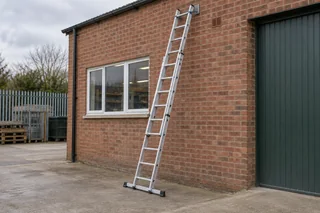
Ladder safety is the choice and controlled use of portable ladders and stepladders for work at height. A slip, tip, collapse or overreach can cause a worker to fall, while dropped tools can strike people below. A ladder is appropriate only when the task risk assessment justifies it and the equipment, ground, support, securing and user are suitable.
Latex allergy is an immune reaction to proteins in natural rubber latex, often encountered in gloves and other workplace products. Skin contact can cause immediate hives, while inhaled protein carried on powdered-glove dust can affect the nose and airways and cause occupational asthma; rarely, exposure can trigger anaphylaxis. Preventing unnecessary latex exposure, choosing task-suitable alternatives and acting promptly on symptoms protect workers and people nearby.
A safety decision can protect people and still be unlawful or unfair if it rests on a stereotype, a blanket exclusion or a refusal to consider adjustments. Employers need evidence about the actual task, the hazard and the worker’s circumstances; workers and safety representatives must be able to raise concerns without retaliation. Equality and employment protections differ between Great Britain and Northern Ireland, so the correct legal route matters before a restriction, recruitment decision or complaint outcome is fixed.
Lead dust is particulate contamination released when lead-containing paint, metal or residues are disturbed. Workers can inhale it or swallow it from contaminated hands, clothing and surfaces; absorbed lead can harm blood, nerves, kidneys and reproduction before illness is obvious. The safest work plan identifies the material, avoids unnecessary disturbance and verifies containment, hygiene and medical-surveillance decisions where exposure is significant.
Lead poisoning is harm from lead absorbed into the body, often after repeated inhalation of dust or fume or swallowing contamination from hands and surfaces. Lead can affect blood formation, nerves, kidneys and reproduction, and early symptoms may be vague or absent. Prevention depends on controlling the work process and hygiene, with competent medical surveillance where exposure is significant; a blood result must prompt action on the source.
Legionella management prevents growth in water systems and exposure to contaminated aerosol. The dutyholder needs a system-specific risk assessment, a responsible person, a written control scheme, monitoring with action limits and a response when a control fails. For hot and cold domestic water, temperature is a common strategy; cooling towers and other systems need their own HSG274 part and competent design.
Leptospirosis is an infection from Leptospira bacteria shed in animal urine. Contaminated water, mud or a direct splash can reach broken or waterlogged skin or the eyes, nose or mouth. A work plan should avoid contact where possible, control rodents and splashes, provide washing and wound protection, and tell workers to seek prompt medical advice if illness follows exposure.
The Level 3 Award in Education and Training (AET) develops the planning, inclusive teaching and assessment skills needed to train others. This guide connects three practical pillars: the teaching cycle, learner needs through Maslow, and useful learning activities through VARK. Explore the interactive diagrams, then apply them to your microteach, workplace KSBs and current subject expertise.
The Level 3 Certificate in Assessing Vocational Achievement (CAVA) develops the skills to assess occupational competence at work and vocational learning in other settings. It is a useful benchmark for workplace assessors in health, safety and risk, alongside current subject expertise and the assessment rules for the work or qualification concerned.
Local exhaust ventilation (LEV) captures or contains airborne contaminant at source before it crosses a worker’s breathing zone. It must be designed for the task, commissioned against a clear performance standard, checked by users, maintained and thoroughly examined and tested. A fan running or an in-date test label does not prove capture during the real task.
A workplace lifestyle health check is an optional, clinically governed wellbeing offer. Individual results belong with the person and provider, with a clear private follow-up route. The employer should address work-design barriers and receive only genuinely anonymous aggregate learning where appropriate. It must keep this programme separate from exposure-driven health surveillance and capability decisions.
Line managers translate the employer’s health and safety arrangements into safe daily work: they allocate competent people and resources, verify critical controls, listen to workers, hold unsafe tasks and close defects. Safety specialists advise and challenge, while directors and the employer retain their own duties. An assigned owner, a test of control and a clear escalation route make accountability visible.
Angiosarcoma of the liver is a rare, serious cancer with a well-established causal association to vinyl chloride monomer (VCM) exposure. The occupational lesson is to prevent VCM release, especially during maintenance and abnormal work, verify closed-system and exposure controls and preserve reliable exposure records. A clinician investigates symptoms and diagnosis; an employer cannot infer an individual cause from a job title alone.
Liver health at work involves two separate questions: whether the workplace exposes people to a liver-damaging agent, and whether a person with a liver condition needs support to work safely. Employers should control the actual chemical or biological hazard, remove avoidable work barriers and protect medical privacy. Managers should not infer a diagnosis from symptoms, drinking history or a test result.
Choose a safer way to move the load before designing a lift. Where lifting equipment is needed, a competent person plans the operation, selects equipment and accessories for the load and environment, keeps people away from a suspended load and verifies pre-use checks, maintenance and statutory examination. A valid examination report is only one layer of control.
Loading, unloading and transfer need controls for the actual load and interface. For hazardous-liquid transfer, identify the product, route and receiver, immobilise the vehicle, verify hoses/couplings, level or overfill protection and emergency isolation, then supervise start, steady transfer and shutdown. For general freight, segregate people, stabilise the vehicle and secure the load. A single generic checklist cannot cover every substance or mode.
Loneliness is a felt lack of meaningful connection; isolation describes limited contact or access. At work, check whether shifts, remote arrangements, induction, exclusion or workload are preventing support and participation. Redesign contact and decision routes, ask workers what helps, protect privacy and review whether change reaches the people affected.
Lone work is work without close or direct supervision, where help may not be immediately available. Decide if the task can be done alone at all, then assess its hazards, the worker’s competence and health needs, location, communication coverage and realistic rescue time. A check-in device is useful only when a missed check triggers a named response that can reach the person.
Long COVID can fluctuate and affect stamina, concentration, breathing and other functions. Discuss the person’s work capacity privately, agree task and hours changes, check safety-critical duties, and review the plan when symptoms or work change. Clinical diagnosis and treatment belong with healthcare professionals; disability protection and reasonable adjustments are assessed on the individual facts.
Long-term health conditions have different effects for different people. Ask privately about work function, identify barriers and safety-critical tasks, agree adjustments and review them. Managers plan work and protect privacy; clinicians advise on diagnosis or treatment. Apply Great Britain and Northern Ireland disability routes separately where relevant.
Incident models help ask different questions about what failed; they do not prove a single root cause. Trace an event through immediate conditions, organisational decisions and failed barriers, then verify corrective action in the field. Use incident rates with a stated numerator, denominator, reporting scope and uncertainty; statutory reporting is separate from internal learning.
Low back pain has many causes and a manager should not diagnose it. Prevent work-related aggravation by observing actual lifting, carrying, pushing, pulling and static tasks; avoid hazardous manual handling where practicable, assess what remains and redesign the task before relying on training. Adjust duties with the worker, and signpost urgent symptoms to clinical care.
Machinery controls separate people from dangerous movement or stop it before access is possible. Select and check safeguards for production, setting, cleaning and maintenance, including foreseeable intervention and stored energy.
Machinery can injure through moving parts, ejected material, stored energy and vehicle movement; it can also expose people to noise, vibration, dust or fumes. Assess the actual machine and each task throughout its life before choosing controls.
A machinery safety function prevents or stops a specified hazardous action, or keeps access closed until danger has ended. Its sensors, logic, stopping action and installed conditions must be validated together for the real machine and task.
Employers must manage work risks and provide safe plant and systems so far as reasonably practicable. Workers must take reasonable care, cooperate with safety arrangements and raise defects; the applicable law differs between Great Britain and Northern Ireland.
Turn credible new learning into better workplace decisions and constructive professional influence, with evidence beyond attendance at events.
Maintenance keeps equipment in safe condition, inspection finds defects or deterioration, and testing checks a specified function. Choose each check for the actual equipment and hazard; statutory examination is a separate requirement only where the relevant law applies.
Maintenance in process industries protects equipment and barriers that prevent or limit a major release. The strategy should rank work by failure consequence, detect deterioration and control impaired barriers until safe performance is restored.
Leaders need to understand the hazardous inventory, credible release and escalation scenarios, and the barriers that prevent or limit a major accident. They should ask for evidence that those barriers work now, because personal injury rates alone cannot establish process safety.
A major accident prevention policy sets an in-scope operator's aims and commitment to prevent major accidents and limit their consequences. The safety management arrangements, risk evidence and continuing checks must show how that commitment is delivered.
Management of change identifies how an alteration could affect a major accident scenario or protective barrier before it is made. The changed state should be checked and authorised before use, including temporary, procedural, staffing and equipment changes.
Workplace change can weaken controls designed for the previous equipment, staffing, layout or process. People planning and approving a change need to identify affected tasks, consult those exposed, revise controls and confirm the new arrangements work.
A changed design, sequence, workforce or workface can make a construction procedure unsafe even if the document is signed. Reassess the actual job, revise the controls and brief the people affected before work continues.
Contracted work needs a clear scope, competent parties, coordination, site controls and a controlled handback. Construction projects also have distinct client, designer and contractor roles under the applicable Great Britain or Northern Ireland CDM regime.
Inhaling manganese fume or fine dust can cause serious occupational harm. Identify the material and exposure route, control emissions at source and obtain competent occupational-health advice when exposure or symptoms raise concern.
Manual handling includes lifting, lowering, pushing, pulling, carrying and supporting a load by bodily force. Avoid hazardous handling where reasonably practicable, assess what remains and redesign the task before relying on technique alone.
Maritime fleet safety starts with vessel type, flag, route and certification. Match the craft to its current MCA or Merchant Shipping safety-management regime, including 2026 ISM changes or Workboat Code Edition 3 where applicable; verify voyages, maintenance, crew and emergency capability before sailing.
Martyn's Law is the common name for the Terrorism (Protection of Premises) Act 2025, which sets preparedness and protective-security duties for qualifying premises and events. Dutyholders need to check the Act's commencement, scope and applicable tier before treating a measure as a legal duty.
Means of escape are the routes, exits and supporting arrangements that allow people to reach safety during an emergency. Their design, availability, maintenance and management must fit the premises and the applicable law in England, Wales, Scotland or Northern Ireland.
Mechanical hazards arise when moving parts, stored energy, sharp edges or ejected material can injure a person. Trace the contact route during normal use and intervention, then remove or guard it and control unexpected movement.
Medication can affect a worker's ability to carry out a particular task, and some workers need access to their own prescribed medicine at work. Managers should assess the work risk without prescribing treatment; ordinary workplace first aid has a separate, limited medicines role.
Menopause and perimenopause can create different work barriers for different people, including temperature discomfort and access to facilities. A workplace response should focus on the actual task and individual need, with private discussion and clinical questions left to a health professional.
Menopause workplace adjustments change tasks, hours, facilities or the work environment to address an individual's actual barrier. Agree practical measures privately, check any effect on safety-critical work and review whether the changes help.
Menstrual health can affect comfort, attendance and access to facilities at work, with needs varying by person and task. Plan usable welfare access and cover, discuss work barriers privately and seek clinical advice for symptoms rather than asking managers to diagnose them.
Mental health first aid is initial, non-clinical support: notice a concern, listen, respond calmly, signpost and escalate immediate danger. It does not replace clinical care or an employer's duty to control harmful work conditions.
Work-related stress and mental ill-health can overlap, but the causes and support routes are not identical. Employers should identify harmful work demands and conditions, act on them and offer appropriate support without treating a worker's diagnosis as the whole risk assessment.
Mental ill-health, fatigue and workplace violence can interact when work pressure, weak recovery and aggression affect safe decisions. Assess the actual job and affected people, control the source of harm and provide a clear reporting and support route.
Mental wellbeing at work depends partly on job design, relationships, support and the ability to recover. Improve harmful work conditions and make support accessible while respecting individual privacy and the boundary between workplace action and clinical care.
Mercury exposure can cause serious harm; erethism describes a chronic pattern historically associated with mercury vapour. Identify the mercury form and exposure route, prevent release and seek specialist exposure and health assessment rather than diagnosing from behaviour alone.
Metabolic syndrome describes a combination of cardiovascular and metabolic risk factors that needs clinical assessment. At work, focus on the actual job and any requested support; managers should not infer diagnosis or fitness from a label.
Metal fume fever is a flu-like illness that can follow inhalation of freshly generated metal oxide fume, often during hot work on galvanised steel. Symptoms may start hours after the task, so a worker may not connect illness with the fume exposure. A suspected case calls for medical assessment when symptoms are significant and for an immediate review of the material, extraction, respiratory protection and everyone else exposed; other welding-fume disease risks remain separate.
Migraine and other headaches can disrupt concentration, comfort and safe work, but the cause and response vary. Address immediate task risk and work triggers where present, and use a clinical route for new, severe or changing symptoms.
Mindfulness and relaxation are optional ways some people manage stress or recovery. They may support a worker, but they do not remove harmful workload, poor control or other work-related stressors that the employer must assess.
Mineral acids can harm through splashes, mists or fumes, and the effect depends on the substance, concentration and exposure route. Identify the exact acid and process, control exposure at source and use substance-specific emergency and health advice.
Mobile plant can strike or crush people, overturn or shed a load. Control the route, ground conditions, visibility, vehicle condition and pedestrian interface before movement, with a clear stop rule when any safeguard fails.
Lift trucks and other mobile equipment can strike people, overturn or lose a load. Select equipment for the ground and task, separate pedestrians, train and authorise operators, and stop use when condition or visibility is unsafe.
Preventing fire protects people from injury, death and disruption; it also protects continuity and resources. The legal duties and guidance depend on the premises and jurisdiction, so financial arguments cannot replace effective fire precautions.
Preventing work-related injury and illness is a moral responsibility as well as a legal and financial concern. Cost analysis can help prioritise prevention, but it cannot make avoidable harm acceptable or replace the applicable duties.
Movement can support health, and UK adult guidance gives practical activity and strength goals. At work, employers should first make tasks, breaks and routes safe, then offer voluntary, inclusive choices without collecting unnecessary health data. Great Britain and Northern Ireland have distinct work and equality duties.
Construction load handling can combine force, awkward posture, repetition and uneven ground. Avoid unnecessary moves, redesign the route and load, use suitable aids and assess the remaining manual work for the actual task.
Musculoskeletal harm can develop from force, awkward or static posture, repetition, duration and poor recovery. Assess the real task and worker exposure, redesign work and equipment, then verify whether the changes reduce strain.
Musculoskeletal wellbeing concerns comfortable movement and function of muscles, joints, tendons, nerves and the back. Work design should reduce avoidable force, awkward posture, repetition, vibration and inadequate recovery rather than relying only on individual coping.
Nasal and sinus cancer can be linked to workplace exposure to carcinogenic dusts and chemicals. Control exposure at source, act on persistent symptoms and use the correct Great Britain or Northern Ireland duties.
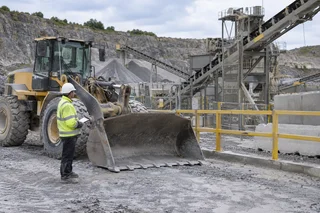
Naturally occurring radioactive material can concentrate in industrial scale, sludge, mineral products and waste; radon gas can also build up in workplaces. Exposure depends on the material, work method and route into the body, so identify the source, assess exposure and apply the correct Great Britain or Northern Ireland radiation rules before work.
A near miss is an unplanned event that could have harmed someone but did not. Report it promptly, make the situation safe, investigate the controls that failed and verify corrective action. Some specified high-potential events are legally reportable dangerous occurrences; most everyday near misses are managed internally.
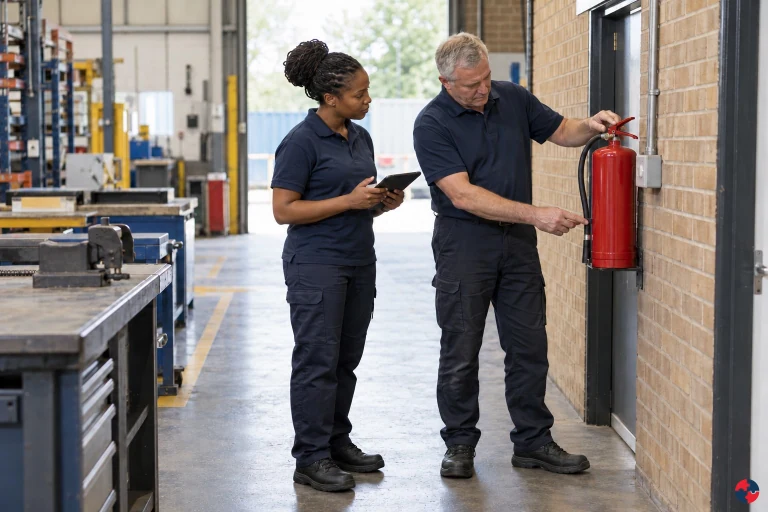
Learn to assess how a fire could start, who could be harmed and whether prevention, protection and evacuation arrangements are adequate.
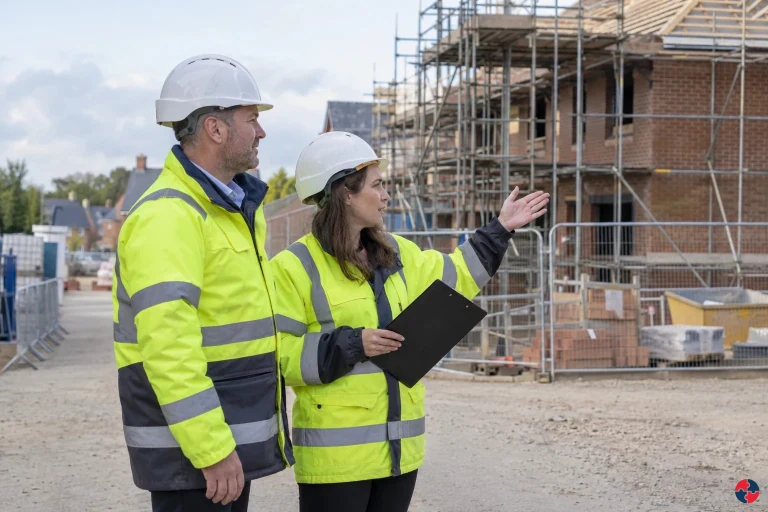
Learn to make safety decisions as a construction project changes, from early planning to handover between trades.
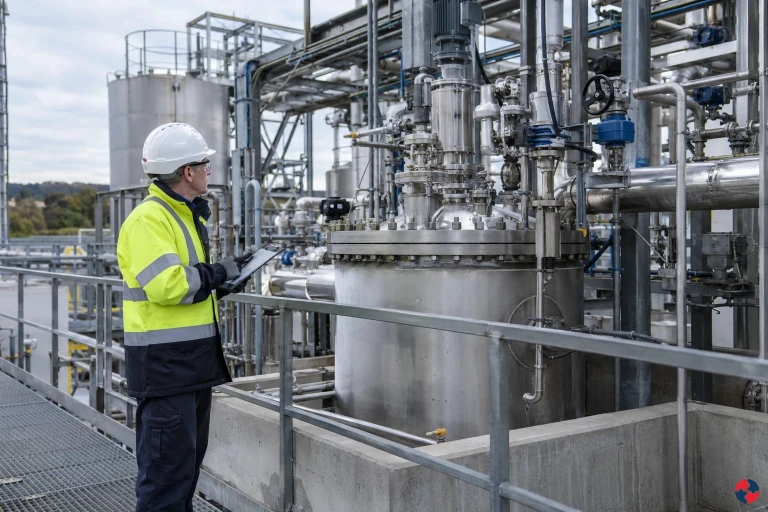
Learn to recognise how process incidents develop and how a site can check the barriers that prevent or limit a major release.
Develop the judgement to advise an organisation on professional practice, occupational health and workplace safety, then test whether the changes worked.
Use the General Certificate to manage everyday workplace risks, investigate what went wrong and carry out a practical risk assessment.
Neurodiversity describes natural variation in how people think, learn, communicate and experience their surroundings. In workplaces, unclear instructions, sensory overload and unpredictable change can create barriers even when a person can do the underlying job well. Good work design removes avoidable barriers, supports individual adjustments and keeps safety-critical task controls effective.
Nickel metal and nickel compounds can cause work-related skin and respiratory disease; inhaled nickel compounds are also linked to lung and nasal cancer. The risk depends on chemical form, process and route of exposure. Identify the material, control dust or mist at source, protect skin, and act early on symptoms while a clinician and occupational specialist assess the cause.
Night work can disrupt sleep and alertness, increase fatigue and make safety-critical tasks and the journey home harder. Good management combines lawful hours and free health-assessment offers with a rota, breaks, supervision and task controls that work on real night shifts. Use the separate Great Britain or Northern Ireland working-time rules for the job location.
Nitrobenzene and aniline are different aromatic chemicals used in industrial synthesis. Both can enter through skin as well as breathing and can disrupt the blood’s oxygen-carrying function through methaemoglobinaemia. Identify the exact substance, contain transfer and vapour, prevent skin contact, and treat suspected systemic exposure as an urgent clinical matter even if early symptoms seem mild.
Nitrogen can displace the oxygen people need to breathe, while inerting can be essential to prevent fires or explosions in enclosed plant. Safe work needs a verified design, controlled discharge, isolation, atmosphere monitoring, and a rescue plan before exposure. A failed barrier or uncertain line-up means stop and move to the planned safe state.
Nitrogen dioxide and related nitrogen oxides can be generated by silage, combustion, welding and chemical processes. Inhalation can injure the lower airways and lungs, sometimes with serious symptoms after a delay. Identify the source, prevent entry or release, monitor and ventilate where the task assessment requires it, and treat suspected exposure as urgent even when a worker initially feels better.
Occupational nitroglycerine (glyceryl trinitrate) exposure requires control of airborne and skin routes during manufacture, handling and maintenance. Identify the actual nitrate ester and mixture, contain exposure at source, and stop the suspected task if a worker reports illness. If a worker becomes unwell during or after the task, stop suspected exposure, keep the formulation and exposure details, and arrange appropriate clinical assessment. A clinician determines the cause and fitness for work.
Noise at work can cause permanent hearing damage and make warnings harder to hear. Identify noisy sources and exposed people, estimate daily or weekly and peak exposure, reduce sound at source, and apply the correct GB or NI action and surveillance duties.
Noise-induced hearing loss is permanent inner-ear hearing damage caused by harmful sound exposure. Prevent it through source noise reduction, representative exposure assessment and appropriate surveillance; respond promptly to tinnitus, muffled hearing or a measured threshold change.
A noise risk assessment estimates representative daily or weekly exposure and separate peaks, identifies who is at risk, and turns measurements into an owned control and hearing-conservation plan. Hearing tests and protectors support source reduction.
Non-freezing cold injury (NFCI), often called trench or immersion foot, can develop after prolonged wet-cold exposure without the tissue freezing. Prevent persistent nerve and vascular problems by keeping feet dry, changing exposure and responding early to numbness, pain, swelling or colour change.
Overweight and obesity describe excess body fat that can raise the risk of health problems, although effects and work capability vary between people. At work, unsuitable access, handling demands or equipment can cause harm to anyone. Assess the actual task, choose suitable controls and agree private, proportionate support where needed.
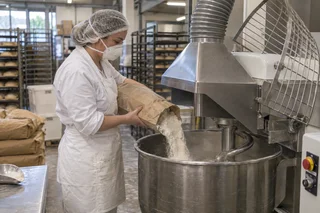
Obliterative bronchiolitis is a rare disease that scars and narrows the small airways after some workplace inhalation exposures. Diacetyl vapour from heated flavourings and coffee processing is a well-documented occupational route; other inhaled agents have also been reported. Uncontrolled exposure can cause lasting breathing impairment, so identify releases, control them at source and act promptly on symptoms under the applicable GB or NI route.
Occupational asthma is new asthma caused by inhaling a respiratory sensitiser at work or, in some cases, by a high-level irritant exposure. Flour dust, isocyanate spray mist and other workplace agents can inflame and narrow the airways, with symptoms sometimes appearing after a shift. In Great Britain and Northern Ireland, early recognition and control of exposure matter because continued contact can leave lasting symptoms and may prevent a return to the same work.
Occupational bladder cancer is bladder cancer linked to workplace exposure to carcinogens, especially aromatic amines historically used in dye, rubber, textile, chemical and related industries. It most often involves urothelial cells lining the bladder and can appear decades after exposure because carcinogenic metabolites are filtered into urine and remain in contact with the bladder lining. Modern UK prevention focuses on eliminating or tightly controlling carcinogens under COSHH, recognising legacy exposure histories, controlling skin and inhalation routes, monitoring where needed, investigating urinary symptoms promptly and keeping long-term evidence of exposure control.
Chronic kidney disease is usually identified through blood or urine tests and often has no early symptoms. At work, lead or cadmium exposure can damage kidneys, while heat strain and dehydration can create kidney-relevant risk; an existing condition may also call for adjustments. Managers must control the work hazards, act on exposure findings and seek confidential clinical or occupational-health advice rather than diagnose a worker.
A workplace exposure limit is an airborne concentration averaged over a stated period, usually eight hours or 15 minutes. Great Britain lists legally binding WELs in EH40 under COSHH; Northern Ireland applies its separate COSHH route and uses EH40 as described by HSENI. A result below a limit is only one check: substance hazards, skin uptake, short peaks and whether controls work in real tasks still govern the decision.
Foodborne illness can reach workers and consumers when pathogens or toxins move from contaminated food, hands, surfaces or water into something eaten. Food handlers with vomiting or diarrhoea, weak raw-to-ready separation and failed cooking or chilling controls can cause rapid spread, especially where vulnerable people are served. A food business must control the process, remove symptomatic people from open-food work and seek competent advice when linked cases suggest an outbreak.
Occupational health helps employers prevent work-related ill health by connecting exposure controls, risk-based health surveillance and specialist advice. Managers should use work-focused referrals, protect confidential clinical information and act on anonymised trends, fitness advice and adjustment needs without treating OH as a substitute for source control.
Fitness for work is a task-specific decision about whether someone can work safely and sustainably with suitable controls, adjustments or restrictions. A return plan should translate clinical and occupational-health advice into actual duties, phased hours, privacy boundaries and review points, with unsafe tasks held until capability and controls are verified.
Work-related benzene exposure can increase the risk of leukaemia, especially acute myeloid leukaemia; significant ionising-radiation exposure is a separate recognised risk. Prevention means identifying the real task and route, eliminating avoidable exposure, controlling residual exposure and verifying the controls. A clinician, not a manager, investigates symptoms or an individual diagnosis.
Occupational lung-cancer prevention starts before exposure: identify the actual agent and task, avoid disturbance or emission, use effective engineering controls and verify exposure reduction. Asbestos, respirable crystalline silica, diesel exhaust and welding fume have different evidence and legal routes. A workplace cannot diagnose cancer or infer an individual cause from job history alone.
Occupational tuberculosis is TB infection that may be linked to workplace exposure, most often where workers have close contact with infectious people, clinical specimens, contaminated aerosols or high-risk environments. It needs careful handling because TB is a medical condition, a public-health concern and a workplace biological-agent risk. Good management combines government health or public-health referral, COSHH biological-agent assessment, ventilation, hygiene, respiratory protection where needed, occupational health advice, confidentiality, contact tracing support and evidence-based review.
Occupiers’ liability concerns reasonable care for people entering premises, with the applicable civil law depending on whether the site is in England and Wales, Scotland or Northern Ireland. Workplace operators also need practical visitor controls: safe arrival instructions, segregated routes, inspection and repair, accessible warnings and a clear stop route when a hazard cannot be controlled.
Optical radiation includes ultraviolet, visible and infrared light; harmful workplace exposure can come from welding arcs, UV lamps, intense light or lasers, while outdoor workers face solar UV. Artificial optical radiation has specific GB and Northern Ireland rules, whereas sunlight needs separate work-risk control. Assess the source, beam or exposure route, access and maintenance state before choosing enclosure, shielding, scheduling and residual eye or skin protection.

Oral health concerns the teeth, gums and mouth; pain or infection can affect concentration, communication, eating and attendance. Employers can provide drinking water, reasonable work support and private signposting to dental care, while clinicians diagnose and treat conditions. If pain, medication or recovery affects a safety-critical task, review that task and arrange suitable cover rather than asking a manager to inspect or diagnose the worker’s mouth.
Organic solvent encephalopathy is a possible long-term neurological effect of substantial or repeated exposure to some organic solvents; acute vapour exposure can also impair judgement and coordination. Identify the product and task, prevent or control vapour and skin exposure at source, verify controls and refer suspected illness for competent clinical assessment rather than diagnosing it at work.
Organotin compounds are a varied chemical family, so toxicity and control decisions depend on the exact compound, formulation and task. Before opening a line, handling residue or disturbing a coating, identify the material, control inhalation and skin contamination at source, plan decontamination and obtain urgent clinical advice after suspected significant exposure.
Organisational change can weaken safety controls when roles, competence, staffing or contractor interfaces move faster than the arrangements that depend on them. Screen the proposed change early, assess both the future organisation and the transition, consult affected people, assign interim owners and verify critical controls before and after go-live.
Organisational learning means finding and fixing the conditions that allowed an incident or near miss, then checking whether the fix works across similar work. Record the event, preserve evidence, involve workers, investigate proportionately and close actions against actual control performance; assess GB or Northern Ireland statutory reporting separately from internal learning.
A health and safety risk profile brings together the organisation’s material hazards, exposed people, possible consequences and confidence in controls so leaders can set priorities. Use task observations, assessments, control checks and incident learning across sites and shifts; low injury counts alone cannot prove that rare, high-consequence hazards are controlled.
An organisation is a work system in which roles, tasks, equipment, information, incentives and supervision interact. A structure chart cannot show every real handover or workaround, so assess the work as done with workers, assign critical control owners and test how changes in staffing or reporting lines affect safe performance.
Osmium tetroxide (also called osmium tetraoxide) is a highly hazardous laboratory chemical affecting eyes, skin and airways. Authorise only a compound-specific COSHH task with substitution or sealed microscale supply considered first, suitable tested extraction, defined waste and spill arrangements, trained users and exposure escalation. EH40 lists an osmium tetraoxide limit as osmium; a limit is not a substitute for preventing or adequately controlling exposure.
Overexertion injuries arise when physical work exceeds a person’s current capacity through force, posture, repetition, duration or recovery. Avoid hazardous handling where reasonably practicable, assess tasks that remain, and redesign loads, routes, equipment and pace before relying on training. MAC, RAPP and upper-limb tools help assess specific work; no legal safe-weight limit makes an unassessed lift safe.
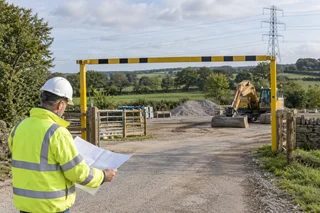
Overhead power lines can cause fatal shock or burns by contact or flashover from plant, loads and long materials. Identify the line and owner before work; avoid the area, or ask the network operator about diversion or making the line dead. If a live line remains, a competent plan must set site-specific exclusion, barriers, controlled crossings, plant limits, supervision and emergency action. No generic clearance figure or PPE makes close approach safe.
Passive fire protection uses fire-resisting construction, protective systems and plant separation to slow the spread of heat and smoke and limit escalation. Its performance depends on complete compartments, suitable fireproofing, drainage and layouts matched to credible fire and explosion scenarios. An unsealed service opening, damaged barrier or poorly sited occupied building can expose people and critical plant even when other fire systems work.
PCOS is commonly used for a hormonal condition that the NHS now calls polyendocrine metabolic ovarian syndrome (PMOS). It can affect periods, hair and skin, energy, mood and fertility, but experiences vary and symptoms such as severe pain or heavy bleeding need their own clinical assessment. At work, support begins with the task and the person’s preferences: private conversations, access to welfare facilities, fair appointment arrangements and adjustments to hours or duties where needed. Managers should seek occupational health advice for uncertain safety-sensitive restrictions and keep health records limited to what is necessary.
Pelvic health can affect bladder or bowel control, pelvic floor function, pain and recovery after childbirth or treatment. Work may increase practical barriers when toilets are hard to reach, breaks depend on cover, routes are long or lifting is strenuous. A manager should discuss the work impact privately, arrange reliable welfare access and suitable task changes, and seek occupational health input when restrictions or safe work are uncertain. Persistent or changing symptoms belong with NHS or another qualified health professional, not a workplace diagnosis.
Perimenopause is the transition period before menopause and can affect people differently through hot flushes, night sweats, poor sleep, fatigue, brain fog, mood changes, heavy or irregular periods, headaches, joint pain, urinary symptoms or reduced confidence. Workplace management is not medical advice. Good management is privacy-led and work-focused: suitable welfare, temperature and uniform review, flexible conversations, absence and return-to-work support, reasonable adjustments where needed, occupational health advice for complex cases and clear boundaries so managers support work impact without asking intrusive health questions.
A permit-to-work system is a formal control system for high-risk, non-routine or interacting work where ordinary procedures are not enough. A permit does not make work safe by itself. It should define the job, location, hazards, isolations, tests, precautions, authorisation, communication, supervision, suspension, handback and close-out evidence. Good permit systems control hot work, confined spaces, electrical isolation, line breaking, work at height, excavations, lifting interfaces and process safety work through competent roles, clear decision rights, live field verification and permit audits.
Personal hygiene and wellbeing at work is about more than individual habits. It includes suitable toilets and washing facilities, clean drinking water, rest and eating areas, hand hygiene, skin care, workwear, contamination control, infection prevention, dignity, privacy and supportive management. Good arrangements protect workers from biological agents, hazardous substances, dermatitis, ingestion exposure, poor welfare, stigma and embarrassment. A strong workplace designs hygiene into the job through clean and dirty areas, washing facilities, workwear/laundry systems, skin-care routines, waste controls, food and drink rules, training and respectful manager boundaries.
Personal protective equipment (PPE) is equipment worn or held to protect a worker from a remaining risk after stronger controls have been considered. Its protection depends on correct hazard matching, fit, compatibility, use, storage and replacement; merely issuing an item does not control exposure. Great Britain’s 2022 change extended workplace PPE duties to qualifying limb (b) workers, while Northern Ireland has its own workplace-use regulations.
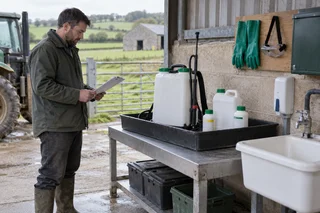
Pesticide poisoning can occur when pesticide products or residues enter the body by inhalation, skin absorption, eye contact, ingestion or accidental injection. Work risk can arise during mixing, loading, spraying, dipping, fogging, baiting, treated-area entry, equipment cleaning, storage, transport, spill response or waste disposal. Workplace management is not medical advice. Suspected significant exposure or serious symptoms need prompt medical assessment. Good management means using the product label and safety data sheet (SDS), competent users, Control of Substances Hazardous to Health (COSHH) assessment, substitution or non-chemical control where possible, controlled application, drift prevention, hygiene, personal protective equipment (PPE) and respiratory protective equipment (RPE), health surveillance where needed and accurate exposure records.
Pharmaceutical agent diseases and workplace exposure can arise where workers handle active pharmaceutical ingredients, hazardous medicines, cytotoxic or antineoplastic drugs, antibiotics, hormones, anaesthetic gases, powdered products, contaminated surfaces, sharps, patient excreta, cleaning waste or manufacturing residues. Risk can occur in pharmaceutical manufacturing, compounding, pharmacy, healthcare, veterinary work, laboratories, waste handling and maintenance. Good management means Control of Substances Hazardous to Health (COSHH) assessment, substitution or closed systems where possible, isolators or local exhaust ventilation (LEV), safe transfer, sharps control, hygiene, personal protective equipment (PPE) and respiratory protective equipment (RPE), spill response, health surveillance where indicated, exposure records and strict privacy boundaries.
Phosgene is a highly toxic, reactive gas associated with chemical manufacture, some process intermediates and thermal decomposition of chlorinated solvents or polymers. Occupational exposure is mainly an inhalation and eye risk, and serious lung injury can be delayed, so apparently mild early symptoms after credible exposure must be treated cautiously. This page is workplace guidance, not medical advice. Suspected significant exposure needs urgent medical assessment, removal from exposure, incident control, product and process information, competent investigation, Control of Substances Hazardous to Health (COSHH) review, monitoring, emergency planning, closed-system controls and assurance evidence.
Physical and psychological health in construction should be managed as one connected health-risk system, not as separate posters for manual handling, dust, noise, stress and wellbeing. Physical risks include musculoskeletal disorders (MSDs), noise-induced hearing loss, hand-arm vibration, dust, heat, cold and fatigue. Psychological risks include demands, control, support, relationships, role clarity, change, pressure, isolation and traumatic events. Good construction management uses Construction (Design and Management) (CDM) planning, worker involvement, welfare, task redesign, exposure control, health surveillance, stress risk assessment, supervisor checks, contractor coordination and learning from early warning signs.
Physical hazards are workplace conditions or energy sources that can injure or harm people through movement, impact, pressure, electricity, temperature, noise, vibration, radiation, gravity, stored energy, poor lighting, slips, trips, falling objects or unsafe interaction with equipment and the built environment. For each task, identify the energy source, how it could reach a person, who could be exposed and which verified barrier interrupts that pathway. Reassess when equipment, work location or surrounding activity changes.
Physical inactivity and sedentary work should be handled as a supportive wellbeing and work-design topic, not as a judgement on appearance, weight or personal lifestyle. UK Chief Medical Officers' guidance emphasises that adults should aim to be active every day, that any activity is better than none, that strength activity matters, and that long sedentary periods should be broken up where possible. Workplaces can help through movement-friendly design, breaks, display screen equipment (DSE) arrangements, walking meetings, active travel support, inclusive campaigns, privacy boundaries and manager training without collecting unnecessary health data or pressuring people.
Dry sanding plasterboard joints can generate high gypsum dust, especially overhead or indoors. Avoid sanding where feasible; otherwise use task-matched on-tool extraction and verify it. Identify the board and compound, because mixed silica, wood or legacy dust needs a different assessment.
Soluble chloroplatinates and related salts can sensitise the airways. Focus on the exact compound, contained transfer, residues and exposure of cleaners and maintenance staff; elemental platinum metal is a different exposure. New respiratory or skin symptoms need occupational-health review and control reassessment.
Portable electrical equipment ranges from a static office charger to a hand-held tool or cleaning machine. Damaged cables, unsuitable equipment and wet or rough use can allow shock, burns or fire; the maintenance decision depends on the equipment and the conditions of use. User checks, visual inspection and electrical testing each address different faults, and there is no universal annual portable appliance test requirement.
Posture and movement describe how work loads the body and how often that load changes. Sustained awkward positions, repetition, force, long reaches and insufficient recovery can contribute to musculoskeletal symptoms; one “perfect posture” cannot make a poorly designed task safe. Managers should assess the work, vary demands and adapt equipment and pace with the worker rather than diagnose a condition from posture alone.
Pregnancy wellbeing at work concerns health, comfort and participation during pregnancy, recovery after birth and breastfeeding. Needs such as rest, welfare access, workload and privacy can change over time, so managers should ask about work effects and agree support without seeking a diagnosis. Written notification of pregnancy, recent birth within six months or breastfeeding triggers individual assessment alongside support, using the appropriate GB or NI route.
Protecting pregnant workers, new mothers and breastfeeding workers begins with assessing work hazards for the workforce and then the individual’s actual tasks after written notification. Risks can change with pregnancy, birth, breastfeeding and workplace change; controls should be agreed with the worker and checked in practice. If a significant risk cannot be controlled, the employer must adjust work and check the applicable alternative-work and pay rights for that person’s employment status.
Prescription medicines can sometimes affect alertness, vision, balance, coordination or judgement at work, particularly after starting or changing a dose. The work decision depends on the actual medicine advice, the person’s effects and the task: driving, operating plant and other safety-critical duties may need a temporary pause or adjustment. Workers should not stop prescribed treatment on a manager’s instruction; employers should discuss work-relevant effects privately and seek clinical or occupational-health advice when needed.
A useful health and safety presentation changes what an audience can understand, decide or do. It starts with the task and people, gives a clear explanation and checks understanding through questions or demonstration. Slides support that conversation; attendance or a polished deck alone does not prove that a worker can perform a safety-critical task.
Presenteeism means working while illness, fatigue or distress reduces the ability to work safely or effectively. The cause may include work pressure, poor cover, sickness culture or a health condition, so a manager should examine the work system as well as offer private support. Where alertness or physical capability is needed for a safety-critical task, uncertainty calls for a task decision and appropriate advice, not a diagnosis or blame.
Pressure relief, venting and emergency depressurisation protect a process when pressure or inventory could exceed safe limits. They are different functions: a relief device limits pressure in a defined scenario, a vent or disposal system carries the discharge safely, and emergency depressurisation may reduce inventory or escalation in an emergency. A device that opens at the right set point can still fail as a protective system if its inlet is blocked, the discharge is unsafe or the design basis no longer matches the plant.
A pre-start-up safety review (PSSR) is a documented decision that a new, modified or restarted process is ready before hazardous material or energy is introduced. It tests whether the plant matches its design, critical safeguards work, people understand the operating limits and open actions are controlled. A signed checklist without field evidence cannot prevent a release, fire, explosion or other start-up failure.
Preventing fire means reducing fuel, ignition and the chance of an uncontrolled event; limiting fire spread means preserving the barriers, routes and response that protect people if ignition occurs. These decisions change with the premise and jurisdiction: ordinary premises fire-safety duties in England and Wales, Scotland and Northern Ireland have different instruments, while dangerous-substance work has its own DSEAR route. A working alarm does not make an open compartment, blocked exit or uncontrolled hot work safe.
Proactive monitoring checks whether important health and safety controls are present and working before an incident exposes a failure. It includes frontline checks, field observation, sampling, measurement and assurance that lead to a decision and closed action. A count of completed forms cannot show that a barrier works unless the question, sample, owner and response reflect the actual risk.
Process safety culture is visible in decisions about major-accident barriers when production, cost and uncertainty compete. A just culture encourages reporting and fair learning while retaining accountability for deliberate unsafe choices. A reassuring injury-rate chart cannot prove containment, shutdown or emergency barriers are healthy; leaders need to ask what happens to a weak signal and who can stop the task.
Process safety information is the controlled account of what the plant contains, how it is designed to operate, and which conditions and safeguards prevent a major accident. Process knowledge is people’s ability to use that information at the point of work. A drawing that omits a temporary bypass, a stale chemical property or a lost design limit can invalidate a hazard review and a permit even when the document set looks complete.
Visible process-safety leadership is demonstrated when leaders make and fund decisions that preserve major-accident barriers, especially under pressure to produce. A visit, slogan or low injury rate is not evidence that containment, relief, shutdown and emergency arrangements are healthy. Leaders need to understand the credible hazard, ask about degraded barriers, authorise a stop when needed, and verify corrective action in the field.
A process-safety objective describes the major-accident outcome to prevent and the barrier standard to sustain. A target sets a defined threshold and response; an indicator supplies evidence from the field. Counts of completed inspections or low injury rates are weak assurance unless they reveal whether containment, shutdown, relief and emergency barriers are available and effective.
Process-safety accountability means a named person has authority, competence and resources for each major-accident barrier and for decisions when it is impaired. A RACI chart alone cannot make a transfer safe: the operator must know whom to call, the supervisor must control the task, the technical authority must judge the barrier, and the release owner must record why work can resume.
Personal safety controls injuries from everyday tasks; process safety prevents low-frequency, high-consequence loss of containment, fire, explosion and toxic or energy release. Both matter, but they need different evidence. A tidy site with excellent PPE compliance can still have overdue relief tests, bypassed trips or unstable operating limits. Leaders should see both sets of measures and act on the barrier that could fail today.
A credible health and safety practitioner investigates the work, distinguishes law from guidance, explains uncertainty and records advice that decision-makers can act on. Ethical influence means not softening a serious finding for convenience, while still listening to operators and choosing proportionate controls. The practitioner advises and challenges; the employer retains its legal duty and the right specialist must be involved when the issue exceeds the practitioner’s competence.
Demonstrate how your influence makes it easier for people to raise concerns, participate in decisions and follow safe arrangements under real production pressure.
An NVQ recognises what you can do in real work, supported by the knowledge behind your decisions. This ProQual Level 6 route develops and assesses occupational health and safety practice across ten mandatory units. Explore who it suits, how it differs from taught qualifications and degrees, and how workplace evidence and continuing professional development build your portfolio.
A health and safety prosecution follows an alleged criminal breach and an evidence/public-interest decision by the relevant authority. The route is territorial: HSE may prosecute in England and Wales, refers Scottish cases to the Procurator Fiscal, and Northern Ireland has HSENI/PPS arrangements. Notices, criminal proceedings, civil compensation and internal discipline have different purposes. A prosecution is not proof that an incident had to occur; risk-based offences can arise without injury.
Prostate health awareness at work means offering accurate NHS signposting, privacy and practical support without asking managers to diagnose symptoms or run a screening programme. Urinary changes can have different causes, including non-cancerous enlargement; prostate cancer may have no early symptoms. A worker with new or worsening symptoms should seek clinical advice. The workplace can make toilet access, breaks, appointments and return-to-work arrangements usable and confidential.
PUWER is the Great Britain work-equipment use regime: choose suitable equipment, keep it safe and maintained, inspect it when the regulations require, protect people from dangerous parts and energy, and give users and supervisors suitable information and training. Northern Ireland has its own 1999 PUWER instrument. A conformity mark or annual checklist does not by itself show that a machine is safe for the actual task. The dutyholder must manage real operation, cleaning, breakdown and change.
Q fever is an infection caused by Coxiella burnetii that can spread from livestock through contaminated birth material, bedding and airborne dust. It can cause flu-like illness and, less often, serious or persistent complications. Animal work and cleaning therefore need controls that prevent inhalation and keep contamination out of clean areas.
Health and safety legislation sets different standards for how far a duty holder must go. An absolute requirement must be met where it applies; “practicable” asks whether a measure can be done; “so far as is reasonably practicable” weighs risk against the sacrifice of further protection. The distinction matters when selecting controls and explaining why a safety measure was or was not taken.
Quality assurance in health, safety, security and environmental work tests whether important controls are designed well, used in real tasks and improved when they fail. It joins requirements, field observations, worker feedback and corrective action into a traceable management decision. A certificate or completed form contributes evidence but cannot by itself show that people are protected.
Quantitative risk assessment (QRA) uses numerical scenario, frequency and consequence estimates to inform major-hazard choices. A useful QRA states its scope, data limits and uncertainty, compares real controls, and is updated when conditions change. It supports proportionate risk management; a calculated number never replaces a working barrier or permits unsafe work.
Radiation is energy carried by waves or particles; workplace sources include X-ray equipment, optical sources and naturally occurring radon gas. Radon can accumulate in occupied buildings and, when inhaled over time, increase lung-cancer risk, while an uncontrolled radiation source can injure tissue or eyes. Identify the source and exposure route, then assess and verify the appropriate controls under the Great Britain or Northern Ireland rules.
A runaway reaction occurs when heat generation exceeds heat removal and the rising temperature accelerates the chemistry. Gas, boiling or decomposition can then overpressure equipment and release hot, flammable or toxic material, causing burns, blast injury, fire or poisoning. Safe operation depends on reliable chemical and thermal data, defined limits, and verified cooling, control and relief barriers before a batch or change starts.
Reactive monitoring learns from workplace accidents, near misses, ill health and failed controls after they occur. It traces the harmful energy or exposure, the people affected and the safeguards that did not work, including events where chance prevented injury. Protect people first, decide the correct GB or Northern Ireland reporting route, investigate causes and verify stronger controls before treating the case as closed.
Recovery restores physical, cognitive and emotional capacity after work demands. When hours, task intensity or shift timing outpace realistic rest and sleep opportunity, fatigue can impair attention, judgement and coordination and increase error and injury risk. Work design, breaks, staffing and shift decisions should protect both legal rest and safe performance in the actual task.
Remote working changes where people use equipment, communicate and receive support, but it does not remove workplace health and safety duties. Poor workstation design, isolation, high demands and blurred boundaries can contribute to discomfort, fatigue and work-related stress. Assess the actual role and each regular work setting, act on the findings and keep contact and health information proportionate.
Repetitive strain injury is a broad public term for upper-limb symptoms, while workplace assessment should identify the actual disorder or risk factors without attempting diagnosis. Repetition, force, awkward or fixed posture, vibration and insufficient recovery can combine to load muscles, tendons, nerves and joints. Observe the task as performed, redesign the source of exposure and respond early to symptoms so work does not keep aggravating harm.
Workplace reproductive health covers exposure and work-design factors that may affect fertility, pregnancy, breastfeeding or recovery after birth. Control known hazards for everyone before private information is disclosed; then use the applicable GB or Northern Ireland route for individual assessment, adjustments and specialist advice. Managers should decide how work changes, not diagnose a person.
Reproductive toxicity is harm to fertility, pregnancy or development from a particular workplace agent and exposure pathway. Assess the agent, task, route and affected people before relying on a label or air limit; control exposure for all workers and address non-routine work such as cleaning, waste and maintenance. Lead, many COSHH agents and radiation have different legal routes, and personal health decisions need competent advice.
Resilience and coping skills can help people manage ordinary pressure and seek support, but they do not remove work-related stressors. Assess workload, control, support, relationships, role and change; improve the work before relying on optional individual techniques. A useful programme gives people safe ways to speak up while managers act on the conditions causing harm.
A safe return after illness matches the person’s current work capacity to the real tasks and hazards, with a private discussion, temporary or lasting changes, clear decision ownership and planned review. A fit note informs the discussion; it does not itself clear every safety-critical duty. If work contributed to illness, fix that exposure before restoring it.
Performance review is the management decision point where leaders compare the risk profile, control evidence, incidents, worker experience and objectives, then change the plan and resources. Low injury numbers alone cannot show that critical controls work. A useful review names an owner, due date and effectiveness measure for every material action.
Point risk is the risk from a particular activity or task under the conditions at the point of work. Enduring risk is an ongoing or recurring risk the business manages across jobs. The risk register gives a higher-level view of enduring risks, their typical controls and who owns them. Findings from individual jobs help keep the register and the wider risk profile up to date.
A Dangerous Substances and Explosive Atmospheres Regulations (DSEAR) assessment asks how a dangerous substance could be released, form a fire or explosive atmosphere, meet ignition, harm people and spread through connected spaces. It then prioritises elimination and release prevention, suitable equipment and ignition control, mitigation, emergency arrangements and verified maintenance. Hazardous-area zoning is one output where needed, not the whole assessment.
Risk management connects hazard discovery, proportionate assessment, higher-order controls, accountable implementation, assurance and learning across the organisation. A form or risk matrix is a decision aid, not evidence that exposure fell. Leaders must prioritise serious and uncertain harm, resource controls, verify performance and revisit decisions after change or failure.
People perceive and act on risk through attention, experience, familiarity, workload, social cues and the way work is designed. A worker may miss a weak signal or accept a normalised shortcut even when a written assessment exists. Safer decisions come from visible hazards, usable controls, time to stop and ask, supervisor support and learning why the choice made sense in context.
Road fleet safety combines a safe journey, safe driver or rider, safe vehicle and controlled loading and site interfaces. Stop unsafe trips or vehicles, include grey fleet and contractors, and apply the correct GB or Northern Ireland work-health and road-law route.
Root cause analysis investigates how an incident or near miss developed, which barriers failed and why the conditions existed. It starts with safe response and evidence, builds a timeline, tests multiple causal pathways and selects changes to design and management systems. “Human error” is a question to investigate, not a sufficient final cause; a completed diagram is not proof that risk has fallen.
Rotator cuff-related shoulder pain can be caused or aggravated by repeated or forceful overhead work, awkward reach, static loading and poor recovery. Pain does not prove a single tendon diagnosis or that work was the sole cause. Employers should reduce risky shoulder loading, respond early to symptoms, adapt duties and check the redesigned task; a clinician should assess symptoms, especially after injury or with urgent signs.
Workplace transport is the movement and use of vehicles and mobile plant in yards, warehouses, depots, forecourts and other work areas. People can be struck or crushed where their routes meet moving vehicles; unstable loads, falls from vehicles and overturns cause further serious injuries. Safe movement depends on separating people from vehicles, matching each vehicle and load to its route, and coordinating drivers and deliveries.
A safe operating envelope is the set of approved conditions and limits within which a process can operate without defeating its safety basis. Pressure, temperature, level, flow, composition and the availability of protective systems can move a plant towards loss of containment, fire, explosion or toxic release. Operators need a defined response to each warning, alarm and excursion, backed by engineered protection and a competent restart decision.
Safe shift handover transfers the current state of plant or work, unresolved hazards and responsibility between outgoing and incoming people. A missed isolation, impaired barrier or abnormal condition can leave the next team acting on a false assumption and expose people to a release, fire, injury or other serious event. Preparation, two-way communication and incoming cross-checking keep critical decisions tied to the actual work state.
Safe start-up and shutdown move plant between isolated, transient and stable states. During those transitions an incorrect line-up, residual energy, inadequate purge or unavailable trip can release hazardous material, ignite it or expose people during maintenance. A safe sequence verifies the plant state and safeguards before energy or feed is introduced, monitors the transition, and holds or returns to a safe state when the evidence does not match the plan.
A safe system of work is the planned way to complete a task after its hazards, people, equipment and changing conditions have been assessed. It combines suitable physical safeguards with a usable sequence, competent people, clear interfaces and stop decisions. A written method alone does not prevent contact with moving machinery, release of stored energy or exposure to harmful material when the control it describes is absent.
Safety barriers interrupt a defined route from a hazardous source to people, or limit harm after control is lost. They include physical guards and segregation, engineered protection, planned human actions and emergency systems, each with a specific function and evidence that it works in the real task. A damaged, bypassed or unsuitable barrier cannot be relied on; hold the exposed work, control access and obtain a competent decision. A barrier to someone’s participation in work has a different meaning and calls for an individual adjustment.
A safety-critical performance standard states the function and testable performance needed from a barrier credited against a major accident. It links the hazard scenario to availability, reliability, response, survivability, interfaces, verification and what happens when the barrier is impaired. A completed maintenance task is not proof of protection unless its result demonstrates the required function under the conditions that matter.
Safety culture is the pattern of decisions, behaviours and working conditions that shapes how risk is handled when production, uncertainty or fatigue puts controls under pressure. Leadership, worker involvement, competence, communication and learning influence whether weak signals reach a person who can act. A culture survey can reveal perceptions, but it cannot prove that a guard, safe route or other critical control works in the field.
Safety leadership and governance styles describe how senior leaders, managers and supervisors translate intent into visible priorities, resources, decisions, consultation, challenge and learning. Strong leadership is not a slogan or personality type: it is observable through risk-based decisions, worker voice, clear accountability, assurance, competent escalation, fair learning and management review.
Safety representatives give workers a route to influence health and safety decisions, raise hazards and test whether controls work in practice. In Great Britain and Northern Ireland, the legal route differs for recognised-union appointees and employees consulted directly or through elected representatives. The employer retains the duty to consult in good time and to control risks; a meeting or signature is weak evidence if concerns do not lead to an assessed decision and verified action.
Safety signs and signals tell people about a remaining risk or required action at the point of decision. They include signboards, illuminated or acoustic signals, and agreed hand or verbal signals; the correct form depends on the task. A sign helps only when a person can see, understand and act on it in time, after stronger controls have addressed the underlying hazard.
The safety triangle is a way to prompt learning from near misses, minor injuries and weak conditions before serious harm occurs. Its familiar ratios describe historical datasets, not a law that predicts a fatality after a fixed number of low-severity events. A credible high-potential event deserves urgent control action even if nobody was hurt and the organisation has recorded few incidents.
Workplace design and welfare shape whether people can move, work, wash, drink and rest safely. Poor routes and lighting can cause immediate falls or collisions, while inadequate ventilation, temperature control and hygiene can contribute to illness or sustained exposure. The employer should design suitable conditions, provide and maintain facilities, and act when work or occupancy changes; construction and other special workplaces may need additional rules.
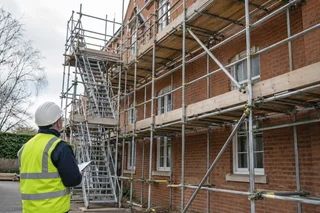
A scaffold is a temporary access and working structure whose safety depends on design, ground and ties, competent erection, inspection and controlled use. Falls from an unprotected platform, collapse after an unauthorised alteration and falling materials can harm workers or the public. The user needs a safe handover and current condition, while only competent people may design, erect, alter or inspect within their scope.
Seasonal affective disorder (SAD) is a type of depression that usually occurs in winter. A manager can respond to a change in work functioning without diagnosing it: talk privately, review work pressures and any immediate safety issue, agree support and signpost clinical concerns to a general practitioner (GP). Seasonal fatigue or low mood alone does not prove SAD.
Sedentary behaviour is prolonged waking time spent sitting or otherwise moving very little. A person may meet weekly exercise guidance yet still sit for long uninterrupted periods at work. Employers should design screen and seated tasks so people can change activity and posture, while adapting the arrangement to the job and the person.
Selenium poisoning is ill health from excess exposure to selenium or its compounds. Workplace risk depends on the exact compound, form, amount and task: a sealed item is different from powder weighing, fume-generating heat or contaminated-duct cleaning. Identify the product and safety data sheet (SDS), assess each exposure route and prevent or adequately control exposure before work.
Sensible risk management identifies the work that could cause real harm, chooses proportionate controls and checks that they work. A risk assessment programme links organisation-wide priorities to specialist, task and point-of-work decisions; the document is useful only if it changes the work. Assessments need enough detail for the risk and the applicable Great Britain or Northern Ireland duty.
Sexual health is a private health matter; workplace support should protect dignity, signpost to confidential services and address practical work needs without asking for intimate details. Sexual harassment is a separate conduct and prevention duty, while a needlestick or blood exposure is an occupational incident requiring prompt action. Service routes and employment law differ between Great Britain and Northern Ireland.
So far as reasonably practicable (SFARP) is a qualified duty in Great Britain and Northern Ireland health and safety law. A dutyholder considers the risk and the further control available, then implements it unless the sacrifice in money, time or trouble is grossly disproportionate to the risk reduction. The judgement starts with the hazard, recognised good practice and credible control options, not a preferred budget.
Workplace sharps include needles, blades, contaminated glass and other items that can cut or puncture skin. An injury may expose a worker to blood-borne viruses, so prevention depends on avoiding unnecessary sharps, safe handling and disposal, and a prompt exposure response. Healthcare-specific sharps rules and wider workplace duties have different Great Britain and Northern Ireland routes.
Shift work and circadian rhythm risk management covers the way working time, night work, early starts, long shifts, overtime, on-call work and rapid rota changes affect alertness, sleep, recovery, health and safety-critical performance. It is not enough to tell workers to sleep better. Employers must assess fatigue and shift-work risks, design safer schedules so far as reasonably practicable, manage workload, breaks, handover, commuting, supervision, welfare, lone work, health assessments and review evidence from incidents, errors and worker feedback.
Shift worker nutrition is about supporting people who eat, drink, sleep and work at times that may conflict with normal body rhythms. It should be treated as wellbeing support and work-design support, not food policing. The most useful workplace actions are practical: access to water, suitable food storage and reheating, fair breaks, healthier night-shift options, fatigue-aware caffeine guidance, culturally inclusive choices, privacy for medical dietary needs and recognition that rota design and workload cannot be fixed by telling people to eat better.
Sickness absence and wellbeing should be managed through supportive, fair and confidential processes that help people recover and return safely where possible. It is not just an attendance-control issue. A strong approach covers early supportive contact, fit notes, self-certification, return-to-work conversations, phased returns, reasonable adjustments, occupational health advice, safety-critical task review, work-related cause review, privacy, absence trends, manager training and evidence that the organisation learns without punishing people for being unwell.
Siderosis, sometimes called pulmonary siderosis or welder's lung, is an occupational lung condition associated with inhaling iron or iron oxide dust and fume. Classic pure iron-oxide siderosis has often been described as non-fibrotic, but that wording must not make workplaces complacent. Real welding, grinding, foundry and metal fabrication exposures are often mixed with other harmful fumes and dusts, including respirable crystalline silica, hexavalent chromium, nickel, manganese, ozone and nitrogen oxides. The practical workplace task is to prevent inhalation exposure, control the welding plume or metal dust at source, verify LEV and RPE, train workers to keep out of the plume, investigate respiratory symptoms early and review controls where monitoring, surveillance or worker feedback suggests exposure is not controlled.
Silica dust is airborne dust containing respirable crystalline silica, usually produced when materials such as concrete, mortar, brick, stone, tiles, ceramics, engineered stone, rock or sandstone are cut, drilled, ground, polished, blasted or broken. The dangerous fraction is often invisible under normal lighting and can reach the deep lung. In Great Britain, HSE identifies a WEL for RCS of 0.1 mg/m3 as an 8-hour time-weighted average, but that limit is not a target to work up to. Good control means designing work to avoid dust, using lower-dust methods, water suppression or on-tool extraction, M-class or equivalent suitable vacuuming, suitable RPE such as face-fit-tested FFP3 where needed, health surveillance where required, and evidence that controls are used during real tasks.
Silicosis is an irreversible occupational lung disease caused by inhaling respirable crystalline silica dust into the deep lung. The disease can develop slowly after years of exposure or more rapidly after heavy exposure. It causes inflammation and scarring of lung tissue, reducing lung function and making breathlessness progressively worse. HSE also links RCS exposure with COPD and lung cancer, and notes that workers with silicosis have increased risk of other serious conditions. This page focuses on the disease pathway, health surveillance and management response; the companion silica dust page focuses more heavily on task-level dust control.
Simultaneous operations, often shortened to SIMOPS, occur when two or more activities happen at the same time in a way that can interact, interfere or change risk. The critical point is that each task may look safe in isolation, but the combination can defeat controls. Hot work near a flammable transfer, lifting over a live process line, pressure testing during maintenance, excavation beside deliveries, scaffold erection beside vehicle routes or software testing during operations can create a risk that no single work party owns unless the organisation deliberately coordinates it. A strong SIMOPS system uses planning, permit coordination, area ownership, interface maps, shift handover, stop-work authority and assurance so separate safe jobs do not combine into an unsafe system.
Skin health at work is about protecting the skin barrier from substances, wet work, physical abrasion, biological agents, UV, heat, occlusive gloves and contamination that can cause or worsen occupational skin disease. The most common work-related skin disease is contact dermatitis, which may be irritant or allergic. Skin problems can become painful, visible, stigmatising and work-limiting, but early action can prevent more serious disease. Good management starts with task design and COSHH control, not telling people to use cream after exposure. It includes avoiding contact, substituting harsh substances, using tools and processes to keep hands out of irritants, selecting suitable gloves, providing washing and drying facilities, checking skin early, using confidential health surveillance where required and responding quickly when symptoms appear.
Skin protection and UV exposure at work should be managed as an occupational health and work-design issue, especially where people work outdoors for long periods. UV damage is not just sunburn; repeated exposure can contribute to premature skin ageing, eye discomfort and skin cancer risk. Good management uses planning, shade, timing of work, protective clothing, hats, eye protection, SPF30+ sunscreen, hydration, welfare, worker briefing, skin-check signposting and review when weather, work location, PPE or individual vulnerability changes. It should never rely on sunscreen alone or assume that people with darker skin do not need protection.
Sleep apnoea is a medical condition where breathing repeatedly stops and starts during sleep, most commonly through obstructive sleep apnoea. It can cause severe daytime tiredness, reduced concentration, mood change and morning headaches, and US National Heart, Lung, and Blood Institute guidance describes health risks that require clinical assessment. At work, the key issue is not diagnosis by managers; it is whether excessive sleepiness could affect driving, plant operation, lone work, night work, emergency response or other safety-critical tasks. Good management protects privacy, encourages GP or sleep-clinic advice, checks GB DVLA or NI DVA duties where driving is affected, uses occupational health where needed and records only work-impact decisions and adjustments.
Sleep health supports recovery, attention, mood, memory, physical health and safe decision-making. At work, sleep health should not be reduced to personal lifestyle advice. Poor work design, excessive hours, shift patterns, on-call demands, emotional load, late emails, long commutes, unsafe overtime and inadequate breaks can all damage recovery and increase fatigue risk. Good workplace management protects rest opportunity, designs work around alertness demands, supports people privately, reviews safety-critical tasks, avoids intrusive health monitoring and uses sleep-health campaigns as supportive wellbeing education rather than performance control.
Sleep hygiene means the habits, routines and environment that can support better sleep, such as regular sleep and wake times, wind-down routines, light management, caffeine timing, exercise, bedroom conditions and reducing stimulating activity before bed. In a workplace context, sleep hygiene should be shared as supportive wellbeing information, not used to police private life or excuse poor rota design. It is most useful when adapted for shift workers, drivers, remote workers, on-call staff and people under high emotional or cognitive load, while keeping privacy clear and signposting GP or government sleep advice where sleep problems persist or affect daily life.
Slips and trips are among the most common workplace accident causes, but they should never be dismissed as clumsiness or chance. A slip usually occurs when the available friction between footwear and floor is too low for the movement being made, often because of contamination, unsuitable flooring, poor cleaning, worn footwear or weather. A trip usually occurs when the foot is unexpectedly obstructed or the walking surface changes, often because of poor housekeeping, cables, defects, uneven levels, lighting or poor route design. Good management treats slips and trips as a design, maintenance, cleaning, supervision and culture issue, with strong controls for routes, flooring, contamination, stairs, footwear, inspections, public interface and incident learning.
Slips, trips and falls injuries explains what should happen after a same-level fall at work: immediate care, 999 triggers, scene safety, factual recording, RIDDOR checks, investigation, return-to-work support and learning that prevents repeat harm. It complements the prevention page by focusing on the injury pathway, reporting quality and how a single fall can reveal deeper problems with flooring, cleaning, lighting, access routes, housekeeping, footwear, supervision or work design.
Smoking and vaping at work should be managed through clear smoke-free arrangements, fair policy, fire-risk controls, visitor and contractor communication, vehicle rules, designated-area decisions and supportive stop-smoking signposting. UK law prohibits smoking in enclosed workplaces, shared work vehicles and many public places, while vaping is handled through employer policy and risk assessment rather than the same smoke-free legal regime.
Social wellbeing at work is about connection, belonging, respectful relationships, worker voice and access to support. It should not be reduced to forced social events. Good management designs work so people are not isolated by role, shift pattern, remote working, lone work, new starter status, caring responsibilities, disability, language, culture or team conflict, while keeping privacy and personal choice intact.
Societal factors influence health and safety strategy by changing who works, how work is organised, what hazards emerge, what the public expects and how regulators, clients, insurers and courts judge control. A strong strategy scans demographic change, technology, climate, labour markets, supply chains, economic pressure, public health, regulation and social expectations, then converts those signals into risk profile, priorities, resources, assurance and review.
Sources of fuel, oxygen and fire load explains how combustible materials, flammable substances, oxidisers, ventilation and storage arrangements influence fire growth, smoke production, escape conditions and firefighting difficulty. It supports fire risk assessment by helping readers map what can burn, what can intensify burning, where fire load is concentrated and what evidence proves fuel and oxygen risks are controlled.
Sources of ignition in workplaces explains how heat, sparks, flames, hot surfaces, electrical faults, static electricity, smoking materials, cooking, heaters, batteries, vehicles, friction, machinery and contractor activities can start fires or ignite explosive atmospheres. It links fire risk assessment to practical ignition control, especially where ordinary fuels, flammable vapours, gases, mists, aerosols or combustible dusts are present.
Specific chemical and biological agents explains how named workplace agents create harm through substance form, route of exposure, dose, duration, task conditions and control reliability. It covers asbestos, blood-borne viruses, carbon monoxide, cement, legionella, leptospira, silica and wood dust, linking each to practical controls, legal boundaries, health surveillance or medical signposting where relevant, emergency triggers and evidence standards.
Standard operating procedures translate safe operating limits, risk assessments and operating philosophy into clear instructions for normal operation, abnormal conditions, start-up, shutdown, temporary operation, commissioning, loading, unloading and emergency response. A good SOP is usable at the workface, validated with workers, controlled through change management, trained, monitored and reviewed when plant, people, process, materials or risk changes.
Static electricity becomes a serious process safety hazard when charge generation, accumulation and discharge can ignite flammable vapours, gases, mists, aerosols or combustible dusts. This page explains static charge mechanisms, bonding, earthing, conductive and insulating materials, liquid and powder transfer, spray painting, IBC filling, clothing, hoses, verification evidence and DSEAR controls.
Statutory enforcement explains how regulators such as HSE and local authorities respond to health and safety breaches through advice, notification of contravention, Fee for Intervention, improvement notices, prohibition notices and prosecution. It focuses on legal powers, proportionality, evidence, seriousness of risk, material breach, dutyholder response, action tracking and learning.
Stress explains how work-related stress should be assessed and controlled as a health and safety risk, using HSE's Management Standards: demands, control, support, relationships, role and change. It separates ordinary pressure from harmful sustained stress, explains team and individual warning signs, gives manager decision prompts, shows what a suitable and sufficient stress risk assessment looks like, and links actions to workload, staffing, supervision, change, bullying, return to work and evidence.
Stress resilience explains how people, teams and organisations can build capacity to cope with pressure while keeping the boundary clear: resilience is not a substitute for fixing poor work design. It covers individual coping, team support, recovery, psychological safety, manager conversations, high-pressure roles, early warning signs, crisis escalation, and evidence that resilience activity is supportive rather than being used to shift responsibility away from the employer.
Stroke Awareness explains how workplaces should recognise possible stroke symptoms, call 999 without delay, support first-aid response, protect privacy and plan work adjustments after recovery. It uses UK government Act FAST guidance, highlights other sudden symptoms, explains that symptoms can pass and still need urgent help, and gives managers practical controls for safety-critical work, lone work, drivers, mobile workers, shift teams, visitors, customers and return-to-work planning.
Struck-by and Caught-in Injuries explains how high-energy workplace incidents occur when people are hit by vehicles, moving plant, falling objects, ejected materials, swinging loads, tools, stored energy, moving machinery or collapsing/rolling items, or when they are trapped, crushed, drawn in or entangled. It covers energy-pathway thinking, exclusion zones, guarding, isolation, lifting control, vehicle movement, maintenance interventions, dropped-object prevention, stop-work triggers, incident learning and evidence for supervisors, construction teams, workshops and managers.
Substance Abuse at Work explains how employers should manage alcohol, illegal drugs, misused medicines and solvents as health, safety, conduct and support issues. It uses non-stigmatising substance-misuse language while recognising the title commonly used in training. It covers safety-critical work, policy design, worker consultation, signs that may indicate concern, confidential support, fitness for work, testing boundaries, prescription and over-the-counter medicine, incident response, manager do/do not prompts, and evidence standards.
Substance Misuse and Workplace Support is the support-led companion to drug and alcohol policy. It explains how workplaces can encourage early disclosure, protect safety-critical tasks, handle medication and dependency concerns, offer confidential routes, avoid stigma, record facts rather than assumptions, and balance support with fair process. It is designed for managers, supervisors, HR, HSE advisers, workers and learners who need practical boundaries rather than judgemental slogans.
If someone may be in immediate danger of harming themselves, call 999 and follow emergency advice. Stay with them or remain connected if safe until help takes over. This page covers workplace prevention, crisis routes and private follow-up.
Sulphur dioxide can rapidly irritate the eyes and airways. Assess process and maintenance releases, prevent exposure under COSHH, and follow the emergency plan if gas escapes or symptoms occur.
Outdoor work can expose people to harmful UV radiation and heat. Plan shade, task timing, water, breaks and skin protection; act promptly on heat illness and changing skin marks.
Testicular health awareness means knowing what is usual for your testicles and recognising a new lump, swelling, change or pain. These signs have different possible causes, but sudden severe pain can signal torsion, where twisting cuts off blood supply and delay can lead to loss of the testicle. Prompt medical assessment matters; workplaces can help people reach care privately while maintaining safe task cover.
Tetanus is a rare but life-threatening wound infection. Prevent contaminated cuts and give prompt first aid. Assess injury severity before tetanus risk. England/Wales: a large or deep wound needs 999 or A&E now. Scotland: a very large/deep cut or an object stuck in the wound needs 999 or A&E. NI: a possible retained object, very large wound or major tissue damage needs an emergency department as soon as possible. Call 999 for life-threatening injury or serious tetanus symptoms in any nation. Do not drive yourself for emergency care. For wounds without emergency features, seek prompt nation-specific wound/vaccination advice: Scotland GP/NHS 24 on 111; NI GP or minor injuries unit; England/Wales urgent GP/111 for retained dirt, infection signs or uncertain vaccination. Do not wait for symptoms or workplace approval; a small dirty puncture is not automatically an ambulance emergency. Severe tetanus symptoms need emergency care in every nation.
Thallium may poison through breathing, skin contact or ingestion. Stop exposure. In England and Wales, suspected harmful contact needs 999 or A&E now, even without symptoms. In Scotland, call 999 for known swallowed poison or serious illness; seek urgent GP/NHS 24 on 111 advice for other suspected harmful touch or inhalation. Do not drive yourself if emergency care is needed. In Northern Ireland, contact a GP or GP out-of-hours immediately if well; use emergency care if prompt advice is unavailable or symptoms are serious.
Health and safety duties can be enforced before injury. Criminal law addresses breaches; civil claims seek compensation. Check the law for your jurisdiction, control the work, and keep evidence.
Heat and cold can harm people even when a thermometer looks unremarkable. Assess the task, clothing, work rate and conditions; change the work and provide recovery before relying on personal coping. Stop for symptoms or failed controls. Call 999 immediately for confusion in hot work, suspected heatstroke or hypothermia; care comes before task review.
Thyroid conditions can affect energy, temperature tolerance, concentration or heart symptoms, but no symptom proves a diagnosis or fitness for a task. Workers and managers should discuss functional impact, agree proportionate controls and review safety-critical work without collecting unnecessary clinical detail. Urgent symptoms go to clinical care first; workplace adjustment and GB/NI legal routes are separate.
A workplace negligence claim asks whether a legal duty was breached and caused compensable harm; an injury or safety breach alone does not prove liability. Care for people, control the hazard, preserve accurate evidence and refer a claim promptly to the insurer and legal adviser while learning from the event. Civil compensation, regulator enforcement and internal learning are separate routes, and procedure differs across England and Wales, Scotland and Northern Ireland. This page is general learning, not advice on an individual claim.
Toxic peripheral neuropathy means peripheral nerve damage linked to a toxic exposure, but symptoms alone do not establish the cause. For suspected poisoning or harmful chemical contact, get medical advice immediately even if the person seems well; use the GB or NI urgent route below. Call 999 for sudden stroke-like signs or a severe chemical emergency. For gradual new nerve symptoms, seek GP assessment. At work, stop uncontrolled exposure, identify the substance and task, and obtain competent control and health advice. Great Britain and Northern Ireland have separate COSHH and RIDDOR rules. This page is general learning, not a diagnosis or fitness decision.
A reactive or compliance-heavy practice pattern concentrates on harm and compliance checks; active monitoring also tests whether important controls work before harm. Established HSG65 already combines prevention, active checking and learning; these are complementary practices, not a ranking of old and new organisations. Use both: ask workers how the task is done, verify the controls that matter, investigate events, fix defects and review decisions after change. An injury-free period, a high inspection count or a named model cannot prove that risk is controlled. Great Britain and Northern Ireland have separate legal instruments; ISO 45001 and Safety-II or HOP language are not substitutes for those duties.
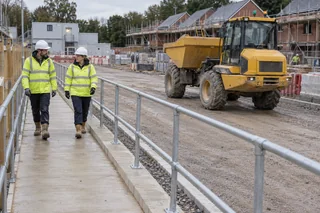
Traffic management keeps people and vehicles apart and controls the movements that remain. At a workplace, map real routes, remove unnecessary journeys and reversing, provide suitable separation, check the vehicle and driver, brief visitors and stop when a route or safeguard fails. Construction layouts need review as work changes. A scheme affecting a public road or footway is a different task: a competent designer and the relevant GB highway or NI roads authority must confirm the applicable approvals, signs, access and hand-back. No generic drawing, speed limit or marshal makes a site safe.
After traumatic exposure, make the situation safe and seek emergency help for immediate danger. Offer practical support and follow-up without forced retelling. Clinicians diagnose and treat PTSD; managers ask about work needs, control repeat exposure and protect health information. Review safety-critical duties and return individually. Great Britain and Northern Ireland have distinct legal duties and service routes.
For work travel, assess the destination, journey and actual task before booking. Check current FCDO and official destination advice, arrange timely professional health advice, verify transport and insurance, and plan rest and emergency contact. Hold or redesign travel when advice, cover, medical access or safe work conditions are unresolved. A manager plans work controls, not vaccines or treatment; protect private health information. Recheck changes during the trip and respond promptly to illness after return. Great Britain and Northern Ireland have separate workplace laws.
A finger or thumb that catches, clicks or locks needs appropriate clinical advice and a work-impact conversation; a manager must not diagnose it or infer work causation from symptoms alone. Review actual grip, force, repetition and recovery, change aggravating tasks and hold safety-critical gripping if unreliable. Use ART for suitable repetitive upper-limb tasks, DSE assessment for keyboard or mouse work, and MAC/RAPP only for their separate load-handling tasks. Confirmed work-related tendonitis or tenosynovitis is reportable only when the applicable GB or NI criteria are met.
Workplace health and safety law defines who must prevent work-related harm, how risks must be controlled and how failures may be enforced. Great Britain and Northern Ireland have separate primary instruments and some different regulations, so the work location, activity and dutyholder determine the applicable rule. A legal reference becomes useful when it leads to a practical control, a named owner and evidence that the control works.
Utilities and process services are supplies such as power, instrument air, steam, cooling water and nitrogen that support a plant's operation and safety functions. Their energy or contents can injure people directly, while loss or degradation can disable valve action, heat removal, alarms or emergency protection and allow a hazardous process to escalate. Safe work depends on mapping affected users, controlling stored energy and impairments, and proving the final protective function before restart.
A utility strike is unintended contact with or damage to a buried or overhead cable, pipe, duct or line during digging, lifting or maintenance. Electricity may shock or arc, gas may ignite, and damaged water or drainage can flood or destabilise ground; harm can reach people beyond the worksite. Prevention depends on planning the route, locating and identifying services, using a controlled method and stopping when the evidence does not match the ground.
Vanadium poisoning describes harmful effects after exposure to vanadium or its compounds, especially inhaled vanadium pentoxide dust or fume at work. Powder handling, hot processes and contaminated boiler or catalyst residues can irritate airways and eyes; substantial inhalation may require urgent medical assessment even before severe symptoms appear. Identify the actual compound and task, prevent release at source and verify controls rather than treating a generic vanadium label or one exposure reading as clearance.
A vapour cloud explosion follows delayed ignition of a dispersed flammable gas, vapour or mist that has mixed with air. Flame, blast pressure and flying debris can injure people on site or beyond it, depending on inventory, release path, congestion and occupancy. Preventing loss of containment and proving independent safeguards are the first decisions; detection and emergency planning address residual risk.
Vehicles used for work include vans, lorries, lift trucks and mobile plant, together with the loads, attachments and people around them. Movement, reversing, loading and access can crush or strike people, overturn equipment or cause falls; a roadworthy vehicle may still be unsuitable for a particular site or task. Plan the route and interfaces, choose a suitable vehicle and competent operator, separate people from movement and stop when conditions or critical safeguards change.
Workplace ventilation supplies fresh air, while local exhaust ventilation (LEV) captures hazardous dust, fume, mist, vapour or gas close to its source. Inhaling an uncontrolled plume can cause acute irritation or long-term disease, even when the air looks clear. Prevent emissions first, then prove that capture, discharge and maintenance work during the real task; stop the affected work when control fails.
Hand-arm vibration (HAV) reaches the hands through powered tools or workpieces; whole-body vibration (WBV) reaches a seated or standing person through a vehicle or platform. Repeated exposure can damage hand nerves and circulation or contribute to back pain, while shocks and posture add to vehicle risk. Assess each worker’s real daily exposure, reduce it at source and act promptly on symptoms, defects or a likely limit-value exceedance.
A vibration risk assessment connects the actual tool or vehicle, each person’s exposure time and conditions to a control decision. Hand-arm vibration (HAV) can damage circulation and nerves; whole-body vibration (WBV) and shocks can contribute to back pain. Assess the two exposures separately, reduce risk at source and respond early to symptoms while keeping clinical information confidential.
The detailed vicarious-liability lesson is temporarily unavailable while its legal authorities are reviewed against the site source policy. Employers should continue to manage the underlying work risks and seek qualified legal advice on a specific incident.
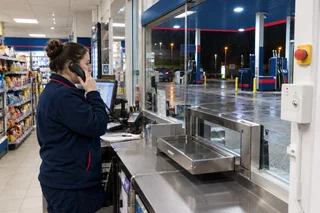
Violence at work covers work-related abuse, threats and assaults, including incidents that cause psychological harm without a visible injury. Risk grows when a worker must refuse a service, handle valuables, work alone or cannot withdraw safely. Assess the actual task, prevent conflict and exposure through service and workplace design, and give workers a reliable route to leave and summon help; call 999 when danger is immediate.
Violence-related injuries include physical harm and psychological effects after work-related abuse, threats or assault; witnesses can be affected too. A push, bite or robbery can cause obvious wounds, hidden head or limb injury, or distress that appears later. Make the scene safe, use emergency or clinical help when indicated, and correct the work conditions that allowed harm before anyone returns to exposure.
Hepatitis B and C are bloodborne viral infections that can inflame the liver and sometimes cause long-term disease. At work, contaminated sharps or blood reaching broken skin or the eyes or mouth can expose a worker, including outside healthcare. Prevent contact at source; after a possible exposure, give immediate first aid and obtain prompt specialist clinical assessment without waiting for source testing or a manager to diagnose risk.
Vitamin D helps the body regulate calcium and phosphate needed for healthy bones, teeth and muscles; low levels can contribute to bone pain or weakness. At work, managers should prevent falls, unsafe handling and ultraviolet exposure while offering confidential support and directing personal health questions to official public-health guidance or occupational-health professionals. Adult population advice commonly suggests considering 10 micrograms daily in autumn and winter, with year-round advice for some groups; individual testing, treatment and supplement suitability remain clinical decisions.
Weight management is long-term support for health through a person’s circumstances, care and habits, rather than a workplace target weight. At work, missed breaks, limited food or water access, stigma and poorly fitting equipment can create health and safety barriers regardless of body size. Employers should change those work conditions and assess actual tasks and equipment, while personal diagnosis and treatment remain with health professionals.
A wellbeing conversation is a private, respectful discussion about how work is affecting someone and what practical support or changes would help. It can begin with a worker’s request or an observed work difficulty, but it is not diagnosis, therapy or a substitute for assessing harmful demands, poor support or unsafe interactions. Listening, proportionate changes to work and a clear route for urgent safety concerns help prevent harm while protecting the person’s choice and privacy.
A workplace wellbeing strategy is a governed plan to prevent harm from work, improve conditions that support health and connect people with proportionate help. It uses worker evidence and risk assessment to set priorities, resource changes and test whether controls work across shifts and groups. Individual programmes can add support, but they cannot compensate for harmful workload, unsafe behaviour or inaccessible work.
Hazardous chemicals and biological agents may be bought in, created by work or encountered incidentally in contaminated materials. Identify the agent, task and exposure route before choosing source controls, hygiene, PPE and surveillance. Incidental infection exposure differs from deliberate laboratory work, which can require specialist containment and notification.
Corrosive chemicals can injure skin and eyes quickly, while irritants and sensitisers can cause workplace dermatitis over time. Prevent splashes and trapped contact through safer products, closed handling, compatible PPE and accessible washing. For a suspected acid or chemical burn, call 999, protect helpers and start immediate water flushing while clinical help is arranged.
Chemical labels and safety data sheets communicate supply hazards; they do not replace an assessment of the actual work. Great Britain uses GB CLP and UK REACH, while Northern Ireland follows EU CLP and EU REACH for its market. Check the destination, supplier role and current product information before purchase, transfer or use.
A chemical splash, powder or mist in the eye can threaten vision. Stop exposure, call 999 for a suspected strong chemical or chemical burn, and start immediate continuous rinsing with clean cool or lukewarm water while urgent help is arranged. Prevent eye contact through safer methods, splash containment, suitable eye/face protection and accessible eyewash.
Chlorine gas can rapidly injure eyes and airways, and serious lung effects can develop after exposure. A suspected release needs immediate alarm, movement away from the gas and a 999 call for breathing difficulty or a significant exposure. Prevent release by separating incompatible chemicals and verifying every transfer and dosing route.
Chrome ulcers are local skin ulcers associated particularly with hexavalent chromium exposure, often through damaged skin. Stop contact, wash contamination away and report any persistent sore promptly for clinical assessment. The employer must assess the actual chromate task, prevent skin and airborne exposure, verify controls and arrange risk-based health surveillance.
A workplace injury does not itself prove negligence. A civil claim tests the applicable duty, breach, causation and loss; criminal health and safety enforcement is a separate route. Preserve honest evidence, protect the person, notify the insurer and obtain jurisdiction-specific legal advice on a live claim.
A chemical splash or airborne irritant can injure the eye. Identify the specific substance and route, prevent contact at source, keep immediate rinsing available, and obtain urgent medical assessment for a chemical in the eye.
CDM makes clients, designers and contractors plan, coordinate and control construction risk from design through handover. Great Britain uses CDM 2015 and Northern Ireland uses CDM (NI) 2016. The duties apply to small as well as large projects; notification is a separate threshold test through the regulator for the work location.
Carbon disulphide (CS₂) is a volatile, highly flammable liquid whose vapour and skin contact can cause acute poisoning and, with repeated exposure, lasting nervous-system harm. Work in a chemical process, laboratory or transfer area needs source control, fire and explosion planning, and a rehearsed emergency route. A smell or symptom is a warning to stop and investigate, not a reliable measure of exposure.
Carpal tunnel syndrome compresses the median nerve at the wrist, causing numbness, tingling, pain or weakness, often at night. Forceful hand work and hand-arm vibration can contribute to risk; a diagnosis is clinical. Employers should redesign risky tasks, respond early to symptoms and apply the correct GB or Northern Ireland disease-reporting rule.
Dry cement powder irritates airways and skin; wet cement can cause serious alkaline burns and dermatitis. Cutting hardened concrete or mortar can also release respirable crystalline silica, a separate long-term lung hazard. Plan low-dust methods, capture dust at source, prevent wet skin contact and provide prompt washing and medical escalation.
Incompatible materials can react if they meet in storage, transfer lines, drains or waste containers, releasing heat, toxic gas or pressure. Prevent the encounter through verified identity, segregation and engineered transfer barriers. If a reaction begins, stop work, move people away and call trained emergency responders; do not improvise neutralisation.
Chemical safety starts with the actual substance and task: identify exposure and reaction routes, prevent or control them at source, and verify that controls work. Use the current supplier label and safety data sheet as inputs to a task-specific assessment. Great Britain and Northern Ireland have different chemical supply and workplace instruments.
Coal worker’s pneumoconiosis is a long-latency lung disease from inhaled coal mine dust; mixed respirable silica can add risk. Prevent exposure at source, sample representative dust, act on results and provide the health surveillance required for the actual mine and jurisdiction. A clinician assesses symptoms and diagnosis.
Valley fever follows inhalation of airborne Coccidioides spores from disturbed soil in endemic regions. A UK employer planning such work should assess the overseas location and task, prevent dusty exposure at source, set a dust-storm stop rule and give workers a clear medical-reporting route. UK laboratories handling cultures require a separate biological-agent assessment.
A fire needs fuel, an oxidiser and an ignition source. Use that model to prevent ordinary workplace fires, then assess escape, smoke and process-specific explosion risks. Combustible dust also needs dispersion and often confinement for an explosion: the simple triangle alone does not describe that scenario.
Construction dust is a mixture, not one harmless nuisance. Identify silica, wood, cement, gypsum, asbestos or contaminated material before disturbing it; design out cutting where possible, capture or suppress dust at source, protect everyone nearby and verify that controls work.
Copper exposure depends on its form and route: heated copper fumes can cause metal-fume fever, while soluble salts can cause gastrointestinal and sometimes severe systemic harm. Identify the compound, stop uncontrolled exposure, and use clinician-led assessment after suspected poisoning.
The 2007 Act creates an organisational offence where a gross breach of a relevant duty of care causes death and the way senior management managed or organised activities is a substantial element. The offence is called corporate homicide in Scotland. Prevent fatal hazards through real controls and board oversight, not paperwork alone.
Keep the design basis, critical decisions, plant changes and lessons usable when people or contractors change. The host must still understand outsourced safety-critical work well enough to question and verify it.
Culture is how safety decisions are made when work is pressured or changing. Leaders set priorities and resources, workers must be able to influence controls, and the organisation should test physical barriers and act on weak signals rather than rely on slogans or injury counts.
Work can expose people to acute hazards such as carbon monoxide and heat. Long hours, poor recovery and work-related stress also need control because they can affect health and safe performance. A symptom or roster alone cannot establish the cause of cardiovascular disease. Act urgently on heart attack or stroke signs, and use confidential clinical and occupational-health advice for individual capability decisions.
Long-term workplace dust and fume can contribute to COPD alongside smoking and other factors. Control the exposure at source, investigate symptoms through a clinician, and use competent occupational-health advice to review work and surveillance.
Process safety management is the coordinated prevention and control of major accidents involving dangerous substances or stored energy. It connects credible release, fire, explosion and toxic-exposure scenarios to sound design, reliable barriers, competent operation, controlled change and emergency readiness. The test is whether those barriers work now, including during abnormal operation, maintenance and restart, rather than whether a policy or low personal-injury rate looks reassuring.
Every construction project needs a suitable construction phase plan before construction begins. Make it proportionate to the work, with site rules, management arrangements and specific GB Schedule 3 / NI Schedule 4 risk measures. Great Britain uses CDM 2015; Northern Ireland uses its separate CDM 2016 rules.
For hazardous operations, a procedure is useful only when it matches plant reality and people follow its control intent. Define safe operating limits, shift ownership, abnormal response and stop authority; verify performance at the plant, investigate drift and repair weak controls before restart.
Identify the substance and task, prevent exposure where possible, then contain and capture it at source. Check controls in use and provide risk-based health surveillance where disease is detectable and exposure conditions justify it; surveillance never replaces prevention.
Depression can affect mood, energy, concentration, sleep, confidence, relationships, attendance and safe performance, so it belongs in workplace wellbeing and risk management rather than being treated as a purely private issue. A good employer does not diagnose depression or ask for unnecessary clinical detail; it designs work to reduce harmful psychosocial stressors, creates safe routes for confidential conversations, considers reasonable adjustments where a condition affects work, uses occupational health or HR advice where needed and keeps support under review. The practical aim is to prevent work from causing or worsening mental ill health, help people remain in or return to work where appropriate, and make sure managers act calmly, fairly and consistently.
Diabetes is a long-term health condition affecting blood glucose regulation, and at work it should be managed through practical support, confidentiality, fair adjustments and sensible risk assessment rather than assumptions about capability. Most people with diabetes can work safely and effectively, but some may need access to food, drink, medication, glucose monitoring, suitable breaks, private space, time for appointments, shift-work planning or review of safety-critical duties such as driving, lone work or machinery operation. Good workplace management separates clinical treatment from functional impact: managers do not diagnose or prescribe, but they should remove avoidable barriers, protect sensitive health information, involve occupational health where work risk is unclear and review support as the person's condition, treatment or work changes.
Diet and nutrition at work is about the food, drink, break patterns, facilities and working conditions that influence energy, concentration, recovery, long-term health and dignity during real shifts. A useful workplace approach does not blame individuals or prescribe personal diets; it makes healthier choices easier by providing clean eating areas, drinking water, predictable breaks, appropriate welfare, suitable food options, fair shift planning and respectful signposting to official health advice where personal medical or dietetic needs exist. The strongest programmes connect nutrition to work design, fatigue, hydration, heat, diabetes, pregnancy, religious or cultural needs, affordability, night work and evaluation, so wellbeing becomes practical support rather than posters and slogans.
Digging is any work that breaks or removes ground by hand tool, vacuum excavation or mechanical plant, and it can quickly become high risk when buried services, unstable ground, plant movements, people in trenches, contaminated soil, dust or nearby structures are involved. A safe dig starts before the bucket or spade touches the ground: identify why excavation is needed, obtain service information, locate and mark underground services, choose the safest method, set exclusion zones, plan temporary support, control spoil and plant loading, brief the team and inspect the excavation before work starts and after events that may affect stability. The best sites treat digging as a controlled operation, not a casual groundworks task; they use HSG47-style planning, permit-to-dig controls, competent supervision, emergency arrangements and clear stop-work rules when drawings, ground conditions or exposed services do not match the plan.
Digital wellbeing and screen time at work is about designing digital work so people can use screens, software, devices and communication channels safely, productively and without avoidable harm to their eyes, body, attention, sleep, mental health or work-life boundaries. It includes the legal duty to manage display screen equipment (DSE) risks, but it is wider than desk posture: it covers laptop use, hybrid work, hot desking, meeting overload, notification pressure, always-on messaging, digital monitoring, accessibility, neurodiversity, fatigue, sedentary work and the way digital systems shape workload and control. Good management starts with the work itself: assess DSE users, fix workstation problems, plan breaks or changes of activity, provide eyesight-test arrangements, train workers, make remote setups sustainable, reduce unnecessary digital friction and check whether digital tools are helping people work well or quietly creating new health and performance risks.
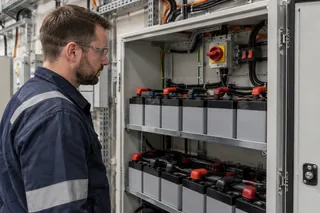
Direct current electricity is electricity that flows in one direction, and in modern workplaces it is found in batteries, electric vehicles, solar photovoltaic systems, uninterruptible power supplies, rectifiers, chargers, electronic controls, DC motors and energy storage systems. It can be low voltage and familiar, but that must not make it casual: DC systems can deliver electric shock, burns, arc flash, fire, explosion, chemical release, unexpected movement and retained stored energy after equipment appears to be switched off. Good management means knowing where DC energy sources are, whether they can be isolated, how stored energy is discharged, which test equipment is suitable, who is competent to work on the system, how batteries and high-voltage components are protected, and what evidence proves that inspection, maintenance, labelling, emergency response and contractor controls are working.
Documentary evidence in health and safety legal actions is the recorded proof that shows what was known, decided, controlled, checked, communicated and learned before and after an incident, claim, enforcement action or inquest. It includes risk assessments, method statements, training records, permits, maintenance logs, inspection sheets, health surveillance records, monitoring data, emails, photographs, CCTV, witness statements, meeting minutes, contractor documents, policies, audit reports, RIDDOR submissions and action trackers. Good evidence is accurate, contemporaneous, complete, attributable, version-controlled, retrievable and honestly interpreted; poor evidence, missing records or retrospective alteration can damage credibility even where the underlying controls were better than the paperwork suggests.
Wood dust is airborne and settled material produced when wood or wood-based boards are cut, machined, sanded or handled. Breathing it can cause occupational asthma, and hardwood dust is linked to cancer of the nose; accumulated fine dust can also create a separate fire or explosion hazard. Assess the actual material and task, reduce dust generation, capture it at source and verify that extraction and cleaning work before relying on respiratory protection for residual exposure.
Work equipment includes machinery, tools, appliances and installations used at work, from a hand tool to mobile plant. Unsafe selection, access to moving parts, stored energy or failed maintenance can cause crushing, cuts, ejection, electric shock and other harm during use or intervention. Choose equipment for the real task and setting, prevent contact with danger, check it remains safe and stop use when a critical control fails.
Work equipment must suit the task and workplace, remain stable and guarded, and be used, maintained and inspected by people with the right information and competence. A product mark or completed form does not prove safety during cleaning, adjustment or a changed task. Check the actual machine, controls and work area, prevent access to danger and stop use when a critical safeguard fails.
A machine, lifting device or pressure system may have overlapping duties, but a single certificate does not close every risk. Identify the actual task and equipment, apply the workplace-use rules, then test whether lifting or qualifying pressure-system duties add planning, examination, written-scheme and competent-person requirements. Stop a lift or pressurised operation when the safe limits, critical condition or examination status cannot be demonstrated.
Workers can identify the gap between how hazardous plant is designed to operate and what happens during start-up, handover, maintenance and abnormal conditions. Their observations prevent major accidents only when someone connects them to a credible scenario, checks the affected barrier, makes a competent decision and reports back. Consultation and participation strengthen the operator’s control of fire, explosion and toxic-release risk; they do not transfer its legal duties to workers.
Work at height is any work where a person could fall far enough to be injured if precautions were absent; there is no universal two-metre threshold. A fall through a fragile rooflight, from an edge or into an opening can be fatal even during a short task. Avoid the work at height where reasonably practicable, otherwise prevent a fall with collective protection before relying on personal systems, and plan rescue for any remaining fall risk. A mobile elevating work platform (MEWP) is one possible access method, not a default.
Work–life balance is the fit between work demands, recovery and the rest of life. It can be undermined by excessive workload, long or unpredictable hours, constant contact, poor home setup or unfair access to flexibility. Assess the work factors, agree realistic changes with the worker, protect private health information and review whether the arrangement works in real shifts and tasks.
Choose a health check by its purpose. Voluntary wellbeing screening, exposure-linked health surveillance, night-worker assessment and fitness-for-work advice have different duties and privacy rules. Give workers a clear explanation and confidential clinical route; give managers only the work-relevant outcome needed to act.
Vaccination uses a vaccine to stimulate protection against a specific infection; immunisation is the protection that results. At work, biological agents can reach people through inhalation, contaminated hands, splashes or sharps, and the risk depends on the task and agent. Employers should prevent exposure first and, where an effective vaccine is relevant to assessed work, arrange a clinically advised offer while protecting the worker’s health information.
A safe yard separates people from vehicles and removes avoidable reversing. Work journeys need a suitable driver, vehicle, route and schedule. Map the actual movements, test blind spots and loading interfaces, and stop when separation, visibility, vehicle condition or driver fitness fails.
Work journeys put drivers, passengers, pedestrians and other road users at risk when a schedule, person or vehicle is unsafe. Plan the journey, check driver fitness and vehicle condition, and stop when fatigue, distraction, a defect or weather makes the trip unsafe. Electric and hybrid vehicles add quiet movement, high-voltage and damaged-battery risks; ordinary drivers, recovery responders and authorised technicians have different limits.
Repeated force, awkward or static posture, long reach and insufficient recovery can cause or worsen pain and loss of function in the neck, shoulders, arms and hands. Redesign the task and workstation around real users, then act early on symptoms without attempting a diagnosis. Display screen equipment and other repetitive work need different assessment routes; a checklist or tool score alone does not show that a worker is safe.
Workstation wellbeing starts with the task, the person and the work pattern. Assess regular display screen use under the applicable GB or Northern Ireland route, then change equipment, reach, posture demands and recovery opportunities when work causes discomfort. A checklist does not diagnose a condition or prove that the adjustment works.
Young workers are people under 18 whose work must fit their school-leaving status, experience and individual capability. Sharp edges, moving vehicles, heavy loads and harmful exposures can cause immediate injury or lasting ill health. Employers must assess the actual task, use effective physical safeguards and provide instruction and supervision under the correct Great Britain or Northern Ireland rules.
Zinc effects at work most often arise when welding or cutting galvanised metal creates fine zinc oxide fume that workers and bystanders can inhale. This exposure can cause metal fume fever, a flu-like illness that may begin hours after the task, while the wider welding-fume mixture also carries long-term lung-cancer risk. Identifying the material, avoiding unnecessary hot work and capturing fume at source are the central decisions before work begins.
Abrasion occurs when friction or scraping damages the surface of skin or equipment. At work, contact with rough materials, moving surfaces or repeated rubbing can cause skin injuries and wear through protective components. Control the contact at source and check the condition of the task, guarding and material before damage leads to injury or equipment failure.
Abrasive wheels cut and grind by rapidly removing material. A damaged, mismatched or poorly mounted wheel can break or throw fragments, while cutting and grinding may generate dust, sparks, noise and vibration. Safe use depends on matching the wheel to the machine and material, effective guarding and source controls, and stopping when markings or conditions are uncertain.
Accident and incident investigation establishes what happened, how a hazard reached people, why controls failed and what must change. It begins with rescue and scene control, then uses evidence and worker accounts to choose and verify measures that prevent recurrence. Reporting duties differ between Great Britain and Northern Ireland, and a non-reportable near miss can still warrant a detailed investigation.
Approved Codes of Practice (ACOPs), Health and Safety Guidance (HSG) books and the Health and Safety Executive (HSE) information document series (INDG) serve different purposes in Great Britain (GB). Start with the applicable law and task, check the current publication and its status, then turn the relevant advice into controls. In Northern Ireland (NI), check the Health and Safety Executive for Northern Ireland (HSENI) approval lists and NI law before using a GB ACOP. HSGs and INDG leaflets are guidance, not a substitute for a risk assessment or safe work.
Acrylonitrile is a volatile, flammable chemical that can be absorbed by breathing vapour or through skin. If exposure or a release is suspected, stop work, raise the alarm, move clear without entering a contaminated area to rescue others, begin safe decontamination and obtain urgent medical help. Prevent exposure through closed systems and task-specific Control of Substances Hazardous to Health (COSHH) controls; use monitoring, skin-contact checks and competent review to verify them. Apply the correct Great Britain (GB) or Northern Ireland (NI) duties.
Active monitoring checks whether important health and safety controls work before harm occurs; reactive monitoring learns from incidents, near misses, ill health, defects and complaints. Choose checks around the real risk, stop or restrict unsafe work when a critical control fails, investigate high-potential events even without injury, and verify that corrective action reduces risk. Use the correct Great Britain (GB) or Northern Ireland (NI) reporting and management duties.
Active fire protection detects, warns, controls or suppresses fire using systems such as alarms, sprinklers, deluge, foam and firewater. Choose each system for a credible fire scenario, keep its supply and controls available, stop or restrict affected work when a critical barrier is impaired, and verify restoration before restart. General fire-safety and dangerous-substance duties differ across Great Britain and Northern Ireland.
A harmful airborne release can injure the lungs. Leave the area, raise the alarm and prevent unsafe rescue. Suspected harmful inhalation needs urgent healthcare even if symptoms are mild or absent; call 999 for serious illness or an active dangerous release. Use the nation-specific urgent-care route below; clinicians decide observation and fitness for work.
Addiction or dependency may affect health and work, but a manager cannot diagnose it from behaviour. Offer private support and qualified help. If someone may not be fit for a safety-critical task, pause that task calmly, protect others and follow the policy. Clinical care and workplace fitness are separate decisions.
Air quality at work has three different routes: fresh air in occupied rooms, hazardous substances created by work, and outdoor pollution. Identify the source and people exposed, control emissions before relying on masks, and check that ventilation or extraction really works. A room CO2 reading or public air-quality index does not prove compliance with a workplace exposure limit. Stop and escalate a suspected dangerous atmosphere.
ALARP means reducing work risk as low as reasonably practicable. Identify who could be harmed and how, apply relevant legal requirements and established good practice, then consider further effective controls. A dutyholder may reject a further measure only with a defensible, risk-weighted reason; a risk-matrix colour or simple cost-benefit total is not proof. Stop affected work when a necessary control is missing, a serious hazard is unknown, or the decision has not been authorised.
Workplace exposure to methanol, ethylene glycol, acetone or methyl ethyl ketone needs a product-specific response. Stop a suspected exposure, keep others out of the affected area and get urgent medical advice: methanol and ethylene glycol can cause delayed serious injury. Call 999 for severe symptoms or a suspected harmful exposure requiring emergency help; do not make someone vomit or give food or drink. Prevent exposure through substitution, containment, ventilation, hygiene and verified task controls.
Alcohol can affect health, judgement and safe work, but an observed concern is not a diagnosis. If someone may be unfit for a safety-critical task, pause the task, protect people and arrange a private, factual conversation. Offer confidential support and NHS advice; use testing only where justified and governed. Severe suspected alcohol poisoning or withdrawal needs urgent medical help.
Hay fever is pollen allergy, not proof of a work-caused condition. Control task exposures and medicine-related drowsiness; seek prompt advice for new work-related wheeze. Suspected anaphylaxis: use an available prescribed adrenaline auto-injector promptly and call 999; do not wait for a plan.
Ammonia gas, pressurised liquid and strong solutions can rapidly burn eyes, skin and airways. On a leak, warn others, withdraw by a safe route and leave isolation to designated responders using safe controls. For an eye splash, start clean-water irrigation immediately for at least 20 minutes while urgent medical help is arranged.
Anaphylaxis is a rapid, life-threatening allergic reaction. If you suspect it, use the person's available adrenaline auto-injector immediately, call 999 and say anaphylaxis; do not wait for a plan or first aider. Keep the person lying down, with a careful breathing or pregnancy adjustment, and use a second device after five minutes if symptoms have not improved.
Anger is a normal feeling, but abuse, threats and violence are safety issues. If a conversation becomes unsafe, create distance, withdraw from the task, summon help and call 999 for immediate danger. For ordinary frustration, pause and address the cause; managers should reduce work pressures, respond fairly to complaints and offer support without excusing harmful behaviour.
Anthrax is a very rare but serious infection linked mainly to infected animals, animal products or historically contaminated material. Stop disturbing a credible suspect source, keep people away, and obtain urgent medical and public-health advice for a possible exposure. Do not move or open a suspect animal carcass. Assess construction, animal-product and laboratory work by its actual task and location; treatment, testing and vaccination are specialist decisions.
Anxiety can be a normal response to uncertainty or a health problem that affects daily life. At work, prevent harmful demands and poor work design, make space for private support and agreed adjustments, and pause a safety-sensitive task if a person cannot perform it safely. Managers should not diagnose or prescribe treatment. Use urgent clinical help for crisis, and call 999 where someone is in immediate danger.
At work, the main arsenic concern is exposure to inorganic arsenic in dust, fume, solutions or contaminated residues. Breathing it in or swallowing contamination from hands can cause acute illness and long-term skin, nerve and cancer effects. Identify the actual compound and task, prevent release, enclose or extract at source, separate clean and dirty areas, and verify controls; after suspected poisoning or significant acute exposure, leave the area, prevent spread and obtain immediate medical assessment; call 999 for serious symptoms. Do not wait for symptoms or test results; use the applicable GB or Northern Ireland COSHH regime and do not treat the air limit as a safe target.
Secure external waste and flammable stocks, control ignition and keep escape routes clear. Apply the correct national fire law and DSEAR where dangerous substances are present. For fire, smoke or immediate danger, raise the alarm, evacuate and call 999.
Joint pain or arthritis can affect grip, movement, stamina and safe work. Reduce force, repetition and awkward postures through task design, equipment and recovery time; discuss individual barriers privately and review adjustments. Do not diagnose from symptoms or assume work caused a condition. Sudden severe swelling, a hot joint or illness needs prompt medical advice.
Asbestos may remain in pre-2000 buildings and plant. Before opening fabric, check task-matched asbestos information and avoid disturbance. Stop for unknown or damaged material; a competent person must decide the work category, controls and release. Inhaled fibres can cause serious disease decades later.
If work releases suspected asbestos dust or fibres, stop, leave the affected area, keep others out and report it. Do not sweep or use an ordinary vacuum. A competent asbestos adviser must assess the material, possible spread, exposure, clean-up and evidence needed before anyone resumes work or reoccupies the area.
Physical, chemical, biological, fire, work equipment and workplace hazard families.
Start with the hazard group overview and ten guides below, then explore the detailed topic pages.
Major accident hazards, process safety management, barriers, containment and escalation control.
General certificate study topics, exam-relevant management principles and workplace application.
Diploma-level health and safety law, leadership, risk management, occupational health and workplace hazard control.
Process safety management certificate topics covering major accident hazards, process safety leadership, risk assessment, operations, fire, explosion and emergency control.
Construction management, CDM, site hazards, temporary works and contractor control.
Fire science, fire risk assessment, prevention, protection, evacuation and regulation.
Risk assessment, assurance, monitoring, audit, legal duties, investigations and management systems.
General health and safety topics that do not sit cleanly inside a hazard, illness, qualification or specialist management group.
Legal duties, enforcement, prosecutions, liability, evidence, compensation and regulatory action.
Policies, management systems, ISO 45001 alignment, monitoring, audit, review, KPIs and governance.
Accidents, near misses, investigation, root cause analysis, loss causation, evidence and organisational learning.
Human factors, safety culture, leadership, behaviour, worker engagement, consultation and competence.
Chemicals, dusts, fumes, exposure routes, SDS, REACH, CLP, COSHH, WELs, LEV and health surveillance.
Fire, ignition, flammable atmospheres, DSEAR, ATEX, explosion, hot work, BLEVE, vapour cloud and dust explosion topics.
PUWER, machinery, hand tools, abrasive wheels, guarding, maintenance, lifting equipment and pressure systems.
Electrical hazards, portable equipment, static electricity, EV hazards, electrical contractors, isolation and safe systems.
CDM, construction planning, excavations, demolition, scaffolding, buried services, temporary works and site controls.
Workplace transport, mobile plant, lift trucks, fleet safety, driving at work and vehicle/pedestrian segregation.
Work at height, ladders, scaffolds, access equipment, dropped objects, fall prevention, rescue and edge protection.
Confined spaces, permits, isolation, lockout, line-breaking, hot work and high-risk non-routine work control.
Stress, fatigue, trauma, neurodiversity, work design, remote or hybrid work, wellbeing programmes and workplace support.
Wellbeing, work design, support, fatigue, mental health and lifestyle-linked workplace topics.
Occupational ill health, symptoms, diagnosis routes, surveillance and return-to-work considerations.
Poisoning, toxic effects, solvents, metals, gases, corrosive agents and acute or chronic toxic exposure outcomes.
Asthma, COPD, pneumoconiosis, inhalation injury, dusts, fumes and breathing-related diseases.
Work-related cancers, carcinogens, exposure routes, control, surveillance and legal duties.
Biological agents, infectious disease risks, vaccination, hygiene, sharps and exposure controls.
Manual handling, ergonomics, upper limb disorders, back health and joint or tendon conditions.
Noise, vibration, radiation, thermal environments, pressure and other physical-agent health outcomes.
Qualification overview and ten practical unit guides.
Try a wider search term or clear the selected group and letter filters.