SHARE Knowledge Hub
Process Safety Information and Process Knowledge
Process safety information is the controlled account of what the plant contains, how it is designed to operate, and which conditions and safeguards prevent a major accident. Process knowledge is people’s ability to use that information at the point of work. A drawing that omits a temporary bypass, a stale chemical property or a lost design limit can invalidate a hazard review and a permit even when the document set looks complete.
Understanding Process Safety Information and Process Knowledge
Process safety information is the controlled account of what the plant contains, how it is designed to operate, and which conditions and safeguards prevent a major accident. Process knowledge is people’s ability to use that information at the point of work. A drawing that omits a temporary bypass, a stale chemical property or a lost design limit can invalidate a hazard review and a permit even when the document set looks complete.
Why this matters at work
Link expected damage mechanisms to inspection locations, methods and intervals. Conditions such as moisture, contaminant concentration or flow velocity may control corrosion and therefore become safe operating parameters. Preserve coupons, laboratory results and service history with their limitations.
Map common-cause and common-location exposure. Two safeguards are not independent if one utility or network failure disables both. Include degraded quality, not only complete loss; low cooling flow or contaminated instrument air can create unsafe behaviour before a total trip.
How organisations manage this in practice
Use controlled revisions with clear status for design, construction, as-built and temporary changes. Redline mark-ups are a bridge, not an end state. HSE offshore inspectors look for timely transfer of redlines into permanent revisions and periodic line walking to test drawings against the plant.
Verify propagation after implementation. Compare the field, control system and user documents. Close the MOC only when the approved configuration and knowledge are aligned, or when a formally controlled interim state has a clear expiry and risk decision.
Update procedures through change control when equipment, chemistry, software or limits change. HSE technical guidance expects procedures to reflect plant practice and vice versa. Repeated workarounds are evidence that the information or task design needs review.
Classify controlled master records, live configuration data, working copies and archived superseded material. Define author, checker, approver, issue date, revision, effective date and affected assets. A change should update linked documents and systems before normal operation relies on it, with a temporary controlled instruction if the transition cannot be instantaneous.
Process safety information should be organised around decisions that prevent or limit a major accident. Begin with the task or scenario: identify the substance, plant state, equipment, safe limit, barrier and action that the user must understand. A large archive is not effective if it cannot answer whether a line can be opened, a feed can change or a unit can continue safely.
How can I practise this topic in 3D?
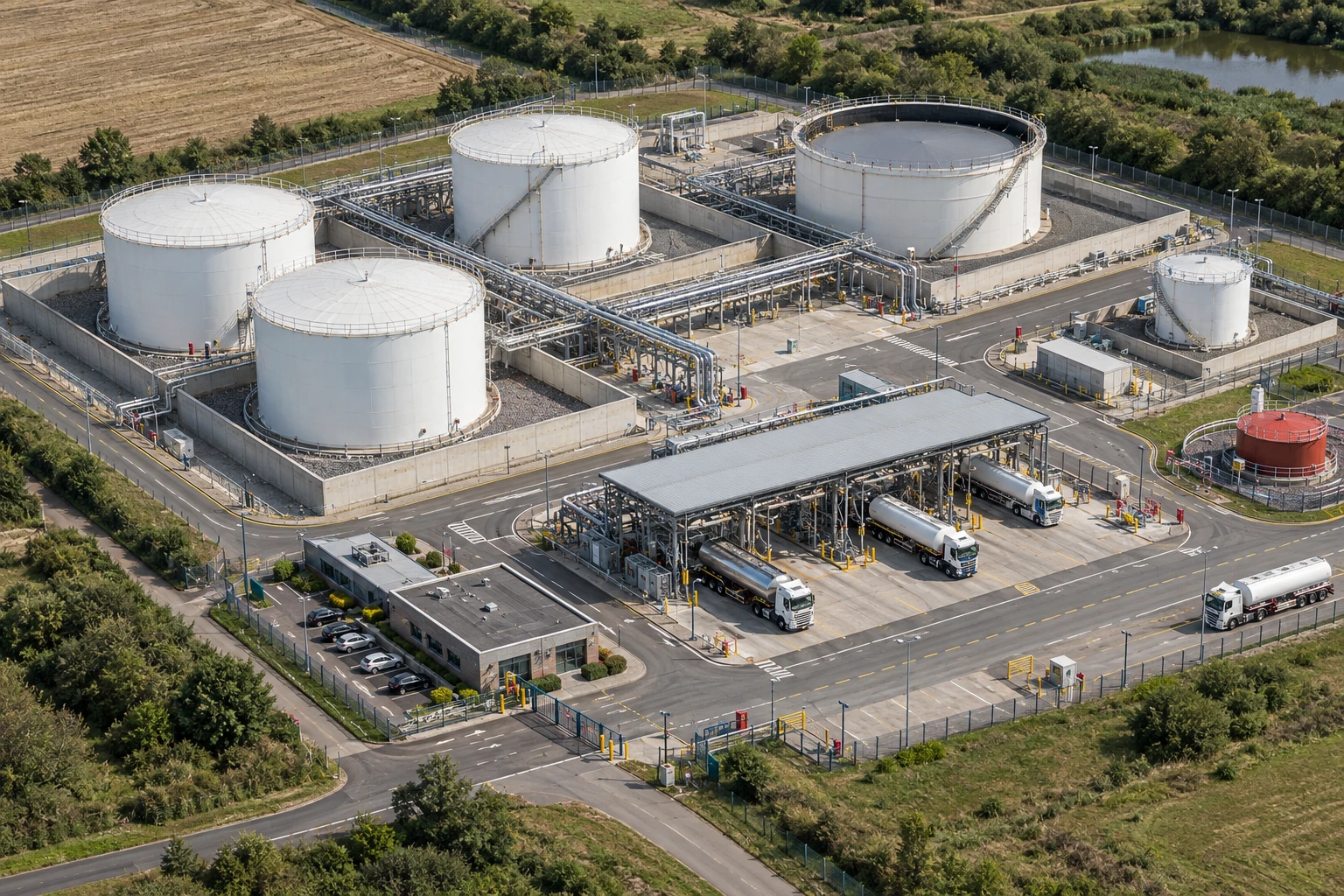

A temporary bypass outlives its approved change
All related inspection points 5 across 1 location
Crown Fuels terminal 5 inspection points
Practice in the SHAREhub environment. Browser practice is separate from workplace competence and formal learning records.
What is process safety information and process knowledge?
It is the controlled technical knowledge needed to understand hazards, operating limits and safety-critical controls.
Best-practice guide: Process Safety Information and Process Knowledge

What is process safety information and process knowledge?
The harm path begins when a stale drawing, property value or operating limit informs a real decision. A crew may isolate the wrong line or commission an unreviewed bypass; containment or protective capacity can then fail, releasing pressure, flammable or toxic material. Process safety information is the controlled account of what the plant contains, how it is designed to operate, and which conditions and safeguards prevent a major accident.
Turn process safety information and process knowledge knowledge into a decision
Process safety information is the controlled account of what the plant contains, how it is designed to operate, and which conditions and safeguards prevent a major accident. Process knowledge is people’s ability to use that information at the point of work. Current SDS, redlined and approved P&ID, property/design assumptions, hazard review, field walkdown, change record, tests and signed release.
Operational example: solvent-blend tank transfer information
Field-verify the temporary connection and valve tags, confirm ignition controls and emergency isolation, and brief operators on approved transfer limits. Revise the controlled drawings, SDS access, operating/emergency procedures and training before normal use; close the temporary change.
Where does process safety information commonly fail?
Failures usually arise when information is out of date, fragmented, inaccessible or treated as separate from work as done.
Choose controls for process safety information and process knowledge
Eliminate: Eliminate a hazardous configuration or redundant transfer path when design allows; update the design basis and verify the physical change so obsolete drawings cannot keep the old route alive in a later procedure. Reduce: Substitute or reduce hazardous inventory and operating conditions only after checking new fluid properties, compatibility and scenarios. Isolate: Isolate and engineer critical deviations with verified containment, interlocks, relief and independent shutdown. Control: Control, PPE and Discipline: revision control, management of change, competent technical approval and operator handover preserve the information. Read the full control table for qualifications, ownership and verification. Use the actual task and applicable jurisdiction; existing technical approval remains unchanged.
Use the full process safety information and process knowledge lesson
Use the full topic for the decision points, practical examples, detailed control tables and source scope. HSE guidance applies to Great Britain; use HSENI for the Northern Ireland route and the source’s stated jurisdiction. A simplified guide does not change the page’s technical-review or approval status.

Read all six steps as text
1. What is process safety information and process knowledge?
The harm path begins when a stale drawing, property value or operating limit informs a real decision.
- Avoid / redesign: Eliminate a hazardous configuration or redundant transfer path when design allows; update the design basis and verify the physical change so obsolete drawings cannot keep the old route alive in a later procedure.
- Control the task: Isolate and engineer critical deviations with verified containment, interlocks, relief and independent shutdown.
- Verify before release: Read the full task example, checks and stop points on this page.
The harm path begins when a stale drawing, property value or operating limit informs a real decision. A crew may isolate the wrong line or commission an unreviewed bypass; containment or protective capacity can then fail, releasing pressure, flammable or toxic material. Process safety information is the controlled account of what the plant contains, how it is designed to operate, and which conditions and safeguards prevent a major accident.
Apply it: Which part of this plan would you check at the workface before authorising the task?
2. Turn process safety information and process knowledge knowledge into a decision
Use the evidence to improve the actual work arrangement.
- Change at source: Eliminate a hazardous configuration or redundant transfer path when design allows; update the design basis and verify the physical change so obsolete drawings cannot keep the old route alive in a later procedure.
- Make it observable: Read the full task example, checks and stop points on this page.
- Keep useful evidence: Current SDS, redlined and approved P&ID, property/design assumptions, hazard review, field walkdown, change record, tests and signed release.
Process safety information is the controlled account of what the plant contains, how it is designed to operate, and which conditions and safeguards prevent a major accident. Process knowledge is people’s ability to use that information at the point of work. Current SDS, redlined and approved P&ID, property/design assumptions, hazard review, field walkdown, change record, tests and signed release.
Apply it: What evidence would show that the change improves this task, rather than only completing a record?
3. Operational example: solvent-blend tank transfer information
Example: a practical application of the existing topic lesson.
- Setting: the process operator plans to store a lower-flash-point solvent blend in an existing tank with a temporary transfer connection and a vent near a walkway.
- Act: Compare the blend properties, compatibility, hazardous-area basis, tank limits, transfer connection, P&ID and vent destination with the installed plant.
- Hold / review: Do not introduce the blend if the drawing misses the connection, the hazardous-area basis is stale, or the vent route and protection are unverified.
Field-verify the temporary connection and valve tags, confirm ignition controls and emergency isolation, and brief operators on approved transfer limits. Revise the controlled drawings, SDS access, operating/emergency procedures and training before normal use; close the temporary change.
Apply it: At which point would you hold this example, and what evidence would allow it to proceed?
4. Where does process safety information commonly fail?
Connect the task, the route to the person and the control that can fail.
- Source / exposure: Failures usually arise when information is out of date, fragmented, inaccessible or treated as separate from work as done.
- Possible consequence: Safe limits are known by engineers but not displayed to operators.
- Control failure: People say 'ask Dave' because the real basis of safety was never documented.
Failures usually arise when information is out of date, fragmented, inaccessible or treated as separate from work as done.
Apply it: Who could be exposed, including other trades, cleaners, maintainers and people nearby?
5. Choose controls for process safety information and process knowledge
Start with the stronger practicable options and verify their effect.
- Eliminate: Eliminate a hazardous configuration or redundant transfer path when design allows; update the design basis and verify the physical change so obsolete drawings cannot keep the old route alive in a later procedure.
- Reduce: Substitute or reduce hazardous inventory and operating conditions only after checking new fluid properties, compatibility and scenarios.
- Isolate: Isolate and engineer critical deviations with verified containment, interlocks, relief and independent shutdown.
- Control: Control, PPE and Discipline: revision control, management of change, competent technical approval and operator handover preserve the information.
Eliminate: Eliminate a hazardous configuration or redundant transfer path when design allows; update the design basis and verify the physical change so obsolete drawings cannot keep the old route alive in a later procedure. Reduce: Substitute or reduce hazardous inventory and operating conditions only after checking new fluid properties, compatibility and scenarios. Isolate: Isolate and engineer critical deviations with verified containment, interlocks, relief and independent shutdown. Control: Control, PPE and Discipline: revision control, management of change, competent technical approval and operator handover preserve the information. Read the full control table for qualifications, ownership and verification. Use the actual task and applicable jurisdiction; existing technical approval remains unchanged.
Apply it: Which stronger option can be used here, and who will verify it before accepting the remaining risk?
6. Use the full process safety information and process knowledge lesson
Follow the official sources below and retain the task-specific evidence.
- Official guidance: HSE COMAH 2015 guidance
- Official guidance: HSE operating procedures technical measures
- Task decision: Current SDS, redlined and approved P&ID, property/design assumptions, hazard review, field walkdown, change record, tests and signed release.
Use the full topic for the decision points, practical examples, detailed control tables and source scope. HSE guidance applies to Great Britain; use HSENI for the Northern Ireland route and the source’s stated jurisdiction. A simplified guide does not change the page’s technical-review or approval status.
Apply it: Which official source and full-topic section will you use to resolve the next decision?
Process safety information is not simply a drawing archive. It is the technical evidence that explains what the process is, what hazardous materials are present, what conditions are safe, what could go wrong and which controls prevent or limit loss of control. Without reliable information, hazard studies become guesses, operating procedures become folklore and management of change becomes dangerous.
Process knowledge includes written records and lived understanding. Operators may know how the plant behaves during start-up, maintenance may know which valves pass, engineers may know why a relief device was sized a certain way, and emergency teams may need to know inventories and isolation points. A strong system captures, validates and shares that knowledge rather than leaving it in one person's head.
| Information type | What it should explain | Why it matters |
|---|---|---|
| PFDs and process description | Main process steps, streams and equipment. | Helps people understand the process sequence and material flow. |
| P&IDs | Equipment, lines, valves, instruments, alarms, trips and relief devices. | Supports isolation, maintenance, hazard studies, operations and emergency response. |
| Hazardous properties | Flammability, toxicity, reactivity, corrosivity, stability and environmental hazard. | Defines credible harm and control priorities. |
| Safe operating limits | Temperature, pressure, level, flow, composition and inventory limits. | Shows when operation is moving outside the safe envelope. |
| Relief and vent basis | Overpressure scenarios, set pressures, capacities and disposal routes. | Protects against vessel rupture and uncontrolled discharge. |
| Materials of construction | Compatibility with process fluids and conditions. | Prevents corrosion, embrittlement, failure or contamination. |
| Cause and effect logic | What alarms, trips, interlocks and shutdowns should do. | Allows testing and operator response to be checked. |
The useful information set connects hazardous-substance identity and inventory, reaction and physical properties, safe operating limits, process flow and line diagrams, equipment design, control logic, relief and shutdown basis, procedures and emergency assumptions. Each item needs an owner, revision and evidence that it matches the installed plant. An operator needs to know which document governs today’s task and which unknown requires a hold, not merely where the archive is stored.
Source: HSE COMAH 2015 guidance
Source: HSE operating procedures technical measures
The harm path begins when a stale drawing, property value or operating limit informs a real decision. A crew may isolate the wrong line or commission an unreviewed bypass; containment or protective capacity can then fail, releasing pressure, flammable or toxic material. The relevant consequence depends on the actual substance and energy, so a generic document check cannot replace field verification and a competent hazard review. Hold the change when information and installed plant disagree. Source: HSE COMAH 2015 guidance
A process flow diagram (PFD) shows the main process path, while a piping and instrumentation diagram (P&ID) records detailed connections and control points. Confirm both against the as-built installation where a change could affect a major-accident barrier.
How can the hierarchy of controls use process knowledge to choose stronger major accident controls?
Eliminate, Reduce including substitution, Isolate, Control, personal protective equipment (PPE) and Discipline (ERICPD) is a prompt for decisions. HSE’s five-level hierarchy prioritises elimination, substitution, engineering controls, administrative controls and PPE. They are related frameworks, not identical laws; apply them to the actual task and check the resulting control.
Eliminate a hazardous configuration or redundant transfer path when design allows; update the design basis and verify the physical change so obsolete drawings cannot keep the old route alive in a later procedure.
Substitute or reduce hazardous inventory and operating conditions only after checking new fluid properties, compatibility and scenarios. Process knowledge must record the assumptions and changes; a lower nominal pressure may still create an unrecognised reaction or two-phase relief case.
Isolate and engineer critical deviations with verified containment, interlocks, relief and independent shutdown. The information set must identify required performance, set points, bypass status and proof tests. A drawing mismatch or unknown protection state is a hold until field verification.
Control, PPE and Discipline: revision control, management of change, competent technical approval and operator handover preserve the information. PPE is residual protection for task exposure, not a replacement for a missing design basis. ERICPD and HSE’s five-level hierarchy are related prompts, not interchangeable standards.
Source: HSE hierarchy of controls
Source: HSE COMAH 2015 guidance
How can the ERICPD hierarchy of controls use process knowledge to choose stronger major accident controls?

| ERICPD control level | Topic-specific example | Source and full task context |
|---|---|---|
| Eliminate | Remove an avoidable hazardous scenario through a feasible assessed process change. | Read the full task example, checks and stop points on this page. HSE hierarchy of controls · HSE COMAH 2015 guidance |
| Reduce | Assess a specified less hazardous material/process replacement rather than relabelling lower inventory as substitution. | Read the full task example, checks and stop points on this page. HSE hierarchy of controls · HSE COMAH 2015 guidance |
| Isolate | Verify containment, interlocks, relief and independent shutdown against the actual plant configuration. | Read the full task example, checks and stop points on this page. HSE hierarchy of controls · HSE COMAH 2015 guidance |
| Control | Control revisions, technical approval, change, temporary instructions, handover and field verification. | Read the full task example, checks and stop points on this page. HSE hierarchy of controls · HSE COMAH 2015 guidance |
| PPE | Select residual task PPE from accurate exposure information; documents do not replace installed protection. | Read the full task example, checks and stop points on this page. HSE hierarchy of controls · HSE COMAH 2015 guidance |
| Discipline | Resolve drawing/field discrepancies and confirm approved instructions before affected operation. | Read the full task example, checks and stop points on this page. HSE hierarchy of controls · HSE COMAH 2015 guidance |
How can the ISO 45001 hierarchy of controls use process knowledge to choose stronger major accident controls?

| ESEAP control level | Topic-specific example | Source and full task context |
|---|---|---|
| Elimination | Remove an avoidable hazardous scenario through a feasible assessed process change. | Read the full task example, checks and stop points on this page. HSE hierarchy of controls · HSE COMAH 2015 guidance |
| Substitution | Assess a specified less hazardous material/process replacement rather than relabelling lower inventory as substitution. | Read the full task example, checks and stop points on this page. HSE hierarchy of controls · HSE COMAH 2015 guidance |
| Engineering controls | Verify containment, interlocks, relief and independent shutdown against the actual plant configuration. | Read the full task example, checks and stop points on this page. HSE hierarchy of controls · HSE COMAH 2015 guidance |
| Administrative controls | Control revisions, technical approval, change, temporary instructions, handover and field verification. | Read the full task example, checks and stop points on this page. HSE hierarchy of controls · HSE COMAH 2015 guidance |
| PPE | Select residual task PPE from accurate exposure information; documents do not replace installed protection. | Read the full task example, checks and stop points on this page. HSE hierarchy of controls · HSE COMAH 2015 guidance |
How does process knowledge support major accident prevention?
The knowledge spine links hazardous inventory to scenarios, barriers, procedures, competence and assurance evidence.
A useful knowledge model is: hazardous inventory -> material properties -> process chemistry -> design basis -> operating envelope -> credible deviations -> safety-critical barriers -> procedures -> assurance evidence. If any link is missing or out of date, the organisation may make confident but wrong decisions.
This is why P&IDs, SDSs, relief calculations and operating limits must be controlled through MOC and field verification. A document can be current in the database but wrong in the plant if a temporary line, blind, valve change or instrument bypass has not been captured.
| Knowledge link | Question to answer | Example evidence |
|---|---|---|
| Hazardous inventory | What hazardous material and energy exist? | Inventory list, SDS, tank register and process description. |
| Process chemistry | What reactions, incompatibilities or decomposition routes matter? | Reaction hazard review and chemistry basis. |
| Design basis | What was the plant designed to do safely? | Design file, datasheets and basis of safety. |
| Operating envelope | What limits must not be exceeded? | Safe operating limits and alarm/trip set points. |
| Credible deviations | What causes loss of control? | hazard and operability study (HAZOP), what-if, layer of protection analysis (LOPA) and scenario register. |
| Barriers | What prevents, detects, controls or mitigates the event? | Bowtie, cause and effect, proof tests and procedures. |
| Assurance | How do we know the information still matches reality? | Field verification, audits and MOC close-out. |
How could poor process information create a major hazard?
A worked example shows how an apparently small information gap can undermine hazard studies, permits and emergency response.
Crownway Fuels Ltd receives a new solvent blend for storage in an existing tank. Procurement holds the supplier safety data sheet (SDS), but the tank farm piping and instrumentation diagram (P&ID) has not been updated to show a temporary transfer connection. The blend has a lower flash point than previous material, the old hazardous-area assumptions are not reviewed, and the relief/vent route discharges near a walkway. Operators rely on experience and treat the transfer as routine.
A competent process knowledge review would stop the change until the hazardous properties, compatibility, transfer route, ignition controls, ventilation, venting, emergency isolation, procedures, training and drawings were updated. The issue is not admin neatness; the information controls whether people understand the major accident scenario.
| Information gap | Risk created | Competent response |
|---|---|---|
| SDS not reviewed by technical owner | Flammable/toxic properties may be misunderstood. | SDS review and COSHH/DSEAR update. |
| Temporary connection missing from P&ID | Isolation and emergency response may be wrong. | Field verification and P&ID update before transfer. |
| Flash point lower than assumed | Hazardous area and ignition controls may be inadequate. | DSEAR review and control update. |
| Vent route not rechecked | Vapour discharge could expose people or ignition sources. | Vent/dispersal review and access control. |
| Operators not briefed | Normal practice may breach safe envelope. | Procedure and pre-job briefing. |
| MOC not closed | Old assumptions remain embedded. | MOC hold point and evidence pack. |
Operational example: solvent-blend tank transfer information
Task material and setting: Crownway Fuels Ltd plans to store a lower-flash-point solvent blend in an existing tank with a temporary transfer connection and a vent near a walkway.
People and prerequisites: Procurement provides the current SDS; process engineer owns properties and hazard review; mechanical/instrument specialists verify as-built routes; operations owns line-up and start-up.
Before: Compare the blend properties, compatibility, hazardous-area basis, tank limits, transfer connection, P&ID and vent destination with the installed plant.
During: Field-verify the temporary connection and valve tags, confirm ignition controls and emergency isolation, and brief operators on approved transfer limits.
Hold or stop: Do not introduce the blend if the drawing misses the connection, the hazardous-area basis is stale, or the vent route and protection are unverified.
Completion and hand back: Revise the controlled drawings, SDS access, operating/emergency procedures and training before normal use; close the temporary change.
Evidence: Current SDS, redlined and approved P&ID, property/design assumptions, hazard review, field walkdown, change record, tests and signed release.
Source: HSE COMAH 2015 guidance
Where does process safety information commonly fail?
Failures usually arise when information is out of date, fragmented, inaccessible or treated as separate from work as done.
Process knowledge can degrade quietly. Drawings become wrong after small modifications. Relief calculations sit in archive folders. Safe limits are known by engineers but not displayed to operators. Contractor packs contain old drawings. People say 'ask Dave' because the real basis of safety was never documented.
The strongest organisations treat information quality as a safety-critical control. They field-check documents, control revisions, define owners, train users and make sure MOC closes the information loop.
| Failure mode | How it develops | What competent management does |
|---|---|---|
| Out-of-date P&ID | Small plant modifications, temporary hoses or removed instruments are not updated. | Field verify drawings and link P&ID updates to MOC close-out. |
| Missing relief basis | Device exists but no one can explain what scenario it protects. | Rebuild relief basis and register assumptions. |
| Tribal knowledge | Critical operating knowledge sits with experienced workers only. | Capture lessons in procedures, training and competence assessment. |
| SDS not linked to process use | Product hazard is known but real task conditions are not assessed. | Connect SDS, COSHH, DSEAR and operating procedure. |
| Safe limits unclear | Operators know normal settings but not critical limits. | Define, display and train on safe operating envelope. |
| Document control weak | People use old drawings during isolation or project work. | Controlled access, revision checks and document withdrawal. |
| MOC does not update knowledge | Plant changes but documents and training stay old. | Make information update a hard MOC close-out requirement. |
What should a process safety information evidence pack contain?
The evidence pack should let someone trace a scenario from hazardous inventory to current controls and records.
For a serious learning hub, the evidence pack must go beyond a file list. It should show that information is current, owned, reviewed after change and useful to people doing the work. A competent reviewer should be able to sample one vessel, line or operation and follow the information chain from drawings and design limits to procedures, permits, training and emergency response.
Evidence should also show information gaps and uncertainty. Where drawings are being updated, relief data is missing, a study is overdue or a temporary arrangement exists, the risk and interim controls should be visible.
| Evidence item | What good looks like | Weakness to challenge |
|---|---|---|
| P&IDs | Current piping, valves, vents, drains, instruments, alarms, trips, relief devices and isolation points are controlled and field verified. | Old redlined drawings used for permits, isolations or hazard studies. |
| PFDs and process descriptions | Material flows, major equipment, stream names and process steps are understood by operators, engineers and learners. | People know individual tasks but not the process sequence or credible escalation route. |
| SDS and hazardous-property data | SDS, flammability, toxicity, reactivity, compatibility, environmental hazard and decomposition information are linked to COSHH, DSEAR and procedures. | SDS is stored as procurement paperwork and not translated into operating controls. |
| Operating envelopes | Normal operating range, abnormal range, alarm response and safe operating boundary are defined for pressure, temperature, level, flow, inventory and composition. | Normal settings are known but the safe envelope and required responses are unclear. |
| Safe operating limits | Critical maximum/minimum limits, alarm set points, trip points and operator actions are documented, trained and reviewed after change. | Limits exist in design files but are not visible in operating procedures or control-room prompts. |
| Relief and design basis | Relief scenarios, sizing assumptions, set pressure, blocked-outlet controls, discharge destination and inspection/test records are traceable. | A relief device is listed but no one can explain the scenario it protects. |
| HAZOP and LOPA records | Design intent, deviations, causes, consequences, safeguards, independent protection layers (IPLs), action close-out and residual assumptions are current and accessible. | Study files sit in archive and are not used during management of change (MOC), pre-start-up safety review or operating review. |
| MOC history | Process, material, equipment, software, staffing, procedure and temporary changes show risk review, approvals, training and information updates. | MOCs close while P&IDs, procedures, training or safe limits remain out of date. |
| Asset register | Equipment tags, safety-critical status, inspection class, materials, pressure rating, alarm/trip links and maintenance strategy are aligned. | Asset records do not match the plant or the safety-critical element register. |
| Inspection and test records | Inspection, proof testing, calibration, functional testing and defect close-out show that critical equipment still meets its basis of safety. | Records exist but cannot be connected back to the relevant barrier or scenario. |
| Cause and effect | Alarms, interlocks, trips and shutdown actions are current, tested and understood by users. | Logic changed but operators and maintainers were not briefed. |
| Field verification | Sampling confirms the technical record matches the real plant and that temporary arrangements are visible. | No systematic comparison between database, drawing and field condition. |
How should process knowledge be assured?
Assurance should test whether information is accurate, used and updated when work or plant changes.
The assurance question is not 'do we have documents?' It is 'can people use the right information to make a safe decision today?' That means sampling real work: isolation planning, permit issue, start-up, abnormal operation, maintenance, emergency drills, contractor work and MOC.
Good assurance combines document sampling, field verification and interviews. Operators, engineers and maintenance staff should be able to explain the information they rely on and what they do if it looks wrong.
| Assurance check | Practical test | Output |
|---|---|---|
| P&ID walkdown | Does the drawing match plant valves, vents, drains and instruments? | Redline log and update action. |
| Safe-limit interview | Can operators explain alarm/trip meaning and response? | Competence or procedure action. |
| MOC sample | Were documents, training and procedures updated before close-out? | MOC quality finding. |
| Permit sample | Did isolation use current drawings and field verification? | Permit assurance record. |
| Emergency drill | Could responders find isolation and inventory information quickly? | Drill learning action. |
| Data-quality dashboard | Are overdue information updates visible? | Management review escalation. |
Illustrative discrepancy record: tag V-204, approved drawing revision C, field temporary connection differs from that revision; affected transfer held. Technical owner checks destination, compatibility and protection, approves a controlled temporary redline/instruction with limits and expiry, and verifies the field arrangement before operational release. Record the test/walkdown reference and reconcile the final as-built before close-out. An authorised temporary redline is not inherently unsafe; an uncontrolled copy is not authority.
What do learners commonly misunderstand?
The common mistake is treating information as paperwork rather than a control that shapes every process safety decision.
A strong Diploma answer explains why technical information matters to hazard identification, risk assessment, operating procedures, competence, MOC, emergency response and assurance. It should use examples such as a wrong P&ID leading to poor isolation or an outdated relief basis hiding an overpressure scenario.
A weak answer lists documents without showing how they are used or verified.
| Learner question | Strong answer should include | Weak answer to avoid |
|---|---|---|
| Why is a current P&ID safety critical? | Isolation, maintenance, HAZOP, emergency response and field verification. | It is needed for records. |
| How does MOC affect process information? | Change can invalidate drawings, limits, relief basis, procedures and training. | Update documents after the project. |
| What is process knowledge? | Documented and lived understanding of hazards, limits, behaviour and controls. | Only information in manuals. |
| Why are safe operating limits important? | They define when operation leaves the design envelope and what action is needed. | They are normal operating targets. |
| How would you audit process knowledge? | Sample a scenario, documents, field reality, interviews and action close-out. | Check the document register exists. |
Which legal duties and guidance are relevant?
Process safety topics sit across general health and safety law, major accident control, equipment safety, dangerous substances and management-system duties.
| Duty or guidance | What it requires | How to apply it |
|---|---|---|
| Health and Safety at Work etc. Act 1974 | Requires employers to protect workers and others so far as reasonably practicable. | Keep design and operating information accurate enough to support safe GB work and protection of affected people. |
| Management of Health and Safety at Work Regulations 1999 | Requires risk assessment, preventive arrangements, competence, cooperation and review. | Use current hazard and plant information for GB risk assessment, competent arrangements and review after change. |
| COMAH Regulations 2015 | In-scope lower-tier sites need a major accident prevention policy (MAPP) and safety-management arrangements; upper-tier sites also need a safety report. | For in-scope GB sites, record major-accident scenarios and safeguards in the MAPP/safety-management arrangements; an upper-tier safety report also needs current process, substance and scenario information. |
| DSEAR 2002 | Requires dangerous substances and explosive atmosphere risks to be eliminated or controlled. | For GB dangerous-substance work, keep material properties, hazardous-area assumptions and ignition-control information current. |
| PUWER 1998 | Requires work equipment to be suitable, maintained and used safely. | Maintain GB equipment information needed to show safety-critical plant is suitable, inspected and maintained. |
| Pressure Systems Safety Regulations 2000 | Requires pressure systems and protective devices to be managed safely. | Where GB pressure systems are in scope, keep safe operating limits, protective-device details and written-scheme records current. |
| Health and Safety at Work (Northern Ireland) Order 1978 | Apply the general health, safety and welfare duty to this work setting. | Use accurate plant and hazard information to support the NI general duty to protect workers and others. |
| Management of Health and Safety at Work Regulations (Northern Ireland) 2000 | Assess work risks and maintain preventive arrangements appropriate to the actual task. | Keep NI risk assessment and preventive arrangements aligned with the actual plant and changed operation. |
| Control of Major Accident Hazards Regulations (Northern Ireland) 2015 | In-scope lower-tier sites need a major accident prevention policy (MAPP) and safety-management arrangements; upper-tier sites also need a safety report. | For in-scope NI sites, support lower-tier MAPP/safety-management duties with current information; upper-tier safety reports need current process, substances and scenarios. |
Apply GB COMAH information and safety-report duties only where the establishment is in scope; general health-and-safety and work-equipment duties may also matter. NI uses separate general and COMAH instruments. HSE technical-measures pages explain methods and may be older guidance, not a substitute for current law or competent design.
How should the control be managed and reviewed?
For a GB workplace, HSE guidance supports identifying the actual risk, taking practical protective steps and reviewing whether they work. Name the decision owner, check the control during the real task and correct a failed arrangement. Apply the separate Northern Ireland duties and guidance where the work is in NI.
GB management guidance: HSE managing health and safety
What training and competence are needed?
Training should help people find, understand, challenge and update the information they rely on for process safety decisions.
Training should be role-based. General awareness creates a baseline, but supervisors, managers, advisers and senior leaders need different levels of decision-making, verification and escalation competence.
| Role | What to demonstrate | Who checks | Record and reassessment |
|---|---|---|---|
| Operators and maintainers | Locate current limits and diagrams; challenge a mismatch before work. | Supervisor tests a field-to-drawing walkdown. | Authorisation and discrepancy log. |
| Process and engineering specialists | Validate properties, scenarios, safeguards and change effects. | Independent technical authority reviews a real design change. | Calculation basis, revision and sign-off. |
| Change owners and supervisors | Control temporary instructions, handover and hold points. | Process-safety lead observes a commissioning simulation. | Change and readiness closure. |
| Leaders and auditors | Sample currentness, field accuracy and overdue discrepancies. | Independent auditor traces a critical barrier from drawing to field. | Trend, funding and closure record. |
Source context: HSE COMAH 2015 guidance
How could Crownway Fuels Ltd manage this in practice?

Crownway would manage process safety information as controlled process knowledge that supports every high-risk decision.
At a fuel terminal, process knowledge includes tank inventories, transfer routes, pumps, valves, vents, overfill protection, hazardous areas, relief/venting and emergency isolation. Crownway would not rely on memory or old drawings during transfers, maintenance or emergency response.
| Management element | How the business would manage it | Evidence to review |
|---|---|---|
| Own | Assign owners for P&IDs, safe limits, relief data and procedures. | Information ownership matrix. |
| Verify | Walk down critical drawings and transfer routes. | Field verification records. |
| Control change | Make information update a hard MOC close-out gate. | MOC close-out evidence. |
| Train | Brief operators and maintainers on limits, alarms and emergency isolation. | Competence records. |
| Assure | Sample information quality in audits and drills. | Assurance findings. |
Source context: HSE COMAH 2015 guidance
What process-safety information is needed before classifying fuel equipment?
Connect product data, equipment identity, operating modes and release assumptions. A polished diagram or generic fuel name cannot fill missing technical inputs.
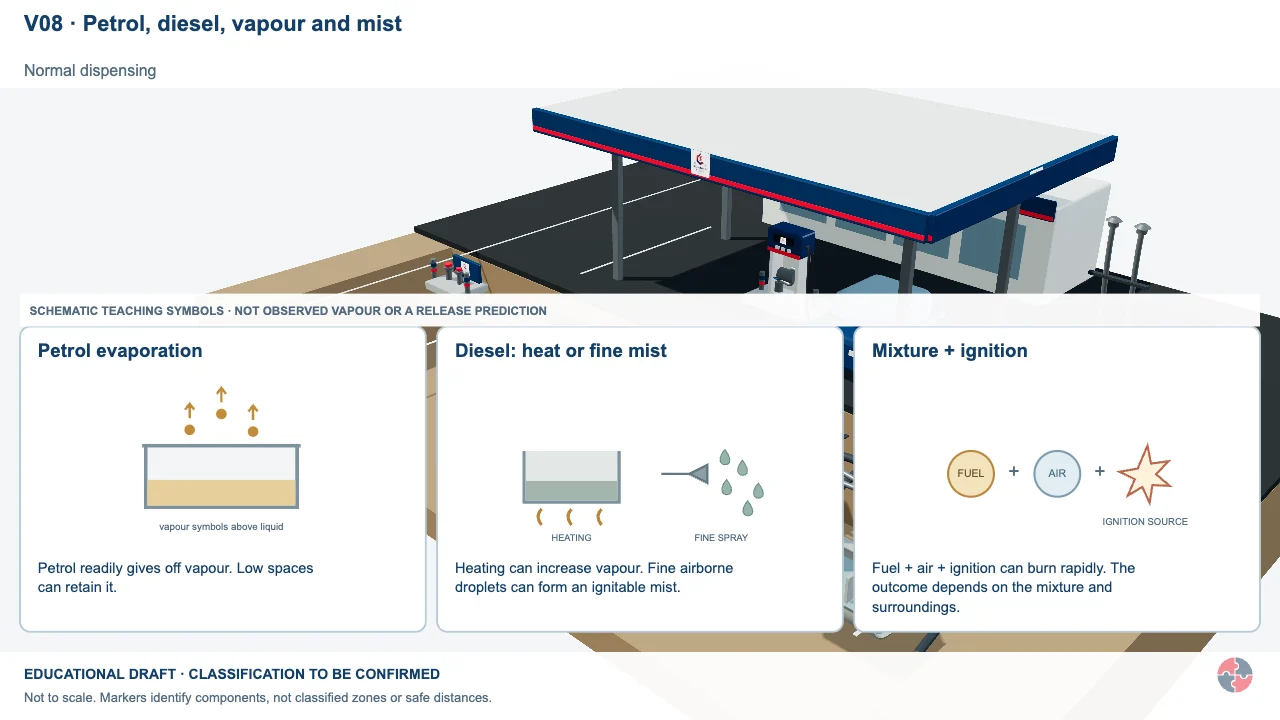
Petrol, diesel, vapour and mist
Compare petrol evaporation, diesel conditions and fine droplets. Petrol carried into a separator can remain a vapour source after the visible forecourt spill has passed.
Activity focus: Identify the actual product and release mechanism. For drainage, ask whether petrol could reach or remain in the separator; for refuelling, confirm the stated Stage II recovery arrangement.
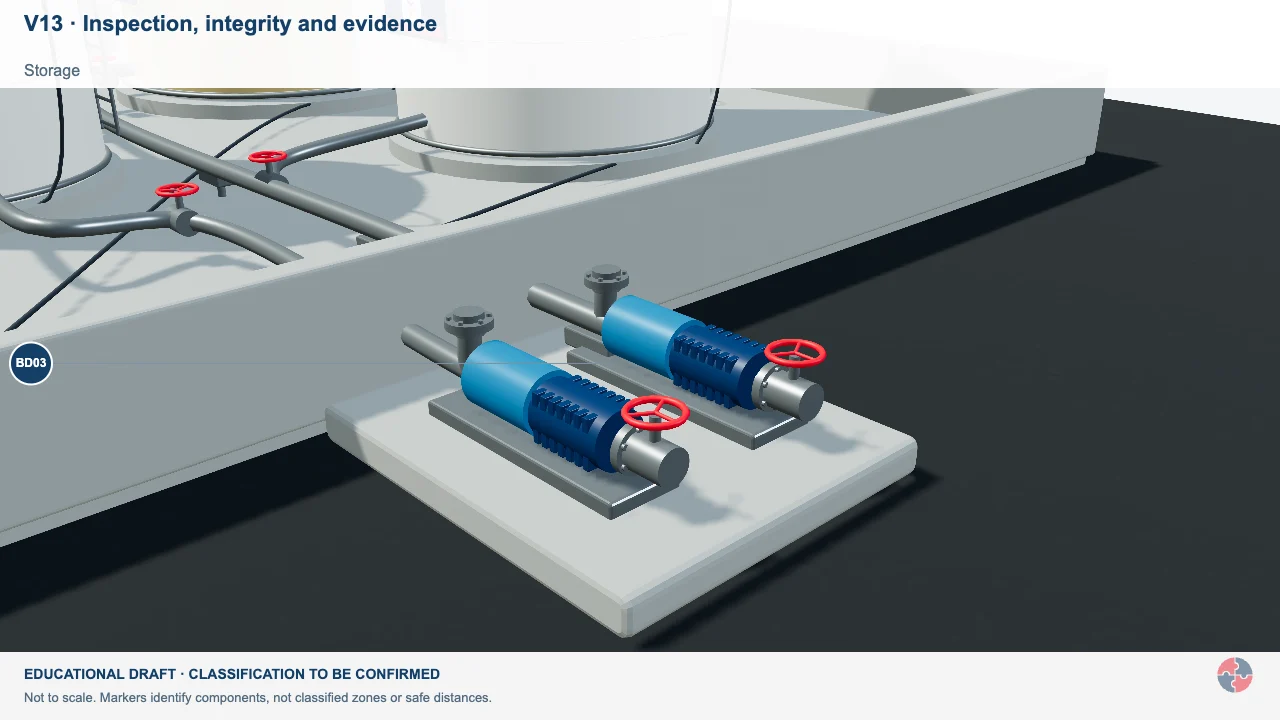
Inspection, integrity and evidence
A hose, tank or protective device has a safety purpose which depends on its condition and supporting checks.
Activity focus: Connect each identified defect to the responsible owner and appropriate operational decision.
Educational illustration, not to scale. Coloured zones are teaching examples, not a site-specific hazardous-area classification.
What do the acronyms and key terms mean?
Acronyms should be understood before they are used in assessments, briefings, audits or learning answers.
Acronyms can exclude newer readers if they are not explained. This section keeps the main terms available at the end of the page so the article stays readable while still supporting learners and audit users.
| Acronym | Meaning | Plain-English use |
|---|---|---|
| COMAH | Control of Major Accident Hazards | Major-accident regime with separate GB and Northern Ireland regulations; check the site threshold. |
| PSM | Process Safety Management | Management of major accident hazard controls. |
| MOC | Management of Change | Controlled review before changes are made. |
| SCE | Safety Critical Element | A system, structure or component whose failure could contribute to a major accident. |
| KPI | Key Performance Indicator | A measure used to track performance. |
| PFD | Process flow diagram | Main process path and equipment; check against current design. |
| P&ID | Piping and instrumentation diagram | Detailed piping, valves and controls; field-verify before a change. |
| SDS | Safety data sheet | Supplier hazard and handling information for the actual substance. |
PSSR has two meanings: pre-start-up safety review, and Pressure Systems Safety Regulations. HAZOP means hazard and operability study; LOPA means layer of protection analysis; IPL means independent protection layer. Read each acronym in its task/legal context.
Unlock another resource
You have used this month’s two free downloads. Publish a post in your own words to unlock one more resource, or choose SHARE Individual for 10 downloads per month.
You decide whether to share. If you do, use the relevant platform disclosure tools and do not make claims you do not genuinely hold.