
SHARE Knowledge Hub
Organisations as Systems and Organisational Structures
An organisation is a work system in which roles, tasks, equipment, information, incentives and supervision interact. A structure chart cannot show every real handover or workaround, so assess the work as done with workers, assign critical control owners and test how changes in staffing or reporting lines affect safe performance.
Understanding Organisations as Systems and Organisational Structures
An organisation is a work system in which roles, tasks, equipment, information, incentives and supervision interact. A structure chart cannot show every real handover or workaround, so assess the work as done with workers, assign critical control owners and test how changes in staffing or reporting lines affect safe performance.
Why this matters at work
A lean structure can perform well in routine conditions yet fail when one person, supplier, system or communication channel is unavailable. Identify single points of failure in authorisation, technical advice, emergency response, maintenance and information. Check whether apparently separate safeguards depend on the same power supply, contractor or supervisor. A substitute named in a policy is not effective if they lack current competence or access.
Exercise plausible combinations such as absence plus equipment fault, or a supplier delay during shutdown. Define what can continue safely, what requires additional supervision and what must stop. Preserve handover knowledge and emergency access to critical information. Resilience is evidenced by a tested ability to maintain protection under disturbance, not by spare headcount in an organisation chart.
How organisations manage this in practice
Use Plan Do Check Act: plan from hazards, implement controls, measure and audit, then act on evidence. Track benefits and adverse consequences of changes. Feed outcomes into investment planning and, where COMAH applies, the MAPP and relevant management system. The safety-report duty applies to upper-tier establishments; applicable review requirements determine updates.
The four organising concerns should be treated as interacting functions. Control means people know who directs work and how standards are enforced. Cooperation means departments and employers resolve shared risks. Communication means the right warning reaches the right person in time and is understood. Competence means people can perform and judge the work reliably, including managers who authorise it. A weakness in one can defeat the others.
Challenge the arrangement with a shift change and an unavailable authoriser. The receiver cross-checks plant status and unfinished permits. Escalation must reach someone who can change the plan before work starts. HSE says a permit does not itself make the task safe or replace assessment; joint preparation, communication and control remain necessary. Test another project to establish whether the same structural conflict remains.
What does it mean to view an organisation as a system?
Viewing an organisation as a system means looking at interactions, feedback and control rather than isolated tasks.
Best-practice guide: Organisations as Systems and Organisational Structures
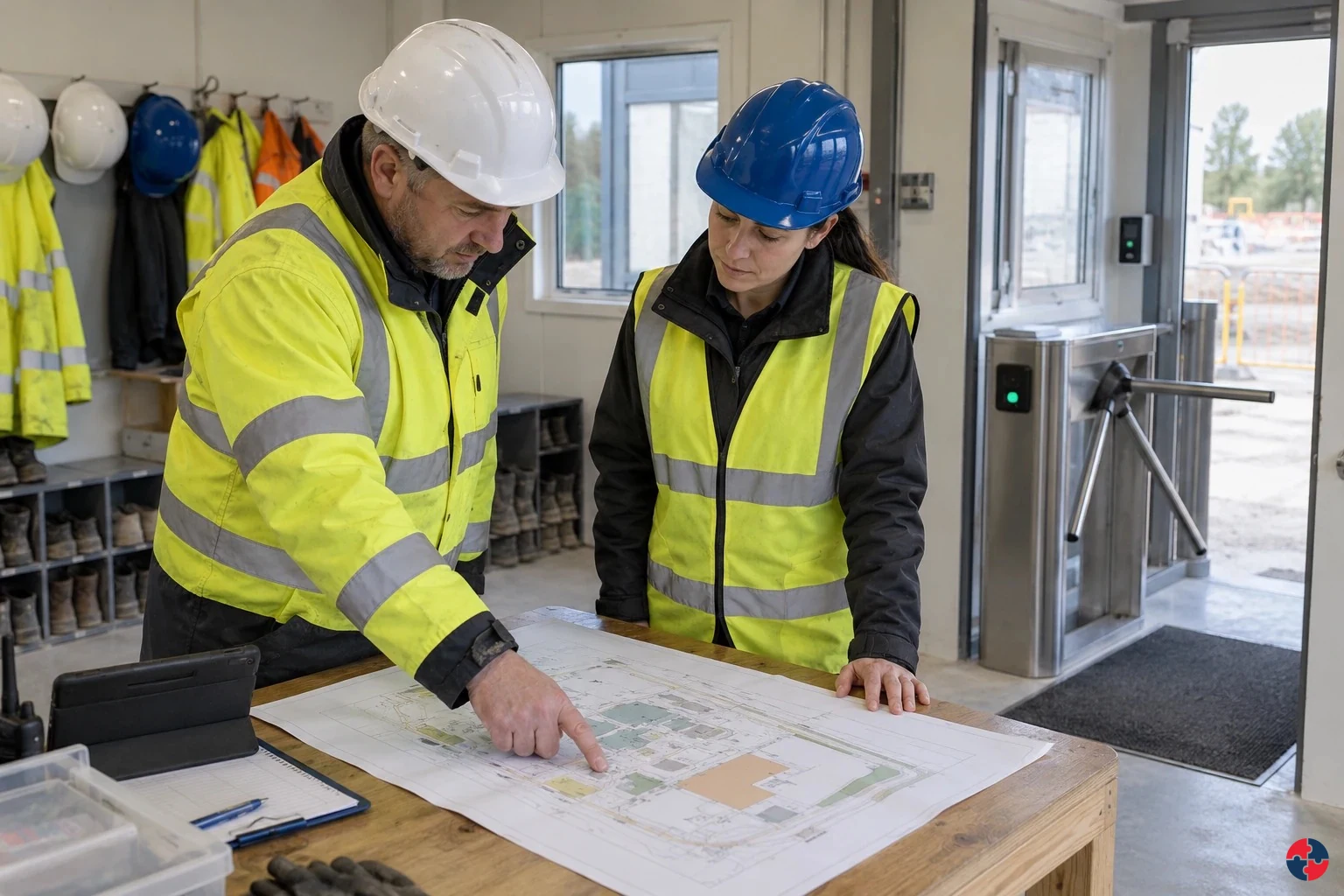
What does it mean to view an organisation as a system?
Viewing an organisation as a system means looking at interactions, feedback and control rather than isolated tasks. An organisation is a work system in which roles, tasks, equipment, information, incentives and supervision interact.
Turn organisations as systems and organisational structures knowledge into a decision
An organisation is a work system in which roles, tasks, equipment, information, incentives and supervision interact. A structure chart cannot show every real handover or workaround, so assess the work as done with workers, assign critical control owners and test how changes in staffing or reporting lines affect safe performance. System map
the leisure operator worked example
Map: Identify how teams, contractors and public-facing activities interact. Evidence / response: System map Clarify: Define who owns supervision, emergency response, maintenance and visitor risk. Evidence / response: Responsibility matrix
Risk can pass through organisational interfaces
Procurement or planning changes the equipment, material or pace of work. Operations, maintenance and contractors act on different assumptions. A worker meets a hazard that no single department has fully controlled. Use the full topic for the detailed mechanism, task limits and source scope.
Choose controls for organisations as systems and organisational structures
Remove the exposure: Eliminate shared pedestrian/vehicle movement by route redesign. Permit-to-work approval split across functions: Avoid simultaneous or duplicate authority; engineer isolation and one clear permit decision chain before adding checks and training. Separate and engineer: Redesign workload and preserve competent cover; protect critical tasks with engineered safeguards before administrative reminders. Read the full control table for qualifications, ownership and verification. Use the actual task and applicable jurisdiction; existing technical approval remains unchanged.
Use the full organisations as systems and organisational structures lesson
Use the full topic for the decision points, practical examples, detailed control tables and source scope. HSE guidance applies to Great Britain; use HSENI for the Northern Ireland route and the source’s stated jurisdiction. A simplified guide does not change the page’s technical-review or approval status.

Read all six steps as text
1. What does it mean to view an organisation as a system?
Viewing an organisation as a system means looking at interactions, feedback and control rather than isolated tasks.
- Avoid / redesign: Eliminate shared pedestrian/vehicle movement by route redesign.
- Control the task: Redesign workload and preserve competent cover; protect critical tasks with engineered safeguards before administrative reminders.
- Verify before release: Stop movement when route ownership, barriers or communication fails; resolve the interface before restart.
Viewing an organisation as a system means looking at interactions, feedback and control rather than isolated tasks. An organisation is a work system in which roles, tasks, equipment, information, incentives and supervision interact.
Apply it: Which part of this plan would you check at the workface before authorising the task?
2. Turn organisations as systems and organisational structures knowledge into a decision
Use the evidence to improve the actual work arrangement.
- Change at source: Eliminate shared pedestrian/vehicle movement by route redesign.
- Make it observable: Stop movement when route ownership, barriers or communication fails; resolve the interface before restart.
- Keep useful evidence: System map
An organisation is a work system in which roles, tasks, equipment, information, incentives and supervision interact. A structure chart cannot show every real handover or workaround, so assess the work as done with workers, assign critical control owners and test how changes in staffing or reporting lines affect safe performance. System map
Apply it: What evidence would show that the change improves this task, rather than only completing a record?
3. the leisure operator worked example
Example: a practical application of the existing topic lesson.
- Map: Identify how teams, contractors and public-facing activities interact.
- Clarify: Define who owns supervision, emergency response, maintenance and visitor risk.
- Listen: Use worker and contractor feedback to identify weak signals.
Map: Identify how teams, contractors and public-facing activities interact. Evidence / response: System map Clarify: Define who owns supervision, emergency response, maintenance and visitor risk. Evidence / response: Responsibility matrix
Apply it: At which point would you hold this example, and what evidence would allow it to proceed?
4. Risk can pass through organisational interfaces
Connect the task, the route to the person and the control that can fail.
- Decision: Procurement or planning changes the equipment, material or pace of work.
- Interface: Operations, maintenance and contractors act on different assumptions.
- Exposure: A worker meets a hazard that no single department has fully controlled.
Procurement or planning changes the equipment, material or pace of work. Operations, maintenance and contractors act on different assumptions. A worker meets a hazard that no single department has fully controlled. Use the full topic for the detailed mechanism, task limits and source scope.
Apply it: Where is this harm route present in the actual work, and which control breaks it before anyone is exposed?
5. Choose controls for organisations as systems and organisational structures
Start with the stronger practicable options and verify their effect.
- Remove the exposure: Eliminate shared pedestrian/vehicle movement by route redesign.
- Permit-to-work approval split across functions: Avoid simultaneous or duplicate authority; engineer isolation and one clear permit decision chain before adding checks and training.
- Separate and engineer: Redesign workload and preserve competent cover; protect critical tasks with engineered safeguards before administrative reminders.
Remove the exposure: Eliminate shared pedestrian/vehicle movement by route redesign. Permit-to-work approval split across functions: Avoid simultaneous or duplicate authority; engineer isolation and one clear permit decision chain before adding checks and training. Separate and engineer: Redesign workload and preserve competent cover; protect critical tasks with engineered safeguards before administrative reminders. Read the full control table for qualifications, ownership and verification. Use the actual task and applicable jurisdiction; existing technical approval remains unchanged.
Apply it: Which stronger option can be used here, and who will verify it before accepting the remaining risk?
6. Use the full organisations as systems and organisational structures lesson
Follow the official sources below and retain the task-specific evidence.
- Official guidance: Introduction to human factors
- Official guidance: Managing for health and safety, HSG65
- Task decision: System map
Use the full topic for the decision points, practical examples, detailed control tables and source scope. HSE guidance applies to Great Britain; use HSENI for the Northern Ireland route and the source’s stated jurisdiction. A simplified guide does not change the page’s technical-review or approval status.
Apply it: Which official source and full-topic section will you use to resolve the next decision?
A system has inputs, processes, outputs and feedback. In health and safety, inputs include people, equipment, substances, procedures, information, time, contractors and money. Processes include planning, procurement, supervision, maintenance, risk assessment, training, consultation and work execution. Outputs include products, services, incidents, near misses, exposure data, customer outcomes and worker experience. Feedback includes audits, inspections, worker concerns, investigations, monitoring, reviews and external learning.Introduction to human factors Managing for health and safety, HSG65
The systems view is powerful because it explains why similar errors keep recurring. If people repeatedly take shortcuts, the deeper issue may be unrealistic schedules, poor tool design, weak supervision, confusing procedures, incentives that reward output only, or a culture where bad news is unwelcome. The individual action matters, but the system shaped the action.
For Diploma study, this topic should be applied to organisational structure. A functional structure, matrix structure, project structure or networked contractor model each creates different risks for communication, ownership, competence and accountability. The safety professional's job is to understand how the structure affects real control.
| System element | Health and safety example | What to test |
|---|---|---|
| Inputs | People, equipment, contractors, materials, time and information. | Are inputs suitable, competent and available?Introduction to human factors Managing for health and safety, HSG65 |
| Processes | Risk assessment, supervision, maintenance, procurement and communication. | Do processes control actual work?Introduction to human factors Managing for health and safety, HSG65 |
| Outputs | Work completed, incidents, exposure, quality, delays and worker wellbeing. | Are outputs measured beyond injury rates?Introduction to human factors Managing for health and safety, HSG65 |
| Feedback | Audits, inspections, worker concerns and incident learning. | Does feedback change decisions?Introduction to human factors Managing for health and safety, HSG65 |
| Boundary | Interfaces with clients, contractors, regulators and the public. | Are interfaces owned and controlled?Introduction to human factors Managing for health and safety, HSG65 |
| Adaptation | Workarounds, informal support and local decision-making. | Are adaptations safe or signs of system failure?Introduction to human factors Managing for health and safety, HSG65 |
Which systems concepts help explain health and safety performance?
Systems concepts help learners understand why risk emerges from interactions, feedback delay and organisational design.
Systems thinking is more than saying 'everything is connected'. It gives professionals a way to analyse why controls degrade, why warnings are missed and why people adapt around poorly designed work. In a complex organisation, a decision made in finance, procurement, HR or project planning can influence the conditions on a scaffold, in a control room, in a workshop or on a night shift.Introduction to human factors Performance influencing factors
The professional skill is to connect theory to evidence. If the issue is weak feedback, the auditor looks at whether near misses reach decision-makers. If the issue is tight coupling, the process safety engineer looks at how quickly a small failure can escalate. If the issue is drift, the supervisor looks at how informal workarounds became normal. If the issue is emergence, the investigator asks how several individually reasonable decisions combined to create harm.
| Concept | What it means | Workplace application |
|---|---|---|
| Open system | The organisation is influenced by clients, regulators, markets, communities and supply chains. | Commercial pressure or contractor availability can change risk control.Introduction to human factors Performance influencing factors |
| Socio-technical system | People, technology, procedures and organisation design interact. | New equipment needs training, maintenance, procedures and supervision.Introduction to human factors Performance influencing factors |
| Feedback loop | Information from work returns to decision-makers and changes the system. | Near misses, audits and worker concerns should affect planning and resources.Introduction to human factors Performance influencing factors |
| Feedback delay | Harm or warning appears long after the decision that caused it. | Occupational disease and maintenance backlog need leading indicators.Introduction to human factors Performance influencing factors |
| Tight coupling | A failure can escalate quickly because steps are closely linked. | Process operations, lifting, transport and fire systems need strong barriers.Introduction to human factors Performance influencing factors |
| Complexity | Outcomes are hard to predict because many variables interact. | Major change, SIMOPS and multi-contractor sites need scenario thinking.Introduction to human factors Performance influencing factors |
| Emergence | Risk appears from interactions, not from one broken part. | Several small compromises combine into a serious incident.Introduction to human factors Performance influencing factors |
| Drift and adaptation | People adjust work to meet goals, sometimes normalising weaker controls. | Shortcuts, bypasses and informal fixes need investigation before harm.Introduction to human factors Performance influencing factors |
| System boundary | Interfaces where responsibility passes between teams or organisations. | Client-contractor, landlord-tenant and operations-maintenance boundaries need ownership.Introduction to human factors Performance influencing factors |
The plain-English theory definitions and workplace examples here are SHARE teaching synthesis. HSE’s human-factors and PIF material supports practical workload, staffing, role and communication factors; it does not itself define every systems-theory term. Leveson’s CAST handbook offers primary systems-safety reading, including emergence through interaction, rather than a UK legal duty. Concept-specific review of the remaining theory attributions is required before release.
How do different organisational structures shape risk control?
Different structures create different strengths, blind spots and assurance needs.
Organisational structure models and health and safety implications — part 1 of 2


Read the complete visual as text
- Functional structure: How it works: People report through disciplines such as operations, maintenance, HR, finance and HSE. Risk-control example: Strong technical standards, but maintenance and operations may blame each other for isolation quality.Introduction to human factors Organisational change
- Divisional structure: How it works: Business units, regions or sites hold local management responsibility. Risk-control example: Local ownership improves speed, but standards may vary between sites.Introduction to human factors Organisational change
- Matrix structure: How it works: People have project and functional reporting lines. Risk-control example: A project manager may push delivery while the technical authority owns engineering standards.Introduction to human factors Organisational change
- Project structure: How it works: Temporary teams form around a deliverable, client or construction phase. Risk-control example: Clear focus, but temporary workers and contractors may miss corporate learning.Introduction to human factors Organisational change
Organisational structure models and health and safety implications — part 2 of 2


Read the complete visual as text
- Networked/outsourced structure: How it works: Core organisation relies on contractors, specialists or partners. Risk-control example: Expert capability increases, but interfaces, permits, competence and supervision need strong control.Introduction to human factors Organisational change
- Centralised control: How it works: Standards, approvals and expertise sit in head office or a centre of excellence. Risk-control example: Consistency improves, but local weak signals may be slow to reach decision-makers.Introduction to human factors Organisational change
- Decentralised control: How it works: Local managers hold authority and adapt to site conditions. Risk-control example: Responsiveness improves, but control quality may depend heavily on local competence.Introduction to human factors Organisational change
Organisational structure is not just a chart for HR. It determines how authority, information, competence and accountability move through the business. A functional structure may have strong technical standards but poor cross-functional learning. A matrix structure may bring good collaboration but unclear authority. A project structure may focus delivery but lose long-term learning. A centralised model may create consistency but miss local realities. A decentralised model may create ownership but inconsistent control.Introduction to human factors Organisational change
Degree-level understanding means being able to explain both the benefit and the risk. No structure is automatically good or bad. The question is whether the structure is understood, whether its weaknesses are compensated for, and whether serious risk controls have named owners across boundaries.
| Structure model | How it works | Risk-control example |
|---|---|---|
| Functional structure | People report through disciplines such as operations, maintenance, HR, finance and HSE. | Strong technical standards, but maintenance and operations may blame each other for isolation quality.Introduction to human factors Organisational change |
| Divisional structure | Business units, regions or sites hold local management responsibility. | Local ownership improves speed, but standards may vary between sites.Introduction to human factors Organisational change |
| Matrix structure | People have project and functional reporting lines. | A project manager may push delivery while the technical authority owns engineering standards.Introduction to human factors Organisational change |
| Project structure | Temporary teams form around a deliverable, client or construction phase. | Clear focus, but temporary workers and contractors may miss corporate learning.Introduction to human factors Organisational change |
| Networked/outsourced structure | Core organisation relies on contractors, specialists or partners. | Expert capability increases, but interfaces, permits, competence and supervision need strong control.Introduction to human factors Organisational change |
| Centralised control | Standards, approvals and expertise sit in head office or a centre of excellence. | Consistency improves, but local weak signals may be slow to reach decision-makers.Introduction to human factors Organisational change |
| Decentralised control | Local managers hold authority and adapt to site conditions. | Responsiveness improves, but control quality may depend heavily on local competence.Introduction to human factors Organisational change |
What system failure patterns should professionals recognise?
System failure patterns show how ordinary decisions can combine into unsafe conditions.
Systems fail through patterns that become normal before they become visible. Silo behaviour prevents information moving across departments. Weak interfaces create gaps between teams. Drift turns temporary workarounds into accepted practice. Normalisation of deviance makes abnormal conditions feel routine. Poor feedback means leaders do not see bad news until after an incident. Goal conflict makes people trade off controls to meet time, cost or output pressure.Performance influencing factors Introduction to human factors
These patterns matter because they help investigators and auditors move beyond individual blame. If a worker bypassed a guard, the systems question is why the guard was difficult to use, why supervision accepted it, why maintenance had not fixed it, why production pressure existed and why the audit system had not detected the drift.
| Failure pattern | What it means | Practical example |
|---|---|---|
| Silo behaviour | Departments optimise their own goals and miss whole-system risk. | Procurement buys cheaper equipment without involving maintenance or HSE.Performance influencing factors Introduction to human factors |
| Weak interface | Risk sits between two teams, contractors or dutyholders. | Client assumes contractor controls isolation; contractor assumes site will provide it.Performance influencing factors Introduction to human factors |
| Drift | Controls slowly erode because small deviations appear successful. | Pre-use checks become verbal, then occasional, then forgotten.Performance influencing factors Introduction to human factors |
| Normalisation of deviance | An abnormal condition becomes accepted as normal work. | A nuisance alarm is ignored because it often clears itself.Performance influencing factors Introduction to human factors |
| Goal conflict | Output, cost or programme pressure competes with safe control. | An unresolved scaffold inspection finding or physical defect is tolerated to keep a job moving.Performance influencing factors Introduction to human factors |
| Weak feedback loop | Information from work does not change decisions. | Near misses are logged but not reviewed by managers who set resources.Performance influencing factors Introduction to human factors |
| Local optimisation | One part of the system improves its own performance while creating risk elsewhere. | Warehouse picks faster by staging stock in a pedestrian route.Performance influencing factors Introduction to human factors |
| Corporate memory loss | Lessons disappear after staff turnover or contractor change. | A known confined-space issue is forgotten during a new project.Performance influencing factors Introduction to human factors |
A scaffold tag can supplement inspection evidence; it is not itself a general GB legal requirement and does not demonstrate structural safety. Keep the affected access on hold until the competent inspection/defect decision is resolved. HSE scaffolding FAQ.
How do formal and informal organisations interact?
The formal organisation describes how work should be controlled; the informal organisation reveals how work is actually achieved.
A formal system includes policies, structure charts, procedures, job descriptions, permits, committees, standards and reporting lines. These are essential because they define authority and accountability. But they do not describe the whole organisation. The informal system includes trust networks, local norms, shortcuts, unofficial expertise, peer pressure, silence, practical wisdom and the hidden messages people receive from supervisors.Introduction to human factors Consulting employees
The informal organisation can improve safety when experienced workers coach new starters, teams share weak signals and supervisors listen to practical concerns. It can damage safety when people learn that production pressure overrides controls, that raising concerns is unwelcome, that paperwork matters more than work quality, or that bending rules is how the job gets done. A systems-minded professional studies both.
| Feature | Formal organisation | Informal organisation |
|---|---|---|
| Authority | Role descriptions, RACI charts and delegation rules. | Who people actually ask before making a difficult decision.Introduction to human factors Consulting employees |
| Communication | Briefings, emails, meetings and procedures. | Peer conversations, messaging groups and shift-to-shift tips.Introduction to human factors Consulting employees |
| Competence | Training matrix, certificates and authorised persons. | Experienced people coaching or compensating for gaps.Introduction to human factors Consulting employees |
| Control | Permits, checklists, inspections and audits. | Local norms about what is really challenged or tolerated.Introduction to human factors Consulting employees |
| Escalation | Defined reporting line and stop-work route. | Whether workers believe bad news will be welcomed.Introduction to human factors Consulting employees |
| Learning | Investigation report and action tracker. | Stories people remember, repeat or quietly ignore.Introduction to human factors Consulting employees |
| Risk | Documented hazards and controls. | Workarounds, unspoken pressures and adaptations in real tasks.Introduction to human factors Consulting employees |
What is the difference between work as imagined and work as done?
Work as imagined is how planners, managers and procedures think the job happens; work as done is how people actually achieve the job in real conditions.
What is the difference between work as imagined and work as done?


Read the complete visual as text
- Work as imagined is how planners, managers and procedures…: Work as imagined is how planners, managers and procedures think the job happens; work as done is how people actually achieve the job in real conditions.
- This distinction is one of the most useful systems-thinking…: This distinction is one of the most useful systems-thinking tools for health and safety professionals. Work as imagined may assume the right tools are available, the route is clear, the procedure is current, staffing is normal, the weather is benign, the contractor understands the site and the alarm is easy to interpret. Work as done includes interruptions, time pressure, missing equipment, poor access, informal help, conflicting goals and local adaptations. Introduction to human factors Consulting employees
- Procedures often fail when the gap between imagined and…: Procedures often fail when the gap between imagined and actual work is too wide. The response should not be to blame people for adapting. The professional response is to understand why adaptation was needed, whether it created risk and how the system can be redesigned so safe work is practical.
This distinction is one of the most useful systems-thinking tools for health and safety professionals. Work as imagined may assume the right tools are available, the route is clear, the procedure is current, staffing is normal, the weather is benign, the contractor understands the site and the alarm is easy to interpret. Work as done includes interruptions, time pressure, missing equipment, poor access, informal help, conflicting goals and local adaptations.Introduction to human factors Consulting employees
Procedures often fail when the gap between imagined and actual work is too wide. The response should not be to blame people for adapting. The professional response is to understand why adaptation was needed, whether it created risk and how the system can be redesigned so safe work is practical.
| Topic | Work as imagined | Work as done diagnostic |
|---|---|---|
| Procedure | Steps are followed in order with no competing demands. | Observe the task and ask where people skip, pause, adapt or ask for help.Introduction to human factors Consulting employees |
| Resources | Tools, PPE, plant, information and competent people are available. | Check what happens on nights, weekends, breakdowns, bad weather and peak demand.Introduction to human factors Consulting employees |
| Time | The job has enough time for checks, handover and recovery. | Review production pressure, overtime, waiting time and shortcuts.Introduction to human factors Consulting employees |
| Communication | Briefings and permits transfer all critical information. | Test what incoming workers, contractors and supervisors actually understand.Introduction to human factors Consulting employees |
| Controls | Controls are usable and reliable. | Ask whether guards, LEV, barriers, permits or alarms make the job practical or harder.Introduction to human factors Consulting employees |
| Escalation | People stop and report when conditions change. | Check whether workers believe stopping work will be supported.Introduction to human factors Consulting employees |
| Learning | Incidents update procedures and training. | Confirm learning changes tools, staffing, layout, supervision and audit questions.Introduction to human factors Consulting employees |
How can organisational structure be diagnosed as a risk control issue?
Structure should be tested by tracing a real risk through accountability, information flow and control evidence.
To diagnose structure, pick a serious risk and follow it through the organisation. For example, if the risk is silica dust, ask who specifies tools, who buys extraction, who plans the work, who supervises controls, who checks RPE, who reviews exposure monitoring, who records health surveillance and who tells directors when control is weak. If the answer crosses departments with no clear owner, the structure is part of the risk.Introduction to human factors Performance influencing factors
This diagnostic method works for fire, transport, violence, work at height, process safety, contractor management and wellbeing risks. It avoids abstract debate about culture and turns organisational theory into a practical test of whether the structure can control the hazard.
| Diagnostic question | Why it matters | Evidence to review |
|---|---|---|
| Who owns the risk? | Accountability prevents gaps and duplication. | Risk register, job description and RACI matrix.Introduction to human factors Performance influencing factors |
| Who owns the control? | Controls fail when ownership is unclear. | Control standard, inspection schedule and responsible person record.Introduction to human factors Performance influencing factors |
| Who has authority to stop work? | Authority must match responsibility. | Stop-work procedure, permit rules and supervisor interviews.Introduction to human factors Performance influencing factors |
| How does information travel upward? | Weak signals need a route to decision-makers. | Near-miss data, escalation logs and meeting minutes.Introduction to human factors Performance influencing factors |
| How does learning travel sideways? | Similar teams need to learn from each other. | Learning briefs, cross-site forums and action verification.Introduction to human factors Performance influencing factors |
| Where are the interfaces? | Boundaries create handover and contractor risk. | Interface agreement, bridging document and audit findings.Introduction to human factors Performance influencing factors |
| What is measured? | Metrics shape attention and behaviour. | Dashboard, KPIs and leadership review questions.Introduction to human factors Performance influencing factors |
Illustrative out-of-hours interface record. Riverside’s contractor needs maintenance access beside the pool. The duty manager coordinates the closure; the contractor controls its isolation/work method; the pool supervisor checks lifeguard capacity, public exclusion and emergency access. Record competent cover, the actual inspection/evidence time and the review deadline. If a barrier, isolation or emergency route is unresolved, keep the area closed and escalate to the technical owner. The duty manager verifies the agreed hand-back with contributing roles before reopening; each party retains its legal duties.
How do organisational structures affect health and safety?
Structures affect who owns decisions, how information flows and how quickly weak signals are escalated.
A functional organisation groups people by discipline, such as operations, maintenance, HR and finance. This can build expertise, but it can also create silos. A matrix organisation gives people more than one reporting line, which can improve flexibility but create conflicting priorities. A project organisation can focus delivery, but temporary teams may lose corporate memory. A networked or outsourced structure can bring specialist capability, but contractor interfaces and duty ownership need careful control.Introduction to human factors Organisational change
The informal organisation also matters. People often rely on trusted colleagues, unofficial shortcuts, local norms and WhatsApp-style information sharing. Informal networks can be positive when they share warning signs and practical knowledge, but dangerous when they bypass formal controls, hide bad news or normalise poor practice.
| Structure | Strength | Risk to manage |
|---|---|---|
| Functional | Clear specialist expertise and standards. | Silos, slow escalation and competing departmental goals.Introduction to human factors Organisational change |
| Matrix | Flexible resource sharing and cross-functional work. | Unclear authority and conflicting priorities.Introduction to human factors Organisational change |
| Project | Strong focus on delivery and temporary objectives. | Loss of corporate memory and pressure to finish.Introduction to human factors Organisational change |
| Network or outsourced | Access to specialist contractor capability. | Interface risk, weak supervision and unclear duty ownership.Introduction to human factors Organisational change |
| Centralised | Consistent standards and governance. | Local conditions may be misunderstood.Introduction to human factors Organisational change |
| Decentralised | Local ownership and agility. | Inconsistent controls and evidence.Introduction to human factors Organisational change |
For the actual task hazard, HSE places elimination first, then substitution, engineering controls, administrative controls and suitable PPE for residual risk. Record why a higher control is not practicable and how the chosen measure is checked in use. HSE hierarchy of controls
| Material task hazard | Eliminate, substitute and engineer | Selection, owner and performance check | Failure, stop and direct sources |
|---|---|---|---|
| Two teams each assume the other owns vehicle segregation | Eliminate shared pedestrian/vehicle movement by route redesign. Assign one route owner and provide physical barriers, then coordinate shifts and contractors. | Operations director maps handoff and authority; transport lead verifies barriers and driver access on each shift with worker input. | Stop movement when route ownership, barriers or communication fails; resolve the interface before restart. Workplace traffic Introduction to human factors |
| Permit-to-work approval split across functions | Avoid simultaneous or duplicate authority; engineer isolation and one clear permit decision chain before adding checks and training. | Plant manager maps work as done, tests isolation and permit scenarios across departments, and observes field use after restructuring. | Stop high-risk work if permit authority or isolation proof is unclear; restore one clearly accountable coordination route with competent authorising, performing, isolation and hand-back roles and required independent checks and re-test. Performance influencing factors Organisational change Permit-to-work systems |
| Staffing change increases workload and hidden workarounds | Redesign workload and preserve competent cover; protect critical tasks with engineered safeguards before administrative reminders. | Change sponsor checks staffing, overtime, handovers and worker feedback during transition; independent lead tests critical controls. | Slow or pause change for fatigue, repeated bypasses or unowned work; restore resources and verify control before continuing. Organisational change Performance influencing factors Consulting employees |
Permit coordination means one accountable route with explicitly allocated competent authorising, performing, isolation and hand-back roles, preserving required independent checks. Link related permits and simultaneous operations (SIMOPS), and leave the plant in a documented safe state at shift handover. Multiple authorised roles can be legitimate; a signature is not proof of isolation. HSE permit-to-work systems.
How can goal conflict weaken safety controls?
A goal-conflict example shows how accidents can emerge from normal business pressure.
How can goal conflict weaken safety controls? — part 1 of 2


Read the complete visual as text
- A goal-conflict example shows how accidents can emerge from…: A goal-conflict example shows how accidents can emerge from normal business pressure.
- A warehouse is under pressure to clear orders before…: A warehouse is under pressure to clear orders before a bank holiday. The formal procedure requires segregation between pedestrians and reversing vehicles. The informal message from supervisors is that delays are unacceptable. A temporary marshal is moved to packing, one roller shutter route is blocked by stock and drivers begin reversing into a mixed area. No one intends to create danger, but the system rewards output and tolerates control erosion. Introduction to human factors Performance influencing factors Workplace traffic
How can goal conflict weaken safety controls? — part 2 of 2


Read the complete visual as text
- A systems response would not simply tell the driver…: A systems response would not simply tell the driver to be careful. It would examine workload, layout, staffing, supervision, blocked routes, leading indicators, communication and leadership messages. It would ask how the organisation made unsafe adaptation seem normal.
- When the pedestrian route becomes blocked, the warehouse supervisor…: When the pedestrian route becomes blocked, the warehouse supervisor stops mixed movement and assigns a safe temporary route before orders continue. The operations owner restores the physical segregation and confirms that the marshal role, housekeeping and escalation route survive peak demand. A field walk with workers tests the actual route and handover before the shift lead authorises restart; the later review asks why output pressure displaced a critical control. Introduction to human factors
A warehouse is under pressure to clear orders before a bank holiday. The formal procedure requires segregation between pedestrians and reversing vehicles. The informal message from supervisors is that delays are unacceptable. A temporary marshal is moved to packing, one roller shutter route is blocked by stock and drivers begin reversing into a mixed area. No one intends to create danger, but the system rewards output and tolerates control erosion.Introduction to human factors Performance influencing factors Workplace traffic
A systems response would not simply tell the driver to be careful. It would examine workload, layout, staffing, supervision, blocked routes, leading indicators, communication and leadership messages. It would ask how the organisation made unsafe adaptation seem normal.
When the pedestrian route becomes blocked, the warehouse supervisor stops mixed movement and assigns a safe temporary route before orders continue. The operations owner restores the physical segregation and confirms that the marshal role, housekeeping and escalation route survive peak demand. A field walk with workers tests the actual route and handover before the shift lead authorises restart; the later review asks why output pressure displaced a critical control. Introduction to human factors
| System factor | How it creates risk | Better control |
|---|---|---|
| Production pressure | Output becomes more visible than segregation. | Leaders set non-negotiable controls.Introduction to human factors Performance influencing factors Workplace traffic |
| Resource gap | Marshal removed to another task. | Critical control role protected.Introduction to human factors Performance influencing factors Workplace traffic |
| Layout drift | Blocked route creates mixed traffic. | Housekeeping and route checks escalated.Introduction to human factors Performance influencing factors Workplace traffic |
| Informal norm | People learn shortcuts are accepted. | Supervisors challenge drift consistently.Introduction to human factors Performance influencing factors Workplace traffic |
| Weak feedback | Near misses not reported. | Worker reporting and review encouraged.Introduction to human factors Performance influencing factors Workplace traffic |
| Management review | Only output metrics reviewed. | Dashboard includes critical control health.Introduction to human factors Performance influencing factors Workplace traffic |
What evidence shows systems thinking is embedded?
Evidence should show that health and safety is integrated into decisions, not bolted on after incidents.
Test one interface such as transport and warehouse work by following the formal responsibility map, shift handover, contractor instruction and what workers actually do when the route is blocked. The gap between the chart and the field is the evidence that matters. Closure should show a changed physical arrangement and a reliable escalation owner. Managing for health and safety, HSG65
| Evidence | What it should show | What to challenge |
|---|---|---|
| Organisation chart | Responsibilities and reporting lines are clear. | Chart exists but critical decisions have no owner.Managing for health and safety, HSG65 Introduction to human factors |
| Responsibility matrix | Risk ownership, escalation and authority are defined. | Everyone is responsible, so no one owns decisions.Managing for health and safety, HSG65 Introduction to human factors |
| Consultation records | Formal and informal worker knowledge influences controls. | Consultation happens after decisions.Managing for health and safety, HSG65 Introduction to human factors |
| Decision records | Safety is considered in procurement, staffing and planning. | Safety only considered at task risk assessment.Managing for health and safety, HSG65 Introduction to human factors |
| Performance dashboard | Leading, lagging and control-health measures are reviewed. | Dashboard only counts accidents.Managing for health and safety, HSG65 Introduction to human factors |
| Audit findings | Audits sample work as done and system interfaces. | Audits check documents only.Managing for health and safety, HSG65 Introduction to human factors |
| Learning records | Feedback changes procedures, resources or design. | Learning stored but not implemented.Managing for health and safety, HSG65 Introduction to human factors |
What should learners understand about organisations as systems?
Learners should explain how structure, culture, communication and goals influence risk control.
The table gives practical examples, evidence expectations and common decision points so the section can be used for learning, supervision, audit and review.Introduction to human factors Managing for health and safety, HSG65
In the blocked-route example, the formal rule says pedestrians and vehicles are segregated while local work pressure encourages a shortcut. Explain the feedback loop: a worker reports the blocked route, a manager restores the physical control, and leaders change staffing or housekeeping so the failure does not recur. Both the formal and informal system shape the outcome. Introduction to human factors
| Concept | Meaning | Application |
|---|---|---|
| Open system | The organisation interacts with clients, markets, regulators and communities. | External pressure can affect resources and priorities.Introduction to human factors Managing for health and safety, HSG65 |
| Feedback loop | Information returns from operations to decision-makers. | Near misses should change risk controls and leadership decisions.Introduction to human factors Managing for health and safety, HSG65 |
| Formal organisation | Official structure, procedures and reporting lines. | Defines accountability and authority.Introduction to human factors Managing for health and safety, HSG65 |
| Informal organisation | Real relationships, norms and shortcuts. | Explains how work is actually done.Introduction to human factors Managing for health and safety, HSG65 |
| Goal conflict | Different objectives pull people in different directions. | Output pressure can weaken safety controls.Introduction to human factors Managing for health and safety, HSG65 |
| Integration | Health and safety is part of normal management. | Procurement, planning and operations include risk decisions.Introduction to human factors Managing for health and safety, HSG65 |
Which duties relate to organisational systems and structures?
Check the legal route for the work location and the actual substance or change. Record the control decision, its owner and evidence.
Legal accountability does not disappear when work is split across departments or contractors. The GB or NI employer route requires clear arrangements for actual hazards and competent control; consultation can reveal where the formal chart disagrees with work on shift. Record who can stop, change and restart the affected operation at each interface. HSE risk assessmentHSENI risk assessment
| Jurisdiction | Duty or guidance | Work decision | Direct source |
|---|---|---|---|
| Great Britain | Risk and management arrangements | Assess material task risks and ensure roles, competence and controls work in practice; systems thinking is a method, not a separate legal instrument. | HSE risk assessment Managing for health and safety, HSG65 |
| Northern Ireland | NI workplace risk | Apply the HSENI assessment route to the actual NI operation. | HSENI risk assessment |
| Great Britain | Workforce involvement | Consult workers on how work and interfaces function and on proposed changes. | Consulting employees |
| Great Britain | Structure change | Assess future and transition risks when staffing, roles or contractor interfaces move. | Organisational change |
How should management arrangements verify controls?
Assign an owner, involve workers, check the control in use and act on failures before returning to routine work.
HSE’s Plan, Do, Check, Act guidance provides the government management route for this topic. Apply it to the actual task, equipment, people and jurisdiction, then keep the verification and corrective-action record. Standards-specific claims are held until their rights and competent review are resolved. HSE Plan, Do, Check, Act
What training and awareness helps?
Training should help people see beyond individual behaviour and diagnose system conditions.
Workers should show how to escalate a blocked route or unclear contractor handover to someone with authority. Managers should map the formal chart against the real shift interface and decide who may stop or restart work. A specialist review should include a field observation, because diagramming the organisation alone misses informal workarounds. Introduction to human factors
| Level | Who and what | Demonstrated competence | Assessor, record and reassessment | Direct source |
|---|---|---|---|---|
| Worker | Employees and contractors — Identify actual handovers, informal workarounds and failed controls. | Demonstrate an interface escalation on a real task. | Supervisor logs observation; repeat when structure changes. | Introduction to human factors Consulting employees |
| Manager | Team leads and change sponsors — Map roles, capacity, critical decisions and transition gaps. | Assessor tests a split-permit or vehicle route scenario. | Director signs ownership map; review after transfer or near miss. | Organisational change Performance influencing factors |
| Assurance | HSE and human-factors specialists — Compare work as imagined with work as done and verify controls. | Peer review site observation and worker evidence. | Retain finding, owner, due date and field validation. | Managing for health and safety, HSG65 Introduction to human factors |
How could Riverside Leisure Ltd manage this in practice?

Riverside would use systems thinking to link public safety, staff wellbeing, contractor work and operational decisions.
A leisure business has reception, lifeguards, instructors, cleaners, maintenance contractors, food service and public visitors. Riverside would not treat incidents as isolated behaviour; it would look at staffing, handover, supervision, communication, maintenance, public interface and feedback loops.Introduction to human factors Health and safety leadership
At Riverside, a contractor’s maintenance visit can affect lifeguard staffing, public access, emergency response and cleaning at the same time. The site manager maps those interfaces and gives one person authority to stop or change the affected operation. Teams test the handover on a real shift and report workarounds that the formal chart misses. Management review then changes capacity or layout, not only the wording of responsibilities. Introduction to human factors
| Management element | How the business would manage it | Evidence to review |
|---|---|---|
| Map | Identify how teams, contractors and public-facing activities interact. | System map.Introduction to human factors Health and safety leadership |
| Clarify | Define who owns supervision, emergency response, maintenance and visitor risk. | Responsibility matrix.Introduction to human factors Health and safety leadership |
| Listen | Use worker and contractor feedback to identify weak signals. | Consultation log.Introduction to human factors Health and safety leadership |
| Control | Integrate safety into rotas, procurement, inspections and training. | Operational control plan.Introduction to human factors Health and safety leadership |
| Improve | Use incidents, audits and complaints to improve the system. | Learning tracker.Introduction to human factors Health and safety leadership |
How can the hierarchy of controls maintain effective machinery protection across organisational interfaces?
How can the ERICPD hierarchy of controls maintain effective machinery protection across organisational interfaces?

| Control level | Control for this activity | Owner and verification | Stop / restart decision |
|---|---|---|---|
| Eliminate | Remove the need to open the guard through external inspection or redesigned access where feasible. | Task owner verifies that the proposed change removes the named hazardous step, including foreseeable cleaning, maintenance and work transferred elsewhere. | If the hazardous step remains, keep it within the task assessment and select the stronger feasible remaining controls. |
| Reduce, including substitution | Use an approved off-line test rig or replaceable module where it safely removes hazardous live diagnosis. | Competent task/process owner validates suitability, compatibility and new hazards against the actual operating requirements before the alternative is adopted. | Reject an alternative if its performance is unproved or its new hazards are unresolved. |
| Isolate | Securely isolate hazardous motion and stored energy before repair; restrict access to the test zone. | Supervisor checks the actual boundary, affected people and connected work; verify separation or isolation before allowing access. | Hold or stop for unexpected motion, a defeated safeguard or an incomplete function test. |
| Control: physical safeguards | Repair and function-test the guard interlock and stopping behaviour using the approved machine procedure. | Competent equipment/process owner checks guard alignment, interlock function, stopping response and removal of temporary test arrangements. | Hold or stop for unexpected motion, a defeated safeguard or an incomplete function test. |
| Control: work method and response | Agree test authority, restart communication and any controlled diagnostic mode; never improvise a bypass to continue production. | Supervisor confirms the work limits, competent cover, communication and stop/restart authority with the people doing this activity. | Hold work when the agreed limits, competent cover or effective communication cannot be maintained. |
| PPE | Use protection for assessed maintenance contact hazards; PPE cannot compensate for a defective interlock. | Assessor confirms whether personal protection is needed and checks suitability, condition, compatibility and any required fit evidence. | Do not use unsuitable protection or rely on PPE to continue after an essential source control fails. |
| Discipline | Retain the test result and defect closure evidence; escalate overdue tests and repeated failures to the equipment owner. | Release only after competent maintainer and operations sign the tested return to service. Retain verification and unresolved restrictions at handover. | Keep the task on hold until required reinstatement evidence and unresolved defects are accepted by the responsible owner. |
How can the ISO 45001 hierarchy of controls maintain effective machinery protection across organisational interfaces?

| Control level | Control for this activity | Owner and verification | Stop / restart decision |
|---|---|---|---|
| Elimination | Remove the need to open the guard through external inspection or redesigned access where feasible. | Task owner verifies that the proposed change removes the named hazardous step, including foreseeable cleaning, maintenance and work transferred elsewhere. | If the hazardous step remains, keep it within the task assessment and select the stronger feasible remaining controls. |
| Engineering controls | Use an approved off-line test rig or replaceable module where it safely removes hazardous live diagnosis. | Competent task/process owner validates suitability, compatibility and new hazards against the actual operating requirements before the alternative is adopted. | Reject an alternative if its performance is unproved or its new hazards are unresolved. |
| Engineering controls | Securely isolate hazardous motion and stored energy before repair; restrict access to the test zone. | Supervisor checks the actual boundary, affected people and connected work; verify separation or isolation before allowing access. | Hold or stop for unexpected motion, a defeated safeguard or an incomplete function test. |
| Engineering controls | Repair and function-test the guard interlock and stopping behaviour using the approved machine procedure. | Competent equipment/process owner checks guard alignment, interlock function, stopping response and removal of temporary test arrangements. | Hold or stop for unexpected motion, a defeated safeguard or an incomplete function test. |
| Administrative controls | Agree test authority, restart communication and any controlled diagnostic mode; never improvise a bypass to continue production. | Supervisor confirms the work limits, competent cover, communication and stop/restart authority with the people doing this activity. | Hold work when the agreed limits, competent cover or effective communication cannot be maintained. |
| PPE | Use protection for assessed maintenance contact hazards; PPE cannot compensate for a defective interlock. | Assessor confirms whether personal protection is needed and checks suitability, condition, compatibility and any required fit evidence. | Do not use unsuitable protection or rely on PPE to continue after an essential source control fails. |
| Administrative controls | Retain the test result and defect closure evidence; escalate overdue tests and repeated failures to the equipment owner. | Release only after competent maintainer and operations sign the tested return to service. Retain verification and unresolved restrictions at handover. | Keep the task on hold until required reinstatement evidence and unresolved defects are accepted by the responsible owner. |
What do the acronyms and key terms mean?
Acronyms should be understood before they are used in assessments, briefings, audits or learning answers.
Acronyms can exclude newer readers if they are not explained. This section keeps the main terms available at the end of the page so the article stays readable while still supporting learners and audit users.
| Acronym | Meaning | Plain-English use |
|---|---|---|
| PDCA | Plan, Do, Check, Act | HSG65 management cycle. |
| SMS | Safety Management System | Arrangements for managing safety risk. |
| OH&S | Occupational Health and Safety | Health and safety in work context. |
| KPI | Key Performance Indicator | Measure used to track performance. |
| RACI | Responsible, Accountable, Consulted, Informed | Responsibility mapping model. |
Unlock another resource
You have used this month’s two free downloads. Publish a post in your own words to unlock one more resource, or choose SHARE Individual for 10 downloads per month.
You decide whether to share. If you do, use the relevant platform disclosure tools and do not make claims you do not genuinely hold.