SHARE Knowledge Hub
Safe Systems of Work
A safe system of work is the planned way to complete a task after its hazards, people, equipment and changing conditions have been assessed. It combines suitable physical safeguards with a usable sequence, competent people, clear interfaces and stop decisions. A written method alone does not prevent contact with moving machinery, release of stored energy or exposure to harmful material when the control it describes is absent.
Understanding Safe Systems of Work
A safe system of work is the practical arrangement that makes a task acceptably controlled from preparation to handback. It combines the physical design, equipment, people, sequence, communication, supervision, emergency response and checks needed for the actual workplace. A written procedure may describe the system, but the system exists only when it can be followed and is effective in use.
Why this matters at work
E remove exposure/task; R substitute, automate and reduce dose/duration/load; I enclose or segregate; C local exhaust, wet methods, damping, mechanical aids and rotation based on exposure data; P fit-tested RPE, hearing, skin and other PPE; D competence, hygiene, exposure management and health surveillance.
E eliminate sharps/manual sampling and aerosol creation; R use safer devices and minimise stagnation/exposure; I isolate contaminated systems and waste; C water-control scheme, temperature/disinfection, ventilation, sharps containers and hygiene; P gloves, eye/face and RPE as assessed; D competent responsible person, records and post-exposure route.
How organisations manage this in practice
Technical controls change the physical system, such as guarding, interlocks, ventilation, mechanical aids, separation and isolation. Procedural controls define the order, checks, communication, authorisation and response. Behavioural controls include competence, attention, challenge and supervision, but must be supported by realistic task design. These controls interact; a written step cannot substitute for a missing interlock where one is reasonably practicable.
The evidence set should include review schedule, trigger log, source monitoring, consultation, revisions, withdrawn copies, briefing, competence and effectiveness check. Test accuracy, configuration, competence, accessibility, current condition, timing, independence and performance in realistic conditions. A signature, training record, permit, checklist or absence of injury is weak evidence unless the expected physical control and worker response were demonstrated.
Review safe systems at defined intervals and after change, failure, exposure, worker concern or new knowledge and control the rollout. Define scope, people and assets at risk, equipment and environment, hazards, initial and final state, roles, sequence, limits and accountable owner. Use the hierarchy of control before procedural or behavioural reliance and state which residual risks remain after higher-order measures are exhausted.
The evidence set should include exposure model, monitoring strategy, measurements, uncertainty, limits, control data, worker groups and review. Test accuracy, configuration, competence, accessibility, current condition, timing, independence and performance in realistic conditions. Observe work and speak with the people who perform it; differences between work-as-imagined and work-as-done must trigger review, not quiet adaptation.
Trace every energy source before guard access
A useful system of work connects the task and people to the real energy boundaries, verification, safeguards and handback. A lock or a completed document alone cannot establish the required safe state.

Identify all energy
Map the actual drive, stored belt tension, raised loads, pressure and other relevant sources. Consider connected plant, contractors and possible remote or automatic commands.
Secure the isolation
Use the assessed means to prevent unintended energisation or reconnection, with controlled ownership. An emergency stop or an interlocked guard is not a substitute for secure isolation.
Verify the required state
Competent people verify the specified state using the correct method and equipment. A tag, key, indicator or generic lock graphic cannot verify every source.
Control stored movement
Safely dissipate or restrain stored and gravitational energy as the assessment requires. Stopping the drive does not necessarily remove belt tension, pressure or a falling-load hazard.
Restore and prove safeguards
After controlled handback, restore guards and required protective functions and complete the specified tests before release. Record the results and resolve defects.
Named release and change
Identify the person authorised to accept the handback and release the actual task. A changed boundary, method, person or plant condition triggers reassessment rather than handwritten permission to improvise.
Read the complete controls: ERICPD planning prompts
Discipline verifies and sustains all the controls; it is not a separate substitute for them.
| Prompt or level | Complete task-specific example |
|---|---|
| Eliminate | Move routine checks and lubrication points outside the guard so opening it is unnecessary. |
| Reduce | Use a manufacturer-approved external inspection method or safely replaceable module where this reduces access to dangerous parts. Treat the design as an engineering control and retain isolation for intrusive work. |
| Isolate | Stop and securely isolate all relevant energy sources; verify isolation and restrain parts or loads that could move. |
| Control | Restore suitable guards and interlocks after the repair and test the safety function before production release. Identify the isolation boundary, affected contractors and restart owner; control any authorised diagnostic mode separately. |
| PPE | Select task-assessed eye, hand and foot protection. Gloves must not create an entanglement risk near moving parts. |
| Discipline | Record guard defects, isolation removal and functional tests; do not close the job on paperwork alone. Read the accompanying source table for the framework distinctions. |
Read the complete controls: ESEAP effectiveness order
Compare stronger feasible controls while preserving the actual task, checks and release requirements.
| Prompt or level | Complete task-specific example |
|---|---|
| Elimination | Move routine checks and lubrication points outside the guard so opening it is unnecessary. |
| Substitution | No separate measure is specified in this example. |
| Engineering controls | Use a manufacturer-approved external inspection method or safely replaceable module where this reduces access to dangerous parts. Treat the design as an engineering control and retain isolation for intrusive work. Stop and securely isolate all relevant energy sources; verify isolation and restrain parts or loads that could move. Restore suitable guards and interlocks after the repair and test the safety function before production release. |
| Administrative controls | Identify the isolation boundary, affected contractors and restart owner; control any authorised diagnostic mode separately. Record guard defects, isolation removal and functional tests; do not close the job on paperwork alone. |
| PPE | Select task-assessed eye, hand and foot protection. Gloves must not create an entanglement risk near moving parts. Read the accompanying source table for the framework distinctions. |
The conceptual boundary is not a conveyor isolation procedure. Retain the task’s actual test requirements and specialist diagnostic-mode controls.
Further source background retained from this topic
What is a safe system of work?
A safe system of work is the planned way to complete a task after its hazards, people, equipment and changing conditions have been assessed. It combines suitable physical safeguards with a usable sequence, competent people, clear interfaces and stop decisions. A written method alone does not prevent contact with moving machinery, release of stored energy or exposure to harmful material when the control it describes is absent.
Best-practice guide: Safe Systems of Work
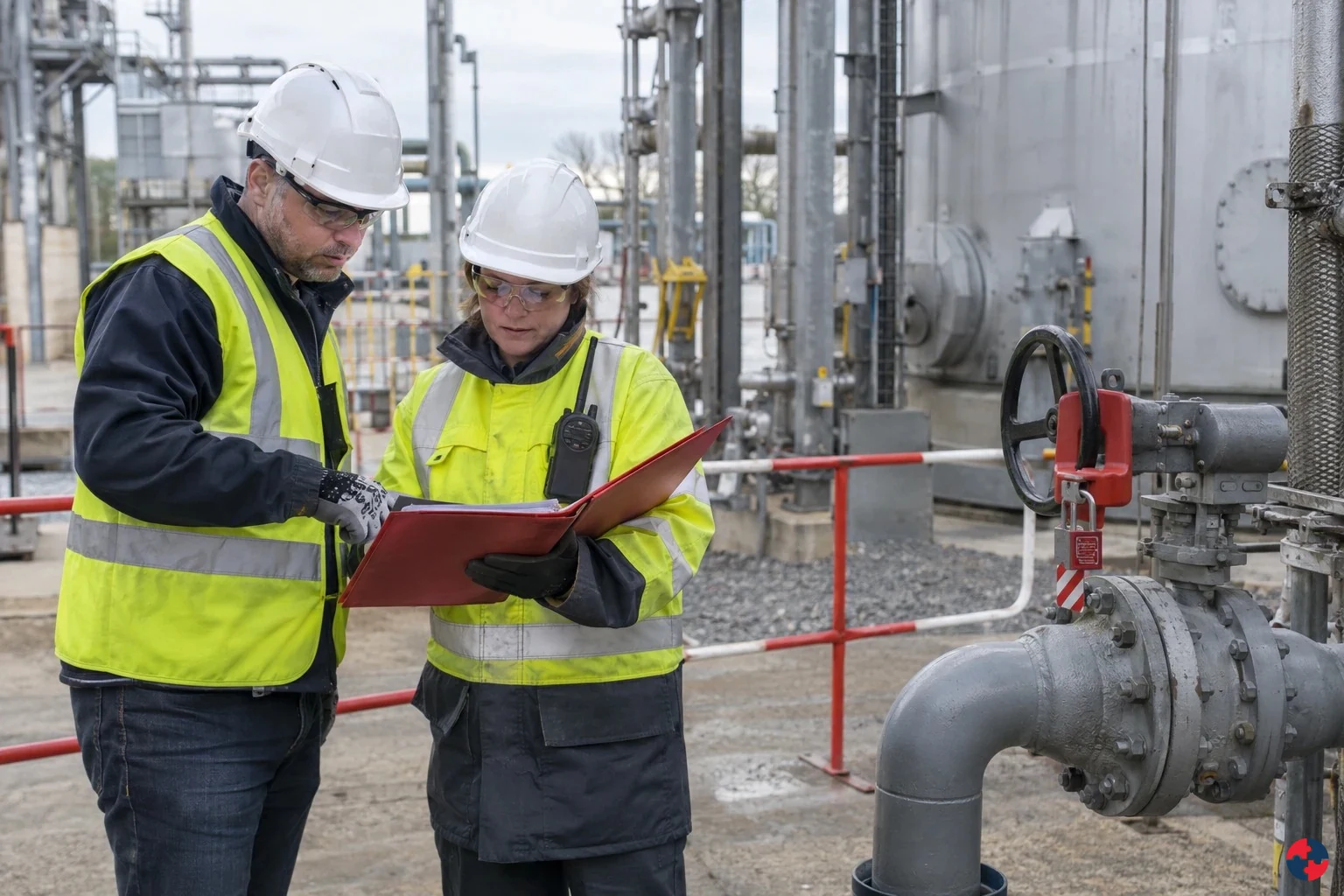
What is a safe system of work?
A safe system of work is the planned way to complete a task after its hazards, people, equipment and changing conditions have been assessed. It combines suitable physical safeguards with a usable sequence, competent people, clear interfaces and stop decisions. A safe system of work is the planned way to complete a task after its hazards, people, equipment and changing conditions have been assessed.
Turn safe systems of work knowledge into a decision
A safe system of work is the planned way to complete a task after its hazards, people, equipment and changing conditions have been assessed. It combines suitable physical safeguards with a usable sequence, competent people, clear interfaces and stop decisions. Analyse cleaning separately from normal operation. (HSE source)
Safe Systems of Work worked example
Task design: Analyse cleaning separately from normal operation. (HSE source) Engineering control: Stop access until guarding is restored or a competent engineer establishes and verifies a safe engineered or isolated method that meets applicable work-equipment duties. (HSE source)
Follow the exposure and harm route
Moving rollers during cleaning: A hand reaches a nip point and is drawn in, causing crush injury or amputation before a worker can react. Stored electrical, hydraulic or pneumatic energy: Unexpected movement or release strikes a maintainer or another worker after the switch is turned off. Chemical cleaner or process residue: Splash, vapour or residue reaches eyes, skin or lungs, causing acute injury and potentially longer-term disease.
Choose controls for safe systems of work
Eliminate: Move routine checks and lubrication points outside the guard so opening it is unnecessary. Reduce, including substitution: Use a manufacturer-approved external inspection method or safely replaceable module where this reduces access to dangerous parts. Isolate: Stop and securely isolate all relevant energy sources; verify isolation and restrain parts or loads that could move. Control: Restore suitable guards and interlocks after the repair and test the safety function before production release. Control: Identify the isolation boundary, affected contractors and restart owner; control any authorised diagnostic mode separately. Read the full control table for qualifications, ownership and verification. Use the actual task and applicable jurisdiction; existing technical approval remains unchanged.
Use the full safe systems of work lesson
Use the full topic for the decision points, practical examples, detailed control tables and source scope. HSE guidance applies to Great Britain; use HSENI for the Northern Ireland route and the source’s stated jurisdiction. A simplified guide does not change the page’s technical-review or approval status.

Read all six steps as text
1. What is a safe system of work?
A safe system of work is the planned way to complete a task after its hazards, people, equipment and changing conditions have been assessed.
- Avoid / redesign: Move routine checks and lubrication points outside the guard so opening it is unnecessary.
- Control the task: Stop and securely isolate all relevant energy sources; verify isolation and restrain parts or loads that could move.
- Verify before release: If the hazardous step remains, keep it within the task assessment and select the stronger feasible remaining controls.
A safe system of work is the planned way to complete a task after its hazards, people, equipment and changing conditions have been assessed. It combines suitable physical safeguards with a usable sequence, competent people, clear interfaces and stop decisions. A safe system of work is the planned way to complete a task after its hazards, people, equipment and changing conditions have been assessed.
Apply it: Which part of this plan would you check at the workface before authorising the task?
2. Turn safe systems of work knowledge into a decision
Use the evidence to improve the actual work arrangement.
- Change at source: Move routine checks and lubrication points outside the guard so opening it is unnecessary.
- Make it observable: If the hazardous step remains, keep it within the task assessment and select the stronger feasible remaining controls.
- Keep useful evidence: Analyse cleaning separately from normal operation. (HSE source)
A safe system of work is the planned way to complete a task after its hazards, people, equipment and changing conditions have been assessed. It combines suitable physical safeguards with a usable sequence, competent people, clear interfaces and stop decisions. Analyse cleaning separately from normal operation. (HSE source)
Apply it: What evidence would show that the change improves this task, rather than only completing a record?
3. Safe Systems of Work worked example
Example: a practical application of the existing topic lesson.
- Task design: Analyse cleaning separately from normal operation. (HSE source)
- Engineering control: Stop access until guarding is restored or a competent engineer establishes and verifies a safe engineered or isolated method that meets applicable work-equipment duties. (HSE source)
- Isolation: Lock off, prove zero energy and control stored energy. (HSE source)
Task design: Analyse cleaning separately from normal operation. (HSE source) Engineering control: Stop access until guarding is restored or a competent engineer establishes and verifies a safe engineered or isolated method that meets applicable work-equipment duties. (HSE source)
Apply it: At which point would you hold this example, and what evidence would allow it to proceed?
4. Follow the exposure and harm route
Connect the task, the route to the person and the control that can fail.
- Moving rollers during cleaning: A hand reaches a nip point and is drawn in, causing crush injury or amputation before a worker can react.
- Stored electrical, hydraulic or pneumatic energy: Unexpected movement or release strikes a maintainer or another worker after the switch is turned off.
- Chemical cleaner or process residue: Splash, vapour or residue reaches eyes, skin or lungs, causing acute injury and potentially longer-term disease.
Moving rollers during cleaning: A hand reaches a nip point and is drawn in, causing crush injury or amputation before a worker can react. Stored electrical, hydraulic or pneumatic energy: Unexpected movement or release strikes a maintainer or another worker after the switch is turned off. Chemical cleaner or process residue: Splash, vapour or residue reaches eyes, skin or lungs, causing acute injury and potentially longer-term disease.
Apply it: Who could be exposed, including other trades, cleaners, maintainers and people nearby?
5. Choose controls for safe systems of work
Start with the stronger practicable options and verify their effect.
- Eliminate: Move routine checks and lubrication points outside the guard so opening it is unnecessary.
- Reduce, including substitution: Use a manufacturer-approved external inspection method or safely replaceable module where this reduces access to dangerous parts.
- Isolate: Stop and securely isolate all relevant energy sources; verify isolation and restrain parts or loads that could move.
- Control: Restore suitable guards and interlocks after the repair and test the safety function before production release.
- Control: Identify the isolation boundary, affected contractors and restart owner; control any authorised diagnostic mode separately.
Eliminate: Move routine checks and lubrication points outside the guard so opening it is unnecessary. Reduce, including substitution: Use a manufacturer-approved external inspection method or safely replaceable module where this reduces access to dangerous parts. Isolate: Stop and securely isolate all relevant energy sources; verify isolation and restrain parts or loads that could move. Control: Restore suitable guards and interlocks after the repair and test the safety function before production release. Control: Identify the isolation boundary, affected contractors and restart owner; control any authorised diagnostic mode separately. Read the full control table for qualifications, ownership and verification. Use the actual task and applicable jurisdiction; existing technical approval remains unchanged.
Apply it: Which stronger option can be used here, and who will verify it before accepting the remaining risk?
6. Use the full safe systems of work lesson
Follow the official sources below and retain the task-specific evidence.
- Official guidance: HSE source
- Official guidance: Source
- Task decision: Analyse cleaning separately from normal operation. (HSE source)
Use the full topic for the decision points, practical examples, detailed control tables and source scope. HSE guidance applies to Great Britain; use HSENI for the Northern Ireland route and the source’s stated jurisdiction. A simplified guide does not change the page’s technical-review or approval status.
Apply it: Which official source and full-topic section will you use to resolve the next decision?
A safe system of work is the bridge between a risk assessment and a task being done safely. It should explain the task, hazards, people affected, controls, sequence, competence, equipment, supervision, emergency action and stop points. The quality test is whether a competent worker can use it to do the work safely in real conditions.
The procedural and administrative parts of a safe system support elimination and engineering controls; the complete safe system includes the physical safeguards. They are essential for many tasks, but they must not be used as an excuse to avoid guarding, isolation, mechanical aids, segregation, LEV, access platforms or other stronger controls where those are reasonably practicable.
| Topic area | What it means | Professional test |
|---|---|---|
| Task analysis | Break the work into steps, decision points and interfaces. | Does the SSOW match how the task is actually done? (HSE machinery safety) |
| Hierarchy of control | Use elimination, substitution, engineering and design before procedural reliance. | Is the method carrying too much of the risk? (HSE machinery safety) |
| Worker involvement | People doing the work help identify practical hazards and controls. | Has the system been tested with users? (HSE machinery safety) |
| Competence and authorisation | People know how to do the task and when to stop. | Is competence observed, not just recorded? (HSE machinery safety) |
| Supervision | The level of oversight matches risk, complexity and workforce experience. | Who checks work at critical points? (HSE machinery safety) |
| Monitoring and review | The system is checked after change, incidents, defects or weak signals. | Does the safe system improve over time? (HSE machinery safety) |
How can harm occur during this work?
The hazard is the source or energy; harm depends on the route to people and whether a barrier fails.
Check who is exposed, including maintainers, contractors and people nearby. A warning sign is a reason to hold the affected task and investigate, even if no injury has occurred. The examples below connect immediate injury with potential longer-term ill health where the exposure continues.
| Source and state | Route and possible harm | Early warning and stop decision |
|---|---|---|
| Moving rollers during cleaning | A hand reaches a nip point and is drawn in, causing crush injury or amputation before a worker can react. | Guard removed, interlock defeated or jog mode proposed with access; stop and choose isolated cleaning. HSE machinery safety |
| Stored electrical, hydraulic or pneumatic energy | Unexpected movement or release strikes a maintainer or another worker after the switch is turned off. | No positively identified isolation or proof of zero energy; do not enter the danger zone. HSE equipment maintenance |
| Chemical cleaner or process residue | Splash, vapour or residue reaches eyes, skin or lungs, causing acute injury and potentially longer-term disease. | Substance or ventilation unknown, incompatible cleaner or failed extraction; pause for assessment and product information. HSE COSHH and cleaners |
How can the hierarchy of controls prevent unexpected motion during planned conveyor maintenance?
Remove or reduce the hazard before relying on procedures or personal protection.
For safe systems of work, assess the actual task and first look for a way to remove the hazard. Where that is not possible, consider a safer substitute, engineered separation and then clear work procedures. PPE protects against remaining exposure; it does not make an uncontrolled task safe. HSE hierarchy of controls
The selected measures need a named owner, a usable stop point and a check that they still work when the task or conditions change. In Northern Ireland, verify the separate legal route and site instructions.
How can the ERICPD hierarchy of controls prevent unexpected motion during planned conveyor maintenance?

| Control level | Control for this activity | Owner and verification | Stop / restart decision |
|---|---|---|---|
| Eliminate | Move routine checks and lubrication points outside the guard so opening it is unnecessary. | Machine owner confirms that inspection and lubrication can be completed outside the guarded area, including foreseeable faults and cleaning. | If the hazardous step remains, keep it within the task assessment and select the stronger feasible remaining controls. |
| Reduce, including substitution | Use a manufacturer-approved external inspection method or safely replaceable module where this reduces access to dangerous parts. Treat the design as an engineering control and retain isolation for intrusive work. | Competent machine owner validates the external method or removable module against the manufacturer’s instructions; identify any work that still requires isolation. | Reject an alternative if its performance is unproved or its new hazards are unresolved. |
| Isolate | Stop and securely isolate all relevant energy sources; verify isolation and restrain parts or loads that could move. | Supervisor checks the actual boundary, affected people and connected work; verify separation or isolation before allowing access. | Hold or stop for uncertain isolation, retained motion, unsupported load or failed interlock. |
| Control: physical safeguards | Restore suitable guards and interlocks after the repair and test the safety function before production release. | Competent equipment/process owner checks energy sources, stored energy, guard fixings and interlock response. | Hold or stop for uncertain isolation, retained motion, unsupported load or failed interlock. |
| Control: work method and response | Identify the isolation boundary, affected contractors and restart owner; control any authorised diagnostic mode separately. | Supervisor confirms the work limits, competent cover, communication and stop/restart authority with the people doing this activity. | Hold work when the agreed limits, competent cover or effective communication cannot be maintained. |
| PPE | Select task-assessed eye, hand and foot protection. Gloves must not create an entanglement risk near moving parts. | Assessor confirms whether personal protection is needed and checks suitability, condition, compatibility and any required fit evidence. | Do not use unsuitable protection or rely on PPE to continue after an essential source control fails. |
| Discipline | Record guard defects, isolation removal and functional tests; do not close the job on paperwork alone. | Release only after maintenance and operations agree the guarded restart. Retain verification and unresolved restrictions at handover. | Keep the task on hold until required reinstatement evidence and unresolved defects are accepted by the responsible owner. |
How can the ISO 45001 hierarchy of controls prevent unexpected motion during planned conveyor maintenance?

| Five-level control stage(s) | Control for this activity | Owner and verification | Stop / restart decision |
|---|---|---|---|
| Elimination | Move routine checks and lubrication points outside the guard so opening it is unnecessary. | Machine owner confirms that inspection and lubrication can be completed outside the guarded area, including foreseeable faults and cleaning. | If the hazardous step remains, keep it within the task assessment and select the stronger feasible remaining controls. |
| Engineering controls | Use a manufacturer-approved external inspection method or safely replaceable module where this reduces access to dangerous parts. Treat the design as an engineering control and retain isolation for intrusive work. | Competent machine owner validates the external method or removable module against the manufacturer’s instructions; identify any work that still requires isolation. | Reject an alternative if its performance is unproved or its new hazards are unresolved. |
| Engineering controls | Stop and securely isolate all relevant energy sources; verify isolation and restrain parts or loads that could move. | Supervisor checks the actual boundary, affected people and connected work; verify separation or isolation before allowing access. | Hold or stop for uncertain isolation, retained motion, unsupported load or failed interlock. |
| Engineering controls | Restore suitable guards and interlocks after the repair and test the safety function before production release. | Competent equipment/process owner checks energy sources, stored energy, guard fixings and interlock response. | Hold or stop for uncertain isolation, retained motion, unsupported load or failed interlock. |
| Administrative controls | Identify the isolation boundary, affected contractors and restart owner; control any authorised diagnostic mode separately. | Supervisor confirms the work limits, competent cover, communication and stop/restart authority with the people doing this activity. | Hold work when the agreed limits, competent cover or effective communication cannot be maintained. |
| PPE | Select task-assessed eye, hand and foot protection. Gloves must not create an entanglement risk near moving parts. | Assessor confirms whether personal protection is needed and checks suitability, condition, compatibility and any required fit evidence. | Do not use unsuitable protection or rely on PPE to continue after an essential source control fails. |
| Administrative controls | Record guard defects, isolation removal and functional tests; do not close the job on paperwork alone. | Release only after maintenance and operations agree the guarded restart. Retain verification and unresolved restrictions at handover. | Keep the task on hold until required reinstatement evidence and unresolved defects are accepted by the responsible owner. |
How does the same principle transfer between sectors?
The route to harm changes by setting, so carry over the decision method rather than copying a procedure.
| Setting | Task, stronger control and stop check |
|---|---|
| Manufacturing | Clean rollers only after guarding or proved isolation; the supervisor checks interlock and lock-off records and stops on unexpected movement. |
| Construction | Change a concrete-saw blade after isolation and manufacturer-specific restraint; stop if the guard or compatible blade cannot be confirmed. |
| Hospitality | Clean a mixer with power isolated and a safe access method; stop if staff are expected to reach into moving parts to save time. |
How should safe systems of work be structured?
Observe the actual job and identify each task step, person and harm route. Choose physical safeguards before preparing the method, then test whether workers can follow the sequence, recognise changed conditions and stop safely.
The development model is: define task -> observe work -> identify hazards -> select higher-order controls -> write the safe sequence -> define competence and supervision -> brief and check understanding -> monitor work -> review after change or learning.
A safe system should include normal work, non-routine work, cleaning, maintenance, breakdowns, emergencies, contractor interfaces, new starters, vulnerable workers and environmental changes. If the system only covers ideal conditions, it will fail during real work.
| Model step | What to define | Evidence or decision point |
|---|---|---|
| Define the task | Scope, location, people, equipment and interfaces. | Task description and boundary conditions. (HSE machinery safety) |
| Analyse steps | Sequence, decision points, hazards and foreseeable variation. | Task analysis and worker input. (HSE machinery safety) |
| Select controls | Apply hierarchy and define critical controls. | Control plan and residual risk. (HSE machinery safety) |
| Set method | Clear step-by-step safe sequence with warnings and stop points. | Procedure, RAMS, permit or checklist. (HSE machinery safety) |
| Brief and authorise | Confirm competence, understanding and supervision. | Briefing record and authorisation. (HSE machinery safety) |
| Verify and review | Observe work and improve after change or events. | Inspection, audit and learning records. (HSE machinery safety) |
How would a safe system fail during machinery cleaning?
A worked example shows why a procedure cannot replace guarding, isolation and supervision.
A production line needs cleaning around rollers. The weak system says 'switch off machine and keep hands clear'. Guards are awkward to remove, isolation points are poorly labelled and production wants a quick turnaround. Workers develop a shortcut using slow-speed jog mode to clean residue. HSE machinery safety.
The stronger system designs the cleaning task: fixed/interlocked guarding remains where possible, safe isolation is defined, limited movement is only used under authorised controls, tools keep hands away, supervisors check critical steps and the procedure is validated with the people doing the work.
The harm route is direct: a hand at the roller nip can be entrained before a person can pull away, and stored energy may restart motion after a simple stop command. The supervisor stops the cleaning shortcut, engineering establishes a guarded or physically isolated method and the maintainer proves zero energy before access. After cleaning, guards and tools are checked, people are clear, the isolation owner hands back and an authorised operator performs a controlled restart.
| Stage | Weak handling | Stronger standard |
|---|---|---|
| Task design | Cleaning added to generic procedure. | Analyse cleaning separately from normal operation. (HSE machinery safety) |
| Engineering control | Guards removed because they are inconvenient. | Stop access until guarding is restored or a competent engineer establishes and verifies a safe engineered or isolated method that meets applicable work-equipment duties. (HSE machinery safety) |
| Isolation | Switch-off confused with safe isolation. | Lock off, prove zero energy and control stored energy. (HSE machinery safety) |
| Procedure | Vague instruction to take care. | Step-by-step method with critical warnings before the relevant step. (HSE machinery safety) |
| Competence | Training attendance assumed enough. | Authorise trained workers and observe competence. (HSE machinery safety) |
| Monitoring | Shortcut only found after injury. | Supervisor samples task and learns from near misses. (HSE machinery safety) |
Illustrative teaching sequence, incomplete for operational use: identify the roller and energy boundaries; confirm prerequisites and the competent isolation verifier; HOLD access until the safe state is verified; use the assessed cleaner and method; inspect the completed work; then perform controlled hand-back. An unknown cleaner or failed guard stops the task and returns it for competent assessment. Site engineering and manufacturer instructions must validate the actual method.
How should a safe system of work be developed?
A good SSOW is built from real task analysis and hierarchy-led control, not copied text.
The best safe systems are written after watching the job and talking to the people who do it. That is how hidden hazards, awkward steps, time pressure and informal adaptations are found. HSE machinery safety.
A safe system should then be tested before issue. If workers cannot follow it in real conditions, the system should change before work continues.
| Step | Question | Output |
|---|---|---|
| Observe | How is the task really done? | Task observation and worker feedback. (HSE machinery safety) |
| Analyse | Where could harm occur and what changes the risk? | Task step/hazard map. (HSE machinery safety) |
| Design controls | Can the hazard be removed or engineered out? | Hierarchy-led control plan. (HSE machinery safety) |
| Write method | What sequence, limits, warnings and stop points are needed? | Usable procedure/RAMS/checklist. (HSE machinery safety) |
| Validate | Can competent people use it in the workplace? | Walkthrough and amendments. (HSE machinery safety) |
| Monitor | Is the system followed and effective? | Supervisor check and review record. (HSE machinery safety) |
Why is a written procedure not enough?
A procedure describes how controls should be used; it is not a substitute for the controls themselves.
This is one of the most important SSOW teaching points. A written method can coordinate work, define sequence and explain stop points, but it cannot physically stop a fall, remove dust, isolate energy, prevent vehicle impact or contain a chemical by itself. HSE PUWER overview.
A safe system of work should therefore combine design, equipment, competence, supervision and verification. If the only control is 'follow the procedure', the assessor should ask what could be changed in the workplace so the safe way is easier and the unsafe way is harder.
| Control layer | What it should do | Weak version |
|---|---|---|
| Design | Remove or reduce the hazard by layout, specification, substitution or sequencing. | Hazard left in place and managed by instruction. (HSE PUWER overview) |
| Equipment | Provide guarded, isolated, extracted, suitable or mechanically assisted equipment. | Workers adapt unsuitable equipment to complete the job. (HSE PUWER overview) |
| Competence | Authorise people who understand the task, limits and stop points. | Training record exists but competence is not observed. (HSE PUWER overview) |
| Supervision | Check critical steps, changing conditions and interfaces. | Supervisor signs paperwork without seeing the work. (HSE PUWER overview) |
| Verification | Confirm the system works through observation, defects, incidents and worker feedback. | Procedure reviewed only by document date. (HSE PUWER overview) |
| Procedure | Bring the layers together into a usable sequence. | Long document that hides the critical controls. (HSE PUWER overview) |
What does a high-quality procedure look like?
A procedure should support decision-making at the point of work, not bury critical information.
HSE operating-procedure guidance is especially useful here: procedures should reflect plant practice, use simple familiar language, identify prerequisites, place warnings before relevant steps and be validated before issue. HSE procedures.
For ordinary workplaces, the same principles apply. A good procedure is clear, current, task-specific, usable and supported by training and supervision.
| Procedure feature | Strong standard | Weak standard |
|---|---|---|
| Scope | Clear task, location, equipment and limits. | Generic procedure used for several different tasks. (HSE procedures) |
| Prerequisites | Competence, permits, equipment, isolation and weather/condition checks stated first. | Assumptions hidden in text. (HSE procedures) |
| Critical steps | Hold points and stop triggers are visible. | Important controls buried in paragraphs. (HSE procedures) |
| Warnings | Warnings appear immediately before the relevant action. | Warnings collected at the end. (HSE procedures) |
| Language | Plain, active and familiar to users. | Legalistic or technical language users do not use. (HSE procedures) |
| Validation | Walked through with users before issue. | Issued from desk review only. (HSE procedures) |
When is a safe system not enough?
A safe system should not be used to justify weak engineering where stronger controls are reasonably practicable.
A key professional lesson is that procedural controls are often weaker than design or engineering controls. If a guard, barrier, isolation, LEV, mechanical aid or separation control is available and proportionate, the safe system should include it rather than replace it. HSE PUWER overview.
This is especially important for machinery, vehicles, work at height, confined spaces, hazardous substances, live energy and high-consequence process work.
| Situation | Weak reliance | Better control |
|---|---|---|
| Machinery access | Tell operators not to touch moving parts. | Guard or interlock during normal use; for access, isolate and prove zero energy. Limited movement requires a separately engineered and verified safe method, not a signed risk assessment alone. (HSE PUWER overview) |
| Vehicle routes | Tell pedestrians to watch for forklifts. | Separate routes and control crossings. (HSE vehicle routes) |
| Construction cutting task | Tell workers to wear masks. | Select water suppression or on-tool extraction for the tool and material, with assessed RPE where needed. (HSE construction dust) |
| Manual handling | Train people to lift better. | Redesign load, height, distance and frequency. (HSE manual handling) |
| Work at height | Tell people to maintain three points of contact. | Use suitable access equipment and edge protection. (HSE work at height) |
| Line breaking | Tell worker to open slowly. | Isolate, drain, vent, test and prove zero energy. (HSE safe isolation) |
Identify every relevant supply and stored-energy source, isolate and secure against reconnection, and safely dissipate energy or positively restrain/support components where it cannot be removed. Verify the equipment-specific safe state before access, including gravity, pneumatic/hydraulic and retained-material hazards. An interlock, emergency stop or start-button check alone does not prove every isolation.
When should safe systems of work be paused or escalated?
Pause the affected work when the live task differs from the assessment, a critical control is missing, or the person authorised to release it cannot resolve the mismatch. Make the area or plant safe, identify the owner and record the evidence needed before a competent restart decision.
Escalation must be practical. Supervisors and workers need to know which conditions mean stop, pause, seek authorisation, redesign the work or involve a competent specialist.
The decision guide should be used during planning, pre-start briefings, live supervision, audit sampling and incident learning. If the work no longer matches the assessment or procedure, the safe answer is to stop and re-establish control.
A missing guard, unclear isolation, unexpected motion or cleaner with unknown hazards is a no-go. The worker withdraws, the supervisor secures the machine, and the engineer or competent task owner redesigns the method before it is reauthorised. A permit or signature records a decision; it cannot replace an effective guard or proved isolation.
| Trigger or question | Decision route | Escalate if |
|---|---|---|
| Can the hazard be eliminated or engineered out? | Redesign before relying on procedure. | A stronger control is reasonably practicable. (HSE machinery safety) |
| Does the written method match real work? | Validate or revise before use. | Workers need shortcuts to finish the job. (HSE machinery safety) |
| Is the task non-routine or high risk? | Use permit, specialist authorisation or additional supervision. | Confined space, hot work, line break, live energy, lifting or work at height. (HSE machinery safety) |
| Are workers competent and briefed? | Check understanding before work starts. | People cannot explain critical controls. (HSE machinery safety) |
| Have conditions changed? | Stop and review assessment/method. | Weather, plant state, people, layout or equipment differs from plan. (HSE machinery safety) |
| Has a near miss occurred? | Pause, investigate and improve system. | Action would only remind people. (HSE machinery safety) |
Where does safe systems of work commonly fail?
Failure begins when a control shown on paper is absent, bypassed or misunderstood at the work face. Sample a live task against the approved method and equipment state; repeated deviations and near misses are evidence of a system defect to investigate.
The failure modes should be treated as learning prompts. They help reviewers ask whether the control is working in the workplace, not merely whether it appears in the management system.
Good assurance looks for weak signals: informal workarounds, repeated defects, unclear handover, poor supervision, overdue actions, degraded equipment, temporary controls and controls that rely too much on memory or goodwill.
| Failure or weak practice | How it develops | What good looks like |
|---|---|---|
| Copied RAMS | Generic wording does not match task. | Base SSOW on task observation and worker input. (HSE machinery safety) |
| Procedure replaces engineering | Safe system used to avoid guarding or design change. | Apply hierarchy and justify residual procedural control. (HSE machinery safety) |
| No validation | Procedure impossible to follow in real conditions. | Walk through and amend before issue. (HSE machinery safety) |
| Competence assumed | Attendance record treated as ability. | Observe competence and authorise high-risk tasks. (HSE machinery safety) |
| Poor supervision | Critical steps not checked. | Define supervisor hold points. (HSE machinery safety) |
| Review failure | System unchanged after incident or change. | Review after weak signals, defects and MOC. (HSE machinery safety) |
What evidence should safe systems of work hold?
Keep the current assessment and method alongside proof that the physical controls work, people are competent, defects were resolved and a named person released the task. Records should allow a supervisor to reconstruct a hold and restart decision.
Evidence is as important as explanation. A competent manager should be able to retrieve records that show who owns the control, what standard applies, what was checked and what changed after findings.
Evidence should combine documents, field observation and conversations. A form may show intent, but observation and worker understanding show whether the safe system is alive.
For roller cleaning, compare the task assessment and product information with the physical guard, isolation point, lock-off and zero-energy test. Keep the operator’s assessed practical demonstration, repair history and supervisor observation. An approved method statement does not prove the machine is safe when a guard is absent.
| Evidence item | What it should show | Assurance question |
|---|---|---|
| Risk assessment or technical assessment | Scope, hazards, affected people, controls, residual risk, owners and review triggers. | Does it match the work as done? (HSE machinery safety) |
| Action tracker | Actions, owners, dates, priority, temporary controls and close-out evidence. | Are high-risk actions verified, not merely marked complete? (HSE machinery safety) |
| Training and briefing records | Who was briefed, on what, when and how understanding was checked. | Can workers explain the controls in practice? (HSE machinery safety) |
| Inspection and monitoring records | Planned checks, defects, findings, trends and corrective action. | Are checks sampling critical controls? (HSE machinery safety) |
| Incident and near-miss learning | Events, weak signals, investigations and improvement actions. | Are repeated signals driving system change? (HSE machinery safety) |
| Management review | Trend, assurance confidence, resources and decisions. | Are leaders seeing the right risk picture? (HSE machinery safety) |
| Task analysis | Steps, hazards, people, decisions and interfaces. | Does it reflect work as done? (HSE machinery safety) |
| Safe system document | Controls, sequence, competence, supervision, emergency and stop triggers. | Is it usable at the point of work? (HSE machinery safety) |
| Validation record | Walkthrough with workers and amendments made. | Was it tested before issue? (HSE machinery safety) |
| Briefing and competence record | Understanding checked and authorisation clear. | Can people explain critical steps? (HSE machinery safety) |
How should safe systems of work be assured?
Observe work as done, inspect a critical physical control, ask the user to explain a stop point, and trace one defect through correction and verification. Escalate repeated weak signals to the accountable manager rather than counting completed forms.
Assurance should be proportionate to harm potential. High-harm or high-complexity work needs stronger verification than routine low-risk tasks.
A good assurance review follows one live example from assessment through planning, briefing, work execution, defect management, action close-out and leadership review.
Observe one cleaner at the machine and ask them to demonstrate the lock-off and stop point without entering danger. Inspect the guard and interlock and sample a recent defect to see whether engineering corrected it before restart. If the process still depends on reaching into moving rollers, escalate redesign to the equipment owner.
| Assurance sample | What good looks like | Escalate if |
|---|---|---|
| Work observation | Written method and real work match. | Workers rely on informal shortcuts. (HSE machinery safety) |
| Hierarchy challenge | Engineering/design controls used where practicable. | Procedure carries the main risk. (HSE machinery safety) |
| Supervisor hold point | Critical steps are checked. | High-risk steps are unsupervised. (HSE machinery safety) |
| Worker interview | People understand hazards, controls and stop triggers. | They quote paperwork without understanding. (HSE machinery safety) |
| Change review | SSOW updated after change, incident or defect. | Old method used for changed work. (HSE machinery safety) |
| Action verification | Improvements are field-checked. | Actions close after briefing only. (HSE machinery safety) |
Which duties and guidance apply in Great Britain and Northern Ireland?
Start with the law for the site and task, then use regulator guidance to choose and check controls. GB and NI have separate instruments; guidance and voluntary standards are not law.
Check the scope of work-equipment, workplace, construction, hazardous-substance or major-accident rules when they apply. Do not treat a general article as a site-specific legal determination; the person planning work checks current instrument text, local conditions and any specialist sector duty.
| Route | Direct instrument or guidance | Supporting source | Decision supported |
|---|---|---|---|
| GB general management duties | Health and Safety at Work etc. Act 1974 | Management of Health and Safety at Work Regulations 1999 | Assess the real task and provide a safe, supervised system. |
| NI general management duties | Health and Safety at Work (Northern Ireland) Order 1978 | Management of Health and Safety at Work Regulations (Northern Ireland) 2000 | Use the NI Order and management regulations for NI work. |
| Work equipment in GB | Provision and Use of Work Equipment Regulations 1998 | HSE PUWER overview | Use suitable equipment and effective measures against dangerous parts. |
| Work equipment in NI | Provision and Use of Work Equipment Regulations (Northern Ireland) 1999 | HSENI PUWER (NI) guidance | Apply the separate NI work-equipment instrument and HSENI PUWER (NI) guidance; equipment-specific assessment still governs. |
How should management check this work?
Use a defined plan, carry out the controls, check performance and correct what does not work.
For safe systems of work, assign a competent owner to set the work controls, check their use and review them after change, failure or new evidence. HSE managing health and safety
A management-system label or certificate is not approval of a site limit, procedure or individual work decision. Apply GB and NI duties to the correct location.
What competence does each level need?
Match learning and assessment to the decision a person actually makes. A briefing does not authorise a person to operate, isolate, design or release a hazardous task.
The assessor records scope, observed evidence and a trigger for reassessment, not a universal certificate expiry. Engineering and workplace controls must remain effective even when people have been trained.
| Role | Learning to test | Demonstration, assessor, record and reassessment |
|---|---|---|
| Nearby / new worker | Recognise guarded zones, warning signs and reporting route | Can identify a missing guard and leave danger zone; induction check recorded by supervisor; revisit after process change. |
| Task operator / cleaner | Actual task sequence, isolation, product and stop conditions | Observed practical demonstration on the machine; supervisor records authorisation scope; reassess after change, incident or unsafe observation. |
| Maintainer / specialist | Energy sources, lock-off, verification and safe reassembly | Demonstrated isolation and restart with equipment-specific record; engineering lead assesses after modification. |
| Supervisor / permit issuer | Observe work as done, challenge shortcuts and coordinate interfaces | Scenario-based hold/release and field observation; manager checks after near miss or task change. |
| Manager / purchaser / designer | Design out cleaning access and resource safe equipment | Specification, acceptance and corrective-action records; peer review after purchase or repeated deviation. |
| Safety adviser / auditor | Test hierarchy, legal scope and field effectiveness | Trace one job from assessment to guard, isolation and operator demonstration; action closure sampled after audit. |
How could BuildOut Ltd manage this in practice?

BuildOut Ltd would develop a safe system around the complete task, including interruptions, cleaning and hand-back, and check that workers can use it.
BuildOut Ltd · practical example
Plan the awkward part of a refurbishment task
The key lesson A safe system combines people, equipment, sequence and safeguards for the actual work; instructions alone cannot replace necessary physical controls.
The situation: A small refurbishment job includes cutting and fixing components in an occupied building. The generic method describes normal work but says nothing about clearing waste or moving equipment through public routes.
Why this matters: Tasks often become most hazardous during an interruption or transition that the normal production method barely mentions.
How BuildOut Ltd would manage it
- Break down the whole job — Trade Supervisor. Walk through setup, delivery, normal work, foreseeable stoppages, cleaning and removal with the crew. Identify who else shares each area or route.
- Choose the controls — Project Manager. Consider design and method changes before instructions and PPE. Coordinate the necessary access, equipment, segregation and specialist arrangements with the client and other trades.
- Make the method usable — Site Manager. Set out the sequence, responsibilities, limits and escalation points in a form the crew understands. Confirm that the agreed resources and supervision are available.
- Test the difficult moments — Trade Supervisor. Ask what workers will do if the cutting area becomes unavailable or equipment fails. Do not improvise a clearing, access or maintenance method outside the assessment.
- Verify and revise — Health and Safety Manager. Observe actual use and follow up deviations. Change the method or supporting arrangements when the work demonstrates a weakness, then brief the affected people.
When the conditions change
- Recognise the trigger
- A stoppage or access conflict requires a method absent from the refurbishment work plan.
- Make the immediate decision
- The Trade Supervisor pauses the cutting, clearing or movement task that falls outside the agreed method.
- Verify the next step
- The Site Manager checks the revised method, public-route controls and crew briefing before releasing that part of the job.
What good looks like
The crew can explain the task from setup to hand-back, including abnormal situations, and the workface matches the written arrangement.
Evidence to look for: Task breakdown, consulted method, resource check, briefing and observed work review.
Common mistake to avoid: Copying a method statement that describes a different site and assuming a signature makes it suitable.
Apply this to your work: Which interruption is missing from your current method statement?
Guidance behind the management approach: HSE: procedures and safe methods. Use the topic's legal and technical guidance for the applicable work and location.
BuildOut would use safe systems of work for refurbishment, cutting, drilling, hot works, temporary electrics, work at height, lifting, excavation, plant movement, asbestos interface, silica dust and contractor work. The goal is to make every RAMS, permit and briefing reflect the real task, site conditions and people present that day.
| Management element | How the business would manage it | Evidence to review |
|---|---|---|
| Task analysis | Observe work before finalising method. | Supervisor/task review. |
| RAMS quality | Make method site-specific and control-led. | Approved RAMS. |
| Permit interface | Use permits for hot work, excavation, confined spaces and electrical isolation. | Permit register. |
| Briefing | Check understanding, not just signatures. | Briefing and questions record. |
| Assurance | Sample task against method. | Site inspection and action tracker. |
What do the acronyms and key terms mean?
These short forms and technical words identify different decisions in the lesson.
| Term | Full expression | Meaning here |
|---|---|---|
| SSOW | Safe system of work | The assessed and controlled method for a real task. |
| RAMS | Risk assessment and method statement | A common planning document set; its title does not prove safe execution. |
| PTW | Permit to work | Formal authorisation for specified higher-risk tasks and interfaces. |
| PUWER | Provision and Use of Work Equipment Regulations | GB or NI instrument for work-equipment duties. |
| HSE | Health and Safety Executive | GB safety regulator. |
| Isolation | Physical separation from energy | Locking off and proving the safe state before access. |
Which BuildOut documents support this topic?
Download individual editable BuildOut documents for this topic. Procedures and plans contain completed arrangements; forms, checklists, assessments, RAMS and permits are blank masters. Registers include separate worked examples.
| Document | Purpose and content | Editable download |
|---|---|---|
| Assess, review, brief and authorise work procedure BOUK-PRO-RISK · Completed worked example · v1.0 | Identify hazards and affected people, select controls, verify competence and reassess changing conditions. | Download DOCX Read preview |
| Project baseline risk assessment BOUK-RA-RISK-01 · Blank editable master · v1.0 | Assess project-wide interfaces and prioritise further task assessments. | Download DOCX Read preview |
| Task RAMS preparation and authorisation template BOUK-RAMS-RISK-01 · Blank editable master · v1.0 | Document task sequence, hazards, controls, competence, hold points and emergency arrangements. | Download DOCX Read preview |
| Subcontractor RAMS technical review checklist BOUK-CHK-RISK-01 · Blank editable master · v1.0 | Test site specificity, practicality, hierarchy of controls and interface completeness. | Download DOCX Read preview |
| Point-of-work change and stop-work review BOUK-FRM-RISK-01 · Blank editable master · v1.0 | Record changed conditions, suspension, reassessment and safe restart authority. | Download DOCX Read preview |
| Young-person, pregnancy and other individual-risk assessment BOUK-RA-RISK-02 · Blank editable master · v1.0 | Identify additional risks and suitable adjustments while protecting personal information. | Download DOCX Read preview |
| RAMS briefing and understanding record BOUK-FRM-RISK-02 · Blank editable master · v1.0 | Confirm relevant workers understand the task and controls in an accessible language/format. | Download DOCX Read preview |
Review and adapt the documents for your organisation, activities and jurisdiction before approval and issue. Open the SHAREms management-system hierarchy to find each document under its parent policy.
Unlock another resource
You have used this month’s two free downloads. Publish a post in your own words to unlock one more resource, or choose SHARE Individual for 10 downloads per month.
You decide whether to share. If you do, use the relevant platform disclosure tools and do not make claims you do not genuinely hold.