
SHARE Knowledge Hub
Occupational Lung Cancer
Occupational lung-cancer prevention starts before exposure: identify the actual agent and task, avoid disturbance or emission, use effective engineering controls and verify exposure reduction. Asbestos, respirable crystalline silica, diesel exhaust and welding fume have different evidence and legal routes. A workplace cannot diagnose cancer or infer an individual cause from job history alone.
Understanding Occupational Lung Cancer
Primary lung cancer begins in lung tissue. An occupational contribution means workplace exposure increased the likelihood of its development; it is not a separate tumour type that a manager can recognise from symptoms or imaging. Clinical type, stage, molecular features and treatment belong to specialist services.
Why this matters at work
Carcinogenic fibres, respirable dust, combustion mixtures and radon decay products can be inhaled and interact with lung tissue through different biological pathways. Genetic and cellular damage may accumulate before a tumour becomes detectable, but a workplace assessment need not identify a person's exact molecular mechanism to control exposure.
For carcinogens under COSHH, exposure must be reduced as low as reasonably practicable, including where a workplace exposure limit exists. A WEL is an additional compliance benchmark, not a permission to target the limit or a no-effect threshold.
How organisations manage this in practice
Check the actual substance, current applicable limit and notation, representativeness and other routes. Exposure limits are not a universal dividing line between risk and safety. Evaluate whether the control hierarchy and the applicable reduction standard are met. Record uncertainty, peaks and non-routine tasks and obtain appropriate occupational-hygiene advice rather than averaging away a failed control.
Identify who was present, where, for how long, what task occurred and which controls were operating. Preserve work orders, surveys, monitoring, equipment status and witness accounts. Estimate exposure only through competent methods; do not promise that one incident will or will not cause cancer.
Asbestos, silica, diesel exhaust and radon arise in different work systems: legacy materials, mineral processing and construction, combustion equipment, and naturally occurring radioactivity accumulating indoors or below ground. HSE's sector material identifies additional occupational cancer risks, and clinical assessment may need a wider work history including metals, foundries, painting, welding, combustion products and other agents. Do not import a general hazard claim without checking the substance, classification, route and task. Several agents can coexist: a tunnel worker may encounter silica, diesel exhaust and radon; refurbishment may involve asbestos, silica and diesel plant. A single-substance assessment may miss cumulative demand and shared failure of ventilation or respiratory protection. Create a task and agent register with source, generation mechanism, workers exposed, controls, measurements, health-surveillance decision and review owner.
What is occupational lung cancer?
Occupational lung cancer is lung cancer where workplace carcinogen exposure caused or materially contributed to disease risk.
Lung cancer is a medical condition that must be diagnosed and treated by clinicians. The workplace focus is prevention and exposure history. Occupational lung cancer usually has a long latency period, meaning the cancer may appear many years after exposure. This is why records, exposure control and historical work information matter even when nobody is ill today.
Smoking is a major cause of lung cancer in the general population, but that must not be used to dismiss occupational exposure. Workplace carcinogens can independently increase risk and can interact with smoking. A serious employer controls carcinogens at source and does not shift attention onto worker lifestyle.
The main workplace learning point is exposure pathway thinking: a carcinogen is generated or disturbed; it becomes airborne as fibre, dust, fume, gas or exhaust; a worker inhales it; controls are absent, weak or not used; exposure accumulates or repeats; disease may develop years later. Prevention is about breaking that pathway early and proving the controls stay effective.
| Agent | Typical work examples | Control focus |
|---|---|---|
| Asbestos | Maintenance, refurbishment, demolition, asbestos insulation board, lagging, sprayed coatings, old plant rooms. | Survey, asbestos register, competent plan, licensing where required, controlled work and exposure records. |
| Respirable crystalline silica | Cutting stone, concrete, mortar, brick, kerbs, tiles and engineered stone. | Avoid dry cutting, use water suppression, on-tool extraction, LEV, RPE and exposure monitoring. |
| Diesel engine exhaust emissions | Construction plant, tunnels, loading bays, warehouses, maintenance workshops and enclosed yards. | Use electric alternatives, ventilation, engine maintenance, traffic control and exposure reduction. |
| Radon | Basements, mines, tunnels, water treatment, underground work and some geographic areas. | Radon assessment, measurement, ventilation and building controls. |
| Welding fume and metal fumes | Welding stainless steel, cutting, fabrication and maintenance. | LEV, suitable RPE, process substitution and exposure control. |
| Industrial chemicals and carcinogens | Certain process chemicals, combustion products or historical exposures. | COSHH carcinogen assessment, substitution, containment, monitoring and specialist advice. |
For a non-dust pathway such as accumulated radioactive gas, see HSE radon-in-workplaces guidance.
For Northern Ireland radon work, check the HSENI measurement and notification route alongside the local risk assessment.
All welding fume, including mild-steel welding fume, can cause lung cancer. Stainless-specific metal hazards add to the assessment; they do not limit the broader welding-fume control duty. Sources: HSE welding health risks.
What medical boundary should be visible?
Symptoms or past exposure need clinical assessment, while work controls continue immediately.
NHS lung-cancer symptoms guidance lists persistent cough, coughing blood, breathlessness, chest pain and weight loss as reasons for medical review. A manager should help a worker seek GP/NHS advice and use the workplace emergency procedure if acutely unwell; managers must not diagnose or reassure from an exposure record.
HSE asbestos guidance notes that disease may take decades to appear. Preserve the real task and exposure history, review current controls and share relevant records through appropriate occupational-health channels. Smoking and other causes do not excuse uncontrolled workplace exposure or establish individual causation.
| Concern | Workplace action | Boundary |
|---|---|---|
| Current symptoms | Signpost promptly to clinical advice and preserve exposure information. | No workplace diagnosis. |
| Past exposure | Check records and competent controls. | No claim of individual causation. |
| Current uncontrolled dust/fume | Stop work and repair control. | Do not wait for symptoms. |
The NHS symptom guidance directs coughing up blood to urgent GP or local urgent-care service. Struggling to breathe, or chest or upper-back pain, requires 999 or A&E. The workplace should help access the appropriate route without making a diagnosis.
For urgent non-emergency advice, follow the service for the reader’s location: NHS 111 in England, or a local GP, out-of-hours or Phone First route in Northern Ireland. Elsewhere use the local urgent-care route. Call 999 for an emergency.
For Northern Ireland, nidirect coughing-up-blood guidance directs significant bleeding, especially with breathing difficulty, to emergency help; use 999 or the emergency department. This is distinct from small amounts requiring prompt urgent clinical advice.
How can the hierarchy of controls reduce exposure to occupational lung carcinogens?
Control the actual carcinogenic agent and prove the barrier works.
HSE asbestos guidance links disturbed fibres to lung cancer; HSE silica guidance covers cutting/grinding mineral materials; HSE diesel-exhaust guidance covers repeated exhaust exposure; and HSE welding guidance identifies welding fume as a lung-cancer hazard. Select controls for the agent and task rather than assuming one dust mask protects all processes.
HSE COSHH exposure-limit guidance says carcinogen exposure must be reduced as low as reasonably practicable even when a workplace exposure limit is met. Before refurbishment, check asbestos information and identify the material. Suspected or confirmed asbestos means stop disturbance and obtain an asbestos-specific assessment, work category and competent plan under the asbestos regulations. For confirmed non-asbestos silica-bearing material, redesign to avoid cutting or use suitable wet/on-tool extraction, segregate others, verify performance and select fit-tested respiratory protection for residual risk. A stopped water feed or failed extraction holds work. The five-level hierarchy and ERICPD (Eliminate, Reduce, Isolate, Control, Personal protective equipment and Discipline) guide control selection and sustained checks.
How can the ERICPD hierarchy of controls reduce exposure to occupational lung carcinogens?

| ERICPD | Five-level hierarchy | Refurbishment choice | Owner, proof and stop |
|---|---|---|---|
| Eliminate | Elimination | Avoid disturbing suspected asbestos and use pre-cut material. | Planner verifies survey/material; uncertainty stops job. |
| Reduce | Substitution | Choose lower-dust process or alternative plant. | Designer checks exposure and compatibility. |
| Isolate / Control | Engineering | Enclosure, wet method, on-tool extraction and segregation. | Supervisor checks performance; failure stops cutting. |
| Control | Administrative | Work plan, trained people, restricted access and safe cleaning. | Site manager verifies method and records. |
| PPE | PPE | Suitable task-selected RPE for residual inhalation risk; tight-fitting facepieces require wearer-specific fit testing for the actual make, model, type and size, a clear sealing area and each-use seal checks. | Competent selector checks fit; never replaces extraction. |
| Discipline | Sustain all levels | Monitor exposure, maintain controls, investigate failures. | Dutyholder verifies action close-out. |
How can the ISO 45001 hierarchy of controls reduce exposure to occupational lung carcinogens?

| ERICPD | Five-level hierarchy | Refurbishment choice | Owner, proof and stop |
|---|---|---|---|
| Eliminate | Elimination | Avoid disturbing suspected asbestos and use pre-cut material. | Planner verifies survey/material; uncertainty stops job. |
| Reduce | Substitution | Choose lower-dust process or alternative plant. | Designer checks exposure and compatibility. |
| Isolate / Control | Engineering | Enclosure, wet method, on-tool extraction and segregation. | Supervisor checks performance; failure stops cutting. |
| Control | Administrative | Work plan, trained people, restricted access and safe cleaning. | Site manager verifies method and records. |
| PPE | PPE | Suitable task-selected RPE for residual inhalation risk; tight-fitting facepieces require wearer-specific fit testing for the actual make, model, type and size, a clear sealing area and each-use seal checks. | Competent selector checks fit; never replaces extraction. |
| Discipline | Sustain all levels | Monitor exposure, maintain controls, investigate failures. | Dutyholder verifies action close-out. |
How do exposure pathways differ by agent?
Each carcinogen needs controls matched to its form, task and route into the body.
Each carcinogen needs controls matched to its form, task and route into the body. The table gives practical examples, evidence expectations and common decision points so the section can be used for learning, supervision, audit and review.
| Agent | Exposure pathway | Critical evidence |
|---|---|---|
| Asbestos fibres | Fibres released from disturbed asbestos-containing materials and inhaled. | Survey, register, plan of work, air monitoring where needed and clearance/reoccupation evidence. |
| Silica dust | Respirable dust created by cutting, grinding, drilling or crushing silica-containing materials. | Task assessment, water/LEV checks, RPE face fit, exposure monitoring and health surveillance decision. |
| Diesel exhaust | Fine particulate and gases from engines, especially in enclosed or poorly ventilated areas. | Plant selection, no-idling rule, ventilation checks, maintenance and exposure review. |
| Radon | Radioactive gas accumulates in buildings or underground spaces. | Radon measurement, risk assessment and ventilation/remediation records. |
| Welding fume | Fume inhaled during welding, cutting or hot work. | LEV checks, RPE, process control and welding fume risk assessment. |
| Mixed construction dust | Dust may contain silica, wood, plaster, cement, metals or legacy contaminants. | Pre-work information, dust plan, cleaning method and worker briefing. |
For Northern Ireland radon work, check the HSENI measurement and notification route alongside the local risk assessment.
Which occupational lung cancer exposures need the strongest control evidence?
A matrix helps learners connect agent, task, route, controls and records.
A lung-cancer prevention page has to do more than list carcinogens. Learners and managers need to see the work route: where the agent comes from, how it becomes airborne, who is exposed, which control should break the pathway and what record proves the control was in place. That is especially important because lung cancer can appear decades after exposure.
Health surveillance may be required for some related respiratory or hazardous-substance risks, but it is not a lung-cancer diagnosis programme. Symptoms and clinical concerns must go through NHS or GP routes. Workplace records should focus on exposure, controls, monitoring, health surveillance decisions and evidence that defects were closed.
| Exposure source | Route and high-risk tasks | Control focus | Records and medical boundary |
|---|---|---|---|
| Asbestos | Inhaled fibres from disturbed asbestos-containing materials during maintenance, refurbishment, demolition, drilling, plant-room work or legacy material removal. | Avoid disturbance, use asbestos surveys/registers, competent planning, licensed or notifiable work routes where required, controlled areas, air monitoring and clearance evidence. | Keep asbestos records, plans of work, exposure information and clearance/certificate evidence. Medical diagnosis remains clinical. |
| Respirable crystalline silica | Fine silica dust from cutting, grinding, drilling, chasing or crushing concrete, brick, mortar, stone, kerbs, tiles and engineered stone. | Design out dry cutting, use water suppression, on-tool extraction, LEV, segregation, H/M-class vacuums where appropriate and suitable face-fit tested RPE. | Keep COSHH assessments, exposure monitoring, RPE fit-test records and health surveillance decisions. |
| Diesel engine exhaust emissions | Inhalation of diesel particulate and gases from plant, vehicles, generators, forklifts, tunnels, loading bays and enclosed yards. | Remove or replace diesel where possible, prevent idling, ventilate, maintain engines, separate people and control traffic flow. | Keep plant maintenance, ventilation, no-idling checks, exposure reviews and action close-out. |
| Welding fume | Inhalation of fume from welding, cutting and hot work, especially stainless steel, high-alloy materials or poor ventilation. | Use process selection, LEV, welding booths, RPE, work positioning, maintenance and supervision. | Keep welding fume risk assessment, LEV/TExT records, RPE records and training evidence. |
| Radon | Radioactive gas exposure in basements, mines, tunnels, underground services, water treatment and higher-radon geographic areas. | Assess radon risk, measure levels, ventilate, remediate and review where building or work conditions change. | Keep radon measurements, remediation records and area review evidence. Health concerns require medical advice. |
| Metals and process fumes | Inhalation of chromium VI, nickel, beryllium, arsenic or other carcinogenic metal/process fumes during plating, welding, foundry, pigment, catalyst or maintenance work. | Substitute where possible, enclose, use LEV, automate, segregate, apply hygiene controls and arrange competent monitoring. | Keep COSHH carcinogen assessments, exposure monitoring, biological monitoring where relevant and health surveillance records with strict confidentiality. |
HSE health-surveillance record guidance distinguishes an employer-held health record from medical-in-confidence records held by the occupational-health professional. Whether surveillance is required depends on the hazard and applicable regulations; it is not a routine lung-cancer screening programme.
For Northern Ireland radon work, check the HSENI measurement and notification route alongside the local risk assessment.
Why do latency and exposure records matter so much?
Current carcinogen exposure may create disease risk many years later, so evidence must outlast the job.
Occupational lung cancer is a long-latency risk. The harmful exposure may happen today, while disease may not become visible for many years. That time gap is why competent organisations do not treat a clean injury record as proof that carcinogen control is working. If workers are breathing asbestos fibres, silica dust, diesel exhaust or carcinogenic fume now, the absence of immediate illness is not reassurance.
Records matter because future questions may need past evidence: what material was disturbed, what method was used, who was exposed, what controls were in place, whether monitoring was done, whether health surveillance was required, and whether defects were closed. Health surveillance can help detect work-related health effects in some exposure programmes, but it is not a substitute for exposure prevention and it is not a cancer diagnosis route.
| Issue | Why it matters | Good evidence |
|---|---|---|
| Long latency | Cancer risk can develop long after exposure, so today's weak controls may become tomorrow's occupational disease concern. | Exposure history, job records, monitoring reports and retained control evidence. |
| No immediate symptoms | Carcinogens may cause harm without short-term warning signs. | Routine control verification, exposure monitoring and worker briefings. |
| Changing workforce | Contractors, temporary workers and mobile teams may move on before disease appears. | Induction records, exposure records and contractor control evidence. |
| Historical uncertainty | Future investigations may rely on what was recorded at the time. | Asbestos registers, COSHH assessments, method statements, air monitoring and clearance evidence. |
| Health surveillance boundary | Surveillance can support risk management but does not diagnose lung cancer. | Competent OH programme, medical confidentiality and NHS/GP signposting for symptoms. |
| Control evidence | A written assessment is weak if it cannot prove the controls were used and effective. | LEV/TExT records, RPE face fit, maintenance, supervision checks and defect close-out. |
Where COSHH health surveillance is required, the employer-held health record is kept for the period specified by the regulation, commonly 40 years under COSHH, as HSE explains. That period is not a blanket retention rule for every task note or exposure file. Clinical medical records remain with the responsible health professional and require the worker’s written consent for employer access.
How could a refurbishment job create lung cancer risk?
Before refurbishment, the supervisor checks the asbestos register and surveys against the exact material and work area. If asbestos is suspected or confirmed, work stops pending asbestos-specific assessment, category and a competent plan. Only after a material is confirmed non-asbestos does the silica/dust method branch consider wet cutting or on-tool extraction under COSHH; the next shift verifies controls and holds work on failure.
| Stage | What can go wrong | Competent control |
|---|---|---|
| Pre-work information | No asbestos survey or dust information is reviewed. | Check asbestos register and task-specific survey; uncertainty stops disturbance pending competent asbestos assessment. |
| Method selection | Dry cutting and drilling are chosen for speed. | For confirmed non-asbestos material only, avoid cutting or choose suitable wet/on-tool extraction and pre-cut material under COSHH. |
| Work area | Other trades remain nearby and dust spreads through building. | Segregate, schedule and control access. |
| Equipment | Vacuum, extraction or water suppression is missing or ineffective. | Use suitable maintained equipment and pre-use checks. |
| RPE | Workers wear unfit-tested masks with beards or poor seal. | Select suitable RPE, face-fit test and supervise use. |
| Cleaning | Dry sweeping re-suspends dust. | Use suitable vacuum, wet cleaning and waste control. |
| Evidence | No exposure record or learning is kept. | Keep COSHH/asbestos records, monitoring and action close-out. |
What evidence shows occupational lung cancer risk is controlled?
Evidence should prove exposure is prevented or reduced and that controls work in the field.
For a real refurbishment task, retain material identification, asbestos information, method selection, extraction/wet-control check, exclusion, RPE fit record where needed, exposure monitoring and defect close-out. A clean appearance or a result below a WEL does not prove carcinogen control is sufficient.
| Evidence | What it should show | Weakness to challenge |
|---|---|---|
| COSHH assessment | Carcinogens, tasks, routes, controls and residual risk identified. | Generic assessment ignores actual dust or fume task. |
| Asbestos register and plan | Known or presumed ACMs are identified and managed before work. | Register exists but workers do not check it. |
| Exposure monitoring | Airborne exposure assessed where needed and used to improve control. | Monitoring filed with no action. |
| RPE programme | Selection, face fit, maintenance, training and supervision. | Tight-fitting masks issued without matching wearer/facepiece fit evidence or with facial hair interfering with the seal; no suitable non-tight-fitting alternative assessed. |
| LEV or extraction records | Controls inspected, tested and defects closed. | LEV used despite failed TExT or blocked filters. |
| Health surveillance and records | Surveillance arranged where required and records kept appropriately. | Surveillance confused with medical diagnosis or general screening. |
| Worker briefing | Workers know carcinogen risk, controls, stop triggers and cleaning rules. | Awareness talks with no task-specific controls. |
TExT means thorough examination and test: periodic competent examination is distinct from the operator’s pre-use check. For welding, the operator checks actual capture, hood position and the relevant operating indicator, reports defects and holds work after failure. A current test label or airflow reading alone does not prove capture at the real task. Select a suitable alternative that does not rely on a tight face seal where necessary; keep protection, compatibility and training appropriate and preserve source controls. Sources: HSE welding control maintenance; HSE RPE fit-testing basics.
Which legal duties apply to occupational lung cancer prevention?
Use the reporting, handling or exposure instrument for the actual location and task.
Great Britain and Northern Ireland have distinct instruments. The same work question may have different reporting thresholds or duty wording, so the site must check its own jurisdiction before making a legal claim.
| Jurisdiction | Direct instrument or authority | Decision supported |
|---|---|---|
| Great Britain | HSW Act 1974 | General safe-work duty. |
| Northern Ireland | HSW (NI) Order 1978 | Separate NI general duty. |
| Great Britain | Management Regulations 1999 | GB risk assessment and review. |
| Northern Ireland | Management Regulations (NI) 2000 | NI risk assessment and review. |
| Great Britain | COSHH 2002 | GB hazardous-substance and carcinogen controls. |
| Northern Ireland | COSHH (NI) 2003 | NI hazardous-substance controls. |
| Great Britain | Control of Asbestos Regulations 2012 | GB asbestos-specific duties. |
| Northern Ireland | Control of Asbestos Regulations (NI) 2012 | NI asbestos-specific duties. |
Radon is an ionising-radiation route, separate from the COSHH/asbestos rows above. For Northern Ireland, HSENI explains the NI 2017 notification route: an annual-average workplace concentration above 300 Bq/m³ requires notification, with measurement included in a risk assessment for below-ground workplaces or radon-affected areas. Use the separate HSE radon guidance for Great Britain.
Occupational disease reporting is a separate decision from preventing exposure. In Great Britain, HSE’s RIDDOR cancer guidance requires a diagnosed cancer with an established causal link to significant work-carcinogen exposure; it says the person’s current job must involve the relevant hazard, so a retired former-asbestos-worker example is not reportable on that route. Do not assume every lung-cancer diagnosis or historical exposure is reportable. In Northern Ireland, use the separate 1997 Reporting of Injuries, Diseases and Dangerous Occurrences Regulations route with HSENI occupational-cancer guidance and competent advice on the diagnosis and work link. Preserve historical exposure evidence even where a present reporting duty does not arise.
How should controls be owned and reviewed?
Assign a competent owner, check that task controls work, involve workers and act when evidence changes.
For Lung cancer (occupational), record the actual hazard and task, the chosen control, the person responsible, the evidence that it works and the point at which work must stop or be reassessed. HSE management guidance for Great Britain describes planning, worker consultation, checking and action. HSENI guidance for Northern Ireland describes competent help, risk control and review. These management steps do not prove that a particular task control is suitable; use the topic-specific evidence and the applicable GB or NI law elsewhere on this page.
What training is needed?
Carcinogen competence is agent and task specific, with clear stop and restart authority.
| Role | Demonstration | Assessor | Retained record | Reassessment trigger |
|---|---|---|---|---|
| Refurbishment supervisor | Identify suspected asbestos; stop disturbance; separate asbestos and confirmed non-asbestos silica methods. | Competent asbestos/COSHH lead observes method challenge. | Material information, category decision, permit and briefing. | Unknown material, failed survey or changed scope. |
| Control specialist | Demonstrate extraction/wet-control performance and residual RPE fit selection. | Competent engineer/assessor checks capture and fit evidence. | Inspection, test, fit and defect records. | Failed control, maintenance or process change. |
| Site manager | Hold job on failed barrier and authorise restart after verified repair. | Safety lead audits a stop/restart scenario. | Hold, repair, recheck and release record. | Exposure result, near miss or new contractor. |
Use two separate observed decisions. For confirmed non-asbestos silica cutting, the operator explains the material check, demonstrates the water or extraction pre-use test and stops the cut if the control fails; the supervisor records the method, observed check and authorised restart after a competent repair. For work that may disturb unknown building fabric, the worker stops and obtains asbestos information before choosing any cutting method. An assessor tests both decisions on the real tasks and repeats the assessment when material, tool, control or work location changes. HSE silica guidance and HSE asbestos worker guidance support these distinct stop routes; a general awareness certificate does not authorise asbestos work.
How could BuildOut Ltd manage this in practice?

BuildOut would manage occupational lung cancer risk through pre-work information, dust controls, competent contractors and exposure evidence.
In refurbishment and construction, lung cancer prevention is won before the saw, grinder or drill starts. BuildOut would plan around asbestos surveys, silica-containing materials, diesel plant, welding fume, RPE, extraction, welfare, cleaning and worker understanding.
| Management element | How the business would manage it | Evidence to review |
|---|---|---|
| Identify | Asbestos, silica, diesel exhaust and other carcinogen tasks are identified at planning stage. | Pre-construction information and COSHH register. |
| Design out | Materials, methods and plant are selected to avoid or reduce airborne carcinogens. | Design and procurement review. |
| Control | Wet methods, on-tool extraction, LEV, ventilation, segregation and RPE are used. | Task inspection and equipment records. |
| Verify | Exposure monitoring, RPE face fit, LEV checks and supervisor observations confirm control. | Monitoring and assurance record. |
| Learn | Dust events, failed controls and worker feedback update risk registers and method statements. | Action tracker and review. |
Chemical hazard symbols: what do they mean?
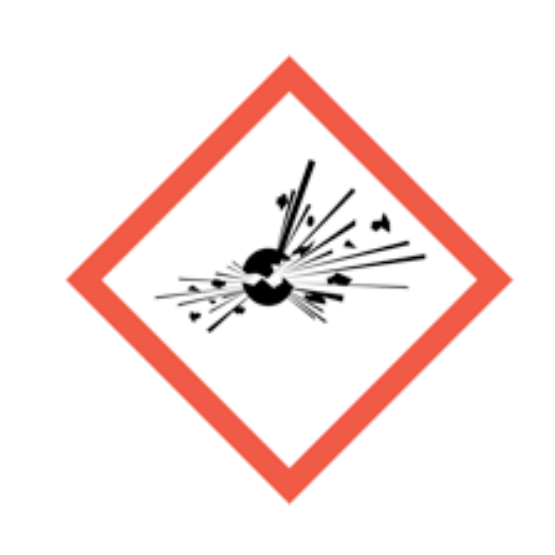
Exploding bomb
Explosive, self-reactive or organic peroxide hazards.
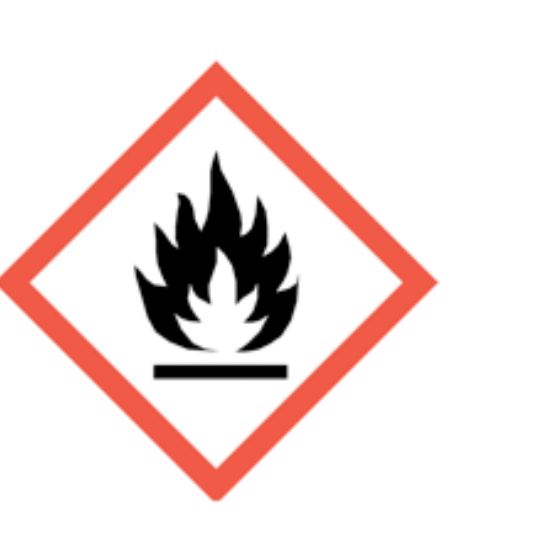
Flame
Flammable, self-heating or pyrophoric substances.
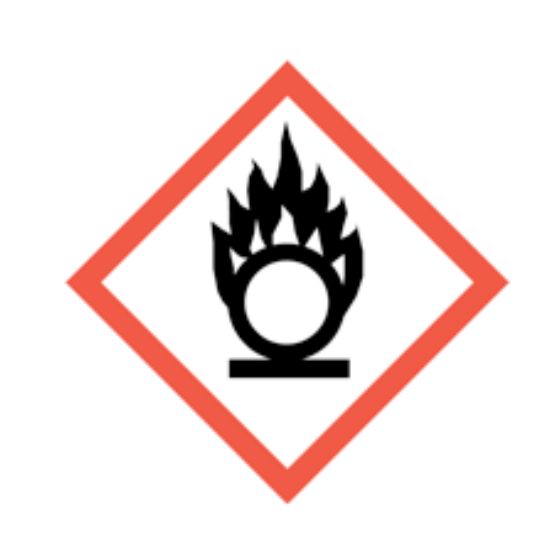
Flame over circle
Oxidising substances that can intensify fire.

Gas cylinder
Gas under pressure.
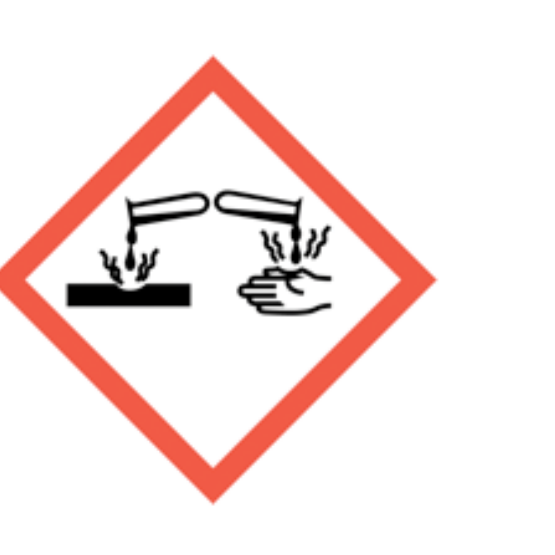
Corrosion
Skin burns, eye damage or corrosive to metals.
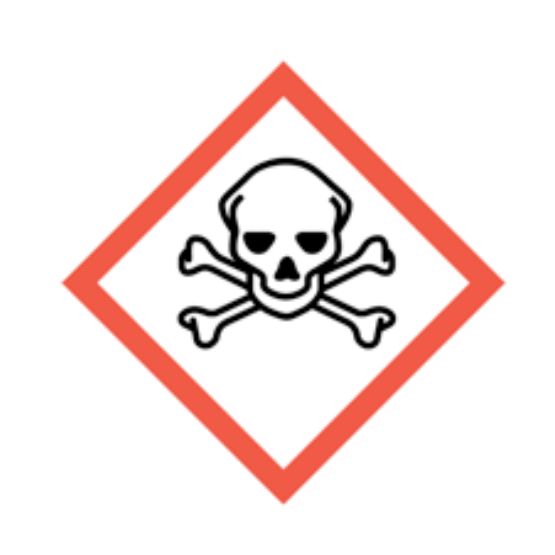
Skull and crossbones
Acute toxicity.
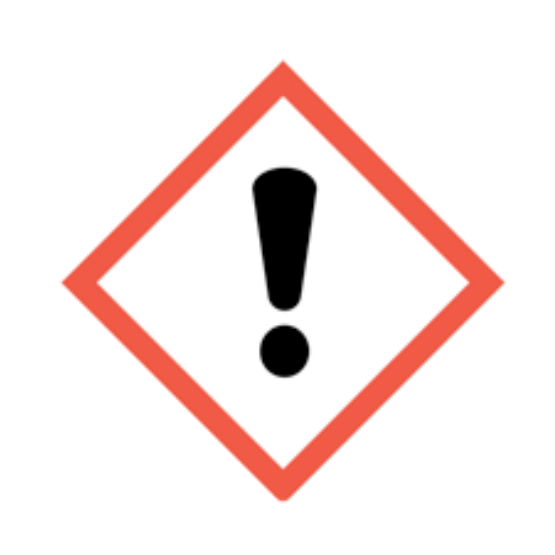
Exclamation mark
Irritation, harmful effects or skin sensitisation; some classifications cover drowsiness, dizziness or ozone-layer hazard. Read the actual hazard statements. Skin sensitisation differs from respiratory sensitisation.
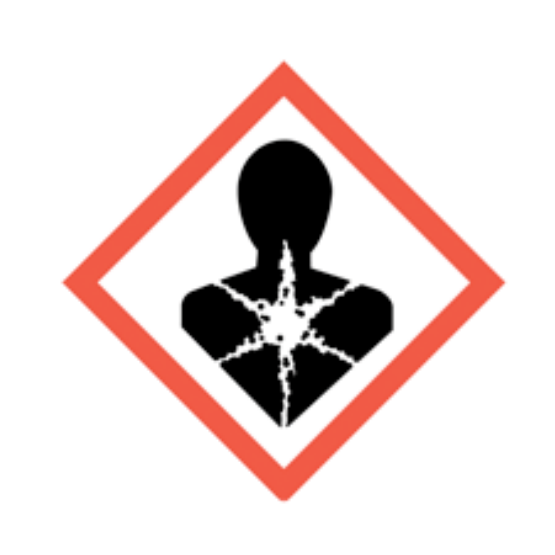
Health hazard
Serious health hazards, including organ damage, aspiration hazard, respiratory sensitisation, cancer and reproductive effects; some can follow a single exposure.
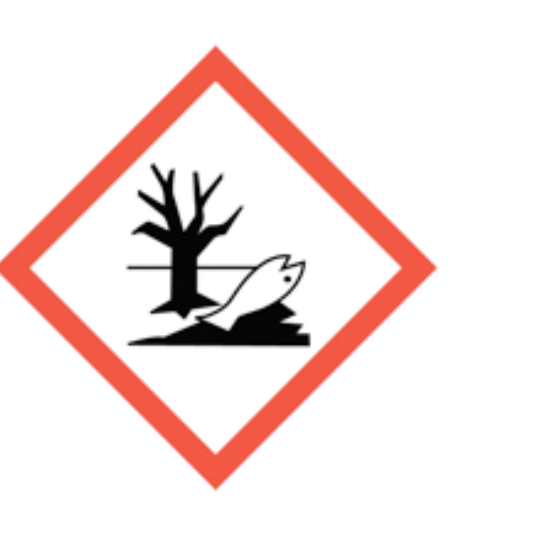
Environment
Hazardous to the aquatic environment.
Which acronyms and terms are useful for occupational lung cancer?
These terms distinguish a control or legal decision from a label.
| Term | Meaning | Use here |
|---|---|---|
| COSHH | Control of Substances Hazardous to Health | Separate GB/NI regulations. |
| ALARP | As low as reasonably practicable | Carcinogen exposure control principle. |
| WEL | Workplace exposure limit | Air concentration benchmark, not a safe target for carcinogens. |
| RPE | Respiratory protective equipment | Residual protection after stronger controls. |
| ERICPD | Eliminate, Reduce, Isolate, Control, Personal protective equipment, Discipline | Control selection and sustained checks. |
| LEV | Local exhaust ventilation | Capture airborne contaminant at source. |
| RIDDOR | Reporting of Injuries, Diseases and Dangerous Occurrences Regulations | GB and NI use separate occupational-disease routes. |
Unlock another resource
You have used this month’s two free downloads. Publish a post in your own words to unlock one more resource, or choose SHARE Individual for 10 downloads per month.
You decide whether to share. If you do, use the relevant platform disclosure tools and do not make claims you do not genuinely hold.