NEBOSH Certificate in Fire Safety
Learn to assess how a fire could start, who could be harmed and whether prevention, protection and evacuation arrangements are adequate.
Understanding NEBOSH Certificate in Fire Safety
Learn to assess how a fire could start, who could be harmed and whether prevention, protection and evacuation arrangements are adequate.
Why this matters at work
Describe the condition you observed and who relies on the affected precaution. Explain how that condition could increase harm. Identify interim protection, a proportionate corrective action, an accountable role and a completion date. Name the evidence that will demonstrate the protection works again and what would trigger an earlier review.
Emergency planning joins immediate life safety with command, responder information, environmental consequences and controlled recovery. These stages have different priorities and authority. Plans must reflect current hazards, people, access, utilities and dependencies and remain usable out of hours. Continuity planning supports restoration of safe operations; commercial targets cannot substitute for emergency control or competent reentry decisions. Protect life first, then define safe operational shutdown, responder information, environmental pathways and controlled recovery. Identify command roles, deputies, communications and dependencies on utilities, suppliers and neighbouring premises. Keep current site and drainage information accessible and test it against real conditions. Distinguish emergency actions from later business recovery decisions. A continuity target does not justify unsafe entry or restarting equipment before fire protection, structure, utilities and work controls have been verified.
How organisations manage this in practice
Combustion needs interacting conditions, and prevention can interrupt those conditions before an event. Fuel loading and ignition control should be considered through the full work cycle, including waste and maintenance. The fire triangle is useful teaching but cannot capture every reaction, dust or stored-energy hazard. A proper assessment identifies mechanisms, people and reliable controls. Identify the actual fuel, ignition and oxygen pathways in each activity, then remove or reduce them where feasible. Follow that analysis through abnormal work, cleaning, maintenance and waste handling, not only normal production. Assign controls to people who can implement and verify them. The triangle is a teaching model rather than a complete risk assessment: reaction hazards, dust clouds, stored energy and vulnerable occupants can require more detailed evidence and specialist controls.
Consider flames and sparks, hot surfaces, electrical equipment, static discharge, friction, impact and foreseeable equipment faults. The significance depends on the actual gas, vapour, dust, oxygen conditions and release location. Identify and prevent dangerous atmospheres first where possible, then select suitable ignition controls through the assessment. Equipment suitability includes its installation, use, maintenance and the actual hazardous area; a familiar tool or portable device is not automatically acceptable. Check normal work, cleaning, maintenance and abnormal conditions, including temporary equipment and contractor activity. Control simultaneous work and changes that introduce fuels or ignition. Record restrictions, inspection and verification needs and the response to failure. GB and NI DSEAR routes are separate and general fire precautions use national frameworks. This answer does not assign a zone or approve a device, and PPE cannot make an explosive atmosphere acceptable.
Establish the applicable law and the premises' circumstances. Review the assessment regularly and when there is reason to doubt its validity or a significant change. A changed layout, new occupants needing assistance, alterations to compartmentation or an incident can all affect the original assumptions. Decide who will reassess the impact and check that revised arrangements work. Give a reason for the proposed review interval in your practical.
Who is the Certificate in Fire Safety for?
This qualification suits people with fire safety responsibilities, including premises managers and supervisors in small or medium-sized organisations. It suits people who can access a real low- to medium-risk workplace and want to develop fire risk assessment skills.
- Units
- FSC1 and FSC2
- Framework
- SCQF 6 · comparable to RQF 3
- Learning time
- 28 taught + 20 private-study hours
- Assessment effort
- About 4–5 hours for FSC1 + 3 for FSC2
- Practical access
- Suitable premises and permission for FSC2
Learning hours are planning figures. Assessment effort and submission windows are different. Confirm your Learning Partner’s timetable.
SCQF Level 6 with five Scottish credits, comparable to RQF Level 3. This is the current NEBOSH Certificate in Fire Safety. The earlier National Certificate in Fire Safety and Risk Management used a different specification.
What you can do with it
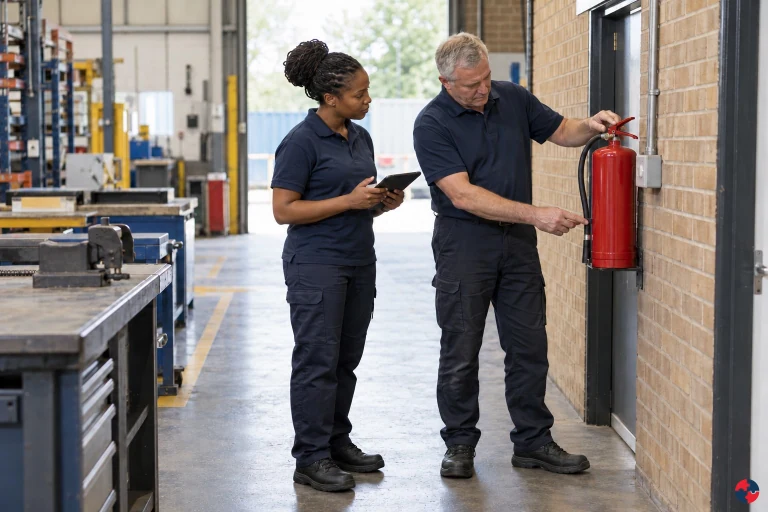
Learn to follow a fire risk from the source of ignition to the people relying on the precautions. A wedged fire door, for example, can allow smoke into an escape stair. You can document who relies on the stair, why the door is wedged and how to check that a lasting change works.
How do you turn qualification knowledge into workplace competence?
You build competence by applying what you learn to real tasks under suitable supervision and checking the results. Passing a NEBOSH qualification shows that you have met its assessment requirements. Workplace competence also takes practical skills, relevant experience and behaviours such as listening to workers, speaking up about risk and checking that a change protects people. Practise with an experienced colleague, ask for feedback and seek specialist help when a decision goes beyond your experience.
In the office example, ask the delivery team why the fire door is being held open. Agree a usable trolley route with the premises manager and observe a busy delivery afterwards. If there is doubt about the door assembly or the escape strategy, bring in a competent fire specialist.
Use this foundation for fire prevention and risk assessment within your demonstrated competence, particularly in suitable low- to medium-risk premises. Complex occupancy, assisted evacuation, engineered strategies or unusual hazards require appropriate specialist input. A certificate alone does not establish competence for every fire risk assessment.
What are the entry requirements?
There is no formal entry qualification. NEBOSH recommends English equivalent to IELTS 6.0 or above. Agree access and permission for the practical with the premises contact and Learning Partner. Applying the learning to a complex building requires appropriate experience and specialist competence.
Choosing a study route
Learning Partners can offer face-to-face blocks, part-time sessions, distance learning or eLearning. Budget around 28 taught hours, 20 hours of private study and eight hours of assessment effort. When comparing providers, ask how they support choosing premises for FSC2 and practising an evidence-based fire audit.
Taught block
Useful when you can step away from normal work for concentrated learning. Protect time for preparation, private study and assessment outside classroom sessions.
Day release or evening study
Useful when you want to apply a topic between sessions. Agree reliable release time and avoid allowing routine work to displace every study period.
Supported online or distance learning
Useful for location or shift flexibility. Check tutor response times, access duration, live sessions, practice feedback and the technology needed.
Blended learning
Useful when you want independent study alongside scheduled discussion. Check which sessions are compulsory and how the provider supports workplace activities.
How is the Certificate in Fire Safety assessed?
The qualification combines a scenario-based digital assessment with a fire risk assessment of real premises.
FSC1 · Explain fire safety decisions
Complete an open-book digital paper based on a workplace scenario. Explain the hazards, how fire or smoke could spread, and how precautions protect people. The submission window is 24 hours. NEBOSH estimates around four to five hours of work. Follow your Learning Partner’s instructions for the closing interview.
FSC2 · Carry out a premises fire risk assessment
Use a real workplace or suitable low- to medium-risk premises. Record the background, carry out the fire safety audit, select at least ten significant issues for an action plan and explain how you will review it. Allow around three hours. Agree the submission date with your Learning Partner.
Passing and grading
Pass both units. FSC2 is assessed against the practical criteria. The FSC1 mark sets the overall grade, provisionally pass from 45, credit from 65 and distinction from 75. NEBOSH normally issues results within 50 working days of the relevant examination or practical submission.
How can you prepare for each stage of the assessment?
Start with the instructions for your registered unit, then practise connecting evidence to a reasoned decision. The steps below explain an approach to preparation and common mistakes to recognise.
Choose a suitable scope for FSC2
Discuss premises access and suitability with your Learning Partner. Identify occupancy, use and your competence limits before starting the practical.
Common mistake Selecting a complex premises type without the necessary knowledge or an agreed suitable assessment scope.
Explain fire development for FSC1
During preparation, connect ignition, fuel and oxygen to fire growth, smoke movement and the time people have to escape. Practise applying protection measures to the supplied circumstances.
Common mistake Listing extinguishers while overlooking warning, escape or how people need assistance.
Gather premises evidence for FSC2
Use the official audit format and genuine observations. Check relevant documents, management arrangements and precautions safely, with permission. Record the basis and limits of your findings.
Common mistake Inventing defects to reach a target or treating an inaccessible feature as satisfactory.
Prioritise and justify action
Select at least ten significant issues already found in the audit. For each, explain the moral and financial reasons, existing precautions, further action, responsible role and timescale. Add applicable legal reasoning where appropriate.
Common mistake Including an action that cannot be traced to an audit finding or leaving its owner unclear.
Plan review and complete both units
Explain how actions will be followed up and why the review date is suitable. Follow the separate FSC1 and FSC2 submission arrangements and the FSC1 closing-interview instructions.
Common mistake Assuming that passing the written unit completes the practical requirement or demonstrates competence for every building.
Which elements and assessment criteria does the Certificate in Fire Safety cover?
Six elements take you from how fire starts to judging whether the people in a building can escape safely.
The learner guide groups the numbered topics under four learning outcomes. FSC1 tests decisions using a scenario. FSC2 draws the learning together in a fire risk assessment of suitable real premises.
Read the official NEBOSH syllabus
Element 1 · Managing fire safety and duties
Trace who controls the premises, shared escape route, plant or activity. The applicable legal duty and terminology depend on the nation and premises. Identify the parties who need to coordinate, record who will maintain and check the precaution and resolve gaps with competent advice. Naming a fire warden alone cannot allocate all these duties.
What the assessment asks you to do
- FSC1 / FSC2 · 1.1–1.2 Explain the human and financial case for fire precautions and how national authorities and international bodies influence fire safety.
Workplace example
A small office shares its stair with another occupier. Establish who controls the doors, alarm and common stair and how the occupiers exchange defect reports. Follow one fault to completion with both parties.
Syllabus topic 1.1 · FSC1 / FSC2
1.1 · Why an organisation invests in fire precautions
Explain how a fire could affect life, health, livelihoods and the organisation’s ability to continue. Use those effects to justify a realistic precaution.
Practise applying it. How would you explain the human and financial reasons for improving escape protection?
Related reading · Moral and financial reasons for managing fire safety
Syllabus topic 1.2 · FSC1 / FSC2
1.2 · Who sets and enforces fire duties
Distinguish legislation, regulator guidance and international frameworks. Identify the premises, jurisdiction and relevant dutyholders before giving a UK example.
Practise applying it. Who controls shared escape routes and which authority covers these premises?
Related reading · Fire Safety Regulation, Enforcement and Responsible Persons
See it in practice Multi-occupied buildings · Coordinate shared escape arrangements
Element 2 · Fire behaviour and spread
Smoke, hot gases and toxic products can spread beyond the item first involved. Openings, doors, service penetrations and air movement influence the route. Walk the building looking at people, routes and protection between them and a credible fire. Where the fire strategy or construction is uncertain, refer the question to a competent specialist.
What the assessment asks you to do
- FSC1 / FSC2 · 2.1–2.3, 3.1–3.2 Explain combustion, how different fuels can ignite and how an explosion can develop. Identify controls that reduce the chance of ignition or escalation.
Workplace example
In a furniture store, a display change places combustible stock beside a potential ignition source. Walk the display with the manager and consider the route heat and smoke might take towards people using the rear exit.
Syllabus topic 2.1 · FSC1 / FSC2
2.1 · What drives fire growth and spread
Follow the development of a fire from ignition through heat transfer and smoke movement. Identify where a change in ventilation or a failed barrier could expose people.
Practise applying it. What allows a small fire to spread heat and smoke beyond its room?
Related reading · Fire Growth, Smoke Movement and Heat Transfer
Syllabus topic 2.2 · FSC1 / FSC2
2.2 · How different materials ignite
Consider the form, storage and use of a fuel and the ignition sources it may encounter. Apply the distinction between a solid, a liquid giving off vapour and a gas to prevention.
Practise applying it. How does the physical form of a fuel affect ignition?
Related reading · What is combustion and the fire triangle? · Sources of Fuel, Oxygen and Fire Load
See it in practice Waste and recycling · Recognise battery-related fire scenarios
Syllabus topic 2.3 · FSC1 / FSC2
2.3 · Understanding explosive combustion
Recognise situations in which rapid combustion can generate dangerous heat and pressure. Identify where specialist assessment, separation and preventive controls are needed.
Practise applying it. Why does an enclosed flammable atmosphere need competent assessment?
Related reading · Explosion and explosive combustion at work
Element 3 · Controlling fuel, ignition and oxygen
Identify what can burn, possible ignition sources, oxygen enrichment where relevant and who can be exposed. Consider whether the stock can be reduced, moved or suitably separated. Check housekeeping and maintenance during normal work. Review adjacent areas and escape routes so a local improvement does not create a different hazard.
What the assessment asks you to do
- FSC1 / FSC2 · 2.1–2.3, 3.1–3.2 Explain combustion, how different fuels can ignite and how an explosion can develop. Identify controls that reduce the chance of ignition or escalation.
Workplace example
A maintenance contractor brings a new activity into a storeroom. Review the materials, ignition sources and duration with the premises manager before agreeing the work. Check afterwards that temporary controls and storage arrangements were restored.
Syllabus topic 3.1 · FSC1 / FSC2
3.1 · Finding fuel, oxygen and ignition
Walk a workplace and trace waste, stored materials, energy sources and oxygen supplies. Include temporary activities such as contractor hot work.
Practise applying it. Which fuel or ignition sources are introduced by maintenance work?
Related reading · Sources of Ignition in Workplaces · Sources of Fuel, Oxygen and Fire Load
See it in practice Retail · Control stock near ignition sources · Workshops · Control hot work and combustible waste
Syllabus topic 3.2 · FSC1 / FSC2
3.2 · Reducing the chance of fire or explosion
Prioritise removing fuels or hazardous activities, controlling ignition and preventing dangerous atmospheres. Check these arrangements during cleaning, maintenance and change.
Practise applying it. What changes could remove an ignition source or reduce the fuel present?
Related reading · How should ignition sources and hot work be controlled? · How should fuel, oxygen and explosion consequences be controlled?
See it in practice Retail · Control stock near ignition sources · Restaurants · Reduce cooking fire risk · Workshops · Control hot work and combustible waste · Waste and recycling · Recognise battery-related fire scenarios
Element 4 · Building protection, warning and firefighting provision
A service passing through a fire-resisting barrier can leave a path for smoke and fire. Establish the intended performance, arrange inspection by a competent person and require evidence of an appropriate tested system and its installation. Review doors, ducts and other penetrations as part of the same barrier. Visual neatness is insufficient evidence.
What the assessment asks you to do
- FSC1 / FSC2 · 4.1–4.6, 5.1–5.4 Outline protection, detection and prevention, escape provision, fire service access and extinguishing options. Explain maintenance, evacuation behaviour, emergency plans and the training people need for their roles.
Workplace example
A cable contractor leaves an opening in a compartment wall. Record its location and refer it for competent assessment against the wall and service specification. Ask for installation evidence and inspection before accepting the repair.
Syllabus topic 4.1 · FSC1 / FSC2
4.1 · Fire-resisting construction and protection
Follow a compartment boundary through a wall, fire door, duct and service penetration. Identify defects that could allow fire or smoke to bypass the protection.
Practise applying it. How would you recognise a possible breach in a fire-resisting partition?
Related reading · Fire Resistance, Compartmentation and Fire Spread
See it in practice Small hotels · Check doors on the escape route · Schools · Maintain protection after cable installation
Syllabus topic 4.2 · FSC1 / FSC2
4.2 · Designing usable escape routes
Walk escape routes in the conditions people will face. Check doors, stairs, lighting, signs, destinations and assistance for occupants who need support.
Practise applying it. Can everyone reach a safe place if their usual route fills with smoke?
Related reading · Means of escape and emergency routes
See it in practice Offices · Keep escape available after a layout change · Small hotels · Check doors on the escape route
Syllabus topic 4.3 · FSC1 / FSC2
4.3 · Giving effective early warning
Match detection and warning to the building’s use and occupants. Include noisy areas, sleeping occupants where relevant, and people who need a visual or other alarm.
Practise applying it. Would the alarm alert people in isolated rooms or with hearing loss?
Related reading · Fire Detection, Alarm Systems and Emergency Communication
See it in practice Construction welfare · Maintain temporary fire precautions
Syllabus topic 4.4 · FSC1 / FSC2
4.4 · Selecting portable firefighting equipment
Relate the likely fire and setting to appropriate equipment, siting and training. Make sure the plan gives people a clear route to raise the alarm and escape.
Practise applying it. What determines whether staff should attempt first-aid firefighting?
Related reading · Fire Classification, Extinguishing Media and Portable Fire-Fighting Equipment
Syllabus topic 4.5 · FSC1 / FSC2
4.5 · Understanding fixed protection
Identify what a fixed installation is intended to protect and how it operates. Check inspection, maintenance and arrangements when the system is unavailable.
Practise applying it. How would you check that a fixed protection system is available?
Related reading · Fixed Fire Protection Installations
See it in practice Restaurants · Reduce cooking fire risk · Warehouses · Keep fire protection effective around stock
Syllabus topic 4.6 · FSC1 / FSC2
4.6 · Keeping access clear for firefighters
Check appliance routes, entry points, firefighting facilities and reliable information for responders. Consider how parked vehicles or building works could block access.
Practise applying it. Can emergency crews reach the access point and find reliable premises information?
Related reading · Fire Service Access, Firefighting Facilities and Liaison
See it in practice Warehouses · Keep fire protection effective around stock
Element 5 · Helping people reach safety
A daytime drill may miss visitors, contractors, people working alone and people who need assistance. Walk through how each person would recognise the alarm and reach safety on the relevant shift. Verify staffing, communication and the condition of the route. Track the action and repeat the relevant part of the exercise when conditions change.
What the assessment asks you to do
- FSC1 / FSC2 · 4.1–4.6, 5.1–5.4 Outline protection, detection and prevention, escape provision, fire service access and extinguishing options. Explain maintenance, evacuation behaviour, emergency plans and the training people need for their roles.
Workplace example
During an office drill, a visitor waits at reception for instructions while staff leave by a familiar door. Ask the visitor and receptionist what warning they received, clarify who assists visitors and test the revised arrangement with a different group.
Syllabus topic 5.1 · FSC1 / FSC2
5.1 · Preparing a fire emergency plan
Set roles for warning, calling responders, assisting occupants and accounting for people. Use drills and changes in occupancy to review the plan.
Practise applying it. Who decides what happens when the alarm sounds on a late shift?
Related reading · Fire Emergency Plans, Business Continuity and Environmental Impacts
See it in practice Community venues · Plan evacuation for a varied audience
Syllabus topic 5.2 · FSC1 / FSC2
5.2 · Organising evacuation
Relate the evacuation strategy to the building, occupants, staffing and protection available. Plan assistance and check that arrangements work at different times of day.
Practise applying it. What assistance and alternatives do occupants need during evacuation?
Related reading · Fire Evacuation Strategies
See it in practice Offices · Keep escape available after a layout change · Care homes · Recognise when specialist advice is needed · Community venues · Plan evacuation for a varied audience
Syllabus topic 5.3 · FSC1 / FSC2
5.3 · How people respond to a warning
People may seek confirmation, find colleagues or head towards a familiar entrance. Use clear cues, staff instructions and realistic exercises to support prompt movement.
Practise applying it. Why might someone delay leaving after hearing an alarm?
Related reading · Human Behaviour, Wayfinding and Crowd Movement in Fire
Syllabus topic 5.4 · FSC1 / FSC2
5.4 · Training staff and designated helpers
Match instruction to each person’s role, including new starters, wardens and people assisting others. Verify understanding during a safe drill and act on gaps.
Practise applying it. How would you check that new staff and designated helpers understand their roles?
Related reading · Fire Safety Training, Marshals and Wardens
See it in practice Construction welfare · Maintain temporary fire precautions
Element 6 · Assessing risk and checking improvements
Describe the condition you observed and who relies on the affected precaution. Explain how that condition could increase harm. Identify interim protection, a proportionate corrective action, an accountable role and a completion date. Name the evidence that will demonstrate the protection works again and what would trigger an earlier review.
What the assessment asks you to do
- FSC1 / FSC2 · 6.1–6.3 Explain fire risk assessment and carry it out for suitable premises. Identify people at risk, evaluate existing precautions, prioritise improvements and plan follow-up.
Workplace example
At a community centre, an evening class uses rooms absent from the daytime assessment. Walk the route at closing time with the organiser, consider people who may need assistance, and assign a person and date to verify each resulting action.
Syllabus topic 6.1 · FSC1 / FSC2
6.1 · Defining the purpose and scope of an assessment
Identify the premises, dutyholder, people at risk and competence needed. Explain what a suitable assessment should enable the organisation to decide.
Practise applying it. What people, spaces and activities must the assessment cover?
Related reading · Fire Risk Assessment Objectives and Competence
See it in practice Care homes · Recognise when specialist advice is needed · Multi-occupied buildings · Coordinate shared escape arrangements
Syllabus topic 6.2 · FSC1 / FSC2
6.2 · Carrying out and reviewing a fire assessment
Gather evidence, identify hazards and vulnerable people, judge precautions, and prioritise actions with owners and dates. Record what changed and when review is needed.
Practise applying it. What evidence would show that an action has actually improved fire safety?
Related reading · Fire Risk Assessment Principles and Practice
See it in practice Schools · Maintain protection after cable installation
Syllabus topic 6.3 · FSC1 / FSC2
6.3 · Assessing possible flammable atmospheres
Identify the substances, foreseeable releases, ventilation and ignition risks. Decide what further competent assessment and protective measures the actual operation needs.
Practise applying it. When would a flammable atmosphere require a specialist assessment?
Related reading · Risk Assessment of Flammable or Explosive Atmospheres
How could you use this qualification at work?
A premises manager can apply the learning by finding out why staff prop open a fire door and checking that a change to the delivery route keeps it closed.
At a fictional office, a delivery trolley repeatedly holds open the door protecting an escape stair. The assessor speaks with the delivery team and checks which occupants rely on that route. Management keeps the door clear immediately, changes the delivery arrangement and commissions a competent check of its closing function. The action stays open until a busy delivery can take place with the door functioning and the route clear. This is one illustrative finding within a wider premises assessment.
What does this learning look like in different workplaces?
Use these 12 examples to connect a workplace problem with a decision, an accountable role and a check that protection works. Each example links to relevant syllabus references and practical SHAREhub guidance.
These fictional SHAREhub examples show how learning can support real decisions. They are teaching illustrations, with selected issues rather than complete risk assessments or model assessment answers. Apply current guidance and competent judgement to the actual workplace.
12 workplace examples
OfficesKeep escape available after a layout change
What could go wrong?
New desks narrow an escape route and hide a direction sign. Occupants unfamiliar with the floor may be delayed by smoke.
How could you apply the learning?
Walk the changed route with facilities staff and review its capacity, clarity and suitability against the fire strategy. Remove obstructions and coordinate any required redesign.
Who checks that it works?
The responsible management role confirms the change and tests staff understanding through a suitable exercise.
Study references 4.2 Designing usable escape routes · 5.2 Organising evacuation
Apply it with SHAREhub Means of escape and emergency routes · Fire Evacuation Strategies
RetailControl stock near ignition sources
What could go wrong?
Promotional stock accumulates beside electrical equipment in a back room. A fault could ignite packaging and spread smoke towards the shop.
How could you apply the learning?
Review stock location, electrical defects and housekeeping ownership. Keep ignition sources separated from fuel and preserve escape and access to fire precautions.
Who checks that it works?
The store manager checks opening and delivery routines. Review recurrence after high-volume stock arrivals.
Study references 3.1 Finding fuel, oxygen and ignition · 3.2 Reducing the chance of fire or explosion
Apply it with SHAREhub Sources of Ignition in Workplaces · Sources of Fuel, Oxygen and Fire Load · How should ignition sources and hot work be controlled? · How should fuel, oxygen and explosion consequences be controlled?
Small hotelsCheck doors on the escape route
What could go wrong?
A bedroom fire door is wedged open. Smoke could enter the corridor before sleeping guests respond.
How could you apply the learning?
Remove unauthorised wedges, report defects and arrange competent checks of the door assembly. Review how staff maintain the protected route without defeating its protection.
Who checks that it works?
The hotel manager records repairs and routine checks and reviews night-time evacuation arrangements.
Study references 4.1 Fire-resisting construction and protection · 4.2 Designing usable escape routes
Apply it with SHAREhub Fire Resistance, Compartmentation and Fire Spread · Means of escape and emergency routes
Care homesRecognise when specialist advice is needed
What could go wrong?
Several residents need substantial assistance and staffing is reduced at night. Delayed movement could expose them to smoke.
How could you apply the learning?
Escalate the premises’ complexity to a competent fire specialist. Review the agreed strategy, compartmentation, staffing and person-specific evacuation arrangements with care management.
Who checks that it works?
Management verifies that the strategy can be delivered in practice. This complex setting illustrates limits of competence and is not automatically suitable for FSC2.
Study references 5.2 Organising evacuation · 6.1 Defining the purpose and scope of an assessment
Apply it with SHAREhub Fire Evacuation Strategies · Fire Risk Assessment Objectives and Competence
SchoolsMaintain protection after cable installation
What could go wrong?
New cables pass through a fire-resisting wall with an unsealed opening. Smoke and heat may spread into an escape route.
How could you apply the learning?
Identify the required performance and arrange a compatible, properly installed fire-stopping system through competent people. Record location and installation evidence.
Who checks that it works?
The facilities manager checks the completed work and adds future service alterations to the change-control process.
Study references 4.1 Fire-resisting construction and protection · 6.2 Carrying out and reviewing a fire assessment
Apply it with SHAREhub Fire Resistance, Compartmentation and Fire Spread · Fire Risk Assessment Principles and Practice
RestaurantsReduce cooking fire risk
What could go wrong?
Grease builds up in extraction ductwork. A cooking fire could spread beyond the appliance and into concealed spaces.
How could you apply the learning?
Review cleaning access, maintenance records and the cooking system’s protection with competent contractors. Train staff in alarm raising, evacuation and safe responses within their role.
Who checks that it works?
The operator confirms cleaning completion and protection servicing. Reassess after equipment or cooking-intensity changes.
Study references 3.2 Reducing the chance of fire or explosion · 4.5 Understanding fixed protection
Apply it with SHAREhub How should ignition sources and hot work be controlled? · How should fuel, oxygen and explosion consequences be controlled? · Fixed Fire Protection Installations
WarehousesKeep fire protection effective around stock
What could go wrong?
Storage is altered around installed fire protection and access routes. Changed conditions could impair control of a fire and obstruct responders.
How could you apply the learning?
Check the storage arrangement against the system design and fire strategy with competent advice. Maintain access and implement controlled approval of layout changes.
Who checks that it works?
The warehouse manager verifies the agreed layout and inspections. A certificate holder does not redesign suppression coverage independently.
Study references 4.5 Understanding fixed protection · 4.6 Keeping access clear for firefighters
Apply it with SHAREhub Fixed Fire Protection Installations · Fire Service Access, Firefighting Facilities and Liaison
WorkshopsControl hot work and combustible waste
What could go wrong?
Welding takes place near solvent waste and offcuts. Sparks may start a fire after the task has ended.
How could you apply the learning?
Consider removing the hot-work need or moving it to a suitable controlled area. Apply the site’s permit, combustible control and post-work monitoring arrangements.
Who checks that it works?
The supervisor verifies conditions before release and checks handback and fire-watch records against the actual task.
Study references 3.1 Finding fuel, oxygen and ignition · 3.2 Reducing the chance of fire or explosion
Apply it with SHAREhub Sources of Ignition in Workplaces · Sources of Fuel, Oxygen and Fire Load · How should ignition sources and hot work be controlled? · How should fuel, oxygen and explosion consequences be controlled?
Community venuesPlan evacuation for a varied audience
What could go wrong?
A hall changes from a seated meeting to a crowded evening event. Visitors may be unfamiliar with exits or need assistance.
How could you apply the learning?
Review capacity, layout, staffing and inclusive evacuation arrangements for the actual event. Brief organisers and maintain clear routes and functioning precautions.
Who checks that it works?
The venue manager checks before opening and learns from exercises and feedback. Revise arrangements when the event changes.
Study references 5.1 Preparing a fire emergency plan · 5.2 Organising evacuation
Apply it with SHAREhub Fire Emergency Plans, Business Continuity and Environmental Impacts · Fire Evacuation Strategies
Multi-occupied buildingsCoordinate shared escape arrangements
What could go wrong?
Two businesses assume the other maintains a shared stair. Defects remain unresolved and both groups depend on the route.
How could you apply the learning?
Identify who controls the relevant areas and establish cooperation, information sharing and ownership of inspection and repair. Check the law for the building’s nation and use.
Who checks that it works?
The parties record responsibilities, share findings and verify closure. A private agreement does not remove applicable statutory duties.
Study references 1.2 Who sets and enforces fire duties · 6.1 Defining the purpose and scope of an assessment
Apply it with SHAREhub Fire Safety Regulation, Enforcement and Responsible Persons · Fire Risk Assessment Objectives and Competence
Waste and recyclingRecognise battery-related fire scenarios
What could go wrong?
Damaged batteries arrive mixed with waste. Heating and ignition can spread to adjacent material and produce hazardous smoke.
How could you apply the learning?
Review incoming waste controls, safe segregation and the specialist emergency arrangements for the materials handled. Involve competent fire and waste specialists.
Who checks that it works?
The site manager checks rejected-load processes and drills. Complex storage or processing risks require expertise beyond a basic certificate.
Study references 2.2 How different materials ignite · 3.2 Reducing the chance of fire or explosion
Apply it with SHAREhub What is combustion and the fire triangle? · Sources of Fuel, Oxygen and Fire Load · How should ignition sources and hot work be controlled? · How should fuel, oxygen and explosion consequences be controlled?
Construction welfareMaintain temporary fire precautions
What could go wrong?
A welfare cabin is relocated and the alarm arrangement is not checked. Workers may fail to receive a warning in time.
How could you apply the learning?
Review alarm coverage, escape, heating and electrical arrangements after the move. Brief staff and coordinate with the wider site emergency plan.
Who checks that it works?
The site manager confirms the precautions work in the new location and records checks and staff familiarisation.
Study references 4.3 Giving effective early warning · 5.4 Training staff and designated helpers
Apply it with SHAREhub Fire Detection, Alarm Systems and Emergency Communication · Fire Safety Training, Marshals and Wardens
What should you check before your assessment?
Confirm the FSC1 arrangements and agree suitable premises for FSC2, including permission to inspect, talk to occupants and follow up significant findings.
How many significant actions do I need in FSC2?
The current FSC2 guide asks for at least ten of the most significant issues from your audit that need attention. Explain the existing protection, further action, responsible role and realistic timescale. Describe how you will follow up. If a workplace does not provide sufficient scope, speak to your Learning Partner. Never manufacture a finding to reach the number.
Which four parts belong in FSC2?
Describe the premises, occupancy and assessment context. Complete the fire safety audit using the official template and explain relevant observations. Select significant issues from that audit for the summary and action plan. Finish with the review and follow-up arrangements. Each action must be traceable to something actually found; a neat action list cannot compensate for an incomplete inspection.
Which fire law applies to a workplace in Scotland, Wales, England or Northern Ireland?
Start with the nation, use of the premises and who controls them. England and Wales share the Regulatory Reform (Fire Safety) Order 2005 as a principal framework, with differences in subsequent national requirements. Scotland uses Part 3 of the Fire (Scotland) Act 2005 and related 2006 regulations. Northern Ireland uses the Fire and Rescue Services (Northern Ireland) Order 2006 and related 2010 regulations. Check scope, exclusions and current amendments for the premises before attributing a duty.
Can I study while working full time?
Yes, if you can protect enough regular study time and arrange the assessment period. Compare day release, evening study, taught blocks and supported online learning with your shift pattern. Ask about tutor access, missed sessions and practice feedback. Agree any workplace evidence collection and study leave with your employer before enrolling.
What should I ask a Learning Partner before paying?
Ask for a written breakdown of tuition, materials, assessment registration, resits and any additional support costs. Confirm accreditation for the exact qualification, the specification taught, assessment dates, tutor access and how workplace access is supported. Compare the complete package and your available time. Fees and funding depend on the provider and your circumstances.
Can disability, dyslexia or another access need be supported?
Discuss your needs with the Learning Partner early so it can apply for appropriate access arrangements or reasonable adjustments. NEBOSH determines the approved arrangement. Confirm it before the assessment and raise any mismatch promptly. The aim is fair access while retaining the assessment standard.
Can I use SHAREhub AI or another AI tool during an assessment?
Only use AI if your specific assessment instructions or an approved reasonable adjustment explicitly permit it. NEBOSH’s current malpractice policy otherwise prohibits AI use during assessment. Keep assessment questions and controlled materials out of AI tools. Use SHAREhub for general learning outside assessment conditions and produce your own assessed work.
Does passing make me a competent safety adviser?
Passing provides evidence of assessed learning. Competence also depends on relevant skills, experience and behaviours, and on the complexity of the work. Build supervised practice, seek feedback, keep knowledge current and recognise when to involve a specialist. An employer or client should evaluate what you can reliably do in the actual role.
Will this guarantee a job or professional membership?
No qualification can guarantee a job or a membership grade. Employers consider relevant experience, communication, judgement and the needs of the role alongside learning. Check the professional body’s current requirements for your exact award, experience and continuing development before claiming eligibility.
What should I do if I receive a refer result?
Use the result notice and available feedback to identify the outstanding requirement, then agree further study and re-entry with your Learning Partner. Confirm the applicable specification, unit validity and fees before booking. If you believe the result should be reviewed, ask promptly about the current NEBOSH enquiries-about-results process and its deadline.
Does the framework level mean this is the same as another qualification?
A framework level describes the demand of learning. It does not make two awards identical in size, subject coverage or purpose. Always give the framework name, qualification title and specification. Credits describe learning volume, while professional recognition and permission to undertake a role have separate requirements.
What responsibilities can I take on after this qualification?
Use this foundation for fire prevention and risk assessment within your demonstrated competence, particularly in suitable low- to medium-risk premises. Complex occupancy, assisted evacuation, engineered strategies or unusual hazards require appropriate specialist input. A certificate alone does not establish competence for every fire risk assessment.
How does this compare with other NEBOSH qualifications?
Choose Fire Safety for managing fire precautions and assessing suitable premises. The General Certificate addresses a wider range of occupational risks.
- NEBOSH National General Certificate — Use the General Certificate to manage everyday workplace risks, investigate what went wrong and carry out a practical risk assessment.
- NEBOSH Health and Safety Management for Construction (UK) — Learn to make safety decisions as a construction project changes, from early planning to handover between trades.
- NEBOSH HSE Certificate in Process Safety Management — Learn to recognise how process incidents develop and how a site can check the barriers that prevent or limit a major release.
- NEBOSH Level 6 National Diploma — Develop the judgement to advise an organisation on professional practice, occupational health and workplace safety, then test whether the changes worked.
Where can you check the official syllabus and assessment guidance?
NEBOSH publishes the syllabus and assessment guidance for this qualification. Match the unit code and specification on your registration to the guides below.
- Certificate in Fire Safety and assessment dates
- Fire certificate learner syllabus
- FSC2 practical assessment requirements
- Digital certificate assessments
- NEBOSH digital certificate assessment FAQs and closing interviews
- Find an accredited Learning Partner
- Detailed syllabus and assessment criteria
- NEBOSH assessment integrity and current malpractice policy
- NEBOSH access arrangements and reasonable adjustments