
SHARE Knowledge Hub
Thermal Environments, Heat Stress and Cold Stress
Heat and cold can harm people even when a thermometer looks unremarkable. Assess the task, clothing, work rate and conditions; change the work and provide recovery before relying on personal coping. Stop for symptoms or failed controls. Call 999 immediately for confusion in hot work, suspected heatstroke or hypothermia; care comes before task review.
Understanding Thermal Environments, Heat Stress and Cold Stress
Heat and cold can harm people even when a thermometer looks unremarkable. Assess the task, clothing, work rate and conditions; change the work and provide recovery before relying on personal coping. Stop for symptoms or failed controls. Call 999 immediately for confusion in hot work, suspected heatstroke or hypothermia; care comes before task review.
Why this matters at work
Reduce heat at source and physical demand, then provide effective recovery and welfare arrangements. Check whether the required PPE prevents heat loss. Set task specific limits and stop criteria using competent assessment rather than transferring a schedule from another job. Design must address maintenance, cleaning, access and failure. Insulation degrades or is removed, shields are displaced, doors are left open, cooling loses capacity and temporary plant creates new hot spots. Controls can also affect contaminants, fire protection, pressure, product quality and visibility. Commission under representative peak conditions and involve operators and maintainers before final acceptance. Where heat cannot be eliminated, combine engineering measures so no single failure creates immediate danger. Monitor critical parameters and define alarm and shutdown action. Planned preventive maintenance should be timed before hot seasons or shutdown work. A purchase specification should include thermal performance, not only production output and nominal HVAC capacity.
Include wind, wetness, contact with cold surfaces, dexterity and duration. Plan warm recovery, dry clothing and safe handling of equipment. Check lone work and emergency access because impaired judgement and hand function can create secondary accidents. Wind increases convective heat loss, while wet clothing loses insulation and can continue cooling the worker during rest. Contact with cold metal or liquids can injure locally even when whole-body conditions appear manageable. Static watchkeeping, driving and precision work generate less metabolic heat than heavy handling. The assessment must therefore identify the worst credible combination, not use a shift-average temperature or treat all people on a site as equally exposed. These may address deteriorating weather, wet clothing, loss of a warm refuge, failed heating, extended waiting, missed breaks, symptoms, communication failure or temperature and wind combinations assessed by a competent method. Triggers should specify who pauses or stops work, where workers recover, how dry clothing is obtained and who confirms that conditions are acceptable before restart.
How organisations manage this in practice
Worker consultation is an essential screening method because discomfort, local hot spots, cold floors, draughts and PPE burden may not appear in central building data. Feedback should be sampled across locations, shifts, tasks and worker groups. Conflicting preferences do not justify doing nothing. Investigate the spatial or task difference, provide reasonable personal control where possible and prioritise health-risk findings over simple comfort preference.
HSE assesses heat stress using work rate, climate, clothing and individual susceptibility. Engineering changes, reduced exposure, suitable recovery and hydration arrangements must be selected for the task; there is no single work rest ratio supplied by this guidance.
Investigate the spatial or task difference, provide reasonable personal control where possible and prioritise health-risk findings over simple comfort preference. Law applies by territory and exact provision; technical and clinical sources retain their stated scope.
What are thermal environments, heat stress and cold stress?
Thermal environments cover the combined effects of temperature, radiant heat, air movement, humidity, clothing, PPE and work rate on comfort, performance and health.
Best-practice guide: Thermal Environments, Heat Stress and Cold Stress

What are thermal environments, heat stress and cold stress?
Thermal environments cover the combined effects of temperature, radiant heat, air movement, humidity, clothing, PPE and work rate on comfort, performance and health. Heat and cold can harm people even when a thermometer looks unremarkable.
Turn thermal environments, heat stress and cold stress knowledge into a decision
Heat and cold can harm people even when a thermometer looks unremarkable. Assess the task, clothing, work rate and conditions; change the work and provide recovery before relying on personal coping. Assess heat burden from impermeable clothing.
Compare a hot task with a cold-store repair
The paired scenes show different tasks, rather than a universal temperature or safe work duration. Use the full numbered explanation for the separate harm and escalation routes.
Where do thermal environment controls commonly fail?
Stop affected work and obtain appropriate help when illness or failed controls cause concern. The model cannot predict tolerance or authorise return.
Choose controls for thermal environments, heat stress and cold stress
Elimination: Shut down and cool the plant before planned maintenance, or service a removable component in a temperate workshop; for chilled-area repairs, move the work to a temperate workshop where feasible, or isolate refrigeration and verify a safe task environment before entry. Moving stock alone does not remove cold exposure. Substitution: Specify lower-heat equipment or a remote test method, and choose a process that avoids repeated freezer entry where technically suitable. Engineering controls: Fit a fixed radiant shield and insulation around the identified hot plant, with a local extraction or cooling supply designed for the maintenance position; fit an interlocked insulated loading door at the chilled threshold so it cannot trap the worker or block escape. Administrative controls: Set a task-specific exposure and recovery plan using work rate, humidity, radiant load, clothing and worker feedback; provide water, warm/dry recovery space, buddy observation and clear symptom escalation. PPE: Choose thermal clothing compatible with the task and other PPE, with dry spares, correct fit and safe doffing; assess added heat burden from protective suits or respirators. Read the full control table for qualifications, ownership and verification. Use the actual task and applicable jurisdiction; existing technical approval remains unchanged.
Use the full thermal environments, heat stress and cold stress lesson
Use the full topic for the decision points, practical examples, detailed control tables and source scope. HSE guidance applies to Great Britain; use HSENI for the Northern Ireland route and the source’s stated jurisdiction. A simplified guide does not change the page’s technical-review or approval status.

Read all six steps as text
1. What are thermal environments, heat stress and cold stress?
Thermal environments cover the combined effects of temperature, radiant heat, air movement, humidity, clothing, PPE and work rate on comfort, performance and health.
- Avoid / redesign: Shut down and cool the plant before planned maintenance, or service a removable component in a temperate workshop; for chilled-area repairs, move the work to a temperate workshop where feasible, or isolate refrigeration and verify a safe task environment before entry. Moving stock alone does not remove cold exposure.
- Control the task: Fit a fixed radiant shield and insulation around the identified hot plant, with a local extraction or cooling supply designed for the maintenance position; fit an interlocked insulated loading door at the chilled threshold so it cannot trap the worker or block escape.
- Verify before release: Verify the task environment, required controls, escape and recovery arrangements before entry.
Thermal environments cover the combined effects of temperature, radiant heat, air movement, humidity, clothing, PPE and work rate on comfort, performance and health. Heat and cold can harm people even when a thermometer looks unremarkable.
Apply it: Which part of this plan would you check at the workface before authorising the task?
2. Turn thermal environments, heat stress and cold stress knowledge into a decision
Use the evidence to improve the actual work arrangement.
- Change at source: Shut down and cool the plant before planned maintenance, or service a removable component in a temperate workshop; for chilled-area repairs, move the work to a temperate workshop where feasible, or isolate refrigeration and verify a safe task environment before entry. Moving stock alone does not remove cold exposure.
- Make it observable: For a cold repair, verify the refrigeration isolation and task environment; moving stock alone is insufficient.
- Keep useful evidence: Assess heat burden from impermeable clothing.
Heat and cold can harm people even when a thermometer looks unremarkable. Assess the task, clothing, work rate and conditions; change the work and provide recovery before relying on personal coping. Assess heat burden from impermeable clothing.
Apply it: What evidence would show that the change improves this task, rather than only completing a record?
3. Compare a hot task with a cold-store repair
Separate work rate, clothing and environmental controls.
- Hot task: Assess radiant load, humidity, work rate and the cooling limits of required PPE.
- Cold task: Move work to temperate space where feasible, or isolate refrigeration and verify the environment. Stock removal alone is not enough.
- Recovery and change: Provide suitable recovery and escape; stop and reassess when conditions or essential controls change.
The paired scenes show different tasks, rather than a universal temperature or safe work duration. Use the full numbered explanation for the separate harm and escalation routes.
Apply it: At which point would you hold this example, and what evidence would allow it to proceed?
4. Where do thermal environment controls commonly fail?
Connect the task, the route to the person and the control that can fail.
- Source / exposure: Work, environment and clothing can combine to overload cooling or cause harmful cooling.
- Possible consequence: Heat illness, hypothermia or local cold injury may occur; impaired concentration can also contribute to an incident.
- Control failure: Air temperature alone, an unusable recovery plan or failed engineering control cannot establish a safe task.
Stop affected work and obtain appropriate help when illness or failed controls cause concern. The model cannot predict tolerance or authorise return.
Apply it: Which thermal control or health concern requires the affected task to stop?
5. Choose controls for thermal environments, heat stress and cold stress
Start with the stronger practicable options and verify their effect.
- Elimination: Shut down and cool the plant before planned maintenance, or service a removable component in a temperate workshop; for chilled-area repairs, move the work to a temperate workshop where feasible, or isolate refrigeration and verify a safe task environment before entry. Moving stock alone does not remove cold exposure.
- Substitution: Specify lower-heat equipment or a remote test method, and choose a process that avoids repeated freezer entry where technically suitable.
- Engineering controls: Fit a fixed radiant shield and insulation around the identified hot plant, with a local extraction or cooling supply designed for the maintenance position; fit an interlocked insulated loading door at the chilled threshold so it cannot trap the worker or block escape.
- Administrative controls: Set a task-specific exposure and recovery plan using work rate, humidity, radiant load, clothing and worker feedback; provide water, warm/dry recovery space, buddy observation and clear symptom escalation.
- PPE: Choose thermal clothing compatible with the task and other PPE, with dry spares, correct fit and safe doffing; assess added heat burden from protective suits or respirators.
Elimination: Shut down and cool the plant before planned maintenance, or service a removable component in a temperate workshop; for chilled-area repairs, move the work to a temperate workshop where feasible, or isolate refrigeration and verify a safe task environment before entry. Moving stock alone does not remove cold exposure. Substitution: Specify lower-heat equipment or a remote test method, and choose a process that avoids repeated freezer entry where technically suitable. Engineering controls: Fit a fixed radiant shield and insulation around the identified hot plant, with a local extraction or cooling supply designed for the maintenance position; fit an interlocked insulated loading door at the chilled threshold so it cannot trap the worker or block escape. Administrative controls: Set a task-specific exposure and recovery plan using work rate, humidity, radiant load, clothing and worker feedback; provide water, warm/dry recovery space, buddy observation and clear symptom escalation. PPE: Choose thermal clothing compatible with the task and other PPE, with dry spares, correct fit and safe doffing; assess added heat burden from protective suits or respirators. Read the full control table for qualifications, ownership and verification. Use the actual task and applicable jurisdiction; existing technical approval remains unchanged.
Apply it: Which stronger option can be used here, and who will verify it before accepting the remaining risk?
6. Use the full thermal environments, heat stress and cold stress lesson
Follow the official sources below and retain the task-specific evidence.
- Official guidance: HSE thermal comfort
- Official guidance: HSE heat stress
- Task decision: Assess heat burden from impermeable clothing.
Use the full topic for the decision points, practical examples, detailed control tables and source scope. HSE guidance applies to Great Britain; use HSENI for the Northern Ireland route and the source’s stated jurisdiction. A simplified guide does not change the page’s technical-review or approval status.
Apply it: Which official source and full-topic section will you use to resolve the next decision?
- Assess the conditions
Combine air, radiation, humidity, movement, clothing and work rate.
- Control the source
Change the plant or environment before relying on breaks or PPE.
- Watch for drift
Check conditions and people during the real task; stop on warning signs.
- Recover and review
Provide the appropriate care route, then verify controls before restart.
This is a reading route through the detailed decisions below, not a clearance to perform the task. Follow the linked sections, their official sources and the applicable local assessment.
Thermal risk is not just a thermometer reading. HSE explains that air temperature alone is not a valid or accurate indicator of thermal comfort or heat stress. A worker in a moderate air temperature can still overheat if they are doing heavy work in impermeable PPE, near radiant heat, in high humidity or without recovery.
Thermal comfort is about whether people are uncomfortably hot or cold. Heat stress is a physiological risk where the body struggles to control heat load. Cold stress is a physiological risk where cold exposure affects function and can contribute to cold injury, hypothermia or unsafe behaviour.
Thermal environments affect safety as well as health. People who are too hot or too cold may lose concentration, rush, remove PPE, take shortcuts, struggle with manual tasks, make poor decisions or fail to communicate clearly.
| Factor | Why it matters | Workplace example |
|---|---|---|
| Air temperature | Basic measure but not enough on its own. | Office, warehouse, plant room or cold store. |
| Radiant temperature | Hot surfaces or sun can dominate how heat feels. | Ovens, furnaces, dryers, molten metal, roof work. |
| Air movement | Can cool in heat or feel like draught in cold. | Fans, open doors, extraction or outdoor wind. |
| Humidity | High humidity reduces sweat evaporation. | Laundry, kitchen, paper mill, chemical suit work. |
| Clothing/PPE | Insulation and vapour barriers change heat/cold burden. | Chemical suit, freezer clothing, waterproofs, RPE. |
| Work rate | Physical activity creates metabolic heat. | Manual handling, roadworks, foundry or emergency response. |
| Personal factors | Fitness, health, medication, pregnancy and acclimatisation affect tolerance. | Individual review and OH advice where needed. |
Change the thermal task before relying on personal coping
Thermal risk combines work rate, surroundings, clothing and recovery opportunities. Air temperature alone does not establish a safe task, and moving stock does not remove the cold from a refrigerated workspace.

Hot-task demands
Assess air temperature, radiant temperature, humidity, air movement, work rate and clothing together. Impermeable PPE may restrict cooling; do not remove required protection in the hazardous work area.
Stronger hot controls
Consider shutting down and cooling plant or servicing a removable component in a temperate workshop. Where work remains, use the task-specific shielding, insulation and cooling arrangements with competent verification.
Cold-task elimination
Move the repair to a temperate workshop where feasible. Alternatively, isolate refrigeration and verify a safe task environment before entry through the competent process. Moving stock alone does not remove cold exposure.
Clothing, escape and recovery
Check compatible clothing, dry spares, safe access and escape, water and appropriate recovery space. Set a task-specific exposure/recovery plan with worker feedback and competent assessment.
Different harm routes
Whole-body heat illness, whole-body cooling and local freezing injury are different mechanisms. The existing model explains concepts; its colours, timing and arrows cannot predict an individual’s temperature or tolerance.
Stop and obtain help
Stop affected work when essential controls fail or symptoms cause concern. Use the separate emergency-response section for suspected heatstroke, hypothermia or frostbite; do not use a rest timer or model result to clear return.
Read the complete controls: ERICPD planning prompts
Discipline verifies and sustains all the controls; it is not a separate substitute for them.
| Prompt or level | Complete task-specific example |
|---|---|
| Eliminate | Shut down and cool the plant before planned maintenance, or service a removable component in a temperate workshop; for chilled-area repairs, move the work to a temperate workshop where feasible, or isolate refrigeration and verify a safe task environment before entry. Moving stock alone does not remove cold exposure. |
| Reduce | Specify lower-heat equipment or a remote test method, and choose a process that avoids repeated freezer entry where technically suitable. |
| Isolate | Fit a fixed radiant shield and insulation around the identified hot plant, with a local extraction or cooling supply designed for the maintenance position; fit an interlocked insulated loading door at the chilled threshold so it cannot trap the worker or block escape. |
| Control | Set a task-specific exposure and recovery plan using work rate, humidity, radiant load, clothing and worker feedback; provide water, warm/dry recovery space, buddy observation and clear symptom escalation. |
| PPE | Choose thermal clothing compatible with the task and other PPE, with dry spares, correct fit and safe doffing; assess added heat burden from protective suits or respirators. |
| Discipline | A supervisor checks each shift and changes the plan when conditions drift. |
Read the complete controls: ESEAP effectiveness order
Compare stronger feasible controls while preserving the actual task, checks and release requirements.
| Prompt or level | Complete task-specific example |
|---|---|
| Elimination | Shut down and cool the plant before planned maintenance, or service a removable component in a temperate workshop; for chilled-area repairs, move the work to a temperate workshop where feasible, or isolate refrigeration and verify a safe task environment before entry. Moving stock alone does not remove cold exposure. |
| Substitution | Specify lower-heat equipment or a remote test method, and choose a process that avoids repeated freezer entry where technically suitable. |
| Engineering controls | Fit a fixed radiant shield and insulation around the identified hot plant, with a local extraction or cooling supply designed for the maintenance position; fit an interlocked insulated loading door at the chilled threshold so it cannot trap the worker or block escape. |
| Administrative controls | Set a task-specific exposure and recovery plan using work rate, humidity, radiant load, clothing and worker feedback; provide water, warm/dry recovery space, buddy observation and clear symptom escalation. |
| PPE | Choose thermal clothing compatible with the task and other PPE, with dry spares, correct fit and safe doffing; assess added heat burden from protective suits or respirators. |
The guide and its downloads use the same cold-control wording as the complete hierarchy. There is no universal safe duration or physiological prediction.
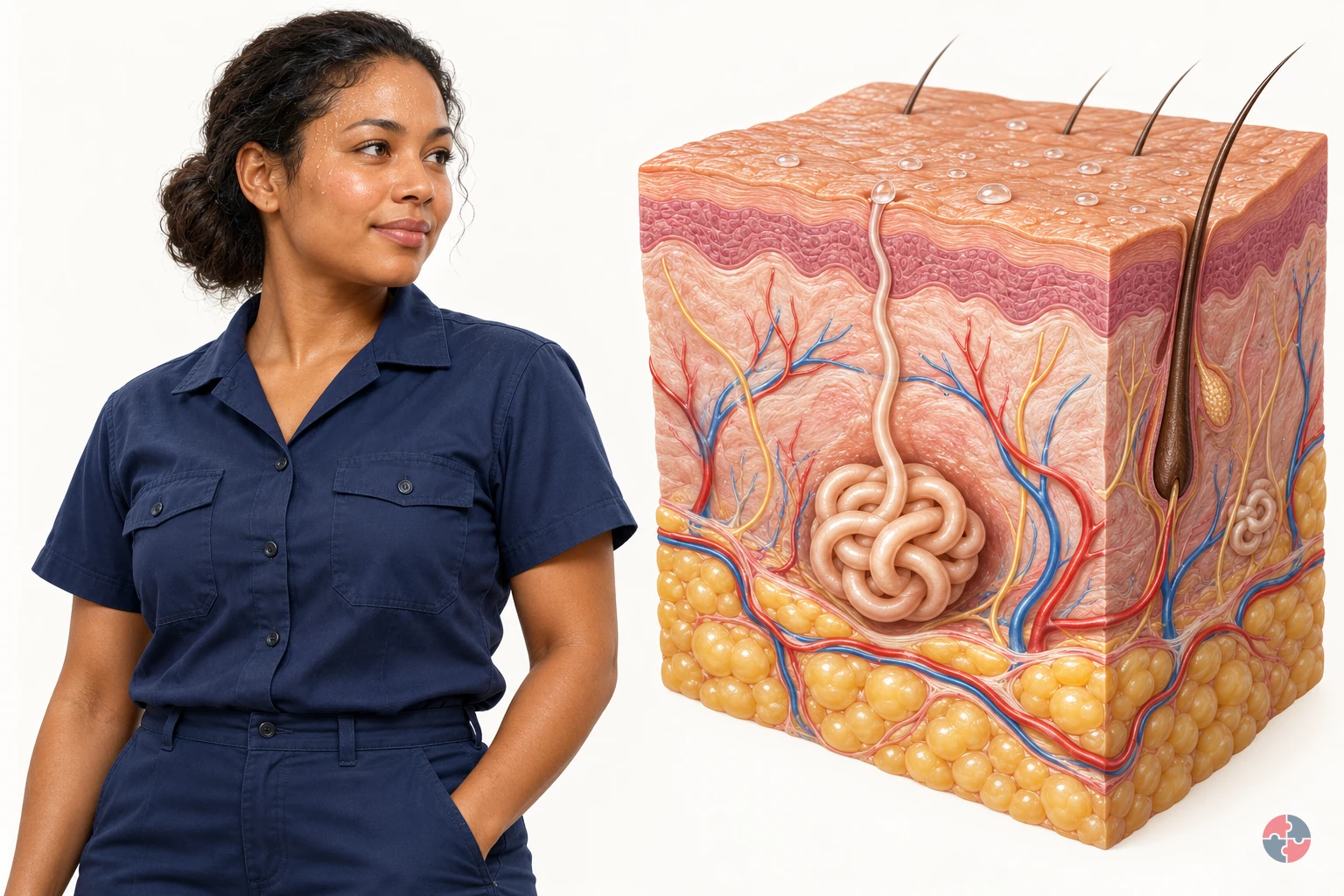

How do heat and cold affect the body, and what controls protect people during work?
Interactive anatomy · Heat balance, heat illness and cold injury · Updated 2026-10-23
Read all anatomy and process explanations without the viewer
Qualitative education about heat balance and separate harm mechanisms, not personal physiology simulation. Core-temperature, time-to-collapse, safe-duration or risk-percentage prediction Universal drinking quota or work/rest ratio Return-to-work decisions or clearance from a colour, timer or environmental card Removing required PPE and continuing hazardous work Local tissue freezing used as a model for every cold problem Heat illness, cold illness, chemical skin burns and eye irrigation each require distinct guidance. Heat and cold action is readable before interaction and scenario answers.
Working muscles
Physical work produces heat inside the body. The activity symbol represents metabolic heat production. It is not a measure of the person’s temperature. Health and Safety Executive: Temperature in the workplace: Heat stress · Health and Safety Executive: Thermal comfort
Body core
Internal temperature needs to stay within a workable range. The whole-body balance depends on heat production, gains and losses. This diagram displays no predicted core temperature. NHS Education for Scotland and University of Dundee: Core Clinical Assessment Skills Manual — temperature regulation
Skin
The skin exchanges heat with the surroundings. It forms an important surface in heat balance. Its separate barrier function is covered in the skin lesson. Health and Safety Executive: Thermal comfort · Health and Safety Executive: Structure and functions of the skin
Skin blood vessels
Changes in skin blood flow help regulate heat transfer. Skin blood vessels help regulate the transfer of heat between the body’s interior and its surface. Compare the warm and cold explanations to see the contrasting roles of skin blood flow. The vessel label identifies a physiological response; the illustrated width is not a measurement and cannot establish how effectively a person is maintaining temperature. NHS Education for Scotland and University of Dundee: Core Clinical Assessment Skills Manual — temperature regulation · NHS 111 Wales: Frostbite — causes
Sweat gland
Sweat reaches the surface; evaporation provides cooling. The gland supplies sweat to the skin surface. Cooling depends on water evaporating from that surface, so making sweat and successfully losing heat are related but different events. Follow the evaporation label outside the skin to complete the explanation. Neither a wet-looking surface nor the number of displayed droplets measures the body’s cooling. Health and Safety Executive: Thermal comfort · NHS Education for Scotland and University of Dundee: Core Clinical Assessment Skills Manual — temperature regulation · Health and Safety Executive: Structure and functions of the skin
Evaporation
Humidity and some clothing can restrict evaporation. Water vapour leaves the skin surface. These water symbols must not be mistaken for blood or a measured heat dose. Health and Safety Executive: Thermal comfort
Radiant heat
Sunlight and nearby hot surfaces can add heat load. The heat source stays outside the body. Its effect is not captured by air temperature alone. Health and Safety Executive: Thermal comfort
Clothing and PPE
Clothing changes insulation and heat loss. Required protection needs suitable work planning. Do not simply remove essential PPE and continue the hazardous task. Health and Safety Executive: Thermal comfort · Health and Safety Executive: Temperature in the workplace: Managing workplace temperatures
Shivering muscles
Shivering is a heat-producing response to cold. It does not guarantee safety. A cold, confused or unusually drowsy person needs help regardless of the animation. NHS: Hypothermia · NHS Education for Scotland and University of Dundee: Core Clinical Assessment Skills Manual — temperature regulation
Fingers and toes
Extremities can suffer local freezing injury in sufficiently cold conditions. Frostbite concerns local tissue. Hypothermia concerns whole-body temperature; neither requires the other. NHS: Hypothermia · NHS: Frostbite
Water loss
Sweating loses water, and dehydration can add to heat strain. The droplets explain loss; they do not generate a personalised drinking amount. Work must provide suitable access to water and rest. Health and Safety Executive: Temperature in the workplace: Heat stress · Health and Safety Executive: Temperature in the workplace: Dehydration
Open the complete process transcript
The process, step by step
Start with work
Working muscles release heat as they use energy. Follow the working-muscle label towards the body-core label, then look at the surrounding heat gains and losses. The important idea is balance: producing or receiving more heat than the body can lose can increase heat strain. Heat is energy, not a substance travelling along the illustrated blood vessels. This view introduces the parts of that balance; it does not calculate a temperature. Read each label in turn before comparing the work and environmental examples. Health and Safety Executive: Temperature in the workplace: Heat stress · NHS Education for Scotland and University of Dundee: Core Clinical Assessment Skills Manual — temperature regulation
What to watch: Locate the working-muscle and body-core labels, then follow their relationship to the whole-body balance rather than treating them as separate pictures.
Why it matters: A task can add heat from inside the body as well as from the surroundings. Understanding both sources helps explain why air temperature alone cannot describe the whole problem.
Explore this step: Compare the muscle and body-core labels, then describe which side of the heat balance each represents.
Separate sweat from evaporation
Sweat glands release liquid onto the skin. Cooling occurs when that liquid evaporates into water vapour, taking heat away from the surface. Follow the gland, the skin surface and the evaporation label as three connected parts of one explanation. A wet skin surface does not, on its own, show that sufficient cooling is happening. The water symbols identify the route being discussed; they do not measure sweat rate or heat loss. Pause on each label and explain the difference between making sweat and successfully losing heat. Health and Safety Executive: Thermal comfort · NHS Education for Scotland and University of Dundee: Core Clinical Assessment Skills Manual — temperature regulation
What to watch: Find the sweat gland beneath the surface, the skin above it and the evaporation label outside the body.
Why it matters: Sweating provides water at the surface; evaporation provides cooling. Keeping these roles separate explains why visible sweat is not a reliable measure of how well the body is losing heat.
Explore this step: Select the gland and evaporation labels in turn and explain what happens at each location.
Compare the context
Compare the examples with the stated air temperature held the same. Heavier work increases heat production; clothing and humidity can change how readily heat is lost. The examples are intended to separate these influences so that one temperature reading does not stand in for the whole assessment. Read the caption to identify what changed and what stayed constant, then return to the normal view. These are explanatory comparisons, not a calculation of safe working time, a prediction of body temperature or permission to remove essential protection. Health and Safety Executive: Temperature in the workplace: Heat stress · Health and Safety Executive: Thermal comfort
What to watch: Read the work, clothing and evaporation labels alongside the comparison caption, checking what changed and what remained the same.
Why it matters: Work rate, clothing and moisture in the air can alter the balance in different ways. A shared air temperature therefore does not mean that two work situations place the same demands on a person.
Explore this step: Choose two comparisons and name the different factor before explaining its place in heat production or heat loss.
Explore cold responses
In the cold example, reduced blood flow near the skin limits heat transfer from the warmer interior to the surface. Shivering adds heat through muscle activity. Find the skin-vessel label and then the shivering-muscle label so that conserving heat and producing heat remain distinct ideas. These are protective responses, but they can be insufficient. The illustration does not establish that a cold person is safe, nor does it measure core temperature. Use the normal and cold views to explain the responses without treating the model as a clinical check. NHS: Hypothermia · NHS Education for Scotland and University of Dundee: Core Clinical Assessment Skills Manual — temperature regulation · NHS 111 Wales: Frostbite — causes
What to watch: Locate the skin-vessel label near the surface and the separate muscle label used to explain heat production by shivering.
Why it matters: Conserving existing body heat and generating additional heat can both help the balance. Their presence does not prove that heat loss has been controlled or that further cooling cannot occur.
Explore this step: Compare the normal and cold labels and identify which response limits loss and which produces heat.
Choose the right comparison
Use the normal view as a reference, then compare the separate heat-illness, whole-body-cooling and local-freezing examples. Whole-body cooling concerns the temperature of the body as a whole; frostbite concerns freezing injury to a local area, often an extremity. One is not simply the next step after the other. Read the title and scope of each branch before looking at its highlighted region. The pictures help organise these different mechanisms; they cannot determine a person’s condition from skin colour, a selected label or the amount of visible movement. NHS: Hypothermia · NHS: Heat exhaustion and heatstroke · NHS: Frostbite
What to watch: Compare the body-core label with the extremity label, keeping the selected branch title visible as you examine each region.
Why it matters: Distinguishing the mechanisms prevents a local skin change being mistaken for a measure of the whole body. The selected branch is an explanation, not a sequence that every affected person follows.
Explore this step: Select each comparison and state whether it concerns heat balance, whole-body cooling or a local tissue injury.
Mechanisms and their limits
Heat illness: heat exhaustion and heatstroke When heat production and environmental gains exceed heat loss, the body may become dangerously hot. Heat exhaustion can involve fatigue, dizziness, nausea and heavy sweating. Confusion, collapse or seizures in hot work require emergency action for possible heatstroke. These are separate explanations, not an inevitable progression for every worker. Sweating can occur with exertional heatstroke. Do not use sweaty skin as reassurance. Do not wait for a temperature reading or a 30-minute timer when heatstroke warning signs are present. The viewer predicts no core temperature, collapse time or safe work duration. Health and Safety Executive: Temperature in the workplace: Heat stress · NHS: Heat exhaustion and heatstroke · Aylesford Medical Centre — NHS GP practice: Heat-related Illness
NHS: heat illness and immediate help
Hypothermia: dangerous whole-body cooling When heat loss exceeds replacement, internal body temperature can fall dangerously. Confusion, slurred speech, tiredness or slowed breathing in a cold person are warning signs. Suspected hypothermia needs emergency medical help. The body is not shown freezing solid. Slowed thinking and coordination use text labels rather than a brain lesion. Frostbite is not required for hypothermia, and the absence of a visible skin change does not provide reassurance. Warm clothing or shivering does not establish that a person is safe. NHS: Hypothermia · NHS Education for Scotland and University of Dundee: Core Clinical Assessment Skills Manual — temperature regulation
NHS: hypothermia and first aid
Frostbite: local freezing injury In very cold conditions, skin and underlying local tissue can freeze. A finger or toe inset marks the possible affected area with a labelled pattern. This local injury is different from whole-body cooling. No graphic tissue loss or literal ice crystals slicing cells are shown. This illustrative patch does not diagnose frostbite or calculate injury depth. Local frostbite and hypothermia can occur together; one does not exclude the other. NHS: Frostbite · NHS 111 Wales: Frostbite — causes
NHS: frostbite and when to seek help
HSE: workplace temperature planning
Heat illness: heat exhaustion and heatstroke — follow the anatomy
Look at: The skin circulation, sweat and body’s internal heat balance.
What changes: Heat gain can exceed the heat the body loses, particularly with exertion or restrictive clothing.
Why it matters: Heat illness can develop; confusion or reduced responsiveness can signal an emergency.
What to do: Call 999 for heatstroke warning signs, move to a safe cooler place and cool the person while help is coming.
Heavy work in a hot process area
An operator works near a hot process while wearing protective clothing required for another hazard. Playback compresses a possible heat-illness story, not a safe work period or a core-temperature model. Warning signs require action immediately. Heat exhaustion and heatstroke are not inevitable successive stages. Sweat does not rule out exertional heatstroke, and essential PPE must not simply be removed to keep working.
Consider all sources of heat load The task combines physical effort, radiant/process heat and protective clothing. Review the whole work system, not just the room thermometer. Health and Safety Executive: Temperature in the workplace: Heat stress · Health and Safety Executive: Thermal comfort
Heat gain can exceed effective cooling Work generates body heat. Humidity or clothing can reduce evaporation, so producing sweat does not guarantee enough cooling; no personal temperature is calculated. Health and Safety Executive: Temperature in the workplace: Heat stress · Health and Safety Executive: Thermal comfort
Recognise a possible heat illness The separate illness card highlights fatigue or dizziness; confusion, collapse or seizures in heat indicate an emergency. Sweaty skin must not reassure against possible heatstroke. NHS: Heat exhaustion and heatstroke · Aylesford Medical Centre — NHS GP practice: Heat-related Illness
Stop exposure and get the right help Move to a safe cooler place and cool the person. Call 999 immediately for heatstroke warning signs; do not wait for a timer. Review workload, heat sources, breaks, water access and suitable PPE together. NHS: Heat exhaustion and heatstroke · Health and Safety Executive: Temperature in the workplace: Heat stress · Health and Safety Executive: Temperature in the workplace: Managing workplace temperatures
Hypothermia: dangerous whole-body cooling — follow the anatomy
Look at: The body’s core and the blood flow towards the skin.
What changes: The body loses heat faster than it can replace it, reducing internal temperature.
Why it matters: Thinking, movement and normal body functions can deteriorate; this is different from local freezing.
What to do: For suspected hypothermia, call 999, move to shelter and follow the emergency guidance for safe warming while help comes.
Wet outdoor work and whole-body cooling
Grounds maintenance continues in cold wet conditions; a colleague later becomes confused and speaks unclearly. A time jump represents continuing heat loss over a variable period. Thirty-two seconds cannot predict core temperature, safe duration or deterioration. Frostbite is not required. Shivering, warm clothing or the absence of visible skin changes does not establish that the person is safe.
Cold, wet work needs a plan Wet clothing and cold surroundings can increase heat loss. Plan suitable protection, shelter and work arrangements; confusion or slurred speech in a cold colleague needs emergency help now. Health and Safety Executive: Temperature in the workplace: Outdoor working · NHS: Hypothermia
Heat loss continues over time The timeline jumps through continuing exposure. Shivering produces heat and skin-vessel responses conserve it, but these responses may not keep the body warm enough. NHS: Hypothermia · NHS Education for Scotland and University of Dundee: Core Clinical Assessment Skills Manual — temperature regulation
Possible dangerous whole-body cooling The body-core panel carries warning labels for confusion, slurred speech, tiredness or slow breathing. The diagram does not freeze the body solid or display a measured temperature. NHS: Hypothermia
Shelter and obtain emergency assessment Get emergency help for suspected hypothermia, move to shelter where safe and follow the separate first-aid panel for warmth and monitoring. Do not rub limbs or use direct intense heat. NHS: Hypothermia
Frostbite: local freezing injury — follow the anatomy
Look at: The exposed fingers, toes or other local tissue.
What changes: Tissue can freeze in very cold conditions, damaging cells and their blood supply.
Why it matters: Numbness and colour changes can hide a serious local injury.
What to do: Prevent freezing exposure and follow medical guidance; do not rub the affected tissue.
A local extremity exposed during very cold work
A worker in very cold conditions develops numb, painful fingers while local cold protection is ineffective. This local example uses a time jump through cold exposure; it supplies no safe duration, tissue-freezing temperature calculation or injury-depth estimate. Frostbite differs from hypothermia and non-freezing cold injury. Local symptoms do not show that the rest of the person is safe.
Protect the whole person and exposed extremities Review very cold work, suitable dry protection and access to shelter. The finger inset is a local example, not a substitute for checking the person’s condition. NHS: Frostbite · Health and Safety Executive: Temperature in the workplace: Outdoor working
Cold affects local circulation and tissue The timeline moves forward during exposure. Local blood flow may reduce as the body conserves heat; sufficiently cold tissue can freeze. This is not the same mechanism as wet-work dermatitis. NHS: Frostbite · NHS 111 Wales: Frostbite — causes
Possible local freezing injury A restrained patterned patch marks a possible affected area. Numbness or colour cannot establish depth, and the animation does not show graphic tissue loss or inevitable amputation. NHS: Frostbite
Leave the cold and obtain medical help Seek medical help for suspected frostbite and follow the reviewed cold-injury panel. Do not rub the area or use fires/direct heat. Serious local signs or hypothermia warning signs need emergency assessment. NHS: Frostbite · NHS: Hypothermia
Read the practice situations and all answer explanations
TH-Q1: What takes priority?
After strenuous hot work, a worker becomes confused and collapses. Their skin is sweaty.
Rule out heatstroke because the worker is sweating. — Sweating can occur in exertional heatstroke. Confusion and collapse require emergency action; do not let the skin appearance delay help.
Call 999 and begin appropriate cooling while help is arranged. — Correct. Call 999 immediately, cool the person while waiting and follow the call handler’s advice. The emergency panel is available before this question.
Wait for the model to predict their temperature. — There is no temperature prediction. Do not delay calling or cooling to complete the activity or wait for a timer.
NHS: Heat exhaustion and heatstroke · Aylesford Medical Centre — NHS GP practice: Heat-related IllnessTH-Q2: Which action fits the warning signs?
A wet, cold colleague becomes confused and their speech is unclear.
Rub their arms and legs vigorously. — Do not rub their limbs or use a hot bath or direct intense heat. Get emergency help and follow the reviewed guidance.
Get emergency help, move them to shelter and follow hypothermia first aid. — Yes. Call 999, shelter the person, replace wet clothing where possible, wrap them and stay with them while help comes.
Wait for frostbite to appear before considering hypothermia. — Hypothermia can occur without frostbite. Confusion and unclear speech in a cold person need immediate attention.
NHS: HypothermiaTH-Q3: Which change should the team review?
A warm industrial process requires chemical-protective clothing.
Remove essential PPE and carry on despite the chemical hazard. — Do not continue unprotected. Review the process and protection together so that controlling heat does not create another exposure.
Review heat sources, workload, suitable PPE, cooler rest arrangements and water access. — Correct. Use environmental and task controls, suitable protection and planned rest/water arrangements. Check the changes with workers.
Decide the risk from air temperature alone. — Workload, humidity, radiant heat, air movement and clothing also affect the demands.
Health and Safety Executive: Temperature in the workplace: Heat stress · Health and Safety Executive: Thermal comfort · Health and Safety Executive: Temperature in the workplace: Managing workplace temperaturesSources and how the model is made
The opening images are AI-generated anatomical illustrations. The interactive 3D models and labelled SVG diagrams use original procedural artwork. These teaching images are not medical scans or diagnostic tools. Source references support the learner explanations and do not grant artwork rights.
- Health and Safety Executive: Temperature in the workplace: Heat stress — Work-generated heat, clothing/humidity, heat storage, water loss and work/environment controls. No universal hydration, exposure duration or clinical temperature prediction.
- Health and Safety Executive: Thermal comfort — Workload, radiant heat, air movement, humidity, clothing/PPE and evaporation. Air temperature alone insufficient. No occupational numerical thresholds imported.
- NHS: Hypothermia — Whole-body cooling, symptoms and immediate first aid/emergency escalation. Printed review due June 2026 is overdue; recheck at qualified first-aid sign-off.
- NHS: Heat exhaustion and heatstroke — Distinct heat-exhaustion and heatstroke explanations, emergency warning signs and cooling while waiting. No 30-minute delay imposed when emergency signs are already present.
- Aylesford Medical Centre — NHS GP practice: Heat-related Illness — Narrow corroboration that profuse sweating/wet skin can occur with exertional heatstroke. NHS-hosted clinical education article dated 18 June 2026; first-aid reviewer must reconcile this with simplified dry-skin descriptions. No treatment doses or prediction copied.
- NHS: Frostbite — Local freezing injury, extremities, coexistence with hypothermia and emergency signs. No diagnostic tissue depth or home rewarming programme simulated.
- Health and Safety Executive: Temperature in the workplace: Outdoor working — Work planning, weather and protection for outdoor hot/cold conditions. Replaces the brief’s US cold-work source.
- NHS Education for Scotland and University of Dundee: Core Clinical Assessment Skills Manual — temperature regulation — Normal heat-production/loss balance, sweat evaporation, skin-vessel responses and heat production by shivering, pages 13–14. July 2015 physiology reference only; no clinical assessment procedure or illustration copied.
- Health and Safety Executive: Structure and functions of the skin — Normal skin, sweat gland/duct and temperature regulation. Anatomy reference only.
- NHS 111 Wales: Frostbite — causes — Cold-related vessel narrowing and local tissue-freezing context only. Emergency wording uses current national NHS source TH6; no universal 111 route or bath-temperature protocol supplied.
- Health and Safety Executive: Temperature in the workplace: Managing workplace temperatures — Review process/work systems, suitable PPE and correct continued protection, rather than simply undoing essential protection.
- Health and Safety Executive: Temperature in the workplace: Dehydration — Sweat-related water loss and provision of suitable water access. No personal drinking prescription generated.
What should happen before, during and after heat or cold work?
Plan the specific task and conditions, verify controls at the workface, pause when symptoms or safeguards change, and hand back only after people and controls are checked.
These are SHARE example decision routes, not legal temperature or exposure-time limits. The supervisor sets task-specific arrangements with affected workers and contractors; specialist input is needed where heat load, cold exposure, PPE or health factors make ordinary judgement unreliable. Required protective equipment for another hazard must not be removed just to feel cooler.
| Task and people | Before work | During work and hold point | Stop and hand-back evidence |
|---|---|---|---|
| Outdoor roof repair; roofers, scaffolders and people below, in sun and changing weather. | Check forecast and workface conditions, physical effort, fall protection, shade, drinking water, cool recovery, communication and rescue access. Brief the crew and contractor. | Supervisor checks effort, breaks and worker feedback; reschedule or reduce strenuous work if heat load rises. Hold for approval if weather or programme changes. | Stop and give first aid for dizziness; move cool, stay with the person and offer water only if fully alert and able to swallow. Confusion, collapse or other heatstroke signs: call 999 immediately, without waiting 30 minutes. Account for the crew and review controls only after care is underway; verify before restart. |
| Cold-store picking; pickers and maintenance staff exposed to cold air, draughts and cold products. | Check door control, warming area, dry suitable clothing and gloves, task duration, dexterity needs and lone-worker communication. | Check fingers, coordination and shivering; use assessed warm-up and rotation. Hold if a refrigeration or door fault changes exposure. | Stop and move to shelter for numbness or soaked clothing; seek first-aid and medical help if frostbite is suspected. Confusion, slurred speech or slow breathing after cold exposure suggests hypothermia: call 999 immediately, without waiting for a thermometer. Record defects and verify controls only after care is underway. |
| Non-routine chemical cleaning in a warm plant room; maintenance crew and process operator in impermeable PPE/RPE. | Confirm chemical controls and PPE compatibility, ventilation, entry/exit method, cool recovery, drinking opportunity, buddy contact and a task-specific work/rest plan. | Buddy and supervisor check symptoms and overrun; hold at the agreed reassessment point if temperature, humidity, workload or PPE changes. | Stop for nausea or unsafe PPE use; exit the controlled area safely, give first aid and cool the person. Poor coordination, confusion, collapse or other heatstroke signs: call 999 now. Account for everyone, then record decontamination and review the method before hand-back. |
| Changed condition: heat source, cold wind, wet clothing or failed HVAC on a shared site. | Identify who owns the area and the affected contractors; confirm a working escalation contact and available alternative work or location. | Pause and reassess the six factors and exposed people. Manager or competent assessor approves a revised method before restart. | Do not restart on an unchanged assessment. If anyone has symptoms, provide first aid first; call 999 immediately for suspected heatstroke or hypothermia. Then record the fault, worker consultation, repair and recheck. |
How can I practise this topic in 3D?
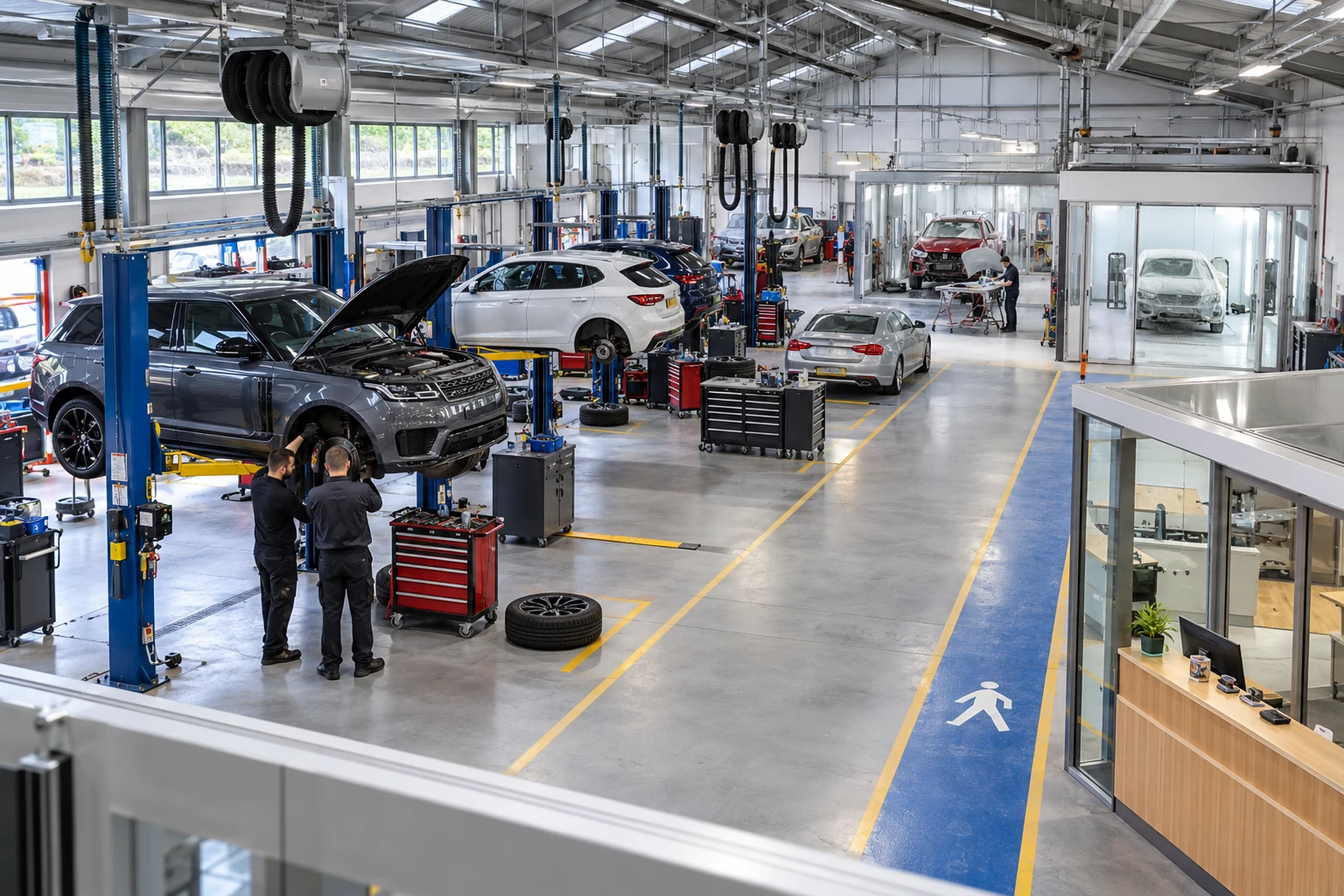
Bake cycle and oven safety

A remote workface lacks a seasonal welfare plan

Hot water creates a scald exposure
All related inspection points 11 across 6 locations
Garage workshop 2 inspection points
Construction site 1 inspection point
Riverside Leisure 2 inspection points
From flour to chilled despatch 4 inspection points
Recover materials. Protect people. 1 inspection point
Aerosystems Engineering 1 inspection point
Practice in the SHAREhub environment. Browser practice is separate from workplace competence and formal learning records.
How should thermal risk be assessed?
Assessment should consider environment, task, clothing/PPE, work rate, duration, worker feedback, symptoms, vulnerable groups and evidence.
The assessment starts with the work, not the weather. Ask what the person is doing, how hard they are working, what clothing or PPE they must wear, how long exposure lasts, what recovery is available and what happens if they become impaired.
For complex heat stress, HSE notes that measurement may need occupational health or competent support and may involve techniques such as wet-bulb globe temperature (WBGT), metabolic-rate estimation, clothing insulation values, heart-rate measurement or physiological monitoring where other controls cannot be implemented.
| Step | Practical question | Evidence |
|---|---|---|
| Define environment | Indoor, outdoor, process heat, cold store, vehicle cab or mixed? | Location/task map. |
| Identify thermal drivers | Temperature, radiant heat, air movement, humidity, PPE and work rate? | Observation and measurement. |
| Map people exposed | Who works there, for how long, and who may be more susceptible? | Roster and consultation. |
| Review task demand | Manual handling, pace, static work, shift length and recovery? | Task assessment. |
| Select controls | Engineering, scheduling, breaks, hydration, clothing/PPE and supervision. | Control plan. |
| Set stop triggers | Symptoms, failed ventilation, PPE intolerance, cold injury signs or weather change. | Briefing and supervisor card. |
| Verify | Worker feedback, observations, incidents, absence and monitoring reviewed. | Dashboard/action log. |
Neither the GB indoor guidance of normally 16°C, or 13°C for rigorous work, nor the similar Northern Ireland guidance is an outdoor work limit or a universal stop-work threshold. There is no legal maximum temperature. Any local work/rest or entry criteria must come from the actual task assessment, PPE and competent advice, then be checked against worker response. HSE law summary; HSENI temperature guidance.
How can heat stress develop in moderate conditions?
Heat stress can occur when work rate, PPE and humidity combine, even where air temperature does not look extreme.
A maintenance team carries out chemical cleaning in a warm plant room. The air temperature is not exceptional, but workers wear chemical suits, gloves, boots and RPE. Humidity is high, the job overruns, water is outside the controlled area and the supervisor notices workers rushing because they want out of the suits.
A stronger plan reduces task duration, improves ventilation, confirms PPE compatibility, sets a task-specific work/rest plan, provides cool recovery and water, briefs heat-stress symptoms and defines a buddy check. Dizziness or nausea means stop, exit safely, give first aid and cool the person. Confusion, poor coordination, collapse or other heatstroke signs mean call 999 immediately; do not wait 30 minutes or for a thermometer. Care comes before investigation or restart. A competent person must set any entry or exposure limit from the actual conditions; there is no universal legal duration.
| Factor | Weak handling | Stronger control |
|---|---|---|
| PPE | Assume PPE only protects. | Assess heat burden from impermeable clothing. |
| Duration | Job continues until complete. | Set assessed work/rest cycles and review at each change. |
| Hydration | Water outside area and breaks skipped. | Accessible water and planned recovery. |
| Supervision | Symptoms seen as low effort. | Buddy stops the task and gives first aid. Confusion or poor coordination: call 999 now; review controls after care. |
| Ventilation | Plant room heat accepted. | Temporary ventilation/cooling if suitable. |
| Learning | No review after near miss. | Review task design and monitoring. |
How does the HSE six-factor thermal comfort model work?
The HSE six-factor model makes thermal assessment more reliable because it looks beyond air temperature alone.
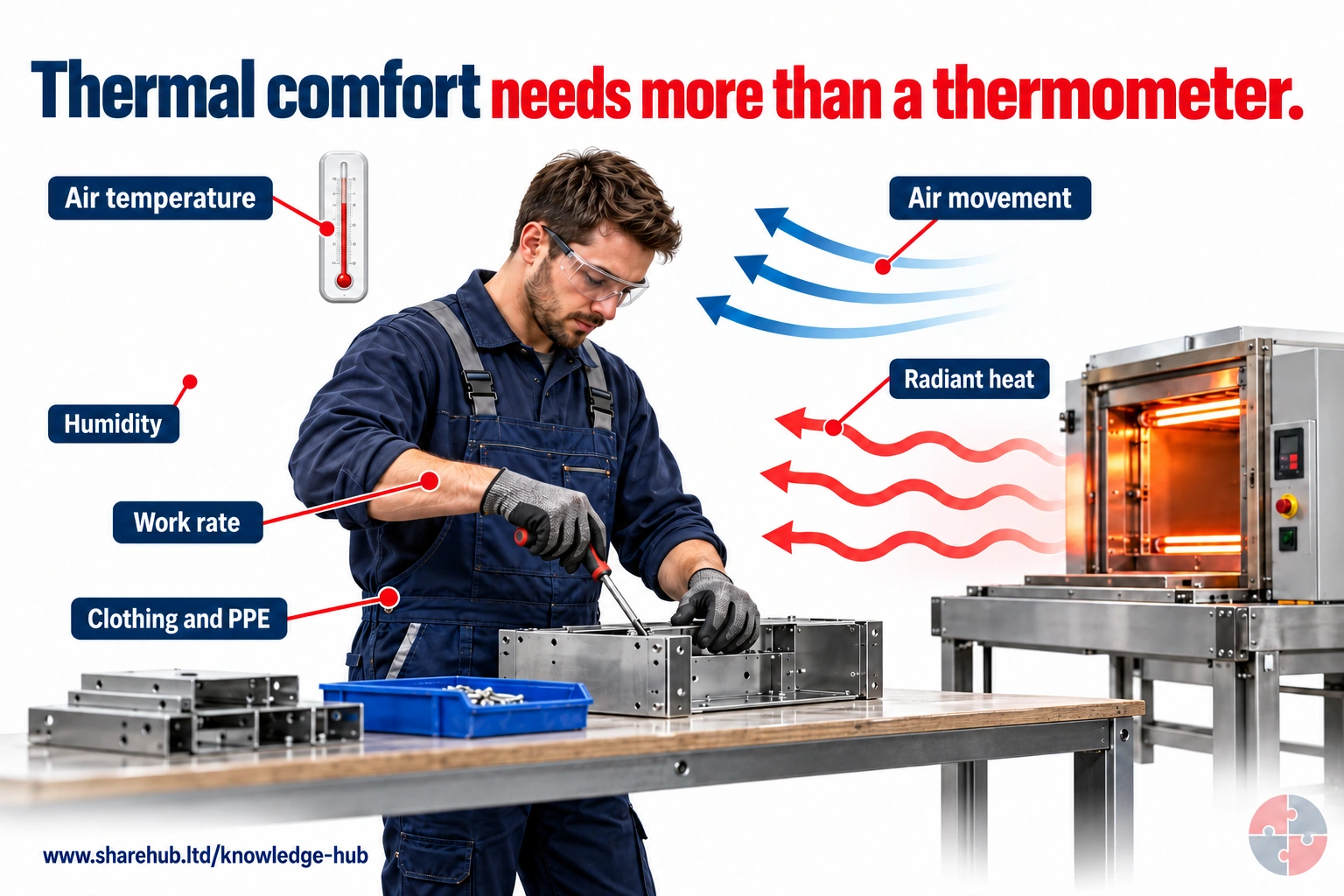
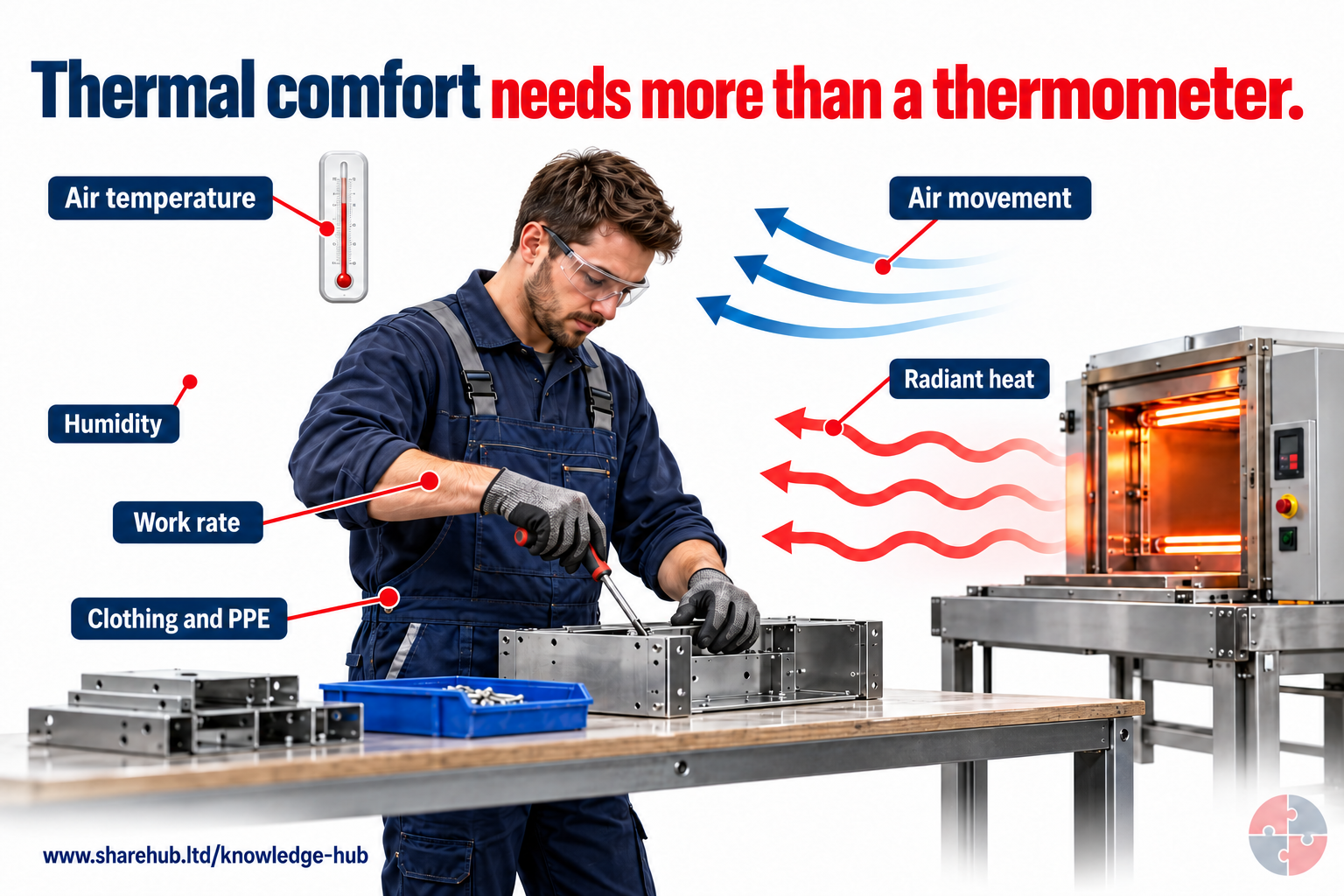
Environmental conditions, the work and clothing all influence thermal comfort. The six labelled factors show why air temperature alone cannot describe the experience or establish heat safety.
Can the air temperature alone establish thermal comfort or heat safety?
No. Consider radiation, air movement, humidity, activity, clothing and the person as well.
Conceptual thermal-comfort diagram, not a heat-stress assessment or numerical exposure limit.
Source guidance: HSE guidance
Air temperature is only one part of thermal comfort and heat-stress risk. A worker can be uncomfortable or unsafe because radiant heat, stagnant air, humidity, heavy PPE or high work rate prevents normal heat loss. Cold risk can also be worsened by wind, wet clothing, low activity, poor recovery areas and inadequate clothing.
This model is useful for both beginners and specialists. A new supervisor can use it as a prompt during a briefing; a competent assessor can use it to decide whether more detailed heat-stress measurement, WBGT assessment, physiological monitoring or occupational-health advice is needed.
| Factor | What to look for | Operational example | Control direction |
|---|---|---|---|
| Air temperature | Actual air temperature at the work location, not just the nearest thermostat. | Office, warehouse, vehicle cab, plant room or cold store. | Heating/cooling, zoning, local controls and maintenance. |
| Radiant temperature | Heat from sun, ovens, furnaces, hot pipes, dryers, asphalt or hot plant. | Foundry, bakery, roof work, road surfacing or boiler room. | Shield, insulate, shade, move work away or reschedule. |
| Air movement | Still air, draughts, wind chill, fans, extraction or open roller doors. | Cold loading bay, outdoor work, hot workshop with poor air movement. | Door control, ventilation, wind shielding or suitable fan use. |
| Humidity | Reduced sweat evaporation or damp/cold clothing. | Laundry, kitchen, humid process, chemical suit task or wet weather. | Ventilation, dehumidification, task timing and recovery. |
| Clothing/PPE | Insulation, impermeable layers, RPE burden, freezer clothing or waterproofs. | Healthcare PPE, chemical suit, welding clothing, freezer work. | PPE compatibility, work/rest cycles and alternative controls. |
| Work rate | Metabolic heat from manual effort, pace, lifting, digging or emergency work. | Roadworks, manual handling, emergency response or construction lifting. | Mechanical aids, staffing, rotation, pacing and breaks. |
How are thermal comfort, heat stress and cold stress different?
Thermal comfort is about discomfort and performance; heat and cold stress are physiological risks that can cause harm.
This distinction matters for decisions. An office complaint about uneven heating may be a welfare, productivity and comfort issue. A foundry worker in radiant heat or a cold-store picker in freezing air may face acute health risk if work is not controlled.
The boundary is not always obvious. Discomfort can become safety-relevant when people remove PPE, lose concentration, rush, avoid breaks, make errors or take shortcuts.
| Topic | Main question | Example controls |
|---|---|---|
| Thermal comfort | Are people uncomfortably hot or cold and able to adapt? | Heating, cooling, ventilation, clothing flexibility and consultation. |
| Heat stress | Can the body cope with heat load from work, PPE and environment? | Engineering control, work/rest, hydration, acclimatisation and monitoring. |
| Cold stress | Can the body maintain function and warmth safely? | Insulation, warm-up areas, exposure time, dry clothing and supervision. |
| Heat illness emergency | Is the person unwell or deteriorating? | First aid, cooling, emergency help and medical review. |
| Cold injury emergency | Are there signs of hypothermia or frostbite? | Warmth, first aid and emergency escalation. |
How does thermal risk look in different workplaces?
Thermal controls need to match sector, task and exposure pattern.
A warehouse with roller doors needs different controls from a bakery, a cold store, a roadworks site or an office with poor ventilation. A single temperature number rarely explains the risk.
Supervisors should ask what the worker is doing, how long exposure lasts, what PPE is worn and whether recovery is realistic.
| Setting | Thermal issue | Control focus |
|---|---|---|
| Office | Overheating, cold draughts or poor ventilation. | HVAC, local controls, DSE comfort and worker feedback. |
| Warehouse | Roller doors, vehicle bays, cold draughts and hot roof spaces. | Zoning, clothing, breaks and door management. |
| Kitchen/bakery | Radiant heat, humidity and pace. | Extraction, cooling, breaks and hydration. |
| Foundry/glass | Radiant heat and heavy PPE. | Shielding, remote work, work/rest and heat monitoring. |
| Cold store | Low temperature, handling and dexterity loss. | Insulated PPE, warm-up breaks and task rotation. |
| Roadworks/construction | Sun, PPE, exertion and weather change. | Scheduling, shade, water and supervision. |
| Healthcare PPE | Impermeable gowns, masks, gloves and busy clinical workload. | PPE heat burden, staffing, breaks and recovery areas. |
| Vehicle/mobile work | Cab temperature, fatigue and welfare access. | Cab maintenance, breaks and route planning. |
| Lone or mobile outdoor work | Weather exposure with delayed help or poor welfare access. | Route planning, communications, stop triggers and check-ins. |
What controls should be considered before relying on behaviour?
Thermal risk is best managed by changing the environment, source, task and recovery before relying on personal coping.
Telling workers to drink more or wear a coat is not enough if the job design creates excessive heat or cold exposure. Controls should remove or reduce the thermal load wherever practicable.
Personal adaptation still matters, but only within a system that gives people real choices: access to water, shade, warm areas, dry clothing, recovery time, suitable PPE and the authority to stop.
For heat, remove the hot operation where possible, then insulate or shield radiant surfaces and verify ventilation at the work position. For cold, move a task out of the freezer when practicable, or use heated, enclosed workstations and insulated access doors without compromising escape. Changing the shift pattern or asking people to drink water supports these source controls but cannot replace them.
Protective clothing must be assessed alongside the task: a suit may worsen heat load, while wet gloves can sharply reduce cold protection. The supervisor checks the real work rate, recovery space and worker feedback, then holds the task if a physical control fails or symptoms appear. The worked five-level and ERICPD example sets out feasibility, owners, evidence and stop points for a hot plant room and chilled loading area.
What are practical thermal stop triggers?
Thermal work should stop or change when symptoms, control failure or environmental change makes the plan unsafe.
Stop triggers are useful because heat and cold impairment can affect judgement. Workers may not recognise deterioration in themselves.
Briefings should make it acceptable to pause work for dizziness, shivering, numbness, failed ventilation, lack of water, soaked clothing, broken heating or unexpected weather. Provide first aid for symptoms; confusion or poor coordination during hot work, or confusion, slurred speech or slow breathing after cold exposure, means call 999 immediately before any task review.
| Trigger | Immediate action | Review |
|---|---|---|
| Dizziness, confusion or collapse | Stop, give first aid and stay with the person. Confusion, poor coordination or collapse in heat: call 999 immediately; do not wait 30 minutes. | Care first; account for crew, then investigate heat controls before restart. |
| Shivering, numbness or poor dexterity | Move to shelter, remove wet clothing and get first aid. Suspected frostbite needs medical help; confusion, slurred speech or slow breathing after cold exposure: call 999 now. | Do not wait for a thermometer; review cold controls only after care is underway. |
| PPE being removed unsafely | Stop and reassess heat/PPE compatibility. | PPE and task redesign. |
| Ventilation/cooling failure | Pause heat-generating work. | Engineering repair. |
| No water or warm recovery area | Stop until welfare is restored. | Welfare assurance. |
| Weather shift | Re-brief and revise controls. | Dynamic review. |
How should heat illness or cold injury be escalated?
Stop exposure and use the site first-aid plan. Call 999 for suspected heatstroke or hypothermia, or for serious deterioration; do not wait for a temperature reading or leave the person alone.
For heat exhaustion, move the person to a cool place, remove unnecessary clothing, cool the skin and give water only if they are fully alert and able to swallow. In Great Britain, use NHS 111 if heat-exhaustion symptoms are difficult to manage or advice is needed. In Northern Ireland, if the person improves but concerns remain, contact a GP or GP out-of-hours service for advice. Call 999 immediately for confusion, poor coordination, collapse, seizure, very high temperature or other heatstroke signs; do not wait 30 minutes for serious signs. Also call 999 if still unwell after 30 minutes of cooling. Continue cooling while awaiting help and follow the call handler's directions. NHS heat illness advice.
For suspected hypothermia, including confusion, slurred speech or slow breathing after cold exposure, call 999 immediately; do not wait for a thermometer reading. Where A&E attendance is advised, do not drive yourself. Move the person into shelter, replace wet clothing with dry covering, keep them company and give a warm non-alcoholic drink only if fully awake. Do not use a hot bath, direct heat, alcohol or rubbing. For suspected frostbite, seek medical help; hard frozen skin, blisters or loss of feeling need 999 or A&E assessment; do not drive yourself. Do not rub or apply direct heat. NHS hypothermia; NHS frostbite.
First aid is not permission to resume the task. Preserve essential incident facts, check the whole crew for exposure, investigate failed controls and obtain competent clearance before a revised method is used. Check reportability under the law for the actual GB or NI event; not every episode of discomfort is automatically reportable.
When is specialist thermal assessment needed?
Specialist assessment is needed where ordinary controls are not enough, heat stress may be complex, PPE is heavy or measurement such as WBGT is needed. Symptoms require first aid first; suspected heatstroke or hypothermia requires 999 immediately.
Many comfort issues can be resolved through consultation and practical controls. Specialist input is more likely where heat stress, cold stress, physiological monitoring, complex PPE, high radiant heat or vulnerable-worker assessment is involved.
The decision should be based on risk, not whether anyone has complained loudly enough.
| Situation | Likely assessment level | Action |
|---|---|---|
| Office comfort complaint | Workplace temperature/thermal comfort review. | Consult workers and adjust ventilation/heating. |
| Warehouse cold draught | Thermal comfort and welfare assessment. | Door management, clothing and warm breaks. |
| PPE-heavy hot task | Heat-stress assessment. | Work/rest, monitoring and OH input if needed. |
| Foundry or furnace work | Specialist heat/radiant assessment. | Engineering and WBGT/competent review. |
| Cold store picking | Cold-stress task assessment. | Exposure limits, warm-up and PPE checks. |
| Symptoms or near miss | First-aid and clinical escalation before incident review: suspected heatstroke or hypothermia requires 999 immediately. | Stop work, stay with the person and call 999 for confusion, collapse, seizure, slurred speech or slow breathing; then revise controls. |
Where do thermal environment controls commonly fail?
Controls fail when managers rely on air temperature alone, ignore PPE/work rate, or treat symptoms as personal weakness.
Thermal failure often looks like behaviour failure: PPE removed, breaks skipped, rushing, irritability, poor concentration or errors. The better question is why the work made that behaviour likely.
A mature system treats worker feedback and near misses as early warning, not complaints to be managed away.
| Failure or weak practice | How it develops | What good looks like |
|---|---|---|
| Thermometer-only assessment | Air temperature used alone. | Use six-factor thermal model. |
| PPE heat burden ignored | Chemical suit task overruns. | Assess clothing insulation and humidity. |
| No recovery | Breaks exist on paper but not in work plan. | Programmed cool/warm recovery. |
| Water/warmth inaccessible | Facilities too far from workface. | Welfare near the task. |
| Vulnerable workers overlooked | Medication, pregnancy or thyroid sensitivity ignored. | Private OH-supported review. |
| Symptoms normalised | Dizziness or numbness treated as attitude. | Stop trigger and first-aid route. |
| No seasonal review | Summer/winter controls unchanged. | Seasonal risk review. |
What evidence shows thermal environments are controlled?
Useful evidence links the thermal assessment to actual shift conditions, controls, symptoms, worker feedback and corrective action.
Record the six relevant factors and task changes, not just an air-temperature number. Keep shift checks, work/rest adjustments, welfare availability and incident learning proportionate to the risk.
| Evidence item | What it should show | Assurance question |
|---|---|---|
| Thermal assessment | Air temperature, radiant heat, air movement, humidity, clothing/PPE and work rate considered. | Does it go beyond thermometer readings? |
| Worker consultation | Feedback from workers and representatives. | Are discomfort and unsafe adaptations captured? |
| Control plan | Engineering, task, work/rest, welfare, clothing and supervision. | Are controls practical? |
| Monitoring | Temperature, WBGT or competent measurement where needed. | Is monitoring interpreted correctly? |
| Incident/absence review | Heat/cold symptoms, near misses and complaints reviewed. | Are trends acted on? |
| OH route | Pregnancy, illness, medication, disability and thyroid sensitivity considered privately. | Are individual boundaries respected? |
| Assurance | Seasonal checks, maintenance and action close-out. | Are defects fixed before harm? |
How should thermal environments, heat stress and cold stress be assured?
Assurance should reveal whether heat or cold controls survive a full shift, including changed weather, overtime and contractors.
Sample the busiest and most exposed shifts, ask workers about recovery and check physical conditions and symptoms. Close faults before repeating the task; reassess after a heat/cold event or change in PPE, process or season.
| Assurance level | What to check | What good looks like |
|---|---|---|
| Frontline | Supervisors check symptoms, breaks, water/warmth and PPE tolerance. | Workers can pause early. |
| Facilities | Heating, cooling, ventilation and welfare maintained. | Environment controls are reliable. |
| HSE/OH | Complex thermal risks and susceptible workers reviewed. | Competent advice is used. |
| Leadership | Seasonal risk, investment and high-risk tasks reviewed. | Resources match exposure. |
Which GB and Northern Ireland duties apply to workplace temperature?
Both jurisdictions require foreseeable thermal risk to be assessed and controlled. GB and Northern Ireland have separate workplace, management, PPE and construction regulations; neither sets a general legal maximum temperature.
For indoor workrooms, HSE's GB Approved Code of Practice normally suggests at least 16°C, or 13°C for work involving rigorous physical effort. HSENI gives similar guidance in Northern Ireland. These are guidance benchmarks, not blanket statutory minimums, outdoor limits or proof that a task is safe. The governing duty is a reasonable indoor temperature, with task and workplace exceptions and an assessment of all thermal factors. HSE legal explanation; HSENI temperature and work.
The following existing table gives GB examples, except that UK data-protection law applies more widely. The Equality Act 2010 applies in GB; Northern Ireland has its own equality framework. Check the current amended text and sector-specific duties before advising on a particular site. HSE GB guidance can inform NI practice but does not replace NI law or HSENI advice.
| Duty or guidance | What it means | How to apply it |
|---|---|---|
| Great Britain: Health and Safety at Work etc. Act 1974 | Requires employers to protect employees and others so far as reasonably practicable. | Use for the broad duty to manage foreseeable health, safety and welfare risk. |
| Great Britain: Management of Health and Safety at Work Regulations 1999 | Requires suitable and sufficient risk assessment, preventive arrangements, competent assistance, cooperation and review. | Use for risk-assessment and management-system duties. |
| UK-wide: UK GDPR and Data Protection Act 2018 | Sets requirements for fair, lawful and proportionate handling of personal and health information. | Use for privacy and worker-health records. |
| Great Britain: Equality Act 2010 | Relevant where disability, protected characteristics or reasonable adjustments may be engaged. | Use for support and adjustment boundaries. |
| Great Britain: Workplace (Health, Safety and Welfare) Regulations 1992 | Relevant to workplace temperature, ventilation, facilities and working environment. | Use for basic workplace conditions. |
| Great Britain: Personal Protective Equipment at Work Regulations 1992 | Relevant where thermal protective clothing or PPE is used. | Use for PPE compatibility and maintenance. |
| Great Britain: Construction (Design and Management) Regulations 2015 | Requires construction work to be planned, managed and monitored. | Use for outdoor and temporary work planning. |
| Northern Ireland instrument | Decision for thermal work |
|---|---|
| Health and Safety at Work (Northern Ireland) Order 1978 | General health, safety and welfare duties; do not cite the GB 1974 Act as NI's primary statute. |
| Management of Health and Safety at Work Regulations (Northern Ireland) 2000 | Assess risks, plan preventive arrangements, provide competent assistance and review changed work. |
| Workplace (Health, Safety and Welfare) Regulations (Northern Ireland) 1993 | Regulation 7 requires reasonable indoor temperature and thermometers; check scope and exceptions, including construction and process-cold settings. |
| Personal Protective Equipment at Work Regulations (Northern Ireland) 1993 | Assess suitable, compatible protective equipment and its thermal burden; check amendments and task-specific PPE law. |
| Construction (Design and Management) Regulations (Northern Ireland) 2016 | Plan, manage and monitor construction work, including foreseeable outdoor and welfare risks. |
How can the hierarchy of controls reduce heat and cold stress at work?
For this example, remove or redesign the exposure first; use lower-order controls only for the risk that remains. The example is a planning aid, not approval of a live task.
For Northern Ireland work, use this five-level framework to plan controls, then verify the applicable NI duties and HSENI guidance; HSE sources cited here state GB guidance.
Worked scenario: Maintenance worker in heavy protective clothing alternates between a hot plant room and a chilled loading area. The HSE five-level hierarchy order elimination, substitution, engineering, administrative controls and PPE. HSE heat-stress control supplies the topic context. ERICPD maps elimination to elimination, Reduce to substitution and source reduction, Isolate to engineered separation, Control to engineering and administrative arrangements, and PPE to residual personal protection. Discipline is the continuing check, maintenance, supervision and learning that keeps every chosen level effective; it is not blame or a replacement for design controls. For each row, the owner must show why any stronger feasible measure was not chosen, check the residual risk and hold work when the stated control fails. Feasibility test: An essential repair may have to occur before the plant can cool fully; the owner documents that constraint and verifies shielding, exposure plan and rescue readiness.
How can the ERICPD hierarchy of controls reduce heat and cold stress at work?

| HSE hierarchy level | ERICPD counterpart | Specific action, owner, check and stop point | Official basis |
|---|---|---|---|
| Elimination | Eliminate | Shut down and cool the plant before planned maintenance, or service a removable component in a temperate workshop; for chilled-area repairs, move the work to a temperate workshop where feasible, or isolate refrigeration and verify a safe task environment before entry. Moving stock alone does not remove cold exposure. The maintenance manager confirms isolation and safe temperature before entry. Do not substitute a shorter exposure for a feasible removal of the source. | HSE control order; HSE heat-stress control |
| Substitution | Reduce, including substitution | Specify lower-heat equipment or a remote test method, and choose a process that avoids repeated freezer entry where technically suitable. Engineering and operations check process quality, ventilation and any new chemical or electrical risk. Reassess if the substitute increases another hazard. | HSE control order; HSE heat-stress control |
| Engineering controls | Isolate or physical Control | Fit a fixed radiant shield and insulation around the identified hot plant, with a local extraction or cooling supply designed for the maintenance position; fit an interlocked insulated loading door at the chilled threshold so it cannot trap the worker or block escape. A competent engineer commissions the installed controls by measuring representative radiant/air conditions and airflow at the actual work positions, including the heavy clothing and transition between zones, against task-specific limits set by the assessment. The shift lead checks shield integrity, air movement and door release before entry; a failed check closes the affected task until repaired. | HSE control order; HSE heat-stress control |
| Administrative controls | Administrative Control and Discipline | Set a task-specific exposure and recovery plan using work rate, humidity, radiant load, clothing and worker feedback; provide water, warm/dry recovery space, buddy observation and clear symptom escalation. A supervisor checks each shift and changes the plan when conditions drift. No generic temperature or work/rest number alone proves safety. | HSE control order; HSE heat-stress control |
| PPE | PPE | Choose thermal clothing compatible with the task and other PPE, with dry spares, correct fit and safe doffing; assess added heat burden from protective suits or respirators. The wearer and supervisor check condition and comfort. Damaged insulation, soaked clothing, confusion or suspected heatstroke/hypothermia means stop and urgent care. | HSE control order; HSE heat-stress control |
How can the ISO 45001 hierarchy of controls reduce heat and cold stress at work?

| HSE hierarchy level | ERICPD counterpart | Specific action, owner, check and stop point | Official basis |
|---|---|---|---|
| Elimination | Eliminate | Shut down and cool the plant before planned maintenance, or service a removable component in a temperate workshop; for chilled-area repairs, move the work to a temperate workshop where feasible, or isolate refrigeration and verify a safe task environment before entry. Moving stock alone does not remove cold exposure. The maintenance manager confirms isolation and safe temperature before entry. Do not substitute a shorter exposure for a feasible removal of the source. | HSE control order; HSE heat-stress control |
| Substitution | Reduce, including substitution | Specify lower-heat equipment or a remote test method, and choose a process that avoids repeated freezer entry where technically suitable. Engineering and operations check process quality, ventilation and any new chemical or electrical risk. Reassess if the substitute increases another hazard. | HSE control order; HSE heat-stress control |
| Engineering controls | Isolate or physical Control | Fit a fixed radiant shield and insulation around the identified hot plant, with a local extraction or cooling supply designed for the maintenance position; fit an interlocked insulated loading door at the chilled threshold so it cannot trap the worker or block escape. A competent engineer commissions the installed controls by measuring representative radiant/air conditions and airflow at the actual work positions, including the heavy clothing and transition between zones, against task-specific limits set by the assessment. The shift lead checks shield integrity, air movement and door release before entry; a failed check closes the affected task until repaired. | HSE control order; HSE heat-stress control |
| Administrative controls | Administrative Control and Discipline | Set a task-specific exposure and recovery plan using work rate, humidity, radiant load, clothing and worker feedback; provide water, warm/dry recovery space, buddy observation and clear symptom escalation. A supervisor checks each shift and changes the plan when conditions drift. No generic temperature or work/rest number alone proves safety. | HSE control order; HSE heat-stress control |
| PPE | PPE | Choose thermal clothing compatible with the task and other PPE, with dry spares, correct fit and safe doffing; assess added heat burden from protective suits or respirators. The wearer and supervisor check condition and comfort. Damaged insulation, soaked clothing, confusion or suspected heatstroke/hypothermia means stop and urgent care. | HSE control order; HSE heat-stress control |
ERICPD Discipline in this example: The maintenance manager checks temperature and worker feedback across shifts, services ventilation and recovery areas, and suspends entry after a symptom or failed control. After a change, the supervisor verifies the strongest installed control at the workface and records any remaining exposure. If elimination or substitution was rejected, record the task-specific reason and revisit it when the process, equipment or site changes.
What can a voluntary management system add?
A management system can help assign owners, check live controls and correct failures, but it cannot certify that this particular task is lawful or safe. HSE explains the voluntary ISO 45001 context and the real task evidence remains decisive.
For this topic, check representative heat and cold conditions, plant controls, recovery facilities and changing worker feedback. The direct HSE topic guidance supplies the control context. Check the applicable GB or NI duty and the actual work before deciding that a control is effective. This is a SHARE management application, not an interpretation of an ISO clause.
What training and competence are needed?
People must demonstrate the heat or cold controls for their actual task, clothing and conditions, including the stop and emergency route.
A thermometer reading or a general summer briefing is not a competence check. Practise a shift scenario with work rate, humidity, PPE and changing weather; confirm who can stop work, move someone to recovery and call for medical help. Recheck after a new process, season, PPE change or illness event.
| Role | Demonstrate | Evidence to retain |
|---|---|---|
| Workers and contractors | Recognise heat/cold symptoms, locate water and recovery, use buddy checks and stop at the agreed trigger. | Task briefing and observed scenario. |
| Supervisors | Reassess workload, clothing, humidity and exposure; arrange work/rest and escalate symptoms immediately. | Shift check and exercise record. |
| Facilities and task planners | Demonstrate ventilation, heating/cooling, shade, welfare and contingency checks before work. | Inspection, maintenance and change record. |
| Safety and occupational-health specialists | Select specialist assessment where simple controls are insufficient; advise on confidential individual adjustments. | Competent assessment and restricted referral record. |
How could BuildOut Ltd manage this in practice?

BuildOut Ltd would assess heat and cold against the actual work demands, adapt the task and provide a usable response when workers or controls are struggling.
BuildOut Ltd · practical example
Re-plan strenuous work when heat changes the conditions
The key lesson Heat stress depends on workload, clothing, environment and individual factors; a single air-temperature reading cannot settle the whole risk.
The situation: A refurbishment programme includes strenuous work in an enclosed roof space during hot weather. The crew wears protective equipment and the space has limited air movement. The outdoor forecast alone does not describe their exposure.
Why this matters: A worker can become affected while the programme and equipment appear unchanged, particularly after a work-rate or protective-clothing change.
How BuildOut Ltd would manage it
- Review the actual conditions — Site Manager. Assess the space, air movement, radiant heat, work rate, clothing and recovery arrangements with the crew. Obtain competent advice where the combination or individual vulnerability is uncertain.
- Change the work first — Project Manager. Consider a different method, timing, location or equipment to reduce the demand. Arrange suitable ventilation or other engineering measures through competent assessment rather than relying only on drinking water.
- Provide practical recovery — Trade Supervisor. Implement the assessed rest, drinking-water, supervision and communication arrangements. Make sure workers can use them without being penalised by production targets and know how to report feeling unwell.
- Watch for loss of control — Site Manager. Check conditions during work and respond to symptoms through the first-aid or emergency plan. Stop the affected activity when the environment or worker condition no longer fits the assessment.
- Reassess changing needs — Health and Safety Manager. Review weather, workload, clothing and worker feedback before repeat work. Seek appropriate occupational-health advice for individual concerns; use functional recommendations without circulating medical details.
When the conditions change
- Recognise the trigger
- Conditions worsen, controls are unavailable or a worker becomes unwell.
- Make the immediate decision
- Stop the affected task, protect the person and use the appropriate first-aid or emergency response.
- Verify the next step
- The Site Manager checks the revised work rate, ventilation, clothing and recovery arrangements against current conditions, with relevant individual health advice where needed.
What good looks like
The work programme can change with the conditions, people can recover and report difficulties, and managers can explain the basis for continuing or stopping.
Evidence to look for: Task and environmental assessment, revised programme, controls and supervision checks, worker feedback and review.
Common mistake to avoid: Treating water bottles or a forecast temperature as the complete heat-risk control.
Apply this to your work: Which change in clothing, workload or ventilation could invalidate your temperature assessment?
Guidance behind the management approach: HSE: heat stress. Use the topic's legal and technical guidance for the applicable work and location.
In this construction business, thermal risk affects roofers, groundworkers, traffic marshals, scaffolders, plant operators, welfare teams and maintenance contractors.
| Management element | How the business would manage it | Evidence to review |
|---|---|---|
| Forecast | Weather and UV/heat/cold reviewed in daily planning. | Daily brief. |
| Work design | High-exertion work rescheduled or rotated. | Programme change. |
| Welfare | Water, shade, warm-up and toilets checked. | Welfare inspection. |
| PPE | Thermal burden and compatibility reviewed. | PPE assessment. |
| Assurance | Symptoms, complaints and near misses reviewed. | Thermal dashboard. |
Which acronyms and terms are useful for thermal environments, heat stress and cold stress?
These terms distinguish thermal comfort, heat and cold illness, assessment and emergency care.
| Acronym | Meaning | Plain-English use |
|---|---|---|
| A&E | Accident and Emergency | Emergency hospital department for urgent medical care. |
| GP | General Practitioner | Primary care doctor and common signposting route for health concerns. |
| HSE | Health and Safety Executive | Great Britain regulator and official guidance source. |
| NHS | National Health Service | UK public health service and official health guidance source. |
| OH | Occupational Health | Competent clinical advice route focused on work and health. |
| PPE | Personal Protective Equipment | Equipment worn where higher-order controls do not remove risk. |
| UK GDPR | UK General Data Protection Regulation | UK data protection framework relevant to worker health information. |
| WBGT | Wet Bulb Globe Temperature | Thermal stress index used by competent people for more complex heat-stress assessment. |
| Heat exhaustion | Heat illness that calls for stopping exposure and prompt cooling and support. | Escalate under current NHS guidance if recovery is not prompt or symptoms worsen. |
| Heatstroke | A medical emergency with signs such as confusion, poor coordination or collapse. | Call 999 immediately. |
| Hypothermia | Dangerously low body temperature after cold exposure. | Call 999 for suspected hypothermia; prevent further cooling while waiting. Do not wait for a temperature measurement. |
Which BuildOut documents support this topic?
Download individual editable BuildOut documents for this topic. Procedures and plans contain completed arrangements; forms, checklists, assessments, RAMS and permits are blank masters. Registers include separate worked examples.
| Document | Purpose and content | Editable download |
|---|---|---|
| Water-edge protection and adverse-weather procedure BOUK-PRO-WAT · Completed worked example · v1.0 | Assess changing water/weather conditions, establish rescue/access controls and communicate suspension triggers. | Download DOCX Read preview |
| Work-near-water and drowning-risk assessment BOUK-RA-WAT-01 · Blank editable master · v1.0 | Evaluate avoidance, barriers, flotation, rescue and changing water conditions. | Download DOCX Read preview |
| Water rescue and recovery plan BOUK-PLN-WAT-01 · Completed worked example · v1.0 | Define suitable equipment, trained people, access and emergency arrangements. | Download DOCX Read preview |
| Weather, flood and ground-condition check BOUK-CHK-WAT-01 · Blank editable master · v1.0 | Apply project-specific suspension/restart triggers and inspections. | Download DOCX Read preview |
| Weather stop-work and restart authorisation BOUK-FRM-WAT-01 · Blank editable master · v1.0 | Record changed conditions, checks and competent release. | Download DOCX Read preview |
Review and adapt the documents for your organisation, activities and jurisdiction before approval and issue. Open the SHAREms management-system hierarchy to find each document under its parent policy.
Unlock another resource
You have used this month’s two free downloads. Publish a post in your own words to unlock one more resource, or choose SHARE Individual for 10 downloads per month.
You decide whether to share. If you do, use the relevant platform disclosure tools and do not make claims you do not genuinely hold.