SHARE Knowledge Hub
Heating and Workplace Temperature Standards
Indoor workplaces in Great Britain and Northern Ireland must have a reasonable temperature under separate Workplace Regulations. The normal 16°C or 13°C for strenuous work figures are guidance, not a universal legal minimum; there is no fixed legal maximum. Assess air and radiant temperature, humidity, air movement, clothing and work rate, then control both discomfort and physiological heat or cold risk.
Understanding Heating and Workplace Temperature Standards
Indoor workplaces in Great Britain and Northern Ireland must have a reasonable temperature under separate Workplace Regulations. The normal 16°C or 13°C for strenuous work figures are guidance, not a universal legal minimum; there is no fixed legal maximum. Assess air and radiant temperature, humidity, air movement, clothing and work rate, then control both discomfort and physiological heat or cold risk.
Why this matters at work
For heat or cold stress, the assessment must go beyond comfort. HSE points to work rate, humidity, radiation, air movement, clothing/PPE, duration and individual factors. Specialist occupational-hygiene methods may be needed; do not publish a WBGT or cold-exposure number without method, assumptions and competent interpretation. A supplier emission or air-conditioning setpoint is not a worker's thermal dose. Note uncertainty and use a prudent interim control.
Poor comfort can impair attention, decision making or manual tasks and encourage unsafe workarounds, such as blocking ventilation or altering PPE. Do not imply every complaint is a medical heat illness; listen and assess. HSE's workplace temperature checklist is a screening aid for discomfort. It is not the heat-stress checklist and does not replace a suitable and sufficient assessment when risk is indicated. Consider seasonal and shift variations and the operation of doors, plant and occupancy. The current workplace-temperature checklist says two or more yes answers prompt assessment; it supplies no negative-answer safety clearance or mandatory medical screen. HSE six-factor pages list older BS/ISO references; no current paid-standard edition or technical threshold is verified.
How organisations manage this in practice
Output should be a decision: hazard and harm mechanism, affected groups, controls, responsible person, deadline, emergency response and verification. Reassess when weather, refrigeration, heating, ventilation, workforce or tasks change. If the real condition is unsafe, move or stop work while competent assessment proceeds. Measurement is evidence for action, not a reason to postpone simple source controls.
HSE identifies air temperature, radiant temperature, air movement, humidity, clothing or PPE insulation and work rate as the six basic factors in thermal comfort. People can feel cold beside a draughty loading door despite a room sensor reading above a normal minimum, or hot beside a radiant machine despite moderate air. A sensible survey asks workers where and when discomfort occurs, what clothing or PPE they wear, and whether the task prevents adaptation. It distinguishes persistent local problems from a building-wide setpoint issue.
Map work areas, tasks, times and people. For ordinary indoor conditions, check temperature near representative occupied workstations at working height, away from misleading windows or heaters, and record other comfort factors. Compare day and night, summer and winter, start-up and peak production. Ask workers to describe symptoms and workarounds. Check the HSE workplace temperature checklist. A building-management-system sensor can miss the actual breathing or working zone.
Suspected carbon monoxide: leave exposure first
Go outside and obtain urgent medical advice; do not re-enter until advised safe. Call 999 for serious signs such as breathing difficulty, sudden confusion, collapse or chest pain. Do not remain in the room to investigate a heater. Arrange the competent gas-emergency route for the location. Ordinary CO₂ ventilation meters do not detect carbon monoxide or establish combustion safety.
How can I practise this topic in 3D?
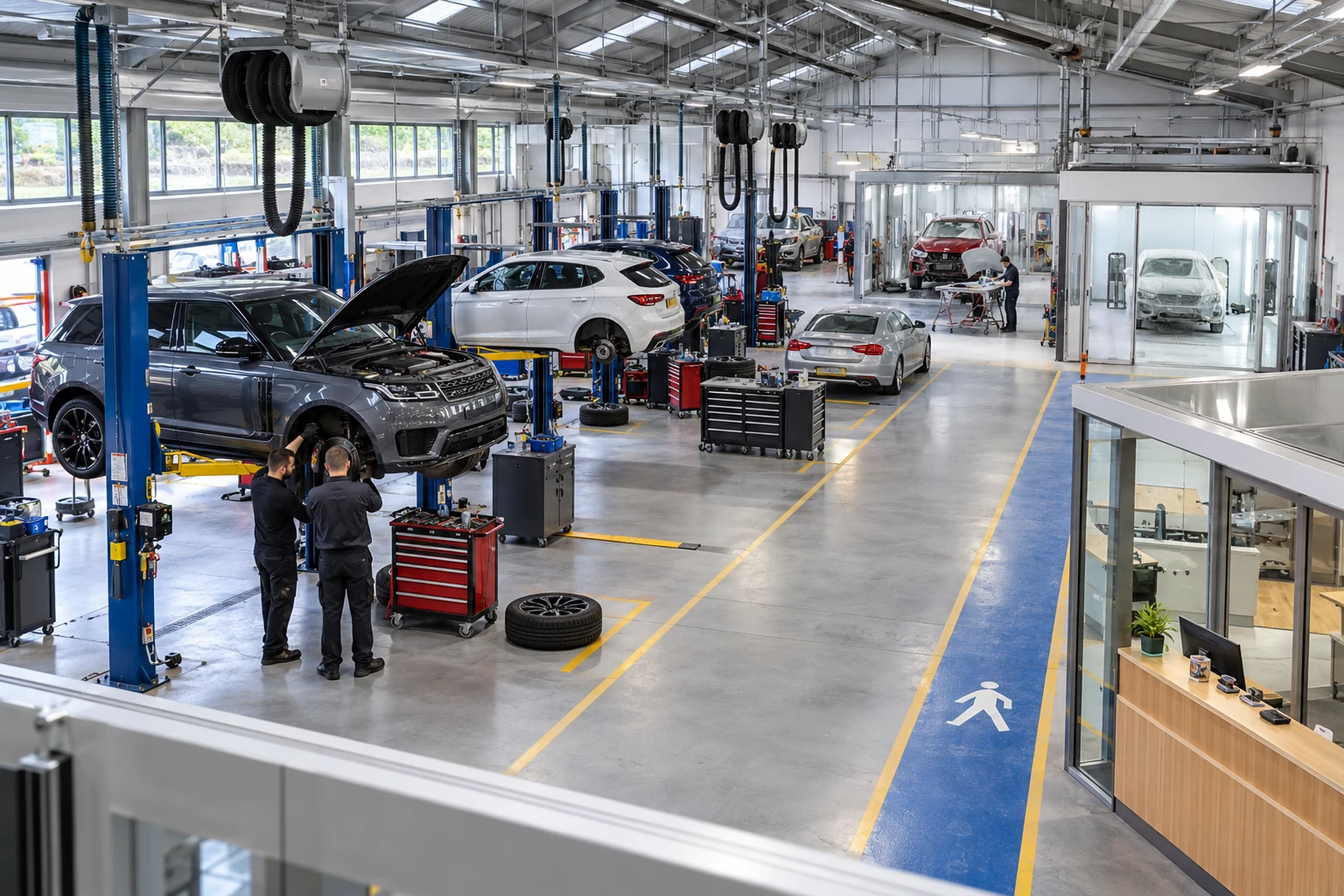

Cold draughts in winter, heat in summer
All related inspection points 1 across 1 location
Garage workshop 1 inspection point
Practice in the SHAREhub environment. Browser practice is separate from workplace competence and formal learning records.
What are the key points for heating and workplace temperature standards?
The key points are reasonable temperature, thermal comfort, risk assessment and timely control when conditions change.
Best-practice guide: Heating and Workplace Temperature Standards
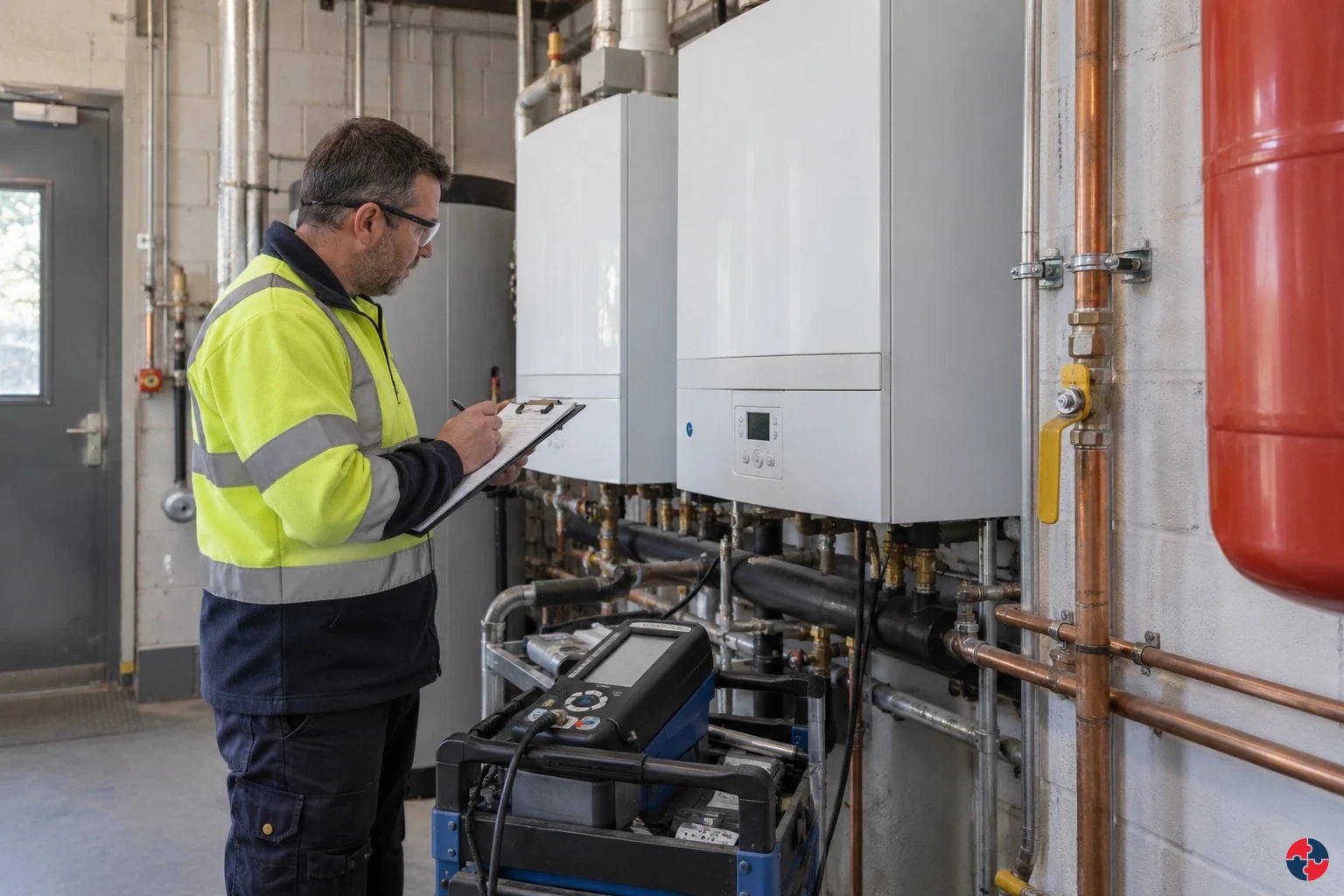
What are the key points for heating and workplace temperature standards?
The key points are reasonable temperature, thermal comfort, risk assessment and timely control when conditions change. Indoor workplaces in Great Britain and Northern Ireland must have a reasonable temperature under separate Workplace Regulations.
Turn heating and workplace temperature standards knowledge into a decision
Indoor workplaces in Great Britain and Northern Ireland must have a reasonable temperature under separate Workplace Regulations. The normal 16°C or 13°C for strenuous work figures are guidance, not a universal legal minimum; there is no fixed legal maximum. Facilities and site managers map thermal areas, worker tasks, public areas, humidity, poolside conditions, plant-room heat and complaint patterns.
the leisure operator worked example
Assess: Facilities and site managers map thermal areas, worker tasks, public areas, humidity, poolside conditions, plant-room heat and complaint patterns. Control: Heating, ventilation and cooling are balanced across zones; poolside humidity, gym ventilation and plant-room access are reviewed separately.
Temperature warning signs
Personal heaters appear: Fire risk, overloads and uneven heating. Vents blocked: Poor fresh air and comfort. Workers keep coats/gloves on indoors: Reduced dexterity and discomfort.
Choose controls for heating and workplace temperature standards
Eliminate: Redesign the bakery process or workstation to move people away from the oven radiant zone. Reduce: Specify a lower-radiant-load oven or process when replacing equipment; verify performance. Isolate: Fit a suitable radiant shield or separate hot zone from adjacent workstations. Control: Balance heat extraction and fresh air without cold draughts at other stations. Control: Limit hot-zone time and provide cooler recovery with water; investigate complaints. Read the full control table for qualifications, ownership and verification. Use the actual task and applicable jurisdiction; existing technical approval remains unchanged.
Use the full heating and workplace temperature standards lesson
Use the full topic for the decision points, practical examples, detailed control tables and source scope. HSE guidance applies to Great Britain; use HSENI for the Northern Ireland route and the source’s stated jurisdiction. A simplified guide does not change the page’s technical-review or approval status.

Read all six steps as text
1. What are the key points for heating and workplace temperature standards?
The key points are reasonable temperature, thermal comfort, risk assessment and timely control when conditions change.
- Avoid / redesign: Redesign the bakery process or workstation to move people away from the oven radiant zone.
- Control the task: Fit a suitable radiant shield or separate hot zone from adjacent workstations.
- Verify before release: Unproved layout: hold change.
The key points are reasonable temperature, thermal comfort, risk assessment and timely control when conditions change. Indoor workplaces in Great Britain and Northern Ireland must have a reasonable temperature under separate Workplace Regulations.
Apply it: Which part of this plan would you check at the workface before authorising the task?
2. Turn heating and workplace temperature standards knowledge into a decision
Use the evidence to improve the actual work arrangement.
- Change at source: Redesign the bakery process or workstation to move people away from the oven radiant zone.
- Make it observable: Unproved layout: hold change.
- Keep useful evidence: Facilities and site managers map thermal areas, worker tasks, public areas, humidity, poolside conditions, plant-room heat and complaint patterns.
Indoor workplaces in Great Britain and Northern Ireland must have a reasonable temperature under separate Workplace Regulations. The normal 16°C or 13°C for strenuous work figures are guidance, not a universal legal minimum; there is no fixed legal maximum. Facilities and site managers map thermal areas, worker tasks, public areas, humidity, poolside conditions, plant-room heat and complaint patterns.
Apply it: What evidence would show that the change improves this task, rather than only completing a record?
3. the leisure operator worked example
Example: a practical application of the existing topic lesson.
- Assess: Facilities and site managers map thermal areas, worker tasks, public areas, humidity, poolside conditions, plant-room heat and complaint patterns.
- Control: Heating, ventilation and cooling are balanced across zones; poolside humidity, gym ventilation and plant-room access are reviewed separately.
- Support: Staff have drinking water, rest areas, suitable uniform options and escalation routes if they feel too hot or too cold.
Assess: Facilities and site managers map thermal areas, worker tasks, public areas, humidity, poolside conditions, plant-room heat and complaint patterns. Control: Heating, ventilation and cooling are balanced across zones; poolside humidity, gym ventilation and plant-room access are reviewed separately.
Apply it: At which point would you hold this example, and what evidence would allow it to proceed?
4. Temperature warning signs
Connect the task, the route to the person and the control that can fail.
- Personal heaters appear: Fire risk, overloads and uneven heating.
- Vents blocked: Poor fresh air and comfort.
- Workers keep coats/gloves on indoors: Reduced dexterity and discomfort.
Personal heaters appear: Fire risk, overloads and uneven heating. Vents blocked: Poor fresh air and comfort. Workers keep coats/gloves on indoors: Reduced dexterity and discomfort.
Apply it: Who could be exposed, including other trades, cleaners, maintainers and people nearby?
5. Choose controls for heating and workplace temperature standards
Start with the stronger practicable options and verify their effect.
- Eliminate: Redesign the bakery process or workstation to move people away from the oven radiant zone.
- Reduce: Specify a lower-radiant-load oven or process when replacing equipment; verify performance.
- Isolate: Fit a suitable radiant shield or separate hot zone from adjacent workstations.
- Control: Balance heat extraction and fresh air without cold draughts at other stations.
- Control: Limit hot-zone time and provide cooler recovery with water; investigate complaints.
Eliminate: Redesign the bakery process or workstation to move people away from the oven radiant zone. Reduce: Specify a lower-radiant-load oven or process when replacing equipment; verify performance. Isolate: Fit a suitable radiant shield or separate hot zone from adjacent workstations. Control: Balance heat extraction and fresh air without cold draughts at other stations. Control: Limit hot-zone time and provide cooler recovery with water; investigate complaints. Read the full control table for qualifications, ownership and verification. Use the actual task and applicable jurisdiction; existing technical approval remains unchanged.
Apply it: Which stronger option can be used here, and who will verify it before accepting the remaining risk?
6. Use the full heating and workplace temperature standards lesson
Follow the official sources below and retain the task-specific evidence.
- Official guidance: HSE workplace temperature law
- Official guidance: HSE five-level hierarchy
- Task decision: Facilities and site managers map thermal areas, worker tasks, public areas, humidity, poolside conditions, plant-room heat and complaint patterns.
Use the full topic for the decision points, practical examples, detailed control tables and source scope. HSE guidance applies to Great Britain; use HSENI for the Northern Ireland route and the source’s stated jurisdiction. A simplified guide does not change the page’s technical-review or approval status.
Apply it: Which official source and full-topic section will you use to resolve the next decision?
There is no simple maximum
The UK approach is risk-based because hot work, cold stores, offices and outdoor tasks are very different.
Minimum figures are a baseline
16 degrees Celsius, or 13 for strenuous work, guides ordinary indoor work but does not remove the need for assessment.
Comfort has six factors
Air temperature, radiant temperature, air movement, humidity, clothing and work rate all shape comfort.
Ventilation still matters
Keeping people warm must be balanced with fresh air and avoidance of uncomfortable draughts.
Complaints are data
Repeated complaints, symptoms or unsafe behaviours should trigger review, not be dismissed as personal preference.
What is the UK legal baseline for workplace temperature?
The UK legal baseline is that indoor workplace temperatures must be reasonable and thermal risks must be assessed and controlled.
Temperature legal baseline — part 1 of 2


Read the complete visual as text
- Is there a minimum?: Baseline answer: Indoor workplaces should normally be at least 16 degrees Celsius or 13 for strenuous work. Practical implication: Check heating, draughts, cold floors and local conditions. NI source
- Is there a maximum?: Baseline answer: Neither GB nor NI sets a fixed general legal maximum; assess and control heat risk. Practical implication: Assess heat, discomfort and physiological risk. NI source
- Does it apply outdoors?: Baseline answer: Outdoor work needs risk assessment and protection from adverse weather. Practical implication: Plan shade, warm-up, cool-down, welfare and clothing.
Temperature legal baseline — part 2 of 2


Read the complete visual as text
- Do workers need thermometers?: Baseline answer: GB and NI Workplace Regulations require enough suitable thermometers for workrooms. Practical implication: Use monitoring where it helps control decisions. NI source
- What if workers complain?: Baseline answer: Complaints can indicate discomfort or risk. Practical implication: Review thermal comfort and controls.
In Great Britain, the 16°C and 13°C figures are the normal guidance in the Workplace ACOP; the statutory test is a reasonable temperature. Northern Ireland has separate 1993 Workplace Regulations and HSENI temperature guidance with the same usual figures. Neither route creates a general maximum. An active warehouse is not automatically exempt from the normal 16°C guidance: check whether the particular work is genuinely strenuous or a recognised exception applies, then assess actual comfort and risk. HSE workplace temperature law HSENI temperature and work HSE workplace temperature law
The Workplace Regulations require reasonable temperatures in indoor workplaces. HSE's published guidance explains that this normally means at least 16 degrees Celsius, or 13 degrees Celsius where the work involves rigorous physical effort. Those figures are useful, but they are not the whole answer.
There is no fixed legal maximum temperature because many workplaces necessarily involve heat: bakeries, laundries, kitchens, foundries, glass processes, plant rooms and some manufacturing lines. In those settings the dutyholder must assess heat stress and put controls in place, not argue that a maximum limit does not exist.
| Question | Baseline answer | Practical implication |
|---|---|---|
| Is there a minimum? | Indoor workplaces should normally be at least 16 degrees Celsius or 13 for strenuous work. | Check heating, draughts, cold floors and local conditions. HSE workplace temperature law HSENI temperature and work |
| Is there a maximum? | Neither GB nor NI sets a fixed general legal maximum; assess and control heat risk. | Assess heat, discomfort and physiological risk. HSE workplace temperature law HSENI temperature and work |
| Does it apply outdoors? | Outdoor work needs risk assessment and protection from adverse weather. | Plan shade, warm-up, cool-down, welfare and clothing. HSE workplace temperature law |
| Do workers need thermometers? | GB and NI Workplace Regulations require enough suitable thermometers for workrooms. | Use monitoring where it helps control decisions. HSE workplace temperature law HSENI temperature and work |
| What if workers complain? | Complaints can indicate discomfort or risk. | Review thermal comfort and controls. HSE workplace temperature law |
What does a reasonable workplace temperature mean?
Reasonable temperature means suitable for the people, work, clothing, environment and time spent there.
A reasonable temperature is not the same in an office, warehouse, kitchen, cold store, gym, workshop, control room or temporary site cabin. The work rate, clothing and exposure time can change the answer more than the thermometer reading. HSE workplace temperature law
In an office, 15 degrees may be too cold for sedentary work. In a warehouse, 15 degrees does not itself establish an exception: test whether the work is genuinely strenuous or another recognised exception applies, and whether workers remain reasonably comfortable with suitable clothing and welfare. In a hot kitchen, 28 degrees with high humidity may be harder to tolerate than a dry 30 degrees in a better ventilated space. HSE workplace temperature law HSENI temperature and work
| Workplace | Issue | Good control |
|---|---|---|
| Office | Sedentary work, cold hands, low air movement or overcooling. | Balanced heating, ventilation, local controls and worker feedback. HSE thermal comfort |
| Warehouse | Mixed temperatures, open doors, physical work and cold floors. | Zoning, warm clothing, break areas and loading-bay controls. HSE thermal comfort |
| Kitchen | Radiant heat, steam, humidity and pace. | Ventilation, extraction, cooling breaks and task rotation. HSE thermal comfort |
| Cold store | Food temperature needs conflict with worker comfort. | Thermal clothing, exposure limits, warm-up breaks and escape alarms. HSE thermal comfort |
| Workshop | Local heaters, hot work, fumes and ventilation. | Safe heating, fume control and draught management. HSE thermal comfort |
| Site cabin | Temporary heating, overcrowding and poor ventilation. | Suitable heaters, CO risk control, ventilation and welfare checks. HSE thermal comfort |
How do temperature standards apply in common workplaces?
Examples show why the same temperature can be reasonable in one workplace and unsuitable in another.
Workplace temperature examples — part 1 of 2


Read the complete visual as text
- Office too cold: What can go wrong: Sedentary workers may get cold hands, poor concentration, discomfort at DSE workstations and repeated complaints. Practical control route: Review heating, draughts, air movement, radiator balance, seating positions, local controls and feedback patterns. Evidence to keep: Temperature readings, complaint log, maintenance actions and worker consultation.
- Warehouse roller doors: What can go wrong: Open doors can create cold draughts, uneven temperatures, slips from wet floors, blocked exits and unsafe portable-heater use. Practical control route: Use loading-bay zoning, door discipline, strip curtains or rapid-close doors, warm rest areas, suitable clothing and floor checks. Evidence to keep: Loading-bay inspection, defect tracker, housekeeping checks and seasonal review.
- Commercial kitchen: What can go wrong: Ovens, grills, fryers, steam, humidity and pace can create fatigue, dehydration, poor attention and PPE discomfort. Practical control route: Maintain extraction, reduce radiant heat where possible, rotate tasks, provide water and recovery breaks, and brief early heat signs. Evidence to keep: Ventilation cleaning records, maintenance reports, supervision checks and heat incident learning.
- Plant room: What can go wrong: Hot plant, confined access, noise, poor ventilation and lone working can combine with maintenance pressure. Practical control route: Plan access through permits or task plans, limit time, use buddy checks, improve ventilation and stop work if symptoms appear. Evidence to keep: Permit records, plant-room risk assessment, contractor induction and supervisor sign-off.
Workplace temperature examples — part 2 of 2


Read the complete visual as text
- Outdoor work: What can go wrong: Sun, wind, rain, radiant surfaces and changing weather can make both heat and cold risks difficult to predict. Practical control route: Use weather review, shade or shelter, work timing, warm or cool welfare, water access, clothing and stop-work triggers. Evidence to keep: Daily briefing, weather plan, welfare check and task review.
- Mobile workers: What can go wrong: Cab heat or cold, route pressure, poor welfare access and limited toilet stops can discourage drinking or recovery. Practical control route: Plan routes with welfare stops, maintain vehicle heating/cooling, provide water and allow realistic break planning. Evidence to keep: Journey plan, vehicle defect records, welfare arrangements and driver feedback.
- PPE affecting comfort: What can go wrong: Respiratory protective equipment, chemical suits, waterproofs or flame-retardant clothing can trap heat or restrict movement. Practical control route: Assess PPE heat or cold burden, shorten exposure, improve rest, consider alternative controls and keep PPE suitable for the hazard. Evidence to keep: PPE assessment, fit-test/RPE record where relevant, work-rest plan and supervisor checks.
Temperature decisions need context. A sedentary worker typing in a draughty office may become uncomfortable and less effective at a temperature that would be acceptable for someone moving stock in a warehouse. A kitchen worker may experience heat strain because ovens, steam, humidity and pace combine, even where the measured air temperature looks manageable. HSE workplace temperature law
Good assessment asks what people are doing, what they are wearing, how long they are exposed, whether they can recover and what happens if discomfort affects safety. The answer might be building maintenance, better ventilation, local draught control, work rotation, welfare access, task timing, uniform flexibility or specialist assessment where heat or cold stress is possible.
| Workplace example | What can go wrong | Practical control route | Evidence to keep |
|---|---|---|---|
| Office too cold | Sedentary workers may get cold hands, poor concentration, discomfort at DSE workstations and repeated complaints. | Review heating, draughts, air movement, radiator balance, seating positions, local controls and feedback patterns. | Temperature readings, complaint log, maintenance actions and worker consultation. HSE thermal comfort |
| Warehouse roller doors | Open doors can create cold draughts, uneven temperatures, slips from wet floors, blocked exits and unsafe portable-heater use. | Use loading-bay zoning, door discipline, strip curtains or rapid-close doors, warm rest areas, suitable clothing and floor checks. | Loading-bay inspection, defect tracker, housekeeping checks and seasonal review. HSE thermal comfort |
| Commercial kitchen | Ovens, grills, fryers, steam, humidity and pace can create fatigue, dehydration, poor attention and PPE discomfort. | Maintain extraction, reduce radiant heat where possible, rotate tasks, provide water and recovery breaks, and brief early heat signs. | Ventilation cleaning records, maintenance reports, supervision checks and heat incident learning. HSE thermal comfort |
| Plant room | Hot plant, confined access, noise, poor ventilation and lone working can combine with maintenance pressure. | Plan access through permits or task plans, limit time, use buddy checks, improve ventilation and stop work if symptoms appear. | Permit records, plant-room risk assessment, contractor induction and supervisor sign-off. HSE thermal comfort |
| Outdoor work | Sun, wind, rain, radiant surfaces and changing weather can make both heat and cold risks difficult to predict. | Use weather review, shade or shelter, work timing, warm or cool welfare, water access, clothing and stop-work triggers. | Daily briefing, weather plan, welfare check and task review. HSE thermal comfort |
| Mobile workers | Cab heat or cold, route pressure, poor welfare access and limited toilet stops can discourage drinking or recovery. | Plan routes with welfare stops, maintain vehicle heating/cooling, provide water and allow realistic break planning. | Journey plan, vehicle defect records, welfare arrangements and driver feedback. HSE thermal comfort |
| PPE affecting comfort | Respiratory protective equipment, chemical suits, waterproofs or flame-retardant clothing can trap heat or restrict movement. | Assess PPE heat or cold burden, shorten exposure, improve rest, consider alternative controls and keep PPE suitable for the hazard. | PPE assessment, fit-test/RPE record where relevant, work-rest plan and supervisor checks. HSE thermal comfort |
How should thermal comfort be assessed?
Thermal comfort should be assessed through the six factors that determine how people actually experience the environment.
HSE's thermal comfort guidance is useful because it explains why a single thermometer can mislead. Air temperature matters, but so do radiant heat, air movement, humidity, clothing and metabolic rate. A person near a sunny window, oven or hot pipe may be much warmer than someone elsewhere in the same room. HSE thermal comfort
Worker feedback is a valid starting point. Ask where people are uncomfortable, when it happens, what tasks they are doing and whether they are changing behaviour. Discomfort can become a safety issue when it leads to distraction, fatigue, PPE removal, cold hands, rushing, poor concentration or conflict.
| Factor | What it means | Example control |
|---|---|---|
| Air temperature | Measured warmth of the air. | Heating, cooling or local temperature control. HSE thermal comfort |
| Radiant temperature | Heat from sun, hot plant, ovens or cold surfaces. | Insulation, blinds, screens or workstation relocation. HSE thermal comfort |
| Air movement | Breeze, draughts or ventilation flow. | Baffles, balanced ventilation or fan placement. HSE thermal comfort |
| Humidity | Moisture level affecting sweat evaporation and dryness. | Dehumidification, extraction or process enclosure. HSE thermal comfort |
| Clothing | Insulation and restriction from clothing or PPE. | Dress-code flexibility or suitable protective clothing. HSE thermal comfort |
| Metabolic rate | Heat generated by physical work. | Mechanical aids, pacing or task rotation. HSE thermal comfort |

How do heat and cold affect the body, and what controls protect people during work?
Interactive anatomy · Heat balance, heat illness and cold injury · Updated 2026-10-23
Read all anatomy and process explanations without the viewer
Qualitative education about heat balance and separate harm mechanisms, not personal physiology simulation. Core-temperature, time-to-collapse, safe-duration or risk-percentage prediction Universal drinking quota or work/rest ratio Return-to-work decisions or clearance from a colour, timer or environmental card Removing required PPE and continuing hazardous work Local tissue freezing used as a model for every cold problem Heat illness, cold illness, chemical skin burns and eye irrigation each require distinct guidance. Heat and cold action is readable before interaction and scenario answers.
Working muscles
Physical work produces heat inside the body. The activity symbol represents metabolic heat production. It is not a measure of the person’s temperature. Health and Safety Executive: Temperature in the workplace: Heat stress · Health and Safety Executive: Thermal comfort
Body core
Internal temperature needs to stay within a workable range. The whole-body balance depends on heat production, gains and losses. This diagram displays no predicted core temperature. NHS Education for Scotland and University of Dundee: Core Clinical Assessment Skills Manual — temperature regulation
Skin
The skin exchanges heat with the surroundings. It forms an important surface in heat balance. Its separate barrier function is covered in the skin lesson. Health and Safety Executive: Thermal comfort · Health and Safety Executive: Structure and functions of the skin
Skin blood vessels
Changes in skin blood flow help regulate heat transfer. Skin blood vessels help regulate the transfer of heat between the body’s interior and its surface. Compare the warm and cold explanations to see the contrasting roles of skin blood flow. The vessel label identifies a physiological response; the illustrated width is not a measurement and cannot establish how effectively a person is maintaining temperature. NHS Education for Scotland and University of Dundee: Core Clinical Assessment Skills Manual — temperature regulation · NHS 111 Wales: Frostbite — causes
Sweat gland
Sweat reaches the surface; evaporation provides cooling. The gland supplies sweat to the skin surface. Cooling depends on water evaporating from that surface, so making sweat and successfully losing heat are related but different events. Follow the evaporation label outside the skin to complete the explanation. Neither a wet-looking surface nor the number of displayed droplets measures the body’s cooling. Health and Safety Executive: Thermal comfort · NHS Education for Scotland and University of Dundee: Core Clinical Assessment Skills Manual — temperature regulation · Health and Safety Executive: Structure and functions of the skin
Evaporation
Humidity and some clothing can restrict evaporation. Water vapour leaves the skin surface. These water symbols must not be mistaken for blood or a measured heat dose. Health and Safety Executive: Thermal comfort
Radiant heat
Sunlight and nearby hot surfaces can add heat load. The heat source stays outside the body. Its effect is not captured by air temperature alone. Health and Safety Executive: Thermal comfort
Clothing and PPE
Clothing changes insulation and heat loss. Required protection needs suitable work planning. Do not simply remove essential PPE and continue the hazardous task. Health and Safety Executive: Thermal comfort · Health and Safety Executive: Temperature in the workplace: Managing workplace temperatures
Shivering muscles
Shivering is a heat-producing response to cold. It does not guarantee safety. A cold, confused or unusually drowsy person needs help regardless of the animation. NHS: Hypothermia · NHS Education for Scotland and University of Dundee: Core Clinical Assessment Skills Manual — temperature regulation
Fingers and toes
Extremities can suffer local freezing injury in sufficiently cold conditions. Frostbite concerns local tissue. Hypothermia concerns whole-body temperature; neither requires the other. NHS: Hypothermia · NHS: Frostbite
Water loss
Sweating loses water, and dehydration can add to heat strain. The droplets explain loss; they do not generate a personalised drinking amount. Work must provide suitable access to water and rest. Health and Safety Executive: Temperature in the workplace: Heat stress · Health and Safety Executive: Temperature in the workplace: Dehydration
Open the complete process transcript
The process, step by step
Start with work
Working muscles release heat as they use energy. Follow the working-muscle label towards the body-core label, then look at the surrounding heat gains and losses. The important idea is balance: producing or receiving more heat than the body can lose can increase heat strain. Heat is energy, not a substance travelling along the illustrated blood vessels. This view introduces the parts of that balance; it does not calculate a temperature. Read each label in turn before comparing the work and environmental examples. Health and Safety Executive: Temperature in the workplace: Heat stress · NHS Education for Scotland and University of Dundee: Core Clinical Assessment Skills Manual — temperature regulation
What to watch: Locate the working-muscle and body-core labels, then follow their relationship to the whole-body balance rather than treating them as separate pictures.
Why it matters: A task can add heat from inside the body as well as from the surroundings. Understanding both sources helps explain why air temperature alone cannot describe the whole problem.
Explore this step: Compare the muscle and body-core labels, then describe which side of the heat balance each represents.
Separate sweat from evaporation
Sweat glands release liquid onto the skin. Cooling occurs when that liquid evaporates into water vapour, taking heat away from the surface. Follow the gland, the skin surface and the evaporation label as three connected parts of one explanation. A wet skin surface does not, on its own, show that sufficient cooling is happening. The water symbols identify the route being discussed; they do not measure sweat rate or heat loss. Pause on each label and explain the difference between making sweat and successfully losing heat. Health and Safety Executive: Thermal comfort · NHS Education for Scotland and University of Dundee: Core Clinical Assessment Skills Manual — temperature regulation
What to watch: Find the sweat gland beneath the surface, the skin above it and the evaporation label outside the body.
Why it matters: Sweating provides water at the surface; evaporation provides cooling. Keeping these roles separate explains why visible sweat is not a reliable measure of how well the body is losing heat.
Explore this step: Select the gland and evaporation labels in turn and explain what happens at each location.
Compare the context
Compare the examples with the stated air temperature held the same. Heavier work increases heat production; clothing and humidity can change how readily heat is lost. The examples are intended to separate these influences so that one temperature reading does not stand in for the whole assessment. Read the caption to identify what changed and what stayed constant, then return to the normal view. These are explanatory comparisons, not a calculation of safe working time, a prediction of body temperature or permission to remove essential protection. Health and Safety Executive: Temperature in the workplace: Heat stress · Health and Safety Executive: Thermal comfort
What to watch: Read the work, clothing and evaporation labels alongside the comparison caption, checking what changed and what remained the same.
Why it matters: Work rate, clothing and moisture in the air can alter the balance in different ways. A shared air temperature therefore does not mean that two work situations place the same demands on a person.
Explore this step: Choose two comparisons and name the different factor before explaining its place in heat production or heat loss.
Explore cold responses
In the cold example, reduced blood flow near the skin limits heat transfer from the warmer interior to the surface. Shivering adds heat through muscle activity. Find the skin-vessel label and then the shivering-muscle label so that conserving heat and producing heat remain distinct ideas. These are protective responses, but they can be insufficient. The illustration does not establish that a cold person is safe, nor does it measure core temperature. Use the normal and cold views to explain the responses without treating the model as a clinical check. NHS: Hypothermia · NHS Education for Scotland and University of Dundee: Core Clinical Assessment Skills Manual — temperature regulation · NHS 111 Wales: Frostbite — causes
What to watch: Locate the skin-vessel label near the surface and the separate muscle label used to explain heat production by shivering.
Why it matters: Conserving existing body heat and generating additional heat can both help the balance. Their presence does not prove that heat loss has been controlled or that further cooling cannot occur.
Explore this step: Compare the normal and cold labels and identify which response limits loss and which produces heat.
Choose the right comparison
Use the normal view as a reference, then compare the separate heat-illness, whole-body-cooling and local-freezing examples. Whole-body cooling concerns the temperature of the body as a whole; frostbite concerns freezing injury to a local area, often an extremity. One is not simply the next step after the other. Read the title and scope of each branch before looking at its highlighted region. The pictures help organise these different mechanisms; they cannot determine a person’s condition from skin colour, a selected label or the amount of visible movement. NHS: Hypothermia · NHS: Heat exhaustion and heatstroke · NHS: Frostbite
What to watch: Compare the body-core label with the extremity label, keeping the selected branch title visible as you examine each region.
Why it matters: Distinguishing the mechanisms prevents a local skin change being mistaken for a measure of the whole body. The selected branch is an explanation, not a sequence that every affected person follows.
Explore this step: Select each comparison and state whether it concerns heat balance, whole-body cooling or a local tissue injury.
Read the practice situations and all answer explanations
Sources and how the model is made
The opening images are AI-generated anatomical illustrations. The interactive 3D models and labelled SVG diagrams use original procedural artwork. These teaching images are not medical scans or diagnostic tools. Source references support the learner explanations and do not grant artwork rights.
- Health and Safety Executive: Temperature in the workplace: Heat stress — Work-generated heat, clothing/humidity, heat storage, water loss and work/environment controls. No universal hydration, exposure duration or clinical temperature prediction.
- Health and Safety Executive: Thermal comfort — Workload, radiant heat, air movement, humidity, clothing/PPE and evaporation. Air temperature alone insufficient. No occupational numerical thresholds imported.
- NHS: Hypothermia — Whole-body cooling, symptoms and immediate first aid/emergency escalation. Printed review due June 2026 is overdue; recheck at qualified first-aid sign-off.
- NHS: Heat exhaustion and heatstroke — Distinct heat-exhaustion and heatstroke explanations, emergency warning signs and cooling while waiting. No 30-minute delay imposed when emergency signs are already present.
- Aylesford Medical Centre — NHS GP practice: Heat-related Illness — Narrow corroboration that profuse sweating/wet skin can occur with exertional heatstroke. NHS-hosted clinical education article dated 18 June 2026; first-aid reviewer must reconcile this with simplified dry-skin descriptions. No treatment doses or prediction copied.
- NHS: Frostbite — Local freezing injury, extremities, coexistence with hypothermia and emergency signs. No diagnostic tissue depth or home rewarming programme simulated.
- Health and Safety Executive: Temperature in the workplace: Outdoor working — Work planning, weather and protection for outdoor hot/cold conditions. Replaces the brief’s US cold-work source.
- NHS Education for Scotland and University of Dundee: Core Clinical Assessment Skills Manual — temperature regulation — Normal heat-production/loss balance, sweat evaporation, skin-vessel responses and heat production by shivering, pages 13–14. July 2015 physiology reference only; no clinical assessment procedure or illustration copied.
- Health and Safety Executive: Structure and functions of the skin — Normal skin, sweat gland/duct and temperature regulation. Anatomy reference only.
- NHS 111 Wales: Frostbite — causes — Cold-related vessel narrowing and local tissue-freezing context only. Emergency wording uses current national NHS source TH6; no universal 111 route or bath-temperature protocol supplied.
- Health and Safety Executive: Temperature in the workplace: Managing workplace temperatures — Review process/work systems, suitable PPE and correct continued protection, rather than simply undoing essential protection.
- Health and Safety Executive: Temperature in the workplace: Dehydration — Sweat-related water loss and provision of suitable water access. No personal drinking prescription generated.
What heating system issues should be controlled?
Heating systems should provide comfort without introducing fumes, fire risk, burns, draughts or poor ventilation.
Heating system controls — part 1 of 2


Read the complete visual as text
- Combustion heaters: Possible harm: Fumes, carbon monoxide or fire. Control: Use suitable equipment, ventilation and maintenance.
- Electrical portable heaters: Possible harm: Fire, overload, trip hazards or burns. Control: Control procurement, positioning, electrical load and supervision; use risk-based user checks, competent inspection and testing where needed. A PAT sticker or annual schedule alone does not establish suitability.
- Uneven heating: Possible harm: One area too hot, another too cold. Control: Balance system, relocate workstations or use local controls.
Heating system controls — part 2 of 2


Read the complete visual as text
- Draughts: Possible harm: Cold discomfort and blocked ventilation. Control: Adjust air movement without stopping fresh air.
- Hot surfaces: Possible harm: Burns or ignition of nearby materials. Control: Guard, distance, signage and housekeeping.
- Poor maintenance: Possible harm: Breakdown, fumes or ineffective heating. Control: Planned maintenance, fault reporting and repair priority.
Where gas-fired heating is used, competent installation and maintenance must prevent unsafe combustion and carbon-monoxide exposure. If heater fumes or carbon-monoxide exposure are suspected, leave the affected area and obtain urgent medical advice before maintenance investigation; a warm room is not evidence that a heater is safe. HSE gas safety for employers HSE gas safety for employers
Heating is not only a comfort measure. Poorly selected or maintained heaters can create carbon monoxide risk, ignition risk, burns, blocked walkways, overloads, dry air complaints or local overheating while the wider room stays cold.
Facilities teams should look at fixed heating, temporary heaters, local radiant heaters, fan heaters, underfloor systems, ventilation units and building insulation together. The control question is whether the system keeps the workplace reasonable without creating a secondary hazard.
| Heating issue | Possible harm | Control |
|---|---|---|
| Combustion heaters | Fumes, carbon monoxide or fire. | Use suitable equipment, ventilation and maintenance. HSE gas safety for employers |
| Electrical portable heaters | Fire, overload, trip hazards or burns. | Control procurement, positioning, electrical load and supervision; use risk-based user checks, competent inspection and testing where needed. A PAT sticker or annual schedule alone does not establish suitability. HSE workplace temperature law |
| Uneven heating | One area too hot, another too cold. | Balance system, relocate workstations or use local controls. HSE thermal comfort |
| Draughts | Cold discomfort and blocked ventilation. | Adjust air movement without stopping fresh air. HSE balancing ventilation and warmth |
| Hot surfaces | Burns or ignition of nearby materials. | Guard, distance, signage and housekeeping. HSE workplace temperature law |
| Poor maintenance | Breakdown, fumes or ineffective heating. | Planned maintenance, fault reporting and repair priority. HSE gas safety for employers |
How should cold workplace conditions be managed?
Cold conditions should be managed through heating, insulation, clothing, exposure limits, welfare and task design.
Cold can reduce dexterity, grip, concentration and willingness to remove gloves for fine work. In warehouses, yards, workshops and cold stores, cold stress can also increase slips, musculoskeletal strain and fatigue. HSE workplace temperature law
The answer is not simply to tell people to wear more clothing. Clothing must allow safe movement, manual handling, machine operation and communication. Heated rest areas, warm drinks, task rotation, insulating flooring, draught reduction and planned warm-up breaks may all be needed.
| Cold work issue | Control | Evidence |
|---|---|---|
| Cold indoor workroom | Improve heating, reduce draughts and provide suitable clothing. | Temperature checks and worker feedback. HSE workplace temperature law |
| Cold store | Limit exposure and provide thermal clothing and warm-up breaks. | Cold work assessment and break schedule. HSE workplace temperature law |
| Outdoor winter work | Plan for weather, wind chill, wet clothing and warm welfare. | Weather plan and supervisor check. HSE workplace temperature law |
| Reduced dexterity | Select gloves that protect without creating new handling risk. | Task trial and PPE review. HSE workplace temperature law |
| Wet and cold | Provide dry clothing, shelter and changing facilities. | Welfare inspection. HSE workplace temperature law |
How should hot workplace conditions be managed?
Hot conditions should be managed by reducing heat load, improving cooling, controlling work rate and recognising heat stress early.
In hot work, comfort controls may not be enough. If workers are exposed to high radiant heat, humidity, heavy physical work or PPE, the risk becomes heat stress. That needs task-specific assessment and may need occupational hygiene or occupational health input. HSE heat stress at work
Do not assume indoor hot work is safer than outdoor heat. Kitchens, laundries, bakeries, foundries, plant rooms, tunnels, roof spaces and enclosed cabins can generate high heat loads even when weather is mild.
| Hot work issue | Control | Evidence |
|---|---|---|
| Radiant heat | Insulate, shield or move workers away. | Engineering action record. HSE heat stress at work |
| High work rate | Use mechanical aids, slower pace and rotation. | Work-rest plan. HSE heat stress at work |
| Humidity or steam | Improve extraction and ventilation. | Ventilation inspection. HSE heat stress at work |
| Direct sun | Use shade, timing, hats and cool rest areas. | Outdoor work plan. HSE heat stress at work |
| PPE heat burden | Review PPE need and shorten exposure. | PPE heat-burden assessment. HSE heat stress at work |
| Symptoms | Stop work, cool and use first-aid route. | Incident and near-miss review. HSE heat stress at work |
How should heating be balanced with ventilation?
Heating and ventilation should be balanced so people have fresh air without uncomfortable draughts or excessive energy loss.
Fresh air and thermal comfort can pull in different directions. In winter, people may close vents or windows because they are cold, which can reduce ventilation. In summer, fans may move air and improve comfort but do not by themselves provide fresh air in poorly ventilated areas. HSE balancing ventilation and warmth
Good building management looks at fresh-air supply, CO2 monitoring where useful, draught location, window use, trickle vents, mechanical ventilation, air conditioning and worker feedback together.
| Issue | Good practice | What to check |
|---|---|---|
| Cold draughts | Redirect air and move workstations where needed. | Are people blocking vents? HSE balancing ventilation and warmth |
| Poor fresh air | Improve ventilation without making areas too cold. | Is CO2 or worker feedback indicating poor ventilation? HSE balancing ventilation and warmth |
| Fan use | Use fans for comfort only where ventilation is adequate. | Could fans spread contaminants or create draughts? HSE balancing ventilation and warmth |
| Air conditioning | Maintain and balance airflow. | Are some people overcooled while others overheat? HSE balancing ventilation and warmth |
| Natural ventilation | Use partial or high-level openings to reduce draughts. | Are windows used sensibly across seasons? HSE balancing ventilation and warmth |
How should outdoor and mobile workers be considered?
Outdoor and mobile workers need temperature controls that move with the work, not only building-based measures.
Outdoor workers may face sun, wind, rain, cold, radiant heat from road surfaces and limited welfare access. Mobile workers may work from vehicles with variable cab temperature and limited toilet or water access. HSE workplace temperature law
The temperature standard for these workers is often about planning: routes, welfare stops, shelter, clothing, water, emergency communication and whether work should be delayed or rescheduled during extreme weather.
| Worker group | Temperature issue | Control |
|---|---|---|
| Delivery drivers | Hot or cold cab, limited stops and schedule pressure. | Route welfare planning and water access. HSE heat stress at work |
| Construction workers | Sun, wind, rain and physical work. | Weather plan, shade, warm welfare and task timing. HSE heat stress at work |
| Security staff | Long standing periods outdoors. | Shelter, clothing, rotation and lone-worker checks. HSE heat stress at work |
| Maintenance engineers | Plant rooms, roofs and remote spaces. | Dynamic risk assessment and stop-work triggers. HSE heat stress at work |
| Event staff | Long outdoor shifts and public pressure. | Rest areas, hydration points and supervisor monitoring. HSE heat stress at work |
How should temperature complaints and concerns be assessed?
Assessment should combine worker feedback, measurements, task review and practical control decisions.
Start by listening. If several workers complain, if symptoms appear, or if people change behaviour to cope with temperature, the issue needs review. Ask where, when, who, what work, what clothing, what equipment and what has changed. HSE workplace temperature law
Use simple checks first and escalate where needed. Complex hot or cold environments, protective clothing, vulnerable workers, repeated complaints or physiological heat stress may need competent specialist assessment rather than a local opinion.
| Step | What to do | Output |
|---|---|---|
| Listen | Collect worker feedback and representative input. | Complaint log and location map. HSE thermal comfort |
| Measure | Check temperature, humidity or conditions where useful. | Temperature record. HSE thermal comfort |
| Observe | Review work rate, clothing, air movement and radiant sources. | Task observation. HSE thermal comfort |
| Control | Apply practical improvements quickly where obvious. | Action tracker. HSE thermal comfort |
| Escalate | Use specialist advice for complex heat/cold stress. | Competent assessment. HSE thermal comfort |
| Review | Check whether complaints, symptoms and unsafe behaviours reduce. | Management review evidence. HSE thermal comfort |
Which temperature route applies in Great Britain and Northern Ireland?
Great Britain and Northern Ireland use separate workplace-temperature instruments and regulator guidance. Verify specialist sector rules separately for the particular site.
| Work location | Applicable route | How to use it |
|---|---|---|
| England, Scotland and Wales | GB Workplace Regulations 1992 and HSE temperature guidance | Use the GB reasonable-temperature duty and HSE ACOP guidance. Law Guidance |
| Northern Ireland | NI Workplace Regulations 1993 and HSENI temperature guidance | Use the NI reasonable-temperature duty and HSENI guidance. Law Guidance |
Which legal duties apply in Great Britain and Northern Ireland?
Use the legal instrument for the workplace location. General risk assessment, first aid or welfare duties differ in GB and NI even when practical controls look similar.
The rows distinguish law from HSE or HSENI guidance. The site needs its own needs assessment, competent advice, current text and arrangements. A voluntary management standard or a health-awareness page does not confer legal compliance. Management of Health and Safety at Work Regulations 1999 Management of Health and Safety at Work Regulations (NI) 2000
| Decision | Great Britain | Northern Ireland | Operational test |
|---|---|---|---|
| General thermal-risk assessment | Health and Safety at Work etc. Act 1974 and Management Regulations 1999 Management of Health and Safety at Work Regulations 1999 GB general duty | Health and Safety at Work (NI) Order 1978 and Management Regulations (NI) 2000 Management of Health and Safety at Work Regulations (NI) 2000 NI general duty | Apply the instrument for the actual site; do not transfer a GB duty to NI. |
| Reasonable indoor temperature and thermometers | Workplace Regulations 1992 Workplace (Health, Safety and Welfare) Regulations 1992 | Workplace Regulations (NI) 1993 Workplace (Health, Safety and Welfare) Regulations (NI) 1993 | Apply the instrument for the actual site; do not transfer a GB duty to NI. |
| Construction temperature and weather protection where applicable | CDM 2015 regulation 34 Construction (Design and Management) Regulations 2015, regulation 34 | CDM (NI) 2016 regulation 33 Construction (Design and Management) Regulations (NI) 2016, regulation 33 | Apply the instrument for the actual site; do not transfer a GB duty to NI. |
How can the hierarchy of controls control uncomfortable or harmful workplace temperatures?
ERICPD is used here as a planning mnemonic. The linked HSE five-level hierarchy is the official source for the order and relative reliability of controls; the two labels are not identical.
ERICPD and the five-level hierarchy are decision aids, not identical statutes. Test removal, substitution and engineering first; use PPE and supervision for residual risk.
The bakery example compares source and building controls before relying on work-rest rules or protective clothing. Apply it to the actual measured conditions. HSE thermal comfort
ERICPD means Eliminate, Reduce, Isolate, Control, PPE and Discipline. The five-level order is elimination, substitution, engineering controls, administrative controls and PPE. Isolate usually maps to engineering; Discipline sustains a control and does not replace design. HSE five-level hierarchy HSE five-level hierarchy
How can the ERICPD hierarchy of controls control uncomfortable or harmful workplace temperatures?

| ERICPD stage | Five-level mapping | Intervention | Owner and check | Failure / stop |
|---|---|---|---|---|
| Eliminate | Elimination | Redesign the bakery process or workstation to move people away from the oven radiant zone. | Engineer tests layout and food-process needs. | Unproved layout: hold change. HSE thermal comfort |
| Reduce / substitute | Substitution | Specify a lower-radiant-load oven or process when replacing equipment; verify performance. | Purchaser tests real heat and production. | Do not infer from brochure alone. HSE thermal comfort |
| Isolate | Engineering | Fit a suitable radiant shield or separate hot zone from adjacent workstations. | Engineer checks temperature at worker positions. | Failed shield: restrict access. HSE thermal comfort |
| Control: physical | Engineering | Balance heat extraction and fresh air without cold draughts at other stations. | Building engineer measures and maintains. | Ventilation fault: correct before normal use. HSE thermal comfort |
| Control: method | Administrative | Limit hot-zone time and provide cooler recovery with water; investigate complaints. | Supervisor checks work pattern and symptoms. | Heat stress signs: stop and escalate. HSE thermal comfort |
| PPE | PPE | Select heat protection for unavoidable contact without adding excessive body heat. | Assessor checks clothing and task. | Unsuitable PPE: hold task. HSE thermal comfort |
| Discipline | Sustains controls | Review readings, worker feedback, maintenance and seasonal changes. | Manager closes corrective actions. | Recurring complaint: reassess. HSE thermal comfort |
How can the ISO 45001 hierarchy of controls control uncomfortable or harmful workplace temperatures?

| ERICPD stage | Five-level mapping | Intervention | Owner and check | Failure / stop |
|---|---|---|---|---|
| Eliminate | Elimination | Redesign the bakery process or workstation to move people away from the oven radiant zone. | Engineer tests layout and food-process needs. | Unproved layout: hold change. HSE thermal comfort |
| Reduce / substitute | Substitution | Specify a lower-radiant-load oven or process when replacing equipment; verify performance. | Purchaser tests real heat and production. | Do not infer from brochure alone. HSE thermal comfort |
| Isolate | Engineering | Fit a suitable radiant shield or separate hot zone from adjacent workstations. | Engineer checks temperature at worker positions. | Failed shield: restrict access. HSE thermal comfort |
| Control: physical | Engineering | Balance heat extraction and fresh air without cold draughts at other stations. | Building engineer measures and maintains. | Ventilation fault: correct before normal use. HSE thermal comfort |
| Control: method | Administrative | Limit hot-zone time and provide cooler recovery with water; investigate complaints. | Supervisor checks work pattern and symptoms. | Heat stress signs: stop and escalate. HSE thermal comfort |
| PPE | PPE | Select heat protection for unavoidable contact without adding excessive body heat. | Assessor checks clothing and task. | Unsuitable PPE: hold task. HSE thermal comfort |
| Discipline | Sustains controls | Review readings, worker feedback, maintenance and seasonal changes. | Manager closes corrective actions. | Recurring complaint: reassess. HSE thermal comfort |
How should management verify controls for this task?
For oven-adjacent bakery work and nearby indoor temperature complaints, the management check should start with a real control decision: Redesign the bakery process or workstation to move people away from the oven radiant zone. Name the person who will test it, keep evidence from the actual work, and reopen the assessment when the failure condition in the hierarchy table occurs. HSE management-system guidance.
A review should compare the planned control with what workers and supervisors can use in practice. Record the defect, owner, interim protection, verification and next review trigger so that a policy statement or certificate does not stand in for a working control.
What evidence shows workplace temperature is being managed?
Evidence should show that complaints, measurements, building controls and risk controls are reviewed and acted on.
Temperature management evidence should be proportionate. An office may need a complaint log, thermometer checks, maintenance records and worker feedback. A cold store or hot process may need a full task-specific risk assessment, exposure limits, work-rest arrangements and specialist review. HSE workplace temperature law
The evidence should show the loop: issue identified, assessed, controlled, checked and reviewed. Repeated comfort complaints without action are a management-system weakness.
| Evidence | What it can evidence | What to challenge |
|---|---|---|
| Temperature checks | Conditions are being monitored. | Are readings taken where people actually work? HSE workplace temperature law |
| Worker feedback | Comfort and practical issues are understood. | Are complaints analysed by location and time? HSE thermal comfort |
| Maintenance records | Heating, cooling and ventilation are maintained. | Are defects closed quickly? HSE balancing ventilation and warmth |
| Thermal comfort review | Six factors have been considered. | Is the review more than a thermometer? HSE thermal comfort |
| Risk assessment | Hot or cold stress has been assessed where needed. | Does it include work rate and PPE? HSE heat stress at work |
| Action tracker | Controls are owned and closed. | Are repeat issues fixed permanently? HSE workplace temperature law |
How could Riverside Leisure Ltd manage this in practice?

Riverside Leisure Ltd would manage workplace temperature through facilities control, customer comfort, worker welfare and safety-critical task review.
A leisure business has very different thermal environments in one site: reception, gyms, studios, changing rooms, poolside, cafes, offices, external queues, plant rooms and maintenance workshops. Riverside would not use one thermostat reading as the answer for all areas. HSE workplace temperature law
| Management element | How the business would manage it | Evidence to review |
|---|---|---|
| Assess | Facilities and site managers map thermal areas, worker tasks, public areas, humidity, poolside conditions, plant-room heat and complaint patterns. HSE thermal comfort | Occupied-zone/task map with time, work rate, clothing and representative measurement locations. |
| Control | Heating, ventilation and cooling are balanced across zones; poolside humidity, gym ventilation and plant-room access are reviewed separately. HSE balancing ventilation and warmth | Competent heating/ventilation findings and verified remedial work for the affected zone. |
| Support | Staff have drinking water, rest areas, suitable uniform options and escalation routes if they feel too hot or too cold. HSE workplace welfare facilities | Water/rest/uniform support plan, escalation route and a restricted individual adjustment note where needed. |
| Check | Temperature complaints, maintenance defects, ventilation checks, air-conditioning faults and worker feedback are reviewed weekly at site level. HSE workplace temperature law | Dated complaint/defect log, measurement context and observed post-repair check. |
| Contractors | Maintenance contractors entering hot plant rooms receive task-specific induction, time limits, communication and welfare access. HSE heat stress at work | Task-specific contractor heat/exposure brief and agreed access, supervision and stop conditions. |
| Improve | Seasonal review compares winter draught issues, summer overheating complaints and energy/ventilation changes so fixes are planned before the next season. HSE thermal comfort | Seasonal trend review with accountable owner, close-out evidence and worker check-back date. |
What must each role be able to demonstrate?
Test the real decision and stop point at each level; an awareness briefing is not practical authorisation or clinical qualification.
A worker or bystander should recognise the immediate trigger, a supervisor should show the actual task response, a manager should resource and verify arrangements, and specialists should be assessed only within their proper scope. Record who observed the demonstration, what was shown, and what change will trigger reassessment. HSE thermal comfort
| Role | Demonstration | Assessor and record | Reassess when |
|---|---|---|---|
| Worker | Report hot/cold discomfort or symptoms and stop unsafe exposure. | Supervisor observes reporting route. | Season or task changes. HSE thermal comfort |
| Supervisor | Check six thermal factors and temporary controls. | Manager checks real workstation. | Complaint or readings change. HSE thermal comfort |
| Building engineer | Maintain heating, ventilation and gas equipment safely. | Qualified assessor verifies work and records. | Fault or system change. HSE gas safety for employers |
| Manager | Fund source control and welfare, not only a thermometer. | Senior leader samples action closure. | Recurring complaints. HSE workplace temperature law |
| Adviser | Distinguish GB ACOP figures, NI guidance and specialist heat stress. | Competent peer reviews jurisdiction. | Law or process change. HSENI temperature and work |
What warning signs show workplace temperature is not managed?
Warning signs include repeat complaints, local fixes, blocked ventilation, poor welfare and symptoms linked to hot or cold work.
Temperature problems can become normalised. People bring fan heaters from home, block vents with cardboard, keep coats on indoors, remove PPE in hot areas or avoid drinking because there are no toilets nearby. HSE workplace temperature law
These are not minor comfort habits; they show that the formal system is not matching work as done. Each sign should be treated as feedback for facilities, supervision and risk assessment.
| Warning sign | How harm can develop | Action |
|---|---|---|
| Personal heaters appear | Fire risk, overloads and uneven heating. | Review building heating and control heater use. HSE workplace temperature law |
| Vents blocked | Poor fresh air and comfort. | Fix draughts without losing ventilation. HSE balancing ventilation and warmth |
| Workers keep coats/gloves on indoors | Reduced dexterity and discomfort. | Review heating and cold exposure. HSE workplace temperature law |
| PPE removed in hot areas | Original hazard becomes uncontrolled. | Review heat load and PPE design. HSE heat stress at work |
| Repeated seasonal complaints | Problems are predictable but unmanaged. | Plan engineering and work-system improvements. HSE thermal comfort |
| Symptoms or near misses | Temperature may be affecting safe performance. | Review risk assessment and first-aid response. HSE heat stress at work |
What do the acronyms and key terms mean?
Acronyms should be understood before they are used in assessments, briefings, audits or learning answers.
Acronyms can exclude newer readers if they are not explained. This section keeps the main terms available at the end of the page so the article stays readable while still supporting learners and audit users.
| Acronym | Meaning | Plain-English use |
|---|---|---|
| ACOP | Approved Code of Practice | HSE-approved guidance with special legal status. |
| CIBSE | Chartered Institution of Building Services Engineers | Professional body that publishes building services guidance. |
| CO2 | Carbon dioxide | Sometimes used as an indicator of ventilation adequacy. |
| HVAC | Heating, ventilation and air conditioning | Building systems used to manage temperature and fresh air. |
| HSE | Health and Safety Executive | Great Britain's workplace health and safety regulator. |
| PPE | Personal protective equipment | Equipment that may protect from hazards but influence heat or cold comfort. |
Unlock another resource
You have used this month’s two free downloads. Publish a post in your own words to unlock one more resource, or choose SHARE Individual for 10 downloads per month.
You decide whether to share. If you do, use the relevant platform disclosure tools and do not make claims you do not genuinely hold.