
SHARE Knowledge Hub
Traditional and Proactive Safety Management Models
A reactive or compliance-heavy practice pattern concentrates on harm and compliance checks; active monitoring also tests whether important controls work before harm. Established HSG65 already combines prevention, active checking and learning; these are complementary practices, not a ranking of old and new organisations. Use both: ask workers how the task is done, verify the controls that matter, investigate events, fix defects and review decisions after change. An injury-free period, a high inspection count or a named model cannot prove that risk is controlled. Great Britain and Northern Ireland have separate legal instruments; ISO 45001 and Safety-II or HOP language are not substitutes for those duties.
Understanding Traditional and Proactive Safety Management Models
A reactive or compliance-heavy practice pattern concentrates on harm and compliance checks; active monitoring also tests whether important controls work before harm. Established HSG65 already combines prevention, active checking and learning; these are complementary practices, not a ranking of old and new organisations. Use both: ask workers how the task is done, verify the controls that matter, investigate events, fix defects and review decisions after change. An injury-free period, a high inspection count or a named model cannot prove that risk is controlled. Great Britain and Northern Ireland have separate legal instruments; ISO 45001 and Safety-II or HOP language are not substitutes for those duties.
Why this matters at work
Use incident learning alongside evidence that controls work before harm occurs. A low accident count can coexist with deteriorating barriers or long latency illness. Start with the actual risk profile and management responsibilities rather than adopting a fashionable label.
Evolution should be cumulative rather than ideological. Procedures, rules and reactive learning remain necessary where they control a known hazard or capture a harmful event. Proactive inquiry adds assurance before failure and examines how the wider system shapes behaviour. The test is not whether an organisation sounds modern; it is whether serious risks are understood, controlled, monitored and improved.
How organisations manage this in practice
Choose measures linked to important controls and the decisions they should trigger. Define the population, denominator and response to deterioration. Check data quality and include reactive information so improving numbers do not conceal worsening risk. Leading does not mean weak activity counting. Training attendance, toolbox talks or inspections may be useful inputs, but a risk-specific measure should test the condition that protects people. For permit-to-work, a leading indicator might sample verified isolations; a lagging indicator might count unauthorised energisation or permit failure. For occupational hygiene, use control performance and representative exposure results alongside symptoms or diagnosed disease. Define green, amber and red meaning, trend rules, data owner, reporting level and authority. Do not average away a single failed life-critical control. Review indicators when the risk, control, data quality or organisation changes and retire measures that no longer influence decisions.
Systems thinking widened the field to policy, organisation, planning, measurement, audit and review. HSE previously used POPMAR and now presents Plan, Do, Check, Act to align health and safety with ordinary management and balance systems with behaviour. Contemporary prevention also examines design, procurement, staffing, incentives, contractor interfaces, maintenance, health latency, change and whether information reaches decision-makers in time.
Ask what made the task go well today, which conditions were necessary, what trade-offs were made and whether the same adaptation could become unsafe under different conditions. A learning review may identify an informal cross-check worth formalising, a staffing margin that protects recovery, a poorly located control that drives workarounds or a procedure that does not match sequencing. Workers should not be expected to compensate indefinitely for defective design, inadequate staffing or unmanaged production pressure.
From everyday checks to independent assurance
How do first-line proactive checks connect to auditing?
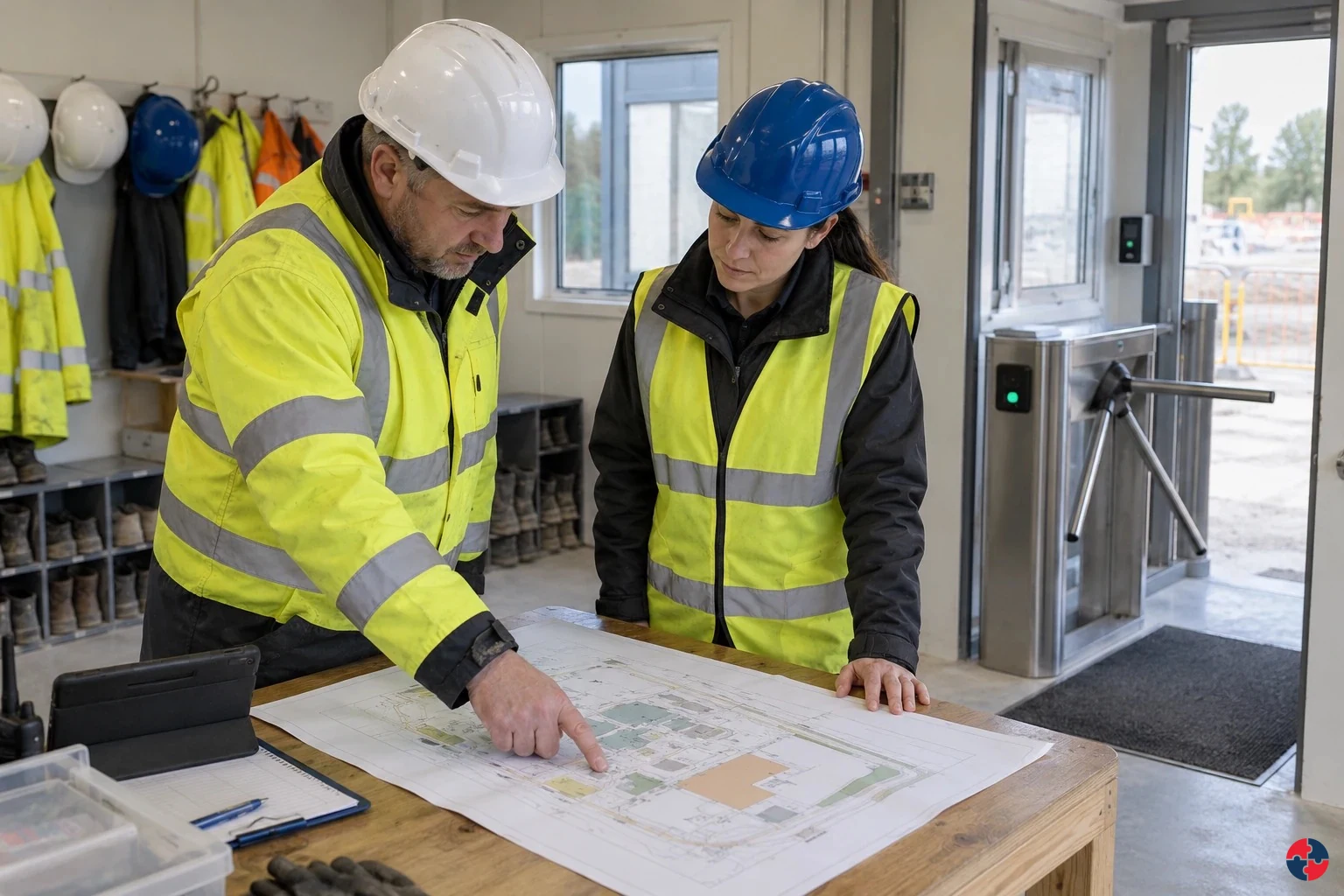
Start close to the work: workers and supervisors check whether the controls needed for the activity are actually working. Use the routine checklists in the auditing area of the SHAREhub environment for this first-line proactive monitoring. Findings then inform specialist challenge, internal audit, external assurance and management review. These are complementary activities, not gates that must be completed in order.
Best-practice guide: Traditional and Proactive Safety Management Models
How do first-line proactive checks connect to auditing?
Start close to the work: workers and supervisors check whether the controls needed for the activity are actually working. Use the routine checklists in the auditing area of the SHAREhub environment for this first-line proactive monitoring. A reactive or compliance-heavy practice pattern concentrates on harm and compliance checks; active monitoring also tests whether important controls work before harm. Established HSG65 already combines prevention, active checking and learning; these are complementary practices, not a ranking of old and new organisations.
Keep the forklift and overfill examples separate
Two different systems illustrate the same assurance question: what does this evidence establish about this named safeguard? Use task-specific tests rather than transferring a check from one system to another. Active checking and learning from events are complementary practices in HSG65, rather than a ranking of old and new organisations.
Overfill example: what does each signal prove?
The tank example is separate from the forklift case. Identify the uncertain safeguard, own the action, verify the specified test and use the authorised release process.
Where do safety management models fail?
Models fail when they become slogans, paperwork or dashboards that do not change decisions.
Choose controls for traditional and proactive safety management models
Elimination: Redesign picking and delivery so forklifts never enter the pedestrian packing zone, for example by moving transfer to a fixed automated boundary. Substitution: Use pedestrian-operated equipment or a different delivery unit where load, ground and travel distance allow, after checking its own crush, manual-handling and battery risks. Engineering controls: Install continuous impact-rated separation, controlled crossings, gates and sightlines; make vehicle routes one-way where the layout permits. Administrative controls: Set delivery slots, speed rules, pedestrian crossings, authorisation and defect reporting; consult workers about workarounds. PPE: High-visibility clothing can help detection but does not stop a forklift and is not a substitute for segregation. Read the full control table for qualifications, ownership and verification. Use the actual task and applicable jurisdiction; existing technical approval remains unchanged.
Use the full traditional and proactive safety management models lesson
Use the full topic for the decision points, practical examples, detailed control tables and source scope. HSE guidance applies to Great Britain; use HSENI for the Northern Ireland route and the source’s stated jurisdiction. A simplified guide does not change the page’s technical-review or approval status.

Read all six steps as text
1. How do first-line proactive checks connect to auditing?
Start close to the work: workers and supervisors check whether the controls needed for the activity are actually working.
- Avoid / redesign: Redesign picking and delivery so forklifts never enter the pedestrian packing zone, for example by moving transfer to a fixed automated boundary.
- Control the task: Install continuous impact-rated separation, controlled crossings, gates and sightlines; make vehicle routes one-way where the layout permits.
- Verify before release: Inspect the actual forklift boundary, gates, crossing and sightlines; hold movement if a required safeguard fails.
Start close to the work: workers and supervisors check whether the controls needed for the activity are actually working. Use the routine checklists in the auditing area of the SHAREhub environment for this first-line proactive monitoring. A reactive or compliance-heavy practice pattern concentrates on harm and compliance checks; active monitoring also tests whether important controls work before harm. Established HSG65 already combines prevention, active checking and learning; these are complementary practices, not a ranking of old and new organisations.
Apply it: Which part of this plan would you check at the workface before authorising the task?
2. Keep the forklift and overfill examples separate
Use the evidence to improve the actual work arrangement.
- Forklift example: Observe actual separation, crossings and route use in the retained workplace case.
- Tank example: Verify the specified overfill-protection test and its actual boundary and result.
- Evidence limitation: No recorded injury and briefing attendance do not demonstrate functioning overfill protection.
Two different systems illustrate the same assurance question: what does this evidence establish about this named safeguard? Use task-specific tests rather than transferring a check from one system to another. Active checking and learning from events are complementary practices in HSG65, rather than a ranking of old and new organisations.
Apply it: What evidence would show that the change improves this task, rather than only completing a record?
3. Overfill example: what does each signal prove?
Recorded harm, completed activity and direct barrier evidence answer different questions.
- No lost-time injury recorded: Describes the available harm record; it does not demonstrate overfill protection.
- Toolbox talk completed: Shows a briefing occurred; check understanding and task practice separately.
- Alarm proof test overdue: Required barrier status is uncertain. Apply the authorised hold/impairment arrangements and assign competent action.
The tank example is separate from the forklift case. Identify the uncertain safeguard, own the action, verify the specified test and use the authorised release process.
Apply it: At which point would you hold this example, and what evidence would allow it to proceed?
4. Where do safety management models fail?
Connect the task, the route to the person and the control that can fail.
- Source / exposure: Models fail when they become slogans, paperwork or dashboards that do not change decisions.
- Possible consequence: A reactive system can wait for harm; a proactive system can produce attractive counts that nobody uses.
- Control failure: Behaviour campaigns can stop at worker error; culture claims can hide poor task design; barrier diagrams can remain untested.
Models fail when they become slogans, paperwork or dashboards that do not change decisions.
Apply it: Who could be exposed, including other trades, cleaners, maintainers and people nearby?
5. Choose controls for traditional and proactive safety management models
Start with the stronger practicable options and verify their effect.
- Elimination: Redesign picking and delivery so forklifts never enter the pedestrian packing zone, for example by moving transfer to a fixed automated boundary.
- Substitution: Use pedestrian-operated equipment or a different delivery unit where load, ground and travel distance allow, after checking its own crush, manual-handling and battery risks.
- Engineering controls: Install continuous impact-rated separation, controlled crossings, gates and sightlines; make vehicle routes one-way where the layout permits.
- Administrative controls: Set delivery slots, speed rules, pedestrian crossings, authorisation and defect reporting; consult workers about workarounds.
- PPE: High-visibility clothing can help detection but does not stop a forklift and is not a substitute for segregation.
Elimination: Redesign picking and delivery so forklifts never enter the pedestrian packing zone, for example by moving transfer to a fixed automated boundary. Substitution: Use pedestrian-operated equipment or a different delivery unit where load, ground and travel distance allow, after checking its own crush, manual-handling and battery risks. Engineering controls: Install continuous impact-rated separation, controlled crossings, gates and sightlines; make vehicle routes one-way where the layout permits. Administrative controls: Set delivery slots, speed rules, pedestrian crossings, authorisation and defect reporting; consult workers about workarounds. PPE: High-visibility clothing can help detection but does not stop a forklift and is not a substitute for segregation. Read the full control table for qualifications, ownership and verification. Use the actual task and applicable jurisdiction; existing technical approval remains unchanged.
Apply it: Which stronger option can be used here, and who will verify it before accepting the remaining risk?
6. Use the full traditional and proactive safety management models lesson
Follow the official sources below and retain the task-specific evidence.
- Official guidance: HSE: Check - monitoring, audits and reporting
- Official guidance: HSE: inspection of work equipment, competence and proportionate records
- Task decision: A harm record or briefing register does not demonstrate overfill protection. Check the specified barrier test and current result.
Use the full topic for the decision points, practical examples, detailed control tables and source scope. HSE guidance applies to Great Britain; use HSENI for the Northern Ireland route and the source’s stated jurisdiction. A simplified guide does not change the page’s technical-review or approval status.
Apply it: Which official source and full-topic section will you use to resolve the next decision?
Open routine checklistsBrowse detailed audits
- First lineCheck live controls
- Specialist challengeTest patterns and weak spots
- Internal auditIndependently test the system
- External assuranceChallenge the agreed scope
Action and review connect every stage. A failed control, incident or near miss can trigger immediate intervention and a targeted review at any time. Do not wait for the next audit.
Where can a team start?
In Audits and routine checks → Routine checklists, choose a relevant starting template. Check its questions against the actual risk assessment, equipment, workplace and approved arrangements before use; a generic form is not a complete assessment.
- Workplace opening walk-round
- Machinery operator pre-use check
- Substance-task start check
- Fire-route and readiness check
- Workplace transport route check
- Safety arrangements shift handover
How should first-line monitoring work in practice?
- Define the control and the decision. Name the activity, location or asset, the harm being prevented, the expected condition and the failure response. Ask an observable question, such as whether an escape route is unobstructed, rather than whether the workplace is generally safe.
- Agree who checks and when. Give the checker enough knowledge, time and authority to recognise a defect and respond. Set intervals from risk, deterioration, changes, operating conditions and relevant instructions. A template's suggested frequency is not a universal legal interval.
- Check the real conditions. Observe work, speak with the people doing it and inspect or test only within competence and safe arrangements. Use Yes/No where appropriate, record exceptions and justify not-applicable answers. An unanswered item is not evidence of a pass.
- Control the defect immediately. Stop or restrict the affected work when a critical control is absent, ineffective or uncertain. Protect people and notify the responsible manager under local arrangements. A high overall score cannot cancel a critical failure or authorise restart.
- Assign and verify the action. Record the finding, immediate protection, responsible owner, priority, due date and evidence needed for closure. Where safe, retain a useful observation, photograph or asset reference. A competent person verifies the repair or changed arrangement before authorised hand-back; a tick or an invoice alone is not closure.
- Look for recurrence and feed back. Compare like checks over time and review repeat failures, missed checks, overdue actions and worker concerns. Escalate patterns to the manager or specialist and use them to target the audit programme. Tell the team what changed and check again that it works.
Keep records proportionate. HSE notes that the simplest work-equipment pre-use checks do not normally need a record. Formal inspection records and specialist examinations have their own requirements; a routine checklist does not replace them. Keep sensitive information out of general check records. Saving a form is not the same as notifying an action owner: confirm the finding has reached them through your agreed reporting route.
What do the next assurance activities add?
- Management and specialist challenge
- Line management owns control delivery. Safety advisers, engineers or other competent specialists can provide second-line support and challenge: sample checks, visit the work, question repeated failures and test whether the checklist covers the important controls. Escalate gaps in maintenance, competence, purchasing or supervision, not just individual missed ticks.
- Independent internal audit
- Test whether the arrangements are suitable, implemented and effective across a defined scope, using documents, interviews, observations and records, including frontline findings and verified actions. The formal IIA Three Lines Model places independent internal audit in the third line. Protect objectivity and avoid auditing your own work; a detailed checklist or an auditor's job title does not establish independence.
- External audit or assurance
- A client, competent external reviewer or certification body can assess an agreed scope using this evidence and their own sampling. External assurance is separate from the internal three-line roles, not automatically the third line. Check competence, conflicts and scope, including any self-review by a consultant who designed the arrangements. ISO 45001 certification is voluntary and does not transfer the employer's duties or prove every task is safe.
- Leadership review and improvement
- Bring together control failures, action effectiveness, audit findings and reactive information such as incidents, near misses and ill-health concerns. Decide what needs resources, redesign or a change of arrangements, with an owner and follow-up. Feed decisions back into the risk register, management system, training and next checks. Major failures need prompt escalation, not only a scheduled review.
A worked example: repeated extraction faults
Illustrative, not a live task instruction. During a substance-task start check, an operator finds the extraction indicator outside its specified operating range. The affected exposure-generating work is held and the supervisor arranges competent investigation. The action record identifies the equipment, protection measures, repair owner and evidence required before hand-back.
Repeat findings lead the specialist to review maintenance and how users recognise faults. An internal audit then samples similar equipment, inspection records and whether repairs stay effective. An external reviewer may challenge that evidence within their scope. Management funds the underlying improvement and subsequent checks test it. Any exposure or near miss is also investigated through the reactive route; none of these activities waits for an annual audit.
Open the detailed COSHH and exposure control audit · Read the full auditing guidance · Connect findings to the management system
Guidance, role boundaries and jurisdiction
This is a practical monitoring route, not a legally required four-stage sequence. HSE guidance applies in Great Britain; use the applicable Northern Ireland legislation and HSENI guidance for Northern Ireland work. Neither the checklist nor the assurance diagram certifies compliance.
- HSE: Check - monitoring, audits and reporting
- HSE: inspection of work equipment, competence and proportionate records
- IIA: Three Lines Model - management, independent internal audit and external assurance
- HSE: voluntary ISO 45001 management systems and certification
Links checked 18 October 2026. This addition is an editorial update, not independent technical approval of the topic or a workplace arrangement.
What are traditional and proactive safety management models?
Reactive information shows harm or control failure after an event; proactive information checks whether a risk control works before harm. Both are needed, and neither is a safety certificate.
- See work as done
Ask workers how the task behaves on a real shift.
- Choose a critical control
Name the barrier and the failure it must prevent.
- Use both signal types
Combine control checks with incident and near-miss learning.
- Close the loop
Assign action, verify the changed work and revisit the indicator.
This is a reading route through the detailed decisions below, not a clearance to perform the task. Follow the linked sections, their official sources and the applicable local assessment.
Injury, illness and dangerous-event data can reveal patterns and drive investigation, but absence of harm is not proof that a high-consequence barrier is sound. Completed training, inspection or audit counts show activity, not automatically effectiveness.
A useful proactive check starts with a credible harm scenario and its critical control: what must work, who checks it, what failure looks like and what action follows. HSG254 develops this for major-hazard processes. Its control-specific method can inform other high-consequence work, but the guide is not a universal metric set.
Use HSG65 Plan, Do, Check, Act to combine risk assessment, implementation, active checks, event learning and management review. Safety-I, Safety-II, HOP and work-as-done are optional ways to ask questions about performance; they do not replace control standards, legal duties or fair accountability.
| Model | Main question | Risk if used badly |
|---|---|---|
| Reactive monitoring | What harm, near miss or control failure occurred? | Investigate and fix causes; no event does not prove no risk. |
| Compliance check | Are applicable duties and required arrangements met? | Verify the control in work as well as the document. |
| Active control check | Is the important safeguard working now? | Check the actual barrier and hold work if it is impaired. |
| Worker and human-factors learning | What makes the task workable or difficult? | Use worker knowledge to improve design, supervision and communication. |
| Management review | Did evidence change a decision, resource or control? | Close actions and recheck the result. |
How should organisations combine reactive and proactive information?
Combine event learning with timely checks of important controls, then assign an owner, act on defects and verify the result.
Reactive data includes injuries, ill health, near misses, complaints and investigation findings. Active data includes field checks of safeguards, maintenance status, exposure measurements, work changes and worker concerns. Compare unlike sources; one attractive score must not erase a contrary serious-risk signal.
A measure is useful only when its definition, sampling, owner and response are clear. If a critical control is impaired, do not wait for a dashboard cycle: stop or isolate the affected task, use the local emergency route if needed, and reopen only after competent verification.
| Information type | Example | Management question |
|---|---|---|
| Lagging harm | Injury, illness, property damage or loss. | What failed and how do we prevent recurrence? |
| High-potential near miss | Serious event narrowly avoided. | Which serious-risk control was vulnerable? |
| Leading indicator | Critical inspections completed and defects closed. | Does it tell us control effectiveness or only activity? |
| Weak signal | Worker concern, informal workaround or repeated small defect. | What is the signal saying about drift? |
| Assurance finding | Audit shows procedure not used in practice. | Is the requirement realistic, understood and supervised? |
| Operational pressure | Backlog, staffing gap, overtime or contractor interface. | Is risk increasing faster than controls? |
| Leadership decision | Budget, shutdown, redesign or escalation. | Did the information change a decision? |
What should teams do before, during and after a task?
Name the harm scenario and control, check it where work happens, stop when it fails, listen to workers and verify hand-back.
| Task, people and place | Before work | During work and hold point | After and evidence |
|---|---|---|---|
| Routine tanker loading at a fuel site; operator, driver and nearby staff. | Confirm fill plan, high-level protection, safe access and named operator; ask how loading is actually done. | Check critical controls at the point of use. Stop loading on alarm, uncertainty or failed safeguard. | Record status, defect and authorised return to service; review repeated workarounds. |
| Non-routine maintenance isolation; maintainer, permit issuer and adjacent team. | Identify energy and interface, agree isolation and competent verification before access. | Hold if isolation cannot be proved, permit conflicts arise or scope changes. | Test, remove temporary measures under authorisation and document hand-back. |
| Contractor starts work beside live operations; client, contractor and others. | Coordinate boundaries, traffic, communication, emergency plan and control owner. | Pause if the barrier, route or handover differs from the agreed plan. | Inspect the shared area, close actions and record both parties acceptance. |
| Alarm proof test overdue or temporary override extended; operators and technical authority. | Review impairment, compensating controls and who can authorise continued operation. | Do not treat a green injury dashboard as approval; hold affected activity if critical protection is uncertain. | Restore and test protection, record decision and verify close-out. |
| High-potential near miss or unexpected release; people on site and responders. | Know immediate care, isolation and emergency arrangements before work. | Care and make safe first; preserve facts and check applicable reporting route. | Investigate system conditions, assign control changes and verify them in real work. |
Why can low accident rates hide serious risk?
Crownway Fuels Ltd is a major-hazard example: low injury counts cannot resolve uncertainty about high-level protection and other critical barriers.
A Crownway board sees no lost-time injuries and completed briefings. Those are useful records, but not proof that tank-overfill protection works. Operators report informal loading workarounds; an alarm proof test is overdue and a temporary override has been extended. The board must ask for barrier status and the risk decision behind continued operation.
The operator holds affected loading if protection cannot be verified. A technical authority assesses impairment and any safe interim method, while managers fix the proof-test and override controls. The team records who authorised restart and checks the arrangement in real work. HSG254 is relevant because this is a major-hazard process; it is not an off-the-shelf dashboard for every site.
| Signal | Traditional interpretation | Proactive interpretation |
|---|---|---|
| No lost-time injuries | Recent harm was not recorded. | Does not demonstrate overfill protection. |
| Completed toolbox talks | A briefing occurred. | Check understanding and task practice, not attendance alone. |
| Overdue alarm proof test | Critical barrier status is uncertain. | Hold or restrict the affected operation pending competent decision. |
| Extended temporary override | A protective layer may be impaired. | Check authorisation, change control, compensating controls and restoration. |
| Informal loading workaround | Work-as-done differs from the plan. | Ask operators why, redesign or resource the safe method, and verify. |
| Near miss not recorded | A weak signal may be lost. | Capture facts, investigate control weakness and close the action. |
How do common safety models differ?
Use different models as questions about the same risk, not as rival legal systems or proof that an organisation is safe.
A compliance lens asks whether duties and procedures are met; a preventive lens asks whether controls work; incident learning asks what failed and why; human-factors questions look at task design, workload and communication. These can complement each other. None excuses a known unsafe condition.
Safety-I, Safety-II and HOP are discussion frameworks. HSE guidance supports learning from incidents, normal work and system conditions, but it does not mandate these labels. Apply any lens to actual hazards, people, controls and evidence.
| Model family | Useful for | Limitation |
|---|---|---|
| Reactive learning | Investigate incidents, ill health and near misses. | Can be quiet before a serious event; act on findings. |
| Compliance management | Check applicable duties and agreed controls. | Paper completion is not field effectiveness. |
| Proactive control assurance | Test barriers before harm occurs. | Measures must reflect actual critical controls. |
| Human-factors review | Study task, equipment, workload and communication. | Avoid blaming the worker or waiving accountability. |
| Everyday-work learning | Ask how safe work succeeds and adapts. | Do not normalise a workaround that weakens a barrier. |
Which named safety models do learners and managers commonly compare?
HSG65, HSG245 and HSG254 are HSE guidance with different uses; other named models are optional analytical lenses, not UK legal requirements.
HSG65 frames ongoing management; HSG245 structures investigation after an event; HSG254 helps major-hazard organisations check specific risk controls. Triangle ratios cannot reliably predict a serious event from minor-event counts. Barrier diagrams and everyday-work discussions are useful only when tested against real work.
Choose the question and evidence first, then the model. Preserve employer accountability, lawful consultation and risk controls whatever vocabulary the organisation adopts.
| Model | Where it helps | Where it can mislead |
|---|---|---|
| HSG65 Plan Do Check Act | Organise management, active/reactive checking and review. | Not a paperwork cycle or a substitute for task control. |
| HSG245 incident investigation | Gather facts, analyse causes, choose and implement controls. | Not enough to identify lessons without action verification. |
| HSG254 process safety indicators | Monitor control-specific leading and lagging signals for major hazards. | Primarily chemical/major-hazard guidance; adapt carefully elsewhere. |
| Safety-I and Safety-II | Ask about prevention of failure and how everyday work succeeds. | Conceptual lenses, not HSE-mandated systems or evidence of compliance. |
| Human and Organisational Performance | Ask which system conditions shape performance. | Does not remove individual or employer accountability. |
| Triangle and barrier diagrams | Prompt near-miss or safeguard discussion. | No fixed minor-event ratio predicts a fatality; diagrams need field checks. |
What makes an indicator useful rather than cosmetic?
A useful measure links a defined serious-risk control to evidence, an owner and an action when the result is poor; counts alone are not proof of safety.
Start with the harm scenario and safeguard. Define the sample, the acceptable condition from the applicable technical standard, the check method, the person who responds and how a defect is closed. Include leading checks and lagging failures. Do not set a universal number or green threshold without risk and technical basis.
Check for gaming and blind spots: under-reporting, unrepresentative samples, overdue actions hidden by averages and incentives to keep numbers green. Use worker accounts and field observations to challenge the dashboard. HSE process-safety guidance illustrates why indicators need to reveal control weaknesses; an indicator is not a legal scorecard.
| Weak indicator | Stronger indicator | Why stronger |
|---|---|---|
| Inspections completed | Were the specified critical controls effective in sampled real tasks? | Log defects, holds, owners and verified closure; sample bias still matters. |
| Zero lost-time injuries | What high-potential events and barrier impairments occurred? | Investigate serious-risk signals; low counts do not prove low risk. |
| Training attended | Can people perform the control at the task and explain the stop point? | Observe competence and correct system gaps. |
| Audit score | Are repeat critical findings closed and tested in operation? | Check decision and control impact, not only report closure. |
| Maintenance complete | Is safety-critical backlog or proof testing impairing a barrier? | Technical authority reviews impairment and restoration. |
Illustrative completed Crownway indicator record
Training record: safeguard = the identified tank overfill trip; technical basis = the site-approved proof-test method, due date and pass criteria, not a generic overdue allowance. At shift review the maintenance owner checks the complete register of that safeguard’s tests due in the current review window: one due, zero accepted as complete, one overdue and one open override. This is an impairment record, not an acceptable failure rate.
The operations lead holds the affected transfer and escalates to the technical authority. Restoration requires the approved test to pass, the override to be removed and independently checked, and the responsible operations owner to accept the recorded hand-back before transfer. The next shift checks the live status again. A green test count cannot show that the setpoint, coverage, bypass status or actual process conditions are correct; demand/failure evidence, field checks and operator reports must challenge it.
Ask what each signal proves about the safeguard
A record of harm, a completed briefing and a direct safeguard test answer different questions. The tank example below is separate from the retained forklift-segregation worked case.

Recorded harm
No lost-time injury recorded describes the available harm record. It does not demonstrate that the tank’s overfill protection is functioning.
Completed activity
A toolbox talk shows that a briefing occurred. Check understanding and task practice separately; attendance does not prove the alarm, logic or final element will respond.
Direct barrier evidence
Use the validated barrier test and its actual results to establish what was tested and what remains outside the test boundary. An overdue test leaves required safeguard status uncertain.
Impairment response
Identify the affected safeguard and apply the authorised hold/impairment arrangements. Do not accept an attractive dashboard or an action entry as compensating protection.
Owner and retest
Assign the competent owner, required action and deadline. Verify the repair or change, retest through the specified procedure and use the authorised release process.
PDCA and model scope
Plan against the activity risks, implement controls, check direct evidence and events, and act on findings. HSG254 supplies a major-hazard assurance approach; it is not a universal numerical scorecard.
Supporting worked example: complete workplace controls
Read the complete controls: ERICPD planning prompts
Discipline verifies and sustains all the controls; it is not a separate substitute for them.
| Prompt or level | Complete task-specific example |
|---|---|
| Eliminate | Redesign picking and delivery so forklifts never enter the pedestrian packing zone, for example by moving transfer to a fixed automated boundary. |
| Reduce | Use pedestrian-operated equipment or a different delivery unit where load, ground and travel distance allow, after checking its own crush, manual-handling and battery risks. |
| Isolate | Install continuous impact-rated separation, controlled crossings, gates and sightlines; make vehicle routes one-way where the layout permits. |
| Control | Set delivery slots, speed rules, pedestrian crossings, authorisation and defect reporting; consult workers about workarounds. |
| PPE | High-visibility clothing can help detection but does not stop a forklift and is not a substitute for segregation. |
| Discipline | Set delivery slots, speed rules, pedestrian crossings, authorisation and defect reporting; consult workers about workarounds. Supervisors sample live movements and investigate near misses for system causes. A low incident count with repeated barrier breaches is not assurance. Discipline sustains every control level: verify elimination and substitution decisions, inspect and maintain physical controls, check operating arrangements and residual PPE, investigate defects and worker feedback, and verify corrective action before closure. |
Read the complete controls: ESEAP effectiveness order
Compare stronger feasible controls while preserving the actual task, checks and release requirements.
| Prompt or level | Complete task-specific example |
|---|---|
| Elimination | Redesign picking and delivery so forklifts never enter the pedestrian packing zone, for example by moving transfer to a fixed automated boundary. |
| Substitution | Use pedestrian-operated equipment or a different delivery unit where load, ground and travel distance allow, after checking its own crush, manual-handling and battery risks. |
| Engineering controls | Install continuous impact-rated separation, controlled crossings, gates and sightlines; make vehicle routes one-way where the layout permits. |
| Administrative controls | Set delivery slots, speed rules, pedestrian crossings, authorisation and defect reporting; consult workers about workarounds. |
| PPE | High-visibility clothing can help detection but does not stop a forklift and is not a substitute for segregation. |
The diagram uses illustrative non-numeric records. It does not specify plant settings, a proof-test method or permission to bypass a protective function.
How does SHARE layered assurance support proactive management?
SHARE layered assurance separates operational control checks, specialist challenge, independent internal audit and external assurance. None transfers the employer duty or authorises unsafe operation.
This SHARE assurance map is a practical way to separate live control checks, specialist challenge and independent review; it is not a statutory structure. Supervisors and control owners check work directly; competent technical and safety specialists support, monitor and challenge. Independent internal audit evaluates governance and controls without designing or operating the process or reviewing its own decision. External assurance can add evidence, but a consultant, ISO auditor or technical authority is not independent merely by title or employer. Leaders must act on conflicting evidence and retain responsibility for hold, repair and restart decisions.
Where roles overlap, document ownership and reporting lines, disclose objectivity threats, separate advisory work from later assurance and arrange another independent review of any self-reviewed area. Use proportionate safeguards, but do not relabel management verification as independent audit. A high-consequence defect needs immediate escalation even if an audit is scheduled later; an assurance opinion never gives permission to operate with an impaired barrier. Record the hold, competent technical decision, repair and field verification.
| Line | Typical activity | Example output |
|---|---|---|
| Operational check | Operational owners and supervisors design, use and check controls at the point of work. | Actual condition, defects, stop-work triggers and verified hand-back. |
| Specialist challenge | Technical, safety and other specialist roles advise, monitor and challenge management. | Competent review of requirements and work as done; not independent audit merely by expertise. |
| Independent audit | Independent internal audit, separate from control design, operation and the decision under review. | Objective assurance to leaders on governance and controls, with self-review safeguards. |
| Leadership | Reviews conflicting evidence and retains hold, resource and restart accountability. | Competent decision based on barrier condition; audit does not authorise unsafe operation. |
| External assurance | Independent external review where the scope, relationship and conflicts support objectivity. | Additional assurance, with limitations and any self-review threats disclosed; external status alone is insufficient. |
Which safety management model should be used?
Select the method from the live decision: care and investigate after harm, verify critical controls before and during work, study system conditions when workarounds recur, and review whether actions worked.
An incident triggers care, isolation, preservation of facts and a competent reporting check. A failed or unknown critical control triggers a hold or safe alternative before further exposure. A procedure that workers cannot follow triggers consultation and redesign, not a blame-only campaign.
Ask what evidence would change the decision. If the answer is only a low accident rate or a completed briefing count, gather control-specific evidence before declaring the operation safe. Reopen a stopped task only after the relevant control is restored and verified by an authorised person.
| Management question | Useful model | Check for |
|---|---|---|
| Harm or serious near miss | Care, make safe, investigate and check reporting. | HSG245 facts, control changes and verified close-out. |
| Critical barrier failed or unknown | Stop or isolate affected work; obtain competent decision. | Technical test, authorised interim control and hand-back. |
| Procedure routinely bypassed | Consult workers and inspect work-as-done. | Task redesign, resource or supervision change; field retest. |
| Green dashboard conflicts with weak signal | Escalate the contrary evidence to the risk owner. | Barrier-specific check and recorded leadership decision. |
| Changed product, contractor or workload | Reassess before continuing affected work. | Updated assessment, coordination and worker briefing. |
| Review of strategy | Use HSG65 cycle and balanced measures. | Risk, resources, owner, action and effectiveness evidence. |
Where do safety management models fail?
Models fail when they become slogans, paperwork or dashboards that do not change decisions.
A reactive system can wait for harm; a proactive system can produce attractive counts that nobody uses. Behaviour campaigns can stop at worker error; culture claims can hide poor task design; barrier diagrams can remain untested. Every model needs an explicit challenge from field evidence and worker voice.
Look for a weak signal that was reported but not acted on, an action marked closed before verification, a contractor interface nobody owns or a serious-risk control missing from the dashboard. Assign a decision owner and a real recheck, not another slogan.
| Failure or weak practice | How it develops | What good looks like |
|---|---|---|
| Lagging-rate fixation | Low injury rate becomes proof of safety. | Review serious-risk controls and weak signals. |
| Inspection counting | More checklists but poor defect closure. | Measure action quality and repeat findings. |
| Behaviour blaming | Unsafe acts are counted without system review. | Ask why behaviour made sense in context. |
| Green dashboard drift | All metrics green while key controls are overdue. | Include critical-control and backlog indicators. |
| No learning loop | Incidents are investigated but risk profile is unchanged. | Feed learning into standards, training, audit and objectives. |
| Leadership theatre | Visible visits focus on PPE and housekeeping only. | Ask about barriers, MOC, high-risk tasks and weak signals. |
| Unclear owners | Data exists but no one has authority to act. | Assign risk owners and escalation thresholds. |
What evidence shows a proactive safety model is working?
Record the critical controls, where they are checked, worker observations, indicator limitations, failures and decisions to correct them. A high count of completed inspections is weak evidence if the wrong control was inspected.
| Evidence item | What it should show | Assurance question |
|---|---|---|
| Risk profile | Top risks and critical controls are known and owned. | Does leadership know what could kill or create major harm? |
| Indicator set | Leading and lagging indicators are balanced. | Do indicators measure control effectiveness? |
| Proactive monitoring | Planned checks test critical controls and weak signals. | Are defects corrected before harm? |
| Reactive learning | Incidents and near misses lead to verified control improvements. | Are high-potential events escalated? |
| Worker voice | Concerns and workarounds are captured without blame. | Can workers report drift safely? |
| Assurance | Second and third line reviews test work-as-done. | Are findings repeated or closed effectively? |
| Leadership review | Data changes resource and risk decisions. | Can decisions be traced to evidence? |
How should traditional and proactive safety management models be assured?
First-line owners check their controls; management challenges gaps; an independent reviewer samples design and effectiveness without auditing their own work. Technical authority and external consultancy are not automatically independent. Escalate contradictory leading and lagging signals.
| Assurance level | What to check | What good looks like |
|---|---|---|
| Frontline | Supervisors verify controls and escalate weak signals. | Point-of-risk information is reliable. |
| Management | Managers compare KPIs, incidents, defects, audits and workload. | Resources follow risk. |
| Specialist | Technical reviews test high-hazard controls and indicators. | Assumptions are challenged. |
| Board | Senior leaders review risk profile, control confidence and unresolved exposure. | Strategy changes when risk changes. |
Which GB and NI legal duties and official guidance are relevant?
GB and NI have separate general safety and management regulations requiring assessment, arrangements, competence and review; neither law mandates a named Safety-II, HOP or ISO 45001 model.
Use GB HSWA 1974 and Management Regulations 1999 in Great Britain, or the NI 1978 Order and Management Regulations 2000 in Northern Ireland. Consult employees or representatives under the relevant local rules. HSG65, HSG245 and HSG254 are guidance; ISO standards are voluntary. Check amended law and any hazard-specific duties for the actual operation.
| Duty or guidance | What it means | How to apply it |
|---|---|---|
| Great Britain | HSWA 1974 and Management Regulations 1999 | General prevention, assessment, arrangements and competent help. | Own and verify risk controls; do not wait for injury data. Direct sources: GB Health and Safety at Work etc. Act 1974; GB Management Regulations 1999 |
| Northern Ireland | 1978 Order and Management Regulations 2000 | Separate NI workplace safety and management instruments. | Use NI assessment and review route; check amended text. Direct sources: NI Health and Safety at Work Order 1978; NI Management Regulations 2000 |
| GB and NI worker consultation | Different local consultation instruments and representative routes. | Listen to workers in good time and show how decisions used their input. Direct sources: HSE consult your workers; HSENI worker and safety representative consultation |
| HSG65 and HSG245 | HSE guidance for management cycles and incident investigation. | Use as practical methods, not as a separate law. Direct sources: HSE HSG65 managing health and safety; HSE HSG245 investigating accidents and incidents |
| HSG254 | HSE guidance mainly for major-hazard process indicators. | Use control-specific leading and lagging evidence where suitable. Direct sources: HSE HSG254 process safety indicators |
| ISO 45001 | HSE context for a voluntary health and safety management system. | Certification or an indicator cannot prove compliance or safe operation. Direct sources: HSE ISO 45001 management systems |
How can the hierarchy of controls guide proactive prevention before relying on incident response?
Supporting workplace example: ERICPD and ESEAP controls
This retained example concerns workplace prevention or support. It is separate from clinical care, a legal decision and the principal topic explanation above.
For this example, remove or redesign the exposure first; use lower-order controls only for the risk that remains. The example is a planning aid, not approval of a live task.
For Northern Ireland work, use this five-level framework to plan controls, then verify the applicable NI duties and HSENI guidance; HSE sources cited here state GB guidance.
Worked scenario: Repeated forklift and pedestrian near misses in a warehouse; use the hierarchy on the collision hazard, then use management models to verify whether controls actually hold. The HSE five-level hierarchy order elimination, substitution, engineering, administrative controls and PPE. HSE separating pedestrians and vehicles supplies the topic context. ERICPD maps elimination to elimination, Reduce to substitution and source reduction, Isolate to engineered separation, Control to engineering and administrative arrangements, and PPE to residual personal protection. Discipline is the continuing check, maintenance, supervision and learning that keeps every chosen level effective; it is not blame or a replacement for design controls. For each row, the owner must show why any stronger feasible measure was not chosen, check the residual risk and hold work when the stated control fails. Feasibility test: Existing racking may prevent immediate removal of all forklift travel; the redesign plan still has to set dates and verify segregation meanwhile.
How can the ERICPD hierarchy of controls guide proactive prevention before relying on incident response?

| HSE hierarchy level | ERICPD counterpart | Specific action, owner, check and stop point | Official basis |
|---|---|---|---|
| Elimination | Eliminate | Redesign picking and delivery so forklifts never enter the pedestrian packing zone, for example by moving transfer to a fixed automated boundary. Operations verifies peak-flow capacity and observes real shifts; a recurring shared-space shortcut means the hazard is back. | HSE control order; HSE separating pedestrians and vehicles |
| Substitution | Reduce, including substitution | Use pedestrian-operated equipment or a different delivery unit where load, ground and travel distance allow, after checking its own crush, manual-handling and battery risks. The warehouse manager trials it with operators and records the comparison; reject an unsafe substitution. | HSE control order; HSE separating pedestrians and vehicles |
| Engineering controls | Isolate or physical Control | Install continuous impact-rated separation, controlled crossings, gates and sightlines; make vehicle routes one-way where the layout permits. Engineering checks barrier condition and gate behaviour under peak traffic. A broken gate or route breach holds the affected movement. | HSE control order; HSE separating pedestrians and vehicles |
| Administrative controls | Administrative Control and Discipline | Set delivery slots, speed rules, pedestrian crossings, authorisation and defect reporting; consult workers about workarounds. Supervisors sample live movements and investigate near misses for system causes. A low incident count with repeated barrier breaches is not assurance. Discipline sustains every control level: verify elimination and substitution decisions, inspect and maintain physical controls, check operating arrangements and residual PPE, investigate defects and worker feedback, and verify corrective action before closure. | HSE control order; HSE separating pedestrians and vehicles |
| PPE | PPE | High-visibility clothing can help detection but does not stop a forklift and is not a substitute for segregation. Issue suitable clothing for the site and check use, while verifying separation first. A missing barrier is a stop trigger even if everyone is wearing high visibility. | HSE control order; HSE separating pedestrians and vehicles |
How can the ISO 45001 hierarchy of controls guide proactive prevention before relying on incident response?

| HSE hierarchy level | ERICPD counterpart | Specific action, owner, check and stop point | Official basis |
|---|---|---|---|
| Elimination | Eliminate | Redesign picking and delivery so forklifts never enter the pedestrian packing zone, for example by moving transfer to a fixed automated boundary. Operations verifies peak-flow capacity and observes real shifts; a recurring shared-space shortcut means the hazard is back. | HSE control order; HSE separating pedestrians and vehicles |
| Substitution | Reduce, including substitution | Use pedestrian-operated equipment or a different delivery unit where load, ground and travel distance allow, after checking its own crush, manual-handling and battery risks. The warehouse manager trials it with operators and records the comparison; reject an unsafe substitution. | HSE control order; HSE separating pedestrians and vehicles |
| Engineering controls | Isolate or physical Control | Install continuous impact-rated separation, controlled crossings, gates and sightlines; make vehicle routes one-way where the layout permits. Engineering checks barrier condition and gate behaviour under peak traffic. A broken gate or route breach holds the affected movement. | HSE control order; HSE separating pedestrians and vehicles |
| Administrative controls | Administrative Control and Discipline | Set delivery slots, speed rules, pedestrian crossings, authorisation and defect reporting; consult workers about workarounds. Supervisors sample live movements and investigate near misses for system causes. A low incident count with repeated barrier breaches is not assurance. Discipline sustains every control level: verify elimination and substitution decisions, inspect and maintain physical controls, check operating arrangements and residual PPE, investigate defects and worker feedback, and verify corrective action before closure. | HSE control order; HSE separating pedestrians and vehicles |
| PPE | PPE | High-visibility clothing can help detection but does not stop a forklift and is not a substitute for segregation. Issue suitable clothing for the site and check use, while verifying separation first. A missing barrier is a stop trigger even if everyone is wearing high visibility. | HSE control order; HSE separating pedestrians and vehicles |
ERICPD Discipline in this example: Operations samples barrier breaches and real traffic during peak shifts, repairs gates and checks whether the redesigned layout reduces conflicts. After a change, the supervisor verifies the strongest installed control at the workface and records any remaining exposure. If elimination or substitution was rejected, record the task-specific reason and revisit it when the process, equipment or site changes.
What can a voluntary management system add?
A management system can help assign owners, check live controls and correct failures, but it cannot certify that this particular task is lawful or safe. HSE explains the voluntary ISO 45001 context and the real task evidence remains decisive.
For this topic, check a critical barrier in real work, compare near misses with field observations and verify corrective action. The direct HSE topic guidance supplies the control context. Check the applicable GB or NI duty and the actual work before deciding that a control is effective. This is a SHARE management application, not an interpretation of an ISO clause.
What training and competence are needed?
Role competence is shown by a correct decision in the actual task, not by a generic course certificate.
Use a live critical-control example, not a slide-only model comparison. Workers show the stop/report route; supervisors verify controls; leaders interpret leading and lagging evidence together and fund corrections; independent reviewers must avoid checking their own work.
| Role | Demonstrate | Evidence to retain |
|---|---|---|
| Workers | Describe the task as done, identify a failing control and use the stop/report route. | Observed task discussion and concern response. |
| Supervisors | Test a critical control, follow a weak signal and verify hand-back after a defect. | Field check and corrective-action record. |
| Leaders | Read incident trends alongside control-health measures; challenge a quiet period or high inspection count. | Decision minutes and resources/actions assigned. |
| Safety and independent reviewers | Select useful indicators, test source quality and maintain independence from design or operation being reviewed. | Indicator rationale, sampling record and independence declaration. |
How could Crownway Fuels Ltd manage this in practice?

Crownway Fuels Ltd can combine traditional and proactive models by treating injury rates as only one part of a wider major-hazard assurance picture.
In this fuel business, Crownway Fuels Ltd reviews overfill, isolation, maintenance and contractor controls alongside worker observations and incident learning. A green injury dashboard cannot authorise operation with an unverified alarm or extended override. Technical owners verify restoration, managers close workarounds and leaders record the risk decision.
| Management element | How the business would manage it | Evidence to review |
|---|---|---|
| Lagging review | Injuries, spills, near misses and claims are trended. | Reactive learning report. |
| Critical controls | High-high alarms, bunds, isolations and relief systems are verified. | Control assurance log. |
| Weak signals | Overrides, workarounds and late actions are escalated. | Risk review and action tracker. |
| Leadership | Board receives barrier health, not only injury rates. | Process safety dashboard. |
| Learning | Events update risk profile, training, procedures and audit schedule. | Management review minutes. |
Which acronyms and terms are useful for traditional and proactive safety management models?
These are the management and indicator terms used on this page.
| Acronym | Meaning | Plain-English use |
|---|---|---|
| HSE | Health and Safety Executive | Great Britain regulator and official guidance source. |
| HSWA | Health and Safety at Work etc. Act 1974 | Primary GB law; NI has a separate 1978 Order. |
| PPE | Personal Protective Equipment | Equipment worn where higher-order controls do not remove risk. |
| HOP | Human and Organisational Performance | Approach that examines system conditions shaping human performance. |
| Leading indicator | A measure of how a preventive control or process is working before harm. | Tie it to a named critical control and test its quality. |
| Lagging indicator | A measure of an event or outcome after a failure or exposure. | Use alongside leading evidence; absence of harm is not proof of safety. |
| Critical control | A barrier whose failure could permit a serious event. | Verify it in the field and record defects and hand-back. |
Unlock another resource
You have used this month’s two free downloads. Publish a post in your own words to unlock one more resource, or choose SHARE Individual for 10 downloads per month.
You decide whether to share. If you do, use the relevant platform disclosure tools and do not make claims you do not genuinely hold.