SHARE Knowledge Hub
Process Safety Culture and Just Culture
Process safety culture is visible in decisions about major-accident barriers when production, cost and uncertainty compete. A just culture encourages reporting and fair learning while retaining accountability for deliberate unsafe choices. A reassuring injury-rate chart cannot prove containment, shutdown or emergency barriers are healthy; leaders need to ask what happens to a weak signal and who can stop the task.
Understanding Process Safety Culture and Just Culture
Process safety culture is visible in decisions about major-accident barriers when production, cost and uncertainty compete. A just culture encourages reporting and fair learning while retaining accountability for deliberate unsafe choices. A reassuring injury-rate chart cannot prove containment, shutdown or emergency barriers are healthy; leaders need to ask what happens to a weak signal and who can stop the task.
Why this matters at work
A fair response begins with what happened, what was known at the time, what options were realistically available, what the work system encouraged and what safeguards existed. Assess human error, drift, rule violation and deliberate or reckless conduct on evidence rather than the severity of the outcome. The same action should not receive a harsher moral judgement only because luck produced harm.
Separate immediate risk control, evidence gathering, learning and any fair conduct process. Examine design, staffing, supervision and production pressures before drawing conclusions about an individual. Just culture does not promise immunity or excuse deliberate disregard; it requires decisions based on evidence and context, with appropriate challenge and a fair route to respond.
How organisations manage this in practice
For an in-scope COMAH establishment, culture evidence should connect to the major accident prevention policy, safety management system and control of identified major-accident scenarios. The competent authority may examine whether leadership, competence, operational control, management of change, emergency arrangements, monitoring and audit work in practice. A culture survey can inform that picture, but it cannot replace demonstration that safety-critical barriers are designed, maintained and used. Lower-tier and upper-tier documentary duties differ, so use the current tier and intervention plan rather than a generic COMAH checklist.
For culture surveys, interviews and safety-monitoring data, identify the specific purpose, necessary proportionate collection, appropriate lawful basis and any special-category/criminal-data requirements; control access, accuracy, retention and feedback. ICO selected monitoring guidance requires a DPIA before likely high-risk processing and describes employment consent limitations and challenges to adverse inferences. Its DUAA review warning is retained; detailed AI/automated-decision guidance was not audited. Obtain current-law review before consequential implementation. Avoid re-identification from small groups and separate clinical/welfare information from general management dashboards.
A culture assurance calendar should integrate leadership field engagement, worker and representative consultation, reporting-route tests, climate measurement where useful, investigation-quality review, just-culture case audit, contractor sampling, organisational-change gates, fatigue and staffing review, indicator validation and board deep dives. Schedule around shutdowns, nights and other high-risk modes so the year is not represented by office-hours evidence. Each activity needs a decision question, competent owner, method and escalation rule.
How can I practise this topic in 3D?
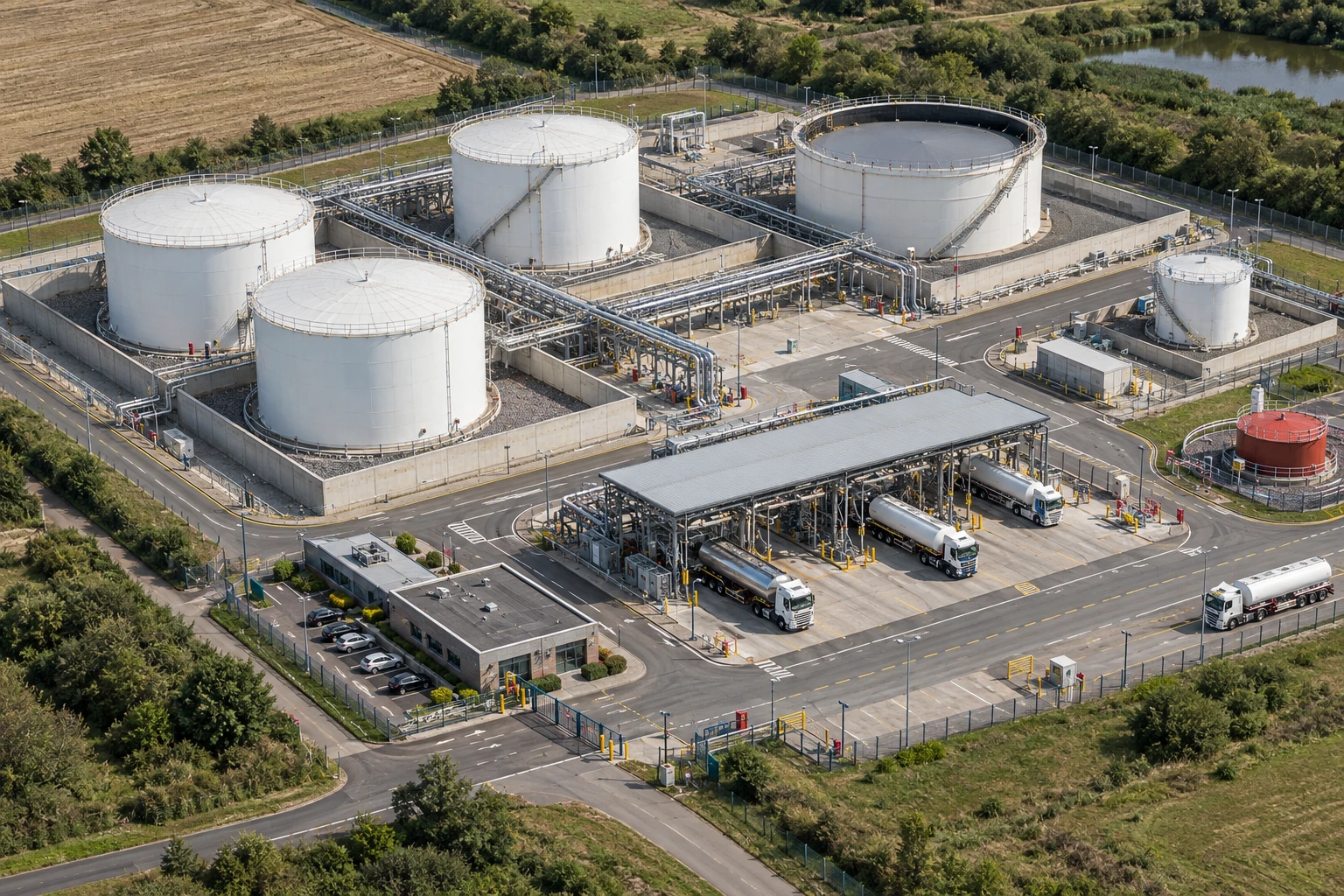

A night-shift warning does not reach the decision maker
All related inspection points 1 across 1 location
Crown Fuels terminal 1 inspection point
Practice in the SHAREhub environment. Browser practice is separate from workplace competence and formal learning records.
What is process safety culture?
Process safety culture is how people and leaders behave when major accident barriers are under pressure.
Best-practice guide: Process Safety Culture and Just Culture

What is process safety culture?
The harm path is concrete: a repeated alarm or bypass report is normalised, the independent overfill barrier remains impaired, a transfer exceeds the tank limit, and released fuel can ignite or expose people. The reporting decision does not itself cause the release; it determines whether the organisation sees and repairs a weakened barrier before a high-consequence event. Process safety culture is visible in decisions about major-accident barriers when production, cost and uncertainty compete.
Turn process safety culture and just culture knowledge into a decision
Process safety culture is visible in decisions about major-accident barriers when production, cost and uncertainty compete. A just culture encourages reporting and fair learning while retaining accountability for deliberate unsafe choices. Alarm trend, operator reports, work order, impairment decision, proof test, decision log, feedback to reporters and independent verification of closure.
Operational example: decisions and evidence
On a repeated or unexplained high-level alarm, stop transfer under the site rule, place the system safe and preserve the evidence rather than resetting the alarm to meet a schedule. Technical and operations owners verify repair, proof test and safe limits; leadership checks why earlier reports were not resolved and adjusts staffing or procedure.
Silenced warnings allow barrier degradation
Workers notice a leak, repeated alarm or unreliable protective function. Blame, production pressure or poor escalation discourages reporting. An unresolved barrier weakness can contribute to a major fire, explosion or toxic release. Use the full topic for the detailed mechanism, task limits and source scope.
Choose controls for process safety culture and just culture
Change the work: Eliminate, Reduce including substitution, Isolate, Control, personal protective equipment (PPE) and Discipline (ERICPD) is a prompt for decisions. Strengthen prevention: HSE’s five-level hierarchy prioritises elimination, substitution, engineering controls, administrative controls and PPE. Verify the barriers: They are related frameworks, not identical laws; apply them to the actual task and check the resulting control. Sustain the controls: Eliminate the credible major-accident scenario where design permits: remove unnecessary hazardous inventory or redesign a transfer so an overflow path is no longer possible. Review the decision: The technical authority verifies that a new failure path has not been created; a positive culture makes this design question discussable before blaming an operator. Read the full control table for qualifications, ownership and verification. Use the actual task and applicable jurisdiction; existing technical approval remains unchanged.
Use the full process safety culture and just culture lesson
Use the full topic for the decision points, practical examples, detailed control tables and source scope. HSE guidance applies to Great Britain; use HSENI for the Northern Ireland route and the source’s stated jurisdiction. A simplified guide does not change the page’s technical-review or approval status.

Read all six steps as text
1. What is process safety culture?
The harm path is concrete: a repeated alarm or bypass report is normalised, the independent overfill barrier remains impaired, a transfer exceeds the tank limit, and released fuel can ignite or expose people.
- Avoid / redesign: Eliminate, Reduce including substitution, Isolate, Control, personal protective equipment (PPE) and Discipline (ERICPD) is a prompt for decisions.
- Control the task: They are related frameworks, not identical laws; apply them to the actual task and check the resulting control.
- Verify before release: Eliminate, Reduce including substitution, Isolate, Control, personal protective equipment (PPE) and Discipline (ERICPD) is a prompt for decisions.
The harm path is concrete: a repeated alarm or bypass report is normalised, the independent overfill barrier remains impaired, a transfer exceeds the tank limit, and released fuel can ignite or expose people. The reporting decision does not itself cause the release; it determines whether the organisation sees and repairs a weakened barrier before a high-consequence event. Process safety culture is visible in decisions about major-accident barriers when production, cost and uncertainty compete.
Apply it: Which part of this plan would you check at the workface before authorising the task?
2. Turn process safety culture and just culture knowledge into a decision
Use the evidence to improve the actual work arrangement.
- Change at source: Eliminate, Reduce including substitution, Isolate, Control, personal protective equipment (PPE) and Discipline (ERICPD) is a prompt for decisions.
- Make it observable: Eliminate, Reduce including substitution, Isolate, Control, personal protective equipment (PPE) and Discipline (ERICPD) is a prompt for decisions.
- Keep useful evidence: Alarm trend, operator reports, work order, impairment decision, proof test, decision log, feedback to reporters and independent verification of closure.
Process safety culture is visible in decisions about major-accident barriers when production, cost and uncertainty compete. A just culture encourages reporting and fair learning while retaining accountability for deliberate unsafe choices. Alarm trend, operator reports, work order, impairment decision, proof test, decision log, feedback to reporters and independent verification of closure.
Apply it: What evidence would show that the change improves this task, rather than only completing a record?
3. Operational example: decisions and evidence
Example: a practical application of the existing topic lesson.
- Setting: A fuel terminal receives repeated high-level alarm reports during a busy transfer campaign.
- Act: Confirm the tank limit, independent protection status, transfer plan and previous alarm/action history before starting another batch.
- Hold / review: Do not restart with an impaired independent protection layer, uncertain level indication or unclosed high-consequence deviation.
On a repeated or unexplained high-level alarm, stop transfer under the site rule, place the system safe and preserve the evidence rather than resetting the alarm to meet a schedule. Technical and operations owners verify repair, proof test and safe limits; leadership checks why earlier reports were not resolved and adjusts staffing or procedure.
Apply it: At which point would you hold this example, and what evidence would allow it to proceed?
4. Silenced warnings allow barrier degradation
Connect the task, the route to the person and the control that can fail.
- Signal: Workers notice a leak, repeated alarm or unreliable protective function.
- Response: Blame, production pressure or poor escalation discourages reporting.
- Escalation: An unresolved barrier weakness can contribute to a major fire, explosion or toxic release.
Workers notice a leak, repeated alarm or unreliable protective function. Blame, production pressure or poor escalation discourages reporting. An unresolved barrier weakness can contribute to a major fire, explosion or toxic release. Use the full topic for the detailed mechanism, task limits and source scope.
Apply it: Where is this harm route present in the actual work, and which control breaks it before anyone is exposed?
5. Choose controls for process safety culture and just culture
Start with the stronger practicable options and verify their effect.
- Change the work: Eliminate, Reduce including substitution, Isolate, Control, personal protective equipment (PPE) and Discipline (ERICPD) is a prompt for decisions.
- Strengthen prevention: HSE’s five-level hierarchy prioritises elimination, substitution, engineering controls, administrative controls and PPE.
- Verify the barriers: They are related frameworks, not identical laws; apply them to the actual task and check the resulting control.
- Sustain the controls: Eliminate the credible major-accident scenario where design permits: remove unnecessary hazardous inventory or redesign a transfer so an overflow path is no longer possible.
- Review the decision: The technical authority verifies that a new failure path has not been created; a positive culture makes this design question discussable before blaming an operator.
Change the work: Eliminate, Reduce including substitution, Isolate, Control, personal protective equipment (PPE) and Discipline (ERICPD) is a prompt for decisions. Strengthen prevention: HSE’s five-level hierarchy prioritises elimination, substitution, engineering controls, administrative controls and PPE. Verify the barriers: They are related frameworks, not identical laws; apply them to the actual task and check the resulting control. Sustain the controls: Eliminate the credible major-accident scenario where design permits: remove unnecessary hazardous inventory or redesign a transfer so an overflow path is no longer possible. Review the decision: The technical authority verifies that a new failure path has not been created; a positive culture makes this design question discussable before blaming an operator. Read the full control table for qualifications, ownership and verification. Use the actual task and applicable jurisdiction; existing technical approval remains unchanged.
Apply it: Which stronger option can be used here, and who will verify it before accepting the remaining risk?
6. Use the full process safety culture and just culture lesson
Follow the official sources below and retain the task-specific evidence.
- Official guidance: HSE organisational culture overview
- Official guidance: HSE reducing error and influencing behaviour HSG48
- Task decision: Alarm trend, operator reports, work order, impairment decision, proof test, decision log, feedback to reporters and independent verification of closure.
Use the full topic for the decision points, practical examples, detailed control tables and source scope. HSE guidance applies to Great Britain; use HSENI for the Northern Ireland route and the source’s stated jurisdiction. A simplified guide does not change the page’s technical-review or approval status.
Apply it: Which official source and full-topic section will you use to resolve the next decision?
A site can have good personal safety performance and still have weak process safety culture. Low slips and trips do not prove that relief systems, alarms, isolations, management of change, emergency response or containment barriers are healthy. Process safety culture is tested by how the organisation responds to weak signals: leaks, alarm floods, overdue maintenance, temporary repairs, bypasses, poor handovers, abnormal operations and people raising uncomfortable concerns.
The best culture is not soft. It is disciplined, curious and evidence-led. It encourages reporting and challenge, but it also expects rules that protect major accident barriers to be followed, supervised and improved. It treats 'operator error' as the start of inquiry, not the end.
| Cultural feature | What it looks like | Evidence |
|---|---|---|
| Chronic unease | People actively look for what could be wrong even when performance looks good. | Weak-signal review and management challenge. |
| Operational discipline | Procedures, permits, isolations and limits are followed and improved. | Field verification and deviation review. |
| Just culture | Errors are investigated fairly while reckless behaviour is addressed. | Investigation quality and accountability decisions. |
| Barrier thinking | People understand which controls prevent major accidents. | Bowties, critical-control checks and training. |
| Worker voice | Frontline concerns are heard and acted on. | Near-miss reports, close-out and feedback. |
| Leadership visibility | Leaders ask about risk, weak signals and evidence, not only injury rates. | Board/site assurance questions. |
A plant can have a written process-safety policy and still reward throughput while treating repeated bypasses as normal. Examine decisions at the point of pressure: a recurring high-level alarm, an overdue proof test or an operator who reports a misleading indication. The culture question is whether the signal reaches someone with authority, whether work is paused, and whether the barrier is restored and verified before restart. Fair accountability asks what the person knew, what the system made easy, and whether there was a conscious, unjustified departure; it is not a promise that every act is consequence-free.
Source: HSE organisational culture overview
Source: HSE reducing error and influencing behaviour HSG48
The harm path is concrete: a repeated alarm or bypass report is normalised, the independent overfill barrier remains impaired, a transfer exceeds the tank limit, and released fuel can ignite or expose people. The reporting decision does not itself cause the release; it determines whether the organisation sees and repairs a weakened barrier before a high-consequence event. Pause the transfer when the protection state is uncertain and investigate both the technical fault and the pressure that made it seem acceptable. Source: HSE organisational culture overview
How can the hierarchy of controls turn process-safety reporting and learning into stronger safeguards?
Eliminate, Reduce including substitution, Isolate, Control, personal protective equipment (PPE) and Discipline (ERICPD) is a prompt for decisions. HSE’s five-level hierarchy prioritises elimination, substitution, engineering controls, administrative controls and PPE. They are related frameworks, not identical laws; apply them to the actual task and check the resulting control.
Eliminate the credible major-accident scenario where design permits: remove unnecessary hazardous inventory or redesign a transfer so an overflow path is no longer possible. The technical authority verifies that a new failure path has not been created; a positive culture makes this design question discussable before blaming an operator.
Substitute or reduce the hazard: lower inventory, pressure or temperature or use a less hazardous substance if process quality and chemistry permit. Management funds the change and checks the new process basis instead of using a training campaign as a substitute for engineering.
Isolate and engineer: independent high-level shutdown, containment, segregation and reliable alarms protect against foreseeable error. Operators need a trusted route to report impaired barriers, and the owner needs a hold rule, repair plan and proof of return to service.
Control, PPE and Discipline: procedures, supervision, learning reviews and leading indicators help keep barriers available. PPE only addresses residual task exposure, not a failed major-accident barrier. ERICPD is a decision prompt; HSE’s five-level hierarchy orders elimination, substitution, engineering, administrative measures and PPE, and the two should not be presented as identical legal tests.
Source: HSE hierarchy of controls
Source: HSE organisational culture overview
How can the ERICPD hierarchy of controls turn process-safety reporting and learning into stronger safeguards?

| ERICPD control level | Topic-specific example | Source and full task context |
|---|---|---|
| Eliminate | Remove an unnecessary hazardous scenario through feasible process/task redesign. | Read the full task example, checks and stop points on this page. HSE hierarchy of controls · HSE organisational culture overview |
| Reduce | Assess a less hazardous substance/process replacement; inventory/pressure/temperature minimisation remains reduction. | Read the full task example, checks and stop points on this page. HSE hierarchy of controls · HSE organisational culture overview |
| Isolate | Prove independent high-level shutdown, containment, physical segregation and required alarms. | Read the full task example, checks and stop points on this page. HSE hierarchy of controls · HSE organisational culture overview |
| Control | Make reporting/escalation, impairment governance, procedures, fair investigation and verified learning workable. | Read the full task example, checks and stop points on this page. HSE hierarchy of controls · HSE organisational culture overview |
| PPE | Use suitable residual task protection; it cannot replace failed process barriers. | Read the full task example, checks and stop points on this page. HSE hierarchy of controls · HSE organisational culture overview |
| Discipline | Observe real work and verify the technical and organisational corrections, with feedback to reporters. | Read the full task example, checks and stop points on this page. HSE hierarchy of controls · HSE organisational culture overview |
How can the ISO 45001 hierarchy of controls turn process-safety reporting and learning into stronger safeguards?

| ESEAP control level | Topic-specific example | Source and full task context |
|---|---|---|
| Elimination | Remove an unnecessary hazardous scenario through feasible process/task redesign. | Read the full task example, checks and stop points on this page. HSE hierarchy of controls · HSE organisational culture overview |
| Substitution | Assess a less hazardous substance/process replacement; inventory/pressure/temperature minimisation remains reduction. | Read the full task example, checks and stop points on this page. HSE hierarchy of controls · HSE organisational culture overview |
| Engineering controls | Prove independent high-level shutdown, containment, physical segregation and required alarms. | Read the full task example, checks and stop points on this page. HSE hierarchy of controls · HSE organisational culture overview |
| Administrative controls | Make reporting/escalation, impairment governance, procedures, fair investigation and verified learning workable. | Read the full task example, checks and stop points on this page. HSE hierarchy of controls · HSE organisational culture overview |
| PPE | Use suitable residual task protection; it cannot replace failed process barriers. | Read the full task example, checks and stop points on this page. HSE hierarchy of controls · HSE organisational culture overview |
What does just culture mean in process safety?
A fair process asks what happened, how work was set up, and whether an action was an error or a deliberate departure. It supports reporting and learning while keeping proportionate accountability; the example distinctions below are a local investigation aid, not statutory COMAH categories.
A no-blame slogan is not enough. If every action is excused, standards drift; if every error is punished, people hide the truth. Ask what happened, whether the rule was clear and workable, what pressures or missing tools shaped the action, and whether the departure was inadvertent or deliberate. HSE human-factors guidance discusses errors and violations; the table gives illustrative management responses, not a legal classification.
In process safety, this matters because hidden errors and near misses can be early warnings of major accident weakness. People must trust that reporting will lead to learning. They must also know that deliberate bypassing of critical safeguards, unauthorised line breaking or knowingly ignoring gas alarms is unacceptable.
| Behaviour type | Process safety example | Management response |
|---|---|---|
| Human error | Operator selects wrong valve because labels are confusing. | Fix design, labels, checking and training; console fairly. |
| Routine violation under pressure | Team skips a verification step because it is seen as routine and slow. | Coach, understand pressures and make the rule practical. |
| System-induced violation | Procedure cannot be followed because tools or isolation points are missing. | Fix system, resources and planning. |
| Deliberate unsafe override | Person knowingly bypasses a gas detector to avoid shutdown. | Make the plant safe, investigate facts fairly and apply proportionate accountability. |
| Leadership drift | Managers tolerate overdue safety-critical maintenance. | Escalate ownership, resources and governance. |
Human-factors source: HSE reducing error and influencing behaviour HSG48
- Make the bypassed plant safe and preserve the event timeline.
- Establish understanding, rule availability/workability, equipment condition, training, staffing and production pressure; compare with how similar work normally happens.
- Record the justified proportionate response and the technical/organisational barrier correction, then verify closure and feed back to the reporter.
An intentional deviation is not automatically malicious or proof of reckless disregard. These are investigation questions, not an automatic sanction calculator.
Which weak signals should leaders challenge?
Weak signals are small signs that barriers, discipline or trust may be degrading.
Major accidents are often preceded by signals that looked ordinary at the time: repeated alarms, leaking seals, temporary repairs, handwritten workarounds, delayed proof tests, repeated permit findings, people reluctant to stop work, equipment running outside normal envelope or actions closed without field verification.
A strong culture makes these signals discussable. Leaders should ask what the signal could mean for a credible major accident scenario, not whether it caused harm last week.
| Weak signal | Possible cultural meaning | Question to ask |
|---|---|---|
| Alarm floods normalised | Operators may not distinguish important alarms. | Which alarm response protects the major accident barrier? |
| Temporary repairs stay in place | Production pressure may outrank integrity. | Who owns the repair and risk acceptance? |
| Near misses not reported | Trust or reporting usefulness may be weak. | What happens after people report? |
| Permit findings repeat | Rules may be unclear, impractical or weakly supervised. | What system condition creates repeated failure? |
| Bypasses not visible | Impairment management may be weak. | Which safety-critical functions are bypassed today? |
| Action closure is administrative | Learning may not reach the field. | Who verifies effectiveness at the point of work? |
How does culture affect the same process safety event?
The same near miss can be handled as blame, paperwork closure or mature process safety learning.
During a night shift at Crownway Fuels Ltd, a high-level alarm repeats on a storage tank. Operators acknowledge it because the alarm has been nuisance-triggering for weeks. A transfer continues, the independent high-high trip is bypassed for testing, and the shift handover note says 'watch tank 4'. The tank does not overflow, but the event is a high-potential near miss.
A blame culture asks who acknowledged the alarm and looks for individual fault. A paperwork culture raises an action to 'remind operators to follow procedure' and closes the event when the form is signed. A mature process safety and just culture response asks why the nuisance alarm persisted, why the bypass was open during transfer, why the handover was vague, whether staffing and supervision were adequate, and whether leaders had tolerated impaired barriers.
| Culture response | What happens | Likely outcome |
|---|---|---|
| Blame culture response | Operator disciplined for acknowledging alarms and the review stops close to the frontline. | People hide future weak signals, nuisance alarms remain and trust reduces. |
| Paperwork culture response | Event form is completed, a generic reminder is issued and the action is closed when everyone signs the briefing sheet. | The organisation looks busy but alarm, bypass and handover barriers remain weak. |
| Mature process safety / just culture response | Alarm health, bypass control, transfer procedure, supervision, handover, staffing and leadership tolerance are reviewed. | System actions strengthen barrier health, reporting trust and operational discipline. |
| Process safety learning | Near miss is compared with overfill and loss-of-containment scenarios, including Buncefield-style warning signs. | Local indicators, escalation rules, MOC triggers and emergency arrangements improve. |
Operational example: decisions and evidence
Task material and setting: A fuel terminal receives repeated high-level alarm reports during a busy transfer campaign.
People and prerequisites: Operator reports the signal; shift supervisor controls transfer; instrument specialist checks the alarm; process-safety lead reviews the hazard and trend; senior manager owns resources.
Before: Confirm the tank limit, independent protection status, transfer plan and previous alarm/action history before starting another batch.
During: On a repeated or unexplained high-level alarm, stop transfer under the site rule, place the system safe and preserve the evidence rather than resetting the alarm to meet a schedule.
Hold or stop: Do not restart with an impaired independent protection layer, uncertain level indication or unclosed high-consequence deviation.
Completion and hand back: Technical and operations owners verify repair, proof test and safe limits; leadership checks why earlier reports were not resolved and adjusts staffing or procedure.
Evidence: Alarm trend, operator reports, work order, impairment decision, proof test, decision log, feedback to reporters and independent verification of closure.
How should culture be linked to barrier health?
Culture should be assessed through the controls that prevent, detect, control and mitigate major accidents.
Culture surveys can be useful, but process safety culture must also be tested against real barriers. Do people understand which alarms matter? Are proof tests completed? Are bypasses authorised? Are isolations verified? Are MOC actions closed? Are emergency drills realistic? Are leaders asking about high-consequence scenarios or only about injury rates?
A good assessment links the cultural question to a barrier question. If people say they feel unable to challenge production pressure, ask which barriers are most vulnerable when work is rushed: permits, isolations, maintenance, start-up checks, alarm response or contractor handover.
| Culture question | Barrier test | Evidence |
|---|---|---|
| Do people feel able to stop work? | Sample high-risk tasks stopped or escalated. | Stop-work records and feedback. |
| Are alarms respected? | Check alarm response, nuisance alarms and standing alarms. | Alarm performance and operator interviews. |
| Are bypasses controlled? | Review live bypasses and overdue impairments. | Bypass register and risk acceptance. |
| Is maintenance pressure visible? | Check overdue safety-critical maintenance. | Maintenance dashboard and deferral approvals. |
| Does learning transfer? | Check whether incident actions changed similar assets. | Learning tracker and field verification. |
| Do leaders ask the right questions? | Review board/site questions on major accident risk. | Minutes and action decisions. |
What is normalisation of deviance?
Normalisation of deviance is when degraded conditions become accepted because nothing bad has happened yet.
Normalisation is dangerous in process safety because major accidents are rare. A leaking flange, disabled alarm, manual workaround or overdue test may appear tolerable for weeks or months. The absence of harm becomes false proof of safety. In reality, the site may simply not yet have experienced the combination of failures that turns drift into disaster.
Culture should therefore challenge phrases like 'it has always been like that', 'we have never had a problem', 'the alarm always does that' or 'we will fix it after the shutdown'. These are weak-signal phrases, not reassurance.
| Normalised condition | Why it is dangerous | Challenge question |
|---|---|---|
| Standing alarm ignored | Alarm loses warning function. | What action would this alarm require in a real demand? |
| Temporary repair becomes permanent | Integrity assumption weakens. | Who accepted the risk and for how long? |
| Routine permit shortcuts | Isolation or ignition controls may fail. | What condition made the shortcut feel acceptable? |
| Overdue proof tests | Barrier availability is assumed. | What evidence proves the barrier will work? |
| Vague handover | Critical status is lost between shifts. | What must the incoming team know to stay safe? |
What should leaders do differently?
Leaders shape process safety culture through questions, resources, decisions and reactions to bad news.
Leadership commitment is tested when controls cost time, money or production. A leader who asks only about lost-time injuries may unintentionally signal that major accident controls are secondary. A leader who asks about barrier impairments, overdue actions, alarm health, MOC backlog and field verification sends a different message.
The strongest leaders make it safe to report bad news and hard to ignore it. They ask for evidence, resource corrective actions, protect stop authority and review whether previous learning actually changed the work.
| Question | Why it matters | Evidence requested |
|---|---|---|
| What are our top major accident scenarios? | Focuses attention on high-consequence risk. | Scenario register and bowties. |
| Which critical barriers are degraded today? | Makes impairment visible. | Barrier dashboard and risk acceptances. |
| What weak signals are repeating? | Finds drift before an event. | Trends and near-miss themes. |
| Which actions are overdue and why? | Tests resourcing and accountability. | Action tracker and escalation decisions. |
| Where has production pressure challenged controls? | Surfaces goal conflict. | Stop-work, permit and MOC examples. |
| How do we know learning reached the field? | Prevents report-only learning. | Field verification and worker interviews. |
How can process safety culture be assessed?
Assessment should combine surveys, interviews, field observations, document sampling and critical-control evidence.
Culture is partly perception and partly behaviour. Surveys show what people feel. Interviews explain why. Field observations show what people do under real constraints. Records show what the system values and follows up. No single method is enough.
A credible assessment should sample operators, maintenance, supervisors, contractors, engineers, managers and leaders. It should test whether the formal system matches work as done and whether just-culture principles are applied when things go wrong.
| Method | What it reveals | Limitation |
|---|---|---|
| Survey | Perceptions of trust, leadership and reporting. | Can be superficial if not followed up. |
| Interviews | Why people behave as they do. | Needs psychological safety and skilled facilitation. |
| Field observations | Actual work, shortcuts and control use. | Snapshot only unless sampled well. |
| Document review | Procedures, actions, permits, MOC and audits. | May not reflect work as done. |
| Critical-control sampling | Whether major accident barriers are healthy. | Needs technical competence. |
| Incident/near-miss review | How accountability and learning are handled. | Requires honest reporting culture. |
Sample workers across shifts, contractors and senior leaders. Compare interviews/surveys with field observations, barrier condition and action closure. A perception snapshot does not prove process safety; report findings back and verify whether management response changed the underlying conditions. HSE organisational culture
What evidence shows process safety culture is improving?
Evidence should show that reporting, challenge, barrier health and action quality are improving.
Evidence should be read as a chain rather than a filing exercise. A single record rarely proves good management on its own; stronger assurance comes from matching records, observations, interviews, trends and verified action closure.
| Evidence | What good looks like | Weakness to challenge |
|---|---|---|
| Weak-signal reports | Increasing quality and feedback, not just volume. | Reports disappear after blame response. |
| Barrier dashboards | Leaders review degraded controls and act. | Dashboard always green despite known issues. |
| Just-culture reviews | Decisions distinguish error, system weakness and reckless behaviour. | All events labelled human error. |
| Stop-work examples | Workers can stop high-risk work and receive support. | Stop work discouraged or punished. |
| Action verification | Learning actions verified at similar assets/tasks. | Lessons shared by email only. |
| Contractor voice | Contractors can challenge and report weak signals. | Contractors excluded from learning loops. |
Which legal duties and guidance are relevant?
Process safety culture supports major accident hazard control, management systems, competence and consultation.
| Duty or guidance | What it requires | How to apply it |
|---|---|---|
| Health and Safety at Work etc. Act 1974 | Requires risks to workers and others to be managed so far as reasonably practicable. | Resource and supervise major-hazard control as part of the employer’s GB general duty; culture is evidence of practice, not a separate statutory test. |
| Management of Health and Safety at Work Regulations 1999 | Requires suitable risk assessment, arrangements, competence and review. | Assess scenarios, assign competent owners and respond to reported deviations under GB management arrangements. |
| COMAH Regulations 2015 | In-scope lower-tier sites need a major accident prevention policy (MAPP) and safety-management arrangements; upper-tier sites also need a safety report. | For in-scope GB sites, use the lower-tier MAPP and safety-management arrangements; upper-tier sites also prepare and maintain a safety report. Trace reports and deviations to barrier decisions. |
| DSEAR 2002 | Requires dangerous substances and explosive atmosphere risks to be eliminated or controlled. | For GB dangerous-substance work, investigate repeated ignition or containment deviations and restore effective fire/explosion controls. |
| Pressure Systems Safety Regulations 2000 | Requires safe pressure systems, written schemes and competent examination. | Where GB pressure systems are in scope, escalate overdue examination or protective-device defects rather than normalising them. |
| PUWER 1998 | Requires work equipment to be suitable, maintained and used safely. | For GB work equipment, report and close defects in safety-critical valves, alarms or interlocks; do not treat a reminder as repair. |
| Health and Safety at Work (Northern Ireland) Order 1978 | Apply the general health, safety and welfare duty to this work setting. | Resource and supervise high-consequence controls under the NI general duty; reporting culture supports evidence, not a standalone legal category. |
| Management of Health and Safety at Work Regulations (Northern Ireland) 2000 | Assess work risks and maintain preventive arrangements appropriate to the actual task. | Assess NI work risks, assign preventive arrangements and act on repeated weak signals. |
| Control of Major Accident Hazards Regulations (Northern Ireland) 2015 | In-scope lower-tier sites need a major accident prevention policy (MAPP) and safety-management arrangements; upper-tier sites also need a safety report. | For in-scope NI sites, lower-tier MAPP and safety-management duties apply; upper-tier sites additionally prepare a safety report. Check how reported barrier defects reach owners. |
Apply GB general duties and COMAH only where the establishment is in scope; NI has separate general and COMAH instruments. A just-culture framework is a management approach, not a statute. Culture evidence should show how major-accident hazards, barriers, reporting and review are actually managed.
How should the control be managed and reviewed?
For a GB workplace, HSE guidance supports identifying the actual risk, taking practical protective steps and reviewing whether they work. Name the decision owner, check the control during the real task and correct a failed arrangement. Apply the separate Northern Ireland duties and guidance where the work is in NI.
GB management guidance: HSE managing health and safety
What training and competence helps?
Training should develop scenario thinking, fair accountability, weak-signal recognition and barrier ownership.
Training should be role-based. General awareness creates a baseline, but supervisors, managers, advisers and senior leaders need different levels of decision-making, verification and escalation competence.
| Role | What to demonstrate | Who checks | Record and reassessment |
|---|---|---|---|
| Operators and contractors | Report weak signals, demonstrate stop authority and preserve an incident timeline. | Supervisor uses a simulated impaired alarm. | Briefing, response and feedback record; reassess after change. |
| Supervisors | Apply a fair decision framework, pause unsafe transfer and escalate barrier defects. | Process-safety lead observes a scenario response. | Decision and handback record. |
| Specialists and investigators | Separate error, system pressure and deliberate deviation; test barrier facts. | Independent competent reviewer challenges an investigation. | Evidence map and learning action verification. |
| Senior leaders | Demonstrate resource choices and response to uncomfortable evidence. | Board or independent adviser samples recent high-consequence decisions. | Funding, closure and trend review. |
Source context: HSE organisational culture overview
How could Crownway Fuels Ltd manage this in practice?

Crownway would make process safety culture visible through weak-signal reporting, barrier assurance, stop authority and just-culture investigation.
At a fuel terminal, culture is tested during transfers, maintenance, alarm response, isolation, hot work, start-up and contractor activity. Crownway would connect everyday conversations to major accident scenarios rather than treating culture as posters or slogans.
| Management element | How the business would manage it | Evidence to review |
|---|---|---|
| Report | Encourage leaks, alarms, bypasses and near misses to be raised. | Weak-signal log. |
| Challenge | Protect stop authority for transfers, hot work and isolations. | Stop-work examples. |
| Assure | Verify critical barriers and degraded controls. | Barrier dashboard. |
| Learn | Apply just-culture reviews to high-potential events. | Investigation and action tracker. |
| Lead | Board asks scenario and barrier-health questions. | Leadership review minutes. |
Source context: HSE organisational culture overview
What do the acronyms and key terms mean?
Acronyms should be understood before they are used in assessments, briefings, audits or learning answers.
Acronyms can exclude newer readers if they are not explained. This section keeps the main terms available at the end of the page so the article stays readable while still supporting learners and audit users.
| Acronym | Meaning | Plain-English use |
|---|---|---|
| COMAH | Control of Major Accident Hazards | Major-accident regime with separate GB and Northern Ireland regulations; check the site threshold. |
| HRO | High Reliability Organisation | Organisation that manages high-risk work with strong reliability behaviours. |
| MOC | Management of Change | Controlled review before changes are made. |
| PSM | Process Safety Management | Management of major accident hazard controls. |
| KPI | Key Performance Indicator | Measure used to track performance. |
Unlock another resource
You have used this month’s two free downloads. Publish a post in your own words to unlock one more resource, or choose SHARE Individual for 10 downloads per month.
You decide whether to share. If you do, use the relevant platform disclosure tools and do not make claims you do not genuinely hold.