SHARE Knowledge Hub
Preventing Fire and Fire Spread
Preventing fire means reducing fuel, ignition and the chance of an uncontrolled event; limiting fire spread means preserving the barriers, routes and response that protect people if ignition occurs. These decisions change with the premise and jurisdiction: ordinary premises fire-safety duties in England and Wales, Scotland and Northern Ireland have different instruments, while dangerous-substance work has its own DSEAR route. A working alarm does not make an open compartment, blocked exit or uncontrolled hot work safe.
Understanding Preventing Fire and Fire Spread
Preventing fire means reducing fuel, ignition and the chance of an uncontrolled event; limiting fire spread means preserving the barriers, routes and response that protect people if ignition occurs. These decisions change with the premise and jurisdiction: ordinary premises fire-safety duties in England and Wales, Scotland and Northern Ireland have different instruments, while dangerous-substance work has its own DSEAR route. A working alarm does not make an open compartment, blocked exit or uncontrolled hot work safe.
Why this matters at work
Survey the route from occupied points to final safety, including changes of level, external paths, refuges, plant rooms and assembly areas. Keep design and test records, identify self-contained and central supplies, and verify automatic operation on local circuit failure as well as general power loss where required. Record duration tests and battery or luminaire defects. Coordinate security locks and access control so release remains reliable. Update signs and staff briefing immediately when a route moves; do not leave conflicting permanent and temporary directions.
Map credible fire size and duration, stock properties, pile or rack geometry, wind, drainage, walls and vulnerable targets. Set controlled storage zones and maximum inventory from the applicable permit, design standard and site consequence assessment. Keep access and isolation points usable and prevent temporary deliveries from closing separation. Review exposure in both directions, including fire from neighbouring land or vegetation. Where the basis is uncertain, reduce stock or relocate it pending competent assessment rather than quoting an unverified generic distance.
How organisations manage this in practice
Retain the design scenarios, calculations, cause-and-effect, commissioning results and acceptance criteria. Test automatic and manual modes, status indication, power changeover, damper and door interactions, replacement air and firefighter controls. Record as-found failures and verify restoration end to end. Control temporary isolation and building changes that affect leakage or flow. Where the system is impaired, reassess occupancy and evacuation rather than assuming open windows or a fire watch supplies equivalent smoke control.
Combustible waste sites can develop deep-seated, self-heating or rapidly spreading fires involving mixed materials, batteries, aerosols, dust and contaminated run-off. Environment Agency fire-prevention-plan guidance applies to specified permitted activities in England and must not be presented as a universal workplace rule or automatically transferred to another UK regulator. Waste acceptance, pile management, separation, quarantine, monitoring and response are linked controls.
Use a trigger list in purchasing, projects, maintenance and tenancy change processes. Update the relevant process DSEAR assessment alongside the premises assessment where dangerous substances are involved. Recheck assumptions on maximum occupancy, storage height, door use and response time in the field. Record the assessor, evidence, actions and owner.
How can I practise this topic in 3D?

A damaged battery is offered for charging
All related inspection points 1 across 1 location
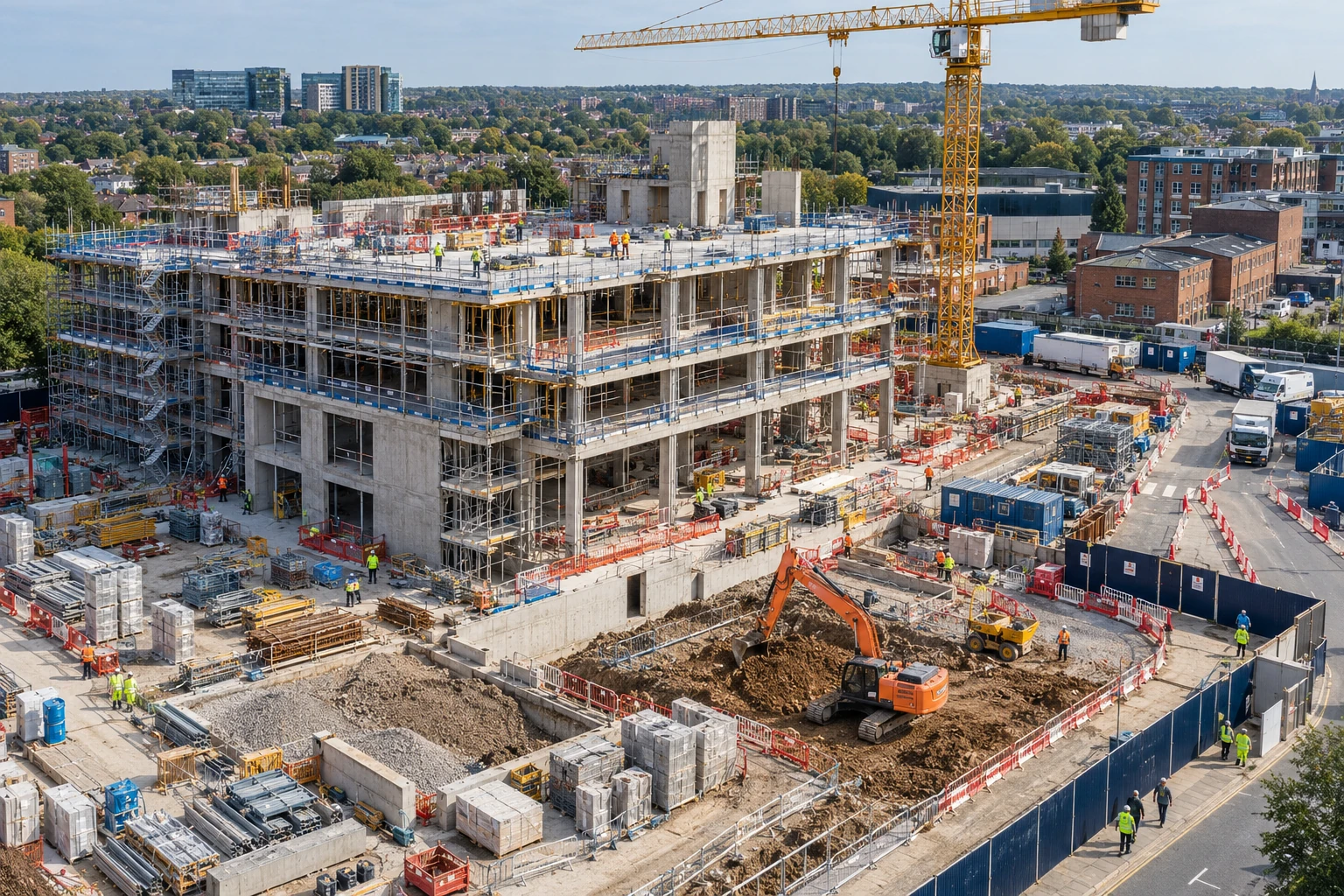
Construction site 1 inspection point
Practice in the SHAREhub environment. Browser practice is separate from workplace competence and formal learning records.
What does preventing fire and fire spread mean?
It means controlling ignition, fuel, oxygen exposure and the building or process pathways that allow fire to grow.
Best-practice guide: Preventing Fire and Fire Spread
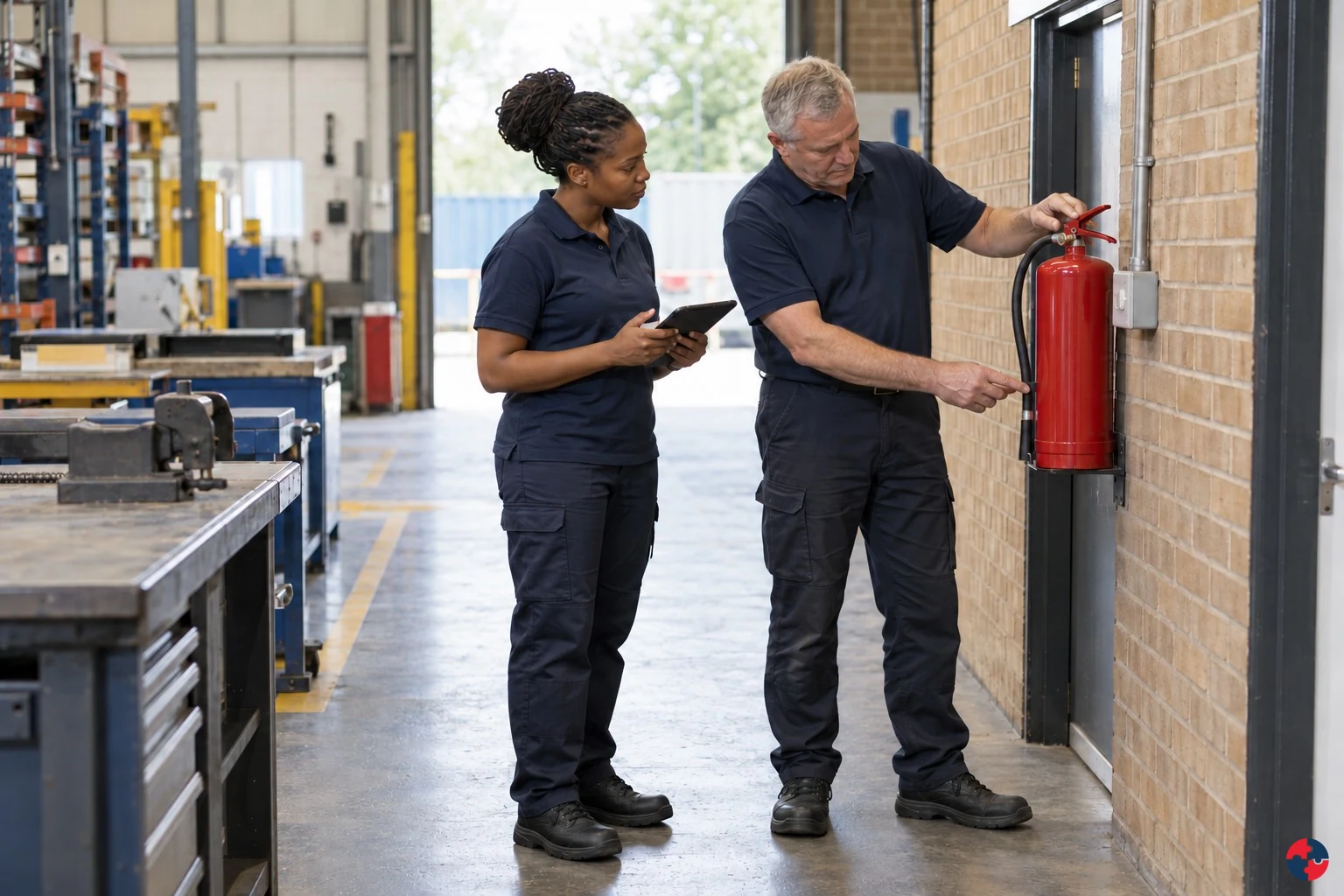
What does preventing fire and fire spread mean?
It means controlling ignition, fuel, oxygen exposure and the building or process pathways that allow fire to grow. Preventing fire means reducing fuel, ignition and the chance of an uncontrolled event; limiting fire spread means preserving the barriers, routes and response that protect people if ignition occurs.
Turn preventing fire and fire spread knowledge into a decision
Preventing fire means reducing fuel, ignition and the chance of an uncontrolled event; limiting fire spread means preserving the barriers, routes and response that protect people if ignition occurs. These decisions change with the premise and jurisdiction: ordinary premises fire-safety duties in England and Wales, Scotland and Northern Ireland have different instruments, while dangerous-substance work has its own DSEAR route. Fire-risk review, product system evidence, permit/impairment record, installation photos, inspection, action closure and revised plan.
Operational example: decisions and evidence
Keep the opening controlled, supervise any hot work and prevent unauthorised occupation if temporary protection is inadequate. Competent inspection checks the full installed system before concealment; update drawings and remove temporary restrictions only after acceptance.
A small ignition can grow through the workplace
An ignition source meets suitable fuel and oxygen. Uncontrolled storage, openings or failed separation allow growth. Smoke, heat and flame can compromise escape and cause serious injury. Use the full topic for the detailed mechanism, task limits and source scope.
Choose controls for preventing fire and fire spread
Fuel control: Reduce combustible material and flammable inventory. Ignition control: Prevent heat, spark, flame or electrical ignition. Fire separation: Keep fire and smoke within compartments. Protected escape: Keep routes available and tenable. Maintenance: Keep fire precautions effective over time. Read the full control table for qualifications, ownership and verification. Use the actual task and applicable jurisdiction; existing technical approval remains unchanged.
Use the full preventing fire and fire spread lesson
Use the full topic for the decision points, practical examples, detailed control tables and source scope. HSE guidance applies to Great Britain; use HSENI for the Northern Ireland route and the source’s stated jurisdiction. A simplified guide does not change the page’s technical-review or approval status.

Read all six steps as text
1. What does preventing fire and fire spread mean?
It means controlling ignition, fuel, oxygen exposure and the building or process pathways that allow fire to grow.
- Avoid / redesign: Reduce combustible material and flammable inventory.
- Control the task: Keep fire and smoke within compartments.
- Verify before release: Storage checks, waste logs and housekeeping inspections.
It means controlling ignition, fuel, oxygen exposure and the building or process pathways that allow fire to grow. Preventing fire means reducing fuel, ignition and the chance of an uncontrolled event; limiting fire spread means preserving the barriers, routes and response that protect people if ignition occurs.
Apply it: Which part of this plan would you check at the workface before authorising the task?
2. Turn preventing fire and fire spread knowledge into a decision
Use the evidence to improve the actual work arrangement.
- Change at source: Reduce combustible material and flammable inventory.
- Make it observable: Storage checks, waste logs and housekeeping inspections.
- Keep useful evidence: Fire-risk review, product system evidence, permit/impairment record, installation photos, inspection, action closure and revised plan.
Preventing fire means reducing fuel, ignition and the chance of an uncontrolled event; limiting fire spread means preserving the barriers, routes and response that protect people if ignition occurs. These decisions change with the premise and jurisdiction: ordinary premises fire-safety duties in England and Wales, Scotland and Northern Ireland have different instruments, while dangerous-substance work has its own DSEAR route. Fire-risk review, product system evidence, permit/impairment record, installation photos, inspection, action closure and revised plan.
Apply it: What evidence would show that the change improves this task, rather than only completing a record?
3. Operational example: decisions and evidence
Example: a practical application of the existing topic lesson.
- Setting: Contractors cut a new cable route through a fire-rated wall beside a warehouse packing area.
- Act: Confirm wall construction, required performance, cable detail and tested full sealing system; clear combustible packaging and protect escape routes.
- Hold / review: Unknown wall build-up, incompatible seal, failed door, obstructed exit or uncontrolled ignition source pauses the task and affected occupancy.
Keep the opening controlled, supervise any hot work and prevent unauthorised occupation if temporary protection is inadequate. Competent inspection checks the full installed system before concealment; update drawings and remove temporary restrictions only after acceptance.
Apply it: At which point would you hold this example, and what evidence would allow it to proceed?
4. A small ignition can grow through the workplace
Connect the task, the route to the person and the control that can fail.
- Start: An ignition source meets suitable fuel and oxygen.
- Spread: Uncontrolled storage, openings or failed separation allow growth.
- Exposure: Smoke, heat and flame can compromise escape and cause serious injury.
An ignition source meets suitable fuel and oxygen. Uncontrolled storage, openings or failed separation allow growth. Smoke, heat and flame can compromise escape and cause serious injury. Use the full topic for the detailed mechanism, task limits and source scope.
Apply it: Where is this harm route present in the actual work, and which control breaks it before anyone is exposed?
5. Choose controls for preventing fire and fire spread
Start with the stronger practicable options and verify their effect.
- Fuel control: Reduce combustible material and flammable inventory.
- Ignition control: Prevent heat, spark, flame or electrical ignition.
- Fire separation: Keep fire and smoke within compartments.
- Protected escape: Keep routes available and tenable.
- Maintenance: Keep fire precautions effective over time.
Fuel control: Reduce combustible material and flammable inventory. Ignition control: Prevent heat, spark, flame or electrical ignition. Fire separation: Keep fire and smoke within compartments. Protected escape: Keep routes available and tenable. Maintenance: Keep fire precautions effective over time. Read the full control table for qualifications, ownership and verification. Use the actual task and applicable jurisdiction; existing technical approval remains unchanged.
Apply it: Which stronger option can be used here, and who will verify it before accepting the remaining risk?
6. Use the full preventing fire and fire spread lesson
Follow the official sources below and retain the task-specific evidence.
- Official guidance: HSE fire safety in construction HSG168
- Official guidance: HSE DSEAR in detail
- Task decision: Fire-risk review, product system evidence, permit/impairment record, installation photos, inspection, action closure and revised plan.
Use the full topic for the decision points, practical examples, detailed control tables and source scope. HSE guidance applies to Great Britain; use HSENI for the Northern Ireland route and the source’s stated jurisdiction. A simplified guide does not change the page’s technical-review or approval status.
Apply it: Which official source and full-topic section will you use to resolve the next decision?
Fire prevention starts before the alarm sounds. It asks whether combustible material is controlled, ignition sources are managed, electrical equipment is suitable, hot work is authorised, waste is removed, flammable liquids are stored correctly, smoking is controlled and contractors understand the rules. Fire spread control asks whether a fire that starts in one place can move through doors, voids, service penetrations, ducts, risers, external walls, storage routes or unprotected openings.
A strong fire prevention page must therefore cover both everyday workplace discipline and technical fire protection. A tidy office with maintained electrics has different needs from a construction site with hot works, temporary coverings and timber frames, or a process area with vapours, bunds, vents and DSEAR zones. The responsible person must be able to choose the right route.
| Control family | Main purpose | Evidence |
|---|---|---|
| Fuel control | Reduce combustible material and flammable inventory. | Storage checks, waste logs and housekeeping inspections. |
| Ignition control | Prevent heat, spark, flame or electrical ignition. | Hot work permits, electrical inspections and DSEAR controls. |
| Fire separation | Keep fire and smoke within compartments. | Fire door, wall, floor, ceiling and fire-stopping records. |
| Protected escape | Keep routes available and tenable. | Route inspections, emergency lighting tests and obstruction actions. |
| Maintenance | Keep fire precautions effective over time. | Alarm, door, extinguisher, lighting and contractor records. |
| Emergency planning | Limit harm if fire occurs. | Drills, fire plans, evacuation arrangements and learning reviews. |
Fire can start when a fuel meets ignition in suitable conditions, then travel through stored materials, cavities, open doors, penetrations or ventilation paths. The premises dutyholder needs to know the actual fuel and ignition sources, the people and escape route, and which wall, door or system is credited to slow spread. Construction and maintenance can temporarily remove permanent protection, so the plan must change before that work starts.
Source: HSE fire safety in construction HSG168
Source: HSE DSEAR in detail
Which extinguisher matches the fire, and what parts should I recognise?
Identify the fuel and additional electrical hazard, read the actual extinguisher label and follow the site fire plan. Raise the alarm and protect escape first; only trained, authorised people should consider a small initial fire within their safe response limits.
Fire classes and fire extinguishersFire classes · agent types · dangerous mismatches
 Recognise the fuel. Read the extinguisher. Protect your escape.
UK awareness reference for common and specialist portable extinguisher families. Actual ratings, exclusions and manufacturer instructions govern each unit. Reading this guide is not practical training or permission to fight a fire. Fixed systems, hose reels and specialist industrial firefighting require their own assessed arrangements.
What is burning? Understand the fire classes
Class L is the 2026 addition to the classification standard. Existing extinguisher labels and product test claims vary; a new class name does not certify every battery product.
Extinguisher types: uses and dangers
These are typical applications, not universal permissions. Check the label on the actual unit. Images are AI-generated photorealistic teaching illustrations inspired by the referenced equipment; they are not photographs or certified product labels. Use Inspect the parts to explore the hardware. Band, nozzle and label details vary.
| Type and recognition | Typical rating and use | Wrong use: what can go wrong? |
|---|---|---|
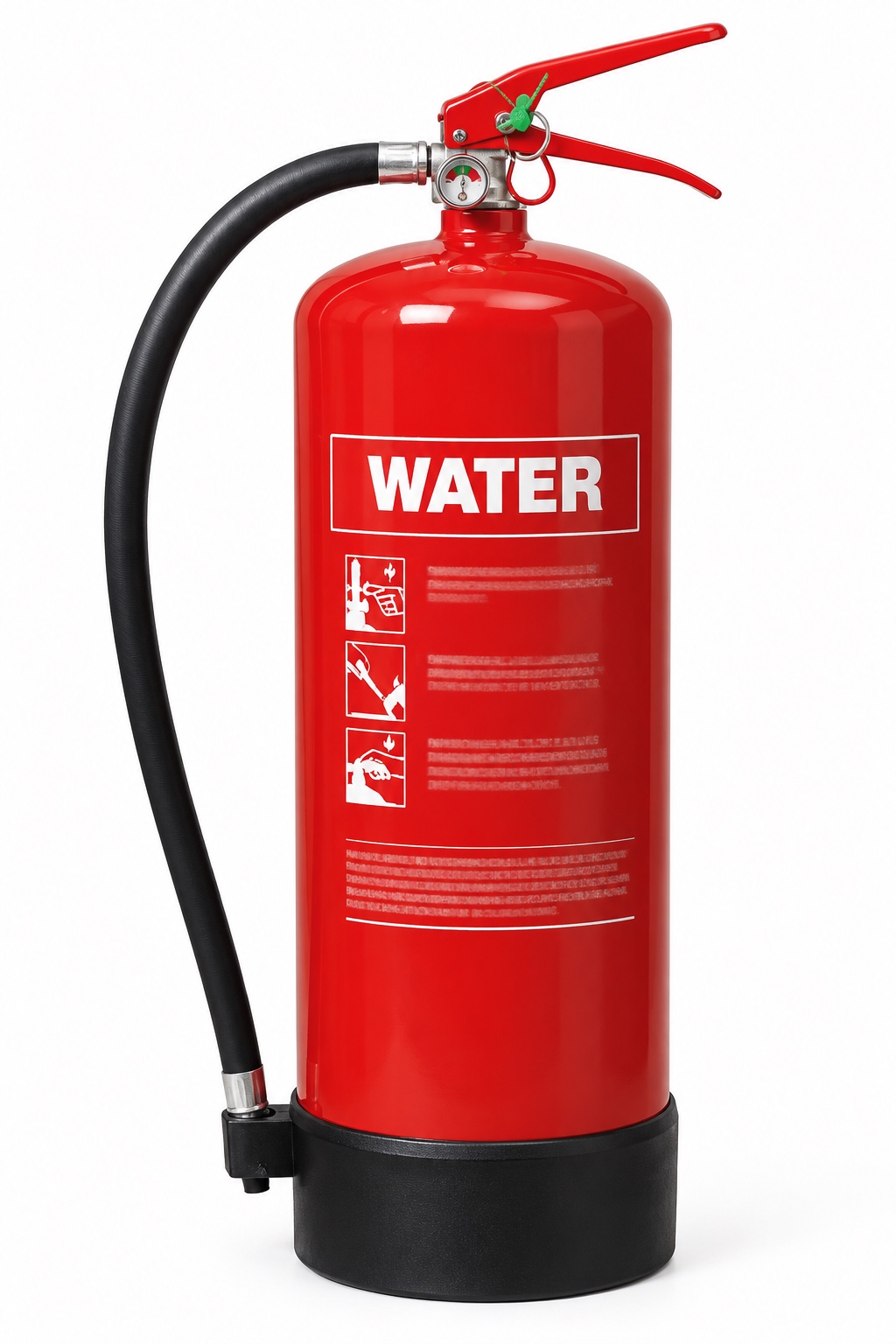  | Normally A Cools burning solid material such as paper, wood or fabric. | Check the limitation Ordinary water is unsuitable for live electrical equipment, flammable-liquid pools, cooking oil and reactive metals: shock, spreading fuel or violent reaction can result. |
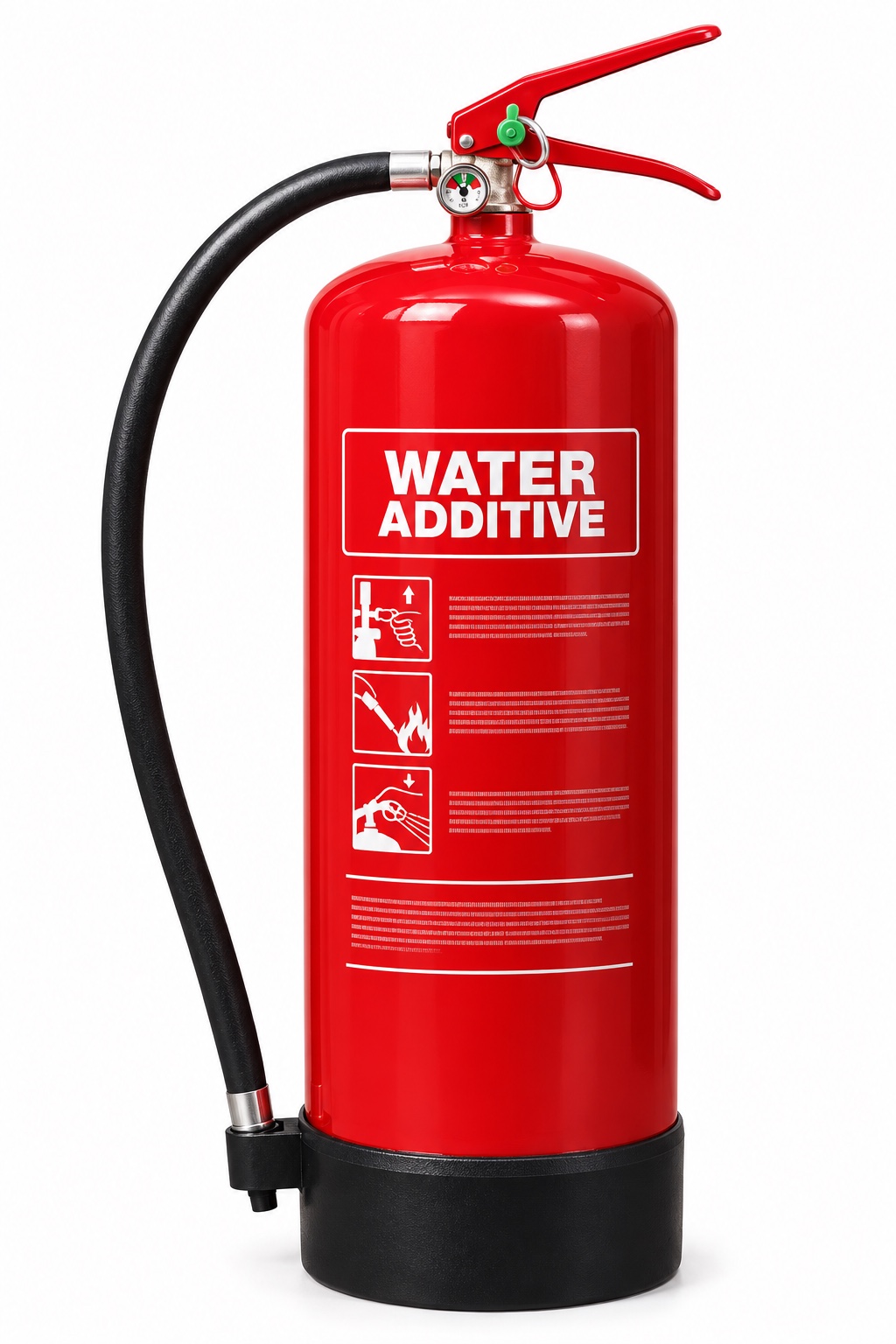 | A; B only if explicitly rated Improved wetting or spray performance can help on the hazards stated on that model’s label. | Check the limitation An additive does not make every water extinguisher safe for electricity, oils or reactive chemicals. Check the specific exclusions. |
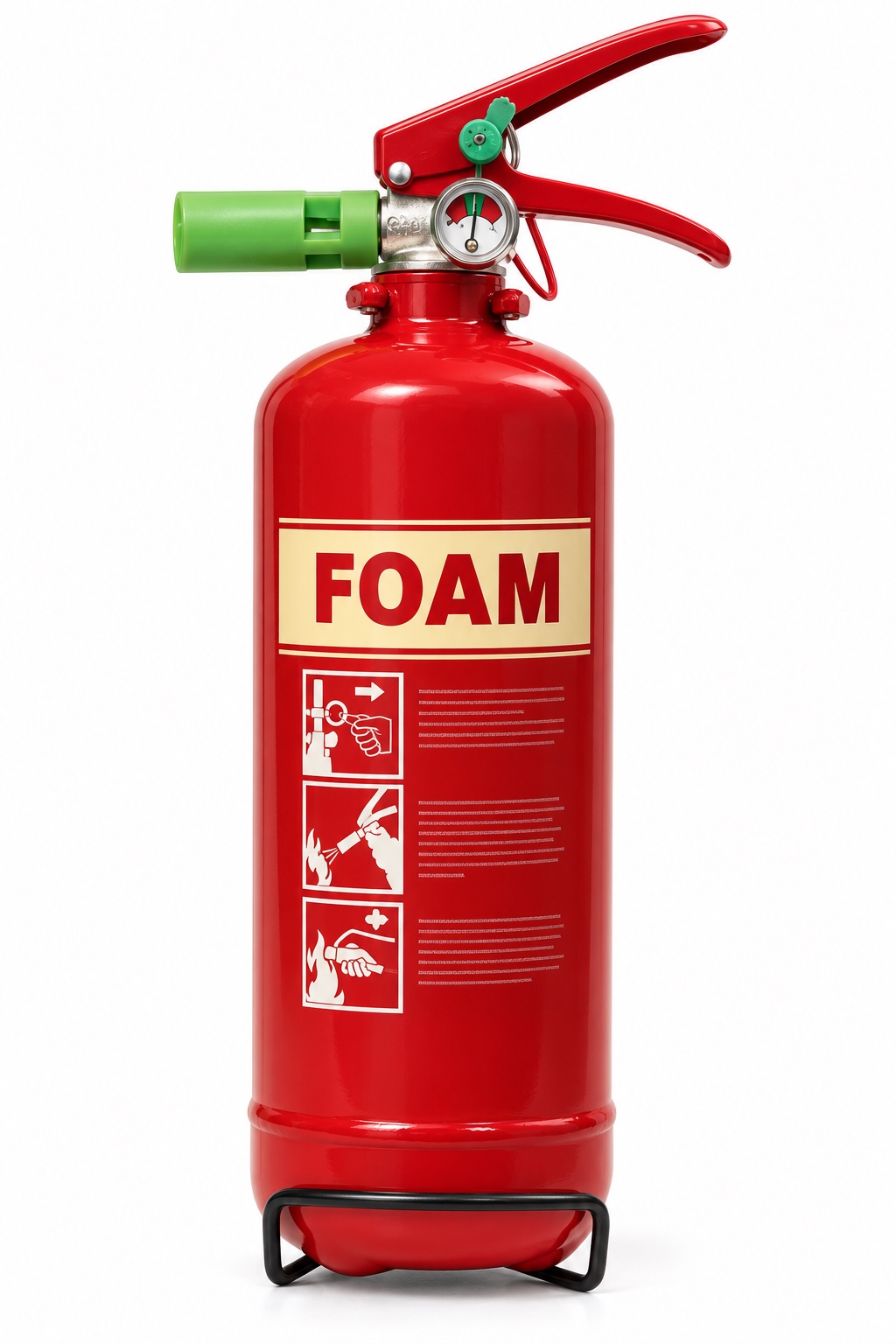 | Commonly A and B Cools and forms a surface blanket on suitable liquid fires. The agent must suit the actual fuel; some alcohols need alcohol-resistant foam. | Check the limitation Ordinary foam is not a general answer for live electricity, cooking oil or metal fires. Unsuitable foam may break down on a solvent; a jet can spread fuel. Free-flowing fuel needs specialist response. |
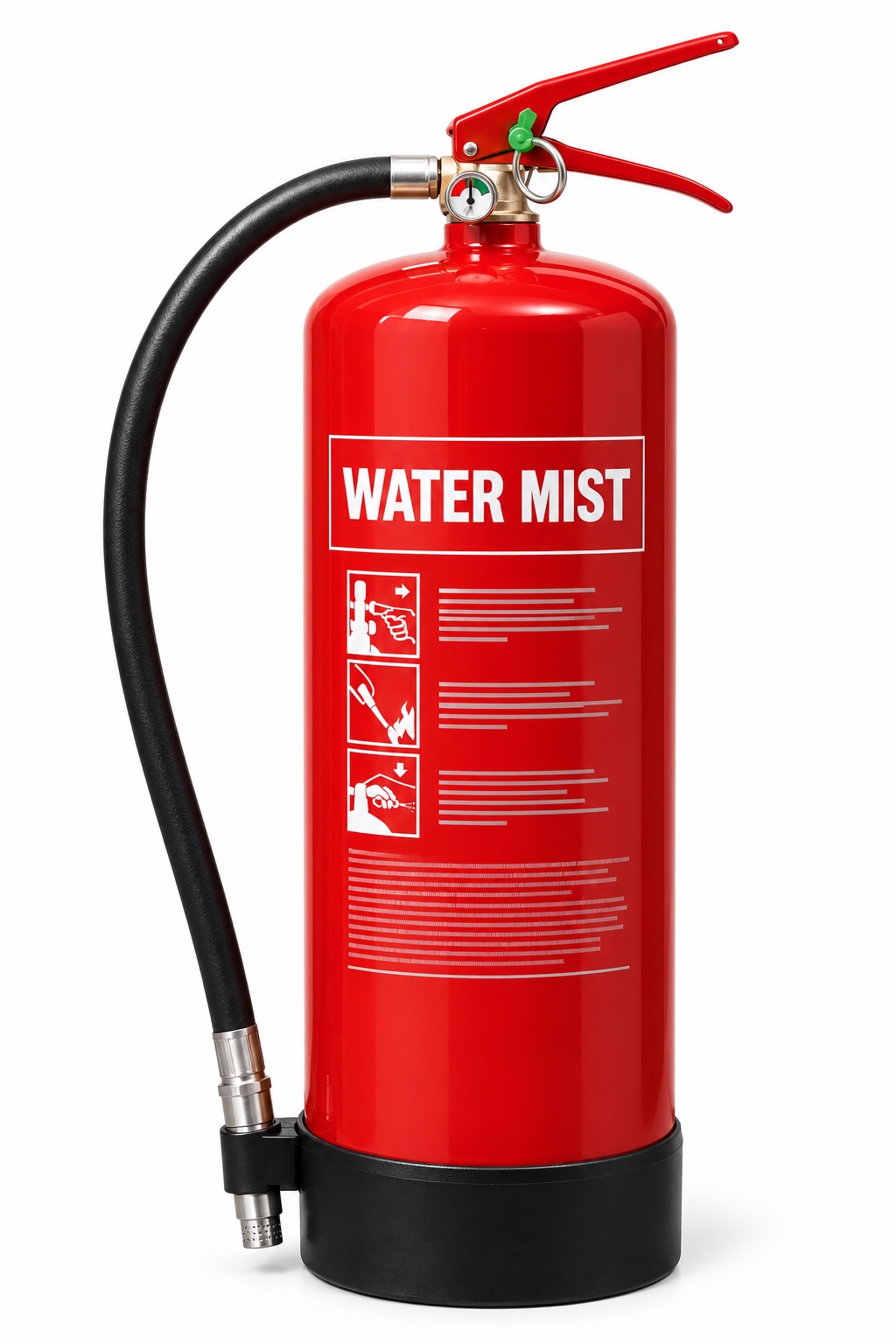 | Model-specific; commonly A, some F Fine droplets absorb heat. Some products have additional ratings or tested electrical suitability, with stated voltage and distance conditions. | Check the limitation ‘Mist’ is not universal approval. Use only the classes and electrical conditions actually declared for that model; do not assume it covers metals, liquids or batteries. |
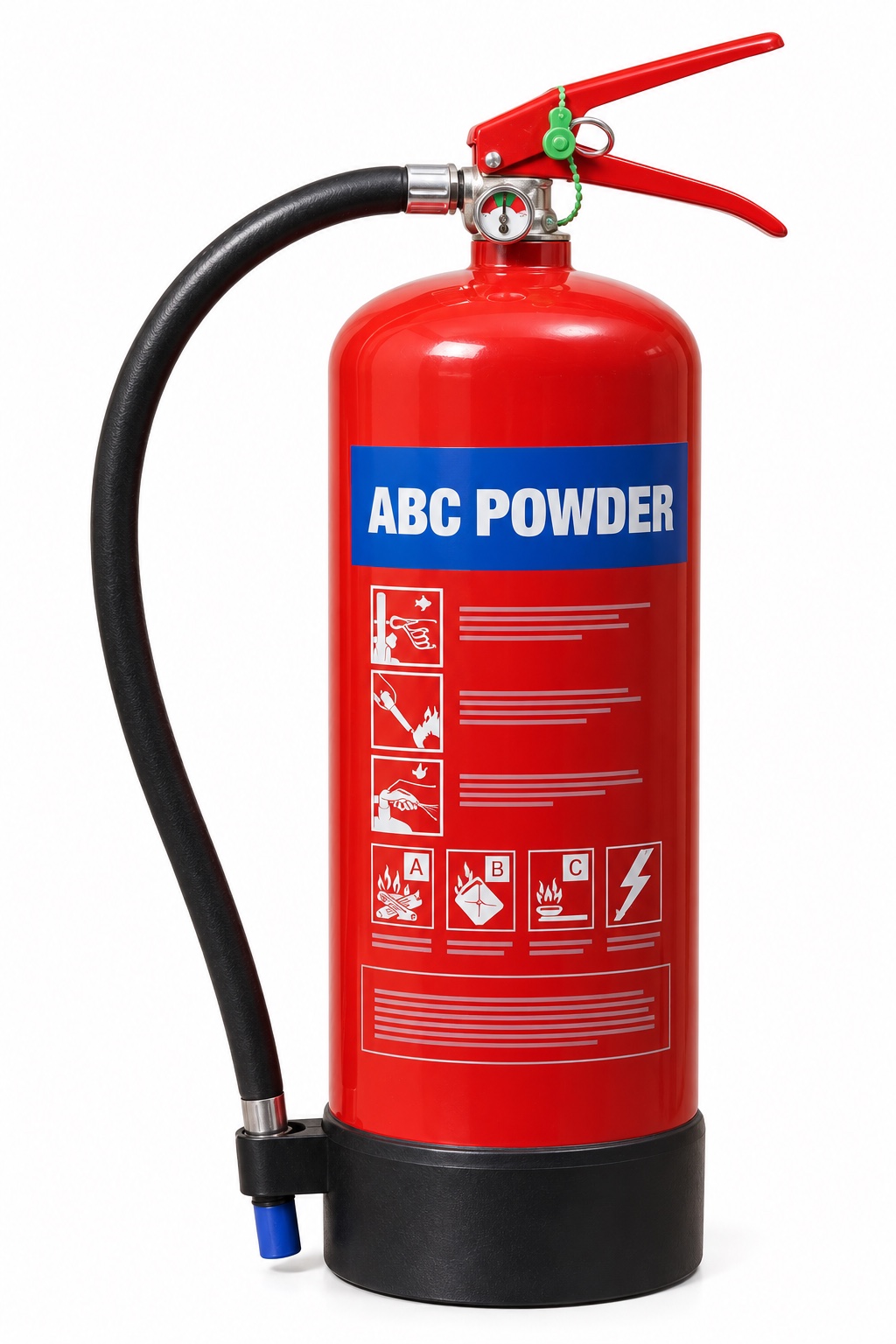 | A, B and C if marked Interrupts flame chemistry; multipurpose powder also acts on Class A material. A C marking does not authorise tackling a gas leak. | Check the limitation Powder can obscure escape and impair breathing; it is not generally recommended indoors. Limited cooling allows reignition. It is not metal-specific D powder or a substitute for F-rated cooking-oil equipment. |
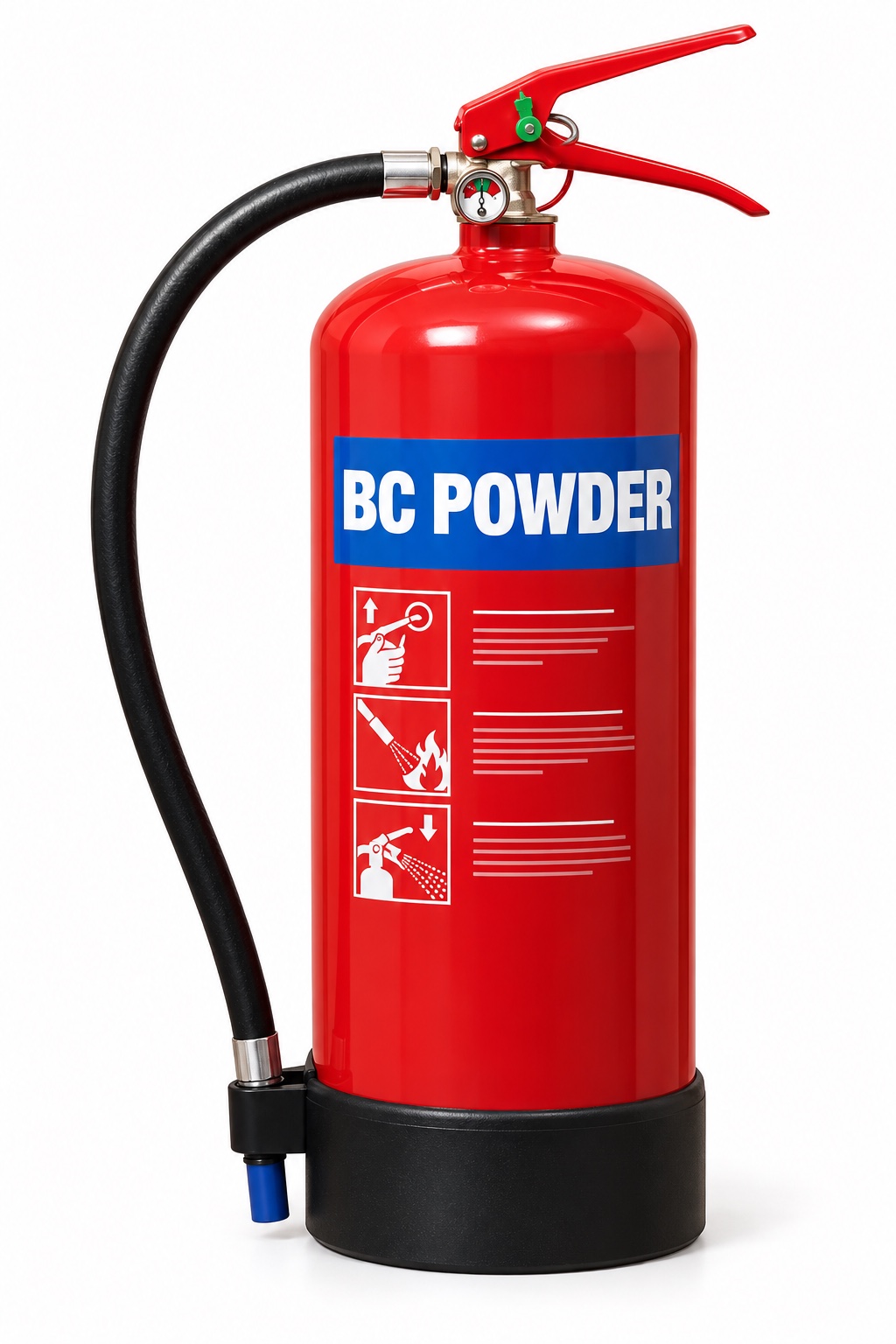 | B and C if marked; not A Selected for particular liquid or gas hazards under the assessed plan. Electrical use must follow the actual unit’s instructions. | Check the limitation Do not assume all blue powder extinguishers protect wood or paper. It has the visibility, breathing and reignition limitations of powder; it does not provide Class D or F protection. |
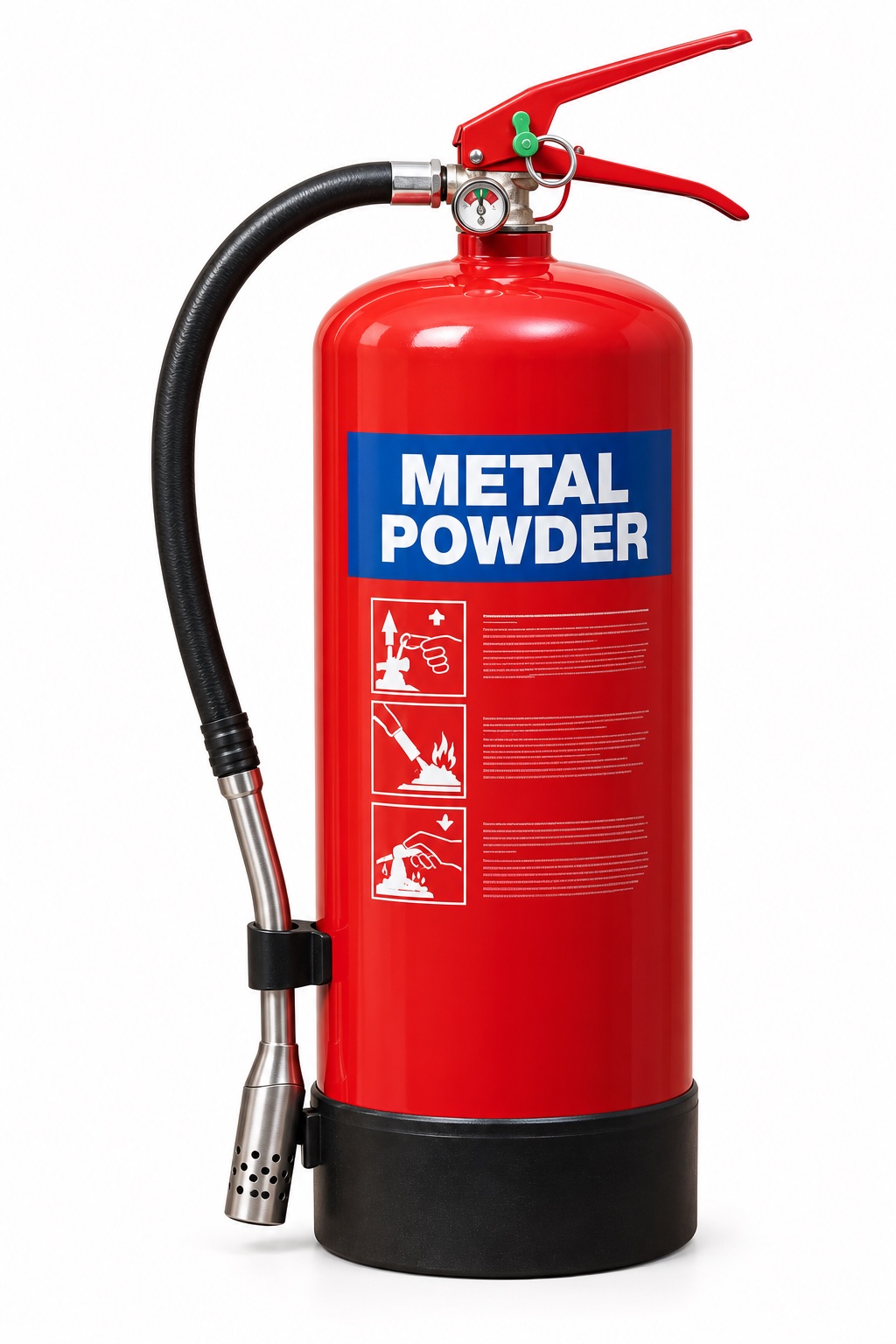 | D, for the specified metal A specialist powder can isolate or absorb heat from a compatible burning metal. Selection requires knowledge of the metal and its form. | Check the limitation The wrong powder can fail or react. Water, foam and CO₂ can be dangerous on certain burning metals. A powder suitable for magnesium is not automatically suitable for metallic lithium. |
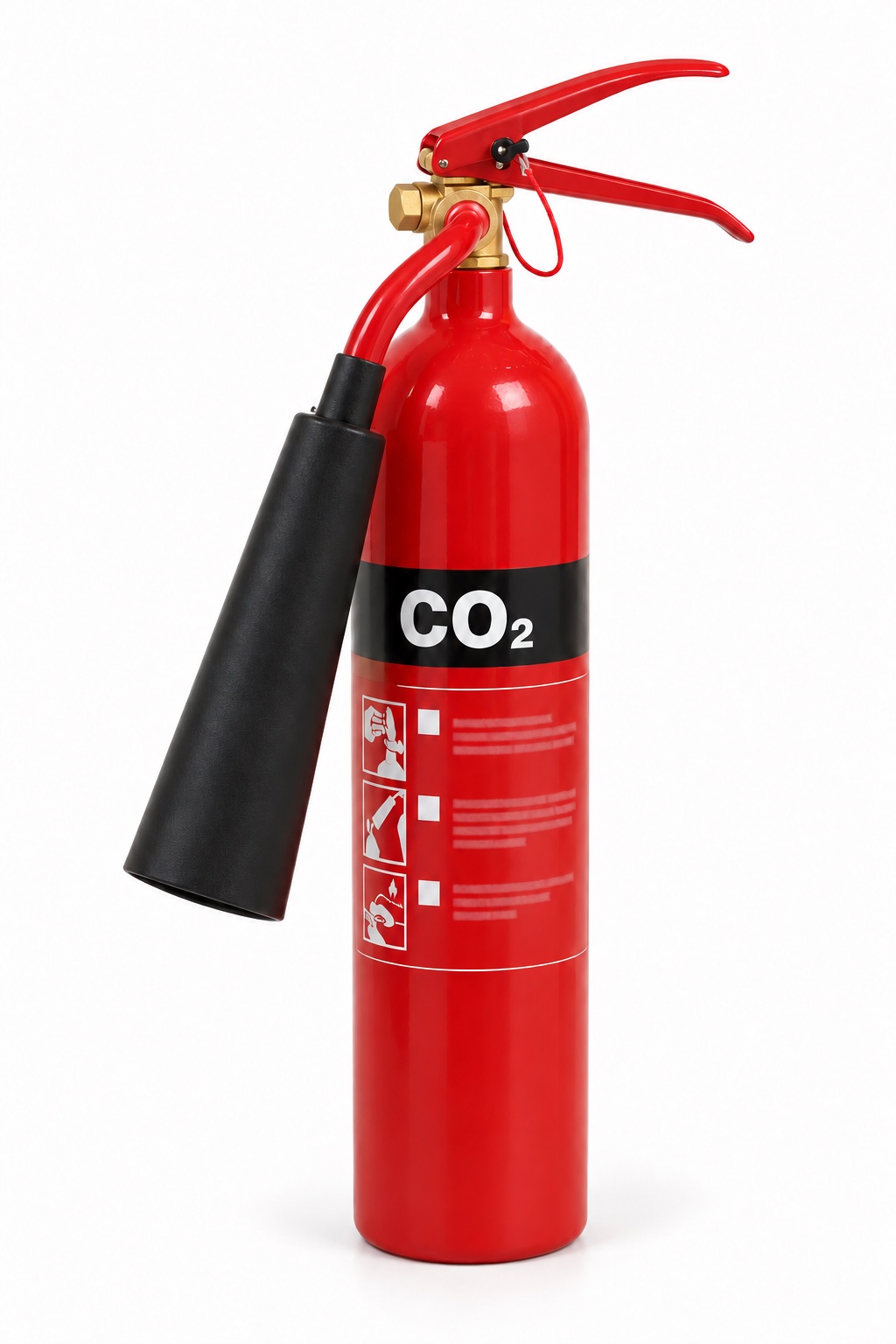 | B; electrical use as instructed Displaces the atmosphere around a small flame and leaves no powder residue. Often selected around electrical equipment. | Check the limitation Poor cooling means reignition is possible. CO₂ can create a dangerous atmosphere in enclosed spaces; discharge can cause frostbite. Hold only the designated insulated parts. Not a cooking-oil or metal-fire substitute. |
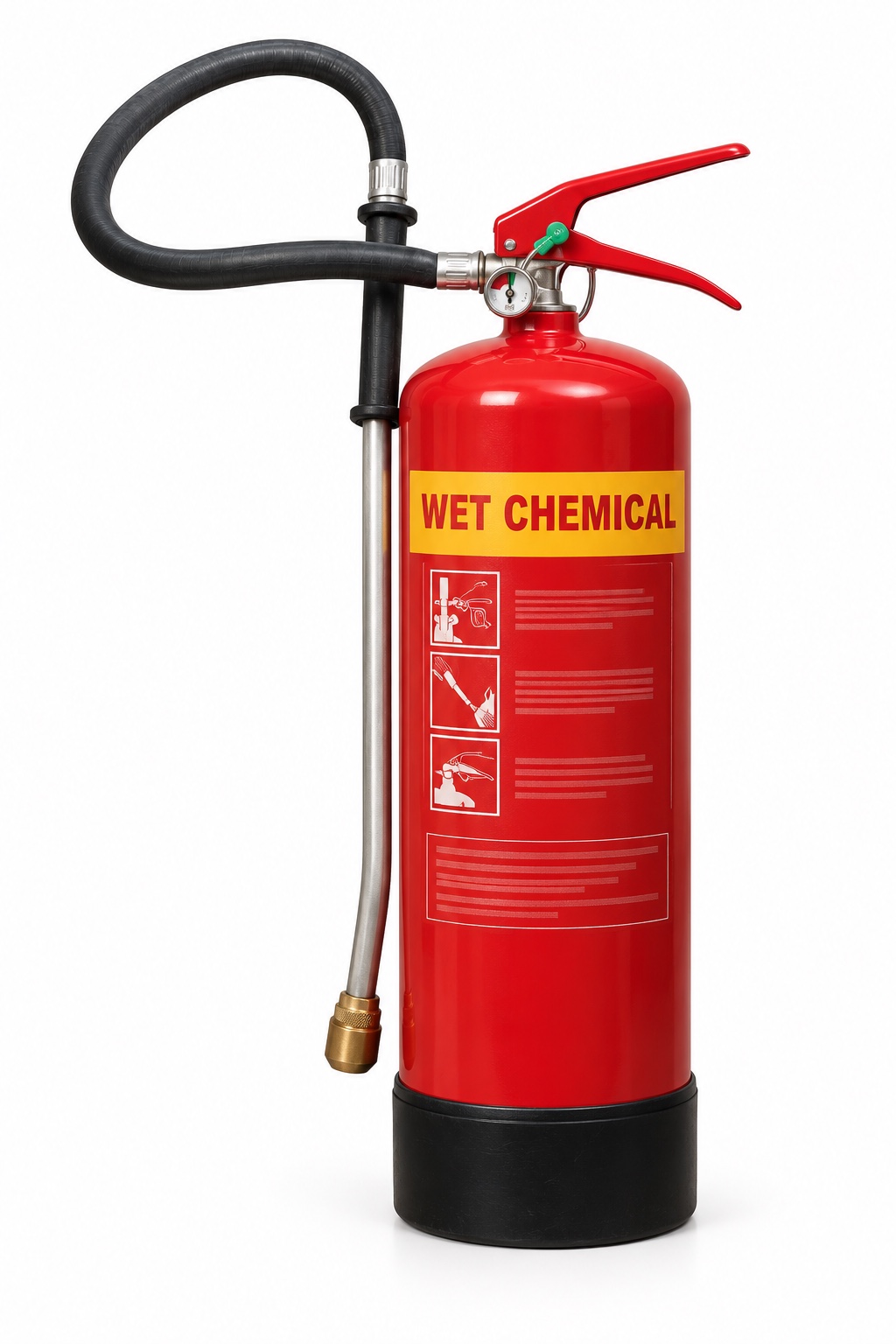 | F; often A if marked Cools cooking oil and creates a protective surface layer through reaction with the fat. Use only within the actual unit’s rating and instructions. | Check the limitation Do not mistake it for a general liquid-fire or electrical extinguisher. Incorrect application or moving the fryer can splash hot oil; apparent flame-out does not establish safe temperature. |
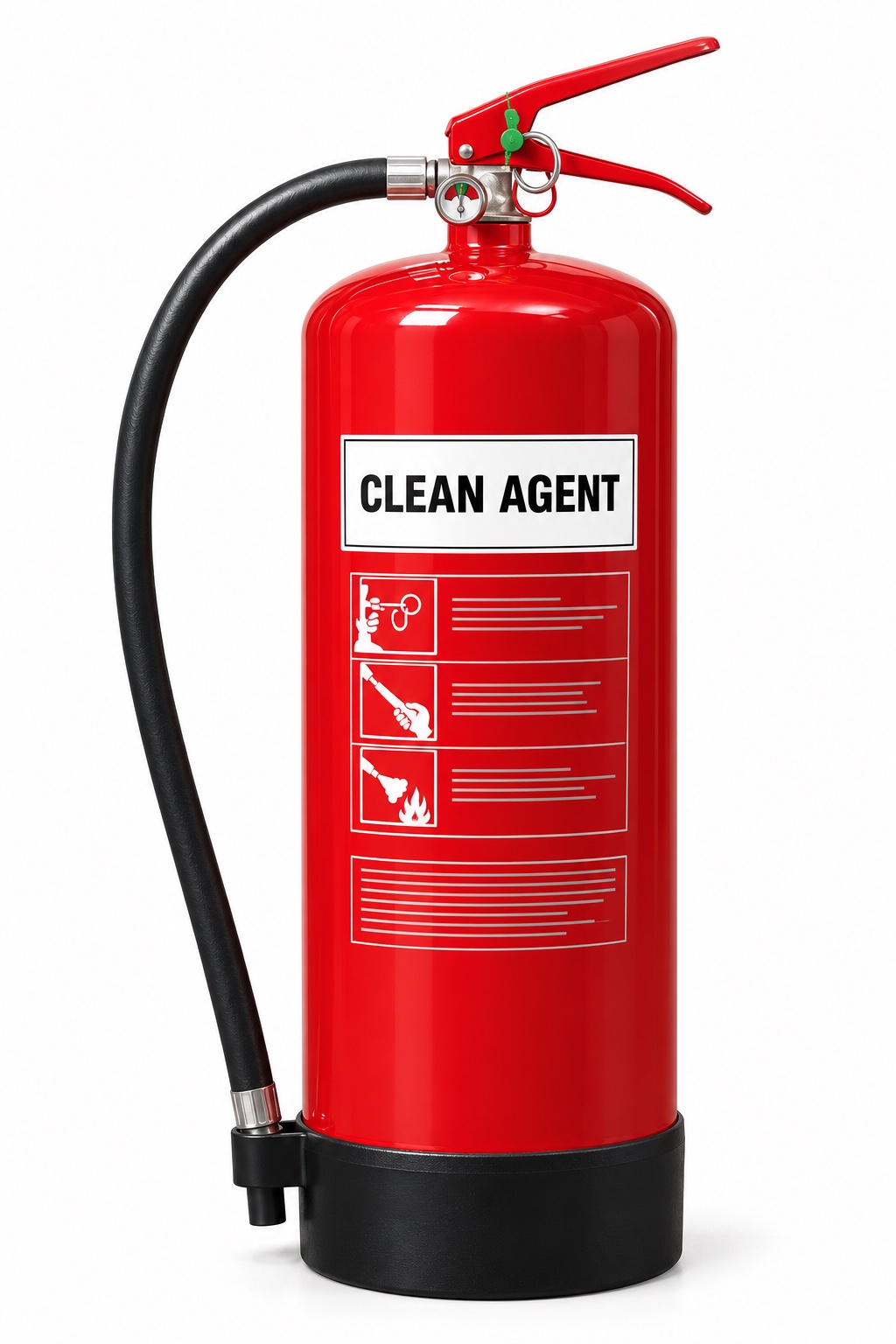 | Product- and jurisdiction-specific Specialist low-residue agents may protect sensitive equipment. Confirm the UK-approved application and the manufacturer’s limits. | Check the limitation Low residue does not mean safe to breathe. Do not copy a US A:B:C rating as UK gas-fire approval. Legacy halon is restricted to permitted critical uses and applicable deadlines. |
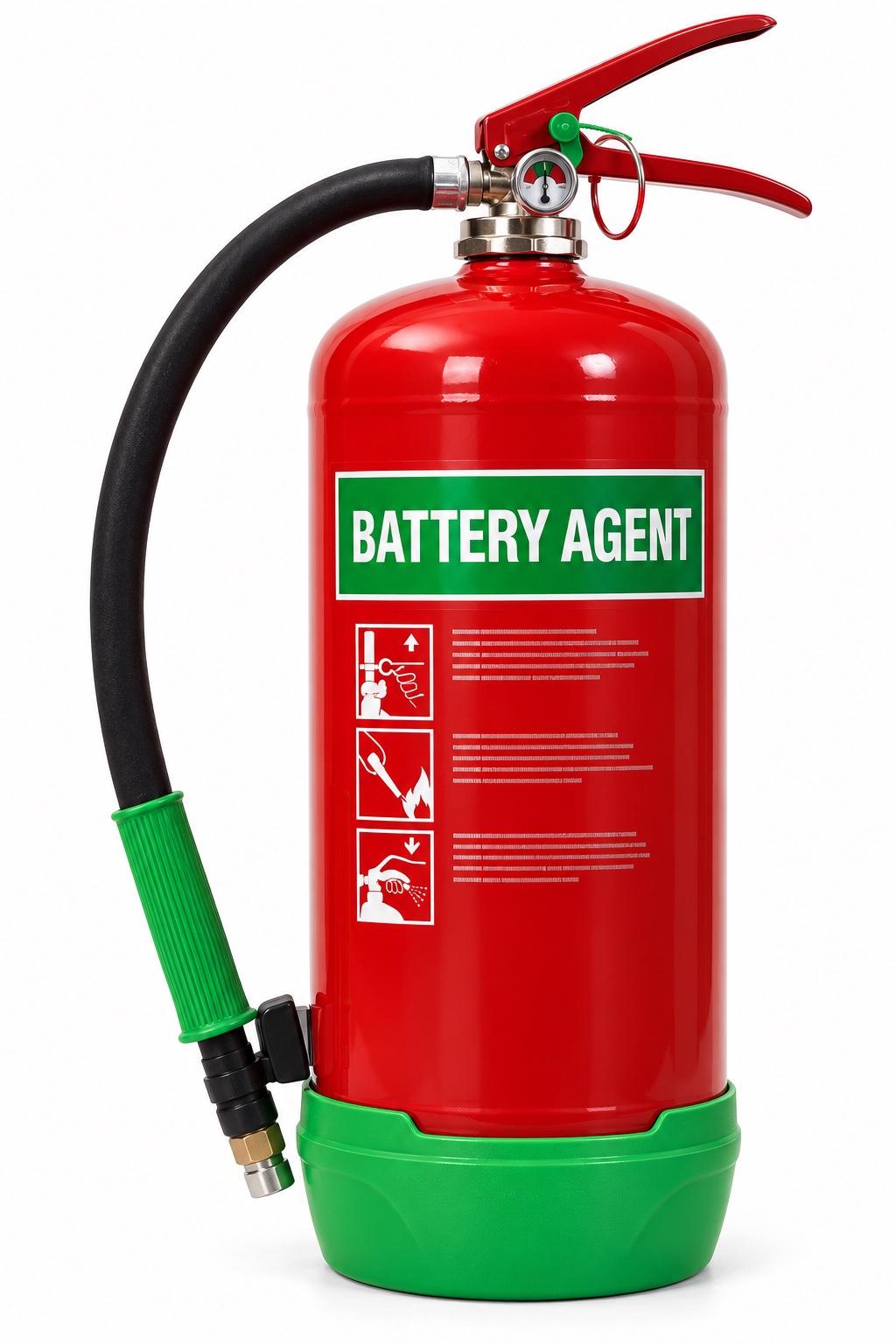 | Check independent scope and instructions Some products use water-based cooling or specialist media such as aqueous vermiculite for specified battery scenarios. Selection depends on chemistry, capacity and location. | Check the limitation A ‘lithium’ label is not proof it will stop thermal runaway in a large pack. Flame suppression may not prevent reignition or gas release. Do not approach, carry or submerge a failing battery as a learner exercise. |
Lithium-ion product example · Firechief 6 L Lith-Ex
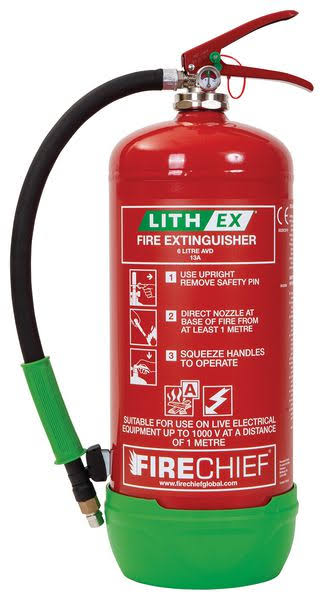
A named product example helps connect the generic table to an actual unit. Confirm the exact product before using its claims.
- Agent and intended application
- The linked Seton example uses aqueous vermiculite dispersion (AVD) for specified lithium-ion battery fire applications. Water content cools; the dispersed mineral helps form a barrier. This is not generic Class D metal-fire powder.
- Read the actual rating
- Seton lists a 6 L product with a 13A rating. That A rating describes its solid-material test performance; it does not, by itself, certify a universal Class L battery capability.
- Match the exact model and generation
- The manufacturer’s current 6 L G2 page identifies FLE6X and different discharge details from the retailer’s older listing. Do not mix their time, range or pressure values. Match the delivered label, product sheet and manual.
- Check the battery scope
- Confirm the allowed battery chemistry, energy capacity, state and scenario with the current manufacturer information and competent fire assessment. A large EV or energy-storage pack cannot be treated as a small-device fire.
- Electrical conditions are product-specific
- The supplied product label includes a voltage and minimum-distance condition. Do not transfer that condition to another battery extinguisher or infer that it makes an unsafe electrical approach acceptable.
- After the flame disappears
- Heat, off-gas and reignition can remain. Follow the planned withdrawal, exclusion and fire-service response; do not pick up, submerge or return a failed battery to charging.
Seton · supplied 6 L Lith-Ex example ↗
Firechief · current 6 L G2 model information ↗
Read the actual label
Read the agent, fire-class letters, performance rating, electrical warnings, operating instructions and service condition. Numbers such as 13A or 55B describe standardised test performance, not a safe room size or permission to tackle that amount of fire. Colour is a clue; the actual label and assessed plan decide suitability.
Spot the dangerous assumption
Pause at each question, then open the explanation. These are unscored learning prompts alongside the course assessment.
Keep prevention, alarms, compartmentation and escape effective. Report a missing, obstructed, damaged or discharged extinguisher; do not return a partly used unit to service. Competent selection, maintenance and practical training belong in the fire arrangements.
How can the hierarchy of controls prevent ignition and limit fire spread?
Eliminate, Reduce including substitution, Isolate, Control, personal protective equipment (PPE) and Discipline (ERICPD) is a prompt for decisions. HSE’s five-level hierarchy prioritises elimination, substitution, engineering controls, administrative controls and PPE. They are related frameworks, not identical laws; apply them to the actual task and check the resulting control.
Eliminate: the project designer avoids hot work beside a combustible stock area by specifying a bolted connection and removes unnecessary packaging from the work zone. Verify that the alternate method is structurally suitable and that waste is not shifted into an escape route.
Substitute and reduce: use a lower-flammability product where the manufacturer and process requirements permit, limit flammable inventory and separate charging from storage. Procurement checks product information; “low odour” or “water based” alone does not prove no fire risk.
Isolate and engineer: maintain fire-rated compartments, doors and tested penetration seals, physically segregate hot work, and use suitable detection or suppression where the assessment requires it. A competent person checks the installed system and closure; an unsealed opening or wedged door is an impairment hold.
Control, PPE and Discipline: permit and supervise unavoidable hot work, clear combustible waste, maintain exits, test alarms and plan evacuation with contractors. PPE protects workers performing the task; it cannot make a damaged compartment or blocked escape route safe. Recheck after changes, record defect closure and stop use where protection cannot be demonstrated.
Source: HSE hierarchy of controls
Source: HSE fire safety in construction HSG168
How can the ERICPD hierarchy of controls prevent ignition and limit fire spread?

| ERICPD control level | Topic-specific example | Source and full task context |
|---|---|---|
| Eliminate | Avoid unnecessary combustible/ignition tasks or new compartment breaches where feasible. | Read the full task example, checks and stop points on this page. HSE hierarchy of controls · HSE fire safety in construction HSG168 |
| Reduce | Assess a genuinely lower-flammability replacement; inventory reduction and spatial separation are different measures. | Read the full task example, checks and stop points on this page. HSE hierarchy of controls · HSE fire safety in construction HSG168 |
| Isolate | Maintain suitable compartments, doors, penetration seals, physical hot-work separation, detection and suppression. | Read the full task example, checks and stop points on this page. HSE hierarchy of controls · HSE fire safety in construction HSG168 |
| Control | Use permits, supervision, waste schedules, inspections/defect closure and evacuation planning. | Read the full task example, checks and stop points on this page. HSE hierarchy of controls · HSE fire safety in construction HSG168 |
| PPE | Use assessed residual task protection; ordinary PPE does not restore a breached compartment or protected route. | Read the full task example, checks and stop points on this page. HSE hierarchy of controls · HSE fire safety in construction HSG168 |
| Discipline | Inspect before concealment and verify accepted handback before lifting occupancy restrictions. | Read the full task example, checks and stop points on this page. HSE hierarchy of controls · HSE fire safety in construction HSG168 |
How can the ISO 45001 hierarchy of controls prevent ignition and limit fire spread?

| ESEAP control level | Topic-specific example | Source and full task context |
|---|---|---|
| Elimination | Avoid unnecessary combustible/ignition tasks or new compartment breaches where feasible. | Read the full task example, checks and stop points on this page. HSE hierarchy of controls · HSE fire safety in construction HSG168 |
| Substitution | Assess a genuinely lower-flammability replacement; inventory reduction and spatial separation are different measures. | Read the full task example, checks and stop points on this page. HSE hierarchy of controls · HSE fire safety in construction HSG168 |
| Engineering controls | Maintain suitable compartments, doors, penetration seals, physical hot-work separation, detection and suppression. | Read the full task example, checks and stop points on this page. HSE hierarchy of controls · HSE fire safety in construction HSG168 |
| Administrative controls | Use permits, supervision, waste schedules, inspections/defect closure and evacuation planning. | Read the full task example, checks and stop points on this page. HSE hierarchy of controls · HSE fire safety in construction HSG168 |
| PPE | Use assessed residual task protection; ordinary PPE does not restore a breached compartment or protected route. | Read the full task example, checks and stop points on this page. HSE hierarchy of controls · HSE fire safety in construction HSG168 |
How does the fire triangle become a fire-spread problem?
The practical model is heat/ignition + fuel + oxygen present together → fire development → smoke/heat movement -> smoke/heat spread -> compartmentation/escape protection.
The fire triangle is a useful starting point because fire needs fuel, oxygen and an ignition source. In real premises, the problem does not stop at ignition. Once a small fire starts, it can grow, produce smoke and heat, involve additional fuels, move through hidden spaces, attack escape routes and expose people before flames are visible. This is why prevention and spread control must be planned together.
For learners, the model should be read as a sequence: ignition source -> fuel -> oxygen -> fire growth -> smoke and heat movement -> compartmentation and escape protection. Each step has controls and evidence. If a step is weak, the next step becomes more likely or more severe.
| Stage | What happens | Control focus |
|---|---|---|
| Ignition source | Heat, spark, flame, electrical fault, friction, hot work or hot surface starts the event. | Remove/segregate ignition, inspect electrics, control hot work and manage DSEAR sources. |
| Fuel | Combustibles, waste, packaging, timber, liquids, gas, dust or furnishings feed the fire. | Reduce fuel load, control storage, remove waste and segregate flammables. |
| Oxygen | Air supports combustion and ventilation can intensify spread. | Understand ventilation, openings, doors, ducts and process air movement. |
| Growth | Small fire involves nearby materials and increases heat release. | Separation, housekeeping, detection, sprinklers and early response. |
| Smoke/heat spread | Smoke and heat move through doors, voids, risers, ducts and penetrations. | Fire doors, dampers, fire stopping and protected routes. |
| Escape/compartment protection | People need safe routes while fire is contained. | Maintain escape routes, emergency lighting, signage, alarms and compartmentation evidence. |
Heat/ignition, fuel and oxygen must coincide for ignition; subsequent fire development and smoke/heat movement create the protection and escape problem. Read the later stages as consequences, not as fuel and oxygen arriving after ignition. Compartmentation and escape protection must already be in place.
Which fire route are you dealing with?
Different premises need different fire prevention emphasis, so route selection matters.
The same fire principle can look different in practice. An office may focus on electrical faults, escape routes, kitchenettes and fire doors. A warehouse may need storage height, pallets, chargers and racking aisles controlled. A construction project may need hot work, temporary electrics, waste, timber, scaffold sheeting and emergency access. A process site must also consider flammable vapours, gases, dusts, thermal radiation, separation and escalation.
This route view helps readers choose deeper SHARE pages and prevents a generic one-size fire checklist from missing the real hazard.
| Route | Use this route when | Deeper control focus |
|---|---|---|
| Ordinary workplace | Offices, small shops, welfare areas and low-risk premises. | Electrical safety, housekeeping, fire doors, escape routes and staff briefing. |
| Warehouse/logistics | Large storage, pallets, chargers, racking and vehicles. | Storage layout, battery charging, aisle control, detection and separation. |
| Construction | Temporary works, hot work, changing layout and temporary electrics. | HSG168, fire plan, waste, permits, temporary buildings and emergency access. |
| Residential/common parts | Shared escape routes, flat entrances, risers and resident interface. | Fire doors, compartmentation, information, inspections and responsible person duties. |
| DSEAR/high-risk work | Flammable liquids, gases, vapours, dusts or oxidisers. | Hazardous areas, ignition control, ventilation, storage and emergency plans. |
| Process safety | Major accident fire or escalation scenarios. | Separation, bunds, emergency isolation, firewater, detection and barrier assurance. |
Which construction fire examples need close control?
Construction fire risk changes quickly because the building, services, materials and escape routes can change every day.
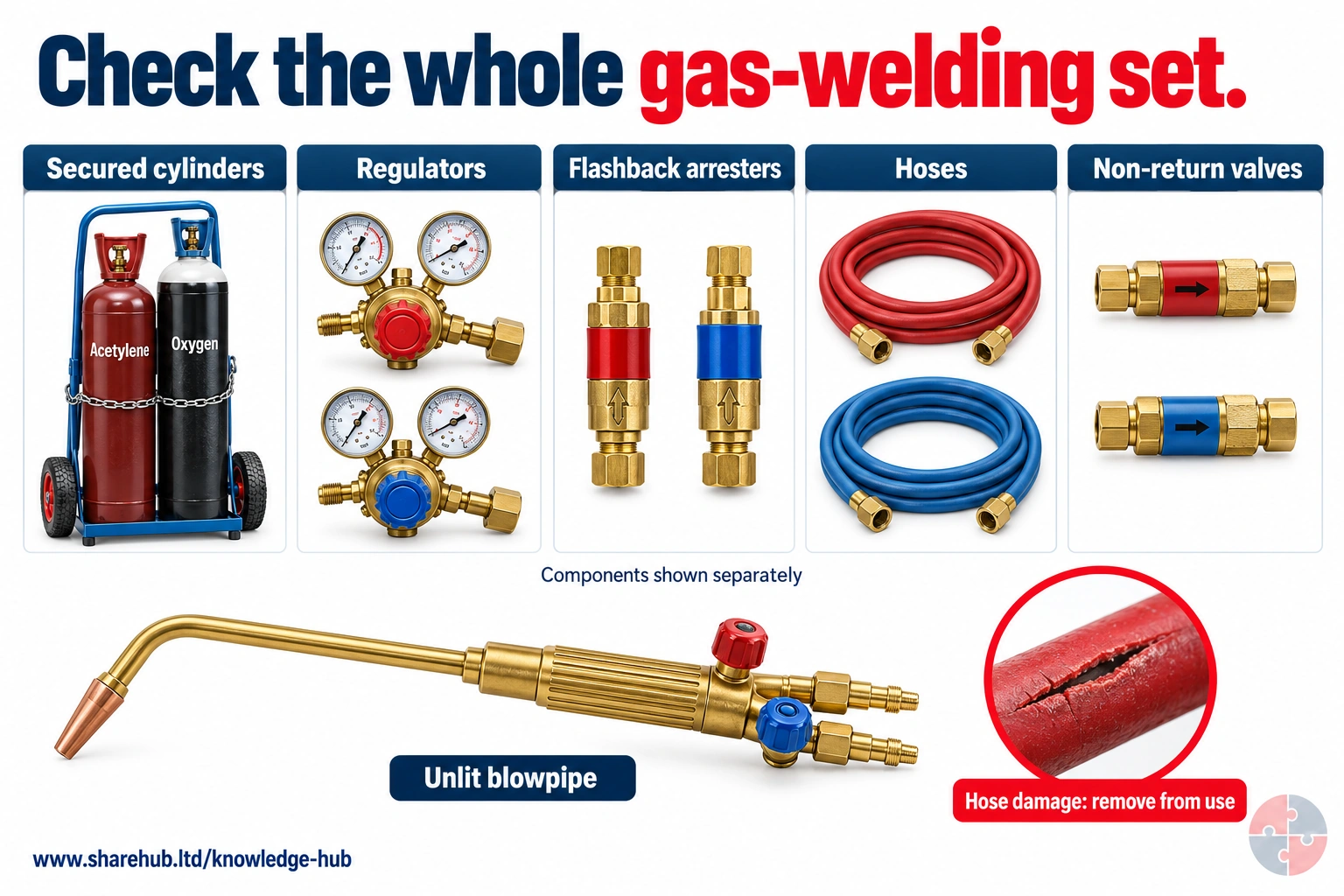
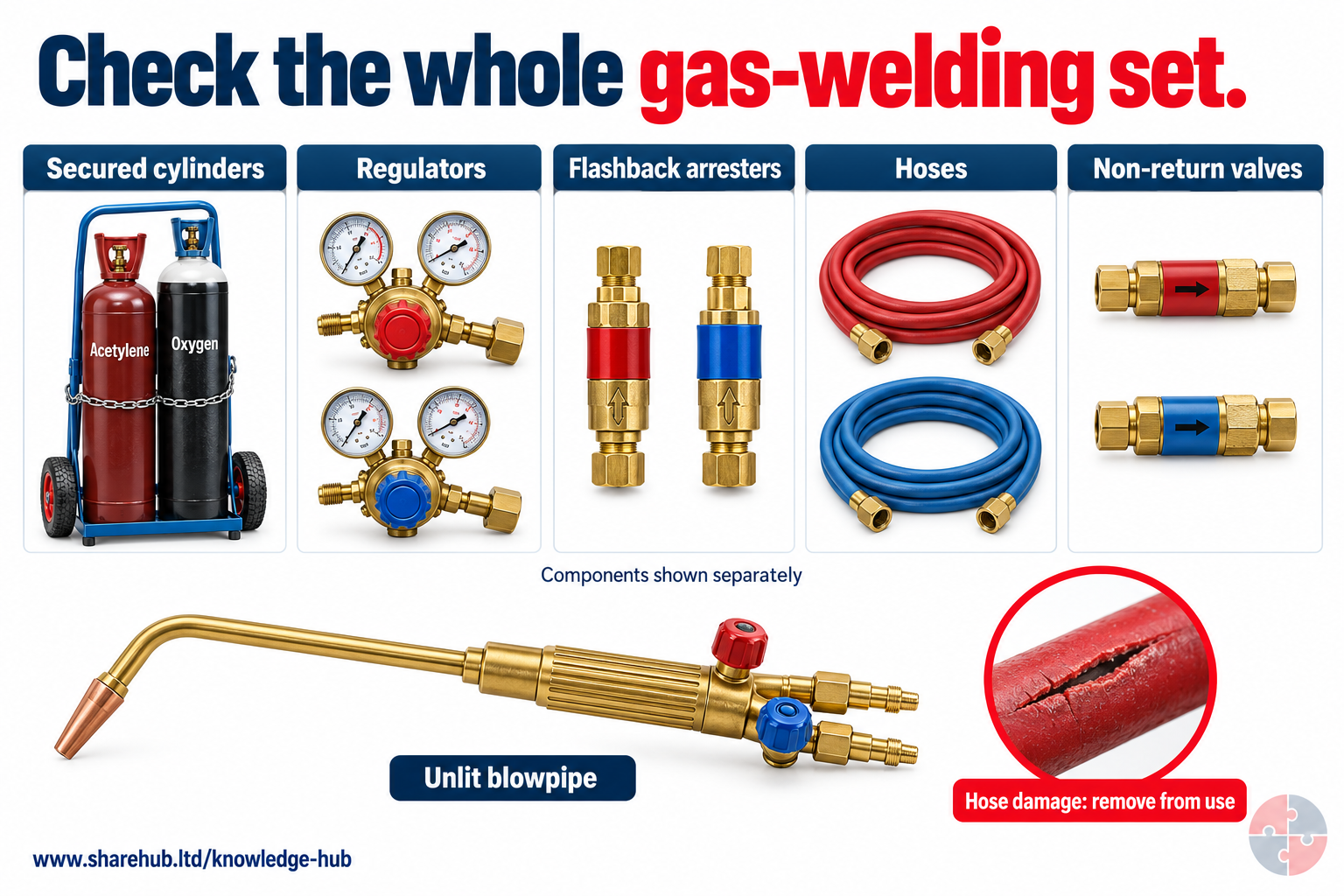
The separate component plate identifies secured cylinders, regulators, flashback arresters, hoses, non-return valves and an unlit blowpipe. A non-return valve limits reverse gas flow; a flashback arrester addresses a flame travelling back into the supply. The split hose is an example to remove from use, not repair with tape.
Do a non-return valve and flashback arrester serve the same purpose?
No. A non-return valve limits reverse gas flow but will not stop a flashback once it has occurred. Suitable flashback arresters and the other specified precautions remain necessary.
Identification only, not a connection, lighting or operating sequence. Component colours and shapes do not establish compatibility. Selection, positions, gas identification, inspection and operation require competent training, HSE guidance and manufacturer instructions.
Source guidance: HSE HSG168 · HSE INDG297
Construction and refurbishment projects deserve their own fire-prevention lens. Temporary electrical systems may be extended, moved or damaged. Hot works may happen near hidden voids. Waste can build up faster than it is removed. Fire stopping may be incomplete during service installation. Risers may be open. Temporary coverings, scaffold sheeting, timber, insulation, adhesives and gas cylinders can change the fire load and spread route.
A good construction fire plan is therefore live. It should be reviewed as the project moves through strip-out, structural works, fit-out, commissioning and occupation. Supervisors should know which temporary conditions are acceptable, which require a permit or compensating control, and which should stop work.
| Example | How fire risk increases | Control and evidence |
|---|---|---|
| Temporary electrics | Damaged cables, overloaded supplies or poor charger locations can ignite materials. | Temporary electrical inspection, route protection and defect removal. |
| Hot works | Sparks or heat reach hidden voids, insulation, dust or waste. | Hot work permit, isolation, fire watch and post-work inspection. |
| Waste build-up | Packaging, offcuts and pallets create fuel and obstruct routes. | Waste schedule, skip separation and daily supervisor checks. |
| Incomplete fire stopping | Open penetrations allow smoke/fire through compartments. | Fire-stopping permit, photo evidence and competent sign-off. |
| Open risers or voids | Smoke and flame can spread vertically or unseen. | Temporary covers, barriers, inspection and sequencing control. |
| Temporary coverings or sheeting | Combustible coverings increase external or scaffold fire spread. | Material standard, separation, ignition control and fire plan review. |
How should ignition and fuel be controlled?
Fire prevention is strongest when fuel and ignition are controlled together.
Removing ignition sources while leaving poor fuel control is weak. Removing waste while allowing uncontrolled hot work is also weak. Good fire prevention links housekeeping, storage, maintenance, electrical condition, contractor control, smoking, hot work, chargers, process equipment and supervision.
Ignition control must be specific. A generic 'no naked flames' rule does not manage damaged cables, overloaded sockets, lithium battery charging, static electricity, grinding sparks, hot bearings, friction, portable heaters or hot surfaces near flammable vapour.
| Hazard | Typical failure | Stronger control |
|---|---|---|
| Combustible waste | Waste builds up near exits or plant rooms. | Daily removal, skip location rules and inspection. |
| Hot work | Sparks reach hidden void or combustible material. | Permit, fire watch, isolation, gas test and post-work checks. |
| Electrical equipment | Damaged leads, overloaded sockets or poor chargers. | Inspection, maintenance, RCDs and removal of defects. |
| Flammable liquids | Open containers, poor cabinets or incompatible storage. | Small quantities, closed containers, DSEAR assessment and segregation. |
| Battery charging | Chargers on combustible surfaces or damaged batteries. | Charging area, supervision, defect control and emergency plan. |
| Smoking/vaping | Poorly controlled smoking areas near waste or gas stores. | Designated areas, bins and inspection. |
How does fire and smoke spread through workplaces?
Fire and smoke spread through open doors, voids, penetrations, ducts, combustible linings, external routes and poor storage.
Fire spread is not only a flame front moving across a room. Smoke can move through ceiling voids, service risers, poorly sealed penetrations, ductwork and open doors long before people see flames. Heat can attack adjacent compartments, external cladding, stored materials, plant, cylinders or process equipment. That is why everyday actions such as wedging a fire door, drilling unsealed cable holes or storing pallets against an external wall can weaken the fire strategy.
The practical test is simple: if a fire starts here, what stops smoke, heat and flame moving to people, escape routes, neighbours, critical equipment or higher-hazard areas?
| Pathway | What can go wrong | Evidence/control |
|---|---|---|
| Open or damaged fire door | Smoke and heat pass into escape route. | Fire door inspection and repair log. |
| Unsealed service penetration | Fire moves through wall, floor or riser. | Fire-stopping register and contractor control. |
| Ceiling or roof void | Hidden spread beyond the room of origin. | Compartmentation survey and inspection. |
| Duct or extraction route | Smoke/flame moves through ventilation or grease deposits. | Cleaning, dampers and maintenance records. |
| External storage | Fire spreads to building facade or openings. | Storage separation and waste controls. |
| Process escalation | Fire impinges on vessel, pipework or cylinders. | Separation, cooling, isolation and emergency response. |
How should fire doors be protected during everyday work?
Fire doors are critical controls and should be treated as part of the fire strategy, not furniture.
Fire doors fail through everyday drift: wedges, missing closers, damaged seals, excessive gaps, poor hinges, unapproved ironmongery, contractor damage, poor maintenance or unsuitable replacement. A fire door that is present but does not close, latch or resist smoke is not performing its function.
Inspection frequency should reflect premises risk and legal duties. Higher footfall, residential common parts, public venues and damage-prone workplaces need stronger routines. Defects should be prioritised and tracked because a defective fire door can compromise escape and compartmentation.
| Check | What good looks like | Failure to challenge |
|---|---|---|
| Closes fully | Door self-closes from different positions and latches where required. | Door drags, sticks or remains open. |
| Gaps and seals | Gaps, smoke seals and intumescent strips are suitable and intact. | Damaged seals, large gaps or missing strips. |
| Damage | Leaf, frame, glazing and hardware are sound. | Holes, cracks, impact damage or unauthorised alterations. |
| Hold-open devices | Approved devices release on alarm where relevant. | Wedged or propped doors. |
| Records | Inspection, defects and repairs are tracked. | Repeated defects with no close-out. |
| Contractor control | Works do not compromise doors or compartments. | Replacement or drilling without fire review. |
In relevant multi-occupied residential buildings in England whose top storey is over 11 m, communal fire-door checks are required at least every three months; best endeavours must be used to check flat-entrance doors at least every 12 months. These do not replace risk-based maintenance or apply universally across the UK. Resident fire-door information duties apply more broadly to relevant multi-occupied buildings. Home Office England fire-door duties
What does a fire-spread failure look like?
A worked scenario shows how small defects combine into a serious fire route.
A refurbishment project adds network cabling through a protected corridor wall. The contractor drills penetrations and promises to seal them later. At the same time, packaging waste is stored in the corridor because the skip is full, and a fire door is wedged to move materials. A small electrical fire starts in a store. Smoke enters the corridor through the unsealed holes and open door, compromising escape before the alarm investigation is complete.
The lesson is that fire spread is often created by ordinary coordination failures: sequencing, waste control, contractor supervision, fire-stopping handback, door discipline and temporary storage. The action is not only to tell people not to wedge doors; it is to control work that changes the fire strategy.
| Failure | Why it mattered | Better control |
|---|---|---|
| Unsealed cable penetration | Compartment wall no longer resisted smoke/fire. | Fire-stopping permit, photo evidence and sign-off. |
| Wedged fire door | Protected corridor exposed to smoke. | Door discipline and approved temporary controls. |
| Corridor waste | Added fuel to escape route. | Waste removal schedule and supervisor check. |
| Poor contractor handback | Fire strategy changes not reviewed. | Permit close-out and fire-risk review. |
| Weak escalation | Defects treated as housekeeping only. | Responsible person action tracker. |
Operational example: decisions and evidence
Task material and setting: Contractors cut a new cable route through a fire-rated wall beside a warehouse packing area.
People and prerequisites: Premises dutyholder, designer, competent fire-stopping installer, contractor supervisor and affected workers agree the boundary and occupied-use plan.
Before: Confirm wall construction, required performance, cable detail and tested full sealing system; clear combustible packaging and protect escape routes.
During: Keep the opening controlled, supervise any hot work and prevent unauthorised occupation if temporary protection is inadequate.
Hold or stop: Unknown wall build-up, incompatible seal, failed door, obstructed exit or uncontrolled ignition source pauses the task and affected occupancy.
Completion and hand back: Competent inspection checks the full installed system before concealment; update drawings and remove temporary restrictions only after acceptance.
Evidence: Fire-risk review, product system evidence, permit/impairment record, installation photos, inspection, action closure and revised plan.
Source: HSE fire safety in construction HSG168
Source: HSE DSEAR in detail
What records should show fire prevention is working?
A fire prevention system should produce evidence that controls are present, working and acted on.
The evidence pack should not be a pile of certificates no one reviews. It should show that fire risk assessment findings are turned into inspection routines, maintenance, repairs, training, contractor controls, impairment logs and action close-out. Responsible persons should be able to show what was checked, what failed, who owns the action and whether it was verified.
For higher-risk sites, evidence must connect to DSEAR, process safety, emergency response and business continuity. A flammable store with a good FRA but no DSEAR ignition-control evidence is incomplete.
| Record | What it proves | Weakness to challenge |
|---|---|---|
| Fire risk assessment | Hazards, people at risk, precautions, actions and review. | Generic FRA not matched to premises. |
| Housekeeping/fire route inspections | Fuel and escape-route control. | Repeated blocked routes without escalation. |
| Fire door register | Door condition and defect close-out. | Doors inspected but defects not repaired. |
| Fire-stopping register | Penetrations and repairs are controlled. | No record after refurb or cabling works. |
| Hot work permits | Ignition work controlled. | Permits closed without fire-watch evidence. |
| DSEAR assessment | Flammable atmospheres and ignition risks controlled. | Flammable storage treated as ordinary housekeeping. |
| Impairment log | Failed alarms, doors, sprinklers or systems controlled. | Impairments not communicated or compensated. |
Where do fire prevention controls commonly fail?
Failures usually come from normalisation: temporary storage, propped doors, incomplete works and action drift.
| Failure | Why it is serious | Control |
|---|---|---|
| Combustibles stored in risers or plant rooms | Adds fuel and blocks access. | Inspection and storage rules. |
| Fire doors wedged | Smoke spread and escape compromise. | Manager challenge and repair/hold-open controls. |
| Fire stopping damaged by contractors | Compartmentation breached. | Permit, inspection and handback evidence. |
| Hot work treated as routine | Ignition source near hidden fuel. | Permit, isolation, fire watch and post-work check. |
| Poor external waste control | External fire can enter building. | Skip separation and waste collection. |
| DSEAR controls missing | Vapour/dust ignition and escalation risk. | DSEAR assessment and ignition control. |
Which legal duties and guidance apply?
Fire prevention and spread control sit under fire safety law, construction duties, dangerous-substance law and premises-specific guidance.
| Duty or guidance | What it requires | How to apply it |
|---|---|---|
| Regulatory Reform (Fire Safety) Order 2005 | Places fire safety duties on the responsible person in England and Wales. | Use it to frame fire risk assessment, precautions, emergency arrangements, maintenance and staff information. |
| Fire Safety Act 2021 | Clarifies fire safety duties for certain building parts. | Use where residential/common parts and building interfaces are relevant. |
| Fire Safety (England) Regulations 2022 | Adds duties for certain residential buildings in England. | Use where fire doors, resident information and building information duties apply. |
| DSEAR 2002 | Requires dangerous substances and ignition risks to be controlled. | Use where flammable liquids, gases, dusts or explosive atmospheres are present. |
| Fire (Scotland) Act 2005, Part 3 | Assess and maintain fire precautions and escape arrangements under this jurisdiction’s premises regime. | Confirm scope, owner and field evidence for the actual worksite. |
| Fire Safety (Scotland) Regulations 2006 | Assess and maintain fire precautions and escape arrangements under this jurisdiction’s premises regime. | Confirm scope, owner and field evidence for the actual worksite. |
| Fire and Rescue Services (Northern Ireland) Order 2006 | Assess and maintain fire precautions and escape arrangements under this jurisdiction’s premises regime. | Check the NI premises fire-risk decision, means of escape and the responsible person’s maintenance/handback evidence. |
| Fire Safety Regulations (Northern Ireland) 2010 | Assess and maintain fire precautions and escape arrangements under this jurisdiction’s premises regime. | Verify NI fire precautions, escape arrangements and maintenance records against the actual premises layout. |
| Dangerous Substances and Explosive Atmospheres Regulations (Northern Ireland) 2003 | Assess and control fire and explosion risk from dangerous substances under the NI route. | For dangerous substances, test the NI fire/explosion assessment, segregation and ignition controls before work resumes. |
Choose the premises fire-safety route for England and Wales, Scotland or Northern Ireland, and separately assess dangerous-substance work under the applicable DSEAR route. The responsible person, workplace activity and premises scope determine the duties; guidance and voluntary standards are separate.
Source: HSE DSEAR in detail
Construction fire prevention starts with client/designer decisions and the applicable CDM duties before work, alongside contractor controls during the changing site. HSG168’s pre-construction elimination/reduction guidance supports this route; occupied-premises duties and DSEAR do not describe the whole construction planning system.
How should the control be managed and reviewed?
For a GB workplace, HSE guidance supports identifying the actual risk, taking practical protective steps and reviewing whether they work. Name the decision owner, check the control during the real task and correct a failed arrangement. Apply the separate Northern Ireland duties and guidance where the work is in NI.
GB management guidance: HSE managing health and safety
What training and awareness helps?
Training should explain the local fire strategy, not only evacuation instructions.
Training should be role-based. General awareness creates a baseline, but supervisors, managers, advisers and senior leaders need different levels of decision-making, verification and escalation competence.
| Role | What to demonstrate | Who checks | Record and reassessment |
|---|---|---|---|
| Workers and visitors | Recognise blocked exits, damaged doors and ignition changes; report and evacuate. | Supervisor asks for route and defect demonstration. | Briefing and reporting check; refresh after layout change. |
| Contractors and installers | Apply the specified fire-stopping system and control hot work. | Competent installer assesses an actual penetration and installation. | Product/install record; reassess on new system. |
| Supervisors and premises leads | Approve impairment, maintain escape and decide hold/reoccupation. | Fire safety lead tests an open-compartment scenario. | Permit, defect and handback record. |
| Designers, managers and auditors | Check fire routes, jurisdiction and evidence across design, occupation and change. | Independent competent reviewer samples field condition. | Assessment and assurance closure. |
Source context: HSE fire safety in construction HSG168
How could BuildOut Ltd manage this in practice?

BuildOut would manage fire prevention through design, site planning, hot work control, waste management, fire stopping and daily supervision.
On a refurbishment project, the fire risk changes as walls are opened, temporary electrics are added, contractors move through areas and escape routes change. BuildOut would make fire prevention part of daily coordination rather than a monthly paperwork exercise.
| Management element | How the business would manage it | Evidence to review |
|---|---|---|
| Plan | Identify fire routes, hot work, storage and temporary arrangements. | Construction fire plan. |
| Control | Manage waste, ignition, fire doors and penetrations. | Daily inspection. |
| Coordinate | Brief contractors and sequence fire-stopping works. | Permit and handback records. |
| Verify | Inspect doors, routes, extinguishers and alarms. | Inspection and defect tracker. |
| Learn | Review near misses, alarm activations and defects. | Action close-out. |
Source context: HSE fire safety in construction HSG168
What do the acronyms and key terms mean?
Acronyms should be understood before they are used in assessments, briefings, audits or learning answers.
Acronyms can exclude newer readers if they are not explained. This section keeps the main terms available at the end of the page so the article stays readable while still supporting learners and audit users.
| Acronym | Meaning | Plain-English use |
|---|---|---|
| FRA | Fire Risk Assessment | Assessment of fire hazards, people at risk and fire precautions. |
| DSEAR | Dangerous Substances and Explosive Atmospheres Regulations | GB and NI have separate dangerous-substances and explosive-atmospheres instruments; use the one for the work location. |
| PFP | Passive Fire Protection | Built-in protection such as fire doors, walls and fire stopping. |
| RPE | Respiratory Protective Equipment | Equipment used to protect breathing where relevant. |
| HSG168 | HSE fire safety in construction guidance | Construction fire safety guidance. |
Unlock another resource
You have used this month’s two free downloads. Publish a post in your own words to unlock one more resource, or choose SHARE Individual for 10 downloads per month.
You decide whether to share. If you do, use the relevant platform disclosure tools and do not make claims you do not genuinely hold.