
SHARE Knowledge Hub
Organic Solvent Encephalopathy
Organic solvent encephalopathy is a possible long-term neurological effect of substantial or repeated exposure to some organic solvents; acute vapour exposure can also impair judgement and coordination. Identify the product and task, prevent or control vapour and skin exposure at source, verify controls and refer suspected illness for competent clinical assessment rather than diagnosing it at work.
Understanding Organic Solvent Encephalopathy
Organic solvent encephalopathy, often called chronic solvent-induced encephalopathy, describes persistent cognitive or neurobehavioural impairment considered in the context of prolonged solvent exposure. It is not the same as acute solvent dizziness or intoxication, and a complaint of poor memory is not itself a diagnosis.
Why this matters at work
Many solvents can affect the central nervous system acutely, often causing narcosis or reduced alertness at high exposure. The relationship between prolonged mixed exposure and persistent cognitive change is more complex and varies by chemical and study. Do not present one molecular mechanism as proven for all CSE cases.
That result calls for control review within the valid model; it is not a disease prediction or a retrospective dose estimate. Keep identities, units, sampling quality, reference period, endpoint and uncertainty in the calculation record. Do not add an eight-hour value to a fifteen-minute value, compare total VOC against one constituent limit, or substitute a static room sample for personal exposure.
How organisations manage this in practice
First prevent exposure by eliminating the hazardous agent or task where practicable, substituting only after assessing the replacement, and reducing the release at source. Enclosure, automation, local exhaust and segregation usually offer more reliable protection across a workforce than a respirator-only plan.
Use enclosure, closed transfer, appropriately designed spray booths or local exhaust ventilation to capture solvent vapour at source. General ventilation may help lower-risk tasks but can be insufficient for spraying, enclosed spaces or high-toxicity products. The control must protect breathing zones during normal and foreseeable abnormal work.
Adverse surveillance findings require appropriate worker information, assessment/control review, action on competent advice and consideration of similarly exposed workers. Allocate an employer action owner and a separate clinical owner. Consult the applicable provision for access, cessation-of-business and specific scheme requirements; GB text is not the NI enactment.
Use monitoring to test whether the full control package works. If exposure is above or near a WEL, investigate engineering, process and behavioural conditions and protect people immediately; do not simply issue a stronger mask and declare the problem solved.
In a printer wash-up incident, the response owner arranges urgent care and restricts the task; the hygienist later investigates short peaks, skin contact and failed extraction; the process owner trials closed cleaning and verifies controls before restart. Occupational health advises functional return and follow-up. Reporting is assessed separately under GB or NI criteria. Rapid apparent recovery does not authorise repeating the same uncontrolled task.
What is organic solvent encephalopathy?
Organic solvent encephalopathy is nervous-system damage associated with repeated or significant solvent exposure.
Organic solvent encephalopathy at a glance — part 1 of 2


Read the complete visual as text
- Agent group: Explanation: Organic solvents such as toluene, xylene, styrene, methyl ethyl ketone (MEK), methyl isobutyl ketone (MIBK), dichloromethane (DCM) and mixed thinners. Workplace implication: Check labels, safety data sheets (SDS), workplace exposure limits (WELs), volatility and health effects.Solvents and health HSE chemical-risk guidance
- Main route: Explanation: Inhalation of vapour; skin absorption can matter for some solvents. Workplace implication: Control air and skin exposure together.Solvents and health HSE chemical-risk guidance
- Acute effects: Explanation: Dizziness, drowsiness, headache, nausea, poor coordination and unconsciousness at high exposure. Workplace implication: Immediate safety-critical risk and stop-work trigger.Solvents and health HSE chemical-risk guidance
Organic solvent encephalopathy at a glance — part 2 of 2


Read the complete visual as text
- Chronic concern: Explanation: Long-term neurological effects after repeated exposure. Workplace implication: Requires exposure prevention, monitoring and health review.Solvents and health HSE chemical-risk guidance
- Fire risk: Explanation: Many solvents create flammable vapours. Workplace implication: Link COSHH to DSEAR, storage and ignition control.Solvents and health HSE chemical-risk guidance HSE GB DSEAR NI DSEAR 2003 (as made)
- Evidence: Explanation: COSHH assessment, monitoring, LEV, ventilation, PPE/RPE, training and health records. Workplace implication: Prove total exposure is controlled.Solvents and health HSE chemical-risk guidance
Organic solvents are volatile chemicals used to dissolve, thin, clean or carry other substances. They can enter the body through inhalation of vapour and, for some solvents, through skin contact. Short-term high exposure can cause dizziness, headache, nausea, drowsiness, poor coordination, impaired judgement and loss of consciousness. Repeated exposure can contribute to longer-term neurological effects, sometimes described as chronic solvent-induced encephalopathy.Solvents and health HSE chemical-risk guidance
This topic needs both health and safety thinking. A worker made dizzy by solvent vapour may be at immediate risk of falling, crashing, making a poor isolation decision or failing to respond to an alarm. Long-term exposure raises occupational health concerns. Many solvents are also flammable. Use GB DSEAR 2002 or the separate Northern Ireland DSEAR 2003 route, alongside the applicable COSHH rules, to assess ignition and explosion risk.HSE GB DSEAR NI DSEAR 2003 (as made)
A serious assessment does not treat solvent risk as a smell problem. Odour is unreliable. The control question is what product is used, how volatile it is, how it is applied, how much evaporates, what ventilation exists, whether spraying occurs, whether workers are in the vapour cloud, whether skin contact occurs and whether monitoring shows the controls are adequate.
| Element | Explanation | Workplace implication |
|---|---|---|
| Agent group | Organic solvents such as toluene, xylene, styrene, methyl ethyl ketone (MEK), methyl isobutyl ketone (MIBK), dichloromethane (DCM) and mixed thinners. | Check labels, safety data sheets (SDS), workplace exposure limits (WELs), volatility and health effects.Solvents and health HSE chemical-risk guidance |
| Main route | Inhalation of vapour; skin absorption can matter for some solvents. | Control air and skin exposure together.Solvents and health HSE chemical-risk guidance |
| Acute effects | Dizziness, drowsiness, headache, nausea, poor coordination and unconsciousness at high exposure. | Immediate safety-critical risk and stop-work trigger.Solvents and health HSE chemical-risk guidance |
| Chronic concern | Long-term neurological effects after repeated exposure. | Requires exposure prevention, monitoring and health review.Solvents and health HSE chemical-risk guidance |
| Fire risk | Many solvents create flammable vapours. | Link COSHH to DSEAR, storage and ignition control.Solvents and health HSE chemical-risk guidance HSE GB DSEAR NI DSEAR 2003 (as made) |
| Evidence | COSHH assessment, monitoring, LEV, ventilation, PPE/RPE, training and health records. | Prove total exposure is controlled.Solvents and health HSE chemical-risk guidance |
How do solvents enter the body and cause harm?
Solvents can enter by breathing vapours, skin absorption, eye contact and accidental ingestion from contaminated hands.
The most important route for many solvent tasks is inhalation. Brushing, rolling, spraying, cleaning, degreasing, stripping and open-container use can release vapour into the breathing zone. Spraying can create particularly high exposures because it increases airborne mist and vapour and often places the worker close to the source.Solvents and health Construction solvent risks
Skin exposure is not a minor issue. Some solvents pass through the skin and many remove natural oils, causing dermatitis and increasing absorption risk. Contaminated gloves, soaked overalls, solvent-wet rags and poor washing facilities can turn a short task into prolonged exposure.
| Route | How exposure happens | Health and safety concern |
|---|---|---|
| Inhalation | Vapour from paints, thinners, cleaners, adhesives, resins, degreasers or waste containers. | Dizziness, drowsiness, impaired judgement, unconsciousness and long-term neurological concern.Solvents and health Construction solvent risks |
| Skin absorption | Liquid solvent on hands, arms, clothing or inside gloves. | Total body dose, dermatitis, burns and systemic uptake.Solvents and health Construction solvent risks |
| Eye contact | Splashes, vapour irritation or spray mist. | Irritation, inflammation and immediate first-aid need.Solvents and health Construction solvent risks |
| Ingestion | Contaminated food, drink, cigarettes or poor hygiene. | Avoidable uptake and poisoning risk.Solvents and health Construction solvent risks |
| Confined or poorly ventilated space | Vapour accumulates due to limited air movement. | High exposure, oxygen displacement or fire/explosion risk depending on substance.Solvents and health Construction solvent risks |
| Flammable vapour cloud | Evaporation from open containers, spills or spraying. | DSEAR, ignition, fire and explosion risk.Solvents and health Construction solvent risks HSE GB DSEAR NI DSEAR 2003 (as made) |
What neurological effects can solvent exposure cause?
Solvent neurotoxicity can include short-term narcotic effects during exposure and longer-term changes after repeated exposure.
Many organic solvents act on the central nervous system. Short-term exposure can produce narcotic or anaesthetic-like effects: dizziness, light-headedness, headache, poor coordination, slowed reaction time, drowsiness, confusion and, at high concentrations, unconsciousness. These effects matter for safety because a worker may still be standing and talking but have impaired judgement around vehicles, height, machinery, confined spaces or permit-controlled work.Solvents and health HSE chemical-risk guidance
Chronic solvent-induced neurotoxicity develops through repeated or significant exposure over time. The presentation can be subtle: memory difficulty, reduced concentration, fatigue, irritability, mood change, sleep disturbance, slower information processing, reduced coordination or peripheral nerve symptoms depending on the solvent and exposure history. Some effects may improve after exposure stops; others may persist for months or years, so early recognition and exposure reduction matter.
Exposure duration, intensity, mixture effects, skin absorption, ventilation, alcohol or medication interactions and individual susceptibility all affect risk. Smell is a poor warning system because odour thresholds vary, people can become used to smell and some hazardous concentrations may not smell strong. Respiratory protective equipment, often shortened to RPE, should therefore be treated as a final layer after substitution, enclosure, local exhaust ventilation, sealed waste and good work design.
| Teaching point | What it means | Practical implication |
|---|---|---|
| Acute narcotic effects | Short-term central nervous system depression can cause dizziness, drowsiness, slowed reaction and poor coordination. | Stop work and review exposure where symptoms occur, especially around safety-critical tasks.Solvents and health HSE chemical-risk guidance |
| Chronic solvent-induced neurotoxicity | Repeated exposure can affect memory, concentration, mood and nervous-system function. | Control cumulative exposure and use occupational health advice where symptoms are reported.Solvents and health HSE chemical-risk guidance |
| Memory and concentration | Workers may report forgetfulness, difficulty focusing or slowed thinking. | Do not dismiss symptoms as attitude or stress without exposure review.Solvents and health HSE chemical-risk guidance |
| Mood and irritability | Some solvent-related syndromes include irritability, fatigue and mood change. | Keep a medical boundary and investigate exposure conditions.Solvents and health HSE chemical-risk guidance |
| Duration and latency | Risk may build over repeated tasks and symptoms may appear gradually. | Review total shift exposure and task combinations, not one job in isolation.Solvents and health HSE chemical-risk guidance |
| Skin versus inhalation | Air monitoring may miss solvent uptake through skin. | Use glove compatibility, hygiene and biological monitoring where appropriate.Solvents and health HSE chemical-risk guidance |
| Smell is unreliable | Odour does not prove safety or danger reliably. | Use assessment, monitoring and control checks instead of smell.Solvents and health HSE chemical-risk guidance |
| RPE as the last line | Respirators depend on selection, fit, filters, duration and behaviour. | Prioritise substitution, enclosure, LEV and ventilation first.Solvents and health HSE chemical-risk guidance |
Clinical evidence boundary. Memory, mood and peripheral-nerve effects depend on the actual solvent, dose, duration and clinical history. NIOSH CIB 48: Organic Solvent Neurotoxicity (1987) supplies historical supporting evidence, not a modern diagnostic standard. The broad HSE chemicals index is not authority for a detailed syndrome or prognosis. Occupational-clinician review of the detailed statements remains a release gate; managers recognise concerns and control exposure, rather than diagnose encephalopathy.
How do acute solvent intoxication and chronic solvent-induced brain effects differ?
The same solvent task can create immediate impairment risk and longer-term neurological concern, so both need to be understood.
Acute solvent intoxication is usually about the exposure happening now: a worker breathes a high concentration of vapour, becomes dizzy or drowsy, and may be unsafe to drive, climb, operate equipment, enter a confined space or make permit decisions. The control response is immediate: stop the task, move to fresh air if safe, provide first aid or medical help where symptoms are significant, and review the exposure source before the job restarts.Solvents and health HSE chemical-risk guidance
Chronic solvent-induced brain effects are about repeated or significant exposure over time. The signs may not look like a dramatic poisoning event. A worker may gradually report memory problems, poorer concentration, mood change, fatigue or slower reactions. That should trigger a careful exposure review, occupational health input and control verification, not a casual assumption that the issue is stress, attitude or ageing.
| Feature | Acute solvent intoxication | Chronic solvent-induced brain effects |
|---|---|---|
| Typical exposure pattern | High short-term exposure from spill, open cleaning, spraying, poor ventilation or confined work. | Repeated or prolonged exposure, sometimes from several small tasks; onset and outcome depend on the solvent and exposure history, not a universal time range.Solvents and health HSE chemical-risk guidance |
| Main concern | Immediate central nervous system depression and accident risk. | Longer-term neurological change, cognitive effects and occupational disease concern.Solvents and health HSE chemical-risk guidance |
| Possible signs | Dizziness, headache, nausea, drowsiness, confusion, poor coordination or unconsciousness. | Memory difficulty, poor concentration, fatigue, irritability, mood change or slower information processing.Solvents and health HSE chemical-risk guidance |
| Immediate workplace response | Stop exposure, make safe, fresh air if safe, first aid or medical advice and prevent restart until controls are reviewed. | Escalate through OH and occupational hygiene, review exposure history and verify controls.Solvents and health HSE chemical-risk guidance |
| Evidence needed | Incident record, task details, ventilation status, SDS, monitoring if available and control defects. | COSHH history, product use, WEL/biological monitoring, health surveillance decisions and exposure records.Solvents and health HSE chemical-risk guidance |
| Common mistake | Letting the worker continue because symptoms pass after a break. | Treating gradual symptoms as personal performance or stress without checking solvent exposure.Solvents and health HSE chemical-risk guidance |
| Control lesson | High short-term vapour peaks can be safety-critical. | Cumulative dose, skin uptake and poor control discipline can matter as much as one obvious event.Solvents and health HSE chemical-risk guidance |
Suspected significant poisoning is urgent. Call 999 for unconsciousness, severe breathing difficulty or seizure; suspected harmful solvent inhalation, ingestion or contact needs urgent medical assessment. Do not enter a contaminated space for an unplanned rescue. Provide product and exposure facts without delaying care. Symptoms passing does not establish fitness to drive; use an appropriate clinical fitness decision before safety-critical return. NHS poisoning: emergency action
How should solvent exposure be assessed and controlled?
Solvent exposure should be assessed using COSHH, product information, task observation, ventilation review and monitoring where needed.
Verify controls: Cleaning oily valve components


Read the complete visual as text
- Actual task: A maintenance team cleans known oily components before assembly; identify solvent, contamination, ignition and skin-contact hazards.
- Evidence to check: product identity, enclosure, extraction, waste containment and cleaning quality
- Stop or hold condition: unknown solvent, failed extraction, uncontrolled vapour or incompatible waste
- Release evidence and owner: maintenance owner accepts the cleaning trial and verified controls
The assessment should start with the safety data sheet but must not end there. SDS information says what the product can do; the workplace assessment shows what exposure actually happens. The same solvent can be low risk in a sealed automated system and high risk when sprayed into a poorly ventilated room.COSHH basics Control of substances hazardous to health
Competent assessment connects dose to task design. Dose is affected by volatility, concentration, temperature, surface area, application method, duration, ventilation, RPE, skin contact, contaminated clothing and worker position. The assessor should also consider combined exposure where several solvents are used across a shift.
| Question | Why it matters | Evidence |
|---|---|---|
| What solvent is present? | Different solvents have different toxicity, volatility and WELs. | SDS, label, supplier information and COSHH inventory.COSHH basics Control of substances hazardous to health |
| How is it used? | Spraying, wiping, brushing and dipping create different exposure profiles. | Task observation and method statement.COSHH basics Control of substances hazardous to health |
| Where is the worker's breathing zone? | Standing over the source can create high inhalation exposure. | Observation, smoke visualisation or hygiene review.COSHH basics Control of substances hazardous to health |
| What ventilation exists? | General ventilation may not control high-emission tasks. | Local exhaust ventilation (LEV) thorough examination and test (TExT), airflow checks or monitoring.COSHH basics Control of substances hazardous to health |
| Can skin contact occur? | Total exposure can include skin absorption and dermatitis risk. | Glove selection, contamination checks and washing facilities.COSHH basics Control of substances hazardous to health |
| Is biological monitoring useful? | Some solvents are better assessed by total uptake monitoring. | OH/hygiene plan and HSE monitoring advice.COSHH basics Control of substances hazardous to health |
| Is there a fire risk? | Many solvent vapours are flammable. | DSEAR assessment, storage and ignition controls.COSHH basics Control of substances hazardous to health HSE GB DSEAR NI DSEAR 2003 (as made) |
For the actual task hazard, HSE places elimination first, then substitution, engineering controls, administrative controls and suitable PPE for residual risk. Record why a higher control is not practicable and how the chosen measure is checked in use. HSE hierarchy of controls
| Material task hazard | Eliminate, substitute and engineer | Selection, owner and performance check | Failure, stop and direct sources |
|---|---|---|---|
| Spraying solvent coating in a repair booth | Avoid solvent spraying where a validated lower-hazard process works; choose lower-volatility product and enclosed application where feasible. Capture at source in a correctly designed booth. | Coatings lead checks product, airflow, clearance time, enclosure and compatible residual RPE before each spray; engineer commissions and maintains LEV. | Stop spraying for airflow alarm, damaged booth, unknown product or failed RPE; isolate ignition sources as required and investigate. Solvents and health Local exhaust ventilation DSEAR overview NI DSEAR 2003 (as made) |
| Open gun washing and panel wiping | Replace open solvent washing with enclosed automatic cleaning or water-based method where technically feasible; use minimal-volume dispensers and lidded waste. | Workshop lead checks lids, local capture, glove chemical compatibility and waste route before task; verify skin and vapour exposure controls. | Stop open washing or decanting for missing lids, spills, dizziness or inadequate capture; remove worker to fresh air and follow emergency plan. Construction solvent risks COSHH good control practice |
| Maintenance in solvent-contaminated vessel or duct | Eliminate entry by remote cleaning; drain, purge, isolate and test before access. Engineer ventilation and use a controlled entry system where unavoidable. | Permit issuer verifies chemical inventory, oxygen/flammable atmosphere and task-specific access controls with competent specialists; monitor during work. | Do not enter for unknown atmosphere, failed isolation or symptoms; evacuate and use planned rescue, never ad hoc entry. COSHH basics Control of substances hazardous to health DSEAR overview NI DSEAR 2003 (as made) |
How should solvent control decisions flow?
The control decision starts with eliminating solvent exposure and only reaches PPE or RPE after stronger controls have been tested.
Solvent control often fails when the answer jumps straight to gloves, masks or opening a door. A stronger decision starts by asking whether the solvent, quantity, method or exposure route can be removed altogether. If solvent use remains, the next questions are how to prevent evaporation, capture vapour, prevent skin contact, separate people from the source and prove exposure is below the required standard.COSHH good control practice Local exhaust ventilation
This decision route also helps supervisors challenge drift. Open containers, solvent-soaked rags, unlabelled bottles, poor extraction, wrong gloves, ignored booth clearance times and symptoms treated as normal all show that the control system has weakened. The response should be a control review, not a reminder to be careful.
| Decision step | Question to ask | Practical examples | Evidence |
|---|---|---|---|
| Eliminate or substitute | Can the solvent or task be removed? | Water-based product, pre-cleaned parts, mechanical cleaning, pre-finished material. | Substitution review and procurement record.COSHH good control practice Local exhaust ventilation |
| Reduce quantity and duration | Can less solvent be used for less time? | Measured dispensing, smaller containers, shorter open time, lower-temperature work. | Method statement and task observation.COSHH good control practice Local exhaust ventilation |
| Prevent evaporation | Can the liquid be kept contained? | Lidded containers, enclosed wash units, sealed waste bins, prompt spill control. | Container checks and waste inspection.COSHH good control practice Local exhaust ventilation |
| Ventilate and extract | Can vapour be captured or diluted reliably? | LEV, spray booth, capture hood, make-up air, clearance time, airflow checks. | TExT report, airflow indicators and maintenance record.COSHH good control practice Local exhaust ventilation |
| Segregate and restrict | Can fewer people be exposed? | Dedicated room, exclusion zone, authorised users, no nearby eating or welfare. | Area rules, signage and supervision record.COSHH good control practice Local exhaust ventilation |
| Select gloves and RPE | What protection matches the solvent and exposure? | Breakthrough-time glove selection, air-fed RPE for spraying, fit testing and filter change rules. | PPE/RPE specification, face-fit record and training.COSHH good control practice Local exhaust ventilation |
| Monitor exposure | Do the controls achieve the required exposure standard? | Personal air sampling, biological monitoring where suitable, similar exposure groups. | Monitoring report and interpreted action plan.COSHH good control practice Local exhaust ventilation |
| Review symptoms and surveillance | Are workers reporting effects or showing early signs? | Dizziness, headaches, dermatitis, memory or concentration concerns. | OH referral route, health surveillance decision and control review.COSHH good control practice Local exhaust ventilation |
What controls reduce solvent encephalopathy risk?
The strongest controls remove or contain solvent exposure before relying on PPE.
Substitution is often the biggest step: water-based or lower-solvent products, pre-cleaned parts, enclosed cleaning systems or different application methods can remove large parts of the risk. If solvent use remains necessary, control evaporation, capture vapour at source, keep lids closed, use sealed waste containers and prevent workers from standing in the vapour path.COSHH good control practice Local exhaust ventilation
PPE must be selected by solvent compatibility. A glove that works for one solvent may fail quickly with another. RPE must be chosen by exposure, face fit, filter type, duration and oxygen level. In confined spaces or high concentrations, ordinary filter masks may be completely unsuitable.
Use the HSE hierarchy for this task: eliminate the hazard where possible, substitute, use engineering controls, organise the work and use suitable PPE for residual risk. The exact choices require a task-specific assessment and competent verification. HSE hierarchy of controls
Where do organic solvent risks appear by sector?
Solvent neurotoxicity risk can appear in routine trades as well as chemical, process and laboratory workplaces.
Organic solvent sector examples — part 1 of 2


Read the complete visual as text
- Printing: Typical solvent source: Ink solvents, blanket wash, roller cleaning and plate cleaners. Exposure route and failure mode: Vapour from open cleaning and skin contact from repeated wiping. Strong control focus: Substitution, closed cleaning, local ventilation, glove compatibility and lidded waste. Solvents and health
- Flooring and roofing adhesives: Typical solvent source: Solvent-based adhesives, primers and surface cleaners. Exposure route and failure mode: Large surface area evaporation, kneeling in vapour and poor room ventilation. Strong control focus: Low-solvent alternatives, ventilation plan, ignition control and task sequencing.Construction solvent risks Solvents and health HSE GB DSEAR NI DSEAR 2003 (as made)
- Degreasing tanks and parts washing: Typical solvent source: Degreasers, chlorinated or hydrocarbon solvents and contaminated baths. Exposure route and failure mode: Leaning over tanks, open lids, warm solvent and splashes. Strong control focus: Enclosed washer, lid discipline, extraction, splash control and maintenance. Solvents and health
- Paint spraying and refinishing: Typical solvent source: Thinners, paints, clear coats, gun wash and panel wipe. Exposure route and failure mode: Mist and vapour in breathing zone, poor booth airflow or ignored clearance time. Strong control focus: Spray booth performance, air-fed RPE where needed, exposure monitoring and waste control. Solvents and health
Organic solvent sector examples — part 2 of 2


Read the complete visual as text
- Cleaning solvents: Typical solvent source: Strong spot cleaners, adhesive removers and solvent wipes. Exposure route and failure mode: Small repeated tasks, unlabelled bottles and poor glove selection. Strong control focus: Approved products, labelled containers, minimal quantity and supervisor checks. Solvents and health
- Enclosed-space coating or cleaning: Typical solvent source: Tank, pit, vessel, room or container cleaning with volatile solvents. Exposure route and failure mode: Rapid vapour build-up, oxygen or fire risk and rescue difficulty. Strong control focus: Avoid entry, permit, ventilation, atmospheric testing, emergency plan and competent supervision. Solvents and health HSE GB DSEAR NI DSEAR 2003 (as made)
- Laboratory solvent use: Typical solvent source: Solvent bottles, staining, extraction, chromatography and waste streams. Exposure route and failure mode: Bench evaporation, incompatible waste and contaminated gloves. Strong control focus: Fume cupboard use, sealed waste, storage segregation and hygiene. Solvents and health
Organic solvent risk is often hidden inside familiar work: a printer cleaning rollers, a floor layer using adhesive, a mechanic using a degreasing tank, a sprayer working in a booth, a cleaner using a strong solvent, or a contractor coating steel in a restricted space. These tasks can look routine but still create high vapour peaks, skin exposure and flammable atmospheres.Construction solvent risks Solvents and health
A useful assessment therefore follows the work, not just the product list. It should identify who opens containers, who is near the vapour path, who cleans equipment, where contaminated rags go, how waste is stored, whether others nearby are exposed and what happens during breakdown, cleaning, maintenance or contractor work.
| Sector or task | Typical solvent source | Exposure route and failure mode | Strong control focus |
|---|---|---|---|
| Printing | Ink solvents, blanket wash, roller cleaning and plate cleaners. | Vapour from open cleaning and skin contact from repeated wiping. | Substitution, closed cleaning, local ventilation, glove compatibility and lidded waste. Solvents and health |
| Flooring and roofing adhesives | Solvent-based adhesives, primers and surface cleaners. | Large surface area evaporation, kneeling in vapour and poor room ventilation. | Low-solvent alternatives, ventilation plan, ignition control and task sequencing.Construction solvent risks Solvents and health HSE GB DSEAR NI DSEAR 2003 (as made) |
| Degreasing tanks and parts washing | Degreasers, chlorinated or hydrocarbon solvents and contaminated baths. | Leaning over tanks, open lids, warm solvent and splashes. | Enclosed washer, lid discipline, extraction, splash control and maintenance. Solvents and health |
| Paint spraying and refinishing | Thinners, paints, clear coats, gun wash and panel wipe. | Mist and vapour in breathing zone, poor booth airflow or ignored clearance time. | Spray booth performance, air-fed RPE where needed, exposure monitoring and waste control. Solvents and health |
| Cleaning solvents | Strong spot cleaners, adhesive removers and solvent wipes. | Small repeated tasks, unlabelled bottles and poor glove selection. | Approved products, labelled containers, minimal quantity and supervisor checks. Solvents and health |
| Enclosed-space coating or cleaning | Tank, pit, vessel, room or container cleaning with volatile solvents. | Rapid vapour build-up, oxygen or fire risk and rescue difficulty. | Avoid entry, permit, ventilation, atmospheric testing, emergency plan and competent supervision. Solvents and health HSE GB DSEAR NI DSEAR 2003 (as made) |
| Laboratory solvent use | Solvent bottles, staining, extraction, chromatography and waste streams. | Bench evaporation, incompatible waste and contaminated gloves. | Fume cupboard use, sealed waste, storage segregation and hygiene. Solvents and health |
How could solvent exposure develop in an accident repair workshop?
A realistic example shows how low-level daily habits can become high exposure.
In an accident repair workshop, workers may use solvent cleaners, paint thinners, degreasers, spray coatings and contaminated wipes across the day. Even if each task is short, combined exposure can build up. The highest risk periods may be spraying, gun cleaning, panel wipe-downs, working near open waste bins and cleaning inside poorly ventilated spaces.Solvents and health Local exhaust ventilation
The management lesson is that the booth, extraction and RPE programme are only part of the answer. Storage, decanting, glove choice, contaminated clothing, waste lids, training, biological monitoring timing and supervisor checks all affect total exposure.
In this illustrative repair-shop case, the assessor should identify the actual panel wipe, thinner and gun-wash products from current safety data sheets before comparing exposure. The decision must combine open wipe-down, spraying and cleaning across the shift, including vapour inhalation and repeated skin contact. Replace or enclose the open tasks first, then check booth performance and the need for competent exposure monitoring. If airflow or product identity is uncertain, stop the relevant task and document the control check before release. Solvents and health
| Task | What can go wrong | Better control |
|---|---|---|
| Panel wipe-down | Worker leans over solvent-wet panel and breathes vapour. | Use minimal solvent, local ventilation, low-toxicity product and good work position.Solvents and health Local exhaust ventilation |
| Spray application | Booth airflow poor or clearance time ignored. | Maintain booth, observe clearance time, use air-fed RPE where needed.Solvents and health Local exhaust ventilation |
| Gun cleaning | Open cleaning creates vapour and skin contact. | Use enclosed gun wash and compatible gloves.Solvents and health Local exhaust ventilation |
| Waste wipes | Solvent rags left in open bin. | Use lidded fire-resistant waste container.Solvents and health Local exhaust ventilation |
| Mixed tasks | Several solvents used across shift without total exposure review. | Use exposure monitoring or biological monitoring plan where appropriate.Solvents and health Local exhaust ventilation |
| Symptoms | Worker feels dizzy but carries on driving forklift or using tools. | Stop task, fresh air, first aid/medical advice if needed and review controls.Solvents and health Local exhaust ventilation |
For the symptoms row, use the urgent poisoning branch for significant exposure or emergency signs; later OH referral is a separate step. Maintain the no-restart hold until source controls and any necessary fitness decision are resolved.
How do monitoring, health surveillance and biological monitoring fit together?
Monitoring shows whether exposure controls are effective; health surveillance and biological monitoring help interpret health risk and total uptake where appropriate.
Air monitoring can test inhalation exposure against WELs or compare similar exposure groups. Biological monitoring can help where skin absorption and mixed routes matter, because it measures uptake rather than only air concentration. It must be planned and interpreted by competent people, with clear worker information and confidentiality.Workplace exposure limits HSE chemical-risk guidance
Health surveillance is not a generic wellbeing check. It should be risk-driven, proportionate and connected to the substance, exposure and potential health effect. Neurological symptoms, repeated high exposure, dermatitis or abnormal monitoring results should trigger competent review rather than informal reassurance.
| Tool | What it tells you | Limitation |
|---|---|---|
| Air monitoring | Airborne solvent concentration during a task or shift. | May miss skin absorption and poor sampling design.Workplace exposure limits HSE chemical-risk guidance |
| Biological monitoring | Total uptake for selected solvents or metabolites. | Needs timing, hygiene and competent interpretation.Workplace exposure limits HSE chemical-risk guidance |
| Breath sampling | Can assess some volatile solvent exposure non-invasively. | Use only a validated solvent-specific method with defined timing, analytical limits and specialist interpretation; a generic breath test cannot diagnose disease or clear a worker.Workplace exposure limits HSE chemical-risk guidance |
| Health surveillance | Early signs of work-related health effect where required. | Not a substitute for exposure control.Workplace exposure limits HSE chemical-risk guidance |
| Symptom reporting | Early warning of dizziness, headache, dermatitis or neuro symptoms. | Needs no-blame culture and follow-up.Workplace exposure limits HSE chemical-risk guidance |
| Control verification | Checks LEV, ventilation, PPE and work methods are working. | Must lead to action when defects appear.Workplace exposure limits HSE chemical-risk guidance |
Before commissioning monitoring, the hygienist records the exact solvent/biomarker, validated air or biological method, sample timing, laboratory capability, comparison value and action trigger. Distinguish routine exposure measurement from legally indicated surveillance and clinical investigation. A result informs that exposure question; it does not reconstruct every past dose or authorise safe work. Tight-fitting RPE requires suitable face-fit testing; loose-fitting air-fed hoods have different suitability and flow requirements. HSE biological monitoring; HSE fit testing. A solvent-specific completed method example still requires hygienist approval.
What evidence shows organic solvent encephalopathy risk is controlled?
Evidence should show solvent exposure is prevented, reduced, monitored and reviewed across all exposure routes.
Choose one product and follow it from approval and safety data sheet to each task that uses it. Compare the COSHH assessment with open-container practice, booth checks, glove choice and any monitoring interpretation. Repeated small cleaning tasks can be missed if every department presents its own paperwork in isolation. COSHH good control practice
| Evidence | What it should show | Weakness to challenge |
|---|---|---|
| COSHH assessment | Solvents, routes, tasks, WELs, controls and residual risks identified. | Generic assessment copied from SDS.COSHH good control practice Workplace exposure limits |
| Substitution review | Lower-risk products or methods considered. | No challenge to traditional solvent use.COSHH good control practice Workplace exposure limits |
| Ventilation and LEV records | Booths, extraction and airflow are maintained and tested. | LEV failed or booth clearance ignored.COSHH good control practice Workplace exposure limits |
| Monitoring plan | Air or biological monitoring used where needed and acted on. | Results filed without interpretation.COSHH good control practice Workplace exposure limits |
| PPE/RPE programme | Gloves, RPE and coveralls are solvent-compatible and maintained. | One glove type used for all chemicals.COSHH good control practice Workplace exposure limits |
| Training and supervision | Workers know symptoms, routes, storage, hygiene and stop triggers. | Solvent smell treated as normal.COSHH good control practice Workplace exposure limits |
| DSEAR controls | Flammable storage, waste, ignition control and emergency arrangements are in place. | Open solvent containers near ignition sources.COSHH good control practice Workplace exposure limits HSE GB DSEAR NI DSEAR 2003 (as made) |
Which legal duties apply to organic solvent exposure?
Check the legal route for the work location and the actual substance or change. Record the control decision, its owner and evidence.
For a GB COSHH assessment, identify each solvent product, task and exposure route before comparing any result with an applicable WEL. Northern Ireland has its own COSHH route. A reading below an air limit does not settle skin contact, mixed tasks or fire risk; DSEAR and the corresponding NI dangerous-substances route may also matter for flammable products. COSHH basicsControl of substances hazardous to health
| Jurisdiction | Duty or guidance | Work decision | Direct source |
|---|---|---|---|
| Great Britain | COSHH 2002 | Assess inhalation and skin routes, prevent exposure where reasonably practicable, otherwise adequately control and review. | COSHH basics |
| Northern Ireland | COSHH 2003 | Use the separate NI regulations and HSENI guidance for the work location. | Control of substances hazardous to health |
| Great Britain and Northern Ireland | EH40/WEL check | Check the specific solvent and the applicable EH40 entry, units, averaging period and skin notation; no generic solvent limit. | HSE EH40 workplace exposure limits HSENI EH40 workplace exposure limits Workplace exposure limits |
| Great Britain | Flammable vapour | Assess fire and explosion separately where the solvent is dangerous under DSEAR. | DSEAR overview |
| Northern Ireland | Flammable vapour | Use the separate NI 2003 regulations for relevant solvent fire/explosion risk; check current amendments and revised provisions. | NI DSEAR 2003 (as made) |
How should management arrangements verify controls?
Assign an owner, involve workers, check the control in use and act on failures before returning to routine work.
HSE’s Plan, Do, Check, Act guidance provides the government management route for this topic. Apply it to the actual task, equipment, people and jurisdiction, then keep the verification and corrective-action record. Standards-specific claims are held until their rights and competent review are resolved. HSE Plan, Do, Check, Act
What training and awareness helps?
Training should help workers understand solvent routes, early symptoms, controls, fire risk and reporting.
A sprayer or cleaner should identify the actual product, vapour and skin routes, then demonstrate the lid, booth, glove and hygiene checks. A supervisor should be assessed on a combined-shift exposure scenario where several small tasks add up and failed airflow pauses work. Specialists should justify any monitoring method and explain what it cannot show about skin uptake. Solvents and health
| Level | Who and what | Demonstrated competence | Assessor, record and reassessment | Direct source |
|---|---|---|---|---|
| Worker | Sprayers, cleaners and maintenance — Identify vapour/skin routes, acute symptoms and stop points. | Demonstrate product check, lid/booth pre-use and spill response. | Supervisor observes and records; repeat after new product, process or symptom. | Solvents and health COSHH basics |
| Supervisor | Shift and workshop leads — Check combined tasks, work position, extraction and flammability. | Assessor observes correction of a failed-airflow scenario. | Manager signs action log; reassess after booth/process change. | Local exhaust ventilation DSEAR overview NI DSEAR 2003 (as made) |
| Specialist | Occupational hygienist and OH clinician — Plan exposure/biological monitoring and clinical referral where indicated. | Peer reviewer checks timing, interpretation and confidentiality. | Retain competent report and review triggers; no manager diagnosis. | Workplace exposure limits HSE chemical-risk guidance |
| Design and purchasing | Product approvers and process designers — compare toxicity, volatility, flammability and closed-process options before purchase. | Present a product/process comparison showing why source elimination or substitution is feasible or rejected. | Technical manager signs selection and trial evidence; reassess at each product or process change. | COSHH basics Control of substances hazardous to health DSEAR overview NI Dangerous Substances and Explosive Atmospheres Regulations 2003 |
How could Crownway Fuels Ltd manage this in practice?

Crownway would manage solvent neurotoxicity through substitution, ventilation, monitoring, hygiene and assurance.
A process and fuels business may use solvents during coating repair, cleaning, maintenance, degreasing, laboratory work and contractor activities. Crownway would not rely on smell or PPE alone; it would control product choice, application method, ventilation, waste handling, skin protection, the applicable GB or NI dangerous-substances fire controls and health monitoring.Solvents and health Local exhaust ventilation
Crownway should start from an approved product list and map every coating, wipe-down and cleaning step that uses the same solvent during a shift. Operations first challenges open use and selects lower-risk methods or closed cleaning; engineering then verifies ventilation and booth performance. A hygienist plans monitoring if exposure uncertainty remains and explains the skin route that an air result cannot settle. A failed airflow check pauses work until a named owner verifies the repair. Solvents and health
| Management element | How the business would manage it | Evidence to review |
|---|---|---|
| Assess | Products, tasks, WELs, skin routes and fire risks are reviewed. | COSHH and DSEAR assessments.Solvents and health Local exhaust ventilation HSE GB DSEAR NI DSEAR 2003 (as made) |
| Control | Substitution, enclosed cleaning, ventilation, LEV and lidded waste are used. | Control inspection and maintenance records.Solvents and health Local exhaust ventilation |
| Monitor | Air and biological monitoring are arranged where risk justifies it. | Monitoring plan and interpreted results.Solvents and health Local exhaust ventilation |
| Protect | PPE/RPE is selected by solvent compatibility and exposure. | PPE/RPE records and fit tests.Solvents and health Local exhaust ventilation |
| Learn | Symptoms, spills, monitoring results and defects update controls. | Action tracker and management review.Solvents and health Local exhaust ventilation |
How can the hierarchy of controls reduce organic-solvent exposure during component cleaning?
How can the ERICPD hierarchy of controls reduce organic-solvent exposure during component cleaning?

| Control level | Control for this activity | Owner and verification | Stop / restart decision |
|---|---|---|---|
| Eliminate | Buy components ready for assembly or remove an unnecessary cleaning stage where cleanliness requirements permit. | Task owner verifies that the proposed change removes the named hazardous step, including foreseeable cleaning, maintenance and work transferred elsewhere. | If the hazardous step remains, keep it within the task assessment and select the stronger feasible remaining controls. |
| Reduce, including substitution | Trial a suitable aqueous or other lower-hazard cleaning process; validate component finish and any new corrosion or skin risk. | Competent task/process owner validates suitability, compatibility and new hazards against the actual operating requirements before the alternative is adopted. | Reject an alternative if its performance is unproved or its new hazards are unresolved. |
| Isolate | Use a designated cleaning station away from ignition sources and unrelated work; segregate contaminated items and waste. | Supervisor checks the actual boundary, affected people and connected work; verify separation or isolation before allowing access. | Hold or stop for unknown solvent, failed extraction, uncontrolled vapour or incompatible waste. |
| Control: physical safeguards | Use compatible enclosed cleaning equipment and effective local extraction where required; minimise open liquid and splash paths. | Competent equipment/process owner checks product identity, enclosure, extraction, waste containment and cleaning quality. | Hold or stop for unknown solvent, failed extraction, uncontrolled vapour or incompatible waste. |
| Control: work method and response | Identify the product and contamination, control decanting and waste, and prohibit unassessed mixing or heating. | Supervisor confirms the work limits, competent cover, communication and stop/restart authority with the people doing this activity. | Hold work when the agreed limits, competent cover or effective communication cannot be maintained. |
| PPE | Select gloves, eye protection and any RPE for the actual formulation; a particulate mask does not protect against solvent vapour. | Assessor confirms whether personal protection is needed and checks suitability, condition, compatibility and any required fit evidence. | Do not use unsuitable protection or rely on PPE to continue after an essential source control fails. |
| Discipline | Maintain seals and extraction, check cleaning quality and investigate exposure or fire-control defects before restarting. | Release only after maintenance owner accepts the cleaning trial and verified controls. Retain verification and unresolved restrictions at handover. | Keep the task on hold until required reinstatement evidence and unresolved defects are accepted by the responsible owner. |
How can the ISO 45001 hierarchy of controls reduce organic-solvent exposure during component cleaning?

| Control level | Control for this activity | Owner and verification | Stop / restart decision |
|---|---|---|---|
| Elimination | Buy components ready for assembly or remove an unnecessary cleaning stage where cleanliness requirements permit. | Task owner verifies that the proposed change removes the named hazardous step, including foreseeable cleaning, maintenance and work transferred elsewhere. | If the hazardous step remains, keep it within the task assessment and select the stronger feasible remaining controls. |
| Substitution | Trial a suitable aqueous or other lower-hazard cleaning process; validate component finish and any new corrosion or skin risk. | Competent task/process owner validates suitability, compatibility and new hazards against the actual operating requirements before the alternative is adopted. | Reject an alternative if its performance is unproved or its new hazards are unresolved. |
| Engineering controls | Use a designated cleaning station away from ignition sources and unrelated work; segregate contaminated items and waste. | Supervisor checks the actual boundary, affected people and connected work; verify separation or isolation before allowing access. | Hold or stop for unknown solvent, failed extraction, uncontrolled vapour or incompatible waste. |
| Engineering controls | Use compatible enclosed cleaning equipment and effective local extraction where required; minimise open liquid and splash paths. | Competent equipment/process owner checks product identity, enclosure, extraction, waste containment and cleaning quality. | Hold or stop for unknown solvent, failed extraction, uncontrolled vapour or incompatible waste. |
| Administrative controls | Identify the product and contamination, control decanting and waste, and prohibit unassessed mixing or heating. | Supervisor confirms the work limits, competent cover, communication and stop/restart authority with the people doing this activity. | Hold work when the agreed limits, competent cover or effective communication cannot be maintained. |
| PPE | Select gloves, eye protection and any RPE for the actual formulation; a particulate mask does not protect against solvent vapour. | Assessor confirms whether personal protection is needed and checks suitability, condition, compatibility and any required fit evidence. | Do not use unsuitable protection or rely on PPE to continue after an essential source control fails. |
| Administrative controls | Maintain seals and extraction, check cleaning quality and investigate exposure or fire-control defects before restarting. | Release only after maintenance owner accepts the cleaning trial and verified controls. Retain verification and unresolved restrictions at handover. | Keep the task on hold until required reinstatement evidence and unresolved defects are accepted by the responsible owner. |
Chemical hazard symbols: what do they mean?
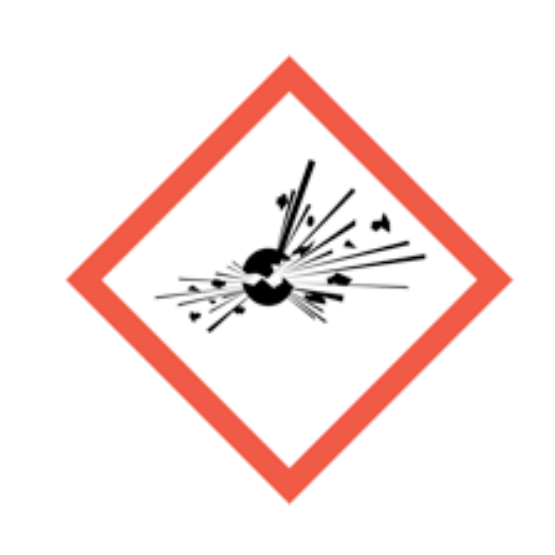
Exploding bomb
Explosive, self-reactive or organic peroxide hazards.
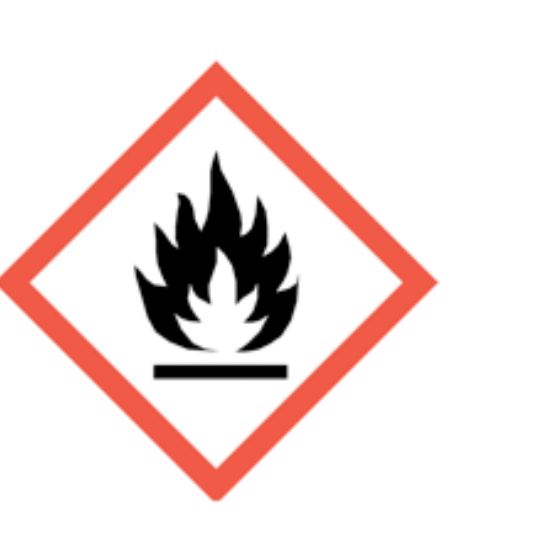
Flame
Flammable, self-heating or pyrophoric substances.
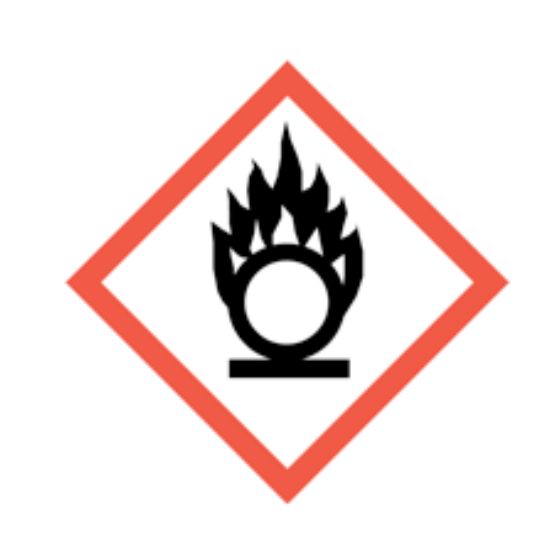
Flame over circle
Oxidising substances that can intensify fire.

Gas cylinder
Gas under pressure.
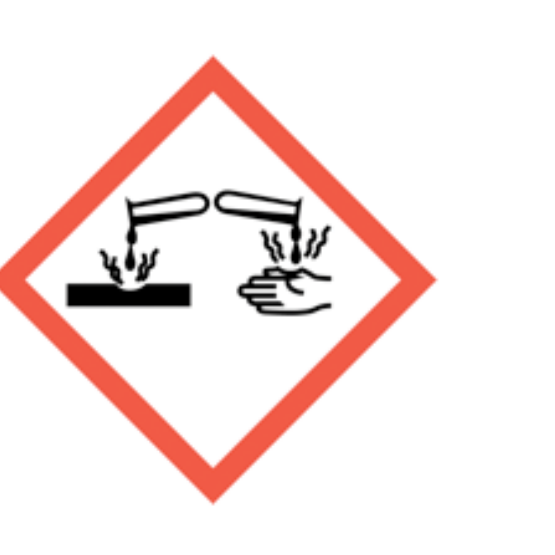
Corrosion
Skin burns, eye damage or corrosive to metals.
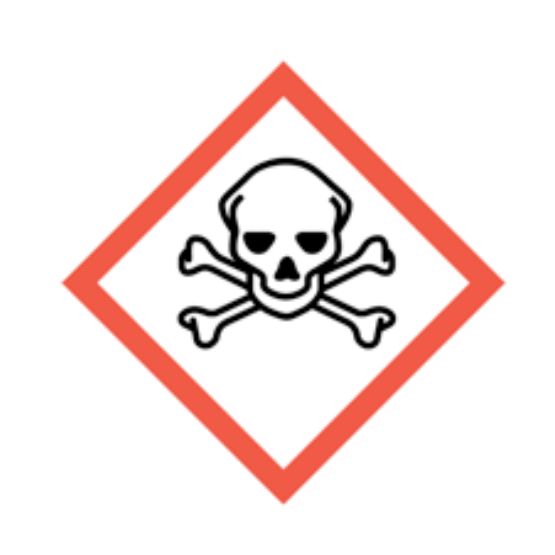
Skull and crossbones
Acute toxicity.
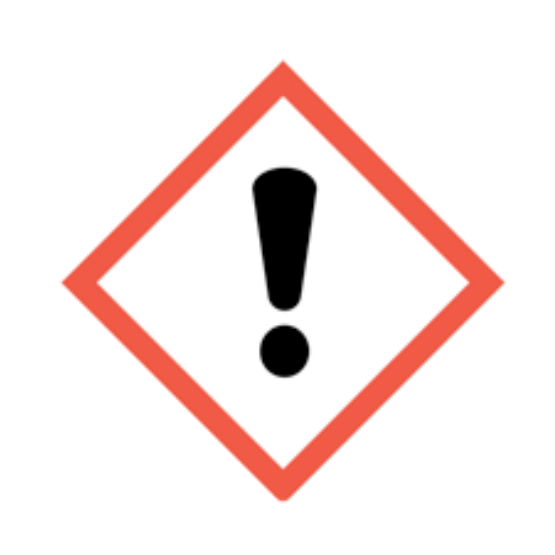
Exclamation mark
Irritation, harmful effects or skin sensitisation; some classifications cover drowsiness, dizziness or ozone-layer hazard. Read the actual hazard statements. Skin sensitisation differs from respiratory sensitisation.
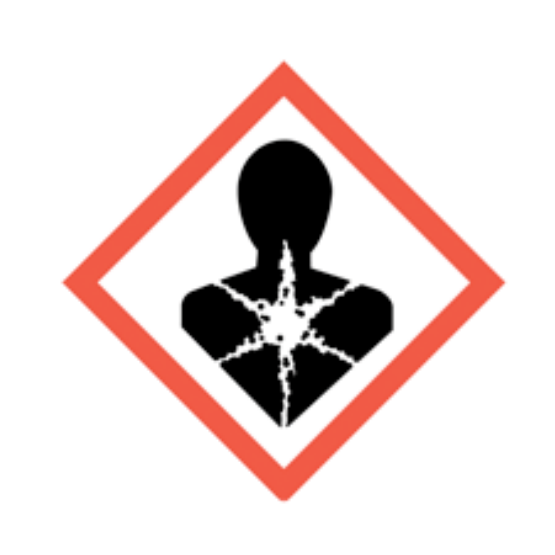
Health hazard
Serious health hazards, including organ damage, aspiration hazard, respiratory sensitisation, cancer and reproductive effects; some can follow a single exposure.
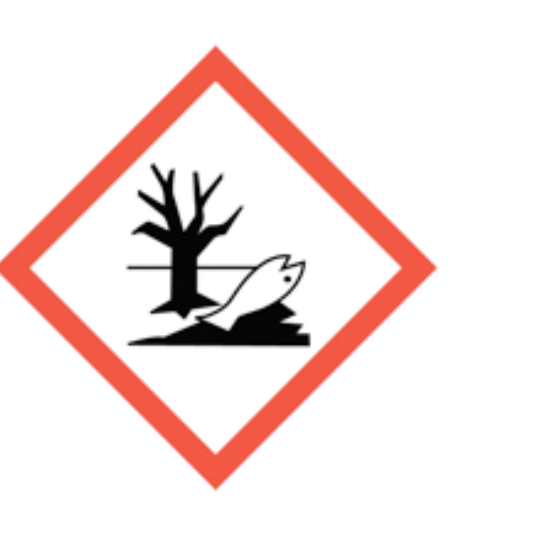
Environment
Hazardous to the aquatic environment.
What do the acronyms and key terms mean?
Acronyms should be understood before they are used in assessments, briefings, audits or learning answers.
Acronyms can exclude newer readers if they are not explained. This section keeps the main terms available at the end of the page so the article stays readable while still supporting learners and audit users.
| Acronym | Meaning | Plain-English use |
|---|---|---|
| OSE | Organic Solvent Encephalopathy | Neurological condition associated with solvent exposure. |
| COSHH | Control of Substances Hazardous to Health | Separate GB 2002 and Northern Ireland 2003 regulations for hazardous substances. |
| WEL | Workplace Exposure Limit | Legal exposure limit for airborne hazardous substances. |
| LEV | Local Exhaust Ventilation | Engineering control that captures vapour or mist near source. |
| RPE | Respiratory Protective Equipment | Equipment worn to protect against inhaling hazardous substances. |
| DSEAR | Dangerous Substances and Explosive Atmospheres Regulations | Separate GB 2002 and Northern Ireland 2003 regulations covering fire and explosion risk from dangerous substances. |
| VOC | Volatile Organic Compound | Organic chemical that evaporates readily and can create vapour exposure. |
| MEK | Methyl ethyl ketone (butanone) | Solvent name; identify exact product and applicable WEL. |
| MIBK | Methyl isobutyl ketone (4-methylpentan-2-one) | Solvent name; confirm product and WEL. |
| DCM | Dichloromethane | Solvent name; check task-specific legal controls. |
| SDS | Safety Data Sheet | Supplier hazard information; not a workplace exposure assessment. |
| TExT | Thorough examination and test | Formal LEV examination and test by a competent person. |
| OH | Occupational Health | Competent work-health referral and advice. |
Unlock another resource
You have used this month’s two free downloads. Publish a post in your own words to unlock one more resource, or choose SHARE Individual for 10 downloads per month.
You decide whether to share. If you do, use the relevant platform disclosure tools and do not make claims you do not genuinely hold.