SHARE Knowledge Hub
Dangerous substances and hazardous properties
Dangerous substances can cause fire, explosion, harmful reactions or other physical harm; hazardous properties also include effects on health and the environment. Understand the exact material and task, control release and exposure, and stop when identity, compatibility or safeguards are uncertain. A release, incompatible mix or uncontrolled ignition can injure people immediately and may also contaminate surrounding land or water.
Understanding Dangerous substances and hazardous properties
Dangerous substances can cause fire, explosion, harmful reactions or other physical harm; hazardous properties also include effects on health and the environment. Understand the exact material and task, control release and exposure, and stop when identity, compatibility or safeguards are uncertain. A release, incompatible mix or uncontrolled ignition can injure people immediately and may also contaminate surrounding land or water.
Why this matters at work
Explosion harm includes direct overpressure effects on ears and lungs, whole-body displacement, impact, crush and penetration by glass or debris, falls, structural collapse and secondary fire. Noise can cause hearing damage. Projectiles from vessels or cylinders may travel well beyond the immediate fire.
Physical hazards include flammability, explosibility, oxidising behaviour, pressure, corrosivity to metal, decomposition, self-heating, pyrophoricity and reactivity. Health hazards include acute toxicity, aspiration, skin and eye damage, irritation, sensitisation, carcinogenicity, mutagenicity, reproductive toxicity, specific target-organ toxicity and respiratory effects. Environmental classification is a warning about potential environmental harm and should trigger suitable spill prevention, containment and response arrangements, but it does not replace environmental law or regulator engagement.
How organisations manage this in practice
The control sequence is explicit: substitute a non-dangerous or less dangerous substance or process where reasonably practicable; otherwise reduce quantity, avoid or minimise releases, control releases at source, prevent explosive atmospheres, collect or contain releases, avoid ignition and avoid adverse conditions. Mitigation must reduce detrimental effects and prevent propagation between areas or plant.
Control begins by preventing the hazardous atmosphere. Where one can occur, eliminate or separate ignition, select equipment suitable for the zone and substance, control surface temperature, maintain bearings and belts, bond and earth as required, restrict vehicles and portable electronics, and manage hot work. Signs alone are not a control system.
Check physical containment, storage, ventilation, equipment suitability, detectors, relief and protective systems as applicable. Review impairments, changes, maintenance and actual response capability. Record evidence, defects, restrictions and restoration, and verify significant actions in real work. Staff should not fight a developing dangerous-substance event beyond their training and safe escape conditions. Emergency response reduces remaining consequences; it cannot make unnecessary hazardous inventory or failed containment acceptable.
No. An SDS supplies information about the product and relevant hazards, while the employer’s assessment considers the actual task, exposure, people, environment and controls. A transport classification addresses carriage under its own rules and is not interchangeable with supply classification or workplace suitability. Check product identity, revision, composition, hazardous properties, handling, storage, exposure controls and emergency information, resolving gaps with the supplier and competent specialists. Include work-generated fume, dust, heat, pressure and mixtures created in the process, even if they do not arrive in a labelled package. Translate the information into usable task instructions and verify implementation. Record assumptions, control conditions and review triggers. GB CLP and UK REACH differ from the relevant NI framework, so establish the supply and use jurisdiction. Do not infer that absence of a pictogram means absence of risk or that a completed SDS folder demonstrates adequate control.
Check the changed delivery before transfer
A familiar product name is insufficient when concentration or composition changes. Check the receiving system, residues, capacity and safeguards together; use the health and physical-risk assessments for their different purposes.
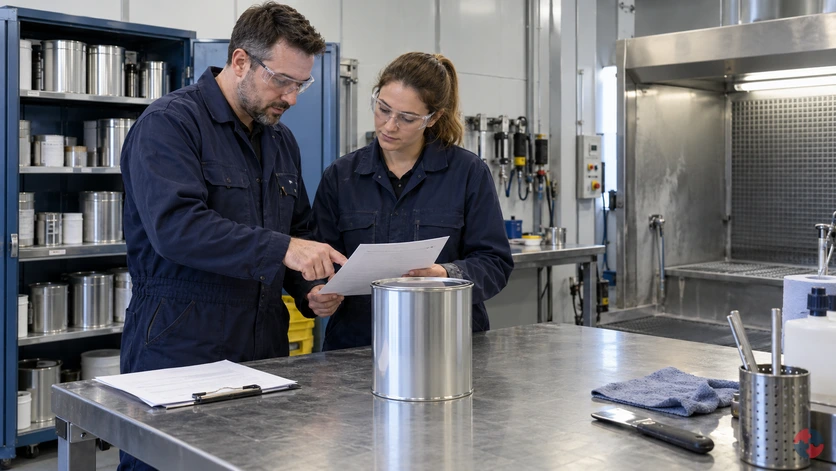
Assess health and physical risk for the same task
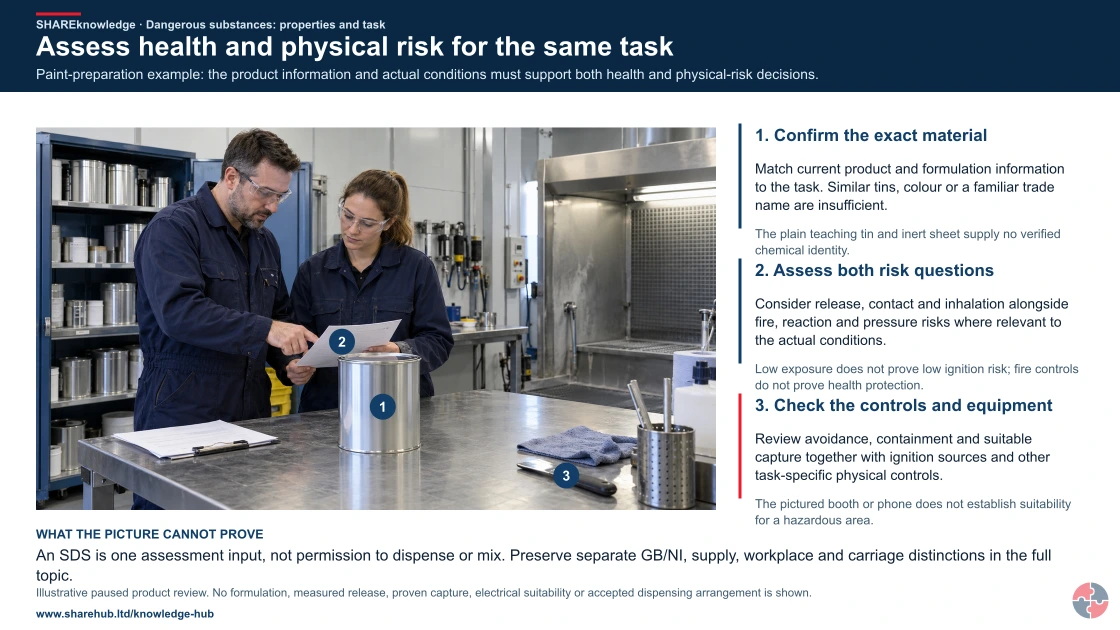
Full written explanation
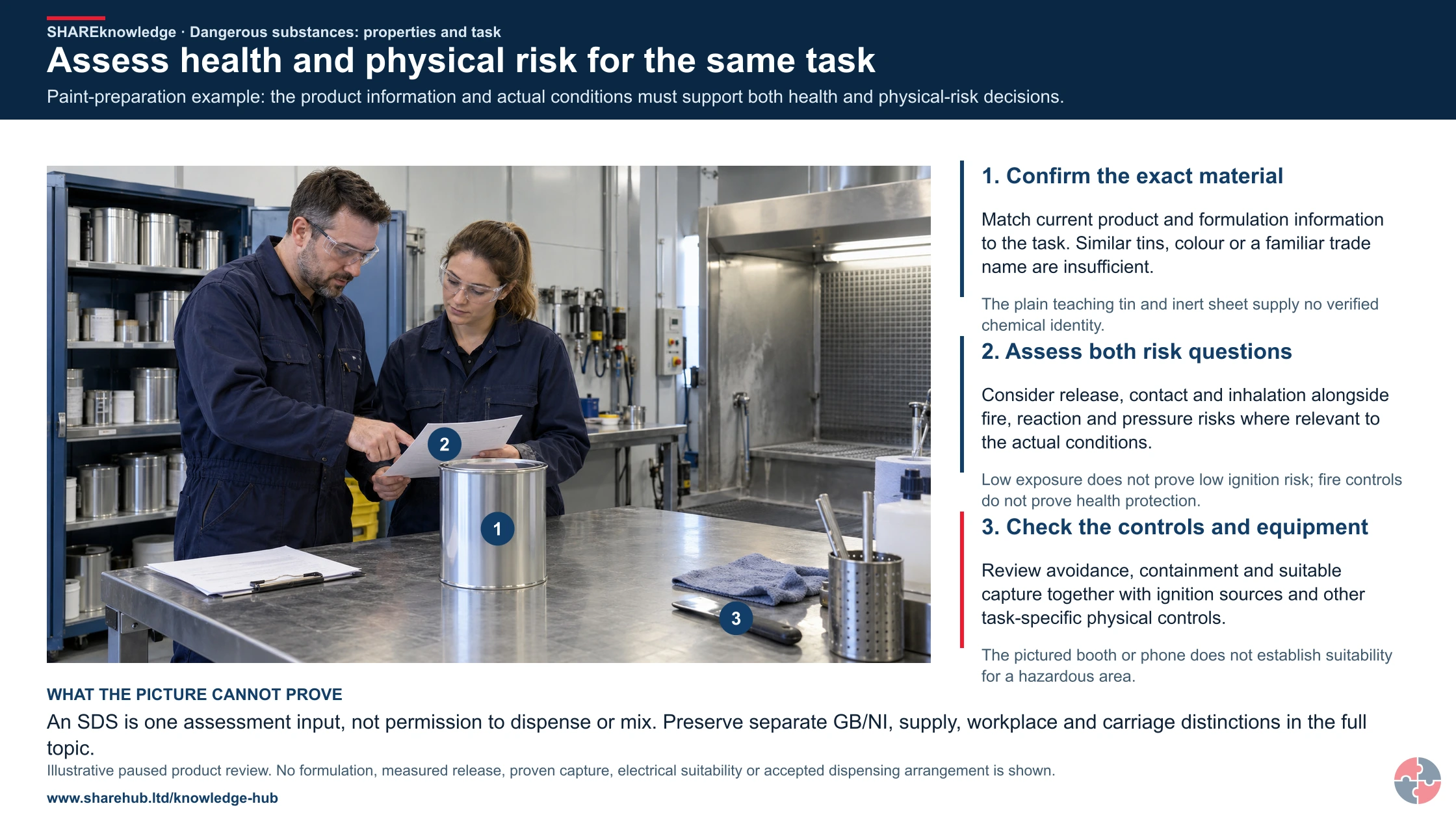
Paint-preparation example: the product information and actual conditions must support both health and physical-risk decisions.
- Confirm the exact material. Match current product and formulation information to the task. Similar tins, colour or a familiar trade name are insufficient.
- Assess both risk questions. Consider release, contact and inhalation alongside fire, reaction and pressure risks where relevant to the actual conditions.
- Check the controls and equipment. Review avoidance, containment and suitable capture together with ignition sources and other task-specific physical controls.
Change the pathway
- Use the actual information. The plain teaching tin and inert sheet supply no verified chemical identity.
- Neither assessment replaces the other. Low exposure does not prove low ignition risk; fire controls do not prove health protection.
- Verify what is relied upon. The pictured booth or phone does not establish suitability for a hazardous area.
Evidence check: An SDS is one assessment input, not permission to dispense or mix. Preserve separate GB/NI, supply, workplace and carriage distinctions in the full topic.
Full separate GB/NI, workplace, supply and carriage duties
Primary references: HSE: physical risk and DSEAR scope (GB) · HSE: health exposure and task assessment (GB)
Open the complete HD image (new tab)Download image
Full separate GB/NI, workplace, supply and carriage duties
Primary references: HSE: physical risk and DSEAR scope (GB) · HSE: health exposure and task assessment (GB)
Best-practice guide: Dangerous substances and hazardous properties
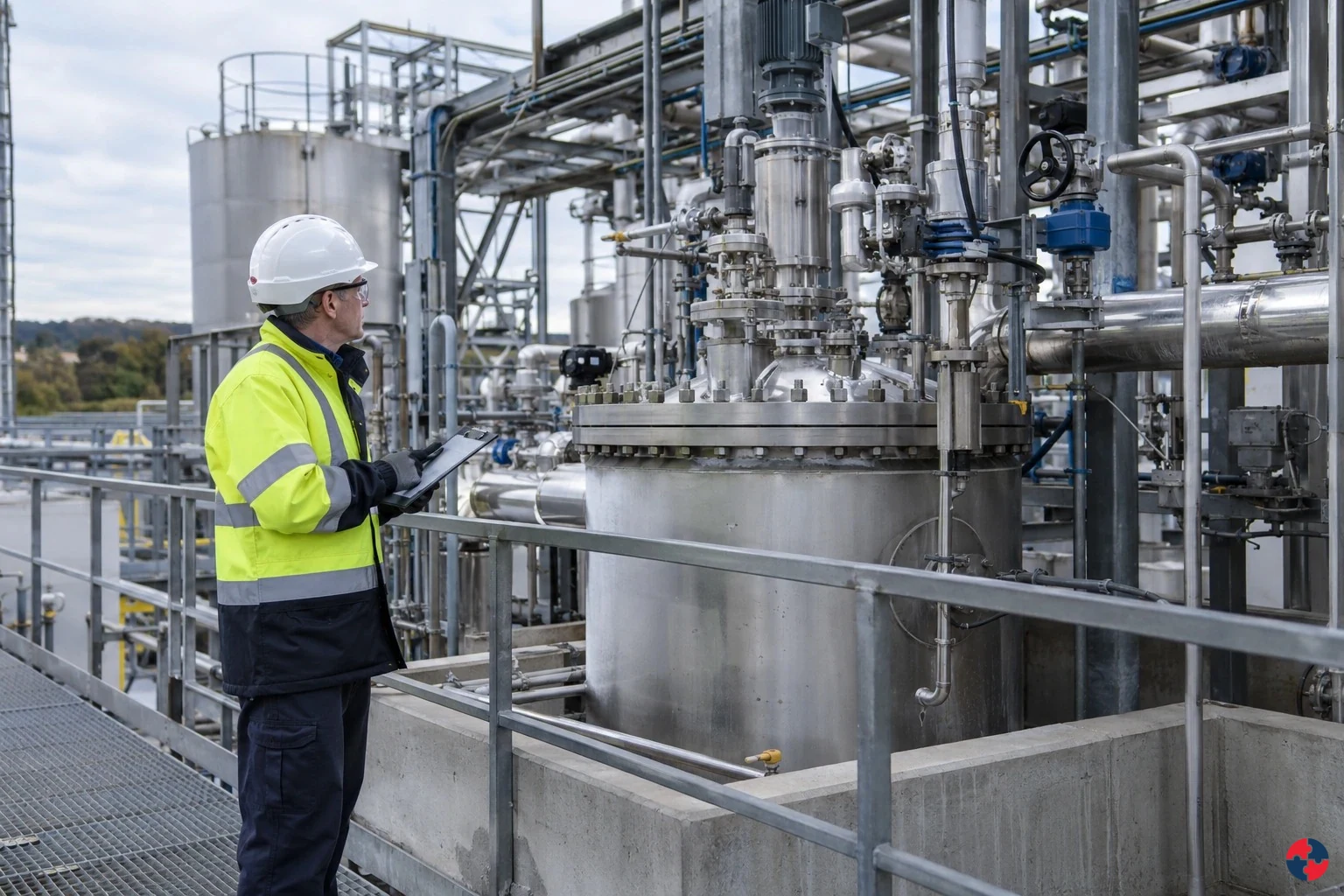
Check the changed delivery before transfer
A familiar product name is insufficient when concentration or composition changes. Check the receiving system, residues, capacity and safeguards together; use the health and physical-risk assessments for their different purposes. Dangerous substances can cause fire, explosion, harmful reactions or other physical harm; hazardous properties also include effects on health and the environment.
Turn dangerous substances and hazardous properties knowledge into a decision
Dangerous substances can cause fire, explosion, harmful reactions or other physical harm; hazardous properties also include effects on health and the environment. Understand the exact material and task, control release and exposure, and stop when identity, compatibility or safeguards are uncertain. Record the discovery, isolation of the affected task, identity evidence or specialist disposal decision, contractor instructions and supervisor hand-back.
Worked example an unlabelled container during maintenance
The responsible specialist checks container condition, identity evidence, residue and waste compatibility, and specifies any handling needed. Brief the contractor on the verified hazards and route. After approved handling or removal, confirm the system, store and waste arrangements match the assessment.
A hazardous property needs a credible event route
A leak, spill or dust release brings dangerous material into the work area. Ignition, reaction or loss of pressure control can produce fire, explosion or another harmful event. Workers and neighbours may be exposed along the actual release or escalation path. Use the full topic for the detailed mechanism, task limits and source scope.
Choose controls for dangerous substances and hazardous properties
Elimination: Remove an unnecessary solvent use or open decanting step through process redesign. Substitution: Validate a suitable less flammable product or solvent-free method against operating temperature, quality and new hazards. Engineering controls: Use an assessed dedicated dispensing area separated from ignition sources, occupied routes and incompatible materials. Engineering controls: Provide compatible closed transfer, containment and ventilation, with assessed electrical, bonding and earthing measures where required. Administrative controls: Verify product identity, receiving capacity, connections and spill response; prevent unapproved containers and hot work in the affected area. Read the full control table for qualifications, ownership and verification. Use the actual task and applicable jurisdiction; existing technical approval remains unchanged.
Use the full dangerous substances and hazardous properties lesson
Use the full topic for the decision points, practical examples, detailed control tables and source scope. HSE guidance applies to Great Britain; use HSENI for the Northern Ireland route and the source’s stated jurisdiction. A simplified guide does not change the page’s technical-review or approval status.

Read all six steps as text
1. Check the changed delivery before transfer
A familiar product name is insufficient when concentration or composition changes.
- Avoid / redesign: Remove an unnecessary solvent use or open decanting step through process redesign.
- Control the task: Use an assessed dedicated dispensing area separated from ignition sources, occupied routes and incompatible materials.
- Verify before release: If the hazardous step remains, keep it within the task assessment and select the stronger feasible remaining controls.
A familiar product name is insufficient when concentration or composition changes. Check the receiving system, residues, capacity and safeguards together; use the health and physical-risk assessments for their different purposes. Dangerous substances can cause fire, explosion, harmful reactions or other physical harm; hazardous properties also include effects on health and the environment.
Apply it: Which part of this plan would you check at the workface before authorising the task?
2. Turn dangerous substances and hazardous properties knowledge into a decision
Use the evidence to improve the actual work arrangement.
- Change at source: Remove an unnecessary solvent use or open decanting step through process redesign.
- Make it observable: If the hazardous step remains, keep it within the task assessment and select the stronger feasible remaining controls.
- Keep useful evidence: Record the discovery, isolation of the affected task, identity evidence or specialist disposal decision, contractor instructions and supervisor hand-back.
Dangerous substances can cause fire, explosion, harmful reactions or other physical harm; hazardous properties also include effects on health and the environment. Understand the exact material and task, control release and exposure, and stop when identity, compatibility or safeguards are uncertain. Record the discovery, isolation of the affected task, identity evidence or specialist disposal decision, contractor instructions and supervisor hand-back.
Apply it: What evidence would show that the change improves this task, rather than only completing a record?
3. Worked example an unlabelled container during maintenance
Example: a practical application of the existing topic lesson.
- Setting: A maintenance team finds an unlabelled closed container in the process operator’s covered chemical store while preparing to clean a dosing system.
- Act: Stop the dependent cleaning step, leave the container closed and restrict access as the local procedure requires.
- Hold / review: No mixing, decanting, drain disposal or restart while identity is unresolved.
The responsible specialist checks container condition, identity evidence, residue and waste compatibility, and specifies any handling needed. Brief the contractor on the verified hazards and route. After approved handling or removal, confirm the system, store and waste arrangements match the assessment.
Apply it: At which point would you hold this example, and what evidence would allow it to proceed?
4. A hazardous property needs a credible event route
Connect the task, the route to the person and the control that can fail.
- Release: A leak, spill or dust release brings dangerous material into the work area.
- Event: Ignition, reaction or loss of pressure control can produce fire, explosion or another harmful event.
- People: Workers and neighbours may be exposed along the actual release or escalation path.
A leak, spill or dust release brings dangerous material into the work area. Ignition, reaction or loss of pressure control can produce fire, explosion or another harmful event. Workers and neighbours may be exposed along the actual release or escalation path. Use the full topic for the detailed mechanism, task limits and source scope.
Apply it: Where is this harm route present in the actual work, and which control breaks it before anyone is exposed?
5. Choose controls for dangerous substances and hazardous properties
Start with the stronger practicable options and verify their effect.
- Elimination: Remove an unnecessary solvent use or open decanting step through process redesign.
- Substitution: Validate a suitable less flammable product or solvent-free method against operating temperature, quality and new hazards.
- Engineering controls: Use an assessed dedicated dispensing area separated from ignition sources, occupied routes and incompatible materials.
- Engineering controls: Provide compatible closed transfer, containment and ventilation, with assessed electrical, bonding and earthing measures where required.
- Administrative controls: Verify product identity, receiving capacity, connections and spill response; prevent unapproved containers and hot work in the affected area.
Elimination: Remove an unnecessary solvent use or open decanting step through process redesign. Substitution: Validate a suitable less flammable product or solvent-free method against operating temperature, quality and new hazards. Engineering controls: Use an assessed dedicated dispensing area separated from ignition sources, occupied routes and incompatible materials. Engineering controls: Provide compatible closed transfer, containment and ventilation, with assessed electrical, bonding and earthing measures where required. Administrative controls: Verify product identity, receiving capacity, connections and spill response; prevent unapproved containers and hot work in the affected area. Read the full control table for qualifications, ownership and verification. Use the actual task and applicable jurisdiction; existing technical approval remains unchanged.
Apply it: Which stronger option can be used here, and who will verify it before accepting the remaining risk?
6. Use the full dangerous substances and hazardous properties lesson
Follow the official sources below and retain the task-specific evidence.
- Official guidance: DSEAR in detail
- Official guidance: COSHH assessment
- Task decision: Record the discovery, isolation of the affected task, identity evidence or specialist disposal decision, contractor instructions and supervisor hand-back.
Use the full topic for the decision points, practical examples, detailed control tables and source scope. HSE guidance applies to Great Britain; use HSENI for the Northern Ireland route and the source’s stated jurisdiction. A simplified guide does not change the page’s technical-review or approval status.
Apply it: Which official source and full-topic section will you use to resolve the next decision?
Changed chemical delivery
Illustrative example. A replacement delivery has the same connector but a different concentration.
Decision. The receiving owner checks identity, compatibility and the actual transfer conditions before accepting it.
Evidence to check. Current product information, destination identity, compatible residues and verified transfer controls.
Hold or escalation point. Hold transfer while composition, destination or compatibility is unresolved.
Follow-up. Record the decision and revise procurement and receiving instructions if the change will recur.
Check identity, compatibility and receiving capacity
A familiar delivery is not enough to authorise connection. Health exposure and a fire/reaction event are separate questions about the same material.

Identity
Confirm product, concentration and current information against the order and destination.
Compatibility
Establish the receiving system and known residues. Keep incompatible or unknown material closed for competent assessment.
Capacity and safeguards
Verify available capacity, route and required safeguards before the authorised connection decision.
A label or container shape cannot settle compatibility. No mixing rule or transfer procedure is supplied.
What are the key points about dangerous substances and hazardous properties?
The key point is that substance risk depends on property, form, quantity, conditions, compatibility and how people may be exposed or affected.
Names are not enough
A substance name or label does not fully describe risk; concentration, temperature, pressure, particle size and use matter.
Safety and health risks can overlap
A substance may be a fire or explosion risk under DSEAR and a health risk under COSHH.
Quantity changes consequence
A small laboratory bottle, a process vessel, a tanker and a bulk tank may need very different controls.
Compatibility is critical
Wrong mixing, shared drains, contaminated equipment or incompatible storage can cause gas, heat, pressure or toxic release.
Release behaviour drives controls
Gases, vapours, mists, dusts, powders and liquids spread differently and need different prevention and ventilation strategies.
Evidence must be current
Inventories, assessments, drawings, zoning, SDS and emergency plans must reflect the real workplace.
How can I practise this topic in 3D?
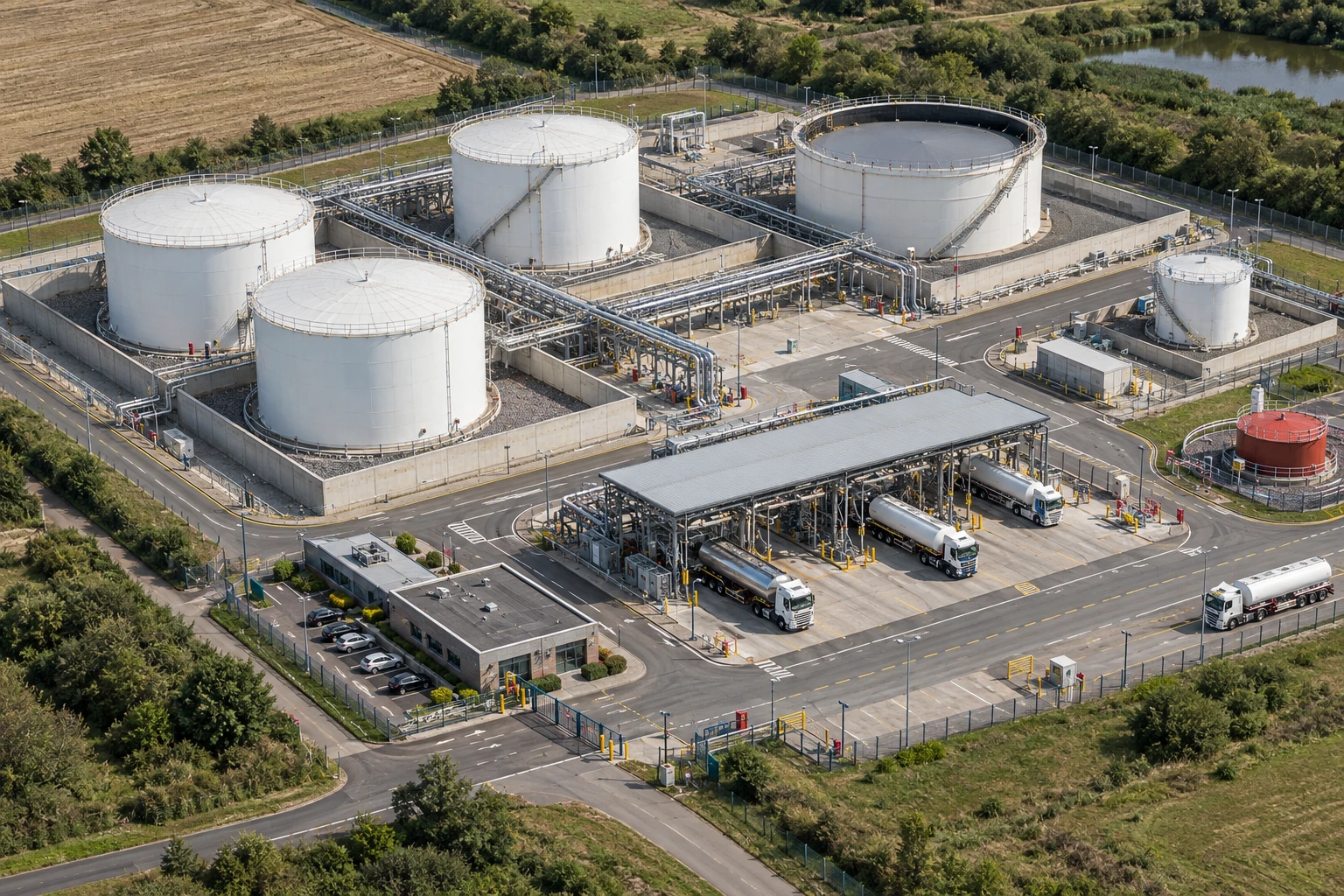

A sample is proposed from a live open connection
All related inspection points 4 across 1 location
Crown Fuels terminal 4 inspection points
Practice in the SHAREhub environment. Browser practice is separate from workplace competence and formal learning records.
What are dangerous substances and hazardous properties?
A hazardous property describes what a material can do; risk depends on whether that property can cause harm in the actual work. A sealed solvent container and the same solvent sprayed beside an ignition source have different risks.
This page uses a broad chemical-hazard scope. The legal term dangerous substance under DSEAR has a specific physical-safety meaning. Toxicity or environmental harm alone is not a reason to describe a material as falling within DSEAR. GB DSEAR also covers gases under pressure and substances corrosive to metals; health exposure is assessed separately under COSHH. See DSEAR in detail and the NI routes below.
A fire needs fuel, an oxidising agent and ignition. Dispersing combustible material as vapour, mist or dust can make rapid burning possible; confinement and congestion can increase damaging pressure. A reactive material can also release heat or gas without an external flame. If heat generation overtakes heat removal, the reaction can accelerate, raising temperature and pressure. Whether this can happen requires material and process evidence, not a guess from the product name.
Health effects may be immediate, such as chemical burns or poisoning, or develop after repeated exposure or long delay, such as dermatitis, occupational asthma or cancer. Exposure may occur by breathing, skin or eye contact, swallowing contamination or skin puncture. Absence of a strong smell, visible cloud or immediate symptoms does not demonstrate control.
Useful terms: The inventory is the amount present, including material connected to a possible release. Loss of containment means an unintended escape. Compatibility means suitability for contact with other substances and equipment under the expected conditions. A credible scenario describes a plausible chain from failure to harm.
Which hazardous properties need to be understood?
The main hazardous properties include flammable, explosive, oxidising, toxic, reactive, corrosive and environmentally hazardous behaviour.
Hazardous properties should be understood under the conditions in which the material is actually used. A safety data sheet is important, but it is not the whole assessment. The assessor must consider storage temperature, pressure, concentration, ventilation, ignition sources, contamination, incompatible materials, transfer method, maintenance activities, waste handling and emergency response.
This is particularly important in process safety because many major events start with an ordinary activity that becomes abnormal: charging, draining, heating, cooling, cleaning, transferring, unloading, starting up, shutting down or recovering after a trip.
| Property | What can happen | Typical controls |
|---|---|---|
| Flammable | Vapour, gas, mist or dust ignites and causes fire or explosion. | Substitution, inventory reduction, ventilation, containment, zoning, ignition control and detection. |
| Explosive or explosible | An explosive atmosphere or unstable material releases energy rapidly. | Prevent dispersion, avoid confinement where possible, control ignition and use explosion protection. |
| Oxidising | Fire intensity increases or materials ignite more easily. | Segregate from fuels, control contamination and use compatible storage. |
| Toxic | People are poisoned or harmed through inhalation, skin, ingestion or eye contact. | Closed systems, LEV, exposure monitoring, PPE/RPE and emergency decontamination. |
| Reactive | Wrong conditions or mixing generates heat, gas, pressure or unstable products. | Compatibility checks, process controls, cooling, relief, hold points and MOC. |
| Corrosive | Skin, eyes, respiratory tract or metal containment are damaged. | Compatible materials, bunds, eyewash, PPE, inspection and corrosion management. |
| Environmentally hazardous | Release harms drains, watercourses, land or ecology. | Secondary containment, drainage control, spill response and emergency planning. |
How do physical forms and exposure routes change the risk?
Physical form and route of exposure change how a substance escapes, travels, contacts people and causes harm.
A liquid may splash skin, evaporate into vapour, form a mist during spraying, contaminate surfaces or enter drains. A powder may become airborne during tipping, settle on surfaces, form an explosible dust cloud, be ingested through poor hygiene or contaminate clothing. A gas may travel quickly, displace oxygen, form a flammable cloud or create a toxic atmosphere in a low area.
COSHH good practice requires consideration of relevant exposure routes including inhalation, skin and ingestion. For dangerous substances, DSEAR adds the safety question: could the substance create fire, explosion, energetic reaction or corrosion-related structural failure?
| Form or route | Why it matters | Control focus |
|---|---|---|
| Gas | Can disperse, collect in low/high areas depending on density, displace oxygen or form explosive mixtures. | Detection, ventilation, isolation, emergency response and confined-space controls. |
| Vapour | Can travel from liquid sources and ignite away from the release point. | Containment, temperature control, ventilation and ignition control. |
| Mist or aerosol | Can increase inhalation exposure and flammable surface area. | Enclosure, LEV, spray control, respiratory protection and ignition control. |
| Dust or powder | Can be inhaled, contaminate surfaces or form explosible clouds. | Dust suppression, extraction, housekeeping, segregation and explosion controls. |
| Skin and eye contact | Can cause burns, sensitisation, absorption or eye injury. | Substitution, closed handling, gloves, face protection, eyewash and hygiene. |
| Ingestion | Can occur through contaminated hands, food, cigarettes or surfaces. | Welfare, hygiene, cleaning and no eating/drinking in contaminated areas. |
What credible scenarios should be assessed?
Credible scenarios should describe how the hazardous property could lead to harm, not just list the substance name.
A strong assessment starts with event sequences. For example: solvent vapour releases during transfer and ignites; incompatible chemicals mix in a drain and generate toxic gas; dust accumulates and is disturbed into a cloud; a corrosive leaks into a bund and attacks metal supports; a tanker is connected to the wrong line; a runaway reaction overpressurises a vessel.
Each scenario should identify causes, consequences, prevention barriers, detection barriers, mitigation barriers, emergency response and evidence that those barriers are healthy.
| Scenario | Possible consequence | Barrier focus |
|---|---|---|
| Loss of containment | Exposure, fire, toxic release, environmental release or escalation. | Mechanical integrity, inspection, containment, isolation and detection. |
| Flammable atmosphere and ignition | Fire, explosion, burns, overpressure and structural damage. | Ventilation, zoning, ignition control, earthing, bonding and Ex equipment. |
| Incompatible mixing | Heat, gas, toxic release, pressure rise or violent reaction. | Segregation, labelling, transfer verification and compatibility checks. |
| Runaway reaction | Rapid temperature/pressure rise, vessel failure or toxic release. | Reaction knowledge, cooling, emergency relief, trips and operating limits. |
| Dust cloud explosion | Explosion, fire spread and secondary explosions. | Dust control, housekeeping, ignition control and explosion protection. |
| Transport or unloading error | Wrong tank fill, overfill, spill, vapour release or incompatible loading. | Driver checks, couplings, line identification, supervision and emergency shutdown. |
How can the hierarchy of controls control dangerous-substance exposure and ignition during solvent dispensing?
- Eliminate or substitute: remove the task or choose a demonstrably less hazardous process.
- Reduce and contain: limit inventory; use a suitable closed system, enclosure or extraction designed for the release.
- Separate and prevent ignition: segregate incompatible materials and assess hazardous areas, electrical equipment, static, hot surfaces and other work.
- Maintain and prepare: verify critical alarms, isolation and containment against their performance requirements; plan abnormal operation and emergencies.
- Protect the individual: select chemical-resistant gloves, eye protection and any RPE for the exact exposure and wearer. A generic glove material or mask description is not a selection decision.
Trace each scenario from the material and stored energy to the release route, exposed person and consequence. A vapour release can reach an ignition source and cause burns or blast injury; a corrosive splash can damage skin or eyes; inhaled toxic gas or dust can injure the lungs or cause delayed disease. Loss of containment, a rising temperature, unexplained odour, dust escape or failed protection is a reason to stop the affected operation and investigate.
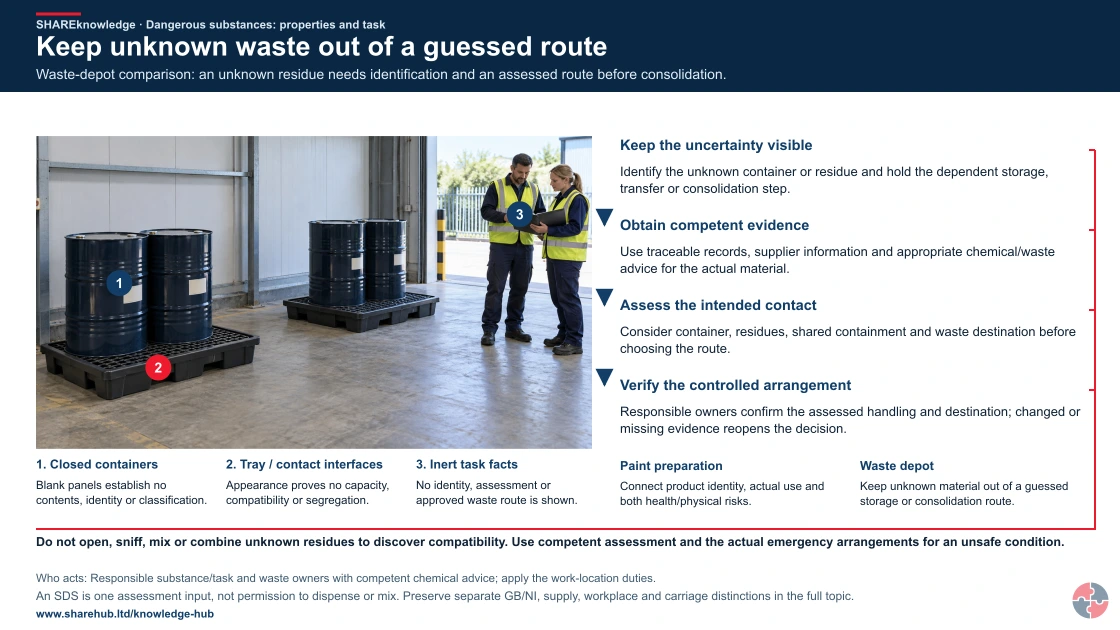
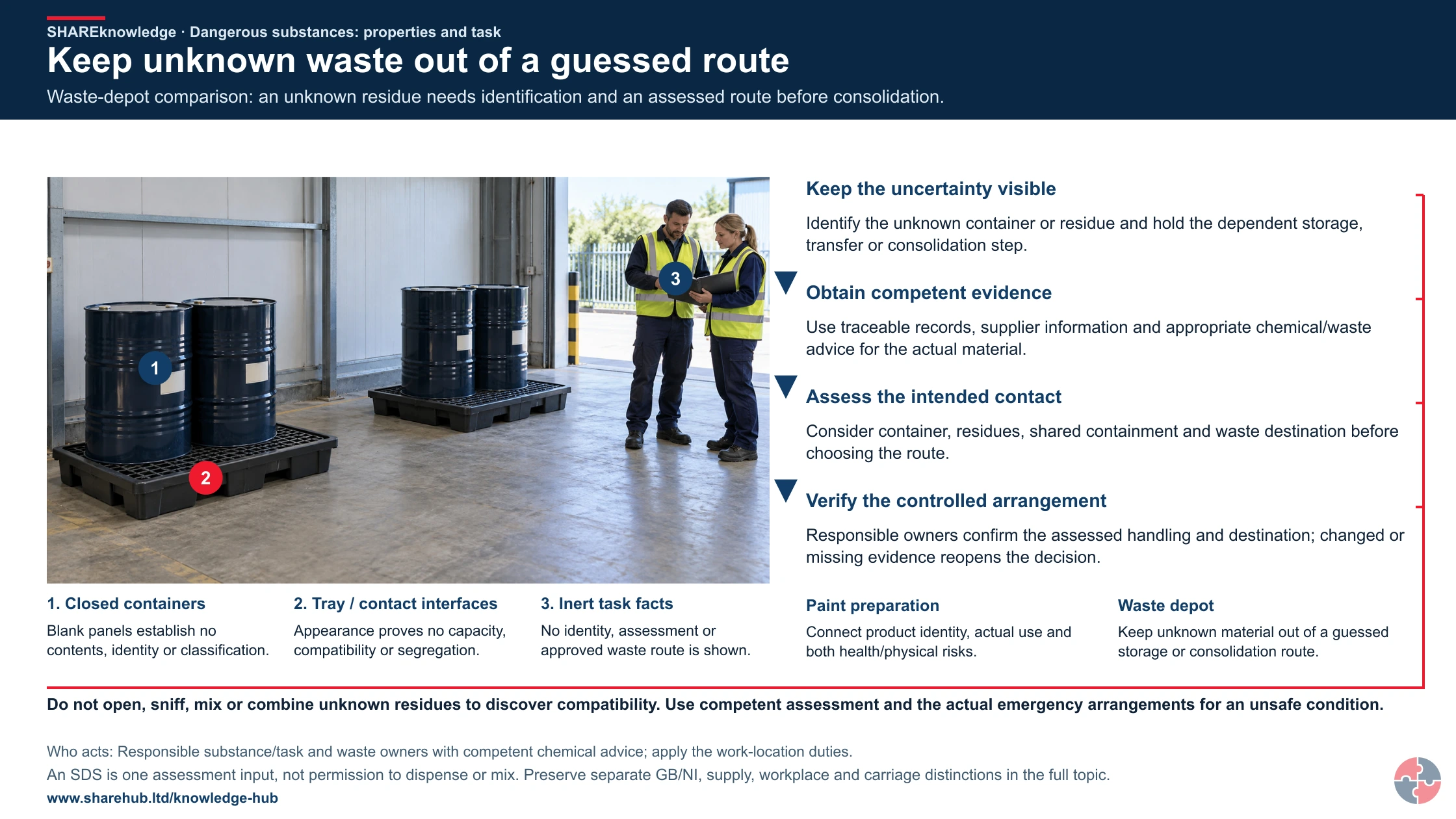
Keep unknown waste out of a guessed route
Full written explanation
An illustrative store scene places four closed neutral drums on two tray-like bases, with ordinary uninjured colleagues standing apart at the doorway and reviewing an inert folder. Picture key: 1 identifies the closed containers; 2 identifies the tray and contact interfaces; 3 identifies the inert task facts. The blank panels do not identify contents or prove that the drums contain unknown waste. Appearance establishes no chemistry, residue, hazard or waste classification, container condition, compatible shared containment, segregation, capacity, material, fire/drain protection or approved store. Four complete checks retain their source order: keep the uncertainty visible; obtain competent evidence; assess the intended contact; verify the controlled arrangement. Three forward arrows relate them; a separate unarrowed rail connects every check to the full unknown-residue hold. Independent headings are unnumbered. The source’s prohibitions on opening, sniffing, mixing or combining unknown residues remain explicit, with the actual emergency arrangements for an unsafe condition. Records, identity evidence or route approval must not delay the response to an unsafe condition. The full responsible substance/task and waste-owner roles, competent chemical advice, evidence distinction and both paint-preparation and waste-depot examples accompany the explanation. The folder is not an SDS, traceable inventory, specialist compatibility assessment, waste consignment or accepted handling/disposal route. The people are not assigned competence or authority by appearance. Use the complete topic for the actual material, conditions and intended contacts, distinct health and physical-risk assessments, source controls, separate GB/NI duties, chemical supply, workplace use, carriage and applicable COMAH qualifications. No opening, sampling, sniffing, moving, lifting, pouring, mixing, bulking, consolidation, disposal, carriage, PPE or emergency operating recipe, new chemical classification, threshold, clinical instruction or work permission is supplied.
Waste-depot comparison: an unknown residue needs identification and an assessed route before consolidation.
- Keep the uncertainty visible. Identify the unknown container or residue and hold the dependent storage, transfer or consolidation step.
- Obtain competent evidence. Use traceable records, supplier information and appropriate chemical/waste advice for the actual material.
- Assess the intended contact. Consider container, residues, shared containment and waste destination before choosing the route.
- Verify the controlled arrangement. Responsible owners confirm the assessed handling and destination; changed or missing evidence reopens the decision.
When the evidence does not fit: Do not open, sniff, mix or combine unknown residues to discover compatibility. Use competent assessment and the actual emergency arrangements for an unsafe condition.
Who acts: Responsible substance/task and waste owners with competent chemical advice; apply the work-location duties.
Changed workplace
Paint preparation: Connect product identity, actual use and both health/physical risks.
Waste depot: Keep unknown material out of a guessed storage or consolidation route.
Evidence check: An SDS is one assessment input, not permission to dispense or mix. Preserve separate GB/NI, supply, workplace and carriage distinctions in the full topic.
Full separate GB/NI, workplace, supply and carriage duties
Primary references: HSE: physical risk and DSEAR scope (GB) · HSE: health exposure and task assessment (GB)
Open the complete HD image (new tab)Download image
Full separate GB/NI, workplace, supply and carriage duties
Primary references: HSE: physical risk and DSEAR scope (GB) · HSE: health exposure and task assessment (GB)
Before: confirm identity, current instructions, task assessment, trained people and working controls. During: watch the task and control indications; report changes. After: close and secure containers, segregate waste, check for leaks or contamination and record defects. Stop if the material, route, conditions or required protection cannot be verified.
In a print shop, a different ink-cleaning product needs a full health, fire and compatibility assessment; in a bakery, flour transfer needs dust containment rather than solvent controls. In both settings the supervisor checks the actual substance, exposure route and control performance before allowing work to continue.
How can the ERICPD hierarchy of controls control dangerous-substance exposure and ignition during solvent dispensing?

| Control level | Control for this activity | Owner and verification | Stop / restart decision |
|---|---|---|---|
| Eliminate | Remove an unnecessary solvent use or open decanting step through process redesign. | Task owner verifies that the proposed change removes the named hazardous step, including foreseeable cleaning, maintenance and work transferred elsewhere. | If the hazardous step remains, keep it within the task assessment and select the stronger feasible remaining controls. |
| Reduce, including substitution | Validate a suitable less flammable product or solvent-free method against operating temperature, quality and new hazards. | Competent task/process owner validates suitability, compatibility and new hazards against the actual operating requirements before the alternative is adopted. | Reject an alternative if its performance is unproved or its new hazards are unresolved. |
| Isolate | Use an assessed dedicated dispensing area separated from ignition sources, occupied routes and incompatible materials. | Supervisor checks the actual boundary, affected people and connected work; verify separation or isolation before allowing access. | Hold or stop for leak, failed ventilation, uncontrolled ignition source or uncertain container compatibility. |
| Control: physical safeguards | Provide compatible closed transfer, containment and ventilation, with assessed electrical, bonding and earthing measures where required. | Competent equipment/process owner checks solvent properties, connections, ventilation, static precautions and receiving capacity. | Hold or stop for leak, failed ventilation, uncontrolled ignition source or uncertain container compatibility. |
| Control: work method and response | Verify product identity, receiving capacity, connections and spill response; prevent unapproved containers and hot work in the affected area. | Supervisor confirms the work limits, competent cover, communication and stop/restart authority with the people doing this activity. | Hold work when the agreed limits, competent cover or effective communication cannot be maintained. |
| PPE | Select compatible splash and other assessed protection, including anti-static requirements where identified; PPE does not prevent a vapour explosion. | Assessor confirms whether personal protection is needed and checks suitability, condition, compatibility and any required fit evidence. | Do not use unsuitable protection or rely on PPE to continue after an essential source control fails. |
| Discipline | Inspect hoses, seals and ignition controls and safely manage solvent-contaminated waste before hand-back. | Release only after process supervisor accepts a secure transfer system and controlled waste route. Retain verification and unresolved restrictions at handover. | Keep the task on hold until required reinstatement evidence and unresolved defects are accepted by the responsible owner. |
How can the ISO 45001 hierarchy of controls control dangerous-substance exposure and ignition during solvent dispensing?

| Control level | Control for this activity | Owner and verification | Stop / restart decision |
|---|---|---|---|
| Elimination | Remove an unnecessary solvent use or open decanting step through process redesign. | Task owner verifies that the proposed change removes the named hazardous step, including foreseeable cleaning, maintenance and work transferred elsewhere. | If the hazardous step remains, keep it within the task assessment and select the stronger feasible remaining controls. |
| Substitution | Validate a suitable less flammable product or solvent-free method against operating temperature, quality and new hazards. | Competent task/process owner validates suitability, compatibility and new hazards against the actual operating requirements before the alternative is adopted. | Reject an alternative if its performance is unproved or its new hazards are unresolved. |
| Engineering controls | Use an assessed dedicated dispensing area separated from ignition sources, occupied routes and incompatible materials. | Supervisor checks the actual boundary, affected people and connected work; verify separation or isolation before allowing access. | Hold or stop for leak, failed ventilation, uncontrolled ignition source or uncertain container compatibility. |
| Engineering controls | Provide compatible closed transfer, containment and ventilation, with assessed electrical, bonding and earthing measures where required. | Competent equipment/process owner checks solvent properties, connections, ventilation, static precautions and receiving capacity. | Hold or stop for leak, failed ventilation, uncontrolled ignition source or uncertain container compatibility. |
| Administrative controls | Verify product identity, receiving capacity, connections and spill response; prevent unapproved containers and hot work in the affected area. | Supervisor confirms the work limits, competent cover, communication and stop/restart authority with the people doing this activity. | Hold work when the agreed limits, competent cover or effective communication cannot be maintained. |
| PPE | Select compatible splash and other assessed protection, including anti-static requirements where identified; PPE does not prevent a vapour explosion. | Assessor confirms whether personal protection is needed and checks suitability, condition, compatibility and any required fit evidence. | Do not use unsuitable protection or rely on PPE to continue after an essential source control fails. |
| Administrative controls | Inspect hoses, seals and ignition controls and safely manage solvent-contaminated waste before hand-back. | Release only after process supervisor accepts a secure transfer system and controlled waste route. Retain verification and unresolved restrictions at handover. | Keep the task on hold until required reinstatement evidence and unresolved defects are accepted by the responsible owner. |
How do DSEAR and COSHH fit together?
Assess both physical safety and health exposure when both are present. A fire-control measure does not prove that inhalation or skin exposure is controlled, and low exposure does not prove that ignition risk is controlled.
For example, flour dust may cause asthma and can create an explosive dust cloud. Solvent extraction needs to protect people while also being suitable for the flammable atmosphere it handles. A compressed non-flammable gas can still create pressure and oxygen-displacement hazards. Corrosion of skin and corrosion of metal are different properties; check the evidence for each. GB physical and health routes: DSEAR in detail; COSHH assessment.
Use one consistent substance inventory and task description to connect the assessments. In GB, follow DSEAR 2002 and COSHH 2002 as amended. In NI, use the corresponding NI 2003 instruments and HSENI guidance; do not cite the GB instrument as NI law. Supply classification under GB CLP or EU CLP in NI provides hazard information but does not replace a workplace assessment.
What should happen when identity or compatibility is uncertain?
Keep the material out of use and obtain competent confirmation before storage, transfer, mixing or disposal. Similar appearance, colour, smell or a container that fits is not evidence of compatibility.
Check the current supplier information against the exact formulation, concentration, process temperature, pressure and intended contact. Include seals, hoses, tank linings, residues, shared bunds, drains and waste containers. An SDS is an input; unusual reactions or process conditions may need supplier advice, a chemist or a reaction-hazard study.
Worked example an unlabelled container during maintenance
Task material and setting: A maintenance team finds an unlabelled closed container in Crownway’s covered chemical store while preparing to clean a dosing system. The planned outcome is a clean, handed-back system without mixing an unknown material into the process or waste.
People and prerequisites: Maintainers, stores staff, cleaners and the waste contractor may be affected. The supervisor controls access; a competent chemical adviser and authorised waste route must be available. The cleaning task requires known residues and an approved isolation and cleaning method.
Before: Stop the dependent cleaning step, leave the container closed and restrict access as the local procedure requires. Establish identity using traceable stock, batch and supplier records. Do not open, sniff, sample or move it unless a competent plan makes that action safe.
During: The responsible specialist checks container condition, identity evidence, residue and waste compatibility, and specifies any handling needed. Brief the contractor on the verified hazards and route. If identity cannot be established, manage it through a specialist unknown-material route.
Hold or stop: No mixing, decanting, drain disposal or restart while identity is unresolved. Bulging, heat, leakage, fumes or anyone becoming unwell triggers withdrawal and the local emergency response; do not approach to investigate. The supervisor releases work only after competent confirmation of the revised method.
Completion and hand back: After approved handling or removal, confirm the system, store and waste arrangements match the assessment. Update identification and stock information, check for contamination and hand the area back explicitly.
Evidence: Record the discovery, isolation of the affected task, identity evidence or specialist disposal decision, contractor instructions and supervisor hand-back. Investigate why labelling or inventory control failed.
What barriers should control dangerous substance scenarios?
Barriers should prevent release, detect abnormal conditions, control escalation, mitigate consequences and support emergency response.
Barrier thinking is useful because it stops the assessment ending at a label or risk rating. For each credible scenario, the organisation should know which barriers are relied on, who owns them, what performance is required, how they degrade, how they are tested and what happens if they are unavailable.
A barrier may be physical, instrumented, procedural, organisational or emergency-response based. Engineered and independent barriers are usually stronger than controls that require perfect human action under pressure.
| Barrier type | Examples | Assurance evidence |
|---|---|---|
| Prevention | Substitution, closed systems, compatible materials, inventory limits and segregation. | Design review, SDS review, inspections and procurement controls. |
| Detection | Gas detection, level alarms, pressure alarms, leak detection and operator rounds. | Calibration, proof testing, alarm response checks and defect records. |
| Control | Ventilation, inerting, earthing, bonding, temperature control and emergency isolation. | Inspection, maintenance, function tests and operating limits. |
| Mitigation | Bunds, relief systems, explosion venting, fire protection and drainage isolation. | Design basis, inspection, test records and emergency drill findings. |
| Emergency response | Spill response, evacuation, decontamination, firefighting and liaison with responders. | Plans, training, exercises, equipment checks and post-exercise learning. |
What must be checked before a zoned workplace first operates?
Equipment conformity and verification of the complete workplace are different decisions.
In Great Britain, before a workplace containing zoned areas first comes into operation, the employer must have its overall explosion safety verified by a competent person or organisation. The check concerns the particular workplace risks and the adequacy of its precautions; an equipment marking alone does not provide that verification. HSE explains workplace verification separately from equipment conformity.
For example, before a new solvent-transfer station starts, the receiving manager asks the competent verifier to consider the actual release scenarios, zones, selected equipment and protective measures together. A suitable pump does not resolve an unsafe hose connection or ineffective ventilation. Record the verification outcome, outstanding conditions and authorised handover; keep the affected operation closed while a required safeguard is unresolved. This is an illustrative handover decision. Apply Northern Ireland’s own legal route to an NI workplace.
What does accident learning change in day-to-day decisions?
Use an incident to test local assumptions about containment and change, then assign an action that can be checked. A list of famous disasters does not establish that the same controls work at your site.
The HSE Flixborough account describes a temporary plant modification followed by a cyclohexane release and explosion. The practical question is whether temporary pipework, a replacement hose, a bypass or an altered process has been assessed and approved for the actual conditions before restart.
At Crownway, the reviewer samples a recent equipment substitution and asks for the compatibility basis, pressure and temperature limits, installation check, approval and updated operating information. If those cannot be demonstrated, the affected activity is held while the change is assessed. This is a SHARE assurance example, not a claim that every chemical workplace requires the same process-safety study.
Which GB and Northern Ireland duties apply?
The site jurisdiction and activity determine the legal route. Great Britain and Northern Ireland have separate workplace instruments; chemical supply, workplace use and transport also have distinct duties.
Great Britain
DSEAR 2002 requires assessment and control of the physical risks within its scope, relevant explosive-area classification, information and training, and emergency arrangements. COSHH 2002 requires prevention or adequate control of health exposure, maintained controls and monitoring or health surveillance where required. The Health and Safety at Work etc. Act 1974 and Management of Health and Safety at Work Regulations 1999 provide broader duties. Use DSEAR in detail and COSHH assessment to reach the legislation and guidance. NI physical-risk route: DSEAR Northern Ireland 2003.
Northern Ireland
Use the Dangerous Substances and Explosive Atmospheres Regulations (Northern Ireland) 2003 and Control of Substances Hazardous to Health Regulations (Northern Ireland) 2003, as amended, alongside the Health and Safety at Work (Northern Ireland) Order 1978 and Management of Health and Safety at Work Regulations (Northern Ireland) 2000. The NI DSEAR instrument, HSENI fire and explosion guidance and HSENI COSHH guidance provide the verification route. For amendment-sensitive duties, use the current NI instrument and HSENI route for the activity.
For a Northern Ireland establishment or road carriage operation, use the NI COMAH and carriage routes where they apply. HSE’s GB COMAH and CDG pages are useful technical context but are not the NI instruments. Relevant NI routes are HSENI COMAH and HSENI carriage of dangerous goods.
When additional regimes matter
COMAH is an establishment-level regime triggered by specified dangerous substances and quantities, including aggregation rules; it does not apply to every chemical store. GB uses COMAH 2015, while NI has the Control of Major Accident Hazards Regulations (Northern Ireland) 2015. Check current COMAH guidance and HSENI for the establishment. No generic threshold is supplied here.
For supply, GB CLP and EU CLP in NI govern classification, labelling and packaging in their respective markets; REACH supply obligations are also jurisdiction-specific. For transport, follow the dangerous-goods carriage route and the NI equivalent with HSENI. Equipment supplied for explosive atmospheres has separate product requirements: a conformity mark alone does not prove suitability for a particular zone, material or temperature.
Authority boundary: These practical examples and records are SHARE guidance. Local permits, authorisations and checks must be set by the organisation’s assessment and applicable law.
What should the risk register include for dangerous substances?
The register should describe credible substance scenarios, consequences, barriers and assurance evidence.
A useful risk register does not simply list ‘chemicals’. It identifies the substance group, hazardous property, inventory, task, scenario, affected people, existing barriers, degradation routes, emergency response and evidence checks. This helps managers see where controls are dependent on people, equipment, maintenance or emergency response.
High-consequence scenarios should connect to a major accident hazard register or bowtie where appropriate.
| Event or issue | Risk route | Preventing controls | Response or mitigation | Evidence to check |
|---|---|---|---|---|
| Flammable liquid transfer release | Vapour cloud forms and ignites. | Closed transfer, bonding, zoning, supervision and ignition control. | Emergency isolation, evacuation, spill/fire response. | DSEAR assessment, permits, inspection and training records. |
| Incompatible chemical mixing | Heat, toxic gas or pressure is generated. | Segregation, labelling, line-up verification and compatibility review. | Stop transfer, isolate area and use emergency plan. | Compatibility chart, batch records and waste controls. |
| Toxic gas release | Workers or public exposed by inhalation. | Containment, detection, ventilation, isolation and emergency planning. | Evacuation/shelter, responder liaison and medical support route. | Gas detection tests, drills and maintenance records. |
| Combustible dust cloud | Dust explosion and secondary fire. | Dust control, extraction, housekeeping and ignition control. | Explosion protection and emergency response. | Cleaning records, LEV checks and zoning review. |
| Corrosive leak | Injury, containment failure or metal damage. | Compatible materials, inspection, bunds and handling controls. | Spill response, eyewash and decontamination. | Inspection records, COSHH assessment and PPE checks. |
How would Crownway Fuels check a chemical delivery?

Crownway makes the transfer decision from identity, compatibility, route, capacity and functioning safeguards together. A matching connector or familiar product name is only one piece of evidence.
Crownway Fuels Ltd
Crownway Fuels Ltd is a fuel storage and distribution business. It is useful here because fuels, additives, cleaning chemicals, vapours, gases, tanker movements, hot work and drainage systems can all interact with dangerous substance risk.
Worked example a controlled bulk delivery
Task material and setting: Crownway Fuels Ltd is a storage and distribution business. Receive an identified flammable liquid into a designated bulk tank in an outdoor unloading bay. The aim is the correct product in the correct tank without release, exposure or ignition; account for adjacent traffic, drains, weather and other work.
People and prerequisites: The driver, receiving operator, supervisor, maintenance contractors and nearby workers may be affected. A competent assessment, current product information, an approved unloading procedure and people able to demonstrate their roles are prerequisites. A supervisor owns any deviation; specialist compatibility or engineering questions need competent resolution.
Before: Match delivery identity and quantity to the order and destination; verify tank contents, available capacity and route. Check the hose, seals and couplings for the substance and conditions, inspect for defects, and confirm prescribed static precautions, isolation, overfill protection, communications, access control and emergency arrangements. Coordinate contractor work before authorising transfer.
During: The assigned person monitors the operation as the procedure requires. Track delivery and tank indications, watch connections for leaks, maintain communications and keep the bay controlled. If weather, neighbouring work or equipment condition changes, stop and reassess rather than assuming the initial check remains valid.
Hold or stop: Do not connect for unknown identity, uncertain tank contents, conflicting documents or unproved hose suitability. Stop for a leak, abnormal level or pressure indication, loss of a required safeguard or communications, an ignition source, or an unauthorised person in the controlled area. Raise the alarm and follow the emergency plan; operate an emergency stop only from a safe position. No unplanned spill response or re-entry.
Completion and hand back: Use the authorised shutdown, drain-down and disconnection sequence; do not open a pressurised connection. Secure valves and caps, confirm no leak, reconcile the receipt and tank status, and restore the bay only when the responsible person accepts the condition. Resolve any discrepancy before further transfer.
Evidence: Keep the identity and capacity checks, delivery record, deviations, defect isolation and corrective actions. Maintain the underlying assessments, inspection and test evidence, competence records and any change authorisation; do not invent a generic test interval.
Worked compatibility decision
A replacement hose fits the coupling and its pressure marking exceeds the planned pressure. Its liner compatibility with the delivered formulation, temperature limits and required electrical properties are unconfirmed. Decision: hold the delivery. Stores obtains the current manufacturer’s specification and compatibility evidence; the competent engineer checks all conditions and the inspection status before the supervisor releases the task. Diameter and pressure alone cannot establish suitability.
Changed conditions: If contractors propose hot work beside the bay, the site must resolve the simultaneous-work conflict through its assessment and permit arrangements before either activity proceeds. A permit does not make an incompatible activity safe.
How do petrol and diesel illustrate dangerous-substance properties?
Compare petrol evaporation with the different conditions created by heating diesel or forming a fine mist. Use the actual product data rather than treating all fuels alike.
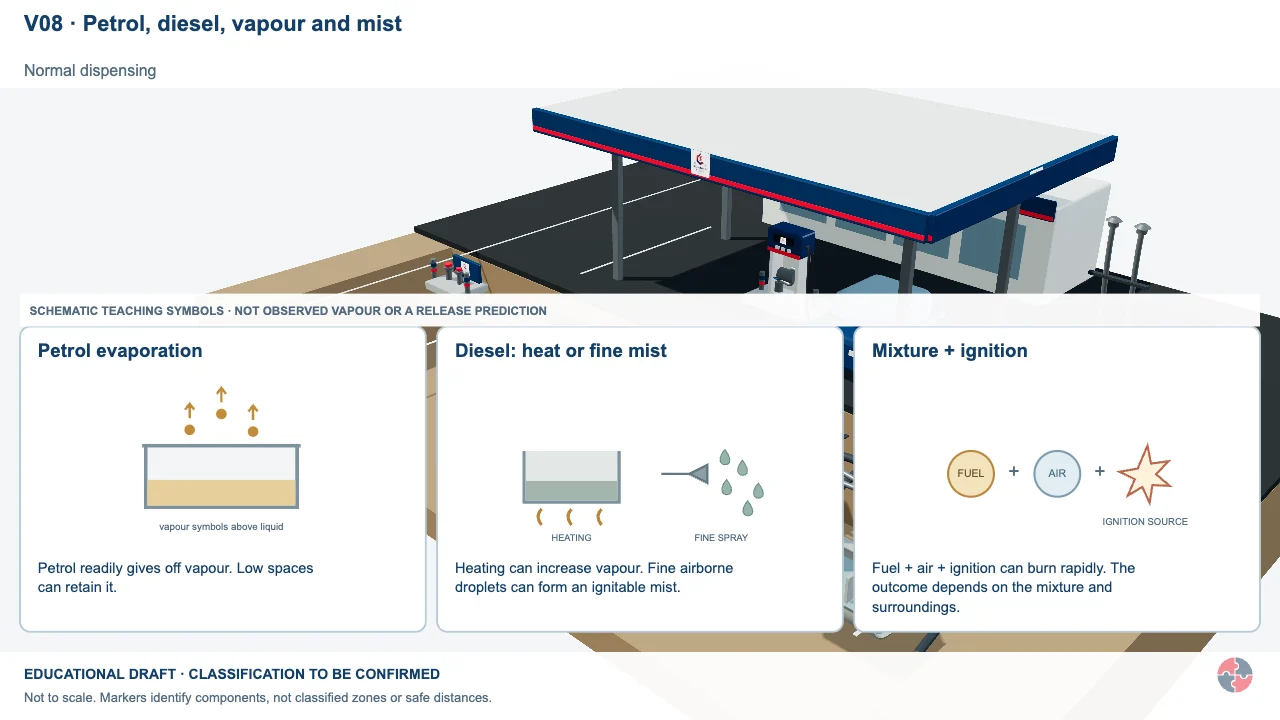
Petrol, diesel, vapour and mist
Compare petrol evaporation, diesel conditions and fine droplets. Petrol carried into a separator can remain a vapour source after the visible forecourt spill has passed.
Activity focus: Identify the actual product and release mechanism. For drainage, ask whether petrol could reach or remain in the separator; for refuelling, confirm the stated Stage II recovery arrangement.
Contextual workplace scene. Use the task, control and evidence checks in this section; appearance alone does not establish safe conditions, individual health or approval.
Educational illustration, not to scale. Coloured zones are teaching examples, not a site-specific hazardous-area classification.
What training is needed for dangerous substances?
Training should be matched to the role, substance hazards, task complexity and emergency responsibilities.
General awareness training should explain labels, SDS, basic hazardous properties, storage rules, hygiene, spill reporting, ignition control and emergency actions. This can be delivered through induction or short computer-based learning, but it should be supported by workplace examples.
People most at risk need task-specific training, often face-to-face or practical: decanting, transfer, tanker unloading, laboratory work, cleaning, waste handling, hot work, confined spaces, gas testing, use of LEV, use of PPE/RPE and spill response. Supervisors and managers need deeper training in COSHH, DSEAR, compatibility, permit control, contractor management, emergency arrangements and assurance evidence.
A task demonstration should show that the person can identify the material, use the specified controls and explain a stop condition. A supervisor records the observation and assessor, checks contractor competence at the interface and reassesses after a new substance, changed equipment, an incident, a failed safeguard or a long gap in practice. Specialist design or classification work needs competent technical judgement, not a general awareness certificate.
| Training level | Who needs it | What it should cover | Demonstration, assessor and record | Reassess when |
|---|---|---|---|---|
| General awareness | All workers and regular contractors. | Labels, SDS, basic properties, reporting, storage rules and emergency actions. | Worker identifies material and emergency route; supervisor records induction check. | New substance, site rules or poor understanding. |
| Task-specific training | Workers handling, storing, transferring or disposing of substances. | Specific hazards, controls, PPE/RPE, line-up checks, hygiene and abnormal conditions. | Supervisor observes safe task set-up, line-up and stop decision; records authorisation. | New method, equipment, near miss or long gap in practice. |
| Supervisor training | Supervisors and permit issuers. | DSEAR/COSHH interface, permits, segregation, contractor checks and emergency response. | Manager assesses a non-routine decision; permit or task review records it. | Changed contractor, inventory, safeguard or incident. |
| Specialist training | HSE advisers, engineers, chemists and technical authorities. | DSEAR assessment, compatibility, process safety, zoning, relief, monitoring and assurance. | Competent specialist documents technical judgement and basis; manager records appointment. | Changed design, standard, law or adverse assurance finding. |
| Emergency training | Incident controllers, spill teams and first responders. | Spill, fire, toxic release, evacuation, decontamination and responder liaison. | Response leader runs a drill with debrief and corrective-action record. | New emergency scenario, drill finding or response change. |
How can learners apply this to a workplace scenario?
Explain the material’s harmful property, the work that makes it relevant, the people affected, the control sequence and the evidence that supports the decision.
Take the replacement-hose example: identify the missing formulation and material data, explain the release and exposure consequences, hold the transfer, and state who must verify the hose before release. A strong answer distinguishes the legal duty, regulator guidance and Crownway’s local authorisation. Use this alongside the current syllabus and your course materials; it does not claim to reproduce an examination specification.
How should the controls be managed and reviewed?
Assign owners to the significant risks, put the chosen controls into the work plan, check that they work in practice and change them when conditions or evidence change.
HSE describes this as a continuing plan, do, check and act process. For Dangerous substances and hazardous properties, record who checks the controls, what evidence shows they are working, and which failure stops the work or triggers review. A formal management system is a choice, not a substitute for the applicable legal duties. Read HSE management guidance.
When should work stop and how should an incident be handled?
Stop the affected work if identity, compatibility or a required safeguard is uncertain or if conditions leave the approved method. For a release, fire, abnormal heat, pressure or illness, withdraw, warn others and activate the local emergency arrangements.
Do not investigate an unknown atmosphere, enter a confined area to rescue someone, touch a leaking container or improvise neutralisation. Only trained, equipped and authorised responders should carry out the response defined for that hazard. Operate remote isolation only when the procedure permits it from a safe position; do not approach the release to close a valve.
Call emergency services where the situation requires them and provide the known substance identity, location and hazards from a safe place. Use the product-specific emergency information and trained first-aid arrangements. Keep responders informed about missing identity information. Re-entry, clean-up and restart need competent confirmation that the hazard and damaged controls have been addressed.
Repeated small leaks, missing labels, blocked extraction, dust build-up, disabled alarms or recurring PPE contamination are reasons to investigate the system. Record the event and corrective action; the responsible person must also assess any statutory reporting duty under the applicable GB or NI rules.
Chemical hazard symbols: what do they mean?
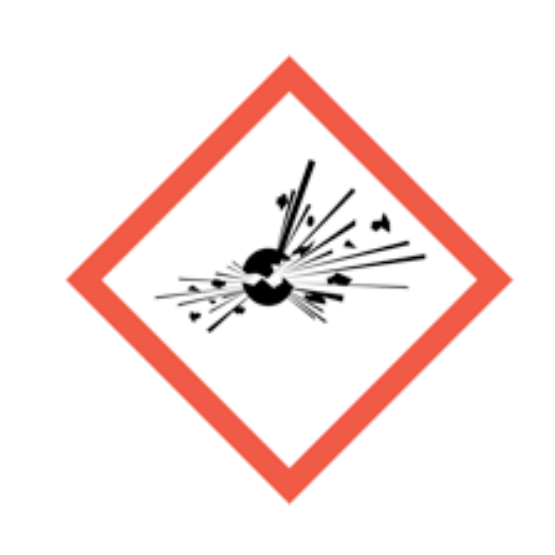
Exploding bomb
Explosive, self-reactive or organic peroxide hazards.
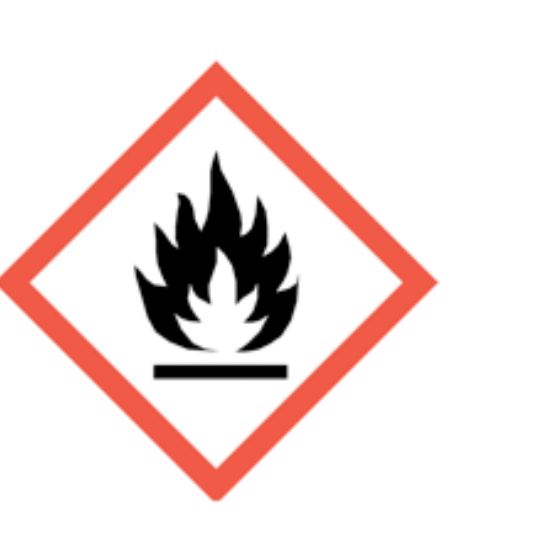
Flame
Flammable, self-heating or pyrophoric substances.
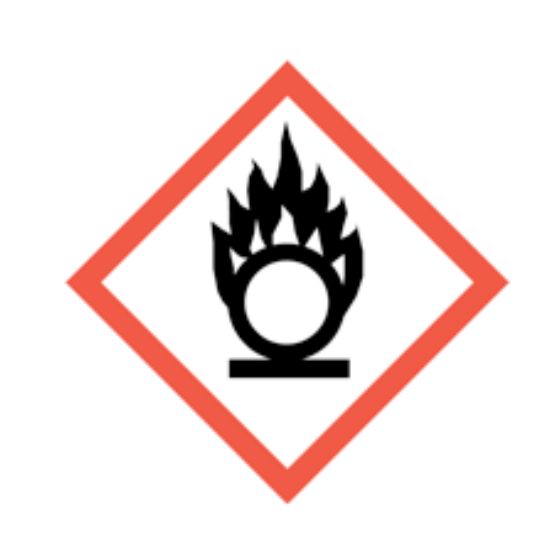
Flame over circle
Oxidising substances that can intensify fire.

Gas cylinder
Gas under pressure.
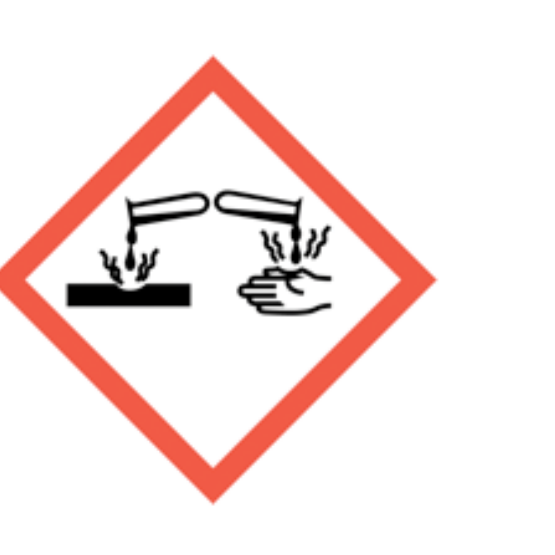
Corrosion
Skin burns, eye damage or corrosive to metals.
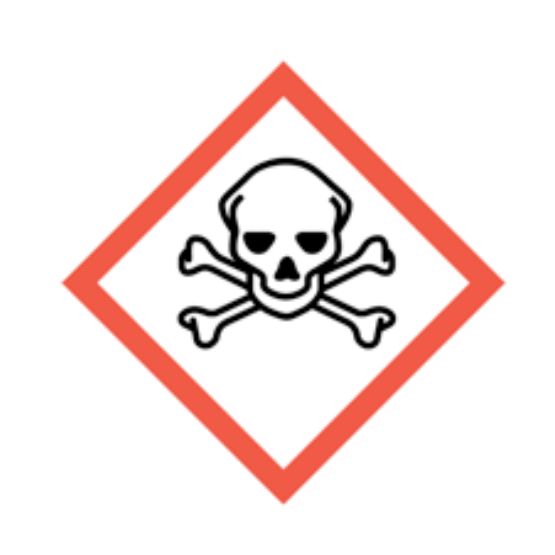
Skull and crossbones
Acute toxicity.

Exclamation mark
Irritation, harmful effects or skin sensitisation; some classifications cover drowsiness, dizziness or ozone-layer hazard. Read the actual hazard statements. Skin sensitisation differs from respiratory sensitisation.
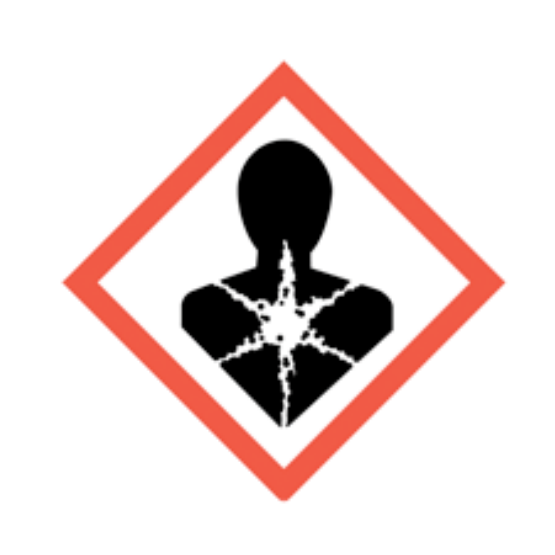
Health hazard
Serious health hazards, including organ damage, aspiration hazard, respiratory sensitisation, cancer and reproductive effects; some can follow a single exposure.
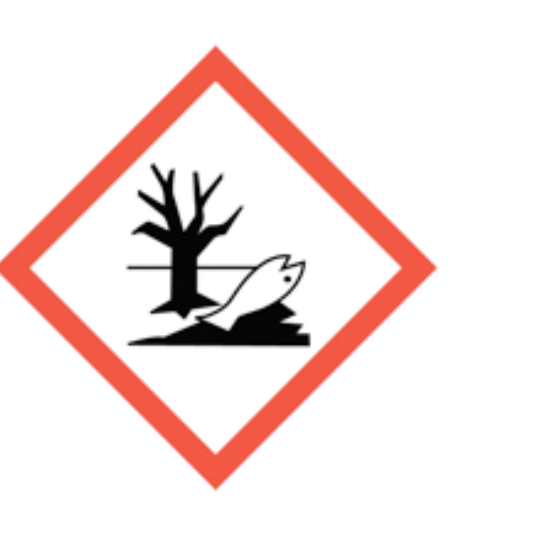
Environment
Hazardous to the aquatic environment.
What do the acronyms and key terms mean?
These acronyms often appear in dangerous substance, COSHH, DSEAR and process safety material.
| Acronym | Meaning | Why it matters |
|---|---|---|
| ATEX | Explosive atmospheres | Used for zoning and equipment suitable for explosive atmospheres. |
| COMAH | Control of Major Accident Hazards Regulations | Applies to qualifying major hazard establishments. |
| COSHH | Control of Substances Hazardous to Health Regulations | Controls health risks from hazardous substances. |
| DSEAR | Dangerous Substances and Explosive Atmospheres Regulations | Controls fire, explosion and similar energetic risks. |
| LEV | Local exhaust ventilation | Engineering control for airborne exposure or release. |
| RPE | Respiratory protective equipment | Used for residual inhalation risks where justified. |
| SDS | Safety data sheet | Supplier document that informs safe use, storage and emergency measures. |
| WEL | Workplace exposure limit | Exposure limit used in COSHH assessment. |