SHARE Knowledge Hub
Radiation and Radon
Radiation is energy carried by waves or particles; workplace sources include X-ray equipment, optical sources and naturally occurring radon gas. Radon can accumulate in occupied buildings and, when inhaled over time, increase lung-cancer risk, while an uncontrolled radiation source can injure tissue or eyes. Identify the source and exposure route, then assess and verify the appropriate controls under the Great Britain or Northern Ireland rules.
Understanding Radiation and Radon
Radiation is energy carried by waves or particles; workplace sources include X-ray equipment, optical sources and naturally occurring radon gas. Radon can accumulate in occupied buildings and, when inhaled over time, increase lung-cancer risk, while an uncontrolled radiation source can injure tissue or eyes. Identify the source and exposure route, then assess and verify the appropriate controls under the Great Britain or Northern Ireland rules.
Why this matters at work
Map the employer, referrer, practitioner and operator roles for each procedure. Keep patient justification and optimisation under the applicable medical-exposure rules while assessing and restricting staff and public exposure under the applicable workplace rules. Coordinate equipment quality assurance and decide separately whether an incident triggers a patient-exposure or worker-exposure reporting route, or both.
The evidence set should include source wavelength and power, task duration, geometry, manufacturer classification, worker reports and exposure assessment. Unsafe shortcut: judging hazard by brightness alone or assuming invisible infrared and ultraviolet cannot cause immediate injury. Escalate when high-intensity, collimated or pulsed sources are used or wavelength and exposure data are missing.
How organisations manage this in practice
The evidence set should include source and task description, dose estimates, accident scenarios, controls, designation decisions, RPA advice, actions and approval date. Unsafe shortcut: starting work on the basis of a supplier demonstration or copying another site's assessment. Escalate when work has begun without assessment, key inputs are missing or the proposed controls are not yet implemented.
In GB, consult recognised-union appointed safety representatives for the employees they represent. For employees not represented under that route, consultation can be direct or through elected representatives; a workplace may need both routes. Offshore installations have a separate framework. For NI, use HSENI’s consultation route and the separate NI instruments; do not apply the GB instrument numbers by assumption. Record who is represented, allow input before decisions and explain how comments affected the controls. Sources: HSE GB consultation law and exceptions; HSENI NI consultation duty and legislative route.
Assess the complete source lifecycle and foreseeable departures from normal work. Receipt, setup, source changes, cleaning, maintenance, calibration, fault recovery, transport and disposal can expose different people or defeat safeguards that work in production. Break the job into steps and identify source state, person position, exposure route and protection at each one. Include contractor interfaces and the possibility that someone approaches equipment whose state is uncertain; a routine-production dose estimate cannot establish that intervention is safe. Use observations, task discussions, maintenance instructions and competent dose or exposure assessment to define the safe method. Record the equipment and source identifiers, barriers, checks, access arrangements, communication and contingency route. Verify that the method remains usable during a fault or loss of normal services. If a non-routine step lacks a demonstrated control, restrict that step and obtain the appropriate radiation specialist's advice. Review the assessment after changes or evidence that a safeguard has failed, and communicate the resulting restrictions to affected workers.
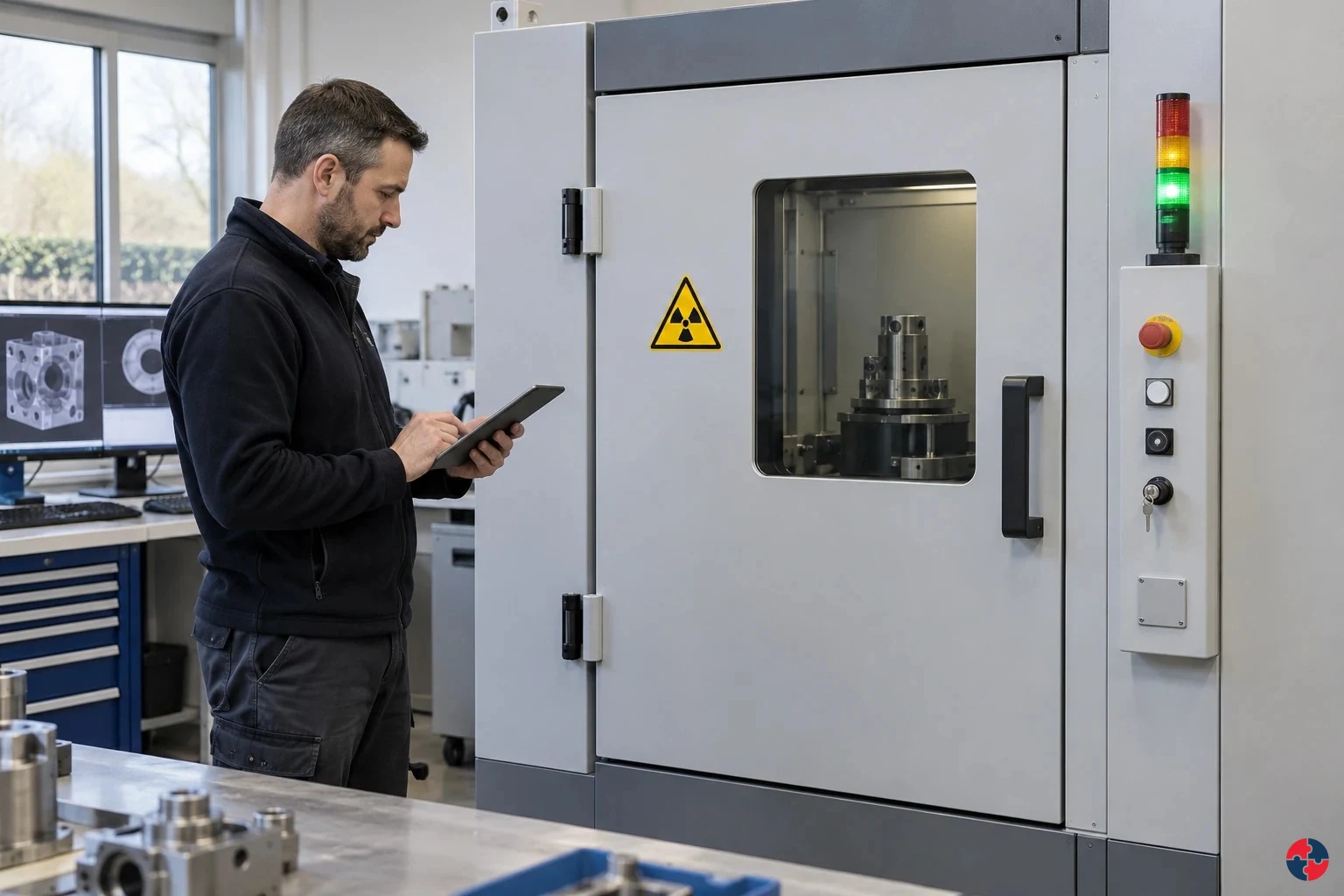
A closed cabinet has several distinct safeguards
A cabinet enclosure, interlocks, warning and named hand-back answer different questions. This equipment example is separate from room-specific radon evidence.

Identify the equipment
Use the actual source and cabinet information, applicable arrangements and competent radiation advice.
Check safeguards
Identify enclosure, access arrangement, interlock status and warning functions without demonstrating a live test or bypass.
Verify and hand back
A competent person records source-specific verification and the authorised return decision; missing evidence leaves the affected equipment held.
Keep radiation contexts distinct
Do not apply ideal point-source distance relationships to radon, internal exposure or extended sources; room-specific radon assessment is not a safe-stay-time calculation.
Read the complete task-specific control examples
ERICPD is a planning cross-map: Discipline verifies and sustains every control. ESEAP compares effectiveness. A label does not authorise the task; retain the owner, evidence and stop or change decision.
Using a basement archive with elevated radon · ERICPD
- Eliminate
- Move the occupied task out of the affected basement where the operation can work safely elsewhere; inspect whether the new room creates another exposure.
- Reduce
- If relocation is infeasible, substitute remote monitoring or an unoccupied equipment arrangement for routine entry; shorter occupancy alone is administrative exposure reduction.
- Isolate
- Seal assessed ingress paths and install appropriately designed subfloor extraction or ventilation, separating radon-bearing air from occupied rooms.
- Control
- Monitor the remediation and maintain ventilation; set controlled access and a reviewed work plan only while the engineered solution is verified.
- PPE
- Ordinary clothing or a respirator is not a substitute for radon remediation or a justified radiation-control plan; specify task protection only if a competent assessment identifies a separate route.
- Discipline
- Record measurement dates, occupancy, maintenance and remeasurement; brief occupants on the real stop/report route without inventing a safe number of minutes.
Using a basement archive with elevated radon · ESEAP
- Elimination
- Move the occupied task out of the affected basement where the operation can work safely elsewhere; inspect whether the new room creates another exposure. Source basis: HSE radon guidance
- Substitution
- If relocation is infeasible, substitute remote monitoring or an unoccupied equipment arrangement for routine entry; shorter occupancy alone is administrative exposure reduction. Source basis: HSE radon guidance
- Engineering controls
- Seal assessed ingress paths and install appropriately designed subfloor extraction or ventilation, separating radon-bearing air from occupied rooms. Source basis: HSE radon guidance
- Administrative controls
- Monitor the remediation and maintain ventilation; set controlled access and a reviewed work plan only while the engineered solution is verified. Source basis: HSE radon guidance Record measurement dates, occupancy, maintenance and remeasurement; brief occupants on the real stop/report route without inventing a safe number of minutes. Source basis: HSE radon guidance
- PPE
- Ordinary clothing or a respirator is not a substitute for radon remediation or a justified radiation-control plan; specify task protection only if a competent assessment identifies a separate route. Source basis: HSE radon guidance
Servicing an X-ray inspection cabinet · ERICPD
- Eliminate
- Complete inspection and adjustment with the source de-energised wherever the fault can be diagnosed safely without radiation.
- Reduce
- Where an energized function test is essential, use a validated simulator or lower-output test setting if it actually proves the required function; shorter time alone is administrative reduction.
- Isolate
- Keep beam inside assessed shielding and verify door interlocks and guarded service ports; separate contractor and occupants from the test zone.
- Control
- Use warning circuits, secure test access, a written sequence and any justified monitoring under the competent radiation plan.
- PPE
- Ordinary clothing cannot stop an X-ray beam.
- Discipline
- Record permission, test results, defects, hand-back and change control; brief host and contractor on the stop and restart authority.
Servicing an X-ray inspection cabinet · ESEAP
- Elimination
- Complete inspection and adjustment with the source de-energised wherever the fault can be diagnosed safely without radiation. Source basis: HSE ionising-radiation guidance
- Substitution
- Where an energized function test is essential, use a validated simulator or lower-output test setting if it actually proves the required function; shorter time alone is administrative reduction. Source basis: HSE ionising-radiation guidance
- Engineering controls
- Keep beam inside assessed shielding and verify door interlocks and guarded service ports; separate contractor and occupants from the test zone. Source basis: HSE ionising-radiation guidance Installed warning circuits and secure test-access hardware support the assessed shielding and interlocks. Prove function before energising. HSE ionising-radiation guidance
- Administrative controls
- Use the authorised written test sequence, controlled access arrangements and justified monitoring under the competent radiation plan; retain RPA/service-manager ownership and stop on an unexpected beam, alarm or access breach. HSE ionising-radiation guidance Record permission, test results, defects, hand-back and change control; brief host and contractor on the stop and restart authority. Source basis: HSE ionising-radiation guidance
- PPE
- Ordinary clothing cannot stop an X-ray beam. Specify any personal protection only if the competent assessment identifies a residual task-specific route. Source basis: HSE ionising-radiation guidance
How can I practise this topic in 3D?
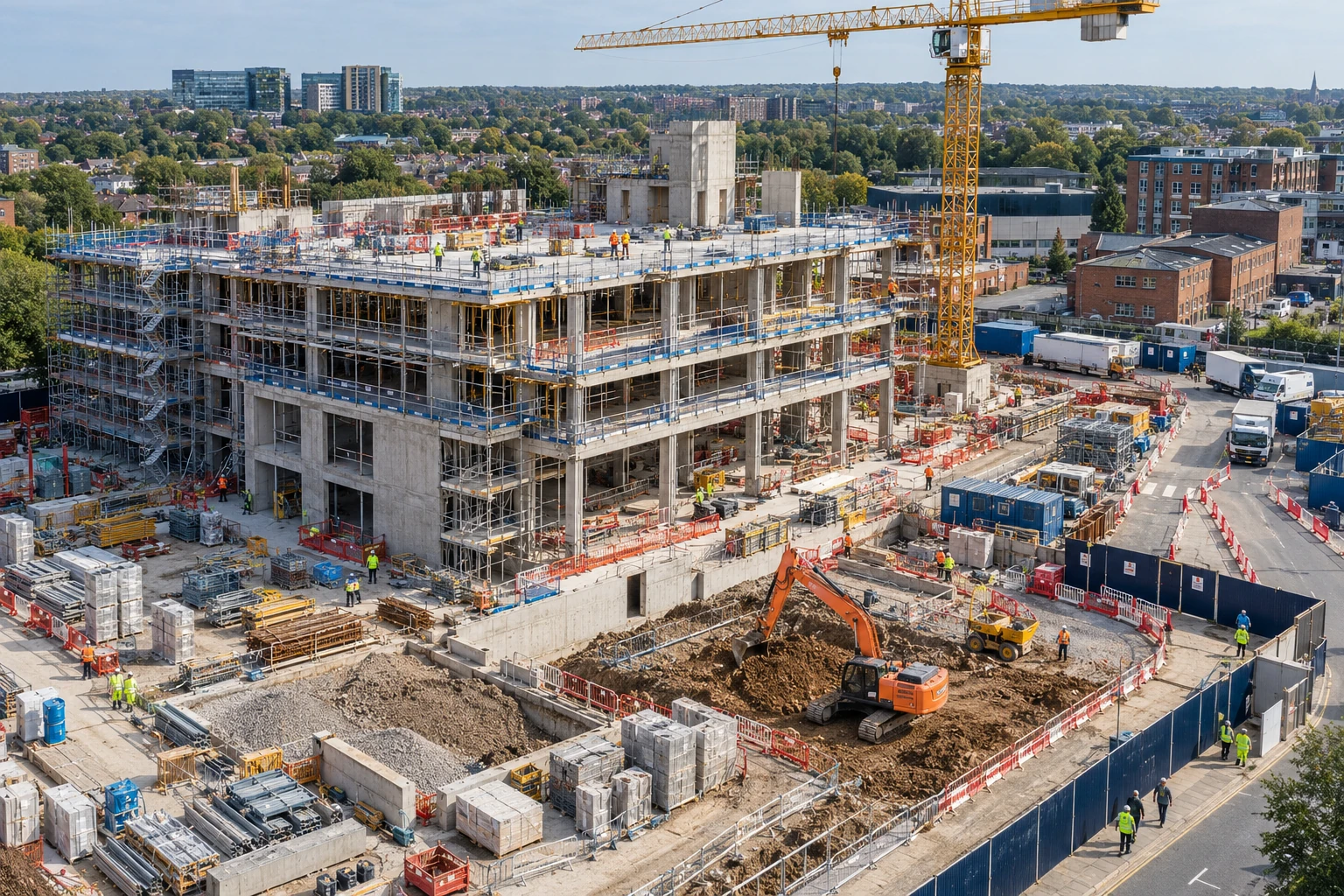

Specialist radiation work is not coordinated
All related inspection points 1 across 1 location
Construction site 1 inspection point
Practice in the SHAREhub environment. Browser practice is separate from workplace competence and formal learning records.
What are radiation and radon risks at work?
Radiation transfers energy through waves or particles. Harm depends on its type, the way it reaches the body and the exposure received; a source can be hazardous even when it cannot be seen or felt.
Best-practice guide: Radiation and Radon
What are radiation and radon risks at work?
Radiation transfers energy through waves or particles. Harm depends on its type, the way it reaches the body and the exposure received; a source can be hazardous even when it cannot be seen or felt. Radiation is energy carried by waves or particles; workplace sources include X-ray equipment, optical sources and naturally occurring radon gas.
Turn radiation and radon knowledge into a decision
Radiation is energy carried by waves or particles; workplace sources include X-ray equipment, optical sources and naturally occurring radon gas. Radon can accumulate in occupied buildings and, when inhaled over time, increase lung-cancer risk, while an uncontrolled radiation source can injure tissue or eyes. Retain the room plan, detector report, occupancy assessment, notification evidence, RPA advice, staff/contractor briefing, remedial specification, commissioning and verification results, and the authorised hand-back record.
A basement archive with an elevated annual average
Communicate the temporary access arrangements to staff and contractors; move routine archive work to another suitable location where practicable. A competent remediation contractor assesses the building and installs the specified control. Check commissioning, operating instructions, maintenance responsibilities and post-remediation measurements.
Radiation exposure, harm and stop signs
Occupied basement with radon entering from the ground: Radon decay products are inhaled and irradiate lung tissue. X-ray cabinet servicing or a damaged sealed
Choose controls for the actual task
Elimination: Move the occupied task out of the affected basement where the operation can work safely elsewhere; inspect whether the new room creates another exposure. Substitution: If relocation is infeasible, substitute remote monitoring or an unoccupied equipment arrangement for routine entry; shorter occupancy alone is administrative exposure reduction. Engineering controls: Seal assessed ingress paths and install appropriately designed subfloor extraction or ventilation, separating radon-bearing air from occupied rooms. Administrative controls: Monitor the remediation and maintain ventilation; set controlled access and a reviewed work plan only while the engineered solution is verified. PPE: Ordinary clothing or a respirator is not a substitute for radon remediation or a justified radiation-control plan; specify task protection only if a competent assessment identifies a separate route. Read the full control table for qualifications, ownership and verification. Use the actual task and applicable jurisdiction; existing technical approval remains unchanged.
Use the full radiation and radon lesson
Use the full topic for the decision points, practical examples, detailed control tables and source scope. HSE guidance applies to Great Britain; use HSENI for the Northern Ireland route and the source’s stated jurisdiction. A simplified guide does not change the page’s technical-review or approval status.

Read all six steps as text
1. What are radiation and radon risks at work?
Radiation transfers energy through waves or particles.
- Avoid / redesign: Move the occupied task out of the affected basement where the operation can work safely elsewhere; inspect whether the new room creates another exposure.
- Control the task: Seal assessed ingress paths and install appropriately designed subfloor extraction or ventilation, separating radon-bearing air from occupied rooms.
- Verify before release: Hold or stop for unresolved radon assessment or failed ventilation/remediation.
Radiation transfers energy through waves or particles. Harm depends on its type, the way it reaches the body and the exposure received; a source can be hazardous even when it cannot be seen or felt. Radiation is energy carried by waves or particles; workplace sources include X-ray equipment, optical sources and naturally occurring radon gas.
Apply it: Which part of this plan would you check at the workface before authorising the task?
2. Turn radiation and radon knowledge into a decision
Use the evidence to improve the actual work arrangement.
- Change at source: Move the occupied task out of the affected basement where the operation can work safely elsewhere; inspect whether the new room creates another exposure.
- Make it observable: Hold or stop for unresolved radon assessment or failed ventilation/remediation.
- Keep useful evidence: Retain the room plan, detector report, occupancy assessment, notification evidence, RPA advice, staff/contractor briefing, remedial specification, commissioning and verification results, and the authorised hand-back record.
Radiation is energy carried by waves or particles; workplace sources include X-ray equipment, optical sources and naturally occurring radon gas. Radon can accumulate in occupied buildings and, when inhaled over time, increase lung-cancer risk, while an uncontrolled radiation source can injure tissue or eyes. Retain the room plan, detector report, occupancy assessment, notification evidence, RPA advice, staff/contractor briefing, remedial specification, commissioning and verification results, and the authorised hand-back record.
Apply it: What evidence would show that the change improves this task, rather than only completing a record?
3. A basement archive with an elevated annual average
Example: a practical application of the existing topic lesson.
- Setting: the leisure operator wants staff to retrieve archive files from a leisure-centre basement without unnecessary radon exposure.
- Act: Keep the basement result separate.
- Hold / review: Hold normal basement use if the interim arrangements cannot be maintained.
Communicate the temporary access arrangements to staff and contractors; move routine archive work to another suitable location where practicable. A competent remediation contractor assesses the building and installs the specified control. Check commissioning, operating instructions, maintenance responsibilities and post-remediation measurements.
Apply it: At which point would you hold this example, and what evidence would allow it to proceed?
4. Radiation exposure, harm and stop signs
Connect the task, the route to the person and the control that can fail.
- Occupied basement with radon entering from the ground: Radon decay products are inhaled and irradiate lung tissue.
- X-ray cabinet servicing or a damaged sealed source: External ionising radiation reaches tissue.
- Exposure route 3: Spill or damaged package containing unsealed radioactive material Material may be inhaled, swallowed or enter a wound, causing internal exposure; contamination can spread and prolong exposure.
Occupied basement with radon entering from the ground: Radon decay products are inhaled and irradiate lung tissue. X-ray cabinet servicing or a damaged sealed
Apply it: Who could be exposed, including other trades, cleaners, maintainers and people nearby?
5. Choose controls for the actual task
Control summary. Read the complete task-specific controls and checks in the linked topic.
- Elimination: Move the occupied task out of the affected basement where the operation can work safely elsewhere; inspect whether the new room creates another exposure. Source basis: HSE radon guidance
- Substitution: If relocation is infeasible, substitute remote monitoring or an unoccupied equipment arrangement for routine entry; shorter occupancy alone is administrative exposure reduction. Source basis: HSE radon guidance
- Engineering controls: Seal assessed ingress paths and install appropriately designed subfloor extraction or ventilation, separating radon-bearing air from occupied rooms. Source basis: HSE radon guidance
- Administrative controls: Monitor the remediation and maintain ventilation; set controlled access and a reviewed work plan only while the engineered solution is verified.
- PPE: Ordinary clothing or a respirator is not a substitute for radon remediation or a justified radiation-control plan; specify task protection only if a competent assessment identifies a separate route. Source basis: HSE radon guidance
Elimination: Move the occupied task out of the affected basement where the operation can work safely elsewhere; inspect whether the new room creates another exposure. Substitution: If relocation is infeasible, substitute remote monitoring or an unoccupied equipment arrangement for routine entry; shorter occupancy alone is administrative exposure reduction. Engineering controls: Seal assessed ingress paths and install appropriately designed subfloor extraction or ventilation, separating radon-bearing air from occupied rooms. Administrative controls: Monitor the remediation and maintain ventilation; set controlled access and a reviewed work plan only while the engineered solution is verified. PPE: Ordinary clothing or a respirator is not a substitute for radon remediation or a justified radiation-control plan; specify task protection only if a competent assessment identifies a separate route. Read the full control table for qualifications, ownership and verification. Use the actual task and applicable jurisdiction; existing technical approval remains unchanged.
Apply it: Which stronger option can be used here, and who will verify it before accepting the remaining risk?
6. Use the full radiation and radon lesson
Follow the official sources below and retain the task-specific evidence.
- Official guidance: HSE ionising-radiation guidance
- Official guidance: L121 explains the ionising-radiation control hierarchy
- Task decision: Do not apply ideal point-source distance relationships to radon, internal exposure or extended sources; room-specific radon assessment is not a safe-stay-time calculation.
Use the full topic for the decision points, practical examples, detailed control tables and source scope. HSE guidance applies to Great Britain; use HSENI for the Northern Ireland route and the source’s stated jurisdiction. A simplified guide does not change the page’s technical-review or approval status.
Apply it: Which official source and full-topic section will you use to resolve the next decision?
Ionising radiation can remove electrons from atoms and damage tissue and DNA. External exposure comes from a source outside the body, such as an X-ray generator. Internal exposure can follow inhalation, ingestion or entry of radioactive material through a wound. Contamination means radioactive material is where it should not be; it can keep exposing people and spread to other areas. Sufficiently high exposures can injure tissue; cancer risk can appear years later.
Radon is a naturally occurring radioactive gas released from rocks and soil. It can enter through the ground and building fabric and accumulate indoors. Inhaling radon and its radioactive decay products increases lung-cancer risk over time. Smell, appearance and the absence of symptoms cannot establish a safe level. A radon concentration in becquerels per cubic metre (Bq/m³) describes radioactivity in air, not an individual dose in millisieverts (mSv).
There is no dependable sensory warning for radon or many ionising exposures. The route into the body and the tissue affected determine what controls are useful; immediate injury and disease years later must be considered separately.
| Task or exposure | Route and likely harm | Warning and stop point |
|---|---|---|
| Occupied basement with radon entering from the ground | Radon decay products are inhaled and irradiate lung tissue. Lung-cancer risk rises over time; there is usually no immediate symptom to guide an individual shift. | Treat an elevated or uncertain annual average, changed occupancy or failed extraction as an assessment and access-control trigger; do not wait for symptoms. HSE radon guidance |
| X-ray cabinet servicing or a damaged sealed source | External ionising radiation reaches tissue. A high exposure can cause tissue injury; cancer risk may emerge years later. The source may give no sensory warning. | Stop for failed shielding or interlock, unexpected emission, a missing source or unauthorised entry; keep people clear and activate the contingency plan. HSE ionising-radiation guidance |
| Spill or damaged package containing unsealed radioactive material | Material may be inhaled, swallowed or enter a wound, causing internal exposure; contamination can spread and prolong exposure. Harm depends on substance and intake. | Stop for a spill, damaged containment or unknown material; prevent spread and use the specialist contingency route. Visible contamination is not a reliable dose measure. HSE ionising-radiation guidance |
| Open laser or intense UV task | Direct or reflected light reaches eyes or skin. Intense exposure can cause acute eye or skin injury; repeated UV exposure can raise longer-term skin-cancer risk. | Stop for an exposed beam, missing screen or uncertain wavelength/protection. Glare or skin reddening may be too late to prevent injury. HSE optical-radiation guidance |
| Work near a strong electromagnetic-field source | Fields can produce direct effects and may interfere with active or passive medical implants; risk depends on the field, equipment and person-specific assessment. | Hold access when field information or implant compatibility is unknown, or a restriction or barrier has failed. HSE EMF guidance |
| Prolonged outdoor work in sunlight | Solar UV reaches skin and eyes. Sunburn and eye irritation may occur; cumulative skin exposure increases skin-cancer risk. Risk changes with duration, season, reflective surfaces and individual sensitivity. | Reddening or burning is damage, not a safe limit. Review work planning and protection when exposure is prolonged, shade is absent or a worker reports skin change or photosensitivity. HSE solar-UV guidance |
For radon, occupancy, ventilation and the measured annual average change the decision. For equipment, source strength, shielding, operating mode, distance and whether a safeguard has been bypassed change the exposure. Neither an absence of symptoms nor a previous uneventful task proves safety.
Non-ionising radiation includes optical radiation and electromagnetic fields. Artificial UV, intense infrared, visible light and lasers can injure eyes or skin; strong electromagnetic fields have separate direct and implant-related risks. Solar UV is a natural optical exposure for outdoor workers: it can cause sunburn and cumulative skin damage, including skin cancer. The GB Artificial Optical Radiation at Work Regulations address artificial sources, not sunlight. For prolonged outdoor work, assess the exposure and use work planning, shade and covering clothing where appropriate; HSE’s sun advice treats sunscreen as an additional measure and states there is no legal duty to provide suncream or sunglasses. Check the NI general workplace route separately. The following comparison helps choose the right assessment route; it is not a list of interchangeable protective measures.
| Source | How exposure occurs | Control focus |
|---|---|---|
| Radon in occupied premises | Gas enters and accumulates; decay products are inhaled. | Measure representative occupied spaces, restrict exposure where needed, remediate and verify performance. HSE radon guidance |
| X-rays and radioactive sources | External irradiation; unsealed material may also cause contamination and internal exposure. | Specialist assessment, applicable notification or permission, enclosure/shielding, access controls, monitoring and contingency plans. HSE ionising-radiation guidance |
| UV, infrared, intense light and lasers | Direct or reflected optical exposure to eyes or skin. | Avoid hazardous exposure, enclose or screen the source, assess servicing and select any protection for the actual wavelength and task. HSE optical-radiation guidance |
| Electromagnetic fields | Exposure near relevant electrical or magnetic equipment; particular risks for some implants. | Use source and manufacturer information, assess exposure and people at particular risk, control access and seek competent advice. HSE EMF guidance |
| Solar UV during outdoor work | Sunlight reaches exposed skin and eyes; dose builds across repeated outdoor tasks. | Assess work and duration, plan shade and covered breaks, use covering clothing and suitable sunscreen as an addition. Do not apply artificial-optical-radiation law to sunlight. HSE solar-UV guidance |
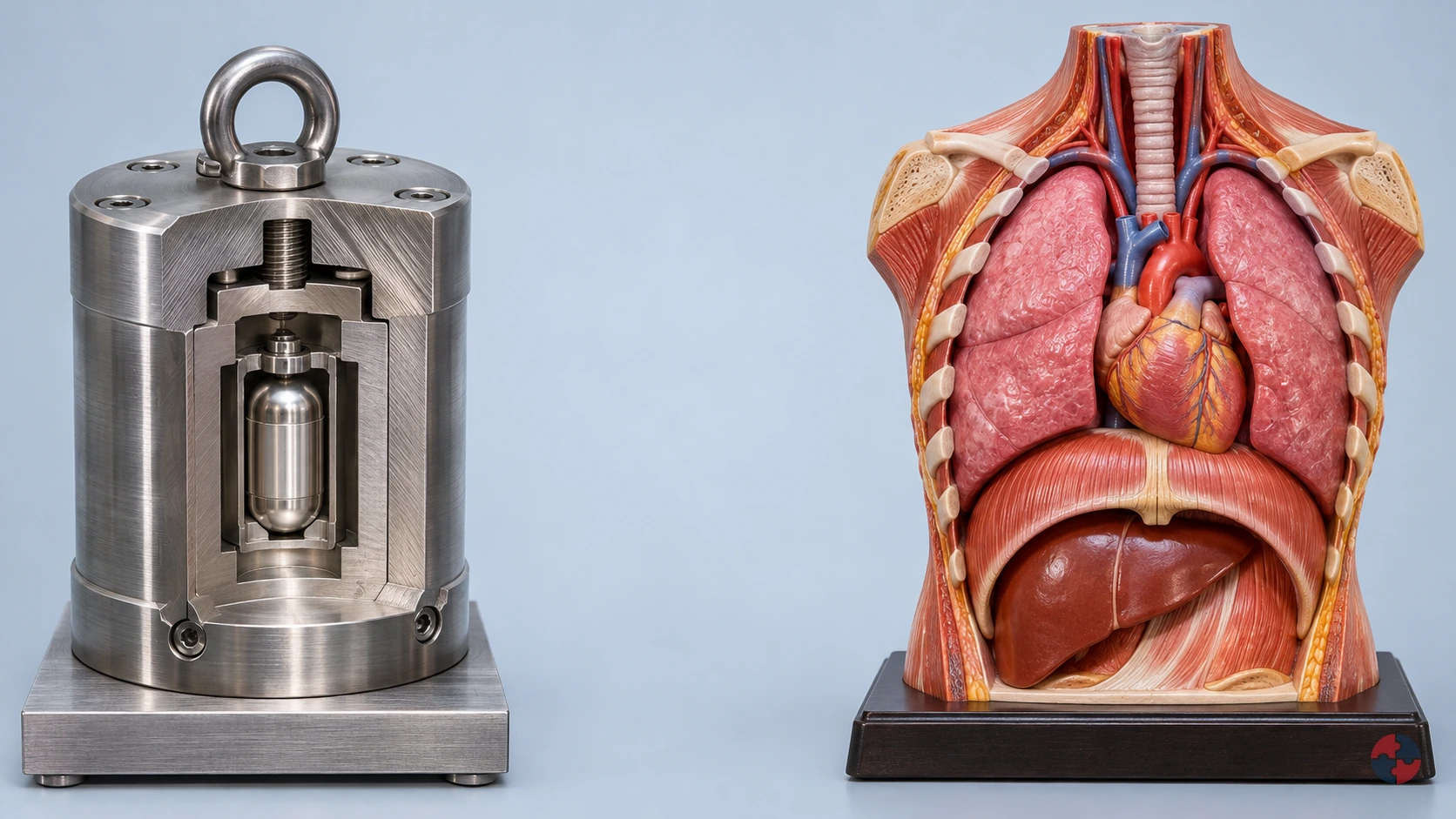
How do alpha, beta, gamma, X-rays and neutrons travel, penetrate the body and respond to shielding?
Interactive radiation explainer · SHAREhub environment
Read all five radiation, shielding and body-effect explanations
Alpha
Typical sources: Alpha-emitting material Real example: radon and its radioactive decay products in buildings or underground workplaces. An unstable nucleus emits an alpha particle: two protons and two neutrons. The display holder is a teaching cutaway, not a radon container or an equipment design.
Travel and distance: A few centimetres in air Typical alpha particles rapidly lose energy in air. The illustrated track length is enlarged.
Penetration and exposure route: External: stops at the outer dead skin layer This applies to intact outer skin. Inside an airway or a wound, living cells have no such protective barrier.
Possible effects: A short, dense ionisation track can damage nearby cells. Inhaled radon decay products expose lung tissue and increase lung-cancer risk.
When radioactive material enters the body: Internal alpha: an airway deposit Illustrates an inhaled radioactive decay product near airway cells. Its short range concentrates energy locally; the exact organ dose depends on the radionuclide and where material is retained. 1 · A radioactive deposit is already inside The airway inset starts after an alpha-emitting radioactive decay product has been inhaled and deposited beside living cells. It can continue to emit radiation while it remains there. 2 · Follow a short track through local tissue The particle now starts inside the airway lining, rather than outside intact skin. It deposits energy densely over a short local track; short range does not make an internal alpha emitter harmless. 3 · Why an outside barrier cannot shield this deposit Paper outside the body cannot sit between the deposited emitter and adjacent cells. Containment and preventing intake address the exposure route; an exterior shield does not remove material already inside. 4 · Examine local cell interactions Nearby cells may receive energy that damages biological molecules, including DNA. Radon-related exposure can increase lung-cancer risk over time. The highlighted cells do not predict an immediate injury, a measured dose or a certain cancer outcome.
Shielding and control choices: Paper illustrates alpha stopping; preventing radioactive material entering the body is the crucial additional control. A paper barrier does not control airborne radon or contaminated dust.
Example sequence: 1 · See the source The teaching holder reveals alpha emissions. Radon-related exposure usually comes from radioactive gas and its decay products, not a visible glowing rock. 2 · Follow the short air track The particle deposits energy densely and stops over a short path. A few centimetres is a useful typical scale, not a clearance distance. 3 · Insert a barrier A sheet of paper stops the illustrated alpha track. The source remains radioactive even when no track reaches the body. 4 · Compare outside and inside Outside: the track stops at intact outer skin. Select internal exposure to see an airway deposit irradiate adjacent living cells. This body inset is a separate unshielded local comparison; it does not show the outcome of the selected barrier.
Compare barrier materials
- Air only: The short alpha track stops in air before distant tissue; close or internal exposure is a different situation. Material comparison only; thickness, energy and geometry are not calculated.
- Paper: Paper stops the illustrated alpha particles. Containment and control of intake still matter. Material comparison only; thickness, energy and geometry are not calculated.
- Plastic: Plastic stops the illustrated alpha particles. Containment and control of intake still matter. Material comparison only; thickness, energy and geometry are not calculated.
- Aluminium: Aluminium stops the illustrated alpha particles. Containment and control of intake still matter. Material comparison only; thickness, energy and geometry are not calculated.
- Lead: Lead stops the illustrated alpha particles. Containment and control of intake still matter. Material comparison only; thickness, energy and geometry are not calculated.
- Concrete: Concrete stops the illustrated alpha particles. Containment and control of intake still matter. Material comparison only; thickness, energy and geometry are not calculated.
- Water: Water stops the illustrated alpha particles. Containment and control of intake still matter. Material comparison only; thickness, energy and geometry are not calculated.
- Layered neutron barrier: Layered neutron barrier stops the illustrated alpha particles. Containment and control of intake still matter. Material comparison only; thickness, energy and geometry are not calculated.
Beta
Typical sources: Beta-emitting material Examples include radioactive tracers in laboratories and some industrial thickness gauges. This example shows beta-minus radiation: an electron emitted during nuclear decay. Generic teaching holder; real sources have purpose-designed containment and protection.
Travel and distance: Centimetres to metres, depending on energy Beta emitters have different energy distributions. Some beta particles travel several metres in air; low-energy examples travel much less.
Penetration and exposure route: Skin and superficial tissue; depth varies More energetic beta particles can reach living skin and the lens of the eye. Do not treat beta as harmless because it is less penetrating than gamma.
Possible effects: External beta exposure can injure skin or eyes at sufficient dose. Radioactive material inside the body can irradiate nearby tissue.
When radioactive material enters the body: Internal beta: a local deposit A simplified contaminated-tissue example. The same electron track now starts within the body. Actual distribution depends on the material; inhalation is not the only possible entry route. 1 · A beta emitter is already beside tissue This airway-cell example begins with radioactive material already deposited inside the body. Inhalation is one entry route; other materials can enter by swallowing or through wounds and distribute differently. 2 · Follow an electron from within the body The emitted beta electron scatters and loses energy in nearby tissue. Its finite local track depends on energy and tissue; the magnified drawing does not represent a fixed depth or organ dose. 3 · Separate outside shielding from internal exposure An external plastic panel cannot be placed between this deposited emitter and neighbouring cells. Preventing contamination entering the body matters; changing the outside panel cannot cancel an internal exposure. 4 · See local energy deposition and possible harm Interactions can affect cells close to the radioactive deposit. The amount and distribution of material, its emissions and retention determine exposure; a coloured track does not establish tissue injury or an individual cancer risk.
Shielding and control choices: Low atomic number plastic is a useful first comparison for beta shielding. Slowing beta particles can generate bremsstrahlung X-rays, especially in dense, high atomic number materials. A designed shield may need more than one layer.
Example sequence: 1 · See the beta emitter The electron starts at the nucleus. This is a beta-minus example; positron-emitting sources need additional explanation because annihilation photons are also produced. 2 · Follow the changing track Interactions scatter and slow the electron. Its travel depends strongly on starting energy, so there is no single range shared by all beta sources. 3 · Compare plastic and lead Plastic absorbs the illustrated beta track with less bremsstrahlung than a comparable high atomic number material. Lead is not an automatic first choice. 4 · See superficial energy deposition The enlarged skin section shows a finite electron track in tissue. Internal contamination places the emitter beside living cells; it changes the exposure route. This body inset is a separate unshielded local comparison; it does not show the outcome of the selected barrier.
Compare barrier materials
- Air only: Longer beta tracks may reach exposed skin; range changes with energy. Material comparison only; thickness, energy and geometry are not calculated.
- Paper is not a universal beta barrier: The example passes through paper. Very low energy beta emitters behave differently. Material comparison only; thickness, energy and geometry are not calculated.
- Low atomic number first layer: Plastic illustrates electron stopping while limiting bremsstrahlung production. Material comparison only; thickness, energy and geometry are not calculated.
- Electron stopping with a secondary-radiation check: Aluminium can stop beta particles; energy and shield thickness determine the result. Bremsstrahlung still needs consideration. Material comparison only; thickness, energy and geometry are not calculated.
- Stopping electrons can create X-rays: High atomic number lead can increase bremsstrahlung production. A real beta shield may start with plastic and use another layer for photons. Material comparison only; thickness, energy and geometry are not calculated.
- Concrete: Beta tracks lose energy in material; a substantial barrier can absorb the electrons. Secondary photons and real construction still need assessment. Material comparison only; thickness, energy and geometry are not calculated.
- Water: Beta tracks lose energy in material; a substantial barrier can absorb the electrons. Secondary photons and real construction still need assessment. Material comparison only; thickness, energy and geometry are not calculated.
- Layered barrier: Beta tracks lose energy in material; a substantial barrier can absorb the electrons. Secondary photons and real construction still need assessment. Material comparison only; thickness, energy and geometry are not calculated.
Gamma
Typical sources: Gamma-emitting radioactive source Industrial radiography uses shielded radioactive sources to inspect components such as pipe welds. A nucleus releases a photon as it moves to a lower energy state. Generic capsule in an illustrative cutaway; real radiography sources remain within engineered systems.
Travel and distance: Long-range: attenuates rather than ending at one distance Photons can cross substantial air gaps. Distance changes exposure but does not create a universal safe boundary.
Penetration and exposure route: Can reach deep organs or pass through the body Some photons interact and deposit energy; others pass through. Penetration depends on energy, tissue and geometry.
Possible effects: Energy deposited in tissue can damage cells and DNA. Risk depends on dose and exposed tissue; sufficiently high doses can also cause tissue injury.
Shielding and control choices: Lead and appropriately designed concrete barriers reduce photon transmission. Shielding attenuates the beam. It is misleading to show one standard sheet as stopping every gamma photon.
Example sequence: 1 · See a continuing radioactive emission The capsule emits gamma photons as radioactive decay proceeds. Turning off an electrical supply does not stop radioactive decay. 2 · Follow photons across the scene Unlike the short alpha path, photon transmission falls progressively. The scene is compressed and provides no safe-distance calculation. 3 · Reduce the transmitted beam Absorption and scattering in the barrier leave fewer illustrated forward tracks. Some transmission remains: real design checks also consider scattered radiation and openings. 4 · See interactions at different depths A penetrating photon can transfer energy inside the body. The highlighted points represent interactions, not a prediction of injury or cancer. This body inset is a separate unshielded local comparison; it does not show the outcome of the selected barrier.
Compare barrier materials
- Unshielded path: Photons can continue across the scene and into tissue. Distance and time influence exposure. Material comparison only; thickness, energy and geometry are not calculated.
- Paper gives little protection in this example: The illustrated photon beam largely continues. Paper is not an appropriate photon protection strategy. Material comparison only; thickness, energy and geometry are not calculated.
- Plastic: Some attenuation occurs, but this illustrative layer leaves substantial photon transmission. Energy and actual thickness matter. Material comparison only; thickness, energy and geometry are not calculated.
- Aluminium: Some attenuation occurs, but this illustrative layer leaves substantial photon transmission. Energy and actual thickness matter. Material comparison only; thickness, energy and geometry are not calculated.
- Dense photon barrier: Lead reduces forward transmission through absorption and scattering; some photons still transmit or scatter. Material comparison only; thickness, energy and geometry are not calculated.
- Structural photon shielding: A designed concrete barrier can reduce the field. Composition, thickness, joints and openings affect its performance. Material comparison only; thickness, energy and geometry are not calculated.
- Water also attenuates photons: A sufficient path through water reduces transmission. The small illustrated layer does not establish a protective thickness. Material comparison only; thickness, energy and geometry are not calculated.
- Assess the photon component separately: A neutron-oriented composite is not automatically a complete photon shield. Assess the materials and photon energies actually present. Material comparison only; thickness, energy and geometry are not calculated.
X-rays
Typical sources: Energised X-ray tube Medical and dental imaging, security screening, cabinet inspection and handheld X-ray fluorescence analysis. Electrons accelerated within a tube strike a target and produce X-ray photons. The beam appears only during the illustrated energised exposure. This is not a radioactive source capsule.
Travel and distance: No single stopping distance in air X-rays are photons. Beam energy, filtration, direction and scatter all affect transmission.
Penetration and exposure route: Can penetrate the body; absorption differs between tissues Differences in transmission allow diagnostic images. The examination uses a controlled, justified exposure.
Possible effects: X-rays can damage cells, so exposures are controlled. A normal diagnostic X-ray does not leave radiation stored inside a person or make them radioactive.
Shielding and control choices: Purpose-designed shielding such as lead or concrete reduces the primary and scattered X-ray field. X-rays are not always less penetrating than gamma rays: photon energy, not the name alone, governs their interactions.
Example sequence: 1 · Energise the teaching tube An electron beam meets the target; X-ray photons leave the tube window. A normal diagnostic tube produces its beam while energised. 2 · Follow a directed beam and scatter The illustrated beam travels through air. Some interactions redirect photons; this is why the forward beam alone does not describe every exposure. 3 · Place a designed photon barrier The barrier reduces transmission. Real installations account for equipment output, workload, occupants and scatter, with suitable expert advice. 4 · Compare tissue transmission Some photons cross the body and some interact. The beam ends when the diagnostic exposure ends; the patient does not retain the X-ray beam. This body inset is a separate unshielded local comparison; it does not show the outcome of the selected barrier.
Compare barrier materials
- Unshielded path: Photons can continue across the scene and into tissue. Distance and time influence exposure. Material comparison only; thickness, energy and geometry are not calculated.
- Paper gives little protection in this example: The illustrated photon beam largely continues. Paper is not an appropriate photon protection strategy. Material comparison only; thickness, energy and geometry are not calculated.
- Plastic: Some attenuation occurs, but this illustrative layer leaves substantial photon transmission. Energy and actual thickness matter. Material comparison only; thickness, energy and geometry are not calculated.
- Aluminium: Some attenuation occurs, but this illustrative layer leaves substantial photon transmission. Energy and actual thickness matter. Material comparison only; thickness, energy and geometry are not calculated.
- Dense photon barrier: Lead reduces forward transmission through absorption and scattering; some photons still transmit or scatter. Material comparison only; thickness, energy and geometry are not calculated.
- Structural photon shielding: A designed concrete barrier can reduce the field. Composition, thickness, joints and openings affect its performance. Material comparison only; thickness, energy and geometry are not calculated.
- Water also attenuates photons: A sufficient path through water reduces transmission. The small illustrated layer does not establish a protective thickness. Material comparison only; thickness, energy and geometry are not calculated.
- Assess the photon component separately: A neutron-oriented composite is not automatically a complete photon shield. Assess the materials and photon energies actually present. Material comparison only; thickness, energy and geometry are not calculated.
Neutrons
Typical sources: Neutron-emitting source Examples include specialist research, nuclear facilities and neutron gauges; an americium–beryllium capsule is one neutron-source type. Some high-energy medical accelerators produce secondary neutrons. Nuclear reactions can release uncharged neutrons. This teaching example represents a contained neutron source. Generic source representation; mixed neutron and gamma fields require specialist assessment.
Travel and distance: Energy-dependent; potentially highly penetrating Neutrons scatter and change energy. Neither a fixed air range nor a single lead sheet describes their behaviour.
Penetration and exposure route: Can irradiate deep tissue Neutrons transfer energy through nuclear interactions, producing charged particles that deposit energy locally.
Possible effects: Neutron interactions can damage tissue and increase cancer risk. Biological effect varies with neutron energy; counting tracks alone does not compare doses between radiation types.
Shielding and control choices: Hydrogen-rich material slows fast neutrons; a capture component can remove slowed neutrons. A designed barrier also considers photons. Capture and other interactions can produce secondary gamma radiation. Moderating a neutron is not the same as removing all radiation.
Example sequence: 1 · See an uncharged neutron leave the source The neutron starts from a nuclear process, not from the electron beam of an ordinary diagnostic X-ray tube. Real sources may emit gamma radiation as well. 2 · Follow scattering and changing energy A neutron can travel well beyond the short alpha path. Collisions can deflect it and reduce its energy, rather than simply making it vanish. 3 · Slow, capture and consider secondary photons Hydrogen-rich shielding illustrates moderation, followed by a capture component. A secondary gamma track reminds learners that the whole field must be assessed. 4 · See energy transferred to tissue nuclei An interaction creates an energetic charged recoil or reaction product. The short recoil track represents local energy deposition, not a visible wound or a dose estimate. This body inset is a separate unshielded local comparison; it does not show the outcome of the selected barrier.
Compare barrier materials
- No moderating or capture barrier: Neutrons can reach tissue. Scattering and energy changes make a universal air-range claim unsuitable. Material comparison only; thickness, energy and geometry are not calculated.
- Paper: This is not a complete fast-neutron protection strategy. A material effective for photons may perform poorly for neutrons. Material comparison only; thickness, energy and geometry are not calculated.
- Aluminium: This is not a complete fast-neutron protection strategy. A material effective for photons may perform poorly for neutrons. Material comparison only; thickness, energy and geometry are not calculated.
- Lead: This is not a complete fast-neutron protection strategy. A material effective for photons may perform poorly for neutrons. Material comparison only; thickness, energy and geometry are not calculated.
- Hydrogen-rich plastic moderates: Collisions with hydrogen help slow fast neutrons. Moderation alone does not guarantee capture or control secondary radiation. Material comparison only; thickness, energy and geometry are not calculated.
- Concrete can shield mixed fields: Hydrogen content and composition matter for neutrons; the design must also account for secondary photons. Material comparison only; thickness, energy and geometry are not calculated.
- Water illustrates moderation: Hydrogen helps slow neutrons. Some interactions produce secondary gamma radiation; a real barrier is assessed as a whole. Material comparison only; thickness, energy and geometry are not calculated.
- Moderation plus capture: Hydrogen-rich material slows fast neutrons and a capture component removes some slowed neutrons. Secondary gamma shielding may also be needed. Material comparison only; thickness, energy and geometry are not calculated.
Sources and how to interpret the model
Original teaching geometry and animation. The reference diagram is a layout inspiration; no third-party illustration has been copied. Coloured tracks, counts, timing and materials illustrate mechanisms rather than exposure measurements. This activity is not a radiation protection assessment or a design specification.
- Health and Safety Executive: Ionising radiation: protecting workers and others
- UK Health Security Agency: Basic concepts of radiation
- UK Health Security Agency: Living with radiation
- Health and Safety Executive: Radon in the workplace
- Health and Safety Executive: Introduction to radiation in the workplace
- Health and Safety Executive: Work with ionising radiation that requires registration
- Health and Safety Executive: Industrial radiography – managing radiation risks (IRP1)
- NHS: X-ray
- North Tees and Hartlepool NHS Foundation Trust: My X-ray Examination – What You Need to Know about Radiation and the Risks Involved
- Office for Nuclear Regulation: Shielding and dose rate safety assessment of transport packages (NS-TAST-GD-100)
- Office for Nuclear Regulation: Criticality safety assessment of transport packages (NS-TAST-GD-097)
- Health and Safety Executive: Radiation Protection Advisers
- Health and Safety Executive: Dose monitoring, assessment and recording
- UK Health Security Agency: Accidental neutron exposure in a medical setting: a case study
- Office for Nuclear Regulation: Step 4 assessment of radiological protection for the UK EPR (ONR-GDA-AR-11-025)
How can the hierarchy of controls reduce ionising-radiation and radon exposure?
Prevent or reduce exposure at source where practicable, then use engineering safeguards and organised work. Monitoring, training and PPE support those controls; they do not replace them.
First consider whether the radiation task can be avoided or a suitable lower-hazard process used. For ionising sources, designed enclosures, shielding, containment, interlocks and other safety features take priority where reasonably practicable. A specialist must match shielding to the radiation: a generic instruction to add lead is not a safe design specification. Time and distance can help with an external source, but moving a chair farther from a wall does not reliably control airborne radon.
For radon, a specialist may specify sub-floor extraction, ventilation or another building-specific solution. Temporary relocation or managed access may restrict exposure while the permanent control is installed. Do not invent a safe number of hours from a concentration alone. For artificial lasers and UV, prevent direct and reflected exposure with suitable enclosure or screens; eyewear must match the source and task. For outdoor solar UV, plan prolonged work around exposure, use shade and covering clothing where practicable, and treat sunscreen as an additional measure rather than the main control. PPE choice for radioactive contamination is a different assessment from protection against penetrating radiation.
ERICPD (Eliminate, Reduce including substitution, Isolate, Control, Personal Protective Equipment, Discipline) is a planning aid, not a separate legal duty. It maps broadly to HSE’s hierarchy: avoid the task, substitute or reduce the source, use physical isolation and engineering controls, then administrative measures and suitable PPE. “Discipline” means reliable competence, supervision and follow-through, not blame. Apply the levels to the actual source; a radon building and a serviceable X-ray cabinet need different controls.
Use a basement workplace with a high radon annual-average result as the same harm path throughout this control decision. The owner must check the actual measurement and regulatory route with a competent radiation specialist; no spot reading defines a personal safe stay time. ERICPD and the HSE five-level hierarchy are related planning prompts, not identical legal ladders. Elimination and substitution should be tested before ventilation, occupancy rules and personal protection. HSE control hierarchy.
On a narrow screen, scroll sideways for the source-control choice, verification and stop point.
Choose the activity
How can the ERICPD hierarchy of controls reduce radon exposure during basement archive work?

| Control level | Control for this activity | Owner and verification | Stop / restart decision |
|---|---|---|---|
| Eliminate | Move the occupied task out of the affected basement where the operation can work safely elsewhere; inspect whether the new room creates another exposure. Official task guidance | Elimination Employer and competent radiation adviser approve the location and occupancy plan. Keep the basement closed to routine work until the decision is recorded. | Hold or stop for unresolved radon assessment or failed ventilation/remediation. Restart only after employer and competent adviser approve occupancy using appropriate evidence. |
| Reduce | If relocation is infeasible, substitute remote monitoring or an unoccupied equipment arrangement for routine entry; shorter occupancy alone is administrative exposure reduction. Official task guidance | Substitution or exposure reduction Operations lead trials the remote arrangement and checks workability. Hold routine entry if necessary access or the measurement basis is unclear. | Hold or stop for unresolved radon assessment or failed ventilation/remediation. Restart only after employer and competent adviser approve occupancy using appropriate evidence. |
| Isolate | Seal assessed ingress paths and install appropriately designed subfloor extraction or ventilation, separating radon-bearing air from occupied rooms. Official task guidance | Engineering Competent designer commissions airflow and measures the changed annual-average exposure. Stop normal occupancy if the system fails or remeasurement remains high. | Hold or stop for unresolved radon assessment or failed ventilation/remediation. Restart only after employer and competent adviser approve occupancy using appropriate evidence. |
| Control | Monitor the remediation and maintain ventilation; set controlled access and a reviewed work plan only while the engineered solution is verified. Official task guidance | Engineering plus administration Radiation adviser interprets measurement and legal notification route; facilities checks fans and alarms. Escalate any failed ventilation or changed occupancy. | Hold or stop for unresolved radon assessment or failed ventilation/remediation. Restart only after employer and competent adviser approve occupancy using appropriate evidence. |
| PPE | Ordinary clothing or a respirator is not a substitute for radon remediation or a justified radiation-control plan; specify task protection only if a competent assessment identifies a separate route. Official task guidance | PPE Supervisor confirms any specified equipment fits the actual task. Do not authorise routine basement work on PPE alone. | Hold or stop for unresolved radon assessment or failed ventilation/remediation. Restart only after employer and competent adviser approve occupancy using appropriate evidence. |
| Discipline | Record measurement dates, occupancy, maintenance and remeasurement; brief occupants on the real stop/report route without inventing a safe number of minutes. Official task guidance | Administrative assurance Employer reviews trends and changes in use; keep controls in place and seek specialist advice after failed commissioning or system drift. | Hold or stop for unresolved radon assessment or failed ventilation/remediation. Restart only after employer and competent adviser approve occupancy using appropriate evidence. |
How can the ISO 45001 hierarchy of controls reduce radon exposure during basement archive work?

| Control level | Control for this activity | Owner and verification | Stop / restart decision |
|---|---|---|---|
| Elimination | Move the occupied task out of the affected basement where the operation can work safely elsewhere; inspect whether the new room creates another exposure. Official task guidance | Elimination Employer and competent radiation adviser approve the location and occupancy plan. Keep the basement closed to routine work until the decision is recorded. | Hold or stop for unresolved radon assessment or failed ventilation/remediation. Restart only after employer and competent adviser approve occupancy using appropriate evidence. |
| Substitution | If relocation is infeasible, substitute remote monitoring or an unoccupied equipment arrangement for routine entry; shorter occupancy alone is administrative exposure reduction. Official task guidance | Substitution or exposure reduction Operations lead trials the remote arrangement and checks workability. Hold routine entry if necessary access or the measurement basis is unclear. | Hold or stop for unresolved radon assessment or failed ventilation/remediation. Restart only after employer and competent adviser approve occupancy using appropriate evidence. |
| Engineering controls | Seal assessed ingress paths and install appropriately designed subfloor extraction or ventilation, separating radon-bearing air from occupied rooms. Official task guidance | Engineering Competent designer commissions airflow and measures the changed annual-average exposure. Stop normal occupancy if the system fails or remeasurement remains high. | Hold or stop for unresolved radon assessment or failed ventilation/remediation. Restart only after employer and competent adviser approve occupancy using appropriate evidence. |
| Administrative controls | Monitor the remediation and maintain ventilation; set controlled access and a reviewed work plan only while the engineered solution is verified. Official task guidance | Engineering plus administration Radiation adviser interprets measurement and legal notification route; facilities checks fans and alarms. Escalate any failed ventilation or changed occupancy. | Hold or stop for unresolved radon assessment or failed ventilation/remediation. Restart only after employer and competent adviser approve occupancy using appropriate evidence. |
| PPE | Ordinary clothing or a respirator is not a substitute for radon remediation or a justified radiation-control plan; specify task protection only if a competent assessment identifies a separate route. Official task guidance | PPE Supervisor confirms any specified equipment fits the actual task. Do not authorise routine basement work on PPE alone. | Hold or stop for unresolved radon assessment or failed ventilation/remediation. Restart only after employer and competent adviser approve occupancy using appropriate evidence. |
| Administrative controls | Record measurement dates, occupancy, maintenance and remeasurement; brief occupants on the real stop/report route without inventing a safe number of minutes. Official task guidance | Administrative assurance Employer reviews trends and changes in use; keep controls in place and seek specialist advice after failed commissioning or system drift. | Hold or stop for unresolved radon assessment or failed ventilation/remediation. Restart only after employer and competent adviser approve occupancy using appropriate evidence. |
How can the ERICPD hierarchy of controls reduce radiation exposure during X-ray cabinet servicing?

| Control level | Control for this activity | Owner and verification | Stop / restart decision |
|---|---|---|---|
| Eliminate | Complete inspection and adjustment with the source de-energised wherever the fault can be diagnosed safely without radiation. Official task guidance | Elimination Service lead verifies isolation and test scope; stop if energized work appears unexpectedly. | Hold or stop for unplanned energisation, compromised shielding or failed interlock. Restart only after competent service and radiation owners accept the restored cabinet. |
| Reduce | Where an energized function test is essential, use a validated simulator or lower-output test setting if it actually proves the required function; shorter time alone is administrative reduction. Official task guidance | Substitution or exposure reduction Radiation adviser approves test method and checks diagnostic validity. Do not improvise source output or dose limits. | Hold or stop for unplanned energisation, compromised shielding or failed interlock. Restart only after competent service and radiation owners accept the restored cabinet. |
| Isolate | Keep beam inside assessed shielding and verify door interlocks and guarded service ports; separate contractor and occupants from the test zone. Official task guidance | Engineering Engineer commissions shielding/interlocks and records challenge tests. Stop for damaged shielding or bypassed interlock. | Hold or stop for unplanned energisation, compromised shielding or failed interlock. Restart only after competent service and radiation owners accept the restored cabinet. |
| Control | Use warning circuits, secure test access, a written sequence and any justified monitoring under the competent radiation plan. Official task guidance | Engineering plus administrative access RPA and service manager check warning, access and monitoring before energy; stop on unexpected beam, alarm or access breach. | Hold or stop for unplanned energisation, compromised shielding or failed interlock. Restart only after competent service and radiation owners accept the restored cabinet. |
| PPE | Ordinary clothing cannot stop an X-ray beam. Specify any personal protection only if the competent assessment identifies a residual task-specific route. Official task guidance | PPE only for separate assessed route RPA confirms protective scope; never authorise the test because PPE is present while shielding is uncertain. | Hold or stop for unplanned energisation, compromised shielding or failed interlock. Restart only after competent service and radiation owners accept the restored cabinet. |
| Discipline | Record permission, test results, defects, hand-back and change control; brief host and contractor on the stop and restart authority. Official task guidance | Administrative assurance Dutyholder reviews failed tests before restart; repeat interlock and warning proof after repair. | Hold or stop for unplanned energisation, compromised shielding or failed interlock. Restart only after competent service and radiation owners accept the restored cabinet. |
How can the ISO 45001 hierarchy of controls reduce radiation exposure during X-ray cabinet servicing?

| Control level | Control for this activity | Owner and verification | Stop / restart decision |
|---|---|---|---|
| Elimination | Complete inspection and adjustment with the source de-energised wherever the fault can be diagnosed safely without radiation. Official task guidance | Elimination Service lead verifies isolation and test scope; stop if energized work appears unexpectedly. | Hold or stop for unplanned energisation, compromised shielding or failed interlock. Restart only after competent service and radiation owners accept the restored cabinet. |
| Substitution | Where an energized function test is essential, use a validated simulator or lower-output test setting if it actually proves the required function; shorter time alone is administrative reduction. Official task guidance | Substitution or exposure reduction Radiation adviser approves test method and checks diagnostic validity. Do not improvise source output or dose limits. | Hold or stop for unplanned energisation, compromised shielding or failed interlock. Restart only after competent service and radiation owners accept the restored cabinet. |
| Engineering controls | Keep beam inside assessed shielding and verify door interlocks and guarded service ports; separate contractor and occupants from the test zone. Official task guidance | Engineering Engineer commissions shielding/interlocks and records challenge tests. Stop for damaged shielding or bypassed interlock. | Hold or stop for unplanned energisation, compromised shielding or failed interlock. Restart only after competent service and radiation owners accept the restored cabinet. |
| Engineering controls | Installed warning circuits and secure test-access hardware support the assessed shielding and interlocks. Prove function before energising. HSE ionising-radiation guidance | Engineering plus administrative access RPA and service manager check warning, access and monitoring before energy; stop on unexpected beam, alarm or access breach. | Hold or stop for unplanned energisation, compromised shielding or failed interlock. Restart only after competent service and radiation owners accept the restored cabinet. |
| Administrative controls | Use the authorised written test sequence, controlled access arrangements and justified monitoring under the competent radiation plan; retain RPA/service-manager ownership and stop on an unexpected beam, alarm or access breach. HSE ionising-radiation guidance | Engineering plus administrative access RPA and service manager check warning, access and monitoring before energy; stop on unexpected beam, alarm or access breach. | Hold or stop for unplanned energisation, compromised shielding or failed interlock. Restart only after competent service and radiation owners accept the restored cabinet. |
| PPE | Ordinary clothing cannot stop an X-ray beam. Specify any personal protection only if the competent assessment identifies a residual task-specific route. Official task guidance | PPE only for separate assessed route RPA confirms protective scope; never authorise the test because PPE is present while shielding is uncertain. | Hold or stop for unplanned energisation, compromised shielding or failed interlock. Restart only after competent service and radiation owners accept the restored cabinet. |
| Administrative controls | Record permission, test results, defects, hand-back and change control; brief host and contractor on the stop and restart authority. Official task guidance | Administrative assurance Dutyholder reviews failed tests before restart; repeat interlock and warning proof after repair. | Hold or stop for unplanned energisation, compromised shielding or failed interlock. Restart only after competent service and radiation owners accept the restored cabinet. |
Time, distance, monitoring and rules can support an engineered solution, but a concentration reading alone cannot set an improvised safe stay time. The responsible specialist must assess any exposure decision, and proposed ventilation, shielding or relocation must also be checked for new hazards.
Before work, check that the required safeguards, instructions and access arrangements are available. During work, stay within the assessed conditions and report failures immediately. After maintenance, verify and document the safeguards before returning equipment or rooms to use. L121 explains the ionising-radiation control hierarchy; HSE explains building-specific radon controls.
Transfer to an X-ray cabinet service: avoid an unnecessary energized test; if testing is essential, keep the source inside its assessed shielding, verify door interlocks and warning circuits under the competent radiation-protection plan, restrict access, and record the pre-use and post-maintenance tests. A bypassed interlock or uncertain shielding is a stop condition, not a reason to shorten exposure by guesswork. HSE ionising-radiation guidance and the applicable GB or NI instrument set the jurisdictional route.
How do controls change for x-ray cabinet service: accidental external irradiation?
This second pathway uses the same ERICPD prompt and the HSE five-level hierarchy. Each proposed control needs a competent feasibility decision and proof at the actual site. Official task guidance supports the method; the example does not authorise a particular installation.
On a narrow screen, scroll sideways for feasibility, proof and stop decisions.
How do time, distance and shielding control ionising-radiation exposure?
First avoid unnecessary radiation work and choose the strongest feasible source and engineering controls. Then reduce time in the radiation field, increase separation and use shielding designed for that source. These measures work together; none gives permission to work without an assessment, effective safeguards and the required competent advice.
The two worked activities on this page need different controls. Source-off servicing and engineered shielding are central to an X-ray cabinet. For an occupied basement with elevated radon, the priority is measurement, suitable building remediation and verification of the air conditions, not a lead screen around a desk.
Radiation-specific hierarchy of controls · Time · Distance · Shielding · Verification and stop points

Put these measures inside the control hierarchy
Elimination and substitution ask whether the work can avoid the radiation hazard or use a validated less hazardous method. Engineering measures act on the source or exposure path: shielding, containment, enclosures, interlocks, collimation and remote operation. Planning, access restrictions, exposure-time arrangements and supervision support those measures. PPE is a residual layer, not a substitute for a working enclosure or controlled boundary.
For Great Britain, IRR17 regulation 9 prioritises engineering controls and design features, then supporting systems of work, with PPE where further restriction is necessary. Northern Ireland has its own 2017 regulations and regulator. Keep exposure as low as reasonably practicable, not merely below a dose limit. ERICPD is a learning prompt; its six labels are not six separate statutory radiation-control levels. HSE L121; HSENI radiation requirements.
Time: reduce unnecessary exposure, not essential safety checks
For an unchanged external radiation field and body position, accumulated dose increases with the time spent there: dose = dose rate × exposure time. Half the time means half that task's dose only if the dose rate and all other relevant conditions stay the same. It does not mean the remaining dose is acceptable.
- Prepare tools, access, communications and the work sequence outside the exposure area. Rehearse an unfamiliar operation with the source absent or safely controlled.
- Use source-off servicing, remote adjustment or remote observation where feasible. An X-ray generator stops producing X-rays when correctly de-energised; a radioactive source remains radioactive and needs its assessed containment or shielding arrangements.
- Include setup, repeat exposures, waiting, fault-finding and hand-back in the plan. Do not shorten essential surveys or rush a retrieval to meet an arbitrary time allowance.
- Use monitoring and dosimetry appropriate to the assessment. A dosimeter records or indicates exposure; it does not shield the wearer. Shorter shifts or rotating people do not replace feasible engineering controls.
Illustration: completing the same operation in 5 rather than 10 minutes in an unchanged field halves its external dose contribution. These invented durations explain proportionality; neither is a permitted working time. If shielding, source position or operating power changes, the original comparison no longer predicts the result.
Distance: separate the person from the radiation source
Remote controls, suitable handling arrangements, layout and verified exclusion boundaries can reduce the need to stand close to a source. Consider hands and eyes as well as whole-body position, other workers, occupied rooms and people on the far side of a wall. Establish the actual boundary from a competent assessment and appropriate measurements, not from a rule of thumb.
For a small photon source approximating a point, with unchanged output and negligible attenuation or scatter, the inverse-square model gives dose rate proportional to 1 / distance². Distance is measured from the source, not an arbitrary cabinet edge. This is an approximate physical model, not a universal radiation rule. UK government training reference: time, distance and shielding (physical principles only, not current operating instructions).
| Distance from the source | Relative dose rate | Interpretation |
|---|---|---|
| Reference distance r | 1, or 100% | A comparison baseline, not a safe starting position. |
| Twice that distance, 2r | 1/4, or 25% | One-quarter of the reference rate under the stated assumptions. |
| Three times that distance, 3r | 1/9, about 11% | One-ninth of the reference rate under the same assumptions. |
Where this model is insufficient: an extended source, a collimated beam, nearby scattering surfaces, shielding and leakage paths can change the relationship. Alpha and beta ranges also depend on energy and the material traversed. Do not apply the point-source model to inhaled radioactive material, room-wide radon, laser beams or near-field EMFs.
Shielding: match the barrier to the source and exposure pathway
A shield is an engineered system, not simply a heavy object placed nearby. Its material, thickness, geometry and joints depend on radiation type, energy, source strength, workload, occupancy and scattered or secondary radiation. Doors, viewing windows, service penetrations and maintenance changes can undermine the design. Commissioning and subsequent checks must demonstrate the required restriction of exposure.
- Alpha: contain the material
- Alpha particles have low external penetration, but radioactive material inhaled, swallowed or entering a wound can irradiate living tissue internally. A paper demonstration is not a workplace protection plan. Prevent release, spread and intake through the assessed containment, handling and contamination-control arrangements.
- Beta: consider secondary X-rays
- Beta shielding depends on particle energy. Low-atomic-number material such as suitable plastic is often considered to limit bremsstrahlung, the X-rays produced as electrons slow down. Additional photon shielding may be needed. Do not select a lead-only barrier by assumption.
- Gamma and X-rays: attenuate the photon field
- Designed lead, steel, concrete or other suitable barriers reduce photon transmission. They do not create a universal zero-radiation boundary. Beam energy, scatter, leakage, exposure geometry and the complete installation determine the required protection.
- Neutrons: moderation, capture and secondary radiation
- Hydrogen-rich materials such as water or suitable polyethylene can slow fast neutrons. A design may also need capture materials and protection against secondary gamma radiation. Slowing a neutron is not the same as absorbing it; specialist design and verification are essential.
The radiation-type and barrier examples explain these differences qualitatively. They do not calculate a shield thickness or certify a material for a particular source.
Why radon and contamination need more than time, distance and shielding
External irradiation means radiation reaches the body from outside. Contamination means radioactive material is on or in a person, object or place; both can occur together. A lead screen outside the body does not stop irradiation from material already inhaled or swallowed. Control the release and intake pathway, not just the external dose rate.
Radon is a gas distributed through indoor air, not a small point source in a corner. Moving a desk a little further from a wall or wearing ordinary PPE is not a general radon remedy. Measure the building, use suitable assessed remediation or ventilation and remeasure. Occupancy restrictions may be part of an interim assessed plan, but do not replace the necessary building and radiation-protection response. HSE workplace radon guidance.
Who verifies the plan, and when must work stop?
- Before release: the responsible employer identifies the source, radiation type, exposure routes and foreseeable failures. Obtain the required radiation-protection advice, establish the operating limits and confirm competent personnel, surveys, safeguards, local rules and contingency arrangements appropriate to the work.
- During work: the authorised team maintains the boundary and source control, uses the specified monitoring and follows the approved sequence. The supervisor acts on unexpected readings, access changes and repeat exposures rather than assuming the original estimate still holds.
- Stop and secure: a failed interlock, damaged shield, unexpected alarm, suspected source-return failure, contamination release or unauthorised entry requires the agreed stop and escalation procedure. Keep people clear. Do not improvise source recovery or approach an unknown source.
- Before restart: the responsible competent people confirm source status, effective controls and any required dose or contamination assessment. Record defects, corrective action, survey results and the authorised hand-back. Absence of symptoms is not evidence that an exposure was acceptable.
For the basement archive, the facilities owner records occupancy and measurement results, obtains suitable radon advice, implements the assessed response and remeasures. A short reading or a reassuring personal dose display does not establish an acceptable annual-average radon concentration.
Learning boundary: this explanation supports understanding, not source handling, emergency recovery, clinical diagnosis or a personal dose assessment. Use the task-specific risk assessment and current regulator requirements. Specialist radiation-protection review of this teaching addition remains pending.
Sources and scope for these control principles
- HSE L121: Work with ionising radiation. Regulation 9 control order, engineering safeguards, competent advice and verification. Second edition 2018; specialist application and current law must be checked.
- HSE IRP1: Industrial radiography - managing radiation risks. Planning, alternative NDT, coordinated site control, source safeguards, surveys and contingency arrangements. Original teaching example, not an approved work pack.
- UK government radiation training: time, distance and shielding. 2012 training publication used only for stable physical principles and relative comparisons. Not current law, an operating instruction, a shield design or a safe-time/distance authority.
- HSE: Radon in the workplace. Workplace measurement, remediation, competent advice, interim exposure restriction and remeasurement. Not a personal dose conversion.
- HSENI: Ionising Radiation Regulations. Separate Northern Ireland regulatory route; GB legislation is not presented as the NI instrument.
- Shielding and dose rate safety assessment of transport packages (NS-TAST-GD-100). Specialist physics: beta bremsstrahlung, photon attenuation, neutron scattering/capture and secondary gamma radiation. These principles are not a transport design calculation.
- Criticality safety assessment of transport packages (NS-TAST-GD-097). Hydrogenous materials including water and polyethylene moderate neutrons; only this physical principle is used here.
- Step 4 assessment of radiological protection for the UK EPR (ONR-GDA-AR-11-025). Primary UK design assessment: hydrogenous and boronated local neutron shields, concrete hydrogen content and combined neutron/gamma performance; paragraphs 149–151.
How do radiation and radon controls transfer between sectors?
The same source and exposure principles apply in different industries, but the strongest practical control depends on the room, equipment and task. These are illustrative settings, not evidence that every site has a radiation source.
Identify who enters the area and how the source reaches them. Then choose a source or engineering control before relying on instructions or PPE. The table shows a decision and check, not a universal method statement.
| Sector, task and people | Harm chain | Strongest feasible controls and check |
|---|---|---|
| Manufacturing: operators and service contractor at an enclosed X-ray inspection cabinet | Servicing can expose a beam if shielding or interlocks are defeated; tissue injury is possible after high exposure and cancer risk may be delayed. | Keep the beam enclosed and interlocked; isolate the machine for service and use an assessed specialist method. The host controls access and checks survey and safeguard records before release. Stop for a failed interlock or unassessed live test. HSE ionising-radiation guidance |
| Construction: workers using a below-ground site office or completed basement | Radon can accumulate indoors and its decay products are inhaled; repeated exposure raises lung-cancer risk. | Avoid routine occupancy of an elevated room where practicable; assess and measure representative occupied spaces, then use specialist building remediation. The site manager checks occupancy, annual-average result and post-work measurement; hold use if controls fail. HSE radon guidance |
| Hospitality: cellar staff, cleaners and maintenance contractors | Ground-entry radon can affect a routinely used cellar even when there is no smell or immediate symptom. | The premises manager records cellar use and measurements, relocates routine tasks temporarily if needed, and commissions a verified radon-control solution. Check extraction, contractor briefing and remeasurement; restrict use if performance is uncertain. HSE radon guidance |
| Logistics: parcel-screening operators and servicing contractor where an X-ray scanner is installed | The enclosed beam is normally separated from people; service or damaged safeguards can create external exposure. | Specify an enclosed, safeguarded system, keep access restrictions and coordinate specialist servicing. The equipment owner verifies interlocks, survey where required and authorised hand-back; stop for damage or an unknown operating mode. HSE ionising-radiation guidance |
| Construction: outdoor groundwork crew and visiting supervisor in sustained sun | Solar UV reaches exposed skin and eyes; acute sunburn and longer-term skin damage or skin cancer can follow repeated exposure. | Plan tasks and breaks with shade, make covering clothing practical, and advise on additional sunscreen and skin changes. The site manager checks prolonged exposure and available shade; revise the plan if these controls cannot be maintained. HSE solar-UV guidance |
The basement construction and hospitality examples are radon premises decisions; the outdoor construction example concerns natural solar UV. Manufacturing and logistics examples concern specialist X-ray equipment. A proposed radon fan brings electrical, access and maintenance risks; X-ray isolation and shielding changes need competent verification before work resumes.
What is the ordinary employer workflow for workplace radon?
Check the premises and occupancy, measure where the assessment requires it, interpret annual average results for each relevant location, and act on elevated results. An area map alone cannot tell you the concentration inside a room. For several NI measurements, HSENI instructs the employer to notify using the highest annual average when notification is required.
HSE advises testing workplaces in radon affected areas unless a detailed assessment gives good reason to expect low levels. Occupied below-ground workplaces need assessment and measurements irrespective of the map designation. Its guidance includes below-ground places used for more than about an hour a week or 50 hours a year, or containing an open water source; those examples are screening guidance, not an exemption or safe-exposure allowance. For Northern Ireland, assess the premises under the Ionising Radiations Regulations (Northern Ireland) 2017 (IRRNI17). HSENI instructs employers with several measurements to use the highest annual average for its notification decision; follow HSENI’s radon notification guidance when applicable. The cited HSE basement examples are GB guidance, not NI exemptions.
| Stage | Decision or action | Evidence |
|---|---|---|
| Screen and plan | Identify occupied rooms, basement tasks, contractor visits, building use and ventilation. Agree representative locations and a suitable measurement method with the provider. | Premises plan, occupancy information, provider instructions and reasons for locations. |
| Measure and interpret | Follow placement and duration instructions. Use the provider’s annual-average interpretation, including any applicable seasonal correction. A brief consumer-monitor reading is not automatically an annual average. | Detector identities, dates, room conditions and the interpreted report. |
| Act on elevated results | Above 300 Bq/m³ annual average, apply the applicable GB or NI ionising-radiation duties. Consult a suitable RPA, address notification and restrict exposure as needed while remediation is arranged. | Advice, regulator notification, interim arrangements, owner and timescale. |
| Remediate and verify | Choose building-specific engineering controls with a specialist. Maintain them, remeasure and review occupancy only on evidence that controls work. | Installation and commissioning records, post-work results and authorised hand-back. |
| Review | Set a justified review and remeasurement plan. Reassess after building, ventilation or occupancy changes or failed controls; there is no universal annual testing rule. | Risk assessment, maintenance plan, review triggers and action closure. |
If a result is close to 300 Bq/m³, or its averaging period or uncertainty is unclear, ask the measurement provider and RPA to interpret it. The legislation says exceeding 300; some HSE notification examples describe results at or above it. Do not treat a borderline report as automatic clearance. HSE radon in the workplace and HSE work requiring notification provide the GB operational guidance; HSENI supplies the NI notification route.
How should a workplace manage a high radon result?
Act on the affected room and its work pattern. The following example shows why a building-wide average and a new fan are both inadequate evidence of control.
Radon: assess each relevant room


Read the complete visual as text
- Ground-to-building path: Radon can enter from the ground through the building interface. The arrows explain an invisible gas pathway; detector positions are illustrative and provider instructions govern actual placement.
- Illustrative annual averages: Basement archive: 520 Bq/m³. Ground-floor office: 80 Bq/m³. Keep room identity, measurement and occupancy separate; do not average unlike rooms.
- Assessment and control: A map or running remediation fan does not replace measurement and verification. Restrict exposure and obtain suitable adviser interpretation where required; this image gives no safe stay time.
From a radon result to controlled use
2 linked parts. Follow the question numbers and complete the applicable route.
Part 1 of 2 · Questions 1–4

Continue · Part 2 of 2 · Questions 5–7


Read the complete visual as text
- Start: A workplace radon result is received.
- Question 1: Are annual average, measurement basis and room identity clear? Decision owner: Facilities manager and suitable radiation protection adviser.
- YES: The named evidence is confirmed. Continue the next applicable check. Owner: Facilities manager and suitable radiation protection adviser. CONTINUE → QUESTION 2.
- NO / UNKNOWN — HOLD: Facilities manager asks the provider and suitable radiation protection adviser (RPA) to resolve the report; hold the occupancy conclusion. Owner: Facilities manager and suitable radiation protection adviser. HOLD → REPEAT QUESTION 1 AFTER CORRECTION.
- Question 2: Is any relevant room above 300 Bq/m³ as an annual average? Decision owner: Facilities manager and suitable radiation protection adviser.
- YES: Restrict resulting exposure and obtain suitable RPA advice. Owner: Facilities manager and suitable radiation protection adviser. CONTINUE → QUESTION 3.
- NO: Check the report uncertainty and borderline result before concluding. Owner: Facilities manager and suitable radiation protection adviser. CONTINUE → QUESTION 6.
- UNKNOWN / BORDERLINE — HOLD: Obtain provider/RPA interpretation. The legislation uses exceeding; do not average unlike rooms or infer clearance at the boundary. Owner: Facilities manager and suitable radiation protection adviser. HOLD → REPEAT QUESTION 1 AFTER CORRECTION.
- Question 3: Restrict exposure and obtain suitable RPA advice Decision owner: Facilities manager and suitable radiation protection adviser.
- ACTION: Agree interim access restrictions or relocation through the responsible manager; no generic safe stay time is supplied. Owner: Facilities manager and suitable radiation protection adviser. CONTINUE → QUESTION 4.
- Question 4: Which territorial notification route applies? Decision owner: Facilities manager and suitable radiation protection adviser.
- GB: Address HSE notification using the relevant highest annual-average measurement. Owner: Facilities manager and suitable radiation protection adviser. CONTINUE → QUESTION 5.
- NORTHERN IRELAND: Address HSENI notification under the separate NI route. Owner: Facilities manager and suitable radiation protection adviser. CONTINUE → QUESTION 5.
- UNKNOWN — HOLD: The responsible manager confirms territory and competent regulator advice. Owner: Facilities manager and suitable radiation protection adviser. HOLD → REPEAT QUESTION 4 AFTER CORRECTION.
- Question 5: Specify remediation and verify its performance Decision owner: Facilities manager and suitable radiation protection adviser.
- ACTION: Use competent design/installation and measurement evidence. A running fan or contractor invoice does not prove effective reduction. Owner: Facilities manager and suitable radiation protection adviser. CONTINUE → QUESTION 7.
- Question 6: Is the result close to the threshold or is uncertainty unresolved? Decision owner: Facilities manager and suitable radiation protection adviser.
- YES / UNKNOWN — INTERPRET: Obtain provider/RPA interpretation, then repeat the report and threshold checks; no assumed clearance. Owner: Facilities manager and suitable radiation protection adviser. HOLD → REPEAT QUESTION 1 AFTER CORRECTION.
- NO — NO ELEVATED ROOM: Where the threshold route was not triggered, record the assessment and review plan. Owner: Facilities manager and suitable radiation protection adviser. OUTCOME → RECORD AND HAND OVER.
- Question 7: Does the evidence support the proposed occupancy? Decision owner: Facilities manager and suitable radiation protection adviser.
- YES: The responsible owner records hand-back with maintenance, occupancy conditions and review triggers. Owner: Facilities manager and suitable radiation protection adviser. OUTCOME → RECORD AND HAND OVER.
- NO / UNKNOWN — HOLD: Maintain restrictions. Facilities manager and RPA resolve the missing control/measurement evidence. Owner: Facilities manager and suitable radiation protection adviser. HOLD → REPEAT QUESTION 7 AFTER CORRECTION.
- Outcome: Record the stated outcome, evidence and receiving authority. A hold has no automatic restart; the relevant check must be satisfied after competent correction.
- Stop and escalation boundary: This learning route supplies no design value, operating setting, clinical diagnosis or site permission. The actual procedure, jurisdiction and competent local authority govern.
A basement archive with an elevated annual average
Task, material and setting: Riverside Leisure Ltd wants staff to retrieve archive files from a leisure-centre basement without unnecessary radon exposure. A measurement provider reports illustrative annual averages of 520 Bq/m³ in the basement and 80 Bq/m³ in a ground-floor office. The premises also contain public areas and a separate plant room.
People and prerequisites: Facilities staff, office staff, cleaners and contractors may enter the basement. The facilities manager checks detector locations, measurement period, annual-average interpretation and actual room use, and engages an RPA with relevant radon experience. Unmeasured rooms are not assumed to match either result.
Before: Keep the basement result separate. Averaging 520 and 80 gives 300 Bq/m³, but averaging unlike rooms would conceal the affected work area. Address the applicable regulator notification, review who needs access and agree interim relocation or restrictions with suitable advice. In GB, HSE asks for the highest annual average where several locations were measured. In NI, IRRNI17 applies to work in an atmosphere exceeding 300 Bq/m³ as an annual average; use the HSENI notification route and do not use an average of unlike rooms to conceal an affected workplace.
During: Communicate the temporary access arrangements to staff and contractors; move routine archive work to another suitable location where practicable. A competent remediation contractor assesses the building and installs the specified control. Coordinate construction, electrical and public-access risks as part of that work.
Hold or stop: Hold normal basement use if the interim arrangements cannot be maintained. Stop unplanned access or changes that defeat the agreed controls, and report extraction failure or uncertain measurements to the manager and RPA. A result alone is not permission to calculate an improvised stay time.
Completion and hand back: Check commissioning, operating instructions, maintenance responsibilities and post-remediation measurements. The manager, with specialist advice, records the conditions for resuming use and the continuing control and remeasurement plan. A running fan or paid invoice is not proof of effective radon reduction.
Evidence: Retain the room plan, detector report, occupancy assessment, notification evidence, RPA advice, staff/contractor briefing, remedial specification, commissioning and verification results, and the authorised hand-back record.
Control source: HSE radon guidance. The site details are illustrative; verify the actual task and jurisdiction before release.
The values are teaching examples, not observations about Riverside or a calculation of personal dose. A new basement use, extra contractor visits or a ventilation change reopens the assessment even if the earlier result was acceptable.
How is ordinary radon management different from specialist radiation work?
Radon assessment begins with premises and occupancy. Deliberate use of radiation sources begins with a planned radiation practice, source-specific controls and the applicable notification, registration or consent. A generic premises checklist cannot authorise that work.
A safeguard is part of the radiation system


Read the complete visual as text
- Held for service: The enclosed X-ray cabinet is out of normal use. People remain outside the assessed boundary; this is no instruction to expose a source or conduct live tests.
- Verify the complete protection: Enclosure, interlocks, warning, access arrangements and source-specific checks work together. A lead apron or checklist tick cannot substitute for the required safeguards.
- Authorised hand-back: Competent checks, defect closure, records and responsible-person release precede restart. A sealed radioactive source remains radioactive with electrical power off.
For X-ray equipment and radioactive material, the radiation employer must assess normal work, maintenance and foreseeable accidents before starting. Suitable RPA advice informs shielding, access, monitoring, local rules and contingency arrangements. The Radiation Protection Supervisor (RPS) supervises compliance with local rules; the RPS and RPA are different roles. Specialist advice does not transfer the employer’s accountability.
Servicing an enclosed X-ray inspection cabinet
Task, material and setting: A service contractor repairs an X-ray inspection cabinet in a production area. The outcome is reliable inspection with enclosure and safety functions demonstrated before hand-back.
People and prerequisites: Operators, the service engineer and nearby employees could be exposed. The host and contractor identify the exact generator, authorised work scope, applicable permissioning, manufacturer information, competent service personnel and suitable RPA advice. This is a coordination example, not a servicing method.
Before: Take the cabinet out of normal use and apply the authorised isolation and access arrangements. Establish who controls the area and whether servicing could expose a beam or defeat normal shielding. Any such work needs its own specialist assessment and controls before it begins.
During: Only the authorised engineer performs the assessed work. Maintain exclusion and communication with the host; do not let production pressure create an unassessed live test or bypass. Use the measurements and checks specified by the specialist method.
Hold or stop: Stop for unexpected emission, failed isolation or interlock, uncertain source identity, missing instructions or anyone entering the controlled work area. If exposure is suspected or a source is missing, keep people clear, activate the site contingency plan and contact the responsible radiation personnel. Call emergency services for immediate danger. Do not improvise recovery, re-enter or fault-find around an exposed source.
Completion and hand back: Reinstate and verify shielding, interlocks and warning devices under the approved procedure, complete any required radiation survey and record release by the authorised responsible person. Brief operators about any change before restarting.
Evidence: Retain the task assessment, contractor coordination, source/equipment identity, service and test results, survey where required, defect closure and return-to-service approval.
For a sealed radioactive source, switching off electrical power does not switch off the radioactivity. Unknown or damaged source-containing equipment must be kept secure and referred to the responsible specialist. For a laser or UV system, wavelength, beam path, reflections and service mode require optical-radiation assessment rather than radon rules.
When is specialist radiation advice needed?
Escalate before proceeding when the source, exposure, safeguards or regulatory route cannot be established. Competence must fit the actual task, not just the adviser’s job title.
Hold and hand back radiation equipment
2 linked parts. Follow the question numbers and complete the applicable route.
Part 1 of 2 · Questions 1–3

Continue · Part 2 of 2 · Questions 4–5


Read the complete visual as text
- Start: Restart is requested after service or failure.
- Question 1: Is there suspected exposure or a missing source? Decision owner: Facilities manager and suitable radiation protection adviser.
- YES — EMERGENCY: Keep people clear, activate the source-specific contingency plan and obtain specialist help. Do not attempt improvised source recovery. Owner: Facilities manager and suitable radiation protection adviser. STOP / REFER → APPROPRIATE RESPONSE.
- NO: Continue the remaining checks; this does not release the task. Owner: Facilities manager and suitable radiation protection adviser. CONTINUE → QUESTION 2.
- UNKNOWN — PROTECT FIRST: Keep people clear, activate the source-specific contingency plan and obtain specialist help. Do not attempt improvised source recovery. Owner: Facilities manager and suitable radiation protection adviser. STOP / REFER → APPROPRIATE RESPONSE.
- Question 2: Are source and equipment identified? Decision owner: Facilities manager and suitable radiation protection adviser.
- YES: The named evidence is confirmed. Continue the next applicable check. Owner: Facilities manager and suitable radiation protection adviser. CONTINUE → QUESTION 3.
- NO / UNKNOWN — HOLD: Hold use and ask the responsible radiation specialist to identify the source and equipment. Owner: Facilities manager and suitable radiation protection adviser. HOLD → REPEAT QUESTION 2 AFTER CORRECTION.
- Question 3: Do assessment and authorised work scope cover the service or change? Decision owner: Facilities manager and suitable radiation protection adviser.
- YES: The named evidence is confirmed. Continue the next applicable check. Owner: Facilities manager and suitable radiation protection adviser. CONTINUE → QUESTION 4.
- NO / UNKNOWN — HOLD: Employer and suitable adviser review the scope and keep use held. Owner: Facilities manager and suitable radiation protection adviser. HOLD → REPEAT QUESTION 3 AFTER CORRECTION.
- Question 4: Are required safeguards and source-specific checks verified? Decision owner: Facilities manager and suitable radiation protection adviser.
- YES: The named evidence is confirmed. Continue the next applicable check. Owner: Facilities manager and suitable radiation protection adviser. CONTINUE → QUESTION 5.
- NO / UNKNOWN — HOLD: Keep equipment out of use, record defects and obtain competent correction and verification. Owner: Facilities manager and suitable radiation protection adviser. HOLD → REPEAT QUESTION 4 AFTER CORRECTION.
- Question 5: Does the responsible person authorise hand-back? Decision owner: Facilities manager and suitable radiation protection adviser.
- YES: Record release and brief operators. The source-specific procedure governs checks; no shielding, survey or test value is supplied. Owner: Facilities manager and suitable radiation protection adviser. OUTCOME → RECORD AND HAND OVER.
- NO / UNKNOWN — HOLD: Maintain the assessed isolation/access arrangements and record the missing authority or evidence. Owner: Facilities manager and suitable radiation protection adviser. HOLD → REPEAT QUESTION 5 AFTER CORRECTION.
- Outcome: Record the stated outcome, evidence and receiving authority. A hold has no automatic restart; the relevant check must be satisfied after competent correction.
- Stop and escalation boundary: This learning route supplies no design value, operating setting, clinical diagnosis or site permission. The actual procedure, jurisdiction and competent local authority govern.
Use the following routes to allocate decisions. The employer remains responsible for arranging and acting on suitable advice; workers should not be expected to infer whether a source is safe from a label or a single measurement.
A radon result is a premises decision, while opening an X-ray enclosure or working with a source is a different radiation-work decision. The person releasing work should first identify which route applies, then check the relevant measurement or source record, competent advice and the control that will prevent exposure. An unknown source or failed interlock is a hold point, even if the room has a satisfactory radon history. HSE radon guidance and HSE notification guidance describe distinct routes.
| Situation | Route | Hold point |
|---|---|---|
| Elevated or ambiguous radon report | Measurement provider and suitable RPA; remediation specialist for engineering options. | Do not approve unrestricted use or a stay-time limit without adequate interpretation and controls. |
| New or changed ionising-radiation work | Radiation employer and suitable RPA; HSE/ONR or HSENI route as applicable. | Resolve assessment, notification or permission and control arrangements before the work starts. |
| Missing source, damaged shielding or suspected exposure | Activate local contingency arrangements and the responsible radiation personnel. | Keep people clear; no improvised recovery or restart. |
| High-power optical source or uncertain service mode | Competent optical/laser adviser and manufacturer information. | Verify enclosure, access and task-specific protection; generic goggles are insufficient. |
| Implant or other particular risk near significant EMF | Competent EMF assessor with appropriate occupational-health and device information. | Agree an individual assessment and suitable work arrangements without unnecessary disclosure of health information. |
What warning signs mean work should stop or be reviewed?
Treat failed safeguards, unplanned access and missing information as reasons to hold the affected work. A lack of symptoms or previous incidents does not demonstrate control of radiation exposure.
Immediate warning signs include a damaged enclosure, failed interlock, unexpected radiation alarm, a missing source, a contractor changing the work method or a person entering a restricted area without the required arrangements. Stop the affected activity, withdraw or keep people clear as the local plan requires, inform the responsible supervisor and radiation specialist, and prevent unauthorised restart.
If exposure or contamination is suspected, use the site contingency plan and obtain specialist and medical advice without waiting for symptoms. Call emergency services where there is immediate danger, tell responders that radiation may be involved and do not attempt source recovery or a rescue into an uncontrolled area. Preserve relevant information without re-entering danger; the responsible employer and adviser must check the applicable reporting duties.
Radon usually presents a long-term inhalation risk rather than a sudden visible event. A failed extraction system, altered building or disputed result still needs prompt exposure management. Do not confuse a radon detector with an oxygen, carbon monoxide or confined-space safety monitor; those hazards require their own assessments and emergency arrangements.
What training and competence are needed?
Give people the information and practical ability needed for their own radiation risks, including what they must not attempt. A general awareness course does not qualify a person to design shielding, interpret dose or service radiation equipment.
Workers and contractors should be able to identify the relevant restrictions, use the agreed controls, recognise failures and explain the reporting and emergency route. Supervisors must check that instructions fit actual work and that the people authorised to undertake specialist tasks have suitable competence. Refresh instruction after changed equipment, changed tasks, incidents or evidence that understanding is weak; do not invent a universal certificate expiry.
The employer selects an RPA whose recognised competence and experience are suitable for the work. Where local rules require an RPS, that person needs enough knowledge and authority to supervise compliance. The RPA advises, the RPS supervises and the employer provides the resources and accountable decisions. HSE explains RPA suitability.
Dose monitoring and medical surveillance are related but different. Dosimetry assesses exposure; medical surveillance, where legally required, is undertaken through the appropriate appointed-doctor arrangements. An elevated radon report does not by itself classify every worker or require routine scans. Seek specialist advice on classification, monitoring and surveillance. Pregnancy or breastfeeding requires confidential, individual review of radiation work and relevant controls, not automatic exclusion from all work.
Choose instruction and supervised practice for the actual decision. The assessor records the demonstration and scope of authority; reassess after a change, failure or evidence that the control is not understood. A course alone does not authorise specialist work.
| Role and learning | Demonstration and assessor | Record and reassessment trigger |
|---|---|---|
| General staff and contractors: recognise radon, controlled-area signs and whom to alert. | Supervisor observes a correct access and fault report in the actual premises. | Briefing and observed response; revisit after room-use or access change. |
| Source users and operators: use equipment-specific instructions, checks and stop rules. | Authorised supervisor observes a practical pre-use and failed-safeguard response. | Task authorisation and check record; reassess after equipment change or fault. |
| Maintainers and Radiation Protection Supervisors (RPS): understand work scope, isolation, local rules and hand-back. | Competent specialist assesses the assigned task and the required verification; Radiation Protection Adviser (RPA) advice is sought where needed. | Scope of authority, test and hand-back evidence; reassess after service change or failed control. |
| Managers and facilities owners: interpret room results, occupancy, advice and remediation decisions. | Competent adviser challenges the radon plan and manager demonstrates a verified use decision. | Assessment, advice, notification and remeasurement plan; revisit after occupancy or ventilation change. |
| Radiation advisers and auditors: distinguish GB/NI law, exposure routes and control evidence. | Relevant specialist or audit lead samples technical decisions and field performance. | Competence scope and audit findings; reassess when source, law or method changes. |
Which Great Britain and Northern Ireland duties apply?
Great Britain and Northern Ireland have separate radiation regulations and regulator routes. Both 2017 ionising-radiation regimes bring work in radon above an annual average of 300 Bq/m³ into scope, subject to the legislation’s application provisions.
The trigger is concentration in air over an annual average, not a dose limit, an instantaneous reading or proof of zero risk below it. Both sets of regulations require assessment and restriction of exposure for work within their scope. The table identifies the legal routes; detailed requirements depend on the source, practice and workplace.
| Area | Great Britain | Northern Ireland |
|---|---|---|
| Ionising radiation and workplace radon | Ionising Radiations Regulations 2017 (IRR17): regulations 3 and 5 cover radon scope and notification; regulations 8, 9 and 14 address assessment, exposure restriction and RPA advice. | IRRNI17 is separate NI legislation. The NI instrument separately covers radon scope, notification, risk assessment, exposure restriction and specialist advice; use HSENI’s current process for the relevant practice. |
| Optical radiation and EMF | The Control of Artificial Optical Radiation at Work Regulations 2010 and Control of Electromagnetic Fields at Work Regulations 2016 have their own exposure-assessment duties. See HSE optical guidance and HSE EMF guidance. | Use the NI 2010 artificial optical radiation and NI 2016 EMF regulations through HSENI’s radiation route. Do not label the GB instruments UK-wide. Direct instruments: NI optical regulations; NI EMF regulations. |
| Higher-hazard emergency planning | Check the Radiation (Emergency Preparedness and Public Information) Regulations 2019 with the regulator and adviser where a radiation emergency is reasonably foreseeable. This is not a generic basement-radon procedure. | Check the separate Radiation (Emergency Preparedness and Public Information) Regulations (Northern Ireland) 2019 and current HSENI advice for applicability. Do not apply the GB instrument to NI. |
Solar UV is outside artificial-optical-radiation regulations, but outdoor exposure still needs a proportionate general workplace risk assessment and sensible protection. HSE’s solar guidance is GB advice; the NI duty route must be checked under NI general law. Product supply and workplace use are separate decisions. A conformity mark or supplier declaration does not establish that equipment is suitable for the proposed room, shielding, task or maintenance. Purchasers must check the applicable product and market requirements, while the employer still addresses workplace assessment, authorisation and controls. This page gives no universal CE or UKCA marking rule.
The Riverside example illustrates practical decisions; the applicable GB or NI instrument governs the duty. Approved Codes of Practice have a particular legal status in their jurisdiction; ordinary guidance and voluntary standards are different forms of authority. For a particular source or premises, confirm the instrument’s extent and regulator route before planning work.
What evidence should a radiation and radon system hold?
Keep the evidence that connects the source and work to the controls, the people responsible and verified results. A filed measurement with no decision or an RPA report with no action closure is incomplete assurance.
For radon, link the premises and room plan to detector positions, measurement dates, annual-average results, occupancy, specialist interpretation, notification where required, remedial work and verification. Record the current access conditions, maintenance owner and review triggers so a new premises manager can understand the decision.
For deliberate radiation work, link the source or equipment inventory to the assessment, relevant permissioning, RPA appointment/advice, local rules where required, competence, monitoring, safeguard checks and contingency arrangements. Control access to personal dose and health records; apply the relevant statutory retention rules rather than inventing one period for every record.
In the risk register, identify the source, route to harm, affected groups, control owner, evidence of effectiveness, unresolved actions and change triggers. SHARE recommends tracking overdue high-priority specialist actions and failed critical controls alongside incidents, rather than relying on “no accidents” as proof of safety.
Radon: two verification decisions
HSE calls for remeasurement immediately after remedial installation. Fan operation and airflow commissioning establish that equipment runs; measurement must also demonstrate its effect on radon. A competent adviser sets the method and period and interprets whether results represent annual-average conditions. Do not wait a full year by default, or infer permission to occupy from a short reading alone.
Illustrative record: Basement B1; subfloor extraction installed; facilities manager retains commissioning and prompt post-installation measurement records. Record detector location, method, start/end dates, result and seasonal/annual-average interpretation, changed occupancy and the radiation adviser’s access decision. Keep any restriction until the employer accepts the evidence. The adviser specifies continuing measurement and review triggers, including fan failure, building work or changed use.
How should radiation and radon controls be assured?
Check the workplace as well as the file: confirm that safeguards work, access arrangements are followed and results lead to action. Review after change, failure or new evidence, using a frequency justified by the risk and applicable instructions.
Sample a radon-controlled room: does its current use match the assessment, is the extraction system operating as specified, are defects escalated, and do the latest measurements support the agreed use? An acceptable old report does not cover a newly occupied basement or altered ventilation. Ask a contractor and a cleaner to explain the current access conditions.
For source-based work, compare the inventory with equipment in use, observe the operation of authorised access arrangements and sample maintenance hand-backs and monitoring decisions. Check that RPA advice has owners and completed actions. Escalate work where a critical safeguard or permission is unverified; document who can release the hold and what evidence they need.
How should the work be managed and checked?
Use an accountable plan, practical controls, worker input and checks that show whether the controls work in real tasks.
HSE’s Plan, Do, Check, Act approach connects the risk decision to implementation, monitoring and improvement. For this topic, the duty holder should name a control owner, define the evidence that the control is effective, and change the work if that evidence fails. A management-system label or certificate is not proof that an individual exposure or task is safe. HSE managing health and safety
| Official guidance | Practical decision | Boundary |
|---|---|---|
| HSE Plan, Do, Check, Act | Assign the risk owner, implement the chosen control and review field evidence after change or failure. | This guidance does not replace the applicable GB or NI law, task assessment or named specialist decision. |
How could Riverside Leisure Ltd keep the controls working?

Riverside’s facilities manager should own the radon-control system throughout its life, with escalation to senior management when safe use cannot be demonstrated. This is an illustrative company arrangement, not a record of an actual incident.
Following the basement example, Riverside assigns the facilities team to monitor and maintain the specified extraction system, the manager to review measurement reports with suitable advice, and supervisors to brief staff and visiting contractors. The archive remains subject to the recorded access conditions until the authorised hand-back.
A proposed archive expansion or energy-saving ventilation change goes through review before implementation. If a contractor finds the extraction disconnected, the affected use is held under the agreed plan, the manager and adviser are told and return to normal use requires evidence of restored control. Management records the cause and checks whether the same weakness exists elsewhere.
Riverside’s proposed company rule is that only the nominated manager releases a radiation-related hold after the required specialist checks. SHARE recommends that the company make this authority clear in its local arrangements.
What do the acronyms and key terms mean?
Expand a term before using it to make a safety or reporting decision; the same abbreviation can refer to different duties or units.
| Term | Full wording or expansion | Meaning for this topic |
|---|---|---|
| Bq/m³ | Becquerels per cubic metre | Activity concentration in air for radon; it is not a personal dose. |
| mSv | Millisievert | A unit for radiation dose; do not exchange it with Bq/m³. |
| RPA | Radiation Protection Adviser | A suitable specialist who advises the employer on relevant radiation protection. |
| RPS | Radiation Protection Supervisor | A person appointed to help supervise compliance with local rules where required. |
| IRR17 / IRRNI17 | Ionising Radiations Regulations 2017 / Ionising Radiations Regulations (Northern Ireland) 2017 | Separate Great Britain and Northern Ireland workplace instruments. |
| REPPIR | Radiation (Emergency Preparedness and Public Information) Regulations | Separate GB and NI 2019 emergency instruments; applicability is source-specific. |
| AOR / EMF | Artificial optical radiation / electromagnetic fields | Different non-ionising exposure routes with different assessment duties. |
| ALARP | As low as reasonably practicable | Exposure-restriction principle; a dose limit is not a target. |
| Contamination | Radioactive material on or in a person, object or surface | Different from external exposure to a source. |
| ERICPD | Eliminate, Reduce, Isolate, Control, Personal Protective Equipment, Discipline | Compare source removal and substitution with engineered separation before work rules or PPE; Discipline means checking that stronger controls keep working. |
Unlock another resource
You have used this month’s two free downloads. Publish a post in your own words to unlock one more resource, or choose SHARE Individual for 10 downloads per month.
You decide whether to share. If you do, use the relevant platform disclosure tools and do not make claims you do not genuinely hold.