SHARE Knowledge Hub
Hazardous Substances, Forms and Health Effects
Hazardous substances can be supplied as products or created by work processes, and their form often determines how they expose people and what controls are needed. Dusts, fibres, fumes, gases, mists, vapours, liquids, pastes, powders and biological agents behave differently in the workplace. Their health effects can be acute or chronic, local or systemic, and may include toxicity, corrosion, irritation, sensitisation, cancer, reproductive harm, target-organ effects, aspiration hazard or infection. Good COSHH management starts by identifying the form, route of exposure, health effect and task conditions before choosing controls.
Understanding Hazardous Substances, Forms and Health Effects
Hazardous substances are encountered as materials supplied for work and as agents generated by work.
Why this matters at work
A form is the physical state or dispersal of an agent, such as airborne dust, vapour or liquid droplet. A hazard is its capacity to cause harm, such as corrosivity or respiratory sensitisation. Exposure is contact by a relevant route at a given magnitude and duration. A health effect is the resulting injury or illness, which can be local or systemic, immediate or delayed. These terms should not be collapsed: 'dust' does not identify its chemistry, and 'toxic' does not specify how a worker encountered it.
A powder is a bulk material of small solid particles; dust is particulate matter dispersed in air or deposited on surfaces. Handling, pouring, sweeping, grinding, sanding, blasting and cutting can generate airborne dust. Particle size affects where material deposits in the respiratory tract. Inhalable and respirable fractions are different technical quantities, and a WEL must be matched to its specified fraction and analyte. Dust on surfaces can be resuspended during cleaning or transferred to hands and food. Potential harm depends on composition. Respirable crystalline silica can cause silicosis; flour dust can sensitise airways; wood dust may cause occupational asthma and certain wood-dust exposures are associated with cancer. Some powders irritate skin or eyes; others may be systemically toxic if swallowed. Do not infer these effects from visible dustiness alone. A fine dust may be hard to see, while a visibly dusty area does not identify its chemistry. Check the process and actual material, including coatings and contaminants.
How organisations manage this in practice
Include neighbouring workers, weld preparation, coatings, nearby surfaces, cleaning and maintenance in the review. Consider whether the process or material can be changed and how fumes can be effectively captured. Check the suitability and ongoing performance of extraction, and assess any residual respiratory protection for the actual work. Observe performance under representative conditions with competent input where needed. Record the material and process basis, controls, defects and review triggers; neither absence of visible fume nor the solid feed material establishes adequate control.
Observe the release position, direction, duration and proximity of other people, and check whether droplets settle on food-contact or shared surfaces. Revisit product information, intended use, dilution and suitable protective measures. Assess whether the chosen method can keep exposure adequately controlled, including during replenishment, cleaning and faults. Communicate the revised method and verify its use. Record the reason for the change and unresolved uncertainties; a former wiping assessment may inform the review but cannot establish the changed spraying exposure.
Start a suitable COSHH assessment with supplied products and substances generated by the process. Identify exact agents, physical forms, hazardous properties, routes and people exposed during normal work, cleaning, maintenance, waste handling and foreseeable incidents. Observe real work and ask workers where dust, mist, splash and contamination actually arise. Read current SDS and HSE agent or sector guidance, but do not substitute a product inventory for a task assessment. Record existing controls and how their effectiveness is known.
How can I practise this topic in 3D?


An idling engine without tailpipe extraction
All related inspection points 1 across 1 location
Garage workshop 1 inspection point
Practice in the SHAREhub environment. Browser practice is separate from workplace competence and formal learning records.
What are the key points about hazardous substance forms and health effects?
The key point is that the same substance can create different risks depending on its form, task and route of exposure.
Best-practice guide: Hazardous Substances, Forms and Health Effects

What are the key points about hazardous substance forms and health effects?
The key point is that the same substance can create different risks depending on its form, task and route of exposure. Hazardous substances can be supplied as products or created by work processes, and their form often determines how they expose people and what controls are needed.
Turn hazardous substances, forms and health effects knowledge into a decision
Hazardous substances can be supplied as products or created by work processes, and their form often determines how they expose people and what controls are needed. Dusts, fibres, fumes, gases, mists, vapours, liquids, pastes, powders and biological agents behave differently in the workplace. COSHH inventory, task observations and SDS register.
the site team worked example
Assessing: Identify supplied chemicals and process-generated substances for each work package. Evidence / response: COSHH inventory, task observations and SDS register. Analysing: Separate dust, fibre, fume, vapour, mist, liquid, paste and biological routes. Evidence / response: Exposure-route matrix and risk register.
Warning signs and harm routes
Assessment only lists products: Process-generated dust or fume is missed. Dry sweeping dusty material: Dust becomes airborne and contaminates welfare. Spray work treated like brushing: Mist and vapour exposure are underestimated.
Choose controls for hazardous substances, forms and health effects
Eliminate HSE five-level hierarchy: Elimination of open bag tipping; flour in the recipe remains. Reduce: If open flour handling remains, trial a suitable lower-dust flour or supplied form for the actual recipe; test allergen profile and baking performance. Isolate HSE five-level hierarchy: Enclose bag tipping or separate it from other bakery workers and the serving area. Control: Fit local capture at the bag-tip/mixer entry and use a slow-start mixer to limit airborne flour. Control: Use low-drop pouring and approved vacuum or wet cleaning; never dry sweep or blow flour with compressed air. Read the full control table for qualifications, ownership and verification. Use the actual task and applicable jurisdiction; existing technical approval remains unchanged.
Use the full hazardous substances, forms and health effects lesson
Use the full topic for the decision points, practical examples, detailed control tables and source scope. HSE guidance applies to Great Britain; use HSENI for the Northern Ireland route and the source’s stated jurisdiction. A simplified guide does not change the page’s technical-review or approval status.

Read all six steps as text
1. What are the key points about hazardous substance forms and health effects?
The key point is that the same substance can create different risks depending on its form, task and route of exposure.
- Avoid / redesign: Elimination of open bag tipping; flour in the recipe remains.
- Control the task: Enclose bag tipping or separate it from other bakery workers and the serving area.
- Verify before release: If the closed supply cannot meet product and equipment requirements, record elimination infeasible and use lower-level controls.
The key point is that the same substance can create different risks depending on its form, task and route of exposure. Hazardous substances can be supplied as products or created by work processes, and their form often determines how they expose people and what controls are needed.
Apply it: Which part of this plan would you check at the workface before authorising the task?
2. Turn hazardous substances, forms and health effects knowledge into a decision
Use the evidence to improve the actual work arrangement.
- Change at source: Elimination of open bag tipping; flour in the recipe remains.
- Make it observable: If the closed supply cannot meet product and equipment requirements, record elimination infeasible and use lower-level controls.
- Keep useful evidence: COSHH inventory, task observations and SDS register.
Hazardous substances can be supplied as products or created by work processes, and their form often determines how they expose people and what controls are needed. Dusts, fibres, fumes, gases, mists, vapours, liquids, pastes, powders and biological agents behave differently in the workplace. COSHH inventory, task observations and SDS register.
Apply it: What evidence would show that the change improves this task, rather than only completing a record?
3. the site team worked example
Example: a practical application of the existing topic lesson.
- Assessing: Identify supplied chemicals and process-generated substances for each work package.
- Analysing: Separate dust, fibre, fume, vapour, mist, liquid, paste and biological routes.
- Implementing: Use wet cutting, on-tool extraction, safer products, enclosed transfer, welfare segregation and suitable PPE.
Assessing: Identify supplied chemicals and process-generated substances for each work package. Evidence / response: COSHH inventory, task observations and SDS register. Analysing: Separate dust, fibre, fume, vapour, mist, liquid, paste and biological routes. Evidence / response: Exposure-route matrix and risk register.
Apply it: At which point would you hold this example, and what evidence would allow it to proceed?
4. Warning signs and harm routes
Connect the task, the route to the person and the control that can fail.
- Assessment only lists products: Process-generated dust or fume is missed.
- Dry sweeping dusty material: Dust becomes airborne and contaminates welfare.
- Spray work treated like brushing: Mist and vapour exposure are underestimated.
Assessment only lists products: Process-generated dust or fume is missed. Dry sweeping dusty material: Dust becomes airborne and contaminates welfare. Spray work treated like brushing: Mist and vapour exposure are underestimated.
Apply it: Who could be exposed, including other trades, cleaners, maintainers and people nearby?
5. Choose controls for hazardous substances, forms and health effects
Start with the stronger practicable options and verify their effect.
- Eliminate HSE five-level hierarchy: Elimination of open bag tipping; flour in the recipe remains.
- Reduce: If open flour handling remains, trial a suitable lower-dust flour or supplied form for the actual recipe; test allergen profile and baking performance.
- Isolate HSE five-level hierarchy: Enclose bag tipping or separate it from other bakery workers and the serving area.
- Control: Fit local capture at the bag-tip/mixer entry and use a slow-start mixer to limit airborne flour.
- Control: Use low-drop pouring and approved vacuum or wet cleaning; never dry sweep or blow flour with compressed air.
Eliminate HSE five-level hierarchy: Elimination of open bag tipping; flour in the recipe remains. Reduce: If open flour handling remains, trial a suitable lower-dust flour or supplied form for the actual recipe; test allergen profile and baking performance. Isolate HSE five-level hierarchy: Enclose bag tipping or separate it from other bakery workers and the serving area. Control: Fit local capture at the bag-tip/mixer entry and use a slow-start mixer to limit airborne flour. Control: Use low-drop pouring and approved vacuum or wet cleaning; never dry sweep or blow flour with compressed air. Read the full control table for qualifications, ownership and verification. Use the actual task and applicable jurisdiction; existing technical approval remains unchanged.
Apply it: Which stronger option can be used here, and who will verify it before accepting the remaining risk?
6. Use the full hazardous substances, forms and health effects lesson
Follow the official sources below and retain the task-specific evidence.
- Official guidance: HSE COSHH overview
- Official guidance: HSENI COSHH
- Task decision: COSHH inventory, task observations and SDS register.
Use the full topic for the decision points, practical examples, detailed control tables and source scope. HSE guidance applies to Great Britain; use HSENI for the Northern Ireland route and the source’s stated jurisdiction. A simplified guide does not change the page’s technical-review or approval status.
Apply it: Which official source and full-topic section will you use to resolve the next decision?
Look beyond the label
Dust, fume or vapour may be created by the process even when no labelled chemical is poured from a container.
Form affects control
A dust needs capture and housekeeping; a splash-risk liquid needs containment, eye protection and emergency washing.
Health effects differ
Some substances irritate immediately, some sensitise, some damage organs and some cause long-latency disease.
SDS information is only a starting point
The safety data sheet must be translated into a task-specific COSHH assessment.
Controls must match the real exposure
Ventilation, enclosure, wet methods, hygiene, PPE, monitoring and health surveillance should be selected by form and effect.
What is the difference between supplied and process-generated substances?
Supplied substances arrive as products, while process-generated substances are created by the work itself.
Supplied and process-generated substances — part 1 of 2


Read the complete visual as text
- Supplied product: Example: Paint, adhesive, resin, cleaner, fuel or disinfectant. Assessment focus: Label, SDS, storage, mixing, use, waste and emergency response.
- Process-generated dust: Example: Silica, wood, flour, cement or plasterboard dust. Assessment focus: Cutting, sanding, tipping, clean-up, LEV, wet methods and RPE.
- Process-generated fume: Example: Welding fume, solder fume or hot cutting fume. Assessment focus: Metal, coating, temperature, extraction and respiratory protection.
Supplied and process-generated substances — part 2 of 2


Read the complete visual as text
- Process-generated mist: Example: Spraying, machining fluids or pressure washing contaminated surfaces. Assessment focus: Droplet inhalation, skin/eye exposure and ventilation.
- Biological exposure: Example: Mould, sewage, animal materials, waste or contaminated water. Assessment focus: Infection, allergy, toxins, hygiene and PPE.
A supplied chemical usually has a label and safety data sheet. A process-generated substance may have neither at the point of creation. Examples include wood dust from sanding, silica dust from cutting concrete, welding fume from hot work, diesel exhaust from plant, rubber fume from heating and bioaerosols from waste handling.
Many weak COSHH assessments miss process-generated substances because the assessor only reviews the cupboard or product list. A strong assessment watches the task and asks what is created, released, heated, atomised, disturbed, dried, mixed or cleaned up.
| Type | Example | Assessment focus |
|---|---|---|
| Supplied product | Paint, adhesive, resin, cleaner, fuel or disinfectant. | Label, SDS, storage, mixing, use, waste and emergency response. HSE hazardous-substance forms |
| Process-generated dust | Silica, wood, flour, cement or plasterboard dust. | Cutting, sanding, tipping, clean-up, LEV, wet methods and RPE. HSE hazardous-substance forms |
| Process-generated fume | Welding fume, solder fume or hot cutting fume. | Metal, coating, temperature, extraction and respiratory protection. HSE hazardous-substance forms |
| Process-generated mist | Spraying, machining fluids or pressure washing contaminated surfaces. | Droplet inhalation, skin/eye exposure and ventilation. HSE hazardous-substance forms |
| Biological exposure | Mould, sewage, animal materials, waste or contaminated water. | Infection, allergy, toxins, hygiene and PPE. HSE hazardous-substance forms |
What forms can hazardous substances take?
Use form, route and agent as separate questions
A biological agent or its products may travel in dust, droplets or another material; the agent is not an alternative physical form. Spraying solvent paint can generate both droplets and vapour, and welding can generate particulate plus gases. Select controls and RPE for all assessed components. An acceptable oxygen reading alone cannot clear a CO₂ atmosphere: assess its direct toxicity as well as oxygen displacement. Filter respirators do not supply oxygen.
Hazardous substances can appear as dusts, fibres, fumes, gases, vapours, mists, liquids, solids, powders, pastes and biological agents.
Form is not a cosmetic detail. It affects movement, exposure route, control options and the type of health effect expected. A solvent in a closed container may present storage and spill risk; the same solvent sprayed into air creates inhalation, skin, eye and flammable atmosphere concerns.
The COSHH assessment should describe the form during storage, use, disturbance, heating, cleaning and disposal. The form at the point of exposure is often more important than the form on the delivery note.
| Form | How it behaves | Common control focus |
|---|---|---|
| Dust | Solid particles can become airborne and settle on surfaces. | Wet methods, extraction, enclosure, cleaning and RPE. HSE substance forms HSENI COSHH |
| Fibre | Long thin particles may remain airborne and lodge in lungs. | Avoid disturbance, specialist controls and controlled cleaning. HSE substance forms HSENI COSHH |
| Fume | Very fine particles from hot processes. | LEV, process control, respiratory protection and monitoring. HSE substance forms HSENI COSHH |
| Gas | Spreads through air and may displace oxygen, irritate or poison. | Containment, ventilation, detection and emergency response. HSE substance forms HSENI COSHH |
| Vapour | Gas-phase material arising from a liquid by evaporation or from a solid by sublimation; it may be inhaled and may be flammable. | Substitution, closed handling, ventilation and ignition control. HSE substance forms HSENI COSHH |
| Mist/aerosol | Mist is an aerosol of liquid droplets; the broader term aerosol also includes solid particles suspended in air. | Spray control, enclosure, ventilation and face/skin protection. HSE substance forms HSENI COSHH |
| Liquid/paste | Can splash, soak skin, evaporate or contaminate surfaces. | Closed transfer, splash prevention, gloves and hygiene. HSE substance forms HSENI COSHH |
| Biological agent | A microorganism, cell culture or human endoparasite capable of causing infection, allergy, toxicity or other harm; waste or blood may contain an agent. GB COSHH regulation 2 definition (GB); NI COSHH regulation 2. | Avoid exposure, hygiene, containment, immunisation and infection-control procedures. HSE substance forms HSENI COSHH |
For this decision, consult the current direct authority and apply it to the actual substance and setting. HSE hazardous-substance forms HSENI COSHH
How do dusts and fibres cause health risk?
Dusts and fibres cause risk when they are breathed in, contact skin or contaminate surfaces and welfare areas.
Dust is often underestimated because it looks familiar. The health risk depends on particle size, composition, concentration and time exposed. Respirable crystalline silica can reach deep lung tissue; wood dust can cause asthma, while hardwood dust can cause a rare nasal cancer; flour dust can sensitise airways; cement dust can irritate skin and eyes. HSE wood dust
Dust control should prioritise preventing dust release. Dry sweeping, compressed-air cleaning and uncontrolled cutting can spread contamination and increase exposure for people who were not doing the task.
| Dust or fibre | Typical source | Health concern |
|---|---|---|
| Respirable crystalline silica | Cutting, chasing, grinding or drilling concrete, stone, brick and mortar. | Silicosis, COPD and lung cancer risk. HSE silicosis and RCS |
| Wood dust | Sawing, sanding, routing and machining timber or MDF. | Wood dust can cause asthma or dermatitis; hardwood dust can cause a rare nasal cancer. HSE woodworking hazardous substances |
| Flour dust | Bakeries, food production and flour handling. | Occupational asthma and rhinitis. HSE flour dust HSENI flour dust |
| Cement dust | Mixing, cutting and handling cementitious materials. | Irritation, dermatitis and eye injury. HSE cement exposure |
| Asbestos fibres | Disturbing asbestos-containing materials. | Mesothelioma, lung cancer, asbestosis and pleural disease; use the separate asbestos legal route. HSE why asbestos is dangerous HSE asbestos legal route |
| Other workplace dust | Bulk powders, waste, paper or dry materials. | Assess composition and exposure. COSHH general-dust definition thresholds are not safe exposure limits. HSE COSHH dust definition |
For this decision, consult the current direct authority and apply it to the actual substance and setting. HSE flour-dust health HSENI flour dust Asbestos legal route
How does fume differ from dust?
Fume is usually very fine airborne particulate formed by hot processes, while dust is mechanically generated solid particulate.
Welding, soldering, brazing, flame cutting and hot work can create fume that is not present in the original material in the same form. Coatings, oils, paints, galvanising and surface contamination can change the fume composition.
Because fume can be fine and often visible only as a haze, control relies on process selection, effective capture at source, good work positioning, respiratory protection where needed and maintenance of extraction systems.
| Fume source | Possible concern | Control focus |
|---|---|---|
| Welding mild steel | All welding fume, including mild-steel fume, can cause lung cancer; other respiratory and metal-specific harm also matters. HSE welding cancer risk | On-torch extraction, LEV, RPE and work planning. HSE welding fume controls |
| Welding stainless steel | Chromium/nickel-containing fume. | Substitution of process, LEV, RPE and monitoring. HSE welding fume controls |
| Hot cutting coated metal | Metal fume and coating decomposition products. | Remove coating where possible and use extraction. HSE welding fume controls |
| Soldering | Rosin-based fume can cause asthma. | LEV and substitution where possible. HSE rosin solder fume |
| Heating plastics or residues | Decomposition products may be toxic or irritating. | Avoid heating unknown materials and ventilate. HSE controlling fume during plastics processing |
How do gases, vapours and mists behave differently?
Gases, vapours and mists move through air differently and can create inhalation, fire, explosion, splash or oxygen-displacement risks.
A gas is already in gaseous form at normal workplace conditions. A vapour comes from evaporation of a liquid. A mist is made of liquid droplets suspended in air, often from spraying, agitation or machining. Each form needs a different control strategy.
Vapours from flammable liquids can also link COSHH to DSEAR because inhalation exposure and flammable atmosphere risk may exist at the same time. The assessment should not split health and fire risk so far apart that nobody manages the interface.
| Form | Example | Key control issue |
|---|---|---|
| Gas | Carbon monoxide, chlorine, ammonia or carbon dioxide. | Detection, ventilation, containment and emergency response. HSE hazardous-substance forms |
| Vapour | Solvent, petrol, adhesive or cleaning product vapour. | Substitution, closed handling, ventilation and ignition control. HSE hazardous-substance forms |
| Mist | Sprayed disinfectant, paint aerosol or metalworking fluid mist. | Spray enclosure, extraction, droplet control and PPE. HSE hazardous-substance forms |
| Oxygen-displacing gas | Nitrogen, carbon dioxide or argon release. | Confined-space control, oxygen monitoring and ventilation. HSE hazardous-substance forms |
| Reactive gas | Chlorine or ammonia release. | Segregation, emergency response and trained responders. HSE hazardous-substance forms |
How do liquids, pastes and powders create exposure?
Liquids, pastes and powders create risk through splash, skin contact, evaporation, dust release, contamination and mixing.
Liquids can splash into eyes, soak gloves, evaporate into vapour or contaminate benches and handles. Pastes can be spread onto skin or clothing. Powders can become airborne during tipping, weighing, mixing or cleaning.
The safest improvements are often simple: smaller containers, pumps instead of pouring, sealed lids, low-dust forms, pre-mixed products, local extraction, splash guards, correct gloves and clean welfare.
| Form | Typical task | Exposure control |
|---|---|---|
| Liquid | Decanting cleaner or solvent. | Closed transfer, bunding, splash control and ventilation. HSE hazardous-substance forms |
| Paste | Applying resin, filler or adhesive. | Avoid skin contact, gloves, ventilation and curing controls. HSE hazardous-substance forms |
| Powder | Bag tipping, mixing or weighing. | Low-dust form, enclosure, LEV and controlled cleaning. HSE hazardous-substance forms |
| Granule | Charging a hopper or process vessel. | Contained transfer and spill control. HSE hazardous-substance forms |
| Contaminated waste | Cleaning rags, filters, absorbents or residues. | Segregated disposal, gloves and labelling. HSE hazardous-substance forms |
How do biological agents fit into hazardous substance control?
Under COSHH, a biological agent is a microorganism, cell culture or human endoparasite capable of causing infection, allergy, toxicity or other harm. Sewage, blood, waste and animal material may contain such agents and create exposure; the material itself is not automatically the defined agent. GB COSHH regulation 2 definition (GB); NI COSHH regulation 2.
Biological exposure examples — part 1 of 2


Read the complete visual as text
- Sewage or wastewater: Possible effect: Infection or gastrointestinal illness. Control focus: Avoid contact, hygiene, PPE and vaccination advice where relevant.
- Mouldy materials: Possible effect: Inhaled fungal spores can cause significant respiratory illness in susceptible people. Control focus: Control dust and spread; obtain specialist advice for significant risk, especially near vulnerable occupants.
- Animal materials: Possible effect: Zoonotic infection or allergy. Control focus: Hygiene, containment, health surveillance and training. HSE incidental infection exposure HSE laboratory animal allergy
Biological exposure examples — part 2 of 2


Read the complete visual as text
- Sharps or blood: Possible effect: Blood-borne virus exposure. Control focus: Sharps procedure, PPE and post-exposure route. HSE bloodborne virus routes HSE needlestick overview
- Legionella-prone water systems: Possible effect: Legionnaires' disease risk. Control focus: Water hygiene management, monitoring and competent control.
Biological exposure is not limited to laboratories. Waste handling, sewage, cleaning, animal work, healthcare, leisure facilities, mould remediation, contaminated water systems and needle finds can all create biological risk. HSE incidental exposure
Controls often combine avoiding exposure, containment, hygiene, vaccination where appropriate, sharps systems, cleaning, PPE, information and outbreak response.
| Source | Possible effect | Control focus |
|---|---|---|
| Sewage or wastewater | Infection or gastrointestinal illness. | Avoid contact, hygiene, PPE and vaccination advice where relevant. HSE incidental infection exposure |
| Mouldy materials | Inhaled fungal spores can cause significant respiratory illness in susceptible people. | Control dust and spread; obtain specialist advice for significant risk, especially near vulnerable occupants. HSE Aspergillus during refurbishment |
| Animal materials | Zoonotic infection or allergy. | Hygiene, containment, health surveillance and training. HSE incidental infection exposure HSE laboratory animal allergy |
| Sharps or blood | Blood-borne virus exposure. | Sharps procedure, PPE and post-exposure route. HSE bloodborne virus routes HSE needlestick overview |
| Legionella-prone water systems | Legionnaires' disease risk. | Water hygiene management, monitoring and competent control. HSE legionella risk control |
What health hazard classifications should be understood?
Health classifications describe the type of harm a substance may cause and help direct the assessment.
Classification is important but not sufficient. The label may warn that a product is corrosive, toxic, an irritant or a sensitiser, but the assessment still needs to understand quantity, concentration, form, task, exposure route and people affected.
Carcinogens, mutagens and asthmagens have the specific COSHH expectation to reduce exposure as low as reasonably practicable. Reproductive toxicants also require assessment and effective control, but they are not named in that specific HSE WEL rule; notified pregnancy or new motherhood can trigger an individual risk assessment. HSE WEL and ALARP HSE pregnancy assessment
| Classification | Plain-English meaning | Workplace implication |
|---|---|---|
| Acute toxicity | Can cause serious harm after short exposure. | Prevent exposure and plan emergency response. HSE COSHH, CLP and REACH |
| Corrosion | Can destroy skin or eye tissue. | Splash prevention, compatible PPE and emergency washing. HSE COSHH, CLP and REACH |
| Irritation | Can inflame skin, eyes or respiratory tract. | Reduce contact and airborne exposure. HSE COSHH, CLP and REACH |
| Sensitisation | Can cause allergic reaction after sensitisation. | Strict exposure control and health surveillance where appropriate. HSE COSHH, CLP and REACH |
| Carcinogenicity | Can cause cancer. | Eliminate/substitute where possible and reduce exposure as low as reasonably practicable. HSE COSHH, CLP and REACH HSE workplace exposure limits |
| Mutagenicity | Can cause genetic damage. | Prevent or minimise exposure and control contamination. HSE COSHH, CLP and REACH HSE workplace exposure limits |
| Reproductive toxicity | Can affect fertility, pregnancy or unborn child. | Individual risk assessment and specialist advice. HSE COSHH, CLP and REACH HSE pregnancy risk assessment |
| Specific target organ toxicity | Can affect particular organs after single or repeated exposure. | Use target-organ knowledge in health surveillance and monitoring. HSE COSHH, CLP and REACH |
| Aspiration hazard | Can enter lungs if swallowed and cause serious lung injury. | Storage, handling, first-aid information and no siphoning/poor decanting. HSE COSHH, CLP and REACH |
How does the form of a substance change the control?
The form changes the control because it changes how the substance travels, contacts the body and spreads through the workplace.
A beginner may ask whether a substance is harmful. A stronger assessor asks what form it is in during the work. The same material can be a low-risk solid in storage, a respirable dust when cut, a fume when heated, a splash hazard when mixed with water or a contamination hazard when carried into welfare areas.
This matters because control measures are not interchangeable. General room ventilation may help dilute vapour but will not capture dust at the cutting point. Gloves help with liquid contact but do not protect the lungs. A dust mask does nothing for skin burns from wet cement. The form tells the assessor which route must be interrupted.
| Form | Typical control direction | Common weak assumption |
|---|---|---|
| Dust | Use pre-cut materials, wet methods, enclosure, on-tool extraction, suitable vacuum cleaning and RPE where needed. | Dry sweeping or relying on general ventilation will control respirable dust. HSE good control HSE flour dust |
| Vapour | Use lower-volatility products, closed containers, local ventilation, ignition control and exposure monitoring. | If the liquid is not splashing, there is no significant exposure. HSE good control |
| Liquid | Control splash and skin contact with closed transfer, pumps, compatible gloves, eye protection, eyewash and hygiene. | Safety glasses and disposable gloves are enough for every liquid task. HSE good control |
| Fume | Capture at source, select lower-fume processes, position work correctly and maintain LEV. | Opening a door or using general ventilation is enough for hot work fume. HSE good control |
| Mist or aerosol | Use enclosure, spray booths, lower-pressure application, respiratory and face protection and controlled cleaning. | A clear-looking room means the airborne mist has gone. HSE good control |
| Biological agent | Use hygiene, containment, cleaning, sharps control, waste handling, immunisation advice and outbreak response. | Biological risk only exists in healthcare or laboratories. HSE good control |
| Fibres | Avoid disturbance, use specialist controls where required, prevent dry abrasion and manage waste carefully. | If fibres cannot be seen, there is no airborne exposure. HSE good control |
For this decision, consult the current direct authority and apply it to the actual substance and setting. HSE good control practice HSE flour-dust health
How should acute and chronic effects be explained?
Acute effects occur quickly; chronic effects develop over time, sometimes after a long latency.
New learners often understand chemical burns but underestimate chronic disease. A worker may feel fine after today's dust exposure, but repeated respirable dust exposure can cause irreversible lung disease later. A small dermatitis patch can become severe if exposure continues.
Good training should show both types: the immediate consequences that need emergency action and the long-term effects that need prevention, monitoring and health surveillance.
| Effect | Example | Management response |
|---|---|---|
| Acute irritation | Ammonia or chlorine irritates eyes and airways. | Stop exposure, emergency response and ventilation. |
| Chemical burn | Alkali or acid splash damages skin or eyes. | Splash prevention, eyewash and first aid. |
| Acute narcosis | Solvent vapour causes dizziness or poor coordination. | Ventilation, exposure control and stop-work. |
| Chronic lung disease | Silica, asbestos or dust exposure causes disease over time. | Elimination, extraction, RPE, monitoring and surveillance. |
| Occupational asthma | Sensitiser exposure triggers asthma. | Strict control, early reporting and health surveillance. |
| Cancer | Certain dusts, fibres, fumes or chemicals increase cancer risk. | Substitution, containment and long-term records where required. |
How should SDS and labels be used?
Safety data sheets and labels provide essential hazard information, but they must be translated into the actual work activity.
An SDS can describe hazards, handling, storage, exposure controls, PPE, first aid and disposal. It cannot know whether the product is sprayed in a booth, brushed outdoors, mixed in a small room, heated on a surface or used by a contractor during night maintenance.
Labels and pictograms help workers recognise hazards, but unlabeled secondary containers, decanted products and process-generated substances can bypass the label system entirely.
| Information source | What it gives | What the assessor must add |
|---|---|---|
| Product label | Pictograms, signal word and hazard statements. | Task, quantity, route, exposure and emergency arrangements. HSE CLP split HSENI CLP |
| SDS section 2 | Hazard identification. | Who may be harmed and how in this workplace. HSE CLP split HSENI CLP |
| SDS section 8 | Exposure controls and PPE suggestions. | Whether engineering controls can prevent exposure first. HSE CLP split HSENI CLP |
| SDS section 10 | Stability and reactivity. | Incompatibility, mixing and process conditions. HSE CLP split HSENI CLP |
| SDS section 13 | Disposal information. | Waste handling, contaminated rags, filters and spill residues. HSE CLP split HSENI CLP |
| Process observation | What the SDS cannot see. | How the product is actually used or generated. HSE CLP split HSENI CLP |
For this decision, consult the current direct authority and apply it to the actual substance and setting. HSE GB and NI CLP split HSENI CLP guidance
How should controls be chosen for different forms?
Controls should be selected by substance form, exposure route, health effect and task conditions.
A control that works for one form may fail for another. General ventilation may dilute vapour but will not control respirable silica at the cutting point. Gloves may protect against splashes but will not stop inhalation. RPE may reduce breathing exposure but will not prevent contaminated hands transferring lead dust to food.
The hierarchy should start with elimination, substitution and safer form. If powder can be supplied as pellets or liquid can be brushed rather than sprayed, exposure may drop before engineering controls are even considered.
| Form | Higher-order control | Supporting controls |
|---|---|---|
| Dust | Use pre-cut material, wet methods, enclosure or on-tool extraction. | Selected dust-prevention or closed-feed/capture arrangements, with verified performance before loading; residual RPE, hygiene and vacuum cleaning support them, while monitoring verifies exposure. HSE good control HSE flour dust |
| Fume | Use lower-fume process or capture at source. | RPE, work positioning and maintenance. HSE good control |
| Vapour | Use lower-volatility product, closed handling or local extraction. | Storage control, ignition control and exposure monitoring. HSE good control |
| Mist | Enclose spraying or use lower-pressure application. | Face/skin protection and cleaning. HSE good control |
| Liquid splash | Use pumps, closed transfer and splash guards. | Goggles, gloves, aprons and emergency washing. HSE good control |
| Biological agent | Avoid contact, contain source and control hygiene. | PPE, cleaning, vaccination advice and outbreak response. HSE good control |
For this decision, consult the current direct authority and apply it to the actual substance and setting. HSE five-level hierarchy HSE flour-dust health
How can the hierarchy of controls reduce harmful exposure to hazardous substances in different forms?
ERICPD is used here as a planning mnemonic. The linked HSE five-level hierarchy is the official source for the order and relative reliability of controls; the two labels are not identical.
Redesign or substitute before engineered separation; verify the method at the task and stop when a relied-on control fails.
A baker tips flour bags into a mixer. Fine airborne flour reaches the airways and can cause sensitisation and occupational asthma; eyes and skin may also be affected. The same flour stored in a closed bag presents a different exposure than flour released into air by tipping or dry sweeping. The control decision follows the generated form and route, not the product label alone. HSE flour-dust health HSENI COSHH
ERICPD is a six-stage planning aid and the HSE hierarchy has five levels. Isolate is usually engineered separation; Control can be physical or administrative; Discipline sustains the selected safeguards and cannot stand in for them. Higher-order options below are tested for the stated task, not silently skipped. HSE five-level hierarchy HSE five-level hierarchy
How can the ERICPD hierarchy of controls reduce harmful exposure to hazardous substances in different forms?

| ERICPD stage | Official five-level hierarchy | Exact intervention and harm-chain break | Owner and effectiveness evidence | Failure or stop condition |
|---|---|---|---|---|
| Eliminate HSE five-level hierarchy | Elimination of open bag tipping; flour in the recipe remains. HSE hierarchy | Specify a closed bulk flour feed or premeasured sealed ingredient dosing into an enclosed mixer, eliminating the manual open-bag tipping task and its airborne release. HSE flour-dust health | Buyer and engineer trial the closed feed; baker checks no open tipping or flour plume at first use. | If the closed supply cannot meet product and equipment requirements, record elimination infeasible and use lower-level controls. HSE five-level hierarchy |
| Reduce / substitute HSE five-level hierarchy | Substitution HSE hierarchy | If open flour handling remains, trial a suitable lower-dust flour or supplied form for the actual recipe; test allergen profile and baking performance. A liquid bread improver is not a substitute for bulk flour. HSE flour-dust health | Buyer, baker and COSHH assessor compare recipe quality, dust release and new ingredient hazards. | New allergen, enzyme-containing improver or poor product performance requires fresh assessment; do not claim exposure is eliminated. HSE five-level hierarchy |
| Isolate HSE five-level hierarchy | Engineering control HSE hierarchy | Enclose bag tipping or separate it from other bakery workers and the serving area. HSE flour-dust health | Engineer checks enclosure and supervisor checks traffic separation. | Dust escapes to occupied area or enclosure is bypassed; stop tipping. HSE flour-dust health |
| Control: physical HSE five-level hierarchy | Engineering control HSE hierarchy | Fit local capture at the bag-tip/mixer entry and use a slow-start mixer to limit airborne flour. HSE flour-dust health | Competent engineer tests capture; baker checks the first load for visible dust. | Extractor failure or dust cloud stops loading. HSE flour-dust health |
| Control: method HSE five-level hierarchy | Administrative control HSE hierarchy | Use low-drop pouring and approved vacuum or wet cleaning; never dry sweep or blow flour with compressed air. HSE flour-dust health | Supervisor observes bag emptying and records cleaning quality. | Dust cloud or failed cleaning equipment means reassess the method. HSE flour-dust health |
| PPE HSE five-level hierarchy | PPE HSE hierarchy | Use suitable fit-tested RPE for residual dusty work; select skin/eye protection for product contact without crediting it as asthma prevention. HSE flour-dust health | Competent assessor selects device, checks fit and replacement; wearer checks seal. | Poor fit or wrong filter stops the dusty task. HSE flour-dust health |
| Discipline HSE five-level hierarchy | Sustains controls HSE hierarchy | Investigate wheeze, rhinitis and repeated dust escapes, then change ingredient, extraction or method. HSE flour-dust health | Manager trends health-surveillance and defect actions; clinician handles individual health decisions. | Symptoms or repeat failures trigger competent exposure review. HSE flour-dust health |
How can the ISO 45001 hierarchy of controls reduce harmful exposure to hazardous substances in different forms?

| ESEAP control level | Official five-level hierarchy | Exact intervention and harm-chain break | Owner and effectiveness evidence | Failure or stop condition |
|---|---|---|---|---|
| Elimination HSE five-level hierarchy | Elimination of open bag tipping; flour in the recipe remains. HSE hierarchy | Specify a closed bulk flour feed or premeasured sealed ingredient dosing into an enclosed mixer, eliminating the manual open-bag tipping task and its airborne release. HSE flour-dust health | Buyer and engineer trial the closed feed; baker checks no open tipping or flour plume at first use. | If the closed supply cannot meet product and equipment requirements, record elimination infeasible and use lower-level controls. HSE five-level hierarchy |
| Substitution HSE five-level hierarchy | Substitution HSE hierarchy | If open flour handling remains, trial a suitable lower-dust flour or supplied form for the actual recipe; test allergen profile and baking performance. A liquid bread improver is not a substitute for bulk flour. HSE flour-dust health | Buyer, baker and COSHH assessor compare recipe quality, dust release and new ingredient hazards. | New allergen, enzyme-containing improver or poor product performance requires fresh assessment; do not claim exposure is eliminated. HSE five-level hierarchy |
| Engineering controls HSE five-level hierarchy | Engineering control HSE hierarchy | Enclose bag tipping or separate it from other bakery workers and the serving area. HSE flour-dust health | Engineer checks enclosure and supervisor checks traffic separation. | Dust escapes to occupied area or enclosure is bypassed; stop tipping. HSE flour-dust health |
| Engineering controls HSE five-level hierarchy | Engineering control HSE hierarchy | Fit local capture at the bag-tip/mixer entry and use a slow-start mixer to limit airborne flour. HSE flour-dust health | Competent engineer tests capture; baker checks the first load for visible dust. | Extractor failure or dust cloud stops loading. HSE flour-dust health |
| Administrative controls HSE five-level hierarchy | Administrative control HSE hierarchy | Use low-drop pouring and approved vacuum or wet cleaning; never dry sweep or blow flour with compressed air. HSE flour-dust health | Supervisor observes bag emptying and records cleaning quality. | Dust cloud or failed cleaning equipment means reassess the method. HSE flour-dust health |
| PPE HSE five-level hierarchy | PPE HSE hierarchy | Use suitable fit-tested RPE for residual dusty work; select skin/eye protection for product contact without crediting it as asthma prevention. HSE flour-dust health | Competent assessor selects device, checks fit and replacement; wearer checks seal. | Poor fit or wrong filter stops the dusty task. HSE flour-dust health |
| Administrative controls HSE five-level hierarchy | Sustains controls HSE hierarchy | Investigate wheeze, rhinitis and repeated dust escapes, then change ingredient, extraction or method. HSE flour-dust health | Manager trends health-surveillance and defect actions; clinician handles individual health decisions. | Symptoms or repeat failures trigger competent exposure review. HSE flour-dust health |
How should management verify controls for this task?
For flour bag tipping and asthma prevention, the management check should start with a real control decision: Selected dust-prevention or closed-feed/capture arrangements, with verified performance before loading; residual RPE, hygiene and vacuum cleaning support them, while monitoring verifies exposure. Name the person who will test it, keep evidence from the actual work, and reopen the assessment when the failure condition in the hierarchy table occurs. HSE management-system guidance.
A review should compare the planned control with what workers and supervisors can use in practice. Record the defect, owner, interim protection, verification and next review trigger so that a policy statement or certificate does not stand in for a working control.
How do monitoring and health surveillance support control?
Monitoring and health surveillance help check whether exposure is controlled and whether early health effects are being detected.
Air monitoring may be needed for dust, fume, vapour, gas or mist. Surface or skin checks may be needed where contamination spreads. Health surveillance may be needed where there is a known disease or detectable health effect linked to the exposure.
Monitoring should not be used to delay obvious improvements. If dry cutting is visibly dusty, the first action is better control, not waiting for a report to prove dust exists.
| Form/effect | Monitoring option | Surveillance consideration |
|---|---|---|
| Dust/fume | Personal air monitoring and LEV checks. | Respiratory surveillance where risk justifies it. HSE monitoring exposure |
| Skin sensitiser | Observation, contamination checks and glove review. | Skin checks and early reporting. HSE monitoring exposure |
| Respiratory sensitiser | Air monitoring and control verification. | Respiratory health surveillance. HSE monitoring exposure |
| Solvent vapour | Personal sampling, static checks or biological monitoring where suitable. | Symptoms and occupational health advice. HSE monitoring exposure |
| Biological agent | Inspection, exposure records and outbreak data. | Health advice, immunisation and incident follow-up. HSE monitoring exposure |
Which duties apply in Great Britain and Northern Ireland?
Great Britain uses COSHH 2002 and Northern Ireland uses COSHH (NI) 2003; EH40/2005 is also approved for NI use.
Use the current statutory text and regulator guidance for the jurisdiction. COSHH duties and supplier classification are distinct: for chemical supply, GB CLP and NI EU CLP can differ. Lead, asbestos and radioactive substances have separate legal regimes. GB COSHH Regulations 2002 NI COSHH Regulations 2003 HSE COSHH overview HSENI COSHH
| Decision | Great Britain | Northern Ireland |
|---|---|---|
| COSHH duty | GB COSHH 2002 requires assessment, prevention or adequate control, maintenance, monitoring and health surveillance where relevant. GB COSHH Regulations 2002 | NI COSHH 2003 sets its own assessment, prevention or adequate-control and monitoring route. GB COSHH Regulations 2002 NI COSHH Regulations 2003 |
| WELs and air samples | EH40/2005 fourth edition is the current published GB WEL list; compare the right substance, fraction, units and reference period. HSE EH40/2005 | HSENI approves EH40/2005 fourth edition for NI COSHH; apply the NI instrument and regulator route. NI COSHH Regulations 2003 HSENI EH40 approval |
| Limits of a WEL | A below-WEL air result does not establish adequate control of skin or ingestion routes, or override ALARP for carcinogens, mutagens and asthmagens. HSE good control practice | NI COSHH likewise requires adequate control of relevant routes; check NI guidance and the actual product and task. HSE EH40/2005 HSENI COSHH |
How could a business manage this in practice?

How could BuildOut Ltd manage this in practice?
BuildOut Ltd would manage hazardous substance forms by treating dust, fume, vapour, liquid splash and biological exposure as different control problems.
BuildOut Ltd worked example — part 1 of 2


Read the complete visual as text
- Assessing: How the business would manage it: Identify supplied chemicals and process-generated substances for each work package. Evidence to review: COSHH inventory, task observations and SDS register.
- Analysing: How the business would manage it: Separate dust, fibre, fume, vapour, mist, liquid, paste and biological routes. Evidence to review: Exposure-route matrix and risk register.
- Implementing: How the business would manage it: Use wet cutting, on-tool extraction, safer products, enclosed transfer, welfare segregation and suitable PPE. Evidence to review: RAMS, procurement rules and equipment checks.
BuildOut Ltd worked example — part 2 of 2


Read the complete visual as text
- Checking: How the business would manage it: Supervisors observe dust clouds, fume capture, glove use, decanting, welfare cleanliness and RPE fit. Evidence to review: Inspection records and coaching notes.
- Learning: How the business would manage it: Use dermatitis cases, dust complaints, failed LEV checks and monitoring results to improve control standards. Evidence to review: Incident trends and action tracker.
- Improving: How the business would manage it: Specify lower-dust materials, better extraction tools and contractor COSHH expectations on future tenders. Evidence to review: Procurement standard and contractor rules.
In this worked example, BuildOut Ltd works across refurbishment, groundworks, joinery, small welding repairs, decorating and welfare management. The company would train supervisors to ask what form is created by the task, not only what product is bought.
| Management element | How the business would manage it | Evidence to review |
|---|---|---|
| Assessing | Identify supplied chemicals and process-generated substances for each work package. | COSHH inventory, task observations and SDS register. |
| Analysing | Separate dust, fibre, fume, vapour, mist, liquid, paste and biological routes. | Exposure-route matrix and risk register. |
| Implementing | Use wet cutting, on-tool extraction, safer products, enclosed transfer, welfare segregation and suitable PPE. | RAMS, procurement rules and equipment checks. |
| Checking | Supervisors observe dust clouds, fume capture, glove use, decanting, welfare cleanliness and RPE fit. | Inspection records and coaching notes. |
| Learning | Use dermatitis cases, dust complaints, failed LEV checks and monitoring results to improve control standards. | Incident trends and action tracker. |
| Improving | Specify lower-dust materials, better extraction tools and contractor COSHH expectations on future tenders. | Procurement standard and contractor rules. |
Check the current regulator guidance against the actual task. HSE COSHH HSENI COSHH
How does the exposure decision change across sectors?
The same COSHH principles transfer, but the substance, form, route, people and strongest feasible control change with the task.
A sector label alone cannot select a respirator or exposure limit. The supervisor identifies the real task, product and people, then the competent assessor checks the route and control. HSE good control practice HSENI COSHH
| Sector | Task and harm route | Strongest feasible control and check | Residual stop point |
|---|---|---|---|
| Manufacturing | Welding generates fume absent from the supplied solid metal. | Use a lower-fume process and capture at source; check coating and metal before work. | Stop on failed LEV or unidentified coating. HSE welding health risks |
| Construction | Cutting silica-containing block generates respirable dust; cement mixing adds skin and eye routes. | Design out cuts and mixing where feasible; otherwise capture dust and prevent wet contact. | Stop on visible plume or wet cement in clothing. HSE silicosis and RCS HSE cement exposure |
| Hospitality | Opening flour bags generates asthmagen dust; spray cleaning generates mist and vapour. | Specify closed/low-dust flour feed and non-spray cleaning; verify real exposure form. | Stop on flour plume, wheeze or uncontrolled spray. HSE flour-dust health HSE good control practice |
| Logistics | Damaged chemical packaging changes a sealed product into liquid spill, dust or vapour. | Quarantine, identify label/SDS and control release by the generated form. | No decanting or cleanup until substance and route are known. HSE hazardous-substance forms |
How does this topic support NEBOSH National General Certificate and Diploma learning?
Learners should be able to identify substance forms, explain health effects and choose controls that match the exposure route.
For a health and safety study answer, the key learning is that hazardous substances include chemical and biological agents in many forms. A good answer explains dusts, fibres, fumes, gases, mists, vapours and liquids, then links them to acute and chronic health effects.
For Diploma-level learning, the answer should go further: toxicology basics, target organs, vulnerable groups, exposure monitoring, health surveillance and the limits of relying on SDS or PPE alone.
| Prompt | Strong answer includes | Common weakness |
|---|---|---|
| List substance forms | Dust, fibre, fume, gas, vapour, mist, liquid and biological agents with examples. | Only lists chemicals in containers. |
| Explain health effects | Acute, chronic, local, systemic, sensitisation, cancer and target organ effects. | Only says harmful or toxic. |
| Choose controls | Controls matched to form and route. | Generic gloves and masks. |
| Use SDS | SDS informs assessment but does not replace task analysis. | Copies SDS into assessment. |
| Explain monitoring | Air, surface, biological monitoring and health surveillance where relevant. | Confuses monitoring and medical checks. |
What competence is needed for hazardous-substance decisions?
Workers, supervisors, assessors and specialists need different practical demonstrations; attendance alone cannot prove control.
A worker should be able to show the correct method and stop condition. A supervisor should see the control work at the task; a hygienist should explain sample representativeness and uncertainty. A manager should turn the result into a funded action. HSE good control practice HSENI COSHH
| Role | Practical demonstration | Assessor and evidence | Reassess when |
|---|---|---|---|
| Worker | Distinguish sealed product from generated dust, fume, mist or splash and show the stop point. | Supervisor observes flour loading or equivalent task. | New form, leak, dust cloud or symptom. HSE hazardous-substance forms |
| Supervisor | Recognise asthmagen or carcinogen control needs and verify extraction, cleaning and RPE limits. | Manager samples field control and health action. | LEV fault, repeated dust or fume. HSE welding health risks |
| COSHH assessor | Separate CLP hazard class from task exposure and identify all generated substances. | Competent peer checks product inventory and task observations. | Changed ingredient, process or classification. HSE COSHH, CLP and REACH |
| Occupational hygienist or clinician | Choose form-appropriate exposure assessment and advise on asthma/dermatitis signals within competence. | Risk owner records limitation and action, not a medical diagnosis. | Unexplained symptoms or inconsistent results. HSE monitoring exposure |
| Buyer and designer | Trial closed flour feed, low-dust material or lower-fume process and check performance/new hazards. | Technical lead verifies trial and field release. | Product quality failure or added sensitiser. HSE flour-dust health |
What warning signs show substance forms and effects are poorly understood?
Warning signs appear when controls are copied from labels but do not match the actual work exposure.
| Warning sign | How harm can develop | Action |
|---|---|---|
| Assessment only lists products | Process-generated dust or fume is missed. | Observe tasks and add generated substances. HSE COSHH overview |
| Dry sweeping dusty material | Dust becomes airborne and contaminates welfare. | Use vacuum or wet cleaning and improve housekeeping. HSE COSHH overview |
| Spray work treated like brushing | Mist and vapour exposure are underestimated. | Review enclosure, ventilation and PPE. HSE COSHH overview |
| SDS copied into COSHH form | Task-specific route and controls are absent. | Rewrite around actual use and exposure. HSE COSHH overview |
| Unlabelled bottles | People may mix or use substances incorrectly. | Control decanting, labelling and storage. HSE COSHH overview |
| No health surveillance for sensitisers | Early asthma or dermatitis signs may be missed. | Review COSHH and occupational health needs. HSE COSHH overview |
Check the current regulator guidance against the actual task. HSE COSHH HSENI COSHH
Chemical hazard symbols: what do they mean?
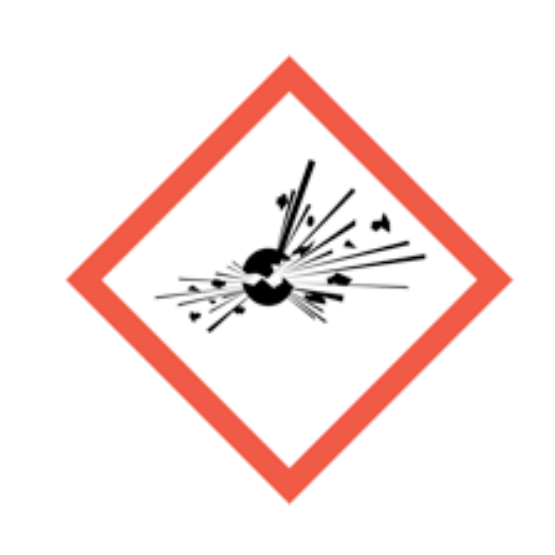
Exploding bomb
Explosive, self-reactive or organic peroxide hazards.
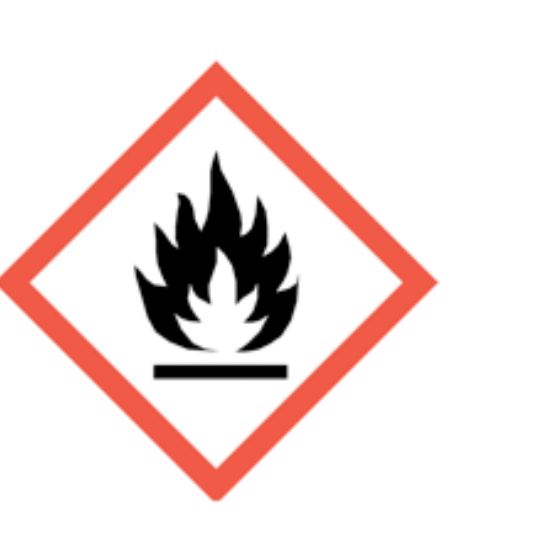
Flame
Flammable, self-heating or pyrophoric substances.
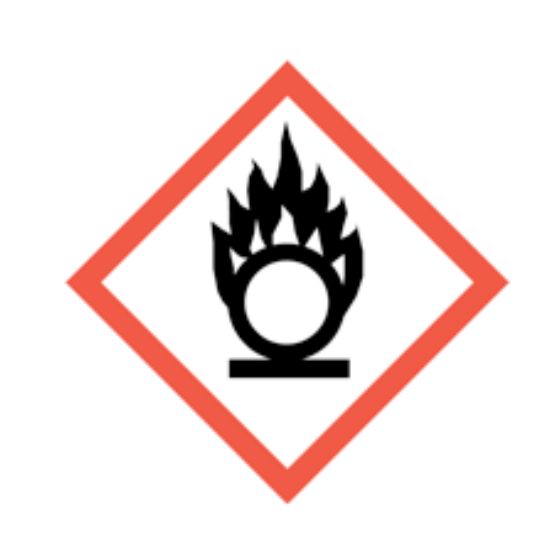
Flame over circle
Oxidising substances that can intensify fire.

Gas cylinder
Gas under pressure.
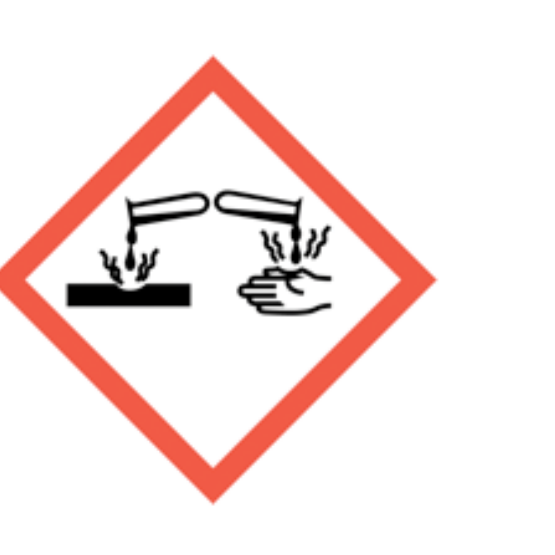
Corrosion
Skin burns, eye damage or corrosive to metals.
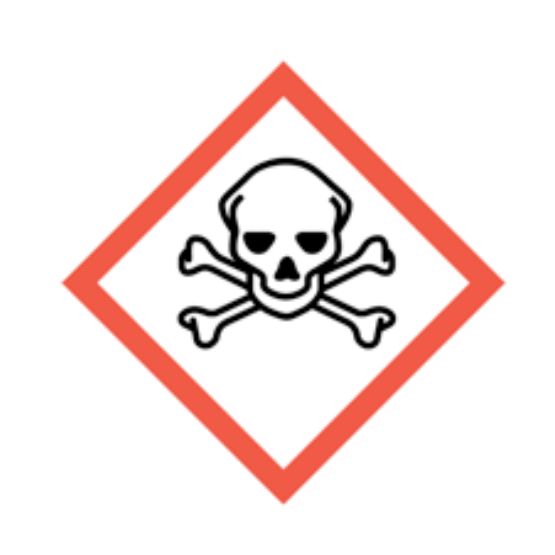
Skull and crossbones
Acute toxicity.
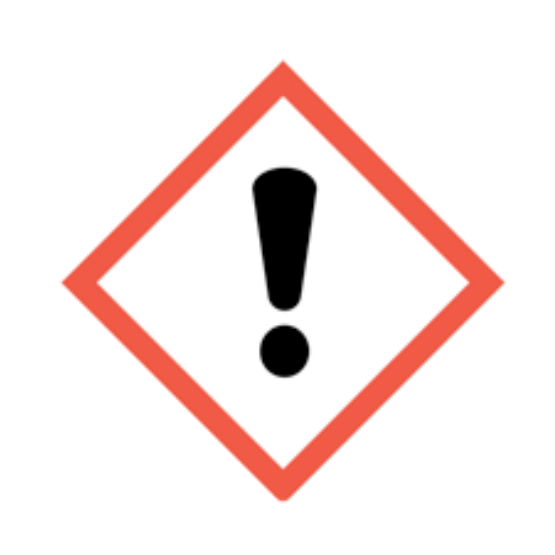
Exclamation mark
Irritation, harmful effects or skin sensitisation; some classifications cover drowsiness, dizziness or ozone-layer hazard. Read the actual hazard statements. Skin sensitisation differs from respiratory sensitisation.
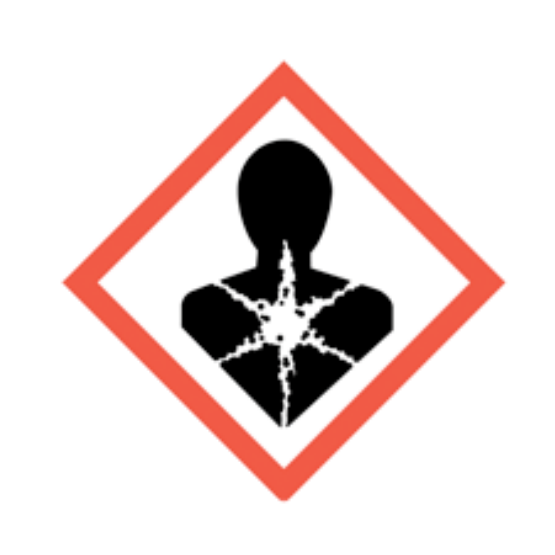
Health hazard
Serious health hazards, including organ damage, aspiration hazard, respiratory sensitisation, cancer and reproductive effects; some can follow a single exposure.
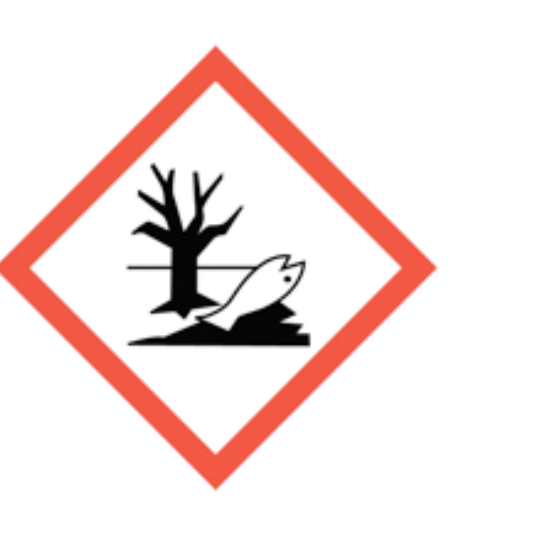
Environment
Hazardous to the aquatic environment.
What do the acronyms and key terms mean?
Acronyms should be understood before they are used in assessments, briefings, audits or learning answers.
| Acronym | Meaning | Plain-English use |
|---|---|---|
| COSHH | Control of Substances Hazardous to Health | Main UK framework for preventing or controlling exposure. |
| SDS | Safety data sheet | Supplier information that supports but does not replace COSHH assessment. |
| CLP | Classification, Labelling and Packaging | Chemical classification and labelling framework. |
| WEL | Workplace exposure limit | Airborne exposure benchmark listed in EH40. |
| LEV | Local exhaust ventilation | Engineering control that captures contaminants close to source. |
| RPE | Respiratory protective equipment | Equipment worn to reduce inhalation exposure where needed. |
| PPE | Personal protective equipment | Equipment worn to protect against residual exposure. |
| STOT | Specific target organ toxicity | Classification for substances that can affect particular organs. |
Unlock another resource
You have used this month’s two free downloads. Publish a post in your own words to unlock one more resource, or choose SHARE Individual for 10 downloads per month.
You decide whether to share. If you do, use the relevant platform disclosure tools and do not make claims you do not genuinely hold.