SHARE Knowledge Hub
Health and Safety Performance Monitoring, Measuring, Review and Audit
Health and safety performance monitoring, measuring, review and audit is how an organisation finds out whether risk controls are healthy before people are harmed and whether learning after events has changed the system. Good monitoring combines active checks, reactive learning, leading indicators, lagging indicators, inspections, sampling, tours, audits, action tracking and management review. The aim is not to collect numbers; it is to make better decisions about risk, resources and improvement.
Understanding Health and Safety Performance Monitoring, Measuring, Review and Audit
Performance monitoring is the continuing collection and interpretation of evidence about whether risks are being controlled.
Why this matters at work
An indicator should correspond to a risk-control decision. Define its construct: does it measure exposure, barrier availability, implementation, injury outcome or reporting behaviour? Set numerator, denominator, time period, population, data source, owner and threshold. A percentage of completed inspections measures programme activity, not the number of uncontrolled hazards found or fixed. A 'days without injury' count can coexist with serious major-hazard impairment. Use a balanced set that covers acute injury, occupational health, rare catastrophic events and the organisation's particular risk profile.
Identify the finding, its cause and the required control outcome before selecting verification. Check whether night staff and contractors can access and follow the revised arrangement, and whether equipment or resources needed for it exist. Use representative observation, testing or worker feedback as appropriate to the issue. Record who verified what and when, including remaining limits and dependencies. If the failure recurs, review the assumed cause and management support rather than repeatedly extending the action deadline or counting another communication as closure.
How organisations manage this in practice
Begin with a material risk or decision, not a metric that happens to be easy to collect. Identify the harmful event, people exposed, critical prevention and recovery barriers, and the evidence needed to know whether each works. Select a method that can answer the question: field observation for actual practice, technical test for equipment performance, exposure measurement for the adequacy of substance control, health surveillance for early health effects where required, or audit for sampled system implementation. Name the owner, escalation route and review trigger before collecting data.
Check missingness and bias. Night shifts may receive fewer inspections; surveillance may cover only those enrolled; a survey may miss temporary workers; an automated tool may fail to detect short high exposures. Calibrate and maintain instruments, document sampling conditions and assess whether the result represents worst reasonable work or only a convenient quiet period. Technical uncertainty needs competent interpretation. HSE's current HAV page warns that some electronic monitoring systems vary and that retrospective recording may allow an exceedance before anyone sees it; this is a task-specific example of why a number does not control risk.
Define which barrier or practice the observation tests and how its demand varies. Include relevant shifts, workers, contractors and abnormal conditions, using other reliable evidence where direct observation is unsafe or impractical. Keep the actual sampling method and exclusions visible. Choose frequency and escalation according to risk, applicable specific requirements and how quickly the control can deteriorate. Review the plan when the process changes or defects emerge. A no-finding result supports only the observed scope and cannot be presented as continuous assurance of every task.
How can I practise this topic in 3D?
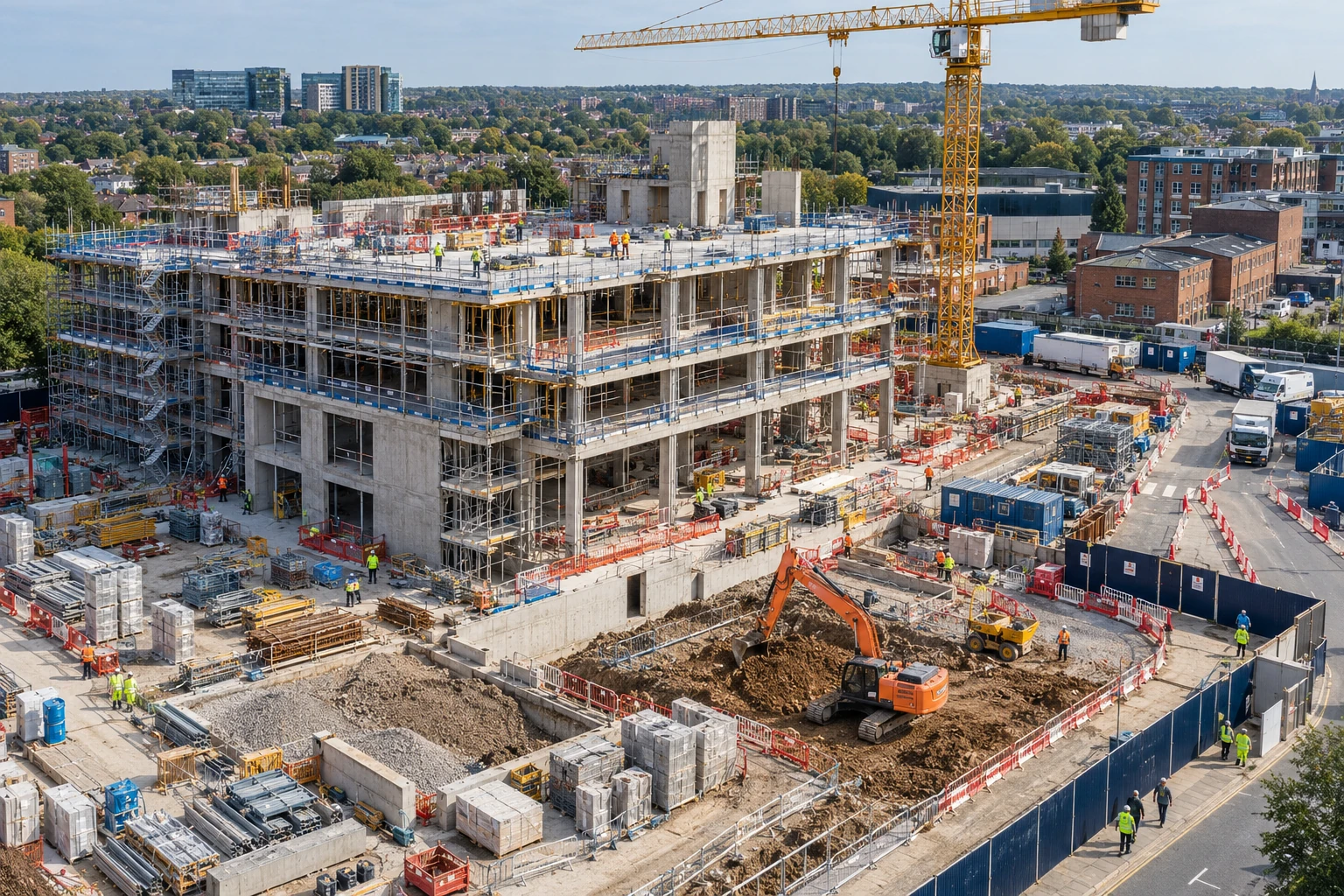

Zero reported injuries masks weak critical controls
All related inspection points 2 across 1 location
Construction site 2 inspection points
Practice in the SHAREhub environment. Browser practice is separate from workplace competence and formal learning records.
Where does this fit in Plan, Do, Check, Act?
Choose measures during Plan, collect credible evidence during Do and Check, and use it for decisions during Act. Management review should ask what is not working and what needs resources, rather than merely receive a dashboard.
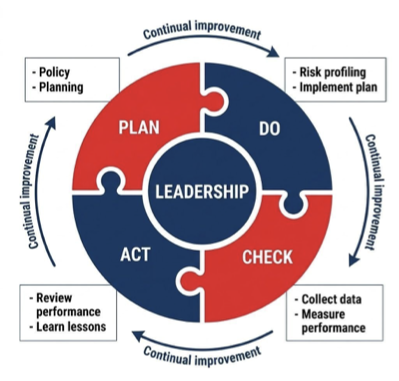

ISO 45001:2018 + Amd 1:2024
Plan: risks, obligations and objectives
Understand the activities and people affected, identify hazards, assess risks and opportunities, establish applicable requirements and set owned OH&S objectives. Risk profiling informs planning as well as implementation.
Evidence to connect: Activity review; risk and legal registers; worker input; objectives, owners, resources and measures of success.
Connected work
Do: put the arrangements into practice
Provide competent people, usable current information and suitable resources. Operate the agreed controls and manage procurement, contractors, change and emergencies with worker involvement.
Evidence to connect: Current policies and procedures; competence evidence; maintenance and operational records; contractor, change and emergency arrangements.
Connected work
Check: test performance and control effectiveness
Evaluate reliable monitoring and measurement, relevant compliance evidence, internal audits and management review. Routine checks and independent audit serve different purposes; low accident numbers alone cannot show that controls work.
Evidence to connect: First-line checks; exposure and control-performance information; compliance evaluations; audit samples and management-review decisions.
Connected work
Act: improve and verify the change
Respond to incidents, nonconformities and ineffective controls. Protect people, address the causes, assign action and verify effectiveness, then update affected risks, arrangements and competence requirements.
Evidence to connect: Corrective actions with owners and dates; cause analysis; verified changes; revised documents and feedback into the next plan.
Connected work
Leadership connects every stage
Leaders own the effectiveness of the OH&S system, set priorities and provide resources. Context defines what the system must address; worker consultation and participation inform decisions throughout the cycle, not just at the centre.
Evidence to connect: An accurate system scope; policy commitments; clear authority and responsibilities; worker participation; resource and review decisions followed through.
Connected work
Read the picture as a learning aid, not an official ISO clause diagram. Its risk-profiling label sits under Do; ISO planning also addresses hazards, risks, opportunities and relevant obligations before work begins. Likewise, formal ISO management review is part of performance evaluation, with its decisions feeding subsequent improvement. Activities can span more than one stage.
The complete PDCA and management-system explanation ISO 45001 connection
In the SHAREhub environment: link the risk or objective, its current arrangement, monitoring evidence and any improvement action. Retain a responsible owner, relevant dates and evidence that the change worked; a link between records is not proof of effectiveness.
The cycle can organise a management system, but the diagram, a document library or a completed checklist does not establish conformity, certification or legal compliance. Use the authorised applicable standard and actual workplace evidence. Do not wait for the next audit or annual review to address an ineffective control.
What are the key points for monitoring, measuring, review and audit?
The key point is to measure control health and learning quality, not just count accidents.
What are the key points for monitoring, measuring, review and audit? — part 1 of 2


Read the complete visual as text
- The key point is to measure control health and…: The key point is to measure control health and learning quality, not just count accidents.
- Leading indicators look forward: They show whether controls are likely to work before harm happens.
- Lagging indicators look back: They show harm, failure or loss after something has occurred.
What are the key points for monitoring, measuring, review and audit? — part 2 of 2


Read the complete visual as text
- Active monitoring should be targeted: High-risk controls deserve more frequent and competent checks.
- Review must change decisions: Data only has value when it leads to action, resources and learning.
- Verification closes the loop: An action is not effective until evidence shows risk has reduced.
Leading indicators look forward
They show whether controls are likely to work before harm happens.
Lagging indicators look back
They show harm, failure or loss after something has occurred.
Active monitoring should be targeted
High-risk controls deserve more frequent and competent checks.
Review must change decisions
Data only has value when it leads to action, resources and learning.
Verification closes the loop
An action is not effective until evidence shows risk has reduced.
What does performance monitoring, measuring, review and audit mean?
It means collecting and testing evidence so the organisation knows whether health and safety arrangements are working.
A serious management system does not wait for injuries before it learns. It checks whether risk controls are present, understood, maintained and used. It also learns from events, complaints, ill-health trends, enforcement contact, civil claims and weak signals.
Measurement should be linked to decisions. A dashboard that turns everything green can create false confidence if it hides overdue actions, repeated minor defects, unreported near misses, health exposure trends or weak contractor control.
| Question | Evidence to use | Decision it should support |
|---|---|---|
| Are controls present? | Inspections, tests and field checks. | Immediate correction and maintenance priority. HSG65 Managing for health and safety |
| Are controls understood? | Interviews, briefings and competence checks. | Training or supervision improvement. HSG65 Managing for health and safety |
| Are controls effective? | Monitoring data, audits and health surveillance. | Risk reduction and design change. HSG65 Managing for health and safety |
| Are events being learned from? | Investigations and action verification. | System improvement. HSG65 Managing for health and safety |
| Are leaders acting? | Management review and resource decisions. | Strategic priorities and accountability. HSG65 Managing for health and safety |
Monitoring tests whether a relied-on control remains healthy; outcome counts are only one part of that evidence. HSG65 Managing for health and safety
How do active and reactive monitoring differ?
Active monitoring checks before harm; reactive monitoring learns after harm, failure or near miss.
Active monitoring includes planned inspections, supervisor checks, tours, audits, health surveillance attendance, exposure monitoring and competence checks. It is proactive because it looks for drift before the event.
Reactive monitoring includes accident, near-miss, dangerous occurrence, ill-health, absence, complaint, enforcement and claim data. It is vital, but it is too late if used alone.
| Monitoring type | Example | What it can reveal |
|---|---|---|
| Active | Weekly guarding inspection. | Missing or damaged physical controls. HSG65 Managing for health and safety |
| Active | COSHH exposure monitoring. | Whether exposure remains controlled. HSG65 Managing for health and safety |
| Active | Permit quality audit. | Weak handover, isolation or gas-test practice. HSG65 Managing for health and safety |
| Reactive | Near-miss review. | Control failure without injury. HSG65 Managing for health and safety |
| Reactive | Dermatitis case trend. | Health control weakness. HSG65 Managing for health and safety |
| Reactive | RIDDOR report. | Serious event requiring formal reporting and learning. HSG65 Managing for health and safety |
A scheduled switch proof test is active; a leak or near miss is reactive. Neither should be reduced to the number of forms completed. HSG65 Managing for health and safety
How should leading and lagging indicators be used?
Leading and lagging indicators should be used together because each answers a different question about control and harm.
Leading and lagging indicators answer different questions. The best dashboards combine both, so leaders can see current control health, past harm, weak signals and whether improvement actions are working.
| Indicator type | Good example | Weak example | How to use it |
|---|---|---|---|
| Leading | Percentage of safety-critical inspections completed and defects closed on time. | Number of inspections done. | Check control health before failure. HSG254 Developing process safety indicators |
| Leading | Permit audits with isolation evidence present. | Number of permits issued. | Test quality, not volume. HSG254 Developing process safety indicators |
| Leading | Overdue high-risk action count. | Total actions closed. | Escalate risk-based backlog. HSG254 Developing process safety indicators |
| Lagging | RIDDOR dangerous occurrences by root cause. | Total accidents only. | Identify failure patterns. HSG254 Developing process safety indicators |
| Lagging | Occupational health referrals by exposure group. | Sickness absence total. | Review health controls. HSG254 Developing process safety indicators |
| Lagging | Repeat near-miss scenarios. | Near-miss count only. | Spot recurring control weakness. HSG254 Developing process safety indicators |
Trend proof-test failures, bypass hours and overdue repairs alongside releases and dangerous occurrences. HSG254 Developing process safety indicators
How should monitoring happen at different levels?
Monitoring should combine live task checks, specialist review and an independent audit where appropriate, with clear owners and action routes. HSE guidance supports monitoring, audit and reporting; this grouping is a SHARE example. HSE audit and reporting guidance
Start with checks closest to the work: can operators and supervisors confirm that each critical control is present and working? Managers and specialists can then compare those findings with technical evidence and trends. A suitably independent auditor can test whether the wider arrangements work and whether recurring weaknesses reach decision makers.
Make each check proportionate to the risk. A brief pre-start check may need closed questions and a clear stop rule; a specialist review needs technical sampling; an audit needs a defined scope, competent reviewer, evidence trail and route for tracked findings.
| Check or review | Who does it | Purpose | Example |
|---|---|---|---|
| Live task checks | Workers and supervisors. | Verify controls during work using simple, repeatable checks. | Closed-question pre-start checklist, permit check, guarding check or housekeeping inspection. HSG65 Managing for health and safety |
| Specialist and management review | Managers, HSE advisers and topic leads. | Check requirements against work as done and interpret the quality of findings. | COSHH audit, contractor control review, work at height inspection or management-system sampling. HSG65 Managing for health and safety |
| Independent audit | A competent auditor with enough independence from the work reviewed. | Challenge whether important management arrangements and controls work, and report findings for action. | Risk-focused audit of management arrangements, action closure or critical controls. HSG65 Managing for health and safety |
| Senior review | Directors and senior managers. | Set priorities, resources and strategy from the assurance picture. | Management review of trends, repeated findings, overdue actions and risk-ranked weaknesses. HSG65 Managing for health and safety |
Operators test the transfer, technical staff verify the device and leaders challenge recurring barrier defects. HSG65 Managing for health and safety
How should inspections, sampling, tours and observations be used?
Different monitoring methods should be chosen according to the control being checked and the decision needed.
Different monitoring methods reveal different things. A workplace tour, audit sample, inspection, observation or exposure sample should be chosen because it answers a specific assurance question.
| Method | Best used for | Common weakness |
|---|---|---|
| Inspection | Checking physical condition and control presence. | Finds defects but not root causes. HSG65 Managing for health and safety |
| Sampling | Testing a representative set of records, people or tasks. | Sample is too small or convenient. HSG65 Managing for health and safety |
| Leadership tour | Understanding barriers, culture and weak signals. | Becomes a staged walkaround. HSG65 Managing for health and safety |
| Behavioural observation | Understanding task behaviour and system influences. | Blames individuals and ignores work design. HSG65 Managing for health and safety |
| Topic audit | Testing a risk area such as fire, DSEAR or HAVS. | Uses generic checklist without competence. HSG65 Managing for health and safety |
| Health surveillance review | Spotting early signs of work-related ill health. | Findings are not linked back to exposure controls. HSG65 Managing for health and safety |
An audit may sample switch records, but the technical proof test must establish the installed barrier’s function. HSG65 Managing for health and safety
What makes a health and safety KPI useful?
A useful KPI measures something that influences a decision, control or improvement action.
A KPI should not be chosen because it is easy to count. The best indicators are connected to significant risk and have clear owners, thresholds and response rules. If a KPI turns red, people should know what action is required.
Avoid rewarding silence. A target to reduce near-miss reports can discourage reporting. A better measure is report quality, learning closure and whether serious weak signals are escalated.
| KPI question | Good practice | Poor practice |
|---|---|---|
| What decision does it support? | Resource maintenance backlog. | No decision linked. HSG254 Developing process safety indicators |
| Is it leading or lagging? | Clear category and purpose. | Mixed without meaning. HSG254 Developing process safety indicators |
| Who owns the response? | Named manager and threshold. | Data reported with no owner. HSG254 Developing process safety indicators |
| Can it be gamed? | Measures quality and effectiveness. | Rewards low reporting. HSG254 Developing process safety indicators |
| Does it include health? | Exposure, surveillance and wellbeing signals. | Only acute injuries. HSG254 Developing process safety indicators |
Define an indicator’s denominator, source, owner, threshold and response before adding it to a dashboard. HSG254 Developing process safety indicators
How should performance data be interpreted?
Performance data should be interpreted with context, quality checks and awareness of under-reporting or false confidence.
Performance data can mislead when reporting is weak, samples are too narrow or indicators reward the wrong behaviour. The traps below help readers challenge the number before accepting the conclusion.
| Trap | Why it matters | Better approach |
|---|---|---|
| Low accident rate | May hide luck, under-reporting or chronic health risk. | Compare with leading indicators and worker feedback. HSG254 Developing process safety indicators |
| High near-miss reports | May show better trust, not worse performance. | Review quality and themes. HSG254 Developing process safety indicators |
| Green dashboard | May hide weak high-consequence controls. | Include critical control health. HSG254 Developing process safety indicators |
| Action closure rate | May reward closing easy actions. | Track risk-ranked overdue actions and verification. HSG254 Developing process safety indicators |
| Single-site comparison | Different exposure levels may distort conclusions. | Normalise data and explain context. HSG254 Developing process safety indicators |
A falling defect count could mean repair, missed tests or discouraged reporting; triangulate with field and worker evidence. HSG254 Developing process safety indicators
How should actions be tracked?
Actions should be risk-ranked, owned, time-bound and monitored until evidence shows they are effective.
Action tracking is where many systems fail. The fields below make actions traceable from the original evidence through to risk ranking, ownership, closure evidence and effectiveness verification.
| Field | Purpose | Good example |
|---|---|---|
| Source | Shows why action exists. | Audit finding, incident, inspection or worker concern. HSG65 Managing for health and safety |
| Risk ranking | Prioritises by potential harm. | High-consequence permit failure. HSG65 Managing for health and safety |
| Owner | Identifies accountable person. | Operations manager. HSG65 Managing for health and safety |
| Due date | Prevents drift. | Date linked to risk urgency. HSG65 Managing for health and safety |
| Closure evidence | Shows action happened. | Photo, record, test or revised standard. HSG65 Managing for health and safety |
| Effectiveness check | Shows risk reduced. | Re-audit or field observation. HSG65 Managing for health and safety |
Close a tank-barrier action only after repair and a witnessed effective test, not when a work order is marked complete. HSG65 Managing for health and safety
How should effectiveness be verified?
Effectiveness verification checks whether the action actually reduced risk in real work.
A common management weakness is to close an action because a document was updated or a briefing was delivered. That may be necessary, but it does not prove the control works. Verification should sample the workplace after the change.
For example, if an audit finds poor hand hygiene in a leisure centre, the action should not close when posters are installed. It should close when supplies, cleaning routines, staff understanding and observation show the hygiene control is working.
| Action type | Weak closure | Better verification |
|---|---|---|
| Procedure update | Procedure issued. | Workers observed using revised procedure. HSE large-tank high-level-switch safety alert |
| Training | Attendance recorded. | Competence checked during task. HSE large-tank high-level-switch safety alert |
| Engineering fix | Work order closed. | Control tested and inspected. HSE large-tank high-level-switch safety alert |
| Contractor issue | Contractor emailed. | Next contractor job audited. HSE large-tank high-level-switch safety alert |
| Leadership action | Discussed at meeting. | Resource decision made and effect reviewed. HSE large-tank high-level-switch safety alert |
A verified restart needs the installed high-level protection to perform the intended function after the bypass is removed. HSE large-tank high-level-switch safety alert
How do audit and management review fit together?
Audits test the system; management review decides what the evidence means and what should change.
Audit and management review have different jobs. Audits gather evidence and identify findings; management review decides what the findings mean for resources, priorities and system improvement.
| Activity | Output | Management decision |
|---|---|---|
| Internal audit | Findings and evidence. | Prioritise actions and resources. HSE audit and reporting guidance |
| Topic audit | Risk-specific weaknesses. | Revise standards or competence. HSE audit and reporting guidance |
| External audit | Independent challenge. | Address governance or certification issues. HSE audit and reporting guidance |
| Management review | Trend and risk interpretation. | Set objectives and strategic actions. HSE audit and reporting guidance |
| Board review | High-level risk and assurance. | Approve resources and accountability. HSE audit and reporting guidance |
Audit identifies gaps in system and records; management review funds the fix and checks it worked. HSE audit and reporting guidance
What could a useful performance dashboard include?
A useful dashboard should combine leading and lagging indicators, action status, overdue verification and assurance ownership.
A useful dashboard is not a wall of traffic lights. It should tell leaders where controls are healthy, where assurance is weak, where actions are overdue and where decisions are needed. Each line should have an owner and an escalation route.
For high-risk topics, the dashboard should distinguish completion from effectiveness. A completed inspection, audit or briefing is not enough if defects remain open, workers still misunderstand the control, or the action has not been verified in the field.
| Dashboard line | Example signal | Owner | Decision or escalation |
|---|---|---|---|
| Leading indicator - control health | Illustrative calendar month: 92 of 100 planned inspections completed (92%); 17 of those 92 completed inspections (18.5%) found repeat defects. Record which risk-critical items were covered and which remain outstanding. | Operations manager. | Resource defect elimination rather than adding more inspections. HSG254 Developing process safety indicators |
| Leading indicator - safety-critical maintenance | Four high-risk items overdue; one linked to emergency lighting and one to machine guarding. | Engineering manager. | Escalate overdue critical controls and agree interim restrictions. HSG254 Developing process safety indicators |
| Leading indicator - audit quality | Illustrative same-month sample: 39 of 50 audited permits (78%) contained the defined isolation evidence; the night-shift subset had weaker handback records. Record subset size, selection and risk-criticality before drawing a shift-wide conclusion. | HSE adviser and area manager. | Target supervisor coaching and re-audit night-shift permits. HSG254 Developing process safety indicators |
| Lagging indicator - event learning | Three similar near misses in vehicle reversing areas within six weeks. | Transport or warehouse manager. | Review traffic plan, banksman arrangements and pedestrian segregation. HSG254 Developing process safety indicators |
| Health indicator | Two occupational health referrals from the same exposure group. | Occupational health lead and line manager. | Review exposure controls, health surveillance triggers and work methods. HSG254 Developing process safety indicators |
| Action status | Six high-risk actions overdue; two closed without verification evidence. | Action owners and senior sponsor. | Reopen weak closures and require evidence-based verification. HSG254 Developing process safety indicators |
| Assurance ownership | System audits are complete but high-risk contractor control has not received the planned independent review this year. | Assurance lead. | Schedule specialist or independent review and report to management review. HSG254 Developing process safety indicators |
Give leaders bypass hours, failed tests, demands, overdue critical actions and incident context, each with a response threshold. HSG254 Developing process safety indicators
Which duties apply in Great Britain and Northern Ireland?
Effective management duties apply in each jurisdiction; an ISO certificate or policy document does not replace control of the work.
Use the instrument for the site and workforce. Reporting a specified dangerous occurrence is distinct from recording an ordinary near miss; neither replaces checking the actual control. Management of Health and Safety at Work Regulations 1999 Management of Health and Safety at Work Regulations (NI) 2000 Reporting of Injuries, Diseases and Dangerous Occurrences Regulations 2013 Reporting of Injuries, Diseases and Dangerous Occurrences Regulations (NI) 1997
| Decision | Great Britain | Northern Ireland |
|---|---|---|
| General duties | GB Health and Safety at Work etc. Act 1974: protect employees and affected others. Instrument | NI Health and Safety at Work Order 1978: separate NI general-duty route. Instrument |
| Assessment and arrangements | GB Management Regulations 1999: assess risk and plan, organise, control, monitor and review. Instrument | NI Management Regulations 2000: separate NI assessment and arrangements route. Instrument |
| Recognised union representatives | GB Safety Representatives and Safety Committees Regulations 1977 where recognised-union representatives are appointed. Instrument | NI Safety Representatives and Safety Committees Regulations 1979 for the NI route. Instrument |
| Other employee consultation | GB Consultation with Employees Regulations 1996 where the union route does not cover workers. Instrument | NI Consultation with Employees Regulations 1996 for the NI route. Instrument |
| Specified reports | GB RIDDOR 2013 covers specified injuries, diseases and dangerous occurrences; ordinary near misses need internal learning. Instrument | NI RIDDOR 1997 is separate; ordinary near misses are not automatically reportable. Instrument |
How can the hierarchy of controls turn performance monitoring and review into stronger controls?
ERICPD is used here as a planning mnemonic. The linked HSE five-level hierarchy is the official source for the order and relative reliability of controls; the two labels are not identical.
The document, dashboard or audit can assign and test a control; the hierarchy applies to the real hazard and people exposed.
Crownway Fuels monitors a tank high-level switch before transfer. If overfill releases fuel, a flammable vapour cloud may ignite and cause fire, explosion, injury or death. Rising test failures or bypass hours are leading signals; injury counts cannot release an unproved tank barrier. HSE’s linked safety alert covers particular TAV switch configurations; the installed device and manufacturer instructions need their own competent check. HSE Buncefield learning HSE large-tank high-level-switch safety alert
ERICPD is a six-stage planning aid. HSE’s five levels place elimination and substitution before engineering, administration and residual PPE. Isolate normally maps to engineered separation; ERICPD Control may be physical or administrative. Discipline sustains the selected control through maintenance, supervision and learning. HSE five-level hierarchy HSE five-level hierarchy
How can the ERICPD hierarchy of controls turn performance monitoring and review into stronger controls?

| ERICPD stage | HSE level | Task intervention and harm-chain break | Owner and evidence | Failure or stop point |
|---|---|---|---|---|
| Eliminate | Elimination | Test whether the on-site transfer can be avoided by a feasible supply or inventory design. | Process owner tests capacity and displaced risks. | Unproved design remains on hold. HSE Buncefield learning |
| Reduce / substitute | Substitution considered | A different product may not meet the required fuel specification; record why substitution is unavailable. | Technical owner verifies product and hazard constraints. | No credit for unsupported substitution. HSE Buncefield learning |
| Isolate | Engineering | Provide independent overfill protection with tested isolation from transfer flow. | Engineer tests actual installed barrier. | Bypass or failed proof test: hold transfer. HSE Buncefield learning |
| Control: physical | Engineering | Maintain level indication, alarm and independent trip with suitable inspection and test. | Technical authority verifies device-specific function. | Failed or overdue critical test: hold. HSE Buncefield learning |
| Control: method | Administrative | Use transfer limits, permit/start checks and a named restart decision. | Supervisor samples live records and abnormal response. | No start with unclear barrier status. HSE Buncefield learning |
| PPE | PPE | Provide task PPE for residual splash and response needs; it cannot prevent tank overfill. | Supervisor checks readiness. | PPE cannot release bypassed protection. HSE Buncefield learning |
| Discipline | Sustains controls | Trend bypass hours, proof-test failures, demands and closure effectiveness. | Director challenges weak signals and resources repair. | Repeat defect triggers design review. HSE Buncefield learning |
How can the ISO 45001 hierarchy of controls turn performance monitoring and review into stronger controls?

| ERICPD stage | HSE level | Task intervention and harm-chain break | Owner and evidence | Failure or stop point |
|---|---|---|---|---|
| Eliminate | Elimination | Test whether the on-site transfer can be avoided by a feasible supply or inventory design. | Process owner tests capacity and displaced risks. | Unproved design remains on hold. HSE Buncefield learning |
| Reduce / substitute | Substitution considered | A different product may not meet the required fuel specification; record why substitution is unavailable. | Technical owner verifies product and hazard constraints. | No credit for unsupported substitution. HSE Buncefield learning |
| Isolate | Engineering | Provide independent overfill protection with tested isolation from transfer flow. | Engineer tests actual installed barrier. | Bypass or failed proof test: hold transfer. HSE Buncefield learning |
| Control: physical | Engineering | Maintain level indication, alarm and independent trip with suitable inspection and test. | Technical authority verifies device-specific function. | Failed or overdue critical test: hold. HSE Buncefield learning |
| Control: method | Administrative | Use transfer limits, permit/start checks and a named restart decision. | Supervisor samples live records and abnormal response. | No start with unclear barrier status. HSE Buncefield learning |
| PPE | PPE | Provide task PPE for residual splash and response needs; it cannot prevent tank overfill. | Supervisor checks readiness. | PPE cannot release bypassed protection. HSE Buncefield learning |
| Discipline | Sustains controls | Trend bypass hours, proof-test failures, demands and closure effectiveness. | Director challenges weak signals and resources repair. | Repeat defect triggers design review. HSE Buncefield learning |
How should management verify controls for this task?
How should management verify controls for this task?


Read the complete visual as text
- For fuel tank overfill protection during bulk transfer, the…: For fuel tank overfill protection during bulk transfer, the management check should start with a real control decision: Test whether the on-site transfer can be avoided by a feasible supply or inventory design. Name the person who will test it, keep evidence from the actual work, and reopen the assessment when the failure condition in the hierarchy table occurs. HSE management-system guidance .
- A review should compare the planned control with what…: A review should compare the planned control with what workers and supervisors can use in practice. Record the defect, owner, interim protection, verification and next review trigger so that a policy statement or certificate does not stand in for a working control.
For fuel tank overfill protection during bulk transfer, the management check should start with a real control decision: Test whether the on-site transfer can be avoided by a feasible supply or inventory design. Name the person who will test it, keep evidence from the actual work, and reopen the assessment when the failure condition in the hierarchy table occurs. HSE management-system guidance.
A review should compare the planned control with what workers and supervisors can use in practice. Record the defect, owner, interim protection, verification and next review trigger so that a policy statement or certificate does not stand in for a working control.
How could Crownway Fuels Ltd monitor barrier health?

Crownway Fuels Ltd would monitor performance by checking critical controls before a major accident scenario develops.
Crownway Fuels Ltd worked example — part 1 of 2


Read the complete visual as text
- Assessing: How the business would manage it: Identify critical controls and weak signals for fuel storage and transfer scenarios. Evidence to review: Bowtie/barrier register and risk dashboard.
- Analysing: How the business would manage it: Compare leading indicators such as alarm tests and permit quality with lagging data such as leaks, near misses and shutdowns. Evidence to review: Indicator trend review.
- Implementing: How the business would manage it: Set first-line checks, second-line audits and specialist reviews for high-consequence controls. Evidence to review: Monitoring schedule and assurance plan.
Crownway Fuels Ltd worked example — part 2 of 2


Read the complete visual as text
- Checking: How the business would manage it: Verify actions through proof tests, field observations, audit samples and emergency drills. Evidence to review: Test records and verification evidence.
- Learning: How the business would manage it: Use near misses, alarm trends and investigation findings to adjust control standards and training. Evidence to review: Learning register and revised procedures.
- Improving: How the business would manage it: Escalate repeated weaknesses to leadership for resource decisions and strategic improvement. Evidence to review: Management review decisions and action closure.
In this worked example, Crownway Fuels Ltd uses leading and lagging indicators for tank overfill, transfer operations, permits, gas detection, emergency response, contractor work and maintenance backlog. Leaders review both personal safety and process safety evidence.
| Management element | How the business would manage it | Evidence to review |
|---|---|---|
| Assessing | Identify critical controls and weak signals for fuel storage and transfer scenarios. | Bowtie/barrier register and risk dashboard. HSE large-tank high-level-switch safety alert |
| Analysing | Compare leading indicators such as alarm tests and permit quality with lagging data such as leaks, near misses and shutdowns. | Indicator trend review. HSE large-tank high-level-switch safety alert |
| Implementing | Set first-line checks, second-line audits and specialist reviews for high-consequence controls. | Monitoring schedule and assurance plan. HSE large-tank high-level-switch safety alert |
| Checking | Verify actions through proof tests, field observations, audit samples and emergency drills. | Test records and verification evidence. HSE large-tank high-level-switch safety alert |
| Learning | Use near misses, alarm trends and investigation findings to adjust control standards and training. | Learning register and revised procedures. HSE large-tank high-level-switch safety alert |
| Improving | Escalate repeated weaknesses to leadership for resource decisions and strategic improvement. | Management review decisions and action closure. HSE large-tank high-level-switch safety alert |
If Crownway’s overfill protection is bypassed, transfer is held even when headline injury rates are low. HSE large-tank high-level-switch safety alert
How does this management decision transfer across sectors?
Transfer the decision method, not the assumed control: identify people, harm route, strongest feasible safeguard and hold point.
A policy, system or indicator becomes useful when the owner tests the actual barrier under the conditions of work. HSG65 Managing for health and safety HSE health and safety management systems
| Sector | Task and harm route | Physical decision and stop point |
|---|---|---|
| Construction | Concrete chasing exposes workers and other trades to respirable silica. | Trend extraction defects and observe capture during work; escalate repeat failures and stop cutting on failed capture. HSE concrete chasing and mortar raking |
| Fuel logistics | Tank overfill can release fuel and form an ignitable vapour cloud. | Track bypass hours, demands and proof-test failures; hold transfer when protection is unproved. HSE Buncefield learning |
| Leisure | Reversing delivery vehicle crosses a public entrance. | Check barrier condition at peak use and trend conflicts; hold delivery when separation fails. HSE separating pedestrians and vehicles |
How can readers practise this decision?
Use health and safety performance monitoring, measuring, review and audit as a workplace case: identify the real task, the person who owns the control decision and the evidence that shows the control is working. State what would make work pause and who would authorise a safe restart.
Then trace each legal or medical claim to a direct source in Official links, checking whether it applies in Great Britain, Northern Ireland or both. Explain any uncertainty and the specialist advice needed rather than filling the gap with an assumed rule.
These are SHARE practice prompts, not an accredited syllabus or marking rule. For management-system context, see HSE management-system guidance.
What must each role demonstrate before acting?
Role awareness must be followed by a practical demonstration, an assessor and a reassessment trigger.
Use the live or simulated task to test the stop decision and control evidence. A briefing, certificate or dashboard does not release a failed physical safeguard. HSE Buncefield learning HSE large-tank high-level-switch safety alert HSG254 Developing process safety indicators HSE audit and reporting guidance
| Role | Practical demonstration | Assessor and record | Reassess when |
|---|---|---|---|
| Fuel operator | Identify a bypass or failed test and hold transfer. | Supervisor observes scenario and records response. | New tank, alarm or failure. HSE Buncefield learning |
| Supervisor | Test pre-start barrier evidence and escalation. | Manager samples hold/restart decision. | Overdue test or abnormal demand. HSE Buncefield learning |
| Engineer | Verify switch and independent protection function. | Technical peer review of installed-device test and manufacturer scope. | Device or procedure change. HSE large-tank high-level-switch safety alert |
| Manager | Read leading and lagging signals in context and fund action. | Director reviews indicator challenge and closure. | Repeat bypass or discrepancy. HSG254 Developing process safety indicators |
| Auditor or specialist | Sample audit trail and field proof without substituting audit for test. | Independent reviewer samples competence and findings. | Programme change. HSE audit and reporting guidance |
What warning signs show monitoring is not working?
Warning signs appear when monitoring creates numbers but not insight, challenge or risk reduction.
Warning signs are included because failure usually appears before a serious event. Treat these points as prompts for inspection, audit, supervision and management review rather than as simple compliance statements.
| Warning sign | How harm can develop | Action |
|---|---|---|
| Only lagging indicators are reviewed | Leaders learn after harm. | Add leading control-health measures. HSG65 Managing for health and safety |
| Near misses are discouraged | Weak signals disappear. | Measure reporting quality and feedback. HSG65 Managing for health and safety |
| Actions close without verification | Controls remain weak. | Require field evidence. HSG65 Managing for health and safety |
| Dashboards are always green | High-risk drift is hidden. | Challenge thresholds and samples. HSG65 Managing for health and safety |
| Health data is absent | Chronic harm is missed. | Include exposure and health surveillance indicators. HSG65 Managing for health and safety |
| Audits repeat the same findings | Management review is ineffective. | Escalate root causes and resources. HSG65 Managing for health and safety |
What do the acronyms and key terms mean?
Acronyms should be understood before they are used in assessments, briefings, audits or learning answers.
Acronyms can exclude newer readers if they are not explained. This section keeps the main terms available at the end of the page so the article stays readable while still supporting learners and audit users.
| Acronym | Meaning | Plain-English use |
|---|---|---|
| DN1 | NEBOSH National Diploma DN1 learning context; SHARE practice material | Diploma unit covering workplace health and safety management. |
| KPI | Key Performance Indicator | Metric used to track performance or control health. |
| PDCA | Plan, Do, Check, Act | Continuous improvement cycle. |
| RIDDOR | Reporting of Injuries, Diseases and Dangerous Occurrences Regulations | Separate Great Britain and Northern Ireland reporting instruments and routes for specified events. |
| LEV | Local Exhaust Ventilation | Engineering control often monitored for exposure control health. |
Which BuildOut documents support this topic?
Download individual editable BuildOut documents for this topic. Procedures and plans contain completed arrangements; forms, checklists, assessments, RAMS and permits are blank masters. Registers include separate worked examples.
| Document | Purpose and content | Editable download |
|---|---|---|
| Governance, document change and review procedure BOUK-PRO-GOV · Completed worked example · v1.0 | Approve documents, assign owners, control versions and evaluate management performance. | Download DOCX Read preview |
| Legal and other requirements register BOUK-REG-GOV-01 · Blank register with separate worked entries · v1.1 | A detailed GB construction legal baseline with 142 requirement entries, environmental permits and consents, national overlays and eight completed decisions, plus a blank live register. | Download XLSX Read preview |
| Document and records control register BOUK-REG-GOV-02 · Blank register with separate worked entries · v1.0 | Control IDs, revisions, approvals, access, retention and withdrawn copies. | Download XLSX Read preview |
| Annual health and safety objectives and resources plan BOUK-PLN-GOV-01 · Completed worked example · v1.0 | Set measurable objectives, owners and resources based on risks and performance. | Download DOCX Read preview |
| Management review and improvement decision record BOUK-FRM-GOV-01 · Blank editable master · v1.0 | Record review inputs, decisions, resources, actions and follow-up. | Download DOCX Read preview |
| Management-of-change assessment BOUK-FRM-GOV-02 · Blank editable master · v1.0 | Assess new work, equipment, workforce or sequencing before approval. | Download DOCX Read preview |
| Dutyholder and responsibility appointment record BOUK-FRM-GOV-03 · Blank editable master · v1.0 | Make role, competence, authority, interfaces and acceptance explicit. | Download DOCX Read preview |
| Inspection, audit and performance-review procedure BOUK-PRO-MON · Completed worked example · v1.0 | Plan risk-based monitoring, record evidence, track findings and evaluate recurring weaknesses. | Download DOCX Read preview |
| Risk-based inspection and audit programme BOUK-PLN-MON-01 · Completed worked example · v2.2 | Schedule assurance by risk, change and performance; distinguish statutory inspections. | Download DOCX Read preview |
| Supervisor daily safe-start and close-down check BOUK-CHK-MON-01 · Blank editable master · v1.0 | Verify work-front controls, welfare, access and safe shutdown. | Download DOCX Read preview |
| Site management-system and control-effectiveness audit BOUK-AUD-MON-01 · Blank editable master · v1.0 | Test implementation through observation, worker discussion and evidence sampling. | Download DOCX Read preview |
| Director safety visit and worker-engagement record BOUK-FRM-MON-01 · Blank editable master · v1.0 | Record site leadership observations, worker concerns and commitments. | Download DOCX Read preview |
| Corrective/preventive action and effectiveness register BOUK-REG-MON-01 · Blank register with separate worked entries · v1.0 | Assign risk-based actions, deadlines, escalation and evidence of durable closure. | Download XLSX Read preview |
| Performance and management-review input pack BOUK-FRM-MON-02 · Blank editable master · v1.0 | Use leading/lagging indicators with meaningful denominators and narrative. | Download DOCX Read preview |
| Employers liability insurance and statutory information register BOUK-REG-GOV-03 · Blank register with separate worked entries · v1.0 | Track insurance cover/certificate accessibility and required health and safety information for employees. | Download XLSX Read preview |
Review and adapt the documents for your organisation, activities and jurisdiction before approval and issue. Open the SHAREms management-system hierarchy to find each document under its parent policy.
Unlock another resource
You have used this month’s two free downloads. Publish a post in your own words to unlock one more resource, or choose SHARE Individual for 10 downloads per month.
You decide whether to share. If you do, use the relevant platform disclosure tools and do not make claims you do not genuinely hold.