SHARE Knowledge Hub
Review of Health and Safety Performance
Performance review is the management decision point where leaders compare the risk profile, control evidence, incidents, worker experience and objectives, then change the plan and resources. Low injury numbers alone cannot show that critical controls work. A useful review names an owner, due date and effectiveness measure for every material action.
Understanding Review of Health and Safety Performance
Performance review is the management decision point where leaders compare the risk profile, control evidence, incidents, worker experience and objectives, then change the plan and resources. Low injury numbers alone cannot show that critical controls work. A useful review names an owner, due date and effectiveness measure for every material action.
Why this matters at work
Set review timing by how quickly the risk or control can change and how soon intervention is useful. A vulnerable barrier may need live or shift-level attention; trends, health effects and strategic risks may need different windows. There is no universal monthly or annual meeting interval that makes every system adequate. Consider operating modes, exposure, latency, contractor interfaces and how long reports take to reach decision-makers. A report delivered after the chance to intervene provides little preventive assurance. Define earlier triggers such as a serious incident or near miss, critical-control failure, repeated defects, symptoms or exposure concerns, significant change, adverse audit findings or invalid assumptions. Establish an exception route that reaches someone with authority and keeps interim controls visible. Record the calendar, cut-off, attendance, decisions and follow-up. Test whether actions are implemented in real work and reopen ineffective ones. If significant uncertainty persists, report it explicitly with the restriction or next evidence step rather than carrying forward the last green status.
Surveillance is one part of protection. Review the residual exposure requiring it, suitable professional method, covered population and resulting action. Attendance does not establish a normal clinical result or an adequate work control. Report only the managerial information necessary to protect work and keep clinical details appropriately separate. Construction health guidance explicitly prioritises stopping exposure; surveillance and monitoring alone do not control the source. Source basis: HSE health surveillance; HSE occupational health; HSE construction review controls; ICO employment information.
How organisations manage this in practice
For operational use, translate policy commitments and legal duties into review questions about harm prevention, critical controls, health protection, worker involvement, learning and resource sufficiency. Distinguish monitoring, inspection, investigation, audit and management review; each answers a different assurance question and none substitutes for the others.
Choose indicators from the control logic. For a material event, identify the barriers and the activities that keep them effective, then select a small set of measures that reveal deterioration early and show actual failures or exposure. Training attendance, inspection counts and action closure can be useful only if quality and scope are clear. Pair activity with evidence of effectiveness: for example, whether inspections detect and correct relevant defects, rather than simply whether a form was completed. Define numerator, denominator, inclusion rules, source, owner, reporting delay and what action a result triggers. Match exposure measures to the question: journeys, task demands, permits, hours or exposed people may be more informative than headcount. Preserve raw counts and explain changes in work volume or reporting. Test indicators with workers and control owners, and review whether they drive useful decisions or encourage under-reporting. Avoid universal numerical targets detached from the site's hazards; serious control failures must remain visible even when an overall rate improves.
For operational use, state which management arrangements, risk controls, worker groups, locations, time periods and decision forums are included, together with exclusions and handoffs. Define the scope, accountable decision maker, information owner, review period, comparison basis and action threshold. Test the requirement across normal, non-routine, degraded and changed conditions and with affected workers. Follow Plan, Do, Check, Act: the review must lead to decisions about policy, risk profile, resources, controls, competence and the next plan.
Evidence must change a decision
Management review combines monitoring, audit, health evidence and worker voice to decide priorities and resources. It is more than a larger audit.

Bring contrasting evidence
Compare no recorded injury with repeat defects, reporting confidence and current work changes; these are signal types, not measured performance data.
Challenge confidence
Ask whether the evidence actually shows effective control and what information is missing.
Decide and resource
Name the operating restriction, physical correction, owner and resources required; distinguish separate machinery and traffic cases.
Test later in the field
Verify the change under representative conditions and return the result to risk priorities. A green overall score or completed meeting does not close a defect.
Read the complete task-specific control examples
ERICPD is a planning cross-map: Discipline verifies and sustains every control. ESEAP compares effectiveness. A label does not authorise the task; retain the owner, evidence and stop or change decision.
Review of Health and Safety Performance · ERICPD
- Eliminate
- Challenge whether the underlying hazard can be removed.
- Reduce
- Require an assessed substitution or task-redesign comparison.
- Isolate
- Verify feasible barriers for vehicle and pedestrian conflict.
- Control
- Name the owner, stop trigger and evidence needed for release.
- PPE
- PPE cannot replace a feasible physical barrier.
- Discipline
- Check field evidence and effectiveness before accepting closure.
Review of Health and Safety Performance · ESEAP
- Elimination
- Challenge whether the underlying hazard can be removed.
- Substitution
- Require an assessed substitution or task-redesign comparison.
- Engineering controls
- Verify feasible barriers for vehicle and pedestrian conflict.
- Administrative controls
- Name the owner, stop trigger and evidence needed for release.
- PPE
- PPE cannot replace a feasible physical barrier.
How can I practise this topic in 3D?
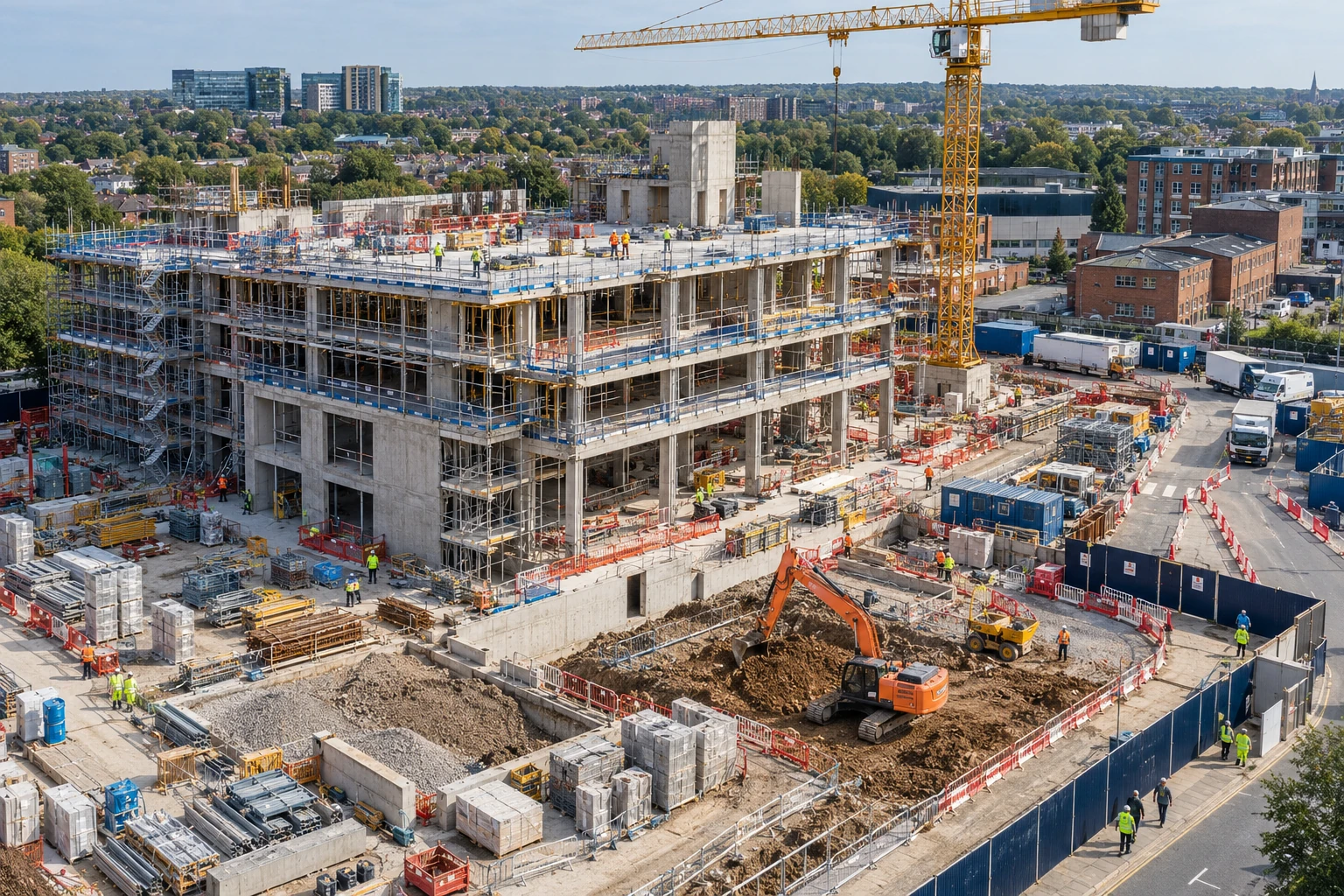

Zero reported injuries masks weak critical controls
All related inspection points 1 across 1 location
Construction site 1 inspection point
Practice in the SHAREhub environment. Browser practice is separate from workplace competence and formal learning records.
What is review of health and safety performance?
Health and safety performance review is the structured decision on whether priority risks, controls, objectives and actions are effective, and what leaders must change next.
Performance review: evidence must change the next decision


Read the complete visual as text
- 1. PRIORITY RISK: Leaders start with the significant-risk profile and the intended critical control. Ask where the consequences of failure are greatest and what has changed.
- 2. BALANCED EVIDENCE: Combine active checks, incidents and near misses, audits, action tracking, health evidence and worker consultation. Injury statistics alone cannot show that barriers work.
- 3. CHALLENGE CONTROL CONFIDENCE: Compare the intended barrier with actual field conditions, repeat findings and incomplete evidence. A closed action does not establish that exposure fell.
- 4. RESOURCE THE DECISION: Decide whether to continue, restrict or redesign the activity; name the action owner, resources, interim protection and later effectiveness test.
- 5. VERIFY, THEN UPDATE THE PLAN: An accountable owner checks the changed control in normal and non-routine work. Reopen weak actions and update priorities as the evidence changes.
Best-practice guide: Review of Health and Safety Performance

What is review of health and safety performance?
Health and safety performance review is the structured decision on whether priority risks, controls, objectives and actions are effective, and what leaders must change next. Performance review is the management decision point where leaders compare the risk profile, control evidence, incidents, worker experience and objectives, then change the plan and resources.
Turn review of health and safety performance knowledge into a decision
Performance review is the management decision point where leaders compare the risk profile, control evidence, incidents, worker experience and objectives, then change the plan and resources. Low injury numbers alone cannot show that critical controls work. Keep inspection trail, temporary control, decision minutes, owner, due date and effectiveness evidence.
A plant guarding weakness reaches the board
Board reviews leading control checks alongside injury data and asks for independent closure evidence. Sample the machine under production conditions and worker feedback after repair; escalate persistent bypasses.
Where do performance reviews commonly fail?
Weak review pattern: A low recorded injury count is treated as proof that control is effective. Missing evidence: Repeat defects, weak reporting confidence, health exposure and worker concerns are not examined together. Required decision: Assign restrictions, resources, ownership and later field verification against priority risks.
Choose controls for the actual task
Change the work: Health and safety performance review is the structured decision on whether priority risks, controls, objectives and actions are effective, and what leaders must change next. Strengthen prevention: HSE explains that controlling risk is not enough; organisations must make sure risks stay controlled. Verify the barriers: Review asks what the monitoring, audit, incident, health, consultation and operational evidence is telling the organisation. Sustain the controls: A mature review does not wait for injury statistics. Review the decision: It uses leading and lagging evidence, challenges whether controls are reliable, checks whether actions worked and updates the plan for the next period. Read the full control table for qualifications, ownership and verification. Use the actual task and applicable jurisdiction; existing technical approval remains unchanged.
Use the full review of health and safety performance lesson
Use the full topic for the decision points, practical examples, detailed control tables and source scope. HSE guidance applies to Great Britain; use HSENI for the Northern Ireland route and the source’s stated jurisdiction. A simplified guide does not change the page’s technical-review or approval status.

Read all six steps as text
1. What is review of health and safety performance?
Health and safety performance review is the structured decision on whether priority risks, controls, objectives and actions are effective, and what leaders must change next.
- Avoid / redesign: Health and safety performance review is the structured decision on whether priority risks, controls, objectives and actions are effective, and what leaders must change next.
- Control the task: Review asks what the monitoring, audit, incident, health, consultation and operational evidence is telling the organisation.
- Verify before release: Health and safety performance review is the structured decision on whether priority risks, controls, objectives and actions are effective, and what leaders must change next.
Health and safety performance review is the structured decision on whether priority risks, controls, objectives and actions are effective, and what leaders must change next. Performance review is the management decision point where leaders compare the risk profile, control evidence, incidents, worker experience and objectives, then change the plan and resources.
Apply it: Which part of this plan would you check at the workface before authorising the task?
2. Turn review of health and safety performance knowledge into a decision
Use the evidence to improve the actual work arrangement.
- Change at source: Health and safety performance review is the structured decision on whether priority risks, controls, objectives and actions are effective, and what leaders must change next.
- Make it observable: Health and safety performance review is the structured decision on whether priority risks, controls, objectives and actions are effective, and what leaders must change next.
- Keep useful evidence: Keep inspection trail, temporary control, decision minutes, owner, due date and effectiveness evidence.
Performance review is the management decision point where leaders compare the risk profile, control evidence, incidents, worker experience and objectives, then change the plan and resources. Low injury numbers alone cannot show that critical controls work. Keep inspection trail, temporary control, decision minutes, owner, due date and effectiveness evidence.
Apply it: What evidence would show that the change improves this task, rather than only completing a record?
3. A plant guarding weakness reaches the board
Example: a practical application of the existing topic lesson.
- Setting: A quarterly dashboard shows few injuries, but inspections find repeated bypassing of a machine guard.
- Act: Stop unsafe operation, restore the guard and examine why production pressure created bypasses; assign resources and owner.
- Hold / review: Do not close the action because the guard was purchased or no one was injured.
Board reviews leading control checks alongside injury data and asks for independent closure evidence. Sample the machine under production conditions and worker feedback after repair; escalate persistent bypasses.
Apply it: At which point would you hold this example, and what evidence would allow it to proceed?
4. Where do performance reviews commonly fail?
Connect the task, the route to the person and the control that can fail.
- Weak review pattern: A low recorded injury count is treated as proof that control is effective.
- Missing evidence: Repeat defects, weak reporting confidence, health exposure and worker concerns are not examined together.
- Required decision: Assign restrictions, resources, ownership and later field verification against priority risks.
Weak review pattern: A low recorded injury count is treated as proof that control is effective. Missing evidence: Repeat defects, weak reporting confidence, health exposure and worker concerns are not examined together. Required decision: Assign restrictions, resources, ownership and later field verification against priority risks.
Apply it: Who could be exposed, including other trades, cleaners, maintainers and people nearby?
5. Choose controls for the actual task
Control summary. Read the complete task-specific controls and checks in the linked topic.
- Elimination: Challenge whether the underlying hazard can be removed.
- Substitution: Require an assessed substitution or task-redesign comparison.
- Engineering controls: Verify feasible barriers for vehicle and pedestrian conflict.
- Administrative controls: Name the owner, stop trigger and evidence needed for release.
- PPE: PPE cannot replace a feasible physical barrier.
Change the work: Health and safety performance review is the structured decision on whether priority risks, controls, objectives and actions are effective, and what leaders must change next. Strengthen prevention: HSE explains that controlling risk is not enough; organisations must make sure risks stay controlled. Verify the barriers: Review asks what the monitoring, audit, incident, health, consultation and operational evidence is telling the organisation. Sustain the controls: A mature review does not wait for injury statistics. Review the decision: It uses leading and lagging evidence, challenges whether controls are reliable, checks whether actions worked and updates the plan for the next period. Read the full control table for qualifications, ownership and verification. Use the actual task and applicable jurisdiction; existing technical approval remains unchanged.
Apply it: Which stronger option can be used here, and who will verify it before accepting the remaining risk?
6. Use the full review of health and safety performance lesson
Follow the official sources below and retain the task-specific evidence.
- Official guidance: HSE Managing for health and safety HSG65
- Official guidance: HSE leadership Act guidance
- Task decision: Verify the change under representative conditions and return the result to risk priorities. A green overall score or completed meeting does not close a defect.
Use the full topic for the decision points, practical examples, detailed control tables and source scope. HSE guidance applies to Great Britain; use HSENI for the Northern Ireland route and the source’s stated jurisdiction. A simplified guide does not change the page’s technical-review or approval status.
Apply it: Which official source and full-topic section will you use to resolve the next decision?
Review completes the management cycle. HSE explains that controlling risk is not enough; organisations must make sure risks stay controlled. Review asks what the monitoring, audit, incident, health, consultation and operational evidence is telling the organisation.
A mature review does not wait for injury statistics. It uses leading and lagging evidence, challenges whether controls are reliable, checks whether actions worked and updates the plan for the next period.
The most useful review question is whether the highest-consequence controls still work in the conditions people face now. For each priority risk, compare the intended barrier with field checks, worker reports, incidents and changes in work; then decide whether to continue, restrict or redesign the activity. A review that accepts a closed action without testing the barrier cannot show that risk fell. HSE HSG65 links checking to management action.
| Evidence source | What it tells you | Review question |
|---|---|---|
| Objectives and targets | Whether the plan delivered. | Were objectives meaningful and achieved? |
| Active monitoring | Whether checks found controls working before failure. | Are inspections and verifications finding real issues? |
| Reactive monitoring | What incidents, near misses and ill health reveal. | Which controls failed or nearly failed? |
| Audit findings | Whether the management system conforms and works. | Are findings systemic or repeated? |
| Action tracking | Whether improvements are completed and verified. | Are actions overdue, weak or repeatedly extended? |
| Worker consultation | Whether workers recognise real risks and barriers. | What is work-as-done telling us? |
| Legal and business change | Whether arrangements remain current. | What must change in the next plan? |
How should a performance review be structured?
Use a structured agenda that compares plan, performance evidence, risk profile, assurance confidence and improvement decisions.
A strong review starts with the risk profile, not the accident chart. It asks whether the organisation's biggest risks are known, whether critical controls are assured, whether monitoring evidence is reliable and whether enough resources are being applied to the right risks.
For Safety-qualification learners, the key point is that review is not the same as monitoring. Monitoring gathers evidence. Review interprets it, makes decisions and sets the next cycle of improvement.
| Agenda item | What to examine | Decision output |
|---|---|---|
| Risk profile | Top risks, changes, vulnerable groups and high-consequence activities. | Update priorities and resources. |
| Control assurance | Critical controls, inspection findings and verification evidence. | Target weak controls. |
| Objectives | Progress against meaningful objectives and targets. | Continue, revise or close objectives. |
| Incidents and ill health | Actual and potential severity, trends and learning. | Update controls and investigation standards. |
| Audits and inspections | Findings, repeat issues, action quality and root causes. | Improve system elements. |
| Legal/standards change | New or changed requirements and guidance. | Update legal register and arrangements. |
| Management decisions | Resources, accountability, dates and escalation. | Approved improvement plan. |
What does a good review meeting change?
A worked example shows how review turns mixed data into a stronger improvement plan.
A no-injury quarter can still need a stronger plan


Read the complete visual as text
- 1. START WITH THE MIXED PICTURE: No lost-time injuries are reported for the quarter. Leaders test whether reporting and high-potential signals support that apparently reassuring result.
- 2. TEST THE REPORTING SIGNAL: Near-miss reports have fallen. The review owner asks workers and supervisors whether the reporting route and feedback loop still work; fewer reports do not prove fewer near misses.
- 3. REOPEN REPEATED OR WEAK CLOSURE: Two audit findings repeat and actions were closed by email. Assign accountable owners for the system weakness and require field verification for high-risk actions.
- 4. CONNECT CONTRACTORS AND CAPACITY: Falling induction scores and rising maintenance overtime trigger review of contractor interfaces, supervision, staffing and fatigue. Update the maintenance risk profile.
- 5. CHANGE A LIVE CONTROL: For persistent vehicle near misses, leaders fund route separation at the busy crossing, set a temporary traffic restriction and name the person who will verify it.
- 6. TEST AFTER THE CHANGE: Verify the route during deliveries and sample work as done. Retain the control decision, owner and effectiveness evidence; do not close on a congratulatory injury-rate note.
A company reports no lost-time injuries for a quarter. A weak review congratulates managers and moves on. A stronger review notices that near-miss reporting fell, two audit findings repeated, several actions closed without verification, contractor induction scores dropped and overtime increased in maintenance.
The better review concludes that low injury numbers may be masking weak signals. It commissions a contractor-control review, sets a critical action verification target, asks managers to sample work as done and updates the risk profile for maintenance workload.
In the no-injury quarter, leaders should ask why vehicle near misses persist and whether the pedestrian route is physically separated at the busiest crossing. They should fund a route change, set a temporary traffic restriction, name a verifier and review the route during live deliveries. The recorded output is a control decision and effectiveness test, not a congratulatory note about injury statistics. HSE Act-stage guidance supports turning review findings into improvement.
| Evidence | Weak interpretation | Stronger review decision |
|---|---|---|
| Zero LTIs | Performance is good. | Check whether reporting and high-potential signals support that conclusion. |
| Near-miss reporting down | Fewer near misses. | Test reporting culture and supervisor feedback loops. |
| Repeat audit findings | Sites need reminders. | Identify system weakness and accountable owner. |
| Actions closed by email | Tracker looks green. | Require field verification for high-risk actions. |
| Contractor induction dip | Training issue only. | Review contractor selection, supervision and interface risk. |
| Overtime increase | Productivity success. | Check fatigue, staffing and maintenance risk profile. |
A plant guarding weakness reaches the board
Task, material and setting: A quarterly dashboard shows few injuries, but inspections find repeated bypassing of a machine guard.
People and prerequisites: Operations and safety leads verify the finding against the risk profile and involve affected operators.
Before: Stop unsafe operation, restore the guard and examine why production pressure created bypasses; assign resources and owner.
During: Board reviews leading control checks alongside injury data and asks for independent closure evidence.
Hold or stop: Do not close the action because the guard was purchased or no one was injured.
Completion and hand back: Sample the machine under production conditions and worker feedback after repair; escalate persistent bypasses.
Evidence: Keep inspection trail, temporary control, decision minutes, owner, due date and effectiveness evidence.
A contractor near-miss pattern
Task, material and setting: Several contractor near misses occur during shutdown work while the headline injury rate remains low.
People and prerequisites: Review permit quality, contractor interfaces, supervision and reporting completeness.
Before: Change scheduling, isolation checks and contractor briefing; allocate responsible site and contract owners.
During: Track permit sampling, field observations and worker reports through the next review.
Hold or stop: Suspend the task if isolation or control ownership is uncertain.
Completion and hand back: Check a later shutdown for the same failure mode and revise the risk profile if exposure remains.
Evidence: Keep the reviewed risk profile, decisions, contractor evidence and follow-up results.
What should a performance review dashboard include?
A good dashboard combines risk, assurance, health, incidents, actions, culture and leadership decisions.
Dashboards should help people make decisions, not drown them in counts. A useful dashboard separates leading and lagging indicators, shows risk significance and includes quality measures such as action effectiveness and repeat findings.
Boards need summaries, but the data should be traceable. If a red indicator appears, leaders should be able to see the evidence behind it and who owns the decision.
Suppose a site has no lost-time injury this quarter but overdue vehicle-route repairs and recurring near misses. The dashboard should place those signals together so leaders can decide whether the pedestrian barrier is reliable; a green injury count must not overrule a red control check. The review should name who funds the repair, who restricts work meanwhile, the completion date and how the route will be tested after repair. HSE Act-stage guidance makes the review a decision point.
| Dashboard area | Example indicator | Why it matters |
|---|---|---|
| Critical control assurance | Percentage of critical controls verified effective. | Tests high-harm risk control. |
| Action quality | Overdue high-risk actions and verified close-out rate. | Shows whether improvement is real. |
| Audit and inspection | Repeat findings and systemic themes. | Shows management-system weakness. |
| Incident learning | High-potential near misses and investigation quality. | Shows whether serious warnings are learned from. |
| Occupational health | Health surveillance status and exposure-control trends. | Prevents injury-only review. |
| Worker voice | Consultation themes, complaints and stop-work concerns. | Connects leadership to work as done. |
| Change exposure | Open MOC, new projects, contractor changes or legal changes. | Shows new or altered risk. |
How should monitoring, audit and management review connect?
Monitoring and audit reveal whether intended controls operate; management review decides what the evidence means for priorities, resources and improvement. HSE’s Plan, Do, Check, Act model provides a public practical route. HSE management guidance can organise the same functions at management-system level, but this page does not assert a licensed clause interpretation.
Monitoring, audit and management review answer different questions


Read the complete visual as text
- MONITORING: Are priority controls working where and when harm could occur? Response/evidence: Use field checks, maintenance, worker reports and exposure evidence; repair failures promptly.
- AUDIT: Do arrangements match actual practice and legal needs? Response/evidence: Sample tasks, records and people; examine repeat findings and evidence quality.
- MANAGEMENT REVIEW: What must change in risk priorities, resources or policy? Response/evidence: Record decisions, owners, due dates, interim protection and later effectiveness tests.
Ask whether measures reflect the significant risk profile, whether audit samples work as done, and whether leaders challenge weak evidence. Close a decision only after an accountable owner verifies the changed control under normal and non-routine conditions.
| Function | Question for leaders | Evidence and decision |
|---|---|---|
| Monitoring | Are priority controls working where and when harm could occur? | Use field checks, maintenance, worker reports and exposure evidence; repair failures promptly. |
| Audit | Do arrangements match actual practice and legal needs? | Sample tasks, records and people; examine repeat findings and evidence quality. |
| Management review | What must change in risk priorities, resources or policy? | Record decisions, owners, due dates, interim protection and later effectiveness tests. |
Where the board pack covers a Northern Ireland site, include NI risk and field evidence, owner, due date and follow-up decision. HSENI director guidance supports board-level challenge and worker input; do not transfer a GB HSE review frequency as NI law.
How can the hierarchy of controls turn performance-review findings into stronger risk controls?
A board review pack should show the current significant-risk profile, critical-control evidence, worker reports, incidents and ill health, audit gaps, action age and data confidence; then state each decision, resource, owner, due date and effectiveness test.
When the pack reports an uncontrolled physical hazard, the board should ask whether the underlying assessment used the HSE five-level hierarchy and a justified ERICPD (Eliminate, Reduce including substitution, Isolate, Control, Personal Protective Equipment, Discipline) comparison: removal or substitution where feasible, engineered separation next, then administrative/PPE residual controls. For example, a vehicle/pedestrian conflict is not closed by retraining while an installable barrier remains absent. The board owner should require design approval, field inspection, a failure/stop trigger and evidence that the control works before accepting closure. This management review does not replace the task-specific assessment.
Senior leaders do not need every inspection form, but they do need enough evidence to ask intelligent questions. A good board pack highlights the risks that could seriously harm people, the controls that must not fail, the confidence level in those controls, and the decisions leaders need to make about resource, authority, priorities or stopping work.
The pack should avoid false comfort. A low injury rate is not enough if occupational health indicators, overdue statutory inspections, repeat audit findings, contractor failures or critical-control defects are moving the wrong way.
| Board-pack item | What senior leaders should see | Decision or challenge question |
|---|---|---|
| Top risks | Fatal, major injury, occupational disease and high-consequence risk profile by site or activity. | Are the top risks current, and have changes altered the profile? |
| Critical control confidence | Verification results for controls such as isolation, guarding, LEV, fire systems, lifting controls, traffic segregation and exposure controls. | Which controls have weak evidence or declining confidence? |
| Overdue actions | High-risk and statutory actions, age profile, owner, reason for delay and temporary controls. | What needs resource, authority or escalation now? |
| Repeat findings | Themes repeated across audits, inspections, incidents, complaints or assurance checks. | Is this a local nonconformity or a system weakness? |
| Health indicators | Exposure monitoring, health surveillance status, sickness/absence trends and wellbeing risk signals where appropriate. | Are occupational health risks being reviewed with the same seriousness as injury risks? |
| Weak signals | High-potential near misses, stop-work events, worker concerns, contractor issues and drift from procedures. | What early warnings need action before harm occurs? |
| Decisions required | Clear asks for budget, downtime, specialist support, policy change, enforcement response or risk acceptance. | Who will decide, by when, and how will close-out be verified? |
How can the ERICPD hierarchy of controls turn performance-review findings into stronger risk controls?

| ERICPD control level | Topic-specific example | Source and full task context |
|---|---|---|
| Eliminate | Challenge whether the underlying hazard can be removed. | Read the full task example, checks and stop points on this page. HSENI director guidance |
| Reduce | Require an assessed substitution or task-redesign comparison. | Read the full task example, checks and stop points on this page. HSENI director guidance |
| Isolate | Verify feasible barriers for vehicle and pedestrian conflict. | Read the full task example, checks and stop points on this page. HSENI director guidance |
| Control | Name the owner, stop trigger and evidence needed for release. | Read the full task example, checks and stop points on this page. HSENI director guidance |
| PPE | PPE cannot replace a feasible physical barrier. | Read the full task example, checks and stop points on this page. HSENI director guidance |
| Discipline | Check field evidence and effectiveness before accepting closure. | Read the full task example, checks and stop points on this page. HSENI director guidance |
How can the ISO 45001 hierarchy of controls turn performance-review findings into stronger risk controls?

| ERICPD control level | Topic-specific example | Source and full task context |
|---|---|---|
| Eliminate | Challenge whether the underlying hazard can be removed. | Read the full task example, checks and stop points on this page. HSENI director guidance |
| Reduce | Require an assessed substitution or task-redesign comparison. | Read the full task example, checks and stop points on this page. HSENI director guidance |
| Isolate | Verify feasible barriers for vehicle and pedestrian conflict. | Read the full task example, checks and stop points on this page. HSENI director guidance |
| Control | Name the owner, stop trigger and evidence needed for release. | Read the full task example, checks and stop points on this page. HSENI director guidance |
| PPE | PPE cannot replace a feasible physical barrier. | Read the full task example, checks and stop points on this page. HSENI director guidance |
| Discipline | Check field evidence and effectiveness before accepting closure. | Read the full task example, checks and stop points on this page. HSENI director guidance |
When should performance review escalate to senior leadership?
Escalation is needed when evidence shows serious risk exposure, repeated weakness, weak action closure or resource decisions.
Managers can fix many local issues, but senior leaders must see issues that require resources, authority, cross-site learning or acceptance of residual risk. The review process should define escalation thresholds in advance.
High-potential events, enforcement contact, overdue critical actions, repeat audit findings, health surveillance failures and major changes should not sit only in local meeting minutes.
| Signal | Escalate to | Decision needed |
|---|---|---|
| High-potential near miss | Senior management or board depending on severity. | Control weakness, extent check and resources. |
| Overdue critical action | Accountable director or risk owner. | Resource, deadline or stop/temporary control decision. |
| Repeat audit finding | Functional leader and assurance owner. | System fix beyond local reminder. |
| Health surveillance or exposure failure | OH/H&S leadership. | Exposure-control review and medical/privacy route. |
| Legal change | Policy owner and senior leadership. | Update arrangements and evidence. |
| Risk profile change | Board or senior risk committee. | Reprioritise objectives and assurance. |
Where do performance reviews commonly fail?
They fail when they become backward-looking statistics rather than decisions about risk and control.
Weak reviews are dominated by injury rates, training completion and generic commentary. They often miss health risks, weak signals, repeated defects and unverified actions.
Another failure is no ownership. A review meeting that produces discussion but no named decisions, owners, resources or due dates is not managing risk.
| Failure or weak practice | How it develops | What good looks like |
|---|---|---|
| Injury-rate fixation | Low injury numbers treated as proof of control. | Review high-potential events, health and critical controls. |
| No risk profile | Review covers easy-to-count topics. | Start with top risks and changes. |
| Action closure illusion | Actions closed without field verification. | Require effectiveness evidence. |
| Repeat findings ignored | Same audit themes recur. | Identify system causes and senior owner. |
| Health data missing | Noise, HAVS, COSHH or stress not reviewed. | Include occupational health and exposure evidence. |
| No worker voice | Review uses management data only. | Include consultation and work-as-done feedback. |
| No next plan | Minutes record discussion only. | Create decisions, owners, resources and dates. |
What evidence should a performance review pack hold?
Evidence should show risk profile, objectives, monitoring, incidents, audits, actions, health data, consultation and decisions.
A review pack should be concise but complete. It should not contain every inspection form, but it should include enough evidence for leaders to understand whether arrangements remain suitable, adequate and effective.
The pack should distinguish data from decision. A chart is not a decision. The review should record what leaders decided because of the chart.
| Evidence item | What it should show | Assurance question |
|---|---|---|
| Risk profile summary | Top risks, changes and vulnerable controls. | Are priorities current? |
| Objective progress | Targets, milestones and blocked actions. | Are objectives still useful? |
| Monitoring results | Inspections, audits, tours and critical control checks. | Is evidence reliable? |
| Reactive learning | Incidents, near misses, ill health and investigations. | What did events reveal? |
| Action tracker | Open, overdue, extended and verified actions. | Are actions reducing risk? |
| Consultation feedback | Worker concerns, reps, committees and surveys. | What does work as done show? |
| Management decisions | Resources, owners, dates and escalation. | What changed after review? |
How should performance review be assured?
Assurance should test whether reviews are evidence-based, risk-led and followed by effective action.
An audit of review should sample meeting packs, minutes, decisions and follow-up. The question is not whether a meeting happened, but whether evidence changed priorities and controls.
Assurance should also check whether review reaches the right level. Local issues should be solved locally; strategic or repeated risk should be visible to senior leaders.
| Assurance check | What good looks like | Escalate if |
|---|---|---|
| Risk-led agenda | Top risks and changes are first. | Agenda starts with low-value counts. |
| Evidence quality | Data is accurate, current and explained. | Data cannot be traced or trusted. |
| Decision quality | Actions have owners, dates and resources. | Minutes only note discussion. |
| Action verification | Close-out includes effectiveness evidence. | Actions close by assertion. |
| Senior visibility | Strategic risks reach senior leaders. | High-risk patterns stay local. |
| Improvement loop | Review sets the next plan. | Same issues appear every cycle. |
Reproducible control verification and closure
Illustrative monthly metric: 20 critical controls are due for verification; a defined sample of 10 is checked against recorded pass criteria and dated evidence. Nine are effective, one vehicle barrier fails and 10 remain unverified. Show 9/10 of the sample effective, sample coverage 10/20 and the outstanding 10 separately. The failed barrier remains an immediate restriction owned by the transport manager; 90% cannot turn that exception green. Name the metric owner, evidence age and reporting period. Compare incident rates only with defined comparable exposure denominators and interpret reporting changes alongside reporting culture.
Illustrative guard decision: the supervisor owns the immediate safe state; maintenance records installation and commissioning; the authorised operations manager releases only after the operational test passes. Mark “implementation complete; effectiveness pending” while the representative production test is outstanding. After verified effectiveness, record a later observation date, affected worker feedback and a reopen trigger such as bypass, a failed temporary control or recurrence. Escalate those signals immediately rather than waiting for the board cycle. Hierarchy questions here are review questions about underlying controls; asking a question is not itself elimination.
For a Northern Ireland operation, HSENI board guidance asks directors to monitor, report and review health and safety performance, hear worker concerns and test how controls work on the ground. Use the separate NI Management Regulations as the NI legal route. HSE’s GB recommendation for a formal annual board review is guidance for GB, not a quoted NI statutory cadence.
Which Great Britain and Northern Ireland duties apply?
Great Britain uses the Management of Health and Safety at Work Regulations 1999; Northern Ireland uses the separate Management of Health and Safety at Work Regulations (Northern Ireland) 2000. GB HSE guidance recommends formal board review at least annually and prompt review after major shortcomings; that cadence is GB guidance, not a universal statutory clause.
Select the legal route for where the work takes place. Regulator guidance explains practice but does not replace legislation or competent advice.
| Issue | Primary route | Decision and evidence |
|---|---|---|
| Great Britain: management and review | GB Management Regulations 1999; HSE managing health and safety | Test whether preventive arrangements and controls still work; act on changed risk. |
| Northern Ireland: management and review | NI Management Regulations 2000; HSENI risk assessment | Use NI duties and evidence for NI operations; do not present HSE GB guidance as NI law. |
| Board cadence and escalation | HSE leadership Act guidance | Use at least an annual formal board review as GB HSE guidance; review promptly after major events or shortcomings. |
How should the work be managed and checked?
Use an accountable plan, practical controls, worker input and checks that show whether the controls work in real tasks.
HSE’s Plan, Do, Check, Act approach connects the risk decision to implementation, monitoring and improvement. For this topic, the duty holder should name a control owner, define the evidence that the control is effective, and change the work if that evidence fails. A management-system label or certificate is not proof that an individual exposure or task is safe. HSE managing health and safety
| Official guidance | Practical decision | Boundary |
|---|---|---|
| HSE Plan, Do, Check, Act | Assign the risk owner, implement the chosen control and review field evidence after change or failure. | This guidance does not replace the applicable GB or NI law, task assessment or named specialist decision. |
What training and competence are needed?
Match practice and assessment to the person’s decision: workers recognise concerns; managers act on controls; specialists advise within their discipline; leaders verify outcomes.
Use observed scenarios, identify the assessor and record what was demonstrated. Reassess after a changed task, failure or new legal or technical information; do not invent a universal certificate expiry.
On a narrow screen, scroll this table sideways to see the assessor, evidence and reassessment trigger.
A supervisor should bring a verified field observation, a safety adviser should challenge the quality and scope of the evidence, and a leader should demonstrate a resource or priority decision on a real control gap. The record should state what was decided, who owns it and how effectiveness will be checked. Reassess these abilities when the risk profile changes or a prior decision fails; a meeting attendance record cannot show that a management review changed risk.
| Role | Practice and assessment | Assessor | Demonstrated evidence and record | Reassessment trigger |
|---|---|---|---|---|
| Workers and representatives | Explain what controls fail in practice and whether fixes changed exposure. | Supervisor | Worker identifies missing or failing controls and how to report them; record assessor, scenario and response. | Changed work, repeat concern or ineffective response. |
| Supervisors | Bring control checks, defects, close-out evidence and emerging change to the review. | Safety adviser | Supervisor explains critical-control evidence and escalation; record observation and resulting action. | New serious risk, repeat incident or overdue action. |
| Safety analyst or adviser | Interpret leading and lagging evidence, data quality and blind spots; challenge false reassurance. | Competent analyst lead | Adviser tests data quality, leading/lagging signals and uncertainty; retain assessor, method and challenge. | Conflicting indicators or changed source data. |
| Senior leaders and board | Demonstrate prioritisation, resources, decision owner, due date and escalation of serious weakness. | Board chair or competent governance lead | Board member challenges one severe risk, source-control option, owner, due date and effectiveness; record decision. | Major event, critical defect or failed action. |
| Auditor | Sample source data, action closure and post-change effectiveness independently. | Audit lead | Auditor samples a field control against board claim and records assessor, evidence and corrective action. | Repeat gap or weak assurance confidence. |
How could Riverside Leisure Ltd manage this in practice?

Riverside Leisure Ltd would review whether its arrangements protect people and use the findings to make decisions about priorities, resources and improvement.
Riverside Leisure Ltd · practical example
Use a hotel review to change a recurring maintenance problem
The key lesson A performance review should lead to decisions about the system; it is more than presenting the latest totals.
The situation: Three hotel reports show similar recurring water leaks, temporary closures and guest-route problems. Each report lists completed repairs, but the same pattern returns.
Why this matters: Counting completed jobs can hide repeat failures and the effects on guests, housekeeping and night staff.
How Riverside Leisure Ltd would manage it
- Build a useful picture — Hotel Manager. Bring together incidents, staff concerns, inspection results, maintenance recurrence and overdue actions. Explain differences in facilities and workload between hotels.
- Challenge reassuring totals — Operations Director. Ask which controls repeatedly fail, how long restrictions remain and whether previous actions worked. Include occupational health and guest exposure alongside injuries.
- Listen to the work — Health and Safety Adviser. Check the explanation with supervisors and affected staff. Distinguish an isolated repair from a purchasing, design, staffing or contractor-management weakness.
- Make the decision — Managing Director. Agree the required resource or system change, owner, priority and evidence of success. Record how unresolved significant risks will be managed meanwhile.
- Return to the outcome — Operations Director. At the agreed follow-up, compare actual recurrence and control condition with the intended improvement. Revise an ineffective action rather than repeatedly extending its deadline.
When the conditions change
- Recognise the trigger
- Recurring leaks keep undermining a guest route despite recorded completed repairs.
- Make the immediate decision
- The Hotel Manager maintains the necessary guest-route restriction while the recurring fault is investigated.
- Verify the next step
- The Hotel Manager checks the accepted repair and usable route; the Operations Director separately reviews evidence that recurrence has been addressed.
What good looks like
Review minutes show decisions and their effects. Frontline teams can identify the improvement, and the next review tests whether it lasted.
Evidence to look for: Balanced review pack, worker input, management decisions, resource commitments and outcome checks.
Common mistake to avoid: Treating low injury numbers or a high action-closure percentage as proof that all important risks are controlled.
Apply this to your work: What changed because of your last management review?
Guidance behind the management approach: HSE: reviewing health and safety performance. Use the topic's legal and technical guidance for the applicable work and location.
A leisure business has pool risks, public interface, contractors, chemicals, slips, gym equipment, work at height and wellbeing risks. Riverside would review whether controls are working across sites, not just count accidents.
| Management element | How the business would manage it | Evidence to review |
|---|---|---|
| Collect | Gather monitoring, incidents, health, audits and feedback. | Review pack. |
| Interpret | Compare evidence with risk profile. | Risk-led summary. |
| Decide | Set priorities, resources and accountabilities. | Management decisions. |
| Verify | Check action effectiveness. | Verification evidence. |
| Plan | Use learning to set next cycle objectives. | Improvement plan. |
How does this topic align with ISO 45001?
Use these examples to connect the relevant clauses to your own occupational health and safety management system. For each clause, identify the person responsible, the control in use and the evidence that it works.
Scroll across the table to read all four columns.
| ISO 45001 clause | How it applies | What to put in place | How to verify it works |
|---|---|---|---|
| 9.1.1 Monitoring and evaluating performance | Monitoring should explain how well controls are working. A count of completed repairs gives only part of the picture when water leaks keep affecting guest routes. | Across the hotels, compare repeat leaks, time to make routes safe and worker observations. Use consistent measures and review conditions after repairs are accepted. | Trend records show which faults recurred, where restrictions were needed and whether repeat failures and disruption reduced after intervention. |
| 9.3 Management review | Management review uses performance evidence to decide whether the safety system remains suitable, adequate and effective and what needs to change. | Bring recurring defects, audit results, worker feedback, applicable compliance findings and previous actions to senior management. Decide who owns the shared maintenance problem, what resources it needs and how to review the outcome. | Review records show the decision, funding and follow-up owner. Later reviews track whether actions reduced the recurrence across hotels and communicate relevant outcomes to workers. |
| 10.3 Continual improvement | Continual improvement uses lessons from several sites to strengthen the way the organisation manages recurring risks. | Use the review to improve how hotels identify underlying defects and accept repairs. Involve maintenance and front-line staff in checking whether the new arrangement works. | Compare the repeat-defect pattern before and after the change, alongside worker feedback and checks of route condition. Use remaining failures to refine the arrangement. |
Selected applications of ISO 45001:2018 with Amendment 1:2024. Use the current standard for a full assessment and check the legal duties that apply to the work and location.
ISO 45001:2018 · 2024 climate action amendment · ISO 45002 implementation guidance · ISO technical committee clause FAQ
What do the acronyms and key terms mean?
Use these terms to explain a work decision, not as proof that a control is effective.
| Term | Expansion | Meaning for this topic |
|---|---|---|
| PDCA | Plan, Do, Check, Act | Management cycle; review decisions feed the next plan. |
| Leading indicator | Evidence about preventive work | Needs quality and effectiveness, not counts alone. |
| Lagging indicator | Evidence after harm or failure | Injury rates miss low-frequency high-consequence exposure. |
| Critical control | Barrier essential to preventing major harm | Needs owner and verification under real conditions. |
| Assurance | Evidence that a control works as intended | Different from a claim that a document exists. |
| ERICPD | Eliminate, Reduce, Isolate, Control, Personal Protective Equipment, Discipline | Compare source removal and substitution with engineered separation before work rules or PPE; Discipline means checking that stronger controls keep working. |
Unlock another resource
You have used this month’s two free downloads. Publish a post in your own words to unlock one more resource, or choose SHARE Individual for 10 downloads per month.
You decide whether to share. If you do, use the relevant platform disclosure tools and do not make claims you do not genuinely hold.