
SHARE Knowledge Hub
Young Worker
Young workers are people under 18 whose work must fit their school-leaving status, experience and individual capability. Sharp edges, moving vehicles, heavy loads and harmful exposures can cause immediate injury or lasting ill health. Employers must assess the actual task, use effective physical safeguards and provide instruction and supervision under the correct Great Britain or Northern Ireland rules.
Understanding Young Worker
Young workers are people under 18 whose work must fit their school-leaving status, experience and individual capability. Sharp edges, moving vehicles, heavy loads and harmful exposures can cause immediate injury or lasting ill health. Employers must assess the actual task, use effective physical safeguards and provide instruction and supervision under the correct Great Britain or Northern Ireland rules.
Why this matters at work
Identify actual substances, processes, levels and time, including cleaning, maintenance and accidental exposure. Prevent or reduce exposure at source before PPE. Do not interpret a low measured average as permission for a young person to enter an uncontrolled high-exposure task, and do not assume supervision can make a prohibited exposure lawful.
HSE notes that young people are more at risk of injury in the first six months of a job: they may lack experience or maturity, not yet have full physical strength, want to impress, or not know how to raise concerns. A new environment contains conventions and hazards that experienced workers may no longer notice. Confidence and apparent enthusiasm do not establish competence.
How organisations manage this in practice
Example: on a farm placement, eliminate unsupervised tractor driving and avoid proximity to moving vehicles. Reduce time in the high-traffic yard; isolate a pedestrian observation area; control access with a named supervisor, route briefing and stop rule; provide suitable footwear and high-visibility clothing if the site assessment requires them; then observe behaviour and correct the plan after changes in harvest traffic. The supervisor records the task boundary, induction, observed understanding, changes and concerns. Training and PPE cannot legitimise work prohibited by an applicable age or equipment rule.
The review should ask what the person will do or observe, what could harm them or others, which controls already work, what youth-specific factors change risk, and who will supervise. Examine known individual needs without demanding unrelated medical details. Do not assume a low-risk title covers a walk through a vehicle yard or unfamiliar workshop.
Name a competent supervisor who knows the task, the young person's limits and when to intervene. Make support available where and when the work occurs, with cover during breaks or absence. Explain instructions clearly, demonstrate safe methods where appropriate and check understanding and practical ability. Avoid assuming silence means comprehension or confidence. Increase support where the environment, task or individual's experience makes risk greater.
Who is a young worker and why can risk be different?
A young person is anyone under 18. A child has not passed the applicable minimum school-leaving age. Safe work depends on the actual task, development, experience and support, not confidence or a birthday alone.
Best-practice guide: Young Worker
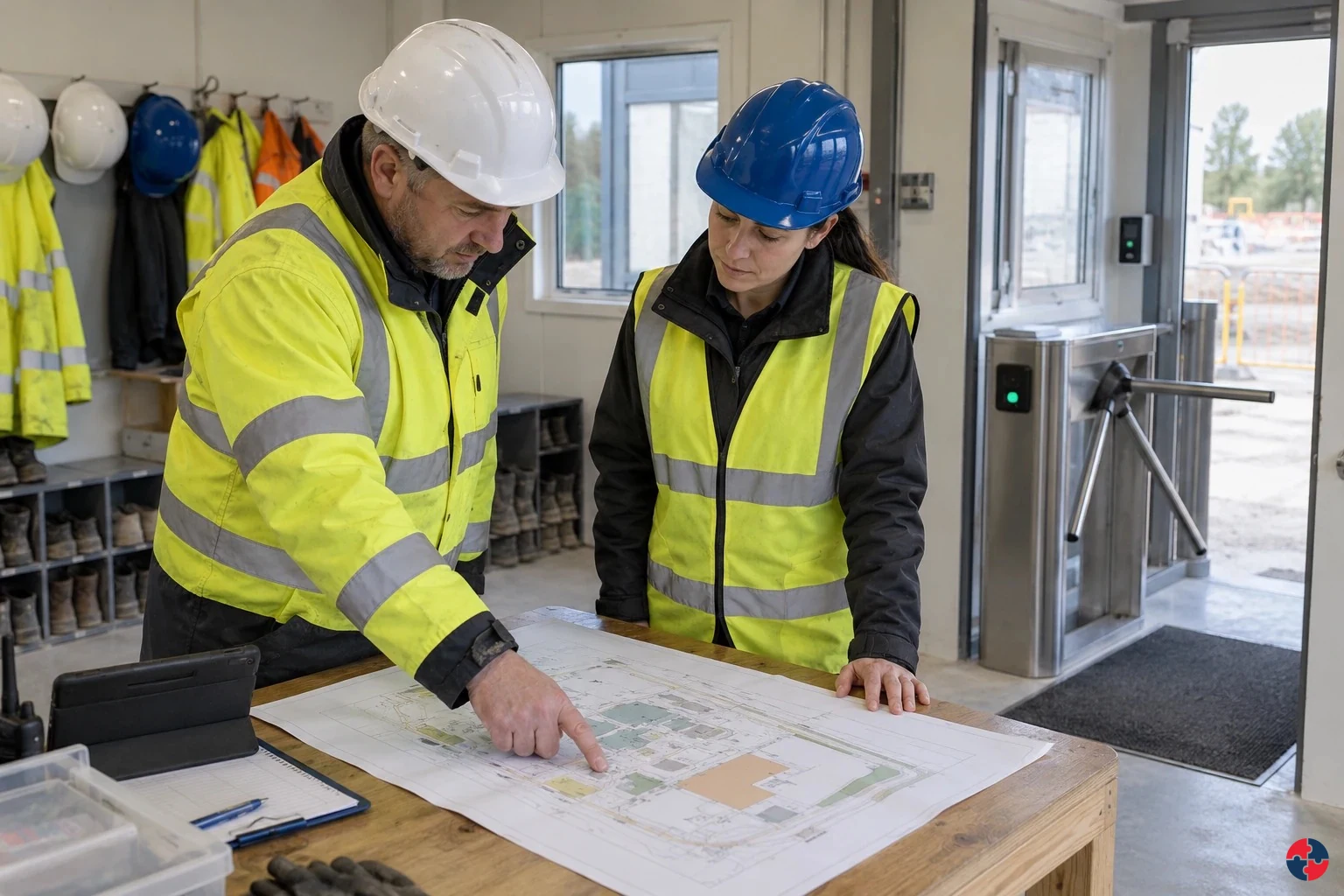
Who is a young worker and why can risk be different?
A young person is anyone under 18. A child has not passed the applicable minimum school-leaving age. Young workers are people under 18 whose work must fit their school-leaving status, experience and individual capability.
Turn young worker knowledge into a decision
Young workers are people under 18 whose work must fit their school-leaving status, experience and individual capability. Sharp edges, moving vehicles, heavy loads and harmful exposures can cause immediate injury or lasting ill health. retain the task assessment, restrictions and supervision cover, induction and observed-practice record, any defect or change report, product quality check and the next learning decision.
A 17-year-old apprentice assembling brackets
the apprentice completes the first assembly under observation. The supervisor checks technique, effort, pace and understanding, then adjusts support within the agreed limits. the supervisor checks the assembly, confirms tools are accounted for and defects segregated, and checks the bench and route are left safe.
How workplace hazards reach a young person
Hand assembly near sharp stock or faulty tool: Hand contacts an edge, pinch point or ejected part; skin and fingers are exposed. Work near deliveries or mobile plant: Vehicle or load enters the pedestrian route and strikes the body. Repeated or heavy handling: Force, repetition or awkward reach loads muscles and joints, especially when the work exceeds current capacity.
Choose controls for the actual task
Eliminate (HSE elimination): Elimination: remove powered cutting and unknown-substance handling from the apprentice’s first job. Reduce (HSE substitution): Substitution: buy pre-cut, deburred pieces and a lower-force hand assembly method. Isolate (HSE engineering): Engineering control: a fixed route barrier and a bench outside delivery and dusty-process zones physically separate people from vehicles and release. Control (engineering plus administration): Engineering control: stable workholding and effective machine guarding keep hands out of danger. PPE (residual protection): PPE: assessed eye or foot protection, and hand protection only when compatible with the actual assembly method. Read the full control table for qualifications, ownership and verification. Use the actual task and applicable jurisdiction; existing technical approval remains unchanged.
Use the full young worker lesson
Use the full topic for the decision points, practical examples, detailed control tables and source scope. HSE guidance applies to Great Britain; use HSENI for the Northern Ireland route and the source’s stated jurisdiction. A simplified guide does not change the page’s technical-review or approval status.

Read all six steps as text
1. Who is a young worker and why can risk be different?
A young person is anyone under 18.
- Avoid / redesign: Elimination: remove powered cutting and unknown-substance handling from the apprentice’s first job.
- Control the task: Engineering control: a fixed route barrier and a bench outside delivery and dusty-process zones physically separate people from vehicles and release.
- Verify before release: Task sheet and material match.
A young person is anyone under 18. A child has not passed the applicable minimum school-leaving age. Young workers are people under 18 whose work must fit their school-leaving status, experience and individual capability.
Apply it: Which part of this plan would you check at the workface before authorising the task?
2. Turn young worker knowledge into a decision
Use the evidence to improve the actual work arrangement.
- Change at source: Elimination: remove powered cutting and unknown-substance handling from the apprentice’s first job.
- Make it observable: Task sheet and material match.
- Keep useful evidence: retain the task assessment, restrictions and supervision cover, induction and observed-practice record, any defect or change report, product quality check and the next learning decision.
Young workers are people under 18 whose work must fit their school-leaving status, experience and individual capability. Sharp edges, moving vehicles, heavy loads and harmful exposures can cause immediate injury or lasting ill health. retain the task assessment, restrictions and supervision cover, induction and observed-practice record, any defect or change report, product quality check and the next learning decision.
Apply it: What evidence would show that the change improves this task, rather than only completing a record?
3. A 17-year-old apprentice assembling brackets
Example: a practical application of the existing topic lesson.
- Setting: assemble pre-cut, deburred metal brackets using specified hand tools at a stable bench in a dry, well-lit fabrication workshop.
- Act: the supervisor confirms material identity, checks for sharp edges and defects, checks the work area and tool condition, and demonstrates workholding and the approved assembly method.
- Hold / review: pause if the supervisor is called away without suitable cover, the tool slips or is defective, material has unexpected contamination or sharpness, traffic enters the protected area, or the task changes.
the apprentice completes the first assembly under observation. The supervisor checks technique, effort, pace and understanding, then adjusts support within the agreed limits. the supervisor checks the assembly, confirms tools are accounted for and defects segregated, and checks the bench and route are left safe.
Apply it: At which point would you hold this example, and what evidence would allow it to proceed?
4. How workplace hazards reach a young person
Connect the task, the route to the person and the control that can fail.
- Hand assembly near sharp stock or faulty tool: Hand contacts an edge, pinch point or ejected part; skin and fingers are exposed.
- Work near deliveries or mobile plant: Vehicle or load enters the pedestrian route and strikes the body.
- Repeated or heavy handling: Force, repetition or awkward reach loads muscles and joints, especially when the work exceeds current capacity.
Hand assembly near sharp stock or faulty tool: Hand contacts an edge, pinch point or ejected part; skin and fingers are exposed. Work near deliveries or mobile plant: Vehicle or load enters the pedestrian route and strikes the body. Repeated or heavy handling: Force, repetition or awkward reach loads muscles and joints, especially when the work exceeds current capacity.
Apply it: Who could be exposed, including other trades, cleaners, maintainers and people nearby?
5. Choose controls for the actual task
Control summary. Read the complete task-specific controls and checks in the linked topic.
- Elimination: Supervisor assigns pre-cut, deburred brackets and excludes powered cutting and unidentified containers from this first task.
- Substitution: Use manageable pre-cut pieces, suitable hand tools and a stable working height so edge contact and excessive force are less likely.
- Engineering controls: Separate the bench and pedestrian route from vehicles and dusty work; use stable workholding and effective guards to keep hands clear.
- Administrative controls: Define task limits, demonstrate the method, observe practice and arrange named supervision cover. Stop if the task or cover changes.
- PPE: PPE reduces residual contact harm but does not make restricted work lawful or stop a vehicle.
Eliminate (HSE elimination): Elimination: remove powered cutting and unknown-substance handling from the apprentice’s first job. Reduce (HSE substitution): Substitution: buy pre-cut, deburred pieces and a lower-force hand assembly method. Isolate (HSE engineering): Engineering control: a fixed route barrier and a bench outside delivery and dusty-process zones physically separate people from vehicles and release. Control (engineering plus administration): Engineering control: stable workholding and effective machine guarding keep hands out of danger. PPE (residual protection): PPE: assessed eye or foot protection, and hand protection only when compatible with the actual assembly method. Read the full control table for qualifications, ownership and verification. Use the actual task and applicable jurisdiction; existing technical approval remains unchanged.
Apply it: Which stronger option can be used here, and who will verify it before accepting the remaining risk?
6. Use the full young worker lesson
Follow the official sources below and retain the task-specific evidence.
- Official guidance: HSE risk-assessment steps
- Official guidance: HSE young people and the law
- Task decision: Use explain-back, observed first work and an accessible contact. Hold if the supervisor or evidence is unavailable; do not infer age or health from a photograph.
Use the full topic for the decision points, practical examples, detailed control tables and source scope. HSE guidance applies to Great Britain; use HSENI for the Northern Ireland route and the source’s stated jurisdiction. A simplified guide does not change the page’s technical-review or approval status.
Apply it: Which official source and full-topic section will you use to resolve the next decision?
A young person may be learning the task and learning how a workplace behaves at the same time. They may not recognise a reversing vehicle, stored energy or an unlabelled chemical as a warning. Wanting to be helpful can make it difficult to challenge a colleague. These are reasons to design work and supervision well, not reasons to stereotype young people as incapable. HSE pedestrian and vehicle separation.
Harm can be immediate, such as a cut, burn, crush injury or fall. Noise, dust, chemicals and repeated physical strain can also damage health before symptoms become obvious. Physical or psychological demands may exceed the person's current capacity even when an experienced adult completes the same task. Ask about relevant support needs and adapt the work; do not infer ability from appearance or diagnosis. HSE manual-handling guidance.
How the harm reaches a person
Inexperience changes the chance that a hazard is recognised; it is not the hazard. The source is the actual sharp edge, moving vehicle, physical load, airborne agent or heat. The table links contact or exposure to plausible harm. Symptoms may be delayed or absent, so the absence of a complaint is not proof of safety.
Scroll sideways to see all columns of this table.
| Task or source | Route and tissue | Possible harm | Early sign | Stop or escalate when |
|---|---|---|---|---|
| Hand assembly near sharp stock or faulty tool | Hand contacts an edge, pinch point or ejected part; skin and fingers are exposed. | Cuts, punctures or crush injury. | Burr, slipping tool, poor grip or hand entering a pinch point. | Material or tool differs from the assessed method, or a guard or workholding fails. Machinery safeguard guidance. |
| Work near deliveries or mobile plant | Vehicle or load enters the pedestrian route and strikes the body. | Impact injury, fracture or fatal crushing. | Barrier moved, route blocked, vehicle entering the protected area. | Stop the affected task, keep clear and ask the supervisor to restore separation. HSE traffic separation. |
| Repeated or heavy handling | Force, repetition or awkward reach loads muscles and joints, especially when the work exceeds current capacity. | Strain or musculoskeletal pain, sometimes developing over repeated shifts. | Pain, fatigue, lost control of the load or a changed load. | Pause and reassess weight, height, pace, assistance and task suitability. HSE manual handling. |
| Dust, fume, chemical or noise from the task or adjacent work | Airborne material reaches lungs; a substance contacts skin or eyes; sound reaches the ear. The actual agent and exposure determine harm. | Possible respiratory or skin illness, eye damage or longer-term hearing loss; the outcome depends on the agent and dose. | Unexpected dust, odour, splash, irritation or louder work; hearing harm may have no early sign. | Stop and keep clear of unknown material or uncontrolled exposure; obtain competent assessment and any needed health advice. HSE substance substitution. |
| Hot surfaces, liquids or extreme temperature | Heat transfers to skin or the body; sustained heat can overwhelm temperature control. | Burn or heat illness, according to exposure. | Unassessed hot item, discomfort, dizziness or altered conditions. | Move to safety, alert the supervisor and use first aid or emergency response as appropriate. HSE temperature management. HSE catering burn example |
Harm-chain basis: HSE young-person risks; HSE risk-assessment steps. Check the actual task and exposure route; these are illustrative, not diagnoses.
This page covers employees, under-18 apprentices and work-experience placements. New starters aged 18 or over still need suitable induction and supervision, but the specific under-18 rules are different. Working-time law uses a narrower young-worker category: above school-leaving age and under 18. Check the actual leaving date for the relevant UK nation.
A changed task needs a new permission and readiness check
Legal permissibility for the person’s age and status is separate from task readiness. Confidence or supervision cannot make prohibited work lawful.

Agree the original task
Use identified pre-cut and deburred parts, suitable workholding, a protected route, clear explanation and named supervision for the assessed assembly.
Stop a changed request
A request to cut a different part changes the task. Keep hands clear and stop the affected activity rather than improvising.
Review both gates
The responsible owner checks legal permissibility, actual hazards, competence, safeguards and available supervision before authorising any change.
Check understanding and cover
Use explain-back, observed first work and an accessible contact. Hold if the supervisor or evidence is unavailable; do not infer age or health from a photograph.
Read the complete task-specific control examples
ERICPD is a planning cross-map: Discipline verifies and sustains every control. ESEAP compares effectiveness. A label does not authorise the task; retain the owner, evidence and stop or change decision.
Young Worker · ERICPD
- Eliminate
- Supervisor assigns pre-cut, deburred brackets and excludes powered cutting and unidentified containers from this first task.
- Reduce
- Use manageable pre-cut pieces, suitable hand tools and a stable working height so edge contact and excessive force are less likely.
- Isolate
- Keep the bench and pedestrian route physically separated from vehicle movement and adjacent dusty operations.
- Control
- Secure work in suitable workholding and maintain any applicable guard; these physical controls keep hands clear.
- PPE
- PPE reduces residual contact harm but does not make restricted work lawful or stop a vehicle.
- Discipline
- These checks detect drift; they cannot compensate for absent isolation or workholding.
Young Worker · ESEAP
- Elimination
- Supervisor assigns pre-cut, deburred brackets and excludes powered cutting and unidentified containers from this first task.
- Substitution
- Use manageable pre-cut pieces, suitable hand tools and a stable working height so edge contact and excessive force are less likely.
- Engineering controls
- Separate the bench and pedestrian route from vehicles and dusty work; use stable workholding and effective guards to keep hands clear.
- Administrative controls
- Define task limits, demonstrate the method, observe practice and arrange named supervision cover. Stop if the task or cover changes.
- PPE
- PPE reduces residual contact harm but does not make restricted work lawful or stop a vehicle.


Young Worker in a working scene
Try 1 scenario with images, explanations and decisions that develop into follow-on situations. Trace how a hazard can cause harm, compare work arrangements and choose controls.
What must be settled before the young person starts?
Make or review an assessment that accounts for young-person risks before employment starts. An existing assessment can be sufficient if it genuinely covers this person and the proposed work; a separate form is not automatically required.
Start with the work the person will do, observe and pass near, including breaks, deliveries, cleaning and unusual jobs. Assess the workplace layout, equipment, substances and physical or biological exposures, how work is organised, and the instruction required. Talk with the person and, where relevant, the organiser about experience, understanding and support needs. Keep personal information restricted to those who need it.
- Confirm eligibility: establish age, school-leaving status, jurisdiction and any child-employment or equipment restriction.
- Choose suitable tasks: identify what is allowed, what needs supervised training and what is excluded. Unknown substances or unclear exposure information are a hold point.
- Resource the controls: put safe routes, guards, suitable tools, training, welfare and a named supervisor with cover in place.
- Brief and check: explain hazards, task limits, reporting and emergencies in understandable language; observe a safe demonstration where appropriate.
- Review in use: change arrangements when the task, person, equipment, conditions or evidence changes. A signed induction is not the end of assessment.
England: passing the school-leaving date and continuing education or training until 18 are separate questions. The continuing requirement can be met through full-time education, an apprenticeship, or at least 20 hours a week of work or volunteering alongside part-time education or training. Check the leaving date for the actual UK nation and any child-employment or placement permission separately. Record the age/status decision and a rota containing all applicable working time, rather than simply writing “16+”. GOV.UK school leaving age.
1. Which age/status rules apply?
Confirm date of birth, national school-leaving date, GB or NI jurisdiction, and any child-employment or placement permission. Keep England’s continuing education/training requirement separate. Record the decision and include applicable training in the rota.
2. Is this particular task ready to start?
Check that this task is permitted, assessed and within capability. Verify physical safeguards, demonstrated understanding, a named competent supervisor and cover, and clear stop signs. An apprenticeship or the first decision alone does not authorise the task.
Protected bench → changed task → verified restart: a 17-year-old is cleared for pre-cut, deburred bracket assembly behind the traffic barrier with stable workholding. A request to cut a new part or move the barrier returns the decision to the supervisor: stop, keep clear, check legal/task limits and revise the assessment and controls. Restart only after the named responsible person verifies the permitted method, safeguards, understanding and supervision cover. Retain the changed task, the reason for the hold, the checks and the restart decision. The original assembly permission does not carry over automatically.
Original SHARE application in the SHAREhub environment, version 19 October 2026. The two panels and worked sequence are the complete text equivalent; no external artwork is reproduced. Read with GOV.UK school leaving age, HSE young-person risks and HSE training and supervision. This learning aid does not authorise a task.
For children, give a parent understandable information about assessed risks and precautions before employment. For placements this may be conveyed through the school or organiser; verify it reaches the right person. Do not confuse parental consent with permission to undertake prohibited work.
How can the hierarchy of controls reduce risks for young and inexperienced workers?
Remove or reduce the hazard through task choice, safer methods and physical safeguards before relying on supervision or personal protective equipment. Check the young-person restrictions separately; ordinary adult arrangements may not be enough.
For example, use pre-cut, deburred material for a first assembly task instead of introducing powered cutting. Separate the bench from vehicle movements, use stable workholding, and adjust the work height and load. Then add instruction, practice, supervision and any task-specific personal protective equipment (PPE). Protection must fit and suit the task; generic gloves can create additional risks around rotating parts. HSE machinery-safeguarding guidance. HSE hierarchy for removing a hazard.
Managing risk using the HSE five-level hierarchy of control
The five-level sequence is elimination, substitution, engineering controls, administrative controls and personal protective equipment (PPE). Start at the top for the actual task and use each lower level to address risks that remain; the sequence does not grant permission for work restricted by young-person law. A young worker may not yet recognise a moving-part, traffic or exposure warning, or feel able to challenge an instruction. Design the task and physical safeguards before relying on memory or confidence. HSE hierarchy; HSE young-person risk factors.
- Eliminate: remove powered cutting and unknown-substance handling from the young person’s first assembly task. The manager specifies a prepared-parts job and the supervisor rejects new requests outside that scope. This removes exposures the apprentice might not yet recognise or feel able to refuse.
- Substitute: choose manageable, pre-cut and deburred brackets, suitable hand tools and a lower-force method in place of sharper stock or a more demanding process. The supervisor still checks each batch for burrs and weight; “safer” is not the same as harmless, especially when strength and technique are still developing.
- Engineering controls: position the bench behind a physical traffic barrier, use stable workholding and keep effective guards on any equipment used by authorised workers. The site manager and equipment lead check these before work and after changes. A barrier, fixture or guard gives protection even when a newcomer misses a warning.
- Administrative controls: define the exact task, demonstrate it, ask the apprentice to explain the limits and stop signs, observe first attempts and provide named supervision cover. These extra checks address inexperience and the pressure to please, but a verbal instruction or sign cannot replace a missing barrier or guard.
- PPE: assess and supply correctly fitting eye, foot or hand protection for residual risks, checking that gloves cannot snag on the actual equipment. The supervisor checks fit and use with the young person. PPE cannot make an unguarded machine or vehicle route suitable for a first task.
How does ERICPD add a second check?
ERICPD is a practical prompt: Eliminate, Reduce, Isolate, Control, personal protective equipment (PPE), and Discipline. An England government engineering and manufacturing T Level outline names ERICPD as learning content. It does not define a legal control order or approve any young person’s task. The applications below are original SHARE examples based on HSE’s five-level control hierarchy and the actual GB or NI young-person rules.
Use the two prompts together without treating them as identical ladders. ERICPD Eliminate matches HSE elimination. Reduce can mean a safer substitute or another measurable reduction at source. Isolate is physical separation and normally an engineering control. Control must name the real safeguard: a guard or extraction is engineering; a task method or supervised practice is administrative. PPE protects only against remaining risk. Discipline means sustaining the chosen controls through maintenance, observation, feedback and correction, not blaming the young person or replacing a physical safeguard. For each harm route below, test every stage, record where a stage does not reduce that harm, and stop when the selected control fails. HSE risk-control and review steps; HSE young-worker supervision.
Checking that controls work for a young person
After selecting controls, test how they will work on the first real task: remove unnecessary exposure; choose safer materials; separate the person from traffic or machinery; check guarding, workholding and the method; fit any PPE needed for residual risk; then observe, maintain and review. These are practical checks across the five-level hierarchy, not an additional statutory ladder. Extra task limits, a named supervisor, observed practice and a clear way to report changes matter when a young person is new to the workplace or reluctant to speak up. HSE steps to manage and review risk; HSE young-worker training and supervision.
Scroll sideways to see all columns of this table.
How can the ERICPD hierarchy of controls reduce risks for young and inexperienced workers?

| ERICPD check | Five-level control and feasibility | Concrete measure and harm-chain effect | Owner or checker | Evidence and failure point |
|---|---|---|---|---|
| Eliminate (HSE elimination) | Elimination: remove powered cutting and unknown-substance handling from the apprentice’s first job. Prepared stock is available, so that exposure is avoidable; if not, use a different assessed task. | Supervisor assigns pre-cut, deburred brackets and excludes powered cutting and unidentified containers from this first task. This removes blade contact and unknown substance handling from the authorised job. | Manager defines scope; supervisor checks each batch and request. | Task sheet and material match. Hold if a new cutting or container task appears. HSE safeguards. HSE elimination and substitution hierarchy |
| Reduce (HSE substitution) | Substitution: buy pre-cut, deburred pieces and a lower-force hand assembly method. This is feasible for the specified bracket batch, but inspect residual burrs and do not treat “deburred” as proof of no edge. | Use manageable pre-cut pieces, suitable hand tools and a stable working height so edge contact and excessive force are less likely. Deburring can leave sharp edges, so inspect the actual stock. | Supervisor and purchaser select; young person reports mismatch. | Stock and tools checked before work. Hold for sharp, heavy or unexpectedly different material. HSE safeguards. HSE elimination and substitution hierarchy |
| Isolate (HSE engineering) | Engineering control: a fixed route barrier and a bench outside delivery and dusty-process zones physically separate people from vehicles and release. A painted line alone is administrative and is insufficient where vehicles can enter. | Keep the bench and pedestrian route physically separated from vehicle movement and adjacent dusty operations. Separation prevents impact and unnecessary exposure. | Site manager provides the layout; supervisor checks it during work. | Marked barrier and route remain intact. Stop if deliveries or contractors breach the boundary. HSE traffic separation. |
| Control (engineering plus administration) | Engineering control: stable workholding and effective machine guarding keep hands out of danger. Administrative control: a defined task method and maintenance boundary support them; supervision cannot replace a failed guard. | Secure work in suitable workholding and maintain any applicable guard; these physical controls keep hands clear. Set a task-specific method and no-maintenance boundary; instructions support but cannot replace physical protection. | Supervisor checks workholding and method; authorised maintainer resolves defects. | Demonstration and condition check recorded. Stop for a loose tool, failed guard or changed process. HSE machinery safeguards. |
| PPE (residual protection) | PPE: assessed eye or foot protection, and hand protection only when compatible with the actual assembly method. Gloves may snag at rotating parts. PPE has no credible role as the main vehicle or cutting-machine safeguard. | Select fitted eye, foot or hand protection only where the assessment requires it and it is compatible with the task. PPE reduces residual contact harm but does not make restricted work lawful or stop a vehicle. | Employer supplies; supervisor checks fit and use with the young person. | Fit and suitability checked. Stop for missing, damaged or snagging protection. HSE PPE hierarchy. |
| Discipline (sustain the controls) | Administrative checks and ongoing review: demonstration, teach-back, observed practice, named cover, maintenance and learning support the physical controls. They are not an additional higher-order barrier. | Demonstrate, ask for teach-back, observe practice, name cover and respond constructively to changes. These checks detect drift; they cannot compensate for absent isolation or workholding. | Supervisor observes; manager ensures cover and reviews records. | Young person can explain stop conditions; supervision and review records exist. Pause when cover or understanding is absent. HSE young-worker training. |
How can the ISO 45001 hierarchy of controls reduce risks for young and inexperienced workers?

| ERICPD check | Five-level control and feasibility | Concrete measure and harm-chain effect | Owner or checker | Evidence and failure point |
|---|---|---|---|---|
| Eliminate (HSE elimination) | Elimination: remove powered cutting and unknown-substance handling from the apprentice’s first job. Prepared stock is available, so that exposure is avoidable; if not, use a different assessed task. | Supervisor assigns pre-cut, deburred brackets and excludes powered cutting and unidentified containers from this first task. This removes blade contact and unknown substance handling from the authorised job. | Manager defines scope; supervisor checks each batch and request. | Task sheet and material match. Hold if a new cutting or container task appears. HSE safeguards. HSE elimination and substitution hierarchy |
| Reduce (HSE substitution) | Substitution: buy pre-cut, deburred pieces and a lower-force hand assembly method. This is feasible for the specified bracket batch, but inspect residual burrs and do not treat “deburred” as proof of no edge. | Use manageable pre-cut pieces, suitable hand tools and a stable working height so edge contact and excessive force are less likely. Deburring can leave sharp edges, so inspect the actual stock. | Supervisor and purchaser select; young person reports mismatch. | Stock and tools checked before work. Hold for sharp, heavy or unexpectedly different material. HSE safeguards. HSE elimination and substitution hierarchy |
| Isolate (HSE engineering) | Engineering control: a fixed route barrier and a bench outside delivery and dusty-process zones physically separate people from vehicles and release. A painted line alone is administrative and is insufficient where vehicles can enter. | Keep the bench and pedestrian route physically separated from vehicle movement and adjacent dusty operations. Separation prevents impact and unnecessary exposure. | Site manager provides the layout; supervisor checks it during work. | Marked barrier and route remain intact. Stop if deliveries or contractors breach the boundary. HSE traffic separation. |
| Control (engineering plus administration) | Engineering control: stable workholding and effective machine guarding keep hands out of danger. Administrative control: a defined task method and maintenance boundary support them; supervision cannot replace a failed guard. | Secure work in suitable workholding and maintain any applicable guard; these physical controls keep hands clear. Set a task-specific method and no-maintenance boundary; instructions support but cannot replace physical protection. | Supervisor checks workholding and method; authorised maintainer resolves defects. | Demonstration and condition check recorded. Stop for a loose tool, failed guard or changed process. HSE machinery safeguards. |
| PPE (residual protection) | PPE: assessed eye or foot protection, and hand protection only when compatible with the actual assembly method. Gloves may snag at rotating parts. PPE has no credible role as the main vehicle or cutting-machine safeguard. | Select fitted eye, foot or hand protection only where the assessment requires it and it is compatible with the task. PPE reduces residual contact harm but does not make restricted work lawful or stop a vehicle. | Employer supplies; supervisor checks fit and use with the young person. | Fit and suitability checked. Stop for missing, damaged or snagging protection. HSE PPE hierarchy. |
| Discipline (sustain the controls) | Administrative checks and ongoing review: demonstration, teach-back, observed practice, named cover, maintenance and learning support the physical controls. They are not an additional higher-order barrier. | Demonstrate, ask for teach-back, observe practice, name cover and respond constructively to changes. These checks detect drift; they cannot compensate for absent isolation or workholding. | Supervisor observes; manager ensures cover and reviews records. | Young person can explain stop conditions; supervision and review records exist. Pause when cover or understanding is absent. HSE young-worker training. |
Apply the hierarchy to each harm route
Sharp stock and moving parts. For the first bracket batch, eliminate powered cutting from the young person’s task; prepared deburred pieces are a feasible substitute, although the supervisor must inspect each new batch for burrs. Use a stable workholding fixture at the bench so hands need not hold stock at a pinch point. If a machine is later proposed, a competent equipment lead must verify its fixed or interlocked guard and the manufacturer’s instructions before any separate lawful-task decision; a demonstration is administrative, not a guard. Assess eye protection and any hand protection against snagging. Keep the task sheet, stock check and guard/fixture check; stop for a changed material, loose fixture or failed guard. HSE machinery safety and safeguarding.
Six-part check for this harm route. ERICPD check: eliminate cutting from this first task; reduce edge and force risk with prepared stock; isolate hands using the fixture and a verified guard where a later machine task is separately authorised; control the method and first attempts; select only compatible residual eye or hand protection; sustain stock, fixture and guard checks and hold any changed task.
Delivery traffic. Eliminate the apprentice’s need to enter the yard by receiving stock at the protected bench; if this cannot be done, change the delivery route or timing before relying on signs. A physical barrier and separated pedestrian route are engineering controls only when vehicles cannot bypass them; marked lines, induction and a supervisor are administrative backup. High-visibility clothing may help a driver see a person but cannot prevent a collision. The site manager selects the layout, checks it when deliveries start and after a route change, and records the route decision. Stop and move clear if a barrier is displaced or a vehicle enters the protected area. HSE separating pedestrians and vehicles.
Six-part check for this harm route. ERICPD check: eliminate yard entry; reduce vehicle conflict by changing route or timing; isolate with a barrier that vehicles cannot bypass; control crossings and contractor information; use high-visibility clothing only as supplementary PPE; check the route at each delivery and stop when separation fails.
Heavy or repetitive handling. Eliminate a hazardous lift by delivering light bracket batches to bench height. A smaller load or different assembly sequence is substitution; an adjustable bench or suitable handling aid is an engineering change, with the manager checking the actual load, reach and pace before use. The supervisor varies the method and observes technique and fatigue; gloves or footwear may address separate contact risks but do not remove the muscle load. Record the assessed task and any discomfort report. Pause when load size, reach, rate or the young person’s comfort changes. HSE manual handling at work.
Six-part check for this harm route. ERICPD check: eliminate the lift by delivering at bench height; reduce load and repetition; use a handling aid or feed arrangement to keep force away from the person where feasible; control pace and observation; do not claim gloves or footwear prevents muscle strain; review discomfort and the actual batch before continuation.
Dust, chemicals and noise. Remove an unknown container or adjacent cutting/noisy process from the young person’s scope. Where the process is necessary for others, a competent assessor compares a less hazardous substance or quieter method before specifying enclosure, local extraction, acoustic separation or effective access barriers. Identify the actual agent and exposure route first; do not choose a respirator, glove or hearing protector by guesswork. The process owner verifies design, commissioning and ongoing control effectiveness; the supervisor checks the separation and labels before each placement task. Stop for an unidentified product, unexpected release, failed extraction, unusual noise or symptoms, and obtain specialist assessment. HSE substance substitution. HSE noise-control guidance.
Six-part check for this harm route. ERICPD check: eliminate this young person’s exposure to the unknown agent or nearby process; reduce it through a safer substance or quieter method; isolate with verified enclosure, extraction or acoustic separation; control access, maintenance and assessment; select agent-specific PPE only for residual exposure; check effectiveness and hold work for an unknown release or failed control.
Hot surfaces and heat. Eliminate contact with a fryer or hot line by assigning a cold-preparation or observation task; a cooler process is the next substitution if it still meets the job. Insulated guards and a workstation away from the heat source interrupt contact and heat load, while scheduling, water and supervision are administrative support. Suitable heat protection addresses only residual contact exposure and must fit the assessed task. The kitchen lead checks guards, temperature conditions and the young person’s response at the start and during change; stop for an unassessed hot-oil request, missing guard, dizziness or worsening conditions. HSE managing workplace temperature. HSE catering burn and scald example.
Six-part check for this harm route. ERICPD check: eliminate fryer contact by choosing cold preparation; reduce temperature where the process allows; isolate with a guard and distance; control the task sequence, breaks and observation; use suitable heat protection only for remaining contact risk; recheck the guard and heat conditions and stop for symptoms or a new hot-oil request.
For example, gloves might reduce edge contact during hand assembly but can snag around rotating parts. A barrier may separate traffic only if deliveries cannot bypass it. An apparently safer task still needs its own assessment, task limits and suitable supervision.
Control-framework basis: HSE hierarchy and PPE; HSE young-person risks; HSE reviewing controls.
In both GB and NI, regulation 19 restricts work beyond physical or psychological capacity; harmful exposure to toxic, carcinogenic, genetic or reproductive hazards and other chronic health agents; harmful radiation exposure; accident risks a young person cannot reasonably recognise or avoid; and health risks from extreme temperatures, noise or vibration. The assessment determines the relevant harm or risk. Do not treat a substance label, adult exposure limit or short duration as a complete suitability decision. GB regulation 19; NI regulation 19.
The limited training exception applies only to someone who is no longer a child, where the work is necessary for training, a competent person supervises and risk is reduced as far as reasonably practicable. All conditions must be met. It is not a general apprentice exemption and does not remove other legal restrictions.
Age alone does not decide whether a young person may use a machine. In Great Britain, the general work-equipment rules contain no blanket under-18 age bar, but HSE identifies specific restrictions in approved codes for lifting equipment, power presses, woodworking machinery and lift trucks, plus other limits in agriculture. HSE also says children should never operate or help at machines. For someone above school-leaving age, the manager must check the exact equipment rule, manufacturer instructions, assessed risks, training, competence and supervision before assigning operation. This GB guidance does not settle a Northern Ireland task; check the applicable NI duties and obtain competent advice where the restriction is unclear. Sources: HSE equipment training and age restrictions; HSE machinery guidance on children.
Worked decision: a 17-year-old apprentice asks to use a cutting machine because they have watched it being used. Observation proves neither permission nor competence. The manager checks school-leaving status, the exact machine and manufacturer's instructions, applicable restrictions, guarding, exposure and training need. If a restriction or the training exception cannot be resolved, allocate a safe alternative and obtain competent advice. A school-age student cannot use that training exception.
How do training and supervision become effective?
Demonstrate the task, ask the young person to explain the risks and stop conditions, then observe safe practice. Reduce supervision only when the task and the person justify it and any legal conditions continue to be met.
Use short explanations, demonstrations, accessible instructions and time for questions. A nod or course attendance shows little about application. Ask “What would you do if this guard was loose?” or “Who takes over if I leave?” Agree a named alternative contact if the person feels unable to approach their supervisor.
Start with close support where needed, progress to coached practice and then observed task competence. Record the boundary of any authorisation: which task, equipment, location and conditions it covers. Returning to closer supervision after change is part of learning. There is no universal supervision ratio, number of days to independence, course certificate or certificate expiry for all young workers.
Supervisors need competence in both the work and teaching it safely, plus time to observe and intervene. Managers must provide cover rather than leave a young person unsupported when production is busy. Refresher learning follows changed risks or evidence that understanding has weakened; specific tasks may have additional requirements.
Scroll sideways to see all columns of this table.
| Role | Learning and practical check | Who verifies and records it | Recheck trigger |
|---|---|---|---|
| Young worker or apprentice | Know the agreed task, hazards, controls, stop point and contact; explain them back and demonstrate the safe method under observation. | Competent supervisor records the task, conditions, observed practice and limits. Attendance alone gives no task authorisation. | New task, equipment, material or setting; incident, near miss, uncertainty or loss of confidence. HSE training. |
| Supervisor | Understand the task and young-person restrictions; demonstrate controls, coach practice, observe and intervene. | Manager confirms task competence, coaching ability and available cover; records the named supervisor and alternative. | Changed risk, absence or workload that removes effective observation. HSE training. |
| Manager or placement host | Check age and school status, lawful task, assessment, hours, resources and supervision before allocation. | Manager signs the agreed task scope and checks evidence of competence and cover, not just induction attendance. | Task creep, rota change, placement transfer, failed control or new legal guidance. HSE training. |
| Purchaser or maintainer | Know how equipment design, guarding, maintenance and instructions affect tasks proposed for a young person. | Competent equipment lead records specification, guarding and hand-back checks; the supervisor still decides individual task suitability. | New equipment, modified guard, defect or maintenance hand-back. HSE machinery. |
| Safety adviser or auditor | Sample the actual task, worker understanding, observed controls, competence record and supervisor availability. | Record evidence, gaps, owner and corrective action; advice or audit does not grant task permission. | Incident, repeated drift, unresolved finding or substantial change. HSE INDG345. |
What does a safe first workshop task look like?
Start with a defined, suitable task and a supervisor who can observe it. The following SHARE example shows how control is maintained through a routine job, an interruption and hand-back.
A 17-year-old apprentice assembling brackets
Task material and setting: assemble pre-cut, deburred metal brackets using specified hand tools at a stable bench in a dry, well-lit fabrication workshop. The outcome is a correctly assembled batch and safe learning. Powered cutting, welding and vehicle operation are outside this example's authorised scope.
People and prerequisites: the apprentice is confirmed above school-leaving age. The supervisor is competent in the assembly method and has reviewed the actual task and young-person risks. Nearby workers, visitors and delivery contractors may be affected. The bench is separated from traffic, exposure from adjacent processes is controlled, suitable tools and workholding are available and necessary PPE is selected from the assessment.
Before: the supervisor confirms material identity, checks for sharp edges and defects, checks the work area and tool condition, and demonstrates workholding and the approved assembly method. The apprentice explains permitted tasks, hand placement, safe routes, the stop signal and how to obtain first aid. If they cannot do so, the supervisor re-teaches before practice starts.
During: the apprentice completes the first assembly under observation. The supervisor checks technique, effort, pace and understanding, then adjusts support within the agreed limits. A contractor asks for help moving an unidentified container; the apprentice declines and refers the request to the supervisor. Delivery activity cannot remove the segregated route.
Hold or stop: pause if the supervisor is called away without suitable cover, the tool slips or is defective, material has unexpected contamination or sharpness, traffic enters the protected area, or the task changes. Put the work into its instructed safe state and contact the supervisor; do not improvise repair or investigate an unknown substance. The supervisor or relevant specialist must resolve the cause and re-brief before restart.
Completion and hand back: the supervisor checks the assembly, confirms tools are accounted for and defects segregated, and checks the bench and route are left safe. Discuss fatigue, discomfort and anything unclear. Agree the next task and its supervision; completing this batch does not authorise cutting-machine use.
Evidence: retain the task assessment, restrictions and supervision cover, induction and observed-practice record, any defect or change report, product quality check and the next learning decision. These are SHARE example records; the precise form is a local choice.
What changes in another workplace or a short placement?
Keep the same assessment and supervision principles, but change the controls to match the setting. A short placement still needs a safe scope and a clear contact.
These are illustrative task decisions, not permission based on a job title or age alone. Each host checks school status, GB or NI rules, actual task, restrictions, hours and supervision. The strongest control is the one that removes or physically separates the material hazard in that setting.
Short placement example: a 15-year-old whose compulsory school age has not ended visits a hospitality kitchen through a school placement. The host first checks the applicable child-employment and placement rules, agrees a limited observational or otherwise suitable task with the organiser and names a supervisor and backup. For this child, powered slicing is excluded; hot oil and unknown cleaning products also stay outside the agreed scope. The host separately checks lawfulness and risk for every other proposed task. A request to move an unlabelled cleaner is a stop point: the student leaves it untouched and tells the supervisor. At hand-back, the host checks the area, records any change and agrees the next task afresh. Neither school involvement nor a signed induction grants permission for a new task. Sources: HSE work-experience guidance. HSE catering burn and scald example; HSE machinery guidance on children.
Scroll sideways to see all columns of this table.
| Setting and task | Harm mechanism and outcome | Strongest feasible controls | Residual support | Check or stop point |
|---|---|---|---|---|
| Manufacturing: 17-year-old assembles pre-cut brackets at a bench. | Sharp edge or tool contact can cut a hand; delivery traffic can strike or crush. | Remove powered cutting from this task; use deburred stock, workholding and a physically separate route. | Demonstration, observed practice and suitable eye or foot protection if assessed. | Stop for new material, failed workholding or route breach. HSE machinery safeguards. |
| Construction: a young placement student observes ground-level materials work. | Mobile plant or falling material can strike or crush a person. | The site supervisor selects a ground-level observation point outside the plant and lifting zones, checks a physical boundary before arrival and after any workfront change, and moves or ends observation if separation cannot be maintained. A painted line or helmet cannot replace that boundary. | Site induction, named supervisor and task-specific PPE. | The site supervisor holds the placement if the lift, workfront or barrier changes; restart only after the protected position is verified. HSE traffic separation; HSE lifting danger zones. |
| Hospitality: a young worker prepares cold ingredients and stocks a low shelf. | Knife or hot-surface contact can cut or burn; cleaning material can irritate skin or eyes. | The kitchen lead selects a cold-preparation station away from the fryer and hot line, provides a knife suitable for the food and a stable cutting surface, checks secure knife storage and labelled chemicals before the shift, and uses observation instead if heat contact cannot be prevented. | Demonstration, suitable tools, supervision and any assessed hand protection that does not add risk. | Stop if asked to use hot oil, handle an unknown cleaner or work beyond agreed hours. HSE catering burn and scald example; HSE catering knife controls. |
| Logistics: a young worker scans light parcels at a marked station. | Vehicle impact can crush; repeated awkward lifting can strain muscles and joints. | The receiving team brings pre-sorted, manageable parcels to a station behind the vehicle barrier; the supervisor checks actual parcel size, reach, bench height and pace before work and after delivery changes. If that layout or load is not feasible, choose another assessed task. | Teach safe boundaries, check pace and respond to discomfort. | Stop if asked into the yard, the route is breached or parcel size changes. HSE manual handling; HSE traffic separation. |
Office placements may need proportionate workstation, route and contact arrangements. Cleaning, repairs and driving are separate tasks that need their own eligibility and assessment; they are not covered by an assembly or scanning induction.
When should work stop and what happens next?
Stop the affected activity when the task is unclear, restrictions or controls are unresolved, required supervision is missing, or conditions become unsafe. Move to a safe place and tell the responsible person.
Do not make the young person carry the burden of resisting unsafe requests. The employer should prevent them and respond constructively when someone speaks up. Use the instructed safe stop; only isolate equipment if trained and authorised.
| Trigger | Immediate action | Evidence before restart |
|---|---|---|
| Task, permission or instruction unclear | Pause and contact the supervisor. | Task is permitted, assessment resolved and understanding checked. HSE training. |
| Required supervisor or cover absent | Do not begin or continue the affected task. | Competent cover is present and briefed. HSE training. |
| Loose guard, faulty tool or changed work area | Keep clear; report and prevent further use through local arrangements. | An authorised person resolves the defect and the supervisor rechecks conditions. HSE machinery. |
| Unknown substance, unexpected dust, spill, symptoms or excessive strain | Stop exposure safely, keep others clear and seek help. | Material and exposure are assessed; controls and any health advice are addressed. HSE young-person risks. |
| Injury, fire, serious danger or a missing person in an emergency | Raise the alarm, follow the evacuation plan and obtain first aid or emergency assistance. | The responsible manager authorises a safe return after the cause and controls are reviewed. HSE training. |
In an emergency, do not send an untrained young person into danger to rescue someone, fight a fire or investigate a spill. Report injuries and near misses promptly. The employer decides whether statutory reporting is required under the appropriate GB or NI rules and preserves relevant evidence without delaying care.
How should hours and rest be planned?
For workers above school-leaving age and under 18, plan within the young-worker limits, including applicable training and work across jobs, and check rest and night restrictions before agreeing the rota. Children have different rules.
The ordinary GB and NI baseline is a maximum of 8 working hours a day and 40 a week, a 30-minute break when working more than 4½ hours, 12 hours' daily rest and normally 48 hours' weekly rest. Do not apply adult averaging or an adult opt-out. Exceptions and sector rules require specific verification: use GOV.UK and GB legislation for GB, and nidirect and NI legislation for NI before relying on one.
Rota example: a 17-year-old above school-leaving age is proposed to attend from 08:00 to 17:00 with a genuine 30-minute non-working break. That is 8½ hours of work, so it does not meet the ordinary 8-hour daily limit even if the weekly total is below 40. Reduce working time and then check break timing, other work and daily and weekly rest. This calculation is a planning example, not approval of a particular rota.
Training-inclusive rota example: seven hours of work plus two hours of employer-required job-related training makes nine working hours for a 17-year-old above school-leaving age. It exceeds the ordinary 8-hour daily limit before considering any verified lawful exception; calling the session “training” does not remove it from the calculation. Replan the work and training together, then check breaks, all other work, and daily and weekly rest.
Job-related training can count as working time. NI regulation 2 expressly includes relevant training and defines its scope, including an exclusion for certain courses whose immediate provider is an educational institution or a training business. Separately provided education therefore needs a check of the actual arrangement and the applicable GB or NI definition; do not automatically count all education as work or exclude all college time. Sources: GOV.UK calculating working hours; NI Working Time Regulations 2016, regulation 2.
Ordinarily the restricted night period is 22:00–06:00, or 23:00–07:00 where the contract provides for work after 22:00. Do not schedule night work from this summary: lawful exceptions carry conditions and the sources identify further restrictions, including the midnight–04:00 period. Refer unusual sectors or emergencies for specialist advice. For a child, confirm the applicable national and local employment, permit and hours rules instead of using this table of young-worker limits.
Legal basis for ordinary daily and weekly limits: GB Working Time Regulations 1998, regulation 5A; NI Working Time Regulations 2016, regulation 6. Guidance on rest: GOV.UK young-worker rest; nidirect NI rest.
Which duties apply in Great Britain and Northern Ireland?
Great Britain and Northern Ireland have separate legal instruments. The core young-person protections are closely aligned, but use the correct law, regulator and employment advice for the workplace.
The table separates the central duties from SHARE practice. It is not an exhaustive list of task-specific law.
Scroll sideways to see all columns of this table.
| Duty | Great Britain | Northern Ireland |
|---|---|---|
| Assessment before employing a young person | Management Regulations 1999, regulation 3 | Management Regulations NI 2000, regulation 3 |
| Understandable information; parent information before employing a child | 1999 Regulations, regulation 10 | 2000 Regulations, regulation 10 |
| Protection, restricted work and limited training exception | 1999 Regulations, regulation 19 | 2000 Regulations, regulation 19 |
| Ordinary daily and weekly working-time limits | Working Time Regulations 1998, regulation 5A (law); GOV.UK GB young-worker rest (guidance on rest and exceptions); check the applicable GB legislation for night work. | Working Time Regulations (Northern Ireland) 2016, regulation 6 (law); nidirect guidance covers rest, night work and exceptions. |
| Work-experience protection and host control | HSE employer guidance | HSENI guidance and NI training-for-employment route |
These duties sit alongside the Health and Safety at Work etc. Act 1974 in GB and the Health and Safety at Work (Northern Ireland) Order 1978 in NI. Equipment, substances, construction and other task-specific rules still apply. Do not describe the Equality Act 2010 as NI law; use competent local advice for equality, disability adjustment and safeguarding questions.
Boundary: this is workplace-use and employment guidance. Product supply, conformity marking and a manufacturer's declaration do not decide whether a young person may use a product. Purchasers should check the actual equipment instructions and applicable supply regime separately. Maritime and other specialist sectors may have different arrangements; verify them before using this general page.
Law, guidance and local rules: the regulations set duties; HSE and HSENI explain practical application; the worked examples and suggested records here are SHARE guidance. An employer may adopt stricter task restrictions but should label them as company rules.
What should managers record and check?
Evidence should show the tasks permitted today, the controls in place, who supervises and how understanding was checked. Test that evidence against real work and the young person’s account.
A proportionate risk-register entry names the affected people, task and setting, credible harm, young-person factors, controls and their owner, unresolved actions, and events that require review. Link the assessment to induction, observed competence, task limits, supervision cover, hours and relevant placement communications. Record significant assessment findings where the legal threshold applies; SHARE recommends a short usable plan even where a written assessment is not legally required.
Ask the young person to show the safe route and explain what happens if the supervisor is absent. Ask the supervisor to identify the next task the person may learn and the evidence needed first. Check that deliveries, contractors, changed shifts or informal “helping out” have not expanded the job.
Watch for task creep, imitation of shortcuts, hidden discomfort, fatigue, bullying or reluctance to ask questions. Review after a change, near miss, control failure or concern, and at locally chosen learning checkpoints. First-day or first-week conversations are useful planning choices, not universal statutory inspection frequencies. Keep sensitive health or support information separate from widely circulated task records.
How could BuildOut Ltd manage this in practice?

BuildOut Ltd would match a young worker's tasks, instruction and supervision to their experience and the actual risks, then check understanding in practice.
BuildOut Ltd · practical example
Give an apprentice a task and supervision they can understand
The key lesson Young workers may not recognise unfamiliar risks or feel able to challenge an instruction; induction needs to lead to suitable allocation and active supervision.
The situation: An apprentice joins a busy fit-out project. A supervisor intends them to help with materials and powered tools while several trades share the area. Familiarity with tools at college does not establish familiarity with this site.
Why this matters: A well-intended request to help can move a young person into a task outside the agreed training or support before anyone notices.
How BuildOut Ltd would manage it
- Define suitable work — Site Manager. Review the actual tasks and relevant young-person considerations with the supervisor. Identify any restrictions, competence needs and prohibited allocations under the applicable project jurisdiction before work is assigned.
- Make instruction usable — Trade Supervisor. Explain the work area, plant movements, boundaries, welfare and emergency arrangements in clear language. Ask the apprentice to show or explain their understanding rather than rely on a signed induction sheet.
- Name the supervisor — Project Manager. Provide someone competent with sufficient time to supervise the agreed tasks. Arrange cover and tell other trades who may allocate work, so the apprentice is not passed between conflicting instructions.
- Observe and support — Trade Supervisor. Check performance closely enough to identify uncertainty and give feedback. Make stopping and asking normal; do not let enthusiasm or production pressure replace the agreed task limits.
- Review progress — HR and Training Coordinator. Record demonstrated progress, concerns and training needs with the supervisor and worker. Change the level of responsibility only after reviewing capability and the new task conditions.
When the conditions change
- Recognise the trigger
- The proposed task exceeds agreed limits or suitable supervision is unavailable.
- Make the immediate decision
- Do not allocate the affected work until its risks, instruction and supervision are resolved.
- Verify the next step
- The Site Manager checks the apprentice’s agreed task limits, demonstrated understanding and named competent supervision and cover before allocating the work.
What good looks like
The apprentice can explain what they may do, who supervises them and when to ask. Site managers can show that these arrangements exist during the working day.
Evidence to look for: Task and young-worker review, accessible induction, named supervision and cover, observed competence and progress notes.
Common mistake to avoid: Treating age or confidence as a substitute for evidence of understanding and capability.
Apply this to your work: Who prevents an apprentice being given an unfamiliar task when their usual supervisor is away?
Guidance behind the management approach: HSE: young-worker training and supervision. Use the topic's legal and technical guidance for the applicable work and location.
Before an apprentice joins its workshop, BuildOut's manager approves a task list and supervisor cover, and records unresolved equipment or exposure questions as holds. The supervisor uses the assembly example above, introduces the apprentice to the reporting route and keeps powered cutting outside the initial authorisation.
When a contractor changes the delivery area, the manager reviews the safe route before the apprentice resumes. If the usual supervisor is absent, suitable cover must be arranged or a different assessed task selected. The company records the decision rather than relying on an informal favour from another trade.
At a planned learning review, the manager compares observed practice, apprentice feedback, defect reports and the actual rota. A recurring supervisor-cover gap is a resource problem to fix, not a reason to sign off independence early. These are example company arrangements, not a claim about an operating business or a legal timetable.
How do we manage and review young-worker controls?
A management system should assign control owners, resource supervision, involve the young person and check that safeguards work as tasks change. A system document does not make a restricted task lawful.
Use the organisation’s arrangements to control task authorisations, investigate failures and hear young workers’ concerns. HSE’s Plan, Do, Check, Act approach gives a practical structure for planning, implementation, checking and improvement. A completed form does not demonstrate that a particular placement is safe. HSE managing health and safety.
ISO 45001 is an optional international health and safety management standard. HSE explanation of ISO 45001 says its use may go beyond legal duties and that inspectors consider real evidence, not certification alone. For a young worker, a management system can help assign task limits and supervision, but it cannot establish that this particular job is lawful or safe. This page does not claim conformity or apply numbered clauses: those need an authorised current text and qualified review.
For this topic, check whether the risk assessment still describes the actual person, task and environment, whether the supervisor has time and cover, and whether reports cause a change. Review controls after a new material, machine, delivery route or task request. No standard text is reproduced here. HSE risk-assessment review steps.
Scroll sideways to see all columns of this table.
| Reference | Status and scope | Useful application here | Limit |
|---|---|---|---|
| HSE risk-assessment steps | Free GB government guidance on identifying hazards, assessing, controlling, recording and reviewing risk. | Record the specific young-person risk factors, task controls, owner and change triggers. | The assessment must match the actual work; a template alone is not permission. HSE steps to manage risk. |
| HSE managing health and safety | GB management guidance, not a certification standard. | Use Plan, Do, Check, Act to resource supervision and learn from changes. | A management process does not prove a particular task or placement safe. HSE HSG65. |
| HSE explanation of ISO 45001 | GB regulator guidance about an optional international management standard, not the licensed standard text. | Ask whether task limits, supervision and control review work in practice for the young person. | Certification is not evidence that this exact task is suitable; no numbered clause claim is made. HSE explanation of ISO 45001. |
Source basis: HSE risk-assessment steps; HSE managing health and safety.
What do the main terms mean?
Use plain terms when briefing a young person; explain abbreviations before relying on them.
| Term | Full form | Meaning here |
|---|---|---|
| HSE | Health and Safety Executive | Great Britain's workplace health and safety regulator. |
| HSENI | Health and Safety Executive for Northern Ireland | Northern Ireland's workplace health and safety regulator. |
| ERICPD | Eliminate, Reduce, Isolate, Control, Personal protective equipment, Discipline | A second planning prompt, not a legal hierarchy; use HSE’s five levels for the control order and sustain the controls through checking and learning. |
| PPE | Personal protective equipment | Protection for remaining risk after stronger task and physical controls. |
| Competence | Knowledge, skills, experience and other qualities | Demonstrated ability for the defined task and conditions, not just course attendance. |
| Teach-back | Explain or show the task back to the supervisor | A practical check of understanding before task authorisation. |
Which BuildOut documents support this topic?
Download individual editable BuildOut documents for this topic. Procedures and plans contain completed arrangements; forms, checklists, assessments, RAMS and permits are blank masters. Registers include separate worked examples.
| Document | Purpose and content | Editable download |
|---|---|---|
| Competence verification and induction procedure BOUK-PRO-COMP · Completed worked example · v1.0 | Check role-specific evidence and practical capability; identify training needs and supervision. | Download DOCX Read preview |
| Role competence and training matrix BOUK-REG-COMP-01 · Blank register with separate worked entries · v1.0 | Match actual work and expiry dates to verified competence and supervision needs. | Download XLSX Read preview |
| Worker competence verification and authorisation BOUK-CHK-COMP-01 · Blank editable master · v1.0 | Check evidence and practical capability before allocating higher-risk tasks. | Download DOCX Read preview |
| Project and visitor induction checklist BOUK-CHK-COMP-02 · Blank editable master · v1.0 | Explain site rules, hazards, welfare, emergency routes and reporting. | Download DOCX Read preview |
| Training, familiarisation and supervision record BOUK-FRM-COMP-01 · Blank editable master · v1.0 | Record learning, assessment, limitations and supervisor follow-up. | Download DOCX Read preview |
| Training-needs and refresher programme BOUK-PLN-COMP-01 · Completed worked example · v1.0 | Prioritise competence gaps and mandatory/specialist training by actual activities. | Download DOCX Read preview |
| Apprentice and inexperienced-worker supervision plan BOUK-FRM-COMP-02 · Blank editable master · v1.0 | Specify restricted tasks, competent supervision and progressive authorisation. | Download DOCX Read preview |
Review and adapt the documents for your organisation, activities and jurisdiction before approval and issue. Open the SHAREms management-system hierarchy to find each document under its parent policy.
Unlock another resource
You have used this month’s two free downloads. Publish a post in your own words to unlock one more resource, or choose SHARE Individual for 10 downloads per month.
You decide whether to share. If you do, use the relevant platform disclosure tools and do not make claims you do not genuinely hold.