SHARE Knowledge Hub
Selenium Poisoning and Workplace Exposure
Selenium poisoning is ill health from excess exposure to selenium or its compounds. Workplace risk depends on the exact compound, form, amount and task: a sealed item is different from powder weighing, fume-generating heat or contaminated-duct cleaning. Identify the product and safety data sheet (SDS), assess each exposure route and prevent or adequately control exposure before work.
Understanding Selenium Poisoning and Workplace Exposure
Selenium is an essential trace element but excessive exposure can cause poisoning. At work the relevant form may be elemental selenium, a soluble salt, a fume, a process residue or a gas such as hydrogen selenide. Dust or fume inhalation, hand-to-mouth transfer and contact with eyes or skin all need assessment. A generic description of selenium is not enough to choose controls or emergency action.
Why this matters at work
A form is the physical state or dispersal of an agent, such as airborne dust, vapour or liquid droplet. A hazard is its capacity to cause harm, such as corrosivity or respiratory sensitisation. Exposure is contact by a relevant route at a given magnitude and duration. A health effect is the resulting injury or illness, which can be local or systemic, immediate or delayed. These terms should not be collapsed: 'dust' does not identify its chemistry, and 'toxic' does not specify how a worker encountered it.
The minimum evidence is process chemistry, inventory, cylinder and line specification, materials compatibility, detector basis, ventilation/abatement, DSEAR assessment, cause-and-effect and drills. Separate hazard classification, exposure potential, measured exposure, control condition, worker report and clinical outcome so that one is not used as a substitute for another. Restart only after the source is isolated, contamination and waste are controlled, affected people are assessed as needed, causes and barrier failures are understood, repairs and tests pass, workers are briefed and an authorised owner accepts the evidence.
How organisations manage this in practice
Decision record: Level: Eliminate/reduce; Exposure-control example: Avoid spray or use safer product/form.; Verification and recovery: Confirm new method does not create another hazard. Decision record: Level: Isolate; Exposure-control example: Closed transfer or enclosure.; Verification and recovery: Leak check; safe isolation on failure. Decision record: Level: Control; Exposure-control example: LEV and planned maintenance.; Verification and recovery: Commission/test; repair defect; resample. Decision record: Level: Protect/discipline; Exposure-control example: Selected RPE, hygiene and instruction.; Verification and recovery: Fit/use checks; exposure reporting and medical referral. This retained secondary learning section provides general context. It does not establish selenium-specific toxicology or a task specification. Identify the actual substance and country; GB and NI duties differ. Verify the matching official guidance before consequential use.
Technical controls change the physical system, such as guarding, interlocks, ventilation, mechanical aids, separation and isolation. Procedural controls define the order, checks, communication, authorisation and response. Behavioural controls include competence, attention, challenge and supervision, but must be supported by realistic task design. These controls interact; a written step cannot substitute for a missing interlock where one is reasonably practicable.
Decision record: Decision point or evidence: Prevent; Required process-safety action: Apply source-first hierarchy; Owner or proof: Control rationale; Escalate restrict or stop when: PPE as default Decision record: Decision point or evidence: Review; Required process-safety action: Respond to change and evidence; Owner or proof: Updated assessment; Escalate restrict or stop when: Wait for annual review This retained secondary learning section provides general context. It does not establish selenium-specific toxicology or a task specification. Identify the actual substance and country; GB and NI duties differ. Verify the matching official guidance before consequential use.
Match the selenium form to the actual transfer routes
Identify the substance, form and process before choosing controls. A powder-transfer example illustrates source capture and contamination routes; it does not describe every selenium compound or exposure.

Compound and form
Use the actual material identity, safety information and process assessment. Do not infer the hazard or required controls from the word selenium alone.
Enclose the transfer
Consider avoiding or reducing open handling, then an assessed enclosed method. Check foreseeable filling, cleaning, maintenance and spill tasks.
Verify capture
Check the required extraction/capture function with appropriate performance and maintenance evidence. A connected-looking hood is not proof of control.
Clean and dirty boundaries
Prevent contamination moving to phones, food, handles and clean clothing. Provide suitable washing and changing arrangements for the task.
Hand-to-mouth and waste
Control contaminated surfaces, hygiene and the assessed waste route. Gloves and a mask alone do not answer ingestion or cross-contamination.
Failed control or symptoms
Hold the affected task when essential control is unproven and obtain competent correction. Use the appropriate confidential clinical/exposure response route for concerns.
Read the complete controls: ERICPD planning prompts
Discipline verifies and sustains all the controls; it is not a separate substitute for them.
| Prompt or level | Complete task-specific example |
|---|---|
| Eliminate | Assess whether the selenium-dependent test can be removed. |
| Reduce | Assess a less hazardous reagent without invalidating the method. |
| Isolate | Provide verified enclosure and extraction for powder transfer. |
| Control | Control cleaning, clean/dirty separation and maintenance handover. |
| PPE | Use substance-compatible PPE and assessed residual RPE. |
| Discipline | Stop on failed capture and verify defect correction before restart. Read the accompanying source table for the framework distinctions. |
Read the complete controls: ESEAP effectiveness order
Compare stronger feasible controls while preserving the actual task, checks and release requirements.
| Prompt or level | Complete task-specific example |
|---|---|
| Elimination | Assess whether the selenium-dependent test can be removed. |
| Substitution | Assess a less hazardous reagent without invalidating the method. |
| Engineering controls | Provide verified enclosure and extraction for powder transfer. |
| Administrative controls | Control cleaning, clean/dirty separation and maintenance handover. Stop on failed capture and verify defect correction before restart. |
| PPE | Use substance-compatible PPE and assessed residual RPE. Read the accompanying source table for the framework distinctions. |
The scene supplies no exposure limit, diagnostic symptoms checklist or universal respirator specification.
Further source background retained from this topic
What is selenium poisoning in occupational health?
Selenium poisoning is ill health from excess exposure to selenium or its compounds. Workplace risk depends on the exact compound, form, amount and task: a sealed item is different from powder weighing, fume-generating heat or contaminated-duct cleaning. Identify the product and safety data sheet (SDS), assess each exposure route and prevent or adequately control exposure before work.
HSE COSHH assessment guidance requires the actual substance and task to shape the control standard.
Selenium is an essential trace element in very small amounts, but that does not make workplace exposure safe. Occupational risk depends on the exact substance. Elemental selenium dust, selenium dioxide fumes, soluble selenium compounds and hydrogen selenide do not have the same properties or urgency.
Inhalation can be important where dust, fume, vapour or gas is generated. Skin and eye exposure matter during handling, splash, contaminated gloves or poor hygiene. Ingestion can occur through contaminated hands, food, drink, cigarettes, phones or welfare areas.
Managers should not diagnose selenium poisoning. They should treat suspected exposure seriously, remove the person from exposure, preserve SDS and product details, arrange medical advice, investigate controls and review exposure evidence.
| Concept | Meaning | Workplace implication |
|---|---|---|
| Elemental selenium | Solid selenium that may create dust if powdered or processed. | Control dust generation, cleaning and contamination. |
| Selenium dioxide | Can be produced as fume when selenium burns or is heated. | Control heating, hot work and fume extraction. ATSDR selenium profile, chapter 3 HSE COSHH assessment |
| Selenium compounds | Inorganic or organic compounds with varying toxicity and solubility. | Identify exact substance from SDS and COSHH assessment. |
| Hydrogen selenide | Highly toxic gas associated with certain reactions or processes. | Treat as acute toxic gas risk needing specialist control and emergency planning. |
| Acute effects | Respiratory, eye, skin or systemic effects after significant exposure. | Remove from exposure and seek medical advice. |
| Chronic effects | ATSDR describes hair, nail and neurological selenosis after chronic excessive oral intake; those signs alone do not prove workplace inhalation exposure. ATSDR selenium toxicology. | Prevent exposure and keep appropriate records. |
| WELs | Workplace exposure limits where listed for relevant substances. | Check EH40 and use air monitoring where needed. |
How can harm develop and when should work stop?
A technician weighing selenium-containing powder can inhale airborne particles, transfer contamination from gloves to mouth, or irritate skin and eyes.
A maintenance worker opening a contaminated duct may face a different dust or fume pathway. The NIOSH pocket guide for elemental selenium lists irritation, metallic taste, garlic breath and respiratory or gastrointestinal symptoms among possible effects; other compounds can differ, and repeated exposure can cause broader ill health. NIOSH symptom source (its US exposure limits are not UK WELs). These signs are not a diagnostic test. If dust escapes containment, extraction fails, a person develops symptoms, or the identity of a heated residue is unknown, stop the task, isolate the area and follow the substance-specific SDS and emergency plan. Arrange prompt medical assessment for suspected exposure. HSE
How can the hierarchy of controls reduce selenium exposure and poisoning risk?
Remove or reduce the hazard before relying on procedures or personal protection.
For selenium poisoning, assess the actual task and first look for a way to remove the hazard. Where that is not possible, consider a safer substitute, engineered separation and then clear work procedures. PPE protects against remaining exposure; it does not make an uncontrolled task safe. HSE hierarchy of controls
The selected measures need a named owner, a usable stop point and a check that they still work when the task or conditions change. In Northern Ireland, verify the separate legal route and site instructions.
For illustrative powder weighing, the chemist first asks whether the selenium-dependent test can be removed (elimination) or a less hazardous reagent used without invalidating the method (substitution). If neither is practicable, record why; reducing batch size alone does not replace containment. A competent designer selects an enclosure and extraction for the actual powder and transfer, verifies containment at commissioning, and defines safe operating conditions (engineering/isolation). The supervisor checks the enclosure and airflow indication before use; failed extraction or escaped dust means stop. Controlled cleaning, clean/dirty separation and a maintenance handover are administrative controls. Select substance-compatible gloves and eye protection, with assessed respiratory protective equipment (RPE) only for residual exposure; fit, maintenance and limitations must be addressed. ERICPD (Eliminate, Reduce, Isolate, Control, PPE, Discipline) cross-maps these decisions: Discipline means supervision, defect correction and verified restart. The COSHH assessor reviews exposure evidence and changes to compound, quantity or temperature. HSE exposure controls
How can the ERICPD hierarchy of controls reduce selenium exposure and poisoning risk?

| ERICPD control level | Topic-specific example | Source and full task context |
|---|---|---|
| Eliminate | Assess whether the selenium-dependent test can be removed. | Read the full task example, checks and stop points on this page. HSE hierarchy of controls · HSE exposure controls |
| Reduce | Assess a less hazardous reagent without invalidating the method. | Read the full task example, checks and stop points on this page. HSE hierarchy of controls · HSE exposure controls |
| Isolate | Provide verified enclosure and extraction for powder transfer. | Read the full task example, checks and stop points on this page. HSE hierarchy of controls · HSE exposure controls |
| Control | Control cleaning, clean/dirty separation and maintenance handover. | Read the full task example, checks and stop points on this page. HSE hierarchy of controls · HSE exposure controls |
| PPE | Use substance-compatible PPE and assessed residual RPE. | Read the full task example, checks and stop points on this page. HSE hierarchy of controls · HSE exposure controls |
| Discipline | Stop on failed capture and verify defect correction before restart. | Read the full task example, checks and stop points on this page. HSE hierarchy of controls · HSE exposure controls |
How can the ISO 45001 hierarchy of controls reduce selenium exposure and poisoning risk?

| Five-level control stage(s) | Topic-specific example | Source and full task context |
|---|---|---|
| Elimination | Assess whether the selenium-dependent test can be removed. | Read the full task example, checks and stop points on this page. HSE hierarchy of controls · HSE exposure controls |
| Substitution | Assess a less hazardous reagent without invalidating the method. | Read the full task example, checks and stop points on this page. HSE hierarchy of controls · HSE exposure controls |
| Engineering controls | Provide verified enclosure and extraction for powder transfer. | Read the full task example, checks and stop points on this page. HSE hierarchy of controls · HSE exposure controls |
| Administrative controls | Control cleaning, clean/dirty separation and maintenance handover. | Read the full task example, checks and stop points on this page. HSE hierarchy of controls · HSE exposure controls |
| PPE | Use substance-compatible PPE and assessed residual RPE. | Read the full task example, checks and stop points on this page. HSE hierarchy of controls · HSE exposure controls |
| Administrative controls | Stop on failed capture and verify defect correction before restart. | Read the full task example, checks and stop points on this page. HSE hierarchy of controls · HSE exposure controls |
How does the decision change between workplaces?
Match the control to the real task, people and setting.
In a laboratory, the chemist identifies the exact salt and SDS, and the supervisor checks containment before weighing. In glass or electronics production, engineering may need to capture heated process emissions and test the system under real operating conditions. During duct maintenance, the permit owner must identify residue, isolate equipment, select a contained cleaning and waste route, and brief contractors before opening. If the residue or temperature history is unknown, hold access and obtain competent chemical and occupational-hygiene review. HSE
How should selenium exposure be assessed?
Assessment should start with the exact substance and task, then follow the route from source to exposure, health effect, control and evidence.
A COSHH assessment that simply says 'selenium compound' is too weak. The assessor needs the SDS, process conditions, quantity, physical form, temperature, dustiness, solubility, volatility, reaction potential, waste route and exposure route. Heating selenium contamination is a different scenario from weighing a damp pellet or handling a sealed product. HSE.
The assessment should also look for secondary exposure. Contaminated benches, gloves, tools, filters, extraction systems, waste containers, clothing and welfare areas can spread exposure beyond the original task.
| Stage | Assessment question | Output |
|---|---|---|
| Identify substance | What exact selenium form or compound is present? | SDS, inventory and substance identity. |
| Define task | Is it weighed, mixed, heated, machined, cleaned, repaired or disposed of? | Task-specific scenario list. |
| Map routes | Could exposure occur by inhalation, skin, eyes or ingestion? | Exposure-route table and affected people. |
| Recognise acute signs | Could the task create respiratory irritation, eye injury, skin contamination, fume exposure or systemic symptoms after a significant release? | Immediate response triggers and first-aid arrangements. |
| Recognise chronic signs | Could symptoms or reported exposure suggest a control failure? Hair, nail and neurological selenosis described by ATSDR mainly follows chronic oral intake, so do not diagnose an inhalation case from those signs. ATSDR selenium toxicology. | OH escalation route and exposure-record review. |
| Check limits | Is there a WEL or biological/health guidance relevant to the substance? | EH40/WEL check and monitoring plan if needed. |
| Control exposure | Can the substance or task be eliminated, enclosed or reduced? | COSHH hierarchy and control design. |
| Maintain controls | Are LEV, enclosures, PPE/RPE, cleaning and waste controls maintained? | Inspection and maintenance records. |
| Plan emergencies | What happens after spill, fume release, suspected exposure or symptoms? | Emergency flow, SDS access and medical signposting. |
| Escalate health concerns | Who receives confidential symptom reports, medical advice or work restriction recommendations? | OH/medical referral route and manager boundary. |
| Review evidence | What monitoring, incident learning or health feedback triggers review? | Review triggers, action tracker and learning record. |
How could selenium exposure occur during maintenance or laboratory work?
A worked scenario shows why exact substance identity, heating, fume and contamination control matter.
A laboratory technician handles a selenium compound in powder form under a fume cupboard, but maintenance later cleans a contaminated duct section without understanding the residue. A weak system treats the maintenance job as general cleaning. A stronger system identifies the residue, reviews the SDS, isolates the area, plans cleaning under containment, briefs the contractor, controls waste and checks whether exposure monitoring is needed. HSE.
Another scenario involves hot work on equipment historically contaminated with selenium. Heating or burning residues can change the exposure route by generating fumes. The hot work decision must include chemical history, cleaning status, LEV or extraction, respiratory protection, fire and fume controls, and emergency arrangements.
| Work stage | Weak control | Stronger control |
|---|---|---|
| Task history | Residue treated as ordinary dirt. | Chemical history and SDS reviewed before work. |
| Exposure route | Only skin contact considered. | Dust, fume, eye, skin and ingestion routes assessed. |
| Hot work | Permit checks fire risk only. | Chemical contamination and fume generation considered before authorisation. |
| Cleaning | Dry brushing or compressed air used. | Wet methods, capture, suitable vacuum or containment selected. |
| PPE/RPE | Generic gloves and mask issued. | Substance/task-specific PPE/RPE selected, fitted and trained. |
| Waste | Residue placed in general waste. | Hazardous waste route, labelled container and disposal record used. |
| Emergency | No clear first-aid or medical route. | Exposure response, SDS/product details and medical review arranged. |
Which selenium forms and tasks need particular attention?
The risk changes with form, solubility, dustiness, heating, reaction potential and route of exposure.
Selenium work should never be assessed from the word 'selenium' alone. The control standard for a sealed product may be very different from the standard for a fine powder, a soluble compound, fume from heating or a toxic gas generated by reaction.
Where substance identity is uncertain, stop and obtain competent chemical advice. Guessing at selenium chemistry is not an acceptable control.
| Form or scenario | Main concern | Control focus |
|---|---|---|
| Elemental selenium powder | Dust inhalation, eye contact and ingestion through contamination. | Enclosure, LEV, careful weighing, hygiene and cleaning. |
| Selenium dioxide fume | Respiratory irritation and serious inhalation risk after heating or burning. | Avoid heating, use extraction, isolate work and plan emergency response. ATSDR selenium profile, chapter 3 HSE COSHH assessment ATSDR selenium health effects |
| Soluble selenium salts | Skin, eye or ingestion exposure depending on compound and concentration. | Closed handling, splash control, gloves, eyewash and SDS-specific controls. |
| Hydrogen selenide generation | Acute toxic gas risk. | Specialist process assessment, gas controls, detection and emergency planning; EH40 has a separate dihydrogen selenide entry. |
| Contaminated filters or ducts | Maintenance exposure to residues. | Permit, cleaning method, RPE/PPE, waste and contractor briefing. |
| Waste and spill residues | Secondary exposure and environmental contamination. | Labelled waste route, spill kit and competent clean-up. |
How should a selenium exposure scenario become learning?
A strong response links the failure route to an immediate decision, exposure evidence, medical escalation and control improvement.
A technician weighs a selenium dioxide sample in a fume cupboard. The sash is raised too high, airflow alarm is ignored because it has been nuisance-alarming, and a small powder spill is wiped with a dry tissue. Later, a maintenance worker opens the cupboard base and disturbs contaminated waste without knowing what the residue is.
This scenario should not be closed as poor housekeeping. The learning is about fume-cupboard performance, alarm response, spill competence, contaminated waste, maintenance handover, exposure monitoring and occupational health escalation.
| Failure example | Decision trigger | Immediate action | Evidence expected | Learning point |
|---|---|---|---|---|
| Sash raised above safe working height | Face velocity or containment may be inadequate. | Stop weighing and restore correct sash position. | Fume-cupboard check, user training and TExT/airflow records. | LEV only works when used within its design assumptions. |
| Airflow alarm ignored | Primary exposure control may be impaired. | Stop task and report defect. | Alarm record, maintenance action and temporary control decision. | Nuisance alarms train people to ignore critical signals. |
| Powder spill dry-wiped | Dust and contamination could spread. | Isolate area and use SDS-based spill procedure. | Spill report, cleaning method and waste record. | Cleaning method is part of exposure control. |
| Maintenance opens contaminated base | Residue exposure route not assessed. | Pause work and review chemical history. | Permit, SDS, contractor briefing and residue assessment. | Maintenance can create exposure long after laboratory work ends. |
| Worker reports irritation after task | Possible exposure by inhalation, skin or eyes. | Remove from exposure and seek medical advice. | Task record, SDS, exposure details and OH referral route. | Symptoms are a control review trigger, not a private issue only. |
| No monitoring data available | Control effectiveness cannot be demonstrated. | Review need for competent air monitoring. | Sampling plan, WEL interpretation and action log. | Evidence should prove control, not assume it. |
What immediate actions are needed after suspected exposure?
Immediate response should remove the person from exposure, decontaminate where appropriate, preserve substance information and seek medical advice.
For a possible hydrogen selenide or unidentified fume release, do not enter or re-enter a potentially contaminated atmosphere or attempt an unprotected rescue. Raise the alarm and summon trained emergency responders under the site plan. Keep others outside the affected area until competent responders authorise re-entry; give them the exact-substance SDS and available exposure information. HSE emergency planning; HSE trained rescue boundary.
First-aid actions must follow the SDS and emergency plan for the exact substance. Workers should know how to summon help, where eyewash or showers are, how to avoid contaminating others and how to provide the SDS or label to medical responders. HSE.
Where inhalation exposure to fume or gas is suspected, do not rely on the person feeling well immediately. Remove from exposure and seek medical advice because respiratory effects may need assessment.
| Exposure route | Immediate action | Important evidence |
|---|---|---|
| Inhalation | Move to fresh air if safe, keep at rest and seek medical advice. | SDS, product identity, task, duration and ventilation status. |
| Eye contact | Irrigate immediately; continue according to the exact substance’s SDS and seek medical advice. | Substance, concentration and eyewash start time. |
| Skin contact | Remove contaminated clothing and wash skin as directed by SDS. | Glove/PPE condition and contaminated clothing route. |
| Ingestion | Do not improvise treatment; seek urgent medical advice and provide SDS. | Product label, amount if known and contamination route. |
| Spill or fume release | Evacuate if needed, isolate area and use competent clean-up. | Area, quantity, ventilation and exposed people list. |
| Unknown symptoms after work | Remove from exposure and arrange medical/OH advice. | Task history, monitoring data and control status. |
What does good selenium control look like?
Good control uses COSHH hierarchy: eliminate or reduce the substance where possible, contain it, control exposure at source and rely on PPE/RPE only as supporting controls.
For powders and fumes, LEV or containment is normally more reliable than asking people to avoid breathing dust. For liquids and solutions, splash, skin and eye controls may dominate. For waste and maintenance, contamination control and permit planning become critical.
RPE and gloves must be selected for the exact task and substance. Generic disposable masks or gloves may create false confidence.
| Control | Good practice | Evidence |
|---|---|---|
| Substitution/minimisation | Use less hazardous alternatives or smaller quantities where practical. | Substitution review and inventory limits. |
| Containment | Closed handling, sealed containers and controlled transfer. | Equipment design and inspection records. |
| LEV/fume cupboard | Capture dust/fume at source with suitable performance. | LEV TExT, airflow checks and defect close-out. |
| Cleaning | Avoid dry sweeping and compressed air; use controlled wet or vacuum methods where suitable. | Cleaning procedure and waste records. |
| PPE/RPE | Task-specific gloves, eye protection, protective clothing and RPE where residual exposure remains. | Selection rationale, face fit and training. |
| Hygiene | No eating or drinking in contaminated areas; handwashing and changing arrangements. | Welfare inspection and briefing records. |
| Waste | Labelled containers, secondary containment and authorised disposal. | Waste transfer and disposal records. |
| Emergency controls | Spill kit, eyewash, shower, SDS access and competent clean-up. | Emergency drill and equipment checks. |
How do monitoring and health advice fit in?
Exposure monitoring checks control effectiveness; medical or occupational health advice should be used when symptoms, high exposure or uncertainty arise.
Air monitoring may be needed where inhalation exposure is foreseeable, WEL compliance needs confirmation or controls are uncertain. Monitoring should be planned by competent people who understand the task, sampling method, duration and WEL interpretation. HSE.
Health surveillance or medical review should not be invented by a manager. It should be based on COSHH assessment, substance risk, exposure pattern, symptoms, regulatory expectations and competent occupational health or medical advice.
| Issue | Purpose | Boundary |
|---|---|---|
| Air monitoring | Measure airborne exposure and control effectiveness. | Needs competent sampling and interpretation. |
| WEL comparison | Compare time-weighted exposure with EH40 limits where applicable. | WEL compliance is not a substitute for reducing exposure. |
| Biological monitoring | May be relevant for some substances where validated methods exist. | Use competent advice; not a generic requirement for all selenium work. |
| Health surveillance | Detect work-related ill health early where COSHH criteria are met. | Must protect medical confidentiality. |
| Medical review after exposure | Assess symptoms or suspected harmful exposure. | Provide SDS and task details; managers should not diagnose. |
| Exposure records | Show who may have been exposed and under what conditions. | Keep factual and proportionate. |
Illustrative monitoring decision: identify the exact compound/form and task, select a personal sampling strategy and reference period with the competent hygienist, interpret results with uncertainty, and record the control-review/restart owner. An airflow indicator or area alarm is not personal WEL-compliance evidence, and a historic satisfactory sample cannot override failed extraction today.
What does the selenium workplace exposure limit mean?
EH40 lists selenium and compounds, except hydrogen selenide, as selenium at 0.1 mg/m³ over an eight-hour time-weighted-average reference period. The entry shows no separate 15-minute short-term limit. EH40 paragraphs 14 and 64 recommend using three times the eight-hour limit (0.3 mg/m³ as Se) as a guideline for controlling short-term peaks when no specific short-term limit is listed. This is a guideline, not a separate listed statutory STEL or permission for high peaks; prevent or adequately control exposure. The selenium group entry does not cover hydrogen selenide.
EH40 lists hydrogen selenide separately as dihydrogen selenide (as Se), CAS 7783-07-5: 0.02 ppm or 0.07 mg/m³ over eight hours, and 0.05 ppm or 0.17 mg/m³ over 15 minutes. These limits do not make a gas release acceptable; use substance-specific specialist assessment, containment, monitoring and emergency arrangements. EH40 gas entry.
Check the exact chemical identity and current EH40 entry before deciding the relevant limit. EH40 table; HSENI approval for NI. Air monitoring can test control and exposure where indicated, but it does not replace enclosure, extraction or hygiene. HSE monitoring guidance. Health surveillance is a separate question based on the substance, health effect and ability to detect it; seek competent occupational-health advice under HSE health-surveillance guidance.
When should selenium work stop or escalate?
Stop and escalate when substance identity, exposure route, control effectiveness or symptoms create uncertainty or serious risk.
Selenium work should stop if the exact substance is unknown, dust or fume is uncontrolled, LEV has failed, hot work could generate fume, contamination has spread or a worker reports symptoms after exposure. HSE.
Escalation should involve the responsible manager, COSHH assessor, competent chemical adviser, occupational health or emergency services depending on severity.
| Trigger | Immediate action | Who to involve |
|---|---|---|
| Unknown selenium compound or residue | Stop work and identify substance before continuing. | COSHH assessor and competent chemical adviser. |
| Uncontrolled dust, fume or gas | Alarm and withdraw. Stop/isolate the source only if an authorised person can do so safely from outside the affected atmosphere; otherwise use trained responders. Never enter a toxic atmosphere to shut equipment down. | Supervisor, HSE adviser and emergency response if serious. |
| LEV or fume cupboard failure | Stop task and prevent use until control restored. | Maintenance, LEV competent person and manager. |
| Hot work on contaminated equipment | Do not authorise until residue and fume risk are assessed. | Permit issuer, COSHH assessor and maintenance lead. |
| Eye, respiratory or systemic symptoms | Remove from exposure and seek medical advice. | First aider, medical provider and occupational health. |
| Spill beyond local capability | Evacuate, secure area and call competent clean-up. | Emergency response and specialist contractor. |
| Exposure monitoring concern | Review controls and restrict work if needed. | COSHH assessor, OH and responsible manager. |
Where does selenium exposure control commonly fail?
Failures usually arise from vague substance identification, poor maintenance control, dry cleaning, weak hygiene or over-reliance on PPE.
The most common weakness is treating a chemical name as enough information. Selenium chemistry can vary widely. Without exact SDS review, process knowledge and task observation, the control strategy can be wrong.
Maintenance and cleaning are high-risk moments because residues may be disturbed by people who did not create the original contamination and may not understand the toxicology.
| Failure or weak practice | How it develops | What good looks like |
|---|---|---|
| Vague COSHH assessment | Assessment says selenium with no compound or task detail. | Identify exact substance, form, route and process conditions. |
| Dry cleaning | Dust brushed, swept or blown with compressed air. | Use controlled wet or suitable vacuum methods. |
| Hot work blind spot | Permit checks fire only, not toxic fume generation. | Review chemical history and contamination before heat. |
| LEV not verified | Fume cupboard used despite alarm or low airflow. | Check performance and stop if ineffective. |
| Generic PPE | Disposable gloves or mask used without compatibility or fit. | Select task/substance-specific PPE and RPE. |
| Poor welfare separation | Contaminated gloves, phones or clothing enter clean areas. | Handwashing, changing, storage and clean/dirty separation. |
| No exposure evidence | Symptoms reported but no task or monitoring record exists. | Keep factual exposure, control and incident records. |
What evidence shows selenium exposure is controlled?
Evidence should prove that the exact substance, exposure routes, controls, monitoring and emergency arrangements are understood and maintained.
For selenium work, the evidence pack should be substance-specific. It should include SDS, COSHH assessment, task method, exposure monitoring where needed, LEV records, PPE/RPE selection, hygiene arrangements, training and emergency plans.
If a worker or contractor may have been exposed, records should show what happened, what substance was involved, what controls were present, what first aid or medical advice was obtained and what review followed.
| Evidence item | What it should show | Assurance question |
|---|---|---|
| SDS and inventory | Exact selenium substance, form, concentration and quantity. | Is the assessment based on the right substance? |
| COSHH assessment | Task-specific exposure routes, controls and emergency arrangements. | Does it cover normal, abnormal, cleaning and maintenance work? |
| WEL/EH40 check | Relevant exposure limits and sampling need. | Is monitoring needed to prove control? |
| LEV/fume cupboard records | TExT, airflow checks and defect close-out. | Is source control actually working? |
| PPE/RPE selection | Compatibility, protection factor, fit testing and training. | Is PPE supporting controls rather than replacing them? |
| Hygiene and cleaning records | Clean/dirty separation, handwashing, waste and cleaning method. | Could contamination reach food, phones, vehicles or home? |
| Emergency records | Spill, exposure, first-aid, eyewash and medical response. | Can responders access SDS and exposure details quickly? |
| Health/OH records | Work-focused advice and exposure records with confidentiality. | Are medical details protected? |
How should selenium controls be assured?
Assurance should test whether COSHH controls work during real tasks, especially maintenance, cleaning, heating and waste handling.
First-line checks should confirm labels, containers, extraction, housekeeping, PPE/RPE and hygiene before work. Second-line assurance should sample COSHH assessments, WEL interpretation, LEV evidence and training. Third-line review should look at specialist chemistry, exposure monitoring quality and occupational health boundaries.
A good assurance visit observes the task. It should look at hands, surfaces, tools, waste, ventilation and what happens at the end of the job, not only the written assessment.
| Assurance layer | What to verify | Example question |
|---|---|---|
| First line | Task setup, SDS availability, LEV, PPE/RPE and hygiene. | Would this task keep selenium off hands, air and welfare areas? |
| Second line | COSHH quality, monitoring need, training and emergency arrangements. | Does the assessment cover cleaning and maintenance? |
| Third line | Specialist chemical advice, sampling strategy and health surveillance boundaries. | Is the control strategy technically sound? |
| Worker feedback | Understanding of symptoms, stop-work triggers and spill response. | What would the worker do after a powder spill or fume smell? |
| Contractor interface | Residue and chemical history communicated before intrusive work. | Does the contractor know what contamination may be present? |
| Management review | Exposure trends, defects, incidents and action closure. | Are recurring control weaknesses escalated? |
Which duties apply in Great Britain and Northern Ireland?
Choose the law for the work location and distinguish an employer duty from regulator guidance and clinical advice.
These routes do not turn a general learning page into an individual assessment. GB duties; NI duties.
| Jurisdiction and route | Direct instrument | Additional legislation and supporting guidance | Decision supported |
|---|---|---|---|
| Great Britain · GB COSHH | Control of Substances Hazardous to Health Regulations 2002 | HSE COSHH assessment | Assess exact substance and task; prevent or adequately control exposure, maintain controls and give information. |
| Northern Ireland · NI COSHH | Control of Substances Hazardous to Health Regulations (Northern Ireland) 2003 | HSENI approval of EH40 for Northern Ireland | Use the separate NI instrument; HSENI approves EH40 for NI exposure-limit use. |
| Great Britain · GB workplace duties | Health and Safety at Work etc. Act 1974 | Management of Health and Safety at Work Regulations 1999 | Coordinate work and risk assessment, including non-routine maintenance. |
| Northern Ireland · NI workplace duties | Health and Safety at Work (Northern Ireland) Order 1978 | Management of Health and Safety at Work Regulations (Northern Ireland) 2000 | Apply separate NI general and management duties. |
How should management check this work?
Use a defined plan, carry out the controls, check performance and correct what does not work.
For selenium poisoning, assign a competent owner to set the work controls, check their use and review them after change, failure or new evidence. HSE managing health and safety
A management-system label or certificate is not approval of a site limit, procedure or individual work decision. Apply GB and NI duties to the correct location.
What should each role learn and demonstrate?
Competence is shown by a person making the right decision in a realistic work case, with a record and a trigger for reassessment.
| Role | Learning | Demonstrated competence | Assessor | Reassessment trigger |
|---|---|---|---|---|
| Nearby workers and cleaners | Identify labels, contamination boundaries and incident route. | Explain hold point for unknown residue or visible dust. | COSHH lead | New material or spill |
| Selenium handlers and maintainers | Exact SDS, containment, extraction, hygiene, PPE/RPE and stop checks. | Demonstrate pre-use control checks and response to failed extraction. | Competent supervisor | Changed process or failed check |
| Supervisors, hygienists and managers | Approve assessment, monitoring strategy, contractor handover and corrective action. | Show traceable control selection and verified closure of a defect. | Technical/occupational-health lead | Monitoring result or new compound |
How could Crownway Fuels Ltd manage this in practice?

Crownway Fuels Ltd can use selenium controls where specialist maintenance, laboratory sampling, contaminated residues or waste streams may contain selenium compounds.
The operational priority is exact substance identification before work, especially where maintenance, cleaning or heating could change exposure conditions.
| Management element | How the business would manage it | Evidence to review |
|---|---|---|
| Laboratory weighing | Small quantities of selenium compound handled as powder. | Fume cupboard, balance enclosure, hygiene and spill plan. |
| Component maintenance | Residues disturbed during repair. | Chemical history, permit, cleaning method and RPE/PPE review. |
| Hot work | Heating contamination could generate selenium dioxide fume. | Pre-work contamination assessment and no hot work until safe. |
| Waste handling | Contaminated wipes, filters or containers. | Labelled hazardous waste and clean/dirty separation. |
| Contractor cleaning | Contractor may not know residue hazards. | Pre-job briefing, SDS and supervision. |
Chemical hazard symbols: what do they mean?
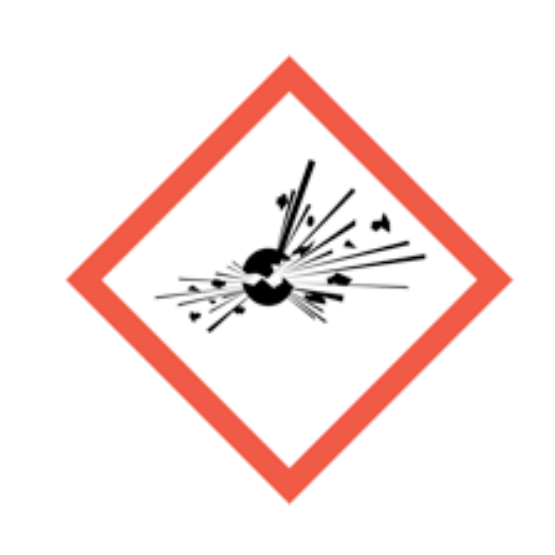
Exploding bomb
Explosive, self-reactive or organic peroxide hazards.
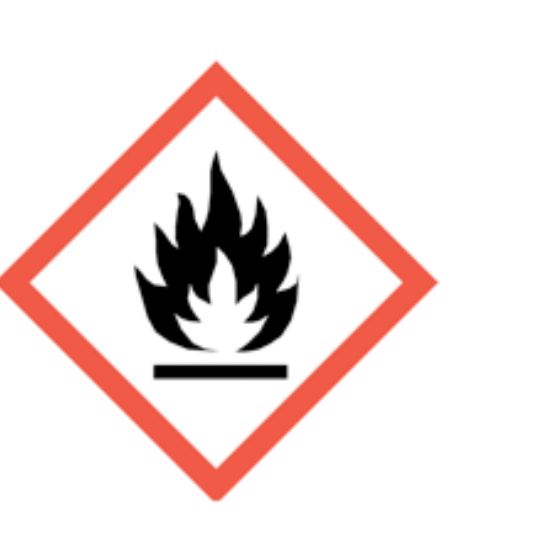
Flame
Flammable, self-heating or pyrophoric substances.
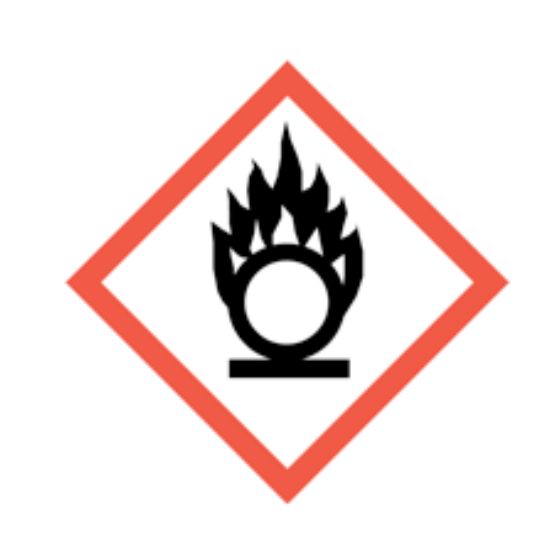
Flame over circle
Oxidising substances that can intensify fire.

Gas cylinder
Gas under pressure.
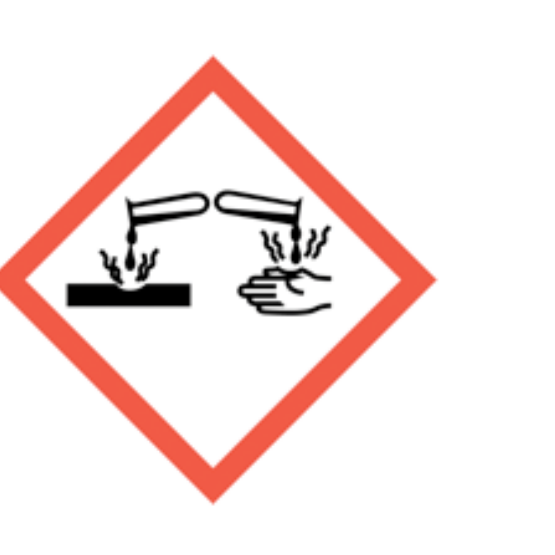
Corrosion
Skin burns, eye damage or corrosive to metals.
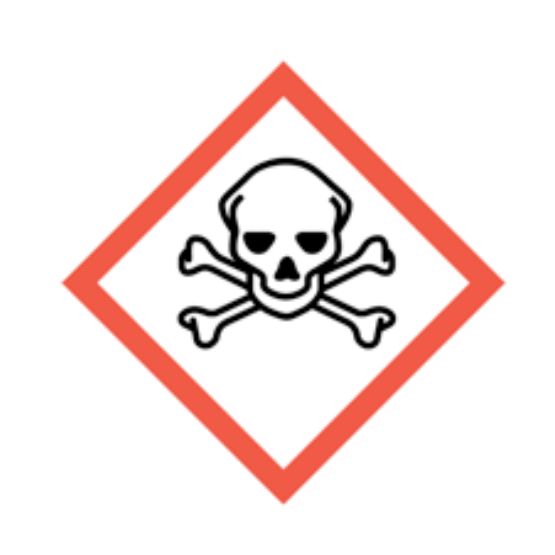
Skull and crossbones
Acute toxicity.
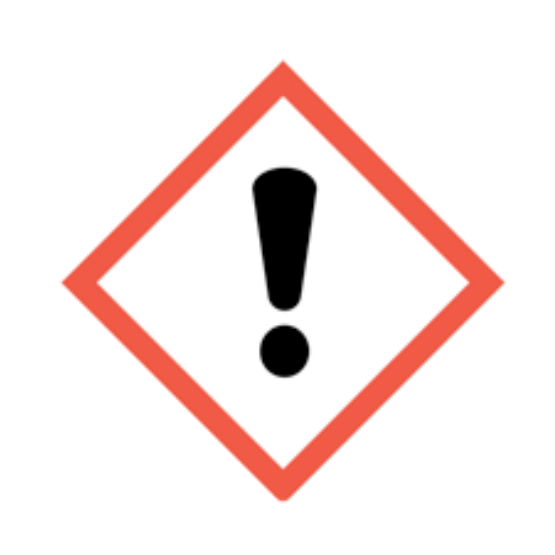
Exclamation mark
Irritation, harmful effects or skin sensitisation; some classifications cover drowsiness, dizziness or ozone-layer hazard. Read the actual hazard statements. Skin sensitisation differs from respiratory sensitisation.
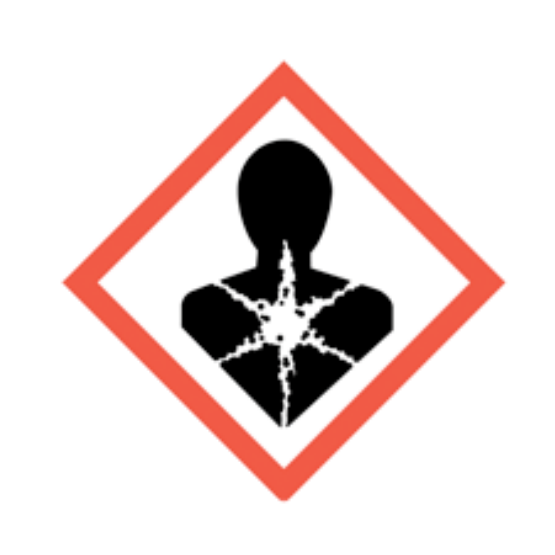
Health hazard
Serious health hazards, including organ damage, aspiration hazard, respiratory sensitisation, cancer and reproductive effects; some can follow a single exposure.
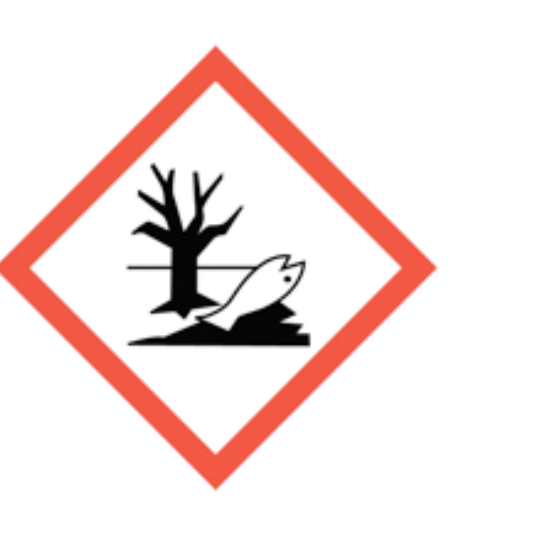
Environment
Hazardous to the aquatic environment.
What do the acronyms and key terms mean?
These terms support the decisions used on this page.
| Acronym or term | Full expansion | Meaning here |
|---|---|---|
| COSHH | Control of Substances Hazardous to Health | Legal framework for workplace hazardous-substance control; GB and NI instruments differ. |
| SDS | Safety data sheet | Product-specific hazard and emergency information; verify the exact material. |
| WEL | Workplace exposure limit | Averaged airborne limit, not a safe target or permission to skip controls. |
| LEV | Local exhaust ventilation | Captures contaminant close to where it is released. |
| RPE | Respiratory protective equipment | Selected for the substance and task; used after stronger controls. |
| TWA | Time-weighted average | Exposure averaged over a specified period, here eight hours. |
| HSE | Health and Safety Executive | GB regulator and publisher of EH40. |
| HSENI | Health and Safety Executive for Northern Ireland | NI regulator that approves EH40 for NI use. |
| ERICPD | Eliminate, Reduce, Isolate, Control, PPE, Discipline | Teaching sequence for selecting and sustaining task controls; related to the five-level hierarchy, not a statute. |
| PPE | Personal protective equipment | Substance-compatible protection for residual exposure, including gloves and eye protection; it supports containment and source control. |
Unlock another resource
You have used this month’s two free downloads. Publish a post in your own words to unlock one more resource, or choose SHARE Individual for 10 downloads per month.
You decide whether to share. If you do, use the relevant platform disclosure tools and do not make claims you do not genuinely hold.