Evacuation Chair, PEEPs and Inclusive Emergency Evacuation Training
Practical, confidence-building training in evacuation chairs, PEEPs and inclusive evacuation. Connect knowledge to your own equipment, people and workplace.
Choose self-paced e-learning where available, or arrange training for your business at your location or online in a live, tutor-led classroom.
Learn at your own pace
E-learning
Self-paced online learning with activities, saved progress and automatically marked knowledge checks. Review the course outline for the learning time and completion requirements.
£25.00per learner, excluding VAT
VAT will be added at checkout.
Secure payment through Stripe at checkout. Allocate a place to each named learner in the basket.
Arrange training for your business at your location or online in a live, tutor-led classroom. Discuss your team, activities, equipment, shifts and any practical assessment needs so we can agree a suitable delivery plan.
Illustrative price for on-site delivery with your business
£350.00per group for a half-day session, excluding VAT
Illustrative price, subject to travel and subsistence costs. Venue, equipment and any other agreed extras are confirmed in your written quotation.
E-learning completion records online awareness or knowledge within the course scope. Task-specific practical instruction, competent supervision and employer authorisation remain separate workplace requirements.
Practical learning · Your equipment · Your workplace
Build confidence in inclusive evacuation
Help the people responsible for evacuation understand their role and practise using the equipment available to them. SHARE combines evacuation-chair learning with Personal Emergency Evacuation Plans (PEEPs) and discussion of your workplace arrangements.
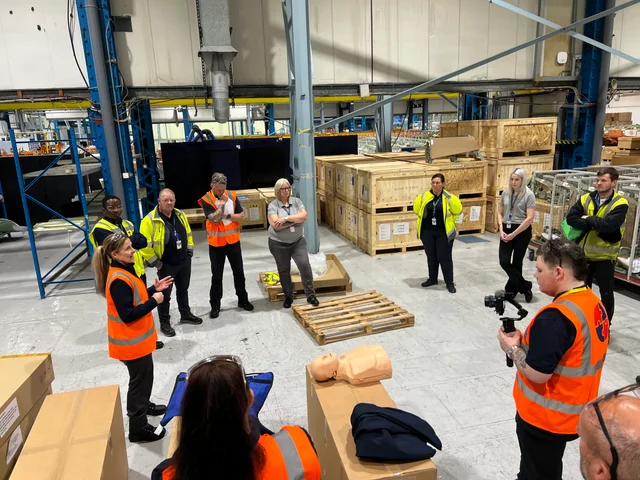
Practical learning with the team's own equipment, in their own workplace.
Who the course is for
Fire wardens, facilities and reception teams, workplace managers, safety leads and staff assigned evacuation-assistance roles. We agree the learner group and any participation needs before delivery.
What teams work through
How evacuation-assistance roles fit the building's emergency arrangements and PEEPs.
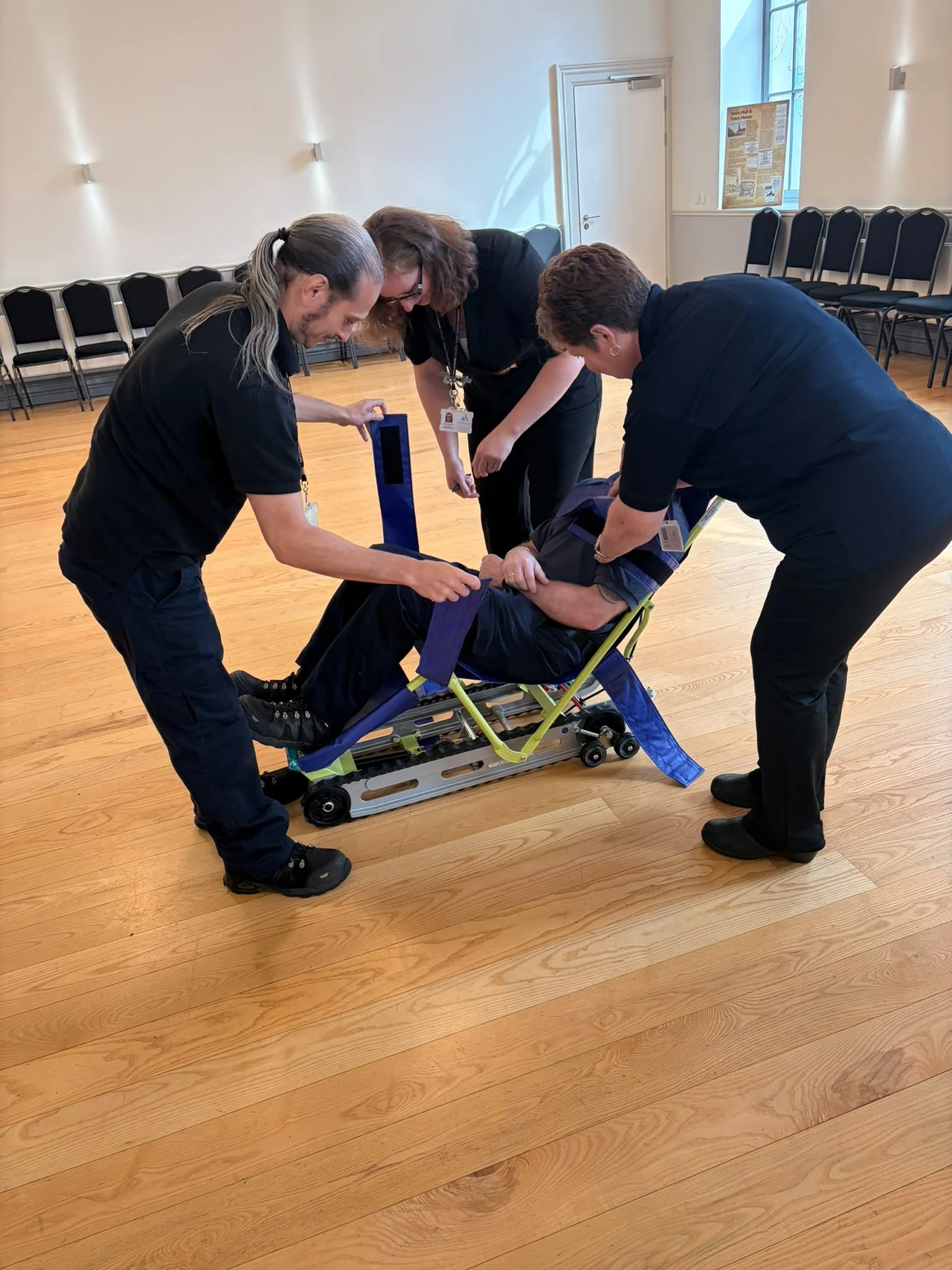
Familiarisation with your evacuation chair, its location, condition and manufacturer's instructions.
Communication, reassurance, dignity and individual assistance needs.
Supervised practical familiarisation, with routes and activities agreed for the site, equipment and participants.
Recognising limitations, reporting defects and knowing when further support or a change to arrangements is needed.
A course built around your location
Before delivery, tell us about your buildings, chair make and model, evacuation arrangements, learner numbers and the gap you want to address. We agree suitable practical activities and any restrictions with you. Practice is controlled training, not a live emergency; using a chair in one setting does not establish suitability for every person or route.
Delivery and learning checks
A half-day course is the starting point. Final timing depends on the group, equipment and locations. Trainer discussion, questions and observed practical activities help identify understanding and further development needs. Completion evidence records the agreed training; it does not replace equipment maintenance, a suitable evacuation plan or individual authorisation.
SHARE in practice
From a fire risk assessment gap to confident town-hall teams
Across multiple local authority town halls in the West of Scotland, SHARE delivered practical learning using each team's exact equipment within their own workplace.
Yes. Share the make, model and condition before booking so we can agree appropriate familiarisation and practical activities around your equipment.
Can you deliver across several buildings?
Yes. We can discuss a coordinated programme across locations, while allowing for differences in equipment, layout and team responsibilities.
Will the course close every evacuation action?
Training can address an identified learning gap. Your responsible team must still verify that the wider arrangements, equipment, plans and any remaining fire risk assessment actions are suitable.
Plan training for your team
Use the enquiry form to tell us your location, equipment, team size and priorities. We will discuss a practical delivery plan.
Training enquiry
Discuss the right delivery route.
Discuss organisation-specific face-to-face training, online tutor-led delivery or e-learning with SHARE.
Study a completed fictional industrial construction and commissioning plan. Compare its warning, roles, accountability, responder access, rescue limits and recovery decisions with the learning above. It includes a new fictional site schematic, a worked exercise and separate blank recording annexes.
Use this as a teaching example when developing arrangements for your own premises. The fictional layout and role identifiers are not live emergency instructions.
A real SHARE delivery story: local authority teams practising with the equipment and locations they would use at work.
Swipe or scroll to browse. Use the arrow keys when the cards are focused.
Inclusive evacuation · Local authority training
Building evacuation confidence across town-hall teams
Local authority town halls, West of Scotland
Setting
Multiple town halls
Approach
Own equipment, own workplace
Local authority teams needed practical support to address an identified fire risk assessment training gap across multiple West of Scotland town halls.
Work deliveredEvacuation-chair and inclusive evacuation learning combined discussion with practical training using the teams' exact equipment in their own locations of work.
Why it matteredThe programme helped close an identified fire risk assessment training gap, increased knowledge and built team confidence through practice with their own evacuation chairs in their actual workplaces.
Workplace teams, wardens and emergency coordinators
Format
Site-based scenarios
Follow-up
Debrief & action report
Use realistic scenarios to practise emergency arrangements around the people, layout and operational risks of your site.
What it coversAgreed exercise planning, controlled simulation, an immediate debrief and specific improvement actions for the team.
How this can helpPractising in the real location can build confidence in people, equipment and communication. The debrief turns observations into specific improvement areas before an actual emergency.