
Aerospace manufacturing safety / Aerospace human factors, health and shift control
Aerospace manufacturing safety · SH-AERO-02Aerospace human factors, health and shift control
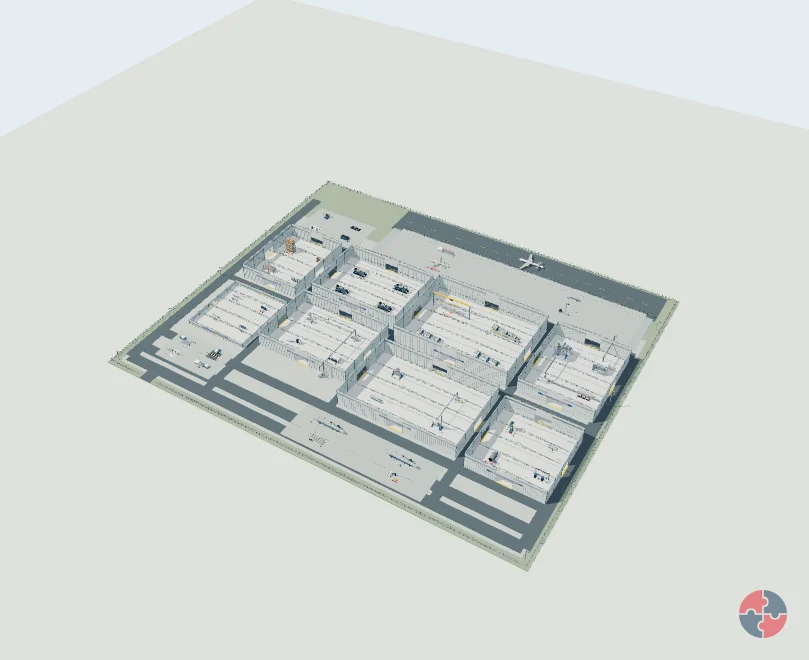
Free online training · Approximate learning time: 120–190 minutes · Self-paced
Make demanding production achievable without losing health or decision quality.
Full public teaching and readers are free without an account. A free learner account is required for saved LMS progress and recorded assessment. Completion and any course-completion certificate depend on the configured LMS conditions.
Who this course is for
Production planners, assembly teams, supervisors, welfare coordinators and managers.
Use a late-shift production case to connect fatigue, DSE, clean welfare, physical exposure and emergency coverage. Keep observations, personal health support and product-release authority distinct.
Awareness in an original fictional aerospace manufacturing and airport-interface site. GB occupational guidance has separate NI routes; environmental duties depend on the UK nation and permit. This course does not confer engineering, aircraft maintenance, product-release, lifting, rescue, driving or airside authorisation.
Learning outcomes
- Recognise workload and recovery problems as work-system issues.
- Review a shared workstation and clean-area transition.
- Challenge unsupported claims about rotation, exposure and overhead work.
- Coordinate emergency capability and separate release evidence.
Course outline
Understand work demands
- See production pressure as a control problemConnect workload, resources and decision quality instead of treating fatigue as an individual attitude.
- Fit a shared workstation to its current userReview the screen task, environment and adjustments together when a desk is shared or the work changes.
Fit work to the person
- Protect clean breaks and report skin concerns earlyPrevent contamination travelling from production into welfare while maintaining usable washing and skin-health arrangements.
- Assess the whole pattern of physical exposureCombine task durations and demands across the shift while selecting controls at source.
Control exposure through the shift
- Make overhead work achievable before the task beginsImprove access, support and work design rather than relying on the assembler holding an awkward posture.
- Test emergency coverage against the people actually presentConnect the alarm, usable escape and visitor information with the real shift’s response capability.
- DSE and window glarePause and review work that causes persistent discomfort or unusable screen glare.
- Production pressure and fatiguePause safety-critical work when fatigue or pressure prevents reliable performance.
- Welfare, skin care and clean breaksKeep contaminated clothing and materials out of food and clean welfare areas.
Check late-shift capability
- Alarm, evacuation and visitor accountabilityRaise the alarm and follow the plan; never re-enter to resolve an uncertain headcount.
- Noise and hand-arm vibrationPause and review unexpected exposure, defective tools or reported symptoms.
- Drilling, fastening and ergonomic reachPause a task that requires uncontrolled force, extreme reach or work through pain.
Preserve the release decision
- Re-plan the late shift before the final sign-offKeep worker health, emergency coverage and separate release decisions visible under deadline pressure.
- Take a verified action into the workplaceConnect one actual task to an owner, evidence and a clear release or escalation decision.
Activities, model practice and assessment
Work through 5 required applied activities and 3 model-practice pauses, with explanatory feedback and independent lesson decisions. Complete 6 distinct model mission sequences across those pauses. Use the actual fictional aerospace manufacturing model or its equivalent accessible route to complete the required decision sequences; launching the model alone does not complete practice.
The 20-question assessment requires at least 80% plus every designated critical safety answer. Complete the required activities, practice and lesson checks. Points and badges cannot offset a critical safety error.
Use the LMS for confirmed save/resume and recorded results. Any certificate follows its configured passed-completion and grade conditions.
Open the public interactive practice copy; public practice is separate from the LMS record.
Sources and learning provenance
Original fictional cases are paired with public SHAREhub teaching and structured topic records. Use the applicable jurisdiction and primary guidance for live work.
- HSE: fatigue
- HSE: working safely with display screens
- HSE: preventing work-related skin disease
- HSE: noise advice for employers
- HSE: hand-arm vibration
- HSE: manual handling at work
Topic sections, source identities and versions
| Public topic | Chunk and version | Jurisdiction and sources |
|---|---|---|
| fatigue-management · system | fatigue-management--system 20261016-letter-review-1 | Great Britain guidance hse-fatigue, hse-hsg256 |
| stress · management-standards-operational-examples | stress--management-standards-operational-examples | Great Britain stress--hsems |
| dse · assessment | dse--assessment 20261016-letter-review-1 | Great Britain, Northern Ireland dse-src-002 |
| dse · workstation | dse--workstation 20261016-letter-review-1 | Great Britain, Northern Ireland dse-src-003 |
| skin-health · control-hierarchy | skin-health--control-hierarchy | Great Britain skin-health--hierarchy, an-sk-s6, share-hierarchy-iosh |
| health-welfare-and-work-environment · facilities | health-welfare-and-work-environment--facilities | Great Britain, Northern Ireland source-hse-welfare, source-ni-workplace, h-source-b7a3e9fabde1, h-source-234d4ec5d8da |
| vibration-at-work · assessment | vibration-at-work--assessment 20261019-V-review-1 | Great Britain, Northern Ireland source-hav_assess, source-hav_monitor, an-hv3, source-l141 |
| noise-at-work · assessment | noise-at-work--assessment 2.4 | Great Britain, Northern Ireland source-hse_noise_risk_assessment, source-hse_noise_employer_duties |
| musculoskeletal-issues-ergonomics-and-manual-handling · tools | musculoskeletal-issues-ergonomics-and-manual-handling--tools 2.0 | Great Britain, Northern Ireland hse-toolkit, hseni-manual, hse-mac, hse-rapp, hse-art, hse-dse, gb-dse, ni-dse |
| working-at-height · planning | working-at-height--planning 4.0 | Great Britain, Northern Ireland source-gb_law, source-ni_law, source-hse_assess, source-indg401, source-l153, source-hse_ladder, source-hse_mewp, source-hse_scaffold |
| emergency-response · roles | emergency-response--roles 2.2 | Great Britain, Northern Ireland hse-emergency, gb-mhswr, ni-mhswr, hse-event-emergency |
| fire-evacuation · people-needing-support | fire-evacuation--people-needing-support 20261016-letter-review-1 | England gov-fire-safety-risk-assessment-means-of-escape-for-disabled-people-fire-safety-risk-asses |
| stress · technical-model | stress--technical-model | Great Britain stress--hsems, stress--hserisk |
| fire-evacuation · technical-model | fire-evacuation--technical-model 20261016-letter-review-1 | England, Scotland, Great Britain gov-fire-safety-risk-assessment-offices-and-shops-fire-safety-risk-assessment-offices-and-, gov-publications-practical-fire-safety-guidance-existing-non-residential-premises-2, hse-workplace-health-emergency-procedures-htm, gov-fire-safety-risk-assessment-means-of-escape-for-disabled-people-fire-safety-risk-asses |
| noise-at-work · technical-basics | noise-at-work--technical-basics 2.4 | Great Britain, Northern Ireland source-hse_noise_worker_advice, gov-n-nidirect-hearing, source-hse_noise_overview, source-hse_noise_employer_duties |
| musculoskeletal-issues-ergonomics-and-manual-handling · assessment | musculoskeletal-issues-ergonomics-and-manual-handling--assessment 2.0 | Great Britain, Northern Ireland gb-mhor, ni-mhor, hseni-manual, hse-toolkit |
| fatigue-management · safety-critical | fatigue-management--safety-critical 20261016-letter-review-1 | Great Britain guidance hse-fatigue, hse-hsg48 |
| emergency-response · plan | emergency-response--plan 2.2 | Great Britain, Northern Ireland hse-emergency, gb-mhswr, ni-mhswr, hse-event-emergency |
| skin-health · assurance | skin-health--assurance | Great Britain skin-health--hsg262 |
Course SH-AERO-02 · version 2026.10.20.2. .
Questions about this course
Is this training free?
Full public teaching and readers are free without an account. A free learner account is required for saved LMS progress and recorded assessment. Completion and any course-completion certificate depend on the configured LMS conditions.
How long should I allow?
Approximately 120–190 minutes, including teaching, lesson checks, required activities, model or accessible practice and one assessment attempt. Individual pace, review and retries vary. Save and resume in the LMS.
Can I learn without a 3D-capable browser?
Yes. The complete HTML reader provides the teaching. Required model practice has an equivalent accessible decision route in the interactive course. Use the LMS route for recorded learning.
What is required to pass?
Complete the required learning, activities, practice and lesson decisions. The 20-question final assessment requires at least 80% plus every designated critical safety answer. Points cannot compensate for a critical safety error. Follow the feedback before retrying.
Does this authorise aerospace operations?
Awareness in an original fictional aerospace manufacturing and airport-interface site. GB occupational guidance has separate NI routes; environmental duties depend on the UK nation and permit. This course does not confer engineering, aircraft maintenance, product-release, lifting, rescue, driving or airside authorisation. This independent course does not award an external qualification or replace competent task assessment, practical training or site authorisation.
Which manual handling assessments will you learn to use?
TILEO helps you review the wider task; MAC supports appropriate lifting, carrying and team handling of inanimate loads; RAPP supports appropriate pushing and pulling.
These aids support the activity assessment. Repetitive upper-limb work may need ART; variable or complex tasks may need other HSE tools or a fuller competent assessment. Mechanical lifting, stored energy, equipment safety and health decisions retain their separate controls. A low factor score, a downloaded report or completion of this course does not approve the work.
This additional teaching takes about 2–5 minutes, in addition to the course estimate. Optional reading and workplace assessment take additional time.
Learn how to select the method, use separate reports for mixed tasks, add a company logo and keep editable Word or PDF records. After a saved pass, the course offers a direct route to the assessment tools. Workplace assessment and practical competence remain separate from course completion.