
Hotel, pool and leisure safety / Hotel kitchen safety and food hygiene
Hotel, pool and leisure safety · SH-HOTEL-03Hotel kitchen safety and food hygiene
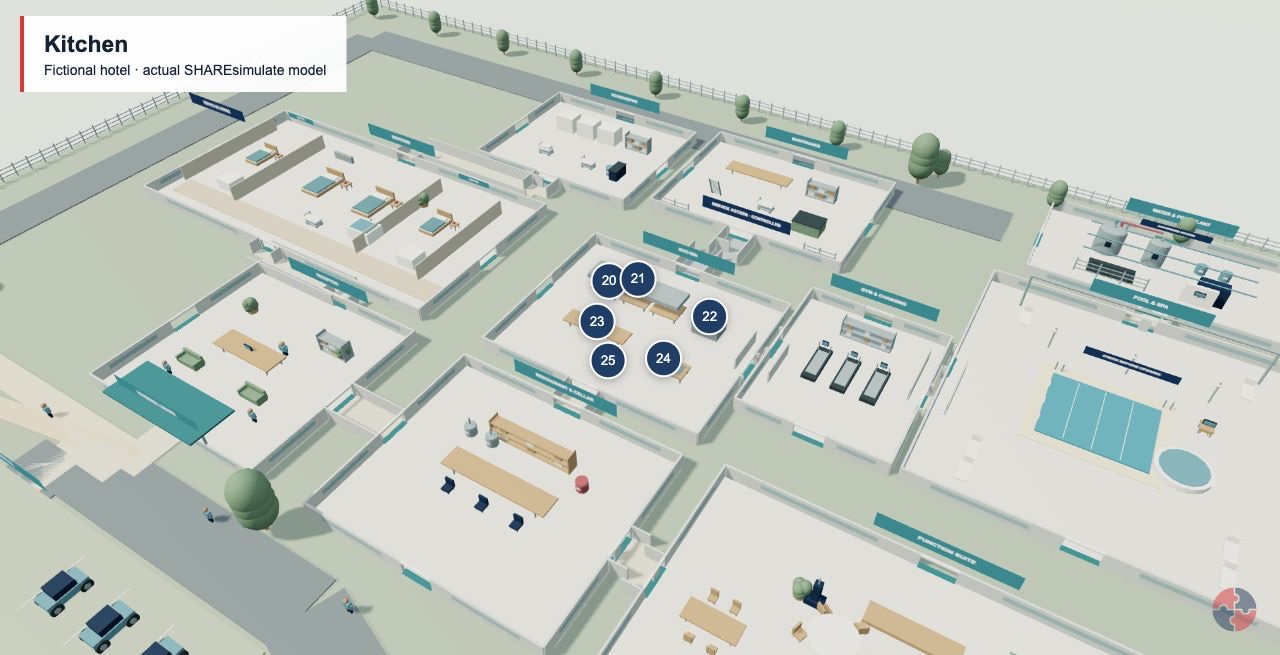
Free online training · Approximate learning time: 120–190 minutes · Self-paced
Connect safe equipment, controlled cleaning and food handling during the pressure of service.
Full public teaching and readers are free without an account. A free learner account is required for saved LMS progress and recorded assessment. Completion and any course-completion certificate depend on the configured LMS conditions.
Who this course is for
Kitchen porters, cooks, chefs, receiving staff and catering supervisors
Connect safe equipment, controlled cleaning and food handling during the pressure of service. Follow the task, explain harm, compare controls and justify what may be released.
Independent hotel, pool and leisure awareness using the fictional Riverside model. GB workplace guidance; apply corresponding NI and nation-specific arrangements. England-specific fire guidance is labelled. Learning does not establish practical competence, clinical advice, specialist work or operational authority.
Learning outcomes
- Recognise unsafe oil handling, gas/ventilation protection and machinery intervention.
- Prevent contamination and challenge unreliable chilled-delivery evidence.
- Protect wash-up routes and verify safe restoration before service resumes.
Course outline
Understand the hotel work
- Two safety systems share one kitchenRecognise unsafe oil handling, gas/ventilation protection and machinery intervention.
- A record must describe the actual batch and taskPrevent contamination and challenge unreliable chilled-delivery evidence.
Establish evidence and responsibility
- Follow both worker safety and food protectionMap injury and contamination routes through the same kitchen task.
- Design heat and hot-oil work as a processExplain why the condition, equipment, route and authorised method must be checked together.
Choose controls and practise
- Separate normal use from equipment interventionIdentify when cleaning, clearing or repair requires a different controlled system.
- Make food-safety information usable during serviceMaintain reliable ingredient, cleaning and product-status information across handovers.
- Hot oil is moved during unsafe conditionsAvoid unnecessary movement and use the equipment's designed draining or transfer method. Where oil handling is necessary, the assessed procedure must address cooling, suitable containers, route, load and competent staff. No universal cooling time can be inferred from this model; verify the actual process and manufacturer instructions.
- Kitchen gas ventilation interlock is defeatedA failed interlock is a reason to stop the affected operation and obtain competent gas and ventilation attention. Prevent bypass and unauthorised restart. Coordinate repair and hand-back so both ventilation performance and appliance safety are established before service resumes.
- Machine cleaning exposes moving partsUse the machine-specific safe cleaning method. Identify all energy sources, stop and isolate them, secure against restart and deal with stored energy. Only competent authorised personnel should perform tasks requiring access to dangerous parts. Verify isolation using a safe method before exposure.
Verify the connected service
- Raw food contaminates ready-to-eat preparationFollow the food-business safety system for separation, cleaning, hand hygiene and storage. Plan the movement of raw deliveries and waste so it does not cross ready-to-eat preparation. Use validated food-specific methods and check the applicable UK-nation guidance; this diagram does not set a universal cooking or disinfection limit.
- Chilled delivery is accepted without reliable evidenceUse the receiving checks and limits in the business's validated food-safety system. Hold suspect stock separately pending a competent decision, record the deviation and protect the cold chain. Avoid importing one generic numerical limit to every food and every UK nation; check the actual applicable requirement and product guidance.
- Wet wash-up floor remains a through routeReduce leakage and splash at source, separate the wash-up task from through traffic and use suitable drainage and cleaning. Plan an alternative route while the floor is being restored. Footwear may support the system, but it does not excuse a persistently contaminated walkway.
Apply, hand over and assess
- A busy hotel shift: justify each releaseProtect wash-up routes and verify safe restoration before service resumes.
- Take a verified action into the workplaceConnect one actual task to an owner, evidence and a clear release or escalation decision.
Activities, model practice and assessment
Work through 5 required applied activities and 3 model-practice pauses, with explanatory feedback and independent lesson decisions. Complete 6 distinct model mission sequences across those pauses. Use the actual fictional Riverside hotel, pool and leisure model or its equivalent accessible route to complete the required decision sequences; launching the model alone does not complete practice.
The 20-question assessment requires at least 80% plus every designated critical safety answer. Complete the required activities, practice and lesson checks. Points and badges cannot offset a critical safety error.
Use the LMS for confirmed save/resume and recorded results. Any certificate follows its configured passed-completion and grade conditions.
Open the public interactive practice copy; public practice is separate from the LMS record.
Sources and learning provenance
Original fictional cases are paired with public SHAREhub teaching and structured topic records. Use the applicable jurisdiction and primary guidance for live work.
- HSE · safe emptying and cleaning of fryers
- HSE · gas safety in catering and hospitality (CAIS23)
- HSE · maintenance of work equipment
- HSE · work on electrical equipment
- Food Standards Agency · managing food safety (check nation-specific guidance)
- Food Standards Agency · avoiding cross-contamination
- Food Standards Agency · food safety for deliveries
- HSE · causes and prevention of slips
Topic sections, source identities and versions
| Public topic | Chunk and version | Jurisdiction and sources |
|---|---|---|
| food-safety · controls | food-safety--controls 20261016-letter-review-1 | England, Wales, Northern Ireland, Scotland food-business-guidance-hazard-analysis-and-critical-control-point-haccp, food-business-guidance-allergen-guidance-for-food-businesses, foodstandards-running-a-food-business-food-hygiene |
| food-safety · temperature | food-safety--temperature 20261016-letter-review-1 | England, Wales, Scotland, Northern Ireland govuk-food-hygiene-businesses-chilling-and-freezing, foodstandards-downloads-guidance-on-temperature-control-legislation-pdf |
| thermal-environments-heat-stress-and-cold-stress · controls-hierarchy | thermal-environments-heat-stress-and-cold-stress--controls-hierarchy 2.4 | GB, NI source-hse_heat, an-th11, an-th7, source-hseni_temperature |
| guards-and-machinery-interlocks · intervention | guards-and-machinery-interlocks--intervention 2.4 | Great Britain, Northern Ireland src-guards-hse-maint, src-guards-hse-quarry, src-guards-l22, src-guards-hse-interlock |
| slips-and-trips · control-hierarchy | slips-and-trips--control-hierarchy | Great Britain slips-and-trips--hierarchy, slips-and-trips--hsemodel, slips-and-trips--retail, share-hierarchy-hse, share-hierarchy-iosh |
Course SH-HOTEL-03 · version 2026.10.20.hotel.2. .
Questions about this course
Is this training free?
Full public teaching and readers are free without an account. A free learner account is required for saved LMS progress and recorded assessment. Completion and any course-completion certificate depend on the configured LMS conditions.
How long should I allow?
Approximately 120–190 minutes, including teaching, lesson checks, required activities, model or accessible practice and one assessment attempt. Individual pace, review and retries vary. Save and resume in the LMS.
Can I learn without a 3D-capable browser?
Yes. The complete HTML reader provides the teaching. Required model practice has an equivalent accessible decision route in the interactive course. Use the LMS route for recorded learning.
What is required to pass?
Complete the required learning, activities, practice and lesson decisions. The 20-question final assessment requires at least 80% plus every designated critical safety answer. Points cannot compensate for a critical safety error. Follow the feedback before retrying.
Does this authorise hotel or leisure work?
Independent hotel, pool and leisure awareness using the fictional Riverside model. GB workplace guidance; apply corresponding NI and nation-specific arrangements. England-specific fire guidance is labelled. Learning does not establish practical competence, clinical advice, specialist work or operational authority. This independent course does not award an external qualification or replace competent task assessment, practical training or site authorisation.