
Preventing slips and trips
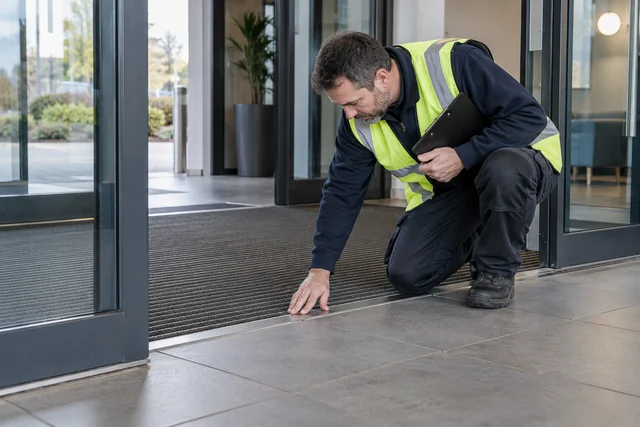

Control the route, contamination and work pattern before relying on warnings or careful walking.
Free training · Approx. 25–30 minutes
Public teaching and practice are free. Recorded learning requires an account and eligible membership or assigned access. Free members choose from 15 included short courses and may complete one per UK calendar month. A certificate of completion depends on completing the required learning, scoring at least 80% and answering every critical safety question correctly.
Your practical case
Fictional case: a busy entrance becomes wet at peak arrivals. Cleaning leaves a cone, deliveries narrow the alternative route and a lifting mat edge is repeatedly flattened instead of repaired. Examine why reporting alone has not controlled access.
All workers, facilities teams and supervisors
Focused awareness learning based on SHAREhub pages. Apply the actual workplace arrangements and your role; completion is not practical competence or permission for specialist work.
What you will learn
- Distinguish slip and trip mechanisms.
- Choose source, route and cleaning controls before warnings alone.
- Check hand-back and recurring defects against actual users.
Course outline
Understand the risk
- Explain the event without blaming the personIdentify the different mechanisms behind slips and trips.
- Look for contamination at sourceRecognise why repeated cleaning needs a wider correction.
Choose effective controls
- Remove obstructions and repair defectsConnect safe routes with storage, leads, lighting and maintenance.
- Plan cleaning and access togetherDistinguish a warning from physical prevention of access.
Check and act
- Match floor and footwear to the taskRecognise the limits of a generic non-slip claim.
- Verify correction and prevent recurrenceDistinguish a controlled route from an administratively closed action.
Practise and test your reasoning
6 lesson decisions and 3 required activities use evidence sorting, matching, sequencing, branching choices and applied checks. Dragging has equivalent labelled controls. The 10-question final assessment requires 80% and every critical answer, after all learning requirements are complete.
An optional workplace exercise links the learning to a relevant SHAREhub tool, with instructions included for offline use. Points and module badges help show progress; they do not replace the assessment requirements.
Approx. 25–30 minutes includes core teaching, visuals, activities, checks and assessment. Optional source reading and workplace extensions take extra time. Your pace and retries may vary.
Sources and scope
SHAREhub short awareness · Everyday safety. Teaching is drawn from the linked SHAREhub pages.
Knowledge Hub topic coverage
Presentation and interactive workshop
Explore this topic through a 28-slide presentation using the course imagery and source teaching. Compare three explained decisions, practise three varied activities and apply the learning in a relevant model case or workplace discussion.
Open the interactive presentation workshop · Download PowerPoint
This optional extension takes additional learning time. The existing required learning, assessment, saved record and certificate conditions remain separate.
Included in Free membership
Choose from 15 short courses and complete one included course free per UK calendar month. Keep your earned certificate and save/resume your learning.
Choose this month’s free course →Extra visual practice
Open source-based diagrams and explanations, match or sort evidence, and explore branching decisions throughout the six lessons. Optional practice adds approximately 12–20 minutes if you use it all; your required course and assessment remain the same.
Try the enhanced first lesson