
Hotel, pool and leisure safety / Guest arrivals, reception and safe handovers
Hotel, pool and leisure safety · SH-HOTEL-01Guest arrivals, reception and safe handovers
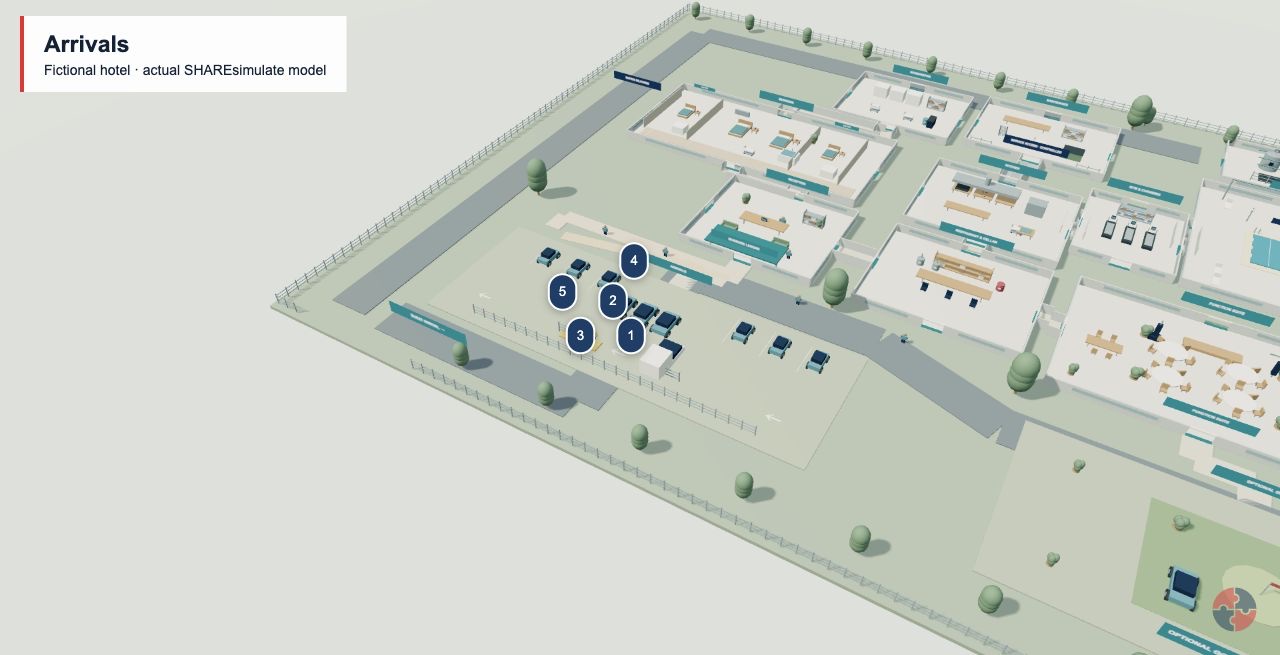
Free online training · Approximate learning time: 150–230 minutes · Self-paced
Keep a busy welcome safe: separate journeys, test assistance and carry restrictions across shifts.
Full public teaching and readers are free without an account. A free learner account is required for saved LMS progress and recorded assessment. Completion and any course-completion certificate depend on the configured LMS conditions.
Who this course is for
Reception teams, porters, duty managers and delivery coordinators
Keep a busy welcome safe: separate journeys, test assistance and carry restrictions across shifts. Follow the task, explain harm, compare controls and justify what may be released.
Independent hotel, pool and leisure awareness using the fictional Riverside model. GB workplace guidance; apply corresponding NI and nation-specific arrangements. England-specific fire guidance is labelled. Learning does not establish practical competence, clinical advice, specialist work or operational authority.
Learning outcomes
- Trace a protected, accessible guest journey through arrivals and reception.
- Resolve vehicle conflicts, wet entrances and gaps in lone-worker support.
- Give a handover that preserves restrictions until named verification is complete.
Course outline
Understand the hotel work
- Think in complete guest journeysTrace a protected, accessible guest journey through arrivals and reception.
- Use information as a working controlResolve vehicle conflicts, wet entrances and gaps in lone-worker support.
Establish evidence and responsibility
- Design the arrival around real guest journeysConnect accessible guest routes, vehicle movements and a controlled crossing.
- Make a handover preserve the restrictionSeparate a logged concern from an acknowledged operating restriction.
Choose controls and practise
- Handle pressure without losing the safety decisionChoose a safe escalation when a guest, driver or colleague presses for an exception.
- Verify the control where the service happensUse an observation and an appropriate record to test the arrival system.
- Guest route crosses delivery reversingTrace the complete journey from a parked car to reception. A barrier is useful only when openings, temporary diversions and delivery movements preserve its protection. Reception must be able to hold a delivery without asking guests to negotiate the manoeuvring space.
- Crossing sightline blockedTemporary wedding signs, parked coaches and seasonal displays can change visibility after a satisfactory inspection. Keep the sight triangle under control as part of event setup and deliveries, with an alternative crossing or held traffic while an obstruction is removed.
- Accessible route forces roadway useWalk the full route with users' needs in mind: gradients, transitions, doors, surfaces, lighting and temporary barriers all matter. An improvised ramp must be suitable and secure; it must not send people across an active delivery route or obstruct an exit.
- Taxi and coach doors open into trafficAssess the actual coach door, luggage lockers, vehicle sweep and accessible unloading. A protected set-down area should lead directly to the guest path. Schedule or hold other traffic where necessary rather than relying on guests to understand a service-yard arrangement.
Verify the connected service
- Dark or icy external routeWinter arrangements should follow actual forecast and surface conditions, with ownership between shifts. Inspect the route used by people rather than recording that grit was spread somewhere on site. If a safe route cannot be maintained, restrict the affected section and provide a lit accessible alternative.
- Rainwater at the lobby entranceThe control system combines entrance design, effective matting, prompt removal of water and a safe cleaning method. Work on one controlled section at a time, keeping people away until the surface is suitable. Review repeated water spread with facilities staff rather than indefinitely adding warning cones.
- Reception worker cannot summon helpAsk who receives the call, how they acknowledge it and what happens if that person is occupied. Plan lone periods, safe withdrawal and escalation to emergency services. A worker should not have to remain in danger to protect cash or resolve a guest complaint.
- Shift handover loses a critical restrictionMake the restriction specific: affected rooms, reason, interim arrangements, owner and authority for release. Record acceptance by the receiving shift and maintain the booking block. Missing evidence requires investigation; it is not automatic proof that every physical control has failed.
Apply, hand over and assess
- A busy hotel shift: justify each releaseGive a handover that preserves restrictions until named verification is complete.
- Take a verified action into the workplaceConnect one actual task to an owner, evidence and a clear release or escalation decision.
Activities, model practice and assessment
Work through 5 required applied activities and 3 model-practice pauses, with explanatory feedback and independent lesson decisions. Complete 8 distinct model mission sequences across those pauses. Use the actual fictional Riverside hotel, pool and leisure model or its equivalent accessible route to complete the required decision sequences; launching the model alone does not complete practice.
The 20-question assessment requires at least 80% plus every designated critical safety answer. Complete the required activities, practice and lesson checks. Points and badges cannot offset a critical safety error.
Use the LMS for confirmed save/resume and recorded results. Any certificate follows its configured passed-completion and grade conditions.
Open the public interactive practice copy; public practice is separate from the LMS record.
Sources and learning provenance
Original fictional cases are paired with public SHAREhub teaching and structured topic records. Use the applicable jurisdiction and primary guidance for live work.
- HSE · separating pedestrians and vehicles
- HSE · causes and prevention of slips
- HSE · first aid at work
- HSE · violence and aggression at work
- HSE · hot and cold water systems
- HSE · using contractors
Topic sections, source identities and versions
| Public topic | Chunk and version | Jurisdiction and sources |
|---|---|---|
| workplace-transport-and-work-related-driving · technical-model | workplace-transport-and-work-related-driving--technical-model 4.1 | Great Britain, Northern Ireland source-hse_safeplace, source-hse_transport, source-hse_reversing, source-hse_loading |
| safe-shift-handover · handover-quality-check | safe-shift-handover--handover-quality-check 2.2 | Great Britain, Northern Ireland safe-shift-handover--handover, safe-shift-handover--permits, safe-shift-handover--ni-maintenance |
| violence-at-work · withdraw-emergency | violence-at-work--withdraw-emergency 20261019-V-review-1 | Great Britain, Northern Ireland source-gov_police, source-ni_crime, source-hse_controls, source-hsg229 |
| slips-and-trips · control-hierarchy | slips-and-trips--control-hierarchy | Great Britain slips-and-trips--hierarchy, slips-and-trips--hsemodel, slips-and-trips--retail, share-hierarchy-hse, share-hierarchy-iosh |
Course SH-HOTEL-01 · version 2026.10.20.hotel.2. .
Questions about this course
Is this training free?
Full public teaching and readers are free without an account. A free learner account is required for saved LMS progress and recorded assessment. Completion and any course-completion certificate depend on the configured LMS conditions.
How long should I allow?
Approximately 150–230 minutes, including teaching, lesson checks, required activities, model or accessible practice and one assessment attempt. Individual pace, review and retries vary. Save and resume in the LMS.
Can I learn without a 3D-capable browser?
Yes. The complete HTML reader provides the teaching. Required model practice has an equivalent accessible decision route in the interactive course. Use the LMS route for recorded learning.
What is required to pass?
Complete the required learning, activities, practice and lesson decisions. The 20-question final assessment requires at least 80% plus every designated critical safety answer. Points cannot compensate for a critical safety error. Follow the feedback before retrying.
Does this authorise hotel or leisure work?
Independent hotel, pool and leisure awareness using the fictional Riverside model. GB workplace guidance; apply corresponding NI and nation-specific arrangements. England-specific fire guidance is labelled. Learning does not establish practical competence, clinical advice, specialist work or operational authority. This independent course does not award an external qualification or replace competent task assessment, practical training or site authorisation.