
Silica and construction dust awareness
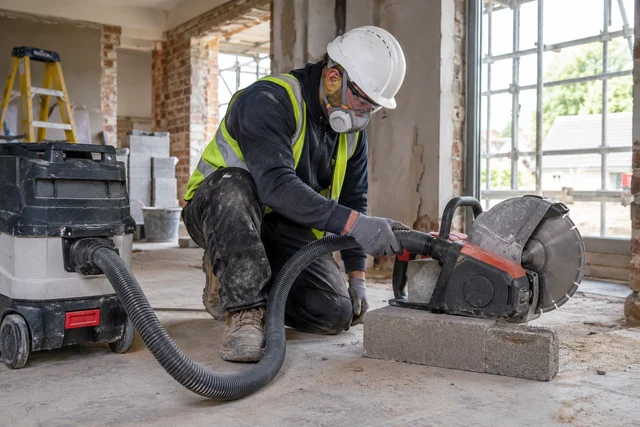

Identify the material, avoid dusty work and keep source controls effective through cleanup.
Free training · Approx. 25–30 minutes
Public teaching and practice are free. Recorded learning requires an account and eligible membership or assigned access. Free members choose from 15 included short courses and may complete one per UK calendar month. A certificate of completion depends on completing the required learning, scoring at least 80% and answering every critical safety question correctly.
Your practical case
Fictional case: a refurbishment crew cuts concrete channels indoors beside another trade. Its vacuum does not fit the tool, water supply fails and dry sweeping is planned so the room can reopen quickly. Examine the whole dust workflow.
Construction workers, trades and supervisors
Focused awareness learning based on SHAREhub pages. Apply the actual workplace arrangements and your role; completion is not practical competence or permission for specialist work.
What you will learn
- Connect material and task with the inhalation hazard.
- Prefer avoidance and effective source control before reliance on RPE.
- Recognise failed controls, secondary exposure and evidence needed for hand-back.
Course outline
Understand the risk
- Know what the task releasesDistinguish silica from other construction dust and legacy hazards.
- Understand the silica harm routeConnect energetic work on silica-containing material to deep-lung exposure.
Choose effective controls
- Avoid or reduce generation firstChoose task design before a mask-only solution.
- Check capture, suppression and wearer fitRecognise incompatible or failed controls as hold points.
Check and act
- Prevent secondary exposure at cleanupInclude spread, waste and hand-back in the original method.
- Verify exposure control and respond to concernsSeparate equipment checks, monitoring and health support.
Practise and test your reasoning
6 lesson decisions and 3 required activities use evidence sorting, matching, sequencing, branching choices and applied checks. Dragging has equivalent labelled controls. The 10-question final assessment requires 80% and every critical answer, after all learning requirements are complete.
An optional workplace exercise links the learning to a relevant SHAREhub tool, with instructions included for offline use. Points and module badges help show progress; they do not replace the assessment requirements.
Approx. 25–30 minutes includes core teaching, visuals, activities, checks and assessment. Optional source reading and workplace extensions take extra time. Your pace and retries may vary.
Sources and scope
SHAREhub short awareness · Occupational health. Teaching is drawn from the linked SHAREhub pages.
Knowledge Hub topic coverage
Presentation and interactive workshop
Explore this topic through a 28-slide presentation using the course imagery and source teaching. Compare three explained decisions, practise three varied activities and apply the learning in a relevant model case or workplace discussion.
Open the interactive presentation workshop · Download PowerPoint
This optional extension takes additional learning time. The existing required learning, assessment, saved record and certificate conditions remain separate.
Visual practice and worked examples
Explore three additional fictional workplace exercises with matching, evidence selection and a decision pathway. Choose the illustrated or written explanation; keyboard and touch choices are available.
- Follow both the primary and later dust pathways
- Do not trade one uncontrolled hazard for another
- Hand back the room after cleanup and verification
Allow approximately 8–15 extra minutes for these optional activities. The core course estimate above remains separate. Learning progress, assessment pass marks and certificate requirements are unchanged.