Select the system, check the evidence and recognise when work must stop.
Approx. 90–115 minutes; optional reflection adds 15–25 minutes. Estimated self-paced study, including activities and the private final assessment. Breaks and separate practical training are additional.
Awareness for scaffold and tower users and supervisors. Assembly, alteration, dismantling, moving and competent inspection require task-specific competence and authorisation. This course does not award PASMA or CISRS certification or establish practical competence.
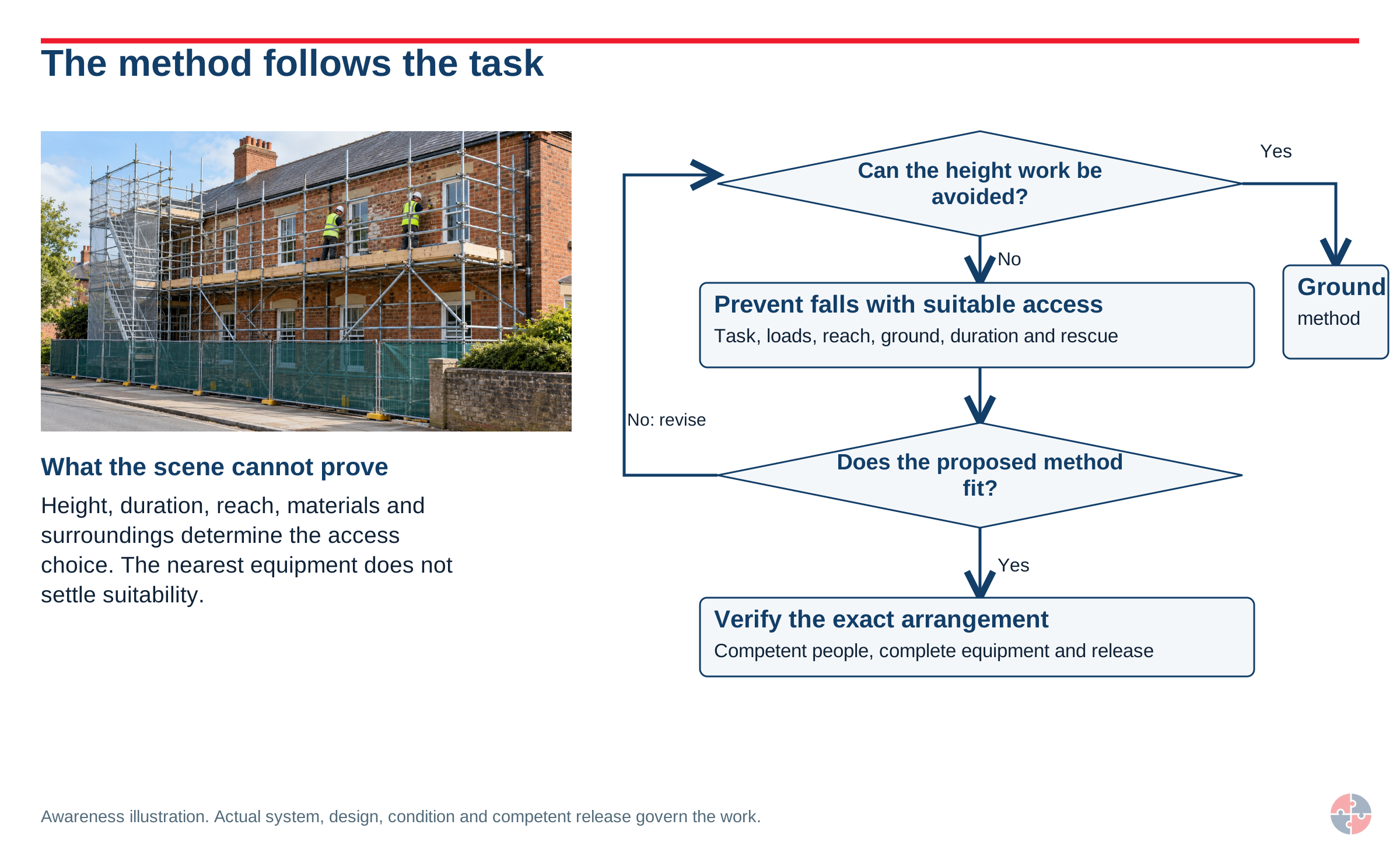
Fictional workplace illustration with a teaching schematic. It is not a surveyed site, manufacturer instruction or approval of a configuration.Read the visual explanation
Height, duration, reach, materials and surroundings determine the access choice. The nearest equipment does not settle suitability. Decision flow: Can the height work be avoided? Yes: use a ground method. No: prevent falls with suitable access, considering task, loads, reach, ground, duration and rescue. Does the proposed method fit? No: revise the selection. Yes: verify the exact arrangement with competent people, complete equipment and release.
Low-level podiums and hop-ups
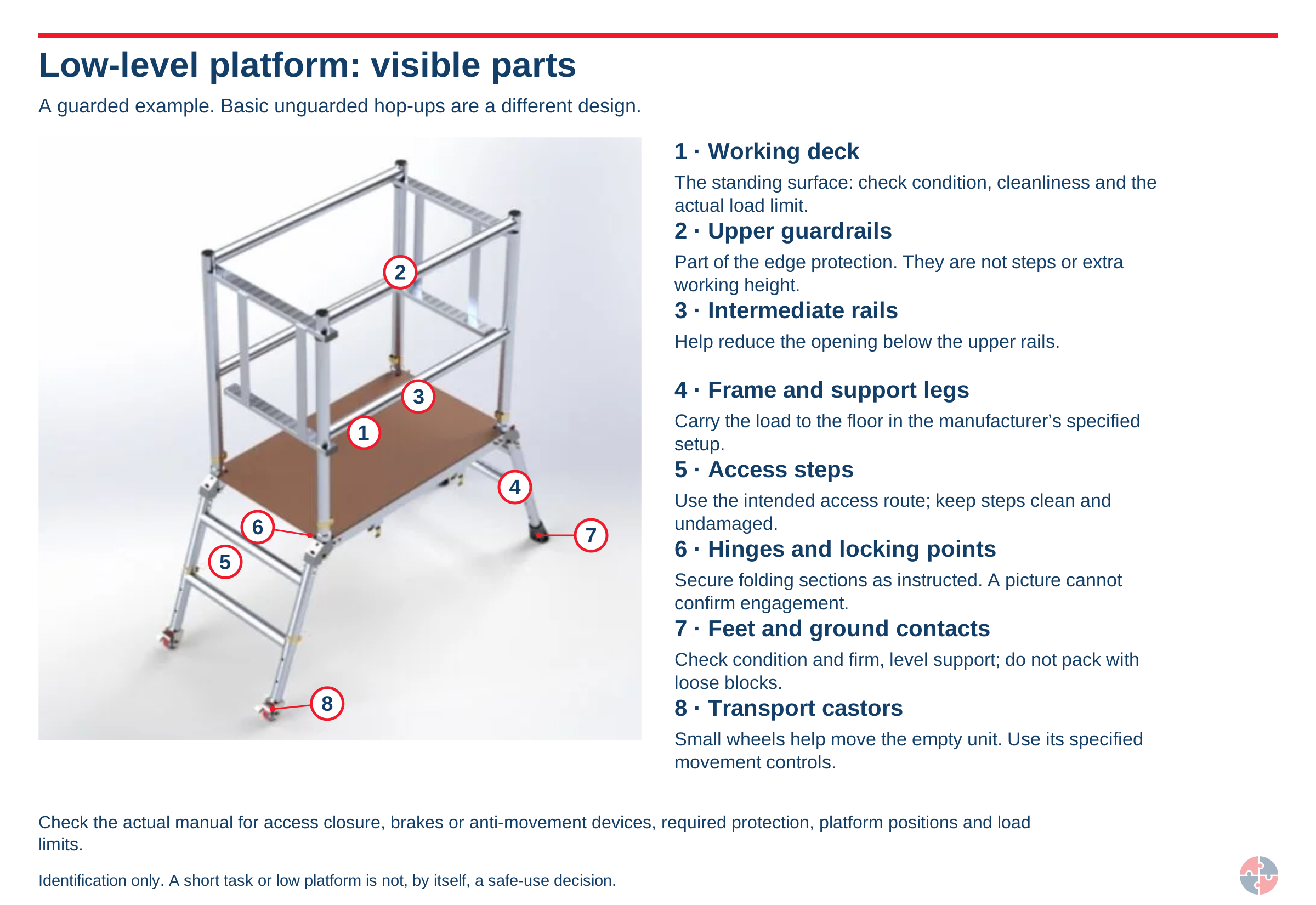
Names vary. The supplied picture shows a small work platform with guardrails, often described as a podium or guarded platform. A basic hop-up has an open deck without those rails. Do not assume they provide the same fall protection.
Choose for the task, reach, force, tools and materials, floor conditions, available space and nearby edges, stairs or traffic. Low height does not remove the risk of injury. If an open hop-up does not provide the protection the assessment requires, select a suitable guarded platform or another method.
Use the actual model’s instructions and limits. Check the deck, access steps, rails, frame, locking devices and ground contacts; set up and secure the unit as specified. Confirm the required edge protection and access closure. Do not add a box or ladder, stand on rails or overreach. Step down before moving and recheck at the new position. Hold and report defective or uncertain equipment.
Supplied platform image, annotated for identification. It does not establish the model, compliance, a complete protective arrangement or safe setup.Read the visual explanation
1. Working deck. The standing surface: check condition, cleanliness and the actual load limit. 2. Upper guardrails. Part of the edge protection. They are not steps or extra working height. 3. Intermediate rails. Help reduce the opening below the upper rails. 4. Frame and support legs. Carry the load to the floor in the manufacturer’s specified setup. 5. Access steps. Use the intended access route; keep steps clean and undamaged. 6. Hinges and locking points. Secure folding sections as instructed. A picture cannot confirm engagement. 7. Feet and ground contacts. Check condition and firm, level support; do not pack with loose blocks. 8. Transport castors. Small wheels help move the empty unit. Use its specified movement controls. Check the actual manual for access closure, brakes or anti-movement devices, required protection, platform positions and load limits.
Quick reflection
A five-minute ceiling task needs sideways pulling beside a stair opening. Is the nearest unguarded hop-up suitable just because it is low?
Compare your reasoning
No. Assess the force, reach, floor and fall route. Select a method that provides the required stable working position and fall protection. Resolve uncertain equipment or protection before use.
Learn at your own pace
Scaffolding and mobile tower awareness
Approx. 90–115 minutes of required learning and automatic checks. Optional private reflection adds 15–25 minutes. This awareness course does not award PASMA or CISRS certification or practical work authorisation.
Self-paced online learning with activities, saved progress and automatically marked knowledge checks. Review the course outline for the learning time and completion requirements.
£25.00per learner, excluding VAT
VAT will be added at checkout.
Secure payment through Stripe at checkout. Allocate a place to each named learner in the basket.
Select suitable access and the information that actually applies.
Ground and surrounding hazards
Connect the task, support, environment and people at risk.
The complete approved configuration
Understand components, stability, protection and safe access.
Use the released platform safely
Check the handover and maintain the agreed working conditions.
Inspect, move and restart
Use the right inspection, change and release process.
Learning and assessment
20 screens, five formative activities and a four-gate case. The recorded private final draws 20 questions from 32 and requires at least 16/20 plus all four critical answers. Completion and certificate eligibility use the learning activity and automatic final checks only. Review feedback and retry independently as often as needed. The courtyard reflection is optional, unsubmitted and ungraded. Practical training and employer authorisation remain external workplace arrangements.
Public practice saves in this browser and issues no certificate or final submission. Recorded access is provider-assigned through the actual learning account. The recorded paid course is separate from Free membership course allowances.