
Work permits and verified isolation
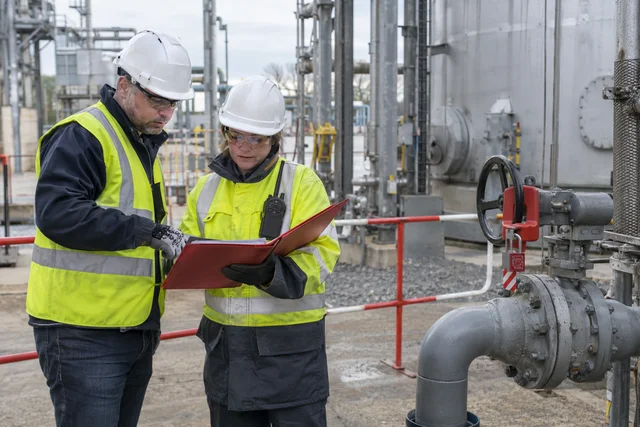

Recognise what a work permit controls, what an isolation must establish and why hot-work conditions must remain valid throughout the job.
Free training · Approx. 75–110 minutes
Public teaching and practice are free. Use a free learner account in Moodle for confirmed saves and recorded assessment. A certificate of completion depends on completing the required learning, scoring at least 80% and answering every critical safety question correctly.
Your practical case
At a fictional resin plant, a contractor plans to cut a redundant process branch beside a transfer bay. The line label is damaged, yesterday’s atmosphere record is attached and a second crew is due to open nearby equipment. The task is a learning case, not an authorised permit.
Process operators, supervisors, maintenance planners, contractors and managers who need topic awareness.
Independent SHAREhub awareness. This course does not provide a NEBOSH qualification, accreditation or authority to operate, design, isolate, test or maintain plant. Use competent site arrangements for real work.
What you will learn
- Distinguish work authorisation from physical control.
- Recognise unidentified feeds, stored energy and unverified isolation.
- Challenge hot-work assumptions and simultaneous work conflicts.
- Identify suspension, handover and verified hand-back requirements.
Course outline
Define the work
- A permit coordinates; it does not isolateExplain the role and limitation of a permit-to-work.
- Define the exact work boundaryIdentify scope details that distinguish one task from another.
- Make responsibilities connectDistinguish issuing, accepting, coordinating and specialist roles.
Establish the safe boundary
- Trace every energy and material routeRecognise why switching off one item may leave exposure.
- Verify the isolation outcomeDistinguish applying devices from proving the required safe state.
Control hot work
- Treat line opening as a distinct exposureExplain why a first break requires specific planning.
- Avoid ignition work where practicableCompare hot work with a safer planned alternative.
- Keep atmosphere evidence currentInterpret gas-test evidence within its conditions and limits.
Keep conditions valid
- Coordinate neighbouring workIdentify conflicts between hot work, releases and shared controls.
- Suspend when the basis changesRecognise changes that invalidate work authorisation.
Close and learn
- Hand back without leaving hidden conditionsIdentify the evidence needed when work ends.
- Integrate the permit decisionCombine identity, isolation, atmosphere and interface evidence.
Practise and test your reasoning
12 lesson decisions and 6 required activities use evidence sorting, matching, sequencing, branching choices and applied checks. Dragging has equivalent labelled controls. The 20-question final assessment requires 80% and every critical answer, after all learning requirements are complete.
Use the linked risk assessment, toolbox talk, policy and assurance resources with their included fictional exercises. Points and module badges help show progress; they do not replace the assessment requirements.
Duration estimates include teaching, activities, checks and assessment. Your pace and retries may vary.
Sources and scope
Independent awareness study · PSM topic 2.4. Independent SHAREhub learning; this is not the NEBOSH qualification.
Presentation and model workshop
Use the same course imagery, worked decisions and historical case in a 28-slide teaching companion. Practise classification, compare explained choices and inspect the linked model case.
Open the interactive presentation workshop · Download PowerPoint
This optional companion does not replace the required course activities or final assessment.