
Bulk inventory containment and transfer
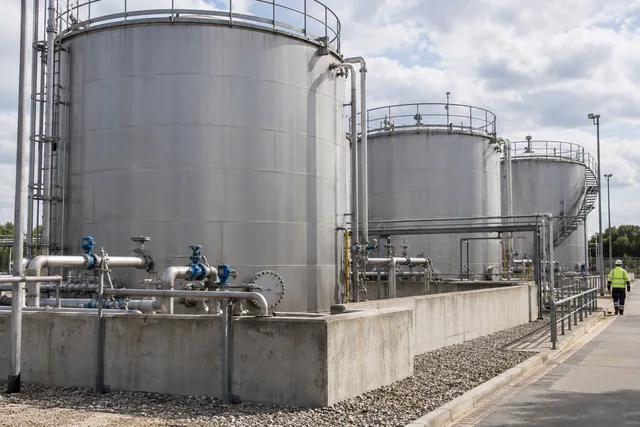

Trace inventory, overfill, containment and connection controls across a complete bulk-transfer task.
Free training · Approx. 80–120 minutes
Public teaching and practice are free. Use a free learner account in Moodle for confirmed saves and recorded assessment. A certificate of completion depends on completing the required learning, scoring at least 80% and answering every critical safety question correctly.
Your practical case
A terminal plans a delivery to a different receiving tank while an overfill function is impaired, a bund drain is open and the handover names the old transfer route.
Workers, supervisors, contractors and managers who need process-safety awareness within their actual roles.
Independent SHAREhub process-safety awareness using fictional cases and a Great Britain baseline; check the applicable Northern Ireland duties and actual site arrangements. This course does not award a NEBOSH qualification, establish specialist competence or authorise hazardous work.
What you will learn
- Connect the stored inventory to credible consequences.
- Recognise venting as part of tank integrity.
- Prevent the wrong connection rather than detect it after release.
- Respect residual material and isolation boundaries.
- Reconcile the combined transfer-readiness case.
Course outline
Map the inventory and containment
- Connect the stored inventory to credible consequencesConnect the stored inventory to credible consequences.
- Verify the actual receiving destination and capacityVerify the actual receiving destination and capacity.
- Treat overfill prevention as a complete protective functionTreat overfill prevention as a complete protective function.
Verify receiving capacity and protection
- Recognise venting as part of tank integrityRecognise venting as part of tank integrity.
- Understand what secondary containment does and does not proveUnderstand what secondary containment does and does not prove.
- Check hose and connection suitability through the specified systemCheck hose and connection suitability through the specified system.
Trace the physical transfer route
- Prevent the wrong connection rather than detect it after releasePrevent the wrong connection rather than detect it after release.
- Coordinate vehicle movement with the connected transferCoordinate vehicle movement with the connected transfer.
Coordinate work and abnormal response
- Make the transfer handover two-way and state-specificMake the transfer handover two-way and state-specific.
- Respect residual material and isolation boundariesRespect residual material and isolation boundaries.
Accept the verified plant state
- Use the planned response to a suspected releaseUse the planned response to a suspected release.
- Reconcile the combined transfer-readiness caseReconcile the combined transfer-readiness case.
Practise and test your reasoning
12 lesson decisions and 6 required activities use evidence sorting, matching, sequencing, branching choices and applied checks. Dragging has equivalent labelled controls. The 20-question final assessment requires 80% and every critical answer, after all learning requirements are complete.
Use the linked risk assessment, toolbox talk, policy and assurance resources with their included fictional exercises. Points and module badges help show progress; they do not replace the assessment requirements.
Duration estimates include teaching, activities, checks and assessment. Your pace and retries may vary.
Sources and scope
Independent awareness study · PSM topic 3.8. Independent SHAREhub learning; this is not the NEBOSH qualification.
- Bulk flammable-liquid tanks
- Packaged dangerous-substance storage
- Fire, explosion and dangerous substances
Knowledge Hub topic coverage
Presentation and model workshop
Use the same course imagery, worked decisions and historical case in a 28-slide teaching companion. Practise classification, compare explained choices and inspect the linked model case.
Open the interactive presentation workshop · Download PowerPoint
This optional companion does not replace the required course activities or final assessment.