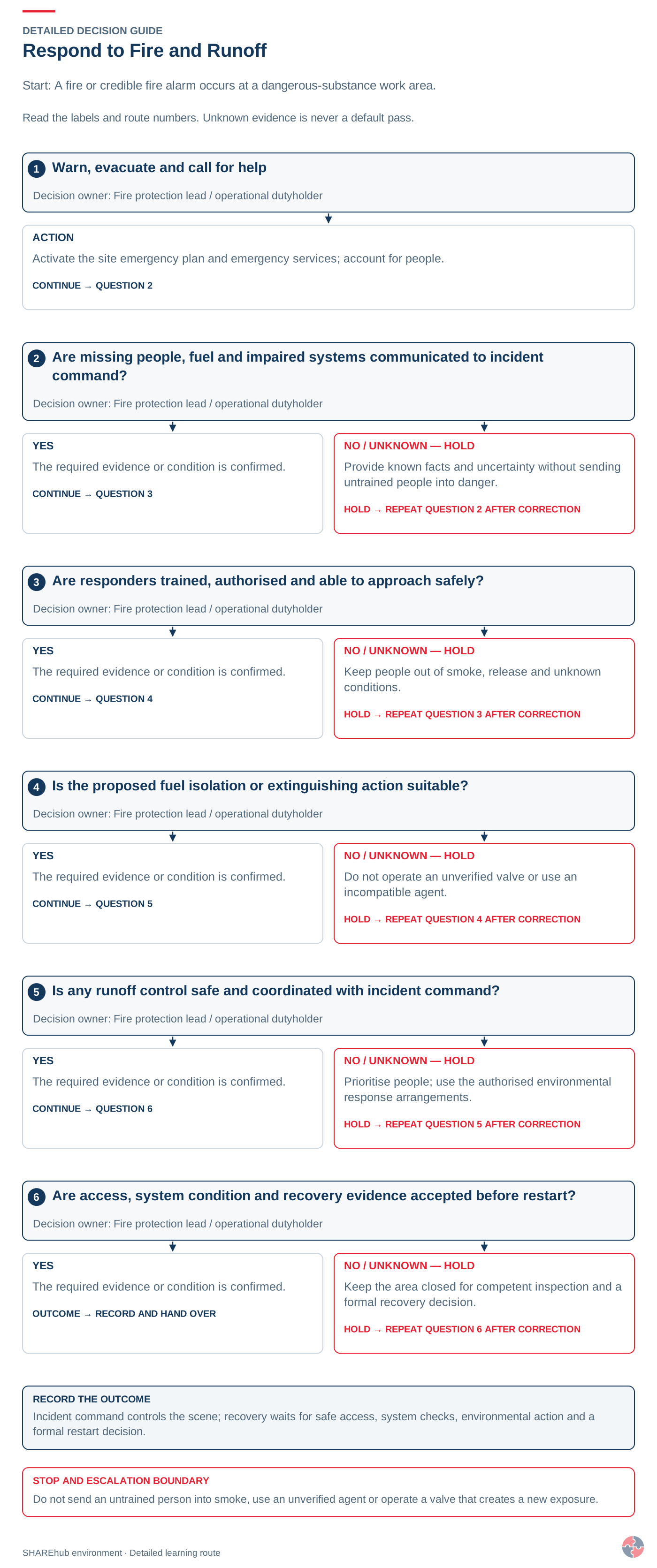
Full public teaching and readers are free without an account. A free learner account is required for saved LMS progress and recorded assessment. Completion and any course-completion certificate depend on the configured LMS conditions. Full course outline and access routes.
Lesson 1
Map the pathway before selecting the control
Use a source–pathway–receptor view to identify pollution risk.
The release does not end at the kerb
Begin with the substance and the credible release. A leaking seal, hose rupture or tank overfill can produce different volumes and rates, and the liquid may carry fire or exposure hazards as well as environmental harm. Identify where the release can escape from its first location. Kerbs, soil, service trenches and drains can make a small local event into a wider problem. The final receptor may be a watercourse, groundwater, neighbouring land or a person beyond the fence.
A drainage drawing is a working safety document, not background decoration. It should identify the drain types, flow directions, isolation points and final destinations. Surface-water drains can rapidly carry pollution to the environment. Foul-sewer connection does not grant permission to discharge fuel or contaminated water. Check that the drawing matches the real site, including temporary hoses, extensions, buried connections and changes made during maintenance.
Use the pathway to ask what the proposed control actually does. A bund may retain a local tank leak; a closed drainage isolation may protect an outfall; an alarm may tell someone that a separator needs attention. These are different duties. Identify the capacity, condition, dependencies, ownership and response needed for each. A control located downstream may fail to protect soil or workers along the earlier part of the route.
Environmental requirements depend on location and operation. Environment Agency general business guidance applies to England and links to other national routes. A bulk onward-distribution depot is expressly outside the ordinary business oil-storage guide’s stated rules; that exemption does not remove pollution-prevention duties. Use relevant bulk-storage guidance, the actual permits and consents, and competent containment assessment instead of transferring a domestic tank rule to the terminal.
How does the source-pathway-receptor model help environmental risk assessment?
The source-pathway-receptor model helps assess whether a pollutant can realistically travel from a work activity to something that could be harmed.
This is one of the most useful thinking tools for environmental risk. A source without a pathway may be well contained. A pathway without a receptor may have lower consequence. But when a source, pathway and receptor line up, the risk becomes credible and needs control.
For example, a diesel tank in a bunded store may be relatively well controlled if the bund is sound, the delivery area is supervised, drains are protected and inspections are completed. The same tank beside an unlabelled surface-water drain, with damaged containment and untrained delivery drivers, creates a very different risk profile. See GOV.UK pollution prevention for businesses.
Yard drain, cracked concrete, soil, groundwater or surface-water drain.
River, stream, groundwater, soil, wildlife or neighbouring land.
Concrete washout and cement slurry
Runoff, gullies, surface-water drains or unprotected ground.
Watercourse, aquatic life, soil quality and drainage infrastructure.
Dust from construction or bulk handling
Air movement, rainwater runoff, vehicle tracking or open doors.
Neighbours, nearby premises, drains, vegetation and local air quality.
Waste containers
Leaks, windblown litter, pests, firewater runoff or unauthorised removal.
Land, water, community, waste chain and regulator confidence.
Noise from plant
Airborne sound, vibration through structures or out-of-hours operation.
Local residents, sensitive premises, wildlife or site neighbours.
Applied case
A dark stain appears beside a manifold and runs toward a gully. The drawing calls it surface water, but a recent resurfacing job changed nearby gullies. The operator reports the release and uncertain drainage route, stops the assigned transfer safely and keeps people clear while authorised staff verify and protect the pathway.
Decision and explanation
Where the drain actually flows and whether its isolation is effective.
The actual pathway and effective controls determine who or what may be affected. Labels and colour help identification but do not prove the buried connection or isolation.
Look closer
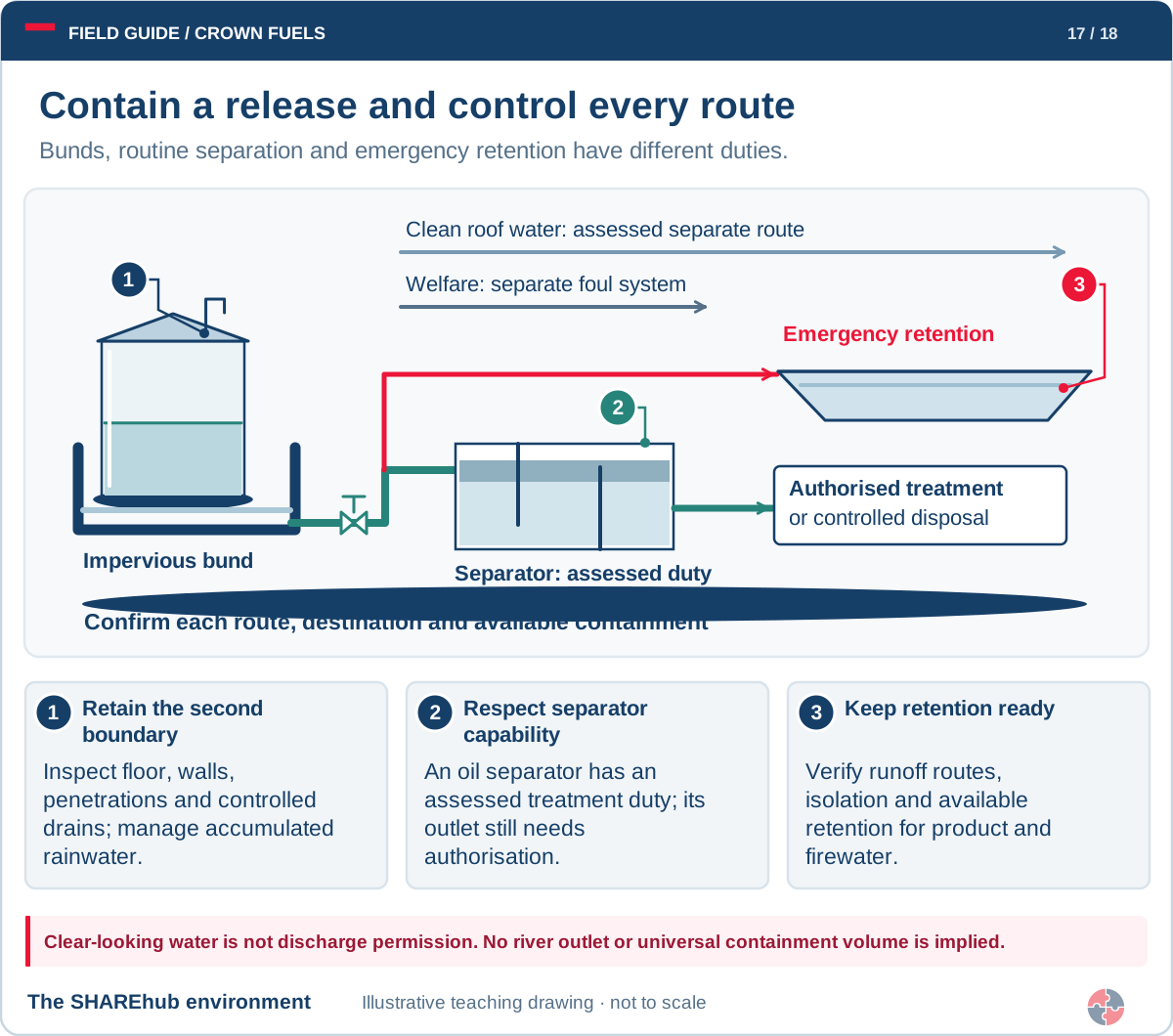
Explore the numbered equipment and control points. Existing SHAREhub teaching schematic; illustrative and not to scale.Secondary containment
Inspect floor, walls, penetrations and controlled drains. Accumulated rainwater can affect the available containment.
Separator duty
An oil separator has an assessed treatment duty. Its outlet still needs authorisation; clear-looking water is not discharge permission.
Emergency retention
Verify runoff routes, isolation and available retention for product and firewater. The drawing implies no river outlet or universal capacity.
01 · Read the situation
A dark stain appears beside a manifold and runs toward a gully. The drawing calls it surface water, but a recent resurfacing job changed nearby gullies. The operator reports the release and uncertain drainage route, stops the assigned transfer safely and keeps people clear while authorised staff verify and protect the pathway.
02 · Explain the principle
Begin with the substance and the credible release. A leaking seal, hose rupture or tank overfill can produce different volumes and rates, and the liquid may carry fire or exposure hazards as well as environmental harm. Identify where the release can escape from its first location. Kerbs, soil, service trenches and drains can make a small local event into a wider problem. The final receptor may be a watercourse, groundwater, neighbouring land or a person beyond the fence.
03 · Carry it into work
The actual pathway and effective controls determine who or what may be affected. Labels and colour help identification but do not prove the buried connection or isolation.
Lesson 2
Keep containment ready for the event
Explain why nominal bund volume and a separator do not prove effective protection.
Capacity, condition and controlled drainage
A bund works only when the whole containment boundary can retain the relevant liquid. Walls and floors need suitable construction and condition; joints, penetrations and pipe crossings can provide escape routes. Equipment, stored materials, rainfall and accumulated liquid can reduce available capacity. Inspection should look for the actual failure modes, with clear action when a defect undermines the assigned duty. A painted wall or a stated design volume is not sufficient evidence.
Rainwater management creates an operational interface between containment and drainage. Follow the authorised method for assessing, removing and disposing of accumulated water. Check for contamination and the destination before any release, using the site’s specified criteria and equipment. A drain valve left open can bypass the entire bund. Do not enter a bund, open a valve or take a sample merely because a learning diagram suggests the water appears clean.
A separator is designed for a particular flow and contamination duty. Its performance depends on correct selection, condition, retained oil and silt, alarms, maintenance and the substances entering it. Detergents, incompatible products or excessive flow can undermine separation. It is not an unlimited tank for a major spill or firewater. A separator alarm should prompt the defined response, not be reset to keep drainage available.
Effective assurance asks for more than a completed checklist. Compare inspection findings, alarm status and removal records with the credible release scenario. Know who can restrict transfers when containment is impaired and how that state reaches other shifts. Temporary drainage changes, repairs or altered products can affect the whole system and need appropriate change control. Restore a barrier only after the relevant checks show that its intended duty is available.
How should bunding, drainage and containment be managed?
Secondary containment is often treated as passive, but passive does not mean maintenance-free. A bund with cracks, poor joints, open drains, vegetation, penetrations, insufficient capacity or blocked access may fail just when it is needed. Firewater can also challenge containment because response activity can create large contaminated volumes.
The bund arrangement should be compatible with the stored substance and credible release. Operators must know the approved rainwater-removal arrangement, how contaminated water is retained and who can authorise lawful discharge. Check whether applicable oil-storage rules prohibit a drain-down opening: a generic drain-valve routine cannot override that requirement. Where an engineered drain is permitted, verify its normal secured state and control every temporary opening.
Bunds also affect escalation. A bund full of flammable liquid can become a large pool fire, exposing adjacent tanks and structures. Design, capacity, subdivision, drainage, foam application and emergency access all matter.
Bund capacity. Contains credible tank or pipework release. Capacity calculations and inspection.
Bund integrity. Prevents leakage through cracks, joints or penetrations. Condition inspection and repair records.
Drain control. Prevents liquid escaping through open drains. Drain valve checks and authorisation process.
Rainwater management. Keeps capacity available without uncontrolled discharge. Routine checks and discharge records.
Firewater planning. Accounts for contaminated firefighting water. Emergency drainage plan and exercises.
Tertiary containment. Limits off-site or environmental spread if bund fails. Site drainage maps and pollution response plan.
Applied case
A bund has enough nominal volume on its drawing, but rainwater occupies part of it and the drain valve is open. The separator downstream has an unresolved high-level alarm. The proposed receipt therefore has multiple impaired barriers, even though the tank itself is sound.
Decision and explanation
The impaired containment/drainage must be assessed and made effective before the authorised receipt decision.
Real condition, available capacity, valve state and downstream readiness matter. One nominal design figure cannot justify operation with impaired barriers.
Look closer
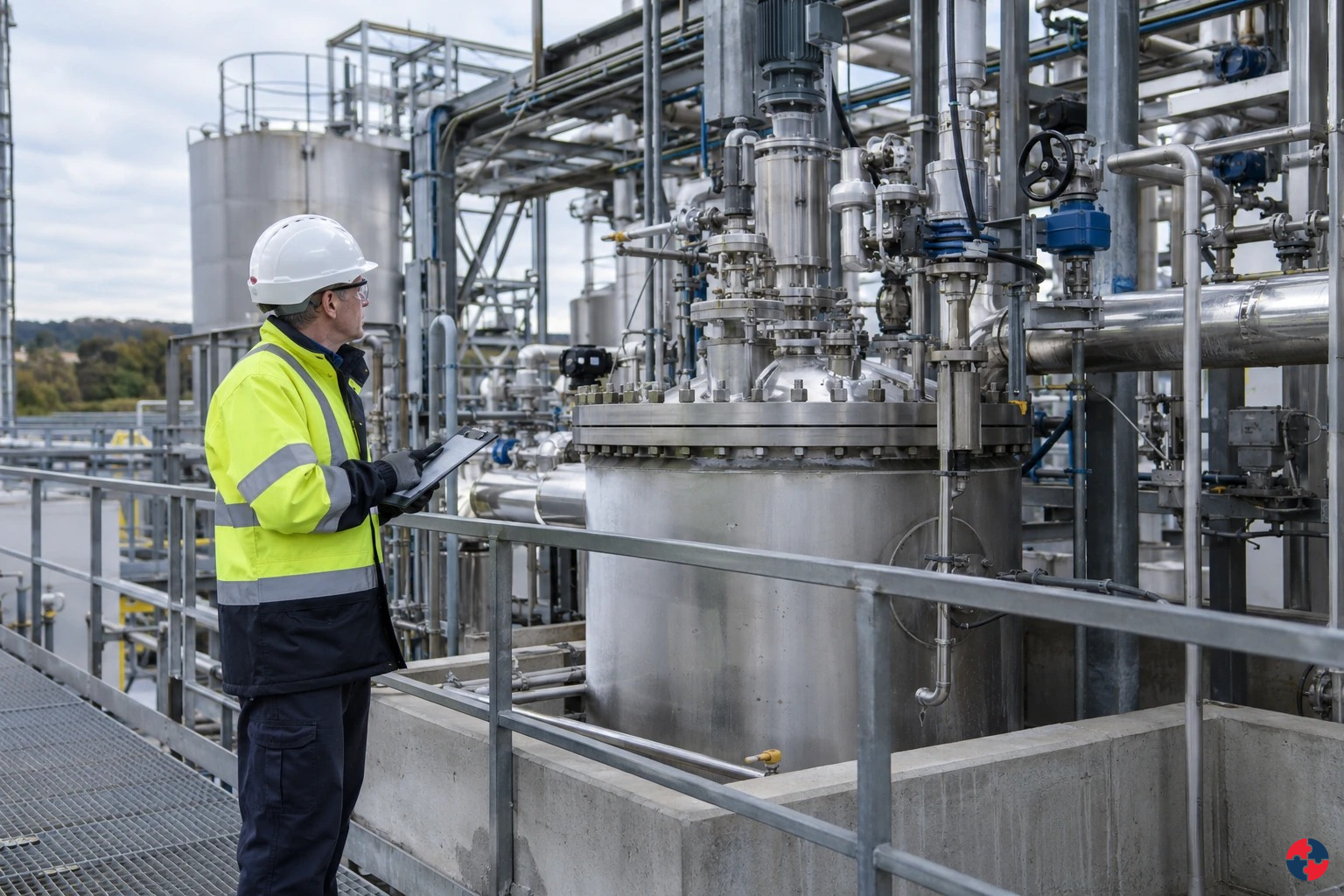
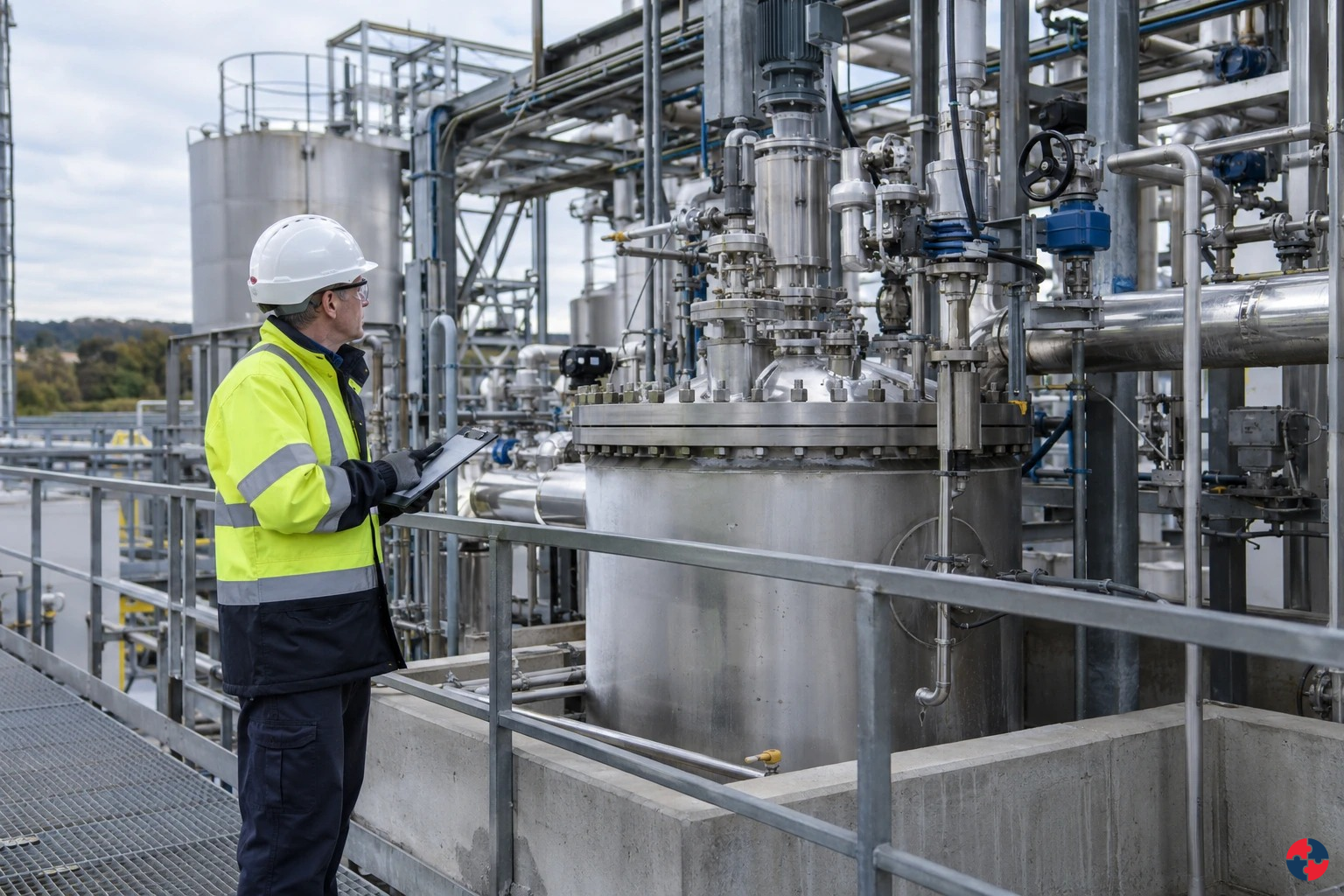
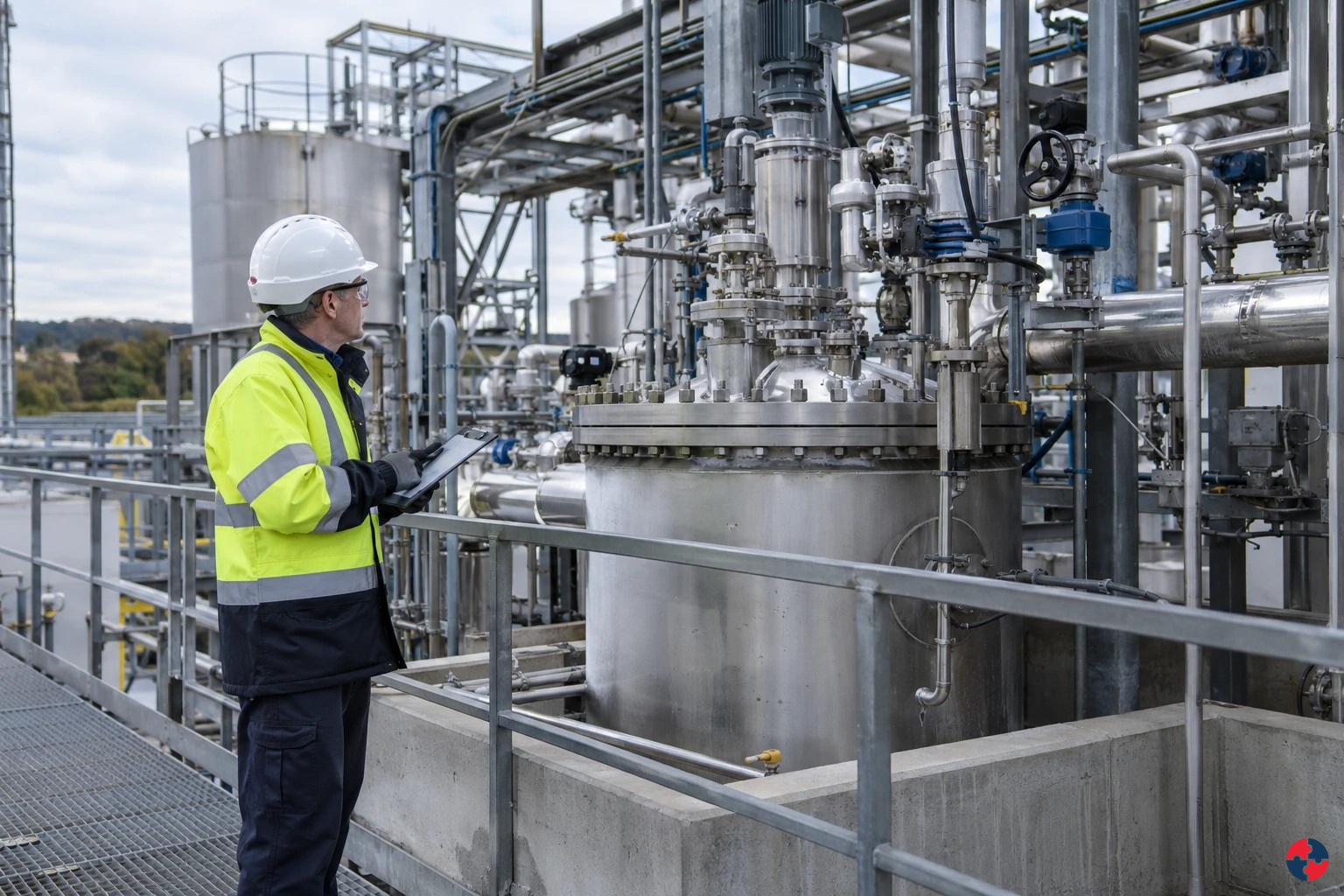
Photorealistic illustrative UK workplace scene. Review checks: Threat: Wrong destination, uncertain capacity or failed receipt controls can create an overfill demand. Preventive function: Verify sensing, logic/power and final stop, including configuration, proof-test scope and common dependencies. Normal indication is separate. Consequences and mitigation: A release may spread, ignite or affect the environment. Bunds, drainage, ignition control and response have distinct functions and limits.01 · Read the situation
A bund has enough nominal volume on its drawing, but rainwater occupies part of it and the drain valve is open. The separator downstream has an unresolved high-level alarm. The proposed receipt therefore has multiple impaired barriers, even though the tank itself is sound.
02 · Explain the principle
A bund works only when the whole containment boundary can retain the relevant liquid. Walls and floors need suitable construction and condition; joints, penetrations and pipe crossings can provide escape routes. Equipment, stored materials, rainfall and accumulated liquid can reduce available capacity. Inspection should look for the actual failure modes, with clear action when a defect undermines the assigned duty. A painted wall or a stated design volume is not sufficient evidence.
03 · Carry it into work
Real condition, available capacity, valve state and downstream readiness matter. One nominal design figure cannot justify operation with impaired barriers.
Lesson 3
Plan spill and firewater recovery without creating another release
Distinguish emergency containment from unsafe clean-up or disposal.
Response has environmental consequences
An incident response must protect people before attempting recovery. A fuel pool, vapour cloud, traffic route or unstable structure can make access unsafe. Raise the alarm, report the known pathway and carry out only the assigned controls that can be reached safely. A nearby spill kit does not prove that a worker can tackle the event. Escalate when the substance, volume, atmosphere or spread exceeds the trained response arrangement.
Firefighting may create far more contaminated liquid than the original release. Water, foam, fuel and debris can migrate across the site and overwhelm ordinary drainage. Retention arrangements therefore need an assessment of credible incident scenarios and their combined demands. The response plan should identify safe activation, monitoring, limits and recovery arrangements. Closing one valve is not enough if runoff can pass through an uncontrolled overflow, gate opening or damaged wall.
Do not wash fuel into a drain or apply an improvised neutralising chemical. Such actions can spread contamination, create vapour or reaction hazards and defeat downstream treatment. Recovery methods need suitable equipment, competent people and appropriate authorisation. Water that looks clear can still be contaminated. Sampling and disposal decisions should follow the assessed recovery plan and relevant permit or consent, not appearance or the pressure to reopen an area.
Fire media also need current technical and environmental checks. Some PFAS used in foams are restricted or banned, while broader legal proposals and national regimes differ. A change in concentrate can alter compatibility with the fuel, proportioning equipment and engineered system. Use competent fire-system and environmental advice through change control; never assume that changing a label or selecting a different foam automatically preserves protection or permits discharge.
What environmental emergencies should workplaces plan for?
Workplaces should plan for credible environmental emergencies such as spills, fires, uncontrolled discharges, tank failures, flooding, major dust releases and contaminated firewater.
Environmental emergency planning should be specific to the site. A generic spill procedure is weak if workers do not know where the drains go, which materials are most harmful, which valves isolate the yard, who can deploy drain covers and when the regulator or emergency services should be contacted.
Planning should include scenarios: fuel delivery failure, chemical spill, waste fire, floodwater entering stores, interceptor failure, powder release, refrigeration leak, firewater runoff or contractor damage to drainage. Drills should test decisions, not just whether a spill kit exists. See NIEA pollution prevention.
Waste separation, fire prevention, firewater containment and emergency liaison.
Where would contaminated runoff go?
Flooding
Store vulnerable materials above flood level and secure waste.
What could be mobilised by floodwater?
Uncontrolled discharge
Stop work, isolate source, protect drains and notify appropriate parties.
Are permits and consents understood?
Contractor incident
Induction, permits, supervision and emergency rules.
Do contractors know environmental stop-work triggers?
Applied case
A simulated fire is out, but runoff is approaching the outfall and retained liquid contains foam. A contractor offers to pump it into the nearest sewer to free storage quickly. The coordinator stops that proposal and arranges authorised assessment, containment and waste recovery while maintaining protection against renewed release.
Decision and explanation
None: verify the mixture, safe method, destination and authorisations first.
Firewater can contain pollutants and restricted substances. The end of fire does not establish safe discharge, and a sewer is not an automatic disposal route.
Look closer
Photorealistic illustrative UK workplace scene. Review checks: Eliminate: Remove an unnecessary transfer or hazardous stock through a validated supply or process redesign. Reduce, including substitution: Evaluate a less hazardous stored material or suitable alternative supply arrangement through change review. Isolate: Separate delivery operations from people and incompatible plant; control the credible spill and escalation area. Control: Provide compatible connections, sound containment, appropriate drainage protection and the specified overfill safeguards; verify where a spill would actually travel. Control: Confirm product, tank capacity and delivery limits, the authorised drain-protection arrangement and who stops the delivery.01 · Read the situation
A simulated fire is out, but runoff is approaching the outfall and retained liquid contains foam. A contractor offers to pump it into the nearest sewer to free storage quickly. The coordinator stops that proposal and arranges authorised assessment, containment and waste recovery while maintaining protection against renewed release.
02 · Explain the principle
An incident response must protect people before attempting recovery. A fuel pool, vapour cloud, traffic route or unstable structure can make access unsafe. Raise the alarm, report the known pathway and carry out only the assigned controls that can be reached safely. A nearby spill kit does not prove that a worker can tackle the event. Escalate when the substance, volume, atmosphere or spread exceeds the trained response arrangement.
03 · Carry it into work
Firewater can contain pollutants and restricted substances. The end of fire does not establish safe discharge, and a sewer is not an automatic disposal route.
Lesson 4
Manage the waste and close the incident properly
Identify evidence for waste transfer, reporting and environmental restoration.
Recovery ends with evidence
Pollution response creates several waste streams: recovered product, oily water, contaminated absorbents, damaged equipment and potentially contaminated soil. Their appearance does not determine classification. Record the origin and known contents, keep incompatible streams separate, and obtain the information needed to classify and describe them accurately. Diluting or mixing a waste does not make the original responsibilities disappear and may make recovery or treatment more difficult.
The applicable waste regime depends on the UK nation. For England and Wales, the duty-of-care code addresses safe control, accurate description and transfer only to authorised people. England’s hazardous-waste producer guidance adds the relevant classification, segregation, consignment and record requirements. Check the carrier’s registration and the receiving site’s permission to accept the particular waste. A familiar contractor name or a general licence claim is insufficient.
Reporting should follow the site incident plan and the relevant regulator’s current route. Give the location, substance if known, approximate quantity and uncertainty, pathway, affected receptors and actions already taken. Immediate threats to people require emergency services. Emergency environmental notification should not wait for an internal investigation, a customer complaint or a final volume calculation. A non-emergency web form is not a replacement for an urgent call.
Restoration needs evidence that contamination and impaired barriers have been addressed. Confirm what remains in soil, drains and containment; which repairs and tests are complete; what restrictions continue; and who owns follow-up. Feed the verified findings into drawings, procedures and maintenance priorities. Closing a customer-service ticket, removing visible staining or obtaining a waste receipt alone does not show that the source and all pathways are controlled.
How should waste hazards be controlled?
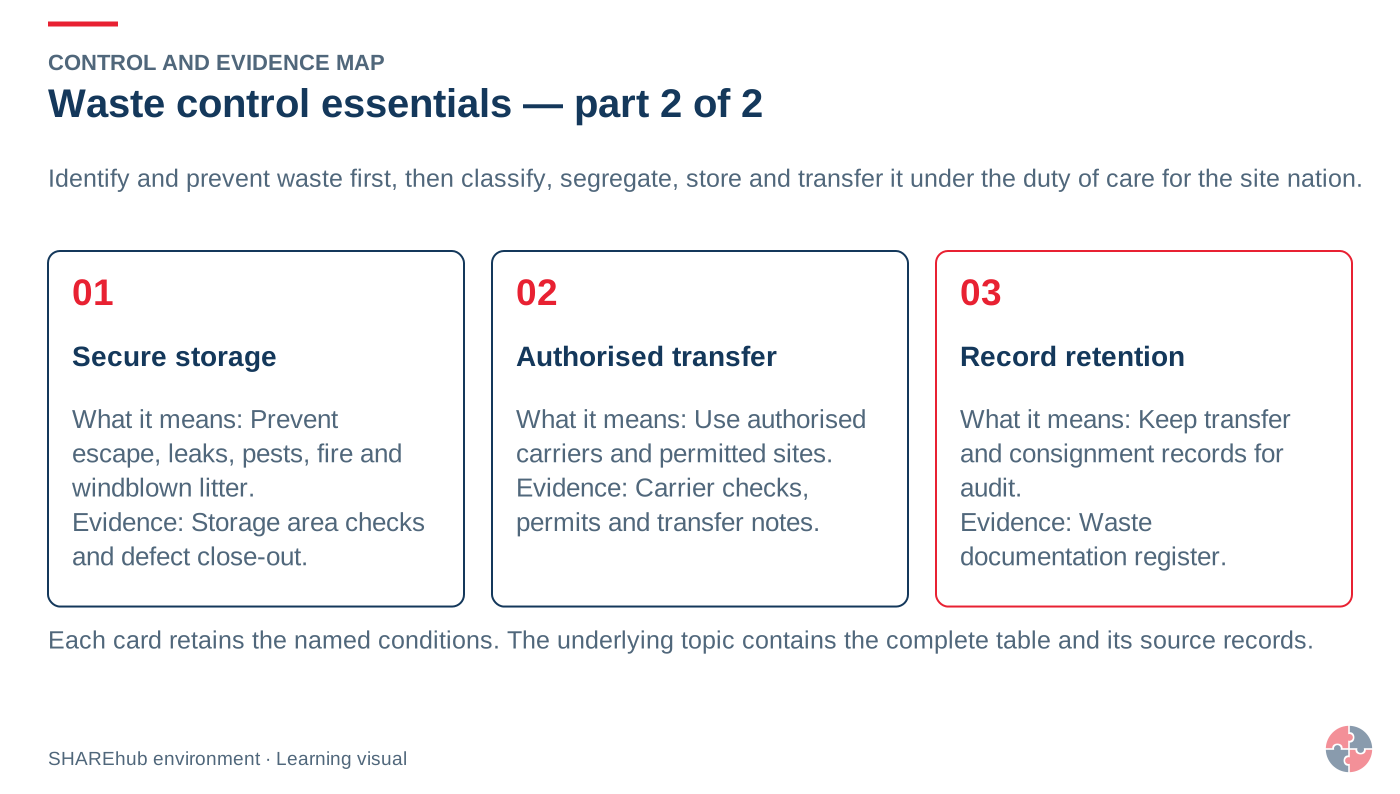
Identify and prevent waste first, then classify, segregate, store and transfer it under the duty of care for the site nation.
The producer should know what the waste is, how it is described, who may carry it and where it may lawfully go. The linked GOV.UK duty-of-care code applies to England and Wales; Scotland has a 2026 code and Northern Ireland has its own DAERA code. Check the applicable code before using a transfer route. England/Wales code Scottish 2026 code NI code
Controls fail when incompatible waste is mixed, carriers or sites are not checked, transfer details are missing, or containers leak. The site’s code determines documentation and authorisation details.
Waste control essentials - Waste control essentials
Control
What it means
Evidence
Waste hierarchy
Prevent, reuse, recycle or recover before disposal where reasonably practicable.
Procurement and waste reduction plan.
Classification
Identify whether waste is hazardous, non-hazardous, inert, WEEE, clinical, oily or contaminated.
Waste descriptions and classification evidence.
Segregation
Keep incompatible or different waste streams separate.
Labelled containers and site inspections.
Secure storage
Prevent escape, leaks, pests, fire and windblown litter.
Storage area checks and defect close-out.
Authorised transfer
Use authorised carriers and permitted sites.
Carrier checks, permits and transfer notes.
Record retention
Keep transfer and consignment records for audit.
Waste documentation register.
Applied case
After a customer delivery spill, absorbents are bagged with no contents label and a drain has been flushed. A cleaner has a receipt for collection, but no one verified the waste destination or downstream effect. The case remains unresolved until these gaps are assessed and the required reporting and recovery actions are completed.
Decision and explanation
An accurate waste description/classification plus verified carrier and destination authorisations and required records.
Duty of care follows the material beyond the site. Tidiness and a receipt do not establish correct classification or that the carrier and receiving facility may handle that waste.
Look closer
Teaching graphic from the linked SHAREhub source section.01 · Read the situation
After a customer delivery spill, absorbents are bagged with no contents label and a drain has been flushed. A cleaner has a receipt for collection, but no one verified the waste destination or downstream effect. The case remains unresolved until these gaps are assessed and the required reporting and recovery actions are completed.
02 · Explain the principle
Pollution response creates several waste streams: recovered product, oily water, contaminated absorbents, damaged equipment and potentially contaminated soil. Their appearance does not determine classification. Record the origin and known contents, keep incompatible streams separate, and obtain the information needed to classify and describe them accurately. Diluting or mixing a waste does not make the original responsibilities disappear and may make recovery or treatment more difficult.
03 · Carry it into work
Duty of care follows the material beyond the site. Tidiness and a receipt do not establish correct classification or that the carrier and receiving facility may handle that waste.
Lesson 5
Bund drainage: retain the barrier through wet weather
A bund is effective only when its entire boundary and available retention are maintained, including the drain.
Understand this fuel-industry task
Look from the tank shell to the bund wall, floor, penetrations and drain outlet. The tank and connected pipework provide primary containment; the bund is a second line of defence if liquid escapes. Leaving its drain open creates a route through that second boundary. The fact that rainwater is inconvenient does not change what the boundary is meant to retain. Water already inside also occupies space that may be needed during a release, so simply keeping the drain shut without managing accumulation is not a complete system.
A useful drainage routine establishes what has collected, where it may safely go, who may authorise release and how the normal containment state is restored. Appearance alone cannot establish that water is suitable for discharge. The actual permit or authorisation, destination and jurisdiction determine the required assessment and conditions. Inspect deterioration as well as the valve: cracks, damaged seals around pipes and unreviewed penetrations can defeat a sound-looking wall. The model illustrates the pathway, not a bund-volume calculation. Real containment duty must be assessed against the actual inventory, layout, credible release and weather conditions; a generic percentage cannot prove the whole system adequate.
Trace the initiating event and loss of control
Step
Case pathway
initiatingEvent
Rainwater management is simplified by leaving a controlled bund outlet open.
lossOfControl
A later tank or pipe release passes through the open boundary instead of being retained locally.
consequences
Fuel reaches drains or other areas, increasing pollution, exposure and fire-escalation potential.
Choose effective safeguards
Control priority
Practical application
Eliminate
Prevent leaks and avoid contaminated runoff at source.
Substitute
Reduce exposed transfer points and use simpler segregated drainage.
Engineer
Provide impervious containment, controlled isolation and suitable emergency retention.
Manage
Inspect drains and bunds; verify route, capacity, alarms and disposal authority.
Protect
Use spill-response PPE only for tasks within training and safe exposure limits.
Maintain the approved normal outlet state with clear identification, assigned ownership and suitable control against unauthorised opening.
Inspect the collected liquid and use the approved assessment, release authorisation and destination; retain unknown contamination for competent evaluation.
Drain only by the controlled site method with suitable supervision and prompt verified restoration of containment when the release is complete.
Maintain walls, floor and penetrations and manage accumulated water so the scenario-required retention remains available.
Verify effectiveness before release
Trace the outlet to its actual destination and compare the valve state and access controls with the controlled drainage procedure.
Check a recent drainage record for liquid assessment, authorisation and closure evidence, then compare the record with field condition.
Inspect cracks, joints, penetrations and remaining retention; ask how a defect or persistent rain changes the operating decision.
Transfer the decision to the workplace
Apply the same boundary check to drip trays, double skins and temporary containment: an unnoticed outlet or damaged penetration can bypass the claimed barrier.
How should bunding, drainage and containment be managed?
Secondary containment is often treated as passive, but passive does not mean maintenance-free. A bund with cracks, poor joints, open drains, vegetation, penetrations, insufficient capacity or blocked access may fail just when it is needed. Firewater can also challenge containment because response activity can create large contaminated volumes.
The bund arrangement should be compatible with the stored substance and credible release. Operators must know the approved rainwater-removal arrangement, how contaminated water is retained and who can authorise lawful discharge. Check whether applicable oil-storage rules prohibit a drain-down opening: a generic drain-valve routine cannot override that requirement. Where an engineered drain is permitted, verify its normal secured state and control every temporary opening.
Bunds also affect escalation. A bund full of flammable liquid can become a large pool fire, exposing adjacent tanks and structures. Design, capacity, subdivision, drainage, foam application and emergency access all matter.
Bund capacity. Contains credible tank or pipework release. Capacity calculations and inspection.
Bund integrity. Prevents leakage through cracks, joints or penetrations. Condition inspection and repair records.
Drain control. Prevents liquid escaping through open drains. Drain valve checks and authorisation process.
Rainwater management. Keeps capacity available without uncontrolled discharge. Routine checks and discharge records.
Firewater planning. Accounts for contaminated firefighting water. Emergency drainage plan and exercises.
Tertiary containment. Limits off-site or environmental spread if bund fails. Site drainage maps and pollution response plan.
Applied case
After several wet days, an operator suggests wedging the bund outlet open overnight and checking for oil in the morning.
Decision and explanation
Use the approved assess-and-release procedure, with controlled supervision and verified return to the normal containment state.
Normal appearance is not current assessment. An open outlet also creates an uncontrolled escape route for any later fuel release. The barrier still needs available capacity. Retaining water without capacity management can leave the system unable to perform its assessed duty. Correct. Manage water as a planned task while preserving the bund’s protective function and relevant discharge conditions.
Look closer
Photorealistic illustrative UK workplace scene. Review checks: Threat: Wrong destination, uncertain capacity or failed receipt controls can create an overfill demand. Preventive function: Verify sensing, logic/power and final stop, including configuration, proof-test scope and common dependencies. Normal indication is separate. Consequences and mitigation: A release may spread, ignite or affect the environment. Bunds, drainage, ignition control and response have distinct functions and limits.01 · What to notice
The tank area has bund containment and a controlled drain. The proposed wet-weather routine leaves its outlet open to avoid repeated visits.
02 · Trace the harm
An open drain can defeat secondary containment and carry released fuel to other areas or off site; rainwater can also reduce available retention volume.
03 · Test the safeguard
Inspect the actual walls, floor, penetrations, drain path and required valve state; confirm water assessment, release authorisation and restored closure are evidenced.
Lesson 6
Interceptors: treatment duty is different from emergency retention
Treatment, isolation, containment and permission to discharge are separate questions that need separate evidence.
Understand this fuel-industry task
Follow the collection drains towards the interceptor and then the separately illustrated retained basin. An interceptor is designed for particular flows and separation conditions; it is not an unlimited container for any spill. Its useful capacity and performance depend on condition, accumulated oil or silt, hydraulic loading and the nature of the contamination. Emulsified material or unsuitable wash water may not behave like the free oil the unit was intended to separate. An attractive treatment symbol on a drawing does not establish what reaches the outlet.
Separate the questions the proposed plan has combined. Which catchments should reach this unit? What service is it designed to treat? What closes a pollution pathway during a major spill? Where is firewater and product retained, and how is that retained material recovered? Clean and potentially contaminated drainage should remain deliberately segregated, with current mapping and controlled changes. Any discharge still needs the relevant environmental assessment and permission; passing through an interceptor does not confer authorisation. Inspection and maintenance must make its real condition visible, including alarms or closure devices where fitted. Credible emergency volumes and flow paths require their own competent assessment rather than being credited to routine treatment equipment.
Trace the initiating event and loss of control
Step
Case pathway
initiatingEvent
A major release or firefighting runoff enters a drainage system whose plan credits only the interceptor.
lossOfControl
The unit is overloaded, bypassed or unable to separate the actual contamination, allowing polluted liquid onward.
consequences
Flammable liquid or contaminated water can spread to other site areas, soil, watercourses or neighbouring premises.
Choose effective safeguards
Control priority
Practical application
Eliminate
Prevent leaks and avoid contaminated runoff at source.
Substitute
Reduce exposed transfer points and use simpler segregated drainage.
Engineer
Provide impervious containment, controlled isolation and suitable emergency retention.
Manage
Inspect drains and bunds; verify route, capacity, alarms and disposal authority.
Protect
Use spill-response PPE only for tasks within training and safe exposure limits.
Define the interceptor’s actual service and limitations and segregate clean and potentially contaminated catchments accordingly.
Provide the assessed collection, isolation and emergency retention system for major release and firewater scenarios, separate from routine treatment assumptions.
Inspect and maintain accumulated contents, flow paths, alarms and closure arrangements against the appropriate design and manufacturer requirements.
Control cleaning chemicals and changed flows; assess the real discharge conditions and permissions before authorising any release.
Verify effectiveness before release
Trace the drainage map in the field, including bypasses and overflow paths; identify the destination if the interceptor cannot accept flow.
Review service records and current contents against the unit’s duty; ask what abnormal level or closure information reaches the control room.
Test the emergency isolation and retention sequence safely and verify that responders know who controls it and how recovered waste is managed.
Transfer the decision to the workplace
At a forecourt or workshop, a drain separator also has defined limits; understand its catchment and emergency arrangements rather than treating it as a universal safeguard.
What does a bund prove after a release?
A bund is a secondary containment barrier, not permission to overfill a tank. Check the site-specific capacity basis, integrity, penetrations, drain valve position, rainfall management, material compatibility and whether a spill can bypass containment or spread between tanks. See HSE HSG176 storage of flammable liquids in tanks
Do not assume a single generic percentage is sufficient for every installation or substance. A competent engineer must check the applicable environmental and fire-safety basis, local authority requirements and emergency scenario.
Applied case
The plan says firefighting runoff can be routed through the interceptor. The emergency retention basin is therefore omitted from the exercise.
Decision and explanation
Establish the major-spill and firewater collection, isolation and retention duty instead of assuming routine separation provides it.
Correct. Emergency retention needs an assessed system and available capacity; an interceptor’s specific treatment duty cannot be stretched by wording. Changing the waste stream can undermine separation and spread contamination. It needs assessment, not an improvised chemical addition. A momentary appearance cannot prove capacity, treatment, downstream impact or permission to discharge during the scenario.
Look closer
Photorealistic illustrative UK workplace scene. Review checks: Elimination: Avoid an unnecessary bulk receipt or reduce the inventory by direct supply where the process and supply resilience allow; compare transport frequency and total risk, not just tank volume. Substitution: Assess a less flammable liquid or lower-volatility grade only if process quality, materials, storage and downstream hazards remain acceptable. Engineering: Specify independent high-level trip separate from routine level indication, suitable venting and intact bund/drain barriers for the receiving tank and transfer rate. Administrative: Use positive tank/product/route checks, controlled transfer authorisation, shift communication and a recorded impairment/deferral process. PPE: Select chemical and fire exposure PPE for defined sampling or response tasks with fit, compatibility and replacement checks; it cannot protect people from a vapour-cloud explosion.01 · What to notice
The model shows an interceptor and a separate retained basin. A proposed plan assumes the interceptor alone will capture any major release or firefighting runoff.
02 · Trace the harm
An interceptor has a defined duty, capacity and limitations; overload, emulsified product or unsuitable flows may pass pollution onward and spread flammable material.
03 · Test the safeguard
Trace the real catchments, bypasses, alarms, isolation and storage duty against the assessed scenarios and permissions; inspect contents and service condition.
Lesson 7
Firewater retention: available volume is a live barrier condition
Barrier credit depends on available performance now, not only its original design or asset presence.
Understand this fuel-industry task
The retained basin represents a system intended to keep contaminated firefighting runoff and released product under control. Its original design volume is not necessarily the volume available today. Rainwater, sediment, debris and other stored material occupy space, while damaged isolation or collection routes can prevent runoff reaching the basin. The exercise deliberately compares an unchanged emergency-plan assumption with a changed physical condition. That discrepancy is a barrier impairment, not a minor tidiness issue.
Fire protection and environmental protection must be planned together. Water that protects exposed equipment can mobilise product and other contamination, and uncontrolled overflow can carry pollution or burning material beyond the intended boundary. The required retention assessment considers the actual credible event, collection catchments, product, firefighting strategy, weather and overflow consequences. The teaching model supplies no universal sizing formula. A reduction in available capacity needs competent review of what operations and emergency arrangements remain defensible. Removal of accumulated material must follow an approved route: emptying unknown water to a convenient drain could turn capacity restoration into a pollution incident. Include recovery logistics and who maintains readiness during prolonged wet weather.
Trace the initiating event and loss of control
Step
Case pathway
initiatingEvent
Rainwater and sediment accumulate while the emergency plan continues to credit the full basin volume.
lossOfControl
Runoff and released product exceed the available retained space or bypass the impaired collection system.
consequences
Contaminated liquid overflows to land or water, potentially extending fire, exposure and off-site environmental harm.
Choose effective safeguards
Control priority
Practical application
Eliminate
Prevent leaks and avoid contaminated runoff at source.
Substitute
Reduce exposed transfer points and use simpler segregated drainage.
Engineer
Provide impervious containment, controlled isolation and suitable emergency retention.
Manage
Inspect drains and bunds; verify route, capacity, alarms and disposal authority.
Protect
Use spill-response PPE only for tasks within training and safe exposure limits.
Maintain a current view of usable retention and collection condition against the site’s approved credible emergency demand.
Escalate reduced capacity through barrier-impairment control, with authorised restrictions or other assessed protective arrangements as necessary.
Remove water, sludge and debris only through competent assessment and an approved treatment or waste route, preserving containment during the task.
Keep isolation, level information and recovery resources available and coordinate the retention strategy with firewater and emergency-response plans.
Verify effectiveness before release
Compare current water and sediment levels with a competent usable-capacity assessment rather than quoting the original drawing alone.
Trace runoff from the threatened tanks and roads to the basin, including gates, drains, pumps and potential overflow receptors.
Review a wet-weather or extended-response exercise: who recognises loss of capacity, authorises action and confirms safe restoration?
Transfer the decision to the workplace
Use this approach for foam stock, standby power and safe access too: consumption, degradation or obstruction can reduce readiness while the asset remains visible.
How should active fire protection connect to emergency response?
Active fire protection only works as a barrier if emergency responders understand how to use it and what it can and cannot do.
Raise the alarm, call emergency services, evacuate and account for people in line with the site plan. Only trained, authorised people should operate firefighting equipment when it is safe; nobody should enter smoke or fire to retrieve an asset. Give responders the current inventory, system impairments, water and foam limitations, isolation points and runoff route.
The emergency plan should be built around credible scenarios, not a generic fire drill. For a tank farm, it may include tank overfill, bund fire, pump seal fire, road tanker loading fire, vapour cloud explosion or firewater runoff. For a warehouse, it may include packaged dangerous substances, sprinkler activation, smoke spread, runoff and firefighter access. For a construction project, it may include temporary fire loads before permanent protection is complete.
Incident commanders need practical information: what is burning, what is threatened, which systems are available, which are impaired, what isolation is possible, where hydrants and monitors are, whether foam is needed, how runoff is contained and who has authority to shut down or evacuate. That information should be rehearsed before the incident.
Exercises should test uncertainty. A useful scenario may include a failed fire pump, blocked hydrant access, missing person, impaired detection loop, poor radio coverage, weather change, simultaneous medical emergency or concern about contaminated runoff. Learning should be tracked to verified close-out.
During an alarm or fire, the first decision is to protect people and use the site emergency plan. Only trained and authorised responders should use firefighting systems within their assessed role; people should not approach an unknown fire to compensate for a failed fixed system. Record impairments and changes so the incident commander and fire service know what protection is available.
Applied case
The basin drawing is unchanged, but a survey shows significant sediment and standing water. A loading increase is proposed before the condition is assessed.
Decision and explanation
Treat it as an impairment, assess the retained duty and implement authorised protection before relying on the increased activity.
The shell may be unchanged while available storage is reduced. Protective credit must match current usable condition. Correct. The decision must connect current capacity to the actual emergency scenario and required controls. Unknown retained water and sediment need assessment and an approved route. Uncontrolled disposal may create the very pollution the basin prevents.
Look closer
Teaching graphic from the linked SHAREhub source section.01 · What to notice
The retained basin is visible. The exercise survey reports accumulated rainwater and sediment, but the emergency plan still assumes the full design storage is available.
02 · Trace the harm
Insufficient available retention can allow contaminated firefighting runoff and product to overflow, carrying pollution and possibly fire beyond the terminal.
03 · Test the safeguard
Compare the actual usable capacity and condition with the approved scenario demand; test the collection and isolation route and verify removal and disposal evidence.
Lesson 8
Outfalls: a connected pipe is not discharge permission
Identify the material, pathway, receptor and actual authorisation before releasing contaminated or uncertain water.
Understand this fuel-industry task
At the clean-water outfall, imagine tracing the proposed wash water all the way to its final receptor. Does it enter a surface-water route, a sewer, ground or another controlled system? Similar covers and familiar pipe colours do not establish the destination. The learning case deliberately labels a route clean water while the proposed liquid has an unknown oily history. A clear-looking stream can still contain dissolved or dispersed contaminants, and treatment equipment may not address them.
The release decision needs both a technical and an authorisation basis: what is in the liquid, whether the proposed treatment and route suit it, and which conditions govern discharge at this location. Environmental rules and regulators differ across England, Wales, Scotland and Northern Ireland; a generic UK label cannot settle the permission. A sewer discharge also raises different consent and receiving-system questions from a surface-water discharge. Keep current drainage maps, competent sampling or assessment criteria and named release authority. If identity or permission is uncertain, contain the liquid safely and escalate to the competent environmental lead rather than testing the route by releasing a little. Changes to pipes or cleaning methods must reach those controlled records.
Trace the initiating event and loss of control
Step
Case pathway
initiatingEvent
Unknown oily wash water is assigned to the clean-water route because an outfall already exists.
lossOfControl
Contamination crosses the site boundary without an established suitable and authorised discharge pathway.
consequences
Water, soil and wildlife can be harmed; flammable contamination or vapour can also expose downstream people and infrastructure.
Choose effective safeguards
Control priority
Practical application
Eliminate
Prevent leaks and avoid contaminated runoff at source.
Substitute
Reduce exposed transfer points and use simpler segregated drainage.
Engineer
Provide impervious containment, controlled isolation and suitable emergency retention.
Manage
Inspect drains and bunds; verify route, capacity, alarms and disposal authority.
Protect
Use spill-response PPE only for tasks within training and safe exposure limits.
Keep unidentified or unsuitable liquid contained while its source, composition and possible hazards are assessed competently.
Confirm the full drainage destination and segregation; control connections, temporary hoses and modifications through current records and field checks.
Establish the actual jurisdiction, regulator and activity-specific permit, consent or other authorisation and required discharge conditions.
Use the approved sampling, treatment, release and final-isolation method with named authority, or select a lawful recovery and waste route.
Verify effectiveness before release
Physically reconcile the outfall and catchment with current drainage information; investigate any unexplained cross-connection.
Inspect the current assessment and relevant authorisation for this material and destination, including conditions that must be demonstrated before release.
Check a previous release decision for evidence, responsibility and closure, then ask how an unknown result or changed cleaning chemical is handled.
Transfer the decision to the workplace
Apply the same reasoning to yard washing and customer-site spills: moving contamination out of sight does not remove its hazard or environmental responsibility.
How can water contamination occur at work?
Water contamination occurs when polluting liquids, solids or contaminated runoff enter surface water, groundwater, foul drains, sewers, soakaways or unprotected ground.
The most common practical failure is misunderstanding drainage. Surface-water drains may discharge directly to a watercourse. Foul drains may go to sewage treatment. Some old or complex sites have misconnections, hidden drains, interceptors, soakaways or legacy pipework that workers do not understand.
Water pollution prevention should include up-to-date drainage plans, drain marking, suitable storage, bunding, controlled washing areas, interceptor maintenance, spill kits, drain covers, shut-off valves or penstocks where needed, and clear instructions for deliveries, refuelling and washdown. See GOV.UK pollution prevention for businesses.
Water pollution routes and controls - Water pollution routes and controls
Pollution route
Typical failure
Control
Surface-water drains
Oil, silt, cement washout or chemicals enter a drain after a spill or washdown.
Label drains, protect gullies, use shut-off valves and brief workers.
Foul sewer
Trade effluent or chemicals are discharged without consent or unsuitable treatment.
Check consent requirements and control discharge quality.
Ground and groundwater
Leaks from tanks, drums or pipework soak through unsealed ground.
Use bunded storage, sealed surfaces and inspection routines.
Firewater runoff
Contaminated firefighting water escapes during a fire.
Plan containment, isolation and emergency response.
Vehicle and plant washing
Detergent, silt, oil or metals leave wash areas.
Use designated wash bays, separators and authorised disposal routes.
Applied case
A contractor has oily wash water. It looks clear after settling and the nearest drain is marked rainwater.
Decision and explanation
A competent material and route assessment, with the relevant discharge authority and conditions verified.
Appearance can support an observation but cannot establish composition, suitable treatment or permission for the final receiving environment. An existing pipe shows a pathway. It does not authorise a different material or satisfy the conditions applying to that discharge. Correct. Until those questions are resolved, retain the liquid safely and choose the approved recovery or release route.
Look closer
Photorealistic illustrative UK workplace scene. Review checks: Unlabelled or misunderstood drains: Workers may wash pollutants into surface water or fail to protect the right drain during a spill. Stained yards or damaged bunds: Leaks may already be reaching ground or drains. Spill kits missing or unused: A small release may spread before response begins.01 · What to notice
The drainage map has a separately controlled clean-water outfall. The proposed washdown would route unknown oily water there because the pipe reaches the boundary.
02 · Trace the harm
Unknown contamination can pollute land or water and create off-site hazards; a drainage connection and apparently clear water are not discharge authorisation.
03 · Test the safeguard
Physically trace the route and verify the material assessment, authorisation, relevant permission and required final isolation state before release.
Lesson 9
Drain work: hidden routes can carry vapour to ignition
Follow the hidden pathway and the changing work interface; a small opening can alter a much larger hazard boundary.
Understand this fuel-industry task
Use the drain network as a second map beneath the visible process. A liquid leak can run away from the equipment where it began, and vapour can migrate through connected spaces. Petrol vapour may collect in low or poorly ventilated places, but its actual spread depends on the release, weather, geometry and ventilation. A cover or temporary isolation may be part of the assessed boundary. Removing it while product transfer continues can change exposure and ignition pathways well beyond the small maintenance footprint.
The permit review therefore needs both the immediate task and its interfaces. Ask what the drain receives, where it connects, which transfers or cleaning tasks are active, where vapour or liquid could emerge and whether nearby ignition-producing work is planned. A previous gas result at one open point cannot prove the whole network safe throughout the job. Opening a cover can also introduce fall, traffic and manual-handling hazards; entering the system raises a separate confined-space decision. Coordinate operations and contractors, define monitoring and stop triggers, and assess any alternative temporary barrier before changing the configuration. Do not solve a suspected migration problem by personally exploring a drain or testing for fuel by smell.
Trace the initiating event and loss of control
Step
Case pathway
initiatingEvent
A cover and temporary drain isolation are removed during an interacting fuel-transfer operation.
lossOfControl
The changed drainage boundary allows vapour or liquid to migrate to workers, openings or ignition sources.
consequences
Exposure, flash fire or explosion may occur away from the original release, with additional falls or unsafe rescue risks at open access points.
Choose effective safeguards
Control priority
Practical application
Eliminate
Prevent leaks and avoid contaminated runoff at source.
Substitute
Reduce exposed transfer points and use simpler segregated drainage.
Engineer
Provide impervious containment, controlled isolation and suitable emergency retention.
Manage
Inspect drains and bunds; verify route, capacity, alarms and disposal authority.
Protect
Use spill-response PPE only for tasks within training and safe exposure limits.
Hold the unreviewed cover or isolation change and reconcile the proposed work with current transfers and other linked permits.
Trace the connected drainage catchment and identify foreseeable liquid and vapour sources, emergence points and ignition interfaces.
Provide task-specific authorised isolation, atmosphere assessment and appropriate monitoring, barriers and safe access; suspend if conditions depart from the basis.
Control handback and restoration of covers and isolations, with competent review if entry or a modified temporary arrangement is proposed.
Verify effectiveness before release
Walk the visible drain route and compare the proposed boundary with current drawings, permits and transfer information.
Ask the team to explain why atmosphere evidence represents the affected spaces and time, and what triggers withdrawal and reassessment.
Check that open-access protection and restoration responsibilities are explicit and that no one treats a permit as confined-space entry authority by default.
Transfer the decision to the workplace
The same interface thinking applies to trenches, service ducts and temporary ventilation: assess connected spaces, live operations and ignition sources together.
How do layout, ventilation and drainage reduce vapour cloud risk?
Layout, ventilation and drainage can stop a release becoming a larger cloud, reaching ignition sources or exposing people and occupied buildings.
Good layout separates hazardous inventory from occupied buildings, ignition sources and vulnerable plant. It avoids placing control rooms, cabins or offices in likely cloud paths. It also considers drains, culverts and low points because vapour and liquid can travel in ways that are not obvious from normal walking routes.
Ventilation should be reliable and suited to the release scenario. Natural ventilation may be enough in some open areas, but local exhaust, forced ventilation or gas detection may be needed in enclosed or semi-enclosed spaces. Drainage should prevent flammable liquids spreading to ignition sources or confined spaces.
Layout and dispersion controls
Control
What it should achieve
Evidence
ControlSeparation distances
What it should achieveKeep hazardous releases away from people, ignition sources and vulnerable buildings.
EvidenceLayout review, building siting study and MOC records.
ControlVentilation
What it should achieveDilute or remove vapour before it reaches dangerous concentration.
EvidenceVentilation design, inspection and performance tests.
ControlDrain isolation
What it should achievePrevent flammable liquid or vapour travelling through drains.
EvidenceDrain plans, isolation valves, inspection logs and spill procedures.
ControlBund design
What it should achieveContain liquids without creating unmanaged vapour accumulation or escalation pathways.
EvidenceBund inspection, capacity checks and emergency response review.
ControlOccupied building protection
What it should achieveAvoid siting people where vapour cloud explosion or toxic/fire exposure is credible.
EvidenceBuilding occupancy review and emergency plan.
ControlTemporary structures
What it should achieveControl cabins, tents and enclosures that create occupancy or congestion near hazards.
EvidenceTemporary siting approval and permit controls.
Specific official context: HSE DSEAR in detail. HSE GB supports dangerous-substance risk principles; HSENI-approved L138 supplies separate NI context only where cited. Examples require competent task assessment and field evidence; engineering design, alarm values and named legal/technical approval remain held.
Applied case
A contractor proposes lifting a drain cover beside the loading route while a transfer continues. The only atmosphere result is from another point earlier that morning.
Decision and explanation
Pause the proposal and coordinate a task-specific review of connected drains, active operations and required controls.
Correct. The current task boundary and conditions must be assessed together; remote historical testing cannot settle the changed pathway. The work can expose people or move vapour towards ignition elsewhere. Absence of sparks at the cover is only one part of the scenario. Smell is not a reliable atmosphere assessment and approaching an uncertain opening can expose the person to the hazard.
Look closer
Photorealistic illustrative UK workplace scene. Review checks: Elimination: Avoid the transfer until storage capacity and safe receiving route are proven. Substitution: Reduce dangerous inventory or select a safer transfer method where technically feasible. Engineering controls: Use independent high-level protection, closed transfer, containment and isolation. Administrative controls: Set transfer limits, line-up verification and alarm response with stop authority. PPE: Use suitable PPE for residual task exposure; it cannot prevent a vapour-cloud explosion.01 · What to notice
A maintenance proposal removes a cover and temporary drain isolation while transfer continues; the team has not assessed vapour or spill migration through the drainage network.
02 · Trace the harm
Drains can carry fuel and flammable vapour beyond the immediate worksite, exposing distant people or ignition sources and linking separate areas.
03 · Test the safeguard
Trace the connected route with current information and safe inspection methods, verify required isolation and atmosphere arrangements, and control re-opening and reinstatement.
Lesson 10
Recovered waste: absorption does not remove hazardous properties
Waste remains part of process-safety and environmental control until its properties, containment and onward route are established.
Understand this fuel-industry task
The recovery point shows material after a spill or cleaning task, when people may assume the dangerous part is over. Fuel held in absorbent or sludge can retain flammable or harmful properties. An open, unlabelled container hides identity, permits vapour release and invites incompatible additions. Unknown cleaning waste may have different chemistry from recovered fuel. Mixing does not make the contents harmless; it can create reaction, heat, exposure or disposal problems and remove options for safe recovery.
A suitable waste route begins with knowledge of what has been collected and how it will be stored, handled and transported. Separate incompatible or uncertain streams, use suitable identified containers and assessed containment, and control ignition and exposure for the actual material. Waste classification and documentation must reflect the real waste rather than a convenient generic description. The rules and terminology differ by UK jurisdiction and by whether the business produces, stores, carries or receives the waste. A contractor collection booking does not by itself verify the carrier, receiving facility or treatment route. Close the incident only when the temporary storage and onward recovery are controlled, with safe arrangements for any residual contamination and the equipment used to collect it.
Trace the initiating event and loss of control
Step
Case pathway
initiatingEvent
Recovered fuel, used absorbents, sludge and unknown cleaning chemicals are added to one unidentified open container.
lossOfControl
Identity and compatibility control are lost while hazardous contents remain exposed or are sent into an unsuitable disposal route.
consequences
Fire, harmful exposure, unintended reaction or further pollution can affect workers, waste handlers and the receiving environment.
Choose effective safeguards
Control priority
Practical application
Eliminate
Prevent leaks and avoid contaminated runoff at source.
Substitute
Reduce exposed transfer points and use simpler segregated drainage.
Engineer
Provide impervious containment, controlled isolation and suitable emergency retention.
Manage
Inspect drains and bunds; verify route, capacity, alarms and disposal authority.
Protect
Use spill-response PPE only for tasks within training and safe exposure limits.
Identify and assess each recovered stream, including uncertain cleaning residues; segregate incompatible or unknown materials pending competent advice.
Use suitable closed or otherwise assessed containers, identification and containment with ignition, exposure and access controls appropriate to the contents.
Establish jurisdiction-specific classification, duty-of-care and hazardous or special-waste requirements with a competent waste owner.
Verify suitable carriers and receiving facilities and retain the required transfer or consignment evidence; manage residual contamination after collection.
Verify effectiveness before release
Compare the label and waste description with the actual source materials, safety information and any required analysis or classification.
Inspect storage condition, compatibility segregation, capacity and drainage protection; ask how an unidentified container is handled without experimental mixing.
Trace a collection from the authorised carrier to the receiving route and required records, checking the applicable nation and waste status.
Transfer the decision to the workplace
This applies equally to tanker residues and customer spill kits: changed physical form does not remove flammability, exposure or waste-management duties.
How should waste hazards be controlled?
Identify and prevent waste first, then classify, segregate, store and transfer it under the duty of care for the site nation.
The producer should know what the waste is, how it is described, who may carry it and where it may lawfully go. The linked GOV.UK duty-of-care code applies to England and Wales; Scotland has a 2026 code and Northern Ireland has its own DAERA code. Check the applicable code before using a transfer route. England/Wales code Scottish 2026 code NI code
Controls fail when incompatible waste is mixed, carriers or sites are not checked, transfer details are missing, or containers leak. The site’s code determines documentation and authorisation details.
Waste control essentials - Waste control essentials
Control
What it means
Evidence
Waste hierarchy
Prevent, reuse, recycle or recover before disposal where reasonably practicable.
Procurement and waste reduction plan.
Classification
Identify whether waste is hazardous, non-hazardous, inert, WEEE, clinical, oily or contaminated.
Waste descriptions and classification evidence.
Segregation
Keep incompatible or different waste streams separate.
Labelled containers and site inspections.
Secure storage
Prevent escape, leaks, pests, fire and windblown litter.
Storage area checks and defect close-out.
Authorised transfer
Use authorised carriers and permitted sites.
Carrier checks, permits and transfer notes.
Record retention
Keep transfer and consignment records for audit.
Waste documentation register.
Applied case
After a small spill, a team wants to add an unknown solvent cleaner to the drum of oily absorbents so only one collection is needed.
Decision and explanation
Keep the unknown stream separate and obtain competent identification, compatibility and disposal-route assessment.
Trial mixing can itself initiate a reaction or exposure. Visual observation is not compatibility evidence or a safe classification method. Correct. Prevent an uncontrolled mixture and preserve traceability so storage and the onward route can be selected for the actual waste. Absorption changes the form, not necessarily the hazardous properties. The waste needs accurate classification and suitable handling.
Look closer
Teaching graphic from the linked SHAREhub source section.01 · What to notice
The pollution-control area includes a recovery point. The task proposal mixes oily absorbents, tank sludge and unknown cleaning waste in an unlabelled open container.
02 · Trace the harm
Waste can retain flammability, toxic exposure or incompatibility hazards and can spread contamination or release vapour after the original spill is cleaned.
03 · Test the safeguard
Check container condition and compatibility, classification, safe storage and the completed transfer or consignment trail against the real material and destination.
Lesson 11
Delivery spills: stop the pathway and preserve honest learning
A spill is not closed when it disappears from view; source control, pathway assessment, lawful recovery and verified learning must follow.
Understand this fuel-industry task
At the customer drain, the delivery has apparently finished but the source–pathway–receptor chain remains active. Oil visible near a drain may have come from a connection, hose, tank defect or another source; it can migrate beyond the area that looks affected. Washing it away transfers contamination rather than removing its hazardous properties. A small visible patch does not establish the amount released or where material has already travelled. Keeping a complaint off the record also hides information that could reveal a repeated failure across deliveries.
The driver and supplier need an agreed response that first protects people and safely stops the affected task, raises the appropriate alarm and activates competent spill assistance. Containment must remain within training and safe capability; no one should enter drains, approach an unsafe atmosphere or improvise chemical treatment. Provide the customer and responders with accurate product, location and drainage information. Environmental notification depends on the actual event, jurisdiction and relevant requirements, so use the established regulator-specific route rather than assuming one rule covers every spill. Safe recovery includes waste and residual contamination, followed by investigation into equipment, receiving conditions, planning and workload. Support prompt honest reporting and verify corrective actions across similar work instead of treating visible cleaning as final closure.
Trace the initiating event and loss of control
Step
Case pathway
initiatingEvent
A delivery release reaches a customer drain and is treated only as a complaint to be hidden or washed away.
lossOfControl
Pollution continues along an unassessed pathway while the source and underlying failure remain unresolved.
consequences
Downstream property, soil or water can be harmed and the same failure can recur on later deliveries, with possible exposure or fire effects.
Choose effective safeguards
Control priority
Practical application
Eliminate
Avoid a delivery that cannot be completed safely.
Substitute
Use an alternative delivery arrangement or safer access where suitable.
Engineer
Provide suitable fill equipment, containment, impact protection and assessed overfill safeguards.
Manage
Coordinate responsibilities and verify product, tank, capacity and site conditions.
Protect
Use delivery-task PPE for remaining exposure and spill work within competence.
Stop the affected task safely and protect people, raising the appropriate alarm and supplier spill response without delaying for reputation concerns.
Contain only within trained safe capability and keep contamination out of drains where the approved response allows; never wash it onward.
Assess source, spread and receptors competently and make the required environmental and emergency notifications for the actual location and event.
Recover through an approved waste route, retain relevant evidence and investigate and verify causes and corrective actions across comparable deliveries.
Verify effectiveness before release
Compare incident information with the actual product, hose and receiving system and trace the relevant drain destination and potential off-site spread.
Check that required notifications, competent response and recovery records are complete for the applicable jurisdiction, not just the customer-service log.
Follow each significant finding to an owner and practical effectiveness check, including feedback to drivers and changes to equipment or booking arrangements.
Transfer the decision to the workplace
The same honest-reporting standard belongs at the terminal: a near miss or small leak can reveal a weak barrier before a much larger release.
What environmental emergencies should workplaces plan for?
Workplaces should plan for credible environmental emergencies such as spills, fires, uncontrolled discharges, tank failures, flooding, major dust releases and contaminated firewater.
Environmental emergency planning should be specific to the site. A generic spill procedure is weak if workers do not know where the drains go, which materials are most harmful, which valves isolate the yard, who can deploy drain covers and when the regulator or emergency services should be contacted.
Planning should include scenarios: fuel delivery failure, chemical spill, waste fire, floodwater entering stores, interceptor failure, powder release, refrigeration leak, firewater runoff or contractor damage to drainage. Drills should test decisions, not just whether a spill kit exists. See NIEA pollution prevention.
Waste separation, fire prevention, firewater containment and emergency liaison.
Where would contaminated runoff go?
Flooding
Store vulnerable materials above flood level and secure waste.
What could be mobilised by floodwater?
Uncontrolled discharge
Stop work, isolate source, protect drains and notify appropriate parties.
Are permits and consents understood?
Contractor incident
Induction, permits, supervision and emergency rules.
Do contractors know environmental stop-work triggers?
Applied case
A customer reports oil entering a surface-water drain after delivery. A supervisor suggests rinsing the area and recording only a goodwill cleaning visit.
Decision and explanation
Activate the safe spill response, assess spread and required notifications, recover appropriately and investigate with honest records.
The pathway may already extend beyond the visible area. Waiting can delay control, notifications and recognition of a recurring failure. That may carry oil to the receiving environment and destroy useful evidence without controlling the source or contamination. Correct. Protect people and the environment now, then verify the underlying actions so future deliveries do not repeat the event.
Look closer
Photorealistic illustrative UK workplace scene. Review checks: Unlabelled or misunderstood drains: Workers may wash pollutants into surface water or fail to protect the right drain during a spill. Stained yards or damaged bunds: Leaks may already be reaching ground or drains. Spill kits missing or unused: A small release may spread before response begins.01 · What to notice
The off-site exercise reports oil at the customer’s drain after delivery; the proposed response is to wash it away and avoid recording a complaint.
02 · Trace the harm
Pollution can migrate beyond the property, harm people or the environment and conceal a recurring equipment or procedure failure.
03 · Test the safeguard
Confirm the source and spread are assessed, pollution controlled and required notifications and recovery completed, then verify causal actions across similar deliveries.
Lesson 12
Rain, impaired drainage and an urgent loading schedule
Make a joined-up environmental decision before and after a transfer.
Bring the evidence together
A fuel spill can harm people and the environment long after it leaves the equipment. The important question is where it can travel: through a bund penetration, drainage system, separator, outfall, soil or groundwater. This course follows those pathways at the fictional Crown Fuels bulk distribution terminal and at downstream deliveries. You will compare prevention, secondary containment, drainage isolation, incident response and waste recovery. The environmental regulator, consents and waste rules depend on the actual UK nation and activity; the model is not a permit or a drainage survey.
Consider the whole sequence of interfaces and degraded conditions. A local repair or completed permit cannot by itself show that every required barrier is available. Separate immediate protection, the competent technical resolution, the operating decision and independent verification.
Use the worked cases and the linked primary guidance to identify the missing information. State who owns the decision and what would keep the operation restricted. The fictional scene illustrates choices; it cannot establish actual process limits, emergency capability or permission to operate.
What environmental emergencies should workplaces plan for?
Workplaces should plan for credible environmental emergencies such as spills, fires, uncontrolled discharges, tank failures, flooding, major dust releases and contaminated firewater.
Environmental emergency planning should be specific to the site. A generic spill procedure is weak if workers do not know where the drains go, which materials are most harmful, which valves isolate the yard, who can deploy drain covers and when the regulator or emergency services should be contacted.
Planning should include scenarios: fuel delivery failure, chemical spill, waste fire, floodwater entering stores, interceptor failure, powder release, refrigeration leak, firewater runoff or contractor damage to drainage. Drills should test decisions, not just whether a spill kit exists. See NIEA pollution prevention.
Waste separation, fire prevention, firewater containment and emergency liaison.
Where would contaminated runoff go?
Flooding
Store vulnerable materials above flood level and secure waste.
What could be mobilised by floodwater?
Uncontrolled discharge
Stop work, isolate source, protect drains and notify appropriate parties.
Are permits and consents understood?
Contractor incident
Induction, permits, supervision and emergency rules.
Do contractors know environmental stop-work triggers?
Applied case
Heavy rain has reduced available bund capacity. A tank receipt is requested, the bund drain valve position is uncertain and the separator high-level alarm remains unresolved. A contractor suggests bypassing the separator to keep the yard usable. Later, a small delivery spill is reported at a customer property near a watercourse. Explain which transfers must be held, what evidence is needed about the actual pathways and barrier condition, how authorised staff should manage any retained liquid, and which urgent reporting and waste steps cannot wait for final investigation.
Decision and explanation
Hold affected operations, verify containment and pathways, use authorised recovery/reporting routes and prove restoration.
Prevention, containment, drainage and recovery are connected barriers. Production pressure does not justify an uncontrolled bypass or delayed environmental notification.
Look closer
Photorealistic illustrative UK workplace scene. Review checks: Eliminate: Remove an unnecessary transfer or hazardous stock through a validated supply or process redesign. Reduce, including substitution: Evaluate a less hazardous stored material or suitable alternative supply arrangement through change review. Isolate: Separate delivery operations from people and incompatible plant; control the credible spill and escalation area. Control: Provide compatible connections, sound containment, appropriate drainage protection and the specified overfill safeguards; verify where a spill would actually travel. Control: Confirm product, tank capacity and delivery limits, the authorised drain-protection arrangement and who stops the delivery.01 · Read the situation
Heavy rain has reduced available bund capacity. A tank receipt is requested, the bund drain valve position is uncertain and the separator high-level alarm remains unresolved. A contractor suggests bypassing the separator to keep the yard usable. Later, a small delivery spill is reported at a customer property near a watercourse. Explain which transfers must be held, what evidence is needed about the actual pathways and barrier condition, how authorised staff should manage any retained liquid, and which urgent reporting and waste steps cannot wait for final investigation.
02 · Explain the principle
A fuel spill can harm people and the environment long after it leaves the equipment. The important question is where it can travel: through a bund penetration, drainage system, separator, outfall, soil or groundwater. This course follows those pathways at the fictional Crown Fuels bulk distribution terminal and at downstream deliveries. You will compare prevention, secondary containment, drainage isolation, incident response and waste recovery. The environmental regulator, consents and waste rules depend on the actual UK nation and activity; the model is not a permit or a drainage survey.
03 · Carry it into work
Prevention, containment, drainage and recovery are connected barriers. Production pressure does not justify an uncontrolled bypass or delayed environmental notification.
Lesson 13
Turn the learning into a verified workplace action
Choose a bounded action, owner, task-specific evidence and escalation trigger within your role.
Make the course useful at work
Terminal and downstream environmental harm pathways, with England/Wales/Scotland/Northern Ireland requirements checked for the actual site.
Choose one relevant task from this course. Describe the material, equipment, people and interfaces, then explain the credible harm pathway before choosing the control. Follow the actual site process for obtaining missing technical evidence and deciding whether work may proceed.
Use the linked resource with a specific question. A briefing should test understanding; a checklist should identify missing facts; an audit should compare claims with observations. Keep this exercise fictional and separate from live operating records.
Record the planned action, responsible role, verification evidence and a trigger for escalation or reassessment. Completion of this course is a learning record, not an operating instruction, engineering design, specialist licence or authority to enter, isolate or fight a fire.
How can management arrangements support this topic?
HSE’s Plan–Do–Check–Act guidance helps assign ownership, deliver controls, check evidence and improve weak arrangements. Apply the relevant legal duties and task-specific technical evidence separately.
HSE’s Plan–Do–Check–Act guidance helps assign ownership, deliver controls, check evidence and improve weak arrangements. Apply the relevant legal duties and task-specific technical evidence separately.
Applied case
Your handover action says improve fuel safety but names no operation, control owner, evidence or stopping condition.
Decision and explanation
Name the actual task, competent control owner, evidence required and the hold/escalation trigger.
An effective plan connects a real task and control with a responsible role, objective evidence and a clear decision boundary. A course badge or signature does not establish the plant condition.
Look closer
Photorealistic illustrative UK workplace scene. Review checks: Setting: A diesel hose leaks during delivery near a surface-water drain. Act: Check bund, hose, overfill protection, drain cover, spill kit and the local permit or oil-storage rule. Hold / review: No untrained entry or further delivery while containment, drainage or reporting decisions are uncertain.01 · Read the situation
Your handover action says improve fuel safety but names no operation, control owner, evidence or stopping condition.
02 · Explain the principle
Terminal and downstream environmental harm pathways, with England/Wales/Scotland/Northern Ireland requirements checked for the actual site.
03 · Carry it into work
An effective plan connects a real task and control with a responsible role, objective evidence and a clear decision boundary. A course badge or signature does not establish the plant condition.