
Confined spaces in construction
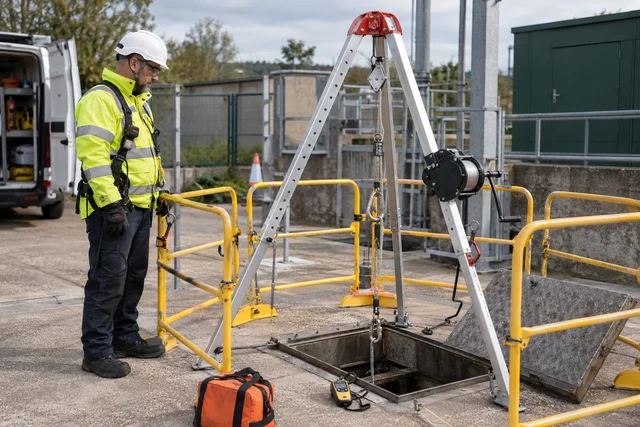

Challenge confined-space entry and verify isolation, atmosphere and rescue.
Full public teaching and readers are free to read without an account. A free learner account is required for confirmed saved assessment, completion and certificate records in the LMS.
What you will work through
Fictional West Quay project: a drainage chamber, connected wet well and service void require inspection during refurbishment. Challenge whether entry is necessary and test the evidence that would support any unavoidable entry. Competent site people retain classification, isolation, rescue and live entry authority.
The course has 5 modules and 18 lessons, with teaching, applied activities, feedback and a check of understanding throughout. There are 3 practice pauses in the actual construction model, with an equivalent accessible text route. Public interactive practice is separate from confirmed LMS assessment and completion records.
Explore the interactive practice copy. Return to the LMS route for recorded learning.
Learning outcomes
- Challenge whether the task can be achieved safely without confined-space entry.
- Identify the isolation, atmosphere, communication and safe-system evidence needed for unavoidable entry.
- Explain why suitable rescue capability must be verified and available before entry.
Course outline
Recognise and avoid entry
- Recognise a confined-space riskConfined-space recognition depends on enclosure and specified serious risk, not simply size, a ladder or a familiar name.
- Understand how serious harm can developA short route out cannot be relied on when the hazard may incapacitate or engulf the entrant.
- Establish the task and challenge entryDefine the objective and use a suitable no-entry method wherever reasonably practicable before planning unavoidable entry.
- Model practice: the routine chamber inspectionExperience and short duration do not replace avoiding entry or a verified task-specific safe system.
Build the safe system
- Build a task-specific assessmentThe work can change the confined-space risk; assess the actual task, residues, connections and foreseeable changes.
- Coordinate roles, contractors and authorisationContracting out a task does not remove site coordination; each critical control needs a competent owner with real authority.
- Isolate energy, contents and inflowsA promise or rescue device cannot prevent inflow. Identify, isolate and verify every relevant source through the approved method.
- Use the permit as live coordinationA permit covers defined work and conditions; it cannot authorise a changed hazard by retaining old signatures.
Maintain safe conditions
- Plan representative atmospheric testingA test must suit the hazards and sampling conditions; normal oxygen cannot clear unmeasured toxic or flammable substances.
- Ventilate without creating a new hazardVentilation is a live control whose effectiveness must be maintained; failure that invalidates the system requires withdrawal and reassessment.
- Model practice: one reading is not permanent clearanceChanged sources invalidate assumptions. Testing and monitoring must remain suitable and representative for the actual work period.
- Select equipment, access and communicationEquipment, access and communication must match the actual geometry and working conditions, including withdrawal and rescue.
Prepare for failure and change
- Plan rescue before anyone entersRescue readiness requires a suitable method, competent available people and compatible equipment for the real space and casualty.
- Model practice: rescue and isolation are both requiredPrevention and rescue are separate critical requirements; both must be verified and available before entry.
- Control change, interruptions and handbackRe-entry requires the prescribed checks after interruption; restore and verify the complete system, not just the most visible item.
Prove the entry decision
- Audit the entry decision at the workfaceAssurance tests whether the actual system works; complete records do not outweigh missing understanding or unproved rescue capability.
- Capstone: release the West Quay inspectionUnsuccessful no-entry work does not authorise entry. Every required element of the safe system must be ready for the actual task and period.
- Use the learning within your roleLearning supports awareness and applied decisions; live entry, testing, isolation and rescue require role-specific competence and authorisation.
Assessment and completion
Complete the required lessons and activities, then take the 20-question final assessment. The pass threshold is 80% plus every designated critical safety answer. Points and badges cannot compensate for a critical error.
Use the LMS to save and resume confirmed progress. Certificate availability follows its passed-completion and grade conditions. Browser practice and printed learning pages do not issue the official LMS record.
Independent construction learning. Completion records learning within the course scope; competent site assessment, practical training and task authorisation remain necessary. It does not confer a NEBOSH qualification.
Sources and learning provenance
The teaching draws on public SHAREhub topic pages and structured source records, with original fictional workface cases. Use the linked primary guidance and the applicable jurisdiction when planning a live task.
- HSE: Introduction to confined spaces
- HSE: Confined-space legislation
- HSE: L101 ACOP and guidance
- HSE: L101 full publication
- HSENI Safe work in confined spaces ACOP
- Confined Spaces Regulations (NI) 1999, latest available text
- HSE HSG47: Avoiding danger from underground services
- HSE: Excavations
- Street Works UK: Positioning and colour coding of underground utilities apparatus
- HSE five-level hierarchy
- IOSH hierarchy of control guidance
- Dispensing petrol as a fuel: physical hazards
- Dangerous substances and explosive atmospheres: L138
- HSE Managing for health and safety (HSG65)
- HSENI risk assessment guidance
- HSE hypoxic environments
- HSE permit-to-work systems
Topic records, source IDs and versions
| Public topic section | Chunk and version | Jurisdiction and source IDs |
|---|---|---|
| confined-spaces · what-is-it | confined-spaces--what-is-it Version 20261016-letter-review-1 | Great Britain, Northern Ireland source-conf-hse-l101, source-conf-hse-law, source-conf-ni-law, source-conf-ni-acop |
| confined-spaces · examples | confined-spaces--examples Version 20261016-letter-review-1 | Great Britain, Northern Ireland source-conf-hse-l101, source-conf-hse-law, source-conf-ni-law, source-conf-ni-acop |
| confined-spaces · hazards | confined-spaces--hazards Version 20261016-letter-review-1 | Great Britain, Northern Ireland source-conf-hse-l101, source-conf-hse-law, source-conf-ni-law, source-conf-ni-acop |
| confined-spaces · critical-warning | confined-spaces--critical-warning Version 20261016-letter-review-1 | Great Britain, Northern Ireland source-conf-hse-intro, source-conf-ni-acop |
| confined-spaces · avoid-entry | confined-spaces--avoid-entry Version 20261016-letter-review-1 | Great Britain, Northern Ireland source-conf-hse-l101, source-conf-ni-law |
| confined-spaces · review-start | confined-spaces--review-start Version 20261016-letter-review-1 | Great Britain, Northern Ireland source-conf-hse-intro, source-conf-ni-acop, source-conf-hse-l101, source-conf-ni-law |
| confined-spaces · best-practice-confined-spaces-step-3 | confined-spaces--best-practice-confined-spaces-step-3 Version 20261018-learning-guides-1 | Great Britain, Northern Ireland source-conf-hse-l101, source-conf-hse-law, source-conf-ni-law |
| confined-spaces · risk-assessment | confined-spaces--risk-assessment Version 20261016-letter-review-1 | Great Britain, Northern Ireland source-conf-hse-l101, source-conf-hse-law, source-conf-ni-law, source-conf-ni-acop |
| confined-spaces-risk-management · risk-assessment | confined-spaces-risk-management--risk-assessment Version 20261016-letter-review-1 | Great Britain, Northern Ireland source-csrm-hse-l101, source-csrm-hse-law, source-csrm-ni-law, source-csrm-ni-acop |
| confined-spaces · audience | confined-spaces--audience Version 20261016-letter-review-1 | Great Britain, Northern Ireland source-conf-hse-l101, source-conf-hse-law, source-conf-ni-law, source-conf-ni-acop |
| confined-spaces-risk-management · contractors | confined-spaces-risk-management--contractors Version 20261016-letter-review-1 | Great Britain, Northern Ireland source-csrm-hse-l101, source-csrm-hse-law, source-csrm-ni-law, source-csrm-ni-acop |
| confined-spaces-risk-management · governance | confined-spaces-risk-management--governance Version 20261016-letter-review-1 | Great Britain, Northern Ireland source-csrm-hse-l101, source-csrm-hse-law, source-csrm-ni-law, source-csrm-ni-acop |
| confined-spaces · isolation | confined-spaces--isolation Version 20261016-letter-review-1 | Great Britain, Northern Ireland source-conf-hse-l101, source-conf-hse-law, source-conf-ni-law, source-conf-ni-acop |
| confined-spaces-risk-management · permit-governance | confined-spaces-risk-management--permit-governance Version 20261016-letter-review-1 | Great Britain, Northern Ireland source-csrm-hse-l101, source-csrm-hse-law, source-csrm-ni-law, source-csrm-ni-acop |
| confined-spaces · permits | confined-spaces--permits Version 20261016-letter-review-1 | Great Britain, Northern Ireland source-conf-hse-l101, source-conf-hse-law, source-conf-ni-law, source-conf-ni-acop |
| confined-spaces · safe-system | confined-spaces--safe-system Version 20261016-letter-review-1 | Great Britain, Northern Ireland source-conf-hse-l101, source-conf-hse-law, source-conf-ni-law, source-conf-ni-acop |
| confined-spaces · atmosphere | confined-spaces--atmosphere Version 20261016-letter-review-1 | Great Britain, Northern Ireland source-conf-hse-l101, source-conf-hse-law, source-conf-ni-law, source-conf-ni-acop |
| confined-spaces · best-practice-confined-spaces-step-5 | confined-spaces--best-practice-confined-spaces-step-5 Version 20261018-learning-guides-1 | Great Britain, Northern Ireland source-conf-hse-l101, source-conf-ni-acop, source-conf-hse-hypoxic |
| confined-spaces · best-practice-confined-spaces-step-4 | confined-spaces--best-practice-confined-spaces-step-4 Version 20261018-learning-guides-1 | Great Britain, Northern Ireland source-conf-hse-l101, source-conf-hse-law, source-conf-ni-law |
| confined-spaces · learning | confined-spaces--learning Version 20261016-letter-review-1 | Great Britain, Northern Ireland source-conf-hse-l101, source-conf-hse-law, source-conf-ni-law, source-conf-ni-acop |
| confined-spaces · training | confined-spaces--training Version 20261016-letter-review-1 | Great Britain, Northern Ireland source-conf-hse-l101, source-conf-hse-law, source-conf-ni-law, source-conf-ni-acop |
| confined-spaces · rescue | confined-spaces--rescue Version 20261016-letter-review-1 | Great Britain, Northern Ireland source-conf-hse-l101, source-conf-hse-intro, source-conf-ni-acop |
| confined-spaces-risk-management · rescue-governance | confined-spaces-risk-management--rescue-governance Version 20261016-letter-review-1 | Great Britain, Northern Ireland source-csrm-hse-l101, source-csrm-hse-law, source-csrm-ni-law, source-csrm-ni-acop |
| confined-spaces · buildout-excavation-example | confined-spaces--buildout-excavation-example Version 20261016-letter-review-1 | Great Britain S1, S2, S4 |
| confined-spaces-risk-management · buildout-excavation-example | confined-spaces-risk-management--buildout-excavation-example Version 20261016-letter-review-1 | Great Britain S1, S2, S4 |
| confined-spaces-risk-management · change | confined-spaces-risk-management--change Version 20261016-letter-review-1 | Great Britain, Northern Ireland source-csrm-hse-l101, source-csrm-hse-law, source-csrm-ni-law, source-csrm-ni-acop |
| confined-spaces · warning-signs | confined-spaces--warning-signs Version 20261016-letter-review-1 | Great Britain, Northern Ireland source-conf-hse-l101, source-conf-hse-law, source-conf-ni-law, source-conf-ni-acop |
| confined-spaces-risk-management · register | confined-spaces-risk-management--register Version 20261016-letter-review-1 | Great Britain, Northern Ireland source-csrm-hse-l101, source-csrm-hse-law, source-csrm-ni-law, source-csrm-ni-acop |
| confined-spaces-risk-management · assurance | confined-spaces-risk-management--assurance Version 20261016-letter-review-1 | Great Britain, Northern Ireland source-csrm-hse-l101, source-csrm-hse-law, source-csrm-ni-law, source-csrm-ni-acop |
| confined-spaces · evidence | confined-spaces--evidence Version 20261016-letter-review-1 | Great Britain, Northern Ireland source-conf-hse-l101, source-conf-hse-law, source-conf-ni-law, source-conf-ni-acop |
| confined-spaces-risk-management · control-standard | confined-spaces-risk-management--control-standard Version 20261016-letter-review-1 | Great Britain, Northern Ireland source-csrm-hse-l101, source-csrm-ni-acop, source-csrm-hse-hierarchy, source-csrm-hse-l101-pdf, source-csrm-hse-intro, share-hierarchy-iosh |
| confined-spaces-risk-management · design-out | confined-spaces-risk-management--design-out Version 20261016-letter-review-1 | Great Britain, Northern Ireland source-csrm-hse-l101, source-csrm-ni-law |
| confined-spaces · legal | confined-spaces--legal Version 20261016-letter-review-1 | Great Britain, Northern Ireland source-conf-hse-law, source-conf-ni-law, source-conf-ni-acop, source-conf-hse-l101 |
| confined-spaces-risk-management · training | confined-spaces-risk-management--training Version 20261016-letter-review-1 | Great Britain, Northern Ireland source-csrm-hse-l101, source-csrm-hse-law, source-csrm-ni-law, source-csrm-ni-acop |
| confined-spaces · management-system | confined-spaces--management-system Version 20261016-letter-review-1 | Great Britain, Northern Ireland source-conf-hse-l101, source-conf-hse-law, source-conf-ni-law, source-conf-ni-acop, source-conf-hse-hsg65, source-confined-spaces-hseni-risk-copyright |
Course version 2026.10.20.4 · SH-CS-01. Factual source identity and jurisdiction are retained in the .
Questions about this course
Is this course free?
Yes. The training is £0. Full public teaching and readers can be used without an account. A free learner account is required for confirmed saved assessment, completion and certificate records in the LMS.
How long should I allow?
Approx. 2h 10m–3h: approximately 130–180 minutes of self-paced learning, including required activities and one final-assessment attempt. Your pace, review and retries may increase the time. Save and resume in the LMS.
Can I study without a 3D-capable browser?
Yes. The complete learning reader is available in ordinary HTML. Where this course includes model practice, an accessible text route provides the same decision sequence. Use the interactive LMS course to complete its assessed requirements.
What do I need to pass?
Complete the required learning and achieve at least 80% in the final assessment, with every critical safety answer correct. Follow the feedback and review the relevant lesson before retrying.
Where is my completion record?
The LMS holds confirmed grades, completion and certificate records for your learner account. Public browser practice has its own separate progress and is not an official completion record.
Does completion authorise construction work?
Independent construction learning. Completion records learning within the course scope; competent site assessment, practical training and task authorisation remain necessary. It does not confer a NEBOSH qualification.
Presentation and model workshop
Use the same course imagery, worked decisions and source case in a 28-slide teaching companion. Practise classification, compare explained choices and inspect the linked model case.
Open the interactive presentation workshop · Download PowerPoint
This optional companion does not replace the required course activities or final assessment.