Focused awareness learning based on SHAREhub pages. Apply the actual workplace arrangements and your role; completion is not practical competence or permission for specialist work.
This reader supplies the complete teaching. Use the interactive LMS course for assessed activities, saved progress and completion.
LESSON 1
Understand the prevention purpose
Understand the prevention purpose.
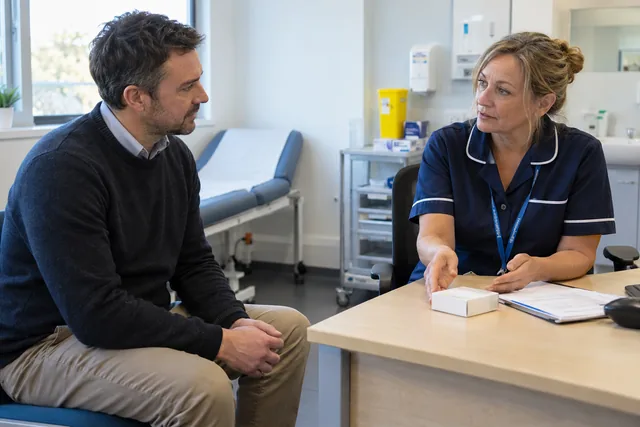
Existing SHAREhub photographic illustration. The written fictional case supplies the condition and decision evidence.
Understand the prevention purpose
Health surveillance is a planned, repeated process looking for early work-related ill health linked to specific exposure. Its purpose is to detect relevant changes and prompt action before harm progresses. The work risk matters: respiratory sensitisation, skin contact, noise and vibration can require different approaches. A general wellness questionnaire or an absence report does not automatically answer those occupational questions. Nor does a normal result demonstrate that every exposure control is adequate.
Begin with the risk assessment and competent advice. Identify the effect being looked for, people who may remain exposed and what action a finding would trigger. The scheme should challenge the control system as well as support individuals. Buying tests without defining these connections can create reassuring paperwork while the harmful task remains unchanged.
Applied case
A manager buys a general wellbeing questionnaire and describes it as proof that noisy and dusty tasks are safely controlled, although no risk-specific scheme has been agreed.
Look beyond the label
Surveillance looks for defined work-related effects. It complements prevention but cannot repair extraction, reduce tool vibration or remove noise; those controls need their own evidence and action.
Test your decision
What is missing from that claim?
Permission to stop maintaining exposure controls.
The link between actual exposure, relevant early detection and the action required.
Only a higher questionnaire response rate.
Compare the explanation
The link between actual exposure, relevant early detection and the action required.
A general check cannot be relabelled as evidence for a risk-specific surveillance or control question.
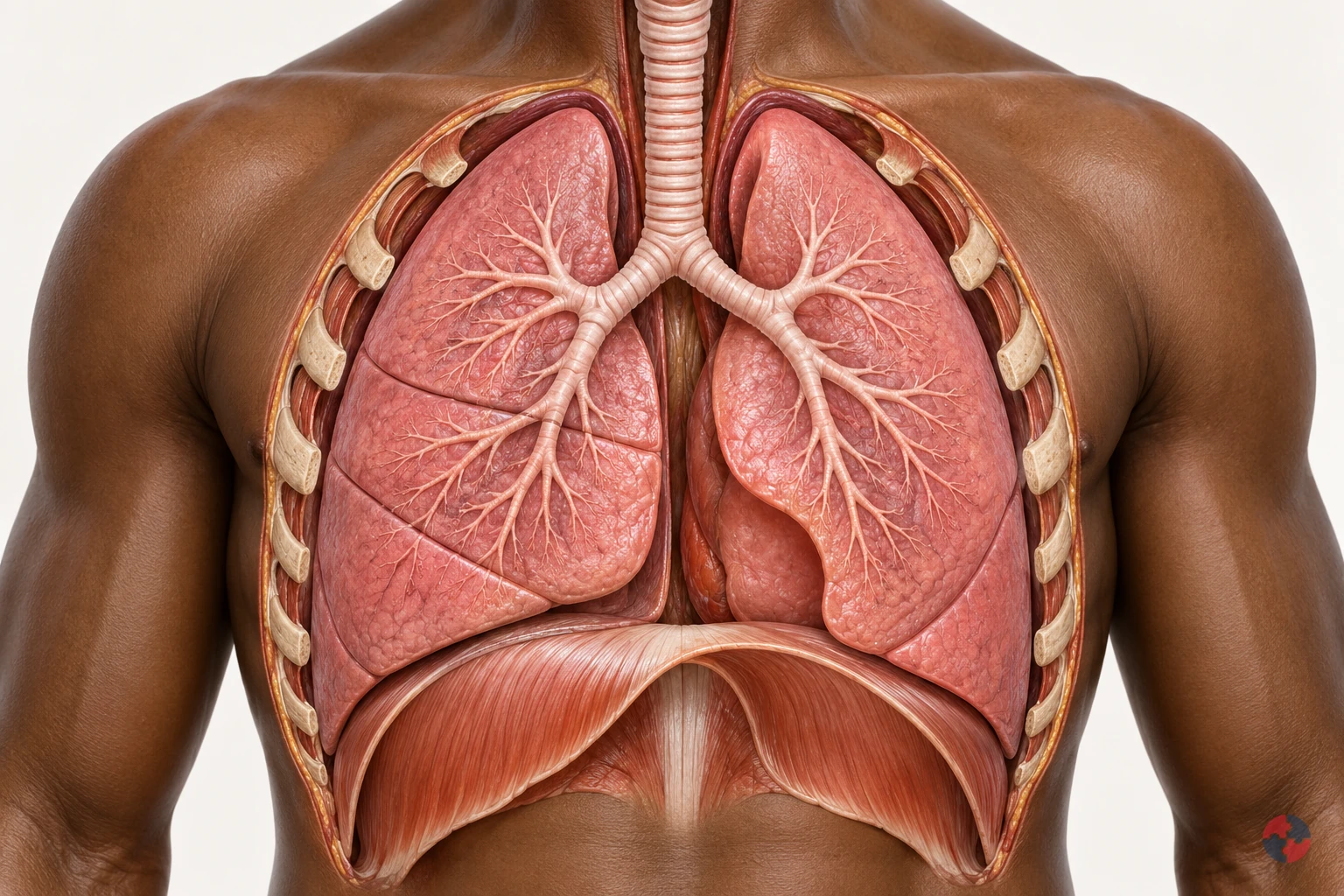
Locate the lungs, branching airways and diaphragm below them. The cutaway reveals structures normally hidden by the chest wall.
Trace the source-to-breathing-zone route in this lesson. Which change would prevent the contaminant reaching the person?
educational illustration · healthy anatomy; enlarged details and teaching colours.View full detail ↗Under the skin surface
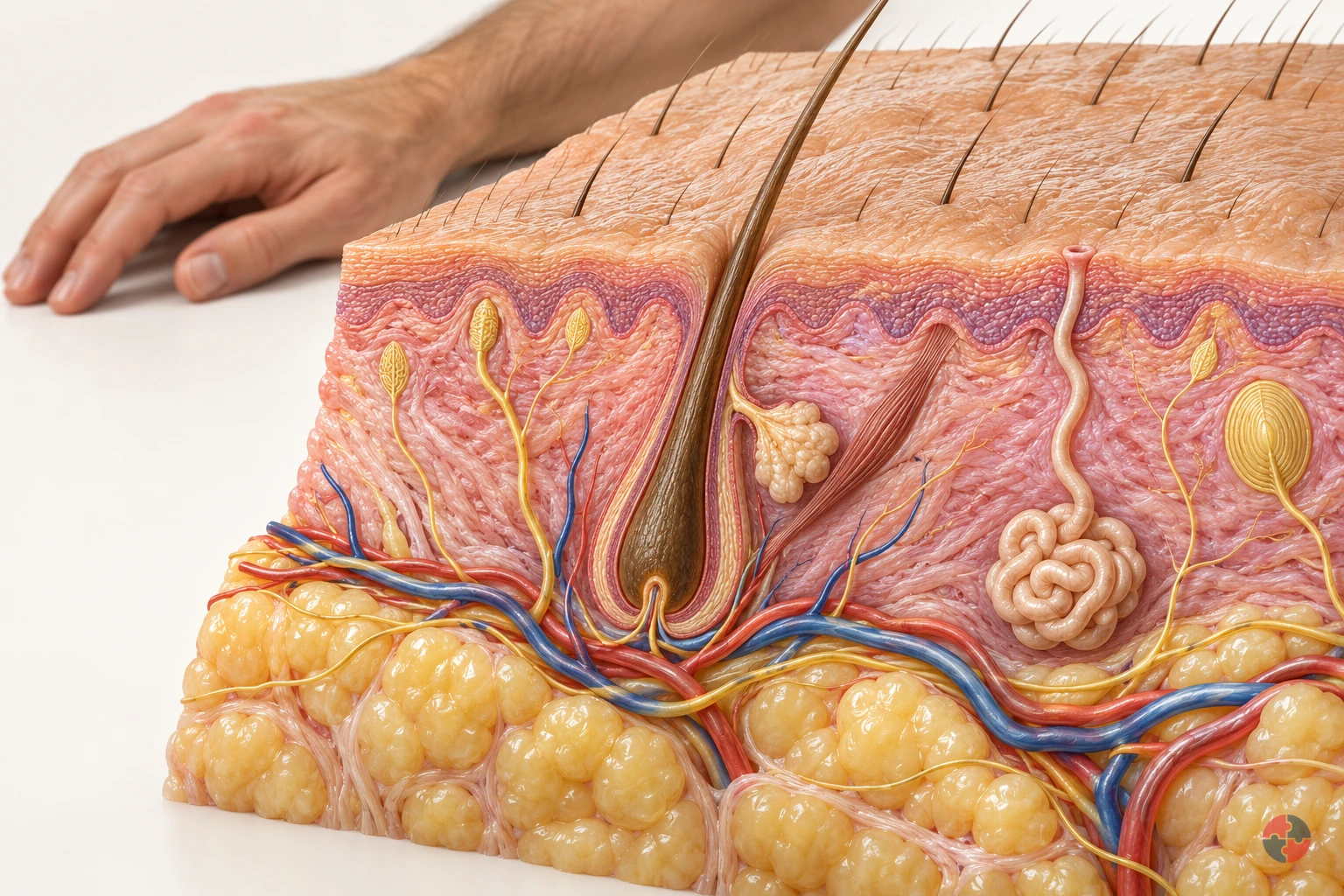
Explore an enlarged section of hair-bearing skin, with a hand and forearm for context. Layers, glands, nerves and vessels are enlarged for clarity.
Use the task in this lesson to identify contact, repeated wet work or contamination. Which change reduces contact before relying on gloves?
educational illustration · healthy anatomy; enlarged details and teaching colours.
Photorealistic illustrative UK workplace scene. Review checks: Surveillance list does not match risk assessment: Workers at risk are missed or low-risk workers are included without purpose. Results are filed without review: Control failure continues until disease appears. Medical details circulate: Trust is damaged and privacy law may be breached.
Define the exposure groups and scope
The decision to arrange surveillance depends on the actual work-related risk, realistic exposure, an identifiable effect and a useful way to detect it early. It is not settled solely by owning a tool or using a substance. Specific regimes can impose particular requirements, so the competent adviser must identify the applicable route rather than offering one generic test for everyone. Great Britain and Northern Ireland require their own legal checks.
Keep the scheme aligned with current tasks and people. Include relevant temporary workers, contractors or other groups through the agreed responsibilities. A change in material, process, control or work pattern can change who needs assessment. Record why a group is included, how checks are arranged and what review is needed when work changes; do not rely on a historic job title alone.
Applied case
A worker moves from office duties to regular dusty production work. The register still excludes them because their original job title has not changed in the personnel system.
Look beyond the label
A register is a way to organise a scheme, not the definition of risk. Check the current task against the inclusion criteria whenever roles, materials or working conditions change.
Test your decision
What should determine the review?
Current exposure and the competent scheme criteria.
The historic job title alone.
Whether the worker has already developed symptoms.
Compare the explanation
Current exposure and the competent scheme criteria.
Scope follows relevant exposure and requirements; waiting for symptoms defeats early prevention.
Existing SHAREhub 2D teaching schematic. Use alongside the explanation and fictional case in this lesson.
Distinguish uptake from health effects
Biological monitoring measures chemical uptake into the body. Depending on the substance and method, it can help reveal exposure through more than one entry route. Health surveillance looks for relevant health effects. Air monitoring examines airborne conditions. These questions are related but not interchangeable. A biological result cannot, on its own, diagnose disease or identify exactly which route caused the uptake. A respiratory questionnaire does not replace an exposure check where one is needed.
Competent arrangements determine whether a method is appropriate, representative sampling, timing, interpretation and follow-up. A result must be considered with the task, controls and relevant circumstances. Managers should not select a convenient sampling day or interpret a number from a generic chart. The purpose is useful exposure-control information with proper handling of individual health data.
Applied case
A supervisor interprets a chemical-uptake result as a diagnosis and assumes it proves inhalation was the only route, without asking the competent provider about the task or sampling.
Look beyond the label
A measurement is only useful within its method and task context. Sampling timing and interpretation belong with competent arrangements; a manager should act on the resulting work-focused advice.
Test your decision
What is the evidential limit?
It proves every control is effective.
It replaces every relevant health-surveillance check.
The result needs competent task-related interpretation and does not alone diagnose disease or identify the route.
Compare the explanation
The result needs competent task-related interpretation and does not alone diagnose disease or identify the route.
Uptake, exposure route and health effects are different assessment questions.
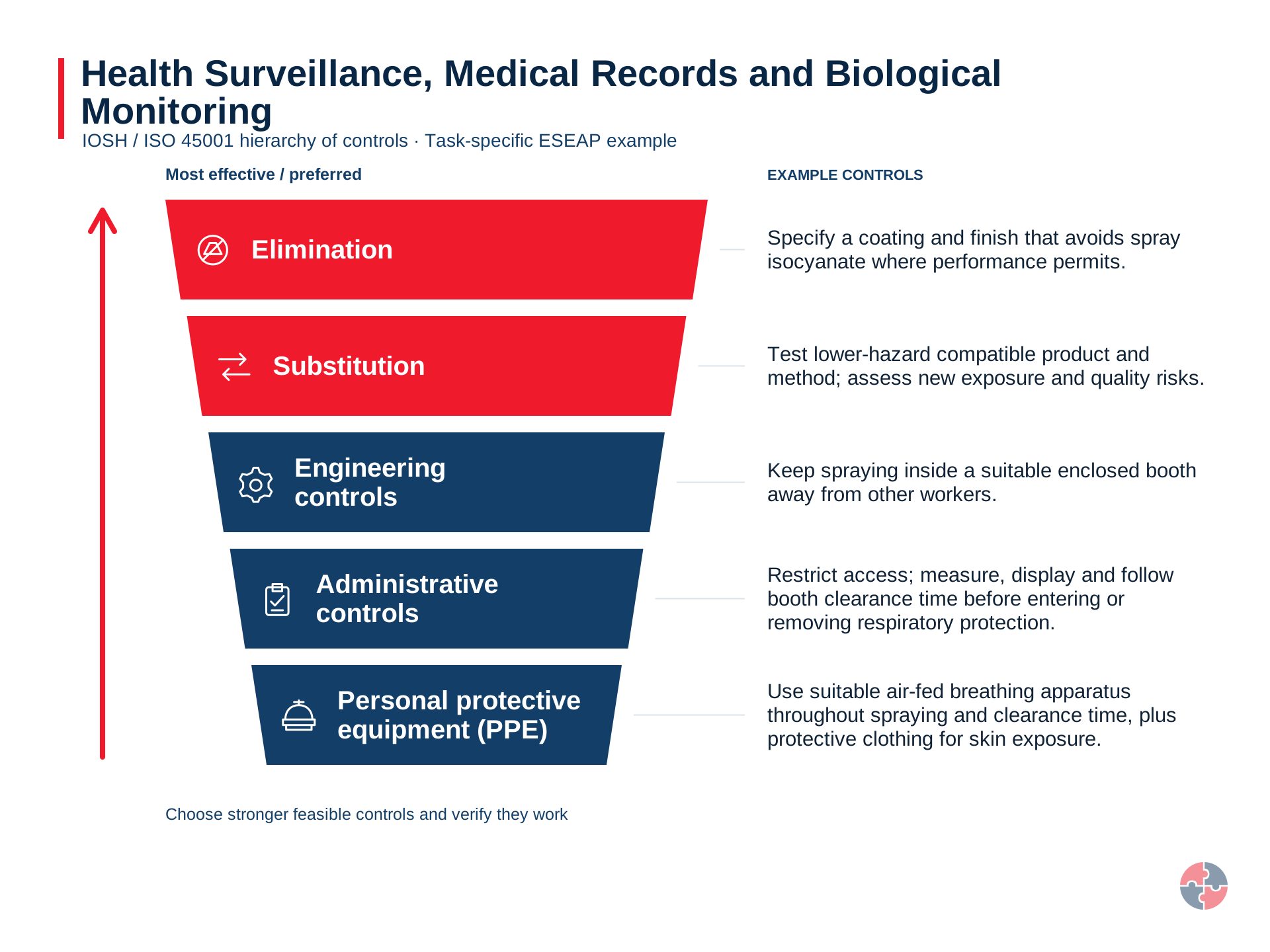
Photorealistic illustrative UK workplace scene. Review checks: Eliminate: Specify a coating and finish that avoids spray isocyanate where performance permits. Reduce: Test lower-hazard compatible product and method; assess new exposure and quality risks. Isolate: Keep spraying inside a suitable enclosed booth away from other workers. Control: Maintain booth extraction and verified capture for the actual spray task. Control: Restrict access; measure, display and follow booth clearance time before entering or removing respiratory protection.
Specify a scheme that leads to action
Agree the scheme before collecting questionnaires or booking tests. Define exposure groups, the relevant method, baseline needs, review arrangements, competent interpretation and the action route. Workers need to understand the purpose and how findings will be used. A programme that cannot explain what happens after a concern is detected is incomplete, even when appointments are delivered on time. Attendance is a process measure, not proof that people are protected.
Connect referral and work decisions to control review. Decide who receives necessary work-focused advice, who arranges follow-up and who checks that agreed changes occur. Consult workers about practical access and concerns without asking them to disclose clinical details in a public briefing. Review the scheme when the work or evidence changes rather than renewing an unchanged service package automatically.
Applied case
A provider contract lists appointment numbers but no responsible person for receiving restrictions, arranging follow-up or reviewing controls when a result changes. The manager is ready to renew.
Look beyond the label
Ask what the organisation will do differently if a relevant change is found. If no one owns that decision, more completed tests will not fill the gap in prevention.
Test your decision
What should be added before renewal is accepted?
A rule that attendance closes every health concern.
Clear competent interpretation, follow-up and workplace action responsibilities.
Only more appointment slots.
Compare the explanation
Clear competent interpretation, follow-up and workplace action responsibilities.
A scheme needs a usable path from finding to individual support and exposure-control action.
Existing SHAREhub photographic illustration. The written fictional case supplies the condition and decision evidence.
Separate employer and clinical information
The employer health record supports work-risk decisions, such as fitness information, restrictions, follow-up and relevant scheme outcomes. Confidential clinical records are held through the occupational-health process. Managers do not normally need detailed clinical notes or unrelated medical history to arrange safer work. Access, security, purpose and retention must follow the applicable requirements; different regimes can have different rules. A single generic retention promise should not be imposed on every record type.
Provide enough accurate information for authorised people to implement controls and restrictions. Protect clinical detail and explain the arrangements to workers. Changing providers or a worker leaving should not make necessary records unusable. Keep the employer record, clinical record and exposure-monitoring evidence distinguishable so information is neither lost nor circulated indiscriminately in ordinary management files.
Applied case
A supervisor creates a widely shared spreadsheet containing clinical test details alongside equipment checks. They say all managers need the full notes to arrange suitable tasks.
Look beyond the label
Useful management information and private clinical information serve different purposes. A secure scheme supplies the relevant work outcome without copying unnecessary medical detail into routine operational records.
Test your decision
What is the appropriate information boundary?
Share necessary work-focused advice through controlled access while retaining clinical detail confidentially.
Give every manager the whole clinical file.
Withhold every work restriction because health information is private.
Compare the explanation
Share necessary work-focused advice through controlled access while retaining clinical detail confidentially.
Confidentiality should protect detail while allowing the necessary work decisions to be implemented.
Photorealistic illustrative UK workplace scene. Review checks: Assessing: Map substances, routes of entry, task duration, abnormal work, PPE reliance, noise areas, maintenance cleaning and emergency exposure scenarios. Analysing: Compare air monitoring, biological monitoring, symptoms, missed surveillance, PPE defects and maintenance findings. Implementing: Set baseline checks, biological monitoring where justified, hearing checks, confidentiality rules, provider competence and worker briefings.
Follow findings through to better controls
A relevant finding should prompt appropriate explanation, referral, support or restrictions for the individual and a review of the exposure controls. Repeated similar findings can signal a shared work-system problem. A single serious or unexpected concern can also require prompt review; managers should not wait for a cluster before acting. Grouped trends can support learning without revealing identifiable clinical detail. The right response depends on competent advice and the actual work risk.
Check that agreed changes reach the workface. If an exposure control has failed, retain the affected restriction until the responsible review and verification support return. A referral booking does not repair the source. Record who owns the action, what evidence closes it and whether the scheme needs revision. Treat outcomes as prevention information rather than a score for blaming workers.
Applied case
Several relevant findings are followed by individual referrals, but the common exposure task remains unchanged. The manager wants to close the action because every appointment has been booked.
Look beyond the label
A referral is a next step, not the end of prevention. Follow the evidence to the task, implement the required changes and verify them while protecting individual health information.
Test your decision
What remains before the control action can close?
Only a count of appointment confirmations.
A decision to remove the shared task from the report.
Review and verified implementation of the necessary workplace controls and advice.
Compare the explanation
Review and verified implementation of the necessary workplace controls and advice.
Individual follow-up and correction of a shared exposure problem are separate responsibilities.