Focused awareness learning based on SHAREhub pages. Apply the actual workplace arrangements and your role; completion is not practical competence or permission for specialist work.
This reader supplies the complete teaching. Use the interactive LMS course for assessed activities, saved progress and completion.
LESSON 1
Start with the hazard, not the cupboard
Explain why PPE follows stronger risk controls.
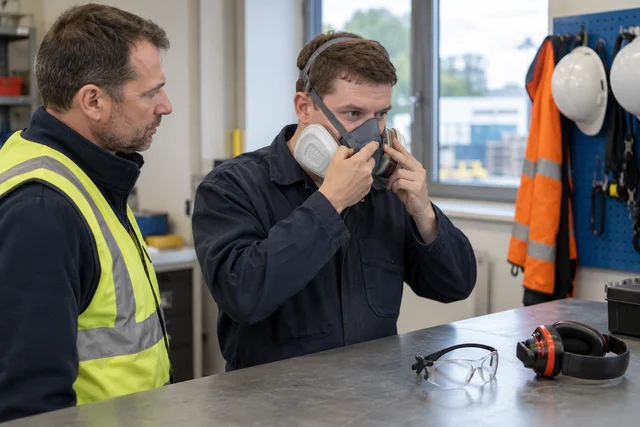
Existing SHAREhub photographic illustration. The written fictional case supplies the condition and decision evidence.
Start with the hazard, not the cupboard
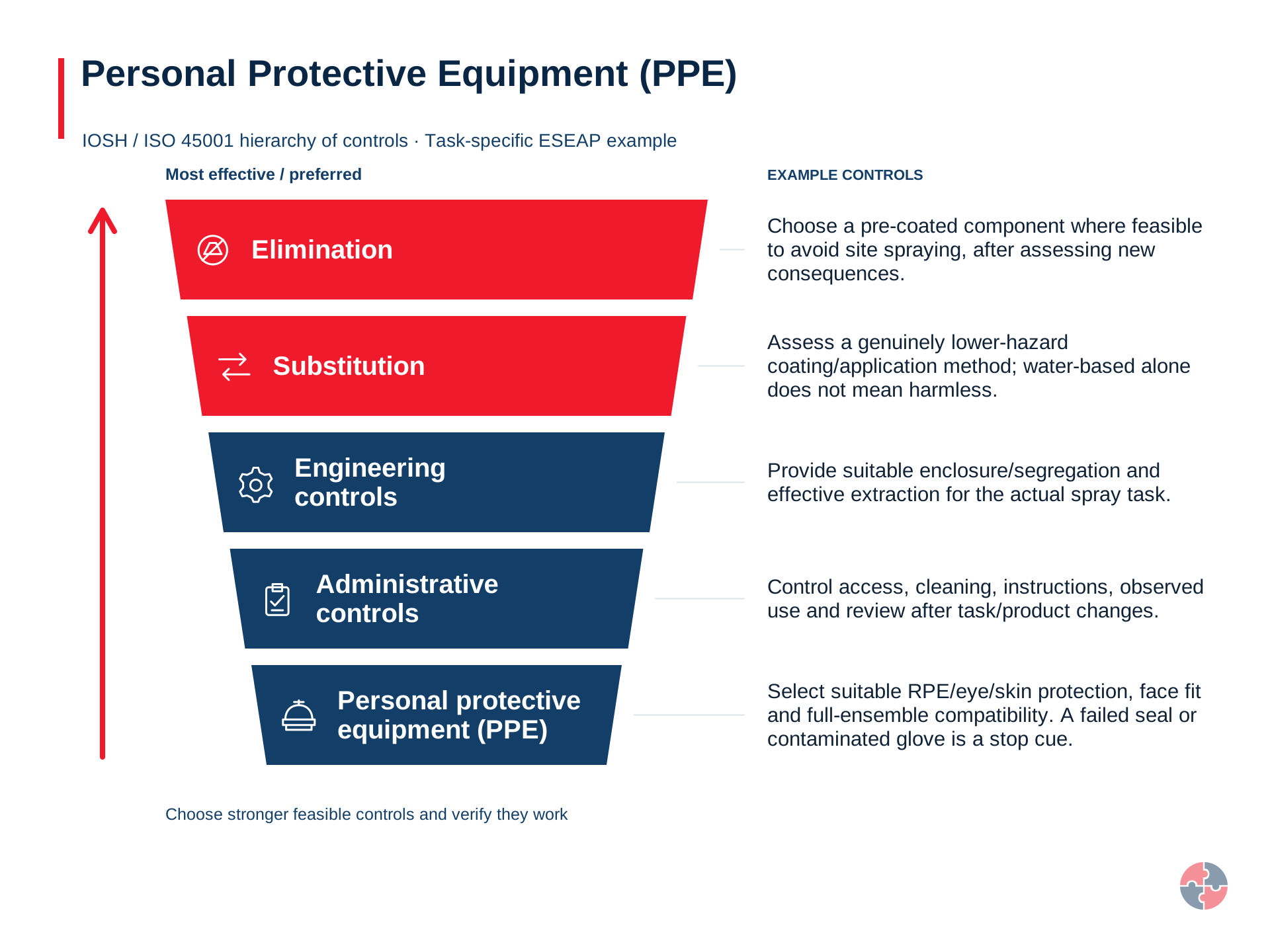
PPE protects the person rather than removing the source of harm. First consider avoiding the hazardous task, using a less hazardous material or method, and suitable engineering control such as containment or extraction. Procedures and supervision maintain the arrangement; PPE then addresses the remaining exposure where needed.
An item is not a reason to accept failed upstream control. If required extraction is defective, putting on a mask does not authorise continuing unchanged. Use the task’s stop and review arrangements. The assessment must also consider hazards created by the control itself, such as gloves interfering with dexterity or becoming unsuitable around machinery. The page applies this layered reasoning to dust, chemicals, noise and other hazards; one instruction to wear protection cannot cover every task or exposure route.
Applied case
A dusty task is proposed with the same masks after required extraction is found disconnected. The crew is told the PPE makes the change acceptable without further review.
Layers have different jobs
Removing a task, capturing a release and protecting a wearer act at different points. The presence of one item does not prove the other required controls work.
Test your decision
What should the team challenge?
Whether more signed issue records can replace source control.
The failed upstream control and the absence of a suitable reviewed task arrangement.
The need to consider extraction once any mask is issued.
Compare the explanation
The failed upstream control and the absence of a suitable reviewed task arrangement.
PPE does not automatically compensate for a failed required control.
Identify the evidence needed before choosing an item.
Photorealistic illustrative UK workplace scene. Review checks: Source / exposure: PPE fails when selection, fit, compatibility, maintenance, behaviour or upstream control decisions are weak. Possible consequence: A filter for particles will not automatically control a solvent vapour, and even the correct respirator fails if the seal is poor. Control failure: Check the hazard route, fit, compatibility and condition before issue; stop the task when the required protection cannot be demonstrated.
Select for hazard, task and wearer
PPE suitability depends on the hazard and exposure route, the task, duration, environment and person. Gloves suitable for one chemical may not suit another or the work’s grip and dexterity needs. Eye protection and clothing also need the appropriate purpose and coverage. A catalogue name is only a starting point.
Use the task assessment, relevant substance and equipment information and competent advice where necessary. Check whether the wearer can use the item safely and comfortably alongside the actual work. Explain its limits and when replacement or review is needed. If suitable protection is unavailable or the requirement is unclear, resolve that gap before relying on it. Do not choose a specialist protective system from a generic learning example or treat familiar appearance as technical equivalence.
Applied case
The store supplies the same gloves for cleaning and handling sharp components, although the assessments describe different hazards. Staff struggle with grip during the second task.
Useful information has a scope
A product claim or prior successful use helps only within the hazard and conditions it covers. The actual task and wearer still need to fit that evidence.
Test your decision
What should selection consider?
The actual hazards, performance, wearer and task requirements for each use.
Only the brand already in stock.
A rule that one glove type controls every hazard.
Compare the explanation
The actual hazards, performance, wearer and task requirements for each use.
Selection must fit the particular exposure and work, including usability.
Existing SHAREhub 2D teaching schematic. Use alongside the explanation and fictional case in this lesson.
Check the combination together
Items worn together need to remain compatible. Spectacle arms can disturb the seal of a tight-fitting respirator, and a helmet can affect ear-defender position. An item that works alone may fail as part of the complete combination. This is a selection and use problem, not simply a reason to blame the wearer.
Check the actual items together on the person using the specified assessment and fitting arrangements. Consider comfort, movement, communication and the task environment as well as individual performance claims. If one item defeats another, obtain a suitable compatible combination; do not leave out required protection or improvise modifications. Workers should report slipping, interference or inability to perform the task. Confirm the agreed solution in actual use rather than accept separate signed records for conflicting items.
Applied case
The required glasses lift the edge of a tight-fitting facepiece. Both items have separate issue records, and the supervisor proposes removing the glasses for the task.
Compatible means working together
Separate suitable items can still conflict. Check the actual combination, wearer and task rather than assume individual product claims establish the complete protection system.
Test your decision
What is the defensible response?
Treat separate issue records as proof the combination works.
Omit required eye protection to preserve the facepiece seal.
Resolve a compatible protective combination through the selection and fitting arrangements.
Compare the explanation
Resolve a compatible protective combination through the selection and fitting arrangements.
The whole combination must control the assessed hazards without one item defeating another.
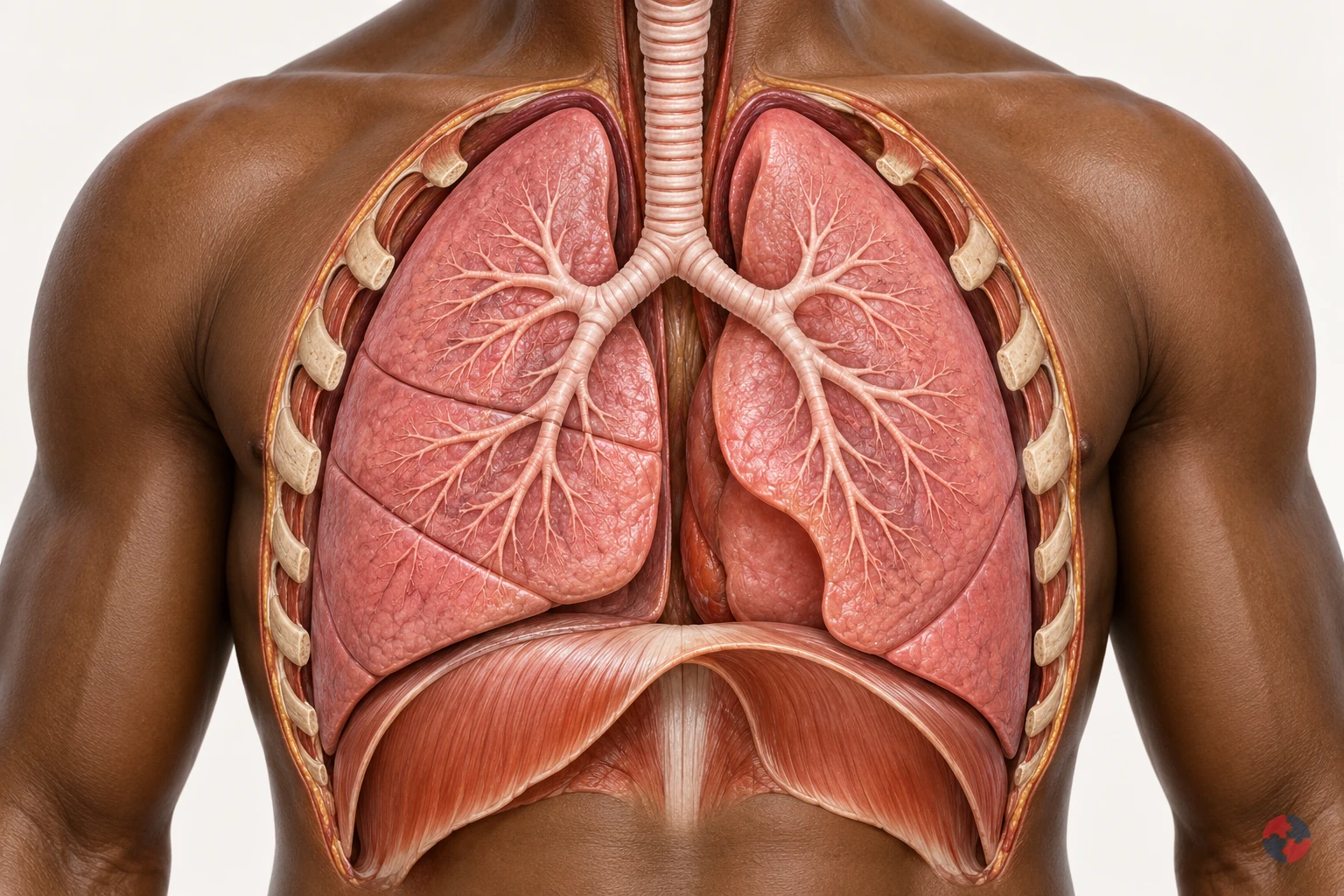
Locate the lungs, branching airways and diaphragm below them. The cutaway reveals structures normally hidden by the chest wall.
Trace the source-to-breathing-zone route in this lesson. Which change would prevent the contaminant reaching the person?
educational illustration · healthy anatomy; enlarged details and teaching colours.
Photorealistic illustrative UK workplace scene. Review checks: Eliminate: Avoid the hazardous task or material. Substitute: Use a less hazardous chemical or quieter tool. Engineer: LEV, guarding, enclosure, extraction or barriers. Administrative: Permit, training, rotation, exclusion and procedures. PPE: Gloves, RPE, eyewear, hearing protection or helmets.
Respect respiratory-protection limits
Respiratory protective equipment needs selection for the contaminant’s form, assessed exposure, protection needed, task and wearer. A particle filter does not automatically protect against a solvent vapour. A filtering facepiece does not supply missing oxygen or make an unknown atmosphere safe. Specialist selection belongs with the competent process.
Tight-fitting facepieces need the appropriate face-fit testing and correct use, including control of facial hair in the sealing area. The wearer must follow the specified checks and instructions. A test for another person or facepiece does not establish this combination fits. Report a damaged seal, unsuitable filter or uncertainty; do not enter exposure to see whether the equipment works. Awareness completion is not authority to select breathing apparatus, conduct fit tests or undertake rescue.
Applied case
A worker offers a spare particulate facepiece for a task with unresolved vapour and atmosphere information. The supervisor assumes the word mask establishes suitable protection for any inhalation hazard.
Fit and filtering differ
The right filter cannot protect through a failed seal, and a good seal cannot make the wrong filter suitable. Neither supplies oxygen to an oxygen-deficient atmosphere.
Test your decision
What must be resolved?
A rule that every filter supplies oxygen.
The actual hazard and suitable respiratory system, including its fit and limitations.
Whether the spare looks clean enough to cover all atmospheres.
Compare the explanation
The actual hazard and suitable respiratory system, including its fit and limitations.
Different hazards need different systems; an unknown selection cannot be solved by generic appearance.
Identify pre-use checks, cleaning, storage and replacement.
Existing SHAREhub photographic illustration. The written fictional case supplies the condition and decision evidence.
Keep protection effective between tasks
Inspection, cleaning, storage and timely replacement keep protection in its required condition. Follow the manufacturer’s instructions and the task arrangements for reusable and single-use equipment. Pre-use checks should identify damage, contamination, worn parts and relevant expiry or replacement conditions before exposure begins.
Store clean equipment where it will not be damaged or contaminated. Keep responsibility and supplies clear so a defect is resolved rather than passed to the next wearer. Do not improvise a repair or cleaning method that could damage performance. If the required clean, compatible protection is unavailable, arrange a suitable task decision before restarting. Maintenance records help show what happened, but the item’s actual state matters too; a completed check cannot overrule damage found at the point of use.
Applied case
A reusable item has a current inspection record but is found damaged after storage beside sharp contaminated materials. The next worker is asked to use it until replacement stock arrives.
A check has a time and scope
A favourable record supports what was checked then. Later damage or contamination is new information that must be acted on before the item is relied on.
Test your decision
What should govern the next task?
The current defect and suitable protection arrangements, not the earlier inspection alone.
The inspection date as permission to ignore later damage.
A temporary unapproved repair chosen by the wearer.
Compare the explanation
The current defect and suitable protection arrangements, not the earlier inspection alone.
Condition can change after an inspection; current required protection must be available.
Distinguish an issue record from an effective control.
Photorealistic illustrative UK workplace scene. Review checks: Setting: Solvent-coating spray in a workshop booth, with respiratory, eye and skin exposure. Act: Confirm coating, booth extraction, suitable respirator/goggles and their combined fit. Hold / review: Failed airflow, visible plume escape, damaged item or broken face seal; stop spraying.
Verify use and learn from problems
A PPE issue record establishes that equipment was handed over. Effective protection also needs suitability, fit, compatibility, understanding, correct use and continued condition during the task. Ask workers whether the arrangement is usable and check problems at the point of exposure.
Repeated difficulties can reveal weak selection or upstream controls rather than a need for another reminder alone. Connect the finding to the task assessment, competent review and corrective action. Check the result after replacement or adjustment and communicate restrictions to those affected. The optional fictional exercise compares what the stores record shows with the actual work. It does not authorise you to approve specialist PPE or change a live task; workplace competence and the responsible decision process remain necessary.
Applied case
The extraction is repaired and a compatible combination is selected, but no one verifies whether the team can use and maintain it during the actual maintenance work.
Ask what the record proves
Issue, training and maintenance records each answer a different question. Connect them to current task evidence before concluding that the required protection is effective.
Test your decision
What would establish a stronger control picture?
Count issued items as the full assurance result.
Assume a new product removes every need for instruction.
Confirm effective upstream control and the specified protection in actual use, with remaining problems addressed.
Compare the explanation
Confirm effective upstream control and the specified protection in actual use, with remaining problems addressed.
The control must work through the whole task and lifecycle, not stop at issue.