Focused awareness learning based on SHAREhub pages. Apply the actual workplace arrangements and your role; completion is not practical competence or permission for specialist work.
This reader supplies the complete teaching. Use the interactive LMS course for assessed activities, saved progress and completion.
LESSON 1
Recognise the handling task
Include lifting, carrying, pushing, pulling and support.
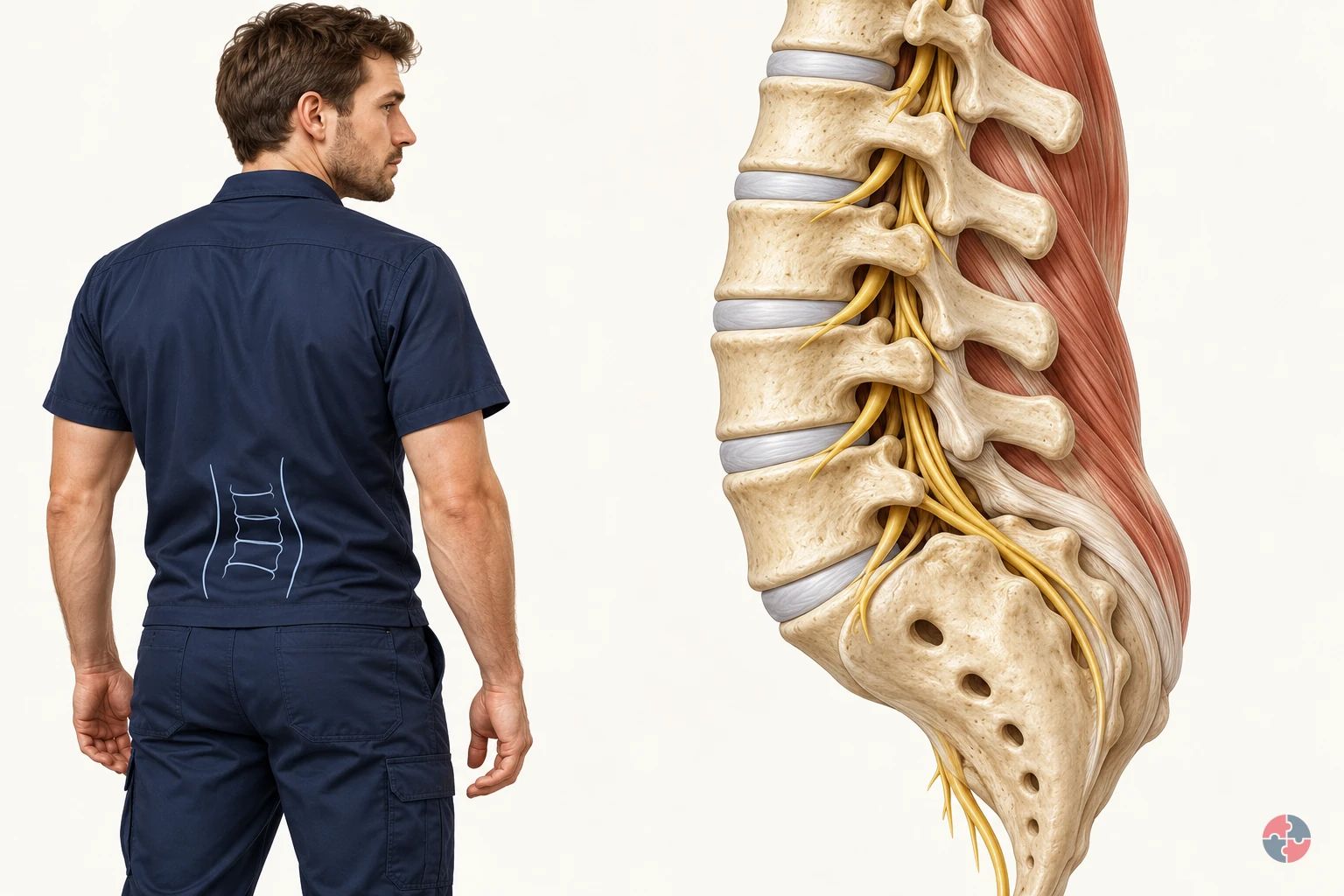
The worker locates the lower back; the separate side view enlarges its bones, discs, nerve roots and nearby muscle.
Locate the lower back. How could the load, reach, route, equipment or work pattern be changed for the task in this lesson?
educational illustration · healthy anatomy; enlarged details and teaching colours.
Existing SHAREhub photographic illustration. The written fictional case supplies the condition and decision evidence.
Recognise the handling task
Manual handling is transporting or supporting a load by hand or bodily force, including lifting, lowering, pushing, pulling, carrying and moving. A load can be an object, person or animal. Manual handling becomes hazardous when the task, load, person, environment or work organisation creates a risk of injury. The law does not set a single safe weight limit because risk depends on reach, height, frequency, posture, grip, distance, pace, recovery, floor condition, team handling and individual capability. Sources: HSE manual handling at work ; HSENI manual handling The legal hierarchy is simple and powerful: avoid hazardous manual handling so far as reasonably practicable; assess any hazardous handling that cannot be avoided; reduce the risk of injury so far as reasonably practicable.
Applied case
Fictional case: A team reviews lifting cartons but excludes repeated pushing and pulling of loaded trolleys. Workers report difficulty on part of the route during the same shift.
Follow the whole task
Look at how the load is moved and supported from start to finish. A single lifting observation may omit repeated force, awkward access or a difficult route.
Test your decision
What should assessment include?
Only lifts measured at the packing bench.
The job title as evidence of identical exposure.
The actual handling operations and route conditions, including pushing and pulling.
Compare the explanation
The actual handling operations and route conditions, including pushing and pulling.
Consider task, individual, load and environment together.
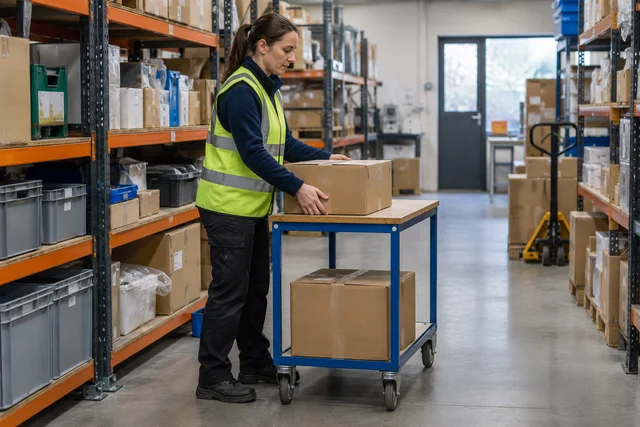
Photorealistic illustrative UK workplace scene. Review checks: Force: A heavy or awkward load and poor wheels increase the effort needed. Posture: Floor-level picks, twisting and long reaches load the back and shoulders. Repetition: Frequent handling and inadequate recovery can accumulate strain.
Assess interacting factors
TILE, TILEO and TILEE are practical prompts that help assess the whole handling situation rather than focusing only on load weight. TILE is the core prompt: Task, Individual, Load and Environment. It reflects the main risk factors HSE expects employers to consider when assessing manual handling. TILEO adds Other factors, such as work organisation, time pressure, communication, PPE, fatigue, team handling, handling aids and recovery. TILEE is used by some organisations as a further extension; the final E should be defined in the organisation's standard, most usefully as Equipment, Ergonomics or Existing controls. Sources: HSE L23 Manual handling guidance on regulations ; HSE manual handling at work The important point is not which acronym is used, but whether the assessment identifies the real risk factors and produces better work design.
Applied case
Fictional case: The load mass is known, but the assessment omits its grip, repeated movement, reach and restricted space. The document calls weight alone a complete handling assessment.
More than a number
Weight contributes to the assessment. It does not establish a universal safe task when posture, frequency, grip, environment or individual capability changes.
Test your decision
What is missing?
The assumption that one successful lift proves the whole shift manageable.
The interacting task, person, load and environmental factors.
A comparison of weights alone across jobs.
Compare the explanation
The interacting task, person, load and environmental factors.
The same mass can present different demands in different work.
This additional teaching takes about 5–10 minutes, in addition to the course estimate. Optional reading and workplace assessment take additional time.
Start by asking whether the hazardous handling can be removed or redesigned. Where handling remains, observe the whole operation with the people who do it and choose an assessment that fits the work.
These aids support the activity assessment. Repetitive upper-limb work may need ART; variable or complex tasks may need other HSE tools or a fuller competent assessment. Mechanical lifting, stored energy, equipment safety and health decisions retain their separate controls. A low factor score, a downloaded report or completion of this course does not approve the work.
TILEO: Task, Individual, Load, Environment and Other factors. MAC: Manual Handling Assessment Charts for appropriate lifting, carrying and team handling. RAPP: Risk Assessment of Pushing and Pulling for appropriate manual pushing and pulling.
Read the portable guide to understand selection, limitations, the mixed-task example and company-branded Word/PDF records. Your existing course checks and completion requirements remain separate.
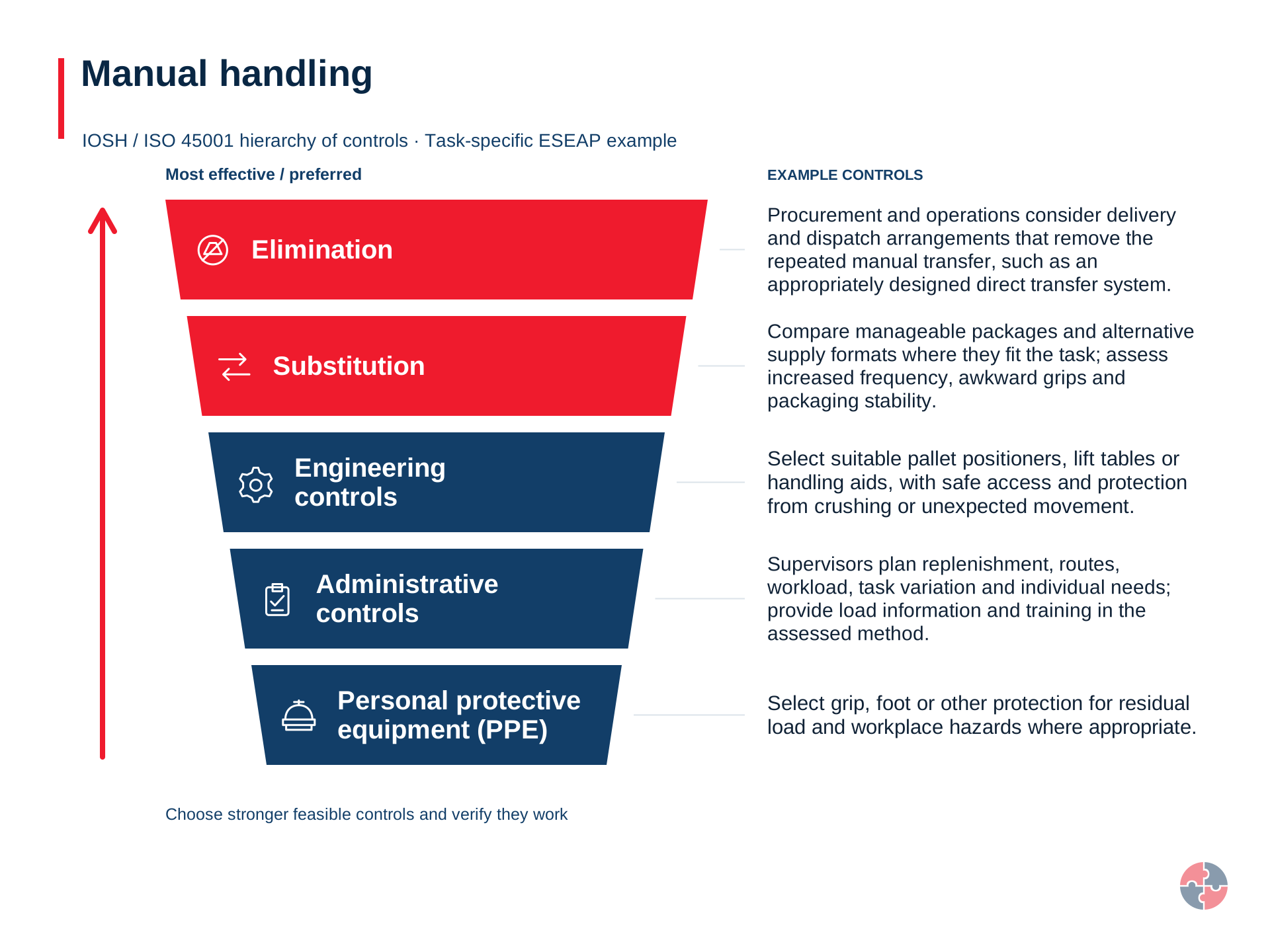
Existing SHAREhub 2D teaching schematic. Use alongside the explanation and fictional case in this lesson.
Avoid hazardous handling where possible
Avoid hazardous manual handling where reasonably practicable, assess what remains and reduce the injury risk. Training and gloves support the chosen method; they cannot make an unsuitable repetitive lift safe. Illustrative decision: warehouse workers repeatedly lift stock from floor-level pallets to dispatch benches. The manager and workers examine the whole supply-to-dispatch task, including reaching, twisting, pushing, load stability and differing individual capability. ERICPD means Eliminate, Reduce (including substitution), Isolate, Control, PPE and Discipline. The five-level hierarchy groups measures as elimination, substitution, engineering controls, administrative controls and PPE. They overlap: isolation is usually an engineering measure; control can include engineered and administrative measures. Discipline means maintaining and checking the controls, supervising the method and learning from defects, rather than blaming someone or accepting weaker protection.
Applied case
Fictional case: Materials are carried repeatedly between two work areas. A proposed layout change could remove the transfer, but planning considers only another refresher on lifting technique.
Change the demand
Removing an unnecessary movement or improving the method can reduce the task demand. Check the revised arrangement and its remaining risks rather than assume any change is sufficient.
Test your decision
What should be considered first?
Whether the hazardous handling can be avoided or reduced through reviewed task changes.
Technique training as the complete control.
Keeping the transfer unchanged because the team is experienced.
Compare the explanation
Whether the hazardous handling can be avoided or reduced through reviewed task changes.
Redesign can change the exposure rather than only how people cope with it.
Examine the load, route and use of proposed equipment.
Photorealistic illustrative UK workplace scene. Review checks: Eliminate: Procurement and operations consider delivery and dispatch arrangements that remove the repeated manual transfer, such as an appropriately designed direct transfer system. Reduce: Compare manageable packages and alternative supply formats where they fit the task; assess increased frequency, awkward grips and packaging stability. Isolate: Select suitable pallet positioners, lift tables or handling aids, with safe access and protection from crushing or unexpected movement. Control: Supervisors plan replenishment, routes, workload, task variation and individual needs; provide load information and training in the assessed method. PPE: Select grip, foot or other protection for residual load and workplace hazards where appropriate.
Make aids fit the actual job
A worked example shows why manual-handling training is not enough where storage height, frequency and route design create risk. Warehouse workers pick heavy boxes from floor-level pallets, twist to place them into roll cages and push loaded cages over a damaged threshold. Back and shoulder discomfort is common during seasonal peaks. The weak response is refresher manual-handling training and a poster about bending knees. Sources: HSE Manual Handling Assessment Charts ; HSE making the best use of lifting and handling aids A stronger response observes the task, uses MAC/RAPP-style thinking, raises storage height, reduces box weights, changes slotting so heavy goods are between knee and shoulder height, repairs the threshold, maintains cage wheels, uses lift tables for peak work, rotates tasks and reviews staffing so pace does not destroy recovery.
Applied case
Fictional case: An aid is available, but the route and task interface have not been checked. The action closes because the equipment is listed in the workplace inventory.
Available is not applied
Equipment can reduce demand when it suits the task and people can use it. Check the actual interface and remaining exposure rather than only confirming ownership.
Test your decision
What should be verified?
Availability in the inventory as proof of effective use.
The previous task’s assessment as automatic acceptance for every route.
Whether the aid is suitable and usable for the actual load, route and task.
Compare the explanation
Whether the aid is suitable and usable for the actual load, route and task.
An aid needs a task-specific basis and practical application.
This additional teaching takes about 5–10 minutes, in addition to the course estimate. Optional reading and workplace assessment take additional time.
Start by asking whether the hazardous handling can be removed or redesigned. Where handling remains, observe the whole operation with the people who do it and choose an assessment that fits the work.
These aids support the activity assessment. Repetitive upper-limb work may need ART; variable or complex tasks may need other HSE tools or a fuller competent assessment. Mechanical lifting, stored energy, equipment safety and health decisions retain their separate controls. A low factor score, a downloaded report or completion of this course does not approve the work.
TILEO: Task, Individual, Load, Environment and Other factors. MAC: Manual Handling Assessment Charts for appropriate lifting, carrying and team handling. RAPP: Risk Assessment of Pushing and Pulling for appropriate manual pushing and pulling.
Read the portable guide to understand selection, limitations, the mixed-task example and company-branded Word/PDF records. Your existing course checks and completion requirements remain separate.
Use observations and worker information to test controls.
Existing SHAREhub photographic illustration. The written fictional case supplies the condition and decision evidence.
Listen and check work as done
Evidence should show that hazardous handling has been avoided where possible, assessed where unavoidable and reduced through work design. Useful evidence includes task observation, manual-handling assessment, MAC/RAPP records where useful, photos of layout, load information, handling-aid inspection, worker consultation, training, early discomfort reports, task redesign actions, occupational health advice where needed and review after change. Sources: HSE L23 Manual handling guidance on regulations ; HSE Manual Handling Assessment Charts The best evidence is visible in the workplace: fewer floor-level lifts, maintained trolleys, shorter carrying distances, clearer routes, better storage and workers who can explain what to do when a load is unsafe. Assurance should test whether task design has improved and whether controls are used in real work.
Applied case
Fictional case: The written method assumes occasional handling, but the afternoon team describes repeated movements and different storage height. No review sample has included that period of work.
The representative task
A useful sample includes conditions that can change the handling demand. Worker input helps identify what a short, convenient observation may have missed.
Test your decision
What should the supervisor do?
Use the morning sample as proof for every shift.
Examine the changed exposure and whether controls fit the actual pattern.
Treat the written frequency as overriding the observed work.
Compare the explanation
Examine the changed exposure and whether controls fit the actual pattern.
Evidence should represent relevant work conditions.
Use the appropriate stop, reporting and reassessment route.
Photorealistic illustrative UK workplace scene. Review checks: Find: Heavy boxes are picked from the floor and twisted into a cage. Change: Raise the pick position, reorient the cage and repair the threshold. Verify: Maintain cage wheels and observe handling during a realistic peak.
Review difficulty before repeating the task
Stop or escalate when the load, route, frequency, posture, handling aid, environment or worker capability makes injury likely. Workers and supervisors should not wait for injury. Stop points should include unknown weight, unstable load, blocked route, damaged trolley, inadequate staffing for team handling, pain or discomfort, poor lighting, slippery floor, fatigue or a task that cannot be done as assessed. Sources: HSE manual handling at work ; HSENI manual handling Escalation should lead to redesign, equipment, staffing, changed delivery, competent assessment or occupational health support where individual restrictions are involved. They fail when organisations focus on worker technique while leaving poor work design, poor equipment and unrealistic workload unchanged. Sources: HSE L23 Manual handling guidance on regulations ; HSE MSD toolkit frequently asked questions
Applied case
Fictional case: A changed load cannot be handled as the assessed method expects. The team is asked to improvise because the old instruction is signed and the delivery is urgent.
Know the learning boundary
The course does not provide a universal lifting limit or individual fitness judgement. Use task assessment, appropriate support and the actual workplace arrangements when difficulty or change appears.
Test your decision
What is appropriate?
Use the workplace restriction and seek a reviewed suitable method.
Repeat the old method to see whether it works.
Treat urgency as evidence that the load is manageable.
Compare the explanation
Use the workplace restriction and seek a reviewed suitable method.
Changed demands need reassessment rather than an unplanned trial.
This additional teaching takes about 5–10 minutes, in addition to the course estimate. Optional reading and workplace assessment take additional time.
Start by asking whether the hazardous handling can be removed or redesigned. Where handling remains, observe the whole operation with the people who do it and choose an assessment that fits the work.
These aids support the activity assessment. Repetitive upper-limb work may need ART; variable or complex tasks may need other HSE tools or a fuller competent assessment. Mechanical lifting, stored energy, equipment safety and health decisions retain their separate controls. A low factor score, a downloaded report or completion of this course does not approve the work.
TILEO: Task, Individual, Load, Environment and Other factors. MAC: Manual Handling Assessment Charts for appropriate lifting, carrying and team handling. RAPP: Risk Assessment of Pushing and Pulling for appropriate manual pushing and pulling.
Read the portable guide to understand selection, limitations, the mixed-task example and company-branded Word/PDF records. Your existing course checks and completion requirements remain separate.

 View full detail ↗