Optional presentation practice. Choices and model launches do not write LMS grades, completion or certificates. This extension takes additional learning time.
1. Hot-work and ignition-source control Avoid the heat where practicable and control the complete ignition pathway.
2. Choose a learning route 3. Recognise heat, sparks and other sources Recognise heat, sparks and other sources.
Ignition control covers more than a visible flame. Grinding, cutting, hot surfaces, electrical faults, friction, static discharge and portable equipment can ignite a suitable fuel.
Ignition control covers more than a visible flame. Grinding, cutting, hot surfaces, electrical faults, friction, static discharge and portable equipment can ignite a suitable fuel. Hot particles can travel into gaps, dust, insulation or lower levels; heat can pass through metal to material on the other side. The location of the tool is therefore not the complete fire boundary. A brief job can leave a concealed ignition that develops later.
Identify the fuel, possible release and paths taken by heat or particles before choosing controls. Include the equipment being worked on, nearby stock, connected plant and people affected. A no-smoking rule addresses only one source. Do not use absence of a flame or a tidy work surface as proof that a spark-producing task has no fire or explosion risk.
4. The fictional case and decision boundary Recognise heat, sparks and other sources.
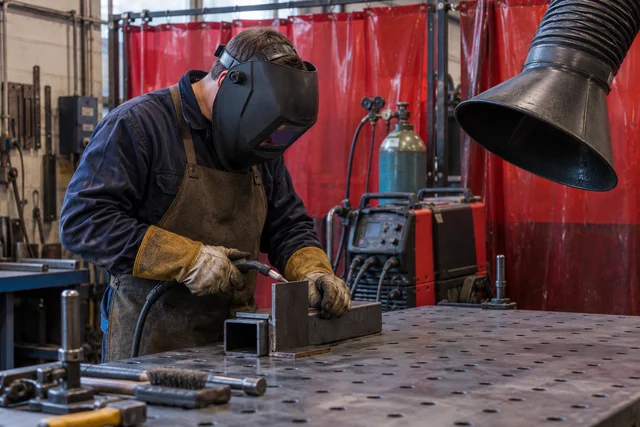
Task and setting A repair is proposed near a line and a partition with hidden spaces. The crew has a permit form, but residue information, adjacent work and fire-watch cover need confirmation. Decision to practise A repair is scheduled for welding because the contractor is already on site. A possible bolted replacement has not been reviewed, and the item history and surrounding fuel remain uncertain. Evidence to consider Consider a cold or safer location first.
5. Decision 1: interpret the evidence A repair is scheduled for welding because the contractor is already on site. A possible bolted replacement has not been reviewed, and the item history and surrounding fuel remain uncertain.
What should planning establish first?
Whether a suitable safer alternative can avoid the hot work and what the actual task requires. (supported response) Only the welder available time. A permit number before considering the method. The method and control basis must be chosen before authorisation, not assumed from convenience.
6. Reconsider the evidence What should planning establish first?
Whether a suitable safer alternative can avoid the hot work and what the actual task requires. (supported response) Only the welder available time. A permit number before considering the method. The method and control basis must be chosen before authorisation, not assumed from convenience.
7. Decision 1 explained The method and control basis must be chosen before authorisation, not assumed from convenience.
Consider a cold or safer location first.
8. Consider a cold or safer location first Consider a cold or safer location first.
Before authorising hot work, ask whether a suitable cold method, replacement or off-site repair can achieve the objective safely. Engineering review must confirm that the alternative fits the actual component and process; a different tool is not automatically safer in every setting.
Before authorising hot work, ask whether a suitable cold method, replacement or off-site repair can achieve the objective safely. Engineering review must confirm that the alternative fits the actual component and process; a different tool is not automatically safer in every setting. Avoiding ignition at the worksite can be stronger than adding precautions around an unnecessary heat source. The permit follows the assessed method rather than deciding it.
If hot work remains necessary, competent planning must address the exact item, contents or residues, isolation, nearby combustibles, atmosphere where relevant, suitable equipment and fire response. This course does not define preparation or testing methods. Hold the job if essential information or controls are missing. Production pressure and the presence of a welder do not demonstrate that the proposed hot method is justified.
9. Identify the ignition decision Sort the cards. Drag each card, or use its labelled category selector.
Sort the cards. Drag each card, or use its labelled category selector.
A suitable cold replacement may avoid heat. — Relevant hazard or stronger option. Assess it before committing to hot work. The drum looks empty, so cutting is safe. — Insufficient reassurance. Residue and vapour remain possible. Sparks can travel through the partition. — Relevant hazard or stronger option. Follow adjacent and concealed fuel paths. No naked flame means no hot-work risk. — Insufficient reassurance. Heat and sparks can ignite fuel. 10. Compare the reasoning: Identify the ignition decision A suitable cold replacement may avoid heat. Relevant hazard or stronger option The drum looks empty, so cutting is safe. Insufficient reassurance Sparks can travel through the partition. Relevant hazard or stronger option No naked flame means no hot-work risk. Insufficient reassurance
Sort the cards. Drag each card, or use its labelled category selector.
A suitable cold replacement may avoid heat. — Relevant hazard or stronger option. Assess it before committing to hot work. The drum looks empty, so cutting is safe. — Insufficient reassurance. Residue and vapour remain possible. Sparks can travel through the partition. — Relevant hazard or stronger option. Follow adjacent and concealed fuel paths. No naked flame means no hot-work risk. — Insufficient reassurance. Heat and sparks can ignite fuel. 11. Do not equate empty with safe Do not equate empty with safe.
Tanks, drums, pipework and other containers may retain flammable or combustible residues and vapour after obvious liquid is removed. Heating or cutting can create a severe fire or explosion. A small remaining quantity can matter.
Tanks, drums, pipework and other containers may retain flammable or combustible residues and vapour after obvious liquid is removed. Heating or cutting can create a severe fire or explosion. A small remaining quantity can matter. An empty appearance, a previous contents label or no noticeable smell does not establish a safe condition. Ordinary workers must not test suitability by applying heat or beginning a cut.
First consider avoiding the hot task. Where it remains necessary, competent specialist preparation, assessment and verification must address the actual history, contents, connected sources and work. A generic course cannot prescribe cleaning, purging or gas-testing steps for an unknown container. Keep the task on hold when the evidence is missing and use the responsible technical route rather than inventing acceptance from visual inspection.
Open the related fictional model case
12. Decision 2: choose the response The job moves to the other side of a partition after the permit is issued. Fuel and hidden-space information for the new position is missing, but the printed expiry time is unchanged.
What should happen?
Copy the old location details onto another form. Suspend the changed task and obtain the required current assessment and authorisation. (supported response) Continue under the unchanged clock time. The accepted conditions and location define the permission; the clock alone cannot extend them.
13. Compare the consequences What should happen?
Copy the old location details onto another form. Suspend the changed task and obtain the required current assessment and authorisation. (supported response) Continue under the unchanged clock time. The accepted conditions and location define the permission; the clock alone cannot extend them.
14. Decision 2 explained The accepted conditions and location define the permission; the clock alone cannot extend them.
Keep authorisation tied to actual conditions.
15. Keep authorisation tied to actual conditions Keep authorisation tied to actual conditions.
A hot-work permit defines the exact scope, place, time, precautions, roles and monitoring for the accepted task. It does not permit improvisation or replace physical preparation and verification. The issuer, work team, area authority and relevant contractor roles must understand the workface.
A hot-work permit defines the exact scope, place, time, precautions, roles and monitoring for the accepted task. It does not permit improvisation or replace physical preparation and verification. The issuer, work team, area authority and relevant contractor roles must understand the workface. Other tasks can introduce fuel or change the protective conditions, so coordination needs to remain active rather than end at permit issue.
Stop and reassess when location, scope, ventilation, relevant readings, nearby work or required fire-watch cover changes. A remaining validity time does not make an invalid condition safe. The responsible competent system must restore and accept the current arrangement before restart. Copying a previous permit or extending the date cannot establish that this item, hidden area and current work have been assessed.
16. Match the control point Match each card to its meaning. Drag, or use the labelled category selector.
Match each card to its meaning. Drag, or use the labelled category selector.
Establish the actual item history and required competent controls. — Task preparation. Resolve the basis before exposure. Suspend when the location or accepted conditions change. — Live authorisation. A permit remains conditional. Complete the agreed watch, checks and area handback. — Post-work assurance. The pathway may continue after tool use. 17. Compare the reasoning: Match the control point Establish the actual item history and required competent controls. Task preparation Suspend when the location or accepted conditions change. Live authorisation Complete the agreed watch, checks and area handback. Post-work assurance
Match each card to its meaning. Drag, or use the labelled category selector.
Establish the actual item history and required competent controls. — Task preparation. Resolve the basis before exposure. Suspend when the location or accepted conditions change. — Live authorisation. A permit remains conditional. Complete the agreed watch, checks and area handback. — Post-work assurance. The pathway may continue after tool use. 18. Plan the watch beyond the visible work area Plan the watch beyond the visible work area.
Fire watch needs to consider ignition during and after the hot task. Sparks may lodge in insulation, voids, cable routes or lower levels, and transferred heat can ignite material out of sight.
Fire watch needs to consider ignition during and after the hot task. Sparks may lodge in insulation, voids, cable routes or lower levels, and transferred heat can ignite material out of sight. The watcher needs to understand the work, fuel, areas to check, alarm route and safe response. A quick glance at the tool location cannot establish that hidden spaces are clear. Monitoring must not require a person to enter an unsafe area.
The actual task, setting and applicable guidance determine the agreed watch and later checks; different contexts can have different provisions. Define the named cover, breaks, handover and final decision before starting. Do not invent one universal duration or end the watch because the work team wants to leave. Loss of the required cover is a control failure that needs the planned stop and review.
Open the related fictional model case
19. Decision 3: apply and review The repair is complete but the required later check and area handback are outstanding. The contractor marks its job finished and the site proposes releasing adjacent work immediately.
What should determine release?
The contractor finished status alone. The absence of visible flame at that instant. The required post-work evidence and responsible handback for the actual area. (supported response) Repair completion is one fact; fire-watch, restoration and area release have their own requirements.
20. Revisit the control or support boundary What should determine release?
The contractor finished status alone. The absence of visible flame at that instant. The required post-work evidence and responsible handback for the actual area. (supported response) Repair completion is one fact; fire-watch, restoration and area release have their own requirements.
21. Decision 3 explained Repair completion is one fact; fire-watch, restoration and area release have their own requirements.
Stop, restore and hand back safely.
22. Stop, restore and hand back safely Stop, restore and hand back safely.
Warning signs include uncertain residues, missing isolation evidence, changed atmosphere conditions, unavailable watch, nearby fuel or work outside the permit scope. Stop the affected task through the planned safe response and report confirmed facts and uncertainty.
Warning signs include uncertain residues, missing isolation evidence, changed atmosphere conditions, unavailable watch, nearby fuel or work outside the permit scope. Stop the affected task through the planned safe response and report confirmed facts and uncertainty. Do not continue because the item is nearly finished or use more PPE to justify an uncontrolled ignition or release path. Emergency action follows the site arrangements without an unplanned approach or rescue.
Before restart, the responsible people need current verification of the controls and authorisation for the actual job. At completion, account for equipment, residual heat, required monitoring, restored protective arrangements and remaining restrictions. The area owner needs a clear handback rather than a simple message that welding is finished. A completed invoice or permit status does not establish that every post-work condition has been met.
23. Preserve the watch and release boundary Make a decision at each point and use the feedback before continuing.
Make a decision at each point and use the feedback before continuing.
Stage 1: What should happen? Required watch cover is lost while the work is still planned.
Continue because the permit time remains. — Reconsider. The essential condition is unavailable. Use the planned hold and restore the required arrangement. — Supported choice. Readiness includes the actual watch. Ask an unbriefed passer-by to sign later. — Reconsider. A signature cannot create capability. Stage 2: What releases the area? The repair is finished but post-work checks remain outstanding.
The required evidence and responsible handback. — Supported choice. Completion is more than stopping the tool. The contractor invoice. — Reconsider. It does not verify fire conditions. A belief that nothing visible means nothing remains. — Reconsider. Hidden ignition can develop later. 24. Compare the reasoning: Preserve the watch and release boundary What should happen? Use the planned hold and restore the required arrangement. What releases the area? The required evidence and responsible handback.
Make a decision at each point and use the feedback before continuing.
Stage 1: What should happen? Required watch cover is lost while the work is still planned.
Continue because the permit time remains. — Reconsider. The essential condition is unavailable. Use the planned hold and restore the required arrangement. — Supported choice. Readiness includes the actual watch. Ask an unbriefed passer-by to sign later. — Reconsider. A signature cannot create capability. Stage 2: What releases the area? The repair is finished but post-work checks remain outstanding.
The required evidence and responsible handback. — Supported choice. Completion is more than stopping the tool. The contractor invoice. — Reconsider. It does not verify fire conditions. A belief that nothing visible means nothing remains. — Reconsider. Hidden ignition can develop later. 25. Apply the lesson in a fictional workplace Sparks travel toward vehicle trim and an open container of contaminated rags.
Stop, restore and hand back safely.
Open the related fictional model case
26. Take the learning into a fictional task Stop, restore and hand back safely.
Task and people A repair is proposed near a line and a partition with hidden spaces. The crew has a permit form, but residue information, adjacent work and fire-watch cover need confirmation. Control or support Keep authorisation tied to actual conditions. Check and review Stop, restore and hand back safely.
27. Explain your reasoning without the answer sheet Use the supplied case facts. Explain why a choice fits the task and what remains uncertain. A points total or completed form cannot replace the required control or support arrangement.
28. Continue with the full course and Knowledge Hub Use the original course for its six lessons, required activities, final assessment and saved record. This optional companion does not change course grades, completion or certificates.
Enable JavaScript for interactive practice, or use the PowerPoint and its notes.


 All 50 presentations