Workplace awareness and prevention. Individual clinical diagnosis and treatment belong with qualified clinicians; protect personal information and use appropriate advice. Check the relevant UK nation and actual workplace arrangements. Completion does not establish practical competence, authorise hazardous work or award an external qualification.
Read the complete core teaching here. Use the interactive course for required activities, saved assessment and conditional completion.
Recognise the exposure
Recognise the exposure
Recognise UV exposure independently of temperature
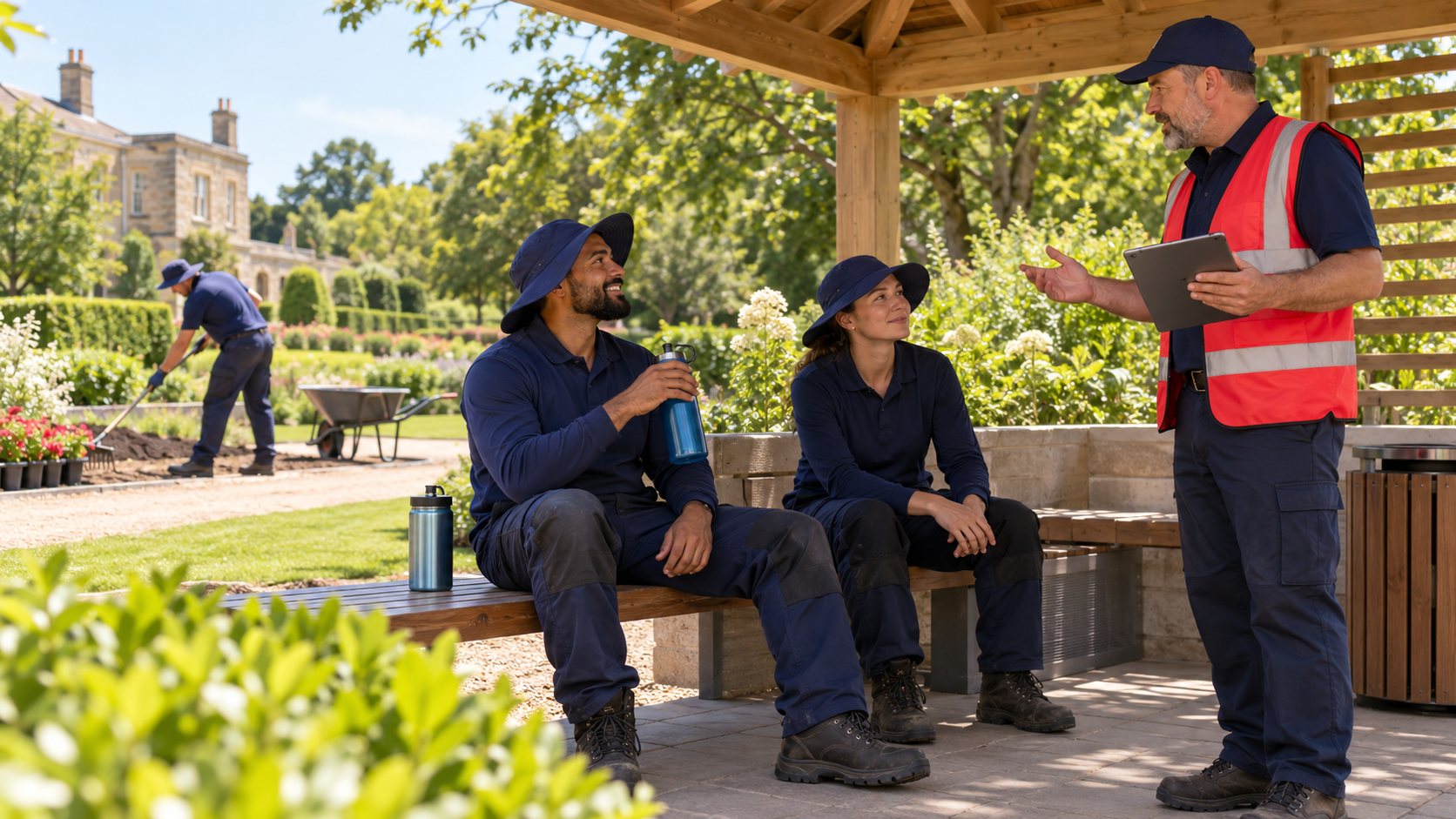
Professional teaching illustration. Read the written scenario for the facts; the image is not evidence of a real workplace.
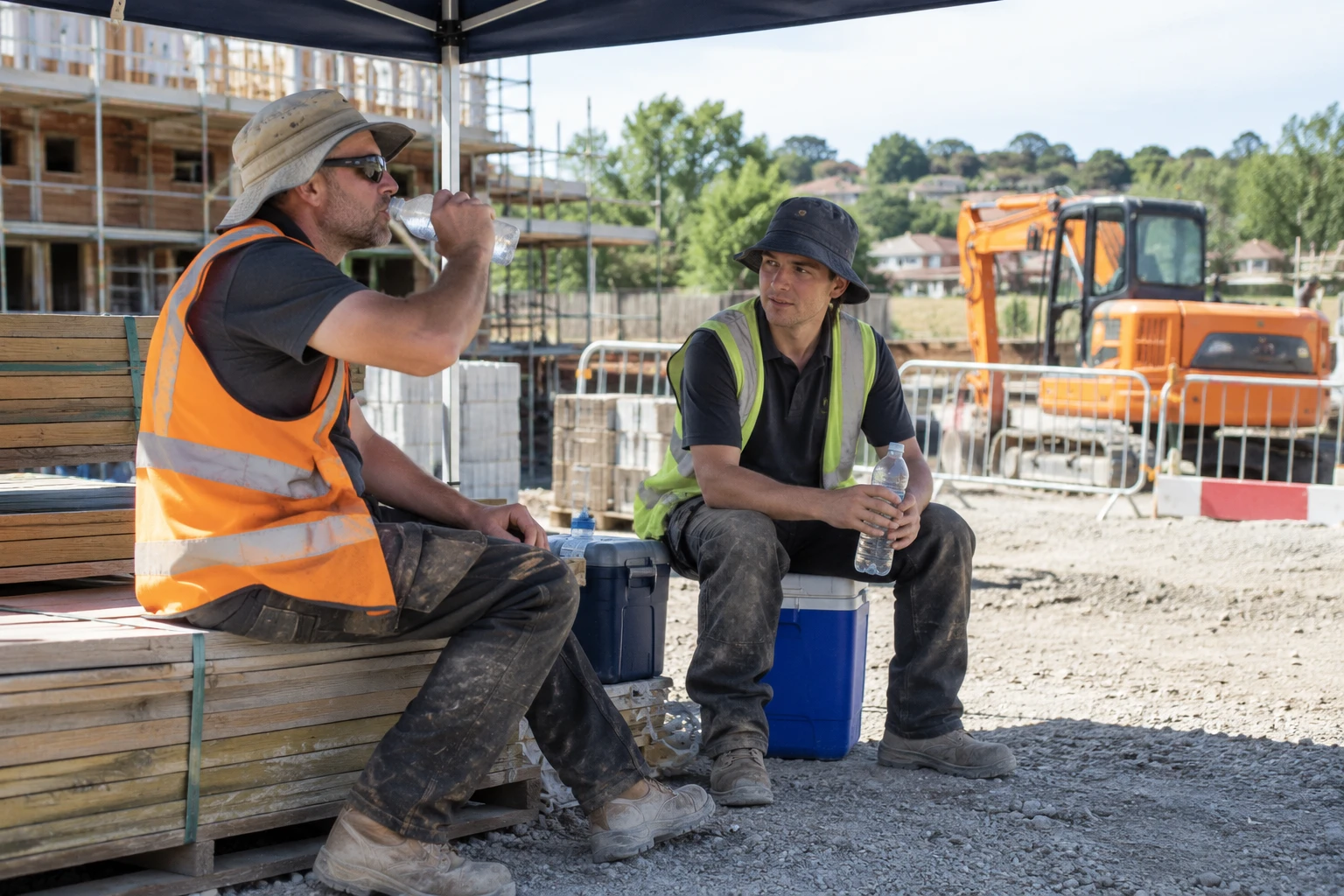
UV from the sun can damage skin even when the air feels cool. Consider time outdoors, shade, reflective surfaces and the UV forecast rather than temperature alone. Outdoor maintenance, delivery, construction and seasonal jobs can all involve repeated exposure.
How should outdoor sun exposure be planned?
Sun exposure should be managed through task planning, shade, clothing, sunscreen advice, hydration, welfare and supervisor checks. The strongest control is to reduce exposure through work planning before relying on individual behaviour. Where possible, outdoor work can be scheduled outside the most intense sunlight, rotated, moved under shade or redesigned to reduce time in direct sun. Personal protection still matters. Suitable clothing, brimmed or neck-flap hats, sunscreen advice, water access and skin-check awareness work best when supervisors make them normal and when work pressures do not punish people for taking breaks.
Provide a demonstrably cool, ventilated or suitably conditioned rest facility; an uncooled parked vehicle can worsen heat exposure. Translate the UV forecast into task timing, shade, covering and accessible welfare, then recheck changed conditions. Sunscreen supplements these controls and does not extend acceptable exposure or control heat. Practical sunscreen advice: choose at least SPF30 with suitable UVA protection, apply enough to the remaining exposed skin, and follow instructions for frequent reapplication, including after sweating or rubbing off. Shade and covering remain important; sunscreen neither controls heat nor extends a safe exposure period.NHS sunscreen and sun safety: practical protection
Fictional workplace decision
Fictional grounds team: an outdoor job is planned with no usable shade arrangement and little flexibility in the work pattern. The briefing mentions only sunscreen and asks for a signature.
Compare the reasoning
The supervisor reviews the actual exposure conditions and the complete work arrangement, considering stronger suitable measures. A reminder about one personal measure does not establish that the task is controlled. Provide a demonstrably cool, ventilated or suitably conditioned rest facility; an uncooled parked vehicle can worsen heat exposure.
Recognise UV exposure independently of temperature
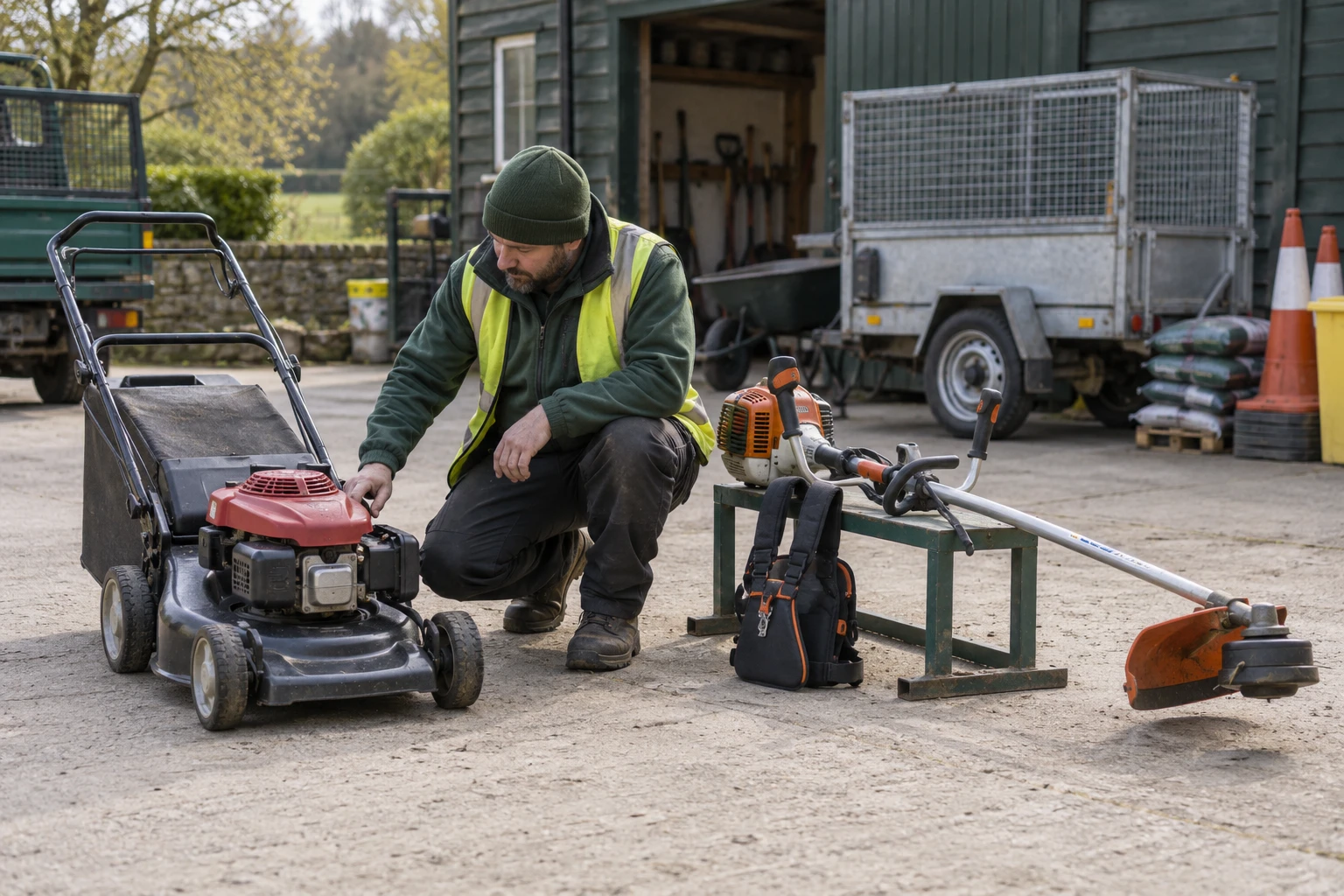
Existing SHAREhub photographic illustration. The fictional case supplies the task and decision evidence.
UV from the sun can damage skin even when the air feels cool. Consider time outdoors, shade, reflective surfaces and the UV forecast rather than temperature alone. Outdoor maintenance, delivery, construction and seasonal jobs can all involve repeated exposure.
How should UV exposure be controlled?
Control should follow a work-design hierarchy: avoid exposure where possible, reduce it through planning, then support workers with suitable protection. HSE outdoor-worker guidance supports shade, clothing and work planning to reduce UV exposure. The weakest approach is to hand out sunscreen and assume the risk is managed. Sunscreen helps exposed skin, but it does not control heat load, eye exposure, poor scheduling, lack of shade or a worker removing PPE because the work is physically demanding. A stronger approach treats UV like any other exposure: identify who is exposed, when, for how long, under what conditions, and what controls will prevent harm.
Supervisors then check the controls during the day because weather, glare, workload and worker comfort change quickly.
Fictional workplace decision
Fictional grounds team: an outdoor job is planned with no usable shade arrangement and little flexibility in the work pattern. The briefing mentions only sunscreen and asks for a signature.
Compare the reasoning
The supervisor reviews the actual exposure conditions and the complete work arrangement, considering stronger suitable measures. A reminder about one personal measure does not establish that the task is controlled. Provide a demonstrably cool, ventilated or suitably conditioned rest facility; an uncooled parked vehicle can worsen heat exposure.
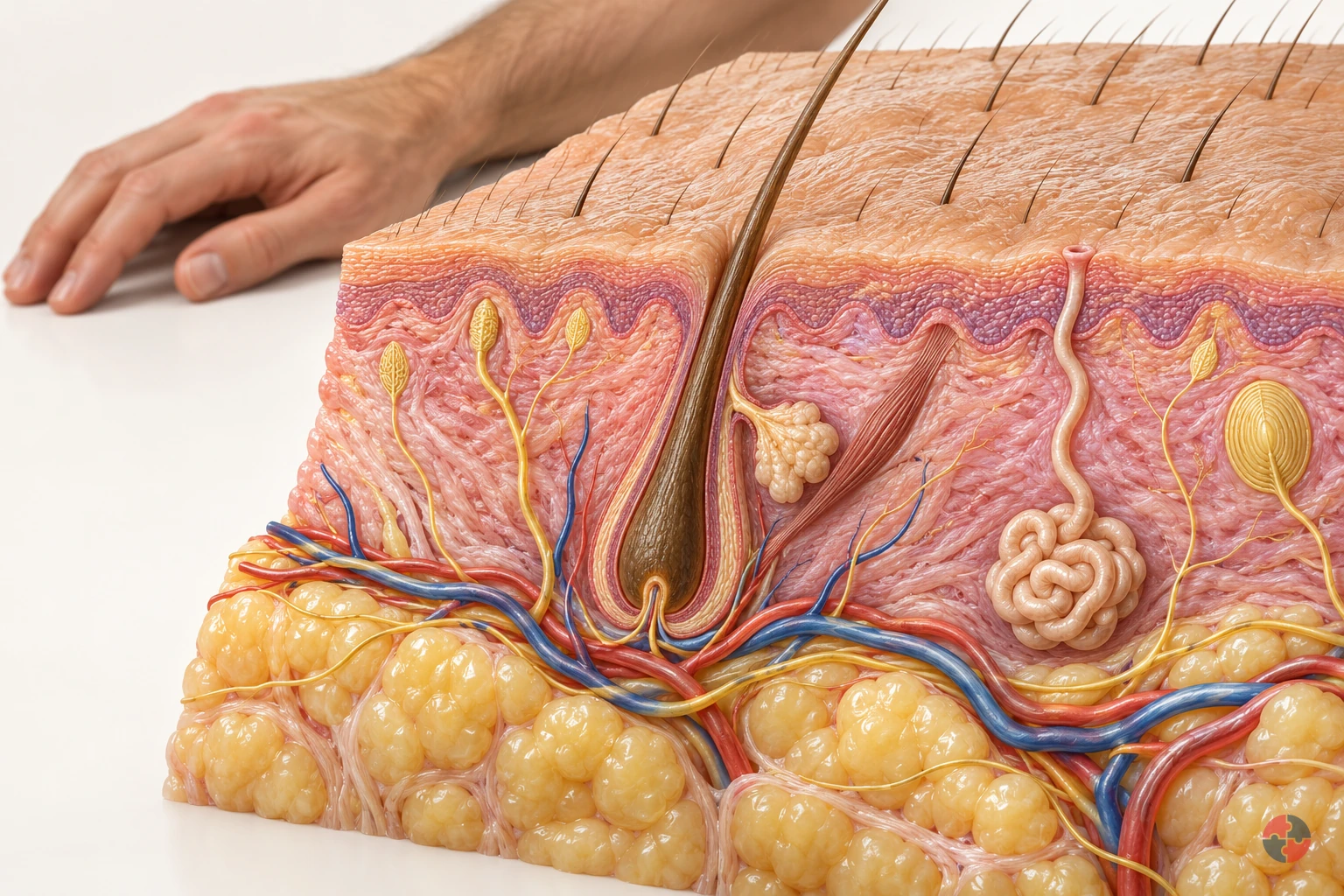
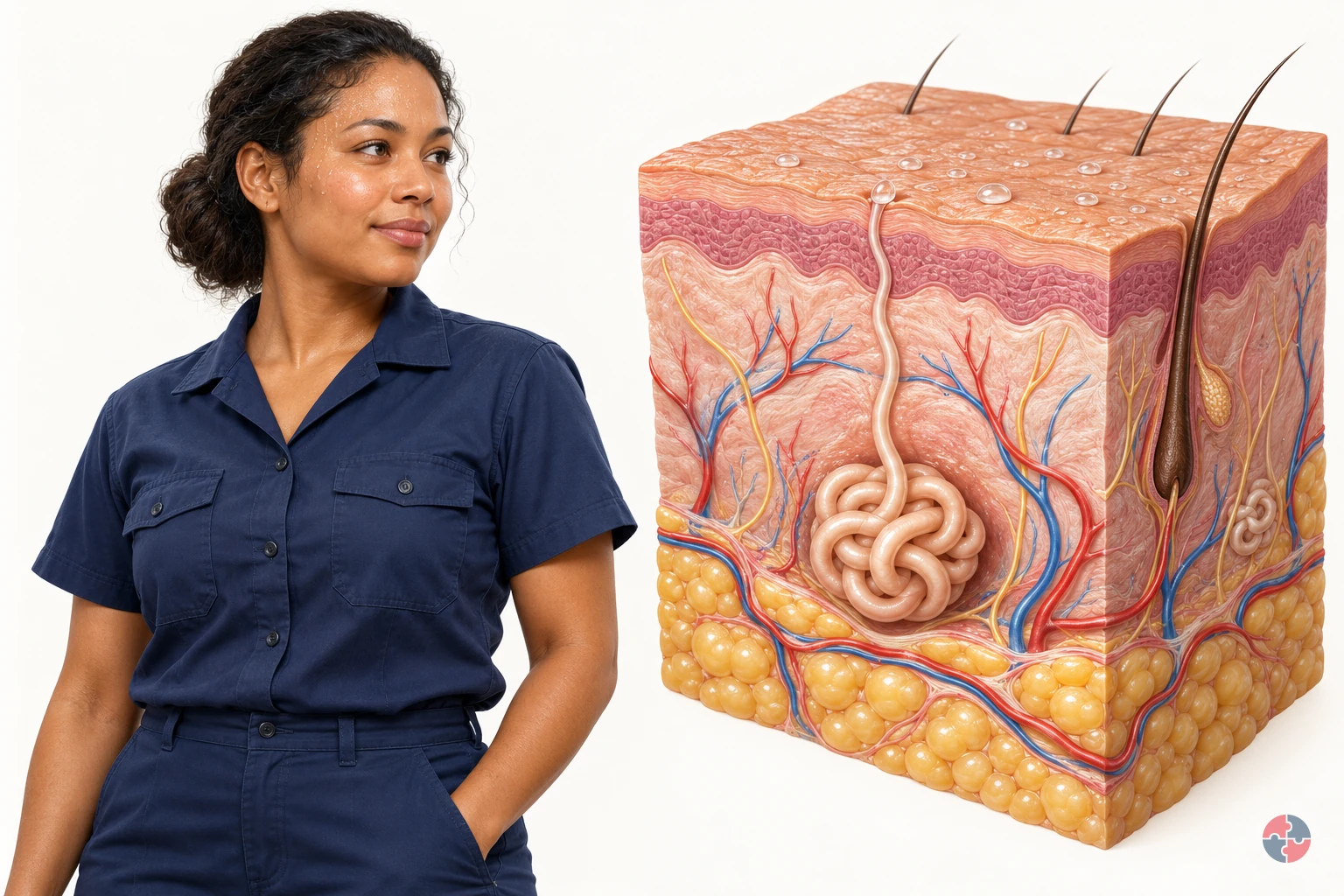
Explore an enlarged section of hair-bearing skin, with a hand and forearm for context. Layers, glands, nerves and vessels are enlarged for clarity.
Use the task in this lesson to identify contact, repeated wet work or contamination. Which change reduces contact before relying on gloves?
educational illustration · healthy anatomy; enlarged details and teaching colours.
Existing SHAREhub photographic illustration. The fictional case supplies the task and decision evidence.
UV from the sun can damage skin even when the air feels cool. Consider time outdoors, shade, reflective surfaces and the UV forecast rather than temperature alone. Outdoor maintenance, delivery, construction and seasonal jobs can all involve repeated exposure.
Why does sun exposure matter at work?
Outdoor work can expose people to ultraviolet (UV) radiation and heat, which need related but separate controls. UV can damage skin even when the air is cool or cloudy; heat stress also depends on work rate, humidity and clothing. Plan shade, task timing, breaks, cool water and suitable covering, and give practical sunscreen advice. Check whether workers can use those measures in real work. If heatstroke signs appear, call 999; changing or bleeding skin marks need GP assessment, not a manager diagnosis. Sun exposure is sometimes treated as personal lifestyle choice, but outdoor work can significantly increase the time a person spends in ultraviolet radiation.
Construction workers, roofers, road workers, farmers, gardeners, security staff, outdoor instructors, refuse workers, event teams and delivery workers can all be exposed for long periods. HSE guidance explains that too much sunlight is harmful to skin and that a tan is a sign of skin damage. Short-term effects include sunburn; longer-term effects include premature skin ageing and increased skin cancer risk. UV can still matter on bright or cloudy days, and risk varies by time of day, season, location, reflection, clothing and skin type. A good workplace response is practical: plan work, reduce exposure where possible, provide shade and rest, encourage suitable clothing and hats, give sun-protection advice, make water available, consider heat and PPE interaction, and encourage people to check skin changes and seek GP or local clinical advice.
Start with HSE outdoor sun protection and assess the actual work and nation. Sensitivity concerns such as medication effects should be discussed privately with GP/pharmacist or clinical/OH advice, without the manager changing treatment or collecting a routine medical history. The work assessment must make protection practical for the individual.
Fictional workplace decision
Fictional grounds team: an outdoor job is planned with no usable shade arrangement and little flexibility in the work pattern. The briefing mentions only sunscreen and asks for a signature.
Compare the reasoning
The supervisor reviews the actual exposure conditions and the complete work arrangement, considering stronger suitable measures. A reminder about one personal measure does not establish that the task is controlled. Provide a demonstrably cool, ventilated or suitably conditioned rest facility; an uncooled parked vehicle can worsen heat exposure.
Existing SHAREhub photographic illustration. The fictional case supplies the task and decision evidence.
Use suitable shade, scheduling, clothing and head protection compatible with the task. Provide access to protective measures and breaks. Sunscreen supports a wider plan; it should not be the only response to avoidable prolonged exposure.
What should managers do and avoid?
Managers should control work exposure and signpost health advice, not inspect private skin conditions or collect unnecessary medical details. HSE natural-UV legal guidance explains the natural-sunlight legal boundary and encourages practical protection advice. UV protection needs a dignified boundary. A manager can ask whether the work arrangements are causing difficulty, whether shade, clothing, water or breaks are adequate, and whether a worker wants support to adjust duties. They should not ask workers to show skin changes publicly or record detailed medical information casually. A simple campaign can still be powerful: explain the risk, provide protection, encourage skin checks, normalise GP signposting and make it easy to report work-design problems.
These are illustrative manager behaviours. HSE outdoor-worker protection supports prevention and clinical signposting; privacy has its separate legal basis in the duties section. For necessary health records, establish a lawful basis, limit access and keep only information needed for the work decision. UK GDPR Article 5 supplies data principles; Article 9 requires a separate applicable condition for health data. A supportive conversation alone does not establish either requirement.
Fictional workplace decision
Fictional grounds team: an outdoor job is planned with no usable shade arrangement and little flexibility in the work pattern. The briefing mentions only sunscreen and asks for a signature.
Compare the reasoning
The supervisor reviews the actual exposure conditions and the complete work arrangement, considering stronger suitable measures. A reminder about one personal measure does not establish that the task is controlled. Provide a demonstrably cool, ventilated or suitably conditioned rest facility; an uncooled parked vehicle can worsen heat exposure.
A worker and a separate enlarged skin section introduce sweating and the skin’s blood supply. Connect these structures to the work and environment described in the lesson.
Locate the sweat gland and skin vessels in the enlarged view. How should conditions, workload, clothing and recovery be managed together?
educational illustration · healthy anatomy; enlarged details and teaching colours.
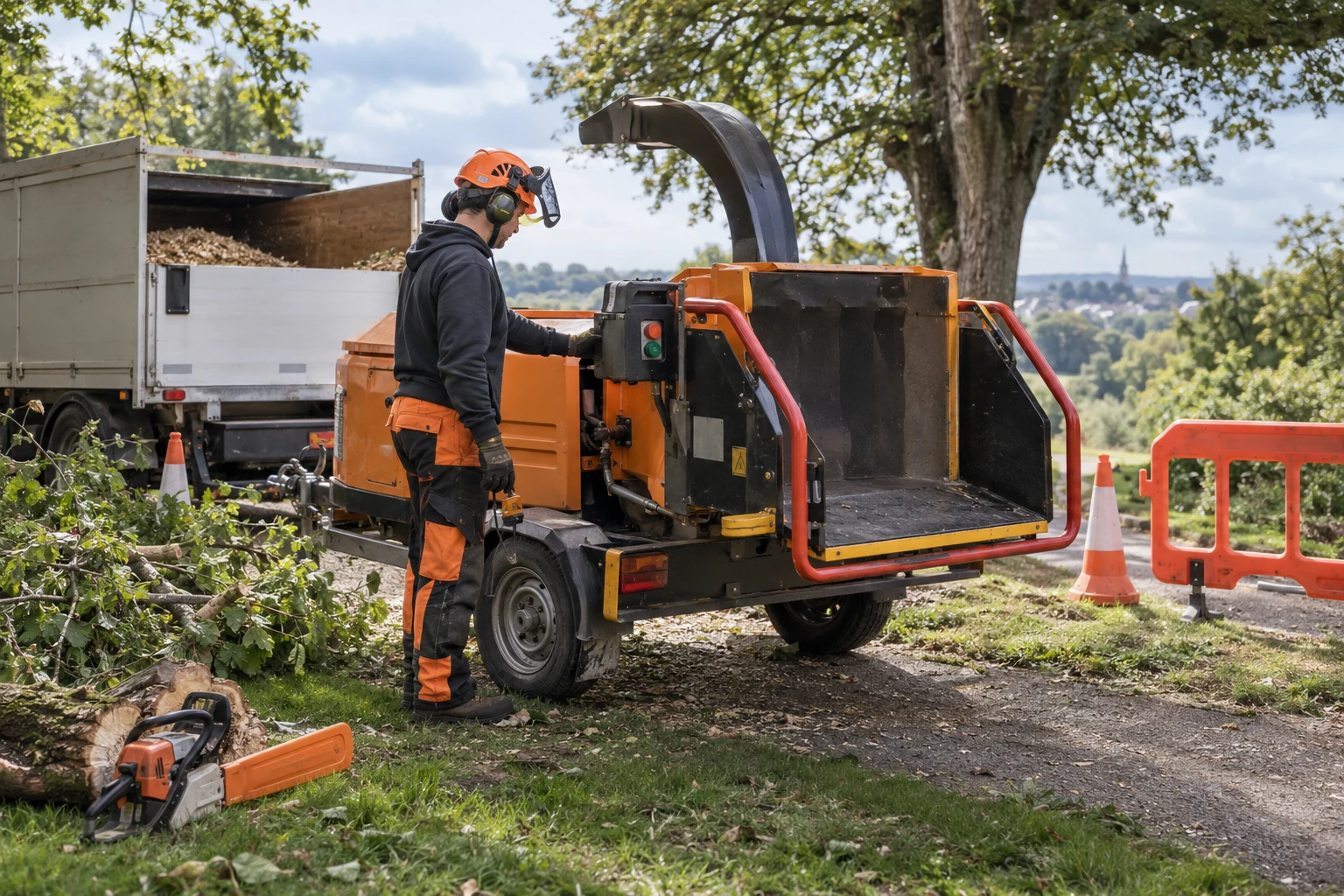
Professional teaching illustration. Read the written scenario for the facts; the image is not evidence of a real workplace.
Use suitable shade, scheduling, clothing and head protection compatible with the task. Provide access to protective measures and breaks. Sunscreen supports a wider plan; it should not be the only response to avoidable prolonged exposure.
How can the ISO 45001 hierarchy of controls reduce UV and heat exposure during outdoor work?
Address work-created hazards at source, then agree proportionate task controls and personal support. For sun exposure and wellbeing, assess the work itself: staffing, scheduling, exposure, equipment or interpersonal conditions as applicable. Remove or reduce hazards where possible, then agree practical procedures and review whether they work. A personal health condition calls for clinical advice and suitable work adjustments, not a generic control or diagnosis by a manager. HSE hierarchy of controls Document who will act, what triggers a pause or referral, and when the arrangement will be reviewed.
Apply the correct GB or NI duties and site instructions. For the roofing team, move avoidable roof work to a lower-exposure time or sheltered task, provide suitable shade and accessible cool rest/water, and reduce work rate or add competent cover for breaks. Check clothing with fall protection and other required PPE; neither sunscreen nor more clothing alone controls heat. Stop unsafe work and verify changed arrangements. HSE outdoor sun protection; HSE heat-stress assessment. ERICPD is a teaching prompt to maintain and check controls. ERICPD is a planning crossmap.
Its prompts do not add a sixth rung or rank Isolate above engineering. Discipline verifies and sustains every control level. The hierarchy of controls in ISO 45001:2018 comes under Clause 8.1.2 (Eliminating hazards and reducing OH&S risks), which is located within Clause 8 ("Operation"). ESEAP: Elimination, Substitution, Engineering controls, Administrative controls and PPE. Control order: HSE hierarchy of controls and IOSH hierarchy of control guidance. A redesigned indoor operation can remove the particular outdoor exposure being assessed. Moving a task into partial shade reduces exposure and still requires the UV/heat assessment; a sheltered label alone does not demonstrate elimination.
Retain the suitable shade/cool-rest engineering provision and the separate scheduling/cover controls.
Fictional workplace decision
Fictional grounds team: an outdoor job is planned with no usable shade arrangement and little flexibility in the work pattern. The briefing mentions only sunscreen and asks for a signature.
Compare the reasoning
The supervisor reviews the actual exposure conditions and the complete work arrangement, considering stronger suitable measures. A reminder about one personal measure does not establish that the task is controlled. Provide a demonstrably cool, ventilated or suitably conditioned rest facility; an uncooled parked vehicle can worsen heat exposure.
How can the hierarchy of controls reduce UV exposure and skin-damage risk?
Change how work is done
Plan source and scheduling controls
Existing SHAREhub photographic illustration. The fictional case supplies the task and decision evidence.
Use suitable shade, scheduling, clothing and head protection compatible with the task. Provide access to protective measures and breaks. Sunscreen supports a wider plan; it should not be the only response to avoidable prolonged exposure.
How can the hierarchy of controls reduce UV exposure and skin-damage risk?
Address work-created hazards at source, then agree proportionate task controls and personal support. For skin protection and uv exposure, assess the work itself: staffing, scheduling, exposure, equipment or interpersonal conditions as applicable. Remove or reduce hazards where possible, then agree practical procedures and review whether they work. A personal health condition calls for clinical advice and suitable work adjustments, not a generic control or diagnosis by a manager. HSE hierarchy of controls Document who will act, what triggers a pause or referral, and when the arrangement will be reviewed.
Apply the correct GB or NI duties and site instructions. For the roof crew, eliminate avoidable outdoor fabrication by preparing under cover. Reduce peak-sun work through sequencing, install suitable shade where safe, then select covered clothing, compatible head/eye protection and sunscreen for exposed skin. Provide water and shaded relief to manage heat as a separate interacting risk. The manager provides resources; the supervisor holds work when controls or welfare fail and verifies restoration before restart. ERICPD (Eliminate, Reduce, Isolate, Control, PPE, Discipline) is a teaching prompt; Discipline means sustained briefing, supervision and review.
HSE outdoor-worker protection; HSE outdoor heat controls. ERICPD is a planning crossmap. Its prompts do not add a sixth rung or rank Isolate above engineering. Discipline verifies and sustains every control level. The hierarchy of controls in ISO 45001:2018 comes under Clause 8.1.2 (Eliminating hazards and reducing OH&S risks), which is located within Clause 8 ("Operation"). ESEAP: Elimination, Substitution, Engineering controls, Administrative controls and PPE. Control order: HSE hierarchy of controls and IOSH hierarchy of control guidance.
Fictional workplace decision
Fictional grounds team: an outdoor job is planned with no usable shade arrangement and little flexibility in the work pattern. The briefing mentions only sunscreen and asks for a signature.
Compare the reasoning
The supervisor reviews the actual exposure conditions and the complete work arrangement, considering stronger suitable measures. A reminder about one personal measure does not establish that the task is controlled. Provide a demonstrably cool, ventilated or suitably conditioned rest facility; an uncooled parked vehicle can worsen heat exposure.
Existing SHAREhub photographic illustration. The fictional case supplies the task and decision evidence.
Review whether clothing, helmets and other PPE work together and whether the team can use shade on the real route. Encourage clinical advice for concerning skin changes without attempting workplace diagnosis. Keep UV and heat controls related but distinct.
Which UK duties and guidance apply?
GB general health and safety and management duties require assessment of outdoor work risks, while NI has separate general and management rules. HSE encourages outdoor sun protection, but says there is no specific legal obligation to provide sunscreen or sunglasses; assess practical controls. Heat stress requires separate assessment. UKHSA supplies public-health advice, HSE supplies GB workplace guidance and CDC supplies US skin-sign evidence. Use the relevant local clinical route for the worker; none of these establishes an individual diagnosis. Collect only information needed for the work decision, limit access and retention, and explain its use.
Health information needs an appropriate lawful basis under UK GDPR Article 6 as well as the Article 5 principles and a separate Article 9 condition. An employee agreeing a support plan does not by itself establish a valid processing basis; involve the responsible privacy/HR lead.
Fictional workplace decision
Fictional grounds team: an outdoor job is planned with no usable shade arrangement and little flexibility in the work pattern. The briefing mentions only sunscreen and asks for a signature.
Compare the reasoning
The supervisor reviews the actual exposure conditions and the complete work arrangement, considering stronger suitable measures. A reminder about one personal measure does not establish that the task is controlled. Provide a demonstrably cool, ventilated or suitably conditioned rest facility; an uncooled parked vehicle can worsen heat exposure.
When should outdoor work be changed because of UV exposure?
Check actual use
Support early reporting of skin concerns
Existing SHAREhub photographic illustration. The fictional case supplies the task and decision evidence.
Review whether clothing, helmets and other PPE work together and whether the team can use shade on the real route. Encourage clinical advice for concerning skin changes without attempting workplace diagnosis. Keep UV and heat controls related but distinct.
When should outdoor work be changed because of UV exposure?
Work should be changed when UV, heat, duration, welfare or worker vulnerability make the planned controls unrealistic. HSE outdoor-worker guidance supports changing the plan when protection is inadequate. A supervisor should not wait for sunburn before acting. The decision should be made at planning and checked during the day. If the work cannot be shaded, moved or shortened, the protection package must be stronger and the breaks must be real. Where a worker reports concerning skin changes, heat illness symptoms, medication sensitivity or difficulty tolerating PPE, the response should be supportive and work-focused.
The immediate question is how to keep the person safe while signposting appropriate health advice.
Fictional workplace decision
Fictional grounds team: an outdoor job is planned with no usable shade arrangement and little flexibility in the work pattern. The briefing mentions only sunscreen and asks for a signature.
Compare the reasoning
The supervisor reviews the actual exposure conditions and the complete work arrangement, considering stronger suitable measures. A reminder about one personal measure does not establish that the task is controlled. Provide a demonstrably cool, ventilated or suitably conditioned rest facility; an uncooled parked vehicle can worsen heat exposure.
Professional teaching illustration. Read the written scenario for the facts; the image is not evidence of a real workplace.
Review whether clothing, helmets and other PPE work together and whether the team can use shade on the real route. Encourage clinical advice for concerning skin changes without attempting workplace diagnosis. Keep UV and heat controls related but distinct.
How should sun exposure and wellbeing be assured?
Assurance should test whether controls work in practice, not whether the page or procedure exists. Assurance should include frontline checks, manager review and periodic independent sampling where risk warrants it. The purpose is to find weak signals early, close actions properly and update the risk assessment when work changes. Sampling and review levels are local choices; check how safety and support work in practice and correct failed arrangements.
Fictional workplace decision
Fictional grounds team: an outdoor job is planned with no usable shade arrangement and little flexibility in the work pattern. The briefing mentions only sunscreen and asks for a signature.
Compare the reasoning
The supervisor reviews the actual exposure conditions and the complete work arrangement, considering stronger suitable measures. A reminder about one personal measure does not establish that the task is controlled. Provide a demonstrably cool, ventilated or suitably conditioned rest facility; an uncooled parked vehicle can worsen heat exposure.