Workplace awareness and prevention. Individual clinical diagnosis and treatment belong with qualified clinicians; protect personal information and use appropriate advice. Check the relevant UK nation and actual workplace arrangements. Completion does not establish practical competence, authorise hazardous work or award an external qualification.
Read the complete core teaching here. Use the interactive course for required activities, saved assessment and conditional completion.
Begin with work function
Begin with work function
Identify individual work barriers
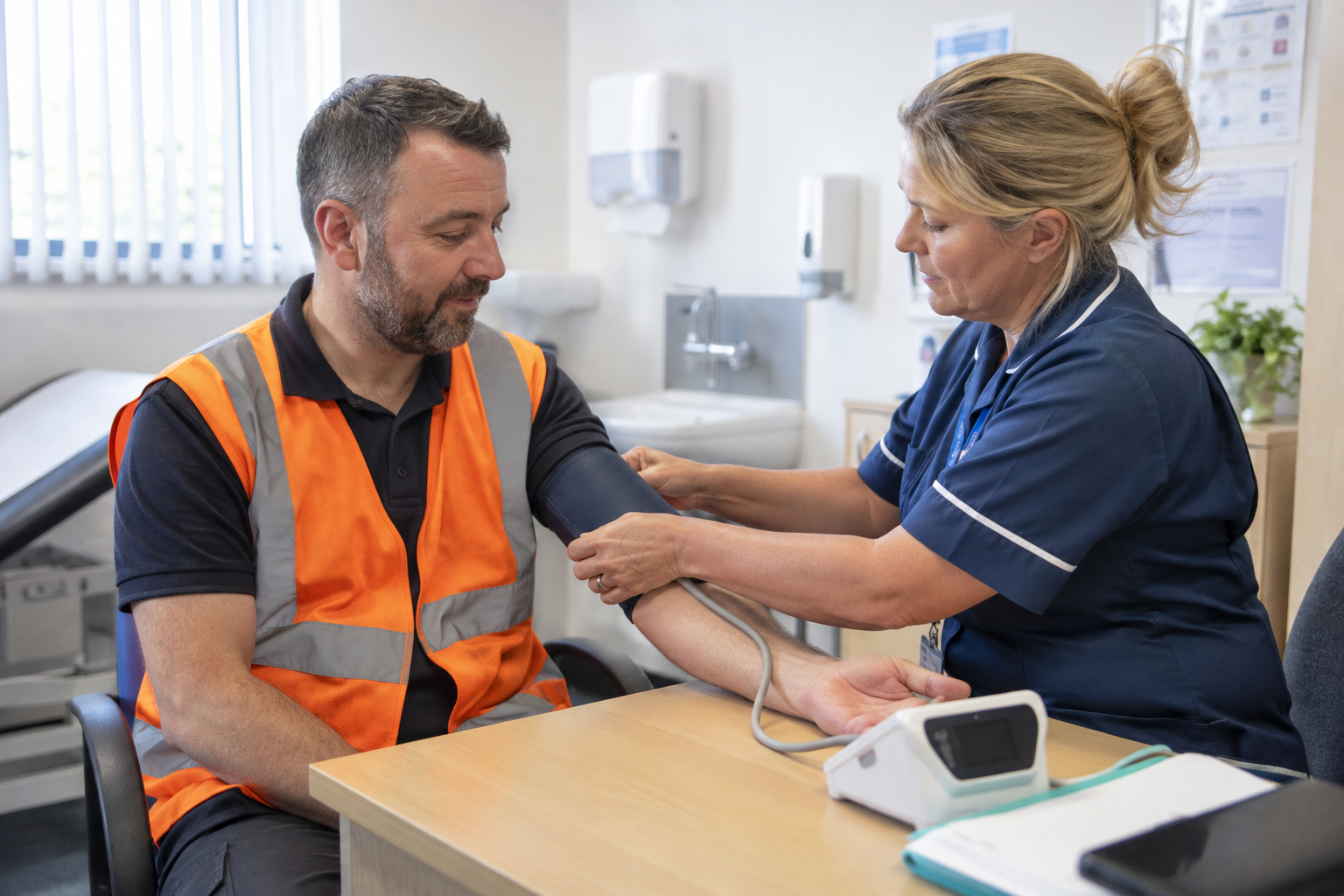
Professional teaching illustration. Read the written scenario for the facts; the image is not evidence of a real workplace.
People with the same condition may need different support. Ask about difficult tasks, helpful arrangements and changes over time rather than requesting a complete medical history. Do not wait for a diagnosis before exploring practical support.
What should readers understand about long-term health conditions?
A long-term condition is not a single management category; the work impact depends on the person, the condition and the job. Long-term health conditions may include respiratory disease, diabetes, heart disease, arthritis, neurological conditions, mental health conditions, cancer, autoimmune conditions, chronic pain, kidney disease, liver disease, sensory change and many other conditions. Some are visible, some are invisible, some are stable and some fluctuate. Two people with the same diagnosis may need different workplace support. The best workplace question is not 'what condition have you got?' It is 'what makes work harder, what could affect safe work, what adjustments may help, and what review is needed?' This keeps the conversation respectful and practical.
It also avoids stereotyping, because a diagnosis label alone does not tell a manager whether someone can drive, lift, work nights, use machinery, work alone or respond to emergencies. Long-term condition support must sit alongside risk assessment. A worker may be fully capable in one role but need adjustments in another. Workload, shift work, heat, cold, manual work, DSE, travel, PPE, stress, public contact and hazardous exposures can all affect symptoms or safe work. If the work itself creates or worsens a health risk, it must be controlled rather than framed as the worker's personal resilience problem.
Fictional workplace decision
Fictional technical service: two workers share a condition name but describe different barriers in their current tasks. The manager proposes copying one person’s restrictions to the other without a work discussion.
Compare the reasoning
The manager begins with each person’s function, actual demands and relevant advice. A diagnosis does not establish the same work arrangement or restriction for everyone. It also avoids stereotyping, because a diagnosis label alone does not tell a manager whether someone can drive, lift, work nights, use machinery, work alone or respond to emergencies.
Existing SHAREhub photographic illustration. The fictional case supplies the task and decision evidence.
People with the same condition may need different support. Ask about difficult tasks, helpful arrangements and changes over time rather than requesting a complete medical history. Do not wait for a diagnosis before exploring practical support.
What outcomes can a fitness assessment produce?
What outcomes can a fitness assessment produce? A good assessment produces practical options, not just a label. The most useful advice describes what work can be done, what should be avoided, what adjustments are needed, how long restrictions may last and when the plan should be reviewed.Fit note guidance for employers Fit note checklist for employers Managers should avoid treating 'fit' as full normal duties or 'not fit' as no contact. Many cases sit between those extremes and can be managed safely with structured work.OutcomeMeaningManager actionFit for full dutiesNo restrictions identified for the described role.Return with normal monitoring.
Fit note guidance for employers Fit note checklist for employers Fit with temporary restrictionsSome tasks or hours should change for a period.Brief supervisor and review date. Fit note guidance for employers Fit note checklist for employers Fit with permanent adjustmentsLong-term changes may be needed.Consider reasonable adjustments and role design. Fit note guidance for employers Fit note checklist for employers Not fit for specific safety-critical tasksOther duties may still be possible.Remove high-risk tasks and seek advice. Fit note guidance for employers Fit note checklist for employers Not fit for work currentlyReturn is not sustainable or safe at present.Maintain appropriate contact and review.
Fit note guidance for employers Fit note checklist for employers
Fictional workplace decision
Fictional technical service: two workers share a condition name but describe different barriers in their current tasks. The manager proposes copying one person’s restrictions to the other without a work discussion.
Compare the reasoning
The manager begins with each person’s function, actual demands and relevant advice. A diagnosis does not establish the same work arrangement or restriction for everyone. It also avoids stereotyping, because a diagnosis label alone does not tell a manager whether someone can drive, lift, work nights, use machinery, work alone or respond to emergencies.
Existing SHAREhub photographic illustration. The fictional case supplies the task and decision evidence.
People with the same condition may need different support. Ask about difficult tasks, helpful arrangements and changes over time rather than requesting a complete medical history. Do not wait for a diagnosis before exploring practical support.
Which legal duties may apply?
Identify the actual work risk and jurisdiction; a health label alone does not determine every duty. ICO worker-health guidance says health information is special-category data: an employer needs a lawful basis and an Article 9 condition, with access limited to role need. Record only the functional restriction, agreed support and review details needed by the role; keep clinical records with authorised health professionals. ICO sharing guidance requires necessary, proportionate sharing, including in an emergency. Consent is not the default legal basis for employment processing. In Great Britain use Equality Act 2010; Northern Ireland retains a distinct disability-discrimination route.
Neither a manager nor this page decides whether a specific person meets a legal disability test. In GB, cancer, HIV and multiple sclerosis meet the statutory disability definition from diagnosis. NI also gives these conditions disability protection without waiting for symptoms to become severe or long lasting. Other recurring or fluctuating conditions require assessment under the applicable definition; do not wait 12 months before considering support or legal protection. Choose individual adjustments for the actual disadvantage and job, without routinely collecting diagnosis details.
Fictional workplace decision
Fictional technical service: two workers share a condition name but describe different barriers in their current tasks. The manager proposes copying one person’s restrictions to the other without a work discussion.
Compare the reasoning
The manager begins with each person’s function, actual demands and relevant advice. A diagnosis does not establish the same work arrangement or restriction for everyone. It also avoids stereotyping, because a diagnosis label alone does not tell a manager whether someone can drive, lift, work nights, use machinery, work alone or respond to emergencies.
Existing SHAREhub photographic illustration. The fictional case supplies the task and decision evidence.
Consider equipment, hours, workload, access, supervision and procedures with the worker. Name an owner, delivery date and review point. Check that an adjustment does not transfer risk to the person or colleagues and obtain specialist advice where needed.
How can the hierarchy of controls reduce handling demands during an agreed return to packing work?
A worker is returning to a packing task with functional advice. Assess the real loads and work pattern with them, agree suitable aids or duties and review the outcome; managers do not infer capacity from a diagnosis alone.
Control level
Control for this activity
Owner and verification
Stop / restart decision
Eliminate
Arrange delivery at bench height and point of use so floor retrieval and a second manual lift are unnecessary.
Task owner verifies that the proposed change removes the named hazardous step, including foreseeable cleaning, maintenance and work transferred elsewhere.
If the hazardous step remains, keep it within the task assessment and select the stronger feasible remaining controls.
Reduce, including substitution
Replace heavy cartons with suitable smaller packs; check stability and total repetition before accepting the new pack size.
Competent task/process owner validates suitability, compatibility and new hazards against the actual operating requirements before the alternative is adopted.
Reject an alternative if its performance is unproved or its new hazards are unresolved.
Isolate
Keep the unloading station away from vehicle movements and protect the clear route between pallet and bench.
Supervisor checks the actual boundary, affected people and connected work; verify separation or isolation before allowing access.
Hold or stop for unstable load, failed aid, blocked route or pain during handling.
Control: physical safeguards
Provide a suitable pallet positioner or lifting aid and adjustable receiving surface; verify capacity and access with the real cartons.
Competent equipment/process owner checks load weight, working height, aid capacity and a full replenishment cycle.
Hold or stop for unstable load, failed aid, blocked route or pain during handling.
Control: work method and response
Agree duties, work pace, assistance and a review point from the real task and necessary functional advice. Brief the supervisor on practical restrictions without sharing unnecessary clinical details.
Supervisor confirms the work limits, competent cover, communication and stop/restart authority with the people doing this activity.
Hold work when the agreed limits, competent cover or effective communication cannot be maintained.
PPE
Use grip and foot protection where contact hazards require it. A back belt does not control the load on the spine.
Assessor confirms whether personal protection is needed and checks suitability, condition, compatibility and any required fit evidence.
Do not use unsuitable protection or rely on PPE to continue after an essential source control fails.
Discipline
Inspect the aid and route each shift; review actual deliveries with workers when carton sizes or throughput change.
Release only after supervisor accepts the aid trial and revised delivery method. Retain verification and unresolved restrictions at handover.
Keep the task on hold until required reinstatement evidence and unresolved defects are accepted by the responsible owner.
Fictional technical service: two workers share a condition name but describe different barriers in their current tasks. The manager proposes copying one person’s restrictions to the other without a work discussion.
Compare the reasoning
The manager begins with each person’s function, actual demands and relevant advice. A diagnosis does not establish the same work arrangement or restriction for everyone. It also avoids stereotyping, because a diagnosis label alone does not tell a manager whether someone can drive, lift, work nights, use machinery, work alone or respond to emergencies.
How can the hierarchy of controls reduce harmful work demands for people with long-term conditions?
Make the change concrete
Agree and implement adjustments
Professional teaching illustration. Read the written scenario for the facts; the image is not evidence of a real workplace.
Consider equipment, hours, workload, access, supervision and procedures with the worker. Name an owner, delivery date and review point. Check that an adjustment does not transfer risk to the person or colleagues and obtain specialist advice where needed.
How can the hierarchy of controls reduce harmful work demands for people with long-term conditions?
Adjust the work barrier and verify that the change is safe and usable. NICE return-to-work guidance supports tailored planning. A worker may need flexibility for treatment, breaks, reduced physical demand or alternative duties; the same diagnosis does not imply the same adjustment for every person. ECNI guidance confirms a separate Northern Ireland reasonable-adjustment route. ICO guidance limits disclosure to what the receiving manager needs: for example “no lone pool-rescue duty until review”, not the full clinical history. If safety-critical competence is uncertain, pause that task, get occupational-health advice with the worker involved and set a new decision point.
Map the work-demand hazard through elimination, substitution, engineering, administrative and personal protective equipment (PPE) choices; the condition itself is not the hazard. Eliminate, Reduce, Isolate, Control, Personal protective equipment and Discipline (ERICPD) adds a sustaining check to those five levels. Review the controls over time. PPE is only for a separate exposure and may itself add burden; it is not a treatment or a substitute for adjusted work. HSE’s five-level hierarchy orders elimination, substitution, engineering, administrative controls and PPE; apply it to work hazards, not to a person.
The hazard is prolonged standing required by the job, not the worker’s condition. Remove unnecessary standing by moving checks to a seated station; substitute seated tasks for some standing duties and fit an adjustable bench or perch. Set breaks, rotation and a worker-agreed review to check that the adjustment remains usable. PPE belongs only to separate task hazards. The manager checks the actual workstation and asks the worker whether the change works over a full shift; if the station is inaccessible or symptoms worsen, hold the task and revise the plan.
NICE NG146 is England guidance on tailored return-to-work support, not a UK-wide legal rule. Sources: NG146 return to work; Workers’ health information; Disability discrimination. Eliminate the immediate unverified rescue allocation and reduce demand by assigning another competent rescuer. Isolate the unsafe duty from the worker’s temporary role, control the rota and agree functional evidence and a reassessment with the worker. PPE does not make an unproven rescue capability safe. Discipline means checking cover on every shift, protecting private health information and recording the reassessment and decision; it is not blame for a health condition.
The competent duty owner restores the role only after a documented safe demonstration and any appropriate occupational-health advice. Sources: NG146 return to work; Workers’ health information; Disability discrimination.
Fictional workplace decision
Fictional technical service: two workers share a condition name but describe different barriers in their current tasks. The manager proposes copying one person’s restrictions to the other without a work discussion.
Compare the reasoning
The manager begins with each person’s function, actual demands and relevant advice. A diagnosis does not establish the same work arrangement or restriction for everyone. It also avoids stereotyping, because a diagnosis label alone does not tell a manager whether someone can drive, lift, work nights, use machinery, work alone or respond to emergencies.
How should occupational health, fitness for work and vocational rehabilitation be assured?
Make the change concrete
Agree and implement adjustments
Existing SHAREhub photographic illustration. The fictional case supplies the task and decision evidence.
Consider equipment, hours, workload, access, supervision and procedures with the worker. Name an owner, delivery date and review point. Check that an adjustment does not transfer risk to the person or colleagues and obtain specialist advice where needed.
How should occupational health, fitness for work and vocational rehabilitation be assured?
How should occupational health, fitness for work and vocational rehabilitation be assured? Assurance should test whether controls work in practice, not whether the page or procedure exists. Assurance should include frontline checks, manager review and periodic independent sampling where risk warrants it. The purpose is to find weak signals early, close actions properly and update the risk assessment when work changes.HSE managing sick leave and return to work Fit note checklist for employers Assurance levelWhat to checkWhat good looks likeFrontline checkWorkers and supervisors confirm that occupational health, fitness for work and vocational rehabilitation controls are present, understood and suitable before work starts.Work stops when a critical control is missing, unclear or defeated.
HSE managing sick leave and return to work Fit note checklist for employers Manager reviewManagers review defects, incidents, training, maintenance, action quality and repeat weak signals.Resources and deadlines match harm potential. HSE managing sick leave and return to work Fit note checklist for employers Competent reviewSpecialists review technical design, legal compliance, measurement, health surveillance or engineering complexity.Advice is converted into practical controls and action owners. HSE managing sick leave and return to work Fit note checklist for employers Leadership assuranceSenior leaders review unresolved high-risk actions, trends and control confidence.Leadership decisions remove causes, not just close paperwork.
HSE managing sick leave and return to work Fit note checklist for employers
Fictional workplace decision
Fictional technical service: two workers share a condition name but describe different barriers in their current tasks. The manager proposes copying one person’s restrictions to the other without a work discussion.
Compare the reasoning
The manager begins with each person’s function, actual demands and relevant advice. A diagnosis does not establish the same work arrangement or restriction for everyone. It also avoids stereotyping, because a diagnosis label alone does not tell a manager whether someone can drive, lift, work nights, use machinery, work alone or respond to emergencies.
Existing SHAREhub photographic illustration. The fictional case supplies the task and decision evidence.
Great Britain and Northern Ireland have different disability-law frameworks. Check local duties and employment status with HR. Handle health information on a need-to-know basis; consent to an occupational-health referral is not a universal answer to every data-protection requirement.
What decision flow should managers follow?
A useful decision starts with worker involvement, a privacy boundary and a defined review point. NICE NG146 recommends personalised support for long-term sickness absence and return to work. ICO worker-health guidance requires a clear purpose and minimal health data. First ask which duties, hours or environment are affected; then agree practical changes and who genuinely needs to know. For a leisure-centre worker managing a fluctuating condition, the manager can change shift times or reduce physically demanding poolside duties while retaining safe work and access to development.
If a medication or symptom might affect rescue or driving, hold that duty pending competent occupational-health advice. Record the task restriction and review date, not an unnecessary diagnosis.
Fictional workplace decision
Fictional technical service: two workers share a condition name but describe different barriers in their current tasks. The manager proposes copying one person’s restrictions to the other without a work discussion.
Compare the reasoning
The manager begins with each person’s function, actual demands and relevant advice. A diagnosis does not establish the same work arrangement or restriction for everyone. It also avoids stereotyping, because a diagnosis label alone does not tell a manager whether someone can drive, lift, work nights, use machinery, work alone or respond to emergencies.
When should fitness or rehabilitation be escalated?
Use the correct framework
Separate operational and clinical records
Existing SHAREhub photographic illustration. The fictional case supplies the task and decision evidence.
Great Britain and Northern Ireland have different disability-law frameworks. Check local duties and employment status with HR. Handle health information on a need-to-know basis; consent to an occupational-health referral is not a universal answer to every data-protection requirement.
When should fitness or rehabilitation be escalated?
When should fitness or rehabilitation be escalated? Escalation is needed where work is safety-critical, advice is unclear, adjustments may affect others, absence is prolonged, symptoms worsen or medical privacy and capability decisions become complex. Managers should act quickly where immediate safety could be affected, but they should still use fair process and competent advice. Removing someone from a high-risk task is different from making assumptions about their job or future.HSE managing sick leave and return to work Fit note guidance for employers Escalation should involve HR, OH, HSE, GP or specialist advice as appropriate.
The question should be framed around work demands and safe adjustments, not curiosity about diagnosis.TriggerImmediate actionEscalation routeMay-be-fit noteDiscuss suggested changes.HR/OH if changes are complex. HSE managing sick leave and return to work Fit note guidance for employers Safety-critical roleReview high-risk tasks before return.OH/HSE advice and temporary restrictions. HSE managing sick leave and return to work Fit note guidance for employers Medication or fatigue concernPrivate work-impact discussion.OH/GP/pharmacist signposting where needed. HSE managing sick leave and return to work Fit note guidance for employers Symptoms worsen on returnPause or reduce demand.Review plan and professional advice.
HSE managing sick leave and return to work Fit note guidance for employers Adjustment affects othersReview team risk and fairness.HR/HSE management decision. HSE managing sick leave and return to work Fit note guidance for employers Long absenceMaintain supportive contact.OH referral and rehabilitation planning. HSE managing sick leave and return to work Fit note guidance for employers
Fictional workplace decision
Fictional technical service: two workers share a condition name but describe different barriers in their current tasks. The manager proposes copying one person’s restrictions to the other without a work discussion.
Compare the reasoning
The manager begins with each person’s function, actual demands and relevant advice. A diagnosis does not establish the same work arrangement or restriction for everyone. It also avoids stereotyping, because a diagnosis label alone does not tell a manager whether someone can drive, lift, work nights, use machinery, work alone or respond to emergencies.
What medical and confidentiality boundaries matter?
Use the correct framework
Separate operational and clinical records
Professional teaching illustration. Read the written scenario for the facts; the image is not evidence of a real workplace.
Great Britain and Northern Ireland have different disability-law frameworks. Check local duties and employment status with HR. Handle health information on a need-to-know basis; consent to an occupational-health referral is not a universal answer to every data-protection requirement.
What medical and confidentiality boundaries matter?
Managers support work; clinicians diagnose and treat. A manager can ask about functional impact and support, but should not ask for unnecessary medical detail. Occupational health can help translate health information into work restrictions, adjustments and review periods. HR can help with fair process. HSE advisers can help with risk controls where work activity, exposures or safety-critical duties are involved. Health information should be treated as sensitive. A supervisor may need to know that a worker should avoid lone work for a period, or needs a later start, or cannot lift above a certain weight.
They usually do not need the diagnosis, treatment plan or personal history. The more sensitive the information, the tighter the access should be. Acas guidance on doctors’ reports explains how an employer may seek relevant medical advice for a work decision. ICO worker-health guidance limits collection and sharing to a justified purpose; managers should work from the functional advice or restriction, while clinicians interpret medical details.
Fictional workplace decision
Fictional technical service: two workers share a condition name but describe different barriers in their current tasks. The manager proposes copying one person’s restrictions to the other without a work discussion.
Compare the reasoning
The manager begins with each person’s function, actual demands and relevant advice. A diagnosis does not establish the same work arrangement or restriction for everyone. It also avoids stereotyping, because a diagnosis label alone does not tell a manager whether someone can drive, lift, work nights, use machinery, work alone or respond to emergencies.