Workplace awareness and prevention. Individual clinical diagnosis and treatment belong with qualified clinicians; protect personal information and use appropriate advice. Check the relevant UK nation and actual workplace arrangements. Completion does not establish practical competence, authorise hazardous work or award an external qualification.
Read the complete core teaching here. Use the interactive course for required activities, saved assessment and conditional completion.
Identify the routes
Identify the routes
Recognise common spread routes
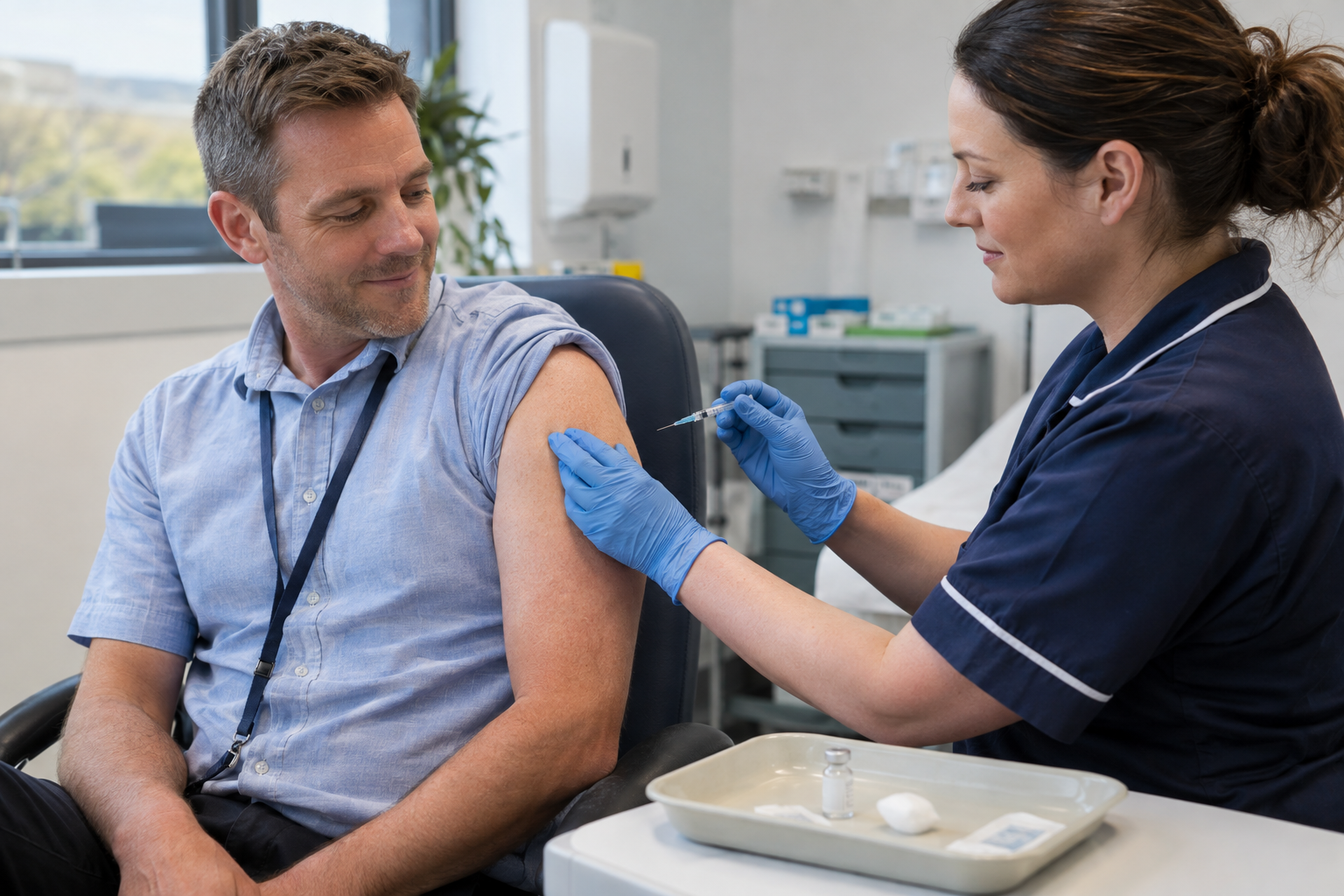
Professional teaching illustration. Read the written scenario for the facts; the image is not evidence of a real workplace.
Infection can spread through respiratory particles, hands, surfaces or contaminated material, depending on the organism and task. An office, nursery and sewage job need different controls. Start with the actual contact, ventilation, cleaning and welfare arrangements.
What does hand hygiene and infection prevention mean in practice?
It means interrupting the routes by which infectious agents move from source to person. Hand hygiene is one part of infection prevention. A strong workplace system also considers cleaning, ventilation, waste, PPE, welfare, food hygiene, sharps, body fluids, animal contact, sickness absence, vaccination signposting and protection of people at greater risk. For ordinary offices and welfare areas, simple controls can be enough. For care settings, schools, leisure venues, laboratories, animal work, sewage, waste or healthcare, the control standard may need to be much more formal.
Fictional workplace decision
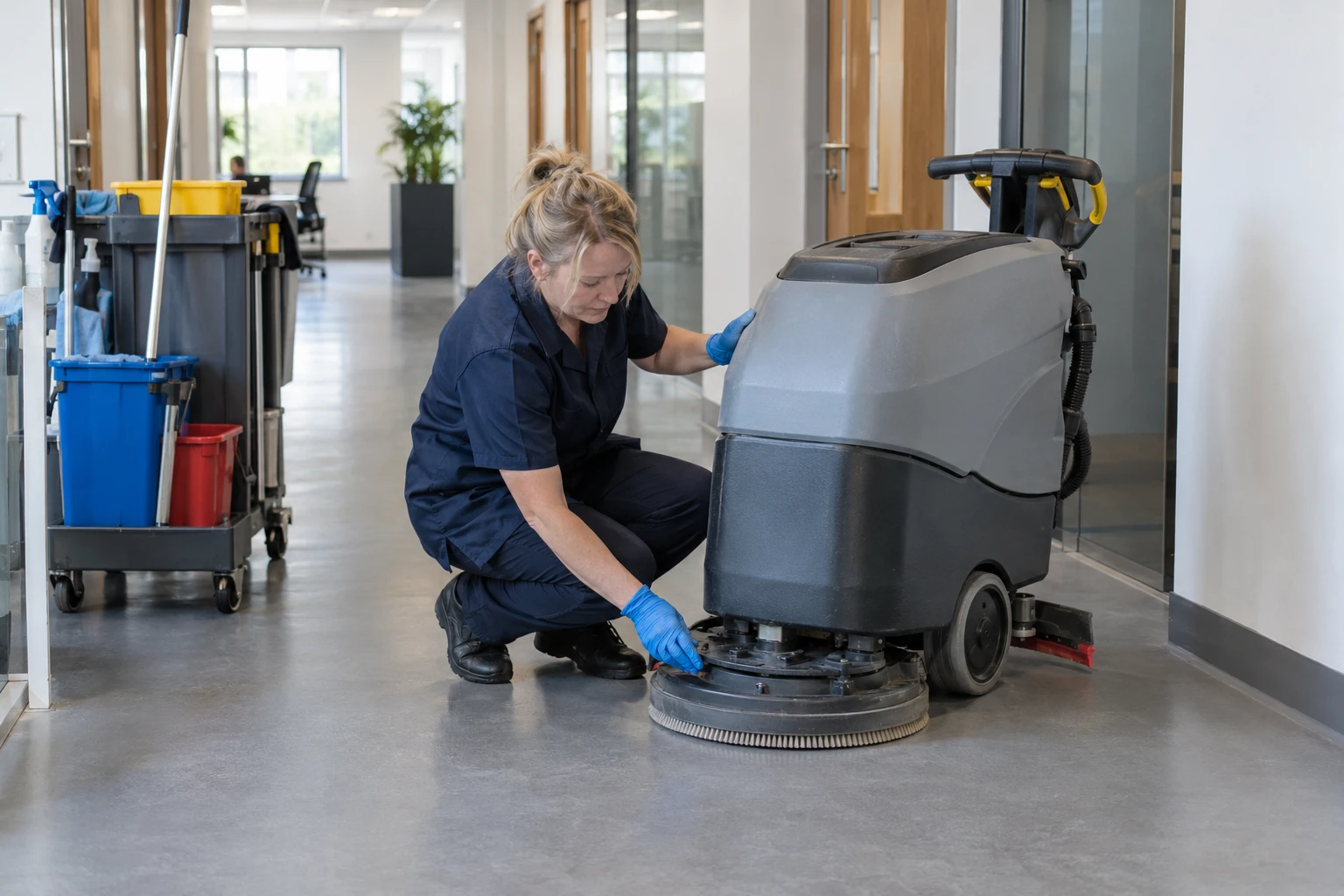
Fictional shared workplace: a cleaning worker reports an empty soap dispenser and unclear responsibility for shared surfaces. The supervisor assumes that displaying the hygiene poster means the required arrangements are available.
Compare the reasoning
The supervisor identifies the actual exposure routes and usable controls for the work. Instructions support practice but do not supply missing facilities, stock or responsibility. It means interrupting the routes by which infectious agents move from source to person. Hand hygiene is one part of infection prevention.
Existing SHAREhub photographic illustration. The fictional case supplies the task and decision evidence.
Infection can spread through respiratory particles, hands, surfaces or contaminated material, depending on the organism and task. An office, nursery and sewage job need different controls. Start with the actual contact, ventilation, cleaning and welfare arrangements.
What is cold and flu prevention in the workplace?
Cold and flu prevention is the set of workplace arrangements that reduce the chance of respiratory infections spreading between people. Common colds and flu are usually community infections, but workplaces can make spread easier. Close contact, shared desks, shared tools, poor ventilation, crowded welfare rooms, customer contact, shared vehicles and pressure to attend while unwell all increase the chance that one person’s illness becomes a team problem. The workplace is not expected to prevent every seasonal infection. The realistic standard is proportionate prevention: make good hygiene easy, keep spaces clean and ventilated, communicate clearly, manage absence fairly and protect people who could become seriously ill.
This topic sits between health and safety, wellbeing, facilities, HR and business continuity. It matters because infection peaks affect staffing, service quality, fatigue, concentration, vulnerable people and trust in management.
Fictional workplace decision
Fictional shared workplace: a cleaning worker reports an empty soap dispenser and unclear responsibility for shared surfaces. The supervisor assumes that displaying the hygiene poster means the required arrangements are available.
Compare the reasoning
The supervisor identifies the actual exposure routes and usable controls for the work. Instructions support practice but do not supply missing facilities, stock or responsibility. It means interrupting the routes by which infectious agents move from source to person. Hand hygiene is one part of infection prevention.
Existing SHAREhub photographic illustration. The fictional case supplies the task and decision evidence.
Infection can spread through respiratory particles, hands, surfaces or contaminated material, depending on the organism and task. An office, nursery and sewage job need different controls. Start with the actual contact, ventilation, cleaning and welfare arrangements.
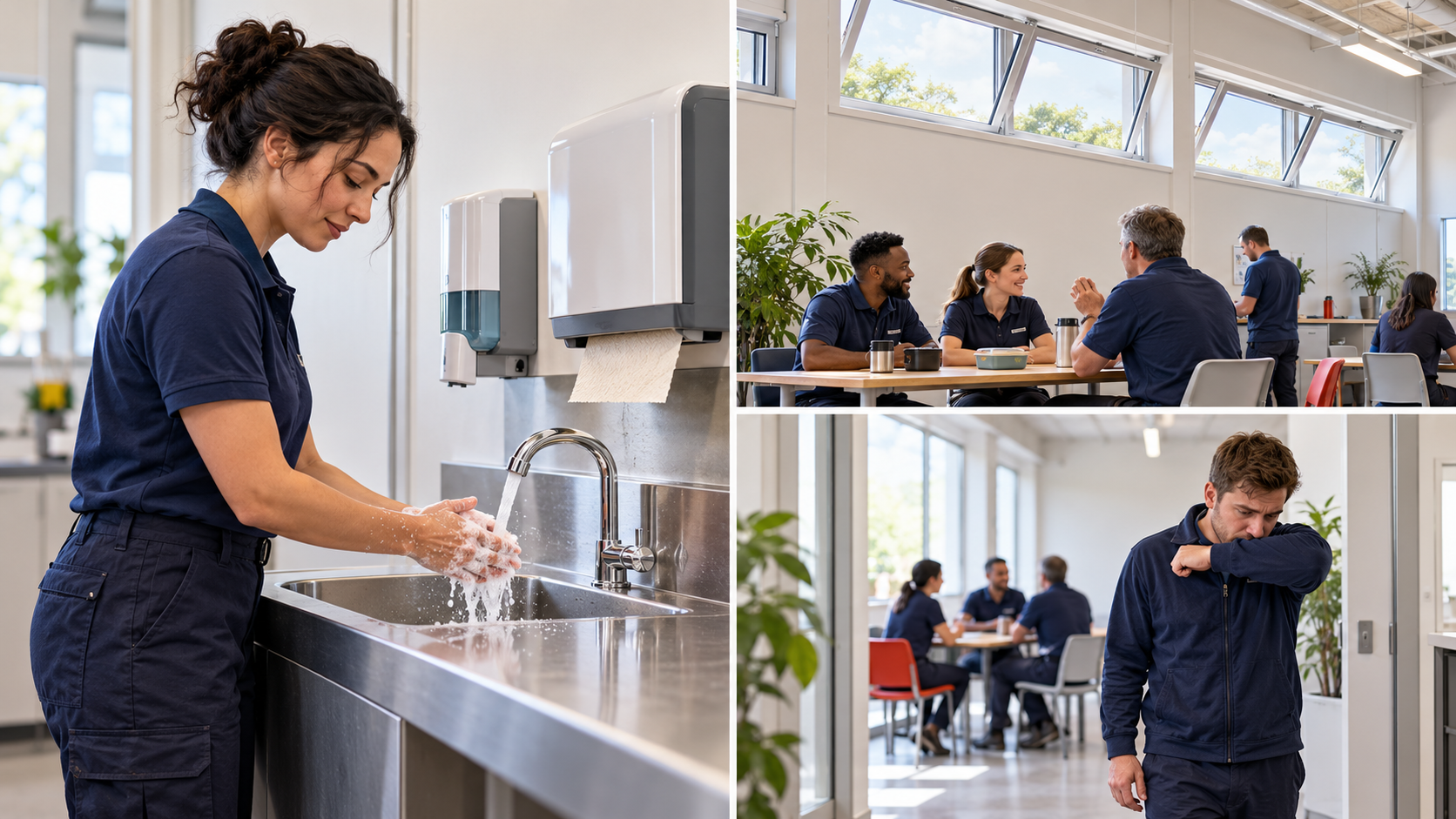
When and how should hands be washed?
Provide suitable comfortably warm water under the applicable welfare arrangements. Effective washing also needs soap, coverage, rubbing, rinsing and thorough drying. Avoid scalding water; when cold water is all that is immediately available, washing is still useful while the facility defect is addressed. NHS: How to wash your hands Hands should be washed with soap and water at key contamination points and dried properly. NHS guidance explains that handwashing is a simple way to protect yourself and others. In workplace language, it is a low-cost control that fails if facilities are missing, workers are rushed, soap is empty or drying is poor.
Wet hands with water, apply soap, rub palms, backs, between fingers, thumbs and fingertips for about 20 seconds, then rinse and dry thoroughly with a disposable towel or clean dryer. This is the NHS routine handwashing method; task-specific clinical or food procedures may add steps. Sanitiser can help when soap and water are not immediately available, but it should not replace washing for dirty hands, toilet hygiene, food handling or visible contamination. If norovirus is suspected after vomiting or diarrhoea, wash with soap and water: alcohol hand gel is not reliably effective against it.
NHS handwashing steps; NHS norovirus advice.
Fictional workplace decision
Fictional shared workplace: a cleaning worker reports an empty soap dispenser and unclear responsibility for shared surfaces. The supervisor assumes that displaying the hygiene poster means the required arrangements are available.
Compare the reasoning
The supervisor identifies the actual exposure routes and usable controls for the work. Instructions support practice but do not supply missing facilities, stock or responsibility. It means interrupting the routes by which infectious agents move from source to person. Hand hygiene is one part of infection prevention.
Existing SHAREhub photographic illustration. The fictional case supplies the task and decision evidence.
Maintain handwashing and drying, sensible cleaning, fresh-air arrangements and a workable route for reporting illness. Check whether staff feel pressured to attend when unwell. Do not treat one product or a blanket mask rule as a substitute for assessment.
How can the ISO 45001 hierarchy of controls reduce workplace transmission of cold and flu viruses?
Use a layered approach and verify that workers can follow it during a real shift, including the leave and staffing arrangements.
ERICPD and the five-level hierarchy can organise decisions; a service change may reduce contact, but cannot guarantee removal of respiratory viruses. Eliminate avoidable exposure by enabling unwell people to stay away; reduce crowded contact and isolate a symptomatic person from visitors while they leave; engineer fresh-air supply; use administrative cleaning, hand and cough hygiene; consider suitable face coverings or task-specific PPE for residual risk and current sector guidance. The UKHSA ventilation guidance supports fresh air; HSE ventilation guidance supports maintaining sufficient workplace fresh air in GB. Neither implies a universal fixed air-change rate for every room.
ERICPD is a planning crossmap. Its prompts do not add a sixth rung or rank Isolate above engineering. Discipline verifies and sustains every control level.
The hierarchy of controls in ISO 45001:2018 comes under Clause 8.1.2 (Eliminating hazards and reducing OH&S risks), which is located within Clause 8 ("Operation") .
ESEAP: Elimination, Substitution, Engineering controls, Administrative controls and PPE. Control order: HSE hierarchy of controls and IOSH hierarchy of control guidance .
HSE’s five-level hierarchy is the GB teaching framework for elimination, substitution, engineering, administrative controls and PPE. ERICPD is a complementary mnemonic. Select controls for the actual task and applicable work location, then check that they remain effective.
Fictional shared workplace: a cleaning worker reports an empty soap dispenser and unclear responsibility for shared surfaces. The supervisor assumes that displaying the hygiene poster means the required arrangements are available.
Compare the reasoning
The supervisor identifies the actual exposure routes and usable controls for the work. Instructions support practice but do not supply missing facilities, stock or responsibility. It means interrupting the routes by which infectious agents move from source to person. Hand hygiene is one part of infection prevention.
How can the hierarchy of controls prevent infection before relying on hand hygiene?
Use practical layers
Choose layered prevention measures
Professional teaching illustration. Read the written scenario for the facts; the image is not evidence of a real workplace.
Maintain handwashing and drying, sensible cleaning, fresh-air arrangements and a workable route for reporting illness. Check whether staff feel pressured to attend when unwell. Do not treat one product or a blanket mask rule as a substitute for assessment.
How can the hierarchy of controls prevent infection before relying on hand hygiene?
Remove avoidable contamination and provide reliable facilities first; use task-specific barriers, cleaning and behaviour checks for the remaining routes. ERICPD is a practical six-stage planning aid, not a statute. It maps to the HSE hierarchy: eliminate the source, substitute or reduce it, isolate people, use engineering and administrative controls, then add suitable personal protection where needed. “Discipline” means supervision and follow-through on a workable method, never blame. Cleaning products can introduce chemical or skin risks, so their own assessment and instructions matter. Choose the activity that matches the work.
Each has its own controls, verification and stop/restart decisions; ERICPD and ISO 45001 are alternative views of that same activity. A bathroom is taken out of use after vomiting; an authorised cleaner uses the site’s infection-control and cleaning procedure. ERICPD is a planning crossmap. Its prompts do not add a sixth rung or rank Isolate above engineering. Discipline verifies and sustains every control level. The hierarchy of controls in ISO 45001:2018 comes under Clause 8.1.2 (Eliminating hazards and reducing OH&S risks), which is located within Clause 8 ("Operation").
ESEAP: Elimination, Substitution, Engineering controls, Administrative controls and PPE. Control order: HSE hierarchy of controls and IOSH hierarchy of control guidance. A support worker collects correctly classified bagged clinical waste; prevent leaks, concealed sharps and transfer of contamination. ERICPD is a planning crossmap. Its prompts do not add a sixth rung or rank Isolate above engineering. Discipline verifies and sustains every control level. The hierarchy of controls in ISO 45001:2018 comes under Clause 8.1.2 (Eliminating hazards and reducing OH&S risks), which is located within Clause 8 ("Operation").
For an ordinary office, the immediate decision may be restoring soap and allowing an ill worker to stay away. For body fluids or a deliberate biological-agent process, stop and use the specialist risk assessment and response plan. HSE infection-risk guidance.
Fictional workplace decision
Fictional shared workplace: a cleaning worker reports an empty soap dispenser and unclear responsibility for shared surfaces. The supervisor assumes that displaying the hygiene poster means the required arrangements are available.
Compare the reasoning
The supervisor identifies the actual exposure routes and usable controls for the work. Instructions support practice but do not supply missing facilities, stock or responsibility. It means interrupting the routes by which infectious agents move from source to person. Hand hygiene is one part of infection prevention.
Prepare the workplace and support an unwell worker through different routes
Use practical layers
Choose layered prevention measures
Existing SHAREhub photographic illustration. The fictional case supplies the task and decision evidence.
Maintain handwashing and drying, sensible cleaning, fresh-air arrangements and a workable route for reporting illness. Check whether staff feel pressured to attend when unwell. Do not treat one product or a blanket mask rule as a substitute for assessment.
Prepare the workplace and support an unwell worker through different routes
Seasonal readiness includes actual ventilation, shared-space use, hygiene supplies, cleaning and staffing resilience. An individual who is unwell needs a private conversation and the applicable public-health and absence route, not a diagnosis by a supervisor. Keep current national guidance distinct from company policy and statutory duties. At Riverside, a crowded staff room and a cover shortage can undermine a campaign that otherwise reads well. Change break use and space arrangements, check ventilation and plan competent relief before asking symptomatic staff to attend to keep the rota full.
Keep vaccination information linked by country and season rather than embedding one assumed UK-wide entitlement. Illustrative example. A fictional leisure team shares a small break room during a busy period and managers struggle to cover absence. Decision. The manager changes space use and break planning, checks ventilation and activates a competent cover plan. Evidence to check. Observed occupancy, ventilation and hygiene checks, absence guidance and safe staffing arrangements. Hold or escalation point. Do not solve a cover gap by pressuring an unwell worker into public-facing or safety-sensitive duties.
Follow-up. Review access to breaks and absence support across every shift, including agency and seasonal workers. Read with: England public-health advice · nidirect flu advice · HSE workplace ventilation guidance · UKHSA England ventilation guidance.
Fictional workplace decision
Fictional shared workplace: a cleaning worker reports an empty soap dispenser and unclear responsibility for shared surfaces. The supervisor assumes that displaying the hygiene poster means the required arrangements are available.
Compare the reasoning
The supervisor identifies the actual exposure routes and usable controls for the work. Instructions support practice but do not supply missing facilities, stock or responsibility. It means interrupting the routes by which infectious agents move from source to person. Hand hygiene is one part of infection prevention.
Existing SHAREhub photographic illustration. The fictional case supplies the task and decision evidence.
Follow current national public-health advice and relevant sector requirements. England guidance is not automatically a UK-wide isolation law. Occupational exposure to blood, waste or biological agents needs a more specific assessment, trained response and protective arrangements.
Which duties apply in Great Britain and Northern Ireland?
Both jurisdictions require suitable welfare and control of work-related biological-agent exposure, but their statutory instruments and regulators differ. In Great Britain, use the 1992 Workplace Regulations for relevant workplaces and COSHH 2002 for biological-agent exposure arising from work. In Northern Ireland, the Workplace Regulations (NI) 1993 and COSHH (NI) 2003 are the separate instruments. Construction and specialist care or food work need their applicable sector rules. General community illness alone does not automatically make every workplace a high-containment biological-agent operation. An occupational exposure, suspected outbreak or failed welfare provision needs a named owner, immediate control and a record of what was fixed.
Clinical diagnosis, vaccination and individual adjustments follow professional health advice and privacy rules, not a manager’s guess.
Fictional workplace decision
Fictional shared workplace: a cleaning worker reports an empty soap dispenser and unclear responsibility for shared surfaces. The supervisor assumes that displaying the hygiene poster means the required arrangements are available.
Compare the reasoning
The supervisor identifies the actual exposure routes and usable controls for the work. Instructions support practice but do not supply missing facilities, stock or responsibility. It means interrupting the routes by which infectious agents move from source to person. Hand hygiene is one part of infection prevention.
Existing SHAREhub photographic illustration. The fictional case supplies the task and decision evidence.
Follow current national public-health advice and relevant sector requirements. England guidance is not automatically a UK-wide isolation law. Occupational exposure to blood, waste or biological agents needs a more specific assessment, trained response and protective arrangements.
What is the legal and public-health boundary?
General workplace risk, welfare and ventilation duties still apply, while public-health advice and seasonal vaccination programmes vary by jurisdiction. HSE’s GB risk-assessment guidance and GB ventilation guidance support a proportionate workplace plan. The England stay-home page is public-health advice, not an automatic UK-wide employer mandate. Northern Ireland has separate public advice through nidirect; Scotland and Wales should be checked against their current devolved public-health guidance before reusing an England instruction. Sector-specific healthcare and care requirements may impose additional controls and must be checked for that setting.
A manager should assess staffing and exposure without diagnosing individual workers.
Fictional workplace decision
Fictional shared workplace: a cleaning worker reports an empty soap dispenser and unclear responsibility for shared surfaces. The supervisor assumes that displaying the hygiene poster means the required arrangements are available.
Compare the reasoning
The supervisor identifies the actual exposure routes and usable controls for the work. Instructions support practice but do not supply missing facilities, stock or responsibility. It means interrupting the routes by which infectious agents move from source to person. Hand hygiene is one part of infection prevention.
How is ordinary workplace hygiene different from higher-risk biological exposure?
Match advice to the setting
Know when specialist controls are needed
Professional teaching illustration. Read the written scenario for the facts; the image is not evidence of a real workplace.
Follow current national public-health advice and relevant sector requirements. England guidance is not automatically a UK-wide isolation law. Occupational exposure to blood, waste or biological agents needs a more specific assessment, trained response and protective arrangements.
How is ordinary workplace hygiene different from higher-risk biological exposure?
Where assessment identifies occupational exposure to agents with effective readily available vaccines, the employer should offer protective immunisation free of charge through competent occupational-health advice. Explain benefits and limits, obtain informed consent and keep appropriate confidential records. If vaccination is declined or ineffective, review other controls. This supplements source/pathway controls; it is not a compulsory programme for every office worker. HSE: Preventing incidental exposure to infection at work · COSHH Regulations (Northern Ireland) 2003 Ordinary workplaces usually need reliable welfare and cleaning, while higher-risk biological exposure needs formal assessment and specialist control.
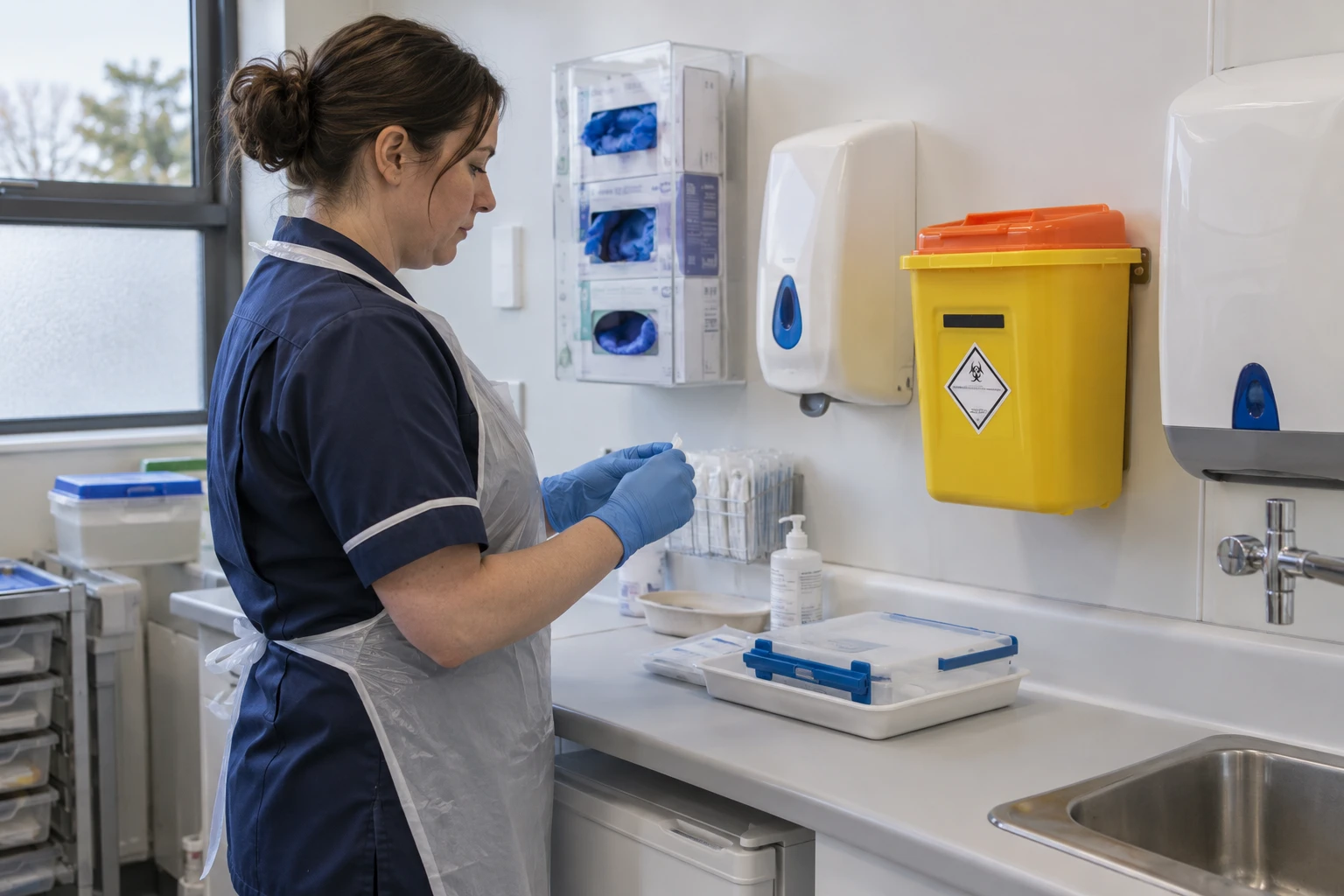
Most workplaces manage infection prevention through good welfare, cleaning, handwashing, respiratory hygiene, sensible absence culture and clear communication. That is enough for many offices, shops, warehouses and general workplaces where infection risk is broadly similar to normal community exposure. The control standard changes when the work itself creates exposure. Cleaning body fluids, handling waste, working with animals, preparing food, caring for vulnerable people, dealing with sewage, carrying out first aid, handling sharps or working in laboratories creates a more specific biological route. In those situations, handwashing remains important, but it sits alongside COSHH assessment, PPE, waste arrangements, vaccination signposting, training, incident response and competent advice.
Fictional workplace decision
Fictional shared workplace: a cleaning worker reports an empty soap dispenser and unclear responsibility for shared surfaces. The supervisor assumes that displaying the hygiene poster means the required arrangements are available.
Compare the reasoning
The supervisor identifies the actual exposure routes and usable controls for the work. Instructions support practice but do not supply missing facilities, stock or responsibility. It means interrupting the routes by which infectious agents move from source to person. Hand hygiene is one part of infection prevention.