Workplace awareness and prevention. Individual clinical diagnosis and treatment belong with qualified clinicians; protect personal information and use appropriate advice. Check the relevant UK nation and actual workplace arrangements. Completion does not establish practical competence, authorise hazardous work or award an external qualification.
Read the complete core teaching here. Use the interactive course for required activities, saved assessment and conditional completion.
Map the real working pattern
Map the real working pattern
Identify hidden barriers in hybrid work
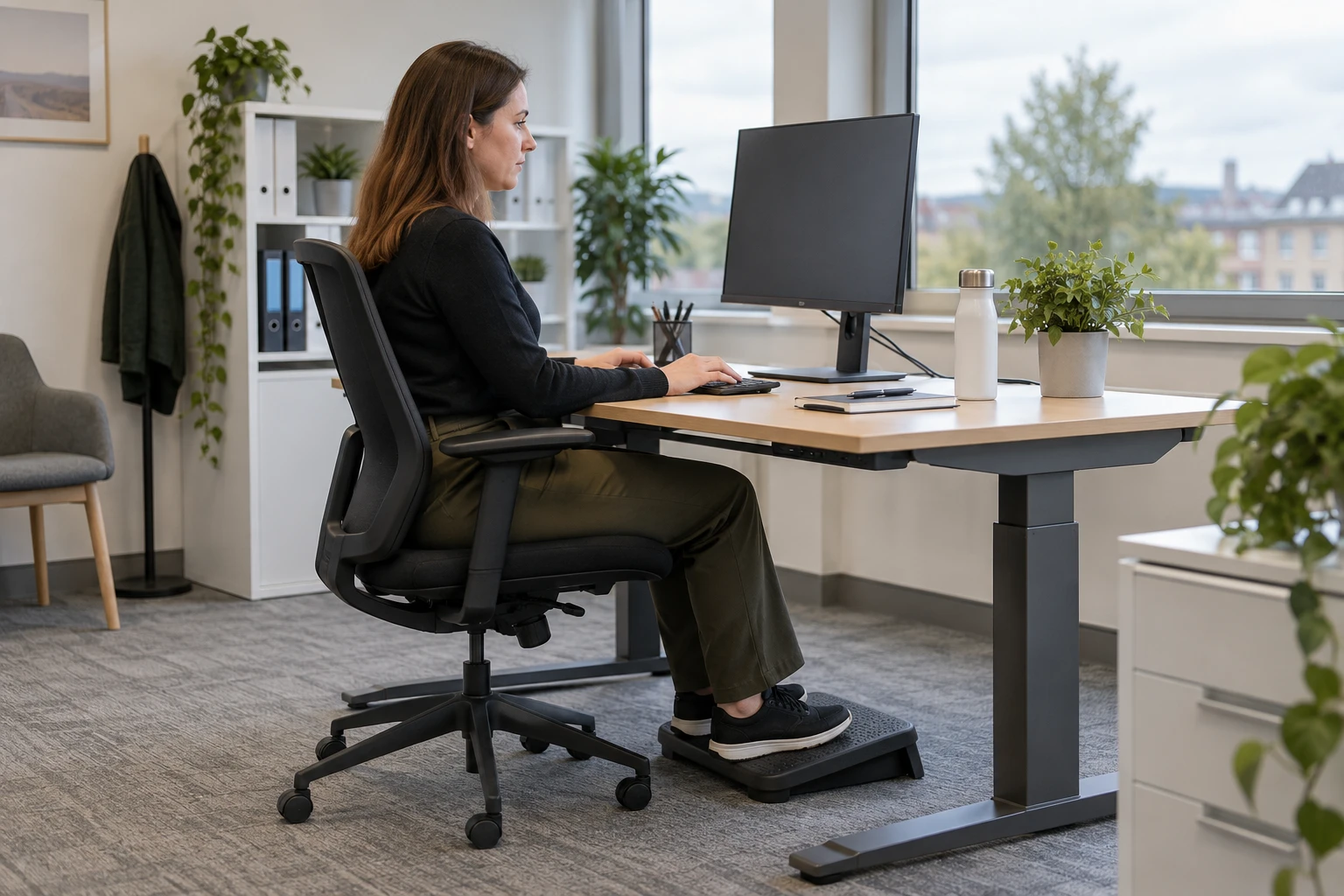
Professional teaching illustration. Read the written scenario for the facts; the image is not evidence of a real workplace.
Working at home can improve some conditions and worsen others. Ask about isolation, equipment, privacy, workload and access to help without assuming every home is suitable. Include people who cannot work remotely in decisions about support and fairness.
What does hybrid working wellbeing mean in practice?
It means designing split-location work so people can work effectively without avoidable harm or unfairness. Hybrid working usually means a worker routinely divides time between the employer's workplace, home and sometimes other locations. The wellbeing issue is not the location alone; it is how work is organised across locations. A laptop at a kitchen table for one short task is different from full-time screen work in a poor setup. HSE managing home workers A well-designed hybrid arrangement clarifies where work is done, what equipment is needed, how people communicate, when people are available, how performance is assessed, how managers support people, and how risks are reviewed after the arrangement has been tried.
Fictional workplace decision
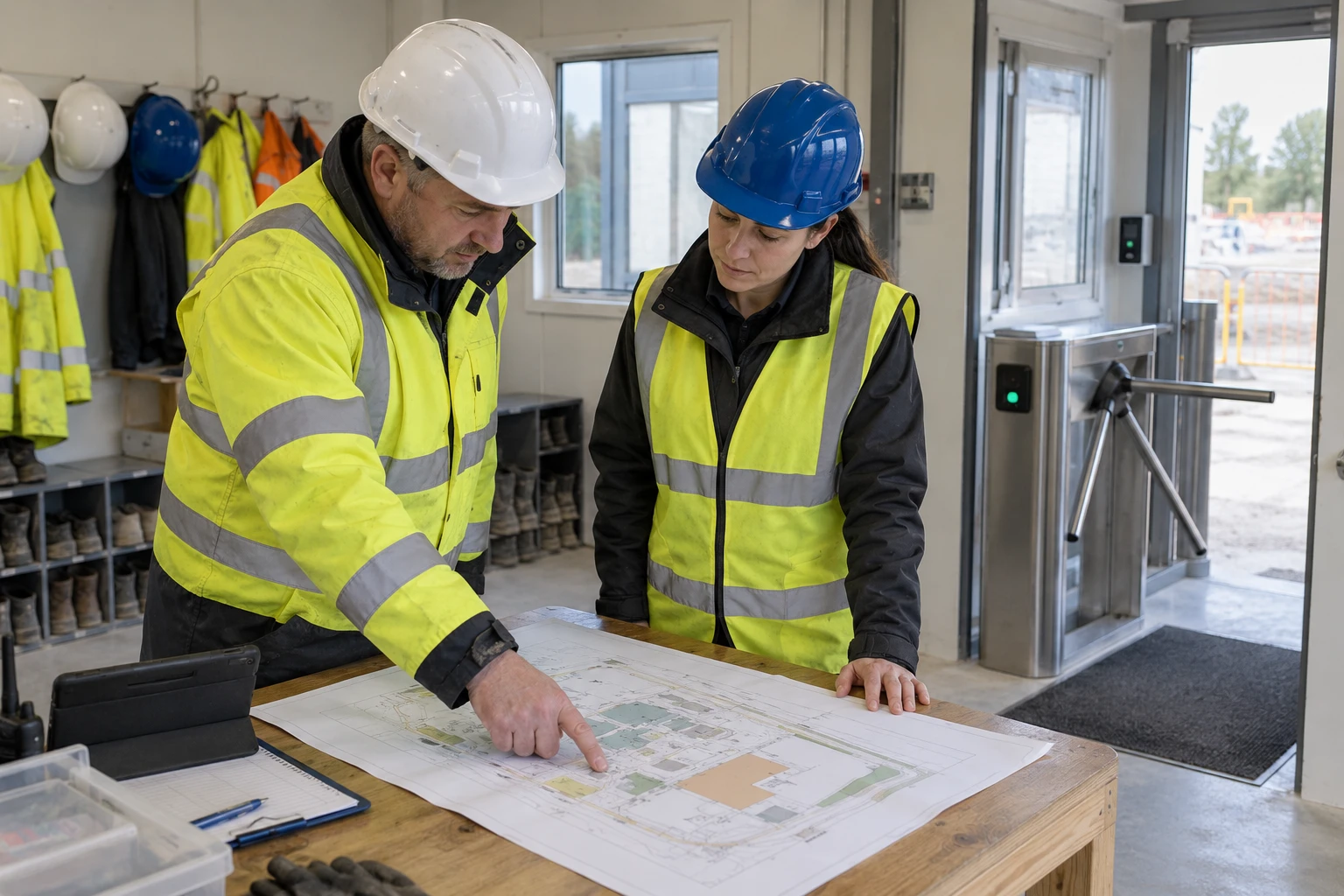
Fictional hybrid maintenance team: office staff hear a procedure change informally while remote and night workers see an outdated file. The manager interprets missed information as a lack of engagement.
Compare the reasoning
The manager maps who needs current information across real work patterns and corrects access. Physical presence is not a reliable test of inclusion, competence or necessary support. It means designing split-location work so people can work effectively without avoidable harm or unfairness. Hybrid working usually means a worker routinely divides time between the employer's workplace, home and sometimes other locations.
Existing SHAREhub photographic illustration. The fictional case supplies the task and decision evidence.
Working at home can improve some conditions and worsen others. Ask about isolation, equipment, privacy, workload and access to help without assuming every home is suitable. Include people who cannot work remotely in decisions about support and fairness.
What is community and belonging at work?
Community and belonging at work mean people feel included, connected, respected and able to participate in the workplace community. Belonging is not about making everyone socialise in the same way. It is about whether people can be themselves at work, understand where they fit, receive support, have a voice, access information, build trust and contribute without being excluded or treated as an outsider. A healthy workplace community is visible in ordinary behaviours. People greet new starters, involve remote colleagues, explain unwritten rules, challenge poor behaviour, share learning, consult workers before changes, support people after absence and make it easy to report concerns.
The opposite is not always dramatic. It may show as silence in meetings, cliques, poor handover between shifts, jokes that exclude, isolated lone workers, new starters left to work things out, remote workers forgotten, or people who stop reporting hazards because nobody acts.
Fictional workplace decision
Fictional hybrid maintenance team: office staff hear a procedure change informally while remote and night workers see an outdated file. The manager interprets missed information as a lack of engagement.
Compare the reasoning
The manager maps who needs current information across real work patterns and corrects access. Physical presence is not a reliable test of inclusion, competence or necessary support. It means designing split-location work so people can work effectively without avoidable harm or unfairness. Hybrid working usually means a worker routinely divides time between the employer's workplace, home and sometimes other locations.
How can the ISO 45001 hierarchy of controls reduce health and wellbeing risks in remote work?
Map the real working pattern
Identify hidden barriers in hybrid work
Existing SHAREhub photographic illustration. The fictional case supplies the task and decision evidence.
Working at home can improve some conditions and worsen others. Ask about isolation, equipment, privacy, workload and access to help without assuming every home is suitable. Include people who cannot work remotely in decisions about support and fairness.
How can the ISO 45001 hierarchy of controls reduce health and wellbeing risks in remote work?
Use a work-design model: role suitability, work environment, equipment, communication, workload, support, privacy and review.
A good remote-working arrangement starts with the role, not the assumption. Some work can be done remotely almost all the time. Some needs face-to-face collaboration, equipment, supervision, customer contact, secure systems or site presence. The design should explain what must be done, where, when, how communication works and how concerns are raised.
The model should include both planned controls and real checks. A home-working checklist is useful only if managers follow up on DSE actions, workload concerns, isolation, IT problems, stress signals and changes in domestic or health circumstances that affect work.
A remote worker has prolonged laptop-only work, neck discomfort and high evening message demand. Treat the display-screen equipment (DSE) and work-design routes separately. ERICPD (Eliminate, Reduce including substitution, Isolate, Control, Personal Protective Equipment, Discipline) and HSE’s five levels are related control prompts; PPE means personal protective equipment and has no routine role for screen discomfort or psychosocial overload. HSE topic guidance and HSE control hierarchy support the control order; the scenario needs local feasibility and effectiveness checks. HSE hierarchy of control
ERICPD is a planning crossmap. Its prompts do not add a sixth rung or rank Isolate above engineering. Discipline verifies and sustains every control level.
Physical workstation equipment and access design are engineering. Focus blocks, message boundaries and response windows are administrative; a keyboard does not control workload or isolation.
The hierarchy of controls in ISO 45001:2018 comes under Clause 8.1.2 (Eliminating hazards and reducing OH&S risks), which is located within Clause 8 ("Operation") .
ESEAP: Elimination, Substitution, Engineering controls, Administrative controls and PPE. Control order: HSE hierarchy of controls and IOSH hierarchy of control guidance .
Fictional hybrid maintenance team: office staff hear a procedure change informally while remote and night workers see an outdated file. The manager interprets missed information as a lack of engagement.
Compare the reasoning
The manager maps who needs current information across real work patterns and corrects access. Physical presence is not a reliable test of inclusion, competence or necessary support. It means designing split-location work so people can work effectively without avoidable harm or unfairness. Hybrid working usually means a worker routinely divides time between the employer's workplace, home and sometimes other locations.
Existing SHAREhub photographic illustration. The fictional case supplies the task and decision evidence.
Share decisions in accessible channels, give remote participants a clear voice and distribute learning opportunities fairly. Plan purposeful contact and a route for concerns. Connection should not depend on compulsory social events or constant video calls.
What should managers do and avoid?
Managers should create clarity, support and fairness without turning hybrid work into surveillance or isolation. Managers should create clarity, support and fairness without turning hybrid work into surveillance or isolation. The table gives practical examples, evidence expectations and common decision points so the section can be used for learning, supervision, audit and review. HSE managing home workers
Fictional workplace decision
Fictional hybrid maintenance team: office staff hear a procedure change informally while remote and night workers see an outdated file. The manager interprets missed information as a lack of engagement.
Compare the reasoning
The manager maps who needs current information across real work patterns and corrects access. Physical presence is not a reliable test of inclusion, competence or necessary support. It means designing split-location work so people can work effectively without avoidable harm or unfairness. Hybrid working usually means a worker routinely divides time between the employer's workplace, home and sometimes other locations.
How can the ISO 45001 hierarchy of controls reduce isolation and exclusion in the workplace?
Design participation
Agree inclusive team routines
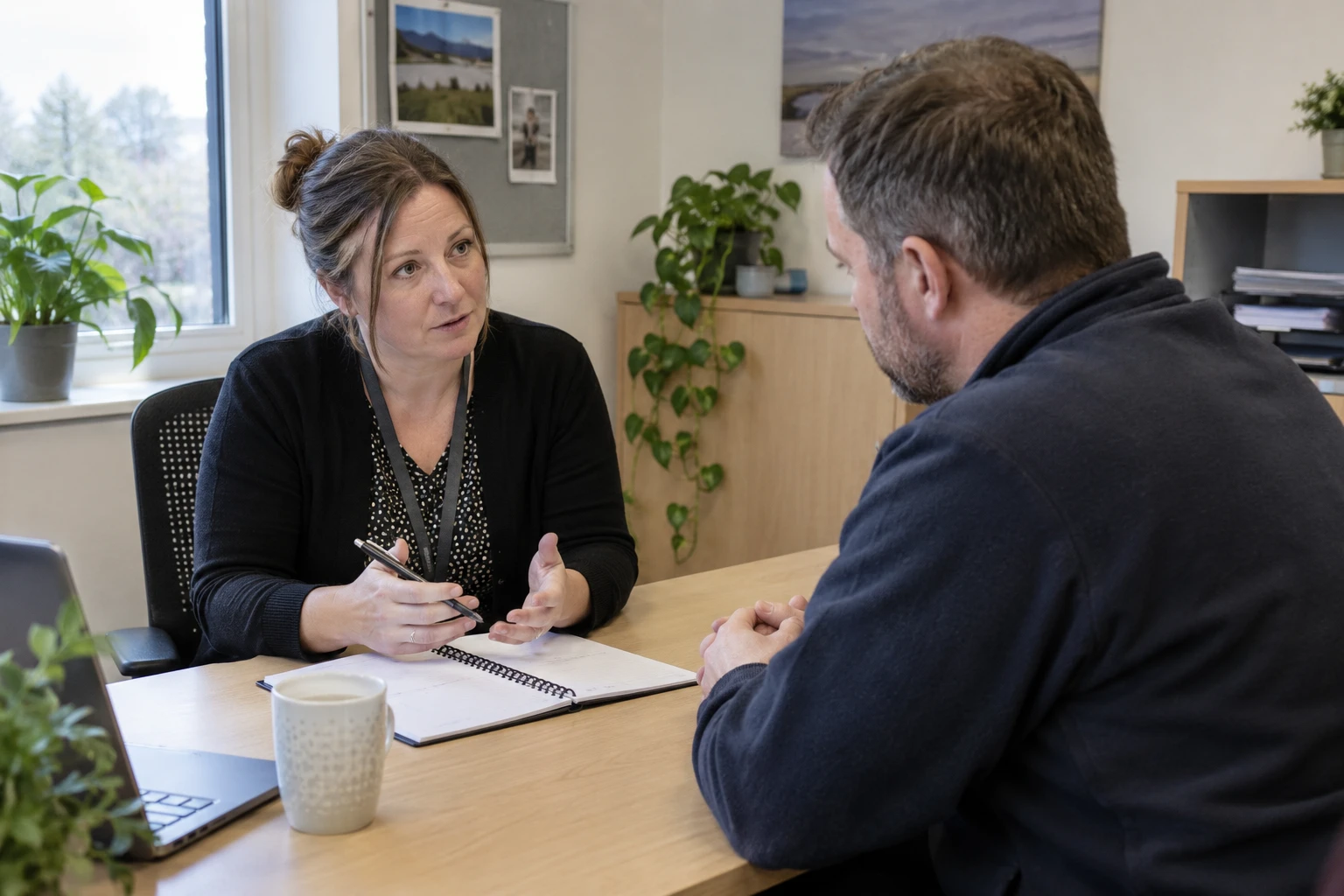
Professional teaching illustration. Read the written scenario for the facts; the image is not evidence of a real workplace.
Share decisions in accessible channels, give remote participants a clear voice and distribute learning opportunities fairly. Plan purposeful contact and a route for concerns. Connection should not depend on compulsory social events or constant video calls.
How can the ISO 45001 hierarchy of controls reduce isolation and exclusion in the workplace?
Redesign the work and reporting routes first; offer confidential individual support as a complement.
ERICPD and the five-level hierarchy are analogies for this psychosocial hazard. Eliminate bullying and avoidable exclusion, substitute a less isolating work pattern where feasible, engineer dependable access to briefings and support, use administrative supervision and fair processes, then offer personal support for remaining needs. The HSE solutions guide favours interventions at the source with workers involved. A manager cannot “eliminate loneliness” by decree; they can remove a rota that leaves one person without induction, peer contact or a route to raise a concern.
ERICPD is a planning crossmap. Its prompts do not add a sixth rung or rank Isolate above engineering. Discipline verifies and sustains every control level.
The hierarchy of controls in ISO 45001:2018 comes under Clause 8.1.2 (Eliminating hazards and reducing OH&S risks), which is located within Clause 8 ("Operation") .
ESEAP: Elimination, Substitution, Engineering controls, Administrative controls and PPE. Control order: HSE hierarchy of controls and IOSH hierarchy of control guidance .
The HSE five-level hierarchy is a GB general hazard-control framework. Here its use is a work-design analogy: personal support is not literal PPE for stress. For the isolated shift, facilities should commission radio/call-point coverage and the backup route at the actual work points, including foreseeable dead zones, and record acceptance and maintenance checks. The shift lead verifies contact and access to the current decision log before the duty, then checks outages and changes during the shift. A failed contact or uncertain decision log suspends the affected lone high-risk task; restore/test the route and confirm the correct work instruction before the supervisor authorises restart.
Agree the shift-overlap trial with affected workers and a named operations owner. Compare workload, access to support and actual action closure across day/night/agency groups, then review with workers at the agreed date. Repair an arrangement that moves overload elsewhere. Use feedback and operating evidence together; a survey score or absence trend does not diagnose an individual. HSE’s review guidance supports checking effectiveness with workers.
Fictional hybrid maintenance team: office staff hear a procedure change informally while remote and night workers see an outdated file. The manager interprets missed information as a lack of engagement.
Compare the reasoning
The manager maps who needs current information across real work patterns and corrects access. Physical presence is not a reliable test of inclusion, competence or necessary support. It means designing split-location work so people can work effectively without avoidable harm or unfairness. Hybrid working usually means a worker routinely divides time between the employer's workplace, home and sometimes other locations.
Existing SHAREhub photographic illustration. The fictional case supplies the task and decision evidence.
Share decisions in accessible channels, give remote participants a clear voice and distribute learning opportunities fairly. Plan purposeful contact and a route for concerns. Connection should not depend on compulsory social events or constant video calls.
What should a manager check monthly?
Monthly checks should focus on work design, support and risk signals, not surveillance. Managers do not need to inspect a worker's home in an intrusive way. They need a practical rhythm for asking whether the work setup still works, whether workload is manageable, whether DSE actions are closed, whether the worker has contact and whether any change needs review. The check should be conversational and supportive. It should not become a productivity interrogation or a request for personal medical detail. The check should produce a decision, not just a completed form.
Ask whether the agreed equipment is in use, work hours and contact patterns are sustainable, and the worker can get timely help when a problem arises. If the answer points to a task or workload defect, assign a change and review its effect at the next contact. Keep the conversation proportionate and confidential. HSE home-worker guidance gives the employer route. Monthly contact here is an example local rhythm. Agree earlier contact for a new starter, acute concern, delayed essential equipment or changed work, and retain the existing escalation triggers.
Check the actual workload and action outcome at the next contact. HSE home DSE guidance; HSENI DSE guidance; UK GDPR Article 6 lawful basis; GOV.UK monitoring staff at work; ICO monitoring workers guidance (check current updates).
Fictional workplace decision
Fictional hybrid maintenance team: office staff hear a procedure change informally while remote and night workers see an outdated file. The manager interprets missed information as a lack of engagement.
Compare the reasoning
The manager maps who needs current information across real work patterns and corrects access. Physical presence is not a reliable test of inclusion, competence or necessary support. It means designing split-location work so people can work effectively without avoidable harm or unfairness. Hybrid working usually means a worker routinely divides time between the employer's workplace, home and sometimes other locations.
Existing SHAREhub photographic illustration. The fictional case supplies the task and decision evidence.
Judge agreed outputs and quality, not desk presence or online status. Review whether people receive timely support and equal access to promotion. Connect equipment concerns to DSE arrangements and unsafe home circumstances to a safe private discussion.
What should managers check in a practical hybrid working review?
A good review is short, regular and useful; it should check whether the arrangement is working without drifting into intrusive monitoring. Monthly or periodic review should focus on work design, support, fairness and early warning signs. The manager does not need to know every keystroke, every location movement or private health detail. They need to know whether the person has suitable equipment, manageable workload, clear priorities, connection with the team, fair access to opportunities and a route to raise issues. HSE work-related stress A hybrid review should be recorded lightly.
Capture agreed actions, equipment needs, workload concerns, communication issues, review dates and any reasonable adjustments that affect work. Avoid collecting unnecessary medical detail, home-life detail, screenshots of private spaces or surveillance data that is not justified.
Fictional workplace decision
Fictional hybrid maintenance team: office staff hear a procedure change informally while remote and night workers see an outdated file. The manager interprets missed information as a lack of engagement.
Compare the reasoning
The manager maps who needs current information across real work patterns and corrects access. Physical presence is not a reliable test of inclusion, competence or necessary support. It means designing split-location work so people can work effectively without avoidable harm or unfairness. Hybrid working usually means a worker routinely divides time between the employer's workplace, home and sometimes other locations.
Fix access to work information before measuring belonging
Check work rather than visibility
Review outcomes without presence bias
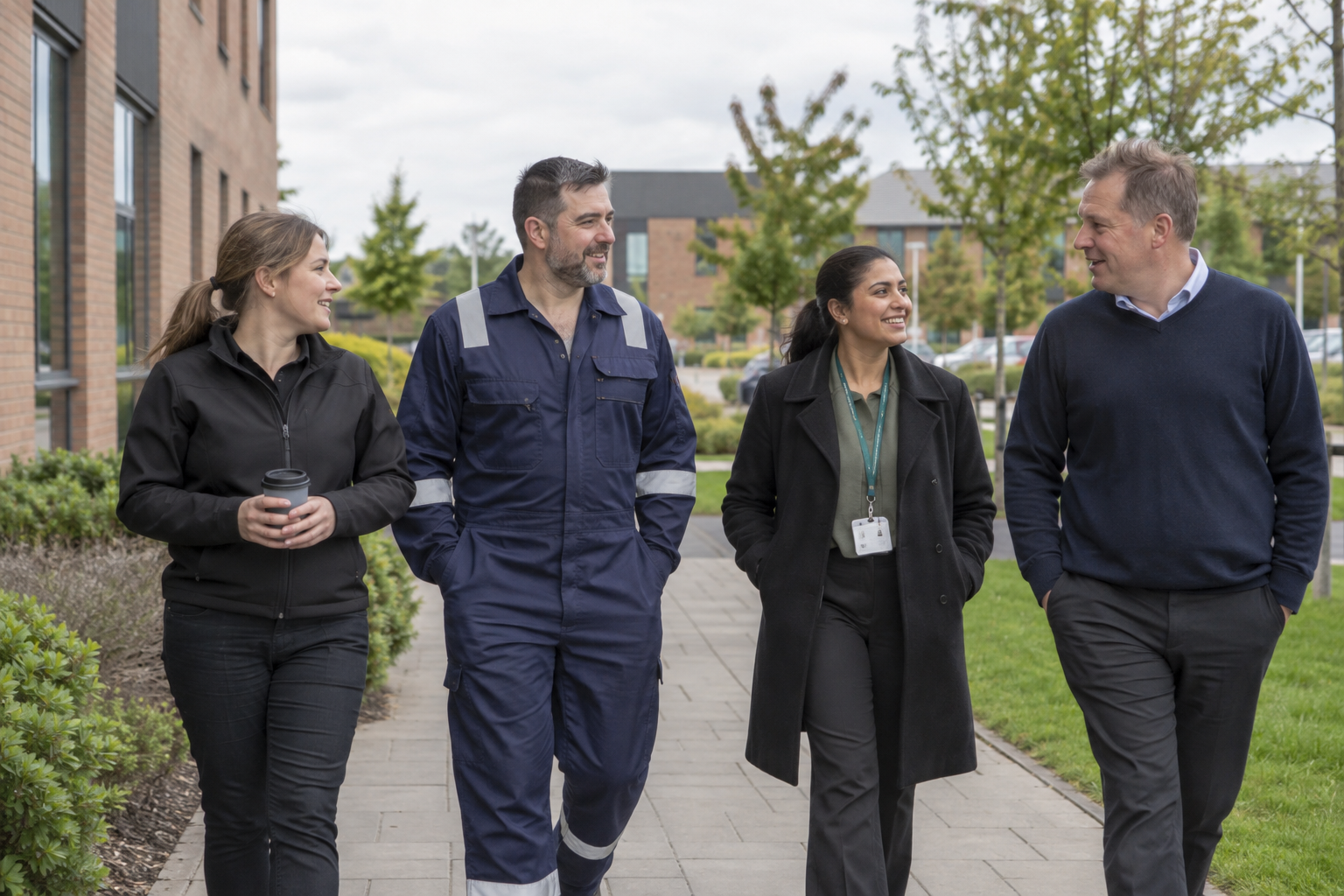
Existing SHAREhub photographic illustration. The fictional case supplies the task and decision evidence.
Judge agreed outputs and quality, not desk presence or online status. Review whether people receive timely support and equal access to promotion. Connect equipment concerns to DSE arrangements and unsafe home circumstances to a safe private discussion.
Fix access to work information before measuring belonging
Seasonal, remote and contractor workers need a usable route to say that a briefing, system or support service is inaccessible. Ask which work information or opportunity was missed, who else may be affected and what alternative would work. Do not make social-event attendance or disclosure of personal experience a test of belonging. Riverside can compare the briefing access of day staff with early cleaners and evening lifeguards. Correct the access barrier, offer a way to ask questions and report back what changed. Measure whether people received usable information and whether concerns were acted on; a small-team score must not expose an individual’s private health or personal circumstances.
Illustrative example. A fictional evening lifeguard and contract cleaner cannot attend the daytime team update. Decision. The manager provides an equivalent paid work-briefing route and a two-way question channel suited to their shifts. Evidence to check. Actual shift coverage, accessible information, worker feedback and a named owner for unresolved questions. Hold or escalation point. Do not mark people as disengaged because the organisation’s chosen meeting time excludes them. Follow-up. Ask the affected groups whether the correction works and check access after seasonal recruitment or rota change.
Read with: ICO workers’ health guidance.
Fictional workplace decision
Fictional hybrid maintenance team: office staff hear a procedure change informally while remote and night workers see an outdated file. The manager interprets missed information as a lack of engagement.
Compare the reasoning
The manager maps who needs current information across real work patterns and corrects access. Physical presence is not a reliable test of inclusion, competence or necessary support. It means designing split-location work so people can work effectively without avoidable harm or unfairness. Hybrid working usually means a worker routinely divides time between the employer's workplace, home and sometimes other locations.
What evidence should remote working wellbeing hold?
Check work rather than visibility
Review outcomes without presence bias
Professional teaching illustration. Read the written scenario for the facts; the image is not evidence of a real workplace.
Judge agreed outputs and quality, not desk presence or online status. Review whether people receive timely support and equal access to promotion. Connect equipment concerns to DSE arrangements and unsafe home circumstances to a safe private discussion.
What evidence should remote working wellbeing hold?
Evidence should show risk assessment, DSE action, contact arrangements, fair treatment, support and review. Remote-working records should be useful and proportionate. Keep the evidence needed to show the arrangement is safe, fair and reviewed: home-working assessment, DSE actions, equipment issued, contact plan, review dates and agreed adjustments. Avoid unnecessary health records. If occupational health is involved, managers should normally receive functional advice about work impact and adjustments, not detailed medical history. Workers must not be charged for equipment or actions identified as necessary by the DSE assessment.
The employer’s approving manager arranges provision, records the delivery owner and agrees a safe interim setup or different duties if an essential adjustment is delayed. A discretionary allowance or catalogue link does not close an unmet assessed need. Confirm with the worker that the installed arrangement works; office-style furniture is not automatically necessary for everyone. HSE home DSE guidance; HSENI DSE guidance; UK GDPR Article 6 lawful basis; GOV.UK monitoring staff at work; ICO monitoring workers guidance (check current updates).
Fictional workplace decision
Fictional hybrid maintenance team: office staff hear a procedure change informally while remote and night workers see an outdated file. The manager interprets missed information as a lack of engagement.
Compare the reasoning
The manager maps who needs current information across real work patterns and corrects access. Physical presence is not a reliable test of inclusion, competence or necessary support. It means designing split-location work so people can work effectively without avoidable harm or unfairness. Hybrid working usually means a worker routinely divides time between the employer's workplace, home and sometimes other locations.