Workplace awareness and prevention. Specialist competence, statutory examinations and work authorisation require separate evidence. Check the relevant UK nation and actual workplace arrangements. Completion does not establish practical competence, authorise hazardous work or award an external qualification.
Read the complete core teaching here. Use the interactive course for required activities, saved assessment and conditional completion.
Consider inexperience
Consider inexperience
Identify additional learning and supervision needs
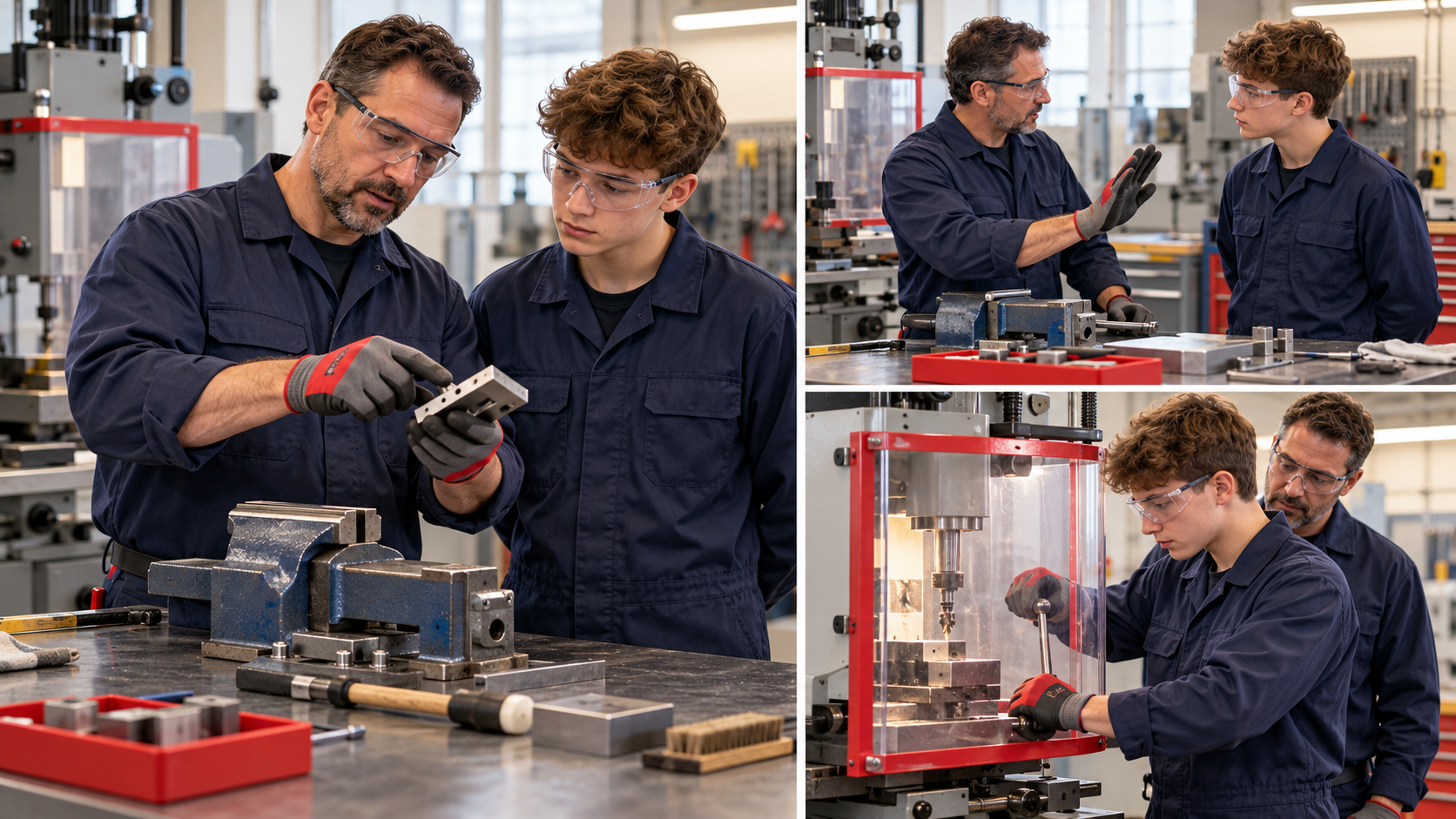
Professional teaching illustration. Read the written scenario for the facts; the image is not evidence of a real workplace.
A young person may lack familiarity with equipment, workplace norms or the consequences of a shortcut. Assess the actual person and work, including relevant age restrictions and national rules. Do not assume confidence or physical size proves understanding.
What must be settled before the young person starts?
Make or review an assessment that accounts for young-person risks before employment starts. An existing assessment can be sufficient if it genuinely covers this person and the proposed work; a separate form is not automatically required. Start with the work the person will do, observe and pass near, including breaks, deliveries, cleaning and unusual jobs. Assess the workplace layout, equipment, substances and physical or biological exposures, how work is organised, and the instruction required. Talk with the person and, where relevant, the organiser about experience, understanding and support needs.
Keep personal information restricted to those who need it. England: passing the school-leaving date and continuing education or training until 18 are separate questions. The continuing requirement can be met through full-time education, an apprenticeship, or at least 20 hours a week of work or volunteering alongside part-time education or training. Check the leaving date for the actual UK nation and any child-employment or placement permission separately. Record the age/status decision and a rota containing all applicable working time, rather than simply writing “16+”. GOV.UK school leaving age.
Confirm date of birth, national school-leaving date, GB or NI jurisdiction, and any child-employment or placement permission. Keep England’s continuing education/training requirement separate. Record the decision and include applicable training in the rota. Check that this task is permitted, assessed and within capability. Verify physical safeguards, demonstrated understanding, a named competent supervisor and cover, and clear stop signs. An apprenticeship or the first decision alone does not authorise the task. Protected bench → changed task → verified restart: a 17-year-old is cleared for pre-cut, deburred bracket assembly behind the traffic barrier with stable workholding.
A request to cut a new part or move the barrier returns the decision to the supervisor: stop, keep clear, check legal/task limits and revise the assessment and controls. Restart only after the named responsible person verifies the permitted method, safeguards, understanding and supervision cover. Retain the changed task, the reason for the hold, the checks and the restart decision. The original assembly permission does not carry over automatically. Original SHARE application in the SHAREhub environment, version 19 October 2026. The two panels and worked sequence are the complete text equivalent; no external artwork is reproduced.
Read with GOV.UK school leaving age, HSE young-person risks and HSE training and supervision. This learning aid does not authorise a task. For children, give a parent understandable information about assessed risks and precautions before employment. For placements this may be conveyed through the school or organiser; verify it reaches the right person. Do not confuse parental consent with permission to undertake prohibited work. Source basis: Management Regulations 1999 regulation 3 GB; Management Regulations 2000 regulation 3 NI; Management Regulations 1999 regulation 10 GB; Management Regulations 2000 regulation 10 NI; HSE risks to young people; HSE work experience.
Fictional workplace decision
Fictional case — An apprentice signs induction, then receives an unfamiliar task. An experienced colleague demonstrates a safeguard bypass to save time while the named supervisor is unavailable.
Compare the reasoning
Stop the unsafe bypass practice and keep the unfamiliar task within suitable assessed limits. Restore effective safeguards through the competent route, arrange available instruction and supervision, and verify the apprentice's understanding and performance. An induction signature or an experienced colleague's shortcut does not establish either task readiness or permission for unsafe work.
Which duties apply in Great Britain and Northern Ireland?
Consider inexperience
Identify additional learning and supervision needs
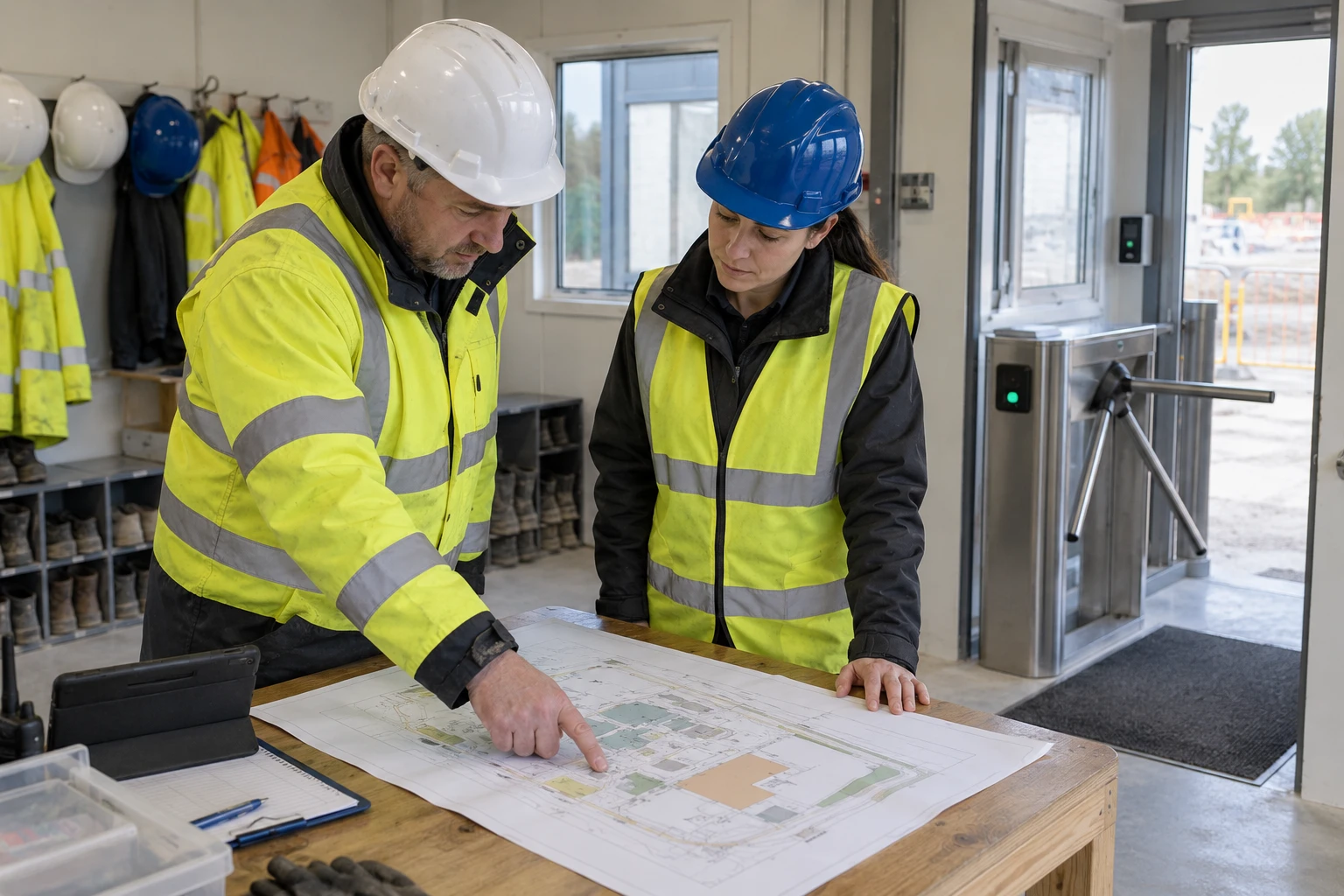
Existing SHAREhub photographic illustration. The fictional case supplies the task and decision evidence.
A young person may lack familiarity with equipment, workplace norms or the consequences of a shortcut. Assess the actual person and work, including relevant age restrictions and national rules. Do not assume confidence or physical size proves understanding.
Which duties apply in Great Britain and Northern Ireland?
Great Britain and Northern Ireland have separate legal instruments. The core young-person protections are closely aligned, but use the correct law, regulator and employment advice for the workplace. The table separates the central duties from SHARE practice. It is not an exhaustive list of task-specific law. Scroll sideways to see all columns of this table. These duties sit alongside the Health and Safety at Work etc. Act 1974 in GB and the Health and Safety at Work (Northern Ireland) Order 1978 in NI. Equipment, substances, construction and other task-specific rules still apply.
Do not describe the Equality Act 2010 as NI law; use competent local advice for equality, disability adjustment and safeguarding questions. Boundary: this is workplace-use and employment guidance. Product supply, conformity marking and a manufacturer's declaration do not decide whether a young person may use a product. Purchasers should check the actual equipment instructions and applicable supply regime separately. Maritime and other specialist sectors may have different arrangements; verify them before using this general page. Law, guidance and local rules: the regulations set duties; HSE and HSENI explain practical application; the worked examples and suggested records here are SHARE guidance.
An employer may adopt stricter task restrictions but should label them as company rules.
Fictional workplace decision
Fictional case — An apprentice signs induction, then receives an unfamiliar task. An experienced colleague demonstrates a safeguard bypass to save time while the named supervisor is unavailable.
Compare the reasoning
Stop the unsafe bypass practice and keep the unfamiliar task within suitable assessed limits. Restore effective safeguards through the competent route, arrange available instruction and supervision, and verify the apprentice's understanding and performance. An induction signature or an experienced colleague's shortcut does not establish either task readiness or permission for unsafe work.
Identify additional learning and supervision needs
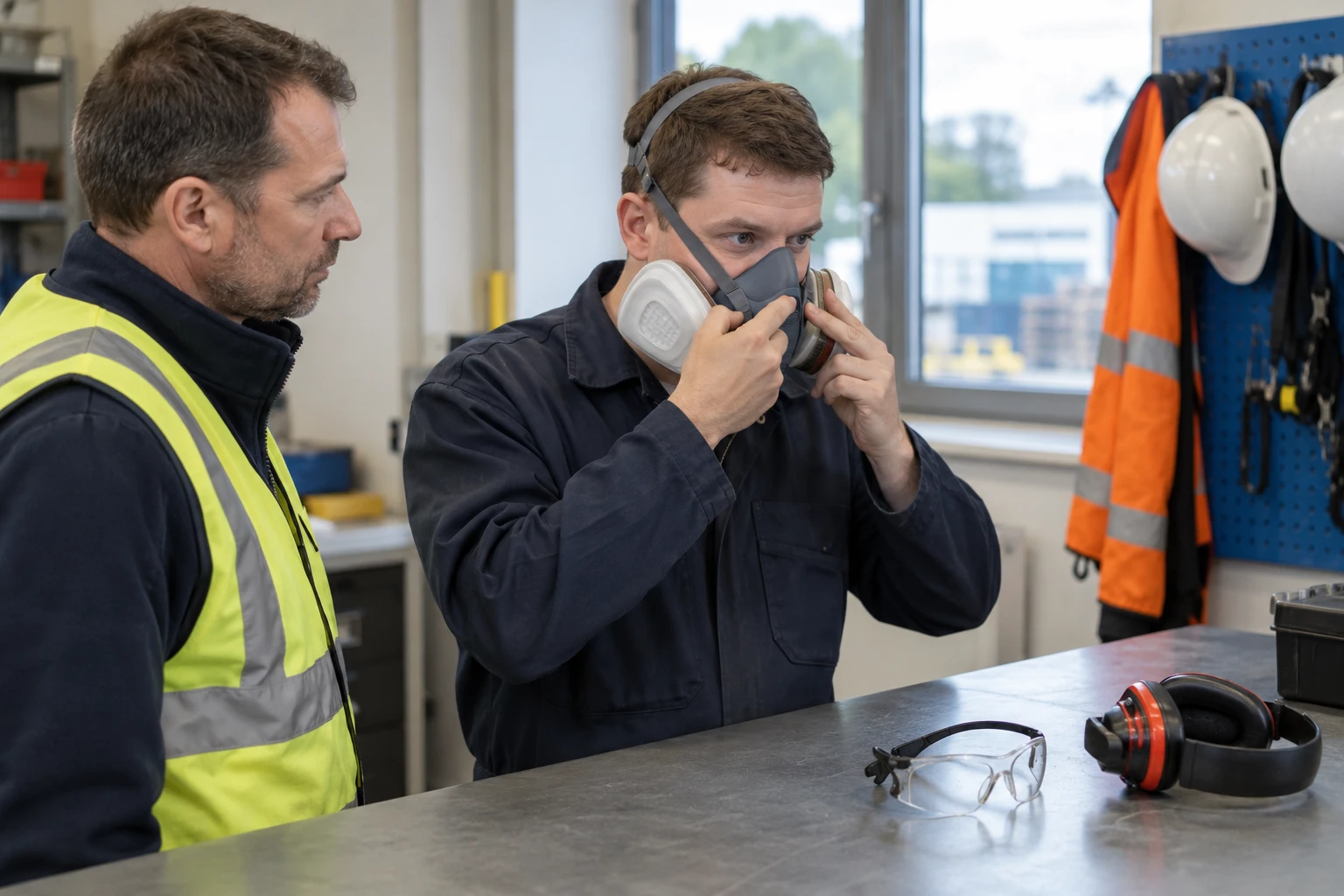
Existing SHAREhub photographic illustration. The fictional case supplies the task and decision evidence.
A young person may lack familiarity with equipment, workplace norms or the consequences of a shortcut. Assess the actual person and work, including relevant age restrictions and national rules. Do not assume confidence or physical size proves understanding.
How do training and supervision become effective?
Demonstrate the task, ask the young person to explain the risks and stop conditions, then observe safe practice. Reduce supervision only when the task and the person justify it and any legal conditions continue to be met. Use short explanations, demonstrations, accessible instructions and time for questions. A nod or course attendance shows little about application. Ask “What would you do if this guard was loose?” or “Who takes over if I leave?” Agree a named alternative contact if the person feels unable to approach their supervisor.
Start with close support where needed, progress to coached practice and then observed task competence. Record the boundary of any authorisation: which task, equipment, location and conditions it covers. Returning to closer supervision after change is part of learning. There is no universal supervision ratio, number of days to independence, course certificate or certificate expiry for all young workers. Supervisors need competence in both the work and teaching it safely, plus time to observe and intervene. Managers must provide cover rather than leave a young person unsupported when production is busy.
Refresher learning follows changed risks or evidence that understanding has weakened; specific tasks may have additional requirements. Scroll sideways to see all columns of this table. Source basis: HSE training and supervision; HSE health and safety training INDG345; HSE new to the job.
Fictional workplace decision
Fictional case — An apprentice signs induction, then receives an unfamiliar task. An experienced colleague demonstrates a safeguard bypass to save time while the named supervisor is unavailable.
Compare the reasoning
Stop the unsafe bypass practice and keep the unfamiliar task within suitable assessed limits. Restore effective safeguards through the competent route, arrange available instruction and supervision, and verify the apprentice's understanding and performance. An induction signature or an experienced colleague's shortcut does not establish either task readiness or permission for unsafe work.
Existing SHAREhub photographic illustration. The fictional case supplies the task and decision evidence.
Name an available supervisor, show the task, use accessible instructions and ask for a safe demonstration. Define tasks that are prohibited or require direct supervision. Include emergencies, welfare and a clear right to stop and ask without ridicule.
What should managers record and check?
Evidence should show the tasks permitted today, the controls in place, who supervises and how understanding was checked. Test that evidence against real work and the young person’s account. A proportionate risk-register entry names the affected people, task and setting, credible harm, young-person factors, controls and their owner, unresolved actions, and events that require review. Link the assessment to induction, observed competence, task limits, supervision cover, hours and relevant placement communications. Record significant assessment findings where the legal threshold applies; SHARE recommends a short usable plan even where a written assessment is not legally required.
Ask the young person to show the safe route and explain what happens if the supervisor is absent. Ask the supervisor to identify the next task the person may learn and the evidence needed first. Check that deliveries, contractors, changed shifts or informal “helping out” have not expanded the job. Watch for task creep, imitation of shortcuts, hidden discomfort, fatigue, bullying or reluctance to ask questions. Review after a change, near miss, control failure or concern, and at locally chosen learning checkpoints. First-day or first-week conversations are useful planning choices, not universal statutory inspection frequencies.
Keep sensitive health or support information separate from widely circulated task records. Source basis: Management Regulations 1999 regulation 3 GB; Management Regulations 2000 regulation 3 NI; HSE managing for health and safety HSG65; HSE consultation and involvement.
Fictional workplace decision
Fictional case — An apprentice signs induction, then receives an unfamiliar task. An experienced colleague demonstrates a safeguard bypass to save time while the named supervisor is unavailable.
Compare the reasoning
Stop the unsafe bypass practice and keep the unfamiliar task within suitable assessed limits. Restore effective safeguards through the competent route, arrange available instruction and supervision, and verify the apprentice's understanding and performance. An induction signature or an experienced colleague's shortcut does not establish either task readiness or permission for unsafe work.
How do we manage and review young-worker controls?
Make supervision specific
Define permitted tasks and boundaries
Professional teaching illustration. Read the written scenario for the facts; the image is not evidence of a real workplace.
Name an available supervisor, show the task, use accessible instructions and ask for a safe demonstration. Define tasks that are prohibited or require direct supervision. Include emergencies, welfare and a clear right to stop and ask without ridicule.
How do we manage and review young-worker controls?
A management system should assign control owners, resource supervision, involve the young person and check that safeguards work as tasks change. A system document does not make a restricted task lawful. Use the organisation’s arrangements to control task authorisations, investigate failures and hear young workers’ concerns. HSE’s Plan, Do, Check, Act approach gives a practical structure for planning, implementation, checking and improvement. A completed form does not demonstrate that a particular placement is safe. HSE managing health and safety. ISO 45001 is an optional international health and safety management standard.
HSE explanation of ISO 45001 says its use may go beyond legal duties and that inspectors consider real evidence, not certification alone. For a young worker, a management system can help assign task limits and supervision, but it cannot establish that this particular job is lawful or safe. This page does not claim conformity or apply numbered clauses: those need an authorised current text and qualified review. For this topic, check whether the risk assessment still describes the actual person, task and environment, whether the supervisor has time and cover, and whether reports cause a change.
Review controls after a new material, machine, delivery route or task request. No standard text is reproduced here. HSE risk-assessment review steps. Scroll sideways to see all columns of this table. Source basis: HSE risk-assessment steps; HSE managing health and safety.
Fictional workplace decision
Fictional case — An apprentice signs induction, then receives an unfamiliar task. An experienced colleague demonstrates a safeguard bypass to save time while the named supervisor is unavailable.
Compare the reasoning
Stop the unsafe bypass practice and keep the unfamiliar task within suitable assessed limits. Restore effective safeguards through the competent route, arrange available instruction and supervision, and verify the apprentice's understanding and performance. An induction signature or an experienced colleague's shortcut does not establish either task readiness or permission for unsafe work.
What changes in another workplace or a short placement?
Make supervision specific
Define permitted tasks and boundaries
Existing SHAREhub photographic illustration. The fictional case supplies the task and decision evidence.
Name an available supervisor, show the task, use accessible instructions and ask for a safe demonstration. Define tasks that are prohibited or require direct supervision. Include emergencies, welfare and a clear right to stop and ask without ridicule.
What changes in another workplace or a short placement?
Keep the same assessment and supervision principles, but change the controls to match the setting. A short placement still needs a safe scope and a clear contact. These are illustrative task decisions, not permission based on a job title or age alone. Each host checks school status, GB or NI rules, actual task, restrictions, hours and supervision. The strongest control is the one that removes or physically separates the material hazard in that setting. Short placement example: a 15-year-old whose compulsory school age has not ended visits a hospitality kitchen through a school placement.
The host first checks the applicable child-employment and placement rules, agrees a limited observational or otherwise suitable task with the organiser and names a supervisor and backup. For this child, powered slicing is excluded; hot oil and unknown cleaning products also stay outside the agreed scope. The host separately checks lawfulness and risk for every other proposed task. A request to move an unlabelled cleaner is a stop point: the student leaves it untouched and tells the supervisor. At hand-back, the host checks the area, records any change and agrees the next task afresh.
Neither school involvement nor a signed induction grants permission for a new task. Sources: HSE work-experience guidance. HSE catering burn and scald example; HSE machinery guidance on children. Scroll sideways to see all columns of this table. Office placements may need proportionate workstation, route and contact arrangements. Cleaning, repairs and driving are separate tasks that need their own eligibility and assessment; they are not covered by an assembly or scanning induction. Source basis: HSE hierarchy and PPE; HSE risks to young people; HSE work experience; HSENI employing young people;
Fictional workplace decision
Fictional case — An apprentice signs induction, then receives an unfamiliar task. An experienced colleague demonstrates a safeguard bypass to save time while the named supervisor is unavailable.
Compare the reasoning
Stop the unsafe bypass practice and keep the unfamiliar task within suitable assessed limits. Restore effective safeguards through the competent route, arrange available instruction and supervision, and verify the apprentice's understanding and performance. An induction signature or an experienced colleague's shortcut does not establish either task readiness or permission for unsafe work.
Existing SHAREhub photographic illustration. The fictional case supplies the task and decision evidence.
Agree responsibilities with the employer, host or training provider and check the supervisor has time to supervise. Review after changes or difficulties. A buddy can help but cannot replace competent supervision or override a restricted task.
When should work stop and what happens next?
Stop the affected activity when the task is unclear, restrictions or controls are unresolved, required supervision is missing, or conditions become unsafe. Move to a safe place and tell the responsible person. Do not make the young person carry the burden of resisting unsafe requests. The employer should prevent them and respond constructively when someone speaks up. Use the instructed safe stop; only isolate equipment if trained and authorised. In an emergency, do not send an untrained young person into danger to rescue someone, fight a fire or investigate a spill.
Report injuries and near misses promptly. The employer decides whether statutory reporting is required under the appropriate GB or NI rules and preserves relevant evidence without delaying care. Source basis: HSE your health your safety INDG450; HSE training and supervision.
Fictional workplace decision
Fictional case — An apprentice signs induction, then receives an unfamiliar task. An experienced colleague demonstrates a safeguard bypass to save time while the named supervisor is unavailable.
Compare the reasoning
Stop the unsafe bypass practice and keep the unfamiliar task within suitable assessed limits. Restore effective safeguards through the competent route, arrange available instruction and supervision, and verify the apprentice's understanding and performance. An induction signature or an experienced colleague's shortcut does not establish either task readiness or permission for unsafe work.
A changed task needs a new permission and readiness check
Coordinate the placement
Check understanding without pressure
Existing SHAREhub photographic illustration. The fictional case supplies the task and decision evidence.
Agree responsibilities with the employer, host or training provider and check the supervisor has time to supervise. Review after changes or difficulties. A buddy can help but cannot replace competent supervision or override a restricted task.
A changed task needs a new permission and readiness check
Legal permissibility for the person’s age and status is separate from task readiness. Confidence or supervision cannot make prohibited work lawful. Use identified pre-cut and deburred parts, suitable workholding, a protected route, clear explanation and named supervision for the assessed assembly. A request to cut a different part changes the task. Keep hands clear and stop the affected activity rather than improvising. The responsible owner checks legal permissibility, actual hazards, competence, safeguards and available supervision before authorising any change. Use explain-back, observed first work and an accessible contact.
Hold if the supervisor or evidence is unavailable; do not infer age or health from a photograph. ERICPD is a planning cross-map: Discipline verifies and sustains every control. ESEAP compares effectiveness. A label does not authorise the task; retain the owner, evidence and stop or change decision.
Fictional workplace decision
Fictional case — An apprentice signs induction, then receives an unfamiliar task. An experienced colleague demonstrates a safeguard bypass to save time while the named supervisor is unavailable.
Compare the reasoning
Stop the unsafe bypass practice and keep the unfamiliar task within suitable assessed limits. Restore effective safeguards through the competent route, arrange available instruction and supervision, and verify the apprentice's understanding and performance. An induction signature or an experienced colleague's shortcut does not establish either task readiness or permission for unsafe work.
Professional teaching illustration. Read the written scenario for the facts; the image is not evidence of a real workplace.
Agree responsibilities with the employer, host or training provider and check the supervisor has time to supervise. Review after changes or difficulties. A buddy can help but cannot replace competent supervision or override a restricted task.
What supporting documents would be useful?
The first-task control check gives a supervisor a practical way to record task scope, stronger controls and a start-or-hold decision. Adapt it with the workplace assessment before use. Open the accessible, printable check card or download the one-page PDF. The card is an illustrative aid, not a permit or a substitute for the applicable GB or NI restrictions. Other useful documents an organisation could prepare are: These other documents are examples to adapt; they are not downloadable templates on this page. A short-video treatment remains a production brief.
Fictional workplace decision
Fictional case — An apprentice signs induction, then receives an unfamiliar task. An experienced colleague demonstrates a safeguard bypass to save time while the named supervisor is unavailable.
Compare the reasoning
Stop the unsafe bypass practice and keep the unfamiliar task within suitable assessed limits. Restore effective safeguards through the competent route, arrange available instruction and supervision, and verify the apprentice's understanding and performance. An induction signature or an experienced colleague's shortcut does not establish either task readiness or permission for unsafe work.