Full public teaching and readers are free without an account. A free learner account is required for saved LMS progress and recorded assessment. Completion and any course-completion certificate depend on the configured LMS conditions. Full course outline and access routes.
Lesson 1
An uncertain load needs a controlled decision
Chemical hazard pictograms · examples and checksOptional reference · all nine symbols · does not change assessment requirements
READ THE LABEL · UNDERSTAND THE TASK
Recognise the symbol. Read the full label. Assess the actual task.
Examples illustrate possible uses of a symbol, not the classification of every formulation. A product can carry several pictograms. Check its current label, hazard statements and matching safety data sheet (SDS).
Waste reception: pictograms are clues; they do not establish waste acceptance, composition or a safe handling route.
CLP/GHS hazard pictograms: meanings and illustrative examples
Pictogram and hazard
What it can mean
Example and question before work
ExplosiveGHS01
Explosion, blast or projection hazards; also certain self-reactive substances and organic peroxides.
Example: Certain fireworks or reactive chemical products.Ask: Does the authorised task account for impact, heat and the product’s stability limits?
FlammableGHS02
Can ignite; also used for certain self-heating, pyrophoric or water-reactive hazards.
Example: Petrol or some solvent-based products.Ask: What could release vapour or ignite it during this task, including nearby work?
OxidisingGHS03
Can cause or intensify fire; some strong oxidisers present an explosion hazard.
Example: Oxygen or certain oxidising chemicals.Ask: What incompatible materials and contamination must the assessed storage and connection keep apart?
Gas under pressureGHS04
Pressurised gas may burst if heated; refrigerated gas can cause cold burns.
Example: Compressed-gas cylinders.Ask: Have the gas identity, cylinder, connection and pressure or temperature hazards been checked?
CorrosiveGHS05
May damage metals, cause severe skin burns or cause serious eye damage; read the stated hazard.
Example: Certain drain cleaners, acids or alkalis.Ask: Which contact and splash routes must be prevented in this actual handling or dilution task?
Acute toxicityGHS06
Can be toxic or fatal after short exposure through the stated route.
Example: Methanol or certain pesticide products.Ask: Which exposure routes and emergency arrangements does this product’s information identify?
Harmful / irritantGHS07
May indicate harmful acute toxicity, irritation, skin sensitisation, drowsiness or dizziness; also ozone-layer hazards.
Example: Some detergents or cleaning products.Ask: What do the hazard statements say? Do not dismiss this as a harmless or mild product.
Serious health hazardGHS08
Can indicate cancer, genetic or reproductive harm, organ damage, respiratory sensitisation or aspiration hazard.
Example: Petrol or some sensitising chemical products.Ask: Which particular health effect is stated, and how does the task prevent the relevant exposure?
Hazardous to the environmentGHS09
Hazardous to aquatic life, potentially with long-lasting effects.
Example: Certain pesticides, biocides or fuels.Ask: How will the assessed arrangements prevent release to drains, water or soil?
Read beyond the picture · Open a prompt to compare the explanation.
Is the exclamation mark the same as the chest-starburst symbol?
No. The two symbols communicate different groups of hazards. Read the actual hazard statements: skin sensitisation and respiratory sensitisation are not interchangeable, and neither symbol specifies the complete task controls.
Does a bottle with no pictogram prove the task is safe?
No. Work may generate hazardous dust, fume or mist, and exposure depends on the task. Resolve missing or conflicting identification before use. A pictogram is not a compatibility chart or a complete workplace risk assessment.
Which information turns recognition into a useful work decision?
Match the product and SDS revision. Read the hazard statements and relevant SDS sections for handling, storage, exposure control, emergencies and reactivity together. Then check the actual task assessment and controls. A safety data sheet is not itself a COSHH assessment.
Fisher Scientific UK · BP2618 range · CAS 67-63-0 Revision 19 · 13 October 2023
This learning example refers to the identified supplier edition. It is not a replacement SDS or confirmation that this is the latest sheet for a product you hold. Obtain the current matching supplier SDS before real use.
Below is SHARE’s learning annotation, not a rebranded supplier document or a complete safety data sheet.
Identity
Propan-2-ol / isopropanol; the referenced sheet identifies a laboratory-grade product.
Section 2 signals
Danger; flame and exclamation-mark pictograms. H225, H319 and H336 identify flammability, eye irritation and possible drowsiness/dizziness.
Section 3 composition
The referenced sheet lists isopropyl alcohol above 95% by weight.
Section 8 decision
Engineering measures and several glove-material options appear. Check the complete conditions; no single glove or respirator is selected by this lesson.
Section 9 example
A 12°C closed-cup flash point is listed. This is product data, not a workplace exposure reading or an automatic safe-temperature limit.
Explore every section
1. Identification
Match the product, supplier, intended use and emergency contact to the actual container. A familiar chemical name alone may not identify a formulation.
2. Hazards identification
Read classification, pictograms, signal word and hazard/precautionary statements together. Identify the routes and outcomes the task must prevent.
3. Composition / ingredients
Check concentration and relevant ingredients. A diluted mixture, hardener or changed formulation may need different information and assessment.
4. First-aid measures
Prepare product-specific first-aid arrangements and ready access to the full sheet. Do not replace the workplace emergency procedure with a memory exercise.
5. Firefighting measures
Provide the relevant information to the site fire-planning route. An SDS does not authorise an untrained worker to fight a chemical fire.
6. Accidental release
Plan who raises the alarm, isolates the area and deals with a spill within their training. Confirm available equipment and the boundary for specialist help.
7. Handling and storage
Translate the supplier conditions into the actual transfer, storage, access and housekeeping method. Consider other work and incompatible neighbours.
8. Exposure controls / PPE
Read exposure limits, engineering controls and residual PPE together. Check jurisdiction, units and averaging period. Verify control performance and exact glove/RPE suitability.
9. Physical / chemical properties
Consider volatility, flash point, state and other relevant properties at the actual temperature and method. Odour is not a reliable exposure measurement.
10. Stability / reactivity
Identify incompatible materials, conditions to avoid and possible decomposition. Check the whole process and waste stream, not just separate containers.
11. Toxicological information
Connect the health effects to possible inhalation, skin, eye and ingestion exposure. Use competent advice where specialist interpretation is needed.
12. Ecological information
Plan to prevent environmental release, including drains and water. Lack of a fish/tree symbol does not grant permission to discharge.
13. Disposal considerations
Specify the responsible waste route for the product, contaminated materials and containers. Do not assume evaporation or dilution is an acceptable disposal method.
14. Transport information
Check transport classification through the relevant competent route. Supply pictograms and transport labels have different functions.
15. Regulatory information
Identify relevant restrictions and market scope, then check workplace duties separately. A regulatory entry is not a completed COSHH assessment.
16. Other information
Check revision history, abbreviations and supporting statements. Trace material changes into the assessment, instructions, storage and briefing.
Worked COSHH application · fictional laboratory proposal
Define the proposed use
Fictional laboratory task: wipe small parts for 10 minutes twice per shift, using a proposed 50mL working quantity at ambient temperature. Record the exact product, method, location, people and frequency. These are exercise assumptions, not authorised operating limits.
Find the exposure and application differences
Compare a controlled dispensing/wiping proposal with spraying the same liquid over an open surface near other work. Spray, surface area, ventilation, duration, splashes and nearby people change the assessment even though the SDS is unchanged. Confirm the proposed use is suitable.
Work through the control hierarchy
First ask whether the task can avoid the chemical or use a verified safer method. If it remains necessary, assess release prevention, suitable dispensing, enclosure or ventilation before residual PPE. Do not invent a dilution or declare a small quantity safe.
Specify and verify the real controls
Use sections 7–10 together with competent task assessment. Identify ventilation performance, compatible equipment and the exact glove selection/breakthrough evidence for the job. Consider fire and explosion controls alongside health exposure. Do not copy a generic PPE line and call the work controlled.
Plan the whole job
Include setup, transfer, use, cleaning, storage, waste, maintenance and foreseeable upset. Identify who is exposed, who owns each action, training, first aid, spill arrangements and the separate emergency response boundary.
Record, brief and review
Record significant findings, remaining actions and evidence needed before release. Check controls in use. Reassess for changed product, concentration, quantity, temperature, spraying, location, equipment, symptoms, incidents or new supplier information.
Worked decision: HOLD the proposed task until the matching product/use information, exposure and ignition assessment, control verification and emergency arrangements are resolved by the responsible competent people. This learning example does not issue an operational assessment or authorise work.
Separate immediate protection, legal acceptance and the safe handling method.
Photorealistic illustrative UK workplace scene. Review checks: Setting: At fictional the process operator, a road tanker brings an identified flammable product to a bulk tank after a supplier has changed the additive package. Act: The transport planner confirms classification, documents, vehicle and load details with the carrier. Hold / review: Do not connect if additive compatibility, classification, receiving capacity, hose suitability or a critical protection test is uncertain.
An uncertain load needs a controlled decision
Reception is where a site must recognise the limit of what it knows and what it may do. A torn sack or unlabelled household container can create a hazard before its precise contents are established. Staff need reliable information, an actual authorised waste route and suitable capacity. A familiar visitor, a small quantity or an empty corner does not supply those conditions. Waste classification and safe handling may require different competent input.
In the fictional yard, a visitor unloads mixed special waste while the reception record says general household material. Keep people protected and stop the affected routine handling through the site's procedure. Obtain the designated acceptance or emergency decision. Do not open containers, disturb fragments or smell a leak to improve the description. Rejecting waste must also be controlled; simply telling somebody to reload a damaged item could recreate exposure or unsafe transport. The actual plan should explain the safe next step.
Quarantine should be ready before a nonconforming load arrives. Its location, containment, compatibility, access control, fire interfaces and records must suit the expected concerns. Different uncertain materials cannot automatically share one tray because the area is called quarantine. A place suitable for intact packaged material may not be suitable for a leaking chemical or a pressurised item. If the planned capability is unavailable, escalate and apply the site's restriction rather than inventing a substitute.
Verification connects the decision to facts: what arrived, its condition, what is reliable, what remains unknown, who is responsible and what action is permitted now. In England, check the applicable waste-authorisation and hazardous-waste requirements; other nations have their own regulator and routes. A learning example is not the site's permit. For the exercise, make a fictional reception note that preserves uncertainty and the protective hold. Do not issue a real waste code or movement instruction beyond your role.
How do carriage checks connect to the receiving-site decision?
Check the consignment requirements and the workplace transfer controls before accepting a movement into a live process.
The GB HSE ADR/CDG guide separates classification, packing and tank provisions, consignment procedures, loading and unloading, and vehicle requirements. A safety data sheet can inform those checks; it is not evidence that every applicable consignment requirement has been met. Confirm the actual load and applicable exemptions with competent dangerous-goods advice rather than treating a familiar product as automatically exempt. Use HSENI’s carriage route for NI duties.
Then make the site decision. For a tanker delivery, the receiver confirms the product, destination, available capacity, compatible connection and working transfer safeguards specified by the site assessment. Correct carriage paperwork does not establish that the receiving tank or line is ready. Equally, a well-controlled store does not prove carriage compliance. If the load information and the physical receiving arrangement disagree, hold connection and resolve the discrepancy. The GB workplace physical-risk basis is HSE’s DSEAR guidance; NI uses its corresponding instrument.
Applied case
A torn special-waste load differs from the booking and the normal quarantine bay is unavailable.
Decision and explanation
Protect people and obtain the authorised nonconforming-waste decision without opening or improvising storage.
Uncertainty and missing safe capacity are release barriers. Do not create more exposure to obtain information.
Lesson 2
Suspect asbestos stays undisturbed
Recognise the protective boundary without identifying material by sight.
Teaching graphic from the linked SHAREhub source section.
Suspect asbestos stays undisturbed
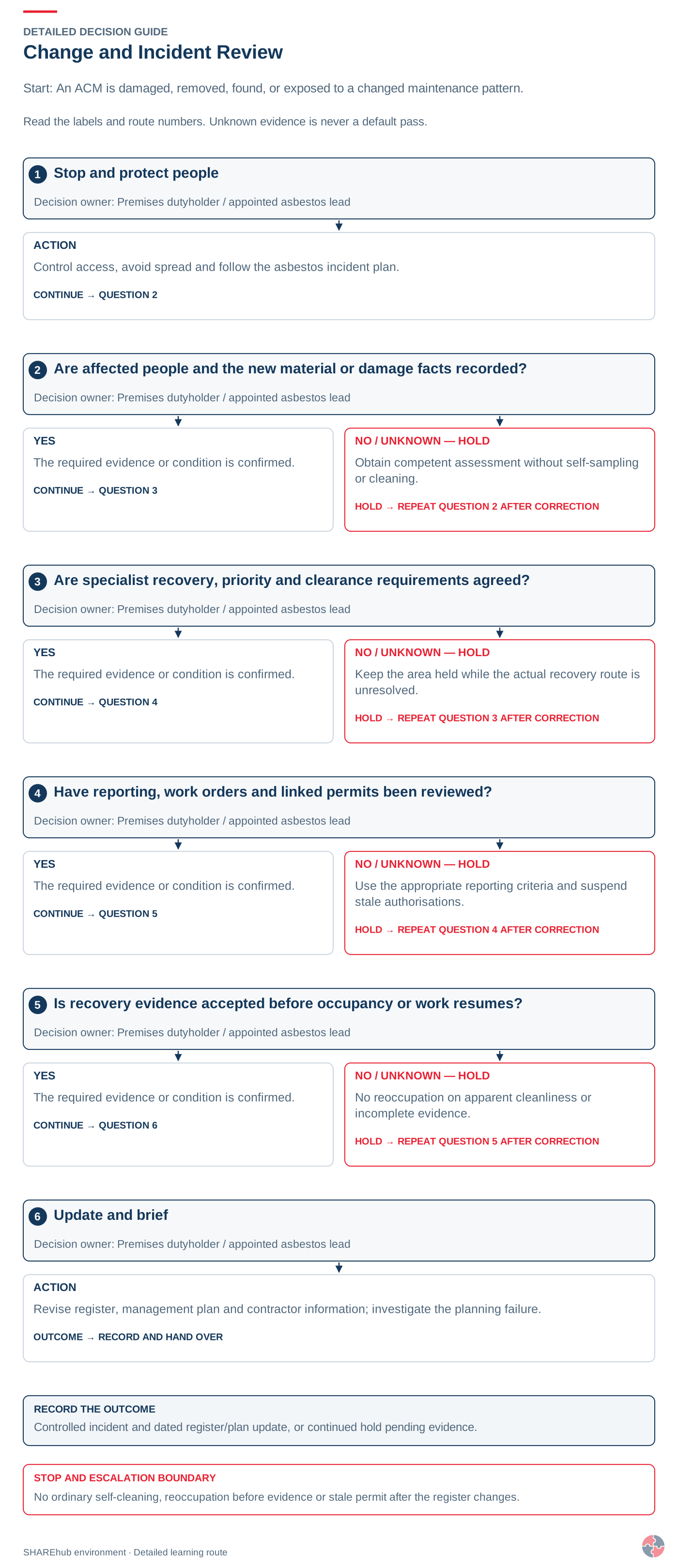
Unidentified cement fragments in torn sacks are not proof of asbestos, but they are enough to trigger the site's suspect-material procedure where asbestos could be present. Material colour, age, shape or a visitor's reassurance cannot reliably identify its contents. If it contains asbestos, disturbing it can release fibres. The fictional model illustrates a reception decision; it is not a survey, laboratory result or view of actual contamination.
Stop handling, withdraw safely, prevent others entering or spreading material and report through the agreed route. Do not open more sacks, break a fragment, sweep it dry or take a sample to settle the question. The competent process must establish material information, any contamination or exposure, recovery and safe handback. Appropriate specialists decide the work requirements, including whether particular activities require licensing or other controls. This course does not claim that every asbestos-related task has one identical legal category.
Consider the path by which fibres could spread: packaging, equipment, footwear, clothing, vehicles and cleaning. Prevent further transfer through the actual emergency arrangements. If someone may be contaminated, obtain trained assistance and avoid carrying contamination into clean areas or home; immediate danger to life still takes priority. Do not improvise decontamination or hand a domestic vacuum to a colleague. A small quantity or the absence of a visible cloud cannot establish that disturbance is safe.
For the exercise, record only reliable facts from a safe position: load reference, location, observed packaging condition, handling already performed and people or equipment potentially involved. Keep uncertainty explicit. Reopening needs the designated competent assessment and relevant recovery evidence, not a tidier bay or a new label. Review acceptance and visitor communication to reduce recurrence. The learner's contribution is recognition, avoidance and accurate escalation; the course provides no sampling, removal, waste-packaging or clearance technique and no authority to undertake asbestos work.
How does the management system respond to damage or suspect dust?
Stop work, withdraw safely, keep others out, prevent spread and report; competent people decide contamination, exposure, recovery and hand-back. If clothing, hair or footwear is heavily contaminated, avoid carrying fibres through clean areas: stop movement at a safe location and obtain trained emergency-plan assistance for controlled decontamination. Immediate life danger takes priority. Do not take contaminated clothing home or put it in ordinary laundry.
Do not ask a caretaker or contractor to sweep, bag by hand, dry-wipe or use an ordinary vacuum. The dutyholder coordinates the affected area and supplies the survey and register. The employer and specialist assess who may have been exposed, whether material is asbestos, whether controls failed, and which licensed, NNLW or other work route applies to recovery. Air monitoring and independent clearance are used where competent assessment and the work require them, not as a substitute for controls. Record reporting decisions under the applicable GB or NI route. Update the register, plan, work orders and affected people before reoccupation. The Asbestos dust response gives the first-minute route.
After immediate stop, withdrawal and isolation, the responsible person records the facts and the applicable GB or NI reportability decision. A GB work-related uncontrolled fibre release sufficient to risk health can be a RIDDOR dangerous occurrence; not every encounter is automatically reportable. NI applies its separate 1997 RIDDOR and HSENI reporting route. A reporting decision never delays isolation or competent clean-up.
If clothing, hair or footwear is heavily contaminated, avoid carrying fibres through clean areas: stop movement at a safe location and obtain trained emergency-plan assistance for controlled decontamination. Immediate life danger takes priority. Do not take contaminated clothing home or put it in ordinary laundry. Follow the Asbestos dust controlled first-response boundary and HSE EM1 evidence.
A visitor says old cement pieces cannot contain asbestos and offers to break one to demonstrate its texture.
Decision and explanation
Prevent further disturbance and follow the suspect-material procedure for competent assessment and safe handback.
Sight, texture and reassurance do not establish asbestos identity. Protect people and retain the competent decision boundary.
Lesson 3
Do not let quarantine become the mixing vessel
Prevent incompatible contact through containers, trays and drains.
Photorealistic illustrative UK workplace scene. Review checks: Chemical register: Compatibility class, SDS section 10, storage, owner and approved use. Transfer verification: Right product, tank, hose, valve lineup and ullage confirmed. Storage segregation: Acids, alkalis, oxidisers, flammables and wastes separated.
Do not let quarantine become the mixing vessel
Unknown household products can meet after their original containers fail. A shared tray, drain, sump or waste container may become the place where incompatible chemicals react. Heat, gas, pressure or fire can result even if each individual leak seems modest. A label saying household chemicals does not establish compatibility. The task needs reliable information and a controlled storage and response arrangement, not a guess based on colour or common use.
In the fictional special-waste bay, unidentified containers leak into one tray. Restrict the affected area and handling, warn others and use the specified chemical response. Do not pour the liquids together into a larger drum, add water or another chemical, smell the mixture or attempt to tighten an uncertain damaged closure. If there are signs of an active reaction or harmful release, follow the emergency plan from safety and summon the designated competent response. The awareness learner does not choose neutralisation chemistry or respiratory equipment.
Prevention should address the physical route: suitable accepted containers, clear identity, compatibility-based separation, appropriate containment and approved waste disposal. Product information can inform assessment, but the actual waste may differ from an original product because of contamination, degradation or mixing. A safety data sheet for one named product cannot describe an unidentified mixture. Only suitable competent assessment can determine what information or testing is needed and how it can be obtained safely.
Verification must show that the identity and compatibility concern has been resolved through the authorised process and that storage and records match the decision. Do not reopen because the liquid is no longer bubbling or the tray was wiped. Check drainage and adjacent material interfaces as well as the visible container. For the fictional exercise, draw the route of each known and unknown material and mark where they could meet. Identify the safe hold, responsible owner and specific evidence needed before any movement or disposal is released.
Why are waste streams and drains high-risk mixing routes?
Waste streams and drains are high-risk because chemicals can meet out of sight after leaving the original task area.
A drain, sump, interceptor, IBC, drum or waste tank can become the mixing vessel. Workers may think each individual disposal was small, but incompatible discharges can accumulate or react in a confined space, generating heat, pressure, gas or pollution.
Waste compatibility needs a positive approval process. Unknown waste should not be bulked because it looks similar or because the container is available. Waste labels should include contents, hazards, source, date, incompatible materials and owner.
Drain maps and isolation points are important for process sites, laboratories, workshops and construction sites. If responders do not know where a drain goes, they cannot confidently control a spill or incompatible discharge.
Waste and drain controls
Control
Purpose
Evidence
Waste-stream approval
Prevents incompatible waste from being bulked.
Waste acceptance or approval record.
No unknown bulking rule
Prevents reaction from unidentified material.
Quarantine and characterisation procedure.
Drain map
Shows where spills and discharges may travel.
Current site drainage plan.
Drain protection
Stops incompatible or polluting material entering drainage.
Drain covers, valves and spill drills.
Waste labels
Communicate contents and hazards.
Label inspection and waste register.
Compatibility testing
Confirms bulking is safe where required.
Test record and acceptance criteria.
Applied case
Two leaking unknown products share a tray and a worker proposes pouring them into one waste drum to make the bay tidy.
Decision and explanation
Restrict handling and obtain competent identification, compatible containment and safe disposition through the planned response.
Common origin and tidiness do not establish compatibility. Keep the uncertainty controlled and avoid further mixing or exposure.
Lesson 4
A wet carrier bag can be a chemical exposure route
Protect skin and helpers while obtaining urgent appropriate assistance.
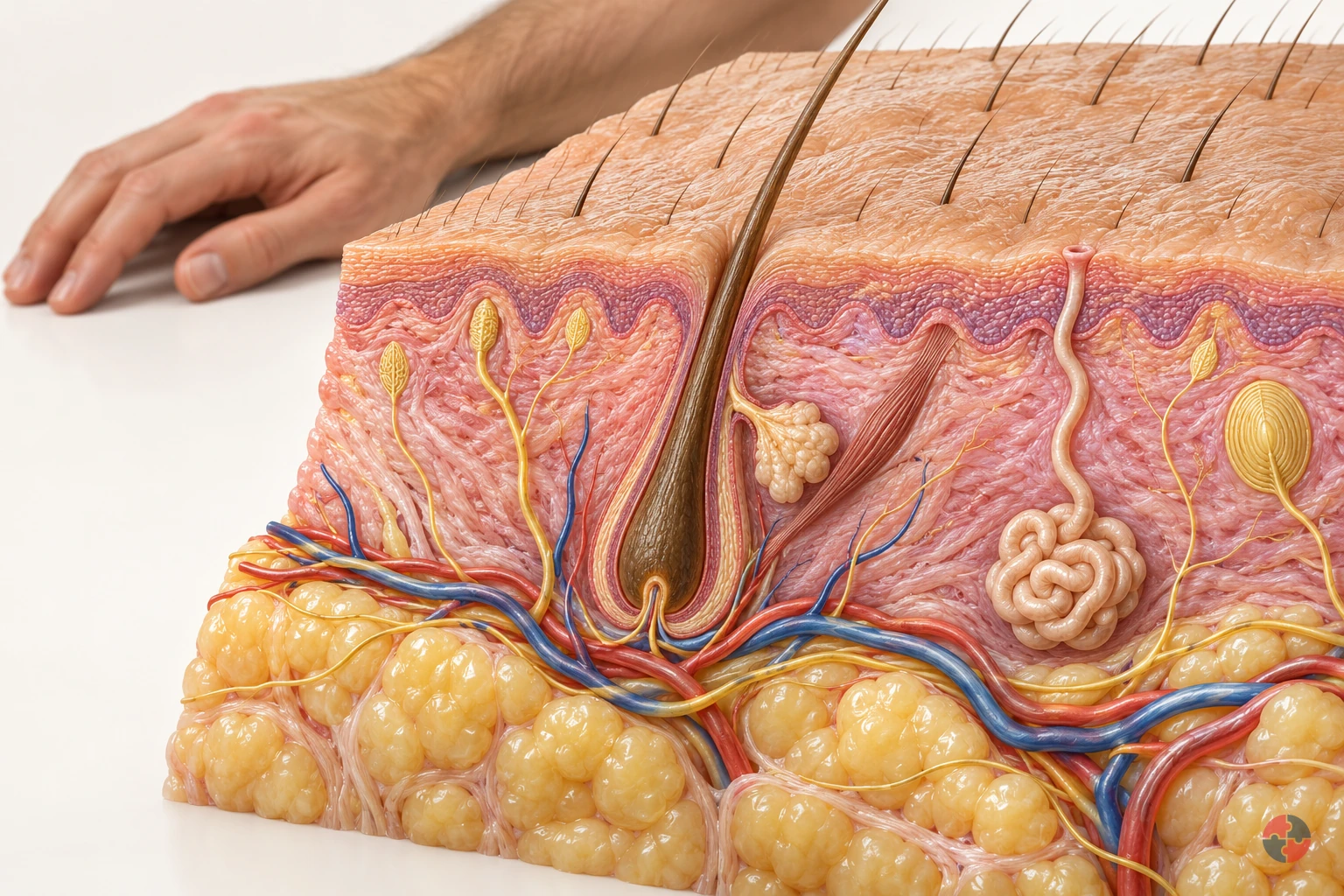
Explore an enlarged section of hair-bearing skin, with a hand and forearm for context. Layers, glands, nerves and vessels are enlarged for clarity.
Use the task in this lesson to identify contact, repeated wet work or contamination. Which change reduces contact before relying on gloves?
educational illustration · healthy anatomy; enlarged details and teaching colours.
Photorealistic illustrative UK workplace scene. Review checks: Chemical register: Approved products, SDSs, location, owner and COSHH status. Pool plant: Segregated chemicals, dosing controls, PPE and emergency procedure. Cleaning tasks: Dilution systems, no mixing rule, labelled containers and glove selection.
A wet carrier bag can be a chemical exposure route
A leaking container can contaminate its carrier bag, trolley handle, clothing and the floor. Someone may touch the outside without knowing which product reached it. Corrosive substances can damage skin or eyes, while repeated contact with other irritants can contribute to dermatitis. A person cannot determine severity or safe contact from the bag's appearance, and some effects may not be immediately obvious. Treat known or suspected exposure through the appropriate emergency and first-aid arrangements.
At the fictional bay, a cleaner container has wet the outer bag. Keep people clear and obtain the trained spill or specialist handling route. Do not grip the wet plastic, carry it against the body or assume an ordinary glove resists the unknown material. Product and task information, contact duration, damage and the worker's needs affect protective-equipment selection. A generic glove symbol is not a complete assessment. Protect helpers from the spill or vapour before they approach anyone affected.
For suspected acid or chemical burns, obtain urgent emergency medical help and follow the site's suitable immediate first-aid procedure; in the UK, NHS guidance directs calling 999. Do not delay appropriate action while trying to identify an uncertain product or take a photograph. This course does not supply a universal decontamination technique, neutralising recipe or diagnosis. The actual first-aid plan and qualified advice must address the substance and situation, with safe access to appropriate facilities.
After protection and assistance, preserve reliable product information for responders where it can be obtained safely. Record location, exposure route, observed condition and actions without circulating clinical details. The spill and the person's needs have separate close-out questions: safe containment and cleaning, suitable waste disposition, functioning facilities and appropriate health follow-up. For the exercise, compare a quick bag replacement with a controlled response that addresses contaminated surfaces and the cause of leakage. A dry new bag alone cannot establish that contact routes or health concerns are resolved.
What should happen after a chemical splash or suspected burn?
Stop exposure, call 999 for a suspected acid or chemical burn, protect helpers and begin immediate flushing while urgent help is arranged.
Keep responders out of an unsafe vapour or spill area. If safe, remove contaminated gloves, boots, jewellery or clothing without spreading the chemical; brush dry chemical carefully off skin before water if the first-aid plan says it is safe. Start plentiful cool or lukewarm running water over affected skin or eyes immediately and keep flushing while emergency help is organised. The current NHS chemical-burn page advises about one hour of water flushing. Do not delay irrigation to find a particular branded eyewash, and do not apply cream or a neutralising chemical. Follow product-specific SDS and emergency-service advice, including for exceptional chemicals that need specialist treatment.
Pass the product name, concentration, SDS, time, body area and response already given to clinicians. An eye splash, breathing difficulty, large or persistent burn or a person who is unwell needs urgent clinical assessment even if pain seems limited. Keep the area out of use until the spill and failed controls have been dealt with by trained people; a line manager does not decide that a burn is minor from appearance alone.
On a small screen, scroll this table sideways to read all columns.
First-response decision points
Step
Action
Do not
Protect and summon help
Stop work, warn others, call 999 and use trained responders.
Do not enter an uncontrolled vapour/spill area without protection.
Remove source
Take off contaminated items if safe; carefully brush dry powder first where appropriate.
Do not pull stuck clothing from injured skin.
Flush
Use abundant cool/lukewarm water promptly and continue while help arrives.
Do not wait for a special product or apply neutralising chemicals.
Handover and restart
Give SDS and exposure details to clinicians; trained person verifies control before restart.
Do not send affected worker back to exposure without assessment.
Applied case
A leaking household cleaner wets its outer bag, and an attendant has possible skin exposure while trying to lift it.
Decision and explanation
Stop further exposure, protect helpers and obtain the appropriate urgent first-aid/emergency help and trained spill response.
Protect people promptly and use suitable qualified support. Repackaging or delayed symptoms cannot clear exposure or the spill.
Lesson 5
A damaged cylinder needs specialist disposition
Recognise pressure and contents uncertainty without testing the valve.
Photorealistic illustrative UK workplace scene. Review checks: Setting: At fictional the process operator, a road tanker brings an identified flammable product to a bulk tank after a supplier has changed the additive package. Act: The transport planner confirms classification, documents, vehicle and load details with the carrier. Hold / review: Do not connect if additive compatibility, classification, receiving capacity, hose suitability or a critical protection test is uncertain.
A damaged cylinder needs specialist disposition
A dented cylinder with an uncertain valve condition can contain stored pressure, hazardous contents or both. Paint colour and the word empty are not reliable proof of current identity or safe condition. Heat or impact can worsen the situation, while vehicles beside it add collision and access concerns. The fictional cylinder is a reason to question the reception and quarantine arrangement, not an object for a learner to test.
Keep people and vehicles away through the site's protective controls and seek the authorised competent cylinder response. Do not open the valve, connect a regulator, vent contents, strike the body or roll it to a more convenient place. Do not use smell or a flame to search for a leak. If leakage, heating or an active event is suspected, activate the relevant emergency plan from safety. The required exclusion and intervention depend on the actual item and competent response; the course supplies no universal distance or handling recipe.
Reception should anticipate cylinders that do not fit the ordinary waste stream. Reliable information, secure arrangements appropriate to the item, separation from incompatible risks and a suitable specialist route are needed under the actual authorisation. A cage can prevent casual contact but does not by itself protect a damaged valve or establish compatibility. A returning vehicle must not be used as an improvised storage location. Rejection and transport also require a safe authorised decision rather than simply asking a visitor to take the problem away.
Verification needs specialist evidence about safe disposition and the conditions for releasing the affected area. Check whether the location and traffic arrangement have been corrected and whether responders can reach future incidents. Preserve the relevant identity and condition records without approaching for unnecessary detail. In the fictional exercise, prepare a factual message and a hold statement, then identify who owns the specialist decision. An online pass, a new warning sign or a quiet valve cannot confer competence to handle pressurised containers or prove that their contents are safe.
How do carriage checks connect to the receiving-site decision?
Check the consignment requirements and the workplace transfer controls before accepting a movement into a live process.
The GB HSE ADR/CDG guide separates classification, packing and tank provisions, consignment procedures, loading and unloading, and vehicle requirements. A safety data sheet can inform those checks; it is not evidence that every applicable consignment requirement has been met. Confirm the actual load and applicable exemptions with competent dangerous-goods advice rather than treating a familiar product as automatically exempt. Use HSENI’s carriage route for NI duties.
Then make the site decision. For a tanker delivery, the receiver confirms the product, destination, available capacity, compatible connection and working transfer safeguards specified by the site assessment. Correct carriage paperwork does not establish that the receiving tank or line is ready. Equally, a well-controlled store does not prove carriage compliance. If the load information and the physical receiving arrangement disagree, hold connection and resolve the discrepancy. The GB workplace physical-risk basis is HSE’s DSEAR guidance; NI uses its corresponding instrument.
Applied case
A dented cylinder is beside reversing vehicles and a worker proposes opening its valve to check whether it is empty.
Decision and explanation
Restrict the area and vehicles and obtain the authorised competent cylinder response without testing or venting it.
Pressure and contents uncertainty require a specialist decision. Improvised testing or movement can create release, impact and exposure.
Lesson 6
Quarantine closes only when the reason for holding is resolved
Connect the physical area, records and authorised release evidence.
Teaching graphic from the linked SHAREhub source section.
Quarantine closes only when the reason for holding is resolved
Quarantine is a controlled state for material that cannot yet follow the ordinary route. It needs clear identity, location, condition, reason for hold, responsible role and next decision. The physical arrangement must prevent unintended access, mixing, damage and transfer into routine processing. A tag without suitable containment is inadequate; a locked area without records can also lose the material's history or conceal a worsening condition.
In the fictional exercise, the day shift records suspect cement fragments, leaking chemicals and a damaged cylinder as three separate holds. The night shift sees only special waste cleared on a board. That wording could release every item without resolving any of their distinct questions. A usable handover states what remains restricted, what action has occurred, who has authority and what evidence is still needed. Separate material disposition from reopening the affected bay and from support for potentially exposed people.
Reliable waste classification and receiving arrangements must fit the actual material and applicable national requirements. A collection booking, carrier registration or invoice does not prove that a destination can receive and treat a specific uncertain item. Do not invent a code or disguise a rejected stream in another description. Preserve original observations and transparent corrections. Specialist asbestos, chemical and cylinder processes may have different evidence, packaging and transport needs; one generic clearance cannot be copied between them.
Verification should check the physical area and records together: correct item, suitable containment, compatible neighbouring storage, resolved access/traffic concerns, authorised destination and traceable handover. Where uncertainty remains, keep the relevant restriction and escalate; do not close it to improve the overdue-action count. Review why the site encountered the nonconforming waste and improve reception communication or capacity. For learning, complete a fictional three-row release board with explicit owners and evidence. It is a practice decision aid, not a real waste movement document or permission for specialist work.
How can the ISO 45001 hierarchy of controls reduce risks while assessing drums before chemical-waste bulking?
Incompatible mixing should be prevented through elimination, substitution, segregation, engineered design, verified transfer, controlled waste routes, training and disciplined supervision.
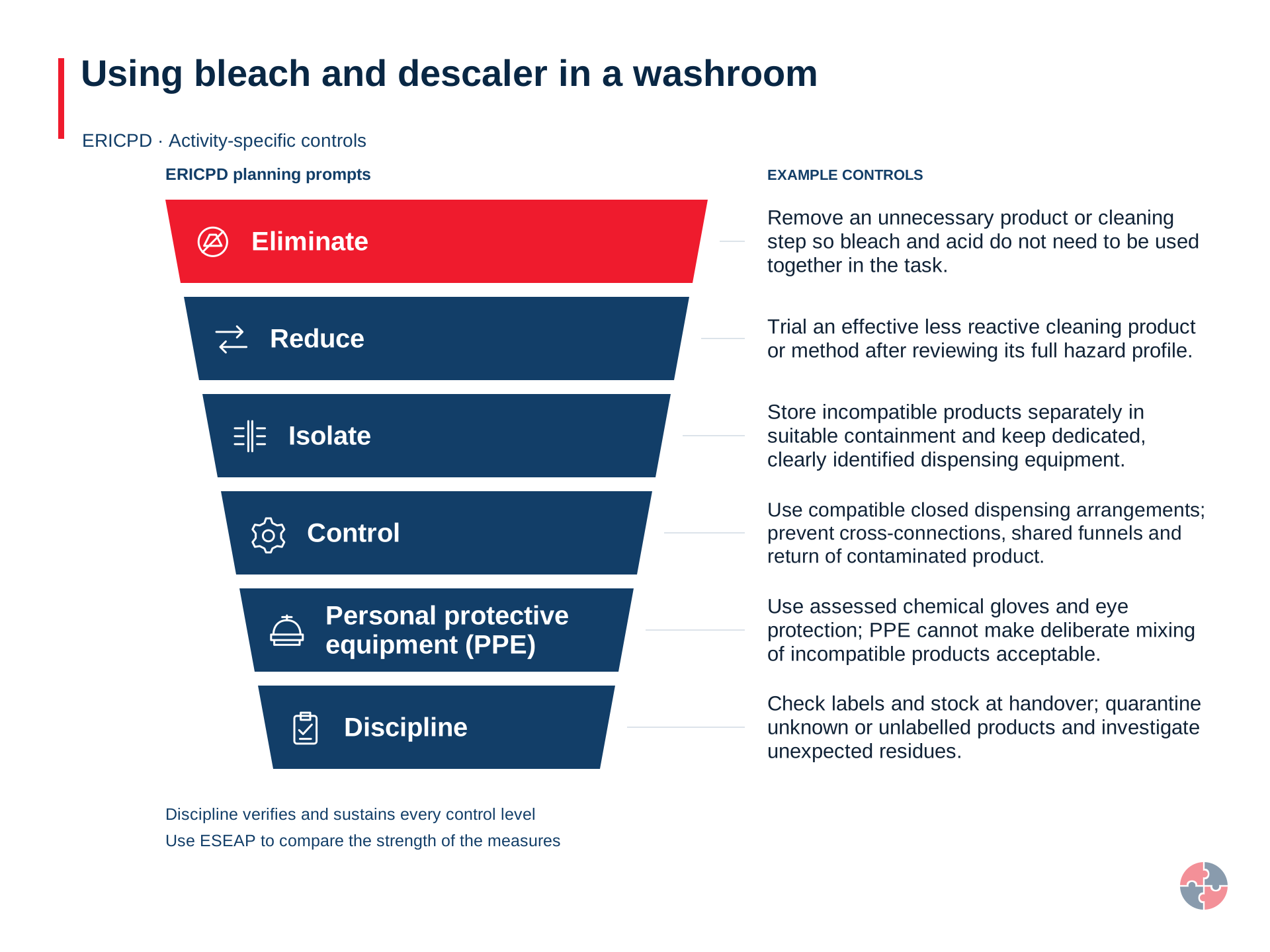
ERICPD applies well. Eliminate unnecessary substances or mixing tasks. Reduce quantities and concentrations. Isolate incompatible chemicals physically. Control routes through dedicated containers, hoses, couplings, fill points, valves, drains and waste approvals. Use PPE for residual exposure. Discipline holds the system together through checks, permits, handovers and learning.
The most reliable controls reduce the chance of human error. Different connector types, locked fill points, keyed transfer routes, clear labels, colour coding, barcode verification, interlocks and independent checks can all make wrong transfer less likely.
Where controls rely on people, make the task easy to do correctly. Labels should be visible, names consistent, lighting adequate, procedures short enough to use, and stop-work authority real.
Choose the activity that matches the work. Each has its own controls, verification and stop/restart decisions; ERICPD and ISO 45001 are alternative views of that same activity.
Choose the activity
A cleaning team holds bleach and acidic descaler for separate jobs; residues, shared bottles and contractor products can create an unintended reaction.
How can the ERICPD hierarchy of controls reduce risks while using bleach and descaler in a washroom?
ERICPD is a planning crossmap. Its prompts do not add a sixth rung or rank Isolate above engineering. Discipline verifies and sustains every control level.
Control level
Control for this activity
Owner and verification
Stop / restart decision
Eliminate
Remove an unnecessary product or cleaning step so bleach and acid do not need to be used together in the task.
Release only after cleaning supervisor approves product identity and a compatible method. Retain the checks and unresolved restrictions at handover.
Keep the activity on hold while defects or required reinstatement evidence remain unresolved.
How can the ISO 45001 hierarchy of controls reduce risks while using bleach and descaler in a washroom?
The hierarchy of controls in ISO 45001:2018 comes under Clause 8.1.2 (Eliminating hazards and reducing OH&S risks), which is located within Clause 8 ("Operation").
Release only after cleaning supervisor approves product identity and a compatible method. Retain the checks and unresolved restrictions at handover.
Keep the activity on hold while defects or required reinstatement evidence remain unresolved.
Two waste drums are proposed for a combined collection. Do not use appearance or a broad waste description as proof of compatibility.
How can the ERICPD hierarchy of controls reduce risks while assessing drums before chemical-waste bulking?
ERICPD is a planning crossmap. Its prompts do not add a sixth rung or rank Isolate above engineering. Discipline verifies and sustains every control level.
Control level
Control for this activity
Owner and verification
Stop / restart decision
Eliminate
Keep incompatible or unidentified wastes separate and use an accepted segregated disposal route rather than bulking them.
Release only after competent waste owner approves the segregated or validated treatment route. Retain the checks and unresolved restrictions at handover.
Keep the activity on hold while defects or required reinstatement evidence remain unresolved.
How can the ISO 45001 hierarchy of controls reduce risks while assessing drums before chemical-waste bulking?
The hierarchy of controls in ISO 45001:2018 comes under Clause 8.1.2 (Eliminating hazards and reducing OH&S risks), which is located within Clause 8 ("Operation").
Control level
Control for this activity
Owner and verification
Stop / restart decision
Elimination
Keep incompatible or unidentified wastes separate and use an accepted segregated disposal route rather than bulking them.
Release only after competent waste owner approves the segregated or validated treatment route. Retain the checks and unresolved restrictions at handover.
Keep the activity on hold while defects or required reinstatement evidence remain unresolved.
Worked control choice: incompatible cleaners in a leisure centre
Use HSE’s five-level hierarchy to choose stronger measures before PPE. ERICPD is a useful six-part teaching mnemonic; it is not a separate legal test. The example maps both approaches to the real task. Apply HSENI COSHH guidance for a Northern Ireland workplace. Emergency washing and evacuation limit consequences; they do not prevent the original contact or mixing.
Applied case
A handover board says special waste cleared, but no item-specific disposition or area-release evidence is attached.
Decision and explanation
Verify each item's reason for hold, authorised disposition and affected-area conditions against the actual records and physical state.
Quarantine release needs relevant item-specific evidence. An ambiguous board or invoice cannot resolve distinct material and area risks.
Lesson 7
Suspected asbestos in damaged packaging
Visual guesses and outdoor dilution do not control possible fibre release; keep the material undisturbed.
Teaching graphic from the linked SHAREhub source section.
Understand the activity and how harm develops
Torn sacks of cement fragments are an uncertainty requiring control. Some cement products contain asbestos, but fibre content cannot be established by colour, age or a quick visual check. Breaking, dropping, sweeping or opening the packaging could release fibres if asbestos is present. Members of the public and workers may both be affected.
Stop the unloading or disturbance and obtain the authorised acceptance and specialist decision without opening the bags. The site may only receive asbestos waste under its permitted and planned arrangements; ordinary attendants should not improvise sampling or repackaging. If accidental disturbance has occurred, follow the relevant incident and decontamination advice through competent people. A disposable mask does not establish that the task or waste route is safe.
Recognise the evidence boundary
Question
Case evidence
What is observed?
A visitor unloads torn sacks containing unidentified cement fragments.
How can harm occur?
Disturbance could release asbestos fibres if the material contains asbestos.
What information is needed?
Check acceptance information without opening or disturbing the load.
Protect, manage and verify
Purpose
Practical application
Immediate protection
Stop handling, isolate the area and obtain the authorised specialist decision.
Accountable work arrangement
Prevent unplanned asbestos reception through clear booking, acceptance and packaging requirements. Maintain a designated controlled receiving arrangement where acceptance is authorised. Isolate the area and obtain competent advice without breaking, sampling or dry sweeping suspect material.
Release verification
Confirm safe management and release before normal bay use resumes.
Apply this at work
At the next inspection, look for the same failure pathway beyond suspect asbestos. Confirm the authorised handling, containment and onward waste route before the bay is released. Recheck after changes in waste, staffing, weather, equipment or layout.
How does the management system respond to damage or suspect dust?
Stop work, withdraw safely, keep others out, prevent spread and report; competent people decide contamination, exposure, recovery and hand-back. If clothing, hair or footwear is heavily contaminated, avoid carrying fibres through clean areas: stop movement at a safe location and obtain trained emergency-plan assistance for controlled decontamination. Immediate life danger takes priority. Do not take contaminated clothing home or put it in ordinary laundry.
Do not ask a caretaker or contractor to sweep, bag by hand, dry-wipe or use an ordinary vacuum. The dutyholder coordinates the affected area and supplies the survey and register. The employer and specialist assess who may have been exposed, whether material is asbestos, whether controls failed, and which licensed, NNLW or other work route applies to recovery. Air monitoring and independent clearance are used where competent assessment and the work require them, not as a substitute for controls. Record reporting decisions under the applicable GB or NI route. Update the register, plan, work orders and affected people before reoccupation. The Asbestos dust response gives the first-minute route.
After immediate stop, withdrawal and isolation, the responsible person records the facts and the applicable GB or NI reportability decision. A GB work-related uncontrolled fibre release sufficient to risk health can be a RIDDOR dangerous occurrence; not every encounter is automatically reportable. NI applies its separate 1997 RIDDOR and HSENI reporting route. A reporting decision never delays isolation or competent clean-up.
If clothing, hair or footwear is heavily contaminated, avoid carrying fibres through clean areas: stop movement at a safe location and obtain trained emergency-plan assistance for controlled decontamination. Immediate life danger takes priority. Do not take contaminated clothing home or put it in ordinary laundry. Follow the Asbestos dust controlled first-response boundary and HSE EM1 evidence.
A visitor unloads torn sacks containing unidentified cement fragments. The following options are fictional decisions for this inspection point.
Decision and explanation
Prevent disturbance and seek the authorised asbestos acceptance or specialist decision.
Visual guesses and outdoor dilution do not control possible fibre release; keep the material undisturbed. Verify the arrangement before work resumes. Breaking a sample creates the disturbance that needs avoiding and cannot prove absence of asbestos by sight. Sweeping can make fibres airborne and transfers uncertainty into an uncontrolled waste stream.
Lesson 8
Incompatible chemicals stored together
Unknown mixing or dilution can initiate a reaction; contain the situation through competent arrangements.
Photorealistic illustrative UK workplace scene. Review checks: Chemical register: Compatibility class, SDS section 10, storage, owner and approved use. Transfer verification: Right product, tank, hose, valve lineup and ullage confirmed. Storage segregation: Acids, alkalis, oxidisers, flammables and wastes separated.
Understand the activity and how harm develops
Household chemicals can retain hazardous properties when discarded. Leaking unknown products in a shared tray may mix and generate heat, gas or fire. The tray can become the connection between incompatible wastes rather than an effective safeguard. Smell, container colour and an old label cannot establish compatibility.
Keep uncertain products separate and obtain competent identification and handling decisions through the acceptance procedure. Use appropriate compatible containment and storage arrangements rather than decanting unknowns into a common vessel. Assess the full spill pathway, including drainage, contaminated absorbents and vapour reaching people. Staff should know when to withdraw and raise the alarm instead of trying to complete a cleanup beyond their training.
Recognise the evidence boundary
Question
Case evidence
What is observed?
Unidentified household containers leak into a shared tray.
How can harm occur?
Mixed wastes could react and release heat or harmful gases.
What information is needed?
Review product information, acceptance records and compatibility controls.
Protect, manage and verify
Purpose
Practical application
Immediate protection
Restrict handling and arrange competent segregation and containment.
Accountable work arrangement
Do not accept or combine unknown products outside the authorised waste acceptance arrangements. Provide compatible segregation and suitable separate secondary containment. Restrict handling and obtain competent decisions; never sniff, mix or neutralise unknown waste.
Release verification
Confirm identification, compatible storage and corrected records.
Apply this at work
At the next inspection, look for the same failure pathway beyond incompatible waste. Check identity, condition, compatibility and the current storage record before releasing the area. Recheck after changes in waste, staffing, weather, equipment or layout.
Why are waste streams and drains high-risk mixing routes?
Waste streams and drains are high-risk because chemicals can meet out of sight after leaving the original task area.
A drain, sump, interceptor, IBC, drum or waste tank can become the mixing vessel. Workers may think each individual disposal was small, but incompatible discharges can accumulate or react in a confined space, generating heat, pressure, gas or pollution.
Waste compatibility needs a positive approval process. Unknown waste should not be bulked because it looks similar or because the container is available. Waste labels should include contents, hazards, source, date, incompatible materials and owner.
Drain maps and isolation points are important for process sites, laboratories, workshops and construction sites. If responders do not know where a drain goes, they cannot confidently control a spill or incompatible discharge.
Waste and drain controls
Control
Purpose
Evidence
Waste-stream approval
Prevents incompatible waste from being bulked.
Waste acceptance or approval record.
No unknown bulking rule
Prevents reaction from unidentified material.
Quarantine and characterisation procedure.
Drain map
Shows where spills and discharges may travel.
Current site drainage plan.
Drain protection
Stops incompatible or polluting material entering drainage.
Drain covers, valves and spill drills.
Waste labels
Communicate contents and hazards.
Label inspection and waste register.
Compatibility testing
Confirms bulking is safe where required.
Test record and acceptance criteria.
Applied case
Unidentified household containers leak into a shared tray. The following options are fictional decisions for this inspection point.
Decision and explanation
Restrict the area and obtain competent identification, segregation and containment.
Combining leaks in a drum deliberately creates the contact that compatibility controls should prevent. Unknown mixing or dilution can initiate a reaction; contain the situation through competent arrangements. Verify the arrangement before work resumes. Adding water to an unknown mixture can cause heat, splashing or gas release rather than make it harmless.
Lesson 9
Skin exposure to leaking household chemicals
Unspecified protection and spreading contamination into welfare do not provide an assessed response.
Photorealistic illustrative UK workplace scene. Review checks: Chemical register: Approved products, SDSs, location, owner and COSHH status. Pool plant: Segregated chemicals, dosing controls, PPE and emergency procedure. Cleaning tasks: Dilution systems, no mixing rule, labelled containers and glove selection.
Understand the activity and how harm develops
Liquid on the outside of a bag can transfer to gloves, skin, vehicle controls and welfare surfaces. A household cleaner may be corrosive or irritating even when sold for domestic use. Repeated wet contact can also damage the skin barrier and contribute to dermatitis. The bag does not establish containment once it is wet.
Identify the product from available information without direct contact and follow the authorised spill and exposure arrangements. Select equipment and chemical-resistant protection for the actual substance and task; a generic glove is not suitable for every chemical. Provide appropriate first-aid access and clinical advice after exposure according to current instructions. Review contaminated clothing, tools and disposal so the cleanup does not export the hazard.
Recognise the evidence boundary
Question
Case evidence
What is observed?
A leaking cleaner container wets the outside of its carrier bag.
How can harm occur?
Contact could burn skin or cause dermatitis.
What information is needed?
Check product information and the authorised spill response.
Protect, manage and verify
Purpose
Practical application
Immediate protection
Keep people clear and use trained handling with specified protective equipment.
Accountable work arrangement
Prevent leaking items entering routine hand handling through reception checks and suitable acceptance arrangements. Use appropriate closed containment and spill equipment selected for the identified product. Keep people clear and arrange trained response with specified protection and exposure follow-up.
Release verification
Confirm safe containment, cleanup and any exposure follow-up.
Apply this at work
At the next inspection, look for the same failure pathway beyond leaking container. Check containment, surface decontamination and affected workers’ follow-up before normal handling resumes. Recheck after changes in waste, staffing, weather, equipment or layout.
What should happen after a chemical splash or suspected burn?
Stop exposure, call 999 for a suspected acid or chemical burn, protect helpers and begin immediate flushing while urgent help is arranged.
Keep responders out of an unsafe vapour or spill area. If safe, remove contaminated gloves, boots, jewellery or clothing without spreading the chemical; brush dry chemical carefully off skin before water if the first-aid plan says it is safe. Start plentiful cool or lukewarm running water over affected skin or eyes immediately and keep flushing while emergency help is organised. The current NHS chemical-burn page advises about one hour of water flushing. Do not delay irrigation to find a particular branded eyewash, and do not apply cream or a neutralising chemical. Follow product-specific SDS and emergency-service advice, including for exceptional chemicals that need specialist treatment.
Pass the product name, concentration, SDS, time, body area and response already given to clinicians. An eye splash, breathing difficulty, large or persistent burn or a person who is unwell needs urgent clinical assessment even if pain seems limited. Keep the area out of use until the spill and failed controls have been dealt with by trained people; a line manager does not decide that a burn is minor from appearance alone.
On a small screen, scroll this table sideways to read all columns.
First-response decision points
Step
Action
Do not
Protect and summon help
Stop work, warn others, call 999 and use trained responders.
Do not enter an uncontrolled vapour/spill area without protection.
Remove source
Take off contaminated items if safe; carefully brush dry powder first where appropriate.
Do not pull stuck clothing from injured skin.
Flush
Use abundant cool/lukewarm water promptly and continue while help arrives.
Do not wait for a special product or apply neutralising chemicals.
Handover and restart
Give SDS and exposure details to clinicians; trained person verifies control before restart.
Do not send affected worker back to exposure without assessment.
Applied case
A leaking cleaner container wets the outside of its carrier bag. The following options are fictional decisions for this inspection point.
Decision and explanation
Avoid contact and arrange the authorised product-specific spill response.
Any spare glove may be chemically unsuitable, and the welfare sink spreads the problem into a clean area. Wiping on clothing leaves continuing skin exposure and transfers contamination to later contact points. Unspecified protection and spreading contamination into welfare do not provide an assessed response. Verify the arrangement before work resumes.
Lesson 10
Damaged gas cylinder in quarantine
Testing or crushing a suspect cylinder can release pressure or hazardous contents; use specialist arrangements.
Photorealistic illustrative UK workplace scene. Review checks: Setting: At fictional the process operator, a road tanker brings an identified flammable product to a bulk tank after a supplier has changed the additive package. Act: The transport planner confirms classification, documents, vehicle and load details with the carrier. Hold / review: Do not connect if additive compatibility, classification, receiving capacity, hose suitability or a critical protection test is uncertain.
Understand the activity and how harm develops
A damaged cylinder may contain gas under pressure even if it looks discarded. A compromised valve can release gas or allow the cylinder to move violently. Flammable, oxidising, toxic or asphyxiant contents require different precautions, and fire exposure can make the situation more severe. Uncertain identity is a reason to restrict exposure.
Keep people and vehicles away and obtain the authorised specialist response from a protected position. Do not test the valve, vent, puncture, roll or move a suspect cylinder as an improvised solution. Routine secure cylinder storage does not establish a safe method for handling a damaged or leaking item. Maintain public separation and emergency access while the competent response decides safe disposition.
Recognise the evidence boundary
Question
Case evidence
What is observed?
A dented cylinder with an uncertain valve condition is left near vehicles.
How can harm occur?
Leakage, pressure release or fire could injure nearby people.
What information is needed?
Identify the cylinder from a protected position and check specialist arrangements.
Protect, manage and verify
Purpose
Practical application
Immediate protection
Isolate the area and seek the authorised competent cylinder response.
Accountable work arrangement
Prevent cylinders entering general waste or processing through specific reception and rejection arrangements. Provide suitable authorised cylinder storage and physical protection against vehicle impact. Restrict the area and seek competent cylinder or emergency assistance for damage, leakage or uncertainty.
Release verification
The specialist confirms safe disposition before area release.
Apply this at work
At the next inspection, look for the same failure pathway beyond cylinder quarantine. Obtain specialist clearance and confirm safe disposition before reopening the affected bay. Recheck after changes in waste, staffing, weather, equipment or layout.
How do carriage checks connect to the receiving-site decision?
Check the consignment requirements and the workplace transfer controls before accepting a movement into a live process.
The GB HSE ADR/CDG guide separates classification, packing and tank provisions, consignment procedures, loading and unloading, and vehicle requirements. A safety data sheet can inform those checks; it is not evidence that every applicable consignment requirement has been met. Confirm the actual load and applicable exemptions with competent dangerous-goods advice rather than treating a familiar product as automatically exempt. Use HSENI’s carriage route for NI duties.
Then make the site decision. For a tanker delivery, the receiver confirms the product, destination, available capacity, compatible connection and working transfer safeguards specified by the site assessment. Correct carriage paperwork does not establish that the receiving tank or line is ready. Equally, a well-controlled store does not prove carriage compliance. If the load information and the physical receiving arrangement disagree, hold connection and resolve the discrepancy. The GB workplace physical-risk basis is HSE’s DSEAR guidance; NI uses its corresponding instrument.
Applied case
A dented cylinder with an uncertain valve condition is left near vehicles. The following options are fictional decisions for this inspection point.
Decision and explanation
Isolate the area and seek the authorised competent cylinder response.
Testing or crushing a suspect cylinder can release pressure or hazardous contents; use specialist arrangements. Verify the arrangement before work resumes. Opening the valve creates an uncontrolled release and may expose people to flammable, toxic or oxygen-displacing gas. Compaction can rupture the cylinder or damage its valve and turn stored pressure into violent release.
Lesson 11
The quarantine area contains four different problems
Build an item-specific protective and disposition plan.
Photorealistic illustrative UK workplace scene. Review checks: Chemical register: Compatibility class, SDS section 10, storage, owner and approved use. Transfer verification: Right product, tank, hose, valve lineup and ullage confirmed. Storage segregation: Acids, alkalis, oxidisers, flammables and wastes separated.
The quarantine area contains four different problems
At the fictional special-waste bay, torn sacks contain unidentified cement fragments. Two unlabelled household containers leak into a shared tray. A cleaner product has wet an outer carrier bag, and an attendant may have touched it. Nearby, a dented cylinder with an uncertain valve condition is exposed to vehicle movement. The booking record calls the delivery general household waste, and the next collection is described as mixed materials. A supervisor wants to tidy the area by moving everything into one larger container. These are exercise facts, not material identification from an image.
Start by preventing further exposure and disturbance through the actual site procedures. Keep people away from the suspect fragments and obtain the competent asbestos decision without breaking, opening or sampling. Restrict chemical handling and use the designated response for the leaks or any suspected reaction. Do not combine unknown liquids, add a neutraliser or inspect by smell. Obtain appropriate urgent support for possible chemical injury while protecting helpers and maintaining safe access to first aid. Keep vehicles and people clear of the damaged cylinder and seek the authorised specialist response without opening its valve or moving it informally.
The four concerns require distinct information. The fragments need reliable material assessment and any necessary contamination/recovery decision. The chemicals need identity, compatibility, suitable containment and disposition. The potentially exposed person needs appropriate health support, handled confidentially. The cylinder needs a specialist decision about condition and safe route. A new outer bag, a tidy floor or a generic quarantine sign cannot answer those questions. Ordinary attendants provide factual observations and protective actions; they do not choose laboratory sampling methods, chemical treatment or pressure-release techniques.
Challenge the paperwork before movement. The original booking does not redefine what arrived, and a broad collection description cannot establish a suitable receiving facility. Preserve the observed condition and uncertainty, record corrections transparently and use the actual national waste requirements and site authorisation. England's examples in this course do not replace the corresponding regulator elsewhere. The competent roles must establish any classification, packaging and transport needs. Rejection must itself be planned safely; asking a visitor to reload a damaged item is not automatically a safe solution.
For the final exercise, create a fictional four-item hold board. Each row needs identity or uncertainty, protective state, responsible decision role, evidence needed, appropriate handover and conditions for reopening the area. Keep the person-support process separate from waste disposition while ensuring neither is forgotten. Verify that incompatible items cannot meet, traffic remains controlled and access is usable. Review the reception failure after the immediate concerns are controlled, including information, capacity and staff understanding. The learner's output is a reasoned recommendation that retains unresolved restrictions. It grants no asbestos, chemical, cylinder, clinical or waste-classification authority.
Why are waste streams and drains high-risk mixing routes?
Waste streams and drains are high-risk because chemicals can meet out of sight after leaving the original task area.
A drain, sump, interceptor, IBC, drum or waste tank can become the mixing vessel. Workers may think each individual disposal was small, but incompatible discharges can accumulate or react in a confined space, generating heat, pressure, gas or pollution.
Waste compatibility needs a positive approval process. Unknown waste should not be bulked because it looks similar or because the container is available. Waste labels should include contents, hazards, source, date, incompatible materials and owner.
Drain maps and isolation points are important for process sites, laboratories, workshops and construction sites. If responders do not know where a drain goes, they cannot confidently control a spill or incompatible discharge.
Waste and drain controls
Control
Purpose
Evidence
Waste-stream approval
Prevents incompatible waste from being bulked.
Waste acceptance or approval record.
No unknown bulking rule
Prevents reaction from unidentified material.
Quarantine and characterisation procedure.
Drain map
Shows where spills and discharges may travel.
Current site drainage plan.
Drain protection
Stops incompatible or polluting material entering drainage.
Drain covers, valves and spill drills.
Waste labels
Communicate contents and hazards.
Label inspection and waste register.
Compatibility testing
Confirms bulking is safe where required.
Test record and acceptance criteria.
Applied case
The supervisor proposes one larger container and a broad collection note as clearance for every item.
Decision and explanation
Retain item-specific protections and obtain the separate competent material, exposure, compatibility and cylinder decisions before disposition or area release.
The physical and information risks differ. A container, contractor name or sign cannot supply the missing item-specific evidence.
Lesson 12
Take a verified action into the workplace
Connect one actual task to an owner, evidence and a clear release or escalation decision.
Photorealistic illustrative UK workplace scene. Review checks: Chemical register: Compatibility class, SDS section 10, storage, owner and approved use. Transfer verification: Right product, tank, hose, valve lineup and ullage confirmed. Storage segregation: Acids, alkalis, oxidisers, flammables and wastes separated.
Turn awareness into a practical question
Great Britain recognition and protective-response awareness, with England waste-authorisation examples. No asbestos sampling/removal, waste classification sign-off, chemical neutralisation, cylinder handling/venting or clinical treatment instruction. Actual national regulator, site permit and competent arrangements govern acceptance and disposition.
Choose one relevant operation from the course. Describe the person or environment at risk, the mechanism of harm and the exact condition that needs controlling. Separate an observation from a conclusion. A display, signature, badge or clean appearance answers only a limited question.
Use the included practice resources to prepare a fictional task brief, risk review or verification question. Decide which competent role owns the decision and which evidence must be available before work restarts or waste is released. Keep worker protection, public exclusion, waste acceptance and environmental decisions distinct where required.
At work, use your actual approved arrangements. Report uncertainty and preserve the relevant hold, restriction or safe state while it is resolved. Confirm that the action addressed the original harm route and check whether another shift, load, cleaning task or maintenance change could reintroduce it.
Course completion records awareness learning. It does not establish practical competence, certify a waste business, vary a permit, classify an unknown waste or authorise maintenance, chemical work or emergency entry.
Why are waste streams and drains high-risk mixing routes?
Waste streams and drains are high-risk because chemicals can meet out of sight after leaving the original task area.
A drain, sump, interceptor, IBC, drum or waste tank can become the mixing vessel. Workers may think each individual disposal was small, but incompatible discharges can accumulate or react in a confined space, generating heat, pressure, gas or pollution.
Waste compatibility needs a positive approval process. Unknown waste should not be bulked because it looks similar or because the container is available. Waste labels should include contents, hazards, source, date, incompatible materials and owner.
Drain maps and isolation points are important for process sites, laboratories, workshops and construction sites. If responders do not know where a drain goes, they cannot confidently control a spill or incompatible discharge.
Waste and drain controls
Control
Purpose
Evidence
Waste-stream approval
Prevents incompatible waste from being bulked.
Waste acceptance or approval record.
No unknown bulking rule
Prevents reaction from unidentified material.
Quarantine and characterisation procedure.
Drain map
Shows where spills and discharges may travel.
Current site drainage plan.
Drain protection
Stops incompatible or polluting material entering drainage.
Drain covers, valves and spill drills.
Waste labels
Communicate contents and hazards.
Label inspection and waste register.
Compatibility testing
Confirms bulking is safe where required.
Test record and acceptance criteria.
Applied case
The shift action log says “training completed, issue closed”. It records no condition check, waste disposition or task owner.
Decision and explanation
The accountable person verifies the task-specific control and records the justified decision.
Learning supports the decision; evidence that the relevant control works is needed before the responsible person closes the action.
Match the nine hazard symbols
End-of-course revision · Drag each symbol to its hazard name, or use the menu on each card with touch or keyboard. This is practice alongside the separate final assessment.
Acute toxicity
Corrosive
Explosive
Flammable
Gas under pressure
Harmful / irritant
Hazardous to the environment
Oxidising
Serious health hazard
Match all nine symbols, then check your choices.
Need the reference table?Chemical hazard pictograms · examples and checksOptional reference · all nine symbols · does not change assessment requirements
READ THE LABEL · UNDERSTAND THE TASK
Recognise the symbol. Read the full label. Assess the actual task.
Examples illustrate possible uses of a symbol, not the classification of every formulation. A product can carry several pictograms. Check its current label, hazard statements and matching safety data sheet (SDS).
CLP/GHS hazard pictograms: meanings and illustrative examples
Pictogram and hazard
What it can mean
Example and question before work
ExplosiveGHS01
Explosion, blast or projection hazards; also certain self-reactive substances and organic peroxides.
Example: Certain fireworks or reactive chemical products.Ask: Does the authorised task account for impact, heat and the product’s stability limits?
FlammableGHS02
Can ignite; also used for certain self-heating, pyrophoric or water-reactive hazards.
Example: Petrol or some solvent-based products.Ask: What could release vapour or ignite it during this task, including nearby work?
OxidisingGHS03
Can cause or intensify fire; some strong oxidisers present an explosion hazard.
Example: Oxygen or certain oxidising chemicals.Ask: What incompatible materials and contamination must the assessed storage and connection keep apart?
Gas under pressureGHS04
Pressurised gas may burst if heated; refrigerated gas can cause cold burns.
Example: Compressed-gas cylinders.Ask: Have the gas identity, cylinder, connection and pressure or temperature hazards been checked?
CorrosiveGHS05
May damage metals, cause severe skin burns or cause serious eye damage; read the stated hazard.
Example: Certain drain cleaners, acids or alkalis.Ask: Which contact and splash routes must be prevented in this actual handling or dilution task?
Acute toxicityGHS06
Can be toxic or fatal after short exposure through the stated route.
Example: Methanol or certain pesticide products.Ask: Which exposure routes and emergency arrangements does this product’s information identify?
Harmful / irritantGHS07
May indicate harmful acute toxicity, irritation, skin sensitisation, drowsiness or dizziness; also ozone-layer hazards.
Example: Some detergents or cleaning products.Ask: What do the hazard statements say? Do not dismiss this as a harmless or mild product.
Serious health hazardGHS08
Can indicate cancer, genetic or reproductive harm, organ damage, respiratory sensitisation or aspiration hazard.
Example: Petrol or some sensitising chemical products.Ask: Which particular health effect is stated, and how does the task prevent the relevant exposure?
Hazardous to the environmentGHS09
Hazardous to aquatic life, potentially with long-lasting effects.
Example: Certain pesticides, biocides or fuels.Ask: How will the assessed arrangements prevent release to drains, water or soil?
Read beyond the picture · Open a prompt to compare the explanation.
Is the exclamation mark the same as the chest-starburst symbol?
No. The two symbols communicate different groups of hazards. Read the actual hazard statements: skin sensitisation and respiratory sensitisation are not interchangeable, and neither symbol specifies the complete task controls.
Does a bottle with no pictogram prove the task is safe?
No. Work may generate hazardous dust, fume or mist, and exposure depends on the task. Resolve missing or conflicting identification before use. A pictogram is not a compatibility chart or a complete workplace risk assessment.
Which information turns recognition into a useful work decision?
Match the product and SDS revision. Read the hazard statements and relevant SDS sections for handling, storage, exposure control, emergencies and reactivity together. Then check the actual task assessment and controls. A safety data sheet is not itself a COSHH assessment.

 READ THE LABEL · UNDERSTAND THE TASK
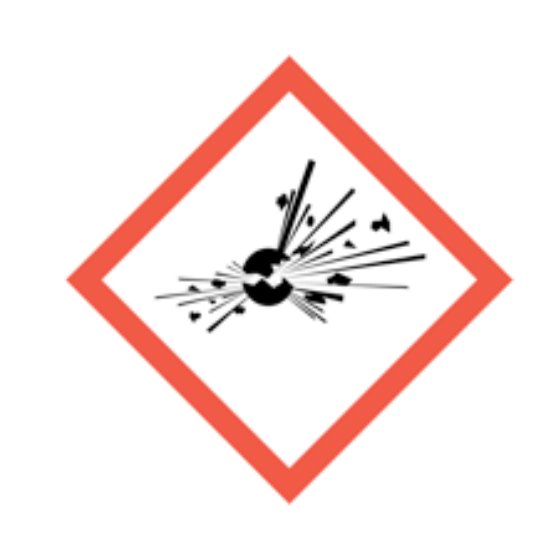 Explosive
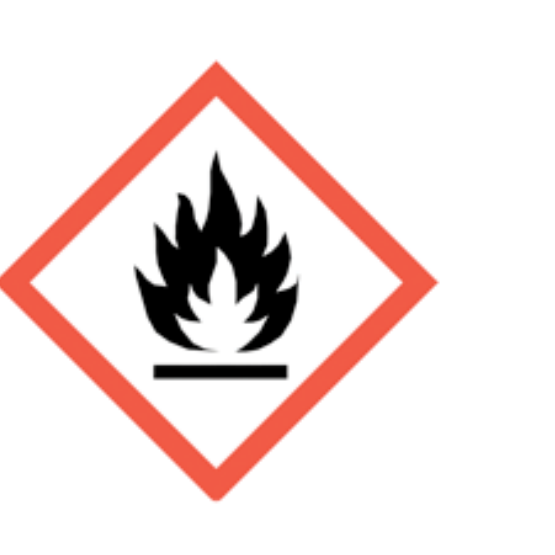 Flammable
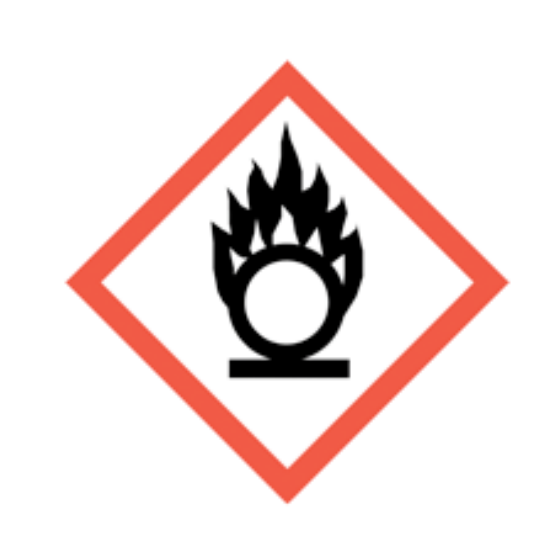 Oxidising
 Gas under pressure
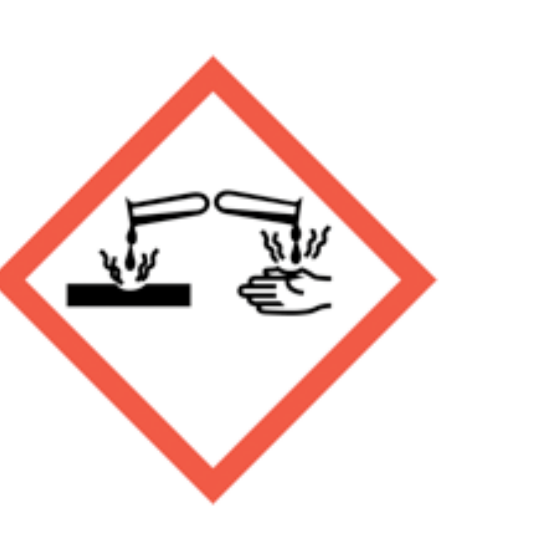 Corrosive
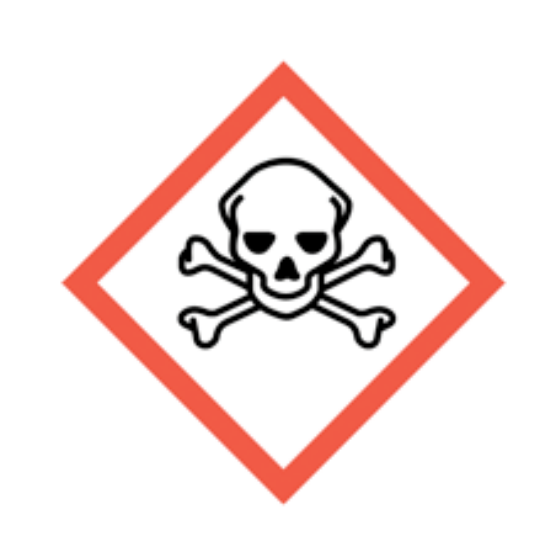 Acute toxicity
 Harmful / irritant
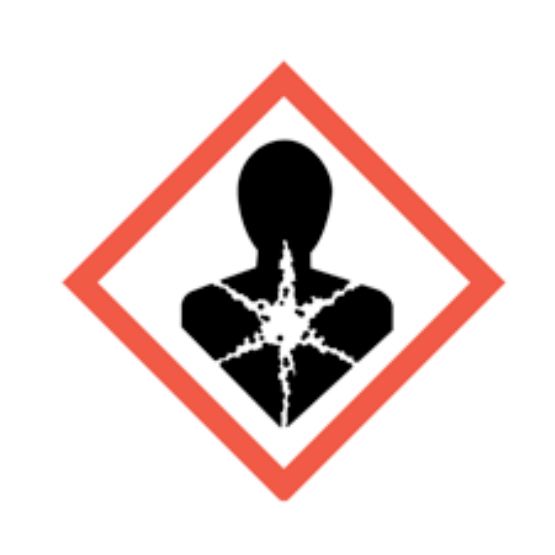 Serious health hazard
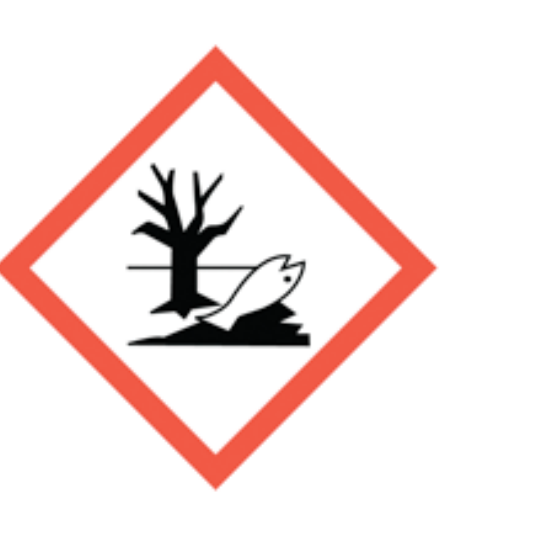 Hazardous to the environment