Independent SHAREhub process-safety awareness using fictional cases and a Great Britain baseline; check the applicable Northern Ireland duties and actual site arrangements. This course does not award a NEBOSH qualification, establish specialist competence or authorise hazardous work.
This reader supplies the complete teaching. Use the interactive LMS course for assessed activities, saved progress and completion.
LESSON 1
Explain the heat-generation and heat-removal balance
Explain the heat-generation and heat-removal balance.
Temperature can rise when heat is generated faster than it is removed. For a heat-releasing reaction, rising temperature can then increase the reaction rate and heat generation further.
Understand the mechanism and the decision
Some reactions generate heat. If heat generation exceeds the ability to remove it, temperature can rise and the reaction can accelerate. Gas generation or decomposition may add pressure. A vessel that appears quiet does not establish that its contents are chemically stable.
The basis of safety must address the actual chemistry, equipment and foreseeable deviations. Ordinary temperature control and a protective system have different purposes. Workers need to understand their authorised limits and abnormal-response arrangements; this course does not define a safe temperature or an emergency intervention.
Verify the control in the actual task
Ask which scenarios the assessed basis covers and how the operating team recognises and responds to deviations through the approved system.
Exothermic and endothermic
An exothermic reaction releases heat; an endothermic reaction absorbs heat. These terms describe the heat effect, not the overall safety of the materials or process.
Rate and heat are different questions
Temperature, concentration, pressure where relevant and catalysts can affect reaction rate. A catalyst does not change the overall heat of a given reaction, but a faster heat release can challenge the available cooling and protection.
Explain why a reaction can accelerate
Temperature can rise when heat is generated faster than it is removed. For a heat-releasing reaction, rising temperature can then increase the reaction rate and heat generation further.
Fictional learning example
Separate the evidence from the decision
Part of the picture
What the example establishes
Normal basis
The tested recipe and equipment provide the specified heat-removal arrangements.
Change
Cooling performance falls or reactive material accumulates.
Concern
The heat balance and protection basis may no longer support the intended operating condition.
Pause and decide: Does a successful small batch establish that a larger or changed batch is safe?
Compare the reasoning
No. Heat generation, removal, mixing and accumulation need the relevant process-specific data and competent assessment. Follow the prescribed abnormal-response plan. Do not improvise a quench, water addition, opening or emergency dump from a general illustration.
Bring this into my business
A runaway starts when heat generation or gas production outruns the process’s ability to remove, control or contain it. The danger is the resulting pressure, release, fire, explosion or toxic exposure.
Best-practice guide · six simple steps
Best-practice guide: Reaction Hazards and Runaway Reactions
Start with the key actions, then explore value, a workplace example, harm, stronger controls and further help. Choose a step or use Previous and Next; the guide does not advance automatically.
Keep one card or the full set for social sharing, team briefings and learning. Each PDF contains one card per page. Read the full topic for explanations, questions and source links.
Read all six steps as text
1. What are reaction hazards and runaway reactions?
A runaway starts when heat generation or gas production outruns the process’s ability to remove, control or contain it.
Avoid / redesign: If the product can be made by a tested non-reactive route, remove the exothermic step; confirm the alternative does not move an equal or greater hazard into purification or waste handling.
Control the task: Segregate incompatible stores and lines; enclose the reactor and route credible relief to a safe collection/discharge system.
Verify before release: Hold or stop for unknown accumulation, abnormal trend or unavailable critical safeguard.
A runaway starts when heat generation or gas production outruns the process’s ability to remove, control or contain it. The danger is the resulting pressure, release, fire, explosion or toxic exposure. A runaway reaction occurs when heat generation exceeds heat removal and the rising temperature accelerates the chemistry.
Apply it: Which part of this plan would you check at the workface before authorising the task?
2. Turn reaction hazards and runaway reactions knowledge into a decision
Use the evidence to improve the actual work arrangement.
Change at source: If the product can be made by a tested non-reactive route, remove the exothermic step; confirm the alternative does not move an equal or greater hazard into purification or waste handling.
Make it observable: Hold or stop for unknown accumulation, abnormal trend or unavailable critical safeguard.
Keep useful evidence: Retain the reaction hazard study, test data, batch record and trends, maintenance hand-back, alarm/deviation record, relief and mitigation checks, decision owner and restart approval.
A runaway reaction occurs when heat generation exceeds heat removal and the rising temperature accelerates the chemistry. Gas, boiling or decomposition can then overpressure equipment and release hot, flammable or toxic material, causing burns, blast injury, fire or poisoning. Retain the reaction hazard study, test data, batch record and trends, maintenance hand-back, alarm/deviation record, relief and mitigation checks, decision owner and restart approval.
Apply it: What evidence would show that the change improves this task, rather than only completing a record?
Fictional example: a practical application of the existing topic lesson.
Setting: A fictional chemical process adds material to a reactor within an assessed operating envelope.
Act: The competent team considers heat generation, removal, mixing, conversion and hidden accumulation using the actual reaction evidence.
Hold / review: Use the assessed abnormal-response procedure; do not improvise feed, cooling, quench or relief settings.
Setting: A fictional chemical process adds material to a reactor within an assessed operating envelope. Act: The competent team considers heat generation, removal, mixing, conversion and hidden accumulation using the actual reaction evidence. Hold / review: Use the assessed abnormal-response procedure; do not improvise feed, cooling, quench or relief settings.
Apply it: At which point would you hold this example, and what evidence would allow it to proceed?
Connect the task, the route to the person and the control that can fail.
Runaway scenario: Loss of adequate removal or conversion can allow heat and unreacted material to accumulate.
Incompatible mixing: An unintended combination can generate heat, gas or pressure according to the actual chemistry.
Self-reaction in storage: An unstable material may react without planned addition. Any release or exposure route needs separate scenario assessment.
Runaway scenario: Loss of adequate removal or conversion can allow heat and unreacted material to accumulate. Incompatible mixing: An unintended combination can generate heat, gas or pressure according to the actual chemistry. Self-reaction in storage: An unstable material may react without planned addition. Any release or exposure route needs separate scenario assessment.
Apply it: Who could be exposed, including other trades, cleaners, maintainers and people nearby?
Control summary. Read the complete task-specific controls and checks in the linked topic.
Elimination: If the product can be made by a tested non-reactive route, remove the exothermic step; confirm the alternative does not move an equal or greater hazard into purification or waste handling. HSE guidance: HSE reaction testing
Substitution: Test a less energetic reagent or formulation and demonstrate suitability for the product and waste route. HSE reaction testing
Engineering controls: Segregate incompatible stores and lines; enclose the reactor and route credible relief to a safe collection/discharge system.
Administrative controls: Control inventory/feed within the measured safe accumulation and heat-removal basis; smaller volume alone is exposure reduction, not substitution.
PPE: Specify task-compatible chemical/thermal protection for sampling and emergency roles, including material compatibility, fit, replacement and contaminated doffing.
Eliminate: If the product can be made by a tested non-reactive route, remove the exothermic step; confirm the alternative does not move an equal or greater hazard into purification or waste handling. Reduce: Where chemistry cannot be removed, test a less energetic reagent or formulation. Isolate: Segregate incompatible stores and lines; enclose the reactor and route credible relief to a safe collection/discharge system. Control: Size and prove cooling for the credible heat release; install an independent high-temperature feed cut-off, alarm and suitable relief. PPE: Specify task-compatible chemical/thermal protection for sampling and emergency roles, including material compatibility, fit, replacement and contaminated doffing. Read the full control table for qualifications, ownership and verification. Use the actual task and applicable jurisdiction; existing technical approval remains unchanged.
Apply it: Which stronger option can be used here, and who will verify it before accepting the remaining risk?
6. Use the full reaction hazards and runaway reactions lesson
Follow the official sources below and retain the task-specific evidence.
Official guidance: HSE Chemical reaction hazards and the risk of thermal runaway
Official guidance: HSE reaction testing
Task decision: Follow the authorised abnormal-response arrangements. The diagram supplies no manual intervention, quench recipe, temperature, relief size or operating rate.
Use the full topic for the decision points, practical examples, detailed control tables and source scope. HSE guidance applies to Great Britain; use HSENI for the Northern Ireland route and the source’s stated jurisdiction. A simplified guide does not change the page’s technical-review or approval status.
Apply it: Which official source and full-topic section will you use to resolve the next decision?
Simplified learning guide. Use the full topic, current official guidance and the actual work arrangements. Workplace scenarios labelled fictional are illustrative examples.
In an exothermic reaction, rising temperature can accelerate the reaction and release still more heat. Gas evolution, boiling or secondary decomposition can raise pressure quickly. The hazard is not confined to a batch reactor: storage, drying, distillation and waste mixing can also create unwanted reactions. The route from source to person is through blast and fragments, hot material, fire, corrosive contact or an inhaled toxic cloud.
Severity depends on inventory, reaction energy and kinetics, scale, available cooling and mixing, containment, relief destination and who is nearby. A laboratory beaker loses heat differently from a plant vessel; a larger batch cannot be approved from a small successful trial alone. Early temperature or pressure drift may be the only warning, and some scenarios leave too little time for manual recovery.
Exothermic batch heats faster than cooling removes heat; boiling or gas raises vessel pressure.
Vessel failure can cause blast, flying fragments, burns and multiple casualties; released vapour may ignite.
Temperature or pressure trend outside the assessed envelope, lost cooling or agitation: stop additions under the approved plan, isolate the area and escalate. HSE reaction testing
Incompatible waste or wrong material addition reacts in a drum, tank or line.
Heat and gas can rupture a container; hot corrosive or toxic material can burn skin, injure lungs or spread off-site.
Unknown identity, damaged package, wrong route or unexpected heat, pressure or fume: hold transfer, keep people clear and use the site emergency route. HSE chemical-waste guidance
Self-reactive material decomposes in storage or a dryer after contamination or overheating.
Fire, explosion and hazardous decomposition products can injure workers and responders; effects can extend beyond the store.
Unexplained warming, gas, swelling, loss of temperature control or changed storage condition: do not move or open suspect material without specialist direction. HSE warehousing guidance
Relief discharges or containment fails during an accelerating reaction.
Hot liquid, flammable vapour or toxic cloud can reach operators, neighbours or responders; acute poisoning, burns or fatalities are possible.
Relief demand, high-high process alarm or mitigation-system failure: initiate the site contingency plan and emergency services response for immediate danger. HSE relief-system guidance
The table connects mechanisms to plausible harm and stop points. It is a screening aid: only competent testing and design can establish the actual safe limits and emergency basis for a given reaction.
Applied case
A proposed batch is described as safe solely because its usual temperature display is low.
Test the assumption
Only a brighter display. This does not establish acceptance. A single normal indication does not establish stability under foreseeable loss of control.
Evidence before acceptance
Ask which scenarios the assessed basis covers and how the operating team recognises and responds to deviations through the approved system.
Test your decision
What is missing from that assurance?
Only a brighter display.
A statement that the contents currently look still.
The competent reaction basis and evidence that control and protective arrangements cover relevant deviations.
Compare the explanation
The competent reaction basis and evidence that control and protective arrangements cover relevant deviations.
A single normal indication does not establish stability under foreseeable loss of control.
Do not extrapolate a small successful batch into plant safety
Do not extrapolate a small successful batch into plant safety.
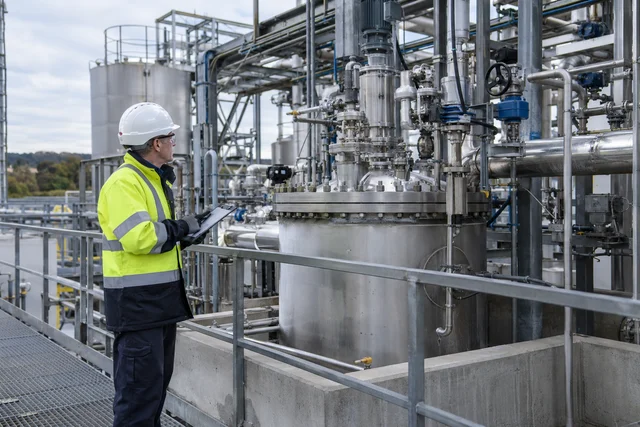
Photorealistic illustrative UK workplace scene. Review checks: Avoid / redesign: If the product can be made by a tested non-reactive route, remove the exothermic step; confirm the alternative does not move an equal or greater hazard into purification or waste handling. Control the task: Segregate incompatible stores and lines; enclose the reactor and route credible relief to a safe collection/discharge system. Verify before release: Hold or stop for unknown accumulation, abnormal trend or unavailable critical safeguard.
Understand the mechanism and the decision
A larger batch can change the relationship between reaction inventory and heat-removal capability. Mixing, addition, heat transfer and containment can differ from a small vessel. Repeated success on a small scale is useful experience but not proof of a safe larger process.
Scale-up needs competent assessment supported by appropriate reaction and equipment information. A timetable or a multiplication of a recipe cannot supply that basis. The operating team should receive an authorised method and limits established for the intended plant and scale before a new campaign begins.
Verify the control in the actual task
Check whether the technical review covers the intended inventory, equipment, process deviations and required safeguards, and retain the start hold where it does not.
What must be resolved before scaling up or changing a reaction?
Treat a change as a new decision when it could alter heat generation, accumulation, mixing, cooling, pressure, contamination or the performance of a safeguard.
The process owner should define the exact change, affected materials and equipment, credible upset and people exposed. Compare current test data and design basis with the proposed scale. Keep a safety-critical action open until its evidence is reviewed; approval by schedule alone is not technical approval.
Questions that control a reaction change
Question
Evidence and hold point
Is the chemistry known?
Current identity, composition, impurity and thermal data cover normal and foreseeable abnormal conditions. Hold if the material or decomposition route is uncertain.
Can heat and gas be managed at this scale?
Competent testing and calculations support cooling, mixing, addition and pressure basis. Hold if lab data are simply extrapolated.
Are prevention and mitigation available?
Installed cooling, trips, relief, vent destination and any scrubber match the credible scenario. Hold for an impaired or unverified critical barrier.
Can people execute the response?
Procedure and alarm/trip response specify who stops additions, isolates, withdraws and authorises restart. Hold if action depends on improvisation.
Has the change closed?
Management of change (MOC) includes updated drawings, instructions, training, commissioning, open-action resolution and hand-back. Do not start with unresolved safety-critical assumptions.
Temperature, pressure, addition rate and vent size must come from representative chemistry data, the actual equipment and competent design; copying a value from another plant can defeat the safety basis.
Applied case
A laboratory mixture ran without difficulty; production proposes a much larger vessel with no new assessment.
Test the assumption
The fact that the laboratory batch succeeded once. This does not establish acceptance. Scale can alter heat transfer and process behaviour; success alone is insufficient.
Evidence before acceptance
Check whether the technical review covers the intended inventory, equipment, process deviations and required safeguards, and retain the start hold where it does not.
Test your decision
What should govern the scale-up decision?
Multiplying every instruction by the volume ratio.
A competent scale-specific reaction and equipment assessment before release.
The fact that the laboratory batch succeeded once.
Compare the explanation
A competent scale-specific reaction and equipment assessment before release.
Scale can alter heat transfer and process behaviour; success alone is insufficient.
Use appropriate reaction data and competent testing
Use appropriate reaction data and competent testing.
Existing SHAREhub photographic illustration. The written fictional case supplies the condition and decision evidence.
Understand the mechanism and the decision
A reaction assessment needs information on the intended reaction and credible unwanted reactions, including relevant materials and conditions. Product descriptions and safety data sheets can contribute, but they may not fully describe the behaviour of a particular mixture or process.
Testing, interpretation and design belong with competent specialists using justified methods. An improvised mixing test at the workplace can create the very event being assessed. Keep the operational question clear: which evidence supports this process and which uncertainty still prevents acceptance?
Verify the control in the actual task
Identify the actual information gap and refer it through the responsible technical system; do not undertake test chemistry through an awareness exercise.
How is the safe operating envelope established?
Reaction hazard testing and process design define conditions within which the batch can be controlled, and identify what happens if cooling, agitation, dosing, containment or utilities fail.
Assess the intended reaction and credible side reactions, decomposition, contamination, delayed accumulation and scale effects. Screening and, where required, representative calorimetry inform heat and gas generation, time available to act and the design of control, relief and containment. Translate the study into approved temperatures, pressure, addition rate, composition and hold-time limits for the specific plant. HSE warns that literature and calculations alone do not replace chemical hazard testing. HSE reaction/product testing.
Check that sensors show operators the variables they need, alarms and trips act at justified points, and relief or other protective measures are designed for credible scenarios and discharge safely. No generic limit or vent size can be supplied for a different chemistry or vessel.
Applied case
A team proposes combining unfamiliar residues in a beaker beside the reactor to see what happens.
Test the assumption
Proceed because the test amount is small. This does not establish acceptance. Small scale and PPE do not establish an appropriate reaction-hazard test.
Evidence before acceptance
Identify the actual information gap and refer it through the responsible technical system; do not undertake test chemistry through an awareness exercise.
Test your decision
What is the defensible response?
Use the competent technical assessment and appropriate testing route rather than an improvised trial.
Proceed because the test amount is small.
Use personal protective equipment as the complete testing basis.
Compare the explanation
Use the competent technical assessment and appropriate testing route rather than an improvised trial.
Small scale and PPE do not establish an appropriate reaction-hazard test.
Preserve material identity and the specified charge sequence
Chemical hazard pictograms · examples and checksOptional reference · all nine symbols · does not change assessment requirements
READ THE LABEL · UNDERSTAND THE TASK
Recognise the symbol. Read the full label. Assess the actual task.
Examples illustrate possible uses of a symbol, not the classification of every formulation. A product can carry several pictograms. Check its current label, hazard statements and matching safety data sheet (SDS).
CLP/GHS hazard pictograms: meanings and illustrative examples
Pictogram and hazard
What it can mean
Example and question before work
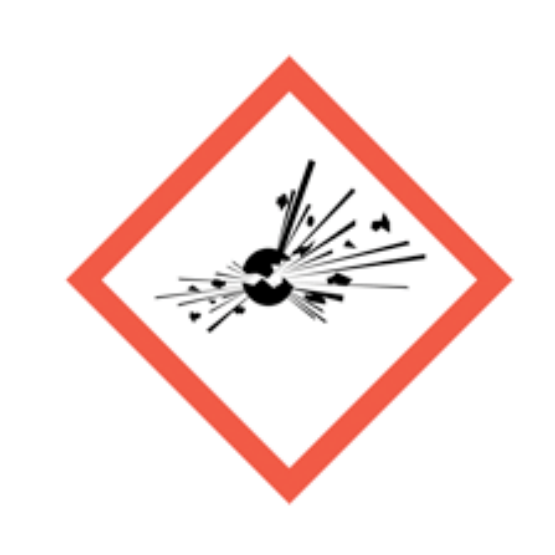
ExplosiveGHS01
Explosion, blast or projection hazards; also certain self-reactive substances and organic peroxides.
Example: Certain fireworks or reactive chemical products.Ask: Does the authorised task account for impact, heat and the product’s stability limits?
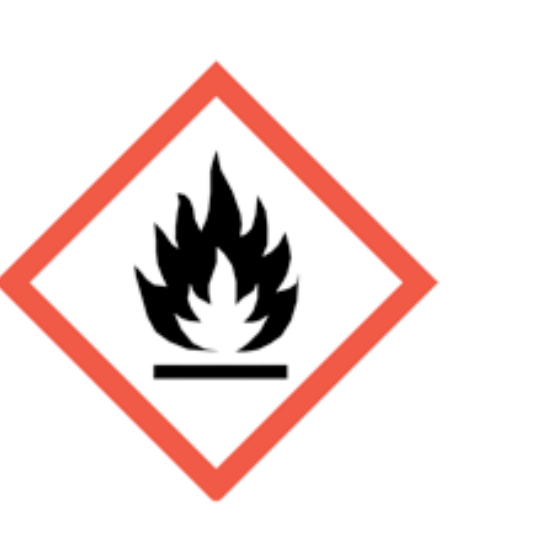
FlammableGHS02
Can ignite; also used for certain self-heating, pyrophoric or water-reactive hazards.
Example: Petrol or some solvent-based products.Ask: What could release vapour or ignite it during this task, including nearby work?
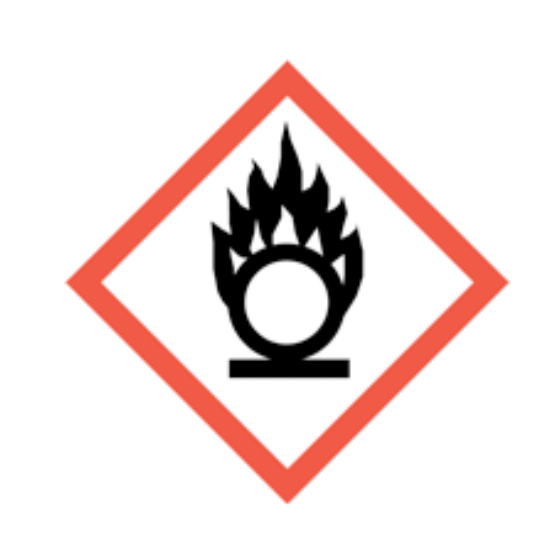
OxidisingGHS03
Can cause or intensify fire; some strong oxidisers present an explosion hazard.
Example: Oxygen or certain oxidising chemicals.Ask: What incompatible materials and contamination must the assessed storage and connection keep apart?
Gas under pressureGHS04
Pressurised gas may burst if heated; refrigerated gas can cause cold burns.
Example: Compressed-gas cylinders.Ask: Have the gas identity, cylinder, connection and pressure or temperature hazards been checked?
CorrosiveGHS05
May damage metals, cause severe skin burns or cause serious eye damage; read the stated hazard.
Example: Certain drain cleaners, acids or alkalis.Ask: Which contact and splash routes must be prevented in this actual handling or dilution task?
Acute toxicityGHS06
Can be toxic or fatal after short exposure through the stated route.
Example: Methanol or certain pesticide products.Ask: Which exposure routes and emergency arrangements does this product’s information identify?
Harmful / irritantGHS07
May indicate harmful acute toxicity, irritation, skin sensitisation, drowsiness or dizziness; also ozone-layer hazards.
Example: Some detergents or cleaning products.Ask: What do the hazard statements say? Do not dismiss this as a harmless or mild product.
Serious health hazardGHS08
Can indicate cancer, genetic or reproductive harm, organ damage, respiratory sensitisation or aspiration hazard.
Example: Petrol or some sensitising chemical products.Ask: Which particular health effect is stated, and how does the task prevent the relevant exposure?
Hazardous to the environmentGHS09
Hazardous to aquatic life, potentially with long-lasting effects.
Example: Certain pesticides, biocides or fuels.Ask: How will the assessed arrangements prevent release to drains, water or soil?
Read beyond the picture · Open a prompt to compare the explanation.
Is the exclamation mark the same as the chest-starburst symbol?
No. The two symbols communicate different groups of hazards. Read the actual hazard statements: skin sensitisation and respiratory sensitisation are not interchangeable, and neither symbol specifies the complete task controls.
Does a bottle with no pictogram prove the task is safe?
No. Work may generate hazardous dust, fume or mist, and exposure depends on the task. Resolve missing or conflicting identification before use. A pictogram is not a compatibility chart or a complete workplace risk assessment.
Which information turns recognition into a useful work decision?
Match the product and SDS revision. Read the hazard statements and relevant SDS sections for handling, storage, exposure control, emergencies and reactivity together. Then check the actual task assessment and controls. A safety data sheet is not itself a COSHH assessment.
Fisher Scientific UK · BP2618 range · CAS 67-63-0 Revision 19 · 13 October 2023
This learning example refers to the identified supplier edition. It is not a replacement SDS or confirmation that this is the latest sheet for a product you hold. Obtain the current matching supplier SDS before real use.
Below is SHARE’s learning annotation, not a rebranded supplier document or a complete safety data sheet.
Identity
Propan-2-ol / isopropanol; the referenced sheet identifies a laboratory-grade product.
Section 2 signals
Danger; flame and exclamation-mark pictograms. H225, H319 and H336 identify flammability, eye irritation and possible drowsiness/dizziness.
Section 3 composition
The referenced sheet lists isopropyl alcohol above 95% by weight.
Section 8 decision
Engineering measures and several glove-material options appear. Check the complete conditions; no single glove or respirator is selected by this lesson.
Section 9 example
A 12°C closed-cup flash point is listed. This is product data, not a workplace exposure reading or an automatic safe-temperature limit.
Explore every section
1. Identification
Match the product, supplier, intended use and emergency contact to the actual container. A familiar chemical name alone may not identify a formulation.
2. Hazards identification
Read classification, pictograms, signal word and hazard/precautionary statements together. Identify the routes and outcomes the task must prevent.
3. Composition / ingredients
Check concentration and relevant ingredients. A diluted mixture, hardener or changed formulation may need different information and assessment.
4. First-aid measures
Prepare product-specific first-aid arrangements and ready access to the full sheet. Do not replace the workplace emergency procedure with a memory exercise.
5. Firefighting measures
Provide the relevant information to the site fire-planning route. An SDS does not authorise an untrained worker to fight a chemical fire.
6. Accidental release
Plan who raises the alarm, isolates the area and deals with a spill within their training. Confirm available equipment and the boundary for specialist help.
7. Handling and storage
Translate the supplier conditions into the actual transfer, storage, access and housekeeping method. Consider other work and incompatible neighbours.
8. Exposure controls / PPE
Read exposure limits, engineering controls and residual PPE together. Check jurisdiction, units and averaging period. Verify control performance and exact glove/RPE suitability.
9. Physical / chemical properties
Consider volatility, flash point, state and other relevant properties at the actual temperature and method. Odour is not a reliable exposure measurement.
10. Stability / reactivity
Identify incompatible materials, conditions to avoid and possible decomposition. Check the whole process and waste stream, not just separate containers.
11. Toxicological information
Connect the health effects to possible inhalation, skin, eye and ingestion exposure. Use competent advice where specialist interpretation is needed.
12. Ecological information
Plan to prevent environmental release, including drains and water. Lack of a fish/tree symbol does not grant permission to discharge.
13. Disposal considerations
Specify the responsible waste route for the product, contaminated materials and containers. Do not assume evaporation or dilution is an acceptable disposal method.
14. Transport information
Check transport classification through the relevant competent route. Supply pictograms and transport labels have different functions.
15. Regulatory information
Identify relevant restrictions and market scope, then check workplace duties separately. A regulatory entry is not a completed COSHH assessment.
16. Other information
Check revision history, abbreviations and supporting statements. Trace material changes into the assessment, instructions, storage and briefing.
Worked COSHH application · fictional laboratory proposal
Define the proposed use
Fictional laboratory task: wipe small parts for 10 minutes twice per shift, using a proposed 50mL working quantity at ambient temperature. Record the exact product, method, location, people and frequency. These are exercise assumptions, not authorised operating limits.
Find the exposure and application differences
Compare a controlled dispensing/wiping proposal with spraying the same liquid over an open surface near other work. Spray, surface area, ventilation, duration, splashes and nearby people change the assessment even though the SDS is unchanged. Confirm the proposed use is suitable.
Work through the control hierarchy
First ask whether the task can avoid the chemical or use a verified safer method. If it remains necessary, assess release prevention, suitable dispensing, enclosure or ventilation before residual PPE. Do not invent a dilution or declare a small quantity safe.
Specify and verify the real controls
Use sections 7–10 together with competent task assessment. Identify ventilation performance, compatible equipment and the exact glove selection/breakthrough evidence for the job. Consider fire and explosion controls alongside health exposure. Do not copy a generic PPE line and call the work controlled.
Plan the whole job
Include setup, transfer, use, cleaning, storage, waste, maintenance and foreseeable upset. Identify who is exposed, who owns each action, training, first aid, spill arrangements and the separate emergency response boundary.
Record, brief and review
Record significant findings, remaining actions and evidence needed before release. Check controls in use. Reassess for changed product, concentration, quantity, temperature, spraying, location, equipment, symptoms, incidents or new supplier information.
Worked decision: HOLD the proposed task until the matching product/use information, exposure and ignition assessment, control verification and emergency arrangements are resolved by the responsible competent people. This learning example does not issue an operational assessment or authorise work.
Preserve material identity and the specified charge sequence.
Photorealistic illustrative UK workplace scene. Review checks: Avoid / redesign: Use a validated non-reactive route or suitable supplied intermediate where it removes the hazardous reaction step. Control the task: Use closed charging and segregate people from credible release and relief paths. Verify before release: If the hazardous step remains, retain a task assessment and select the stronger feasible remaining controls.
Understand the mechanism and the decision
Material identity, composition and the intended charging arrangement are part of the assessed reaction basis. A wrong ingredient, contamination or changed addition sequence can affect heat generation, gas formation or accumulation of unreacted material. Similar labels do not establish equivalence.
Operators must use the authorised process information and verification arrangements, not a reconstructed recipe from memory. A deviation needs the prescribed review before a new batch starts. The correct sequence is process-specific; a training example cannot provide a general order for charging chemicals.
Verify the control in the actual task
Check how identity, authorisation and the specified charge checks are established and recorded for the actual batch.
How should materials and charge order be controlled?
Verify the material, quantity, route, sequence and permitted rate before opening a charging path. A familiar label, previous batch or non-return valve is not enough to rule out wrong material or backflow.
Use approved identification, segregation, receiving and transfer controls appropriate to the chemistry. Confirm hose and valve line-up, residual contents and vessel state; use independent checking where the hazard study requires it. A change in supplier, grade, catalyst, solvent, pack or cleaning method may change reaction kinetics. Hold when identity or compatibility cannot be proved. HSE raw-material guidance addresses contaminants and wrong-material paths.
In an HSE 1992 polymerisation case, styrene backflow through an open valve and failed non-return valve affected the next batch, which then ran away. The lesson is to verify carry-over and backflow barriers between batches, not to assume the previous run ended cleanly. HSE incident account.
Applied case
Two raw-material containers have similar names and the campaign instruction does not match the substitute label.
Test the assumption
Choose the familiar-looking container. This does not establish acceptance. The recipe basis depends on actual materials and conditions, not a visual guess.
Evidence before acceptance
Check how identity, authorisation and the specified charge checks are established and recorded for the actual batch.
Test your decision
What should happen before charging begins?
Choose the familiar-looking container.
Use half the amount as an unreviewed trial.
Resolve the material and instruction discrepancy through the authorised technical review.
Compare the explanation
Resolve the material and instruction discrepancy through the authorised technical review.
The recipe basis depends on actual materials and conditions, not a visual guess.
Verify cooling and utility readiness before starting
Verify cooling and utility readiness before starting.
Photorealistic illustrative UK workplace scene. Review checks: Change at source: Use a validated non-reactive route or suitable supplied intermediate where it removes the hazardous reaction step. Make it observable: If the hazardous step remains, retain a task assessment and select the stronger feasible remaining controls. Keep useful evidence: Keep controlled recipe/version, reaction basis, material and line-up checks, utility and safeguard status, actual trends, hold releases, samples, deviations, technical decisions and transfer/next-batch handover.
Understand the mechanism and the decision
Cooling, agitation and other utilities can support the assessed control of a reaction. Their availability needs evidence appropriate to their function. A pump running locally does not demonstrate effective cooling at the reactor or the availability of shared supporting services.
Before a new batch, an unresolved utility limitation must enter the authorised readiness decision. During operation, a utility failure requires the designed abnormal-response arrangements; simply pausing an activity may not stop heat generation in reacting material. Avoid improvised reconnections or assumptions about backup capacity.
Verify the control in the actual task
Confirm the verification scope, shared dependencies and response arrangements; the authorised decision must match the actual plant state.
Why are agitation, cooling and utility status critical?
Mixing and heat removal affect how fast a reaction proceeds. Their failure can create local accumulation, reduced heat transfer or a delayed reaction when mixing resumes.
The hazard study should test loss of agitator, cooling supply, power, instrument air and control-system failure, including common-cause loss. Define alarms, diagnostics, safe response and independent protection where required. If mixing fails, do not simply restart it: stratified material may react vigorously on remixing. If cooling fails, stop addition or follow the site-specific validated sequence, escalate and apply the emergency plan if conditions worsen. HSE plant-design guidance and HSE control-system guidance explain these mechanisms.
Applied case
A start pack shows an unresolved cooling-system issue, although a circulation motor can be heard.
Test the assumption
Start because the motor sound proves cooling. This does not establish acceptance. A motor indication is incomplete evidence of the required heat-removal function.
Evidence before acceptance
Confirm the verification scope, shared dependencies and response arrangements; the authorised decision must match the actual plant state.
Test your decision
What is the appropriate start decision?
Start and decide later whether the temperature rises.
Keep the new batch unreleased until the required cooling function and acceptance are verified.
Start because the motor sound proves cooling.
Compare the explanation
Keep the new batch unreleased until the required cooling function and acceptance are verified.
A motor indication is incomplete evidence of the required heat-removal function.
Photorealistic illustrative UK workplace scene. Review checks: Setting: Run an approved semi-batch reaction in an enclosed chemical plant, adding a verified reagent to a cooled, agitated vessel and transferring the finished batch to a designated receiver. Act: The operator and supervisor verify material identity and grade, previous-batch residue, line-up, equipment condition and safety critical utilities. Hold / review: Hold for unknown material, altered grade, missing or discrepant test result, failed cooling, loss of agitation, unsafe trend, bypassed trip, blocked relief path or conditions outside the envelope.
Understand the mechanism and the decision
Mixing can affect heat transfer, local concentrations and how material is distributed in a reactor. Loss or change of agitation can therefore alter the behaviour assumed by the process basis. A rotating shaft or motor indication does not establish every relevant mixing condition.
The required response depends on the actual chemistry, equipment and stage of the batch. Workers must use the established abnormal instructions rather than assume that restarting a drive or increasing speed is always safe. Technical assessment needs to address what may have accumulated or changed during the interruption.
Verify the control in the actual task
State the batch stage and known interruption facts to the responsible role. Do not invent a recovery sequence from an awareness explanation.
Why are agitation, cooling and utility status critical?
Mixing and heat removal affect how fast a reaction proceeds. Their failure can create local accumulation, reduced heat transfer or a delayed reaction when mixing resumes.
The hazard study should test loss of agitator, cooling supply, power, instrument air and control-system failure, including common-cause loss. Define alarms, diagnostics, safe response and independent protection where required. If mixing fails, do not simply restart it: stratified material may react vigorously on remixing. If cooling fails, stop addition or follow the site-specific validated sequence, escalate and apply the emergency plan if conditions worsen. HSE plant-design guidance and HSE control-system guidance explain these mechanisms.
Applied case
Agitation has been interrupted during a reactive batch and the team proposes restarting it by habit.
Test the assumption
A universal rule to restart immediately. This does not establish acceptance. The interruption may have changed local conditions; the safe response is process-specific.
Evidence before acceptance
State the batch stage and known interruption facts to the responsible role. Do not invent a recovery sequence from an awareness explanation.
Test your decision
What should guide the next action?
The process-specific authorised abnormal-response and technical assessment.
A universal rule to restart immediately.
An increase in speed chosen by the nearest worker.
Compare the explanation
The process-specific authorised abnormal-response and technical assessment.
The interruption may have changed local conditions; the safe response is process-specific.
Use hold points and limits as operational decisions
Use hold points and limits as operational decisions.
Existing SHAREhub 2D teaching schematic. Use alongside the explanation and fictional case in this lesson.
Understand the mechanism and the decision
A batch has a state, history and authorised next step. Hold points connect the process information to decisions about readiness, addition, treatment and onward transfer. An unsigned line in a record is not merely an administrative inconvenience if it represents a missing control decision.
A safe operating envelope includes relevant conditions and responses established for the actual process. A normal reading for one variable does not cancel an unresolved limit or failed function elsewhere. Planned abnormal instructions and escalation must remain available to the responsible operating team.
Verify the control in the actual task
Check the last confirmed batch state, the precise hold requirement and who can authorise the next step; do not turn a time target into a release criterion.
How do hold points guide a batch?
Hold points are deliberate pauses tied to a defined condition or approval; work must not pass one until the required evidence shows the next step is within the assessed envelope.
Use a controlled batch sheet that states the current recipe version, sequence, measured condition, acceptance limit, person authorised to release and action if outside the limit. Confirm sampling method, test status, agitation, cooling, heating and addition readiness before each relevant step. Record actual values and deviations, not just a tick. Shift handover must identify a partially complete batch, pending samples, overrides and time-dependent chemistry.
Are identity, quantity, order, route and residues verified?
Material and line-up check
Heat and react
Are agitation, cooling, addition and monitoring within the approved envelope?
Trends, utility and instrument status
Sample and hold
Is the sample representative and safe to obtain; is the result accepted?
Sampling control and release decision
Finish and transfer
Is the reaction complete enough for the next step; are downstream conditions suitable?
Batch result, transfer approval and handover
Can a sampling hold safely last longer?
A hold is a defined process state, not permission to leave a batch indefinitely. If a laboratory result is delayed, establish what the reaction assessment says about the material remaining in the vessel, the allowable duration and the agitation, temperature monitoring and utilities required throughout that state. A steady displayed temperature alone does not demonstrate that a longer hold or later restart is safe.
For an illustrative overnight delay, the outgoing operator identifies the actual batch stage, last addition, trends, pending sample and current safeguards. The authorised technical owner checks the assessed hold and restart conditions before deciding what can continue. If the permitted conditions or duration cannot be established, escalate through the validated abnormal-operation procedure; do not improvise heating, further addition, quenching or transfer. The incoming shift must receive the actual condition and unresolved decision, with clear responsibility for monitoring and technical contact.
Guidance and scope: Original SHARE process variation applying HSE GB technical guidance; it supplies no reaction-specific limits or emergency recipe. At an NI site, the technical principles require local validation and the separate NI legal route already set out below. HSE reaction testingHSE: Operating procedures
Applied case
The next charge step is requested while a required verification remains unresolved in the batch record.
Test the assumption
Assume the missing result is acceptable because other readings are normal. This does not establish acceptance. A hold point must be supported by the relevant evidence before it is released.
Evidence before acceptance
Check the last confirmed batch state, the precise hold requirement and who can authorise the next step; do not turn a time target into a release criterion.
Test your decision
What is the defensible next-step decision?
Assume the missing result is acceptable because other readings are normal.
Sign retrospectively after the next addition.
Retain the specified hold and resolve the verification through the responsible route.
Compare the explanation
Retain the specified hold and resolve the verification through the responsible route.
A hold point must be supported by the relevant evidence before it is released.
Distinguish control from reactive-event protection
Distinguish control from reactive-event protection.
Photorealistic illustrative UK workplace scene. Review checks: Avoid / redesign: Use a validated non-reactive route or suitable supplied intermediate where it removes the hazardous reaction step. Control the task: Use closed charging and segregate people from credible release and relief paths. Verify before release: If the hazardous step remains, retain a task assessment and select the stronger feasible remaining controls.
Understand the mechanism and the decision
Protective arrangements may address loss of control, but they have a defined design basis and limitations. A relief device does not make every reactive process safe, and pressure relief does not remove all thermal, discharge or hazardous-material consequences.
The reaction assessment must establish relevant scenarios, equipment suitability and protective functions through competent design. People need to know when a safeguard is unavailable and which restriction applies. A visible device or an old certificate cannot establish suitability for a changed material or process.
Verify the control in the actual task
Ask what the device protects against, its current assurance status and whether the change review covers the complete protective pathway.
What protects people if control is lost?
Preventive controls keep the reaction within its safe envelope; independent protective systems detect, stop or limit a deviation; relief, containment and emergency arrangements reduce consequences if prevention fails.
Link each credible initiating event to the actual safeguards it demands: material verification, measured limits, cooling and mixing, alarms and trips, shutdown, emergency cooling or quench where designed, relief and safe discharge, containment, detection and evacuation. Test the independence and common-cause exposure of claimed layers. A relief valve setting, rated vessel or operator response alone does not prove that a runaway scenario is controlled. The site engineer must show the scenario-specific design and current test evidence.
Photorealistic illustrative UK workplace scene. Review checks: Change at source: Use a validated non-reactive route or suitable supplied intermediate where it removes the hazardous reaction step. Make it observable: If the hazardous step remains, retain a task assessment and select the stronger feasible remaining controls. Keep useful evidence: Keep controlled recipe/version, reaction basis, material and line-up checks, utility and safeguard status, actual trends, hold releases, samples, deviations, technical decisions and transfer/next-batch handover.
Understand the mechanism and the decision
Sampling or opening equipment can expose people to pressure, heat and hazardous contents, including material that remains reactive. A routine sample point is still part of a process with a current state. Familiarity with the location does not establish safe conditions.
Use the actual sampling or work-control system and competent verification. Do not infer a safe isolation or stable contents from a closed valve or a quiet vessel. If an abnormal batch changes the basis of a routine task, the task needs the responsible review before proceeding.
Verify the control in the actual task
Clarify the actual plant state, task scope and required verification; intrusive work and sampling authority remain separate from awareness-course completion.
How should sampling and intrusive work be managed?
Treat sampling, cleaning and maintenance as contact with live process hazards unless the site has demonstrated a safe route. A permit and an isolation certificate support a verified system; neither makes the vessel safe by itself.
Before work, establish pressure, temperature, contents, residual reaction potential, connected sources, drains, vents and the destination for any release. Use the site-specific sample point and isolation standard; verify the isolation, depressurisation and condition at the point of work as required. Coordinate operations, contractors and simultaneous work; explain what changes would cancel the permit. During work, monitor for changing condition and stop for uncertainty. Hand back only after equipment, guards, instruments and isolations are reinstated and tested for the intended restart. HSG253 and HSE permit principles provide the boundary.
Applied case
A routine sample is requested from a batch with unresolved pressure and reaction-status information.
Test the assumption
Open the point slowly to discover the condition. This does not establish acceptance. Opening a point cannot be used as an improvised condition test.
Evidence before acceptance
Clarify the actual plant state, task scope and required verification; intrusive work and sampling authority remain separate from awareness-course completion.
Test your decision
What is the appropriate decision about the sample?
Hold the routine request for the process-specific assessment and authorised safe arrangement.
Open the point slowly to discover the condition.
Assume the normal sampling instruction covers every abnormal batch.
Compare the explanation
Hold the routine request for the process-specific assessment and authorised safe arrangement.
Opening a point cannot be used as an improvised condition test.
Keep an abnormal batch under controlled technical disposition
Keep an abnormal batch under controlled technical disposition.
Photorealistic illustrative UK workplace scene. Review checks: Change at source: If the product can be made by a tested non-reactive route, remove the exothermic step; confirm the alternative does not move an equal or greater hazard into purification or waste handling. Make it observable: Hold or stop for unknown accumulation, abnormal trend or unavailable critical safeguard. Keep useful evidence: Retain the reaction hazard study, test data, batch record and trends, maintenance hand-back, alarm/deviation record, relief and mitigation checks, decision owner and restart approval.
Understand the mechanism and the decision
A batch outside its normal history may contain accumulated reactants, contamination or unstable material. Returning an indicator to a usual value does not necessarily restore the original chemical state. The event and the subsequent material disposition need competent assessment.
Do not route abnormal material into a waste or product system merely to clear the vessel. The receiving route may introduce incompatible materials or conditions. The responsible decision needs the known batch history, material information, current control status and the intended destination.
Verify the control in the actual task
Retain the material and operating restrictions required by the actual technical and emergency arrangements until the authorised disposition is established.
What do a cooling failure and an unknown waste drum teach?
Both situations need a hold before the material or process crosses an uncertain boundary. The examples show how a routine task becomes unsafe when information or a key barrier is missing.
A batch that must stay on hold after cooling loss
Task, material and setting: Crownway Fuels Ltd, an illustrative chemical manufacturer, plans a semi-batch additive step in a closed reactor. A solvent, reagent and catalyst are involved. The process hazard study has set source-specific limits for addition, cooling, agitation, temperature and pressure; no numeric limit is invented here.
People and prerequisites: Operators, maintainers and nearby contractors could be affected. The process owner confirms current reaction testing, safe-envelope and relief basis, correct material identity, available utilities and a competent operator/supervisor team. Maintenance has just returned a cooling-water valve to service; the hand-back must demonstrate the required flow. A warning on the agitator needs resolution before charge.
Before: Verify line-up, cooling and agitation, controls and trips, relief route and any scrubber required by the design. Record batch identity and permitted addition sequence. Do not start with an untested supplier change or open safety-critical maintenance action.
During: Operate within the approved addition and temperature/pressure envelope, watch trends and respond to alarms as specified. The supervisor checks deviations and prevents schedule pressure from changing the agreed rate or sequence.
Hold or stop: If cooling falls, agitation fails, temperature or pressure trends outside the defined response limits, or relief/mitigation is impaired, hold additions and follow the assessed abnormal-operation procedure. Keep people clear and activate the contingency plan if loss of containment or immediate danger is suspected. Do not improvise quench chemistry, venting or restart.
Completion and hand-back: Only the authorised process owner releases the batch or plant after competent review of the upset, restored safeguards, any required specialist assessment and recorded conditions for restart. A quiet alarm panel alone is not evidence of recovery.
Evidence: Retain the reaction hazard study, test data, batch record and trends, maintenance hand-back, alarm/deviation record, relief and mitigation checks, decision owner and restart approval.
Control source:HSE control-system guidance. The site details are illustrative; verify the actual task and jurisdiction before release.
A failed cooling valve, faster addition and accepted agitator warning must not be treated as three independent minor issues. Their combination can defeat prevention and leave relief as the last barrier. The actual plant study, not this example, determines the stop limit and engineered response.
A waste-transfer hold before incompatible materials meet
Task, material and setting: A waste-treatment team receives two partly filled drums for bulking. One has incomplete composition information and a damaged label. Workers and a visiting driver are near the transfer bay; the desired outcome is a correctly routed, documented disposal without an unintended reaction.
People and prerequisites: Workers, the visiting driver and a competent waste-chemistry specialist have different roles and exposure routes. The waste owner checks producer information, identity, compatibility basis, packaging condition and the approved transfer route. A generic “similar solvent” description is insufficient.
Before: Segregate the unknown drum; use the approved sampling and compatibility process only if safe and authorised. Confirm the receiving destination before opening any transfer route.
During: Keep transfer points, hoses, drains and receiving tanks identified and separate. Carry out the actual site procedure only after the material and destination are confirmed; monitor for unexpected warming, pressure, gas or fume.
Hold or stop: Do not bulk or open an unknown or suspect drum. Unexpected warming, swelling, gas, fume or loss of containment requires people to withdraw, the area to be controlled and the site emergency response to be activated. Do not attempt a neutralisation or relocation without specialist direction.
Completion and hand back: Release the bay only after the site’s authorised checks show the transfer is complete and safe. The waste owner closes any hold or incident with the competent specialist and confirms the route for remaining material.
Evidence: Retain the identified material, producer information, compatibility decision, destination, transfer checks and any incident or hold resolution.
Control source:HSE chemical-waste guidance. The site details are illustrative; verify the actual task and jurisdiction before release.
These are fictional teaching examples. They do not set a universal stay time, charge quantity, quench recipe or emergency vent setting.
Applied case
An interrupted batch is proposed for a standard waste tank without review of its altered composition.
Test the assumption
Only whether the waste tank has spare space. This does not establish acceptance. Clearing equipment can transfer the hazard into another system.
Evidence before acceptance
Retain the material and operating restrictions required by the actual technical and emergency arrangements until the authorised disposition is established.
Test your decision
What must be resolved?
Only whether the waste tank has spare space.
Only whether production wants the reactor available.
The abnormal material state and suitability of the proposed receiving route through competent disposition.
Compare the explanation
The abnormal material state and suitability of the proposed receiving route through competent disposition.
Clearing equipment can transfer the hazard into another system.
Photorealistic illustrative UK workplace scene. Review checks: Setting: A fictional chemical process adds material to a reactor within an assessed operating envelope. Act: The competent team considers heat generation, removal, mixing, conversion and hidden accumulation using the actual reaction evidence. Hold / review: Use the assessed abnormal-response procedure; do not improvise feed, cooling, quench or relief settings.
Understand the mechanism and the decision
Raw-material suppliers, concentration, catalyst, addition arrangements and equipment changes can challenge the original basis of safety. A change that improves product quality may still affect reaction stability or protective requirements. Performance success is not the same as hazard acceptance.
Change control must connect reaction knowledge, equipment limits, instructions, training and safeguards. A temporary trial needs an authorised basis too. Keep the technical purpose and acceptance criteria explicit so that an unreviewed deviation does not become normal simply through repetition.
Verify the control in the actual task
Confirm which process information and protective assumptions change, who accepts them and what must be verified before the campaign starts.
How should reaction hazards be managed through the lifecycle?
Carry reaction knowledge from laboratory concept through design, commissioning, batches, cleaning, maintenance, change and emergency response.
At development stage, identify intended and unintended reactions, heat and gas release, decomposition and contaminant effects. A small-scale result may not transfer to a larger vessel because heat generation grows with volume while heat removal depends on surface area and equipment. Commissioning confirms the installed cooling, agitation, controls, relief and emergency arrangements against the design basis.
Who checks the reaction basis at each stage
Stage
Decision and evidence
Development and scale-up
Chemist and engineer select competent tests, document heat/gas and uncertainty, then approve the scale and safe envelope before larger trials.
Design and commissioning
Process and relief specialists define credible upsets, safeguard performance and discharge destination; commissioning proves installed functions before hazardous charge.
Operation and cleaning
Operator follows batch sequence and hold points; supervisor checks trends, deviations, residues, cleaning chemistry and waste route.
Maintenance and change
Maintainer proves safe isolation and hand-back; process owner reviews recipe, supplier, concentration, batch size, software and equipment changes before restart.
Emergency and recovery
Incident lead applies the site scenario plan and keeps people clear; competent team reviews damage and barrier restoration before authorising return to service.
A valve left partly closed after maintenance, a new supplier impurity or a shared drain can undo a good laboratory study. Each lifecycle handover needs a named owner and evidence, not only a signed form.
Applied case
A different raw-material supplier is proposed for the next campaign because the previous sample met product-quality tests.
Test the assumption
Only the product-quality result. This does not establish acceptance. Product specification tests do not answer all reaction-hazard questions.
Evidence before acceptance
Confirm which process information and protective assumptions change, who accepts them and what must be verified before the campaign starts.
Test your decision
What is still required?
Only permission from purchasing.
The process-safety change review for the actual material and operating basis.
Only the product-quality result.
Compare the explanation
The process-safety change review for the actual material and operating basis.
Product specification tests do not answer all reaction-hazard questions.
Existing SHAREhub 2D teaching schematic. Use alongside the explanation and fictional case in this lesson.
Understand the mechanism and the decision
Readiness connects the chemistry, intended scale, equipment, utility availability, operating information and protective arrangements. Evidence should identify the current batch and scope. A complete pack can still contain unresolved limitations that require a decision.
The stated campaign includes a substitute raw material, incomplete cooling assurance and a prior abnormal batch without disposition. Those are connected questions. A schedule, a low display reading or the presence of relief cannot supply the missing technical acceptance; the process must not be used as an experiment.
Verify the control in the actual task
State the unresolved questions and approved plant condition clearly at handover. If a running reaction becomes abnormal, follow its designed response rather than assuming a start hold alone controls it.
What evidence shows reaction hazards are controlled?
The record must connect chemistry and credible scenarios to operating limits, barriers, owners and current test results. A historic study or an unreviewed batch sheet is not enough.
The process owner should be able to trace a material and a batch from test data to design and daily operation. This is particularly important after a near miss, supplier change, maintenance or scale-up.
For a semi-batch reaction, the evidence must connect the laboratory heat-release data to the authorised addition rate, cooling capacity, alarm and trip settings, relief basis, operator checks and the response to a failed cooling service. The release owner should compare the actual recipe, charge size and plant state with those assumptions before the batch starts; a change in feed composition or unavailable trip requires a fresh technical decision, not a handwritten note on the old batch sheet. HSE reaction testing guidance and control-system guidance support this chain.
Evidence that makes the basis of safety reviewable
Record
What it must show
Reaction hazard file
Materials, thermal and gas data, compatibility, uncertainty, credible upsets and a competent review of scale.
Design and safeguarding basis
Cooling and mixing capability, safe envelope, controls, trips, relief/vent destination and mitigation performance.
Work records
Batch trends, addition and hold points, alarms, deviations, raw-material identity and operator decisions.
Change and hand-back
MOC decisions, maintenance tests, commissioning, open actions, competent sign-off and restart authority.
Assurance and learning
Critical-barrier tests, impairments, near misses, drills, action closure and management review of repeated weak signals.
The site-specific safety basis and applicable law set test frequency, alarm limits and required records. An HSG254 indicator is an assurance signal, not a legal exposure limit.
Worked evidence chain: cooling loss
Illustrative chain: recipe R3 and its representative thermal-test conditions → credible cooling loss with accumulated unreacted feed → documented heat-removal and accumulation assumptions → installed cooling, independent feed trip and assessed relief → traceable commissioning/proof records → release by the process owner with the competent process engineer. Each arrow needs an identified record; this is a reasoning example, not a plant design or setpoint.
If the feed trip and normal temperature control share the failed sensor or power supply, record that dependency. If emergency cooling uses the same unavailable coolant, two labels do not create two independent barriers. Hold the recipe change or restart while the assumption is invalid; the engineer resolves dependencies and proves the revised safeguard before the process owner accepts release.
The campaign is due to start while the substitute-material review, cooling verification and abnormal-batch disposition remain open.
Test the assumption
Start the first batch to generate practical evidence. This does not establish acceptance. Starting is not a valid way to resolve an unestablished reaction basis.
Evidence before acceptance
State the unresolved questions and approved plant condition clearly at handover. If a running reaction becomes abnormal, follow its designed response rather than assuming a start hold alone controls it.
Test your decision
What is the defensible readiness decision?
Do not release the new campaign until the specified technical reviews and verification are complete.
Start the first batch to generate practical evidence.
Accept the relief device as the complete safety case.
Compare the explanation
Do not release the new campaign until the specified technical reviews and verification are complete.
Starting is not a valid way to resolve an unestablished reaction basis.
End-of-course revision · Drag each symbol to its hazard name, or use the menu on each card with touch or keyboard. This is practice alongside the separate final assessment.
Acute toxicity
Corrosive
Explosive
Flammable
Gas under pressure
Harmful / irritant
Hazardous to the environment
Oxidising
Serious health hazard
Match all nine symbols, then check your choices.
Need the reference table?Chemical hazard pictograms · examples and checksOptional reference · all nine symbols · does not change assessment requirements
READ THE LABEL · UNDERSTAND THE TASK
Recognise the symbol. Read the full label. Assess the actual task.
Examples illustrate possible uses of a symbol, not the classification of every formulation. A product can carry several pictograms. Check its current label, hazard statements and matching safety data sheet (SDS).
CLP/GHS hazard pictograms: meanings and illustrative examples
Pictogram and hazard
What it can mean
Example and question before work
ExplosiveGHS01
Explosion, blast or projection hazards; also certain self-reactive substances and organic peroxides.
Example: Certain fireworks or reactive chemical products.Ask: Does the authorised task account for impact, heat and the product’s stability limits?
FlammableGHS02
Can ignite; also used for certain self-heating, pyrophoric or water-reactive hazards.
Example: Petrol or some solvent-based products.Ask: What could release vapour or ignite it during this task, including nearby work?
OxidisingGHS03
Can cause or intensify fire; some strong oxidisers present an explosion hazard.
Example: Oxygen or certain oxidising chemicals.Ask: What incompatible materials and contamination must the assessed storage and connection keep apart?
Gas under pressureGHS04
Pressurised gas may burst if heated; refrigerated gas can cause cold burns.
Example: Compressed-gas cylinders.Ask: Have the gas identity, cylinder, connection and pressure or temperature hazards been checked?
CorrosiveGHS05
May damage metals, cause severe skin burns or cause serious eye damage; read the stated hazard.
Example: Certain drain cleaners, acids or alkalis.Ask: Which contact and splash routes must be prevented in this actual handling or dilution task?
Acute toxicityGHS06
Can be toxic or fatal after short exposure through the stated route.
Example: Methanol or certain pesticide products.Ask: Which exposure routes and emergency arrangements does this product’s information identify?
Harmful / irritantGHS07
May indicate harmful acute toxicity, irritation, skin sensitisation, drowsiness or dizziness; also ozone-layer hazards.
Example: Some detergents or cleaning products.Ask: What do the hazard statements say? Do not dismiss this as a harmless or mild product.
Serious health hazardGHS08
Can indicate cancer, genetic or reproductive harm, organ damage, respiratory sensitisation or aspiration hazard.
Example: Petrol or some sensitising chemical products.Ask: Which particular health effect is stated, and how does the task prevent the relevant exposure?
Hazardous to the environmentGHS09
Hazardous to aquatic life, potentially with long-lasting effects.
Example: Certain pesticides, biocides or fuels.Ask: How will the assessed arrangements prevent release to drains, water or soil?
Read beyond the picture · Open a prompt to compare the explanation.
Is the exclamation mark the same as the chest-starburst symbol?
No. The two symbols communicate different groups of hazards. Read the actual hazard statements: skin sensitisation and respiratory sensitisation are not interchangeable, and neither symbol specifies the complete task controls.
Does a bottle with no pictogram prove the task is safe?
No. Work may generate hazardous dust, fume or mist, and exposure depends on the task. Resolve missing or conflicting identification before use. A pictogram is not a compatibility chart or a complete workplace risk assessment.
Which information turns recognition into a useful work decision?
Match the product and SDS revision. Read the hazard statements and relevant SDS sections for handling, storage, exposure control, emergencies and reactivity together. Then check the actual task assessment and controls. A safety data sheet is not itself a COSHH assessment.




 READ THE LABEL · UNDERSTAND THE TASK
 Explosive
 Flammable
 Oxidising
 Gas under pressure
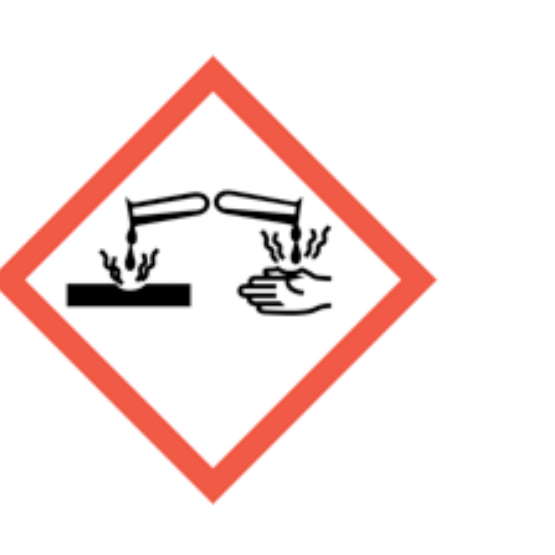 Corrosive
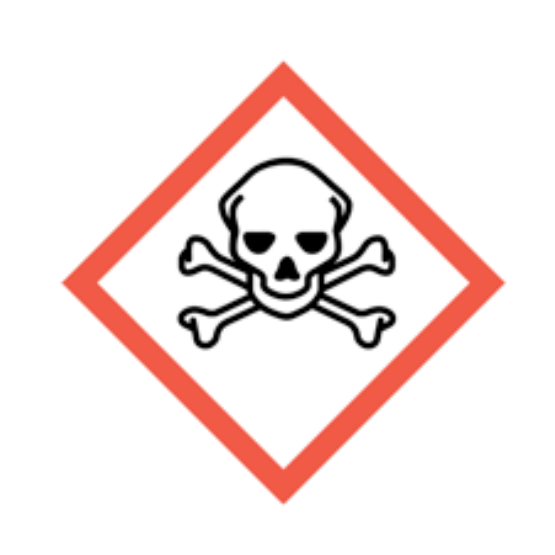 Acute toxicity
 Harmful / irritant
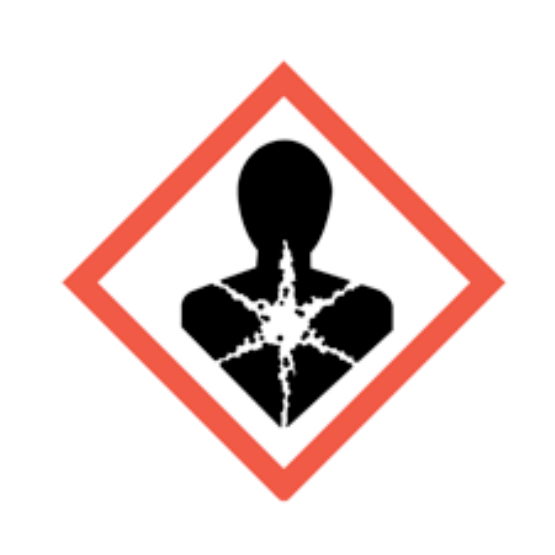 Serious health hazard
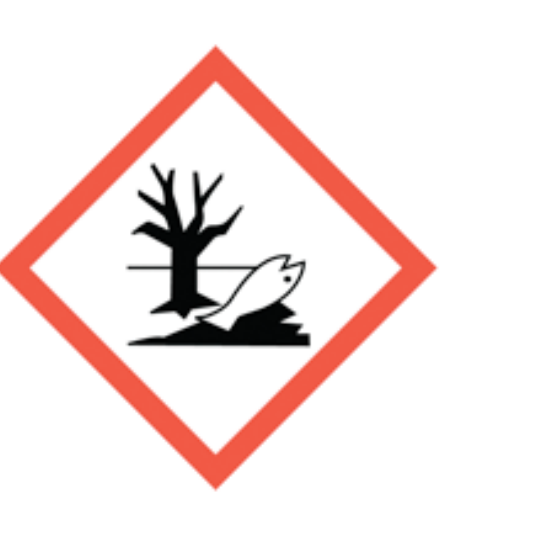 Hazardous to the environment