Independent SHAREhub awareness. This course does not provide a NEBOSH qualification, accreditation or authority to operate, design, isolate, test or maintain plant. Use competent site arrangements for real work.
This reader supplies the complete teaching. Use the interactive LMS course for assessed activities, saved progress and completion.
LESSON 1
One service, two kinds of harm
Distinguish a utility release from loss of a dependent protection.
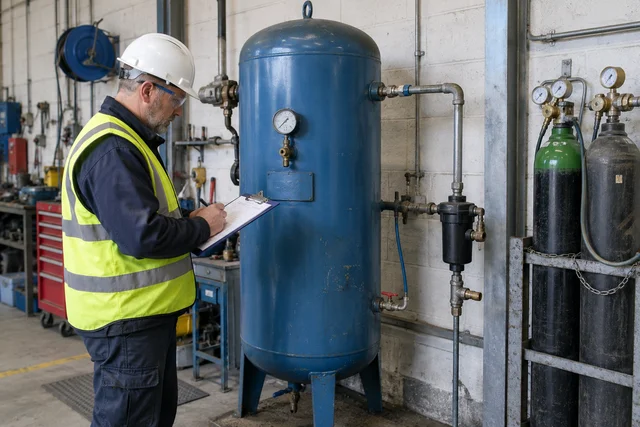
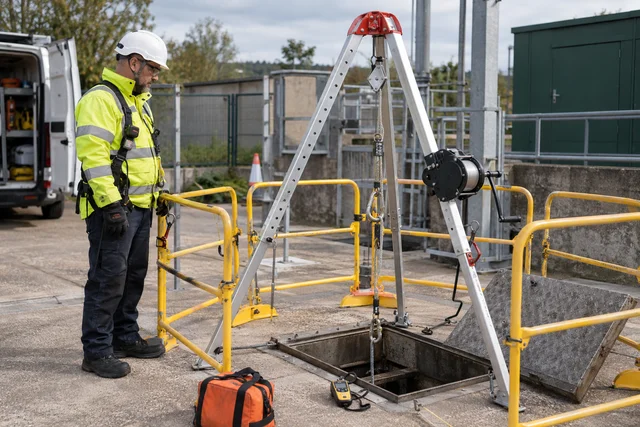
Existing SHAREhub photographic illustration. The written fictional case supplies the condition and decision evidence.
Understand the decision
A utility can harm directly through its energy or contents: steam can scald, pressurised fluid can escape and inert gas can displace breathable air. It can also harm indirectly when its loss disables cooling, valve action, detection or another protective function. The same failure may create both effects.
Start with the actual service and its users. A department may call a supply routine while a process relies on it for a safety function. Identify the credible loss, degradation or unexpected restoration and who needs to act under the applicable site arrangements.
How can a failed utility injure people?
A utility can injure directly when its energy or contents escape, or indirectly when its loss defeats a safeguard. Trace the source, route to people, likely harm and the condition that requires work to stop. Sources: HSE: reliability of utilities, HSE: inerting.
Steam transfers heat into skin, eyes or airways; a pressure rupture can also throw parts. Escaping nitrogen displaces oxygen, especially in enclosed or low-lying spaces. Electricity can pass through a person or produce an arc. A failed cooling, air, power or fuel-gas service may also let a hazardous process release material, ignite or lose emergency protection. Severity depends on inventory, pressure, temperature, ventilation, exposure time, occupied location and the speed of isolation. The table is a scenario prompt: the actual process assessment must identify the credible route and affected people.
Utility harm mechanisms and stop points
Service or task
Route to person
Likely harm
Warning and stop point
Steam or hot condensate at a trap or joint
Contact with a hot jet or surface; pressure can eject parts.
Acute skin or eye scalds and burns; a large release may be fatal.
Cooling, instrument air or power to a hazardous process
Failed heat removal, valve action, detection or shutdown allows release or escalation.
Fire or explosion burns; toxic release can cause acute poisoning or longer-term harm according to substance.
Outside approved envelope, alarm/trip failure or unknown valve state: stop dependent operation and follow safe-state procedure. Source: HSE: reliability of utilities
Fuel gas service and impaired ventilation
A leak can form a flammable atmosphere and reach an ignition source.
Fire and explosion burns, blast injury and possible smoke inhalation.
Gas indication, leak or ventilation failure: stop work, avoid ignition and use the site emergency plan. Source: HSE: DSEAR in detail
Longer-term outcomes depend on the substance released: a generic “toxic gas” label cannot establish the diagnosis. Use the actual material information and exposure assessment. Never send an unprotected colleague into a suspected oxygen-deficient space to rescue someone.
Suspected high-pressure injection requires immediate professional medical treatment, even if pain is slight or the visible wound is small. Stop exposure without approaching the jet, raise the site emergency response and tell clinicians the injection mechanism and any fluid information safely available. Do not wait for pain or visible deterioration. See HSE hydraulic-injection safety alert.
Applied case
A damaged air header affects nearby workers and a valve needed for transfer protection.
Direct harm
Escaping steam, pressurised fluid or inert gas can expose people directly.
Indirect harm
Service loss can defeat cooling, valve action or another protective function.
Test your decision
What should the review cover?
Only the compressor’s repair cost.
Both the direct release exposure and the dependent protective function.
Only the production loss caused by stopping the air.
Compare the explanation
Both the direct release exposure and the dependent protective function.
Utility safety includes the release and the functions that depend on the supply.
Identify source, distribution, users, backups and shared connections.
Photorealistic illustrative UK workplace scene. Review checks: Action: Trace shared supply, distribution and connected users; establish the safe operating or held state when protection is impaired. Intended benefit and limitation: Designed separation can reduce common failures, but a second compressor or labelled feed does not prove independence. Verification evidence: Test the required demand, logic, actuator and confirmed physical response; record boundaries and unresolved dependencies.
Understand the decision
A utility system extends from its source through distribution, branches and final users, with protection and backup arrangements along the way. Ownership boundaries may not match physical connections. Temporary hoses or cross-connections can introduce feeds that a local isolation plan misses.
Use current information and competent verification of the actual arrangement. Record which users and safeguards are affected by loss or degradation. An unknown connection is a gap to resolve before intrusive work or an outage, not a reason to discover the system by trial operation.
Where is the boundary of the utility system?
Trace the service from owner and source through distribution, users, protective devices, backup and any return or drain path.
Before changing or isolating a service, identify the supply owner, physical boundary, connected users, backfeeds, stored inventory and the person authorised to release it. A site may own a local header but depend on a public network or landlord plant. Do not assume the boundary from a label, colour or drawing alone; verify it in the field and with the network or facility owner where needed.
Product-supply duties for new pressure or electrical equipment concern design and placing on the market. They do not replace the employer or user duty to install, operate, examine and maintain the system safely.
Applied case
The air-outage drawing ends at a department boundary, although another unit is connected.
Real boundary
Trace source, distribution, branches, users and temporary connections.
Unknown connection
A gap in the drawing needs resolution before work or reliance.
Test your decision
What is incomplete?
Only the list of equipment owned by the utility department.
Nothing beyond the owning department matters.
The actual service boundary and dependent users.
Compare the explanation
The actual service boundary and dependent users.
A shared physical service can affect more than its budget owner.
Explain why a steam system needs service-specific control.
Photorealistic illustrative UK workplace scene. Review checks: Action and owner: The competent team traces shared power, headers, controls, temporary connections and affected users. Actual test: Through the approved procedure, check the initiating demand through logic and actuator to the confirmed physical state. Evidence and limitation: Record the configuration, result, test boundary and any remaining dependency; operations accepts the documented hand-back.
Understand the decision
Steam combines pressure and thermal energy. Saturated and superheated conditions differ, and contact with released steam or hot condensate can cause serious harm. Temperature changes can also create expansion or contraction loads. The required system design, operation and maintenance depend on its actual service.
Keep away from suspected releases and report them through site arrangements. Do not locate a leak by touch or open a connection to discover whether it is hot or pressurised. Before work, authorised competent people must establish the appropriate isolation and verified condition for the planned task.
Steam states
At a given pressure, saturated steam is at the saturation temperature; superheated steam is above it. Both can cause severe burns. Pressure, changing temperature and condensate require the correct system-specific operating arrangements.
Water is a load as well as a fluid
Hydrostatic testing fills equipment with liquid and can impose substantial loads on vessels and supports. Draining or condensation can create vacuum in a closed system. These are engineering and procedural checks, not permission to fill or drain plant.
Make the steam and water hazards explicit
A utility can both injure people directly and disable process protection. Its physical state and the way the system is used matter.
Fictional learning example
Separate the evidence from the decision
Part of the picture
What the example establishes
Steam
Condensate can accumulate in a steam line; pressure and temperature are hazardous.
Water
Filling equipment for a test changes its weight and loading; draining a closed system can create vacuum conditions.
Nitrogen
An inert process atmosphere can be oxygen-deficient and unsafe for people.
Pause and decide: Does a familiar utility name establish that a changed arrangement is harmless?
Compare the reasoning
No. Trace the utility, users, failure effects and retained energy. Use the applicable operating, isolation, test and emergency arrangements. Keep oxygen-deficiency response within the planned competent rescue system; an ordinary filter respirator does not supply oxygen.
Steam, hot condensate and pressurised-air release at a valve or trap
For steam and pressurised fluids, avoid opening the system where feasible and verify pressure, temperature, trapped inventory and isolation at the work point.
The HSE links here are GB guidance used as technical reference in Northern Ireland, not a statement that GB regulations apply there. Check the actual owner instructions and NI legal route before authorising local work.
Eliminate — ERICPD Eliminate; five-level elimination. Assess whether the inspection can be made with remote temperature/condition measurement or by replacing an off-line module. The engineer verifies the measurement diagnoses the fault and the pressure-system competent person checks the applicable scheme; do not open the line to find out. See HSE: Pressure Systems Safety Regulations.
Substitute or reduce — ERICPD Reduce; five-level substitution. Where feasible, redesign a hot steam duty to a lower-temperature service or lower inventory, subject to process and hygiene requirements. The design authority checks performance and avoids introducing a new contamination or failure route. See HSE: Pressure Systems Safety Regulations.
Engineering separation — ERICPD Isolate and physical Control; five-level engineering. Fit accessible isolation, drain, vent and relief arrangements appropriate to the actual system; identify trapped pockets and prove pressure/temperature safe at the work point. A competent person verifies design and pre-use test. A leaking valve, blocked gauge or unexpected heat holds the job. See HSE: safe isolation of plant and equipment, Pressure Systems Safety Regulations (NI) 2004.
Administrative control — ERICPD Control and Discipline; five-level administrative. The supervisor sets an exclusion zone, staged depressurisation method, permit and written hand-back. Check upstream/downstream users and temporary connections during the job; a changed configuration requires revised isolation. See HSE: Pressure Systems Safety Regulations.
PPE — ERICPD PPE; five-level PPE. Task-specific heat/splash protection protects against residual contact only after verified isolation. Check coverage, compatibility, condition and replacement; it cannot withstand an uncontrolled jet or bursting pipe. See HSE managing risk using PPE.
ERICPD Discipline. Inspect and maintain valves, gauges and relief devices, retain examination records where required, and investigate pressure anomalies before restarting. The owner closes defects, not merely the paperwork. See HSE: Pressure Systems Safety Regulations.
Applied case
A worker proposes touching lagging near a hissing joint to find the leak.
Steam condition
Thermal and pressure hazards depend on the actual service and equipment.
Keep clear
Do not use touch or an improvised opening to locate a suspected release.
Test your decision
What is the appropriate response?
Keep clear, report the suspected release and use the site-controlled assessment route.
Touch it quickly through a thin glove.
Loosen a nearby connection to reduce the noise.
Compare the explanation
Keep clear, report the suspected release and use the site-controlled assessment route.
A suspected steam release can expose a person to thermal and pressure hazards.
Recognise an operating or maintenance warning without prescribing a start procedure.
Photorealistic illustrative UK workplace scene. Review checks: Setting: Fuel-additive transfer preparation at a fictional blending area with a shared instrument-air header. Act: Check header condition, valve status, standby availability and whether concurrent work affects the same supply. Hold / review: No transfer or restart while valve positions, air quality, protective functions or other affected users are uncertain.
Understand the decision
Steam cooling to condensate can create conditions in which water moves rapidly and impacts pipework. HSE warns that condensate-induced water hammer can threaten the pressure boundary and may occur during changing or relatively steady steam flow. Drainage, traps, pipe arrangement and operating condition matter.
Unusual banging or movement is a signal to follow the site’s defined safe response and obtain competent review. Do not treat it as normal noise or try an improvised valve sequence. This lesson explains the mechanism; it does not specify a steam admission, drain or maintenance method.
Steam, hot condensate and pressurised-air release at a valve or trap
For steam and pressurised fluids, avoid opening the system where feasible and verify pressure, temperature, trapped inventory and isolation at the work point.
The HSE links here are GB guidance used as technical reference in Northern Ireland, not a statement that GB regulations apply there. Check the actual owner instructions and NI legal route before authorising local work.
Eliminate — ERICPD Eliminate; five-level elimination. Assess whether the inspection can be made with remote temperature/condition measurement or by replacing an off-line module. The engineer verifies the measurement diagnoses the fault and the pressure-system competent person checks the applicable scheme; do not open the line to find out. See HSE: Pressure Systems Safety Regulations.
Substitute or reduce — ERICPD Reduce; five-level substitution. Where feasible, redesign a hot steam duty to a lower-temperature service or lower inventory, subject to process and hygiene requirements. The design authority checks performance and avoids introducing a new contamination or failure route. See HSE: Pressure Systems Safety Regulations.
Engineering separation — ERICPD Isolate and physical Control; five-level engineering. Fit accessible isolation, drain, vent and relief arrangements appropriate to the actual system; identify trapped pockets and prove pressure/temperature safe at the work point. A competent person verifies design and pre-use test. A leaking valve, blocked gauge or unexpected heat holds the job. See HSE: safe isolation of plant and equipment, Pressure Systems Safety Regulations (NI) 2004.
Administrative control — ERICPD Control and Discipline; five-level administrative. The supervisor sets an exclusion zone, staged depressurisation method, permit and written hand-back. Check upstream/downstream users and temporary connections during the job; a changed configuration requires revised isolation. See HSE: Pressure Systems Safety Regulations.
PPE — ERICPD PPE; five-level PPE. Task-specific heat/splash protection protects against residual contact only after verified isolation. Check coverage, compatibility, condition and replacement; it cannot withstand an uncontrolled jet or bursting pipe. See HSE managing risk using PPE.
ERICPD Discipline. Inspect and maintain valves, gauges and relief devices, retain examination records where required, and investigate pressure anomalies before restarting. The owner closes defects, not merely the paperwork. See HSE: Pressure Systems Safety Regulations.
Applied case
A line produces new repeated impacts after work on its condensate arrangements.
Condensate impact
Rapid water movement can damage the steam pressure boundary.
Controlled review
New impacts or movement call for the site response, not an invented valve sequence.
Test your decision
What does the symptom call for?
Increasing flow to force the noise away.
A controlled response and competent assessment of the steam/condensate condition.
Ignoring it because the pressure display is unchanged.
Compare the explanation
A controlled response and competent assessment of the steam/condensate condition.
A normal-looking indication does not rule out a damaging transient mechanism.
Recognise structural, protective and biological risk routes.
Existing SHAREhub 2D teaching schematic. Use alongside the explanation and fictional case in this lesson.
Understand the decision
Water services can carry stored pressure, impose loads during testing and affect vacuum or cooling conditions. Draining or changing a closed system needs the applicable controlled method; ordinary water is not automatically a harmless service. Loss of cooling can also undermine a process safety function.
Some water and evaporative cooling systems can create legionella exposure risks, requiring appropriate assessment and management. The competent site plan sets the relevant controls; this course gives no treatment, sampling or operating recipe. Identify the service, harm route and owner before selecting the evidence needed.
How do other utility tasks change the decision?
Use task-specific controls for steam, power, nitrogen and buried services; no one isolation recipe covers them all.
Routine checks should cover quality and condition as well as availability. Non-routine work needs a defined safe state, competent authority and clear return path. The examples are prompts for local assessment, not operating instructions or numerical set points.
Applied case
A cooling-system change is called non-safety work because the circulating fluid is water.
Water has hazards
Pressure, test loading and cooling dependency can matter even with ordinary water.
Health route
Relevant water and evaporative systems also need legionella risk management.
Test your decision
What should be challenged?
Only whether the water can be replaced cheaply after maintenance.
The need for any competent review of water services.
Its direct hazards, health risks where relevant and the process functions dependent on cooling.
Compare the explanation
Its direct hazards, health risks where relevant and the process functions dependent on cooling.
The service name does not establish its risk or safety importance.
Distinguish fire prevention from a breathable atmosphere.
Existing SHAREhub photographic illustration. The written fictional case supplies the condition and decision evidence.
Understand the decision
Nitrogen can be used to reduce oxygen in process equipment as part of an engineered fire-prevention strategy. The resulting atmosphere may not support life. A substance can be described as inert in the process context without being safe to breathe or suitable for every chemical service.
Do not infer safety from lack of smell, a clear-looking space or the absence of a flammable-gas alarm. The human-entry decision requires the relevant competent confined-space arrangements and atmosphere controls. Avoid entry where possible. Awareness training does not authorise purging, testing, entry or rescue.
How does nitrogen cause harm and why is it used?
Nitrogen can reduce oxygen in air to a level that will not support life; it can also deliberately keep oxygen out of enclosed plant to prevent fire or explosion. Both effects must be controlled together.
Ordinary air contains oxygen and nitrogen. Nitrogen is colourless and odourless, so a person may not recognise oxygen displacement before collapse. A release, purge outlet, leaky connection or cryogenic liquid rapidly vaporising can produce a hazardous atmosphere in a vessel, room, pit or adjacent space. Symptoms are an unreliable warning and a normal reading earlier in the job does not prove continuing safety. HSE reduced-oxygen environments and HSE asphyxiation hazards in welding explain these routes.
Inerting reduces oxygen in closed process equipment below the level needed for combustion, where that is an appropriate explosion-prevention design. The same atmosphere is unsafe to breathe. An inerted vessel must never be treated as safe for entry because the fire risk was controlled. Conversely, venting and making it safe to breathe may reintroduce the explosion risk if flammable material remains. Engineering must define the sequence and safe limits for both states. HSE inerting technical guidance.
One bounded engineering decision
For an inerted vessel containing a flammable material, the process engineer sets the maximum permitted oxygen concentration from the specific material, temperature, pressure and design basis, then specifies a representative measurement point, calibrated instrument, alarm response and the safe state if nitrogen supply or measurement fails. That process limit is not a breathing-air limit. The entry team separately assesses whether the vessel and surrounding work area are safe for people, with suitable tests at locations where a release could collect and continued monitoring as the task requires. A competent designer positions fixed or portable detectors for the actual release paths and checks response time, alarm visibility and maintenance. If a purge vent moves, the team stops, revises the discharge and occupied-area assessment, rechecks detection and briefs all affected workers before restart. No universal oxygen number is asserted for either decision. HSE inerting guidance; HSE confined-space guidance.
Applied case
A vessel has been inerted, and a worker says that means it is now safe to inspect from inside.
Process inerting
Reducing oxygen can protect against ignition while making the atmosphere unsafe to breathe.
No warning smell
Clear appearance or lack of smell does not prove oxygen sufficiency.
Test your decision
What is wrong?
Inerting can create an oxygen-deficient atmosphere that is unsafe for entry.
An inerted vessel is automatically safe for people.
A lack of visible vapour proves breathable air.
Compare the explanation
Inerting can create an oxygen-deficient atmosphere that is unsafe for entry.
A fire-protected process atmosphere and a safe human atmosphere are different conditions.
Identify exposure beyond the equipment being purged.
Photorealistic illustrative UK workplace scene. Review checks: Avoid / redesign: Review drawings and inventory; eliminate entry or purge where possible; select safe vent location, isolation method, monitoring and ventilation; coordinate contractors. Control the task: Where entry is unavoidable, apply confined-space controls, permit, competent attendants, continuing monitoring as assessed and a realistic rescue plan. Verify before release: Unmapped connection or vent; an assumption that nitrogen cannot reach people.
Understand the decision
A purge or vent can displace air where people work, including enclosed or poorly ventilated nearby areas. The plan must consider the discharge route, occupancy, connections and foreseeable changes. A vent relocation can change exposure even when the source vessel and gas remain the same.
Use competent assessment of the actual location and the required controls. Do not rely on a gas being lighter or heavier than air as a complete prediction of exposure; mixing and site conditions matter. Keep people out of unassessed affected spaces and report changes through the site authority.
What must change when a nitrogen vent is moved?
Reassess the discharge route and nearby occupied spaces before accepting a new vent location or flow condition.
A temporary hose is moved from an assessed discharge point to a lower doorway to keep the work area tidy. The engineering team must consider where the released gas can go, who occupies the receiving area and whether the assessed flow and ventilation still apply. A tidy hose route does not demonstrate safe dispersal. Do not infer a universal settling pattern from gas name alone; release conditions and airflow matter. See HSE asphyxiation hazards in welding.
Keep the affected purge on hold until its physical route, supports, connections, isolation and exclusion arrangements have been reviewed. The shift handover should show the vent location and plant state so a second team does not alter them unnoticed. Restart evidence includes a check in the field against the accepted design and a named owner; a drawing that no longer matches the installation is insufficient. See HSE safe isolation of plant and equipment.
Decision basis: HSE asphyxiation hazards in welding. HSE safe isolation of plant and equipment. The scenario and suggested records are illustrative; apply the source within its stated jurisdiction and the assessed work. HSE sources here provide Great Britain technical guidance. Northern Ireland work must use the separate NI confined-space, fire-risk and general-duty routes described above; a GB technical source does not replace the NI legal instrument.
Applied case
A temporary nitrogen hose now discharges beside an enclosed maintenance work area.
Exposure outside the vessel
A purge can displace air in a nearby occupied space.
Changed vent
Moving a hose can change exposure without changing the gas or source plant.
Test your decision
What requires review?
Only whether the hose reaches the drain.
The changed route and possible oxygen displacement where people may be exposed.
Nothing if the nitrogen is labelled non-toxic.
Compare the explanation
The changed route and possible oxygen displacement where people may be exposed.
Non-toxic wording does not eliminate oxygen-displacement risk.
Recognise why a stop command or zero indication may be insufficient.
Existing SHAREhub 2D teaching schematic. Use alongside the explanation and fictional case in this lesson.
Understand the decision
Utilities can remain hazardous after a normal stop. Trapped pressure, hydraulic accumulators, hot contents, electrical feeds or connected supplies may remain. A stopped pump, closed valve or zero gauge does not by itself establish the safe state for every part of the work boundary.
Authorised competent people determine suitable isolation, prevention of re-energisation and verification for the actual hazard. Report unidentified feeds or unexpected indications and retain the applicable restriction. Do not open a joint or operate a control to resolve uncertainty outside the agreed work method.
How should stored energy and hazardous contents be isolated?
For work intended to be done electrically dead, competent workers must identify all feeds and backfeeds, secure isolation and prove dead at the point of work before work starts. This guide does not authorise live work. Sources: HSG85, paragraphs 47–55; process/fluid isolation: HSE: safe isolation of plant and equipment.
An off switch, label or non-contact indicator is not proof of a dead electrical circuit. For electrical work intended to be done dead, a competent person identifies all supplies and possible backfeeds, secures isolation against reconnection and proves the parts to be worked on or near dead at the point of work with suitable equipment; the test instrument is checked before and after use. Protect against adjacent live parts. If identity, isolation or proof is uncertain, hold the job and use the site electrical procedure and authorised specialist. This guide does not authorise live electrical work. Pressurised steam, air, gas or process lines need a selected process-isolation standard, including draining, venting or purging where appropriate. Accumulators, springs, elevated parts, condensate and trapped pockets can remain dangerous after the main supply is shut; a zero gauge alone is not proof of an empty line.
The exact valve arrangement, double-block-and-bleed or physical separation decision depends on fluid, pressure, consequence and the site isolation standard. HSG253 supports method selection but does not authorise a generic method for every plant. Individual locks, tags and permits should show who controls the isolation and when it may be removed.
Energy or content
Control principle
Verification
Electricity
For work intended to be done dead, competent isolation of all feeds/backfeeds and protection from adjacent live parts; no live-work authorisation here.
Photorealistic illustrative UK workplace scene. Review checks: Action: Trace shared supply, distribution and connected users; establish the safe operating or held state when protection is impaired. Intended benefit and limitation: Designed separation can reduce common failures, but a second compressor or labelled feed does not prove independence. Verification evidence: Test the required demand, logic, actuator and confirmed physical response; record boundaries and unresolved dependencies.
Understand the decision
A standby source may need to start, connect, supply the required users and remain available under the relevant failure conditions. A local generator or pump run tests only part of that path. Shared distribution, switching, controls or fuel and other utilities can introduce dependencies.
The competent test plan establishes what demonstration is required and how testing is controlled. Record coverage and limitations honestly. A successful local run cannot be used to close a missing end-to-end readiness requirement or justify operating without a necessary service.
How should utility assurance be sampled?
Test the highest-consequence dependency in the field and challenge whether the backup and emergency plan would work on demand.
The first line checks live status and defects; technical owners review performance standards and tests; leaders examine failed starts, repeat trips, ageing services, overdue work and temporary impairments. Audits should follow one scenario from utility source to final protective device, not simply count certificates. A failed or deferred test of a credited barrier is an operational decision, not a dashboard footnote.
Recognise changes that affect multiple users and safeguards.
Photorealistic illustrative UK workplace scene. Review checks: Action and owner: The competent team traces shared power, headers, controls, temporary connections and affected users. Actual test: Through the approved procedure, check the initiating demand through logic and actuator to the confirmed physical state. Evidence and limitation: Record the configuration, result, test boundary and any remaining dependency; operations accepts the documented hand-back.
Understand the decision
A planned outage is an impairment of every dependent function, not just work on the utility equipment. Identify affected users, required restrictions, shared controls and who coordinates the plant state. Temporary connections or substitute supplies need review for suitability, capacity, contamination and new failure paths.
Keep the arrangement controlled and communicated while work is open. If the scope or service condition changes, review the affected decisions before continuing. An old outage notice does not establish that a new user has been considered or that a temporary supply meets the actual protective need.
How are planned outages and temporary supplies controlled?
Treat a utility outage as an impairment of every dependent function, not only the equipment being maintained.
Before a planned outage, list affected process and emergency barriers, concurrent jobs, safe state, temporary controls, expiry and named approval. Consider reduced inventory, suspended transfers or hot work, extra monitoring, alternative emergency response or shutdown if the remaining controls are inadequate. Temporary compressors, generators, hoses or cylinders need design, contamination, capacity, connection and removal checks.
An impairment register is a SHARE management aid, not a universal named legal form. Its purpose is to make live restrictions visible to operators, contractors and management until the service and all dependent controls are restored.
Keep recognition, alarm and rescue roles distinct.
Photorealistic illustrative UK workplace scene. Review checks: Change at source: Review drawings and inventory; eliminate entry or purge where possible; select safe vent location, isolation method, monitoring and ventilation; coordinate contractors. Make it observable: Unmapped connection or vent; an assumption that nitrogen cannot reach people. Keep useful evidence: The HSE HSG252 nitrogen tank case illustrates why the atmosphere and entry controls need proof before work.
Understand the decision
An unexplained oxygen alarm or a person collapsed near a nitrogen release is an emergency warning. Protect yourself, raise the alarm and follow the site emergency plan from a safe location. Do not enter a suspect atmosphere to attempt an unplanned rescue; further people can be overcome.
Where entry work is necessary, competent planning must provide suitable emergency and rescue arrangements rather than simply assuming public emergency services can improvise them. A filtering respirator does not supply missing oxygen. This course teaches the boundary and reporting decision, not rescue or breathing-apparatus competence.
Which warning signs require a pause or escalation?
Stop affected work for an unexplained oxygen alarm, unknown nitrogen connection, unverified isolation, lost ventilation, failed detector, changed purge route or missing rescue capability.
Weak signals include nuisance alarms dismissed as sensor faults, temporary hoses without drawings, repeated permit corrections, overdue calibration, unexplained pressure or oxygen trends, and contractors who disagree about the safe boundary. Treat an unconscious person in a suspect atmosphere as an emergency: raise the alarm, keep others out and use the planned trained rescue response. A worker must not attempt an unprotected rescue.
Raise the alarm, withdraw and keep others out. Activate the trained, site-specific rescue arrangement. Do not enter or attempt an impulsive rescue; release and rescue decisions require the designated competent people and equipment.
Applied case
A colleague collapses inside a vessel after a nitrogen purge.
Stay out
Do not enter a suspect oxygen-deficient atmosphere for an unplanned rescue.
Filter limitation
A filtering respirator cannot supply the oxygen missing from the atmosphere.
Test your decision
What should an untrained nearby worker do?
Enter quickly while holding their breath.
Wear a dust mask and pull the colleague out.
Stay out, raise the alarm and activate the planned competent emergency response.
Compare the explanation
Stay out, raise the alarm and activate the planned competent emergency response.
An unplanned rescue can create another casualty; neither holding breath nor a filter supplies a safe atmosphere.
Integrate direct hazards, dependencies and accepted restoration.
Photorealistic illustrative UK workplace scene. Review checks: Setting: Fuel-additive transfer preparation at a fictional blending area with a shared instrument-air header. Act: Check header condition, valve status, standby availability and whether concurrent work affects the same supply. Hold / review: No transfer or restart while valve positions, air quality, protective functions or other affected users are uncertain.
Understand the decision
Utility repair completion must be followed by the required verification of the service, dependent functions and authorised operating state. Reconcile temporary supplies, isolations, faults and work records. Tell affected users what has been restored and what remains restricted.
For workplace transfer, create a fictional dependency map for a service you encounter. Add a changed discharge or a backup limitation, then state the questions responsible roles must resolve. Use the resources without issuing an outage authority or opening real equipment. Competence and site authorisation remain separate from awareness completion.
What proves a utility is ready for hand-back?
Return a utility only after integrity and dependent functions are verified, permits reconciled and the named operations authority accepts release; in-scope pressure examination gates must also be clear.
Hand-back is a controlled change of ownership. The maintainer describes work, test points, residual hazards and temporary equipment. Operations confirms approved positions, alarms, standby and emergency functions and affected users. For an in-scope pressure system, the suitable written scheme, examinations due (including any applicable pre-use requirement) and required actions must be current before authorised return; check the GB PSSR scope and examination route or the NI instrument for the actual location. The local restart authority is named; a component test alone cannot prove downstream protective functions.
Gate
Question
Record
Mechanical and electrical integrity
Are connections, guards and protective devices correct?