
Protective system performance requirements
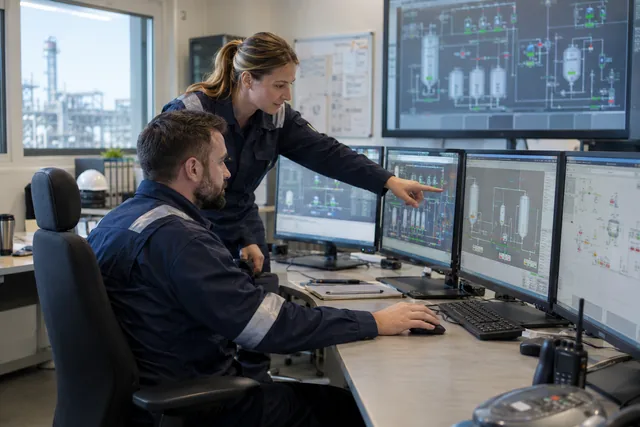

Ask what a protective system must achieve, which dependencies it needs and what evidence establishes that it can perform its credited function.
Free training · Approx. 70–105 minutes
Public teaching and practice are free. Use a free learner account in Moodle for confirmed saves and recorded assessment. A certificate of completion depends on completing the required learning, scoring at least 80% and answering every critical safety question correctly.
Your practical case
A fictional solvent storage and blending site relies on gas detection, an automatic isolation function and pressure relief. A detector has been moved, a valve passes a local movement test and a relief-disposal connection is uncertain. A tidy maintenance dashboard conceals the different evidence gaps.
Process operators, supervisors, maintenance planners, contractors and managers who need topic awareness.
Independent SHAREhub awareness. This course does not provide a NEBOSH qualification, accreditation or authority to operate, design, isolate, test or maintain plant. Use competent site arrangements for real work.
What you will learn
- Link a performance standard to a credible scenario and protective outcome.
- Recognise function, availability, reliability, survivability and interdependencies.
- Distinguish detection, alarm, shutdown, relief and depressurisation roles.
- Challenge incomplete testing, impairment and unsafe assumptions about restoration.
Course outline
Define the protective outcome
- Specify the outcome, not the equipment nameExplain the purpose of a safety-critical performance standard.
- Use five performance questionsRecognise the meaning of function, availability, reliability, survivability and dependency.
- Match testing to the required pathDistinguish component evidence from protective-system evidence.
Prove the functional path
- Separate control, alarm and shutdownRecognise different roles and possible shared failures.
- Recognise detector limitationsInterpret a detector result within coverage, substance and condition.
Understand detection and response
- Trace cause, effect and safe stateIdentify the full response and supporting services.
- Make alarms actionableRecognise why overload and routine silencing weaken response.
- Understand pressure-relief purposeDistinguish relief protection from normal process control.
Trace pressure protection
- Trace the discharge destinationRecognise why the relief path extends beyond the device.
- Distinguish relief from depressurisationRecognise different protective purposes without inventing a response.
Assure availability
- Control impairment and restorationKeep protection status explicit during faults, tests and bypasses.
- Audit the protective claimIntegrate standard, current state, test evidence and dependencies.
Practise and test your reasoning
12 lesson decisions and 6 required activities use evidence sorting, matching, sequencing, branching choices and applied checks. Dragging has equivalent labelled controls. The 20-question final assessment requires 80% and every critical answer, after all learning requirements are complete.
Use the linked risk assessment, toolbox talk, policy and assurance resources with their included fictional exercises. Points and module badges help show progress; they do not replace the assessment requirements.
Duration estimates include teaching, activities, checks and assessment. Your pace and retries may vary.
Sources and scope
Independent awareness study · PSM topic 3.3. Independent SHAREhub learning; this is not the NEBOSH qualification.
Presentation and model workshop
Use the same course imagery, worked decisions and historical case in a 28-slide teaching companion. Practise classification, compare explained choices and inspect the linked model case.
Open the interactive presentation workshop · Download PowerPoint
This optional companion does not replace the required course activities or final assessment.