Full public teaching and readers are free without an account. A free learner account is required for saved LMS progress and recorded assessment. Completion and any course-completion certificate depend on the configured LMS conditions. Open the course overview.
Lesson 1
An event changes the operating conditions
Recognise changes that undermine escape, fire doors or temporary electrical arrangements.
Actual fictional SHAREsimulate hotel model: Function suite. The stated case supplies the conditions; the image does not prove a defect or control state.
Check the occupied layout, not just the booking plan
Furniture, staging, decorative materials and temporary electrics change the environment in which guests must move and staff must respond. A layout accepted before installation may not describe the event as built. Compare the actual arrangement with the current fire risk assessment and authorised event plan, including the final exit discharge and adjoining hotel operations.
Sleeping guests may be unfamiliar with the building and slower to recognise an alarm. People may need assistance for different reasons, including mobility, sensory, cognitive or temporary needs. The plan must be based on the actual building and people; this course does not prescribe a generic evacuation strategy or a universal staffing ratio.
Assign who checks changes during setup and service. Keep the ability to stop setup or use where essential protection is compromised. A successful previous event and a signed checklist do not show that tonight’s route, fire door or temporary supply is suitable.
Work through this separate hotel case
A florist adds a display and spare chairs to an escape aisle after the room layout was signed off.
Apply the same control test whenever the activity, users, product, staffing or conditions change. Approve the actual event layout, preserve assessed routes and occupancy arrangements, and assign someone to maintain them during the function. Check connected areas: Function setup, public movement, fire coordination and protective-security decisions.
Evidence to establish: Compare the changed arrangement with the event and fire assessments. Walk every required route in the final furnished arrangement and record release. Walk the complete escape journey in the final furnished layout and recheck after suppliers, decorations and guests arrive.
What should a fire emergency plan include?
The plan should describe actions, roles, communications, assistance, shutdowns, information and review.
A good plan is specific enough to work on the day. It names roles, deputies, call-out arrangements, assembly points, vulnerable-person support, contractor and visitor arrangements, high-risk areas, fire service information, emergency contacts and post-incident decision routes.
It should be tested through drills and reviewed after changes, near misses, false alarms, building works, occupancy changes, enforcement findings or lessons from incidents.
Fire emergency plan contents
Plan area
What to define
Evidence
Plan areaAlarm action
What to defineWhat people do when alarm sounds.
EvidenceProcedure and drill record.
Plan areaRoles
What to defineWardens, deputies, incident lead and reception/security roles.
EvidenceRole list and training.
Plan areaVulnerable people
What to definePEEPs or general assistance arrangements.
EvidencePrivate plan and review.
Plan areaShutdowns
What to defineOnly planned safe shutdowns and competent isolation.
EvidenceShutdown instruction.
Plan areaFire service information
What to definePlans, hazards, utilities, access and contacts.
EvidencePremises information pack.
Plan areaRecovery
What to defineWho authorises re-entry and restart.
A florist adds a display and spare chairs to an escape aisle after the room layout was signed off.
Decision and explanation
Restore an assessed layout before admission and manage later changes.
The current physical layout has changed. Check and correct the actual route before guests enter. The emergency plan should not depend on clearing predictable obstructions during an evacuation. Maintain the route in advance. This controls the relevant exposure rather than relying on appearance or reassurance. Walk the complete escape journey in the final furnished layout and recheck after suppliers, decorations and guests arrive.
Lesson 2
Test the people and systems together
Compare a night emergency plan with actual staffing and assistance capability.
Actual fictional SHAREsimulate hotel model: Function suite. The stated case supplies the conditions; the image does not prove a defect or control state.
Match the emergency plan to available capability
A written response can exceed what the people on duty can achieve. Compare simultaneous demands: receiving the alarm, calling for assistance, directing guests, supporting people who need help and maintaining communication. Check actual roles, training, equipment and access without assuming that absent daytime staff will be available at night.
Fire and protective-security actions must be coordinated. Depending on the assessed threat, people may need to leave, move within the premises or stay away from a particular area. Security measures must not casually defeat required escape. Follow the assessed arrangements and responsible incident command rather than improvising a locked exit.
For premises-protection duties, confirm the current official scope, commencement and responsible person’s assessment for the intended use. A wedding booking or a total marketing capacity is not enough to assign a statutory tier. The course teaches the evidence and coordination question, without fixing changing legal thresholds into the learning decision.
Work through this separate hotel case
The plan assigns two people to each assisted evacuation, but only two staff are present for the entire hotel.
Apply the same control test whenever the activity, users, product, staffing or conditions change. Align room allocation, assistance plans, trained staffing, alarm arrangements and suitable equipment with the assessed evacuation strategy. Check connected areas: Function setup, public movement, fire coordination and protective-security decisions.
Evidence to establish: Compare realistic night staffing, guest needs and practiced emergency roles. A realistic exercise demonstrates the actual team can carry out its assigned duties. Conduct a safe exercise or structured test using the actual night resources, including simultaneous calls and a responder becoming unavailable.
What should a fire emergency plan include?
The plan should describe actions, roles, communications, assistance, shutdowns, information and review.
A good plan is specific enough to work on the day. It names roles, deputies, call-out arrangements, assembly points, vulnerable-person support, contractor and visitor arrangements, high-risk areas, fire service information, emergency contacts and post-incident decision routes.
It should be tested through drills and reviewed after changes, near misses, false alarms, building works, occupancy changes, enforcement findings or lessons from incidents.
Fire emergency plan contents
Plan area
What to define
Evidence
Plan areaAlarm action
What to defineWhat people do when alarm sounds.
EvidenceProcedure and drill record.
Plan areaRoles
What to defineWardens, deputies, incident lead and reception/security roles.
EvidenceRole list and training.
Plan areaVulnerable people
What to definePEEPs or general assistance arrangements.
EvidencePrivate plan and review.
Plan areaShutdowns
What to defineOnly planned safe shutdowns and competent isolation.
EvidenceShutdown instruction.
Plan areaFire service information
What to definePlans, hazards, utilities, access and contacts.
EvidencePremises information pack.
Plan areaRecovery
What to defineWho authorises re-entry and restart.
The plan assigns two people to each assisted evacuation, but only two staff are present for the entire hotel.
Decision and explanation
Resolve the capability gap through the competent fire plan before accepting affected occupancy.
This controls the relevant exposure rather than relying on appearance or reassurance. Conduct a safe exercise or structured test using the actual night resources, including simultaneous calls and a responder becoming unavailable. Daytime resources and occupants differ. Test the actual night assumptions and correct the capacity gap before relying on the plan. A refuge needs an assessed supported strategy and communication; it is not an automatic substitute for achievable evacuation arrangements.
Lesson 3
Connect fire precautions to the occupied hotel
Fire classes and fire extinguishersFire classes · agent types · dangerous mismatches
Recognise the fuel. Read the extinguisher. Protect your escape.
People and escape first. Raise the alarm, follow the site’s evacuation plan and arrange the emergency call to 999. Only consider a small fire in its earliest stage if you are trained, authorised, have the correct equipment and a clear escape behind you. Smoke, spreading fire, uncertainty or an unsafe approach mean withdraw. Never delay escape to fetch an extinguisher.
UK awareness reference for common and specialist portable extinguisher families. Actual ratings, exclusions and manufacturer instructions govern each unit. Reading this guide is not practical training or permission to fight a fire. Fixed systems, hose reels and specialist industrial firefighting require their own assessed arrangements.
Occupied hotels: the evacuation strategy and assistance for guests must remain effective while staff respond.
Fire classes: fuel, examples and the important distinction
Class
Fuel and examples
What matters
AClass A
Solid materials
Wood, paper, textiles and many solid plastics.
Usually forms an ember or char bed. Cooling matters; check the marked A rating.
BClass B
Flammable liquids
Petrol, solvents, diesel when burning, and liquefiable solids such as wax.
Fuel can spread across a surface. An unsuitable jet can spread burning liquid; solvent compatibility matters.
CClass C
Flammable gases
Propane, butane or methane.
Not a routine employee firefighting task. Knocking down flame while gas continues to escape can create an explosive cloud. Fuel isolation requires safe, competent action under the emergency plan.
DClass D
Combustible metals
Magnesium, sodium or metallic lithium.
Needs a metal-specific specialist agent. Ordinary ABC powder is not Class D powder.
FClass F
Cooking oils and fats
Hot oil in a fryer or pan.
Very hot oil can reignite. Water can produce violent steam expansion and eject burning oil.
LClass L
Lithium-ion batteries
A lithium-ion tool, e-bike or vehicle battery in thermal runaway.
Class L is included in BS ISO 3941:2026. Toxic or flammable gas, heat propagation and reignition need specialist planning. This is different from a metallic-lithium Class D fire.
Electrical equipment: Energised electrical equipment is an additional hazard, not a UK fire class called E. Do not import US Class C electrical or Class K cooking labels into this UK guide. Isolation, only where safe and authorised, does not remove the burning fuel or stored battery energy. Use the unit’s explicit electrical suitability and limitations.
Class L is the 2026 addition to the classification standard. Existing extinguisher labels and product test claims vary; a new class name does not certify every battery product.
Compare the classes · including lithium-ion batteries
Typical = usual application for the labelled family. If rated / unit limits = confirm the actual label and manufacturer conditions. No = not a normal selection for that hazard; specialist engineered arrangements are separate. This table cannot authorise firefighting.
* Electrical is an additional hazard, not a fire class. Gas-fire and battery-fire response require the assessed specialist plan. Scroll the table sideways on a narrow screen.
Typical portable-agent applications: always confirm the actual unit
Agent family
A · solids
B · liquids
C · gases
D · metals
Electrical*
F · cooking oil
L · Li-ion
Water
Typical
No
No
No
Unit limits
No
No
Water spray / water with additives
Typical
If rated
No
No
Unit limits
No
No
Foam
Typical
Typical
No
No
Unit limits
No
No
Water mist
Typical
If rated
No
No
Unit limits
If rated
Specialist plan
ABC dry powder
Typical
Typical
Specialist plan
No
Unit limits
No
No
BC dry powder
No
Typical
Specialist plan
No
Unit limits
No
No
Class D specialist powder
No
No
No
Exact metal
No
No
No
Carbon dioxide (CO₂)
No
Typical
No
No
Unit limits
No
No
Wet chemical
If rated
If rated
No
No
Unit limits
Typical
No
Clean agent / vaporising liquid
Unit rating
Unit rating
No
No
Unit limits
No
No
Battery-specific suppression products
If rated
No
No
No
Unit limits
No
Specified battery
Extinguisher types: uses and dangers
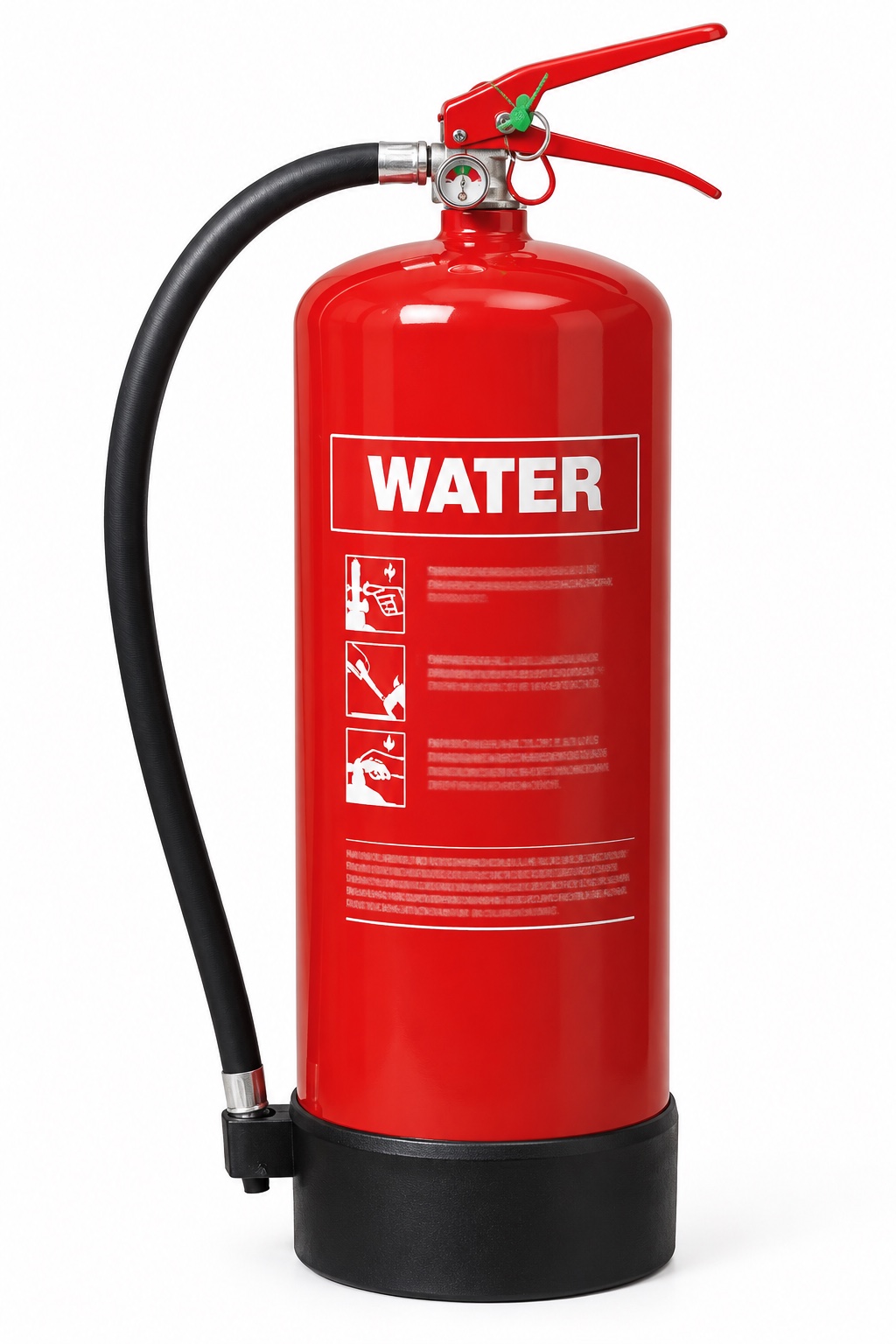
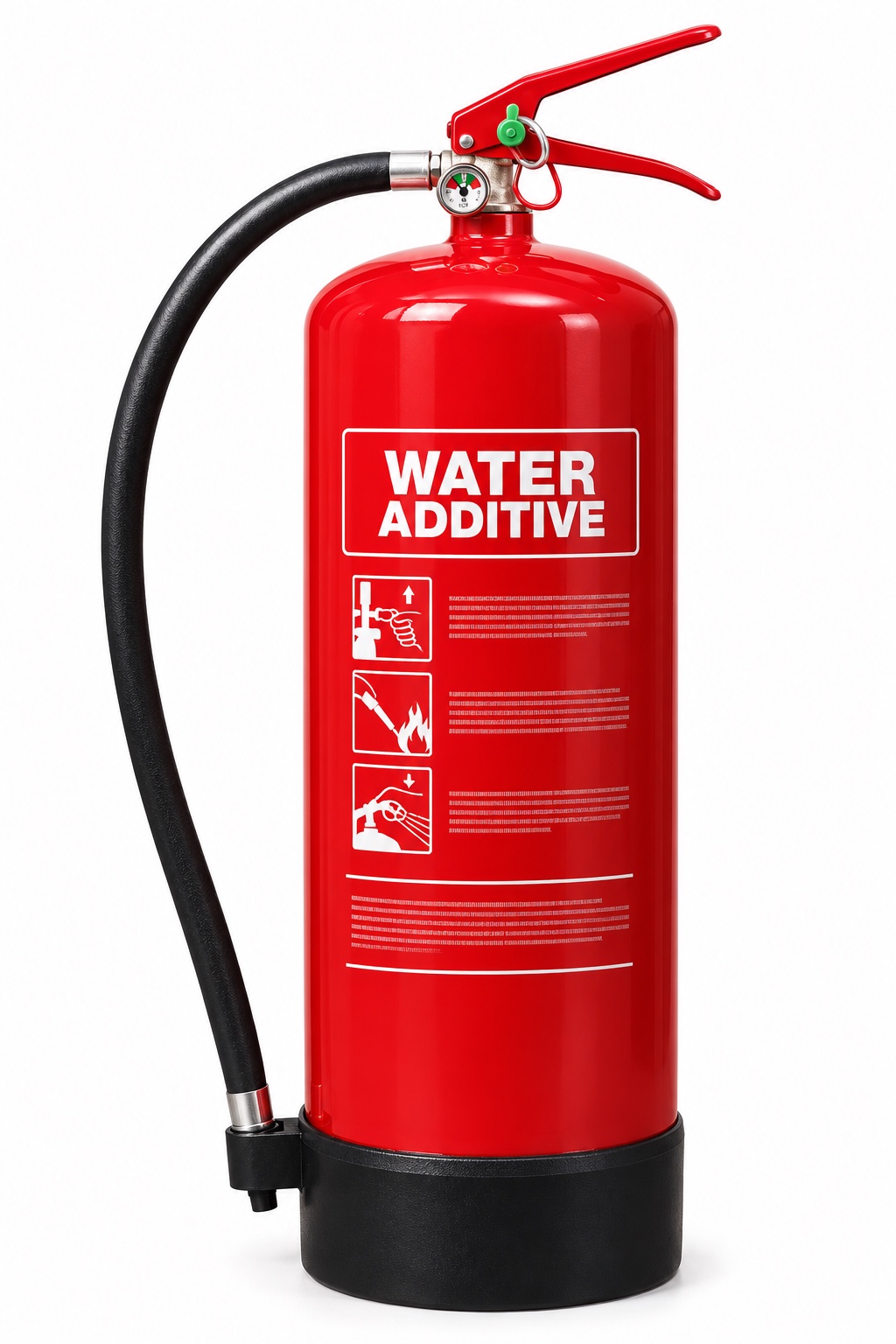
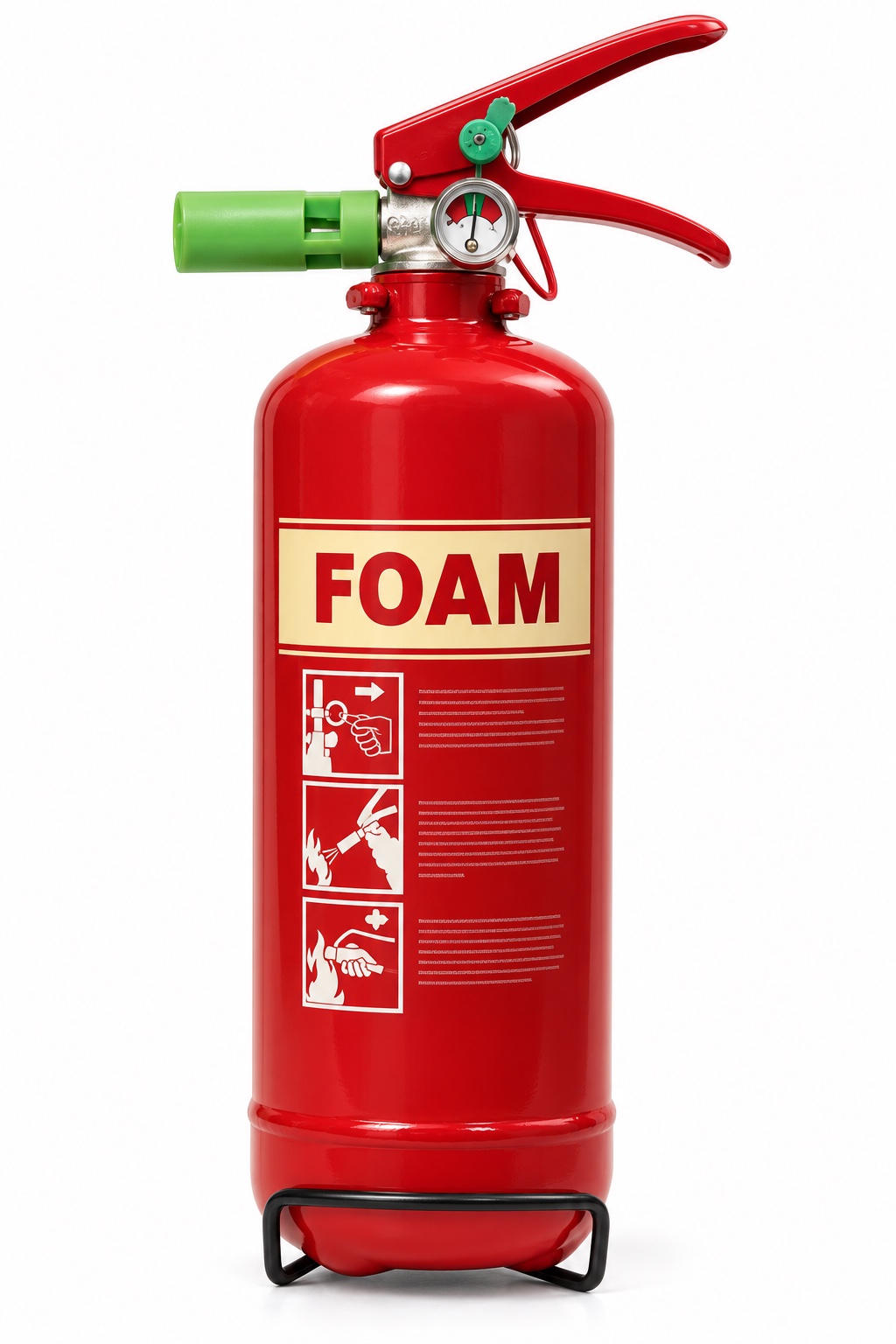
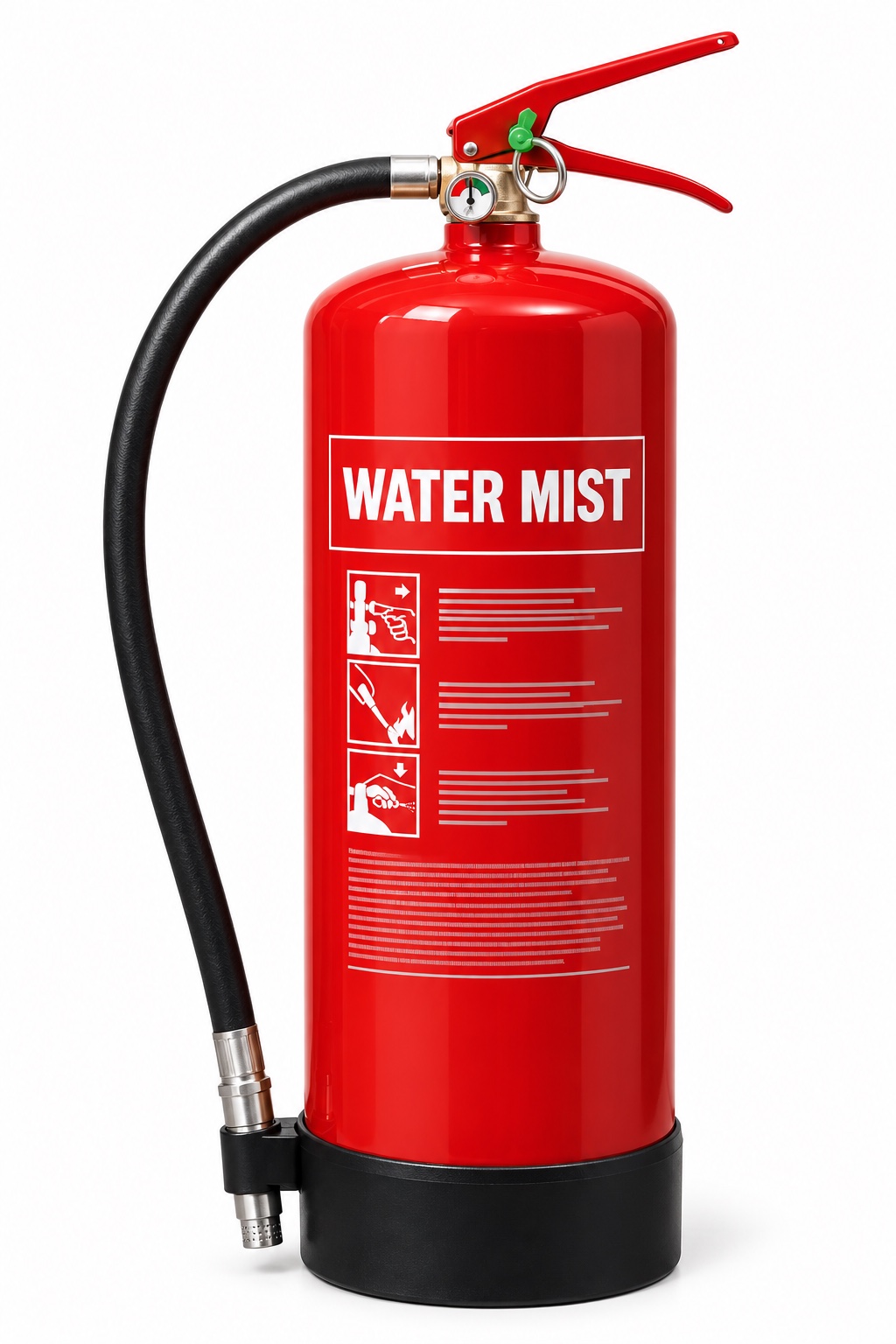
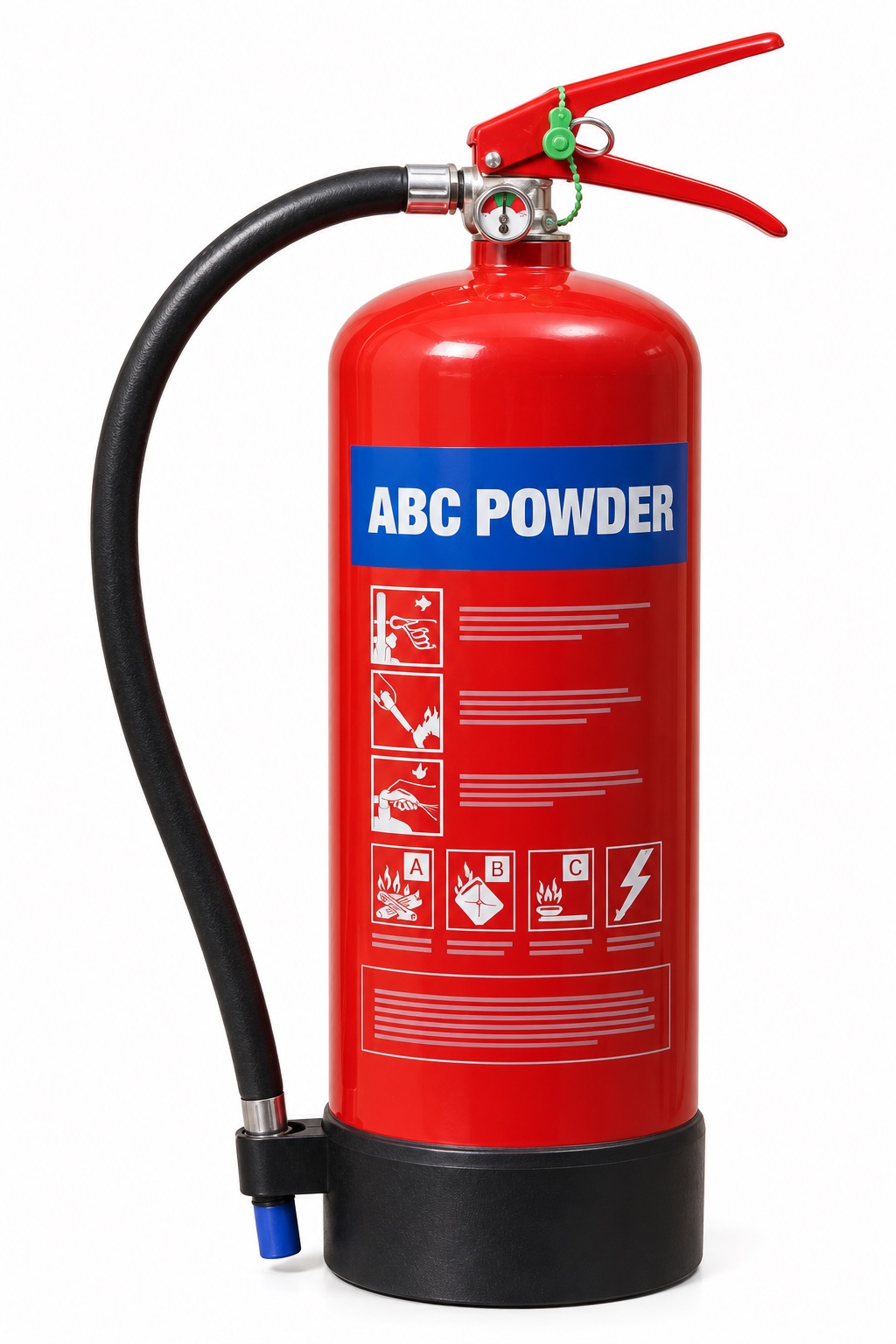
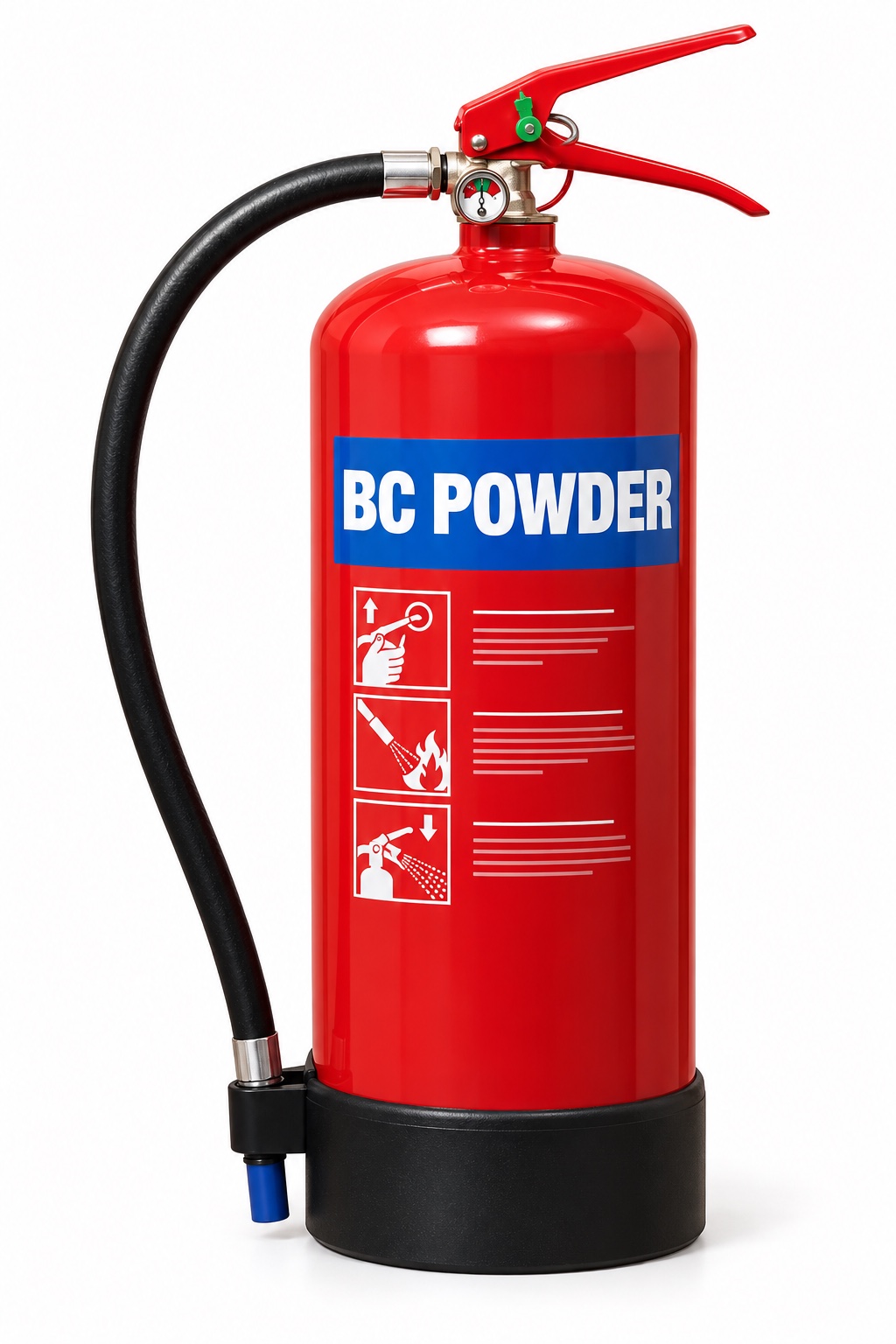
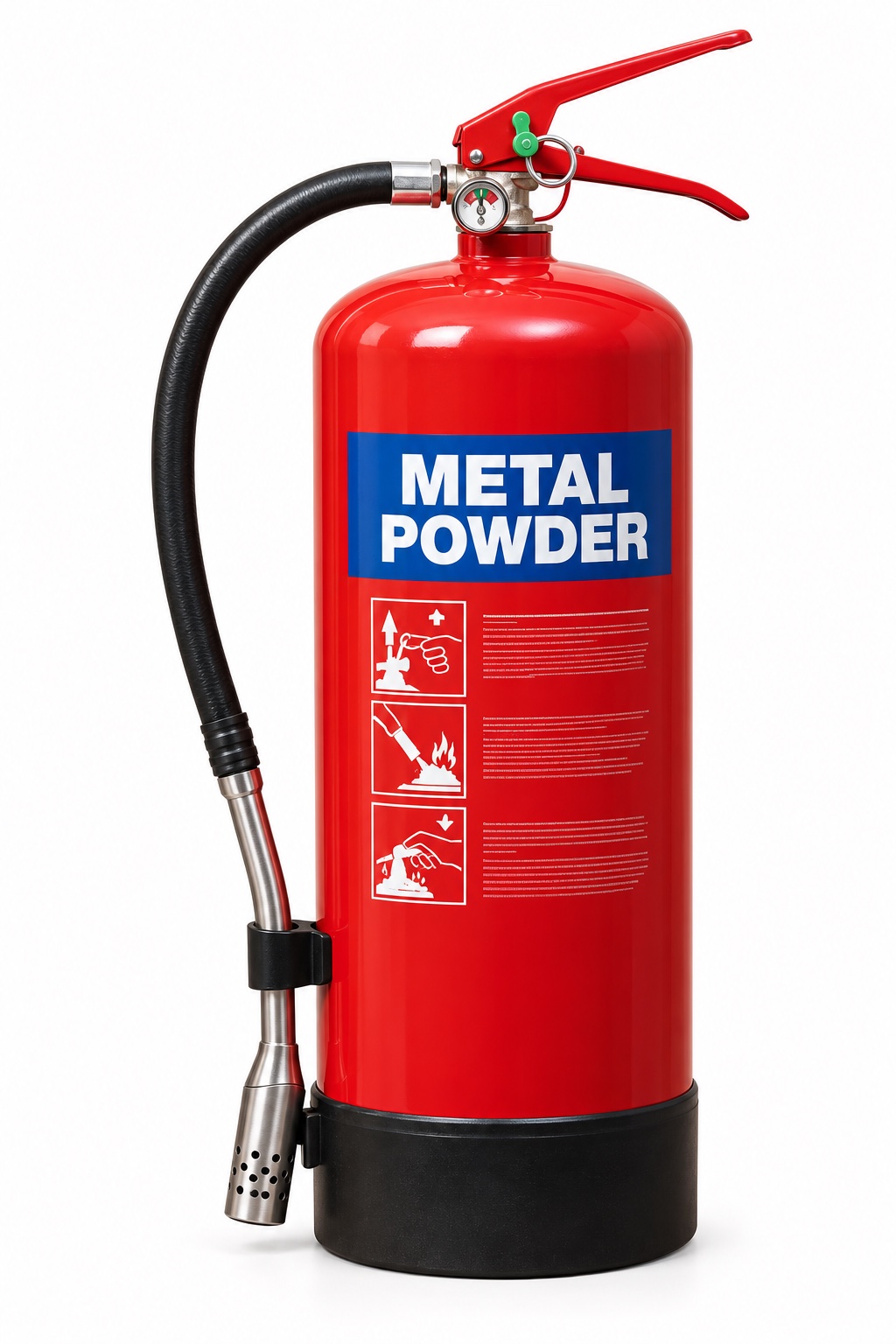
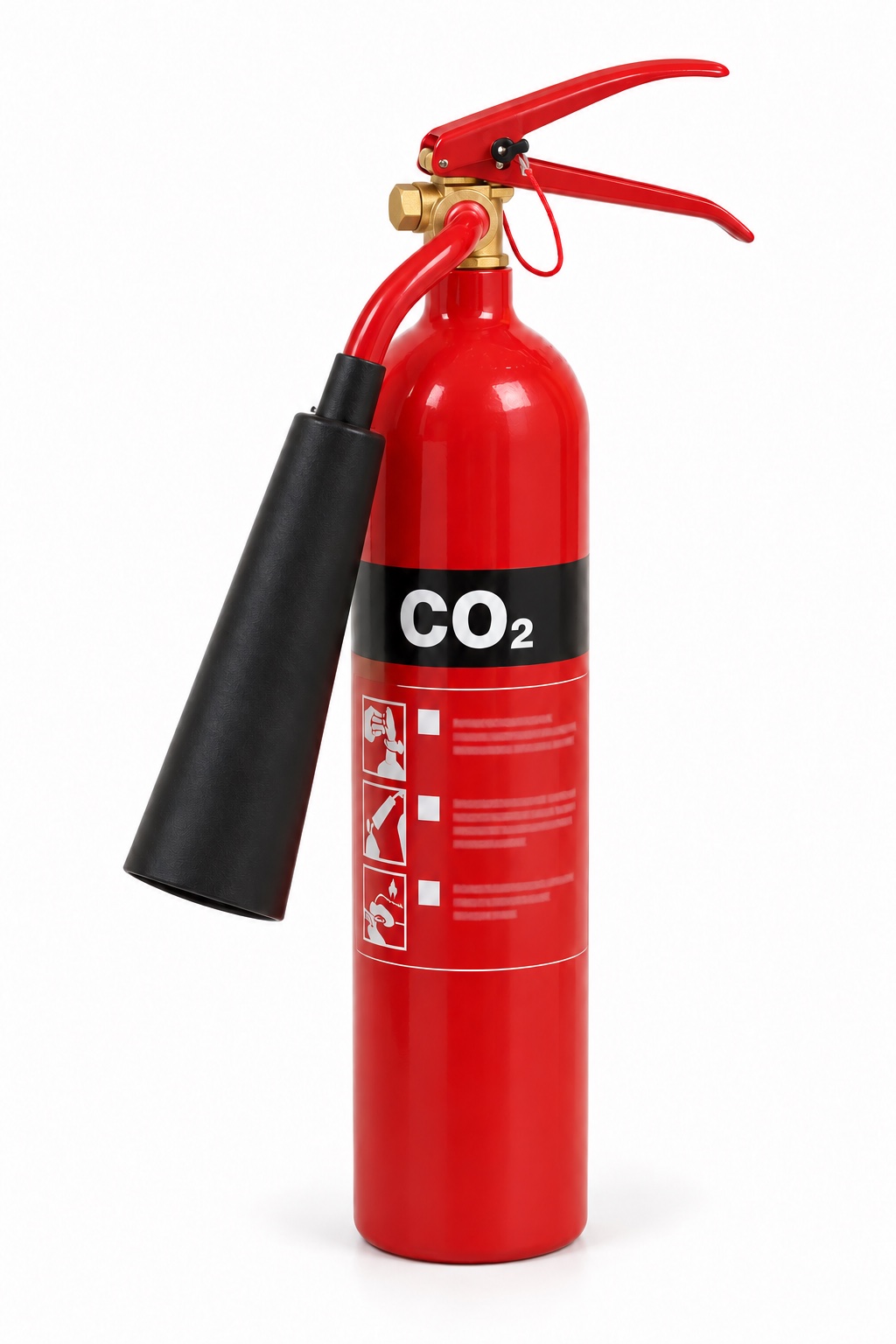
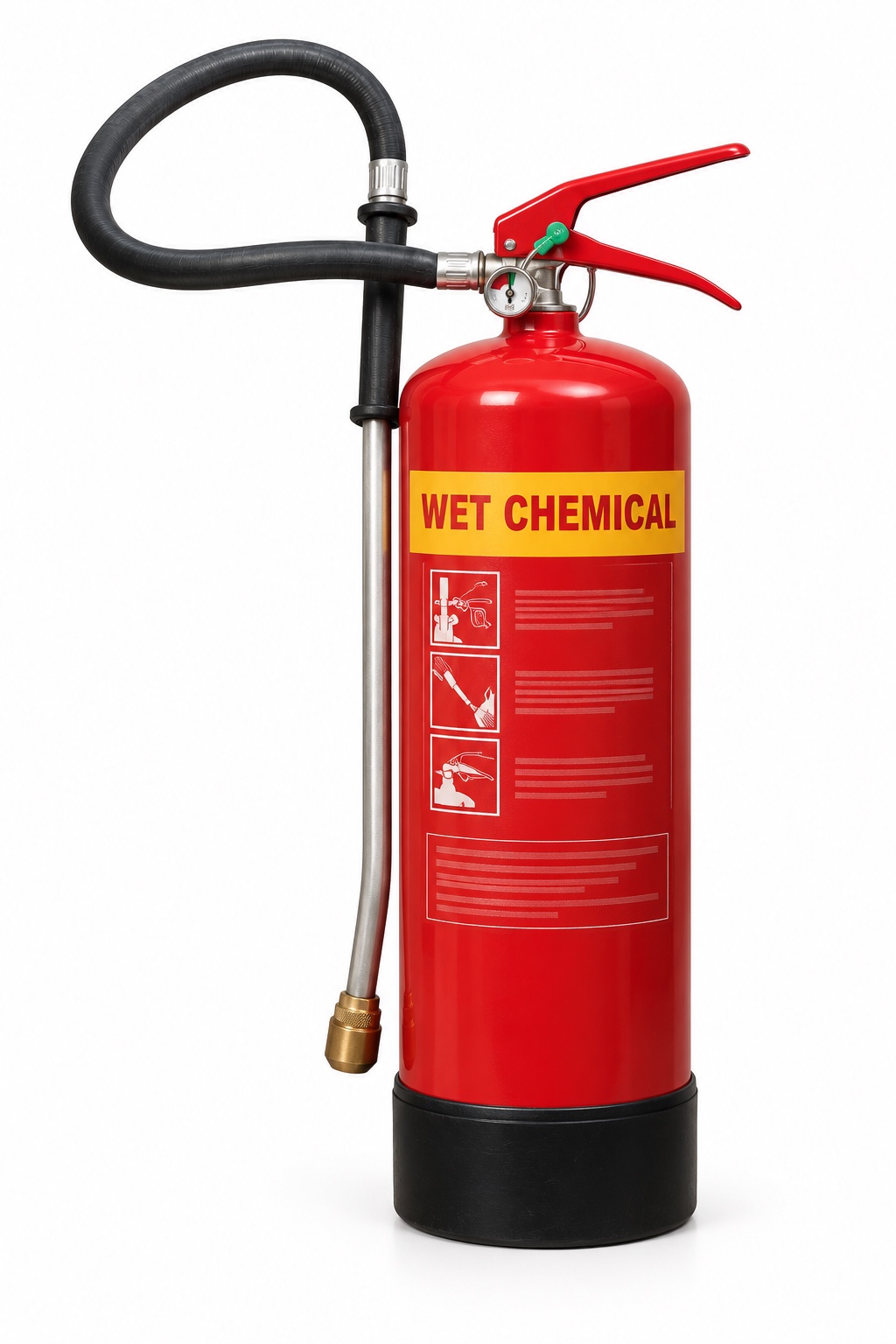
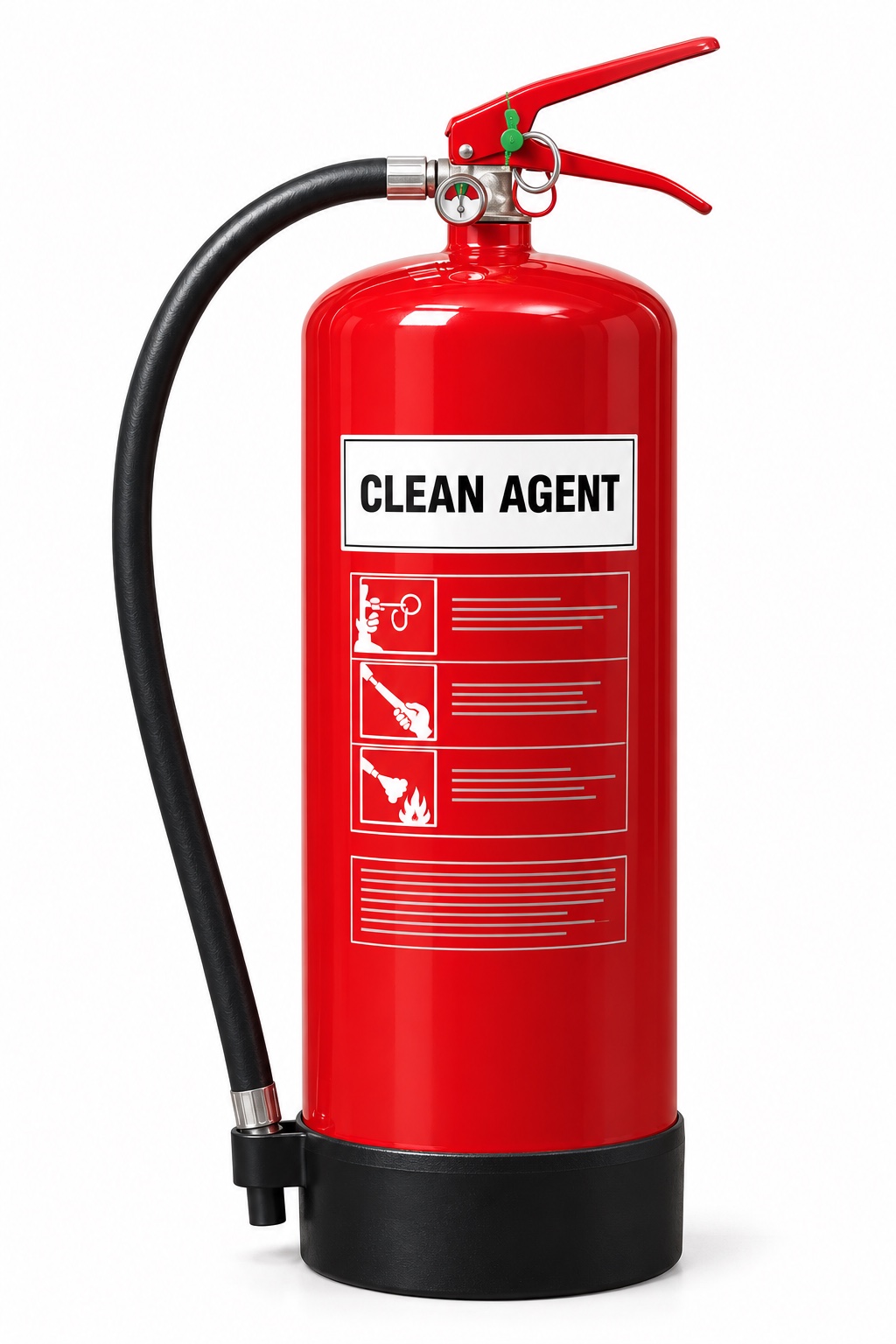
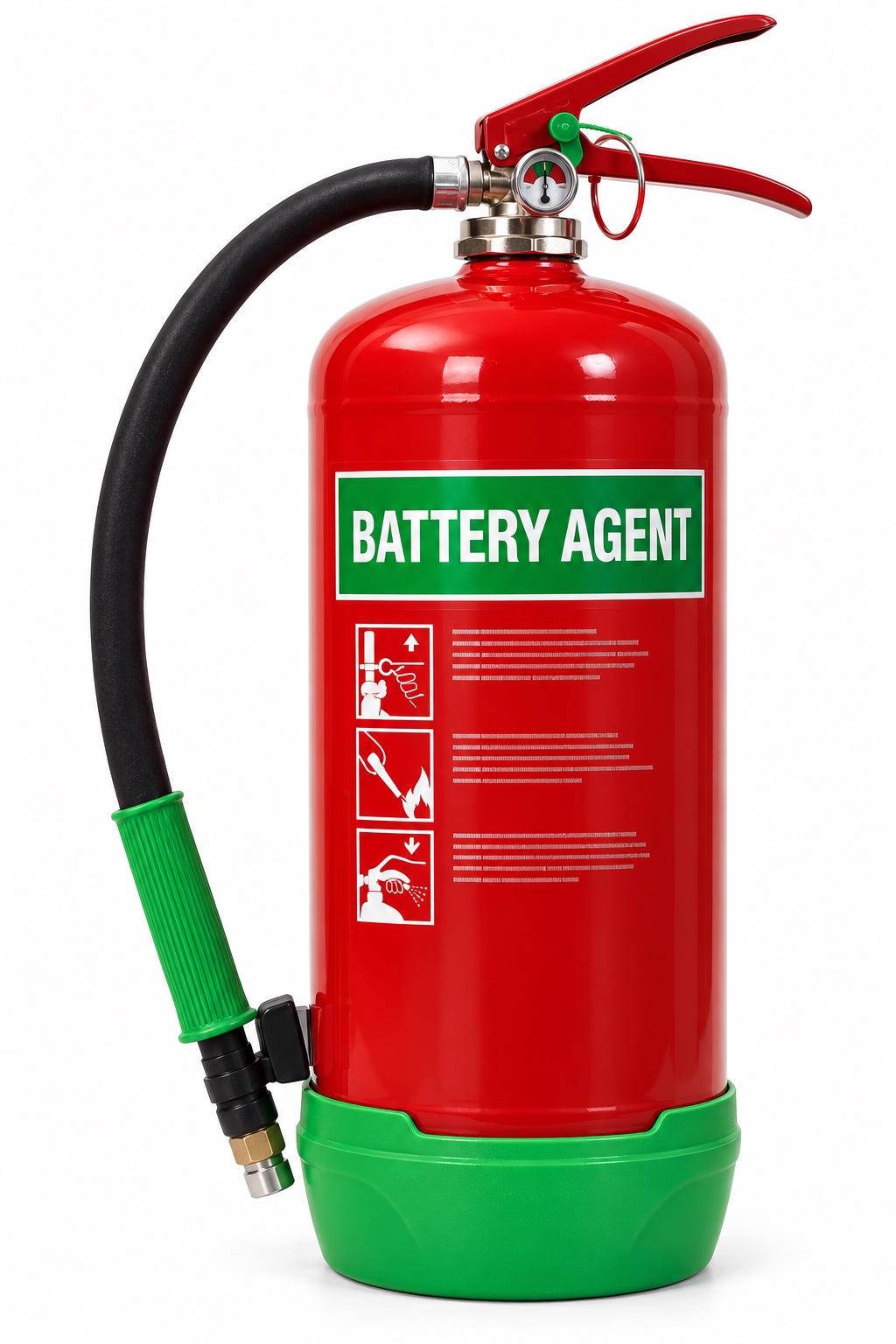
These are typical applications, not universal permissions. Check the label on the actual unit. Images are photorealistic teaching illustrations inspired by the referenced equipment; they are not photographs or certified product labels. Use Inspect the parts to explore the hardware. Band, nozzle and label details vary.
Common and specialist portable extinguisher families
Type and recognition
Typical rating and use
Wrong use: what can go wrong?
Parts in text
Cylinder
The pressure vessel holds the agent and propellant as designed. Report corrosion, dents or other damage. Do not open, refill or repair it as an awareness check.
Agent name and colour marking
Read the actual agent name, fire ratings, electrical warnings and instructions. Colour is a recognition aid; it does not prove suitability. The illustration is not an operating label.
Fixed carrying handle
The lower fixed handle supports the unit. It is different from the upper operating lever. The exact grip and operation belong in practical instruction for the model.
Operating / squeeze lever
The upper lever operates the discharge valve when the safety device is released. Do not squeeze or discharge a unit to test it during a routine visual check.
Safety pin and pull ring
The pin mechanically prevents accidental operation. A pin or ring that is missing, distorted or insecure needs reporting; its presence does not prove the unit is serviceable.
Tamper indicator / snap-lock seal
The breakable indicator or snap-lock seal shows possible disturbance. Designs can use a separate pin-retaining strap or a pin-mounted indicator. It is different from the mechanical safety pin and is not a theft lock. Report it if broken or missing.
Pressure gauge
On this stored-pressure example the gauge indicates pressure, not the mass of agent remaining. A pointer in the marked range does not prove the cylinder is full or the unit has passed its service checks.
Hose, nozzle or applicator
The flexible hose ends in the model’s discharge nozzle. The clip is for stowage; a hose being clipped in place is not a service check. Do not block, detach or test-discharge it during a visual inspection.
Base / protective boot
The boot protects the base on this example. Other models have a different foot arrangement or no separate boot. Check the approved mounting and access rather than guessing from the picture.
WaterRed / WATER marking
Normally A
Cools burning solid material such as paper, wood or fabric.
Check the limitation
Ordinary water is unsuitable for live electrical equipment, flammable-liquid pools, cooking oil and reactive metals: shock, spreading fuel or violent reaction can result.
Parts in text
Cylinder
The pressure vessel holds the agent and propellant as designed. Report corrosion, dents or other damage. Do not open, refill or repair it as an awareness check.
Agent name and colour marking
Read the actual agent name, fire ratings, electrical warnings and instructions. Colour is a recognition aid; it does not prove suitability. The illustration is not an operating label.
Fixed carrying handle
The lower fixed handle supports the unit. It is different from the upper operating lever. The exact grip and operation belong in practical instruction for the model.
Operating / squeeze lever
The upper lever operates the discharge valve when the safety device is released. Do not squeeze or discharge a unit to test it during a routine visual check.
Safety pin and pull ring
The pin mechanically prevents accidental operation. A pin or ring that is missing, distorted or insecure needs reporting; its presence does not prove the unit is serviceable.
Tamper indicator / snap-lock seal
The breakable indicator or snap-lock seal shows possible disturbance. Designs can use a separate pin-retaining strap or a pin-mounted indicator. It is different from the mechanical safety pin and is not a theft lock. Report it if broken or missing.
Pressure gauge
On this stored-pressure example the gauge indicates pressure, not the mass of agent remaining. A pointer in the marked range does not prove the cylinder is full or the unit has passed its service checks.
Hose, nozzle or applicator
The flexible hose ends in the model’s discharge nozzle. The clip is for stowage; a hose being clipped in place is not a service check. Do not block, detach or test-discharge it during a visual inspection.
Base / protective boot
The boot protects the base on this example. Other models have a different foot arrangement or no separate boot. Check the approved mounting and access rather than guessing from the picture.
Water spray / water with additivesUsually red; read the agent name
A; B only if explicitly rated
Improved wetting or spray performance can help on the hazards stated on that model’s label.
Check the limitation
An additive does not make every water extinguisher safe for electricity, oils or reactive chemicals. Check the specific exclusions.
Parts in text
Cylinder
The pressure vessel holds the agent and propellant as designed. Report corrosion, dents or other damage. Do not open, refill or repair it as an awareness check.
Agent name and colour marking
Read the actual agent name, fire ratings, electrical warnings and instructions. Colour is a recognition aid; it does not prove suitability. The illustration is not an operating label.
Fixed carrying handle
The lower fixed handle supports the unit. It is different from the upper operating lever. The exact grip and operation belong in practical instruction for the model.
Operating / squeeze lever
The upper lever operates the discharge valve when the safety device is released. Do not squeeze or discharge a unit to test it during a routine visual check.
Safety pin and pull ring
The pin mechanically prevents accidental operation. A pin or ring that is missing, distorted or insecure needs reporting; its presence does not prove the unit is serviceable.
Tamper indicator / snap-lock seal
The breakable indicator or snap-lock seal shows possible disturbance. Designs can use a separate pin-retaining strap or a pin-mounted indicator. It is different from the mechanical safety pin and is not a theft lock. Report it if broken or missing.
Pressure gauge
On this stored-pressure example the gauge indicates pressure, not the mass of agent remaining. A pointer in the marked range does not prove the cylinder is full or the unit has passed its service checks.
Direct spray nozzle
This compact foam example has a nozzle attached directly to the valve. Larger units may have a hose. Recognise the actual discharge arrangement and use only the approved agent and instructions.
Base / protective boot
The boot protects the base on this example. Other models have a different foot arrangement or no separate boot. Check the approved mounting and access rather than guessing from the picture.
FoamCream panel / FOAM
Commonly A and B
Cools and forms a surface blanket on suitable liquid fires. The agent must suit the actual fuel; some alcohols need alcohol-resistant foam.
Check the limitation
Ordinary foam is not a general answer for live electricity, cooking oil or metal fires. Unsuitable foam may break down on a solvent; a jet can spread fuel. Free-flowing fuel needs specialist response.
Parts in text
Cylinder
The pressure vessel holds the agent and propellant as designed. Report corrosion, dents or other damage. Do not open, refill or repair it as an awareness check.
Agent name and colour marking
Read the actual agent name, fire ratings, electrical warnings and instructions. Colour is a recognition aid; it does not prove suitability. The illustration is not an operating label.
Fixed carrying handle
The lower fixed handle supports the unit. It is different from the upper operating lever. The exact grip and operation belong in practical instruction for the model.
Operating / squeeze lever
The upper lever operates the discharge valve when the safety device is released. Do not squeeze or discharge a unit to test it during a routine visual check.
Safety pin and pull ring
The pin mechanically prevents accidental operation. A pin or ring that is missing, distorted or insecure needs reporting; its presence does not prove the unit is serviceable.
Tamper indicator / snap-lock seal
The breakable indicator or snap-lock seal shows possible disturbance. Designs can use a separate pin-retaining strap or a pin-mounted indicator. It is different from the mechanical safety pin and is not a theft lock. Report it if broken or missing.
Pressure gauge
On this stored-pressure example the gauge indicates pressure, not the mass of agent remaining. A pointer in the marked range does not prove the cylinder is full or the unit has passed its service checks.
Fine-mist nozzle
The specially designed nozzle creates the intended fine spray. It is not an ordinary water jet. Nozzle appearance alone does not establish any tested electrical suitability.
Base / protective boot
The boot protects the base on this example. Other models have a different foot arrangement or no separate boot. Check the approved mounting and access rather than guessing from the picture.
Water mistManufacturer marking varies
Model-specific; commonly A, some F
Fine droplets absorb heat. Some products have additional ratings or tested electrical suitability, with stated voltage and distance conditions.
Check the limitation
‘Mist’ is not universal approval. Use only the classes and electrical conditions actually declared for that model; do not assume it covers metals, liquids or batteries.
Parts in text
Cylinder
The pressure vessel holds the agent and propellant as designed. Report corrosion, dents or other damage. Do not open, refill or repair it as an awareness check.
Agent name and colour marking
Read the actual agent name, fire ratings, electrical warnings and instructions. Colour is a recognition aid; it does not prove suitability. The illustration is not an operating label.
Fixed carrying handle
The lower fixed handle supports the unit. It is different from the upper operating lever. The exact grip and operation belong in practical instruction for the model.
Operating / squeeze lever
The upper lever operates the discharge valve when the safety device is released. Do not squeeze or discharge a unit to test it during a routine visual check.
Safety pin and pull ring
The pin mechanically prevents accidental operation. A pin or ring that is missing, distorted or insecure needs reporting; its presence does not prove the unit is serviceable.
Tamper indicator / snap-lock seal
The breakable indicator or snap-lock seal shows possible disturbance. Designs can use a separate pin-retaining strap or a pin-mounted indicator. It is different from the mechanical safety pin and is not a theft lock. Report it if broken or missing.
Pressure gauge
On this stored-pressure example the gauge indicates pressure, not the mass of agent remaining. A pointer in the marked range does not prove the cylinder is full or the unit has passed its service checks.
Hose, nozzle or applicator
The flexible hose ends in the model’s discharge nozzle. The clip is for stowage; a hose being clipped in place is not a service check. Do not block, detach or test-discharge it during a visual inspection.
Base / protective boot
The boot protects the base on this example. Other models have a different foot arrangement or no separate boot. Check the approved mounting and access rather than guessing from the picture.
ABC dry powderBlue panel / ABC POWDER
A, B and C if marked
Interrupts flame chemistry; multipurpose powder also acts on Class A material. A C marking does not authorise tackling a gas leak.
Check the limitation
Powder can obscure escape and impair breathing; it is not generally recommended indoors. Limited cooling allows reignition. It is not metal-specific D powder or a substitute for F-rated cooking-oil equipment.
Parts in text
Cylinder
The pressure vessel holds the agent and propellant as designed. Report corrosion, dents or other damage. Do not open, refill or repair it as an awareness check.
Agent name and colour marking
Read the actual agent name, fire ratings, electrical warnings and instructions. Colour is a recognition aid; it does not prove suitability. The illustration is not an operating label.
Fixed carrying handle
The lower fixed handle supports the unit. It is different from the upper operating lever. The exact grip and operation belong in practical instruction for the model.
Operating / squeeze lever
The upper lever operates the discharge valve when the safety device is released. Do not squeeze or discharge a unit to test it during a routine visual check.
Safety pin and pull ring
The pin mechanically prevents accidental operation. A pin or ring that is missing, distorted or insecure needs reporting; its presence does not prove the unit is serviceable.
Tamper indicator / snap-lock seal
The breakable indicator or snap-lock seal shows possible disturbance. Designs can use a separate pin-retaining strap or a pin-mounted indicator. It is different from the mechanical safety pin and is not a theft lock. Report it if broken or missing.
Pressure gauge
On this stored-pressure example the gauge indicates pressure, not the mass of agent remaining. A pointer in the marked range does not prove the cylinder is full or the unit has passed its service checks.
Hose, nozzle or applicator
The flexible hose ends in the model’s discharge nozzle. The clip is for stowage; a hose being clipped in place is not a service check. Do not block, detach or test-discharge it during a visual inspection.
Base / protective boot
The boot protects the base on this example. Other models have a different foot arrangement or no separate boot. Check the approved mounting and access rather than guessing from the picture.
BC dry powderBlue panel / BC POWDER
B and C if marked; not A
Selected for particular liquid or gas hazards under the assessed plan. Electrical use must follow the actual unit’s instructions.
Check the limitation
Do not assume all blue powder extinguishers protect wood or paper. It has the visibility, breathing and reignition limitations of powder; it does not provide Class D or F protection.
Parts in text
Cylinder
The pressure vessel holds the agent and propellant as designed. Report corrosion, dents or other damage. Do not open, refill or repair it as an awareness check.
Agent name and colour marking
Read the actual agent name, fire ratings, electrical warnings and instructions. Colour is a recognition aid; it does not prove suitability. The illustration is not an operating label.
Fixed carrying handle
The lower fixed handle supports the unit. It is different from the upper operating lever. The exact grip and operation belong in practical instruction for the model.
Operating / squeeze lever
The upper lever operates the discharge valve when the safety device is released. Do not squeeze or discharge a unit to test it during a routine visual check.
Safety pin and pull ring
The pin mechanically prevents accidental operation. A pin or ring that is missing, distorted or insecure needs reporting; its presence does not prove the unit is serviceable.
Tamper indicator / snap-lock seal
The breakable indicator or snap-lock seal shows possible disturbance. Designs can use a separate pin-retaining strap or a pin-mounted indicator. It is different from the mechanical safety pin and is not a theft lock. Report it if broken or missing.
Pressure gauge
On this stored-pressure example the gauge indicates pressure, not the mass of agent remaining. A pointer in the marked range does not prove the cylinder is full or the unit has passed its service checks.
Specialist low-velocity applicator
The specialist applicator places the compatible metal-fire agent without unnecessarily disturbing burning material. Both agent and application method must suit the specific metal; this is not an ABC powder nozzle.
Base / protective boot
The boot protects the base on this example. Other models have a different foot arrangement or no separate boot. Check the approved mounting and access rather than guessing from the picture.
Class D specialist powderSpecific metal and agent named on label
D, for the specified metal
A specialist powder can isolate or absorb heat from a compatible burning metal. Selection requires knowledge of the metal and its form.
Check the limitation
The wrong powder can fail or react. Water, foam and CO₂ can be dangerous on certain burning metals. A powder suitable for magnesium is not automatically suitable for metallic lithium.
Parts in text
Cylinder
The narrow steel cylinder contains carbon dioxide under pressure. There is normally no pressure gauge on this portable type; service assessment includes the appropriate mass and integrity checks by competent personnel.
Agent name and colour marking
Read the actual agent name, fire ratings, electrical warnings and instructions. Colour is a recognition aid; it does not prove suitability. The illustration is not an operating label.
Fixed carrying handle
The lower fixed handle supports the unit. It is different from the upper operating lever. The exact grip and operation belong in practical instruction for the model.
Operating / squeeze lever
The upper lever operates the discharge valve when the safety device is released. Do not squeeze or discharge a unit to test it during a routine visual check.
Safety pin and pull ring
The pin mechanically prevents accidental operation. A pin or ring that is missing, distorted or insecure needs reporting; its presence does not prove the unit is serviceable.
Tamper indicator / snap-lock seal
The breakable indicator or snap-lock seal shows possible disturbance. Designs can use a separate pin-retaining strap or a pin-mounted indicator. It is different from the mechanical safety pin and is not a theft lock. Report it if broken or missing.
Horn and designated insulated grip
The flared horn directs the CO₂ discharge. Discharge parts can become extremely cold. Only the parts identified by the manufacturer as safe to hold should be gripped; not every horn is frost-free.
Displaces the atmosphere around a small flame and leaves no powder residue. Often selected around electrical equipment.
Check the limitation
Poor cooling means reignition is possible. CO₂ can create a dangerous atmosphere in enclosed spaces; discharge can cause frostbite. Hold only the designated insulated parts. Not a cooking-oil or metal-fire substitute.
Parts in text
Cylinder
The pressure vessel holds the agent and propellant as designed. Report corrosion, dents or other damage. Do not open, refill or repair it as an awareness check.
Agent name and colour marking
Read the actual agent name, fire ratings, electrical warnings and instructions. Colour is a recognition aid; it does not prove suitability. The illustration is not an operating label.
Fixed carrying handle
The lower fixed handle supports the unit. It is different from the upper operating lever. The exact grip and operation belong in practical instruction for the model.
Operating / squeeze lever
The upper lever operates the discharge valve when the safety device is released. Do not squeeze or discharge a unit to test it during a routine visual check.
Safety pin and pull ring
The pin mechanically prevents accidental operation. A pin or ring that is missing, distorted or insecure needs reporting; its presence does not prove the unit is serviceable.
Tamper indicator / snap-lock seal
The breakable indicator or snap-lock seal shows possible disturbance. Designs can use a separate pin-retaining strap or a pin-mounted indicator. It is different from the mechanical safety pin and is not a theft lock. Report it if broken or missing.
Pressure gauge
On this stored-pressure example the gauge indicates pressure, not the mass of agent remaining. A pointer in the marked range does not prove the cylinder is full or the unit has passed its service checks.
Hose, lance and spray applicator
The hose feeds the long lance and purpose-designed applicator. It helps distinguish this kitchen-fire unit from an ordinary short-nozzle extinguisher. Use requires model-specific practical training.
Base / protective boot
The boot protects the base on this example. Other models have a different foot arrangement or no separate boot. Check the approved mounting and access rather than guessing from the picture.
Wet chemicalYellow panel / WET CHEMICAL
F; often A if marked
Cools cooking oil and creates a protective surface layer through reaction with the fat. Use only within the actual unit’s rating and instructions.
Check the limitation
Do not mistake it for a general liquid-fire or electrical extinguisher. Incorrect application or moving the fryer can splash hot oil; apparent flame-out does not establish safe temperature.
Parts in text
Cylinder
The pressure vessel holds the agent and propellant as designed. Report corrosion, dents or other damage. Do not open, refill or repair it as an awareness check.
Agent name and colour marking
Read the actual agent name, fire ratings, electrical warnings and instructions. Colour is a recognition aid; it does not prove suitability. The illustration is not an operating label.
Fixed carrying handle
The lower fixed handle supports the unit. It is different from the upper operating lever. The exact grip and operation belong in practical instruction for the model.
Operating / squeeze lever
The upper lever operates the discharge valve when the safety device is released. Do not squeeze or discharge a unit to test it during a routine visual check.
Safety pin and pull ring
The pin mechanically prevents accidental operation. A pin or ring that is missing, distorted or insecure needs reporting; its presence does not prove the unit is serviceable.
Tamper indicator / snap-lock seal
The breakable indicator or snap-lock seal shows possible disturbance. Designs can use a separate pin-retaining strap or a pin-mounted indicator. It is different from the mechanical safety pin and is not a theft lock. Report it if broken or missing.
Pressure gauge
On this stored-pressure example the gauge indicates pressure, not the mass of agent remaining. A pointer in the marked range does not prove the cylinder is full or the unit has passed its service checks.
Hose, nozzle or applicator
The flexible hose ends in the model’s discharge nozzle. The clip is for stowage; a hose being clipped in place is not a service check. Do not block, detach or test-discharge it during a visual inspection.
Base / protective boot
The boot protects the base on this example. Other models have a different foot arrangement or no separate boot. Check the approved mounting and access rather than guessing from the picture.
Clean agent / vaporising liquidRead the agent; no universal colour shortcut
Product- and jurisdiction-specific
Specialist low-residue agents may protect sensitive equipment. Confirm the UK-approved application and the manufacturer’s limits.
Check the limitation
Low residue does not mean safe to breathe. Do not copy a US A:B:C rating as UK gas-fire approval. Legacy halon is restricted to permitted critical uses and applicable deadlines.
Parts in text
Cylinder
The pressure vessel holds the agent and propellant as designed. Report corrosion, dents or other damage. Do not open, refill or repair it as an awareness check.
Agent name and colour marking
This generic illustration has a green agent area and boot inspired by the supplied product. Green is not a universal Class L identification code. Read the real product name, chemistry, battery limits and instructions.
Fixed carrying handle
The lower fixed handle supports the unit. It is different from the upper operating lever. The exact grip and operation belong in practical instruction for the model.
Operating / squeeze lever
The upper lever operates the discharge valve when the safety device is released. Do not squeeze or discharge a unit to test it during a routine visual check.
Safety pin and pull ring
The pin mechanically prevents accidental operation. A pin or ring that is missing, distorted or insecure needs reporting; its presence does not prove the unit is serviceable.
Tamper indicator / snap-lock seal
The breakable indicator or snap-lock seal shows possible disturbance. Designs can use a separate pin-retaining strap or a pin-mounted indicator. It is different from the mechanical safety pin and is not a theft lock. Report it if broken or missing.
Pressure gauge
On this stored-pressure example the gauge indicates pressure, not the mass of agent remaining. A pointer in the marked range does not prove the cylinder is full or the unit has passed its service checks.
Hose, grip and applicator
The illustrated hose has a coloured ribbed grip and a small application tip. This shows the hardware family, not a tested battery capability. Follow the instructions for the actual agent and generation.
Base / protective boot
The boot protects the base on this example. Other models have a different foot arrangement or no separate boot. Check the approved mounting and access rather than guessing from the picture.
Battery-specific suppression productsNamed formulation and tested application
Check independent scope and instructions
Some products use water-based cooling or specialist media such as aqueous vermiculite for specified battery scenarios. Selection depends on chemistry, capacity and location.
Check the limitation
A ‘lithium’ label is not proof it will stop thermal runaway in a large pack. Flame suppression may not prevent reignition or gas release. Do not approach, carry or submerge a failing battery as a learner exercise.
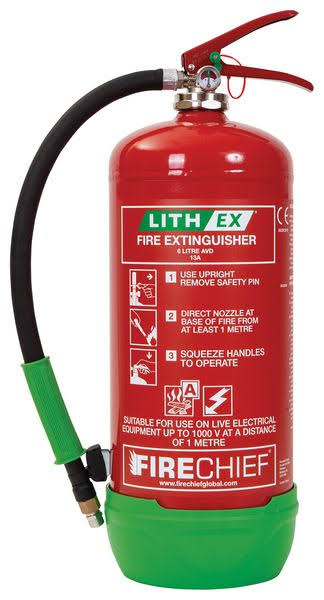
Lithium-ion product example · Firechief 6 L Lith-Ex
A named product example helps connect the generic table to an actual unit. Confirm the exact product before using its claims.
Agent and intended application
The linked Seton example uses aqueous vermiculite dispersion (AVD) for specified lithium-ion battery fire applications. Water content cools; the dispersed mineral helps form a barrier. This is not generic Class D metal-fire powder.
Read the actual rating
Seton lists a 6 L product with a 13A rating. That A rating describes its solid-material test performance; it does not, by itself, certify a universal Class L battery capability.
Match the exact model and generation
The manufacturer’s current 6 L G2 page identifies FLE6X and different discharge details from the retailer’s older listing. Do not mix their time, range or pressure values. Match the delivered label, product sheet and manual.
Check the battery scope
Confirm the allowed battery chemistry, energy capacity, state and scenario with the current manufacturer information and competent fire assessment. A large EV or energy-storage pack cannot be treated as a small-device fire.
Electrical conditions are product-specific
The supplied product label includes a voltage and minimum-distance condition. Do not transfer that condition to another battery extinguisher or infer that it makes an unsafe electrical approach acceptable.
After the flame disappears
Heat, off-gas and reignition can remain. Follow the planned withdrawal, exclusion and fire-service response; do not pick up, submerge or return a failed battery to charging.
Read the agent, fire-class letters, performance rating, electrical warnings, operating instructions and service condition. Numbers such as 13A or 55B describe standardised test performance, not a safe room size or permission to tackle that amount of fire. Colour is a clue; the actual label and assessed plan decide suitability.
What about a fire blanket?
A fire blanket is separate equipment, not an extinguisher type. It may be specified for a small contained cooking fire, but safe approach and the manufacturer’s limits still matter. Never carry a burning pan, improvise a cover or put yourself between fire and your exit.
Spot the dangerous assumption
Pause at each question, then open the explanation. These are unscored learning prompts alongside the course assessment.
A pan of cooking oil is burning. Would ordinary water help?
No. Rapid steam production can throw burning oil across the room. Raise the alarm and follow the kitchen emergency plan; never move the pan. Only a trained, authorised person should consider the specified F-rated equipment with a safe escape.
There is a C on the powder extinguisher. Should I put out the leaking gas flame?
Not as a routine response. Unburnt gas may continue escaping and form an explosive cloud. Withdraw, alarm and report the supply involved. Any safe isolation and specialist firefighting must follow the assessed emergency arrangements.
The flame around a battery has disappeared. Is the incident over?
No. Internal heat, flammable or toxic off-gas and reignition can remain. Keep clear, prevent access and tell the fire and rescue service what battery is involved. Flame-out is not permission to handle it or restart charging.
Both extinguishers have blue panels. Are the powders interchangeable?
No. Read ABC, BC or the exact Class D metal specification. Colour identifies a family; it does not establish the correct agent, rating or safe application.
A CO₂ extinguisher leaves no mess. Is it ideal in a small unventilated room?
No. A dangerous CO₂ concentration can incapacitate a person, while the fire and smoke already threaten escape. Do not enter an unsafe room. The fire plan and competent equipment selection must account for the space.
A water-mist product claims electrical suitability. Can I use any water extinguisher on a live cabinet?
No. Any tested electrical claim belongs to that particular model, with its own voltage and distance limits. It does not apply to ordinary water or another mist product, and it does not make an unsafe approach acceptable.
Source guidance and scope
UK learning context. Consult the applicable national fire guidance and your premises’ assessed plan. Manufacturer examples explain product variation; they are not product recommendations. Guidance checked 24 October 2026.
Explain why layout, sleeping guests and available response must be considered together.
Actual fictional SHAREsimulate hotel model: Function suite. The stated case supplies the conditions; the image does not prove a defect or control state.
Connect fire precautions to the occupied hotel
A hotel’s fire precautions are a connected system. Prevention, detection and warning, separation, escape routes, assistance and the emergency response must work for the people actually present. Sleeping guests may be unfamiliar with the building and may need information or assistance. A procedure written for a quiet day does not automatically cover a busy event, changed room use or a night shift with different capability.
Use the actual fire-risk assessment and emergency arrangements for the premises and applicable nation. The Home Office sleeping-accommodation guidance used in this course is England-specific; other UK jurisdictions have their own arrangements. This awareness course does not determine a building’s fire strategy, occupancy limit or construction standard. Refer proposed changes and uncertainties to the responsible competent people.
Check what the precautions depend on. A fire door can be present but ineffective if prevented from closing. An escape route can be shown on a plan but obstructed by event furniture. A response role can exist in a procedure but have no available person on the shift. Keep the relevant activity or area restricted where a critical arrangement cannot be achieved, and verify the actual condition before authorised release.
What should a fire emergency plan include?
The plan should describe actions, roles, communications, assistance, shutdowns, information and review.
A good plan is specific enough to work on the day. It names roles, deputies, call-out arrangements, assembly points, vulnerable-person support, contractor and visitor arrangements, high-risk areas, fire service information, emergency contacts and post-incident decision routes.
It should be tested through drills and reviewed after changes, near misses, false alarms, building works, occupancy changes, enforcement findings or lessons from incidents.
Fire emergency plan contents
Plan area
What to define
Evidence
Plan areaAlarm action
What to defineWhat people do when alarm sounds.
EvidenceProcedure and drill record.
Plan areaRoles
What to defineWardens, deputies, incident lead and reception/security roles.
EvidenceRole list and training.
Plan areaVulnerable people
What to definePEEPs or general assistance arrangements.
EvidencePrivate plan and review.
Plan areaShutdowns
What to defineOnly planned safe shutdowns and competent isolation.
EvidenceShutdown instruction.
Plan areaFire service information
What to definePlans, hazards, utilities, access and contacts.
EvidencePremises information pack.
Plan areaRecovery
What to defineWho authorises re-entry and restart.
The event layout is complete, but a fire door is wedged open to simplify catering access.
Decision and explanation
Catering convenience does not justify defeating the fire precaution; resolve access while maintaining the required protection.
Catering convenience does not justify defeating the fire precaution; resolve access while maintaining the required protection. Check what the precautions depend on. A fire door can be present but ineffective if prevented from closing. An escape route can be shown on a plan but obstructed by event furniture. A response role can exist in a procedure but have no available person on the shift. Keep the relevant activity or area restricted where a critical arrangement cannot be achieved, and verify the actual condition before authorised release.
Lesson 4
Plan assistance with the guest and the actual shift
Check whether an emergency assistance arrangement can be delivered.
Actual fictional SHAREsimulate hotel model: Function suite. The stated case supplies the conditions; the image does not prove a defect or control state.
Plan assistance with the guest and the actual shift
An assistance plan must reflect a person’s needs and the building’s actual arrangements. Do not assume that an age, diagnosis or visible mobility aid tells you what someone can do. Establish the information needed respectfully and through the approved process. Consider how the person will receive a warning, reach the next safe stage and obtain the planned assistance without improvisation by untrained staff.
Test the arrangement against the actual shift. Who is available, what training and equipment are required, and what happens if a role is absent? A named person who is off duty cannot perform the response. Nor should staff assume that the fire and rescue service will supply an ordinary hotel operating arrangement that has not been planned. Refer gaps to the responsible manager and maintain any necessary interim restriction or alternative accommodation decision.
Verification should establish that the people carrying out the arrangement understand their part and can access the required facilities. Record and communicate changes without putting personal information into general training notes. The fictional case is a rehearsal of the decision questions, not an individual evacuation plan or authorisation to use specialist equipment.
What should a fire emergency plan include?
The plan should describe actions, roles, communications, assistance, shutdowns, information and review.
A good plan is specific enough to work on the day. It names roles, deputies, call-out arrangements, assembly points, vulnerable-person support, contractor and visitor arrangements, high-risk areas, fire service information, emergency contacts and post-incident decision routes.
It should be tested through drills and reviewed after changes, near misses, false alarms, building works, occupancy changes, enforcement findings or lessons from incidents.
Fire emergency plan contents
Plan area
What to define
Evidence
Plan areaAlarm action
What to defineWhat people do when alarm sounds.
EvidenceProcedure and drill record.
Plan areaRoles
What to defineWardens, deputies, incident lead and reception/security roles.
EvidenceRole list and training.
Plan areaVulnerable people
What to definePEEPs or general assistance arrangements.
EvidencePrivate plan and review.
Plan areaShutdowns
What to defineOnly planned safe shutdowns and competent isolation.
EvidenceShutdown instruction.
Plan areaFire service information
What to definePlans, hazards, utilities, access and contacts.
EvidencePremises information pack.
Plan areaRecovery
What to defineWho authorises re-entry and restart.
A booking note says assistance is required, but the night shift cannot identify a workable arrangement.
Decision and explanation
A person-specific arrangement that the actual available trained shift can deliver.
A person-specific arrangement that the actual available trained shift can deliver. Verification should establish that the people carrying out the arrangement understand their part and can access the required facilities. Record and communicate changes without putting personal information into general training notes. The fictional case is a rehearsal of the decision questions, not an individual evacuation plan or authorisation to use specialist equipment.
Lesson 5
Review an event after the furniture moves
Use the installed layout and proposed activity to check interfaces before opening.
Actual fictional SHAREsimulate hotel model: Function suite. The stated case supplies the conditions; the image does not prove a defect or control state.
Review an event after the furniture moves
An event changes more than a room’s appearance. Staging, cables, displays, catering stations, queues and temporary storage can affect routes, visibility and access to safety equipment. Review the installed arrangement rather than approving only the drawing. Include workers setting up and clearing away as well as guests present during the event, and consider how adjoining hotel operations continue.
Identify what has changed since the last reliable assessment. A larger display may obstruct a door; a queue may enter an escape route; cables may cross the service path; additional electrical equipment may introduce another issue requiring competent review. Do not assume that an unchanged ticket count means the arrangement is unchanged. Follow the actual occupancy and fire arrangements rather than inventing a course-wide number.
Before release, walk the routes with the relevant responsible people and check that the emergency and assistance arrangements remain achievable. Where a defect is corrected, confirm the result instead of accepting a message that the team has finished. Keep a clear record of unresolved restrictions and the person authorised to release them. Review further if the organiser changes the layout after that check.
What should a fire emergency plan include?
The plan should describe actions, roles, communications, assistance, shutdowns, information and review.
A good plan is specific enough to work on the day. It names roles, deputies, call-out arrangements, assembly points, vulnerable-person support, contractor and visitor arrangements, high-risk areas, fire service information, emergency contacts and post-incident decision routes.
It should be tested through drills and reviewed after changes, near misses, false alarms, building works, occupancy changes, enforcement findings or lessons from incidents.
Fire emergency plan contents
Plan area
What to define
Evidence
Plan areaAlarm action
What to defineWhat people do when alarm sounds.
EvidenceProcedure and drill record.
Plan areaRoles
What to defineWardens, deputies, incident lead and reception/security roles.
EvidenceRole list and training.
Plan areaVulnerable people
What to definePEEPs or general assistance arrangements.
EvidencePrivate plan and review.
Plan areaShutdowns
What to defineOnly planned safe shutdowns and competent isolation.
EvidenceShutdown instruction.
Plan areaFire service information
What to definePlans, hazards, utilities, access and contacts.
EvidencePremises information pack.
Plan areaRecovery
What to defineWho authorises re-entry and restart.
The organiser adds a display after the room check, narrowing the route used by guests and catering staff.
Decision and explanation
Review the changed installed layout and resolve affected route and emergency arrangements before release.
Review the changed installed layout and resolve affected route and emergency arrangements before release. Before release, walk the routes with the relevant responsible people and check that the emergency and assistance arrangements remain achievable. Where a defect is corrected, confirm the result instead of accepting a message that the team has finished. Keep a clear record of unresolved restrictions and the person authorised to release them. Review further if the organiser changes the layout after that check.
Lesson 6
Combine security, lone work and emergency communication
Choose an escalation that protects staff while keeping the response coordinated.
Actual fictional SHAREsimulate hotel model: Function suite. The stated case supplies the conditions; the image does not prove a defect or control state.
Combine security, lone work and emergency communication
Hotel staff can face difficult behaviour while working away from immediate support. Reception at night, a function ending late or a contractor arriving without clear instructions may change the exposure. Assess the actual work, environment and available assistance. A worker should know how to obtain help, what they may stop and how to avoid becoming trapped while trying to resolve a service dispute.
Keep emergency communication clear and specific. State the location, nature of the concern, people affected and immediate restrictions through the agreed route. Avoid conflicting instructions from several departments or sending another lone worker into the same uncertain situation. If a threat escalates, use the planned security and emergency response rather than improvising physical intervention.
Learning afterwards should examine the arrangement, not just the individual conversation. Were staffing, access control, communication and escalation suitable for the event and time of day? Did the next shift receive the unresolved concerns? Verify a proposed improvement with the people who will rely on it. This course supports awareness and reporting; it does not provide restraint, confrontation or emergency-service training.
How can the ISO 45001 hierarchy of controls prevent knife injuries while planning suitable first-aid provision?
Remove or reduce the hazard first, then design reliable alarms, routes and cover for what remains.
Each control below names the actual intervention and check. First aid limits harm after an event; it cannot replace prevention or a working emergency route.
A kitchen uses a knife-injury scenario to connect prevention and first-aid planning. First aid addresses harm after an event; it does not replace suitable equipment, workholding and a safe preparation method.
How can the ERICPD hierarchy of controls prevent knife injuries while planning suitable first-aid provision?
ERICPD is a planning crossmap. Its prompts do not add a sixth rung or rank Isolate above engineering. Discipline verifies and sustains every control level.
Control level
Control for this activity
Owner and verification
Stop / restart decision
Eliminate
Buy suitable prepared ingredients or redesign preparation so the knife task is unnecessary.
Task owner verifies that the proposed change removes the named hazardous step, including foreseeable cleaning, maintenance and work transferred elsewhere.
If the hazardous step remains, keep it within the task assessment and select the stronger feasible remaining controls.
Reduce, including substitution
Choose a suitable safer cutting process or knife for the ingredient and work, checking any new machine or handling hazards.
Competent task/process owner validates suitability, compatibility and new hazards against the actual operating requirements before the alternative is adopted.
Reject an alternative if its performance is unproved or its new hazards are unresolved.
Isolate
Provide a separate preparation position and stable workholding so other people and the non-cutting hand stay outside the cutting path.
Release only after kitchen supervisor accepts suitable equipment and a workable preparation method. Retain verification and unresolved restrictions at handover.
Keep the task on hold until required reinstatement evidence and unresolved defects are accepted by the responsible owner.
How can the ISO 45001 hierarchy of controls prevent knife injuries while planning suitable first-aid provision?
The hierarchy of controls in ISO 45001:2018 comes under Clause 8.1.2 (Eliminating hazards and reducing OH&S risks), which is located within Clause 8 ("Operation").
Task owner verifies that the proposed change removes the named hazardous step, including foreseeable cleaning, maintenance and work transferred elsewhere.
If the hazardous step remains, keep it within the task assessment and select the stronger feasible remaining controls.
Substitution
Choose a suitable safer cutting process or knife for the ingredient and work, checking any new machine or handling hazards.
Competent task/process owner validates suitability, compatibility and new hazards against the actual operating requirements before the alternative is adopted.
Reject an alternative if its performance is unproved or its new hazards are unresolved.
Engineering controls
Provide a separate preparation position and stable workholding so other people and the non-cutting hand stay outside the cutting path.
Release only after kitchen supervisor accepts suitable equipment and a workable preparation method. Retain verification and unresolved restrictions at handover.
Keep the task on hold until required reinstatement evidence and unresolved defects are accepted by the responsible owner.
Applied case
A lone night receptionist receives threatening demands from a visitor while the duty contact is not answering.
Decision and explanation
The agreed alternative assistance and emergency escalation while maintaining their own route to safety.
The agreed alternative assistance and emergency escalation while maintaining their own route to safety. Learning afterwards should examine the arrangement, not just the individual conversation. Were staffing, access control, communication and escalation suitable for the event and time of day? Did the next shift receive the unresolved concerns? Verify a proposed improvement with the people who will rely on it. This course supports awareness and reporting; it does not provide restraint, confrontation or emergency-service training.
Lesson 7
Wedding furniture compromises escape
Include fire and accessible escape checks in event setup and release. Keep the assessed aisles, doors, exit discharge and emergency equipment usable throughout service, including queues and entertainment changes. Reassess a changed layout before admitting guests rather than waiting for the first alarm.
Actual fictional SHAREsimulate hotel model: Function suite. The stated case supplies the conditions; the image does not prove a defect or control state.
Understand the activity and how harm develops
Tables, decorations and temporary bars can change the effective escape layout after an event plan has been agreed. Wedding guests may be unfamiliar with alternative exits and may need assistance. Occupancy is linked to the actual usable routes and activity, not simply the number of chairs that fit into the room.
Include fire and accessible escape checks in event setup and release. Keep the assessed aisles, doors, exit discharge and emergency equipment usable throughout service, including queues and entertainment changes. Reassess a changed layout before admitting guests rather than waiting for the first alarm.
The function suite changes with every booking, supplier and furniture arrangement. Review the finished room and its links to sleeping accommodation, accessible routes and actual staffing. The event release needs to reflect what is physically installed, with checks after late changes and clear authority to prevent an unsafe opening.
Recognise the evidence boundary
Question
Case evidence
What is observed?
The approved function layout was clear, but additional tables now occupy the escape aisle.
How can harm occur?
Crowding and restricted escape can delay people leaving during an emergency.
What information is needed?
Compare the changed arrangement with the event and fire assessments.
Protect, manage and verify
Purpose
Practical application
Immediate protection
Restore an assessed layout before admission and manage later changes.
Accountable work arrangement
Restore an assessed layout before admission and manage later changes. Approve the actual event layout, preserve assessed routes and occupancy arrangements, and assign someone to maintain them during the function. Maintain the assessed detection, compartmentation, fire doors and usable escape routes. Agree the responsible person and safe interim arrangement for escape aisle. Reopen or restart only when the relevant verification below has been accepted.
Release verification
Walk every required route in the final furnished arrangement and record release.
Apply this at work
Apply the same control test whenever the activity, users, product, staffing or conditions change. Approve the actual event layout, preserve assessed routes and occupancy arrangements, and assign someone to maintain them during the function. Check connected areas: Function setup, public movement, fire coordination and protective-security decisions.
What should a fire emergency plan include?
The plan should describe actions, roles, communications, assistance, shutdowns, information and review.
A good plan is specific enough to work on the day. It names roles, deputies, call-out arrangements, assembly points, vulnerable-person support, contractor and visitor arrangements, high-risk areas, fire service information, emergency contacts and post-incident decision routes.
It should be tested through drills and reviewed after changes, near misses, false alarms, building works, occupancy changes, enforcement findings or lessons from incidents.
Fire emergency plan contents
Plan area
What to define
Evidence
Plan areaAlarm action
What to defineWhat people do when alarm sounds.
EvidenceProcedure and drill record.
Plan areaRoles
What to defineWardens, deputies, incident lead and reception/security roles.
EvidenceRole list and training.
Plan areaVulnerable people
What to definePEEPs or general assistance arrangements.
EvidencePrivate plan and review.
Plan areaShutdowns
What to defineOnly planned safe shutdowns and competent isolation.
EvidenceShutdown instruction.
Plan areaFire service information
What to definePlans, hazards, utilities, access and contacts.
EvidencePremises information pack.
Plan areaRecovery
What to defineWho authorises re-entry and restart.
A florist adds a display and spare chairs to an escape aisle after the room layout was signed off.
Decision and explanation
Restore an assessed layout before admission and manage later changes.
The current physical layout has changed. Check and correct the actual route before guests enter. The emergency plan should not depend on clearing predictable obstructions during an evacuation. Maintain the route in advance. This controls the relevant exposure rather than relying on appearance or reassurance. Walk the complete escape journey in the final furnished layout and recheck after suppliers, decorations and guests arrive.
Lesson 8
Temporary event electrics are unsuitable
Plan the supply with competent people and suppliers, including the actual load, protective arrangements and environment. Route and protect cables without compromising escape or accessibility. Define who checks the completed installation and who can isolate it when defects appear.
Actual fictional SHAREsimulate hotel model: Function suite. The stated case supplies the conditions; the image does not prove a defect or control state.
Understand the activity and how harm develops
Temporary audio, lighting and catering supplies introduce cables, connections and loads into a changing event layout. Damage, unsuitable equipment or poor routing can create shock, fire and trip risks. An RCD is additional protection, not permission to use damaged equipment or disregard suitable electrical design.
Plan the supply with competent people and suppliers, including the actual load, protective arrangements and environment. Route and protect cables without compromising escape or accessibility. Define who checks the completed installation and who can isolate it when defects appear.
The function suite changes with every booking, supplier and furniture arrangement. Review the finished room and its links to sleeping accommodation, accessible routes and actual staffing. The event release needs to reflect what is physically installed, with checks after late changes and clear authority to prevent an unsafe opening.
Recognise the evidence boundary
Question
Case evidence
What is observed?
A temporary cable crosses a doorway and a connector appears damaged.
How can harm occur?
People can trip or contact damaged electrical equipment; faults can ignite material.
What information is needed?
Request a competent check of supply, equipment and cable routing.
Protect, manage and verify
Purpose
Practical application
Immediate protection
Stop affected use and provide suitable protected equipment and cable management.
Accountable work arrangement
Stop affected use and provide suitable protected equipment and cable management. Use suitable rated equipment, competent installation and appropriate protection; prevent damage, wet exposure and unsafe adaptation of the supply. Provide suitable installation, equipment and protective measures for the load and environment. Agree the responsible person and safe interim arrangement for av power. Reopen or restart only when the relevant verification below has been accepted.
Release verification
Verify the completed temporary installation and its condition before energising.
Apply this at work
Apply the same control test whenever the activity, users, product, staffing or conditions change. Use suitable rated equipment, competent installation and appropriate protection; prevent damage, wet exposure and unsafe adaptation of the supply. Check connected areas: Function setup, public movement, fire coordination and protective-security decisions.
How can the ISO 45001 hierarchy of controls prevent electrical contact during equipment fault diagnosis?
Use HSE’s hierarchy to eliminate or substitute a hazard where practicable, then apply engineering and administrative controls before relying on PPE. Check each chosen control against the actual task and stop when it fails.
Use HSE’s hierarchy of controls: eliminate or substitute the hazard where possible, then use engineering and administrative controls; PPE is the last resort. Apply the sequence to the task and verify that each chosen barrier works. HSE hierarchy of controls (official source).
Electrical safety is a strong example of why the hierarchy matters. The best control is often to remove the need for live work, design equipment so live parts cannot be touched, use reduced voltage in high-risk conditions and isolate securely before maintenance. PPE can be important for some tasks, but it should not be the first or only control.
The hierarchy should be applied at design, procurement, installation, use, maintenance and decommissioning. If the workplace keeps relying on signs, briefings and PPE while equipment is unsuitable or poorly protected, the risk is not being controlled well.
An electrical fault is assessed before access; use competent personnel, suitable information and a method that avoids exposed live work.
How can the ERICPD hierarchy of controls prevent electrical contact during equipment fault diagnosis?
ERICPD is a planning crossmap. Its prompts do not add a sixth rung or rank Isolate above engineering. Discipline verifies and sustains every control level.
Control level
Control for this activity
Owner and verification
Stop / restart decision
Eliminate
Use external diagnostics or remove the faulty equipment from use where that avoids exposed electrical work.
Task owner verifies that the proposed change removes the named hazardous step, including foreseeable cleaning, maintenance and work transferred elsewhere.
If the hazardous step remains, keep it within the task assessment and select the stronger feasible remaining controls.
Reduce, including substitution
Use a suitable off-line test or replaceable module where it safely proves the fault without exposed live conductors.
Competent task/process owner validates suitability, compatibility and new hazards against the actual operating requirements before the alternative is adopted.
Reject an alternative if its performance is unproved or its new hazards are unresolved.
Isolate
Securely isolate relevant supplies, prevent reconnection and prove dead using the approved safe-isolation method.
Release only after competent electrical owner accepts completed tests and safe reinstatement. Retain verification and unresolved restrictions at handover.
Keep the task on hold until required reinstatement evidence and unresolved defects are accepted by the responsible owner.
How can the ISO 45001 hierarchy of controls prevent electrical contact during equipment fault diagnosis?
The hierarchy of controls in ISO 45001:2018 comes under Clause 8.1.2 (Eliminating hazards and reducing OH&S risks), which is located within Clause 8 ("Operation").
Task owner verifies that the proposed change removes the named hazardous step, including foreseeable cleaning, maintenance and work transferred elsewhere.
If the hazardous step remains, keep it within the task assessment and select the stronger feasible remaining controls.
Engineering controls
Use a suitable off-line test or replaceable module where it safely proves the fault without exposed live conductors.
Competent task/process owner validates suitability, compatibility and new hazards against the actual operating requirements before the alternative is adopted.
Reject an alternative if its performance is unproved or its new hazards are unresolved.
Engineering controls
Securely isolate relevant supplies, prevent reconnection and prove dead using the approved safe-isolation method.
Release only after competent electrical owner accepts completed tests and safe reinstatement. Retain verification and unresolved restrictions at handover.
Keep the task on hold until required reinstatement evidence and unresolved defects are accepted by the responsible owner.
Applied case
A supplier connects additional heaters and sound equipment through chained extensions beneath guest tables.
Decision and explanation
Stop affected use and provide suitable protected equipment and cable management.
An RCD does not establish suitable loading, equipment condition or cable routing. Obtain competent correction of the whole setup. Concealment does not prevent overheating, damage or spill exposure and may add combustible material. This controls the relevant exposure rather than relying on appearance or reassurance. Check the final connected event setup against the agreed design, inspect vulnerable routes and obtain appropriate inspection and test evidence.
Lesson 9
Decorative ignition sources near combustibles
Remove unnecessary ignition sources, using suitable alternatives such as appropriate flameless decorations. Assess remaining equipment, combustible materials and changes during service. The event release should include suppliers' decorations and temporary power, with a clear rule for unauthorised additions.
Actual fictional SHAREsimulate hotel model: Function suite. The stated case supplies the conditions; the image does not prove a defect or control state.
Understand the activity and how harm develops
Candles, heaters and decorative electrical items can introduce ignition sources near drapes, paper and floral displays. Guests moving chairs or passing with clothing can change clearances during an event. An extinguisher nearby does not prevent ignition or guarantee that staff can safely control a developing fire.
Remove unnecessary ignition sources, using suitable alternatives such as appropriate flameless decorations. Assess remaining equipment, combustible materials and changes during service. The event release should include suppliers' decorations and temporary power, with a clear rule for unauthorised additions.
The function suite changes with every booking, supplier and furniture arrangement. Review the finished room and its links to sleeping accommodation, accessible routes and actual staffing. The event release needs to reflect what is physically installed, with checks after late changes and clear authority to prevent an unsafe opening.
Recognise the evidence boundary
Question
Case evidence
What is observed?
A decorative flame is proposed beneath hanging fabric.
How can harm occur?
Ignition could spread through decorations and threaten the escape route.
What information is needed?
Check ignition sources, decoration suitability and the approved event controls.
Protect, manage and verify
Purpose
Practical application
Immediate protection
Remove the ignition source or use an assessed safer alternative.
Accountable work arrangement
Remove the ignition source or use an assessed safer alternative. Prefer suitable non-flame alternatives and maintain assessed separation, stable positioning and competent checks for remaining heat sources. Maintain the assessed detection, compartmentation, fire doors and usable escape routes. Agree the responsible person and safe interim arrangement for decorations. Reopen or restart only when the relevant verification below has been accepted.
Release verification
Inspect the final setup and monitor unapproved additions during the event.
Apply this at work
Apply the same control test whenever the activity, users, product, staffing or conditions change. Prefer suitable non-flame alternatives and maintain assessed separation, stable positioning and competent checks for remaining heat sources. Check connected areas: Function setup, public movement, fire coordination and protective-security decisions.
What should a fire emergency plan include?
The plan should describe actions, roles, communications, assistance, shutdowns, information and review.
A good plan is specific enough to work on the day. It names roles, deputies, call-out arrangements, assembly points, vulnerable-person support, contractor and visitor arrangements, high-risk areas, fire service information, emergency contacts and post-incident decision routes.
It should be tested through drills and reviewed after changes, near misses, false alarms, building works, occupancy changes, enforcement findings or lessons from incidents.
Fire emergency plan contents
Plan area
What to define
Evidence
Plan areaAlarm action
What to defineWhat people do when alarm sounds.
EvidenceProcedure and drill record.
Plan areaRoles
What to defineWardens, deputies, incident lead and reception/security roles.
EvidenceRole list and training.
Plan areaVulnerable people
What to definePEEPs or general assistance arrangements.
EvidencePrivate plan and review.
Plan areaShutdowns
What to defineOnly planned safe shutdowns and competent isolation.
EvidenceShutdown instruction.
Plan areaFire service information
What to definePlans, hazards, utilities, access and contacts.
EvidencePremises information pack.
Plan areaRecovery
What to defineWho authorises re-entry and restart.
A supplier places open-flame candles under low fabric drapes shortly before guests enter.
Decision and explanation
Remove the ignition source or use an assessed safer alternative.
Divided attention is unreliable and leaves the ignition mechanism present. Remove or redesign the arrangement before opening. Firefighting equipment is not a substitute for preventing a foreseeable ignition source next to combustible material. This controls the relevant exposure rather than relying on appearance or reassurance. Inspect the real decorated room, including fabric movement and guest routes, and confirm staff challenge unapproved ignition sources.
Lesson 10
Fire door does not protect the escape route
Keep fire doors operating in accordance with the assessed design. Where automatic hold-open equipment is appropriate it needs a suitable system and maintenance, not an improvised wedge. Report defects for competent repair and consider interim restrictions where the protection relied upon is compromised.
Actual fictional SHAREsimulate hotel model: Function suite. The stated case supplies the conditions; the image does not prove a defect or control state.
Understand the activity and how harm develops
A fire door is part of an integrated compartment and escape system. A wedge, damaged closer or defective latch may allow smoke and heat to reach a corridor used by sleeping guests. A door appearing heavy does not establish that the whole assembly, including gaps, seals and hardware, performs as intended.
Keep fire doors operating in accordance with the assessed design. Where automatic hold-open equipment is appropriate it needs a suitable system and maintenance, not an improvised wedge. Report defects for competent repair and consider interim restrictions where the protection relied upon is compromised.
The function suite changes with every booking, supplier and furniture arrangement. Review the finished room and its links to sleeping accommodation, accessible routes and actual staffing. The event release needs to reflect what is physically installed, with checks after late changes and clear authority to prevent an unsafe opening.
Recognise the evidence boundary
Question
Case evidence
What is observed?
An approved hold-open releases and the fire door closes; request its competent check record.
How can harm occur?
Smoke can spread into an escape route when the protective door cannot close.
What information is needed?
Compare each door's intended function, condition and approved release arrangement.
Protect, manage and verify
Purpose
Practical application
Immediate protection
Maintain effective closure and correct any defect without defeating legitimate access arrangements.
Accountable work arrangement
Maintain effective closure and correct any defect without defeating legitimate access arrangements. Maintain the complete fire-door assembly and approved hold-open arrangements, with suitable defect escalation and prompt competent correction. Maintain the assessed detection, compartmentation, fire doors and usable escape routes. Agree the responsible person and safe interim arrangement for fire door. Reopen or restart only when the relevant verification below has been accepted.
Release verification
Check closing, latching and any alarm-linked release through competent procedures.
Apply this at work
Apply the same control test whenever the activity, users, product, staffing or conditions change. Maintain the complete fire-door assembly and approved hold-open arrangements, with suitable defect escalation and prompt competent correction. Check connected areas: Function setup, public movement, fire coordination and protective-security decisions.
What should a fire emergency plan include?
The plan should describe actions, roles, communications, assistance, shutdowns, information and review.
A good plan is specific enough to work on the day. It names roles, deputies, call-out arrangements, assembly points, vulnerable-person support, contractor and visitor arrangements, high-risk areas, fire service information, emergency contacts and post-incident decision routes.
It should be tested through drills and reviewed after changes, near misses, false alarms, building works, occupancy changes, enforcement findings or lessons from incidents.
Fire emergency plan contents
Plan area
What to define
Evidence
Plan areaAlarm action
What to defineWhat people do when alarm sounds.
EvidenceProcedure and drill record.
Plan areaRoles
What to defineWardens, deputies, incident lead and reception/security roles.
EvidenceRole list and training.
Plan areaVulnerable people
What to definePEEPs or general assistance arrangements.
EvidencePrivate plan and review.
Plan areaShutdowns
What to defineOnly planned safe shutdowns and competent isolation.
EvidenceShutdown instruction.
Plan areaFire service information
What to definePlans, hazards, utilities, access and contacts.
EvidencePremises information pack.
Plan areaRecovery
What to defineWho authorises re-entry and restart.
A function-room fire door is wedged open to make service easier beside the bedroom corridor.
Decision and explanation
Maintain effective closure and correct any defect without defeating legitimate access arrangements.
The protection depends on timely reliable closure without relying on staff reaching each wedge during an emergency. This defeats a protective function. Resolve the workflow through an approved design and maintain the required door performance. This controls the relevant exposure rather than relying on appearance or reassurance. Check the door closes and latches as designed, review the actual defect and obtain competent confirmation of repairs before closure.
Lesson 11
Night evacuation plan exceeds available capability
Develop an achievable evacuation strategy for the actual building and guests, including relevant individual needs. Test the night configuration without exposing people to harm. Fire and rescue services are not the routine staff resource that makes an otherwise unworkable hotel evacuation plan acceptable.
Actual fictional SHAREsimulate hotel model: Function suite. The stated case supplies the conditions; the image does not prove a defect or control state.
Understand the activity and how harm develops
A night evacuation plan can fail when it assumes more staff, equipment or time than the shift actually has. Sleeping and unfamiliar guests may respond slowly, while some need individual assistance. A refuge or evacuation device is useful only within a workable communication, staffing and assistance arrangement.
Develop an achievable evacuation strategy for the actual building and guests, including relevant individual needs. Test the night configuration without exposing people to harm. Fire and rescue services are not the routine staff resource that makes an otherwise unworkable hotel evacuation plan acceptable.
The function suite changes with every booking, supplier and furniture arrangement. Review the finished room and its links to sleeping accommodation, accessible routes and actual staffing. The event release needs to reflect what is physically installed, with checks after late changes and clear authority to prevent an unsafe opening.
Recognise the evidence boundary
Question
Case evidence
What is observed?
The night plan allocates simultaneous tasks to more trained people than the rota provides.
How can harm occur?
Assistance and evacuation could fail when the available staff cannot execute the plan.
What information is needed?
Compare realistic night staffing, guest needs and practiced emergency roles.
Protect, manage and verify
Purpose
Practical application
Immediate protection
Resolve the capability gap through the competent fire plan before accepting affected occupancy.
Accountable work arrangement
Resolve the capability gap through the competent fire plan before accepting affected occupancy. Align room allocation, assistance plans, trained staffing, alarm arrangements and suitable equipment with the assessed evacuation strategy. Maintain the assessed detection, compartmentation, fire doors and usable escape routes. Agree the responsible person and safe interim arrangement for alarm plan. Reopen or restart only when the relevant verification below has been accepted.
Release verification
A realistic exercise demonstrates the actual team can carry out its assigned duties.
Apply this at work
Apply the same control test whenever the activity, users, product, staffing or conditions change. Align room allocation, assistance plans, trained staffing, alarm arrangements and suitable equipment with the assessed evacuation strategy. Check connected areas: Function setup, public movement, fire coordination and protective-security decisions.
What should a fire emergency plan include?
The plan should describe actions, roles, communications, assistance, shutdowns, information and review.
A good plan is specific enough to work on the day. It names roles, deputies, call-out arrangements, assembly points, vulnerable-person support, contractor and visitor arrangements, high-risk areas, fire service information, emergency contacts and post-incident decision routes.
It should be tested through drills and reviewed after changes, near misses, false alarms, building works, occupancy changes, enforcement findings or lessons from incidents.
Fire emergency plan contents
Plan area
What to define
Evidence
Plan areaAlarm action
What to defineWhat people do when alarm sounds.
EvidenceProcedure and drill record.
Plan areaRoles
What to defineWardens, deputies, incident lead and reception/security roles.
EvidenceRole list and training.
Plan areaVulnerable people
What to definePEEPs or general assistance arrangements.
EvidencePrivate plan and review.
Plan areaShutdowns
What to defineOnly planned safe shutdowns and competent isolation.
EvidenceShutdown instruction.
Plan areaFire service information
What to definePlans, hazards, utilities, access and contacts.
EvidencePremises information pack.
Plan areaRecovery
What to defineWho authorises re-entry and restart.
The plan assigns two people to each assisted evacuation, but only two staff are present for the entire hotel.
Decision and explanation
Resolve the capability gap through the competent fire plan before accepting affected occupancy.
Daytime resources and occupants differ. Test the actual night assumptions and correct the capacity gap before relying on the plan. A refuge needs an assessed supported strategy and communication; it is not an automatic substitute for achievable evacuation arrangements. This controls the relevant exposure rather than relying on appearance or reassurance. Conduct a safe exercise or structured test using the actual night resources, including simultaneous calls and a responder becoming unavailable.
Lesson 12
Security response obstructs fire escape
Coordinate security and fire arrangements in advance with competent advice. Define who decides, how staff communicate and how guests needing assistance are supported. Test different conditions and preserve suitable escape capability; do not improvise barriers or lock people into a space without an assessed arrangement.
Actual fictional SHAREsimulate hotel model: Function suite. The stated case supplies the conditions; the image does not prove a defect or control state.
Understand the activity and how harm develops
A response to a security threat may involve moving people away, keeping them inside or restricting access. Improvised locking can conflict with emergency escape or direct people towards another danger. The correct action depends on the threat and location, so one instruction to lock every door is unsuitable.
Coordinate security and fire arrangements in advance with competent advice. Define who decides, how staff communicate and how guests needing assistance are supported. Test different conditions and preserve suitable escape capability; do not improvise barriers or lock people into a space without an assessed arrangement.
The function suite changes with every booking, supplier and furniture arrangement. Review the finished room and its links to sleeping accommodation, accessible routes and actual staffing. The event release needs to reflect what is physically installed, with checks after late changes and clear authority to prevent an unsafe opening.
Recognise the evidence boundary
Question
Case evidence
What is observed?
A security instruction proposes locking every exit after an external warning.
How can harm occur?
Occupants may be trapped or directed toward a separate fire or hostile threat.
What information is needed?
Compare threat location, safe routes and the coordinated emergency plan.
Protect, manage and verify
Purpose
Practical application
Immediate protection
Select a proportionate protective response that preserves compatible escape.
Accountable work arrangement
Select a proportionate protective response that preserves compatible escape. Use a coordinated threat-response plan with clear decision authority, communication and compatible emergency access and escape arrangements. Provide reliable alarm, communication, access and other equipment appropriate to the emergency. Agree the responsible person and safe interim arrangement for security exit. Reopen or restart only when the relevant verification below has been accepted.
Release verification
Reassess route safety and communicate changes as verified threat information develops.
Apply this at work
Apply the same control test whenever the activity, users, product, staffing or conditions change. Use a coordinated threat-response plan with clear decision authority, communication and compatible emergency access and escape arrangements. Check connected areas: Function setup, public movement, fire coordination and protective-security decisions.
How can the ISO 45001 hierarchy of controls prevent knife injuries while planning suitable first-aid provision?
Remove or reduce the hazard first, then design reliable alarms, routes and cover for what remains.
Each control below names the actual intervention and check. First aid limits harm after an event; it cannot replace prevention or a working emergency route.
A kitchen uses a knife-injury scenario to connect prevention and first-aid planning. First aid addresses harm after an event; it does not replace suitable equipment, workholding and a safe preparation method.
How can the ERICPD hierarchy of controls prevent knife injuries while planning suitable first-aid provision?
ERICPD is a planning crossmap. Its prompts do not add a sixth rung or rank Isolate above engineering. Discipline verifies and sustains every control level.
Control level
Control for this activity
Owner and verification
Stop / restart decision
Eliminate
Buy suitable prepared ingredients or redesign preparation so the knife task is unnecessary.
Task owner verifies that the proposed change removes the named hazardous step, including foreseeable cleaning, maintenance and work transferred elsewhere.
If the hazardous step remains, keep it within the task assessment and select the stronger feasible remaining controls.
Reduce, including substitution
Choose a suitable safer cutting process or knife for the ingredient and work, checking any new machine or handling hazards.
Competent task/process owner validates suitability, compatibility and new hazards against the actual operating requirements before the alternative is adopted.
Reject an alternative if its performance is unproved or its new hazards are unresolved.
Isolate
Provide a separate preparation position and stable workholding so other people and the non-cutting hand stay outside the cutting path.
Release only after kitchen supervisor accepts suitable equipment and a workable preparation method. Retain verification and unresolved restrictions at handover.
Keep the task on hold until required reinstatement evidence and unresolved defects are accepted by the responsible owner.
How can the ISO 45001 hierarchy of controls prevent knife injuries while planning suitable first-aid provision?
The hierarchy of controls in ISO 45001:2018 comes under Clause 8.1.2 (Eliminating hazards and reducing OH&S risks), which is located within Clause 8 ("Operation").
Task owner verifies that the proposed change removes the named hazardous step, including foreseeable cleaning, maintenance and work transferred elsewhere.
If the hazardous step remains, keep it within the task assessment and select the stronger feasible remaining controls.
Substitution
Choose a suitable safer cutting process or knife for the ingredient and work, checking any new machine or handling hazards.
Competent task/process owner validates suitability, compatibility and new hazards against the actual operating requirements before the alternative is adopted.
Reject an alternative if its performance is unproved or its new hazards are unresolved.
Engineering controls
Provide a separate preparation position and stable workholding so other people and the non-cutting hand stay outside the cutting path.
Release only after kitchen supervisor accepts suitable equipment and a workable preparation method. Retain verification and unresolved restrictions at handover.
Keep the task on hold until required reinstatement evidence and unresolved defects are accepted by the responsible owner.
Applied case
A security concern at the entrance prompts a supervisor to order every exit chained shut.
Decision and explanation
Select a proportionate protective response that preserves compatible escape.
The entrance may be the source of danger. Choose the protective action from the assessed threat and available safe routes. This can trap people and create a second emergency. Follow the coordinated threat-specific plan and preserve suitable escape arrangements. This controls the relevant exposure rather than relying on appearance or reassurance. Exercise the chosen protective actions with realistic door operation, staffing and guest support, checking conflicts with fire response.
Lesson 13
Premises protection tier is assumed from a booking
Use the current official guidance to establish applicability with competent advice, recording assumptions and review triggers. Continue proportionate emergency preparedness while that assessment is made. This educational scene does not allocate a statutory tier or assert that every provision is in force on the learner's date of use.
Actual fictional SHAREsimulate hotel model: Function suite. The stated case supplies the conditions; the image does not prove a defect or control state.
Understand the activity and how harm develops
A large booking does not on its own establish the legal status of a premises or event under terrorism-protection legislation. Scope, use, expected numbers, responsibility and commencement provisions matter. Confusing a preliminary commercial estimate with the statutory decision can produce false assurance and misdirect the preparedness work.
Use the current official guidance to establish applicability with competent advice, recording assumptions and review triggers. Continue proportionate emergency preparedness while that assessment is made. This educational scene does not allocate a statutory tier or assert that every provision is in force on the learner's date of use.
The function suite changes with every booking, supplier and furniture arrangement. Review the finished room and its links to sleeping accommodation, accessible routes and actual staffing. The event release needs to reflect what is physically installed, with checks after late changes and clear authority to prevent an unsafe opening.
Recognise the evidence boundary
Question
Case evidence
What is observed?
A booking headcount is being used as the sole basis for a protection tier.
How can harm occur?
Incorrect scope assumptions can leave unsuitable preparedness arrangements.
What information is needed?
Check current official scope, commencement, premises use and expected presence evidence.
Protect, manage and verify
Purpose
Practical application
Immediate protection
Obtain a documented applicability decision without assuming the booking defines the legal tier.
Accountable work arrangement
Obtain a documented applicability decision without assuming the booking defines the legal tier. Identify the responsible decision-maker, current scope and commencement position, and coordinate proportionate protective procedures and review after changes. Provide reliable alarm, communication, access and other equipment appropriate to the emergency. Agree the responsible person and safe interim arrangement for event booking. Reopen or restart only when the relevant verification below has been accepted.
Release verification
Review the decision against current guidance and relevant changes to use or attendance.
Apply this at work
Apply the same control test whenever the activity, users, product, staffing or conditions change. Identify the responsible decision-maker, current scope and commencement position, and coordinate proportionate protective procedures and review after changes. Check connected areas: Function setup, public movement, fire coordination and protective-security decisions.
How can the ISO 45001 hierarchy of controls prevent knife injuries while planning suitable first-aid provision?
Remove or reduce the hazard first, then design reliable alarms, routes and cover for what remains.
Each control below names the actual intervention and check. First aid limits harm after an event; it cannot replace prevention or a working emergency route.
A kitchen uses a knife-injury scenario to connect prevention and first-aid planning. First aid addresses harm after an event; it does not replace suitable equipment, workholding and a safe preparation method.
How can the ERICPD hierarchy of controls prevent knife injuries while planning suitable first-aid provision?
ERICPD is a planning crossmap. Its prompts do not add a sixth rung or rank Isolate above engineering. Discipline verifies and sustains every control level.
Control level
Control for this activity
Owner and verification
Stop / restart decision
Eliminate
Buy suitable prepared ingredients or redesign preparation so the knife task is unnecessary.
Task owner verifies that the proposed change removes the named hazardous step, including foreseeable cleaning, maintenance and work transferred elsewhere.
If the hazardous step remains, keep it within the task assessment and select the stronger feasible remaining controls.
Reduce, including substitution
Choose a suitable safer cutting process or knife for the ingredient and work, checking any new machine or handling hazards.
Competent task/process owner validates suitability, compatibility and new hazards against the actual operating requirements before the alternative is adopted.
Reject an alternative if its performance is unproved or its new hazards are unresolved.
Isolate
Provide a separate preparation position and stable workholding so other people and the non-cutting hand stay outside the cutting path.
Release only after kitchen supervisor accepts suitable equipment and a workable preparation method. Retain verification and unresolved restrictions at handover.
Keep the task on hold until required reinstatement evidence and unresolved defects are accepted by the responsible owner.
How can the ISO 45001 hierarchy of controls prevent knife injuries while planning suitable first-aid provision?
The hierarchy of controls in ISO 45001:2018 comes under Clause 8.1.2 (Eliminating hazards and reducing OH&S risks), which is located within Clause 8 ("Operation").
Task owner verifies that the proposed change removes the named hazardous step, including foreseeable cleaning, maintenance and work transferred elsewhere.
If the hazardous step remains, keep it within the task assessment and select the stronger feasible remaining controls.
Substitution
Choose a suitable safer cutting process or knife for the ingredient and work, checking any new machine or handling hazards.
Competent task/process owner validates suitability, compatibility and new hazards against the actual operating requirements before the alternative is adopted.
Reject an alternative if its performance is unproved or its new hazards are unresolved.
Engineering controls
Provide a separate preparation position and stable workholding so other people and the non-cutting hand stay outside the cutting path.
Release only after kitchen supervisor accepts suitable equipment and a workable preparation method. Retain verification and unresolved restrictions at handover.
Keep the task on hold until required reinstatement evidence and unresolved defects are accepted by the responsible owner.
Applied case
An organiser says a wedding booking automatically puts the whole hotel into a particular statutory tier.
Decision and explanation
Obtain a documented applicability decision without assuming the booking defines the legal tier.
A booking statement is not the statutory assessment. Check the actual scope, responsibility and commencement position using official guidance. Uncertainty about classification does not remove the need to manage foreseeable emergencies and coordinate reasonable protective arrangements. This controls the relevant exposure rather than relying on appearance or reassurance. Check the applicability record against current official material and the actual premises use and expected attendance, rather than the booking label alone.
Lesson 14
A busy hotel shift: justify each release
Coordinate protective security and evacuation without guessing legal scope or blocking escape.
Actual fictional SHAREsimulate hotel model: Function suite. The stated case supplies the conditions; the image does not prove a defect or control state.
Resolve the connected hotel case
An event planner adds tables across an escape route, a fire door fails to close and the night shift is smaller than the plan assumes. A security concern then prompts a suggestion to lock an exit. Coordinate immediate protection, competent fire/security review and a workable arrangement before the affected use continues.
Separate the affected activities before deciding what may proceed. For each, state the observed condition, people who could be harmed, mechanism of harm and the control actually available. Do not assume that resolving one concern releases a different task. Identify uncertainty explicitly and preserve the relevant restriction while the responsible competent person resolves it.
Compare the reasoning below with the facts in the combined case. These are teaching examples with their own stated conditions; they do not add unstated defects or measurements to the case. Use the same evidence questions to decide which controls matter and what must be verified.
Check what the precautions depend on. A fire door can be present but ineffective if prevented from closing. An escape route can be shown on a plan but obstructed by event furniture. A response role can exist in a procedure but have no available person on the shift. Keep the relevant activity or area restricted where a critical arrangement cannot be achieved, and verify the actual condition before authorised release.
Verification should establish that the people carrying out the arrangement understand their part and can access the required facilities. Record and communicate changes without putting personal information into general training notes. The fictional case is a rehearsal of the decision questions, not an individual evacuation plan or authorisation to use specialist equipment.
Before release, walk the routes with the relevant responsible people and check that the emergency and assistance arrangements remain achievable. Where a defect is corrected, confirm the result instead of accepting a message that the team has finished. Keep a clear record of unresolved restrictions and the person authorised to release them. Review further if the organiser changes the layout after that check.
Learning afterwards should examine the arrangement, not just the individual conversation. Were staffing, access control, communication and escalation suitable for the event and time of day? Did the next shift receive the unresolved concerns? Verify a proposed improvement with the people who will rely on it. This course supports awareness and reporting; it does not provide restraint, confrontation or emergency-service training.
Build a release and handover decision for each issue. Name the responsible role, immediate protection, information still needed and objective condition for release. Explain what remains held to the people controlling the next use. A signed form, completed course or commercial deadline cannot manufacture the missing evidence. Where the relevant control has been verified, record precisely what that decision covers and what change would trigger another review.
Control and verification for the assigned activities
Wedding furniture compromises escape: Restore an assessed layout before admission and manage later changes. Verification: Walk every required route in the final furnished arrangement and record release.
Temporary event electrics are unsuitable: Stop affected use and provide suitable protected equipment and cable management. Verification: Verify the completed temporary installation and its condition before energising.
Decorative ignition sources near combustibles: Remove the ignition source or use an assessed safer alternative. Verification: Inspect the final setup and monitor unapproved additions during the event.
Fire door does not protect the escape route: Maintain effective closure and correct any defect without defeating legitimate access arrangements. Verification: Check closing, latching and any alarm-linked release through competent procedures.
Night evacuation plan exceeds available capability: Resolve the capability gap through the competent fire plan before accepting affected occupancy. Verification: A realistic exercise demonstrates the actual team can carry out its assigned duties.
Security response obstructs fire escape: Select a proportionate protective response that preserves compatible escape. Verification: Reassess route safety and communicate changes as verified threat information develops.
Premises protection tier is assumed from a booking: Obtain a documented applicability decision without assuming the booking defines the legal tier. Verification: Review the decision against current guidance and relevant changes to use or attendance.
What should a fire emergency plan include?
The plan should describe actions, roles, communications, assistance, shutdowns, information and review.
A good plan is specific enough to work on the day. It names roles, deputies, call-out arrangements, assembly points, vulnerable-person support, contractor and visitor arrangements, high-risk areas, fire service information, emergency contacts and post-incident decision routes.
It should be tested through drills and reviewed after changes, near misses, false alarms, building works, occupancy changes, enforcement findings or lessons from incidents.
Fire emergency plan contents
Plan area
What to define
Evidence
Plan areaAlarm action
What to defineWhat people do when alarm sounds.
EvidenceProcedure and drill record.
Plan areaRoles
What to defineWardens, deputies, incident lead and reception/security roles.
EvidenceRole list and training.
Plan areaVulnerable people
What to definePEEPs or general assistance arrangements.
EvidencePrivate plan and review.
Plan areaShutdowns
What to defineOnly planned safe shutdowns and competent isolation.
EvidenceShutdown instruction.
Plan areaFire service information
What to definePlans, hazards, utilities, access and contacts.
EvidencePremises information pack.
Plan areaRecovery
What to defineWho authorises re-entry and restart.
How can the ISO 45001 hierarchy of controls prevent knife injuries while planning suitable first-aid provision?
Remove or reduce the hazard first, then design reliable alarms, routes and cover for what remains.
Each control below names the actual intervention and check. First aid limits harm after an event; it cannot replace prevention or a working emergency route.
A kitchen uses a knife-injury scenario to connect prevention and first-aid planning. First aid addresses harm after an event; it does not replace suitable equipment, workholding and a safe preparation method.
How can the ERICPD hierarchy of controls prevent knife injuries while planning suitable first-aid provision?
ERICPD is a planning crossmap. Its prompts do not add a sixth rung or rank Isolate above engineering. Discipline verifies and sustains every control level.
Control level
Control for this activity
Owner and verification
Stop / restart decision
Eliminate
Buy suitable prepared ingredients or redesign preparation so the knife task is unnecessary.
Task owner verifies that the proposed change removes the named hazardous step, including foreseeable cleaning, maintenance and work transferred elsewhere.
If the hazardous step remains, keep it within the task assessment and select the stronger feasible remaining controls.
Reduce, including substitution
Choose a suitable safer cutting process or knife for the ingredient and work, checking any new machine or handling hazards.
Competent task/process owner validates suitability, compatibility and new hazards against the actual operating requirements before the alternative is adopted.
Reject an alternative if its performance is unproved or its new hazards are unresolved.
Isolate
Provide a separate preparation position and stable workholding so other people and the non-cutting hand stay outside the cutting path.
Release only after kitchen supervisor accepts suitable equipment and a workable preparation method. Retain verification and unresolved restrictions at handover.
Keep the task on hold until required reinstatement evidence and unresolved defects are accepted by the responsible owner.
How can the ISO 45001 hierarchy of controls prevent knife injuries while planning suitable first-aid provision?
The hierarchy of controls in ISO 45001:2018 comes under Clause 8.1.2 (Eliminating hazards and reducing OH&S risks), which is located within Clause 8 ("Operation").
Task owner verifies that the proposed change removes the named hazardous step, including foreseeable cleaning, maintenance and work transferred elsewhere.
If the hazardous step remains, keep it within the task assessment and select the stronger feasible remaining controls.
Substitution
Choose a suitable safer cutting process or knife for the ingredient and work, checking any new machine or handling hazards.
Competent task/process owner validates suitability, compatibility and new hazards against the actual operating requirements before the alternative is adopted.
Reject an alternative if its performance is unproved or its new hazards are unresolved.
Engineering controls
Provide a separate preparation position and stable workholding so other people and the non-cutting hand stay outside the cutting path.
Release only after kitchen supervisor accepts suitable equipment and a workable preparation method. Retain verification and unresolved restrictions at handover.
Keep the task on hold until required reinstatement evidence and unresolved defects are accepted by the responsible owner.
Applied case
An event planner adds tables across an escape route, a fire door fails to close and the night shift is smaller than the plan assumes. A security concern then prompts a suggestion to lock an exit. Coordinate immediate protection, competent fire/security review and a workable arrangement before the affected use continues.
Decision and explanation
Separate the affected tasks, maintain necessary restrictions and verify each release with its responsible competent owner.
One resolved issue does not release another. Match actual controls and evidence to each task and preserve the restriction and release conditions through handover.
Lesson 15
Take a verified action into the workplace
Connect one actual task to an owner, evidence and a clear release or escalation decision.
Actual fictional SHAREsimulate hotel model: Function suite. The stated case supplies the conditions; the image does not prove a defect or control state.
Turn awareness into a practical question
Independent hotel, pool and leisure awareness using the fictional Riverside model. GB workplace guidance; apply corresponding NI and nation-specific arrangements. England-specific fire guidance is labelled. Learning does not establish practical competence, clinical advice, specialist work or operational authority.
Choose one relevant operation from the course. Describe the people at risk, the mechanism of harm and the exact condition that needs controlling. Separate an observation from a conclusion. A display, signature, badge or clean appearance answers only a limited question.
Use the included practice resources to prepare a fictional task brief, risk review or verification question. Decide which competent role owns the decision and which evidence must be available before the affected activity is released. Keep guest protection and staff protection as distinct decisions where both apply.
At work, use your actual approved arrangements. Report uncertainty and preserve the relevant hold, restriction or safe state while it is resolved. Confirm that the action addressed the original harm route and check whether another shift, product, cleaning task or maintenance change could reintroduce it.
Course completion records awareness learning. It does not establish practical competence, authorise pool operation, intrusive maintenance, chemical dosing or emergency entry.
What should a fire emergency plan include?
The plan should describe actions, roles, communications, assistance, shutdowns, information and review.
A good plan is specific enough to work on the day. It names roles, deputies, call-out arrangements, assembly points, vulnerable-person support, contractor and visitor arrangements, high-risk areas, fire service information, emergency contacts and post-incident decision routes.
It should be tested through drills and reviewed after changes, near misses, false alarms, building works, occupancy changes, enforcement findings or lessons from incidents.
Fire emergency plan contents
Plan area
What to define
Evidence
Plan areaAlarm action
What to defineWhat people do when alarm sounds.
EvidenceProcedure and drill record.
Plan areaRoles
What to defineWardens, deputies, incident lead and reception/security roles.
EvidenceRole list and training.
Plan areaVulnerable people
What to definePEEPs or general assistance arrangements.
EvidencePrivate plan and review.
Plan areaShutdowns
What to defineOnly planned safe shutdowns and competent isolation.
EvidenceShutdown instruction.
Plan areaFire service information
What to definePlans, hazards, utilities, access and contacts.
EvidencePremises information pack.
Plan areaRecovery
What to defineWho authorises re-entry and restart.
How can the ISO 45001 hierarchy of controls prevent knife injuries while planning suitable first-aid provision?
Remove or reduce the hazard first, then design reliable alarms, routes and cover for what remains.
Each control below names the actual intervention and check. First aid limits harm after an event; it cannot replace prevention or a working emergency route.
A kitchen uses a knife-injury scenario to connect prevention and first-aid planning. First aid addresses harm after an event; it does not replace suitable equipment, workholding and a safe preparation method.
How can the ERICPD hierarchy of controls prevent knife injuries while planning suitable first-aid provision?
ERICPD is a planning crossmap. Its prompts do not add a sixth rung or rank Isolate above engineering. Discipline verifies and sustains every control level.
Control level
Control for this activity
Owner and verification
Stop / restart decision
Eliminate
Buy suitable prepared ingredients or redesign preparation so the knife task is unnecessary.
Task owner verifies that the proposed change removes the named hazardous step, including foreseeable cleaning, maintenance and work transferred elsewhere.
If the hazardous step remains, keep it within the task assessment and select the stronger feasible remaining controls.
Reduce, including substitution
Choose a suitable safer cutting process or knife for the ingredient and work, checking any new machine or handling hazards.
Competent task/process owner validates suitability, compatibility and new hazards against the actual operating requirements before the alternative is adopted.
Reject an alternative if its performance is unproved or its new hazards are unresolved.
Isolate
Provide a separate preparation position and stable workholding so other people and the non-cutting hand stay outside the cutting path.
Release only after kitchen supervisor accepts suitable equipment and a workable preparation method. Retain verification and unresolved restrictions at handover.
Keep the task on hold until required reinstatement evidence and unresolved defects are accepted by the responsible owner.
How can the ISO 45001 hierarchy of controls prevent knife injuries while planning suitable first-aid provision?
The hierarchy of controls in ISO 45001:2018 comes under Clause 8.1.2 (Eliminating hazards and reducing OH&S risks), which is located within Clause 8 ("Operation").
Task owner verifies that the proposed change removes the named hazardous step, including foreseeable cleaning, maintenance and work transferred elsewhere.
If the hazardous step remains, keep it within the task assessment and select the stronger feasible remaining controls.
Substitution
Choose a suitable safer cutting process or knife for the ingredient and work, checking any new machine or handling hazards.
Competent task/process owner validates suitability, compatibility and new hazards against the actual operating requirements before the alternative is adopted.
Reject an alternative if its performance is unproved or its new hazards are unresolved.
Engineering controls
Provide a separate preparation position and stable workholding so other people and the non-cutting hand stay outside the cutting path.
Release only after kitchen supervisor accepts suitable equipment and a workable preparation method. Retain verification and unresolved restrictions at handover.
Keep the task on hold until required reinstatement evidence and unresolved defects are accepted by the responsible owner.
Applied case
The shift action log says “training completed, issue closed”. It records no condition check, restriction status or task owner.
Decision and explanation
The accountable person verifies the task-specific control and records the justified decision.
Learning supports the decision; evidence that the relevant control works is needed before the responsible person closes the action.

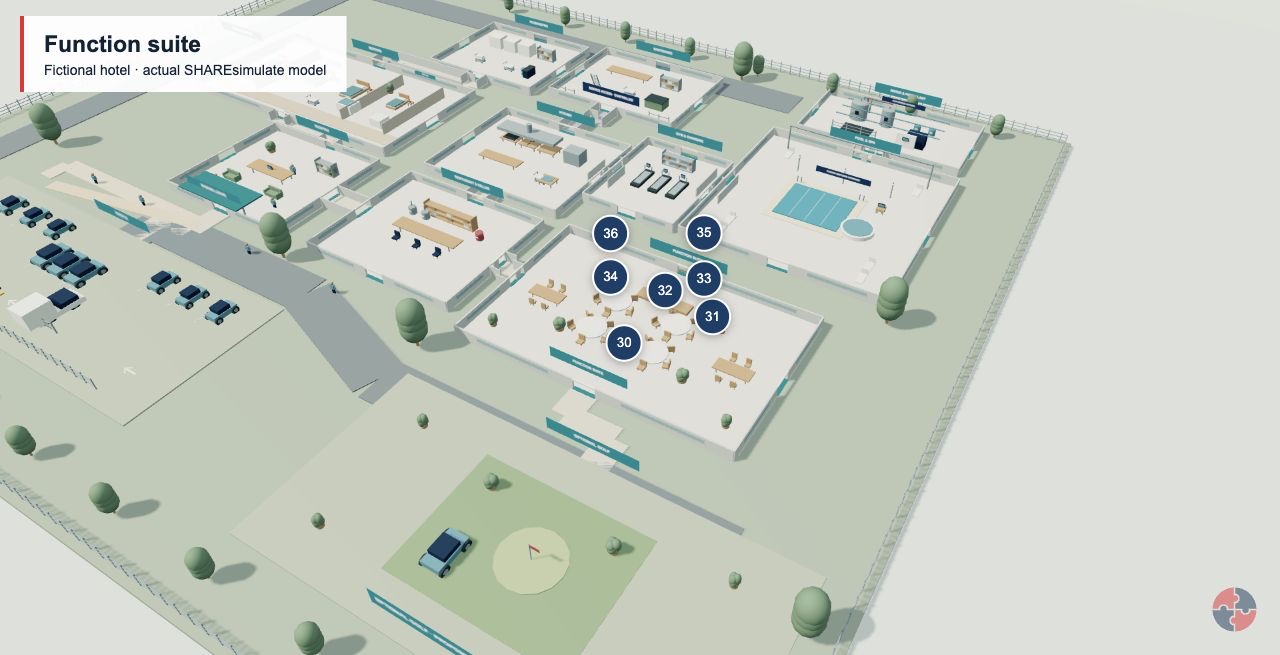
 Recognise the fuel. Read the extinguisher. Protect your escape.