← Worked assessmentsTypical forecourt visual guide
Illustrative training scenes show features to identify. They do not establish installed controls, approved siting or hazardous-area boundaries.
Forecourt and hazardous area concepts
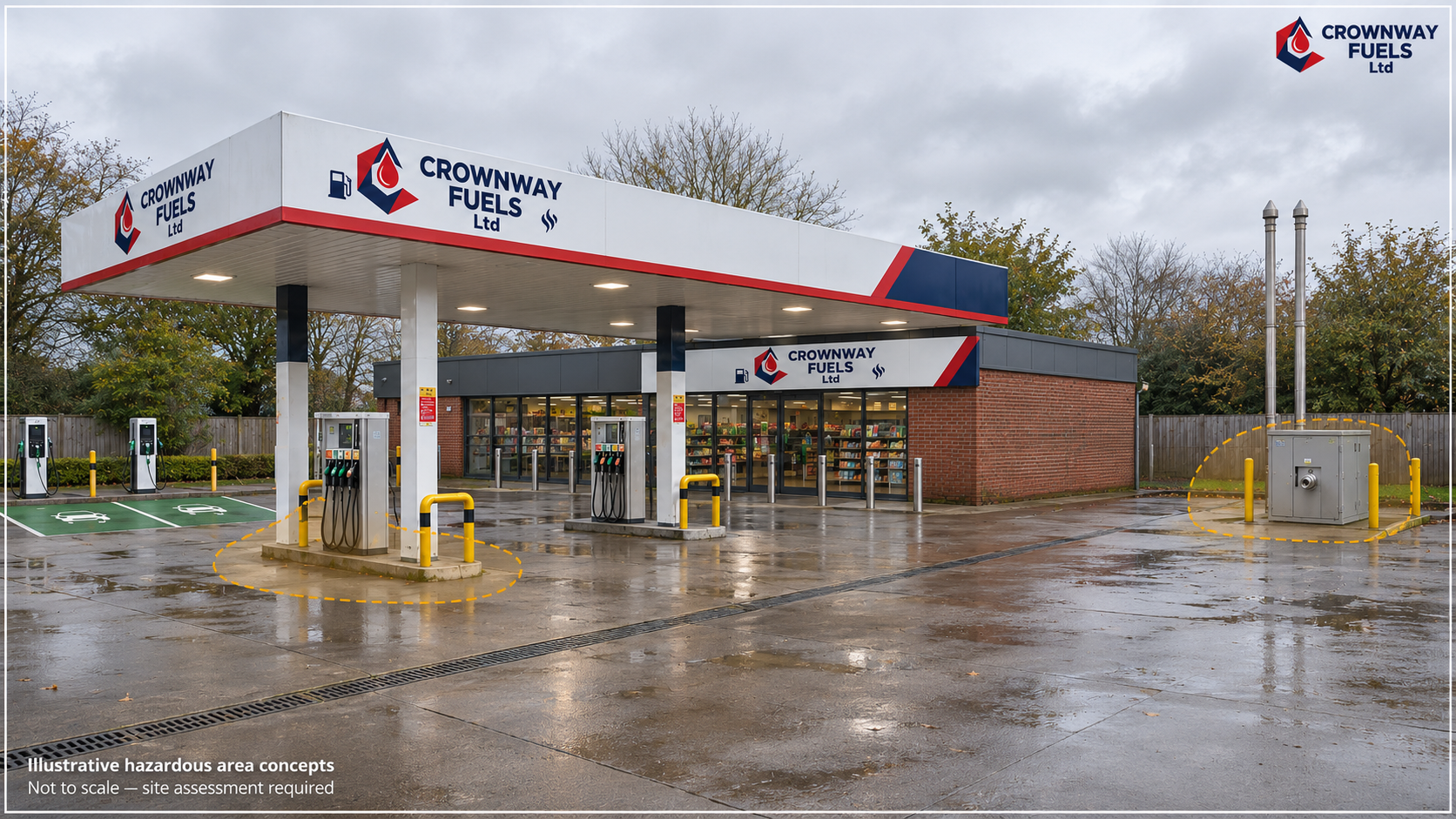
Review with activities 3.3, 3.6, 3.7, 3.8 and 3.19 and the section 4 classification decision.
Zone 0 means an explosive gas atmosphere is present continuously, for long periods or frequently; Zone 1 may occur occasionally in normal operation; Zone 2 is unlikely in normal operation and, if it occurs, persists only briefly. The drawing suggests release locations, not accepted zone types or extents.
Confirm release grades, ventilation, pits, ducts, drains and openings. Check equipment suitability and required verification against competent site drawings. EV bay placement in the image is not an accepted separation design.
Download HD imageFuel filling vents and interceptor
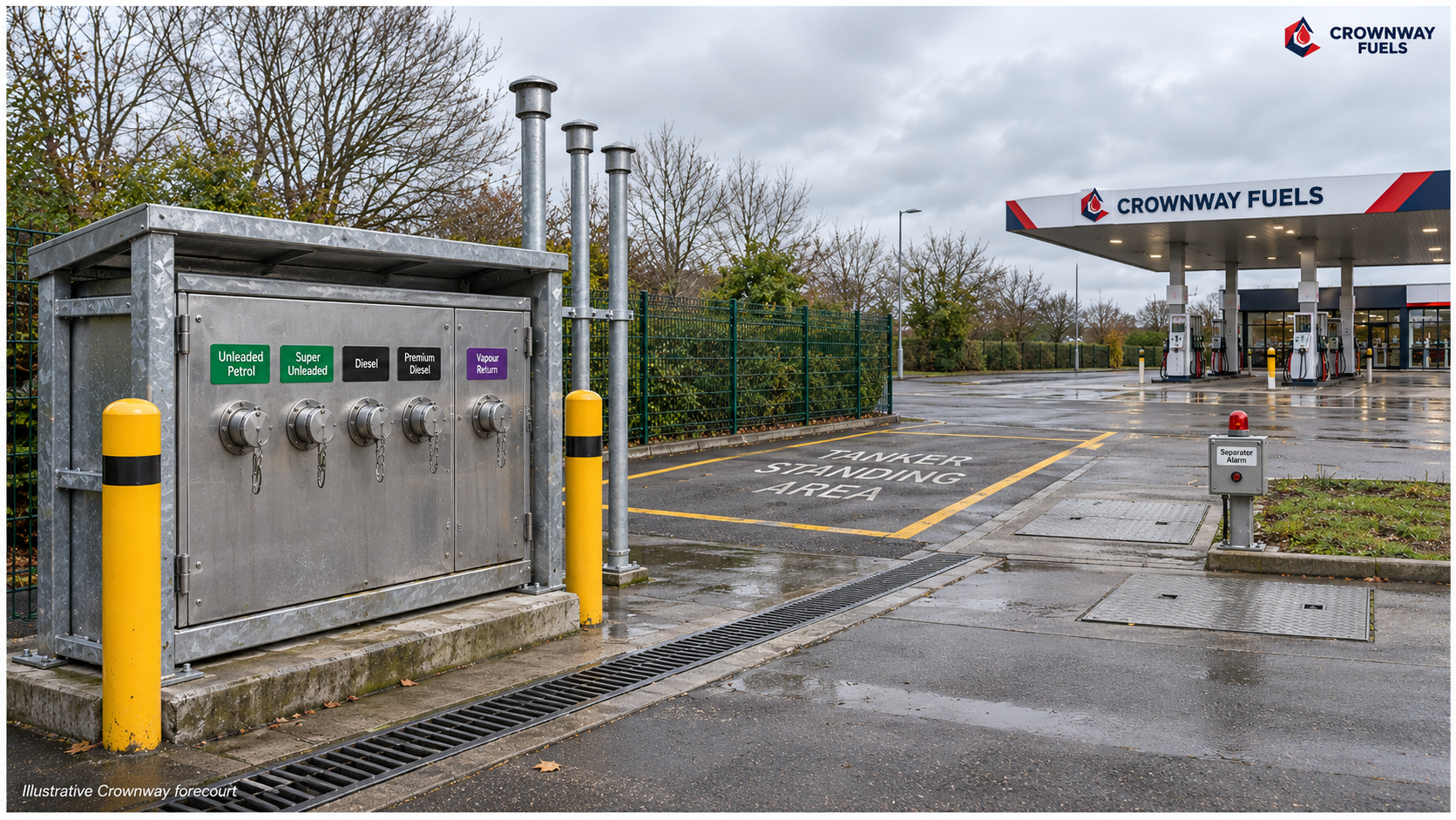
Review with activities 3.1, 3.3, 3.6, 3.13, 3.20 and section 5 response arrangements.
Identify each tank/product connection, vapour-return arrangement, vent termination, tanker position and escape route. The closed access covers indicate a separator location concept only; they do not show its internal condition, class, flow, capacity, outlet design or fuel/firewater retention provision.
Trace actual drainage to the verified discharge point and receptors. Check separator condition, compatible alarm system, maintenance and any designed isolation/shutoff. A separator is not assumed capable of retaining a tanker loss, miscible product or firefighting runoff.
Download HD imageOptional retail LPG bottle storage
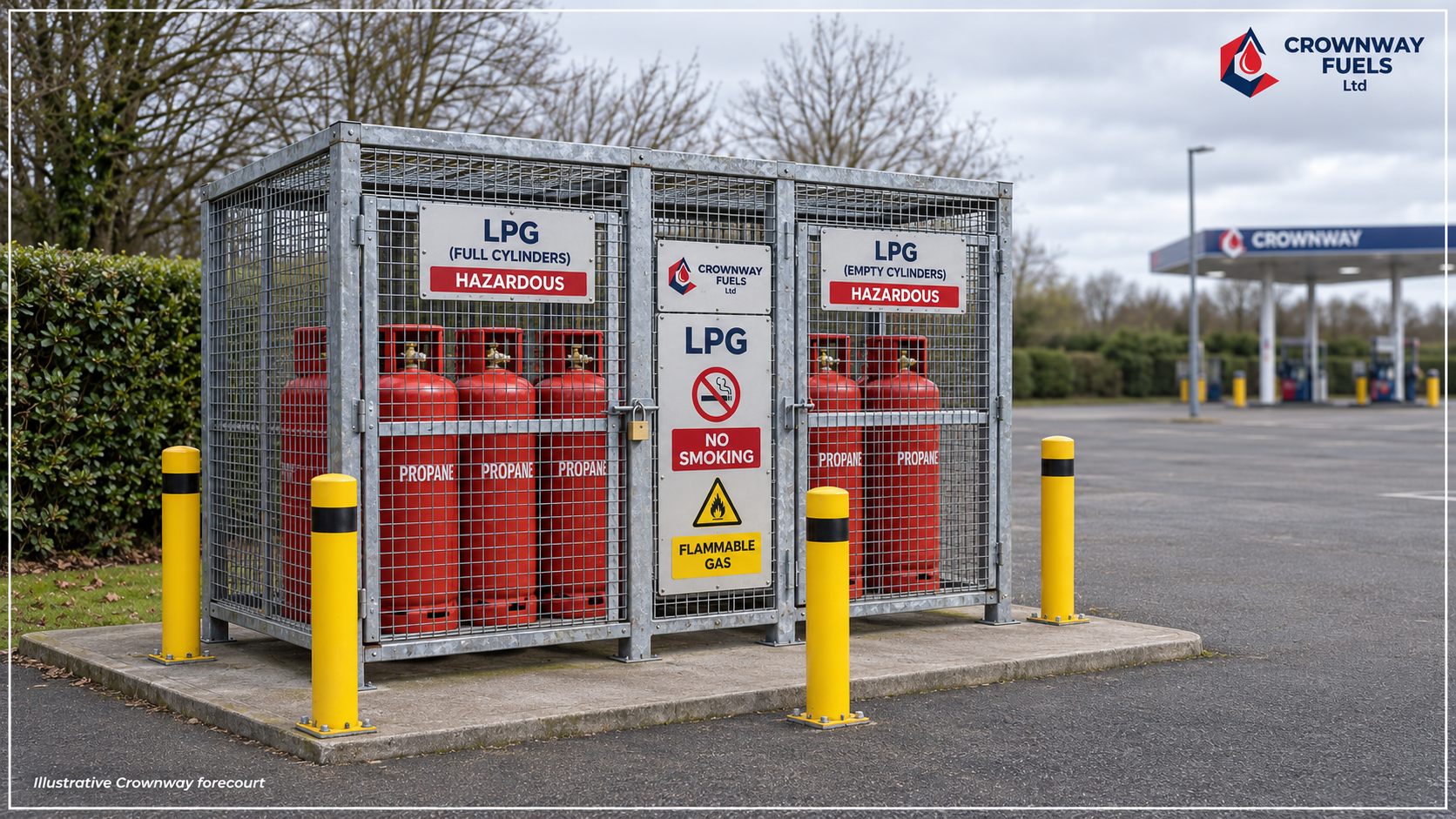
Review with activities 3.2, 3.4, 3.5, 3.19, 3.23 and the management of change arrangements.
The ten site cases assume no LPG retail. This optional feature illustrates the assessment needed before introducing it. Add actual cylinder sizes, numbers, maximum LPG mass including nominally empty cylinders, SDS and delivery/exchange arrangements. No cylinder filling is authorised.
Use competent siting and hazardous-area assessment and supplier instructions. Verify ventilation, security, valve protection, impact protection and separation from ignition, openings, drains and pits. LPG vapour can collect at low level. This plate is not proof of an acceptable cage location.
Download HD imageEntrance ESD manual points and alarms
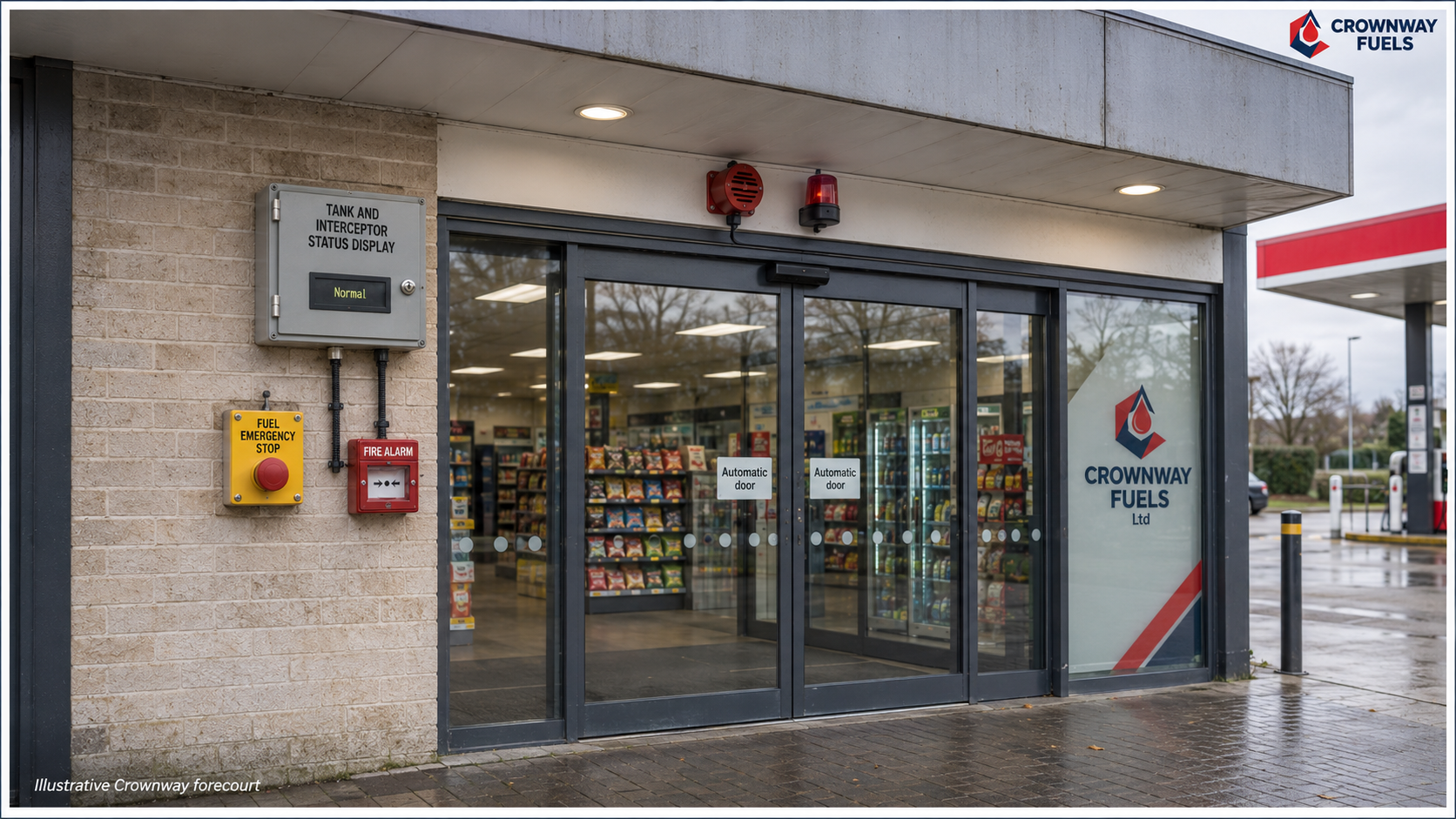
Review with activities 3.19, 3.20, 3.23 and section 5 emergency and competence arrangements.
The fuel emergency-stop button, fire-alarm manual call point and tank/interceptor indications have different purposes. A common display does not establish common sensing, independent protection or automatic shutdown. No universal control position, accessibility dimension or cause-and-effect is specified.
Test the actual cause-and-effect with competent people and a safe method. Confirm what stops, which valves move, which alarms sound, where signals are received and how restoration is controlled. Do not assume ESD isolates every electrical circuit or operates drainage valves.
Download HD image