
Construction welfare, wellbeing and human factors
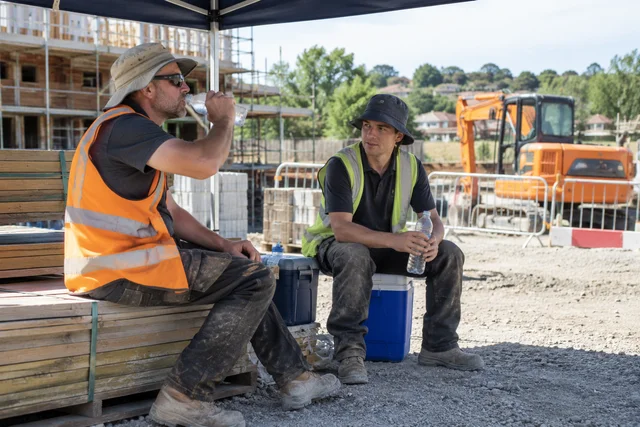

Plan construction welfare, wellbeing, human factors and changing site conditions.
Full public teaching and readers are free to read without an account. A free learner account is required for confirmed saved assessment, completion and certificate records in the LMS.
What you will work through
Fictional Cedar Works project: welfare cabins move while a remote workface and an early shift open. You evaluate health-control readiness, practical access and support; operational and specialist decisions remain with the organisation’s appropriate people.
The course has 5 modules and 18 lessons, with teaching, applied activities, feedback and a check of understanding throughout. There are 4 practice pauses in the actual construction model, with an equivalent accessible text route. Public interactive practice is separate from confirmed LMS assessment and completion records.
Explore the interactive practice copy. Return to the LMS route for recorded learning.
Learning outcomes
- Check usable welfare and suitable arrangements through site moves and seasonal change.
- Recognise stress, fatigue, aggression and other human-factor signals that affect work.
- Identify appropriate support, reporting and control ownership for the actual situation.
Course outline
Provide reliable welfare
- Health depends on how work is organisedHealthy work requires suitable conditions and practical support, not messages alone.
- Welfare before work beginsWelfare availability is a readiness condition throughout site changes.
- Toilets, washing, drinking and restFacilities must be suitable for actual work and contamination risks, not just physically present.
- Remote workfaces and welfare relocationEffective welfare includes safe access and availability throughout the actual work pattern.
Design work for people
- Ventilation, lighting and the site officeWorking-environment controls must suit current occupancy, the task and individual needs.
- DSE and portable site-office workstationsDSE control is a whole-workstation and work-organisation decision tailored to the user.
- Musculoskeletal health and work designWork design and suitable handling arrangements take priority over technique alone.
- Fatigue, workload and safety-critical decisionsFatigue is a work-organisation and fitness issue requiring a practical safe response.
Control seasonal and water risks
- Heat is more than an air temperatureThermal assessment must consider the combined task and environment, not air temperature alone.
- Cold, wet work and seasonal planningSeasonal controls include practical welfare, suitable clothing and a safe work regime.
- Sun and UV alongside other task risksThermal comfort and solar UV are different exposures that need compatible controls.
- Temporary water systems and disuseReopening depends on system-specific control and competent recommissioning, not water appearance.
Support safe work
- Responsibility, monitoring and water changesWater management depends on accurate system information, suitable controls and action on changes or deviations.
- Work-related stress: change the work factorsPreventing work-related stress requires action on work design as well as suitable support.
- Violence, gate pressure and safe withdrawalPersonal safety, safe withdrawal and planned assistance take priority over winning a confrontation.
- Reporting, support and confidentialitySupport, proportionate confidentiality and control of the work risk should operate together.
Prove the decision
- Capstone: a rushed welfare relocationA welfare move is complete when people have usable suitable controls, not when the physical delivery is finished.
- Your wellbeing improvement planAn improvement should test the real conditions experienced by the people it is meant to protect.
Assessment and completion
Complete the required lessons and activities, then take the 20-question final assessment. The pass threshold is 80% plus every designated critical safety answer. Points and badges cannot compensate for a critical error.
Use the LMS to save and resume confirmed progress. Certificate availability follows its passed-completion and grade conditions. Browser practice and printed learning pages do not issue the official LMS record.
Independent construction learning. Completion records learning within the course scope; competent site assessment, practical training and task authorisation remain necessary. It does not confer a NEBOSH qualification.
Sources and learning provenance
The teaching draws on public SHAREhub topic pages and structured source records, with original fictional workface cases. Use the linked primary guidance and the applicable jurisdiction when planning a live task.
- HSE: Construction welfare
- HSE: Heat stress
- HSE: Legionella risks in your workplace
- HSE: Management Standards
Topic records, source IDs and versions
| Public topic section | Chunk and version | Jurisdiction and source IDs |
|---|---|---|
| physical-and-psychological-health · integrated-model | physical-and-psychological-health--integrated-model Version 2.0 | source-hse_construction_health_risks |
| health-welfare-and-work-environment · construction | health-welfare-and-work-environment--construction Version | Great Britain, Northern Ireland source-hse-construction, source-ni-cdm |
| safe-workplace-design-welfare-and-working-environment · baseline-welfare | safe-workplace-design-welfare-and-working-environment--baseline-welfare Version 2.1 | safe-workplace-design-welfare-and-working-environment--welfare |
| health-welfare-and-work-environment · failure-response | health-welfare-and-work-environment--failure-response Version | Great Britain, Northern Ireland source-hse-welfare, source-ni-workplace |
| health-welfare-and-work-environment · environment | health-welfare-and-work-environment--environment Version | Great Britain, Northern Ireland source-hse-welfare, source-ni-workplace |
| dse · assessment | dse--assessment Version 20261016-letter-review-1 | Great Britain, Northern Ireland dse-src-002 |
| musculoskeletal-health-and-load-handling · design | musculoskeletal-health-and-load-handling--design Version 2.0 | Great Britain, Northern Ireland hse-construction, hseni-manual, gb-cdm, ni-cdm, hse-indg398, hse-art |
| physical-and-psychological-health · interaction-table | physical-and-psychological-health--interaction-table Version 2.0 | source-hse_construction_health_risks |
| thermal-environments-heat-stress-and-cold-stress · hse-six-factor-model | thermal-environments-heat-stress-and-cold-stress--hse-six-factor-model Version 2.4 | GB, NI source-hse_thermal, source-hseni_temperature |
| thermal-environments-heat-stress-and-cold-stress · controls-hierarchy | thermal-environments-heat-stress-and-cold-stress--controls-hierarchy Version 2.4 | GB, NI source-hse_heat, an-th11, an-th7, source-hseni_temperature |
| optical-radiation-effects-uv · application | optical-radiation-effects-uv--application Version 2.1 | Great Britain, Northern Ireland rc-aor, ni-aor, share-hierarchy-hse, share-activity-optical-radiation-effects-uv-1, share-hierarchy-iosh, an-ey-s6, rc-hse-optical, rc-hse-lasers, hse-sun |
| biological-agents-and-infection-risk-controls · water-systems | biological-agents-and-infection-risk-controls--water-systems Version 20261016-letter-review-1 | Great Britain, Northern Ireland hse-biosafety-law, hse-incidental, hse-approved |
| biological-agents-and-infection-risk-controls · controls | biological-agents-and-infection-risk-controls--controls Version 20261016-letter-review-1 | Great Britain, Northern Ireland hse-biosafety-law, hse-incidental, hse-approved, gb-coshh |
| mental-ill-health-and-work-related-stress · technical-model | mental-ill-health-and-work-related-stress--technical-model Version 2.0 | Great Britain, Northern Ireland hse-stress, hse-standards, hseni-standards |
| violence-at-work · design-environment | violence-at-work--design-environment Version 20261019-V-review-1 | Great Britain, Northern Ireland source-hse_controls, source-hse_healthcare, source-hse_examples |
| physical-and-psychological-health · leading-indicators | physical-and-psychological-health--leading-indicators Version 2.0 | source-hse_construction_health_risks |
| safe-workplace-design-welfare-and-working-environment · mobile-and-contractor-welfare | safe-workplace-design-welfare-and-working-environment--mobile-and-contractor-welfare Version 2.1 | safe-workplace-design-welfare-and-working-environment--drivers, safe-workplace-design-welfare-and-working-environment--welfare, safe-workplace-design-welfare-and-working-environment--loneworking, safe-workplace-design-welfare-and-working-environment--constructionwelfare, safe-workplace-design-welfare-and-working-environment--outdoor |
| physical-and-psychological-health · dashboard-review-routine | physical-and-psychological-health--dashboard-review-routine Version 2.0 | source-hse_construction_health_risks |
Course version 2026.10.20.4 · SH-WEL-01. Factual source identity and jurisdiction are retained in the .
Questions about this course
Is this course free?
Yes. The training is £0. Full public teaching and readers can be used without an account. A free learner account is required for confirmed saved assessment, completion and certificate records in the LMS.
How long should I allow?
Approx. 2h–2h 50m: approximately 120–170 minutes of self-paced learning, including required activities and one final-assessment attempt. Your pace, review and retries may increase the time. Save and resume in the LMS.
Can I study without a 3D-capable browser?
Yes. The complete learning reader is available in ordinary HTML. Where this course includes model practice, an accessible text route provides the same decision sequence. Use the interactive LMS course to complete its assessed requirements.
What do I need to pass?
Complete the required learning and achieve at least 80% in the final assessment, with every critical safety answer correct. Follow the feedback and review the relevant lesson before retrying.
Where is my completion record?
The LMS holds confirmed grades, completion and certificate records for your learner account. Public browser practice has its own separate progress and is not an official completion record.
Does completion authorise construction work?
Independent construction learning. Completion records learning within the course scope; competent site assessment, practical training and task authorisation remain necessary. It does not confer a NEBOSH qualification.
Presentation and model workshop
Use the same course imagery, worked decisions and source case in a 28-slide teaching companion. Practise classification, compare explained choices and inspect the linked model case.
Open the interactive presentation workshop · Download PowerPoint
This optional companion does not replace the required course activities or final assessment.