
Lifting operations on construction sites
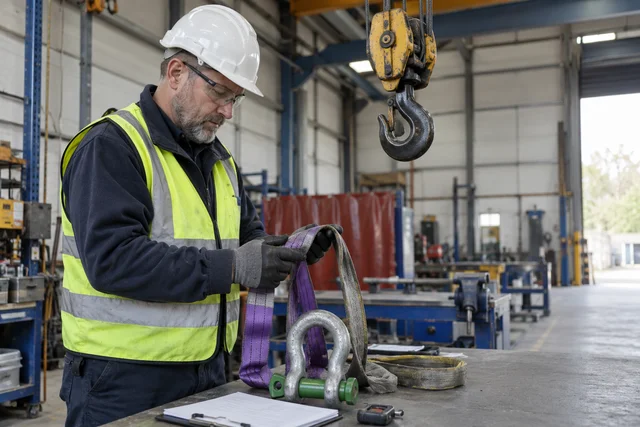

Verify loads, lifting equipment, ground support, movement and safe landing.
Full public teaching and readers are free to read without an account. A free learner account is required for confirmed saved assessment, completion and certificate records in the LMS.
What you will work through
Fictional Foundry Court project: steel assemblies, plant modules and materials arrive while other trades use the courtyard. Review the lifting evidence through planning, setup, movement and handback. The competent lifting team retains authority for design and live operations.
The course has 5 modules and 18 lessons, with teaching, applied activities, feedback and a check of understanding throughout. There are 4 practice pauses in the actual construction model, with an equivalent accessible text route. Public interactive practice is separate from confirmed LMS assessment and completion records.
Explore the interactive practice copy. Return to the LMS route for recorded learning.
Learning outcomes
- Verify the load, configuration, rigging and route assumptions before a lifting operation.
- Identify suitable ground support, equipment condition, exclusion and communication evidence.
- Plan stable landing and recognise changes that require the competent lifting team to reassess.
Course outline
Understand the lift
- Start with the handling needAssess the whole load journey and remove avoidable exposure before refining the individual lift.
- Match responsibilities to the operationAgree responsibilities explicitly; hiring equipment does not itself provide a suitable lifting plan or site coordination.
- Establish the load, including what cannot be seenResolve load uncertainty before tensioning an unverified system; a larger crane cannot prove the load or its attachments.
- Read a lift plan as connected assumptionsThe whole load and its foreseeable movement must fit the route; people must not compensate by entering trapping positions.
Select and verify the system
- Select machinery for the actual configurationSuitability follows the actual load, configuration and route; a headline rating cannot establish the permitted operation.
- Provide stable ground and supportGround suitability is location and load specific. A changed bearing needs a competent decision before the crane is loaded.
- Choose and connect lifting accessoriesAccessories must be selected as a compatible arrangement for the actual geometry and conditions, following competent planning and instructions.
- Separate checks, maintenance and thorough examinationCurrent damage overrides administrative reassurance. Quarantine and verify recovery through the competent defect process.
Control the movement
- Exclude people through the complete movementEffective exclusion covers the foreseeable load and machinery danger area through pickup, travel and landing.
- Use clear signalling and safe positionsLoss of the agreed communication is a stop trigger; unplanned signals or assumptions cannot guide a blind load.
- Prepare the landing and detachmentPlan stable landing and safe detachment in advance; the receiving position is a safety-critical part of the lift.
- Coordinate a lift across other workCapacity and people protection are separate requirements. The complete route needs verified controls before movement.
Respond to change
- Recognise the conditions that invalidate a planA changed condition requires a safe hold and an operation-specific review; people must not substitute for an invalid control.
- Respond to defects and abnormal movementRecovery requires a controlled safe state, traceable defect response and verification of the whole lifting arrangement.
- Hoists, simple lifting devices and lifting peopleUse equipment only for its intended lifting purpose; lifting people introduces specific requirements and cannot be improvised.
Prove the workface decision
- Assess role competence through relevant evidenceCompetence must be demonstrated for the assigned role, equipment and complexity; one course cannot authorise every lifting activity.
- Capstone: review the changed steel assemblyA defensible restart joins competent revision, physical verification and shared understanding across every affected lifting control.
- Turn learning into a workface routineApply the learning through task-specific evidence, clear ownership and follow-up; course completion is not a release for live lifting.
Assessment and completion
Complete the required lessons and activities, then take the 20-question final assessment. The pass threshold is 80% plus every designated critical safety answer. Points and badges cannot compensate for a critical error.
Use the LMS to save and resume confirmed progress. Certificate availability follows its passed-completion and grade conditions. Browser practice and printed learning pages do not issue the official LMS record.
Independent construction learning. Completion records learning within the course scope; competent site assessment, practical training and task authorisation remain necessary. It does not confer a NEBOSH qualification.
Sources and learning provenance
The teaching draws on public SHAREhub topic pages and structured source records, with original fictional workface cases. Use the linked primary guidance and the applicable jurisdiction when planning a live task.
- HSE: Lifting operations in construction
- HSE: LOLER overview
- HSE: Planning and organising lifting operations
- HSE: Thorough examinations
- Safe use of lifting equipment (L113)
- Safe lifting by machine
- Health and Safety at Work etc. Act 1974
- Health and Safety at Work (NI) Order 1978
- Management of Health and Safety at Work Regulations 1999
- Management of Health and Safety at Work Regulations (Northern Ireland) 2000
- LOLER 1998
- LOLER (NI) 1999
- PUWER 1998
- PUWER (NI) 1999
- HSE management guidance for Great Britain
- HSENI guidance for Northern Ireland
- HSE: ISO 45001 management standard
- HSE hierarchy of controls
- IOSH: hierarchy of control guidance
- ISO 45001:2018, Clause 8.1.2 within Clause 8 Operation
- HSE push/pull assessment and RAPP
- HSENI manual handling
Topic records, source IDs and versions
| Public topic section | Chunk and version | Jurisdiction and source IDs |
|---|---|---|
| load-handling-equipment-and-lifting-operations · core | load-handling-equipment-and-lifting-operations--core Version 2026-10-02-additive-1 | Great Britain, Northern Ireland load-handling-equipment-and-lifting-operations-src-01, load-handling-equipment-and-lifting-operations-src-10 |
| load-handling-equipment-and-lifting-operations · practical-controls | load-handling-equipment-and-lifting-operations--practical-controls Version 2026-10-02-additive-1 | Great Britain, Northern Ireland load-handling-equipment-and-lifting-operations-src-01 |
| load-handling-equipment-and-lifting-operations · planning | load-handling-equipment-and-lifting-operations--planning Version 2026-10-02-additive-1 | Great Britain, Northern Ireland load-handling-equipment-and-lifting-operations-src-01 |
| load-handling-equipment-and-lifting-operations · legal-duties | load-handling-equipment-and-lifting-operations--legal-duties Version 2026-10-02-additive-1 | Great Britain, Northern Ireland load-handling-equipment-and-lifting-operations-src-08, load-handling-equipment-and-lifting-operations-src-09, load-handling-equipment-and-lifting-operations-src-04, load-handling-equipment-and-lifting-operations-src-05, load-handling-equipment-and-lifting-operations-src-06, load-handling-equipment-and-lifting-operations-src-07, source-management_regulations_1999, source-management_regulations_ni_2000, l-review-load-handling-equipment-and-lifting-operations-2-1, l-review-load-handling-equipment-and-lifting-operations-2-2 |
| load-handling-equipment-and-lifting-operations · non-routine-load-decision | load-handling-equipment-and-lifting-operations--non-routine-load-decision Version 2026-10-02-additive-1 | Great Britain load-handling-equipment-and-lifting-operations-src-01, load-handling-equipment-and-lifting-operations-src-03, load-handling-equipment-and-lifting-operations-src-10 |
| load-handling-equipment-and-lifting-operations · lifting-technical-detail | load-handling-equipment-and-lifting-operations--lifting-technical-detail Version 2026-10-02-additive-1 | Great Britain, Northern Ireland load-handling-equipment-and-lifting-operations-src-01 |
| load-handling-equipment-and-lifting-operations · best-practice-load-handling-equipment-and-lifting-operations-step-2 | load-handling-equipment-and-lifting-operations--best-practice-load-handling-equipment-and-lifting-operations-step-2 Version 20261018-learning-guides-1 | Great Britain, Northern Ireland load-handling-equipment-and-lifting-operations-src-01 |
| load-handling-equipment-and-lifting-operations · best-practice-load-handling-equipment-and-lifting-operations-step-4 | load-handling-equipment-and-lifting-operations--best-practice-load-handling-equipment-and-lifting-operations-step-4 Version 20261018-learning-guides-1 | Great Britain, Northern Ireland load-handling-equipment-and-lifting-operations-src-01, load-handling-equipment-and-lifting-operations-src-10 |
| load-handling-equipment-and-lifting-operations · best-practice-load-handling-equipment-and-lifting-operations-step-5 | load-handling-equipment-and-lifting-operations--best-practice-load-handling-equipment-and-lifting-operations-step-5 Version 20261018-learning-guides-1 | Great Britain, Northern Ireland load-handling-equipment-and-lifting-operations-src-01 |
| load-handling-equipment-and-lifting-operations · inspection | load-handling-equipment-and-lifting-operations--inspection Version 2026-10-02-additive-1 | Great Britain, Northern Ireland load-handling-equipment-and-lifting-operations-src-02, load-handling-equipment-and-lifting-operations-src-01 |
| load-handling-equipment-and-lifting-operations · report-to-task-release | load-handling-equipment-and-lifting-operations--report-to-task-release Version 2026-10-02-additive-1 | Great Britain load-handling-equipment-and-lifting-operations-src-02, load-handling-equipment-and-lifting-operations-src-01, load-handling-equipment-and-lifting-operations-src-03 |
| load-handling-equipment-and-lifting-operations · best-practice-load-handling-equipment-and-lifting-operations-step-3 | load-handling-equipment-and-lifting-operations--best-practice-load-handling-equipment-and-lifting-operations-step-3 Version 20261018-learning-guides-1 | Great Britain, Northern Ireland load-handling-equipment-and-lifting-operations-src-01 |
| load-handling-equipment-and-lifting-operations · best-practice-load-handling-equipment-and-lifting-operations-step-6 | load-handling-equipment-and-lifting-operations--best-practice-load-handling-equipment-and-lifting-operations-step-6 Version 20261018-learning-guides-1 | Great Britain, Northern Ireland load-handling-equipment-and-lifting-operations-src-01, load-handling-equipment-and-lifting-operations-src-10 |
| load-handling-equipment-and-lifting-operations · worked-example | load-handling-equipment-and-lifting-operations--worked-example Version 2026-10-02-additive-1 | Great Britain, Northern Ireland load-handling-equipment-and-lifting-operations-src-01 |
| load-handling-equipment-and-lifting-operations · evidence | load-handling-equipment-and-lifting-operations--evidence Version 2026-10-02-additive-1 | Great Britain, Northern Ireland load-handling-equipment-and-lifting-operations-src-01 |
| load-handling-equipment-and-lifting-operations · iso | load-handling-equipment-and-lifting-operations--iso Version 2026-10-02-additive-1 | Great Britain, Northern Ireland load-handling-equipment-and-lifting-operations-hse-management-2026, load-handling-equipment-and-lifting-operations-hseni-management-2026, load-handling-equipment-and-lifting-operations-hse-iso45001-boundary-2026 |
| load-handling-equipment-and-lifting-operations · business-example | load-handling-equipment-and-lifting-operations--business-example Version 2026-10-02-additive-1 | Great Britain, Northern Ireland load-handling-equipment-and-lifting-operations-src-01 |
| load-handling-equipment-and-lifting-operations · training | load-handling-equipment-and-lifting-operations--training Version 2026-10-02-additive-1 | Great Britain, Northern Ireland load-handling-equipment-and-lifting-operations-src-01 |
| load-handling-equipment-and-lifting-operations · observed-role-assessment | load-handling-equipment-and-lifting-operations--observed-role-assessment Version 2026-10-02-additive-1 | Great Britain load-handling-equipment-and-lifting-operations-src-01, load-handling-equipment-and-lifting-operations-src-02, load-handling-equipment-and-lifting-operations-src-03 |
| load-handling-equipment-and-lifting-operations · best-practice-load-handling-equipment-and-lifting-operations-step-1 | load-handling-equipment-and-lifting-operations--best-practice-load-handling-equipment-and-lifting-operations-step-1 Version 20261018-learning-guides-1 | Great Britain, Northern Ireland load-handling-equipment-and-lifting-operations-src-01, load-handling-equipment-and-lifting-operations-src-10 |
| load-handling-equipment-and-lifting-operations · audience | load-handling-equipment-and-lifting-operations--audience Version 2026-10-02-additive-1 | Great Britain, Northern Ireland load-handling-equipment-and-lifting-operations-src-01 |
Course version 2026.10.20.4 · SH-LFT-01. Factual source identity and jurisdiction are retained in the .
Questions about this course
Is this course free?
Yes. The training is £0. Full public teaching and readers can be used without an account. A free learner account is required for confirmed saved assessment, completion and certificate records in the LMS.
How long should I allow?
Approx. 2h–3h: approximately 120–180 minutes of self-paced learning, including required activities and one final-assessment attempt. Your pace, review and retries may increase the time. Save and resume in the LMS.
Can I study without a 3D-capable browser?
Yes. The complete learning reader is available in ordinary HTML. Where this course includes model practice, an accessible text route provides the same decision sequence. Use the interactive LMS course to complete its assessed requirements.
What do I need to pass?
Complete the required learning and achieve at least 80% in the final assessment, with every critical safety answer correct. Follow the feedback and review the relevant lesson before retrying.
Where is my completion record?
The LMS holds confirmed grades, completion and certificate records for your learner account. Public browser practice has its own separate progress and is not an official completion record.
Does completion authorise construction work?
Independent construction learning. Completion records learning within the course scope; competent site assessment, practical training and task authorisation remain necessary. It does not confer a NEBOSH qualification.
Presentation and model workshop
Use the same course imagery, worked decisions and source case in a 28-slide teaching companion. Practise classification, compare explained choices and inspect the linked model case.
Open the interactive presentation workshop · Download PowerPoint
This optional companion does not replace the required course activities or final assessment.